AN ILIAD

War is Still Hell

A Theater Review by Julinda D. Lewis

At: Dominion Energy Center, Libby S. Gottwald Playhouse, 600 E. Grace Street, RVA 23219

Performances: March 24 – April 16, 2022

Ticket Prices: $24 – $45

Info: (804) 340-0115 or quilltheatre.org

AN ILIAD (2010) is a masterful piece of storytelling. Director Lisa Peterson and actor Denis O’Hare adapted Homer’s epic poem, The Iliad, into a play for one actor. Many of the characters – and places – will be familiar to some: Achilles, Agamemnon, Hector, Paris, Helen, Troy. But even if you did not pay attention in your high school literature classes, you will be able to relate. This is more than a retelling of an ancient tale. Whereas Homer’s The Iliad tell the story of the final year of the Trojan War, An Iliad tells the story of the Trojan War from a contemporary perspective. What makes it relevant? Well, the Trojan War went on so long – some ten years – that people began to forget why they were fighting, what they were fighting for, what the end goal was, and that has a ring of familiarity for us today.

The Poet (Alec Beard) appears carrying a battered suitcase filled with a bottle of whiskey, a glass, and some papers containing, what – photos? memories? His overcoat, hat, and scarf signal that he is a time traveler. The stage is a war-torn battleground of scaffolds, an overturned chair, deserted props and tools. It is a place that appears to have been abandoned in a hurry, due to the ravages of neglect, disinterest, a war, a pandemic, or some unnamed man-made catastrophe. A ghost light on stage at the beginning and ending of the play seals the metaphoric atmosphere: security, superstition, repetition, tradition.

Beard holds our attention from start to finish, wielding a paint roller as a scepter, a random table leg as a spear, and words as weapons and keys. Beard is mesmerizing as The Poet. In the background, cellist Chris Chorney provides a timeless acoustic soundscape, and serves as a foil for Beard’s ruminations. When Beard tells a joke about Achilles, Chorney remains poker-faced; it’s as if he’s heard it all before, many, many times before. The Poet is like a vampire, immortal, timeless, no longer moved by the bizarre and inexplicable road rage that litters human history, even when animatedly re-enacting scenes from the past atrocities we seem determined to repeat. Director James Ricks has created an immersive experience that makes it impossible for the audience to distance themselves emotionally or intellectually. The Gottwald Playhouse becomes transformed, temporarily, an intimate cocoon that wraps around the performers and audience and only releases us when the lights come back up.

An Iliad includes a litany of wars, conflicts, and invasions, starting in ancient times and concluding – for now – with the current events in the Ukraine. Does An Iliad encourage the audience to understand the past by placing it into a modern context, or does it inspire us to understand the present by comparing it to the past?  Like Achilles, are we, too, addicted to rage, or do we need to re-examine our definition of heroes?  Returning the ghost light to center stage before exiting, The Poet asks, “You see?” But do we…

An Iliad

By Denis O’Hare & Lisa Peterson

Cast

Alec Beard as The Poet

Christopher Chorney as Muse

Direction & Design

Director:  James Ricks

Composer: Niccolo Seligman

Dramaturg: Dean Simpson

Lighting Designer: Gretta Daughtrey

Scenic Designer: Missouri Flaxon

Production Manager: Oliver Samson

Box Office Manager: Margot Moser

Marketing Consultant: Emily Adler

Stage Manager: Corrie Barton

Assistant Stage Manager: Hope Jewell

Scenic Construction: Quinlan Boyle

Run Time: 90 minutes with no intermission

Julinda D. Lewis is a dancer, teacher, and writer who was born in Brooklyn, NY and now lives in Eastern Henrico County.

———-

Photo Credits: Dave Parrish Photography


Moments with MommaJ: #2

MOMENTS WITH MOMMAJ: March 29, 2022

March has been very adventurous for me.

During the VCU Spring Break (March 6-13) I got to spend a few days in North Myrtle Beach/Myrtle Beach, SC mostly relaxing, and getting some work done. The weather did not know it was Spring Break; it was cold and windy, and the day we headed back home to Richmond, VA we fled a rain and windstorm and drove straight into a minor snowstorm.

I was home for a few days – long enough to unpack, do my laundry, and repack for the next adventure. On March 15 I left for Hopkinsville, KY for a residence with MKArts, the first of several for a new project that is scheduled to debut in Spring of 2023. This was my first time flying since the pandemic, and I was pleasantly surprised that there were no inconveniences or incidents (you know, people refusing to keep on their masks on the plane or assaulting flight attendants). It was also my first time staying at an Airbnb – a four-bedroom, two bath duplex not far from the Community College that was sponsoring us. Even though I didn’t have to cook, and the rest of the team is “mostly” vegan/vegetarian, I overate WAY too much, and I’m still paying for it. Who knew that a small town in KY had such great vegan soups and awesome tacos?

The biggest part of the adventure, however, occurred on the way home. My first flight got delayed not once, not twice, but three times due to weather conditions in Florida, where the flight originated. (To get to Hopkinsville, KY, one flies into Nashville, TN). So. . .instead of having an hour to catch my connecting flight to Richmond, I had 20 minutes. The plane from Nashville landed in Charlotte’s Terminal E, and my flight to Richmond was leaving from Terminal C. I dashed through that airport like O.J. Simpson in that old commercial some of you may be old enough to remember – only to miss the flight by less than two minutes. There were three of us trying to make that connection: me, a portly gentleman, and a lady in a wheelchair. The gentleman and I arrived at the gate huffing and puffing. The gate attendant tried to get permission for us to board – but no. Once the doors are closed, they won’t open them again. After getting rebooked for a 6:15 AM flight, I asked for my options. The gentleman opted to find a hotel. I didn’t want to spend more than $100 for a hotel room where I would have time to sleep only 3 to 3.5 hours, before returning to the airport, going through security, etc., etc., As for the lady in the wheelchair, I don’t know what sort of accommodation was made for her. Since the problem was weather related and not the fault of the airline, the airline had no responsibility to help. And that is how I got to spend my first night in an airport.

I was surprised to find so many people spend the night in an airport. There was a young woman who came prepared with a can of Lysol to spray down the seats. How did she get a full-sized can of Lysol through security?!?!?! Two young Jamaican guys came and sat near us, but something about them reminded me of Nigerian scammers, so I decided to go to the Concourse I’d be leaving from in a few hours. There I found several airport employees gathered near my gate, and lots of traffic – people cleaning, moving supplies, and the like. There were a couple of other single women nearby. Then a young nerdy guy came and sat two seats away. Two. Seats. Away. He was chatty. I decided he was a serial killer, so I took a trip to the ladies’ room to plan my escape, but when I got back he had moved on to another victim (I mean gate). I staked out my territory and got as comfortable as I was going to get. I dozed off and napped for about an hour or 90 minutes during the night. I had layers of clothes to keep me warm. Regulars had come prepared with blankets, pillows, and even sleeping bags. Later that morning, taking a walk, I found an area near the food court that had banquets where I could have stretched out a bit. I’ll keep that in mind should there be a next time.

Well, “anywho,” after performing in Hopkinsville on Thursday evening and helping facilitate a PD at the Community College on Friday morning, I was scheduled to teach and the Virginia Black Dance Festival on Saturday morning and to perform on Saturday evening. My flight landed at 8:30 AM and I had plenty of time to go home, shower, and arrived at Dogtown Dance Theatre about 9:35 AM – in plenty of time for my 10:00 AM class. The session after mine was facilitated by MK Abadoo, who was still in KY. I was able to assist live while she led the workshop virtually. After class and a workshop panel or two, I picked up some food and coffee, ate in the car as I drove home, took a nice nap, and returned to Dogtown for the evening. The Virginia Black Dance Festival, directed by LaWanda Raines, was well attended and I had a marvelous time. I am so glad I was able to participate.

During the following days, I needed to catch up with theatre events here in RVA, so I attended How I Learned to Drive at the Conciliation Lab/The Basement on Sunday, March 20, followed by the Richmond Ballet’s Studio 3 performance on Tuesday, March 22, VaRep’s Dear Jack, Dear Louise at Hanover Tavern on Thursday, March 24, Greater Tuna at Swift Creek Mill on Friday, March 25, and Quill Theatre’s An Iliad at Dominion Energy Center’s Gottwald Playhouse on Saturday, March 26.

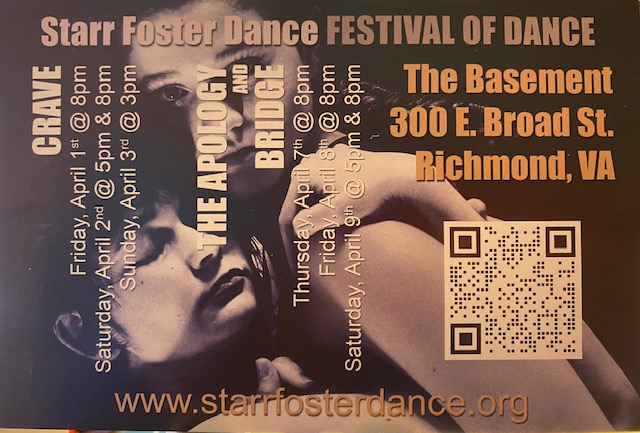
Sunday, March 27 I had the honor of sitting in on a rehearsal of Starr Foster Dance. Foster will be premiering a new work, The Apology, at The Basement (300 E. Broad St.) on Thursday, April 7. The program, that also includes a re-working of her humorous quartet, The Bridge, will run for four performances, April 7-9. Starr Foster Dance will also revise Crave – a work that takes place on two sides of a wall and requires the audience to switch sides midway through – for four performances April 1 – 3. For more information and to get tickets, contact Staff Foster Dance at http://www.starrfosterdance.org

Julinda D. Lewis, EdD is a dancer, teacher, and writer who was born and raised in Brooklyn, NY and now resides in Eastern Henrico County, RVA.


GREATER TUNA

The Third Smallest (Fictional) Town in Texas Makes Us Laugh for All the Wrong Reasons

At: The Swift Creek Mill Theatre, 17401 U.S. Route 1, S. Chesterfield, VA 23834

Performances: March 19 – April 30, 2022

Ticket Prices: $49. ($44 for seniors, students, military, and first responders.)

Info: (804) 748-5203 or https://www.swiftcreekmill.com

There are so many ways I could write about GREATER TUNA. So, I’ll just start and see where this goes.

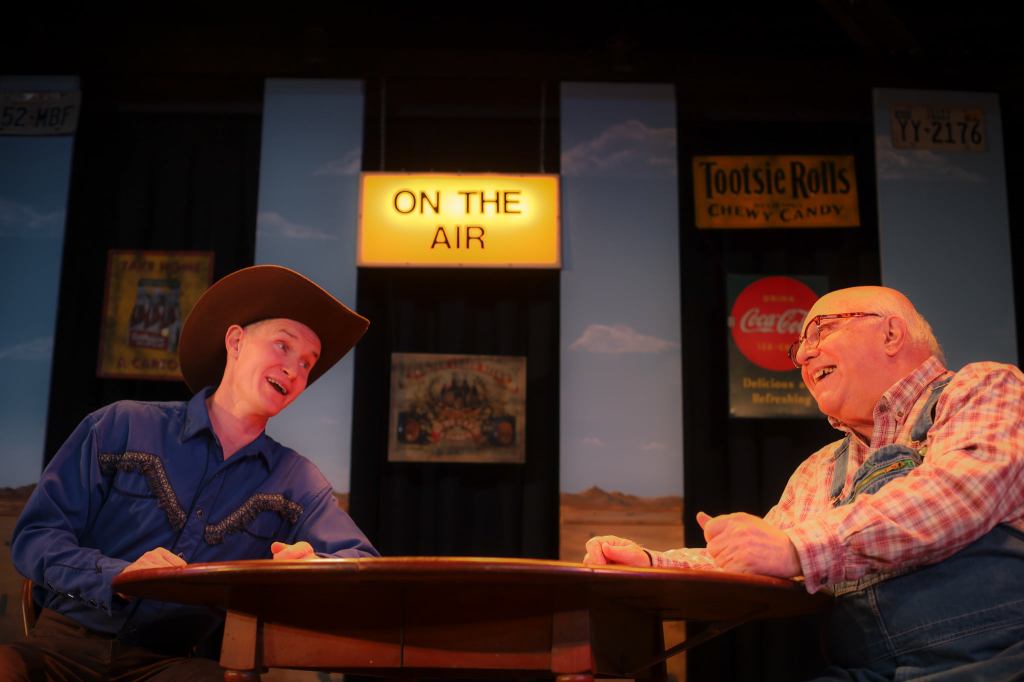
The first in a series of four satirical plays about the fictional town of Tuna, TX, GREATER TUNA requires two actors to portray twenty citizens of this conservative Texas community. John Hagadorn and Bartley Mullin are so good at quickly transforming from one character to another that it’s almost possible to overlook the content they are sharing that is making us laugh out loud. Hagadorn thoroughly encapsulates the town’s KKK leader Elmer Watkins, with his baseball cap pulled low over his eyes and so convincingly inhabits the characters of town matriarchs Bertha Bumiller and Pearl Burrus that we almost forget he is a male actor portraying these stereotypical southern women. Hagadorn is familiar with the inhabitants of Greater Tuna, having appeared in SCM’s production of A Tuna Christmas (2016-2017 season). This is the Mill’s first production of Greater Tuna, the original play, since 1985, and director Mark Costello returned to steer this wild ride and keep it on track.

Then there’s Bartley Mullin. His interpretation of the chain-smoking used weapons shop owner, Didi Snavely (“if we can’t kill it, it’s immortal) and the whiny and angst-filled teenager Charlene Bumiller are all that and more. His endearing but jumpy Petey Fisk, who works for the Greater Tuna Humane Society (who knew there were enough people in this town to support such an organization!) and the pretentious Vera Carp (Vice President of the Smut Snatchers of the New Order) are wonderfully over the top. Hagadorn, his face hidden behind a newspaper, provides the voice of an annoying puppy Petey is trying to find a home for. It is all but impossible not to laugh and that reminds me of what Swift Creek Mill artistic director Tom Width said of A Tuna Christmas, that he produced and directed in November 2016, “It’s so wrong in the best kinds of ways.”

Right off the bat, we are introduced to Thurston Wheelis and Arles Struvie, the anchors of the town’s radio station, OKKK. The station’s call letters are repeated frequently, and yes, the “KKK” stands for just what you think it does. One of the first bits of news is the announcement of the winners of the town’s essay contest. First place goes to an essay entitled, “Human Rights, Why Bother,” while the second and third place winners are “Living With Radiation,” and “The Other Side of  Bigotry.”

Of course there is a group tasked with banning books, to protect the town’s children from undesirable and divisive literature such as Roots, Bury My Heart at Wounded Knee (a book that even students in my NYC high school protested against until the teacher caved in and removed it from the syllabus), Huckleberry Finn  (because it showed a child cavorting with a criminal, no mention of “Nigger” Jim), and even Romeo and Juliet (because it portrays young people disobeying their parents). Then there are The Smut Snatchers of the New Order, whose focus is cleaning up the dictionary. Just send them a word you want removed. . .

When a visiting reporter brings up the concept of intellect, Bertha Bumiller, the woman he is interviewing, responds with a deadpan, “I don’t believe we have that here in Tuna.” Act One ends with Pearl Burrus and Stanley Bumiller running over a dog to cover up the fact she poisoned it! In another of Greater Tuna’s few somber moments Stanley, at one point, reveals a dark secret surrounding the sudden death of the town’s judge.

The dilemma, of course, is that Greater Tuna is so authentically hilarious and Hagadorn and Mullin are so darned good that we find ourselves laughing at uncomfortably racist statements and stereotypical images of people that, frankly, most of us have encountered in real life – and some call family. So, how does one approach Greater Tuna? Do you just ignore the racism and bigotry and laugh at the humor? Do you acknowledge the political incorrectness and call it out? And if so, to what purpose? It is, after all, a satire – and it is intended to expose and comment on our stupidity and foibles. But. . .does that make it right, or relevant? I do not have answers to any of these questions. I just know that at least one attendee left at intermission and those who stayed for the final bows seemed happy and satisfied. And yes, I laughed. Without apology.

GREATER TUNA

By Jaston Williams, Joe Sears, and Ed Howard

Cast:

John Hagadorn plays                                      Bartley Mullin plays

Thurston Wheelis                                            Arles Struvie

Elmer Watkins                                                 Didi Snavely

Bertha Bumiller                                              Harold Dean Lattimer

Yippy                                                               Petey Fisk

Leonard Childers                                             Jody Bumiller

Pearl Burrus                                                    Stanley Bumiller

R. R. Snavely                                                    Charlene Bumiller

Reverend Spikes                                              Chad Hartford

Sheriff Givens                                                  Phinas Blye

Hank Bumiller                                                 Vera Carp

Direction and Design Team:

Directed by Mark Costello

Lighting Design by Joe Doran

Costume Design by Maura Lynch Cravey

Scenic Design by Tom Width

Scenic Art by Liz Allmon

Original Music by Matthew Costello

Run Time:

2 hours, 1 fifteen-minute intermission

Tickets:

$49

$44 for seniors, students, military, and first responders.

Photos: from the SCM Facebook page

One-Time
Monthly
Yearly

Make a one-time donation

Make a monthly donation

Make a yearly donation

Choose an amount

¤5.00
¤15.00
¤100.00
¤5.00
¤15.00
¤100.00
¤5.00
¤15.00
¤100.00

Or enter a custom amount

¤

Your contribution in support of RVArt Review is appreciated.

Your contribution is appreciated.

Your contribution is appreciated.

Donate HERE.
THANK YOU.
Donate HERE.
THANK YOU.
Donate HERE.
THANK YOU.

STUDIO THREE: IT’S A WOMAN’S WORLD

Three For Three: Richmond Ballet Studio Three Presents Works by Three Women Choreographers

A Dance Review by Julinda D. Lewis

By: The Richmond Ballet

At: The Richmond Ballet, Canal Street Studios, 407 East Canal Street, RVA 23219

Performances: March 22-27, 2022

Ticket Prices: $26-$46. (Choreographer’s Club: $66-$101)

Info: (804) 344-0906, etix.com, or richmondballet.com

Updated COVID-19 Protocols, see below.

THE PROGRAM
LIFELINE         

Choreography by Sarah Ferguson

Music by VOCES8 and Zapp4

Costume Design by Emily Morgan

Lighting Design by Jack Mehler

World Premiere: March 22, 2022, at Richmond Ballet Studio Theatre, Richmond, VA

GUESS WHO’S COMING TO DINNER

Choreography by Jennifer Archibald

Music by Jacob Banks, Ray Charles, Frank DeVol. And Leon Russell

Costume Design by Emily Morgan

Lighting Design by Jack Mehler

World Premiere: March 22, 2022, at Richmond Ballet Studio Theatre, Richmond, VA

KALEIDOSCOPIC ETUDES

Choreography by Katarzyna Skarpetowska

Music by Philip Glass

Costume and Scenic Design by Fritz Masten

Lighting Design by Jack Mehler

World Premiere: March 22, 2022, at Richmond Ballet Studio Theatre, Richmond, VA

As soon as I learned that Richmond Ballet’s Spring 2022 Studio Three production would be a program of works by women choreographers I was filled with eager anticipation. The program that was delivered did not disappoint. A combination of the Ballet’s New Works Festival and the Studio Series, the program featured two new works – by Sarah Ferguson (a VCU Dance grad who serves as a Richmond Ballet administrator and photographer) and Jenifer Archibald (a prolific Canadian-born choreographer with an extensive background that includes hip hop and theater) – and a commissioned work by Katarzyna (Kate) Skarpetowska a native of Poland and Juilliard graduate, who lists her residence as Petersburg, Russia and New York City. Skarpetowska premiered her work Polaris for the Richmond Ballet’s New Works Festivalin 2015.

The three works were widely diversified and each was glorious in its own way.

The Richmond Ballet New Works festival has supported the development of and presented 89 new works since its inception in 2008. Each choreographer is offered 25 hours of studio time with selected company members and presents their work at the New Works studio performance. Many of these short works  go on to be developed from five- to ten-minute ensembles to full 20-minute ballets.

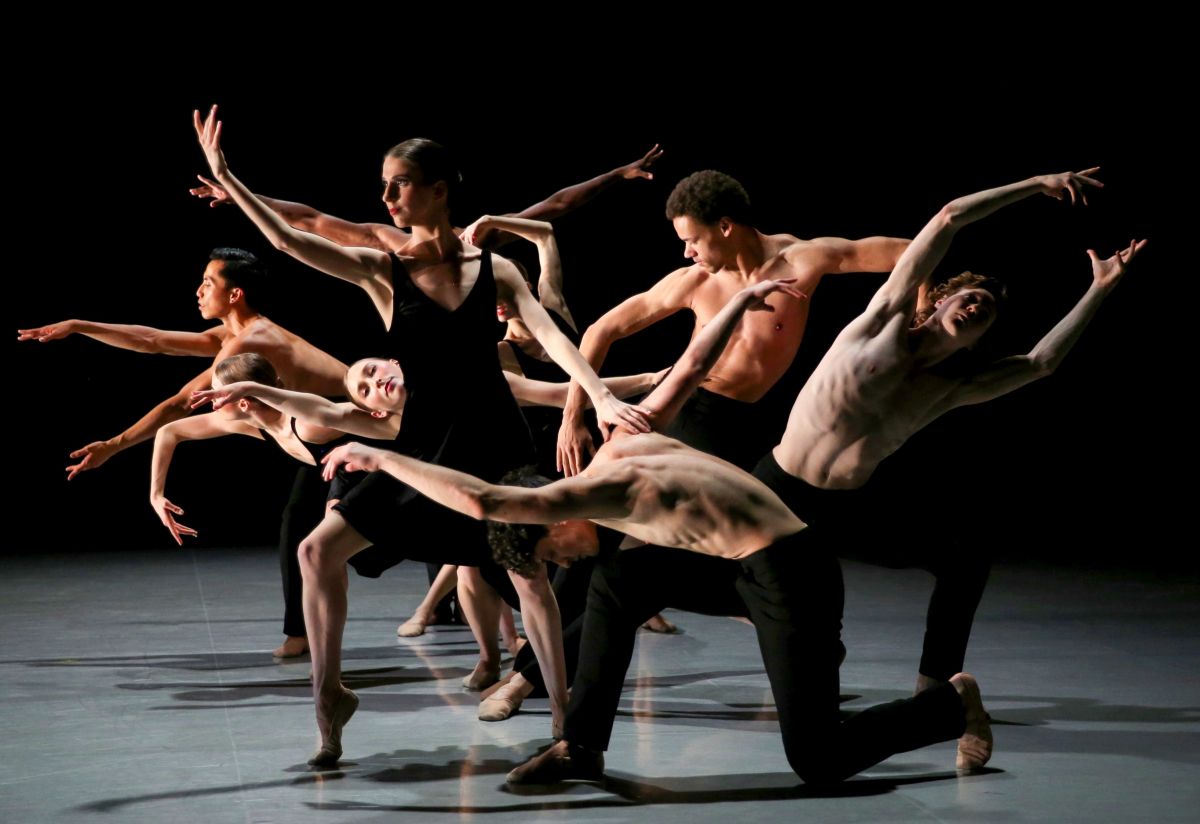
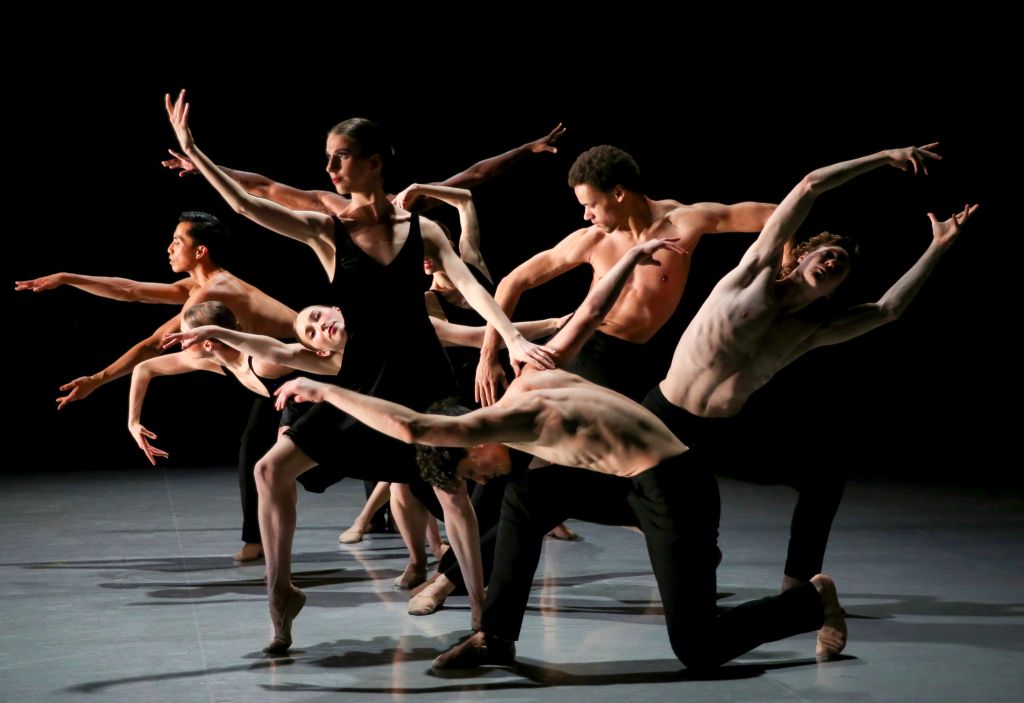
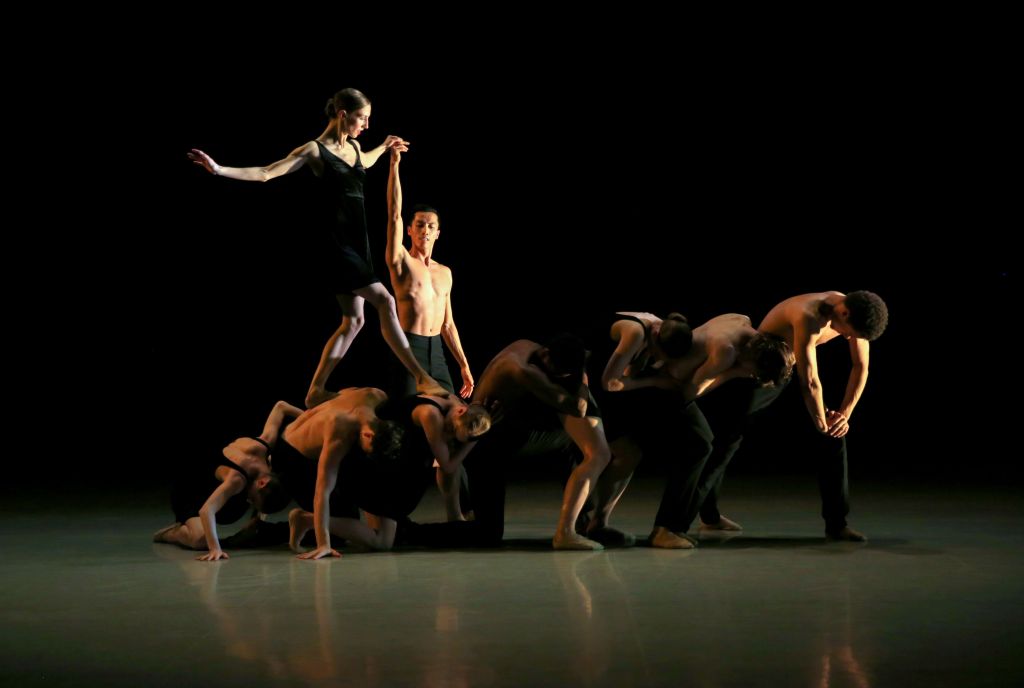
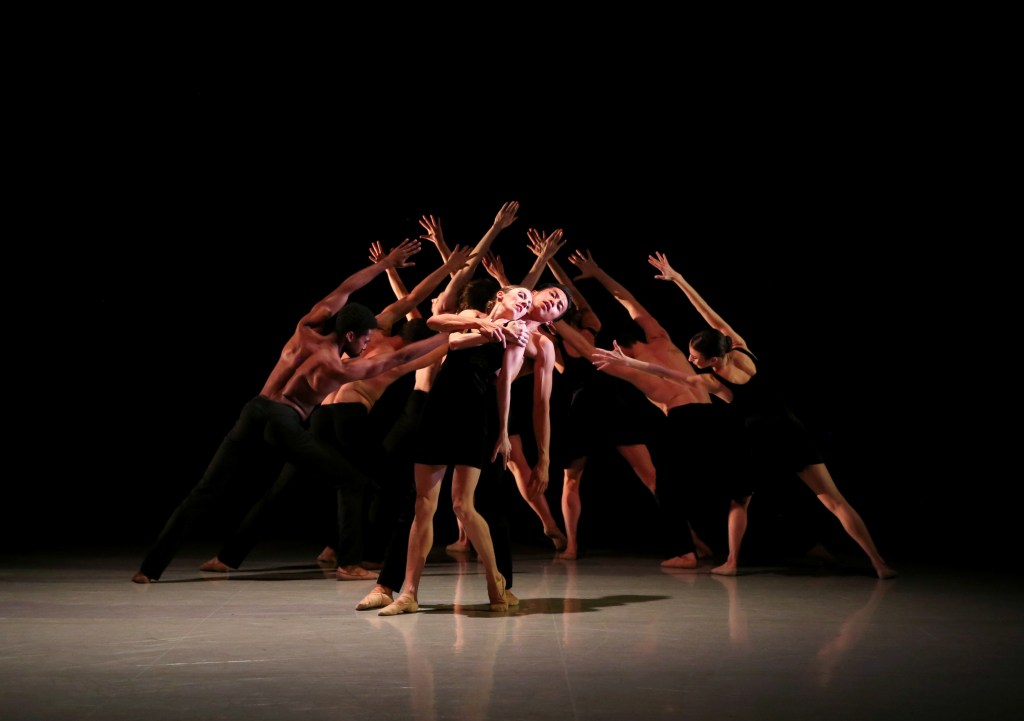
Ferguson, familiar to many as a company administrator in a variety of roles and to others as the company’s resident photographer, revived her interest in choreography during the days of the pandemic. She says that she now choreographs like a photographer, and her new work, “Lifeline,” has a juicy, languid quality. The dancers are often directly connected to one another, reaching, pulling, and stretching like an evolving organism. During the opening night post performance discussion, images of starfish and even armadillos were evoked to describe the organic and tidal movement that at times resembled the animated sculptural qualities of MOMIX or Pilobolus. The pod, the entity, the emerging and evolving unit, consisting of nine dancers in inky dresses and pants led by Sarah Joan Smith and Enrico Hipolito, were beautifully lit to create illusion of floating. The first of three works on the evening’s program, “Lifeline” received a standing ovation.

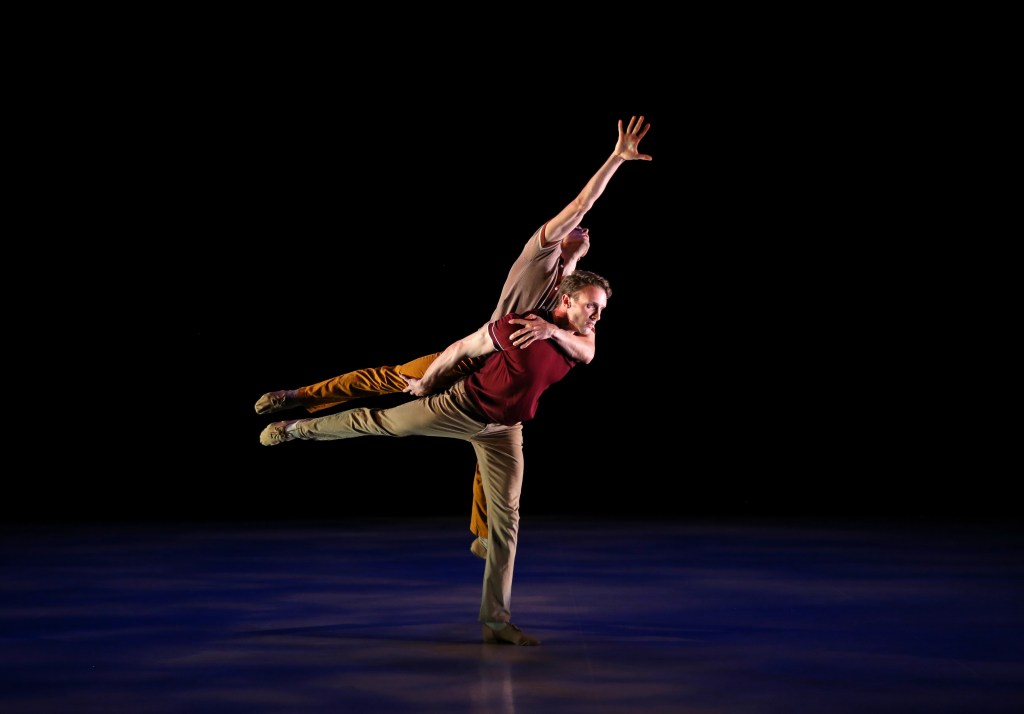
The color and flair of Archibald’s “Guess Who’s Coming to Dinner?” initially gave me a fleeting flashback of the high school dance scene in West Side Story but Archibald drew her inspiration from the film starring Sir Sidney Poitier and her own experience of growing up with interracial parents. Archibald likes to explore storytelling that is not grounded in Eurocentric narration and likes having a diverse cast of dancers to explore a range of human experiences. Her vocabulary seamlessly merges classical ballet with hip hop and jazz. Her women softly leap, are caught horizontally and lay out as if landing on a soft pillow instead of on two arms precariously molded over thin air. Then a swiping motion that could be playfully affectionate – or not – forces the receiving partner to duck. Timing is everything, and Archibald’s timing veers towards the daring and unexpected. For those familiar with modern dance history, her use of the ensemble is reminiscent of the exhilarating way Talley Beatty filled a stage with bodies and energy. If all goes as planned, Archibald is expected to return in November to lengthen “Guess Who’s Coming to Dinner?” into a full-length (i.e., 20-25 minute) ballet.

The second half of the Studio Three evening was given over to Skarpetowska’s beautifully lit and colorfully costumed “Kaleidoscopic Etudes.” Set to five Philip Glass etudes for piano and string quartet. Ferguson stressed that she choreographs like a photographer, but Skarpetowska’s new work is visually stunning with the floor and background representing two different versions of a kaleidoscope and the dancers’ playful attire carrying out the same color scheme of pink, lime green, and blue. Like an optical kaleidoscope, Skarpetowska’s movement and Glass’ music continually adjust and readjust, reflecting complex and constantly changing ephemeral patterns that seem on the brink of evoking a memory or telling a story. Sabrina Holland and Joe Seaton were featured in this work that is fueled by an exciting and slightly dangerous tension that teases with unexpected punctuation and then just as suddenly, it’s gone.

Studio Three Performance Schedule

Tuesday, March 22 @6:30PM (Choreographer’s Club)

Wednesday, March 23 @6:30PM

Thursday, March 24 @6:30PM

Friday, March 25 @6:30PM

Saturday, March 26 @5:00PM

Saturday, March 26@8:00PM

Sunday, March 27@1:30PM

Sunday, March 27@4:00PM (Final Program)

UPDATED COVID-19 Protocols (As of March 2022): Please note that we are seating at 100% capacity this season. Beginning with Studio Three in March, we will no longer require patrons to wear masks or to show proof of vaccination/negative COVID test in order to attend a performance.

MASKS: In light of the latest CDC guidelines and Central Virginia’s current “Low/Medium Community Level” status, masks are optional at these performances.

BALLET BARRE: The Ballet Barre (cashless) will be open for our spring Studio performances. Beer, wine, and soft drinks will be available for purchase pre-show as well as during intermission.

CHOREOGRAPHER’S CLUB: In addition to the exclusive Q&A session with the artists, designers, and dancers, we will host a modified post-show reception. More details will be found in your House Notes email.

WELLNESS CHECK: Patrons who do not feel well leading up to a performance are asked to stay home. If you have tested positive or have symptoms of COVID-19, please call our Box Office at 804.344.0906 x224 so that we may discuss ticket options.


Photo Credits: All photos by Sarah Ferguson.

One-Time
Monthly
Yearly

Make a one-time donation

Make a monthly donation

Make a yearly donation

Choose an amount

¤5.00
¤15.00
¤100.00
¤5.00
¤15.00
¤100.00
¤5.00
¤15.00
¤100.00

Or enter a custom amount

¤

Your contribution to support RVArt Review is appreciated.

Your contribution is appreciated.

Your contribution is appreciated.

Donate HEREDonate HEREDonate HERE

HOW I LEARNED TO DRIVE

How to Safely Tell an Uncomfortable Story

A Theater Review by Julinda D. Lewis

Produced by: The Conciliation Lab

At: The Basement, 300 E. Broad Street, RVA 23219

Performances: March 11-26, 2022

Ticket Prices: $35 General Admission; $25 Senior/Industry (RVATA); $15 Student/Teacher (with valid ID)

Info: (804) 506-3533; 349-7616 or https://theconciliationlab.org/

NOTE: The Basement is a fully vaccinated venue. Proof of vaccination or a negative COVID test within 48 hours of the performance must be shown at the box office and masks must be worn while at the theater.

The title of Paula Vogel’s 1998 Pulitzer Prize-winning play, How I Learned to Drive, is a metaphor for a story so complex that it defies stereotypes. Vogel presents people not as good or bad, victim or victimizer, but as multi-layered and flawed humans. The play is more layered – and even stickier – than a baklava (Greek pastry), and Vogel chose to tell the story in non-chronological order, making it seem even more realistic as the scenes bombard the audience in much the same way as our own memories might arise from the murky depths of an unsuccessfully buried past.

The primary characters in this fractured and dysfunctional family tale are Li’l Bit and Uncle Peck, her maternal aunt’s husband. It says a lot about the nature of this family unit that nicknames are derived from genitalia. The grandfather is Big Papa. Her little cousin is BB for Blue Balls, and her mother is referred to as the Titless Wonder. Li’l Bit, who is never identified by her real name, presented with petite genitalia at birth, and the name stuck, although from her teen years onward she is mercilessly bullied and teased by family and classmates alike for her ample bosom. Uncle Peck is an uncle by marriage, so I don’t think his name is part of this twisted roll call – but he makes up for it in other ways.

Both Li’l Bit and Uncle Peck are given stellar performances by Juliana Caycedo and Jeffrey Cole, respectively. These are the kinds of roles that make people look at you sideways when they encounter you in the produce section of the local supermarket. The rest of the cast – family members, classmates – is played by three actors: Bianca Bryan as the Female Greek Chorus, Mahlon Raoufi as the Male Greek Chorus, and Maggie Bavolack as the Teenage Greek Chorus.

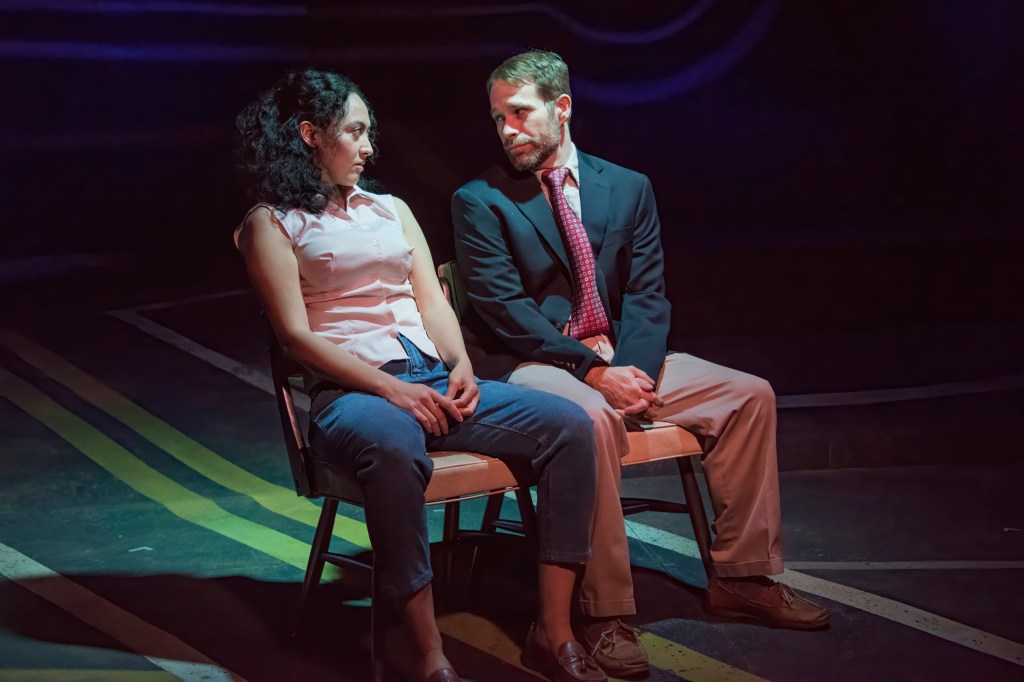
The story, narrated mostly by Li’l Bit with the help of the Greek Choruses, is a surrealistically humorous recounting of sexual abuse and survival cloaked in the guise of driving lessons. It is not surprising that Uncle Peck is an alcoholic; he is not the only one either. Li’l Bit also recounts the all too familiar pattern of women in the family who not only turn a blind eye to the abuse, but also blame the child for being seductive. Aunt Mary, Uncle Peck’s wife, blames Li’l Bit for her husband’s pedophilia (and incest?), waiting for Li’l Bit to go away to college so she can rekindle her marriage. Li’l Bit’s own mother reluctantly allows her daughter to go on a long drive to the beach with Uncle Peck, warning her that she will hold Li’l Bit – a child – responsible if anything happens. There are so many outrageous scenes like this, many of which may trigger memories in audience members as well as cast and staff, that it seems each performance should be followed by a talk-back with a therapist on hand.

How I Learned to Drive is so well performed and so well directed by Chelsea Burke that is should be required viewing. Caycedo is vulnerable and resilient. It is undoubtedly exhausting to play the role of Li’l Bit – especially knowing that there are thousands of Li’l Bits out there still fighting to survive. Cole presents as a really creepy guy, even as the role sometimes calls for him to present as a caring adult. He comforts Li’l Bit when she flees a family dinner, broken by the teasing about her large breasts and the family’s refusal to acknowledge her dreams of going to college. Who needs a college degree to lay on their back? That’s Big Papa’s perspective. Uncle Peck celebrates with her when she passes her driving test on the first try; but he also inappropriately plies her with martinis and oysters. What the hell is the matter with this man? The conflict is brought to the forefront when, at one point, Li’l Bit wisely wonders if someone had groomed or molested him when he was a child.

We applaud Li’l Bit’s survival and her ability to leave Uncle Peck behind, a diminishing image in her rear view mirror. At the same time, we weep for those who are still learning how to drive.

When I attended the Sunday matinee was followed by a talk back with members of the current cast and crew and members of the cast and crew of the 1998 performance, including cast members Gordon Bass and J.B. Steinberg and lighting designer Steve Koehler. The sharing was accompanied by memories and a few tears. Both were needed.

At the time of publication, there are only two more opportunities to see this run of How I Learned to Drive. If you can find a way to get there, run!

HOW I LEARNED TO DRIVE
by Paula Vogel

Directed by Chelsea Burke

THE CAST
Lil Bit…………………………………Juliana Caycedo
Peck……………………………………..……Jeffrey Cole
Female Greek Chorus…………….Bianca Bryan
Male Greek Chorus…………..…Mahlon Raoufi
Teenage Greek Chorus……..Maggie Bavolack

THE TEAM
Direction: Chelsea Burke
Scenic Design: Alyssa Sutherland
Projections Design: Dasia Gregg
Lighting Design: Deryn Gabor
Costume Design: Maggie McGrann
Sound Design: Candace Hudert
Properties Design: Kathy Kreutzer
Set Construction: Chris Foote
Scenic Painters: Faith Carlson, Alyssa Sutherland
Assistant Stage Management: Leica Long
Associate Direction: Nadia Harika
Dramaturgy & Intimacy Direction: Stephanie “Tippi” Hart
Production Stage Management: Crimson Piazza

THE SCHEDULE
Friday, March 11 at 8pm – Preview
Saturday, March 12 at 8pm – Opening Night
Thursday, March 17 at 8pm – Student Night
Friday, March 18 at 8pm
Saturday, March 19 at 8pm
Sunday, March 20 at 3pm – Matinee
Tuesday, March 22 at 8pm – Community Partner Night
Friday, March 25 at 8pm
Saturday, March 26 at 8pm – Closing Night

Photos by Tom Topinka

One-Time
Monthly
Yearly

Make a one-time donation

Make a monthly donation

Make a yearly donation

Choose an amount

¤5.00
¤15.00
¤100.00
¤5.00
¤15.00
¤100.00
¤5.00
¤15.00
¤100.00

Or enter a custom amount

¤

Your contribution to support RVArt Review is appreciated.

Your contribution is appreciated.

Your contribution is appreciated.

Donate HEREDonate HEREDonate HERE

Moments with MommaJ: #1

Moments With MommaJ – Thoughts But No Reviews: February 24, 2022

Since January 18, 2018, I have published 240 reviews in this blog space. (I wrote 238 and 2 of them were written by a young mentee.) That averages about 60 reviews each year, or 5 per month. And BTW, I welcome the comments and reviews of others. (There’s no pay, right now, but you get the satisfaction of seeing your words in print – or disagreeing with me.)

I started this venture – a safe space I call RVArt Review, a home for dance and theater – when the newspaper for which I had been writing dance and theater reviews for more than a decade suddenly and without explanation, decided they no longer had the space or funds to publish reviews. (There had been three of us writing about local theater productions and I was the first to be ghosted. And yes, I did ask for an explanation, some closure, something, but never got it.)

I have been writing about dance and theater since shortly after I started grad school in 1978. (I earned a BS in Dance and Dance Education from New York University in 1977 and returned in 1978 to begin work on my MA I the same department.) I took a course on writing dance criticism with Ernestine Stodelle. Ms. Stodelle had been a member of the pioneering modern Humphrey-Weidman Dance Company and later became a writer. She encouraged me to continue writing, and I have been writing ever since, first for a local publication in Brooklyn, then for The Black American weekly, occasionally for The Village Voice¸ nearly twenty years for Dance Magazine, and many free-lance assignments for newspapers, periodicals, academic journals, followed. After moving to Richmond in 1996, I wrote for The Richmond Free Press and The Richmond Times Dispatch. Just as I had to continue dancing after having two total knee replacements and a spinal fusion (in the same year), I had to continue writing, even as “professional” outlets began to disappear, because that is what I do. Since about age three I knew that I was called to dance, teach, and write.

Times change. The landscape of reviewing the arts must change, too. You may have noticed that I prefer the term “reviewing” over “criticism.” The former is a better fit for the conversational tone and sometimes rambling writing practice that suits me, while the latter sounds to me as if the writer sets out to find fault. I know, these are not the standard definitions, but hey, this is my space, so I get to make the rules. When you read what I have written, my hope is that you feel as if we are sitting down having a conversation. So yes, responses are appreciated.

I write about dance and theater because I love dance and theater. My first paid job was in a summer youth program in NYC where we did community service (cleaning parks, painting the yellow lines in front of fire hydrants) and put on full-scale theatrical productions. During my three wonderful summers in that program (approximately ages 13-15), I played the roles of Maria in West Side Story, Yenta in Fiddler on the Roof,  and a character whose name I cannot remember in a western, a “pioneer drama” called The Chips Are Down.

———-

You may be surprised to learn that even though I average 50+ reviews per year, I do not write reviews about everything I see. The standard for arts organizations  and publications I have been associated with has been to review only “professional” productions or those that meet a certain standard for number of performances, paid staff, and the like. But this is a new space, my space, and so I’m going to make some new rules, my rules. Sometimes, I want to talk a bit about people, places, and theater-making that might not meet the traditional standards for reviewing, whether it is a student or community theater production or a reading or just some interesting bit of history or a noteworthy nugget. So, here we are. Several paragraphs into this rambling rabbit hole of a journey, welcome to the first Moment With MommaJ – a space where I will occasionally share some thoughts on whatever I feel like, just because.

Here we are at the final weekend of February, and I’ve posted four reviews this month: A Doll’s House, Part 2, A Hotel on Marvin Gardens, Stonewallin’, and the ballet Romeo & Juliet. This month I also saw a few things I did not review, and I’m just gonna take a moment (a Moment with MommaJ) to write a few words about them before I sign off for the month.

On February 17 I attended a Pre-Assessment Concert for middle school and high school bands hosted by the Clover Hill Band Program in Chesterfield County. I was there to support my eldest grandchild, Kingston Marley Holmes, who plays percussion for the Manchester Middle School Advanced Band under the direction of Mrs. Elizabeth McHatton. Of course I was impressed to see Kingston confidently moving from tambourine to timpani as the percussionists are multi-instrumentalists (if that’s a word). My heart swells with pride and my eyes get a bit leaky whenever I see young people doing positive things and doing them well.

The Manchester Middle School Advanced Band, the Swift Creek Middle School Combined Band (directed by Mr. Jim Neiner) and Clover Hill High School’s Symphonic Band and Wind Ensemble (both directed by Mrs. Brianna Gatch) each offered three selections and it was a most satisfying evening. I am in no way qualified to evaluate or assess band music, but I can tell you that the level of skill, talent, dedication, commitment, and confidence I observed in these young people will take them far, whether they continue to study and play music or not. Bravo, young people. Bravo.

Then on February 19, I attended a performance of Intimate Apparel at VCU’s W.E. Singleton Center for the Performing Arts. A production of  the VCUarts Theatre Department, Intimate Apparel is directed by none other than Dr. Tawnya Pettiford-Wates (Dr. T). Written by Lynn Nottage, the play premiered at Center Stage in Baltimore, MD in February 2003 and opened Off-Broadway the following year. Set in New York City in 1905, the plot revolves around Esther, an African-American seamstress in her mid-thirties who lives in a boarding house and earns a decent living sewing intimate apparel. Her clients include a wealthy white woman, Mrs. Van Buren, and Mayme, a lady of the night with a heart of gold who happens to be a classically trained musician, who appears to be the conservative Esther’s best friend.

Esther longingly observes the other women who live in the boarding house, owned and managed by a dignified widow, Mrs. Dickson, get married and move away. She becomes impatient with biding her time, slowly saving to buy her own beauty parlor and hoping to meet a nice man to marry. Things start to look up when she begins to correspond with George. Introduced by  a mutual connection, they seem to have a lot in common. Like Esther, George has moved far from his home in Barbados to work on building  the Panama Canal. Like Ether, George, too, is lonely, and looking for a wife and a chance to own his own business. But things are not what they appear to be, and Esther ends up loosing both her man and her money – but not her mind. Bowed but unbroken, she returns to the boarding house and starts over. There is more, much more, but this is not a review and I don’t want to give away all the nuanced and multi-layered details, because I want you to see – or at least read – this one for yourself.

You know how some of us – many of us? – are just learning about some ignoble events in American history? You know…things like the bombing and burning of Black Wall Street or the flooding of African-American communities to build parks? Well, this is kinda the literary and theatrical version of that on an individual, social, economic scale.

Under the direction of Dr. T, Amaiya Howard (Esther), and Jonel Jones (George) bring this story to life, revealing bits of history while exploring human nature and traversing largely hidden, forgotten, or otherwise unfamiliar territory by way of a poetic and sensual Africanist storytelling aesthetic.

They are ably supported by Tatjana Shields (whose Mrs. Dickson reminds me of Claire Huxtable), Caroline Mae Woodson as the ingenuously innocent “white lady” is all too familiar, and Nia Simone as Mayme, a humorously bawdy prostitute. Hands-down, my favorite supporting role was that of Mr. Marks, the Hasidic owner of the tiny fabric store where Esther found her special fabric deals. Elijah Williams was so genuine in this role, he brought back memories of shop owners I encountered in Williamsburg, Brooklyn and the Lower East Side of Manhattan.

My only issue with Intimate Apparel is that, even with two intermissions, these old bones have a hard time sitting through an approximately three-hour production!

Finally, as I sit and write this Moment with MommaJ, I have just arrived home from a staged reading – the second in a series of four – presented by the new kid on the block, The New Theatre (TNT), with Nathaniel Shaw as Artistic Director and Vida Williams as Executive Director. Red Bike by Caridad Svich is a poetic duet of a play, simultaneously humorous and solemn. Amber Marie Martinez and Raven Lorraine Wilkes read the roles of two pre-teens growing up in small town America and claiming – not seeking, but claiming – their place in the world. It’s sometimes loud and unpredictable, and the viewer sometimes feels as if they are riding the handlebars as the actors’ virtual bikes speed downhill towards certain disaster. The author and text of Red Bike appear to be aligned with the mission of vision of The New Theatre, which has not yet begun turning out full productions.

TNT’s Mission is “to challenge and expand art and industry through innovation in project development, presentation, and community participation,” and their Vision is to become “an innovative American Theatre where we are all seen, where we are all welcome, where we are all inspired.” Visit their website to learn more about the new kid in town: thenewtheatreva.org.

Julinda D. Lewis, EdD is a dancer, teacher, and writer who was born and raised in Brooklyn, NY and now resides in Eastern Henrico County, RVA.

One-Time
Monthly
Yearly

Make a one-time donation

Make a monthly donation

Make a yearly donation

Choose an amount

¤5.00
¤15.00
¤100.00
¤5.00
¤15.00
¤100.00
¤5.00
¤15.00
¤100.00

Or enter a custom amount

¤

Your contribution is appreciated.

Your contribution is appreciated.

Your contribution is appreciated.

CLICK HERE TO Donate
TO rvart rEVIEW
CLICK HERE TO Donate
TO rvart rEVIEW
CLICK HERE TO Donate
TO rvart rEVIEW

ROMEO & JULIET

The Richmond Ballet’s ROMEO & JULIET: Shakespeare’s Family Feud on Pointe

A Dance Review by Julinda D. Lewis

By: The Richmond Ballet

At: Carpenter Theatre at Dominion Energy Center, 600 East Grace Street, RVA 23219

Performances: February 18-20, 2022

Ticket Prices: In-Person Tickets $25-$125

Info: (804) 344-0906, etix.com, or richmondballet.com

Romeo & Juliet
Choreography by Malcolm Burn

Music by Sergei Prokofiev

Performed by The Richmond Symphony,

Erin Freeman, Conductor

Scenery & Prop Design by Charles Caldwell

Costume Design by Allan Lees

Lighting Design by MK Stewart

It’s that time of year again. February. Some of us still have Valentine’s Day candy and flowers on our desks. It’s Romeo & Juliet season.

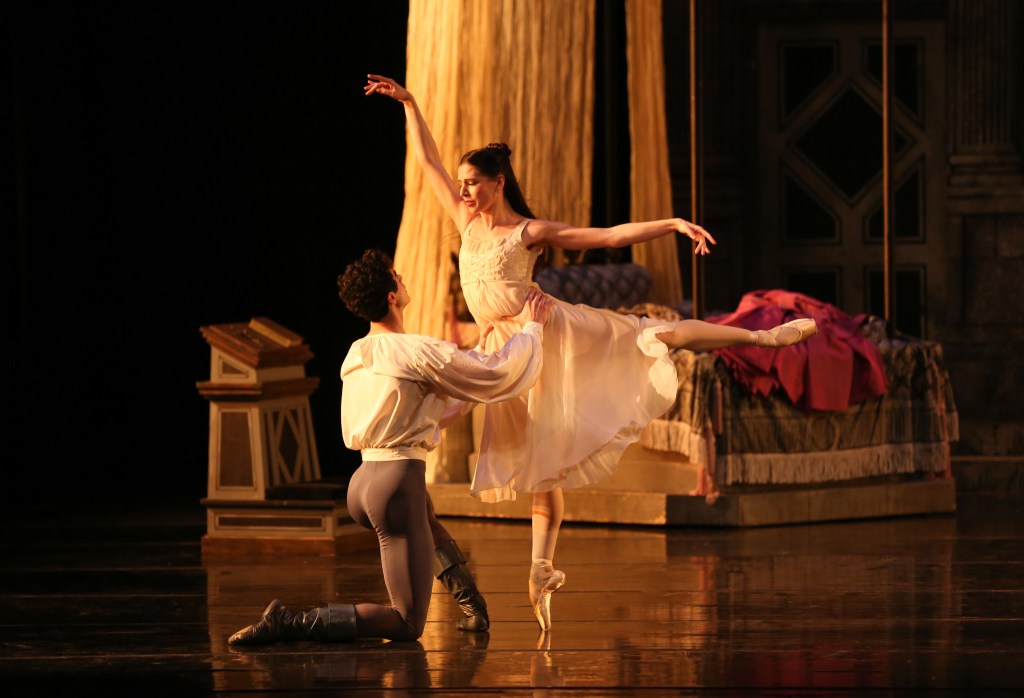
I’ve often mentioned to staff at the Richmond Ballet that my biggest – my only – problem with Romeo & Juliet,a ballet that is always performed around Valentine’s Day, is that it is one of the world’s greatest love stories, but the lovers end up dead at the end. Sigh. I think Romeo & Juliet has a higher body count than many action-adventure plots. But it also has some of the greatest – and largest – hats ever to appear on stage (kudos to costume designer Allan Lees).

On a serious note, Romeo & Juliet, running nearly three hours including two twenty-minute intermissions, is an immersive theatrical experience. There’s young love, friendship, family loyalty, classical ballet, folk dancing, comedy, drama, a fabulous score, and more.

This large-scale ballet, created by Richmond Ballet’s long-time Artistic Associate Malcolm Burn premiered August 1977 and was first performed by the Richmond Ballet in February 1995. The ballet includes a huge cast that highlights the students of the School of Richmond Ballet, the Richmond Ballet Trainees, and the Richmond Ballet II company. I found many of the supporting roles provided some of the most interesting and delightful moments of the evening.

Trainee Gabrielle Goodson was cast as the figure of Fate. A non-dancing role, Fate would appear before a death occurred. I never managed to see Goodson move, but suddenly she would appear or shift to a new position on stage. The black-robed and hooded figure was even more ominous because of the silence, stillness, and unimposing stature.

A trio of Harlots (Celeste Gaiera, Sarah Joan Smith, and Izabella Tokev) provided several amusing interludes, with their dancing (sassy romps through the crowd scenes and seductive moments with the men of the town – all of the men) as well as with their costumes (off the shoulder frocks and outrageous wigs that reminded me of a combination of Marge Simpson and the wigs worn by the step-sisters in the Cinderella ballet).

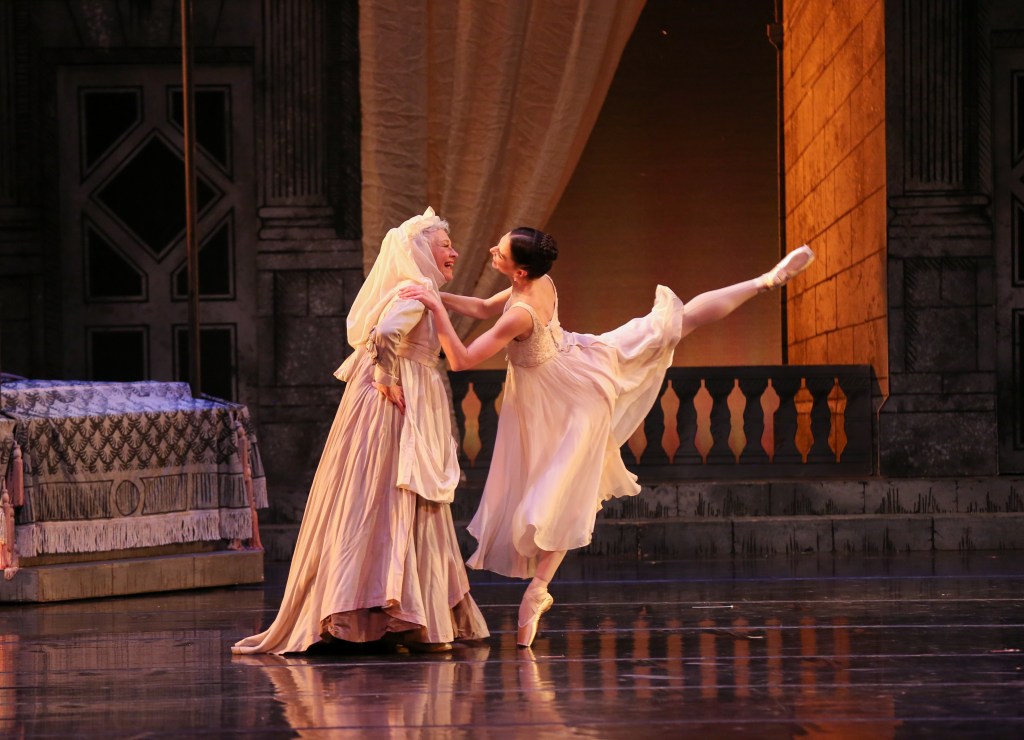
Among other supporting figures that made a big impact was Susan Israel Massey as Juliet’s Nurse. A character role that did not require much dancing, Massey was delightful: loving and loyal to Juliet, daring and subversive in her support of her young charge, and humorous in the marketplace scene.

Ma Cong, the company’s Associate Artistic Director, who took on his role in June 2020 in the midst of a pandemic, was cast in the role of Lord Capulet, Juliet’s stern and unyielding (abusive might not be too strong a word) father. If I am not mistaken, this was his first onstage appearance with the Richmond Ballet.

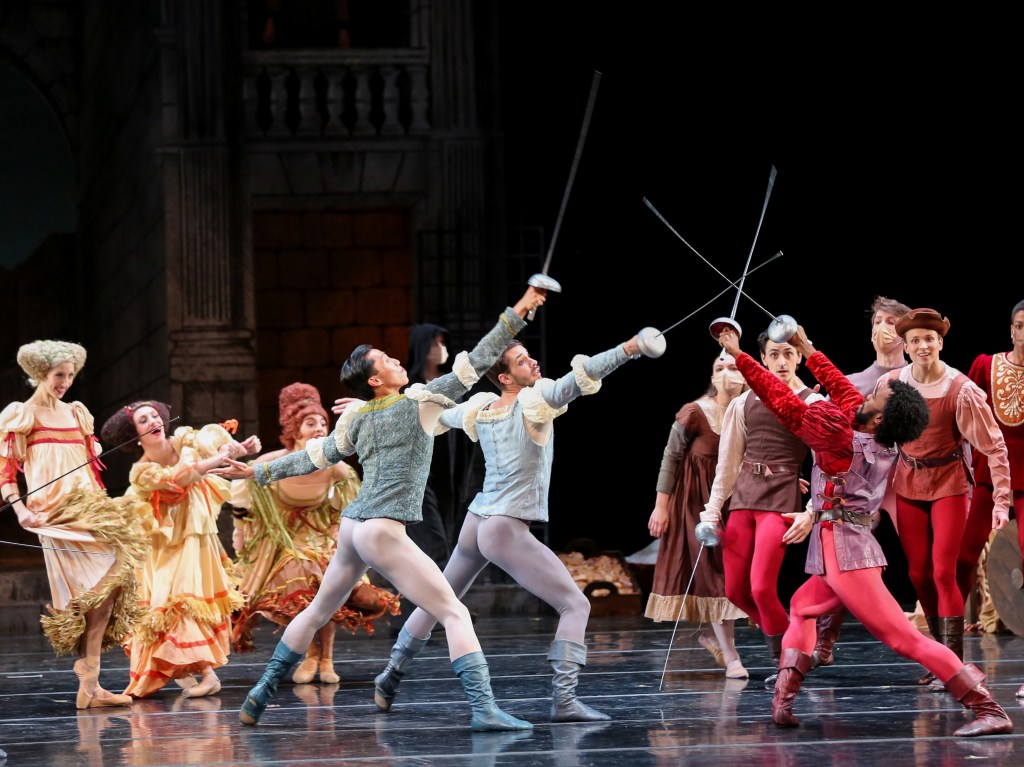
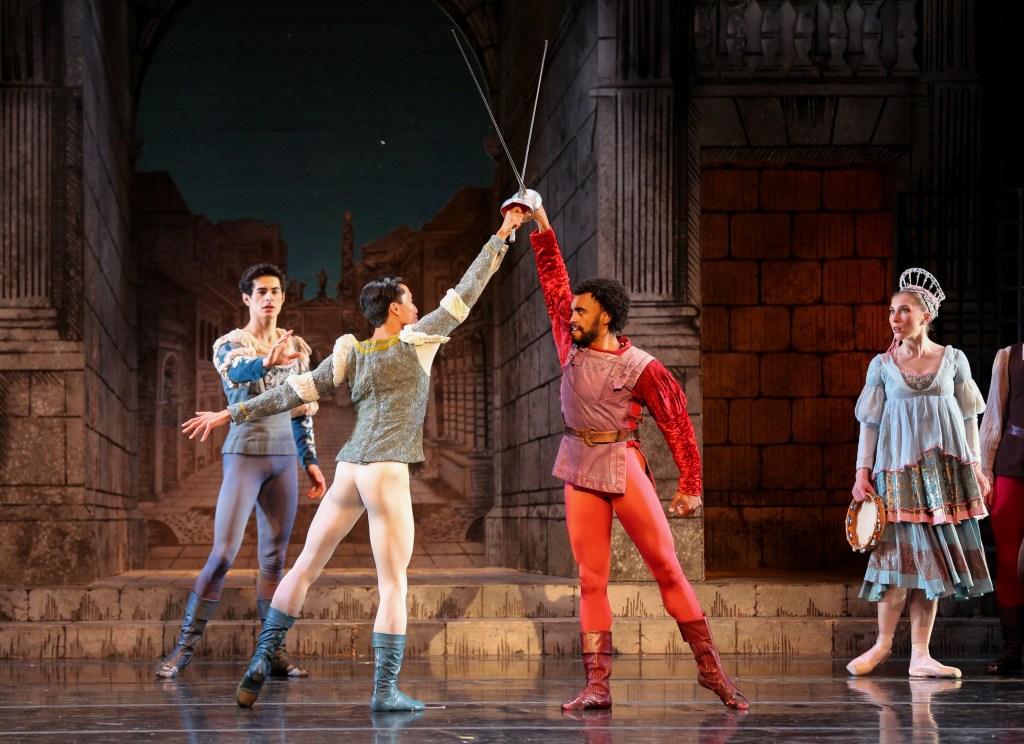
Ira White was thrilling in the role of Tybalt, Juliet’s passionate and short-tempered first cousin. White engaged in a lot of swordplay with the gentlemen of the rival House of Montague – Romeo and his sidekicks Benvolio (Colin Jacob) and Balthasar (Zacchaeus Page). The fight scenes lit up the stage with a perfect balance of athleticism and art.

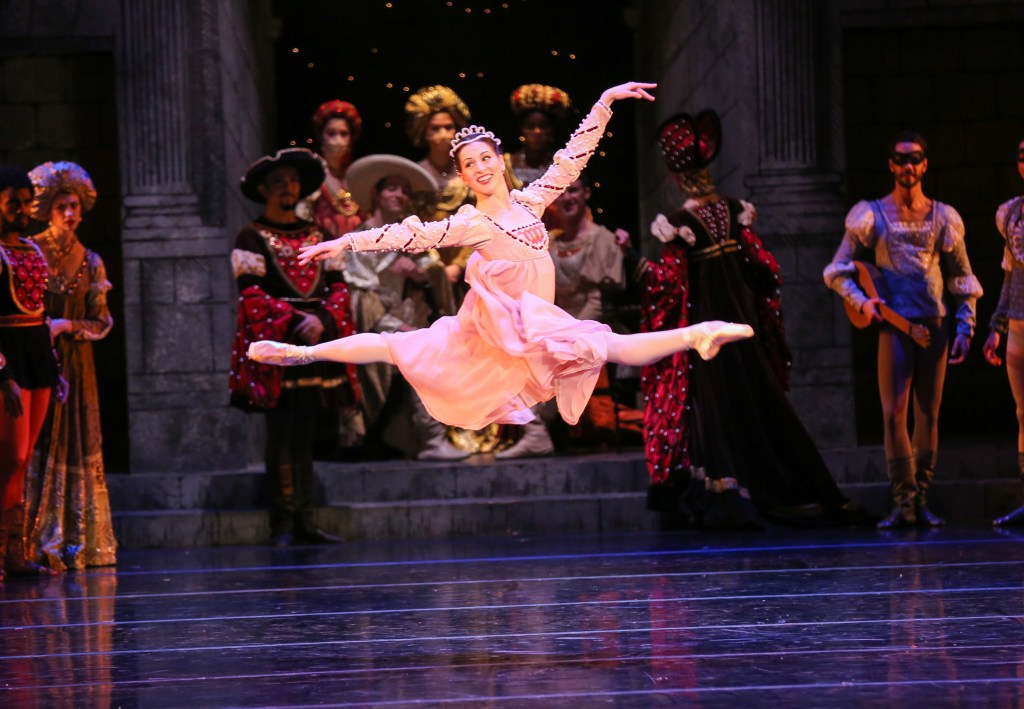
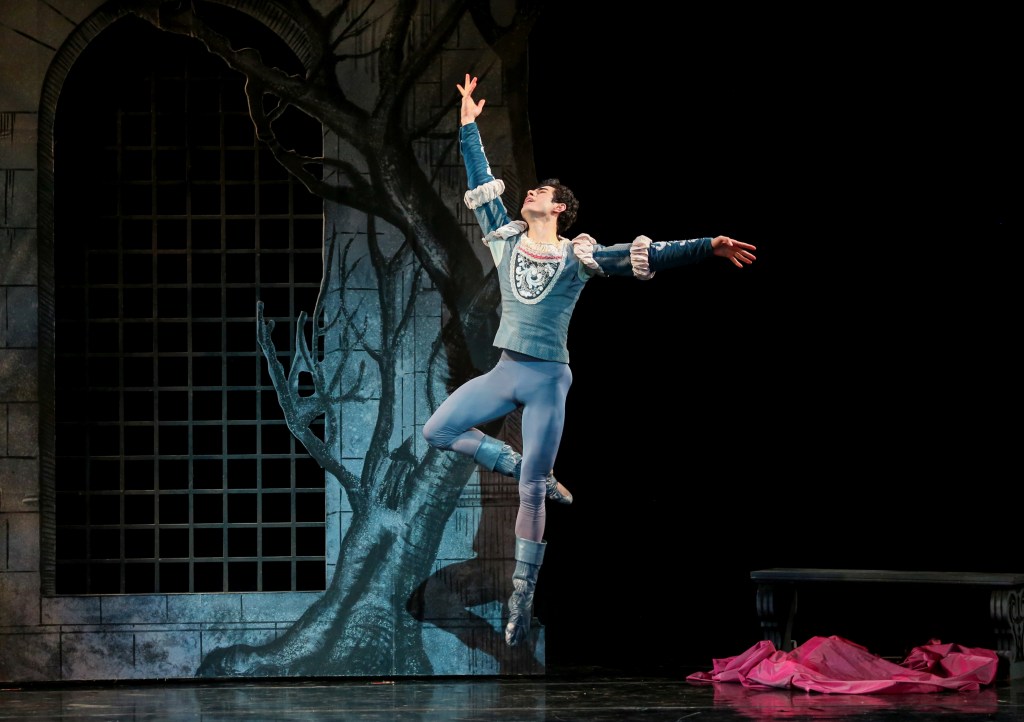
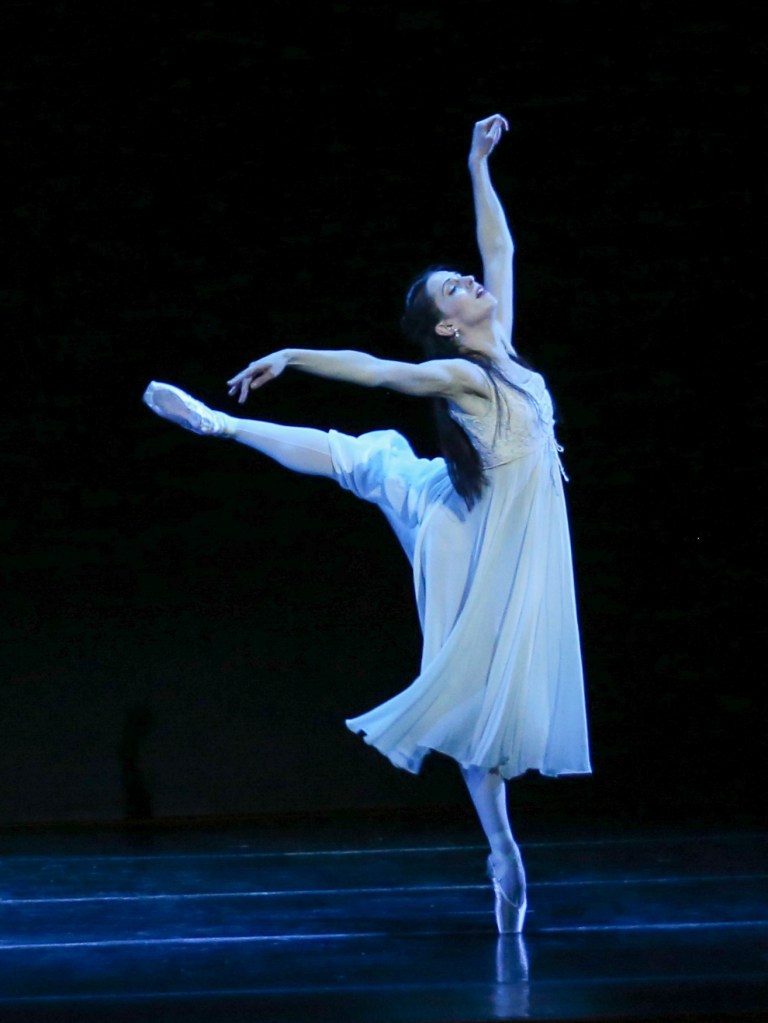
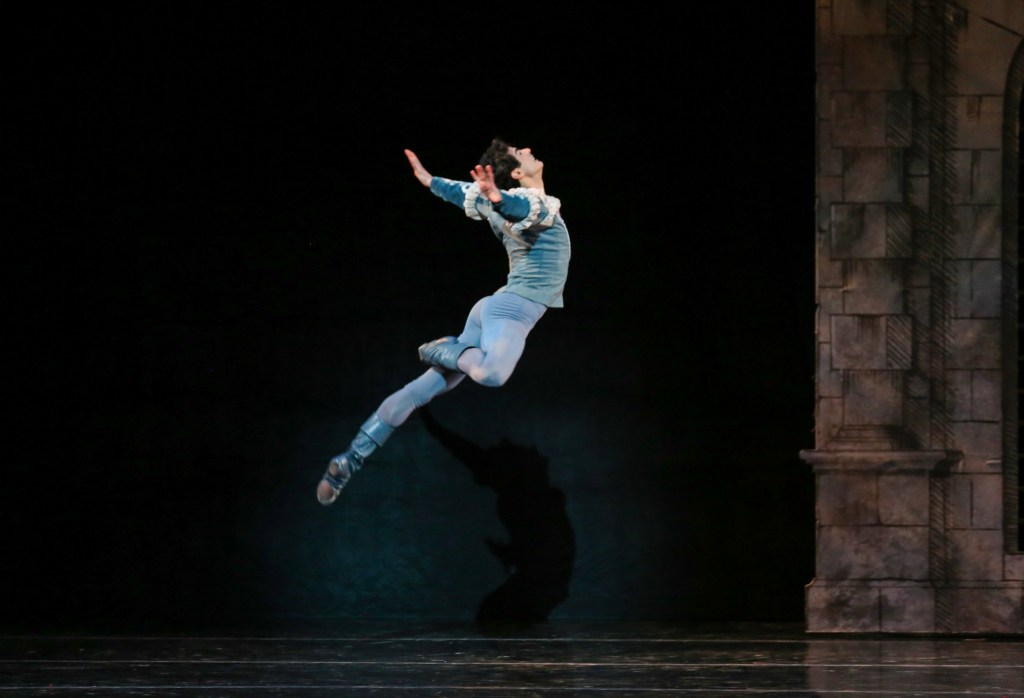
As for the title roles, Sabrina Holland danced the role of Juliet, and Khaiyom Khojaev was her Romeo, roles that require equal parts dancing, acting, and mime. There are no long dance scenes in Romeo & Juliet, and no grand pas de deux, so viewers must soak up every brief encounter, every precious stolen duet between the young lovers. The brevity of each encounter, each step, each lift makes their partnership all the more endearing. Personally, in his group scenes I would have liked to have seen Khojaev adopt some of the feistiness required of White. Tybalt certainly had confidence to spare. But in his solo turns Khojaev’s Romeo soared flawlessly.

Paris (Joe Seaton) the contender favored by Juliet’s parents (Ma Cong and Lauren Fagone), is given short shrift. Juliet flicks away his hand every time he tries to touch her. The poor guy is never even in the running. The tension and family dynamics in the scenes with Juliet, her parents, her nurse, and Paris is palpable and presages the unhappy ending that is sure to come.

Overall, Romeo & Juliet is a family-friendly ballet, and one that can be enjoyed by people who say they do not “understand” ballet. And if you don’t recall the details of Romeo and Juliet from high school, there is a handy scene-by-scene synopsis in the digital program. And the familiar score, played live by the Richmond Symphony, can easily stand alone.

I enjoy the intimate Richmond Ballet Studio Performances that are scheduled four times each season, but there is nothing like a full-scale, evening-length ballet and Romeo & Juliet is a personal and audience favorite, judging by the size, diverse composition, and positive reactions of Friday’s opening night house. At the time of this writing, there are two remaining opportunities to see this run of the Richmond Ballet’s Romeo & Juliet.

Julinda D. Lewis is a dancer, teacher, and writer who was born and raised in Brooklyn, NY and now lives in Eastern Henrico County, RVA.

Romeo & Juliet Performance Schedule

Friday, February 18 @7:00PM

Saturday, February 19 @7:00PM

Sunday, February 20 @2:00PPM

COVID-19 Protocols: Upon entering the theatre, all audience members ages 12 and above are required to show printed or digital proof of full vaccination against COVID-19 or of a professionally-administered negative COVID-19 test taken within 72 hours of the performance. Patrons ages 18 and above will also need to show a photo ID. All patrons ages 2 and above will continue to be required to wear masks. Eating and drinking are allowed only in designated areas of the lobby.


Photos of the Richmond Ballet’s Romeo & Juliet. Photos by Sarah Ferguson. All rights reserved.


One-Time
Monthly
Yearly

Make a one-time donation to support rvart review

Make a monthly donation

Make a yearly donation

Choose an amount

¤5.00
¤15.00
¤100.00
¤5.00
¤15.00
¤100.00
¤5.00
¤15.00
¤100.00

Or enter a custom amount

¤

Your contribution is appreciated.

Your contribution is appreciated.

Your contribution is appreciated.

Donate here to support rvart reviewDonate here to support rvart reviewDonate here to support rvart review

STONEWALLIN’

STONEWALLIN’

A Coming Out Story with Stonewall Jackson, Witch’s Spells, and a Bobolink

A Theater Review by Julinda D. Lewis

At: Richmond Triangle Players at the Robert B. Moss Theatre, 1300 Altamont Ave, RVA 23230

Performances: February 9-March 5, 2022.

Ticket Prices: $30-35; $10 for Students.

Info: (804) 346-8113 or rtriangle.org. Richmond Triangle Theater has returned to full-capacity seating and requires proof of vaccine or recent negative PCR test results for entry. See the theater’s website for their COVID-19 precautions, digital programs, and more.

The best comedy is relatable comedy. It often takes something from life – and it can be something bad – and pokes fun at it. By this standard, Kari Barclay’s new play – winner of Richmond Triangle Player’s So.Queer Playwriting Festival – is outrageously funny. It’s outrageous, period. The humor is a bonus.

STONEWALLIN’ features a “missing” statue of Thomas “Stonewall” Jackson (explaining the rabbit ears around “missing” would be a great big spoiler), a budding bi-sexual romance between a queer woman and a queer man, a friendship between a young Black man and an older white grandmother who spend some of their free time as Civil War re-enactors and some of their time together drinking whiskey and gossiping, and let’s not leave out a spell cast by a self-taught witch that has major unintended consequences. Surprisingly, it all fits together like a gigantic jigsaw puzzle.

STONEWALLIN’ is set in the author’s hometown of Lexington, VA, home of Washington and Lee University and Virginia Military Institute. Other points of interest include the gravesites of Robert E. Lee and Stonewall Jackson as well as the residence of Jackson, a Confederate general. More recent notoriety include the Red Hen Incident; in 2014 then White House Press Secretary Sarah Huckaby Sanders was asked to leave the Red Hen Restaurant because of her role in the Trump Administration. All of this – and more — finds a home in STONEWALLIN’.

What also makes its way into STONEWALLIN’ is a stellar cast, consisting of Levi Meerovich as Tommy Jackson (a direct descendant of Stonewall Jackson), Nora Ogunleye as Marsha Lyons (a transplant from Berkeley, CA who is staying temporarily with her brother while reconnecting with her family roots), Jacqueline Jones as Mamaw Jackson (grandmother of Tommy and a staunch proponent of “heritage, not hate”), Trevor Lawson as Elijah Lyons (brother of Marsha and apparently the proprietor of an unnamed small business), and Chandler Hubbard as General Stonewall Jackson.

While Meerovich and Ogunleye rightfully take the leading roles as the unlikely young couple and share a relationship that is at once endearingly awkward and reluctantly intimate, it is Jacqueline Jones who steals my heart – and the show – as the sassy and sometimes deliberately daft Mamaw. She’s a rebel with or without a cause, just for the hell of it. She argues with her friend Elijah as they return from one of their Civil War re-enactment engagements, yet promises to rally her (Confederate) Flagger friends to support his housing project. She cannot fathom the emerging gender identity of her grandson – grandchild — Tommy, whose preferred attire is some variation of a black dress and earrings, and finds it more acceptable that he would have a relationship with a Black woman than that he could be gay. What a perfect example of the dilemmas posed by the state of affairs in which we currently exist.

Want further proof of how close to home this show hits? Barclay’s world premiere opened the same month that the bases of confederate statues right here in Richmond were being removed. (For those readers not familiar with what’s going on here in Richmond, the recently removed Confederate statues from Monument Avenue and other areas of the city are slated to be given to the local Black History Museum and Cultural Center of Virginia.) As for Elijah, he walks a delicate line between liberal political activist and moderate citizen of a small southern town. Lawson emanates the right demeanor – a balance of impassioned persuasion and moderate reason – to carry this off with authenticity. [Lawson recently appeared in VaRep’s Barefoot in the Park, December 2021https://jdldancesrva.com/2021/12/18/barefoot-in-the-park/and Pipeline,October 2021 https://jdldancesrva.com/2021/10/16/pipeline/]

Chandler Hubbard eases all too comfortably into the role of a southern gentleman who all too easily says things that would have been perfectly acceptable in his day but are seen as searingly offensive and racist in 2022. STONEWALLIN’ is a whole hoot and a holler of a show. Barclay has found the key to talking about difficult subjects, not only making them palatable, but mining] the humanity and liberally seasoning them with humor.

Raja Benz, who also directed Pink Unicorn at RTP [July- August 2021 https://jdldancesrva.com/2021/07/31/the-pink-unicorn/], directed this new work with insight and a big pinch of irreverence. Credit Frank Foster with the scenic design – a Stonewall Jackson pedestal that can be disassembled to create whatever minimal set pieces might be needed for any given scene – and Michael Jarett with the lighting design. Kudos to Candace Hudert for an appropriate and interesting sound design. All the elements – including rearranging the audience seating so that some were actually seated onstage – worked together to create an energized, intimate, and welcoming atmosphere. The ending is left somewhat inconclusive, leaving open the possibility for more to come.

STONEWALLIN’ runs through March 5, so there’s still time to go and find out about that “missing” statue.


Julinda D. Lewis is a dancer, teacher, and writer who was born in Brooklyn, NY and now lives in Eastern Henrico County, VA.

STONEWALLIN’ – A World Premiere

Written by Kari Barclay, winner of RTP’s Inaugural So.Queer Playwriting Festival

Directed by Raja Benz

CAST:

Tommy Jackson………………………  Levi Meerovich

Marsha Lyons ………………………..   Nora Ogunleye
Mamaw Jackson …………………….  Jacqueline Jones

Elijah Lyons ……………………….….  Trevor Lawson

Stonewall Jackson ………………….. Chandler Hubbard

CREATIVE TEAM:

Scenic Design by Frank Foster

Costume Design by Claire Bronchick

Lighting Design by Michael Jarett

Sound Design by Candace Hudert

Hair and Make Up Design by Carolan Corcoran

Properties Design by Tim Moehring

Dramaturg Katharine Given

Intimacy Choreographer Kirsten Baity

Dialect Coach Louise Casini Hollis

Assistant Director Kendall Walker

Assistant Intimacy Choreographer Kevin Kemler

Technical Director Rebecka Russo

Assistant Stage Manager Dwight Merritt

Production State Manager Kasey Britt

Photo Credits: Tom Topinka

One-Time
Monthly
Yearly

Make a one-time donation

Make a monthly donation

Make a yearly donation

Choose an amount

¤5.00
¤15.00
¤100.00
¤5.00
¤15.00
¤100.00
¤5.00
¤15.00
¤100.00

Or enter a custom amount

¤

Your contribution is very much appreciated.
Thank you!

Your contribution is appreciated.

Your contribution is appreciated.

CLICK HERE TO SUPPORT
RVART REVIEW
CLICK HERE TO SUPPORT
RVART REVIEW
CLICK HERE TO SUPPORT
RVART REVIEW

A HOTEL ON MARVIN GARDENS

A HOTEL ON MARVIN GARDENS

“All I want is to run everything and always be right.” – K.C.

A Theater Review by Julinda D. Lewis

CAT – Chamberlayne Actor’s Theatre

At: Dogtown Dance Theatre, 109 W. 15th St., RVA 23224

Performances: February 4 – 12 2022

Ticket Prices: $24.00 General Admission. $20.00 Seniors

Info: http://www.cattheatre.com

Watching four other people play a game of monopoly could be about as exciting paint dry, After all, it is a long and sometimes slow-moving game, and not exactly the sort of thing that draws spectators. Yet this is exactly what playwright Nagle Jackson expects us to do.

Under the smart direction of Amber dePass, and with an amiable cast led by Crystal Oakley, A HOTEL ON MARVIN GARDENS is both an amusing evening of live theater and an opportunity to use a board game that celebrates capitalism as a metaphor for the use and mis-use of corporate power.

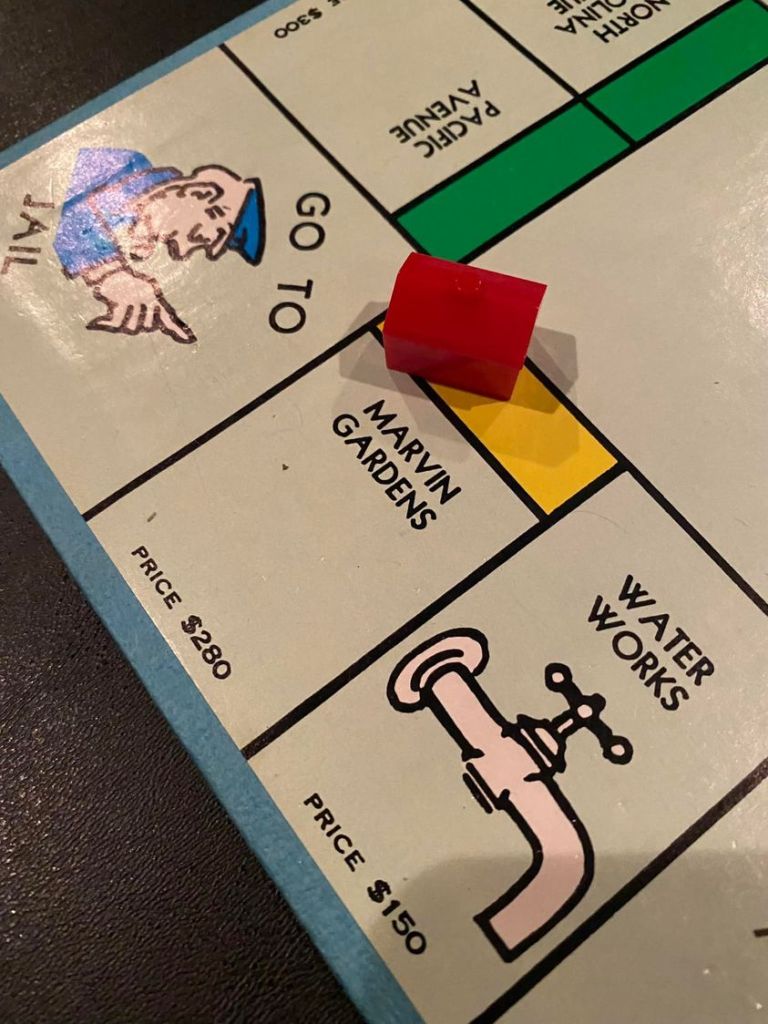
Set on a private island whose owner and sole resident, K.C. has named her magazine ME, A HOTEL ON MARVIN GARDENS ironically takes place on April Fool’s Day. It is a long-standing tradition for K.C. to host an annual gathering on April 1st, the centerpiece of which is a game of Monopoly that comes with a boatload of unwritten rules. K.C. always gets the top hat. K.C. always gets Marvin Gardens, the most expensive property on the board. And K.C. always wins.

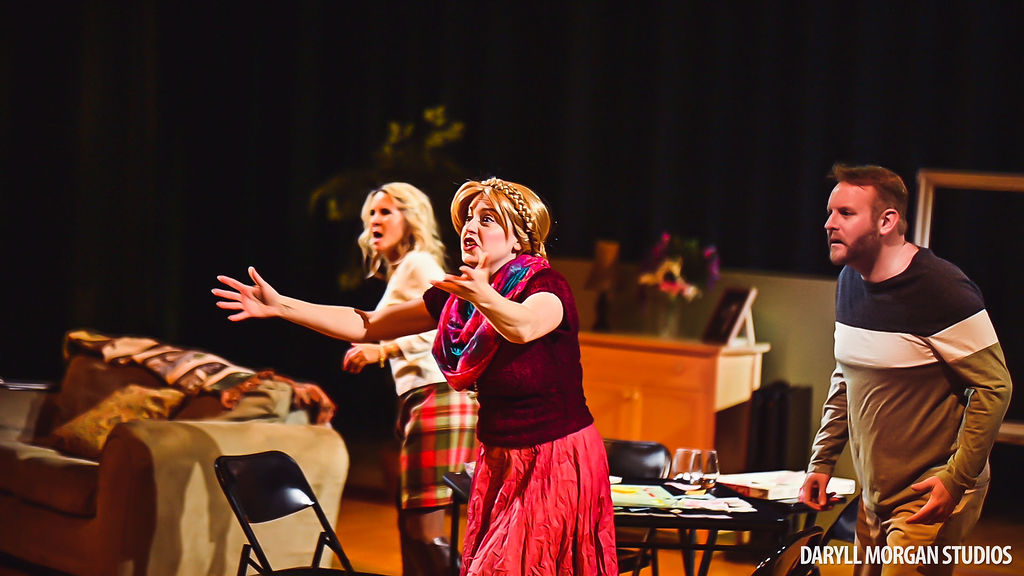
On this occasion, K.C. (Oakley) is joined by her publisher and weekend lover Bo (Aaron Willoughby), her Managing Editor Henry (Joshua Mullins) whom she plans to fire after the party, and his plus one, Erna (Kyle Billeter) who is the magazine’s food editor. At the end of Act One, just as we’re beginning to think this is going to be a long and uneventful day, the author shakes things up by tossing in a surprise visitor. Rose (Liv Meredith) found herself stranded after turning down the advances of her date; angered, he gets in his little boat and leaves her stranded on the island in the middle of a storm. Rose surprises many in the audience when she reveals she is a teacher. Her language and demeanor could have belonged to a high school or college student, but Henry soon takes note of her.

Willoughby’s Bo is a low-key and suitable foil for Oakley’s over-bearing and narcissistic K.C.

I’m not sure what to think of Henry. At times he stands up for himself with confidence, at times he gives in to pretentious free-spirited outbursts, and then there are those other, uncharacterizable moments. I personally was outraged when, during a scheduled bread in K.C.’s precise schedule for game day, Henry went outside and urinated on the rocks – only to come back inside, pick up his drink, and return to the bar without washing his hands!

Billeter’s portrayal of the quirky food critic Erna is undoubtedly the most lovable character. And of course, she raises K.C.’s hackles. No one appears to notice when, on at least two separate occasions, Erna drops her indeterminate European accent when reminiscing about the joys of tuna melts and tuna casseroles, and even lets it slip that her mother was the Queen of Velveeta. Hmm.

A HOTEL ON MARVIN GARDENS seemed to be just what the welcoming audience needed. It was also a minor triumph for CATTheatre, which became a nomadic troupe in the  midst of a pandemic. Their first show after emerging from behind masks was performed at Atlee High School. This one found a home at Dogtown Dance Theatre in Manchester, and the next performance will head west to HatTheatre. Undaunted, the show must go on! A HOTEL ON MARVIN GARDENS has one more weekend of performances, February 11 & 12, at Dogtown Dance Theatre. Just remember, K.C. always gets the top hat and K.C. always wins – even if it means she’s left all alone. Oh, and enter K.C.’s kitchen at your own peril. And you should probably avoid the Pump House…

Julinda D. Lewis is a dancer, teacher, and writer who was born in Brooklyn, NY and now lives in Eastern Henrico County.

A HOTEL ON MARVIN GARDENS

Written by Nagle Jackson

Directed by Amber dePass

Cast

K.C.                Crystal Oakley

Bo                   Aaron Willoughby

Henry              Joshua Mullins

Erna                 Kyle Billeter

Rose                Liv Meredith

Design Team

Stage Manager            Nancy McMahon

Assistant Stage Manager, Costume Design, Set Dresser        Jenn Fisher

Lighting Design          Kaylin Corbin

Set Design                   Andrew Way

Ticket Information

www.cattheatre.com

Ticket prices range from $24.00 General Admission. $20.00 Seniors.

Run Time

The play runs about 1 hour 50 minutes including 1 intermission

Photo Credits: Daryll Morgan Studios

———-

One-Time
Monthly
Yearly

Make a one-time donation

Make a monthly donation

Make a yearly donation

Choose an amount

¤5.00
¤15.00
¤100.00
¤5.00
¤15.00
¤100.00
¤5.00
¤15.00
¤100.00

Or enter a custom amount

¤

Your contribution is appreciated.

Your contribution is appreciated.

Your contribution is appreciated.

Donate HERE TO SUPPORT
RVART REVIEW
Donate HERE TO SUPPORT
RVART REVIEW
Donate HERE TO SUPPORT
RVART REVIEW

A DOLL’S HOUSE, Part 2

Nora Returns 15 Years After Slamming That Door

A Theater Review by Julinda D. Lewis

At: The November Theatre Arenstein Stage, 114 West Broad Street, RVA 23220

Performances: February 4 – 27, 2022

Ticket Prices: $36-$56. Discounted group rates and rush tickets available.

Info: (804) 282-2620 or www.virginiarep.org

If Nora and Torvald were on social media, there is no doubt their relationship status would be, “It’s Complicated.” When Nora walked out of the home she shared with her husband Torvald at the end of Ibsen’s play, A Doll’s House (1879) it was described as “the slam heard ‘round the world.” Nora’s decision to leave her husband and children was so scandalous Ibsen was forced to write an alternate ending. For 138 years people were left to ponder what happened to Nora.

In 2017 American playwright Lucas Hnath provided us with some of the answers. A Doll’s House,  Part 2 begins with a knock on the door – the same door Nora slammed in 1879. Opening the door to self-exploration was also an open invitation for scandalous speculation and unstoppable feminist progress. Hnath has Nora return after a fifteen year absence to settle some unfinished business.

It is both fascinating and satisfying to see Katrinah Carol Lewis, who played Nora in a 2018 production at what was then TheatreLab, The Basement. In December 2018 I described Lewis’ performance as Nora as one of her most highly charged among many challenging roles. “With her naturally large eyes accented by makeup, and in the intimate space of The Basement, it was easy to see every nail biting emotion, to hear every breath, to practically feel her trembling.” [Follow this link to read my entire review of Ibsen’s A Doll’s House: https://jdldancesrva.com/2018/12/08/a-dolls-house-well-shut-the-door/.]

Nora in 1894 is no trembling bride. Her first knock at the door is confident; the second is commanding. She wears the finest clothes, and sits  with her legs spread apart and leaning forward, forearms resting on her thighs, in her straight-backed chair. In many ways, both financial and experiential, this older and wiser Nora has achieved success. But as the story unfolds, it becomes obvious that in more ways than she would like, the new Nora has retained much of the old Nora.

Ibsen’s A Doll’s House is not a prerequisite for Hnath’s A Doll’s House, Part 2. There are plenty of references to Ibsen’s work to fill in the essential background, but if you are familiar with the original, and even better, if you have seen Lewis in the original, it is a much more fulfilling journey.

Lewis and David Bridgewater, who plays Torvald in this new production, circle around each other like wary cats, avoiding physical contact – or even eye contact – until their climactic scene in the final third of the play. Then their explosive interaction reveals to the audience that what Nora has endured in search of the elusive “true marriage,” a marriage of equals, was right under her nose the entire time. In one fleeting moment, the estranged couple drop their masks, we glimpse the manifestation of what she always wanted, and before we can fully absorb it, before we can get all sentimental about it, it is gone – and so is she. Again. While A Doll’s House, Part 2 answers many questions raised in the original, it leaves us with just as many, if not more, than we had before.

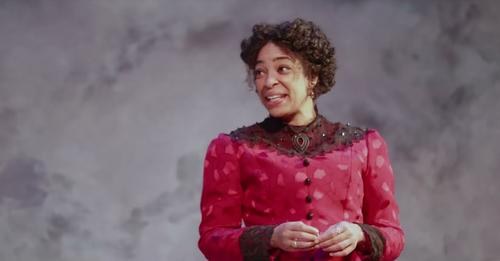
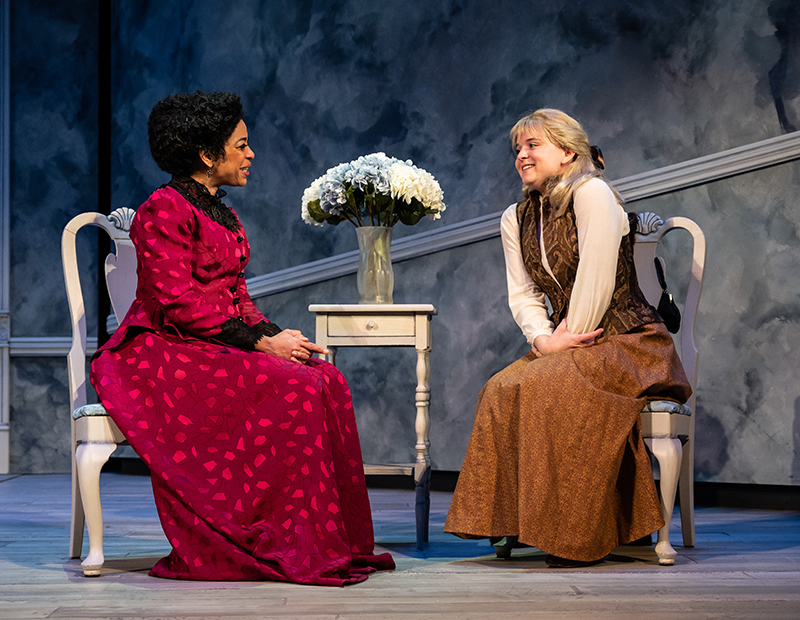
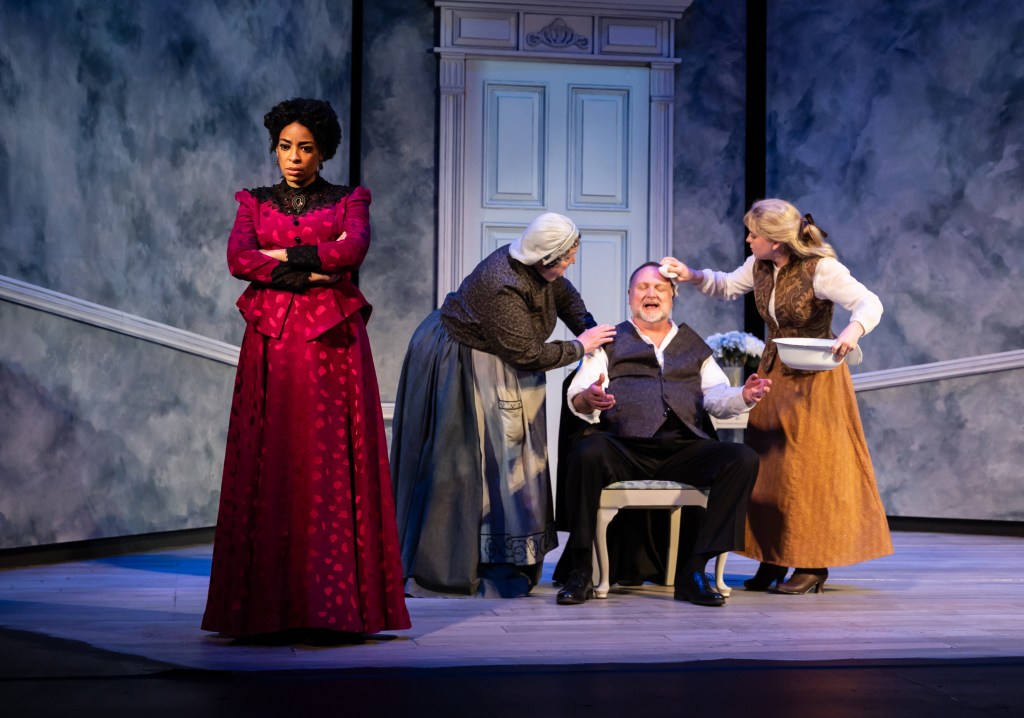
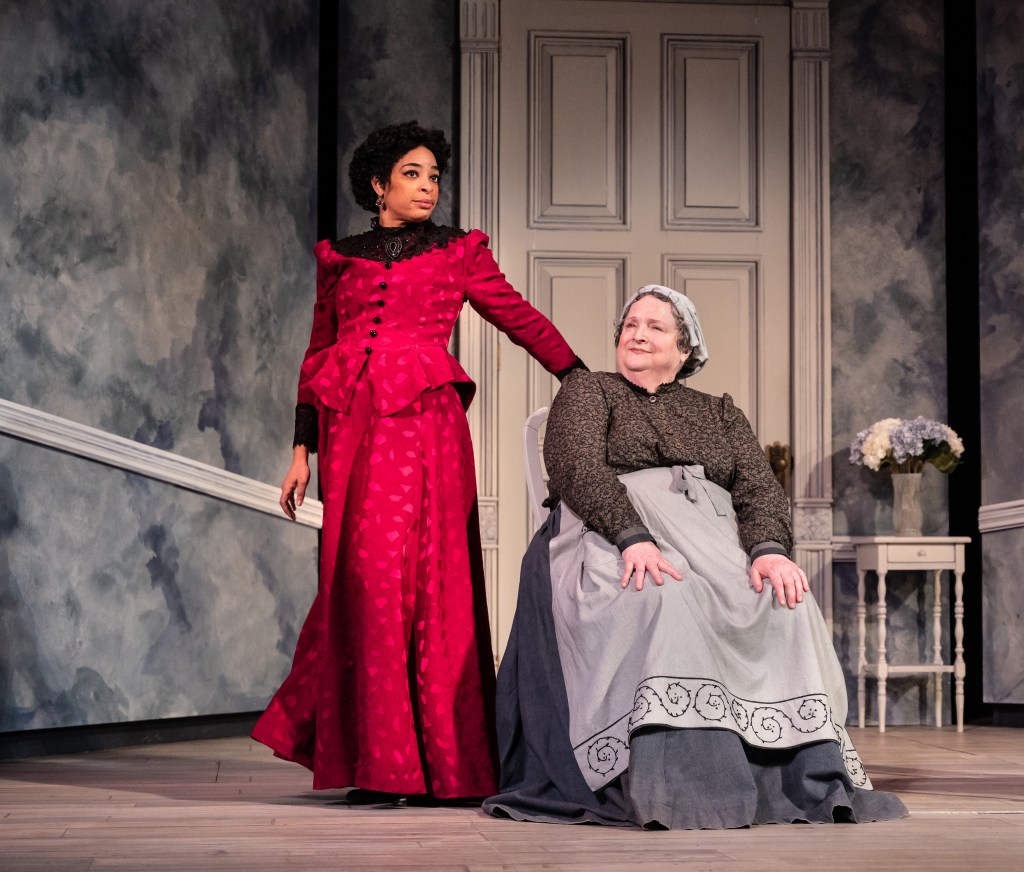
Everything in A Doll’s House, Part 2 has been pared down. The set consists of two elegantly painted or papered walls, a gigantic door, two formal straight-backed chairs, and a small table holding a vase of flowers. The little details that make the space a home have been omitted – or, as Anne Marie says, anything that belonged to Nora was thrown away when she left. The cast has been pared down to just two leading actors (Lewis and Bridgewater) and two supporting actors: Catherine Shaffner as the beleaguered nanny turned housekeeper, Anne Marie and Katy Feldhahn as the Helmer’s youngest child, Emmy. The play itself has been paired down, from Ibsen’s three acts and two intermissions to a 90-minute production performed without intermission.

What has not been pared down is the family dysfunction. Emmy, who has spent the better part of her life without a mother is so much like Nora it’s shocking. As a child, Emmy asked her two older brothers to tell her what they remembered about their missing parent. It may be a genetic or spiritual connection but neither of them seems to be aware of it – or, perhaps, it is just their habit to deny the obvious. Shaffner, in the role of Anne Marie who raised young Nora as well as her children, provides important connecting links between the past and the present, as well as a few welcome comedic outbursts of foul language.

Sharon Ott’s direction retains the main characters’ affectations and packs a lot of emotions and family drama into a much shorter production time. Although there did seem to be a bit of a lull bnear the end of the first half, Emmy’s appearance turned up the heat – and her Option 3 turned the tables on Nora.

Nora and Torvald are not likeable people, but they are familiar. We know people with some of their least likable characteristics. They are members of our own families and sometimes they are us. A Doll’s House, both the original and Part 2, was not intended to give the viewer a satisfying or happy ending. Both make us question gender, marriage, institutions, laws, and systems. They force us to look at the familiar from new perspectives and encourage us to question why we accept things the way they are – and consider what might happen if we walk out the door, or even knock it off its hinges.

Julinda D. Lewis is a dancer, teacher, and writer who was born in Brooklyn, NY and now lives in Eastern Henrico County.

A Doll’s House, Part 2

By Lucas Hnath

Cast

Nora                                                                Katrinah Carol Lewis

Torvald                                                            David Bridgewater

Anne Marie                                                     Catherine Shaffner

Emmy                                                              Katy Feldhahn

Nora Understudy                                          Donna Marie Miller

Torvald Understudy                                    David Watson

Anne Marie Understudy                            Lisa Kotula

Emmy Understudy                                       Sharaia Hughes

Direction & Design

Direction Sharon Ott

Assistant Director                                        Cam Nickel

Scenic Design                                                 Katherine Field

Costume Design                                            Sue Griffin, Marcia Miller Hailey

Lighting Design                                             BJ Wilkinson

Sound Design                                                  Jacob Mishler 

Stage Management                                      Shawanna Hall

Ticket Information

Box Office: 804-282-2620

www.virginiarep.org

Ticket prices range from $36 – $56/

Discounted Group Rates and Rush tickets are available.

Run Time

The play runs about one hour and 35 minutes with no intermission

Here’s a little video teaser:

Photo Credits: Aaron Sutten [production photos were not yet available at the time of publication] NOTE: Photos updated February 8, 2022.

———-

Virginia Rep COVID Guidelines

To provide the highest level of safety, all patrons are required to show proof of vaccination, or proof that they have received a negative COVID test by a professional technician within 48 hours of the performance date/time.

Patrons must show your vaccination card or a photo of the card on your phone, along with a valid photo ID, when you arrive for the performance. If you are unable to be vaccinated, you may provide proof of a Rapid COVID-19 antigen test taken within 48 hours of your performance. At home tests will not be accepted.

Please see the Virginia Rep Covid Safety FAQ for details.

In accordance with current city, state, and CDC guidance, face masks are REQUIRED at all times while you are in the building, regardless of whether or not you have been vaccinated.

At this time, no food or drink is allowed in the theatre.

One-Time
Monthly
Yearly

Make a one-time donation

Make a monthly donation

Make a yearly donation

Choose an amount

¤5.00
¤15.00
¤100.00
¤5.00
¤15.00
¤100.00
¤5.00
¤15.00
¤100.00

Or enter a custom amount

¤

Click the button below to donate to RVArt Review.
Your contribution of any size is appreciated.

Your contribution is appreciated.

Your contribution is appreciated.

Donate HEREDonate HEREDonate HERE