DR. RIDE’S AMERICAN BEACH HOUSE

DR. RIDE’S AMERICAN BEACH HOUSE*

“If one of us is brilliant, maybe it’s not you,” or

Four Queer Women Lift-off on the Eve of Sally Ride’s Historic First Space Flight

A Theater Review by Julinda D. Lewis

By: Yes, And! Theatrical Company

At: The Firehouse 1609 West Broad St., Richmond, RVA 23220

Performances: March 7-23, 2024

Ticket Prices: $37 general admission

Info: Email: yesandrva@gmail.com; Website: yesandrva.org; Facebook: http://www.facebook.com/yesandrva/

When I say that Liza Birkenmeier’s 4-character, one-act play, DR. RIDE’S AMERICAN BEACH HOUSE is weird, please understand that is an observation, not a judgment. There is a reason  why the Yes, And! Theatrical Company – now in its second year of production –- chose this play. I suspect it has something to do with exploration (inner, and self, more than space) and identity (woman as subject, not object, as well as gender and sexuality), and history (personal history as well as the history of Dr. Sally Ride and the American space program).

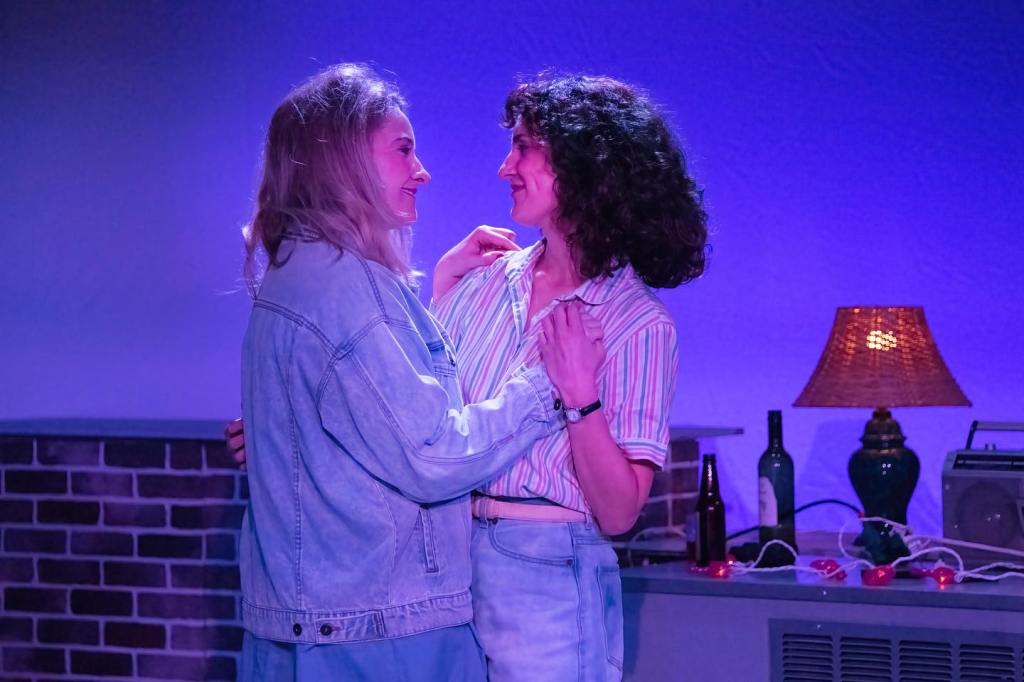
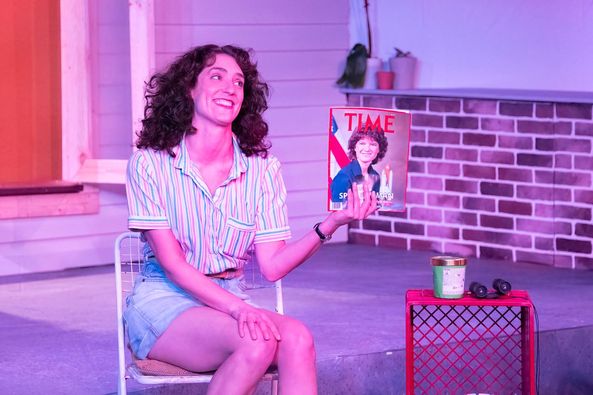
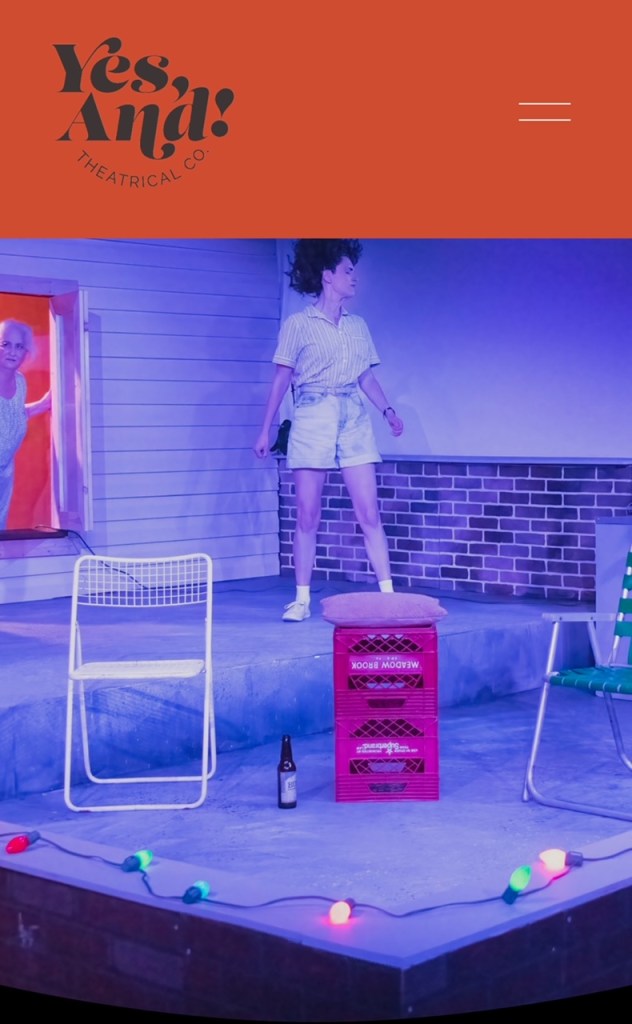
Set on a rooftop in St. Louis in June 1983, on the eve of the launch of the Challenger space shuttle that carried Dr. Sally Ride, the first American woman to go into space, DR. RIDE’S AMERICAN BEACH HOUSE is both non-linear and non-conforming. Two long-time friends, both poetry majors who have apparently simultaneously run into a writing block, come to the rooftop for the weekly meeting of The Two Serious Ladies Book Club. The club is named for a novel by Jane Bowles in which two women explore – depending in which review you read – “living outside themselves” or descend in debauchery. After forming the book club, however, our leading ladies, Harriet (Ashley Thompson) and Matilda (Rachel Marrs) realize they don’t really like to read, so they spend the time drinking beer and talking.

One day, their complacent little world is shaken up when (a) Harriet shares a harrowing tale of a sexual encounter with a stranger – a bearded biker, no less – and (b) Matilda invites a new friend, Meg (Kasey Britt) whose insight sheds new light on the friends’ sexual tension and life in general, and (c) their lives are all shifted by the imminent space launch that is the main topic on their rooftop radio.

Harriet is high strung and annoying, but about two thirds of the way through we find out she has good reason to be, and in spite of her irksome character, we cannot tear ourselves away from the story she weaves throughout. Perhaps Harriet’s calling was not for poetry, but for fiction or drama…Matilda, who has a husband and a sick child at home, would rather spend her time with Harriet, and is given to bursting out in song – revealing that Rachel Marrs has a stunningly beautiful singing voice and can even attempt a decent Irish step or two.

Most intriguing, however, is Meg. Back stories and character development are not a main point of DR. RIDE’S AMERICAN BEACH HOUSE, so we know that Meg works at a hospital across the street from where Harriet and Norma live, and may – or may not –- be a nurse. She does, however, provide some music therapy for Harriet in the midst of her breakdown, which leads to one of this play’s most delightful moments.

The fourth character is Norma (Jacqueline Jones) – who is either Harriet’s landlady or neighbor. At any rate, it seems that Norma is the caretaker of the Ivan Brock House, named for fictional poet and the house where Harriet lives. Norma is concerned with three things: safety, money, and Harriet’s leaky air conditioning unit. Jones’ two or three appearances are all too brief, as Norma, who seems to be on the far right of some spectrum or another, shares complaints and almost incidentally drops pearls of wisdom and insight on the younger women.

DR. RIDE’S AMERICAN BEACH HOUSE is directed by Kelsey Cordrey with a light touch, a good dose of wit, and a loving respect for words. Cordrey and the cast make us see or at least ponder connections between barbecue and beer, a beach house and a rooftop, an astronaut launching into space and an ordinary person (is there such a thing?) exploring the unexplored landscape of their life. It’s only about 90 minutes long, and the first few minutes are rather slow going, but about midway through – and even more so afterwards – it becomes clear that there is more to explore here than at first meets the eye.

Cordrey explains at least part of the “why” in her director’s note: “Pretty much every queer person I know has felt the urge to “go away” before. To escape to a place, whether literal or figurative, what would be more. More accepting, more fulfilling, more exciting, or more loving”.

Adam Dorland has designed a simple but effective rooftop setting with a couple of chairs, some stacked crates that serve as a table, an HVAC unit, and lots of brick wall constructed at an angle that juts slightly off the edge of the stage. Candace Hudert’s sound design is mostly subtle, and makes use of the ubiquitous 1980s boom box and cassette tapes – remember those???

If you like your theater to have a clear beginning, middle and end, and to tie up all the loose ends with a happy ending, DR. RIDE’S AMERICAN BEACH HOUSE won’t fulfill those needs. If you like theater that asks questions and challenges you to think about why things are the way they are, then this is your kind of play. And if you’re undecided, or not sure, I would urge you to give it a try and discuss it after – maybe with three friends, over a bottle of wine or some beers.

FUN FACTS ABOUT DR. SALLY RIDE

  • Sally Kristen Ride (1951-2012) was a physicist and the first female American astronaut
  • Sally Ride was married to Steven Hawley (1982-1987) and had a long-term partner, Tam O’Shaughnessy (1985-2012)
  • Dr. Ride did not publicly reveal her sexuality until her death, in a carefully worded obituary she wrote before she died
  • In 1972, while an undergraduate at Stanford University, Sally Ride played tennis great Billy Jean King in a mixed doubles exhibition
  • One morning, at breakfast, in 1977, while she was a doctoral student at Stanford University, Sally Ride read an article in the student newspaper that NASA was opening up applications to women for the first time, so she applied
  • Dr. Ride’s younger sister, Bear, is a Presbyterian minister – she is also queer
  • Sally Ride was a Trekkie
  • Sally Ride and her partner Tam O’Shaughnessy co-authored several science books for children
  • In 2013 Sally Ride was posthumously awarded the nation’s highest honor, the Presidential Medal of Freedom; President Barack Obama presented the award to Tam O’Shaughnessy                  Source: https://today.ucsd.edu/story/20-things-you-might-not-know-about-sally-ride

*ONE FINAL FUN FACT

  • The Astronaut Beach House is a two-story building located in Cape Canaveral, FL use to house astronauts prior to their launch. The house is also used as a conference center, and hosts barbecues for astronauts and their families prior to a launch

———-

Julinda D. Lewis is a dancer, teacher, and writer who was born in Brooklyn, NY and now lives in Eastern Henrico County. When not writing about theater, she teaches dance history at VCU and low impact dance fitness classes to seasoned movers like herself, and occasionally performs.

———-

DR. RIDE’S AMERICAN BEACH HOUSE

Written by Liza Birkenmeier

Directed by Kelsey Cordrey

Principal Cast

Ashley Thompson as Harriet

Rachel Marrs as Matilda

Kasey Britt as Meg

Jacqueline Jones as Norma

Understudy Cast

Juliette Aaslestad u/s for Harriet

Amber James u/s for Matilda

Davis Erney u/s for Meg

Nicole Morris-Anastasi us for Norma

Production Team

Scenic Design – Adam Dorland

Costume Design – Amber Martinez

Lighting Design – Steve Koehler

Sound Design – Candace Hudert

Properties Design – Margaret Dodson-Cordrey

Intimacy Direction – Tippi Hart

Production Manager – Todd LaBelle

Production Stage Manager – Crimson Piazza

Asst. State Manager – Marcely Villatoro

YES, AND! THEATRICAL COMPANY

in residence with NEW THEATRE at FIREHOUSE

Artistic Director – Maggie Roop

Managing Director – Nicole Morris-Anastasi

Executive Director – Matt Shofner

Dr. Ride’s American Beach House

Commissioned and Developed by Ars Nova

Jason Eagan, Founding Artistic Director | Renee Blinkwolt, Managing Director

World Premiere produced by Ars Nova, New York City, October 21, 2019

Performance Schedule

Thursday, March 7, 2024    7:30PM          Preview

Friday, March 8, 2024         7:30PM          Opening Night

Saturday, March 9, 2024    7:30PM

Tuesday, March 12,2024    7:30PM          Industry Night

Thursday, March 14, 2024 7:30PM          Understudy Performance

Friday, March 15, 2024       7:30PM

Saturday, March 16, 2024  7:30PM

Sunday, March 17, 2024    2:00PM

Tuesday, March 19, 2024   7:30PM          Industry Night

Friday, March 22, 2024       7:30PM         

Saturday, March 23, 2024  7:30PM          Closing Night

Tickets

Ticket Prices: $35 general admission

Run Time

1 hour 36 minutes with no intermission

Notes

Please be aware that an herbal cigarette will be smoked for a brief moment onstage

Photos by Tom Topinka
One-Time
Monthly
Yearly

Make a donation in support of
RVArt review

Make a monthly donation

Make a yearly donation

Choose an amount

$5.00
$15.00
$100.00
$5.00
$15.00
$100.00
$5.00
$15.00
$100.00

Or enter a custom amount

$

Your contribution is greatly appreciated. Thank you.

Your contribution is appreciated.

Your contribution is appreciated.

DonateDonate monthlyDonate yearly
FROM UP HERE

FROM UP HERE

Photos of Strangers

A Theater Review by Julinda D. Lewis

Presented by HATTheatre

At: HATTheatre, 1124 Westbriar Dr., Richmond, VA 23238

Performances: March 2-15, 2024

Ticket Prices: $30 General Admission. $25 Seniors/Students/Military. $20 Youth

Info: 804-343-6364  or https://hattheatre.org

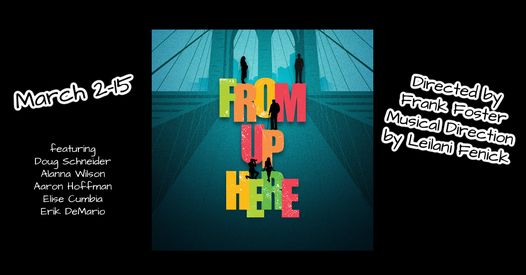
Set on the Brooklyn Bridge where five strangers go to seek solitude and solace, FROM UP HERE (2012) is a uniquely moving and relatable one-act musical.

There’s Henry (Doug Schneider), an older man, a widower who comes to the bridge to reminisce about his beloved wife of forty years. They met on the bridge by accident – literally. Emily (Elise Cumbia) is a sensitive young woman struggling with the news of an unnamed but apparently life-threatening illness. Her illness – likely some form of cancer – makes her reconsider her commitment to her boyfriend. Emily’s long-term boyfriend Dan (Erik DeMario) is a photographer whose current project, taking impromptu photographs of strangers on the Brooklyn Bridge, is instrumental in creating intersections between these strangers.

Jill (Alanna Wilson) is a kind young woman who discovers she is pregnant after a rare one-night stand with a man who subsequently ghosted her. And finally, there is Alan (Aaron Hoffman) is a harried businessman who seems always on the brink of calamity, leaving him little time for human interaction.

Since it’s Sunday, I’ll take a page from my preaching friends and offer just three points about this play, and then you’ll be free to go see it for yourself.

First, each and every one of these characters is likeable. They are people we care about, and even though this one-act musical runs for under 90 minutes, we feel that we get to know the character of each of these people. It doesn’t matter what happened before we met them – or before they met each other. What matters is that now we know them, and we care about them.

Second, each and every one of these actors can sing, but I (who am NOT a singer or musician) was especially impressed by Erik DeMario and Elise Cumbia. DeMario, at times, reminded me of an opera singer. It comes as no surprise to find, in DeMario’s bio, that he has performed with the Virginia Opera, VCU Opera, and the Richmond Symphony, among other companies. Cumbia’s clear tone reflects her background in musical theatre and no doubt serves her well with her work with her church choir.

Several times all five share the stage, singing the show’s motif: “This isn’t the end. This is the beginning.” This isn’t the end of life – despite the implications that, at some point, each has considered jumping off the bridge. No, it isn’t the end of life, but the beginning of a new phase of life, and during the course of a year, they help each other through the trials and tribulations that have led them to this point.

And finally, because I promised three points, FROM UP HERE seems different from most musicals. For one thing, it’s just one-act. In my experience, musicals tend to run longer than non-musical productions. Also, as I mentioned earlier, FROM UP HERE reminded me somewhat of an opera. The songs were not catchy, sing-along tunes, but seemed designed with the intention of moving the narrative. And then, this musical is not high school bullies or rivalries or romance. It is about change and choices and consequences. Why did author Lambert – a Texas born actor and writer who, after living and working in New York, now lives and works in the UK – set this musical very specifically on the Brooklyn Bridge? Perhaps it was because the Brooklyn Bridge is a kind of suspension bridge, and each of these five characters is suspended between their past and their future.

The play is set against a backdrop of a painting that strongly suggests the Brooklyn Bridge. As one who, for many years, walked across the Brooklyn Bridge and back every Saturday morning for exercise (followed by pancakes), it would take a feat of engineering to produce an accurate rendering of the historic bridge.

Lambert’s script calls for four musicians or instruments (piano, reed such as flute, clarinet or saxophone, violin + glockenspiel, and cello) but notes that the music can be performed with only a piano. The artistic team for this production decided to use piano and violin, with musical director Leilani Fenick and violinist Kristen Presley seated upstage center. The music was wonderful, as the two not only accompanied the songs but also supplied the soundscape, such as telephone ringtones. Somehow, inexplicably, having the musicians so present made me feel less intrusive as an audience member, less voyeuristic, and more like a participant observer.

Frank Foster’s direction elicits an authenticity from each character that helps lure in the audience, and once there, we are fully committed. FROM UP HERE, which could allude to the nearly 120 feet the bridge soars above the East River or the nearby Brooklyn Heights neighborhood, is a surprisingly unexpected treat: a delightful, warm, and relatable musical that leaves a lingering impression.

———-

Julinda D. Lewis is a dancer, teacher, and writer who was born in Brooklyn, NY and now lives in Eastern Henrico County. When not writing about theater, she teaches dance history at VCU and low impact dance fitness classes to seasoned movers like herself, and occasionally performs.

FROM UP HERE

Written by Aaron Lee Lambert

Developed by Perfect Pitch with Adam Day Howard, Benjamin Murray and Adrianne Salmon

Directed by Frank Foster

Musical Direction by Leilani Fenick

Cast

Doug Schneider as Henry

Elise Cumbia as Emily

Erik DeMario as Dan

Alanna Wilson as Jill

Aaron Hoffman as Alan

Creative Design Team

Written by Aaron Lee Lambert

Direction & Scenic Design by Frank Foster

Musical Direction by Leilani Fenick

Stage Management by Matthew Geniesse

Lighting Design by Weston Corey

Costumes by in:commonthreads

Set Painting by Amy Sullivan

Light Board Operation: Jordan Rypkema

Box Office/House Manager: Vickie L. Scallion

Piano: Leilani Fenick

Violin: Kristin Presley

Dates

March 2-15, 2024

Ticket Information

Ticket Prices: $30 General Admission. $25 Seniors/Students/Military. $20 Youth

Info: 804-343-6364  or https://hattheatre.org

Run Time

Approximately 70 minutes, with no intermission

Photo Credits: N/A

One-Time
Monthly
Yearly

Make a one-time donation
to support RVART REVIEW

Make a monthly donation

Make a yearly donation

Choose an amount

$5.00
$15.00
$100.00
$5.00
$15.00
$100.00
$5.00
$15.00
$100.00

Or enter a custom amount

$

Your contribution is greatly appreciated.

Your contribution is appreciated.

Your contribution is appreciated.

DonateDonate monthlyDonate yearly
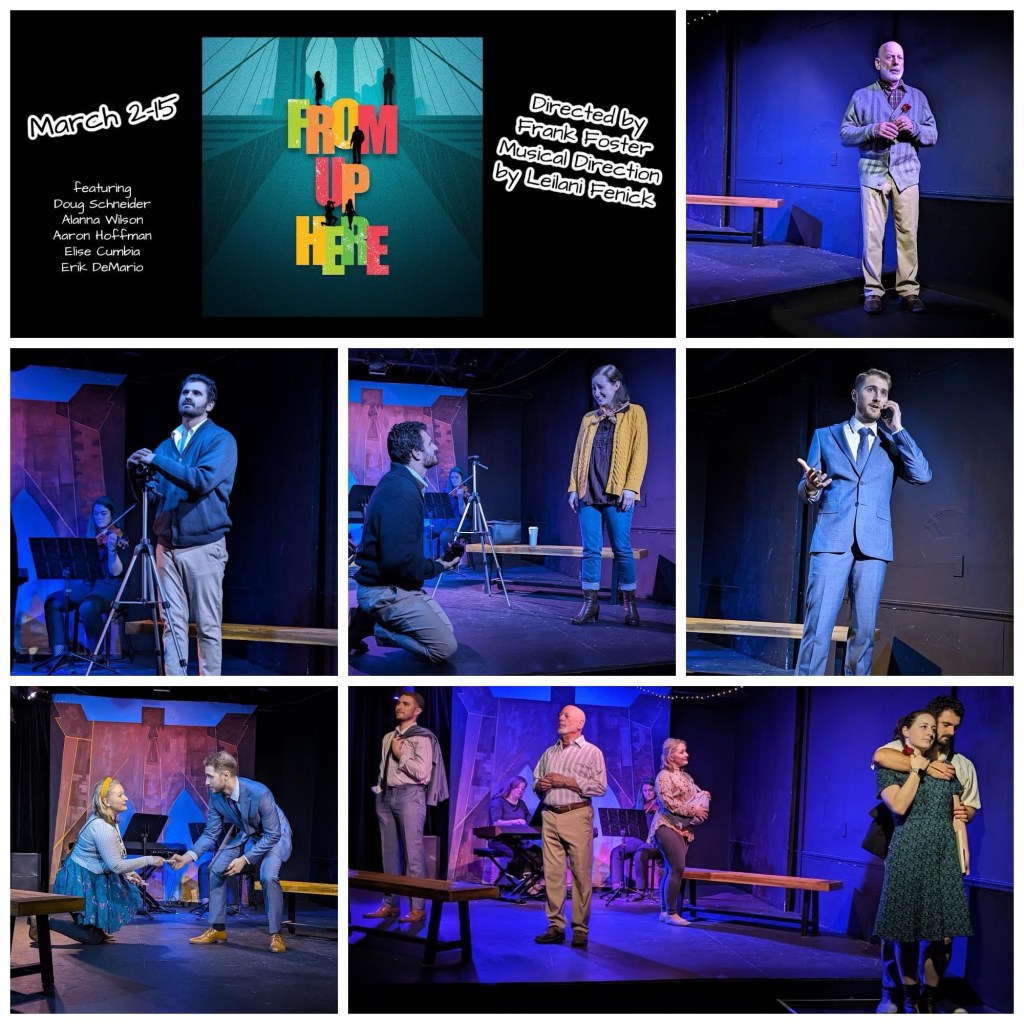
SATCHMO AT THE WALDORF

“I Smile for the People ‘Cause I Like to See Them Smiling Back”

and I Think to Myself, What a  Wonderful World*

A Theater Review by Julinda D. Lewis

By: Virginia Repertory Theatre (Virginia Rep)

At: The Sara Belle and Neil November Theatre | Marjorie Arenstein Stage

When: March 1 – April 7, 2024

Ticket Prices: $39-$59.

Info: (804) 282-2620 or www.virginiarep.org

I see trees of green
Red roses too
I see them bloom
For me and you
And I think to myself
What a wonderful world

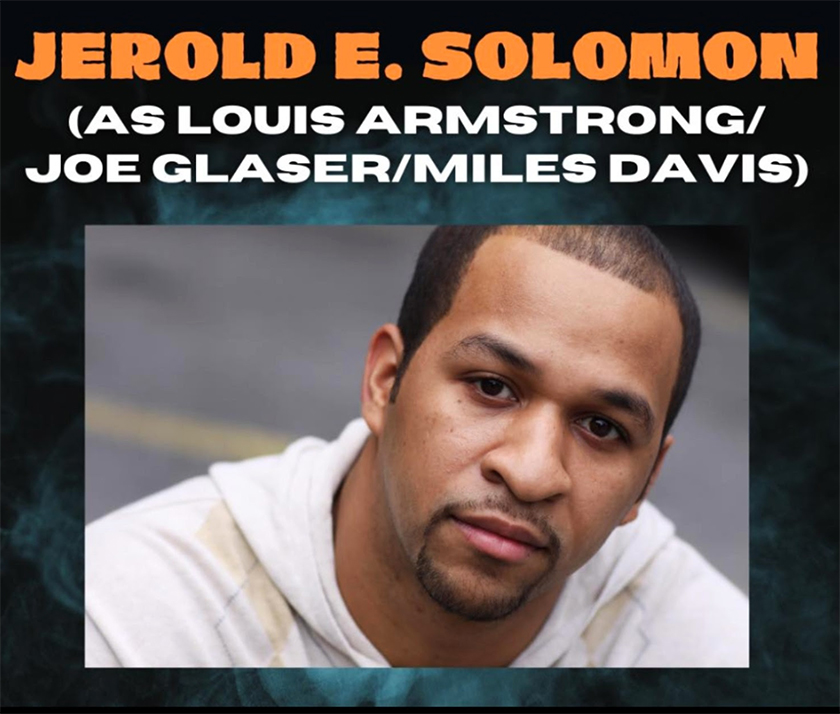
American trumpeter, vocalist, and jazz innovator Louis Armstrong died in New York City, July 6, 1971 at age 69 of a heart attack. Terry Teachout’s one-man play, SATCHMO AT THE WALDORF (2012),is a work of historical fiction set in a comfortably appointed dressing room at the Waldorf Astoria’s Empire Room a few months before Armstrong’s death. The VaRep production features Jerold E. Solomon, who catches us off-guard in the first 30 seconds of the play by (a) stumbling into the dressing room and heading straight for an oxygen tank, (b) speaking in an amazingly accurate approximation of Armstrong’s gravelly voice, and (c) immediately announcing, “I shit my pants.”

Although it is a work of fiction, SATCHMO AT THE WALDORF has so much historical truth that it is an educational experience. We learn of Armstrong’s four wives and how he finally got it right with his fourth wife, Lucille – the first dark-skinned Black woman hired by Harlem’s Cotton Club. We share the outrage when he talks about traveling in the south during the era of Jim Crow segregation when even internationally known starts like Armstrong could not stay in a hotel or eat in a restaurant. We hear about Armstrong’s long-tern symbiotic relationship with his manager, Joe Glaser, and the heartache the followed when all Glaser left him on his death – his best friend and client/business partner – was a “tip.” There was a time spent working for the notorious crime boss Al Capone. He had beef with jazz trumpeter and bandleader Dizzie Gillespie and unpleasant rivalry with the influential jazz trumpeter and bandleader Miles Davis, who called him an Uncle Tom. We learn of Armstrong’s wide-ranging and eclectic interest in multiple music genres, including classical, opera, and country.

I see skies of blue
And clouds of white
The bright blessed day
The dark sacred night
And I think to myself
What a wonderful world

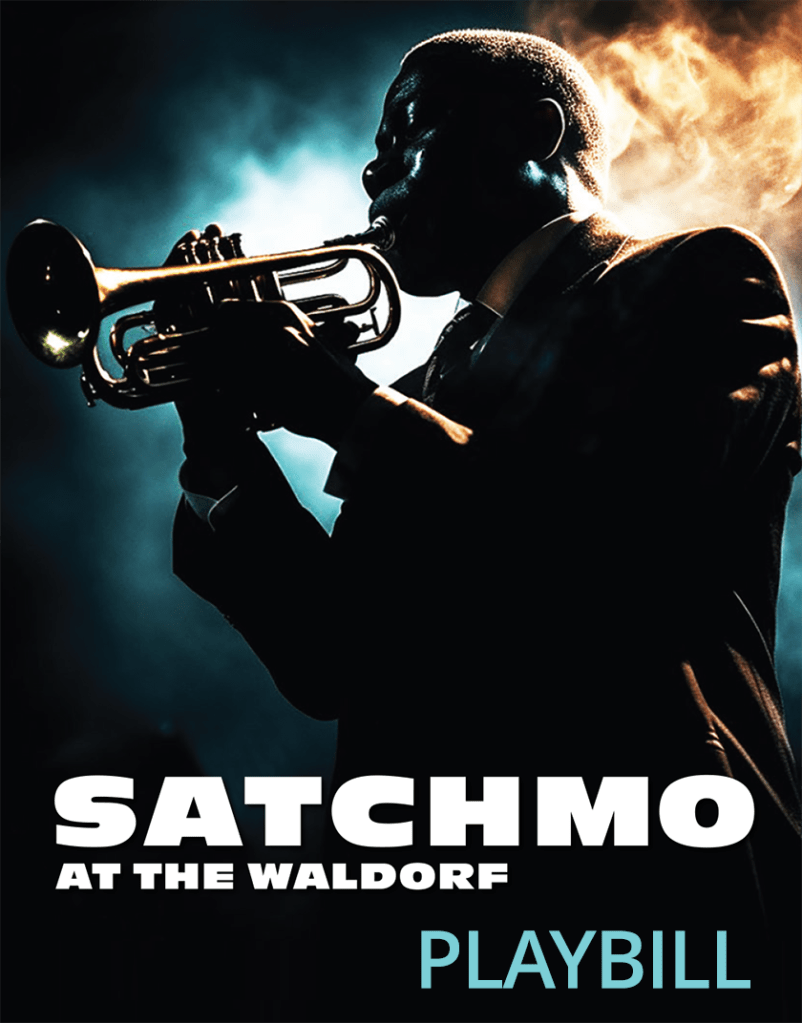
Solomon arrives onstage carrying a trumpet, which he immediately places in its case. He does not attempt to play or portray trumpet playing, nor does he sing, although he does toss off a little scatting. Solomon’s depiction of Armstrong’s voice is unwavering and I kept wondering if it was painful. But wait, that’s not all. When portraying Glaser, Solomon seamlessly shifts to a stereotypical New York Jewish accent without missing a beat. The portrayals of the outspoken Davis are less outstanding – although I think the reason lies less with Solomon than with the script. For someone known to be so outspoken and independent, Davis is written as a flat, uni-dimensional.

The colors of the rainbow
So pretty in the sky
Are also on the faces
Of people going by
I see friends shaking hands
Saying, “How do you do?”
They’re really saying
I love you

Mercedes Schaum’s set is sturdy and well appointed with a makeup area, a lounge area, two carpets, a wardrobe, an offstage bathroom and all the amenities one would expect from an exclusive venue located in a five-star hotel. Joe Doran’s lighting is mostly non-descript, but occasionally reaches for some noteworthy effects. I was surprised by the short audience on a Saturday night, the second night of the run. I’m not sure if this was due to a lack of interest in the subject matter or to the political activity occurring in the nearby downtown area, or to the 7PM curtain, or the fact that this play is a one-hander (rare for a VaRep mainstage production), or a combination of factors. Granted, Louis Armstrong may not be everyone’s cup of tea, and – as I found out shortly after the show – not everyone knows that Satchmo, a contraction of Satchel Mouth, was one Armstrong’s nicknames.

I hear babies cry
I watch them grow
They’ll learn much more
Than I’ll ever know
And I think to myself
What a wonderful world
Yes, I think to myself
What a wonderful world
Ooh, yes

I, for one, thoroughly enjoyed Solomon’s performance and the impromptu history lesson of Satchmo at the Waldorf – it appealed to my artsy side and my nerdy side. What a wonderful combination.

———-

Julinda D. Lewis is a dancer, teacher, and writer who recently had both knees replaced due to a manufacturer’s recall. Born in Brooklyn, NY, she now lives in Eastern Henrico County where she can be found kicking up her heels as best she can any day of the week.

———-

SATCHMO AT THE WALDORF

Written by Terry Teachout

Directed by Rick Hammerly

Cast

Louis Armstrong/Joe Glaser/Miles Davis             ……….         Jerold E. Solomon

u/s Louis Armstrong/Joe Glaser/Miles Davis ……….       David Watkins

Direction & Design

Direction ………………………….             Rick Hammerly

Scenic Design ……………………             Mercedes Schaum

Costume Design …………………             Sue Griffin

Lighting Design …………..………            Joe Doran

Sound Design ……………………..           Jonathan Pratt

Stage Management ………….…..          Donna Warfield

Ticket Information

Box Office: (804) 282-2620

www.virginiarep.org

Tickets range from $39 – $59

Run Time

The play runs for approximately 95 minutes; there is no intermission.

Lyrics to “It’s a Wonderful World”

Source: LyricFind

Songwriters: George David Weiss & Robert Thiele

“What a Wonderful World” lyrics © BMG Rights Management, Concord Music Publishing LLC

Photo Credits: Aaron Sutten

One-Time
Monthly
Yearly

Make a donation
TO SUPPORT rvaRT rEVIEW

Make a monthly donation

Make a yearly donation

Choose an amount

$5.00
$15.00
$100.00
$5.00
$15.00
$100.00
$5.00
$15.00
$100.00

Or enter a custom amount

$

Your contribution is appreciated.

Your contribution is appreciated.

Your contribution is appreciated.

DonateDonate monthlyDonate yearly

CLEVER LITTLE LIES

Find the Happy in That!

A Comedy by Joe DiPietro

A Theater Review by Julinda D. Lewis

Presented by CAT – Chamberlayne Actor’s Theatre

At: Hanover Arts and Activities Center, 500 S Center St, Ashland, VA 23005

Performances: February 23 – March 9. 2024

Ticket Prices: $24.00 General Admission. $22.00 Seniors

Info: http://www.cattheatre.com

Clever Little Lies is the second offering in Chamberlayne Actor’s Theatre’s season of comedy. (The first was Steve Martin’s Meteor Shower that ran at Bright Point Community College’s Lynn Theatre last September, and the final show will be Keep on Laughing in June at HATTheatre.) With Clever Little Lies, CAT has moved from Martin’s zany unpredictability to Joe DiPietro’s sitcom structured shenanigans.

Clever Little Lies seems to be the sort of play that is as much fun for the actors to perform as it is for the audience to enjoy. As with a traditional (i.e., televised) sitcom, the opportunity for audience members to anticipate and complete the actors’ lines is part of the fun. For example, Alice, a book seller, rants about the intrusion of technology into literature: “If you had told Jane Austen that someday her epic masterpiece would be read by people on their telephone, she would’ve said, well…”  That leaves an opening for an engaged audience to respond, “What’s a telephone?” The actual answer is the less crisp, “She wouldn’t have said anything, there were no telephones.”

CAT’s production featured a well-chosen, tight-knit ensemble with Scott Garka (yes, the president of Richmond CultureWorks, that Scott Garka), as Bill Sr, Amy Berlin as his wife, Alice, Austen Linder as their philandering son, Billy, and Michelle Lachapelle as Billy’s wife, Jane. DiPietro lets the audience in on the first big secret in the first scene, where we meet Bill Sr and his son in the locker room of the local tennis club after the father has uncharacteristically trounced his son on the court. Noticing Billy’s distraction, Bill Sr begins to pry until Billy confesses he is having an affair with his beautiful young personal trainer. Billy’s wife, home on maternity leave with their three-month-old daughter, is unaware.

The comedy comes into play when Billy’s mother, Alice, who has the discernment of a bloodhound, a detective, and a psychic all rolled into one, figures out what’s going on and decides to organize an intervention under cover of a family get together. At one point, Alice tells Bill Sr to play along, but this is where things get complicated, and not so funny anymore.

Alice launches into a story that may be an allegory to set Billy straight, or a confession of a long-ago indiscretion of her own. What’s true? What’s a lie? How do we know the difference? The play ends with a happy resolution that leaves the audience wondering what really happened. And Bill Sr? I think he’s still sitting in his chair, a glass of scotch close at hand, wondering what just happened. In the words of one of my favorite comedians, who are you gonna believe, me or your lying eyes?

There are some things Clever Little Lies, under the direction of Zachary Owen, does exceptionally well. Early on Berlin and Garka establish a warm, loving relationship between a mature couple. Garka’s pauses and facial expressions are priceless – exhibiting a satisfying command of the comedic moment.

It’s difficult to know what to say about Linder because he plays such a despicable character – so let’s say he did that convincingly. I didn’t feel a bit of sympathy for him. Lachapelle maintained a balanced, even keel that made me think her character knew more than she let on. Her surprise announcement to Billy was both anticipated and devastating. Time and again, I almost cared about these people.

Scott Bergman’s modular set was equal parts effective and distracting. The furniture was sturdy, but the background was not and we could see too much of the structure. The off-stage babbling of the young couple’s baby was not at all realistic, and the plastic doll used for play wasn’t even one of those eerily realistic baby dolls – providing another easy laugh. Overall, Clever Little Lies was a delightful divertissement, liberally sprinkled with easily won laughter – plus a whole lot of f-bombs and TMI about Billy’s sex life – and seasoned with a touch of nostalgia.

———-

Julinda D. Lewis is a dancer, teacher, and writer who was born in Brooklyn, NY and now lives in Eastern Henrico County. When not writing about theater, she teaches dance history at VCU and low impact dance fitness classes to seasoned movers like herself, and occasionally performs.

CLEVER LITTLE LIES

Written by Joe DiPietro

Directed by Zachary Owen

Cast

Scott Gorka as Bill Sr

Austen Linder as Billy

Amy Berlin as Alice

Michelle Lachapelle as Jane

Creative Design Team

CAT Producer – Charles A Wax

Associate Producers – Kerrigan Sullivan and Jason Owens

HAAC Executive Director – Sara Wright-Holloway

Director – Zachary Owen

Rehearsal Stage Manager – Sue Howells

Production Stage Manager –  Becki Jones

Lighting Design – Alan Armstrong

Scenic  Design – Scott Bergman

Costume Design – Sheila Russ

Sound Design – Charles A Wax

Dates

February 23 – March 9, 2024

Ticket Information

www.cattheatre.com

Ticket prices: $24.00 General Admission, $22.00 Seniors.

Run Time

Approximately 90 minutes, with no intermission

Photo Credits: Daryll Morgan Studios

One-Time
Monthly
Yearly

Make a one-time donation
to show your support of
RVART REVIEW

Make a monthly donation

Make a yearly donation

Choose an amount

$5.00
$15.00
$100.00
$5.00
$15.00
$100.00
$5.00
$15.00
$100.00

Or enter a custom amount

$

Your contribution is appreciated.

Your contribution is appreciated.

Your contribution is appreciated.

DonateDonate monthlyDonate yearly
TORCH SONG

Do Four Wrongs Make a Right? – OR – Is She Still Gonna Make Us Dinner?

A Theater Review by Julinda D. Lewis

At: Richmond Triangle Players at the Robert B. Moss Theatre | Carpenter Foundation Stage, 1300 Altamont Ave, RVA 23230

Performances:  February 14 – March 2, 2024

Ticket Prices: $10 – $40

Info: (804) 346-8113 or rtriangle.org

———-

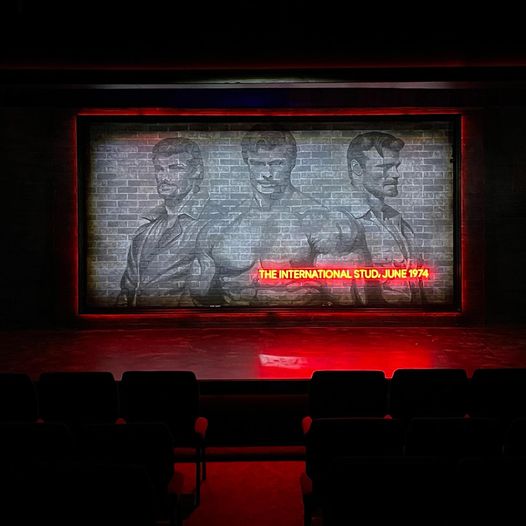
I came late to the TORCH SONG party because of other obligations, but I am SO glad I made it! TORCH SONG (2018) is apparently a shortened and revised version of Harvey Fierstein’s original 1982 (pre-AIDS pandemic) production, Torch Song Trilogy – the production that earned Fierstein his first two Tony awards (Best Play and Best Actor). This version consists of three scenes in two acts (“The International Stud, June 1974,” “Fugue in a Nursery, Summer 1975,” and ”Widows and Children First, June 1980”) and runs about 75 minutes with one intermission. Whatever the version or length of the TORCH SONG, the  work remains one of the prolific* writer’s most enduring works.

Torch Song:

to carry a torch for someone

to keep aflame the light of an unrequited love

TORCH SONG was groundbreaking in presenting the intersectionality of Jewish and queer identities with authenticity, avoiding both stereotypes and dumbing down the difficult conversations. The former – avoiding stereotypes – was no small feat, considering that main character Arnold Beckoff (played by Richmond Triangle Players own Artistic Director Lucian Restivo) is a habitual complainer who does not hesitate to use guilt as a weapon of choice. (I would describe him as a kvetch, but don’t want to appear to be engaging in cultural appropriation, although I did grow up in Brooklyn and there were mezuzahs on the doorposts of my grandmother’s house.) In the first scene, we see Restivo as a smart-mouthed, fast-talking, somewhat jaded drag queen who despite all her words to the contrary is really looking for love – the same type of enduring love their mother experienced during thirty-five years of marriage.

The problem is that Arnold’s love interest, Ed (played by Axle Burtness) is bi-sexual and is torn between the safety of his girlfriend/fiancée/wife Laurel (Emily Berry) and Arnold. The tension is palpable, and comes to a head in a most amazing scene in which Laurel invites Arnold and his new young beau Alan (Zach Barnard) to spend a weekend with her and Ed in their country home. Wow. Each member of this queer quartet gets to spend one-on-one time with the other three, leading to any number of revelations, confessions, scandals, and ordinary little moments that both Arnold and Laurel refer to as, “this is so civilized.”

As amazing as that first act quartet may be, the real highlight of TORCH SONG occurs in Act 2 when Arnold’s mother pays a visit. Alan has died, and Arnold had adopted a teen son, David (Liam Storm) – but Arnold has not explained any of this to Mrs. Beckoff. Things really come to a head when the mother and son face off in a shouting match, to determine whose grief is more valid. It’s heart-wrenching to hear Mrs. Beckoff, who had appeared to accept her son’s homosexuality when he first came out to her at age 13, speak disparagingly of his life and tell him she’s too old to change.

On Thursday night, understudy Sara Heifetz stood in for Debra Clinton, and Heifetz wore the shoes – and the wig – well. It was a delicate balancing act not to cross over that line into the stereotypical Jewish mother – she was there, hoovering, waiting in the wings. To some extent, the humor of the stereotype was a necessary antidote to the harsh reality of the hopelessness of their relationship. Kudos to Restivo and Heifetz for establishing that balance.

For me, the highlight of Act 2 was Arnold’s newly adopted/about to be adopted son, David (played by Liam Storm in his RTP debut). Storm’s compact stature, unruly curls, and unrestrained demeanor were refreshing and brought humor and energy to the storyline and to the physical space.

Speaking of the space, there was a most amazing set change during the intermission. The minimalist backstage area, dominated by a brick wall, was transformed into a homey two-bedroom Manhattan apartment. The credit for this goes to scenic designer Daniel Allen – and the team who made this happen in fifteen minutes each night. I’m not one who always pays attention to the lighting and sound design, but the work of Michaeal Jarett and Nicholas Seaver, respectively, were subtle but effective collaborations that contributed to the overall magic of RTP’s TORCH SONG, under the able direction of Gary C. Hopper. My one complaint would be that – at least from my otherwise ideal seat in Row E, the second row from the back at RTP’s Robert B. Moss Theatre – there were far too many times when some of the actors’ words got swallowed up or were just unintelligible.

Even given that, the semi-autobiographical story of Harvey Fierstein’s TORCH SONG has you laughing, crying, and laughing to keep from crying. If it doesn’t reflect your own experience, it surely reflects the experiences of someone you know. It’s emotional, revelatory, cathartic, and honest.

*Fierstein is also author of Kinky Boots, La Cage aux Folles, and Newsies. He performed onstage in Torch Song Trilogy, Hairspray, and Fiddler on the Roof, and on film in Mrs. Doubtfire, and Independence Day, and on television in The Good Wife and Cheers to mention just a few of his accomplishments.

———-

Julinda D. Lewis is a dancer, teacher, and writer who was born in Brooklyn, NY and now lives in Eastern Henrico County. When not writing about theater, she teaches dance history at VCU and low impact dance fitness classes to seasoned movers like herself, and occasionally performs.

———-

TORCH SONG

Written by Harvey Fierstein

Director by Gary C. Hopper

CAST

Arnold             …..      Lucien Restivo

Mrs. Beckoff  …..      Debra Clinton**

Ed                …..      Axle Burtness

David             …..      Liam Storm

Laurel             …..      Emily Berry

Alan                …..      Zach Bernard

**Sara Heifetz played the roll of Mrs. Beckoff the night I attended

Understudies

u/s Arnold     …..      Keegan Ferrell

u/s Mrs.Beckoff…    Sara Heifetz

u/s David &Alan..     Billy Heckman

u/s Laurel      …..      Theresa Mantiply

Torch Song Production Team

Playwright: Harvey Fierstein

Director: Gary C. Hopper

Scenic Designer: Daniel Allen

Lighting Designer: Michael Jarett

Costume Design: William Luther

Sound Design: Nicholas Seaver

Props Design: Tim Moehring

Hair & Makeup Design: Luke Newsome

Production Stage Manager: Lauren Langston

Assistant Stage Manager: Nora Ogunleye

Intimacy Coordinator: Hannah Sikora

Dialect Coach: Erica Hughes

Dramaturg: Kendall Walker

Gender Consultant: August Hundley

Technical Director: Chris Foote

Scenic Artist: Becke Russo

Mural Artist: Liz Lundberg

One-Time
Monthly
Yearly

Make a one-time donation

Make a monthly donation

Make a yearly donation

Choose an amount

$5.00
$15.00
$100.00
$5.00
$15.00
$100.00
$5.00
$15.00
$100.00

Or enter a custom amount

$

Your contribution to RVArt Review is appreciated.

Your contribution is appreciated.

Your contribution is appreciated.

DonateDonate monthlyDonate yearly
DRACULA

Not Just a Ballet, But a Cultural Event

A Dance Review & Cultural Excursion

By: The Richmond Ballet with the Richmond Symphony

At: Dominion Energy Center’s Carpenter Theatre, 600 E. Grace St., RVA 23219

Performances: February 16-18, 2024

Ticket Prices: $25 – $130

Info: (804) 344-0906, etix.com, or richmondballet.com

THE PROGRAM

DRACULA

Choreography by Ben Stevenson, O.B.E.*

Music by Franz Liszt, arranged by John Lanchbery

Staging by Dominic Walsh

Scenery Design by Thoms Boyd

Costume Design by Judanna Lynn

Original Lighting Design by Timothy Hunter

Lighting Supervisor: Christina R . Gianelli

Guest Piano Soloist: Douglas-Jayd Burn

Flying by Foy

World Premiere: March 13, 1997, Houston Ballet, Worthan Center, Houston, TX

Richmond Ballet Premiere: February 16, 2024, Dominion Energy Center, Richmond, VA

Costumes and Scenery courtesy of Pittsburgh Ballet Theatre

*OBE = Officer of the Order of the British Empire: a British order of chivalry, rewarding contributions to the arts and sciences, among other fields

The Cultural Excursion

I’d been looking forward to seeing the Richmond Ballet’s premiere of DRACULA for months. (See my preview for Richmond Magazine: https://richmondmagazine.com/arts-entertainment/richmond-events/richmond-ballet-dracula/) But even though I had read the press release and had obtained a quote from Associate Artistic Director Ma Cong about the ballet’s high production values and dramatic choreography, I was not prepared for what I saw – both onstage and offstage – when I arrived at the Dominion Energy Center for the final performance of the three day run. I am so glad I got to witness this event with my own eyes and ears. Ben Stevenson’s choreography was every bit as dramatic as promised. The set resembled a towering gothic fairytale. The music lured you in, and there was even a red-colored, vampire themed drink available at the bar. But more on the actual ballet after this brief detour. [You may avoid the detour by skipping the next three paragraphs.]

First, the event started even before I got inside the theatre. While searching for parking, and then walking to the Dominion Energy Center, I noticed a number of people who were clearly headed to see Dracula. There was a veritable fashion show of goth gear, black lace, pale foundation and black eyeliner. The number of capes – in black and red – was astounding. A car parked across from mine in the parking deck even bore a license plate with some variation of the word “vampire.” All of this made me wonder, does  Richmond have a vampire community? I know about the theatre community, the dance community, the spoken word community, even the drag community and the burlesque community – but a vampire community?

That brings us to the second point. Much to my surprise, a cursory online search turned up several articles on an urban legend known as The Richmond Vampire, also known as The Hollywood Vampire. (Am I the last to know?) There is a story, dating back to the 1920s, of a vampire entombed in Hollywood Cemetery, near Oregon Hill. The legend is linked to the very real and verified collapse of a railway tunnel in Church Hill, where the train engine, flatcars, and bodies of laborers remain to this day.

Another part of the legend identifies the Richmond Vampire as one W. W. Pool, whose tomb is located in Hollywood Cemetery, as a vampire who was run out of England in the 1800s. And then, my husband reminded me of someone we know who, a few years ago, was said to have been “studying” to become a vampire. While none of this is directly related to the ballet, it does explain some of the things I saw, and some of the cultural aspects that were attached to the theatrical experience. One final note before going on to my third and final point – a discussion of the actual ballet – vampires, or vampire allies, seem to be quite friendly.

The Review

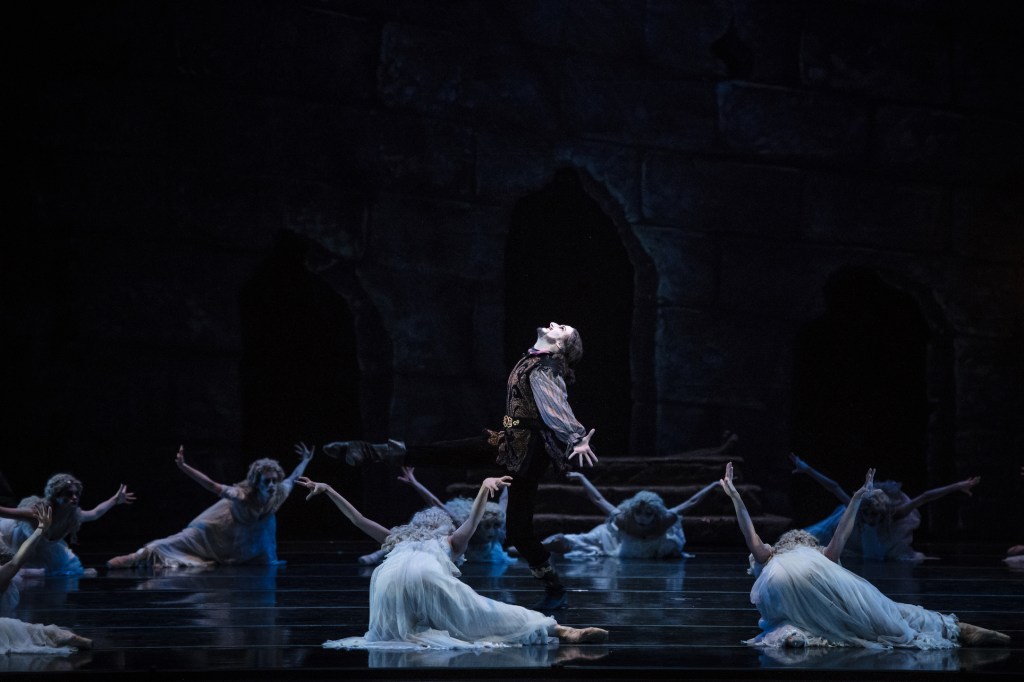
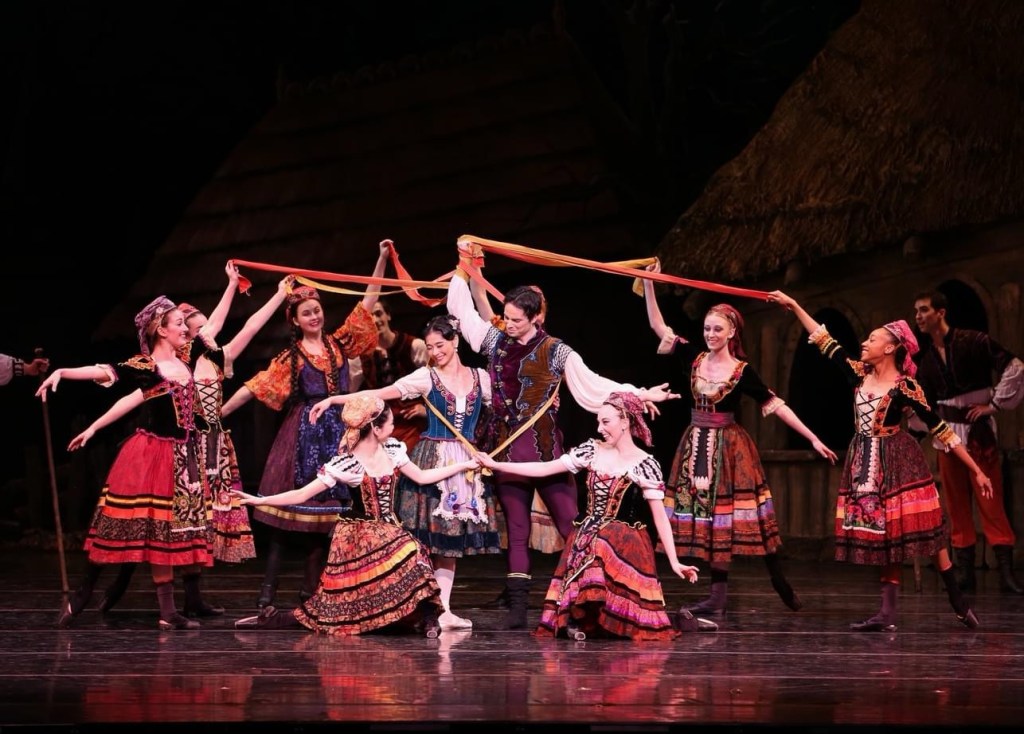
Finally, there was the ballet itself – a three act production (The Crypt, The Village, The Bedroom) running approximately two and a half hours, including two intermissions. Make no mistake, Dracula is, indeed, a ballet in the traditional sense. There is plenty of classical technique, including pointe work, and partnering. The second act, set in an Eastern European village, includes the familiar characters (an innkeeper, a matriarch, a pair of innocent young lovers) and peasant costumes and folk dances that populate many story ballets.

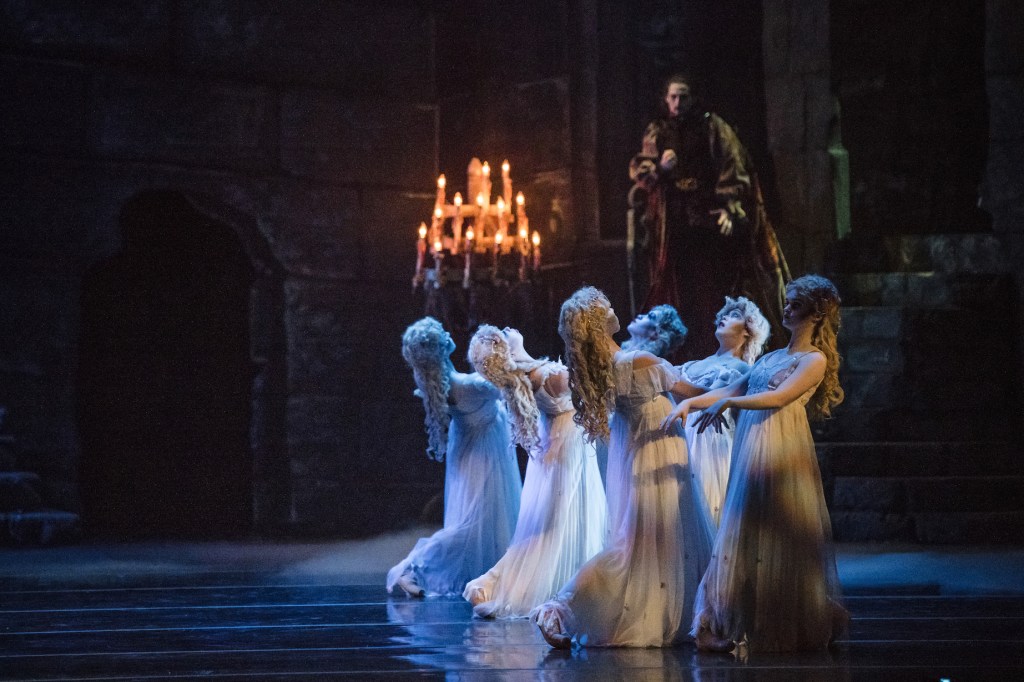
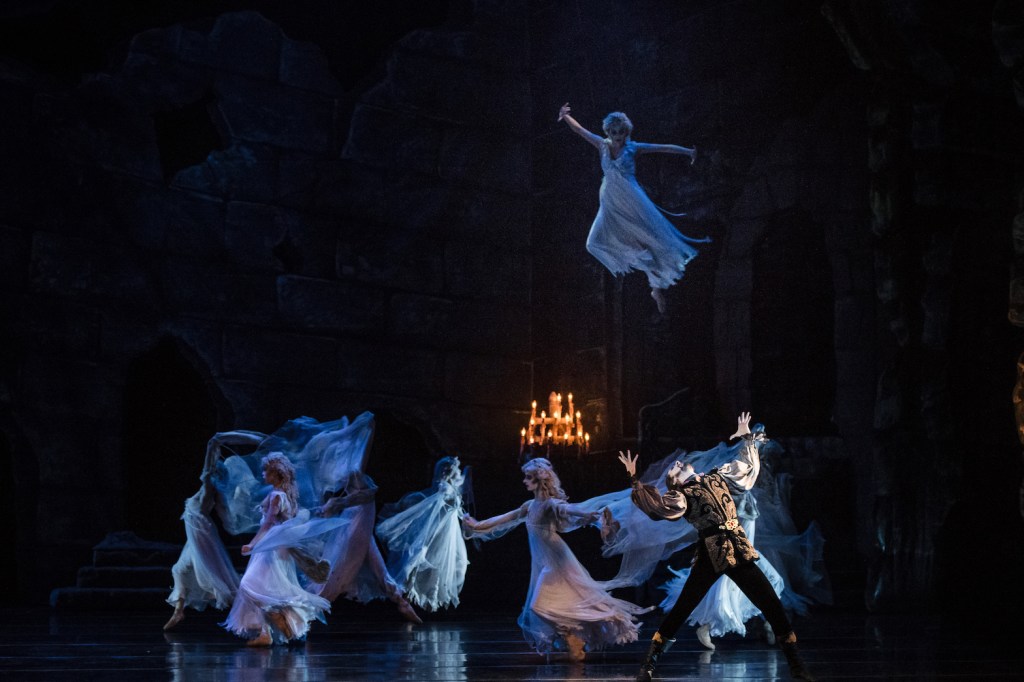
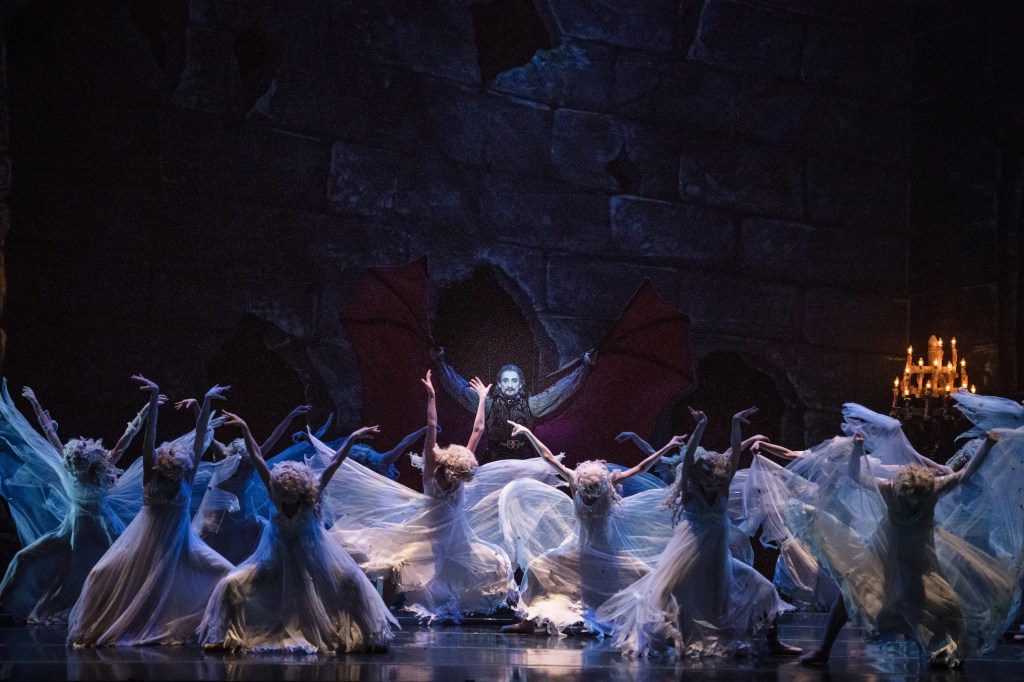
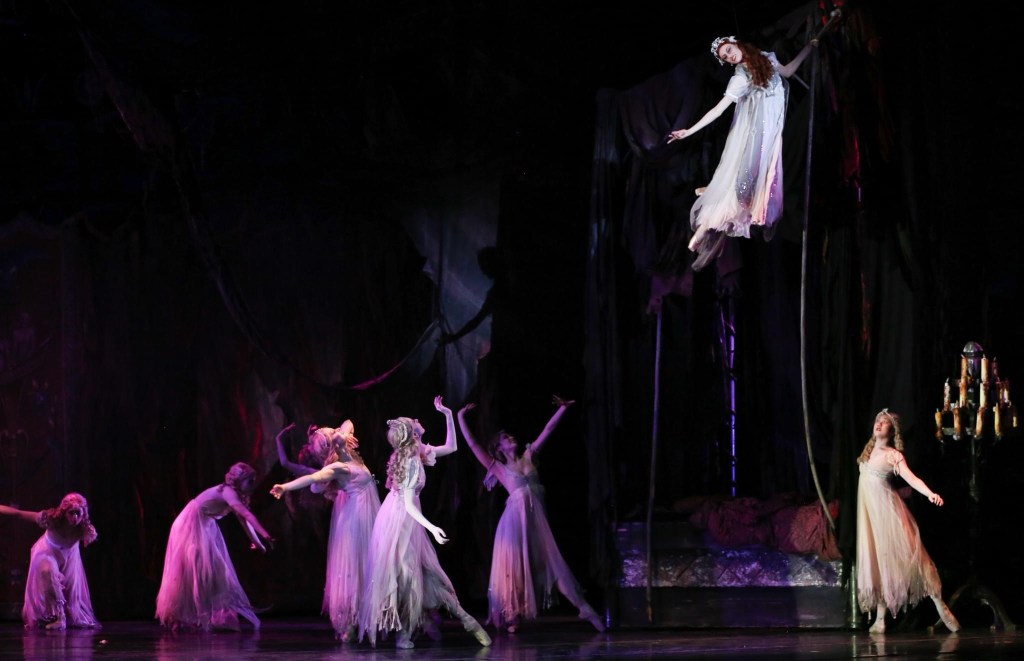
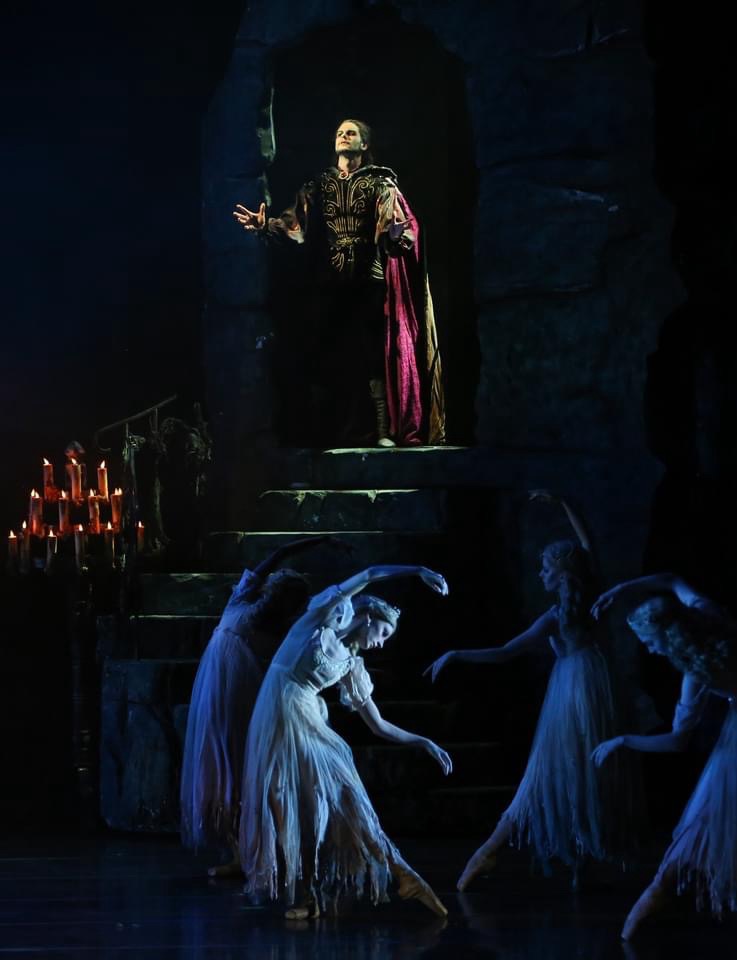
Dracula is also quite different from most classic ballets. The women of the corps who dance the roles of Dracula’s brides may initially remind you of the Willis in Giselle. They have been tasked with dancing gracefully and on pointe while carrying their arms stiffly in front of them, affecting the posture of the ”undead.” To do this while maintaining flexibility and gracefulness throughout the rest of the body must have been a challenge. There are flying dancers in several scenes (Anne Sydney Heatherington and Valerie Tellman-Henning were credited in the program, but I thought there was a third as well) and some impressive pyrotechnics near the end when Dracula is finally hunted down and destroyed by Frederick, Svetlana’s innkeeper father (Gabor Szigeti), and the village Priest (Jack Miller) – and while these effects proved to be delightful for adults and children alike, there were many themes that dealt  with morality and sexuality that were not recommended for children under the age of 8.

For instance, Dracula’s henchman, Renfield (danced by Zacchaeus Page for the final performance) procures young women for his master. Come to think of it, Renfield’s status is little more than that of an indentured servant or slave, so there’s that issue of oppression as well. Dracula’s dozen wives would constitute polygamy by today’s standards, but then there is also the issue of them aiding and abetting the procuring of “fresh blood” which can only be obtained by kidnapping more women. If this were a TV show, I’m sure Capt. Olivia Bensen would be called in because this sounds like a case for “Law & Order: SVU.”

Irish author Bram Stoker published the gothic horror novel Dracula in 1897. British-born choreographer Ben Stevenson (who spent 27 years as artistic director of the Houston Ballet) created the masterful Dracula,the ballet, to commemorate the 100th anniversary of Stoker’s masterpiece. (Stoker and Stevenson even share the same initials.) Given the differences in media, the two vampire tales are quite distinct, yet recognizably related.

Richmond Ballet rehearsed two complete casts for Dracula. Sunday evening, the lascivious vampire was danced by Christian Renforth, his newest bride Flora by Izabella Tokev, his henchman Renfield by Zacchaeus Page, and Svetlana, the innocent young villager on whom Dracula has cast his eye as his next prize, by Eri Nishihara. Aleksey Babayev danced the role of Svetlana’s beloved Frederick and the two of them had a wonderful chance to shine in a celebratory dance scene. After drinking too much, rather than losing his composure, Frederick demonstrated a stunning virtuosity, and Svetlana temporarily lost her shyness – turning not on her toes but on her heels.

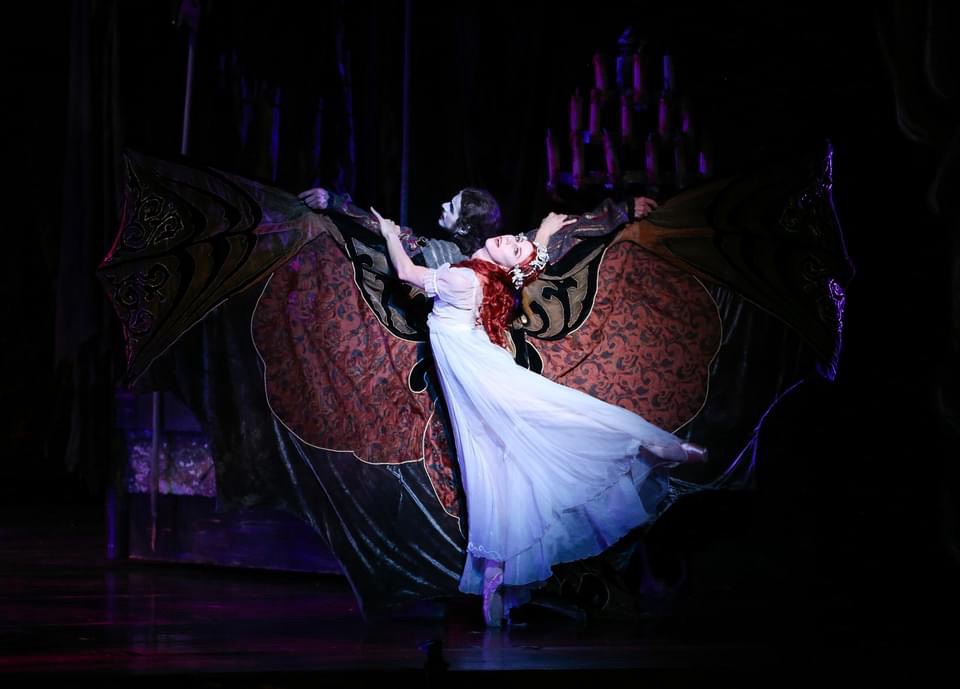
Dracula’s cape is both a fashion statement and a work of art in blood red and black with tapestry-like designs. The brides’ white dresses, pale makeup and pale locks set a new standard for “undead” beauty. The set for Acts I and III (The Crypt and The Bedroom) are majestic and spooky, in contrast to the once-upon-a-time innocence The Village set of Act II. Last but not least, I must mention the dreadful carriage that Renfield uses to procure Dracula’s new brides. Drawn by two horses (Tekhylon Armour and Darius Mealy), the dark and ragged carriage with a hint of smoke at the top shouts “stranger danger” but even Svetlana’s strongest kicks and screams are no match for the evil that lies within.

The Richmond Symphony, under the direction of Erin Freeman, with guest pianist Douglas-Jayd Burn played Franz Liszt’s haunting and dramatic score arranged by John Lanchbery specifically for Stevenson’s ballet. Dracula is truly a collaboration of elements: the choreography, the music, the story, the set, the costumes all work together to create theatre magic.

The Richmond Ballet offered this production of Dracula the weekend after Valentine’s Day. I have often complained that Romeo and Juliet was not my idea of a proper Valentine’s offering, since they both end up dead. Cinderella has been a happier alternative. Dracula has many of the elements – both pros and cons – of other romantic ballets, but the addition of a vampire somehow makes it sooooo much more satisfying…

Julinda D. Lewis is a dancer, teacher, and writer who was born in Brooklyn, NY and now lives in Eastern Henrico County. When not writing about theater, she teaches dance history at VCU and low impact dance fitness classes to seasoned movers like herself, and occasionally performs.

One-Time
Monthly
Yearly

Make a one-time donation

Make a monthly donation

Make a yearly donation

Choose an amount

$5.00
$15.00
$100.00
$5.00
$15.00
$100.00
$5.00
$15.00
$100.00

Or enter a custom amount

$

Your contribution is appreciated.

Your contribution is appreciated.

Your contribution is appreciated.

DonateDonate monthlyDonate yearly
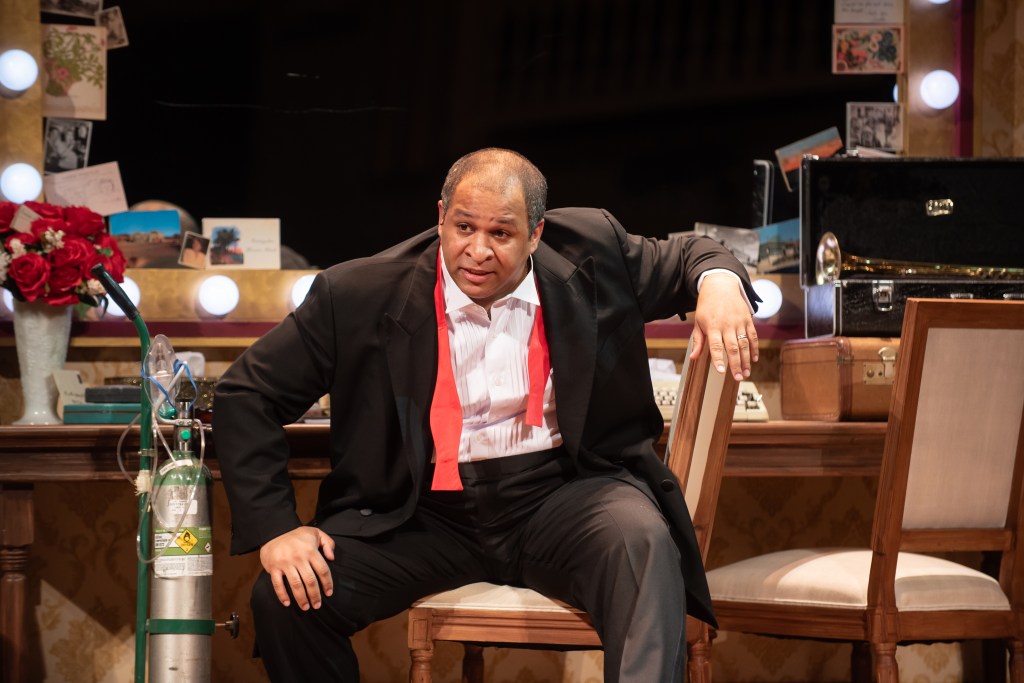
Photo by Sarah Ferguson

MEMORIES OF OVERDEVELOPMENT

The New Theatre at Firehouse on the Carol Piersol Stage Presents

A WORLD PREMIERE

A Theater Review by Julinda D. Lewis

At: The Firehouse 1609 West Broad St., Richmond, RVA 23220

Performances: February 7 – 25, 2024

Ticket Prices: $0-$35

Info: (804) 355-2001 or firehousetheatre.org.

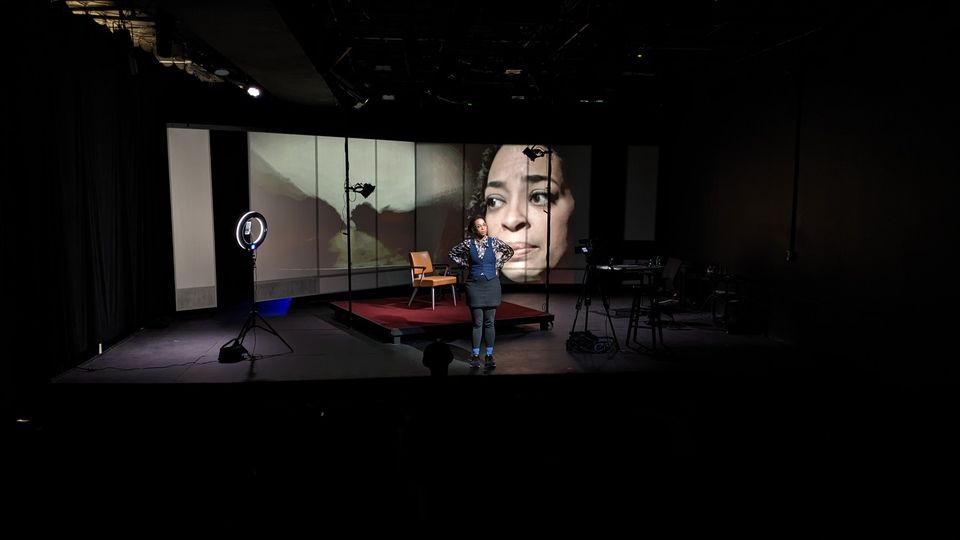
I know I’ve said this before, but every now and again a new play comes along that is quite unlike anything I’ve ever seen before. Caridad Svich’s new play, Memories of Overdevelopment is one such play. It’s a play about a filmmaker interviewing people for a documentary. Or maybe its documentary play about a filmmaker and the people they are interviewing for a documentary. Or maybe it’s a film that plays out on a stage.

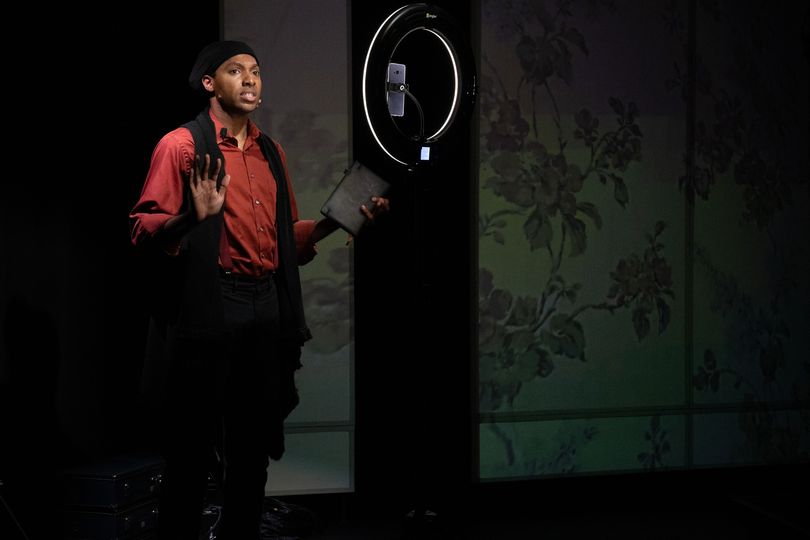
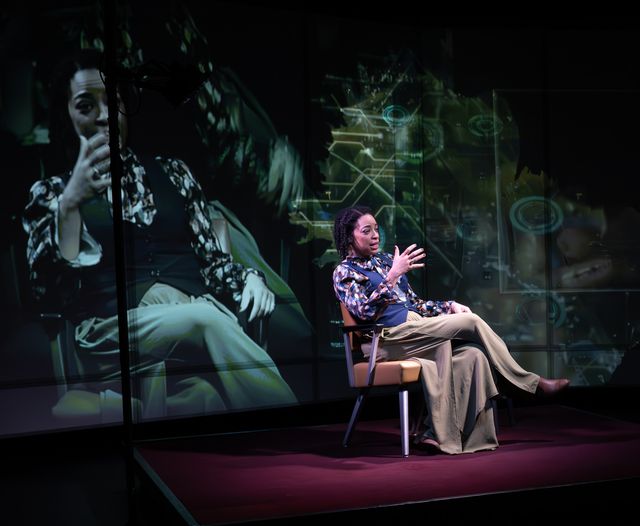
Let’s try this approach. Memories of Overdevelopment is a two-person play that can be performed by a cast of 2-8 people, and it runs from 60-90 minutes. It is also a stage play in which technology is virtually a character in its own right. Video and projections are so fully integrated into the production that the play would be unrecognizable without them.

Now, how do I tell you about the awesomeness of Memories of Overdevelopment without giving away too much? That might not be possible, so be forewarned.

As directed by New Theatre at Firehouse’s Artistic Director Nathaniel Shaw, Memories of Overdevelopment is a two-person play that runs 90 minutes without intermission. Keaton Hillman (who started as the show’s understudy and stepped in at the eleventh hour for Juliana Caycedo, due to health reasons) plays Actor 1. Katrinah Carol Lewis (who was publicly announced as the New Theatre at Firehouse’s new Associate Artistic Director just days before opening) plays Actor 2. But sometimes Lewis and Hillman switch roles. And sometimes they are “acting” as the people being interviewed for a documentary that follows the stories of people who grew up in dictatorships (underdeveloped countries?), escaped, and lived to tell the tale of how they survived.

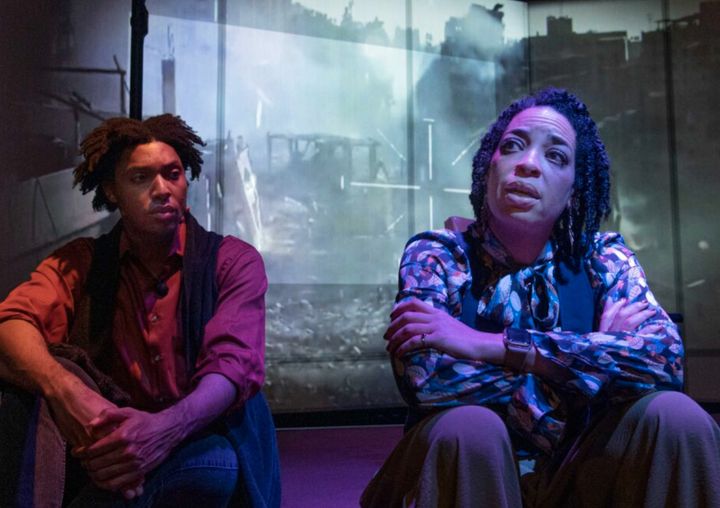
There’s a former shop owner, a university student, a professor, a dancer, an artist, a former friend, and a fascist. Interspersed with the sometimes intense and edgy interviews are a series of “memory reels” and while the work is not interactive the audience is inevitably drawn into the mist of the proceedings by sometimes larger than life, real-time video projections of the actors – and the characters they portray – on a backdrop of panels in a workspace intended to replicate a recording studio.

Memories of Overdevelopment has a unique worldview on politics, society, tyranny, resistance, art, immigration, assimilation, fascism, globalization, and all things rebellious. Inspired by true stories, the author reveals uncanny insight and wisdom and challenges us to rethink, well, everything. “Becoming everything you believe in” may be a blessing and a curse and both things can be true at the same time.

Hillman opens the play with a brief overview, seemingly forgetting to introduce his documentarian, Lewis, who calmly sets up cameras and tests light intensities and does all the other things a filmmaker does to prepare – and the next thing you know they have switched roles. Things rapidly progress to a Level 10 out of 10 of intensity, and stays there for most of the next 85 minutes.

Nonetheless, a couple of scenes stand out. When Lewis interviews Hillman and the subject of fascism comes up, Lewis ramps up the intensity even further. What started out as a documentary interview becomes an interrogation. Hillman matches Lewis word for word, phrase for phrase. At one point Hillman blurts out, “We’re just sheep,” and offers a strident, “baaa, baaa.” And at the end, Lewis, returning to the role of the shopkeeper, exclaims, “Everyone just want to buy things,” and concludes with an eerily unhinged giggle that, more than her words, more than her expression, more than her posture, expresses who and what we have become.

There are many such poignant moments, duly captured in this dynamic collaboration between playwright, director, actor, and scenic/projection designer Tennessee Dixon. Dixon has truly outdone herself with the integration of projections and real-time video.

My first encounter with The New Theatre was with a reading of The Red Bike, also by Caridad Svich, a prolific playwright, and one that seems to have captured the heart of Shaw. After seeing Memories of Overdevelopment Svich may capture your attention as well.

———-

Julinda D. Lewis is a dancer, teacher, and writer who was born in Brooklyn, NY and now lives in Eastern Henrico County. When not writing about theater, she teaches dance history at VCU and low impact dance fitness classes to seasoned movers like herself, and occasionally performs.

———-

MEMORIES OF OVERDEVELOPMENT

A World Premiere by Caridad Svich

Directed by Nathaniel Shaw

February 7 – 25, 2024

CAST

ACTOR 1       ……….           Keaton Hillman

ACTOR 2       ……….           Katrinah Carol Lewis

PRODUCTION TEAM

Production                           ……….           Nathaniel Shaw

Associate Direction             ……….           Sarbajeet Das

Scenic/Projection Design ……….           Tennessee Dixon

Costume Design                   ……….           Ruth Hedberg

Lighting Design                   ……….           Andrew Boniwell

Sound Design/Original Music …..        Kate Statelman

Videography                        ……….           Andrew Keeton

Stage Management             ……….           Grace LaBelle

Assistant Stage Management ..….       Isabel Stone

RUN TIME

90 minutes with no intermission

PERFORMANCE SCHEDULE

  • Previews Wednesday – Thursday, February 7 -8 at 7:30pm
  • Opening Night – Friday, February 9 at 7:30pm
  • Running Thursday – Sunday through February 25, 2024
  • Members Only Post-Show Mixer on Sunday, February 11 after 2:00pm show
  • Post-Show Talkback on Friday, February 16 after 7:30pm show
  • Pay-What-You-Will on Saturday, February 17 at 2:00pm
  • ASL Interpreted and Pay-What-You-Will Performance on Saturday, February 17 at 2:00pm
  • ASL Interpreted Show on Thursday, February 22 at 7:30pm
  • Post-Show Talkback on Friday, February 23 after 7:30pm show

TICKETS

$0-$35

$99 memberships for the remainder of the season

One-Time
Monthly
Yearly

Make a one-time donation
to support RVArt Review

Make a monthly donation

Make a yearly donation

Choose an amount

$5.00
$15.00
$100.00
$5.00
$15.00
$100.00
$5.00
$15.00
$100.00

Or enter a custom amount

$

Your contribution is appreciated.

Your contribution is appreciated.

Your contribution is appreciated.

DonateDonate monthlyDonate yearly
BKLYN THE MUSICAL

There’s a Little Fairy Tale in Every Reality

BKLYN THE MUSICAL

There’s a Bit of Truth in Every Fairy Tale…and Vice Versa

At: The Swift Creek Mill Theatre, 17401 U.S. Route One, Chesterfield, VA 23834

Performances: January 27 – February 17, 2024

Ticket Prices: $49. Discounts available for students, seniors, and veterans.

Info: (804) 748-5203 or https://www.swiftcreekmill.com

There’s been a lot of discussion recently about people who were outraged that a certain popular movie was a – gasp! – musical. I, personally, love a good musical. The first paycheck I ever earned was for working in a summer youth program that put on a production of West Side Story. (I played Anita.) I love a good musical, but one thing I love even more is a musical I never heard of that blows you away with phenomenal singing, and BKLYN THE MUSICAL almost brought me to tears with the first song, an ensemble piece called “Heart Behind These Hands” that comes even before the “Prologue.”

Thank you and kudos to Dorothy Dee-D Miller, Desirèe Dabney, Michael McMullen, Kamaron Carter, and Lindy Pokorny. This ensemble of five powerhouse vocalists remind us that the Richmond-area theatre community has no lack of talented professionals who are second to none. They played the leading roles of a magical Streetsinger, a local diva named Paradice, Taylor – a missing father, Faith – his long-lost love, and their daughter Brooklyn – the title character. These five are ably supported by the City Weeds, a band of homeless musicians, played by Garrett D. Reese, Larry “Akin” Smith, Nocole Pearson, and Anthony Hernandez. All the City Weeds except Hernandez, who is currently a Junior at Appomattox Regional Governor’s School, also serve as understudies for one of the leads.

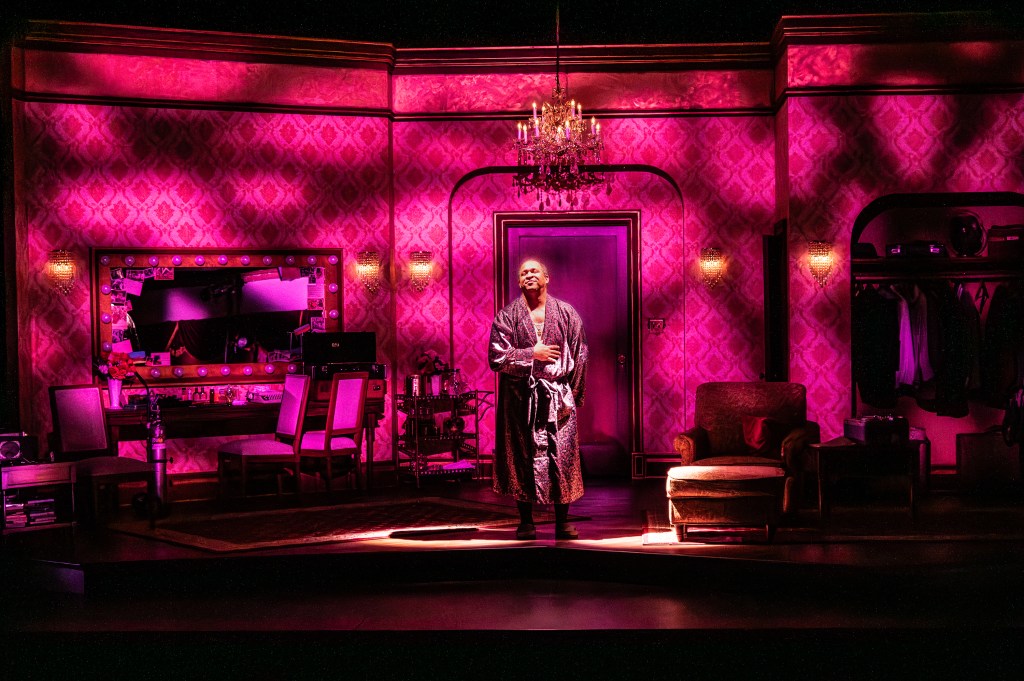
Schonfeld and McPherson put together a nominal story-within-a-story or perhaps more accurately a play-within-a-play. Set in a homeless encampment under the Brooklyn Bridge, the actors are members of the City Weeds, who make music to support themselves. Never mind that the set doesn’t much resemble the Brooklyn Bridge I used to walk across most Saturday mornings for a large part of my young adulthood, or that you’re not likely to find a bodega (corner store) under the pillars of said bridge – the set designer and creative team exercised creative license to construct a world of chain link fences, discarded mattresses, and colorful graffiti that evokes the grittiness of the stereotypical inner city. The costume designer crafted a collection of shabby chic ensembles and a few masterful garbage-sack gowns for the divas who, the story would have us believe, engage in a singing dual at Madison Square Garden. The stakes are high: if Bklyn wins, she will use all the money to help the homeless, but if Paradice wins, she will keep all the money for herself.

On opening night there were a few times when the sound was uneven and sone parts of the dialogue got lost – especially when actors were on the opposite side of the stage from where I was sitting. I trust this will be ironed out shortly.

The important thing is that for 100 minutes, with no intermission, this 9-member ensemble blew away the audience with strong vocals, dynamic performances, enough of a story to keep us interested, enough humor to make us feel loved, and enough interaction to keep us on our toes – all under the masterful direction of Shanea N, Taylor and the musical direction of Leilani Fenick. You never knew what outrageous outfit Dabney would sport next – or what stereotypically offensive utterance she would pronounce in love. You never knew when to expect a homeless person to push a shopping cart down the aisle. You never knew when Pokorny, Miller, McMullen, or Dabney would open their mouth and emit an endlessly long, clear, and perfect note.

It’s not all roses and cliches. There is homelessness, suicide, war, the mystery of an unfinished lullaby, and the aftermath of drug-addicted veterans – and of course, the toll these events take on innocent children. Yet, as far as narratives go – as far as fairytales go – none of this can compare to the real-life backstory of the musical’s authors. Apparently Schoenfeld and McPherson worked together in the 1980s. McPherson sang in cabarets and Schoenfeld wrote music. When McPherson traded in the stage for suburban family life, she and  Schoenfeld lost contact. Then, according to the real-life fairytale, on a trip to New York one day McPherson heard a familiar voice and found a now homeless Schoenfeld performing as a streetsinger for $40 a day. She then invited her old friend and business partner to come live with her family while he got himself back on his feet – and the result was BKLYN THE MUSICAL. Ta da! As I said, I love a good musical. The musical based on the authors’ story might be an even better one than the one they produced.

BKLYN THE MUSICAL is fun. It’s dynamic. Much of the music is foot-tapping good, and the singing is often excellent. It’s corny and sassy. It’s as innocent as Brooklyn (the character, not the place) and as in-your-face and confident as Paradice – and you’ve got to be confident if you parents named you after a pair of gambling cubes. It’s a well put together show that offers hope and a happy ending in spite of, well, reality.

———-

Julinda D. Lewis is a dancer, teacher, and writer who was born in Brooklyn, NY and now lives in Eastern Henrico County. When not writing about theater, she teaches dance history at VCU and low impact dance fitness classes to seasoned movers like herself, and occasionally performs.

———-

BKLYN THE MUSICAL (Stage premiere April 30, 2003, Dener, CO))

Book, Music, and Lyrics by Mark Schoenfeld and Barri McPherson

Directed by Shanea N. Taylor

CAST

Brooklyn         ……………….. Lindy Pokorny

Streetsinger     ……………….. Dorothy Dee-D Miller

Taylor              ……………….. Michael McMullen

Faith                ……………….. Kamaron Carter

Paradice          ……………….. Desirèe Dabney

City Weed/Taylor U/S ………. Garrett D. Reese

City Weed/Streetsinger U/S …. Larry “Akin” Smith

City Weed/Paradice U/S …….. Nicole Pearson

City Weed       ……………….. Anthony Hernandez

ORCHESTRA

Musical Director/Keyboard One ….. Leilani Fenick

Keyboard Two  …………………….. Ian Krauss

Reeds ……………………………… Sheri Oyan

Guitar ……………………………… Ed Drake

Bass ……………………………….. Beatrice Kelly

Drums ……………………………… Bentley Cobb

CREATIVE TEAM

Directed by Shanea N. Taylor

Musical Direction by Leilani Fenick

Scenic Design by Dasia Gregg

Lighting Design by Joe Doran

Costume Design by Maura Lynch Cravey

Choreography by Suzi Redling

Technical Direction by Liz Allmon

Run Time:

About 100 minutes with no intermission

Tickets:

Regular $49. Discounts for Seniors, Military & Veterans

One-Time
Monthly
Yearly

Make a donation to support
rvart review

Make a monthly donation

Make a yearly donation

Choose an amount

$5.00
$15.00
$100.00
$5.00
$15.00
$100.00
$5.00
$15.00
$100.00

Or enter a custom amount

$

Your contribution is appreciated.

Your contribution is appreciated.

Your contribution is appreciated.

DonateDonate monthlyDonate yearly

BORN WITH TEETH

Words Matter

A Theater Review of an East Coast Premiere by Julinda D. Lewis

By: Richmond Shakespeare

At: Gottwald Playhouse at Dominion Energy Center, 600 E. Grace St., Richmond, VA 23219

Performances: January 25 – February 11, 2024

Ticket Prices: $20 – $45

Info: (804) 340-0115 or http://www.richmondshakespeare.org

Death and life are in the power of the tongue…  – Proverbs 18:21

The time is the late 1590s. The place is a private room in a London tavern. The political climate is volatile – an authoritarian regime is in charge, freedom of speech does not exist, heretics and atheists – and apparently Catholics – are tortured and killed. A plague was ravaging society – the Black Death – a pandemic that killed thousands, causing the collapse of what little social structure remained after the political purge, leaving fields unplowed, and little to eat.

There are more spies than crimes to spy out. – BWT

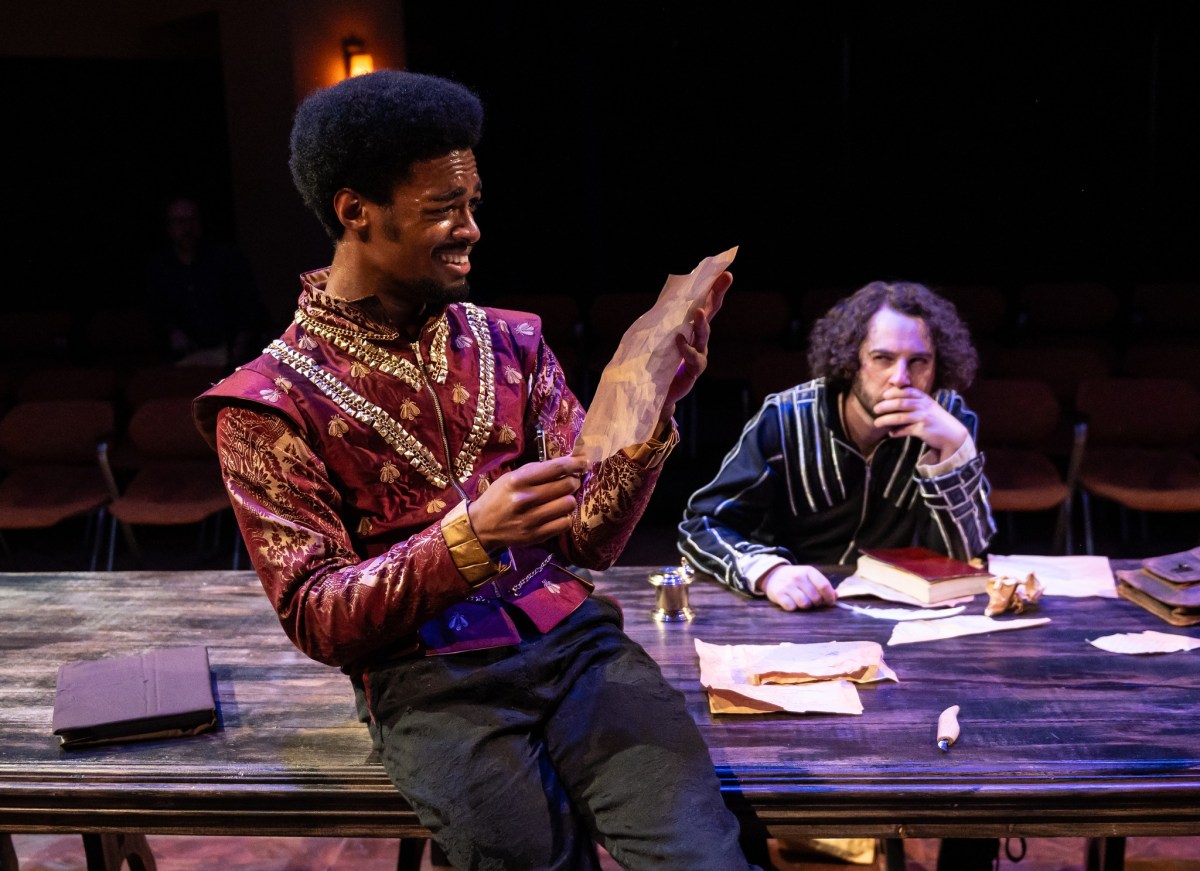
This is where playwright Liz Duffy Adams saw fit to open up a voyeuristic window into the world of two writers – the well-established Christopher “Kit” Marlowe (Avery Michael Johnson) and the upstart William Shakespeare (James Murphy) – as they meet in the private back room of a pub to collaborate on a series of historic plays. But this collaboration is a contentious literary partnership, rife with jealousy, political unrest, and rumors of espionage, religious persecution, and sexual tension. This collaboration is Born With Teeth.

We are subjects, not citizens. – BWT

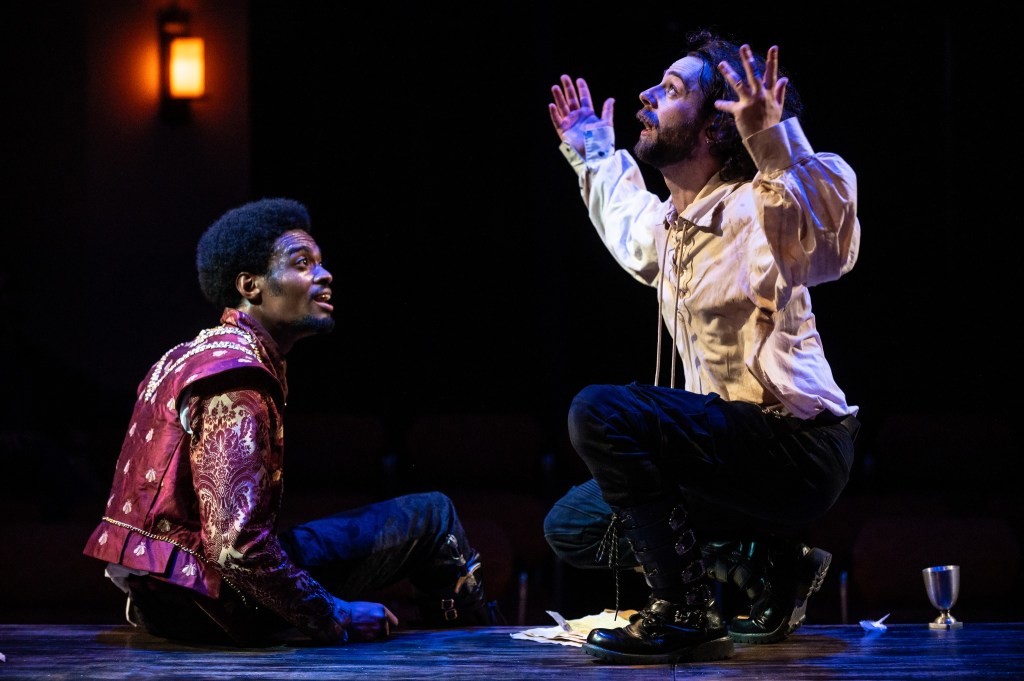
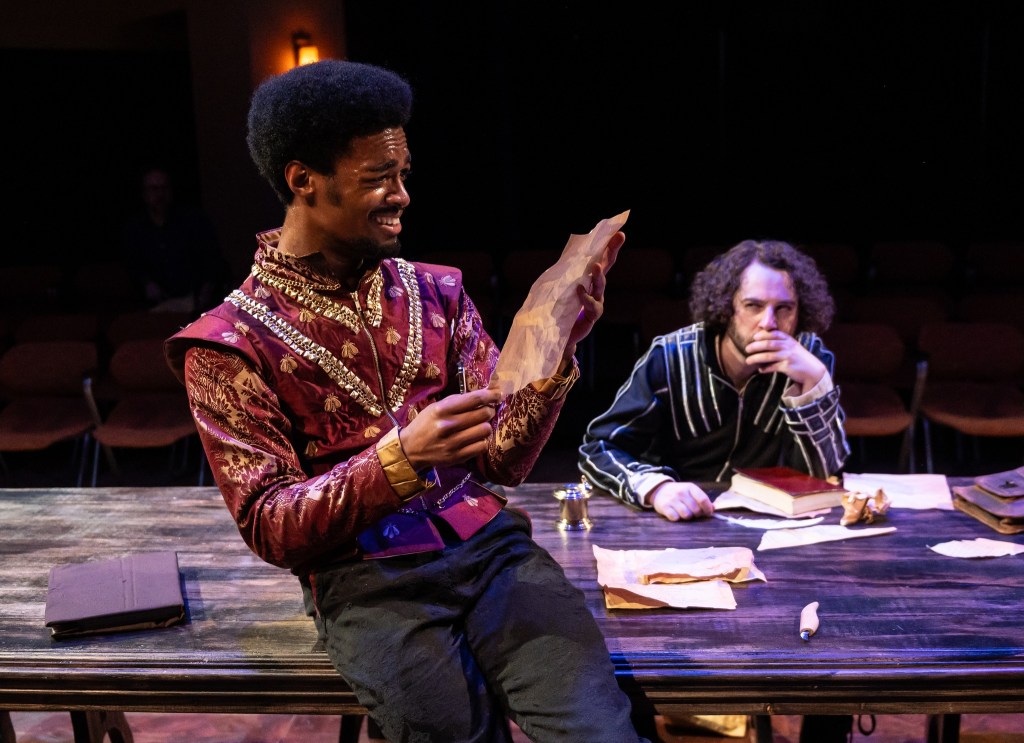
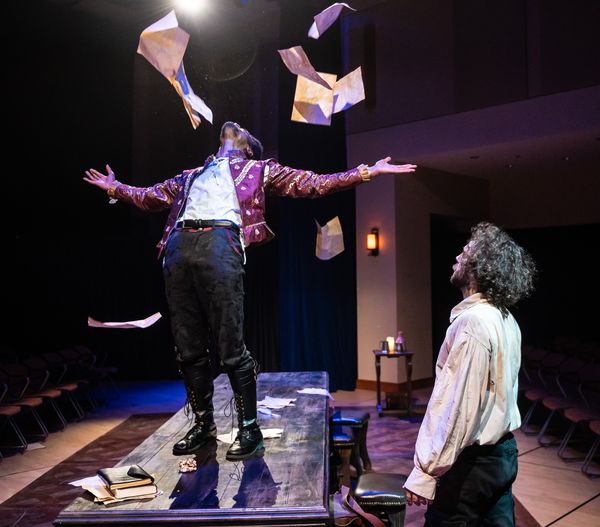
The flexible space of the Gottwald Theatre has been transformed for this occasion. A long (perhaps 12’?) table dominates the room, slashing diagonally through the space. It is placed on a sturdy parquet floor, and surrounded by 10 leather topped rectangular stools. The audience is seated on either side of the table, close enough for the first row to be showered by scattered sheets of paper during the two playwrights’ scuffles. This awesome set was designed and constructed by W. Reed West III.

You are so much stupider than you look; how is that possible? – BWT

William Shakespeare and Christopher Marlowe did indeed collaborate on the Henry VI trilogy, Parts I, II, and III, Marlow was stabbed to death in the summer of 1593. But much of the relationship between Shakespeare and Marlowe – both their authorship and personal  – is a matter of speculation and mystery. So that raises the question, how much of Born With Teeth is historical clarification, and how much is pure fantasy? And given the truths expressed and exposed of human interaction – oppression, suppression, persecution, ego, love – does the former question matter?

Worse than nowhere is somewhere you don’t want to be. – BWT

Avery Michael Johnson and James Murphy literally burst onstage, and give us a solid 90 minutes of drama, melodrama, angst, bravado, fear, backstabbing, lust, equivocation, love, revelation, caution, optimism, conciliation, espionage, and more. Born With Teeth is loud, frightening, and funny – sometimes all at once. Marlowe denigrates the upstart Shakespeare, until he reads a page or two of the play they’re working on and realizes that Shakespeare can, indeed, write. But at a time when there is not such thing as freedom of speech or religion, words can cut more sharply that a sword, and speech can be the currency of life or death.

I don’t deny God, I just don’t like him very much. – BWT

Murphy plays the role of Shakespeare with a bit of caution, much more reserved than his more outgoing and outrageous counterpart who may, in turn, be overly confident in the sovereignty of his benefactor. Johnson’s Marlowe never walks but strides. He stomps about in his tall boots – there’s a knife strapped into the right one – he leaps from the floor to the top of the table and lands on the tabletop, the floor, or Shakespeare like a cross between a  pouncing panther and a WWE wrestler. Sitting in the front row, I could see each bead of sweat on Johnson’s brow and distinctly hear the intake of breath when he rapaciously sniffed Murphy. Born With Teeth is a physically demanding play, fueled by quick dialogue that is alternately witty, cutting, and always demanding. It isn’t Shakespeare, but it is the essence of Shakespeare. It isn’t classical, but it is archetypal. It isn’t orthodox, but it does all the things you want live theatre to do.

—–

Julinda D. Lewis is a dancer, teacher, and writer who was born in Brooklyn, NY and now lives in Eastern Henrico County. When not writing about theater, she teaches dance history at VCU and low impact dance fitness classes to seasoned movers like herself, and occasionally performs.

—–

BORN WITH TEETH

by Liz Duffy Adams

Directed by Andrew Gall

Cast

Kit                   ……………    Avery Michael Johnson

Will                 ……………    James Murphy

Production & Design Team

Artistic Director          …….   James Ricks

Managing Director    …….   Jase Smith Sullivan

Playwright                   …….   Liz Duffy Adams

Director                       …….   Andrew Gall

Stage Manager            …….   MariaElisa Costa

Assistant Stage Manager …   Kiari Hicks

Costume Design          …….   Anna Bialkowski

Intimacy Choreographer  …   Lucinda McDermott

Lighting Design          …….   Tristan Ketcham

Set Design                   …….   W. Reed West III

Sound Design              …….   James Ricks

Run Time: About 90 minutes; no intermission

Content Disclosure: This production contains mature themes, strong language, & sexual/suggestive content.

———-

Photo Credits: Promotional Video by Eric Hackler & Photos from Richmond Shakespeare Facebook

https://www.facebook.com/watch/?v=1088997112419759

One-Time
Monthly
Yearly

Make a donation to support
rvart review

Make a monthly donation

Make a yearly donation

Choose an amount

$5.00
$15.00
$100.00
$5.00
$15.00
$100.00
$5.00
$15.00
$100.00

Or enter a custom amount

$

Your contribution is appreciated. Thank you!

Your contribution is appreciated.

Your contribution is appreciated.

DonateDonate monthlyDonate yearly

In Rest and Sleep

A Resurrection of Feelings Through Movement

Starr Foster Dance Presents “In Rest and Sleep”

A Dance Review by Julinda D. Lewis

At: The Firehouse, 1609 West Broad St., Richmond, RVA 23220

Performances: November 30 – December 3, 2023

Ticket Prices: $25 General Admission; $35 Arts Supporter; $40 for two with date night discount

Info: (804) 304-1523 or starrfosterdance.org or firehousetheatre.org

Program & Casting:

Swallow (Premiere): Fran Beaumont, Shannon Comerford, Molly Huey, Maeve Dick. Music composed and performed by Elisabeth Shornik, Guy Shornik

Proof: Mosca Mavrophilipos-Flint, Madison Ernestes, Maeve Dick, Fran Beaumont (Sat/Sun), Shannon Comerford (Thu/Fri). Original music composed by Daniel Deckelman.

In Rest and Sleep: Fran Beaumont, Shannon Comerford, Molly Huey, Madison Ernestes. Music by Nils Frahm, Olafur Arnalds, Anna Müller.

A premiere, a renewal, and a curation. That’s how I would summarize the three works presented by Starr Foster Dance in their fall 2023 performance at the Firehouse Theatre. Three works, three words. Of course, one can’t stop there – that’s just a teaser.

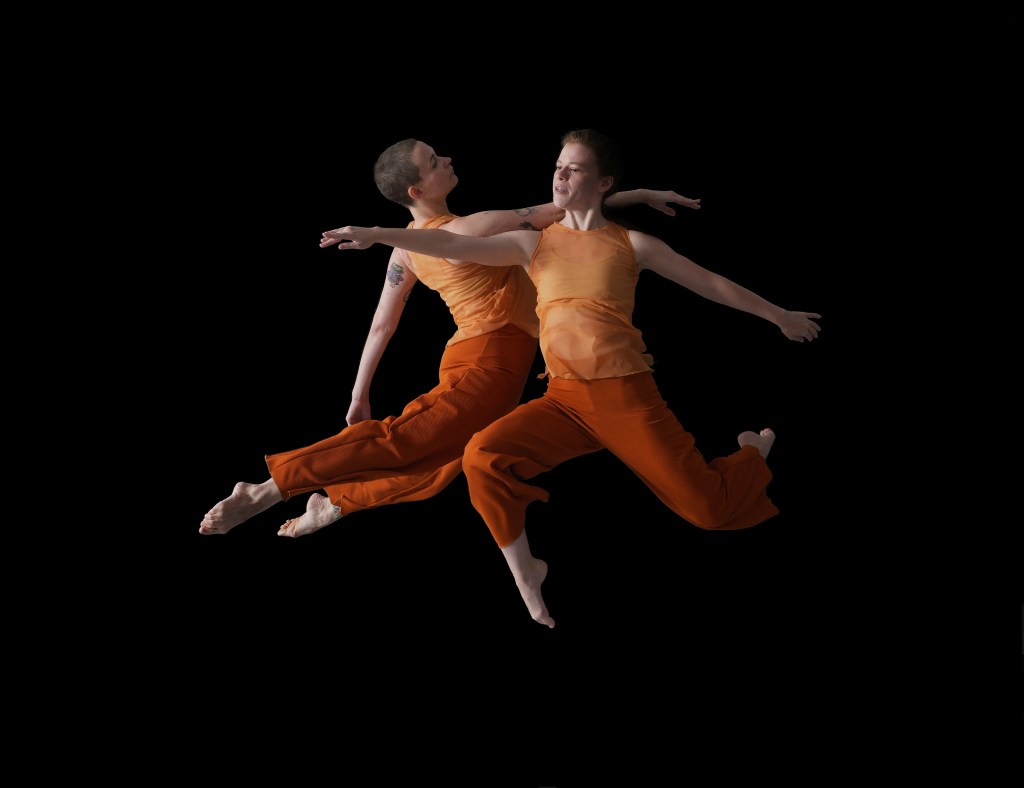
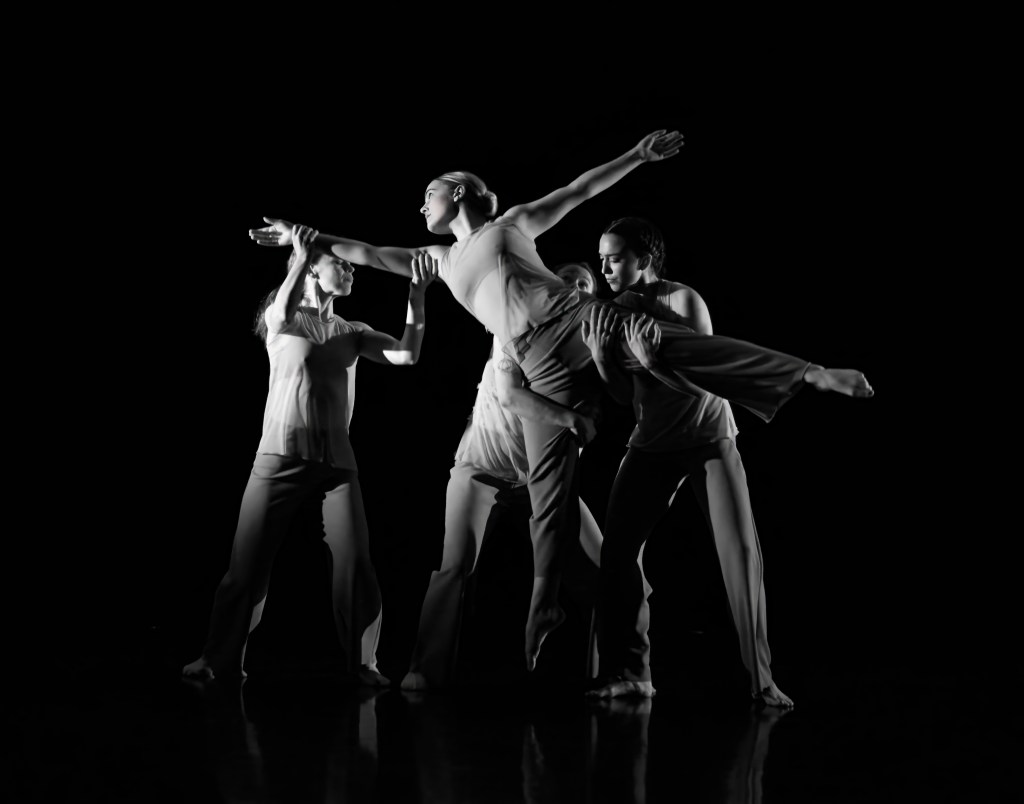
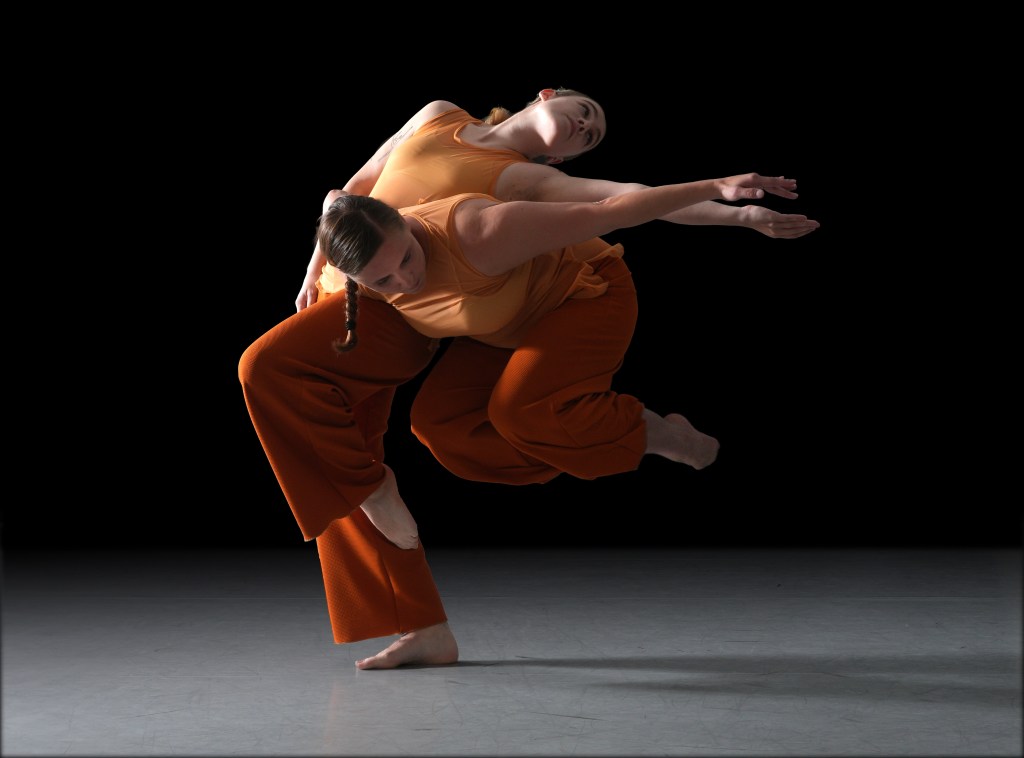
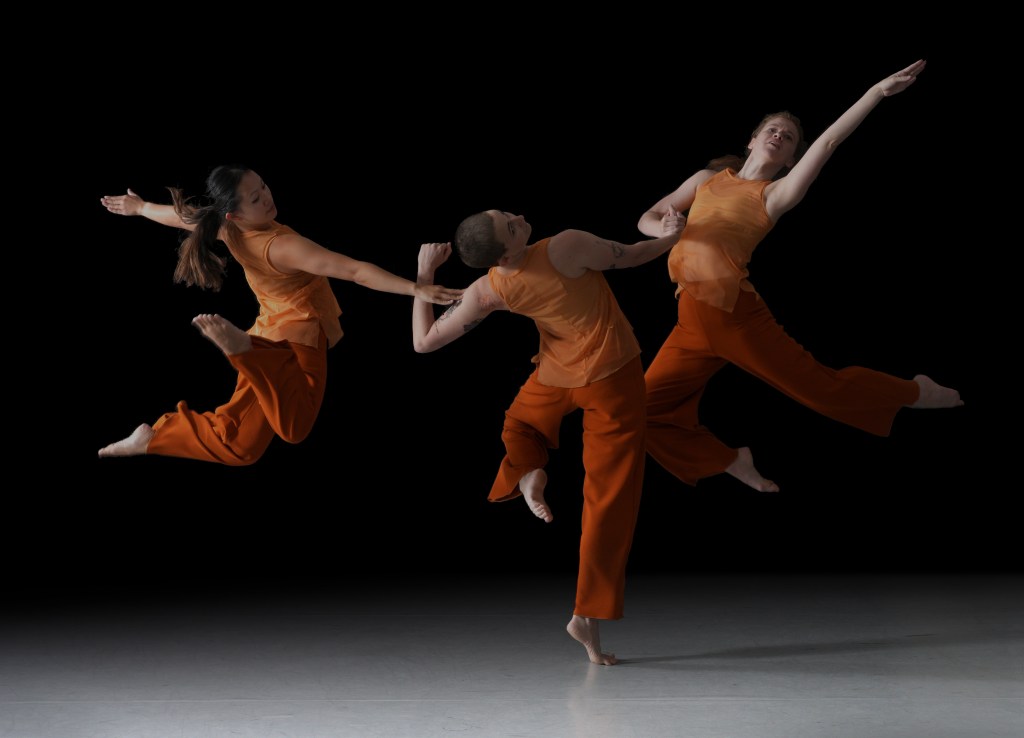
Swallow, parts of which were performed in the 19th Annual Mid-Atlantic Choreographers Showcase last July, was inspired by the phrase “swallow your pride” – or maybe not. Performed for the first time in its entirety, it is a work of enfolding and unfolding, connecting and reconnecting. The four dancers move in and out of linear formations, and honor the four corners, as the music – Elisabeth and Guy Skornik’s “Time Machine Suite” provides a source of urgency.  At the same time Michael Jarrett’s balance of light and shadow offers a sense of dimensionality beyond the mere physical dimensions of the stage. “Swallow” could refer to the bird, nicknamed the “bird of freedom.” The bird is also a symbol of good luck or positive change. To “swallow one’s pride” involves adopting a positive attitude, taking on a posture of humility, opening new lines of communication, stepping outside one’s comfort zone, being willing to do something new, difficult, or uncomfortable – so many words to describe what a movement can convey wordlessly.

Proof, inspired by a photograph by Jay Paul that shows a group of people taking photographs, begins with the dancers circling clockwise. One by one, the dancers enter the circle and expand on simple yet mesmerizing motifs. The soundscape includes grinding sounds, booms, clatters, clicks and clacks and shuffles that suggest the sounds of a camera lens – with the dancers’ movements mimicking the workings of a camera. Large strides contrast with the tiniest wiggling finger motions. Mechanical patterns are balanced by sensuous body rolls. Mottled lighting peeks through a lattice-like template and the work ends with a flash and blackout. In photography, a proof is a sample, an unedited image. But a photograph may also be used as a sort of legal proof – proof that something really happened. Foster, as always, leave it up to the viewer to settle on a definition.

And that takes us to the second part of the program, the titular In Rest and Sleep, first seen at TheatreLab the Basement just a few short years ago. Seen with different dancers – or dancers in different roles – in a different space, the work is just as impactful as it was on its debut, if not more so. This time, Foster selected members of the audience to gently toss lilies onto the stage at the start of the piece. Three dancers were laying quietly on the stage, where there were also two large patches of artificial grass. A fourth dancer waited at the edge of the stage, also holding a flower.

The funeral connection was inescapable, but this is Starr Foster’s mind, so of course In Rest and Sleep is more than that. It resonates with a sense of grief and loss, but the bubbling music suggests resurrection. The dancers repeat a movement in which they plié, lean to the side, and swing their right arms. At other times, they gently pull their partners across the floor by an arm or leg. Both movements could have come from or taken us to a place of darkness, of lifelessness, or loss of control. Instead, they seemed more like affirmations of peace, of letting go. The work is marked by a virtuosity of contrasts that gently wrestles the audience into contemplative silence. In Rest and Sleep is more than choreography – it is therapy. It encourages us to re-examine memories, voices, and lessons from the past in new ways that make them sustenance for the present and fuel for the future.

In Rest and Sleep, the program, not just the one piece, is an artistic curation that attunes us to the ways we relate to others and touches us in places we had long forgotten.

Julinda D. Lewis is a dancer, teacher, and writer who was born in Brooklyn, NY and now lives in Eastern Henrico County, VA.

Starr Foster Dance

Artistic Director/Choreography by: Starrene Foster

Company Artists: Fran Beaumont, Ana Branch, Shannon Comerford, Madison Ernestes, Molly Huey

Guest Performers: Maeve Dick, Mosca Mavrophilipos-Flint

Art Director: Douglas Hayes

Costumes Designed and Constructed by: Starrene Foster

Lighting Designer: Michael Jarett

Music Director: Daniel Deckelman

Thursday, November 30th 7:30PM OPENING NIGHT/ Q&A following show
Friday, December 1st 7:30PM CHAMPAGNE TOAST following the show with the artists
Saturday, December 2nd 5:00PM Matinee
Saturday, December 2nd 7:30PM Q&A following show
Sunday, December 3rd 5:00PM Matinee

One-Time
Monthly
Yearly

Make a one-time or monthly donation
If YOU LIKE RVART REVIEW

Make a monthly donation

Make a yearly donation
Choose an amount

$5.00
$15.00
$100.00
$5.00
$15.00
$100.00
$5.00
$15.00
$100.00

Or enter a custom amount

$

Your contribution is appreciated.

Your contribution is appreciated.

Your contribution is appreciated.

DonateDonate monthlyDonate yearly