WOMEN’S THEATRE FESTIVAL: The Best Man in the Government – גּוֹלְדָּה מֵאִיר

WOMEN’S THEATRE FESTIVAL: Golda’s Balcony

A Theater Review by Julinda D. Lewis

At: TheatreLab, The Basement, 300 E. Broad St, RVA 23219

Performances: March 28, April 3, 7, 13 & 18, 2019

Ticket Prices: $25 general admission; $20 for RAPT card holders; $15 for students

Info: (804) 359-2003 or 5thwalltheatre.org

Isaiah 56:5 (NIV)

to them I will give within my temple and its walls
    a memorial and a name
    better than sons and daughters;
I will give them an everlasting name
    that will endure forever.

Golda’s Balcony, a one-woman play about the Israeli stateswoman, Golda Meir, is a heart-touching work of historical fiction by William Gibson. Written in 2003, Golda’s Balcony was Gibson’s second attempt to capture Meir on stage; he was not quite satisfied with his earlier multi-character work, Golda (1977) and it is said that Meir herself saw it and hated it. Meir died in 1978 of lymphoma, and so never got a chance to see Golda’s Balcony.

This is not a pretty play. It is full of war: talk of war; sounds of war; thoughts, feelings, results, and regrets of war. It begins with the start off the Yom Kippur War, in 1973 and Meir, played with heart and gusto by none other than Jacqueline Jones, is clad in a bathrobe, looking every inch the Jewish grandmother. This image is soon dispelled, however, as she is thrust into the midst of an unending and seemingly unwinnable (by either side) war. She sheds the bathrobe for a power suit and takes up the banner of the Jewish state of Israel.

“Survival is maybe a synonym for Jewish,” Meir says at one point. Later, she conjures up the image of a biblical “Abraham messing around with the house maid” being responsible for the ongoing political and religious conflict of two groups of people fighting over one piece of land.

Jones owns this role. During the talkback following the final showing of this work, director Debra Clinton, who worked with Jones during her first performance of this show at Weinstein JCC in 2010, said that the passing of time had made Jones even better in this role, and that at times – when she leaned across the Prime Minister’s desk, for example – she actually looked like Meir. I personally think Jones looks much softer than the images I’ve seen of Golda Meir, but nonetheless, her performance was both emotionally charged and historically eye-opening.

Playwright Gibson, director Clinton, and Jones presented tough, controversial subject matter in a way that opened a door onto the humanity of a world leader – and more than that, they offered insight into a woman operating in a man’s world. Among many nicknames – some less flattering than others – Meir was known as the Iron Lady of Israeli politics and the best man in government.

“We intend to live. Our neighbors intend for us to die. There’s not much room for compromise.” These words refer to the Palestinian-Israeli conflict but seem to apply as well to recent and current headlines in the US and right here in the state of Virginia.

Golda’s Balcony – a term that refers both to the physical balcony on which the elderly Meir sat to tell this story and to the nickname for Meir’s nuclear weapons facility – is not without moments of humor. Periodically, as melancholy cello music plays, Jones breaks the fourth wall to snap, “I can do without that music.” Near the end of the journey – about ninety minutes of intense drama, with no intermission – we learn that the music is connected to both Meir’s husband, Morris, who was a music lover, and her son, Menachem Meyerson, who was a professional cellist. The story-telling was both a powerful tribute to women, and a heartfelt performance by Jones.

The quartet of one-woman shows that made up the Women’s Theatre Festival concludes with final productions of Margaret Joyner’s Message from a Slave starring Pamela Archer-Shaw on April 19 and Theresa Rebeck’s Bad Dates starring Maggie Bavolack on April 20. Charlayne Woodard’s Pretty Fire, starring Haliya Roberts, closed April 17. I believe the Women’s Theatre Festival – a co-production of 5th Wall Theatre (Carol Piersol) and TheatreLAB (Deejay Gray) was a new concept here in Richmond, but I hope it won’t be a one-time event. The stories were compelling, the performances stellar, and I hope new audiences were introduced to the richness of Richmond theater.

Julinda D. Lewis is a dancer, teacher, and writer who was born in Brooklyn, NY and now lives in Eastern Henrico County.

———-

Photo Credits: Destiny Martinez Photography


https://www.amazon.com/dp/B07BFRHZLB?ref_=assoc_tag_ph_1524210913746&_encoding=UTF8&camp=1789&creative=9325&linkCode=pf4&tag=rvartreview-20&linkId=a4ce1217385e77ea50fa9017a932fe2a

https://www.amazon.com/dp/B07DLPWYB7?ref_=assoc_tag_ph_1524210885446&_encoding=UTF8&camp=1789&creative=9325&linkCode=pf4&tag=rvartreview-20&linkId=1ebab116dd8323f2fae25777042f5d34

https://www.amazon.com/b?node=17869251011&ref_=assoc_tag_ph_1524210812458&_encoding=UTF8&camp=1789&creative=9325&linkCode=pf4&tag=rvartreview-20&linkId=117ef9da1d6ef658059002f2b6b28ab6

SEVEN HOMELESS MAMMOTHS WANDER NEW ENGLAND: Who Needs a Sub-heading After That?

Seven Homeless mammoths Wander New England: & Alternative Kinship Structures!

A Theater Review by Julinda D. Lewis

Richmond Triangle Players

At: The Robert B Moss Theatre, 1300 Altamont Avenue, RVA 23230

Performances: April 10 – May 4, 2019. (Opening Night – April 12)

Ticket Prices: $10-35

Info: (804) 346-8113 or rtriangle.org

Some works of art just defy categorization. Seven Homeless Mammoths Wander New England  by Madeleine George is described as a comedy, but even though there is no lack of humorous moments, the play’s focus on complicated relationships and the academic community make it so much more. There are actually three entwined stories that are related but barely connect onstage, and each has its own cast of characters.

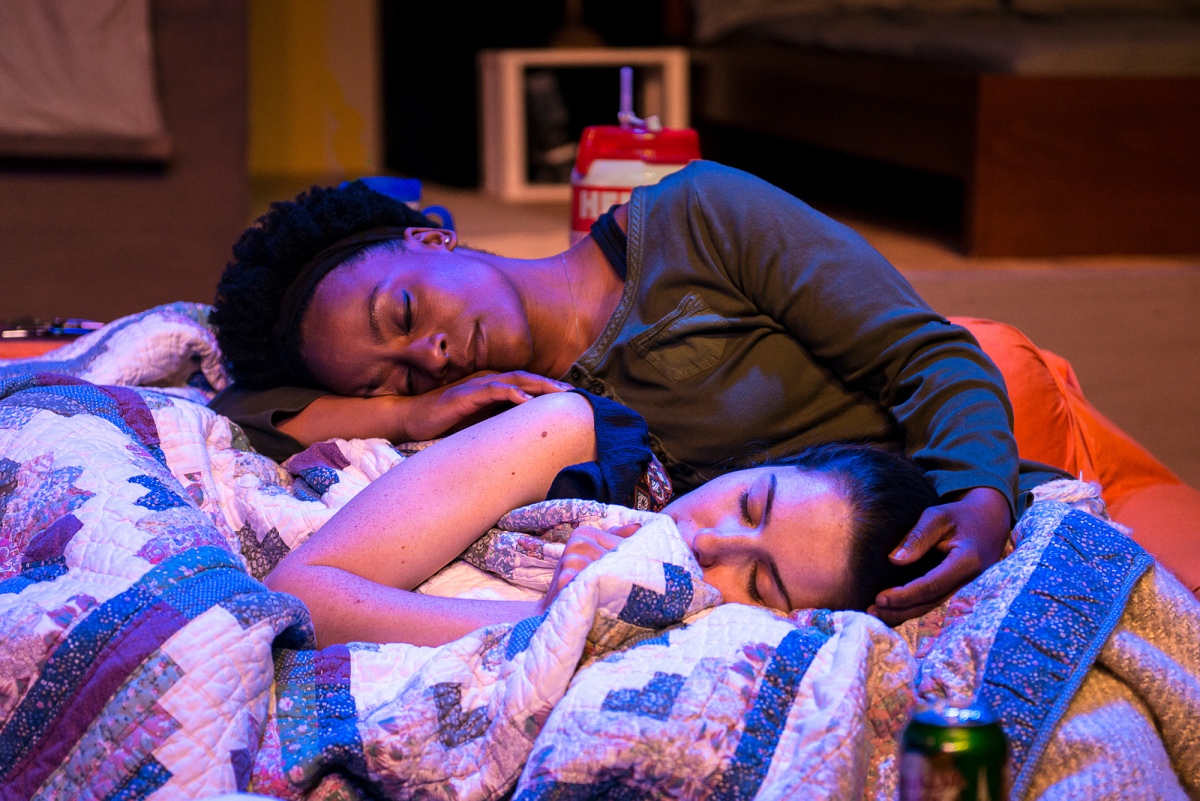
The main story revolves around the volatile relationship between a hyperactive, middle-aged college administrator, Dean Wreen (Annie Zanetti); her former lover Greer (Shaneeka Harrell), a professor of philosophy who has stage four cancer; and the Dean’s new, young lover, Andromeda (Meg Carnahan), a recent graduate of the university and new age apprentice. Wreen invites Greer to move in with her and Andromeda while Greer undergoes experimental treatment for her cancer, leading to awkward moments of stifled and raucous love-making between Wreen and Andromeda and tests of jealousy and monogamy involving Greer and Wreen, Greer and Andromeda, and Wreen and Andromeda.

The three women are each so fascinatingly different, but I was particularly drawn to the character Greer. Harrell has a deep, rich voice and a malleable face that speaks volumes even when her mouth isn’t moving. But it should come as no surprise that Harrell is so physically engaging, as she has extensive experience working with two of my all-time favorite dance companies: Bill T. Jones/Arnie Zane Dance Company and Urban Bush Women.

Meg Carnahan was appropriately spacy as Andromeda – whom Greer initially called by a variety of celestial names, other than her chosen one – but there’s more to Andromeda than aimless passion. She is at odds with the Dean about closing the dusty and underutilized natural history museum and becomes active in the protests to save the museum. Her obsession with watching reruns of “Friends” leads to a memorable moment of tenderness with the bristly Greer, and even brings the three women together in unexpected kinship.

Annie Zanetti, whose performance I most recently admired in a Whistle Stop Theater production of The Little Match Girl, gave the same commitment to Dean Wreen as I remember her giving to previous roles. And while it was fascinating watching her navigate the nuances of her past and present love relationships, one of the most notable scenes was with David Clark, The Caretaker of the university’s little museum that was the object of academic and personal controversy. Stopping by The Caretaker’s office to offer him an alternative position, he silently offered her a flask from his desk drawer, and Dean Wreen unexpectedly accepted. She poured out her soul to the man who had, up until then, acted as the play’s raconteur, and left his office more than a little tipsy. I think she walked home.

Clark has a solo role as a sort of narrator, keeping the audience informed of updates in the progress of the plans to shut down the university’s museum – home to seven rare mammoth skeletons, and a few dioramas of indigenous life – by reading aloud from the local newspaper. The details of planned student protests and the activities of the local town council are both informative and amusing, as read with gusto by Clark.

The final section of this trilogy is the strangest and, in some ways, the funniest – or at least the oddest. Maura Mazurowski and Ray Wrightstone play Early Man 1 and Early Man 2, respectively. They are figures in the museum’s dioramas who give voice to the random students who come into the rarely used museum. In fact, the museum is so rarely used that it has become a favorite rendezvous spot, where students can engage in romantic activities in relative privacy – except for the supposedly unseeing eyes of the mammoths and the diorama figures.

Listening to the two caveman-like figures speaking in the vernacular of modern-day students is both amusing and disturbing. In fact, it takes, like, a few scenes to figure out what’s really going on here. To make these supporting characters more challenging, they are allowed to move only their mouths, while maintaining their frozen poses.

Relationships, commitment, change, love, and passion fuel Seven Homeless Mammoths Wander New England and its tightly knit and eclectic cast. Lucian Restivo’s direction provides a variety of pacing choices. The women’s characters ring true, right down to their rituals and bickering The Caretaker’s character provides direction and humor, and the diorama characters are. . .well, different.

Chris Raintree’s multileveled set provides separate work and living spaces although I’m not sure if the ancient refrigerator was just something Dean Wreen was holding onto out of eccentricity or of it was a true marker of the time period. Perhaps it was a metaphor for the complications of her life.

Seven Homeless Mammoths Wander New England might not be everyone’s cup of tea, but if you like satire and droll humor, and have an interest in alternative kinship structures, you ought to go see this production.


Julinda D. Lewis is a dancer, teacher, and writer who was born in Brooklyn, NY and now lives in Eastern Henrico County.

———-

Photo Credits: John MacLellan

This slideshow requires JavaScript.


WOMEN’S THEATRE FESTIVAL: The Bug Guy is Looking Pretty Good

WOMEN’S THEATRE FESTIVAL: Bad Dates

A Theater Review by Julinda D. Lewis

At: TheatreLab, The Basement, 300 E. Broad St, RVA 23219

Performances: March 30 & April 5, April 11, April 16 & April 20, 2019

Ticket Prices: $25 general admission; $20 for RAPT card holders; $15 for students

Info: (804) 359-2003 or 5thwalltheatre.org

Fresh off another one-woman show (if you disregard the two supporting angels in RTP’s An Act of God), Maggie Bavolack is tackling another comedic role, this time as a single mother and idiot savant restaurateur in Theresa Rebeck’s Bad Dates – a play that features more than two dozen pairs of shoes and a mysterious shoebox full of cash. Briefly referencing Imelda Marcos, our heroine admits to owning 600 pairs of shoes, including designs by Jimmy Choo, Joan & David, and Chanel. (The red stilettos are hot, but I personally prefer the purple suede platform pumps.)

Bavolack plays Hayley Walker, the successful manager of a restaurant whose Romanian owner is in prison for money laundering. She is divorced and has a daughter named Vera (who is described in the first act as 13 years old and later in the second act as 12 years old), a ride or die friend named Eileen who is her bartender, and a brother named BJ who gives her dating advice.

We hear Vera’s rock music selections emanating from her room each time Hayley goes to ask her fashion advice and all the communications between Hayley and the unseen Eileen and BJ take place on Hayley’s animal print princess phone. At one point Hayley produces an actual phone book – something my friends aged 30 and under may have never seen, much less used – but I wondered why she was using the yellow pages (which listed business numbers) when she appeared to be making a personal call to her cheating boyfriend’s home (residential numbers were listed in the white pages). Bad Dates was first produced in 2003, when both wired and cell phones were in use in many homes, but the telephone, the phone book, Hayley’s eclectic wardrobe, and the nondescript setting make it difficult to identify the time and place.

The heart of the play revolves around Hayley’s horrible dating experiences which range from fantasizing about the “bug guy” at a Buddhist party where everyone sat in the rain to a date with a gay lawyer that her mother arranged to a short-lived relationship with a man named Lewis who seemed like the perfect guy until he failed to show up one night. Hayley doesn’t just have bad luck with men, she’s been out of the dating game for a long time and some of the men she meets are perfectly awful!

Bavolack evokes endless chuckles discussing Hayley’s trials and tribulations while parading through a seemingly endless collection of shoes and changing clothes several times with ease – without benefit of a mirror. But even with the intimacy of the TheatreLAB Basement space, I often felt that Rebeck’s script was lacking. Hayley addressed the audience, breaking the wall, but Rebeck never really allowed her to connect with the audience. Director Melissa Rayford kept the pace moving, and I enjoyed Bavolack’s effortless familiarity with the material, but the script just seemed to lack consistency and did not take advantage of opportunities to connect more closely with the audience.

Speaking of inconsistencies, the set (I did not see a designer credit) featured a single bed with a nice comforter and a comfortable looking hassock, but the dressing table and chair were scarred and battered, and Hayley’s closet was just a metal clothing rack. A simple black curtain separated Hayley’s room from the rest of the apartment which seemed to be a dark, windowless space that could have been in a basement. I would have expected at least a nice rug and painted walls for a woman who was managing a successful restaurant. This threadbare setting made the line, “Brooklyn, it’s not as bad as you think it is,” seem quite odd. Later, describing a scene in a Manhattan police station, Hayley says, “What we see on television is really quite accurate.” The same cannot be said of Bad Dates. It is quite amusing, but somewhat less than accurate.


Julinda D. Lewis is a dancer, teacher, and writer who was born in Brooklyn, NY and now lives in Eastern Henrico County.

———-

Photo Credits: Destiny Martinez Photography

Bad Dates.1
Maggie Bavolack
Women's Theatre Festival.1
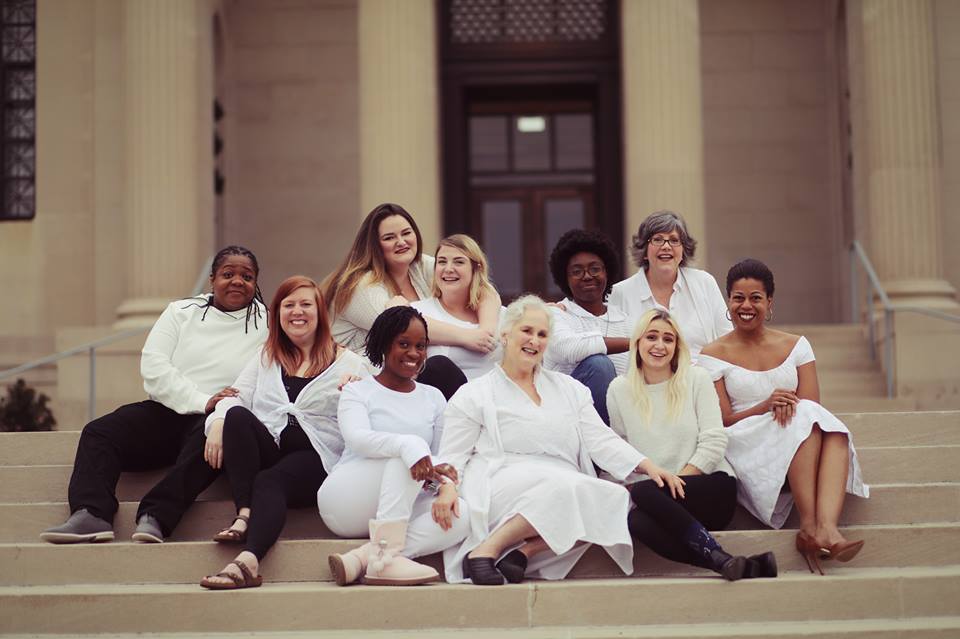
The Women’s Theatre Festival Team

Women's Theatre Festival.2


PINOCCHIO: Bright and Shining Son

Pinocchio: The Nose Knows

A Theater Review by Julinda D. Lewis (with input from Emmitt, Kingston & Soleil)

At: Virginia Rep’s Children’s Theatre at Willow Lawn; 1601 Willow Lawn Drive, RVA 23230

Performances: Mach 29 – May 5, 2019

Ticket Prices: $21

Info: (804) 282-2620 or virginiarep.org

The third production of the Virginia Rep Children’s season at Willow Lawn is the children’s classic Pinocchio. I’m glad I usually take children with me to these shows, because our perspectives are often vastly different.

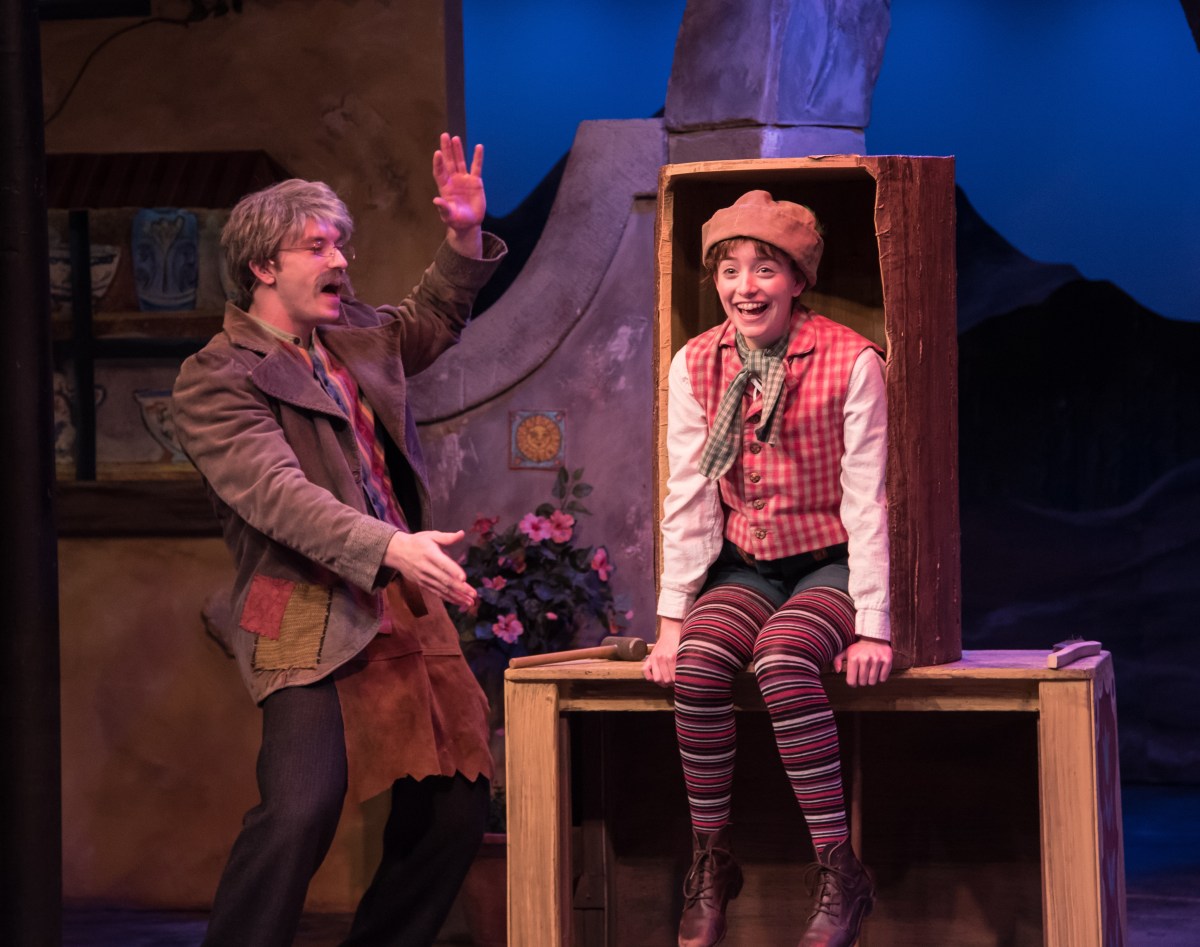
First, a disclaimer. I am truly glad that Pinocchio is played by a real person, Bridget Sindelar, who last appeared on this stage as Ginny/Little Blue in The Little Engine That Could. I find articulated marionettes creepy – almost as creepy as ventriloquist dummies. Sindelar adopted a herky jerky walk, like a windup toy about to wind down, with uplifted elbows to mimic the posture of a marionette.

Sunday afternoon found a nearly full house for this show, with book, lyrics, and direction by Bruce Craig Miller, who will soon start his new job as head of the Chesterfield Cultural Arts Foundation. Running a little under one hour with no intermission, Pinocchio is recommended for ages 4 and up, and that seems about right. There were a few criers in the audience, but most of the young attendees were enthralled. My 4-year-old grandson Emmitt was fully attentive. As always, he is especially fond of the musical numbers. His favorite was “The Eating Song.”

When asked which characters he liked the most, his first response was the Blue Fairy (played by Renee McGowan) but then he changed it to Pinocchio. He also did not hesitate to let his mom know that he did not like the scene where Pinocchio got tied up with a noose. (It might have been around that time that he moved from his seat to her lap.) The set, by Terrie Powers, also caught his attention, “It looks like a real city,” he said in unsolicited awe shortly after we took our seats.

Kingston, at 10, is the more seasoned theater-goer, but he liked the entire show, especially Tevin Davis as the Fox and Eve Marie Tuck as the Cat. He did not have any problem with the rope scene or even with what I saw as totally improbable, illogical, and unsubstantiated scenes and events. Their mom, Soleil, who between the ages of 7-17 spent more time on stages than in theater seats, acknowledged the inconsistencies, but was most struck that this version of Pinocchio reminded her of the book of classic fairy tales her father and I had bought for her and her siblings. One scene she reminisced about was the scene where Pinocchio and his father Geppetto are reunit4ed in the belly of a giant dogfish – a scenario I did not remember at all. So, thank you, family, for your input. I appreciate your perspectives, but do not fully agree.

From my perspective, I found Bridget Sindelar charming as Pinocchio, but I was repelled by Pinocchio’s bratty behavior. I, too, was enamored of Tevin Davis’s Fox, a rakish character who seemed to have adopted some of the mannerisms of a 1970s Blaxploitation movie pimp. Geppetto, played by Landon Dufrene, seemed underdeveloped, as was the relationship between Geppetto and Pinocchio. The jump from freshly carved puppet to a runaway puppet to real boy was sudden and lacking in explanation. Okay, I know it’s a fairy tale, so logic isn’t required, but still, it seemed to me as if chunks of the story were missing. This is why I think it’s helpful to attend a children’s show with children – especially if I’m going to write about it. They weren’t bothered by, in fact didn’t even notice, any of the things I found lacking or distracting.

Over all, Miller kept the pacing swift but smooth; the time passed quickly. The cast performed with energy and enthusiasm, often making light contact with the audience, asking a question or pointing to a child or two to include them in the decision making process. I liked the opening, with the actors switching between English and Italian to set the scene – but they dropped that after the opening scene. The costumes by Marcia Miller Halley were quite well done and enhanced the fairy tale atmosphere while complementing Powers’ colorful little village set design.

Pinocchio delighted its intended audience and is largely devoid of the double entendre that so many playwrights cleverly insert into children’s plays, apparently in an attempt to keep the attention of the accompanying adults. Like most good children’s tales, there is an underlying lesson or two. In this case, the messages that are woven throughout are about telling the truth and not being afraid to grow up.


Sensory Friendly Performances

A Sensory Friendly family performance will be offered on Saturday, April 27, 2019 at 10:30 a.m. Please see the website for more details: http://va-rep.org/sensory_friendly.html


Audio Described Performances

In collaboration with Virginia Voice, Virginia Rep is pleased to offer Audio Described performances, in which actions, expressions and gestures are described during gaps between dialogue throughout the performance for patrons with low vision or blindness. In addition to live audio description during performances, patrons are also invited to participate in a tactile tour before the performance. An Audio Described performance will be offered on Sunday, April 7, 2019 at 2 p.m. Please see the website for more details: https://va-rep.org/access_for_the_blind.html


Performance Schedule

Evening performances at 7:00 p.m. on select Fridays

Matinee performances at 2:00 p.m. every Saturday and Sunday

Matinee performances at 10:30 a.m. on select Saturdays


Julinda D. Lewis is a dancer, teacher, and writer who was born in Brooklyn, NY and now lives in Eastern Henrico County.

———-

Photo Credits: Aaron Sutten

This slideshow requires JavaScript.

17th ANNUAL MID-ATLANTIC CHOREOGRAPHERS SHOWCASE: Selected for Diversity

17th ANNUAL MID-ATLANTIC CHOREOGRAPHERS SHOWCASE

A Dance Review by Julinda D. Lewis

At: Grace Street Theater, 934 West Grace Street, RVA 23220

Performances: March 30 at 5:00 and 8:00 pm and March 31 at 2:00 pm

Ticket Prices: $15

Info: (804) 304-1523, www.showwclix.com, or www.starrfosterdance.org

For 17 years, Starr Foster has curated the Mid-Atlantic Choreographers Showcase of internationally recognized choreographers – and one university student.

This year’s program included works by Megan Payne (Charlotte, NC), Sadie Weinberg of LITVAK Dance (San Diego, CA), Mariah Eastman (a Seattle, WA native who graduated from the VCU Dance program), Zachary Frazee (Rochester, NY), Lauren Lambert (a University of Richmond senior majoring in Psychology with minors in Dance and Healthcare Studies), and Starr Foster (Richmond, VA).

Payne was the only choreographer to have two works on the program with one of them a dance on film, “rib.” The title immediately made me think of biblical themes, of Eve, and the work, in fact, is an exploration of the female experience. Set in a dark, damp, windowless room, the trio is lit primarily by a single, bare bulb hanging from the ceiling. It reminds me of the light in an interrogation room on a television detective show. Rather than an outward focus on line and technique, the movement is internally focused and motivated. The dancers move as a group, suggesting the three women may be components of a whole – a sort of trinity – and the two most striking movements, for me, were when they faced a blank wall, searching it with their hands, and when one violently swung her hair.

Payne also presented a live work, “Bleached Dreams.” This duet is an exploration of how our bodies experience grief and seemed mysterious and somewhat alien as it began with the two women bent over, backsides to the audience – a position they held for quite some time. Much of the movement took place on the floor, such as a head-to-head crawl, with one dancer moving forward while the other moved backward – picture conjoined twins, with the dominant twin controlling the direction of travel. The lighting and sound contributed to the alienated, shadowy effect.

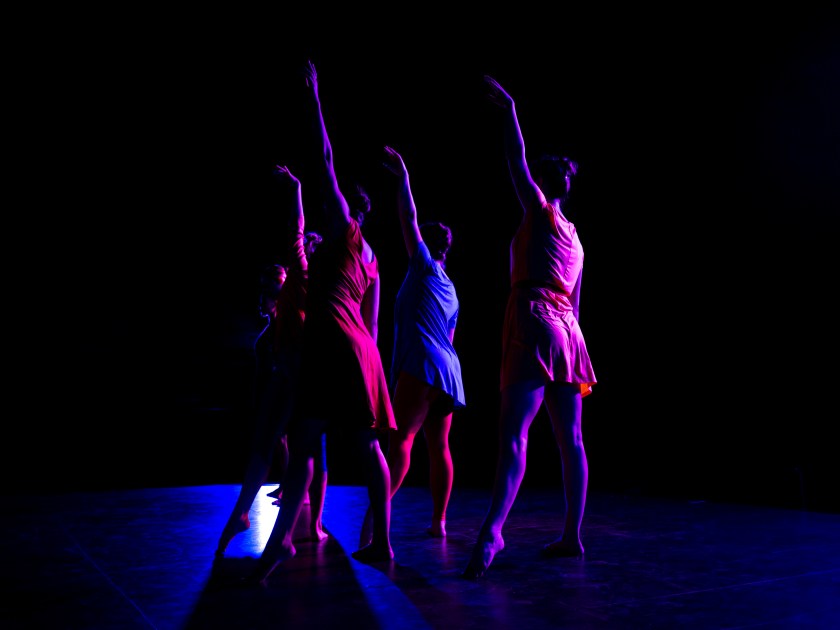
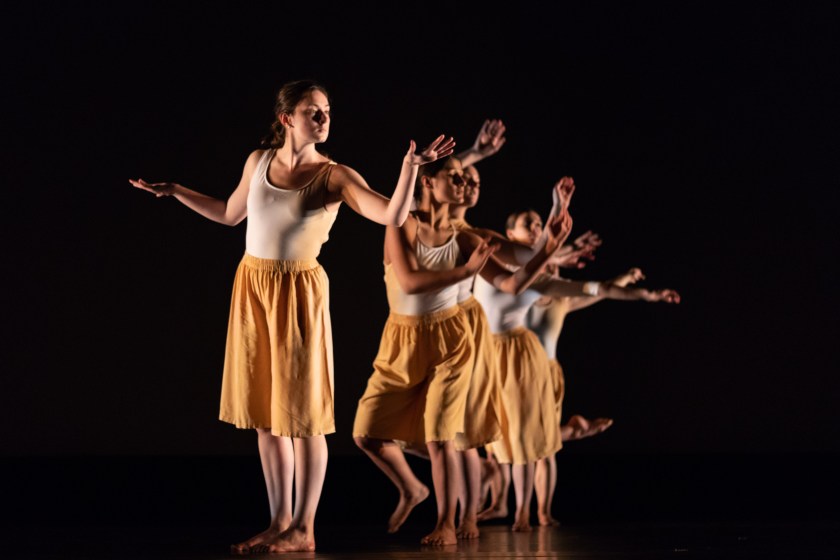
Speaking of lighting, Lauren Lambert’s work, “Eudaimonia,” described in a quote from Dr. Colin Zimbleman (likely one of the psychologists Lambert encountered in her major) as “a chance to glimpse an awe-filled vision of the world,” included some beautiful lighting effects – a “cyclorama lighting design concept” by Shanna Gerlach. Golden streaks occasionally flashed in the background, creating an other-worldly effect, and I liked the simplicity of the rotating circle of women moving as if supported by water, washed in a golden pool of light. “Eudaimonia,” by the way, translates from the Greek as happiness or prosperity.

I enjoyed the evocatively lit opening and period costumes of “considering the difference between stillness and waiting” by Sadie Weinberg and dancers of LITVAKdance. Inspired by Arthur Schnitzler’s controversial 1897 play, “La Ronde,” the duo moved through interesting partner variations – but without the sexually provocative nature of the work that inspired it. Mariah Eastman’s solo, “Efforts of Contemplation,” displayed a quiet intensity powered by detailed, articulated movement phrases, while Zachary Frazee’s “Remain in My Heart” had six dancers in primary colors transitioning through a variety of interactions. The satisfyingly diverse program closed with “Stray,” a work by Starr Foster which, despite its title, demonstrated the smooth, organic quality of Foster’s movement vocabulary and the mesmerizing mastery of her ensemble.

Julinda D. Lewis is a dancer, teacher, and writer who was born in Brooklyn, NY and now lives in Eastern Henrico County.

———-

Photo Credits: accompany each photo.

17th.Mariah Eastman_Kyle Netzeband Credit
Mariah Eastman. Photo by Kyle Netzeband.
17th-Frazee Feet Dance_Demian Spindler Credit
Frazee Feet Dance. Photo by Demian Spindler.
17th-Lauren Lambert_Eibhlin Villalta credit
Lauren Lambert. Photo by Eibhlin Villalta.
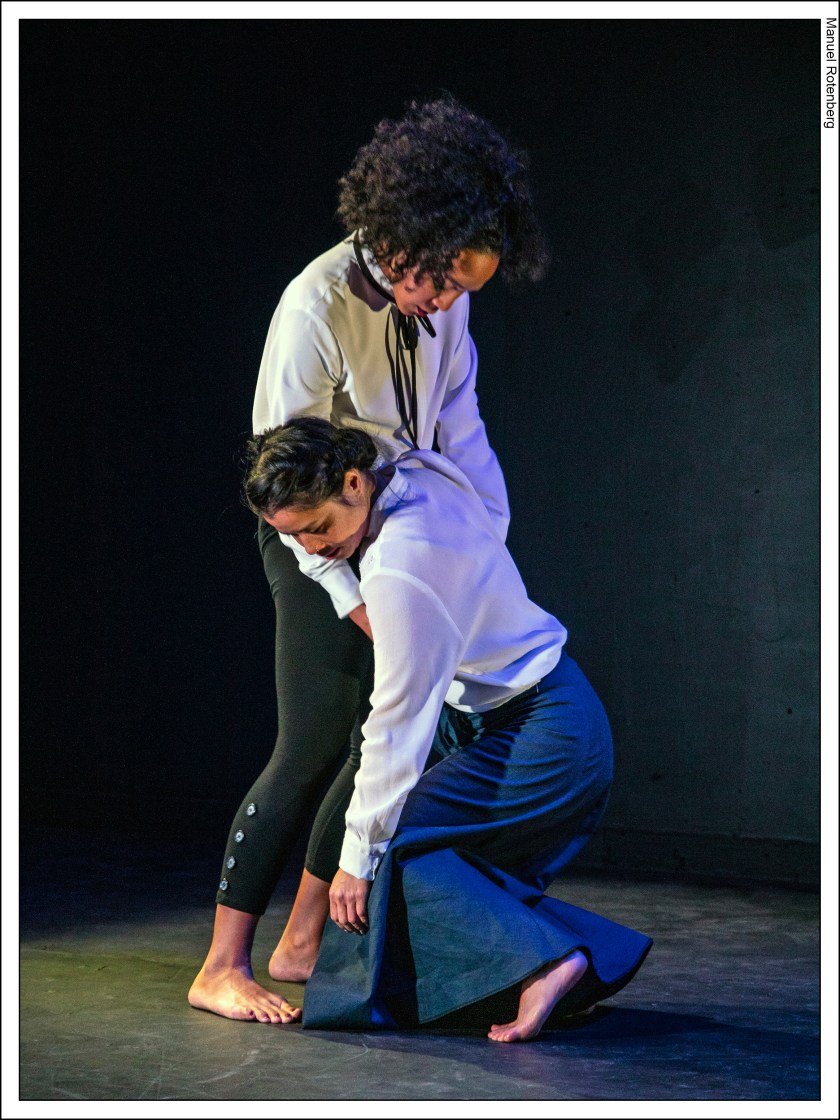
17th-LITVAKdance_Manuel Rotenberg
LITVAKdance. Photo by Manuel Rotenberg.
17th-Megan Payne
Megan Payne Dance. Photo by Taylor Jones.
17th-Starr Foster Dance_Doug Hayes Credit
Starr Foster Dance. Photo by Doug Hayes.


SHORTS 2019: Small Plays with Dance Make Big Impact

K DANCE PRESENTS SHORTS: Short Plays & Contemporary Dance

A Dance & Theater Review by Julinda D. Lewis

At: The Firehouse Theatre, 1609 W. Broad St, RVA 23220

Performances: March 28-30, 2019 at 7:30pm & March 30 at 4:00pm

Ticket Prices: $25 general; $15 for RAPT (RVA Theatre Alliance) & Students

Info: (804) 270-4944 or firehousetheatre.org

K Dance’s 2019 production of Shorts, five short plays interwoven with choreography by Kaye Weinstein Gary, challenged performers to express themselves through words and dance and treated the audience to a delightfully diverse evening of performances. Now in its seventh year, the Shorts brand appears to have been refined and enhanced in terms of timing (the program ran just under 90 minutes, including intermission), talent (there were some new faces and bodies onstage and off), and technical aspects (the lighting, sound design, and costuming seemed particularly creative).

Jacqueline Jones directed two of the small plays. “Chicks (Biology Etc. Day 3)” written by Grace McKeany featured Dean Knight as Miss Mary Margaret Phallon (I’m surprised he wasn’t Sister Mary Margaret) as a Kindergarten teacher giving life lessons on wholly inappropriate topics, such as sex and adult deception. The lesson relied on word play that resulted in double entendre and other age-inappropriate pronouncements. Knight, by the way, looked the part in what I’ll call light drag – a simple dress and conservative wig.

Jones also directed one of the more serious scenarios of the program. “Just Before the Drop” written by David-Matthew Barnes, featured Kaye Weinstein Gary and Andrew Etheridge in a weird and strangely touching story about a wife who first meets her husband’s male lover right after the husband has jumped to his death from the roof of a building. The encounter occurs on the roof top after the police and ambulance and nosy neighbors have left, and between the delicate steps of a deadly dance discuss which of them will keep their loved one’s shoes.

Luke Schares and Patrick Rooney contributed perhaps the funniest moments of evening as a pair of cockroach brothers who, along with a lone critic, were the only survivors of an apocalypse that apparently occurred in and around a struggling theater. Surrounded by trash and a gigantic candy bar wrapper, the two wore hilariously accurate cockroach costumes – complete with extra legs and arching antenna – designed by Kylie Clark. Reminiscent of the adults in “Peanuts” cartoons who are represented only be a saxophone sound, the critic was represented by a piggish grunt. (“They were not looking in your direction,” a friend reassured me after the show.) This humorous tale by Jacquelyn Reingold bears the improbable title of “Joe and Stew’s Theatre of Brotherly Love and Financial Success.”

But wait, there’s more. The lovely and lithe Mara Elizbeth Barrett and Tim Herrman warily negotiated the roles of a couple attempting to reunite after some sort of unspecified absence or separation. Andrew Etheredge directed the piece which effortlessly integrated contemporary dance movements into the fabric of the story and speaking of fabric, he also designed the actor/dancers’ patterned bodysuits. This was the one play that left me with unanswered questions. Why did they break up? Why did he come back? Without some background information or additional context, “In Transit,” written by Steve McMahon, was decidedly unfulfilling.

Thankfully, this was not the final play. That honor was saved for “The Closet,” by Aoise Stratford. “The Closet” gave us an inside look at abandoned toys. Etheredge, a gruff-voiced toy dinosaur named Bernard was the senior resident of the closet, along with Twinkles, a simple-minded and somewhat annoying “Tubby” toy names Twinkles, played by Katherine Wright with a vertical red pony tail. (You might want to Google “tubby toys” to get the full effect.) These two abandoned toys were joined by a reluctant Bart Sponge (Round Trousers), played by Dean Knight in a button down shirt and khaki shorts with suspenders. Like every good movie villain, he pleaded his innocence until Bernard/Etheredge pulled a confession out of him – thanks to his cigarette fueled gravelly voice, no doubt.

Even though Shorts is a dance theater experience, like most Richmond dance programs it has a short run (no pun intended) of just a few days, so if you’d like to see it – and I think you should – don’t hesitate but purchase your tickets and go – just do it!

Julinda D. Lewis is a dancer, teacher, and writer who was born in Brooklyn, NY and now lives in Eastern Henrico County.

———-

Photo Credits: Sarah Ferguson


WOMEN’S THEATRE FESTIVAL: A Warm Memoir

WOMEN’S THEATRE FESTIVAL: Pretty Fire

A Theater Review by Julinda D. Lewis

At: TheatreLab, The Basement, 300 E. Broad St, RVA 23219

Performances: March 27, March 31, April 6,  April 12, April 17, 2019

Ticket Prices: $25 general admission; $20 for RAPT card holders; $15 for students

Info: (804) 359-2003 or 5thwalltheatre.org

5th Wall Theatre (Carol Piersol) and TheatreLAB (Deejay Gray) have joined forces once again, this time to co-produce the Women’s Theatre Festival, featuring 4 shows in 4 weeks by 4 companies. The festival opened Wednesday, March 27, with 5th Wall Theatre’s production of Charlayne Woodard’s 1995 autobiographical work, Pretty Fire, directed by Piersol starring Haliya Roberts.

I first remember seeing Haliya Roberts last fall in the Heritage Ensemble production of Living in the Key of B Unnatural. Then she caught my attention again with a strong performance as the assistant producer of a radio show, Linda MacArthur, in the 5th Wall Theatre production, Talk Radio earlier this year. Roberts has raised the bar and moved to a whole new level with her stellar performance in Pretty Fire.

Woodard’s one-woman play is a warm and familiar memoir of a black woman who, wonder of wonders, grew up in a strong, loving family just outside of Albany, NY – with both parents and two sets of grandparents. The story begins with Charlayne’s premature birth in the family’s bathroom on a snowy winter night. For those who are not familiar with upstate New York, Albany is quite rural. The baby weighed less than two pounds and the doctors had little hope that she would survive the night. She was “blue black and fuzzy” and her fingers were still webbed but her paternal grandfather found the hospital chaplain, went to the chapel, and prayed with confidence and conviction.

Roberts takes ownership of this character so that, as one friend said after the opening, it would be hard to imagine anyone else playing this role. Piersol has staged this show very simply, with just a bench and some lights (credit Erin Barclay) and some very effective and well-placed sound effects (Kelsey Cordrey is the Festival sound designer). I don’t know what Piersol told Roberts, or how much guidance she provided, but whatever it was, it was just right.

Roberts mastered the little girl’s voice, the grandmother’s testimonials and hallelujahs and the mother’s sometimes unconventional and unexpected words of wisdom. She also captured the history and anecdotes with authenticity and accuracy. Her recounting of taking a bath with her younger sister in a large tin tub in her maternal grandmother’s home in Georgia brought back memories of my own childhood, taking baths in a similar tub in my great-aunt’s house on the Eastern Shore of Virginia. The water had to be obtained from a spigot (or in my case, from the backyard pump) and then heated on top of the kitchen stove before being poured lovingly into the tub set on the kitchen or dining room floor.

The revelation of her secret – being bullied and molested by a neighbor who lived between her house and the local grocery store – brought me to the edge of my seat, ready to seek revenge on her behalf. But Pretty Fire isn’t about abuse or defeat; it is positive, uplifting, life-affirming – and there are only four more chances to see it!

BTW, playwright Charlayne Woodard, may be familiar to some as an actress who appeared in the Tony Award-winning Broadway show Ain’t Misbehavin’ and on television in the recurring roles of Janice on The Fresh Prince of Bel Air and Sister Peg, the nun with a mission for prostitutes and junkies, on Law and Order: SVU (2002-2011).


Julinda D. Lewis is a dancer, teacher, and writer who was born in Brooklyn, NY and now lives in Eastern Henrico County.

———-

Photo Credits: 


//ws-na.amazon-adsystem.com/widgets/q?ServiceVersion=20070822&OneJS=1&Operation=GetAdHtml&MarketPlace=US&source=ac&ref=tf_til&ad_type=product_link&tracking_id=rvartreview-20&marketplace=amazon&region=US&placement=B00BHU9CCO&asins=B00BHU9CCO&linkId=652779fcb6cf081df4674a52e16a75d4&show_border=false&link_opens_in_new_window=false&price_color=333333&title_color=0066c0&bg_color=ffffff

RICHMOND BALLET STUDIO TWO: Looking Back, Looking Forward

Richmond Ballet Studio Two: The Moor’s Pavane & Figure in the Distance

A Dance Review by Julinda D. Lewis

At: The Richmond Ballet Studio Theatre, 407 E. Canal St., RVA 23219

Performances: March 26-31 @ 6:30pm Tuesday-Saturday; 8:30pm Friday & Saturday; 2:00pm & 4:00pm Sunday

Ticket Prices: Start at $25

Info: (804) 344-0906 x224 or etix.com

On Tuesday night Richmond Ballet’s artistic director, Stoner Winslett, reminisced on the theme “Looking Back, Looking Forward.” As an example of looking back, she gave us Ira White, once a “cute fourth grader” participating in the Minds in Motion outreach program at Mary Munford Elementary School. On Tuesday night, White danced the role of The Moor in José Limόn’s legendary ballet, “The Moor’s Pavane” choreographed in 1949. For looking forward, she brought us the Chicago-based choreographer Tom Mattingly and his new collaborative ballet, “Figure in the Distance,” based on a sketch he presented for the Richmond Ballet’s 2018 New Works Festival. Mattingly choreographed one of his early works for the Richmond Ballet trainees.

Mexican-born José Limόn (1908-1972) remains one of my favorite choreographers of all time, and “The Moor’s Pavane: Variations on the Theme of Othello” is probably his most well-known work. Set to music by Henry Purcell, the stately framework of the pavane – a courtly dance – contains and restrains the passion of the tragedy of Othello. On Tuesday The Moor was danced by Ira White, His Friend/Iago was Trevor Davis, Iago’s Wife was Lauren Archer, and The Moor’s Wife/Desdemona was danced by Sabrina Holland. On alternate programs, the roles are filled by Fernando Sabino, Matthew Frain, Maggie Small, and Cody Beaton. “Follow the hanky,” Winslett advised; that is the secret to uncovering the deception that results in Desdemona’s unfortunate death.

This is one ballet that does not set the women on pedestals. As the quartet moves through the figures of the pavane, they maintain a distant, courtly demeanor, but we see the women grasped tightly by an upper arm, pushed or pulled, and ultimately the Moor’s wife is killed. White and Davis were often at odds, sometimes even combative. Archer and Holland were treated like trophy wives, commodities more than true loves. The rich – and most likely heavy – costumes are constructed after the original design by Pauline Lawrence, with full, layered skirts for the women with puffy, detached sleeves (showing lots of bare shoulder), and princely robes or tunics for the men.

But even with all its historic status, “The Moor’s Pavane” was not the highlight of the evening. Rather, that honor goes to Tom Mattingly’s “Figure in the Distance,” a work inspired by the artwork of Taylor A. Moore – work Mattingly first encountered on Instagram. An even dozen dancers move through a succession of phrases and configurations. Some of the group phrases brought me to the edge of my seat, including a line of dancers that rippled from front to back, and a moment when the men lifted the women straight up in front of them, one by one. I was also intrigued by a couple walking offstage: the woman walking backwards while her partner mirrored her, walking forward. There was just something somewhat frightening or menacing about that, in contrast to another pair of dancers who shared a gentle caress. There was such a range of emotions, all backed by a series of paintings by Taylor A. Moore. First there was a blue painting of what appeared to be a lake with faint figures in the background. Most striking was a red painting with bold strokes that suggested both a forest and figures hidden in the trees. Another had the shape of a cat’s eye, but the slit of the eye could have been the opening to a cave, and a final had only faint brush strokes except on the far right where there was a large. . .limb? But all the bold, unidentifiable brush strokes could be interpreted as figures, hence, “Figure in the Distance.”

Emily Morgan designed the dark red body suits worn by both the men and the women. The fabric was richly yet subtly patterned, with sheer sleeves and back panels so that, at first glance, it seemed one dancer had a tattoo on her shoulder, and then I noticed more shapes and colors. It turns out that Morgan hand painted sections of the fabric to coordinate with the paintings. The work was set to the multi-layered music of Philip Glass: “Violin Concerto No. 1,” “Piano Etude No. 2” and “String Quartet No. 2” (also known as “Company”), and “Primacy of a Number.”

The lighting was designed by Catherine Girardi who has worked as assistant lighting designer for the Ballet’s “Nutcracker” performances. This was her first original design on her own for the Richmond Ballet.

What made this a collaboration more so than many other ballets is the communication that occurred between the artists (choreographer, painter, costumer designer and lighting designer) during the creative process. Mattingly was given three works to work with the company. Mattingly’s impetus was Moore’s paintings and Morgan had to dress the moving bodies in garments whose brush strokes would reflect the paintings at appropriate times, with Girardi’s lighting. All worked together to suggest what Mattingly conceived of as “an idealized version of yourself,” making the audience, in a sense, collaborators after the fact. “Figure in the Distance” is a beautiful work that is highly satisfying on many sensory levels.

Julinda D. Lewis is a dancer, teacher, and writer who was born in Brooklyn, NY and now lives in Eastern Henrico County.

———-

Photo Credits: Photos to follow.

studio-two-web-slider

This slideshow requires JavaScript.

//ws-na.amazon-adsystem.com/widgets/q?ServiceVersion=20070822&OneJS=1&Operation=GetAdHtml&MarketPlace=US&source=ac&ref=tf_til&ad_type=product_link&tracking_id=rvartreview-20&marketplace=amazon&region=US&placement=B00LH3DMUO&asins=B00LH3DMUO&linkId=cd73c62518534f775ac8b3c914e0de60&show_border=false&link_opens_in_new_window=false&price_color=333333&title_color=0066c0&bg_color=ffffff


//ws-na.amazon-adsystem.com/widgets/q?ServiceVersion=20070822&OneJS=1&Operation=GetAdHtml&MarketPlace=US&source=ac&ref=tf_til&ad_type=product_link&tracking_id=rvartreview-20&marketplace=amazon&region=US&placement=B01415QHYW&asins=B01415QHYW&linkId=a6d75822968263d794f0dc9b51d0fe5a&show_border=false&link_opens_in_new_window=false&price_color=333333&title_color=0066c0&bg_color=ffffff

BRIGHT STAR: A Bluegrass Musical

BRIGHT STAR: If You Knew My Story

A Theater Review by Julinda D. Lewis

At: Swift Creek Mill Theatre, 17401 Jefferson Davis Highway, Colonial Heights, VA 23834

Performances: March 23 – May 11, 2019

Ticket Prices: $40 Theater only; $57 Dinner & Theater

Info: (804) 748-5203 or swiftcreekmill.com

Bright Star is a refreshingly different kind of musical with a lively bluegrass score. Written and composed by Steve Martin (yes, THAT Steve Martin) and Edie Brickell (a singer-songwriter who is married to singer-songwriter Paul Simon), Bright Star was preceded by Martin and Brickell’s Grammy Award winning bluegrass album, “Love Has Come for You” (2013).

Based on a true incident – the gruesome story of “The Iron Mountain Baby,” who was tossed from a moving train in 1902 – Bright Star premiered in San Diego in 2014 and had a short run on Broadway in 2016. The toe-tapping score, under the very capable musical direction of Paul Deiss and the alternately heart-warming and heart-rending story of love, loss, forgiveness, and redemption make Bright Star a perfect vehicle for the Swift Creek Mill stage.

Megan Tatum’s choreography, which ranged from a square dance to the Charleston, interjected many enjoyable moments, and Tom Width’s direction kept the cast moving along at a good pace as they moved props and repeatedly skipped from 1945-46 back to 1923-24.

Grey Garrett brought a strong voice and an amiable charm to the lead role of Alice Murphy – a woman definitely ahead of her time – and Jim Morgan brought more depth to the complementary role of Jimmy Ray Dobbs – the man who loved her – than the script seemed to call for.  I also enjoyed Jacqueline O’Connor and Ray Green as Alice’s parents, and took particular notice of Carlen Kernish as Daryl, the adult Ms. Murphy’s assistant, and of Jon Cobb as Daddy Cane.

But not even a solid cast, good acting, and tight direction could help with the patchy structure of the scenes. The program required notes almost like the synopsis that comes with a three-act ballet or an opera in a foreign language to keep up with the 26 scenes in two acts. Maura Lynch Cravey’s costumes were lovely, especially the mostly pastel and muted shirt-waist and dropped-waist dresses for the women, but they didn’t help distinguish the sometimes rapid changes between decades.

Tom Width also designed the set, a simple, rustic, multi-leveled, indoor/outdoor shell with fences rails and chairs and a table with multiple pre-set tops which the actors rearranged to indicate a home, a porch, an office, a bookshop, and various other locations. From where I sat, front row on the right, Joe Doran’s lighting unfortunately often created a glare that obscured the actors’ faces, but the smaller, decorative lights and the train – with full lighting and sound effects (was this thanks to Jason “Blue” Herbert’s technical direction?) added to the overall charm of this musical – even during moments meant to break your heart.

[On a side note: Tom Width announced that the Swift Creek Mill restaurant’s pickled watermelon rind – a buffet favorite – is now available to take home from the gift shop! Yum.]

Julinda D. Lewis is a dancer, teacher, and writer who was born in Brooklyn, NY and now lives in Eastern Henrico County.

———-

Photo Credits: Robyn O’Neill

Save 10.0% on select products from RXBC2011 with promo code 10XUWR8V, through 4/20 while supplies last.

BROADWAY BOUND: On the Brink

BROADWAY BOUND: Brighton Beach Revisited

A Theater Review by Julinda D. Lewis

At: Virginia Repertory Theatre at Hanover Tavern, 13181 Hanover Courthouse Road, Hanover, VA 23069

Performances: March 15 – April 28, 2019

Ticket Prices: $44

Info: (804) 282-2620 or www.virginiarep.org

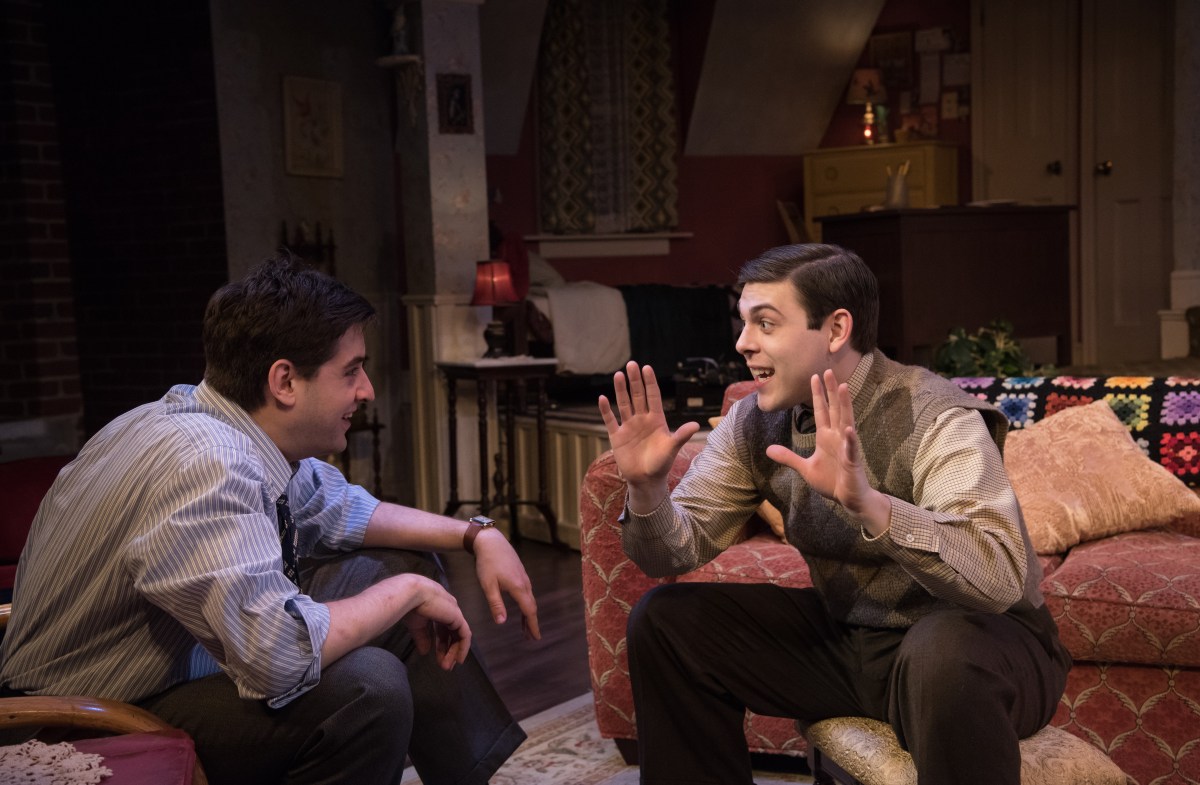
Neil Simon’s Broadway Bound, the third in his semi-autobiographical trilogy about Eugene Jerome and his family, is a heartwarming story that tackles real-life issues. In the hands of director Steve Perigard, who also directed the first part of this trilogy on this same stage in 2016, along with this talented cast – many of whom also appeared in Brighton Beach Memoirs, it is a masterful piece of storytelling. It is some years later, and the brothers are trying to break into comedy writing. They finally get their big break, and just as things begin to work out for them, things begin to fall apart for their parents.

Running about two hours and fifteen minutes, with one intermission, the story unfolds in a leisurely manner that allows the dialogue – and there is a lot of dialogue – to unfold in a natural manner; it almost feels as if we are reminiscing about family matters or listening in on our elders – which young Eugene and his grandfather, Ben, do frequently – who pretend they do not know we can hear them.

Tyler Stevens, who first caught my attention as an actor in Brighton Beach Memoirs, has returned in the role of Eugene, the younger son of the Jerome family of Brighton Beach*. He also narrates the story. If anything, he has grown stronger and brings even more to this character than before. Eugene’s thoughts on intimacy are mature beyond his years and strike a contrast with many of the indecisive comments he often makes when talking to his brother. CJ Bergin makes his Virginia Rep debut as older brother Stanley, and he ably captured Stanley’s enthusiasm as well as his moments of doubt, but he did not seem to wear his role as comfortably as Stevens. Perhaps because I held such fond memories of Stevens in the role of Eugene, this contrast was more palpable.

Jill Bari Steinberg stepped back into her role as the mother, Kate, like a favorite pair of house slippers. Her need to nurture and even her eccentricities are familiar. Jewish mother, Italian mother, Greek mother, black mother, universal mother – Kate is not a caricature, but a memory. One of the most touching scenes occurs when Kate reminisces with her son about her youth, her love of dancing, and how she finagled an opportunity to dance with 1930s and 40s film star and noted dancer, George Raft. Steinberg and Stevens dance together – mother and son – and time stands still. Eugene later narrates how awkward such an intimate moment with one’s mother can be and this, too, feels authentic.

One cannot mention memories without noting that Jeff Clevenger stepped into the role of Kate’s husband, Jack – a role that had previously been performed by the late Andrew C. Boothby, to whose memory this production has been dedicated. Clevenger managed to bring humanity and depth to Jack. Yes, Jack betrayed his wife and family, but he was also a loyal friend to his former lover, staying by her side through an unnamed terminal illness, and his sons loved him. Like real life, things are not just black and white.

The cast also included Ken Moretti, also making his Virginia Rep debut as Ben, Eugene’s grandfather and Kate’s father. Ben clings to the past, and his socialist beliefs, and while he is not demonstrative, he fiercely loves his daughter and grandsons. Moretti more than adequately reveals these qualities, often with his posture and actions rather than with words. Sara Collazo, another returning cast member, rounded out the cast – and the family – as Kate’s sister, Blanche, who married up the social ladder, much to the dismay of her father, Ben.

Terrie Powers’ multi-level set is divided into four separate spaces: the brothers’ bedrooms upstairs and a comfortably nondescript living room and dining room downstairs, with doors leading to the kitchen and the front entrance. The black metal mailbox on the door-frame and the mezuzah (prayer scroll) that Jeff touched – one of his few tender acts – on entering through the door could have been taken from my grandmother’s house in Brooklyn where I grew up. (No, we were not Jewish, but the previous owners of our house were.)

Lighting by R. Jonathan Shelley further defined the spaces, and Corbin White provided the sound design, which seemed a bit uneven on opening night. (There was one effect in act one that startled me; I wasn’t sure if it was a toilet flushing or the nearby train rumbling by.) Sue Griffin costumed the men in neatly creased trousers, dress shirts, and fedoras. Jack sported suspenders. Kate wore a uniform of modest, printed house dresses with coordinating sweaters and a pair of open toed casual wedges that looked identical to the ones my grandmother wore. And as a born Brooklynite, the Jerome family’s accents sounded nostalgically familiar.

Broadway Bound certainly addresses the brothers’ show biz dreams, even including a lengthy radio show excerpt, but the focus is on the people and their relationships and that is what makes this a fitting offering for the Acts of Faith theatre festival and a memorable drama you will think about long after the final bow.

———-

*For non-New Yorkers: Brighton Beach is a part of the Borough of Brooklyn, which is part of the City of New York. But for people in Brooklyn – as well as the other “outer” boroughs of Queens, Staten Island, and The Bronx, going into Manhattan is called going to “the City.”

Julinda D. Lewis is a dancer, teacher, and writer who was born in Brooklyn, NY and now lives in Eastern Henrico County.

———-

Photo Credits: Aaron Sutten

This slideshow requires JavaScript.

Shop Amazon – Introducing Education Supplies for Teachers

Shop Amazon – Best Selling Products – Updated Every Hour