DEAR JACK, DEAR LOUISE

A Timeless Love Story

A Theater Review by Julinda D. Lewis

At: Hanover Tavern, 13181 Hanover  Courthouse Rd, Hanover, VA 2309

Performances: March 18 – April 17, 2022

Ticket Prices: $48.

Info: (804) 282-2620 or www.virginiarep.org

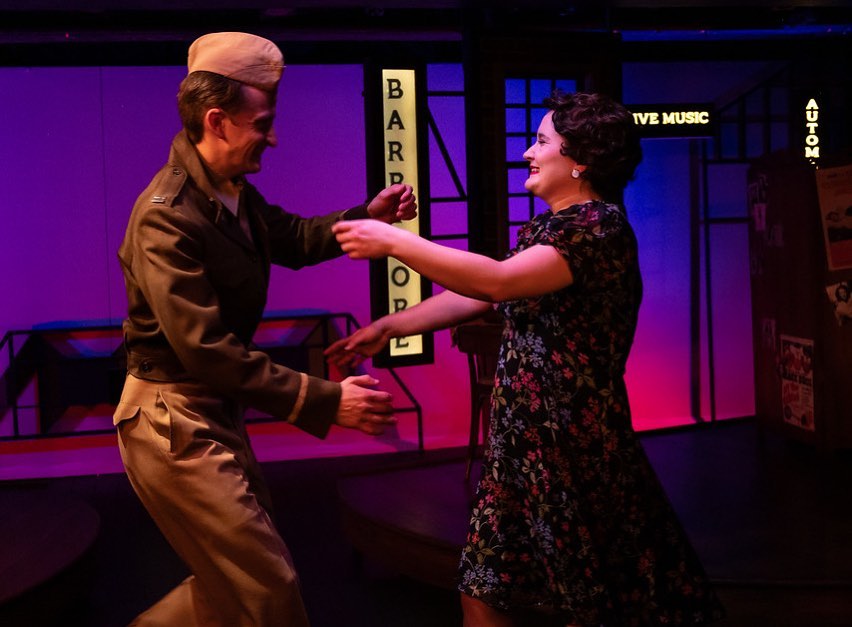
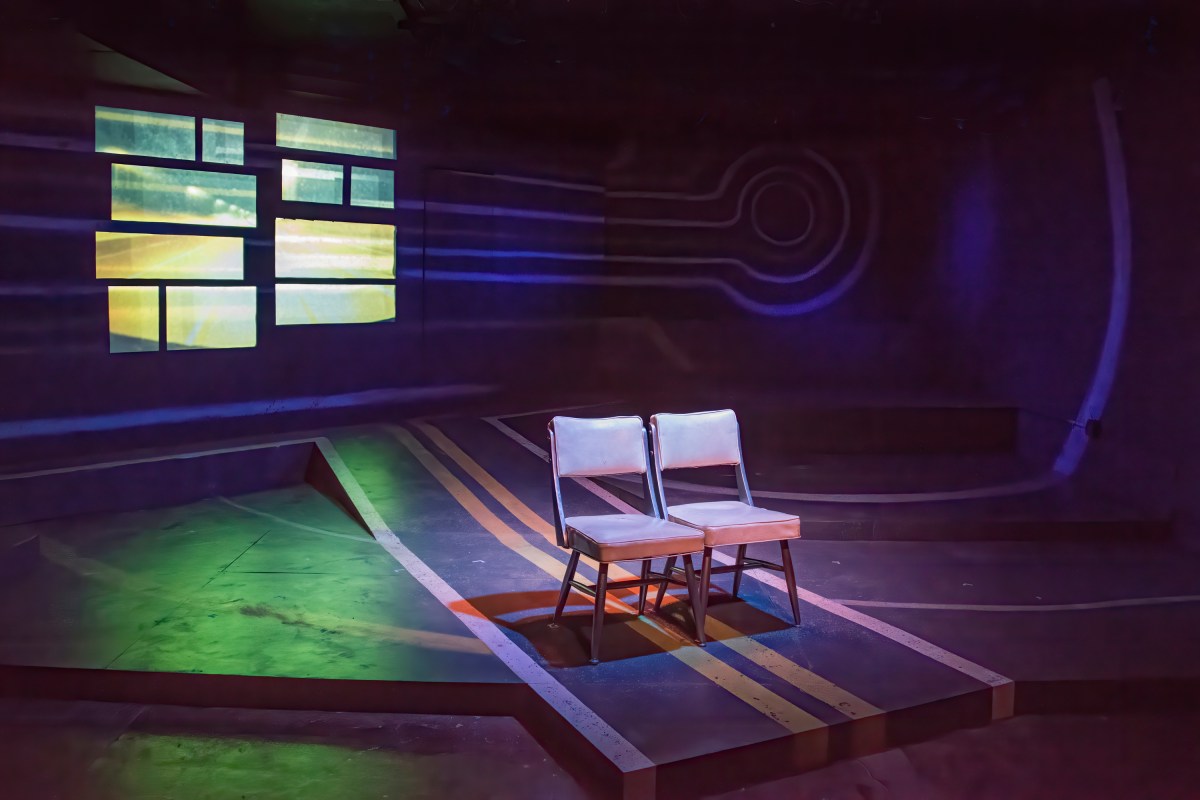
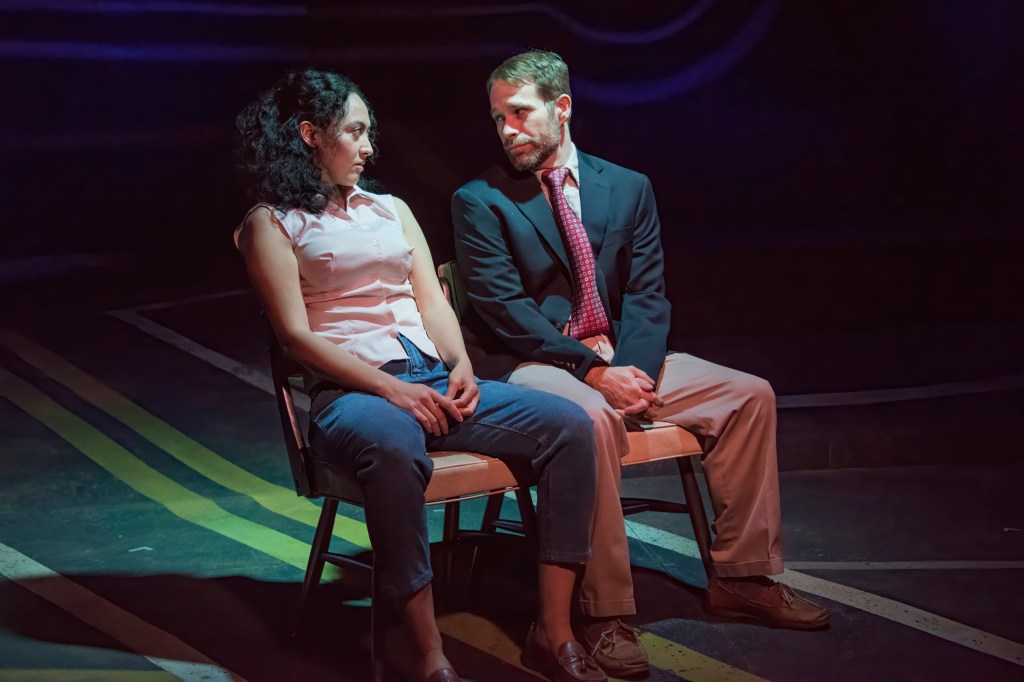
It was inevitable that Dear Jack, Dear Louise would prove to be such a heart-warming story. It is the story of playwright Ken Ludwig’s parents’ courtship, performed by a couple of actors who are married to each other in real life.

The story begins when aspiring actress Louise Rabiner received a letter from U.S. Army Captain Jack Ludwig, a military doctor stationed in Medford, Oregon. The first letter is dated June 1, 1942. The tentative and touching relationship grows warmer with each exchange of letters until August of 1943, when Louise is preparing for a big audition and Jack is awaiting orders to deploy overseas, they each sign off their letters with “love.” For those of us accustomed to the fast pace of modern life and the directness of relationships initiated through dating apps, the leisurely pace and storybook romanticism of this budding relationship is both shocking and sobering – in a delightfully endearing way.  

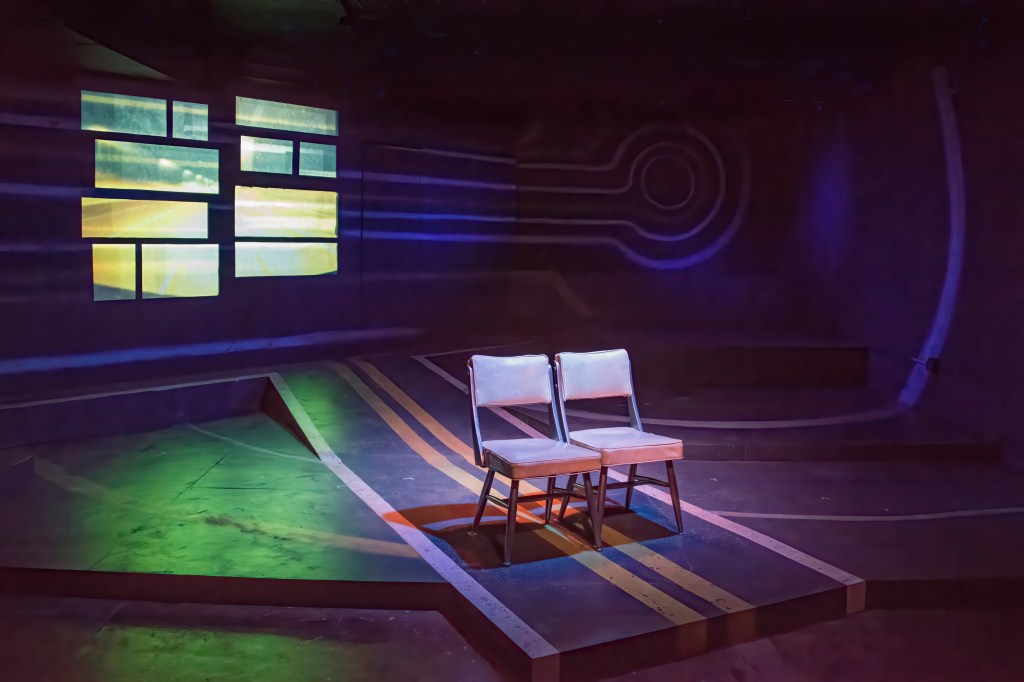
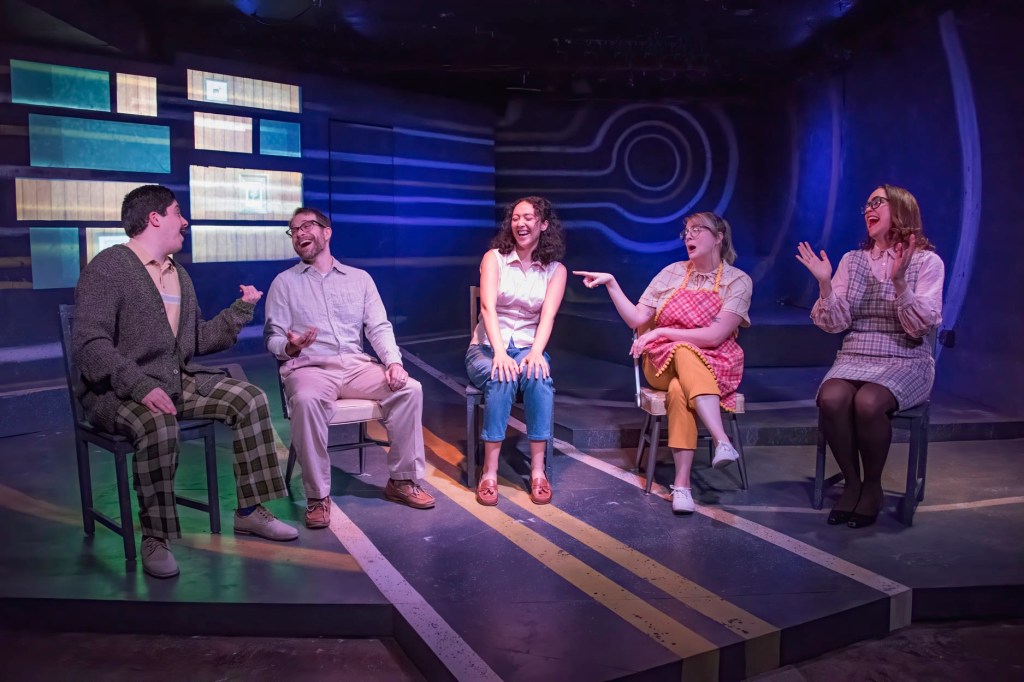
Set mostly in Jack’s office in Oregon – and later, his undisclosed overseas deployment – and the New York City boarding house and various dressing rooms occupied by Louise, Dear Jack, Dear Louise is not just a story of a romance, but also a story of war and how it touches individuals who are powerless to affect the outcome, or even control their own involvement. After months of planning, Jack and Louise must postpone their first date due to escalating war activities.

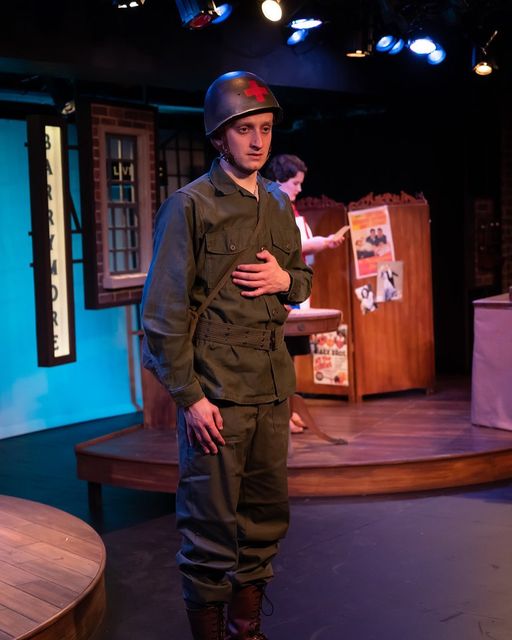
Louise’s side of the stage is populated by signs for a NYC automat, the Barrymore Theatre, and 42nd Street, while Jack’s side has the drab accoutrements of a military base and a sign for a diner. There are wall telephones with cords and Jack even sends Louise a telegram when he needs to get an important message to her quickly. Further drawing us into this historical fiction, Ludwig (the author, not the character) has the audience join his characters  in listening to songs, like, “Yes, We Have No Bananas” (first published in 1923 and resurrected during periods of rationing during WWII), and Louise’s big audition is for Hellzapoppin’ (1938), the longest running Broadway show during that time period.

Sue Griffin and Marcia Miller Hailey’s costuming for Louise is a veritable fashion show of WWII women’s garments, from the sweater with one black sheep to the classy plaid traveling suit to the high-waisted pants that remind me of the pants worn in The Color Purple (that I have yearned for since the VaRep production of that show some years ago).

When date night rolls around, (October 2, 1943), Louise is on tour in Cincinnati and Jack is in Ft. Houston en route to his deployment. October 31, that same year, Jack received a care package from Louise. She’s in Tennessee and he’s now somewhere in England. And then the letters stop. Louise receives a letter from Jack’s friend, informing her that Jack is MIA. But we know this is a love story, and it has a happy ending. Miraculously, Jack returns home, some three years after that first fateful letter, and the play ends with a first kiss.

Lydia Hundley has some wonderfully meaty comedic turns, and Neal Gallini-Burdick comes across mostly as sincere and delightfully awkward in matters of the heart. Debra Clinton’s direction is nicely paced, and somehow even the pauses – the times when communication between Jack and Louise breaks off – never become boring. Hundley and Gallini-Burdick, who met in college and married in May 2021, have appeared in five shows together, and may have had the advantage of drawing on their own love story to bring authenticity to Dear Jack, Dear Louise. And, if course, once cannot watch a wartime play these days without reflecting on current events in the Ukraine.

Comedy, romance, war, two actors with great chemistry, and good direction equals a heart-warming play that effectively meets the challenge of balancing love and war, reality and fiction.

Julinda D. Lewis is a dancer, teacher, and writer who was born in Brooklyn, NY and now lives in Eastern Henrico County.

Cast

Jack Ludwig……….Neal Gallini-Burdick

Louise Rabiner…….Lydia Hundley

Direction & Design

Direction: Debra Clinton

Scenic Design: Dasia Gregg

Costume Design: Sue Griffin, Marcia Miller Hailey

Lighting Design: Matt Landwehr

Sound Design: Jacob Mishler

Stage Management: Joe Pabst

Assistant Stage Management: Amber Hooper

Photo Credits: Aaron Sutten

FREE FALL

An evening of dance works by Shane O’Hara, Scott Putnam & Malcolm Shute
A dance review by Julinda D. Lewis
At: Dogtown Dance Theatre, 109 W. 15th Street, RVA 23223
Performances: April 15-17, 2022
Ticket Prices: $20 General Admission; $15 Students
Info: (804) 230-8780 or https://www.dogtowndancethetre.com

THE PROGRAM
A Day in the Life of My Brain
Choreography: Shane O’Hara
Music: John Zorn
Costume Design: Kathleen Conery
Performer: Shane O’Hara
Cascade
Choreography: Malcolm Shute in collaboration with the dancers
Dancers: Susan Donham, Roxann Morgan Rowley, Alexander Short, Malcolm Shute
Music: “Adagio in G Minor” composed by Albonini, recorded by Miguel Del Oro Orchestra
A Cloud of Probability (2022)
Choreography: Scott Putman
Dancers: Sophia Berger, Erin Dutton, Sydney Goldston, Abby Hardy, Celine Lewis, Makayla Woolner
Music: “Tower,” “Dirt,” “Hero Brother” by Sarah Neufeld
Costumes: Damion Bond
Personal Space
Choreography: Malcolm Shute in collaboration with Katie Sopoci Drake
Dancers: Katie Sopoci Drake and Malcolm Shute
Music: Malcolm Shute
Travelblog…The Grand Tour (2009)
Choreography: Shane O’Hara, Ric Rose, and Ryan Corriston
Music: Sound score by Mitchell Mercurio
Text: Shane O’Hara, Ric Rose
Performers: Ryan Corriston, Shane O’Hara

A weekend of dance by Shane O’Hara, Scott Putnam, and Malcolm Shute at Dogtown Dance Theatre had the feeling of a James Madison University dance faculty/alumni reunion combined with a going away party for outgoing Dogtown Artistic Executive Director Jess Burgess.

The diverse selection of dance works ranged from the comedic to the meditative. O’Hara opened the program with “A Day in the Life of My Brain” and closed it with “Travelblog…The Grand Tour.” The former is a kaleidoscope of gestures – humorous, percussive, and precise. A soundscape of buzzes, squeaks, and screeches – ranging from funny to irritating – complement O’Hara’s Elizabethan neck ruff (clown collar) and kinetic shenanigans. For example, O’Hara rises from the floor and attempts to assume a dignified stance, only to appear to be attacked by a swarm of invisible bugs.
In “Travelblog,” O’Hara starts off as a tour guide narrating a London excursion, only to wander off on a tangent – which is exactly what he warns his charges not to do. Equal parts dance, mime, and dialogue, “Travelblog” is a zany tour de force. O’Hara and partner Ryan Corriston are dressed in conservative gray suits and high top Converse All Stars. Corrison, at one point, passes his umbrella to an audience member for safe-keeping, as the two embark upon a journey that includes a riotous litany of TSA airport vocabulary that is anchored by the ubiquitous “three-ounce” rule. There is a marvelous moment of apparent weightlessness and O’Hara’s encounter with a “bad knee” ends in audience participation. O’Hara inexplicably dies centerstage, so Corrison retrieves his umbrella and calmly sits on O’Hara’s apparently lifeless body. And scene!
Bookending O’Hara’s comedic offerings were two vastly different works by Malcolm Shute – “Cascade” and “Personal Space.” In “Cascade” the dancers began piled atop one another and moved as a unit. They separated briefly, but not for long, drawn back by an invisible, magnetic pull. When they peel off and roll at the end it doesn’t feel like an act of freedom; it seems more sad than liberating. The dancers’ black tops and pants have a paint splattered pattern and Albonini’s “Adagio in G Minor” contribute to a vaguely familiar, and simultaneously funereal atmosphere.
“Personal Space” is an expansive exploration of a confined space. The two dancers, Katie Sopoci Drake and Malcolm Shute, collaborated on the symbiotic meditation. They gently fit together, back to back, but as Shute’s textured and eclectic score ratchets up into what sounds like an antique movie film reel whose lose end is flipping over again and again, Shute’s transitions become more challenging. At one point he is cantilevered over Drake, legs suspended in the air, seemingly supported solely by his core. Throughout the piece, neither dancer’s feet ever touch the floor. The one odd moment – was it a technical decision or a technical faux pas? – occurred near the end when the rear curtain that had been unobtrusively open throughout the duet suddenly closed. I found this distracting and an unwelcome intrusion into the meditative flow of the dance.
In the middle of the program, closing out the first act, was Scott Putnam’s “A Cloud of Probability.” Damion Bonds’ colorful costumes suggested characters from epic tales as the six dancers traced mesmerizing circles and spirals. The spirals were often accompanied by an upward look with the head and eyes following. The piece was set against a background of Sarah Neufeld’s violin compositions. Neufeld’s work has been described as minimalist and post-modern classical, but in “A Cloud of Probability” I would characterize it as futuristic folk music that enhanced the subtle intensity and energy of the work.
Saturday night’s program included an emotional tribute to Jess Burgess, the outgoing Artistic and Executive Director of Dogtown Dance Theatre. Burgess came to Dogtown as a volunteer in 2010 when the space opened its doors and served in a volunteer capacity before coming on as director in 2015. Burgess will be moving to South Carolina to become the CEO for the Greenville Center for Creative Arts.

No photos available at the time of publication.

STARR FOSTER DANCE:

Two Weekend Festival of Dance

What if, in one moment, you had changed your mind during your journey. And if so, how would that change affect the final outcome? – Introduction to Starr Foster’s Crave

A Dance Review by Julinda D. Lewis

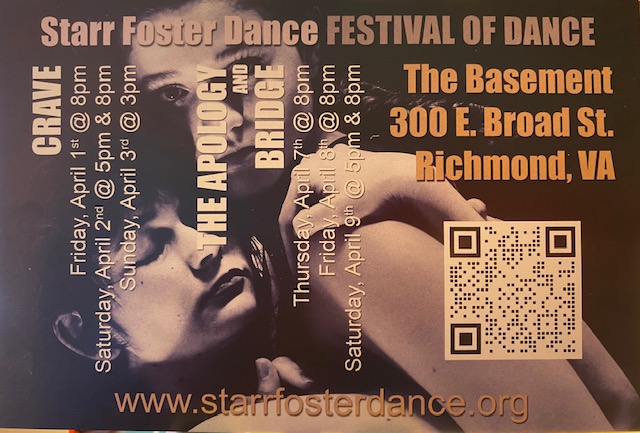
At: The ConciliationLAB – The Basement, 300 East Broad Street, RVA 23219

Performances: April 1-3 and April 7-9, 2022

Ticket Prices: $10-$15

Info: www.starrfosterdance.org, www.facebook.com/starrfosterdance, Instagram/starrfosterdance

THE PROGRAM

Program A

Crave (2019)

Choreographed by Starrene Foster

Original Music by Billy Curry

Lighting Design by Michael Jarett

North Stage Performers: Fran Beaumont & Ana Pavón

South Stage Performers: Anna Branch & Lydia Ross

Program B

The Apology (2022)

Choreographed by Starrene Foster

Original Music by Daniel Deckelman

Lighting Design by Michael Jarett

Performed by Fran Beaumont, Ana Pavón, Keeley Hernández, and Lydia Ross

Bridge (Reworking of 2014 work)

Choreographed by Starrene Foster

Music by Camille Saint-Saëns: “Introduction and Rondo Capriccioso”

Lighting Design by Michael Jarett

Performed by Fran Beaumont, Ana Pavón, Keeley Hernández, and Lydia Ross

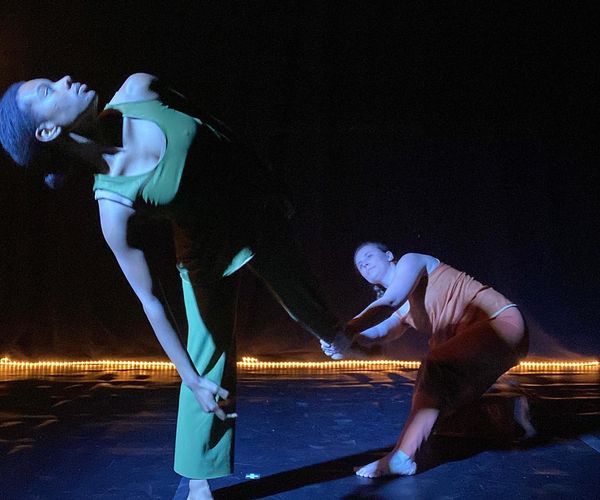
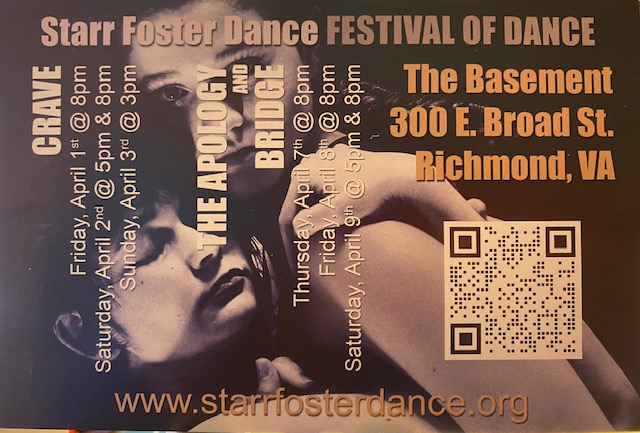
Over the course of two consecutive weekends Star Foster Dance presented a revival, a recent work, and a premiere in two separate programs at The Basement.

First up was Crave, a work unique for its staging. On entering the space, audience members receive a slip of paper with the word “North” or “South,” designating which side of the space to sit for the first half of the program. After intermission, the audience shifts to the other side.    

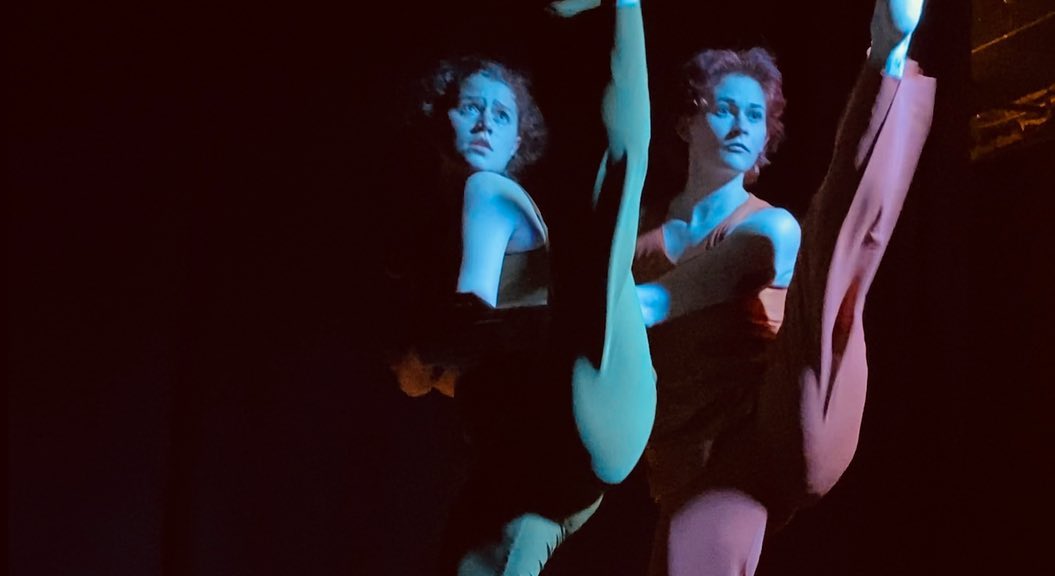
On each side, separated by a black curtain or screen, a pair of dancers explores a series of movements using the same choreography but different motivations fueled by the idea, What if? What if you changed your mind and followed a different path along your journey?

Crave premiered at The Basement three years ago, and I’ve had the opportunity to see it twice, once starting on the “North” side, and once starting on the “South” side. Amazingly, it is quite a different experience on each side and further, it is a different experience depending on which side you start on. A friend who saw the work for the first time voiced the opinion that the “South” side where we began seemed more aggressive or forceful, while others thought the opposite. I thought the interactions of one pair of dancers lingered more thoughtfully than their counterparts on the opposite side of the curtain. Seeing the piece more than once encourages the viewer to focus on the dancers’ use of weight and force, timing and accents. Whatever your personal take-away, Crave is undeniably immersive and engages the audience with both simplicity of movement and complexity of motive.

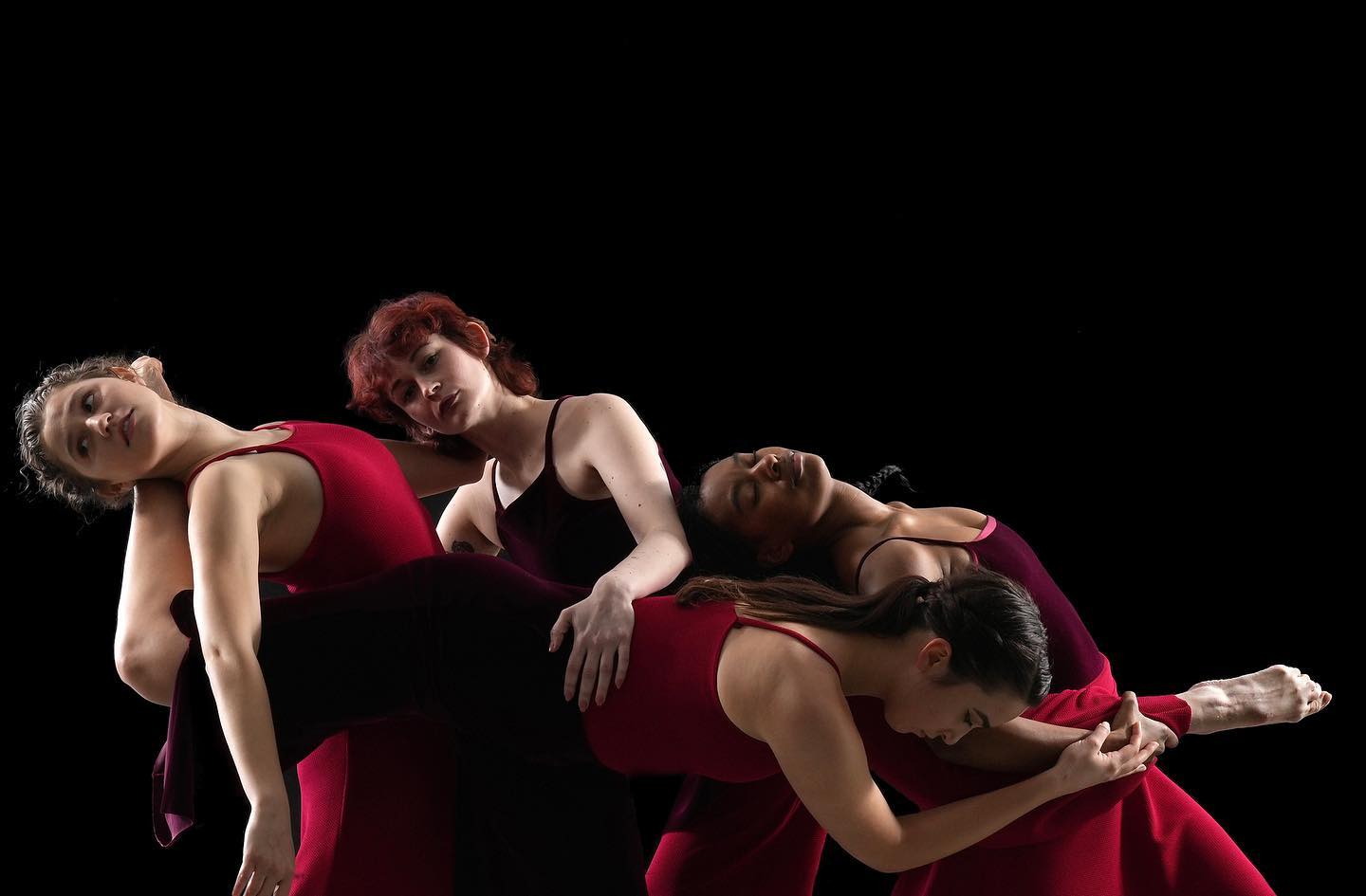
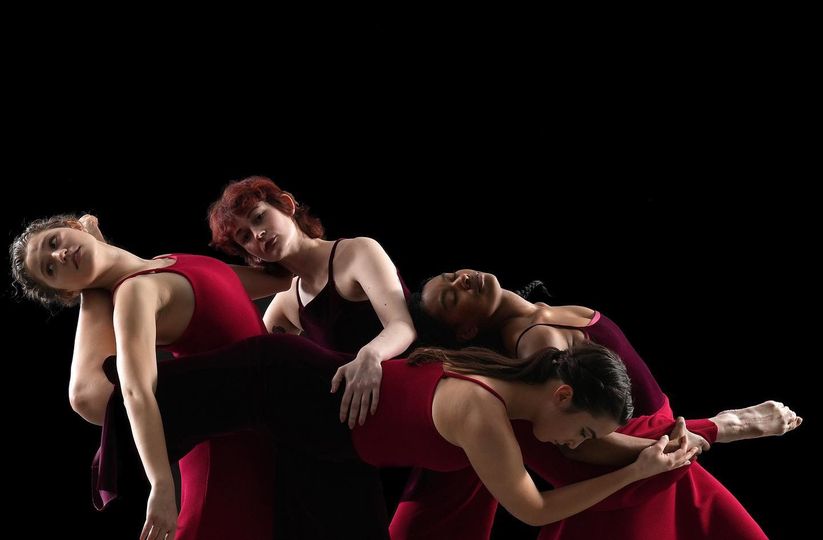
For the second weekend of performances Starr Foster Dance broke out the beautiful new work, The Apology, with an original score by Daniel Deckelman. A quartet performed by Fran Beaumont, Ana Pavón, Keeley Hernández, and Lydia Ross, The Apology is populated with large, expansive movement juxtaposed with delicate, precise phrases, as when Lydia Ross seems to pluck invisible hairs from the air. The dancers hug, lift, and support one another as we feel the tension in the music build up steadily and reach a crescendo and repeat in waves, interspersed with gentle palpitations and gently tinkling bell-like vibrations. The wave-like permutations fostered thoughts on the meaning of “apology.” There’s an admission of error, accompanied by an expression of regret, or a written or spoken defense, or even a poor or inadequate example, or some nuanced version of any of these. The dancers, clad in shades of red, might be seen to replicate the shades of passion –- or the letting of blood — that precede, accompany, or follow an apology.

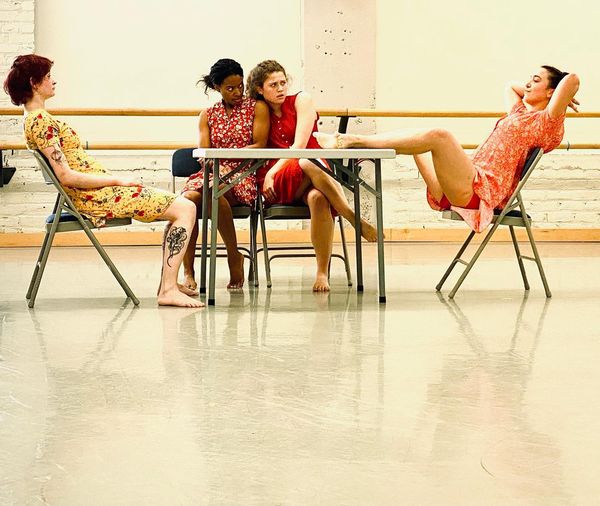
Finally, there was Bridge, a humorous quartet that sets the four women around a card table   and watches how their friendship explodes or deteriorates. They attack the dance/the game with the ferocity of the dignitaries around Kurt Jooss’ Green Table. I don’t know if Foster was aware of a 2004 New York Times article about how men and women play bridge differently, but this is a hard-hitting, anything goes game. Forget the poker face; these four ladies, in their demure 1950s-style house dresses, grimace and give out the sly side eye; their faces are animated and don’t leave anything to the imagination.

The work is set to French Romantic composer Camille Saint-Saëns’ “Introduction and Rondo Capriccioso,” a work for violin and orchestra that often sounds like a dramatic waltz. The four dancers bang the table, slide under the table, lay across the table, walk, slide, and toss their chairs, and eventually build up to assaulting one another in various and sundry creative and mind-boggling ways – the viewer will never look at bridge or any other card game the same way, but they will look forward eagerly to the next Starr Foster Dance performance of Bridge.

Julinda D. Lewis is a dancer, teacher, and writer who was born in Brooklyn, NY and now lives in Eastern Henrico County.

———-

Photo Credits: Starr Foster Dance by Douglas Hayes. Rehearsal photo (dancers at the Bridge table) by Charlotte Bray.

AN ILIAD

War is Still Hell

A Theater Review by Julinda D. Lewis

At: Dominion Energy Center, Libby S. Gottwald Playhouse, 600 E. Grace Street, RVA 23219

Performances: March 24 – April 16, 2022

Ticket Prices: $24 – $45

Info: (804) 340-0115 or quilltheatre.org

AN ILIAD (2010) is a masterful piece of storytelling. Director Lisa Peterson and actor Denis O’Hare adapted Homer’s epic poem, The Iliad, into a play for one actor. Many of the characters – and places – will be familiar to some: Achilles, Agamemnon, Hector, Paris, Helen, Troy. But even if you did not pay attention in your high school literature classes, you will be able to relate. This is more than a retelling of an ancient tale. Whereas Homer’s The Iliad tell the story of the final year of the Trojan War, An Iliad tells the story of the Trojan War from a contemporary perspective. What makes it relevant? Well, the Trojan War went on so long – some ten years – that people began to forget why they were fighting, what they were fighting for, what the end goal was, and that has a ring of familiarity for us today.

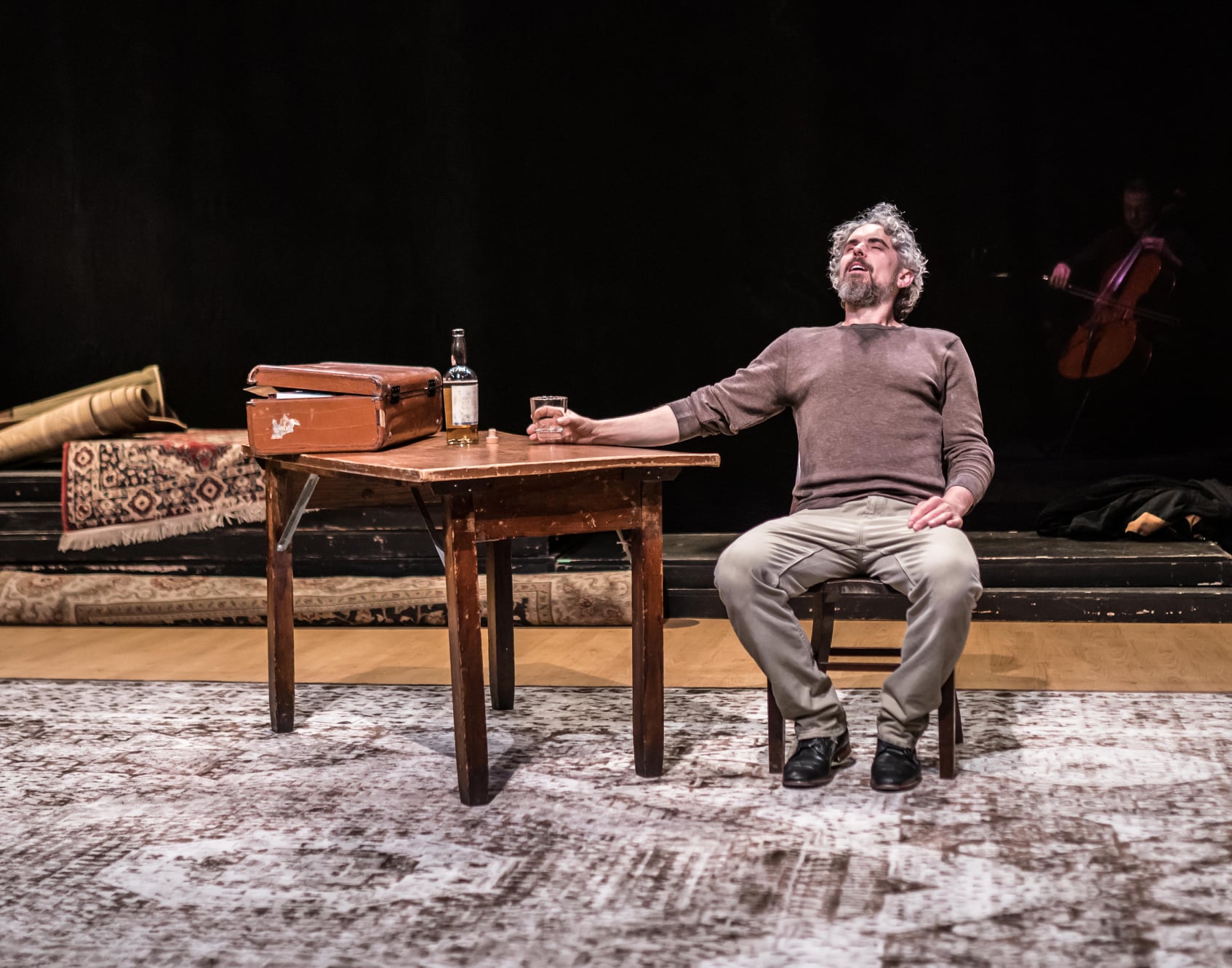
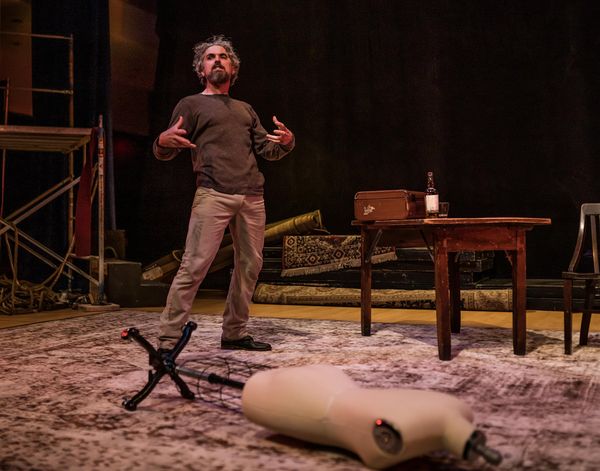
The Poet (Alec Beard) appears carrying a battered suitcase filled with a bottle of whiskey, a glass, and some papers containing, what – photos? memories? His overcoat, hat, and scarf signal that he is a time traveler. The stage is a war-torn battleground of scaffolds, an overturned chair, deserted props and tools. It is a place that appears to have been abandoned in a hurry, due to the ravages of neglect, disinterest, a war, a pandemic, or some unnamed man-made catastrophe. A ghost light on stage at the beginning and ending of the play seals the metaphoric atmosphere: security, superstition, repetition, tradition.

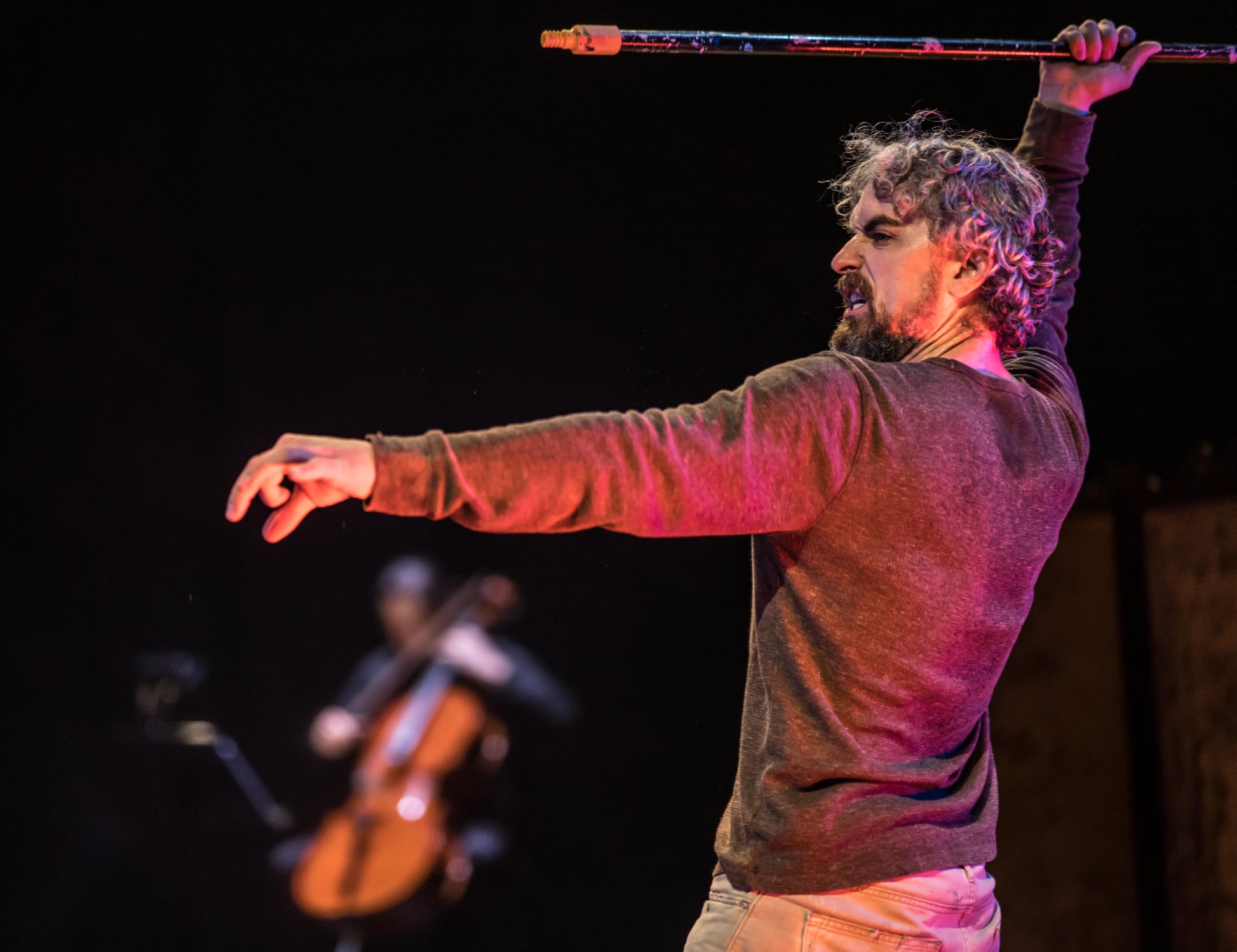
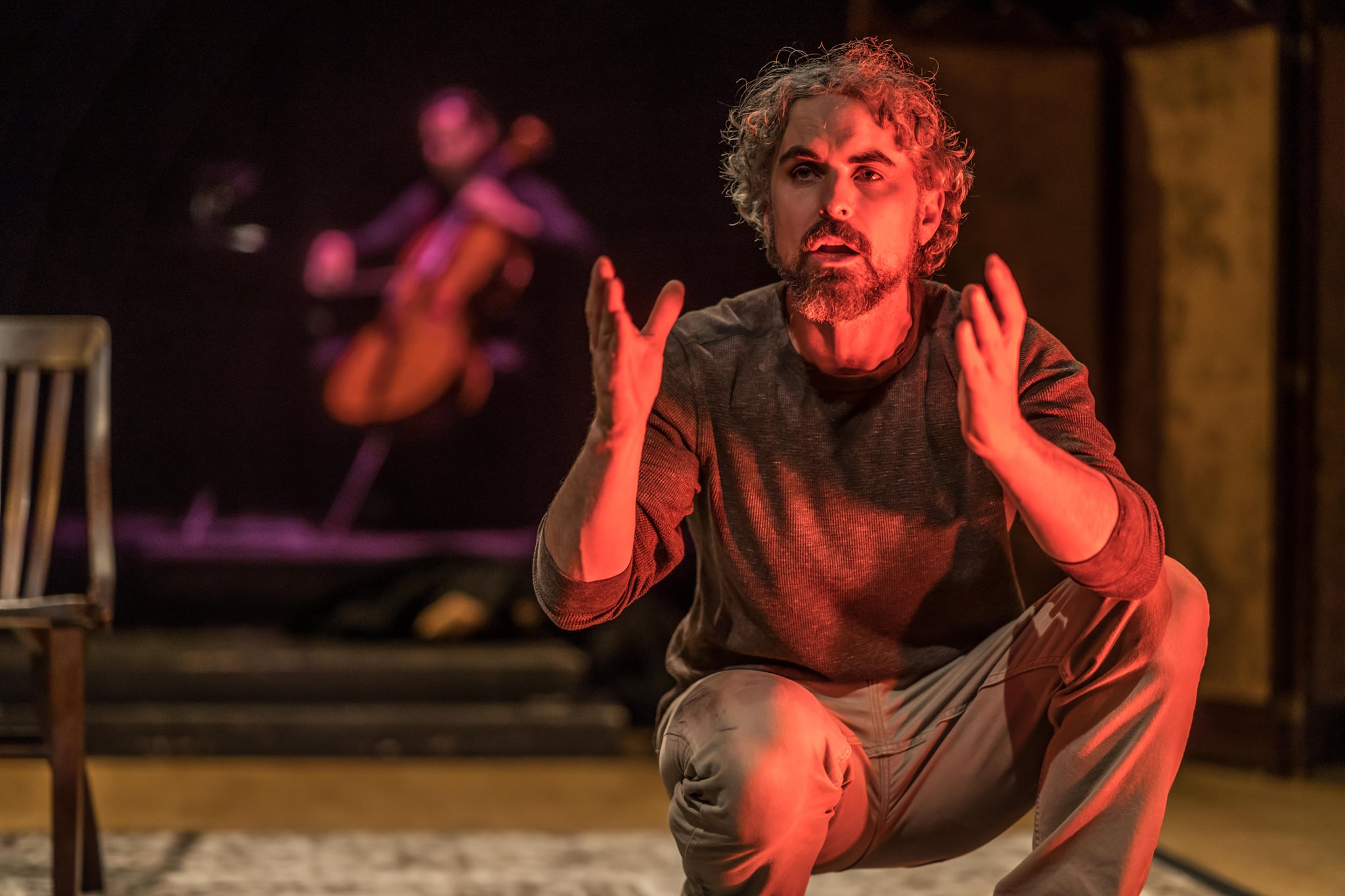
Beard holds our attention from start to finish, wielding a paint roller as a scepter, a random table leg as a spear, and words as weapons and keys. Beard is mesmerizing as The Poet. In the background, cellist Chris Chorney provides a timeless acoustic soundscape, and serves as a foil for Beard’s ruminations. When Beard tells a joke about Achilles, Chorney remains poker-faced; it’s as if he’s heard it all before, many, many times before. The Poet is like a vampire, immortal, timeless, no longer moved by the bizarre and inexplicable road rage that litters human history, even when animatedly re-enacting scenes from the past atrocities we seem determined to repeat. Director James Ricks has created an immersive experience that makes it impossible for the audience to distance themselves emotionally or intellectually. The Gottwald Playhouse becomes transformed, temporarily, an intimate cocoon that wraps around the performers and audience and only releases us when the lights come back up.

An Iliad includes a litany of wars, conflicts, and invasions, starting in ancient times and concluding – for now – with the current events in the Ukraine. Does An Iliad encourage the audience to understand the past by placing it into a modern context, or does it inspire us to understand the present by comparing it to the past?  Like Achilles, are we, too, addicted to rage, or do we need to re-examine our definition of heroes?  Returning the ghost light to center stage before exiting, The Poet asks, “You see?” But do we…

An Iliad

By Denis O’Hare & Lisa Peterson

Cast

Alec Beard as The Poet

Christopher Chorney as Muse

Direction & Design

Director:  James Ricks

Composer: Niccolo Seligman

Dramaturg: Dean Simpson

Lighting Designer: Gretta Daughtrey

Scenic Designer: Missouri Flaxon

Production Manager: Oliver Samson

Box Office Manager: Margot Moser

Marketing Consultant: Emily Adler

Stage Manager: Corrie Barton

Assistant Stage Manager: Hope Jewell

Scenic Construction: Quinlan Boyle

Run Time: 90 minutes with no intermission

Julinda D. Lewis is a dancer, teacher, and writer who was born in Brooklyn, NY and now lives in Eastern Henrico County.

———-

Photo Credits: Dave Parrish Photography


Moments with MommaJ: #2

MOMENTS WITH MOMMAJ: March 29, 2022

March has been very adventurous for me.

During the VCU Spring Break (March 6-13) I got to spend a few days in North Myrtle Beach/Myrtle Beach, SC mostly relaxing, and getting some work done. The weather did not know it was Spring Break; it was cold and windy, and the day we headed back home to Richmond, VA we fled a rain and windstorm and drove straight into a minor snowstorm.

I was home for a few days – long enough to unpack, do my laundry, and repack for the next adventure. On March 15 I left for Hopkinsville, KY for a residence with MKArts, the first of several for a new project that is scheduled to debut in Spring of 2023. This was my first time flying since the pandemic, and I was pleasantly surprised that there were no inconveniences or incidents (you know, people refusing to keep on their masks on the plane or assaulting flight attendants). It was also my first time staying at an Airbnb – a four-bedroom, two bath duplex not far from the Community College that was sponsoring us. Even though I didn’t have to cook, and the rest of the team is “mostly” vegan/vegetarian, I overate WAY too much, and I’m still paying for it. Who knew that a small town in KY had such great vegan soups and awesome tacos?

The biggest part of the adventure, however, occurred on the way home. My first flight got delayed not once, not twice, but three times due to weather conditions in Florida, where the flight originated. (To get to Hopkinsville, KY, one flies into Nashville, TN). So. . .instead of having an hour to catch my connecting flight to Richmond, I had 20 minutes. The plane from Nashville landed in Charlotte’s Terminal E, and my flight to Richmond was leaving from Terminal C. I dashed through that airport like O.J. Simpson in that old commercial some of you may be old enough to remember – only to miss the flight by less than two minutes. There were three of us trying to make that connection: me, a portly gentleman, and a lady in a wheelchair. The gentleman and I arrived at the gate huffing and puffing. The gate attendant tried to get permission for us to board – but no. Once the doors are closed, they won’t open them again. After getting rebooked for a 6:15 AM flight, I asked for my options. The gentleman opted to find a hotel. I didn’t want to spend more than $100 for a hotel room where I would have time to sleep only 3 to 3.5 hours, before returning to the airport, going through security, etc., etc., As for the lady in the wheelchair, I don’t know what sort of accommodation was made for her. Since the problem was weather related and not the fault of the airline, the airline had no responsibility to help. And that is how I got to spend my first night in an airport.

I was surprised to find so many people spend the night in an airport. There was a young woman who came prepared with a can of Lysol to spray down the seats. How did she get a full-sized can of Lysol through security?!?!?! Two young Jamaican guys came and sat near us, but something about them reminded me of Nigerian scammers, so I decided to go to the Concourse I’d be leaving from in a few hours. There I found several airport employees gathered near my gate, and lots of traffic – people cleaning, moving supplies, and the like. There were a couple of other single women nearby. Then a young nerdy guy came and sat two seats away. Two. Seats. Away. He was chatty. I decided he was a serial killer, so I took a trip to the ladies’ room to plan my escape, but when I got back he had moved on to another victim (I mean gate). I staked out my territory and got as comfortable as I was going to get. I dozed off and napped for about an hour or 90 minutes during the night. I had layers of clothes to keep me warm. Regulars had come prepared with blankets, pillows, and even sleeping bags. Later that morning, taking a walk, I found an area near the food court that had banquets where I could have stretched out a bit. I’ll keep that in mind should there be a next time.

Well, “anywho,” after performing in Hopkinsville on Thursday evening and helping facilitate a PD at the Community College on Friday morning, I was scheduled to teach and the Virginia Black Dance Festival on Saturday morning and to perform on Saturday evening. My flight landed at 8:30 AM and I had plenty of time to go home, shower, and arrived at Dogtown Dance Theatre about 9:35 AM – in plenty of time for my 10:00 AM class. The session after mine was facilitated by MK Abadoo, who was still in KY. I was able to assist live while she led the workshop virtually. After class and a workshop panel or two, I picked up some food and coffee, ate in the car as I drove home, took a nice nap, and returned to Dogtown for the evening. The Virginia Black Dance Festival, directed by LaWanda Raines, was well attended and I had a marvelous time. I am so glad I was able to participate.

During the following days, I needed to catch up with theatre events here in RVA, so I attended How I Learned to Drive at the Conciliation Lab/The Basement on Sunday, March 20, followed by the Richmond Ballet’s Studio 3 performance on Tuesday, March 22, VaRep’s Dear Jack, Dear Louise at Hanover Tavern on Thursday, March 24, Greater Tuna at Swift Creek Mill on Friday, March 25, and Quill Theatre’s An Iliad at Dominion Energy Center’s Gottwald Playhouse on Saturday, March 26.

Sunday, March 27 I had the honor of sitting in on a rehearsal of Starr Foster Dance. Foster will be premiering a new work, The Apology, at The Basement (300 E. Broad St.) on Thursday, April 7. The program, that also includes a re-working of her humorous quartet, The Bridge, will run for four performances, April 7-9. Starr Foster Dance will also revise Crave – a work that takes place on two sides of a wall and requires the audience to switch sides midway through – for four performances April 1 – 3. For more information and to get tickets, contact Staff Foster Dance at http://www.starrfosterdance.org

Julinda D. Lewis, EdD is a dancer, teacher, and writer who was born and raised in Brooklyn, NY and now resides in Eastern Henrico County, RVA.

GREATER TUNA

The Third Smallest (Fictional) Town in Texas Makes Us Laugh for All the Wrong Reasons

At: The Swift Creek Mill Theatre, 17401 U.S. Route 1, S. Chesterfield, VA 23834

Performances: March 19 – April 30, 2022

Ticket Prices: $49. ($44 for seniors, students, military, and first responders.)

Info: (804) 748-5203 or https://www.swiftcreekmill.com

There are so many ways I could write about GREATER TUNA. So, I’ll just start and see where this goes.

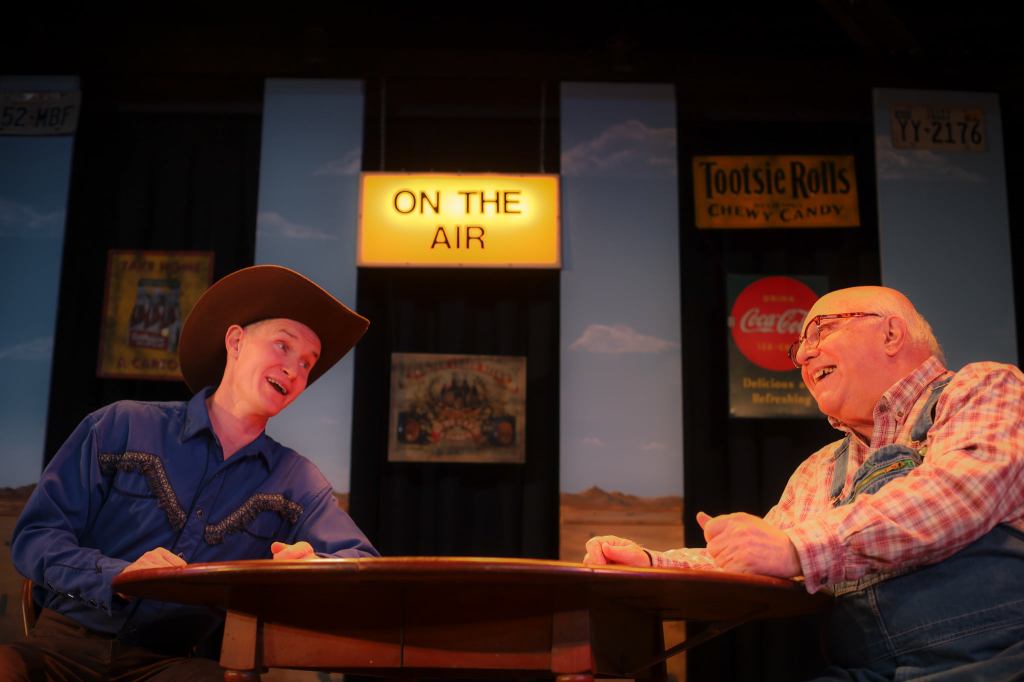
The first in a series of four satirical plays about the fictional town of Tuna, TX, GREATER TUNA requires two actors to portray twenty citizens of this conservative Texas community. John Hagadorn and Bartley Mullin are so good at quickly transforming from one character to another that it’s almost possible to overlook the content they are sharing that is making us laugh out loud. Hagadorn thoroughly encapsulates the town’s KKK leader Elmer Watkins, with his baseball cap pulled low over his eyes and so convincingly inhabits the characters of town matriarchs Bertha Bumiller and Pearl Burrus that we almost forget he is a male actor portraying these stereotypical southern women. Hagadorn is familiar with the inhabitants of Greater Tuna, having appeared in SCM’s production of A Tuna Christmas (2016-2017 season). This is the Mill’s first production of Greater Tuna, the original play, since 1985, and director Mark Costello returned to steer this wild ride and keep it on track.

Then there’s Bartley Mullin. His interpretation of the chain-smoking used weapons shop owner, Didi Snavely (“if we can’t kill it, it’s immortal) and the whiny and angst-filled teenager Charlene Bumiller are all that and more. His endearing but jumpy Petey Fisk, who works for the Greater Tuna Humane Society (who knew there were enough people in this town to support such an organization!) and the pretentious Vera Carp (Vice President of the Smut Snatchers of the New Order) are wonderfully over the top. Hagadorn, his face hidden behind a newspaper, provides the voice of an annoying puppy Petey is trying to find a home for. It is all but impossible not to laugh and that reminds me of what Swift Creek Mill artistic director Tom Width said of A Tuna Christmas, that he produced and directed in November 2016, “It’s so wrong in the best kinds of ways.”

Right off the bat, we are introduced to Thurston Wheelis and Arles Struvie, the anchors of the town’s radio station, OKKK. The station’s call letters are repeated frequently, and yes, the “KKK” stands for just what you think it does. One of the first bits of news is the announcement of the winners of the town’s essay contest. First place goes to an essay entitled, “Human Rights, Why Bother,” while the second and third place winners are “Living With Radiation,” and “The Other Side of  Bigotry.”

Of course there is a group tasked with banning books, to protect the town’s children from undesirable and divisive literature such as Roots, Bury My Heart at Wounded Knee (a book that even students in my NYC high school protested against until the teacher caved in and removed it from the syllabus), Huckleberry Finn  (because it showed a child cavorting with a criminal, no mention of “Nigger” Jim), and even Romeo and Juliet (because it portrays young people disobeying their parents). Then there are The Smut Snatchers of the New Order, whose focus is cleaning up the dictionary. Just send them a word you want removed. . .

When a visiting reporter brings up the concept of intellect, Bertha Bumiller, the woman he is interviewing, responds with a deadpan, “I don’t believe we have that here in Tuna.” Act One ends with Pearl Burrus and Stanley Bumiller running over a dog to cover up the fact she poisoned it! In another of Greater Tuna’s few somber moments Stanley, at one point, reveals a dark secret surrounding the sudden death of the town’s judge.

The dilemma, of course, is that Greater Tuna is so authentically hilarious and Hagadorn and Mullin are so darned good that we find ourselves laughing at uncomfortably racist statements and stereotypical images of people that, frankly, most of us have encountered in real life – and some call family. So, how does one approach Greater Tuna? Do you just ignore the racism and bigotry and laugh at the humor? Do you acknowledge the political incorrectness and call it out? And if so, to what purpose? It is, after all, a satire – and it is intended to expose and comment on our stupidity and foibles. But. . .does that make it right, or relevant? I do not have answers to any of these questions. I just know that at least one attendee left at intermission and those who stayed for the final bows seemed happy and satisfied. And yes, I laughed. Without apology.

GREATER TUNA

By Jaston Williams, Joe Sears, and Ed Howard

Cast:

John Hagadorn plays                                      Bartley Mullin plays

Thurston Wheelis                                            Arles Struvie

Elmer Watkins                                                 Didi Snavely

Bertha Bumiller                                              Harold Dean Lattimer

Yippy                                                               Petey Fisk

Leonard Childers                                             Jody Bumiller

Pearl Burrus                                                    Stanley Bumiller

R. R. Snavely                                                    Charlene Bumiller

Reverend Spikes                                              Chad Hartford

Sheriff Givens                                                  Phinas Blye

Hank Bumiller                                                 Vera Carp

Direction and Design Team:

Directed by Mark Costello

Lighting Design by Joe Doran

Costume Design by Maura Lynch Cravey

Scenic Design by Tom Width

Scenic Art by Liz Allmon

Original Music by Matthew Costello

Run Time:

2 hours, 1 fifteen-minute intermission

Tickets:

$49

$44 for seniors, students, military, and first responders.

Photos: from the SCM Facebook page

STUDIO THREE: IT’S A WOMAN’S WORLD

Three For Three: Richmond Ballet Studio Three Presents Works by Three Women Choreographers

A Dance Review by Julinda D. Lewis

By: The Richmond Ballet

At: The Richmond Ballet, Canal Street Studios, 407 East Canal Street, RVA 23219

Performances: March 22-27, 2022

Ticket Prices: $26-$46. (Choreographer’s Club: $66-$101)

Info: (804) 344-0906, etix.com, or richmondballet.com

Updated COVID-19 Protocols, see below.

THE PROGRAM
LIFELINE         

Choreography by Sarah Ferguson

Music by VOCES8 and Zapp4

Costume Design by Emily Morgan

Lighting Design by Jack Mehler

World Premiere: March 22, 2022, at Richmond Ballet Studio Theatre, Richmond, VA

GUESS WHO’S COMING TO DINNER

Choreography by Jennifer Archibald

Music by Jacob Banks, Ray Charles, Frank DeVol. And Leon Russell

Costume Design by Emily Morgan

Lighting Design by Jack Mehler

World Premiere: March 22, 2022, at Richmond Ballet Studio Theatre, Richmond, VA

KALEIDOSCOPIC ETUDES

Choreography by Katarzyna Skarpetowska

Music by Philip Glass

Costume and Scenic Design by Fritz Masten

Lighting Design by Jack Mehler

World Premiere: March 22, 2022, at Richmond Ballet Studio Theatre, Richmond, VA

As soon as I learned that Richmond Ballet’s Spring 2022 Studio Three production would be a program of works by women choreographers I was filled with eager anticipation. The program that was delivered did not disappoint. A combination of the Ballet’s New Works Festival and the Studio Series, the program featured two new works – by Sarah Ferguson (a VCU Dance grad who serves as a Richmond Ballet administrator and photographer) and Jenifer Archibald (a prolific Canadian-born choreographer with an extensive background that includes hip hop and theater) – and a commissioned work by Katarzyna (Kate) Skarpetowska a native of Poland and Juilliard graduate, who lists her residence as Petersburg, Russia and New York City. Skarpetowska premiered her work Polaris for the Richmond Ballet’s New Works Festivalin 2015.

The three works were widely diversified and each was glorious in its own way.

The Richmond Ballet New Works festival has supported the development of and presented 89 new works since its inception in 2008. Each choreographer is offered 25 hours of studio time with selected company members and presents their work at the New Works studio performance. Many of these short works  go on to be developed from five- to ten-minute ensembles to full 20-minute ballets.

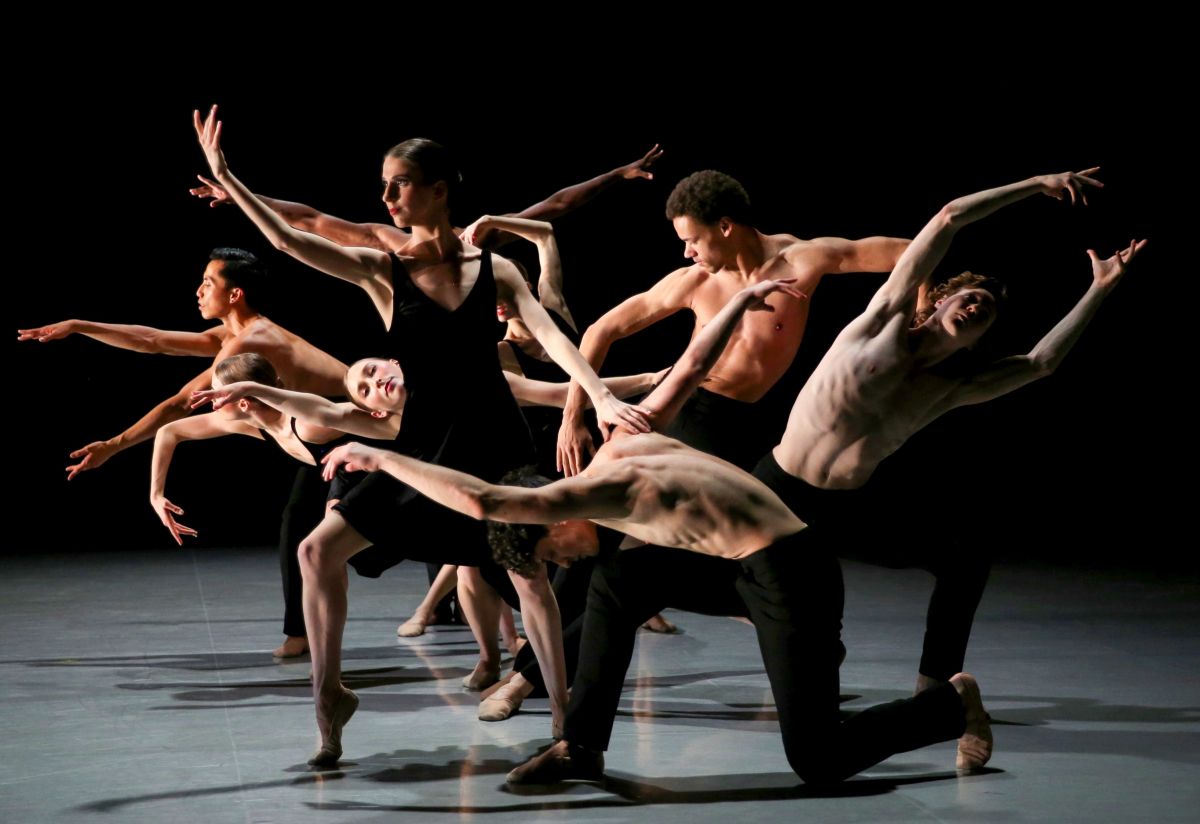
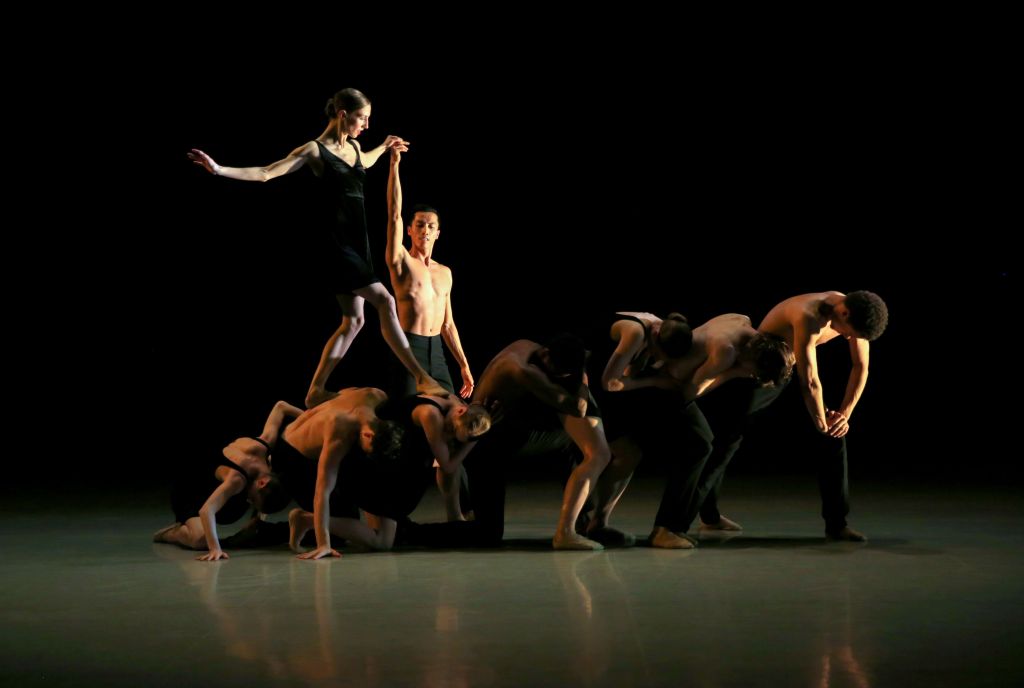
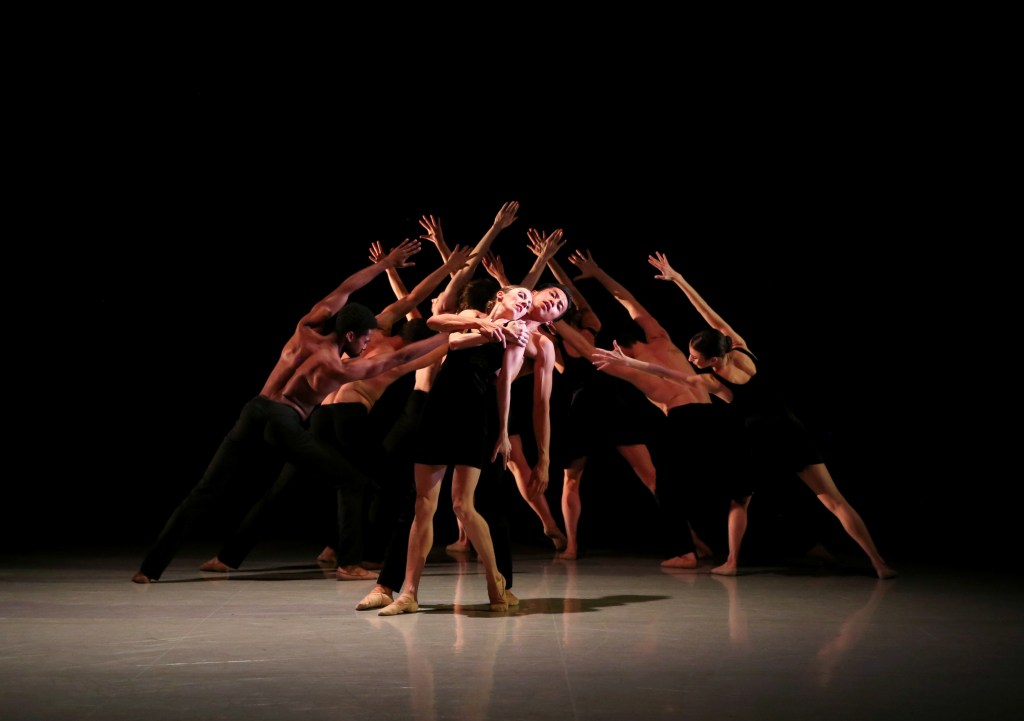
Ferguson, familiar to many as a company administrator in a variety of roles and to others as the company’s resident photographer, revived her interest in choreography during the days of the pandemic. She says that she now choreographs like a photographer, and her new work, “Lifeline,” has a juicy, languid quality. The dancers are often directly connected to one another, reaching, pulling, and stretching like an evolving organism. During the opening night post performance discussion, images of starfish and even armadillos were evoked to describe the organic and tidal movement that at times resembled the animated sculptural qualities of MOMIX or Pilobolus. The pod, the entity, the emerging and evolving unit, consisting of nine dancers in inky dresses and pants led by Sarah Joan Smith and Enrico Hipolito, were beautifully lit to create illusion of floating. The first of three works on the evening’s program, “Lifeline” received a standing ovation.

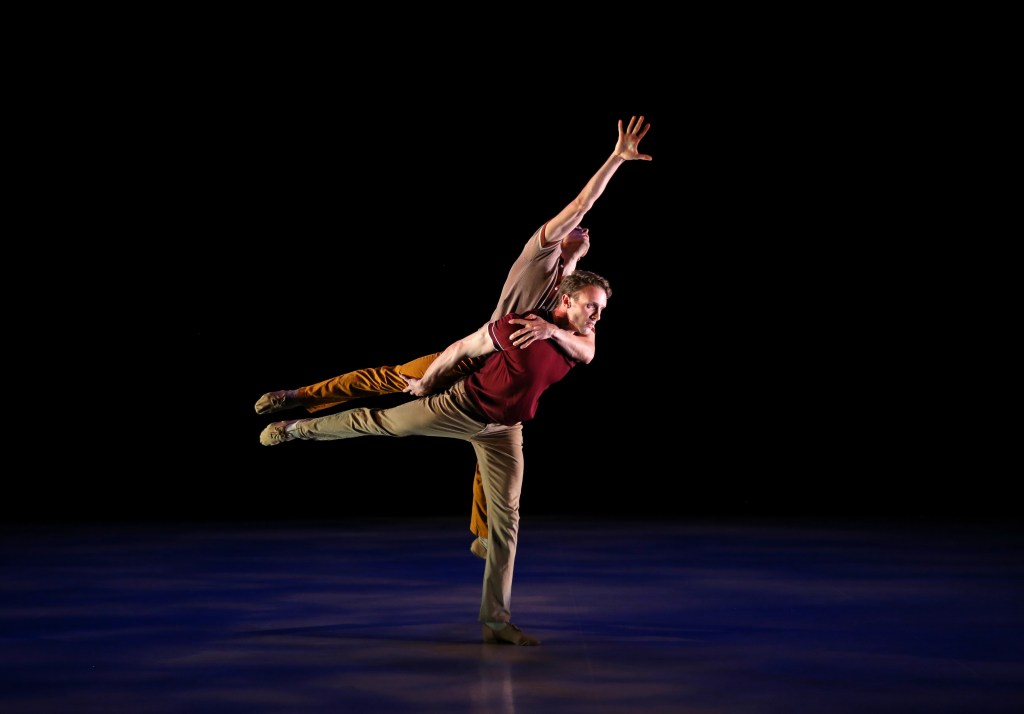
The color and flair of Archibald’s “Guess Who’s Coming to Dinner?” initially gave me a fleeting flashback of the high school dance scene in West Side Story but Archibald drew her inspiration from the film starring Sir Sidney Poitier and her own experience of growing up with interracial parents. Archibald likes to explore storytelling that is not grounded in Eurocentric narration and likes having a diverse cast of dancers to explore a range of human experiences. Her vocabulary seamlessly merges classical ballet with hip hop and jazz. Her women softly leap, are caught horizontally and lay out as if landing on a soft pillow instead of on two arms precariously molded over thin air. Then a swiping motion that could be playfully affectionate – or not – forces the receiving partner to duck. Timing is everything, and Archibald’s timing veers towards the daring and unexpected. For those familiar with modern dance history, her use of the ensemble is reminiscent of the exhilarating way Talley Beatty filled a stage with bodies and energy. If all goes as planned, Archibald is expected to return in November to lengthen “Guess Who’s Coming to Dinner?” into a full-length (i.e., 20-25 minute) ballet.

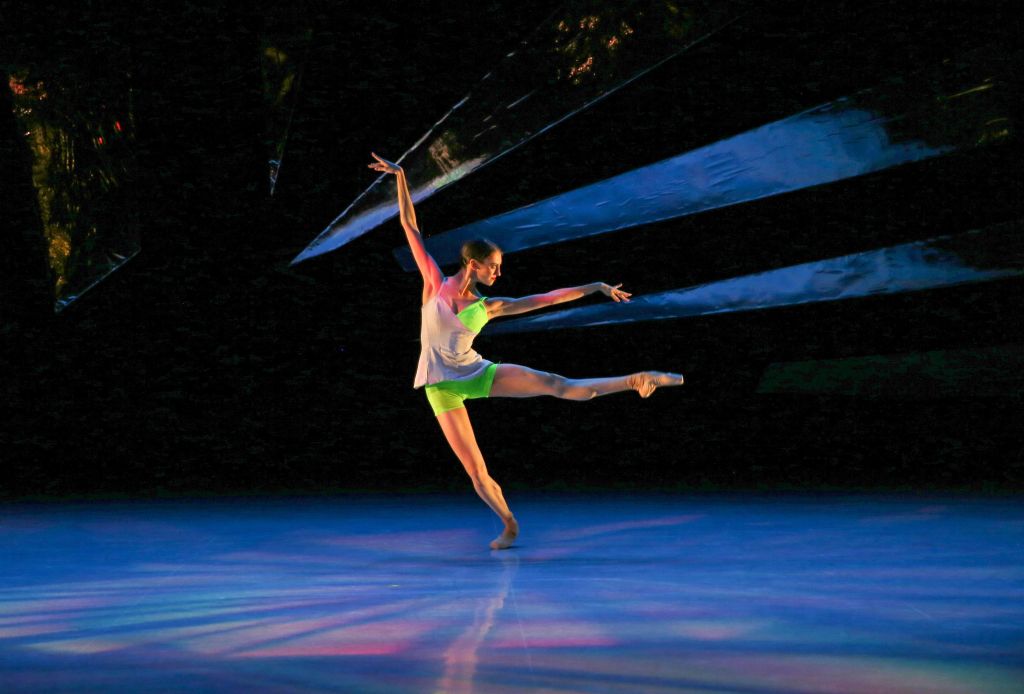
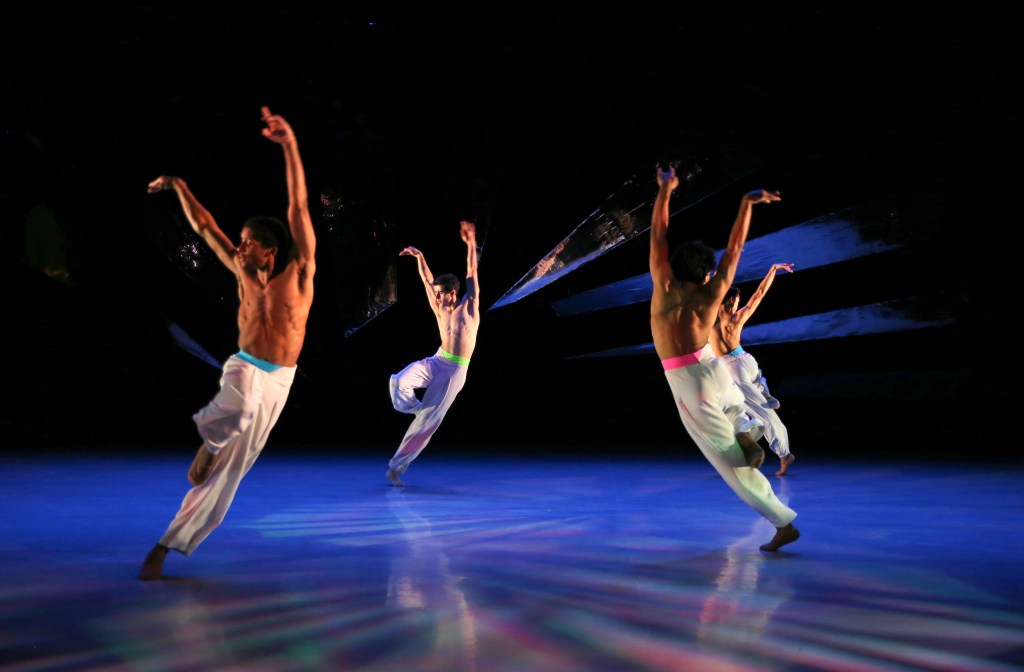
The second half of the Studio Three evening was given over to Skarpetowska’s beautifully lit and colorfully costumed “Kaleidoscopic Etudes.” Set to five Philip Glass etudes for piano and string quartet. Ferguson stressed that she choreographs like a photographer, but Skarpetowska’s new work is visually stunning with the floor and background representing two different versions of a kaleidoscope and the dancers’ playful attire carrying out the same color scheme of pink, lime green, and blue. Like an optical kaleidoscope, Skarpetowska’s movement and Glass’ music continually adjust and readjust, reflecting complex and constantly changing ephemeral patterns that seem on the brink of evoking a memory or telling a story. Sabrina Holland and Joe Seaton were featured in this work that is fueled by an exciting and slightly dangerous tension that teases with unexpected punctuation and then just as suddenly, it’s gone.

Studio Three Performance Schedule

Tuesday, March 22 @6:30PM (Choreographer’s Club)

Wednesday, March 23 @6:30PM

Thursday, March 24 @6:30PM

Friday, March 25 @6:30PM

Saturday, March 26 @5:00PM

Saturday, March 26@8:00PM

Sunday, March 27@1:30PM

Sunday, March 27@4:00PM (Final Program)

UPDATED COVID-19 Protocols (As of March 2022): Please note that we are seating at 100% capacity this season. Beginning with Studio Three in March, we will no longer require patrons to wear masks or to show proof of vaccination/negative COVID test in order to attend a performance.

MASKS: In light of the latest CDC guidelines and Central Virginia’s current “Low/Medium Community Level” status, masks are optional at these performances.

BALLET BARRE: The Ballet Barre (cashless) will be open for our spring Studio performances. Beer, wine, and soft drinks will be available for purchase pre-show as well as during intermission.

CHOREOGRAPHER’S CLUB: In addition to the exclusive Q&A session with the artists, designers, and dancers, we will host a modified post-show reception. More details will be found in your House Notes email.

WELLNESS CHECK: Patrons who do not feel well leading up to a performance are asked to stay home. If you have tested positive or have symptoms of COVID-19, please call our Box Office at 804.344.0906 x224 so that we may discuss ticket options.


Photo Credits: All photos by Sarah Ferguson.

HOW I LEARNED TO DRIVE

How to Safely Tell an Uncomfortable Story

A Theater Review by Julinda D. Lewis

Produced by: The Conciliation Lab

At: The Basement, 300 E. Broad Street, RVA 23219

Performances: March 11-26, 2022

Ticket Prices: $35 General Admission; $25 Senior/Industry (RVATA); $15 Student/Teacher (with valid ID)

Info: (804) 506-3533; 349-7616 or https://theconciliationlab.org/

NOTE: The Basement is a fully vaccinated venue. Proof of vaccination or a negative COVID test within 48 hours of the performance must be shown at the box office and masks must be worn while at the theater.

The title of Paula Vogel’s 1998 Pulitzer Prize-winning play, How I Learned to Drive, is a metaphor for a story so complex that it defies stereotypes. Vogel presents people not as good or bad, victim or victimizer, but as multi-layered and flawed humans. The play is more layered – and even stickier – than a baklava (Greek pastry), and Vogel chose to tell the story in non-chronological order, making it seem even more realistic as the scenes bombard the audience in much the same way as our own memories might arise from the murky depths of an unsuccessfully buried past.

The primary characters in this fractured and dysfunctional family tale are Li’l Bit and Uncle Peck, her maternal aunt’s husband. It says a lot about the nature of this family unit that nicknames are derived from genitalia. The grandfather is Big Papa. Her little cousin is BB for Blue Balls, and her mother is referred to as the Titless Wonder. Li’l Bit, who is never identified by her real name, presented with petite genitalia at birth, and the name stuck, although from her teen years onward she is mercilessly bullied and teased by family and classmates alike for her ample bosom. Uncle Peck is an uncle by marriage, so I don’t think his name is part of this twisted roll call – but he makes up for it in other ways.

Both Li’l Bit and Uncle Peck are given stellar performances by Juliana Caycedo and Jeffrey Cole, respectively. These are the kinds of roles that make people look at you sideways when they encounter you in the produce section of the local supermarket. The rest of the cast – family members, classmates – is played by three actors: Bianca Bryan as the Female Greek Chorus, Mahlon Raoufi as the Male Greek Chorus, and Maggie Bavolack as the Teenage Greek Chorus.

The story, narrated mostly by Li’l Bit with the help of the Greek Choruses, is a surrealistically humorous recounting of sexual abuse and survival cloaked in the guise of driving lessons. It is not surprising that Uncle Peck is an alcoholic; he is not the only one either. Li’l Bit also recounts the all too familiar pattern of women in the family who not only turn a blind eye to the abuse, but also blame the child for being seductive. Aunt Mary, Uncle Peck’s wife, blames Li’l Bit for her husband’s pedophilia (and incest?), waiting for Li’l Bit to go away to college so she can rekindle her marriage. Li’l Bit’s own mother reluctantly allows her daughter to go on a long drive to the beach with Uncle Peck, warning her that she will hold Li’l Bit – a child – responsible if anything happens. There are so many outrageous scenes like this, many of which may trigger memories in audience members as well as cast and staff, that it seems each performance should be followed by a talk-back with a therapist on hand.

How I Learned to Drive is so well performed and so well directed by Chelsea Burke that is should be required viewing. Caycedo is vulnerable and resilient. It is undoubtedly exhausting to play the role of Li’l Bit – especially knowing that there are thousands of Li’l Bits out there still fighting to survive. Cole presents as a really creepy guy, even as the role sometimes calls for him to present as a caring adult. He comforts Li’l Bit when she flees a family dinner, broken by the teasing about her large breasts and the family’s refusal to acknowledge her dreams of going to college. Who needs a college degree to lay on their back? That’s Big Papa’s perspective. Uncle Peck celebrates with her when she passes her driving test on the first try; but he also inappropriately plies her with martinis and oysters. What the hell is the matter with this man? The conflict is brought to the forefront when, at one point, Li’l Bit wisely wonders if someone had groomed or molested him when he was a child.

We applaud Li’l Bit’s survival and her ability to leave Uncle Peck behind, a diminishing image in her rear view mirror. At the same time, we weep for those who are still learning how to drive.

When I attended the Sunday matinee was followed by a talk back with members of the current cast and crew and members of the cast and crew of the 1998 performance, including cast members Gordon Bass and J.B. Steinberg and lighting designer Steve Koehler. The sharing was accompanied by memories and a few tears. Both were needed.

At the time of publication, there are only two more opportunities to see this run of How I Learned to Drive. If you can find a way to get there, run!

HOW I LEARNED TO DRIVE
by Paula Vogel

Directed by Chelsea Burke

THE CAST
Lil Bit…………………………………Juliana Caycedo
Peck……………………………………..……Jeffrey Cole
Female Greek Chorus…………….Bianca Bryan
Male Greek Chorus…………..…Mahlon Raoufi
Teenage Greek Chorus……..Maggie Bavolack

THE TEAM
Direction: Chelsea Burke
Scenic Design: Alyssa Sutherland
Projections Design: Dasia Gregg
Lighting Design: Deryn Gabor
Costume Design: Maggie McGrann
Sound Design: Candace Hudert
Properties Design: Kathy Kreutzer
Set Construction: Chris Foote
Scenic Painters: Faith Carlson, Alyssa Sutherland
Assistant Stage Management: Leica Long
Associate Direction: Nadia Harika
Dramaturgy & Intimacy Direction: Stephanie “Tippi” Hart
Production Stage Management: Crimson Piazza

THE SCHEDULE
Friday, March 11 at 8pm – Preview
Saturday, March 12 at 8pm – Opening Night
Thursday, March 17 at 8pm – Student Night
Friday, March 18 at 8pm
Saturday, March 19 at 8pm
Sunday, March 20 at 3pm – Matinee
Tuesday, March 22 at 8pm – Community Partner Night
Friday, March 25 at 8pm
Saturday, March 26 at 8pm – Closing Night

Photos by Tom Topinka

Moments with MommaJ: #1

Moments With MommaJ – Thoughts But No Reviews: February 24, 2022

Since January 18, 2018, I have published 240 reviews in this blog space. (I wrote 238 and 2 of them were written by a young mentee.) That averages about 60 reviews each year, or 5 per month. And BTW, I welcome the comments and reviews of others. (There’s no pay, right now, but you get the satisfaction of seeing your words in print – or disagreeing with me.)

I started this venture – a safe space I call RVArt Review, a home for dance and theater – when the newspaper for which I had been writing dance and theater reviews for more than a decade suddenly and without explanation, decided they no longer had the space or funds to publish reviews. (There had been three of us writing about local theater productions and I was the first to be ghosted. And yes, I did ask for an explanation, some closure, something, but never got it.)

I have been writing about dance and theater since shortly after I started grad school in 1978. (I earned a BS in Dance and Dance Education from New York University in 1977 and returned in 1978 to begin work on my MA I the same department.) I took a course on writing dance criticism with Ernestine Stodelle. Ms. Stodelle had been a member of the pioneering modern Humphrey-Weidman Dance Company and later became a writer. She encouraged me to continue writing, and I have been writing ever since, first for a local publication in Brooklyn, then for The Black American weekly, occasionally for The Village Voice¸ nearly twenty years for Dance Magazine, and many free-lance assignments for newspapers, periodicals, academic journals, followed. After moving to Richmond in 1996, I wrote for The Richmond Free Press and The Richmond Times Dispatch. Just as I had to continue dancing after having two total knee replacements and a spinal fusion (in the same year), I had to continue writing, even as “professional” outlets began to disappear, because that is what I do. Since about age three I knew that I was called to dance, teach, and write.

Times change. The landscape of reviewing the arts must change, too. You may have noticed that I prefer the term “reviewing” over “criticism.” The former is a better fit for the conversational tone and sometimes rambling writing practice that suits me, while the latter sounds to me as if the writer sets out to find fault. I know, these are not the standard definitions, but hey, this is my space, so I get to make the rules. When you read what I have written, my hope is that you feel as if we are sitting down having a conversation. So yes, responses are appreciated.

I write about dance and theater because I love dance and theater. My first paid job was in a summer youth program in NYC where we did community service (cleaning parks, painting the yellow lines in front of fire hydrants) and put on full-scale theatrical productions. During my three wonderful summers in that program (approximately ages 13-15), I played the roles of Maria in West Side Story, Yenta in Fiddler on the Roof,  and a character whose name I cannot remember in a western, a “pioneer drama” called The Chips Are Down.

———-

You may be surprised to learn that even though I average 50+ reviews per year, I do not write reviews about everything I see. The standard for arts organizations  and publications I have been associated with has been to review only “professional” productions or those that meet a certain standard for number of performances, paid staff, and the like. But this is a new space, my space, and so I’m going to make some new rules, my rules. Sometimes, I want to talk a bit about people, places, and theater-making that might not meet the traditional standards for reviewing, whether it is a student or community theater production or a reading or just some interesting bit of history or a noteworthy nugget. So, here we are. Several paragraphs into this rambling rabbit hole of a journey, welcome to the first Moment With MommaJ – a space where I will occasionally share some thoughts on whatever I feel like, just because.

Here we are at the final weekend of February, and I’ve posted four reviews this month: A Doll’s House, Part 2, A Hotel on Marvin Gardens, Stonewallin’, and the ballet Romeo & Juliet. This month I also saw a few things I did not review, and I’m just gonna take a moment (a Moment with MommaJ) to write a few words about them before I sign off for the month.

On February 17 I attended a Pre-Assessment Concert for middle school and high school bands hosted by the Clover Hill Band Program in Chesterfield County. I was there to support my eldest grandchild, Kingston Marley Holmes, who plays percussion for the Manchester Middle School Advanced Band under the direction of Mrs. Elizabeth McHatton. Of course I was impressed to see Kingston confidently moving from tambourine to timpani as the percussionists are multi-instrumentalists (if that’s a word). My heart swells with pride and my eyes get a bit leaky whenever I see young people doing positive things and doing them well.

The Manchester Middle School Advanced Band, the Swift Creek Middle School Combined Band (directed by Mr. Jim Neiner) and Clover Hill High School’s Symphonic Band and Wind Ensemble (both directed by Mrs. Brianna Gatch) each offered three selections and it was a most satisfying evening. I am in no way qualified to evaluate or assess band music, but I can tell you that the level of skill, talent, dedication, commitment, and confidence I observed in these young people will take them far, whether they continue to study and play music or not. Bravo, young people. Bravo.

Then on February 19, I attended a performance of Intimate Apparel at VCU’s W.E. Singleton Center for the Performing Arts. A production of  the VCUarts Theatre Department, Intimate Apparel is directed by none other than Dr. Tawnya Pettiford-Wates (Dr. T). Written by Lynn Nottage, the play premiered at Center Stage in Baltimore, MD in February 2003 and opened Off-Broadway the following year. Set in New York City in 1905, the plot revolves around Esther, an African-American seamstress in her mid-thirties who lives in a boarding house and earns a decent living sewing intimate apparel. Her clients include a wealthy white woman, Mrs. Van Buren, and Mayme, a lady of the night with a heart of gold who happens to be a classically trained musician, who appears to be the conservative Esther’s best friend.

Esther longingly observes the other women who live in the boarding house, owned and managed by a dignified widow, Mrs. Dickson, get married and move away. She becomes impatient with biding her time, slowly saving to buy her own beauty parlor and hoping to meet a nice man to marry. Things start to look up when she begins to correspond with George. Introduced by  a mutual connection, they seem to have a lot in common. Like Esther, George has moved far from his home in Barbados to work on building  the Panama Canal. Like Ether, George, too, is lonely, and looking for a wife and a chance to own his own business. But things are not what they appear to be, and Esther ends up loosing both her man and her money – but not her mind. Bowed but unbroken, she returns to the boarding house and starts over. There is more, much more, but this is not a review and I don’t want to give away all the nuanced and multi-layered details, because I want you to see – or at least read – this one for yourself.

You know how some of us – many of us? – are just learning about some ignoble events in American history? You know…things like the bombing and burning of Black Wall Street or the flooding of African-American communities to build parks? Well, this is kinda the literary and theatrical version of that on an individual, social, economic scale.

Under the direction of Dr. T, Amaiya Howard (Esther), and Jonel Jones (George) bring this story to life, revealing bits of history while exploring human nature and traversing largely hidden, forgotten, or otherwise unfamiliar territory by way of a poetic and sensual Africanist storytelling aesthetic.

They are ably supported by Tatjana Shields (whose Mrs. Dickson reminds me of Claire Huxtable), Caroline Mae Woodson as the ingenuously innocent “white lady” is all too familiar, and Nia Simone as Mayme, a humorously bawdy prostitute. Hands-down, my favorite supporting role was that of Mr. Marks, the Hasidic owner of the tiny fabric store where Esther found her special fabric deals. Elijah Williams was so genuine in this role, he brought back memories of shop owners I encountered in Williamsburg, Brooklyn and the Lower East Side of Manhattan.

My only issue with Intimate Apparel is that, even with two intermissions, these old bones have a hard time sitting through an approximately three-hour production!

Finally, as I sit and write this Moment with MommaJ, I have just arrived home from a staged reading – the second in a series of four – presented by the new kid on the block, The New Theatre (TNT), with Nathaniel Shaw as Artistic Director and Vida Williams as Executive Director. Red Bike by Caridad Svich is a poetic duet of a play, simultaneously humorous and solemn. Amber Marie Martinez and Raven Lorraine Wilkes read the roles of two pre-teens growing up in small town America and claiming – not seeking, but claiming – their place in the world. It’s sometimes loud and unpredictable, and the viewer sometimes feels as if they are riding the handlebars as the actors’ virtual bikes speed downhill towards certain disaster. The author and text of Red Bike appear to be aligned with the mission of vision of The New Theatre, which has not yet begun turning out full productions.

TNT’s Mission is “to challenge and expand art and industry through innovation in project development, presentation, and community participation,” and their Vision is to become “an innovative American Theatre where we are all seen, where we are all welcome, where we are all inspired.” Visit their website to learn more about the new kid in town: thenewtheatreva.org.

Julinda D. Lewis, EdD is a dancer, teacher, and writer who was born and raised in Brooklyn, NY and now resides in Eastern Henrico County, RVA.

ROMEO & JULIET

The Richmond Ballet’s ROMEO & JULIET: Shakespeare’s Family Feud on Pointe

A Dance Review by Julinda D. Lewis

By: The Richmond Ballet

At: Carpenter Theatre at Dominion Energy Center, 600 East Grace Street, RVA 23219

Performances: February 18-20, 2022

Ticket Prices: In-Person Tickets $25-$125

Info: (804) 344-0906, etix.com, or richmondballet.com

Romeo & Juliet
Choreography by Malcolm Burn

Music by Sergei Prokofiev

Performed by The Richmond Symphony,

Erin Freeman, Conductor

Scenery & Prop Design by Charles Caldwell

Costume Design by Allan Lees

Lighting Design by MK Stewart

It’s that time of year again. February. Some of us still have Valentine’s Day candy and flowers on our desks. It’s Romeo & Juliet season.

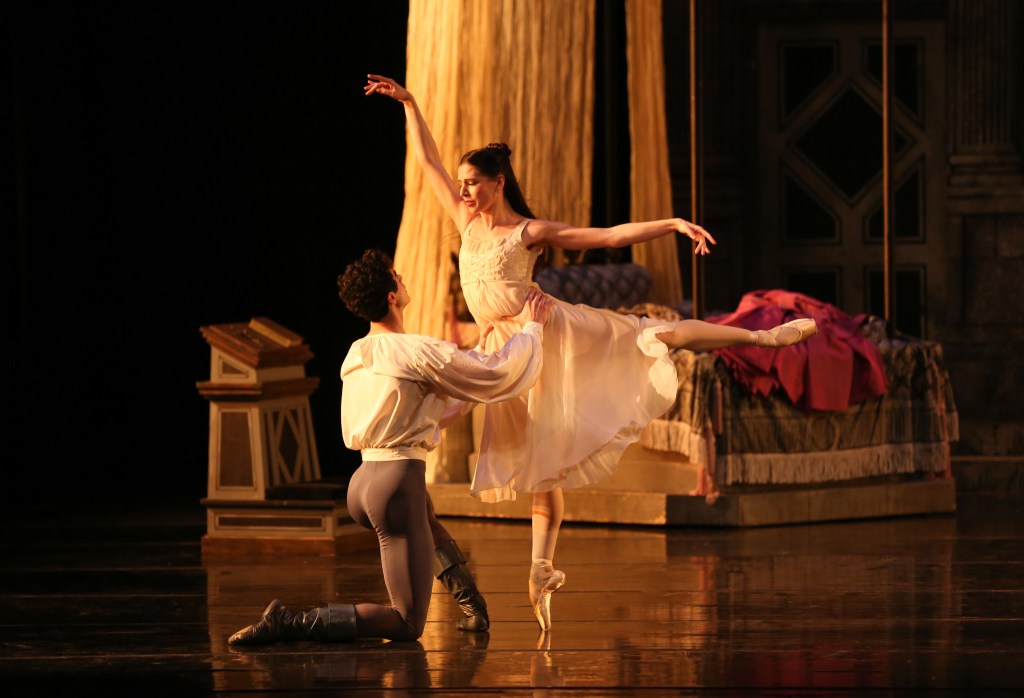
I’ve often mentioned to staff at the Richmond Ballet that my biggest – my only – problem with Romeo & Juliet,a ballet that is always performed around Valentine’s Day, is that it is one of the world’s greatest love stories, but the lovers end up dead at the end. Sigh. I think Romeo & Juliet has a higher body count than many action-adventure plots. But it also has some of the greatest – and largest – hats ever to appear on stage (kudos to costume designer Allan Lees).

On a serious note, Romeo & Juliet, running nearly three hours including two twenty-minute intermissions, is an immersive theatrical experience. There’s young love, friendship, family loyalty, classical ballet, folk dancing, comedy, drama, a fabulous score, and more.

This large-scale ballet, created by Richmond Ballet’s long-time Artistic Associate Malcolm Burn premiered August 1977 and was first performed by the Richmond Ballet in February 1995. The ballet includes a huge cast that highlights the students of the School of Richmond Ballet, the Richmond Ballet Trainees, and the Richmond Ballet II company. I found many of the supporting roles provided some of the most interesting and delightful moments of the evening.

Trainee Gabrielle Goodson was cast as the figure of Fate. A non-dancing role, Fate would appear before a death occurred. I never managed to see Goodson move, but suddenly she would appear or shift to a new position on stage. The black-robed and hooded figure was even more ominous because of the silence, stillness, and unimposing stature.
A trio of Harlots (Celeste Gaiera, Sarah Joan Smith, and Izabella Tokev) provided several amusing interludes, with their dancing (sassy romps through the crowd scenes and seductive moments with the men of the town – all of the men) as well as with their costumes (off the shoulder frocks and outrageous wigs that reminded me of a combination of Marge Simpson and the wigs worn by the step-sisters in the Cinderella ballet).

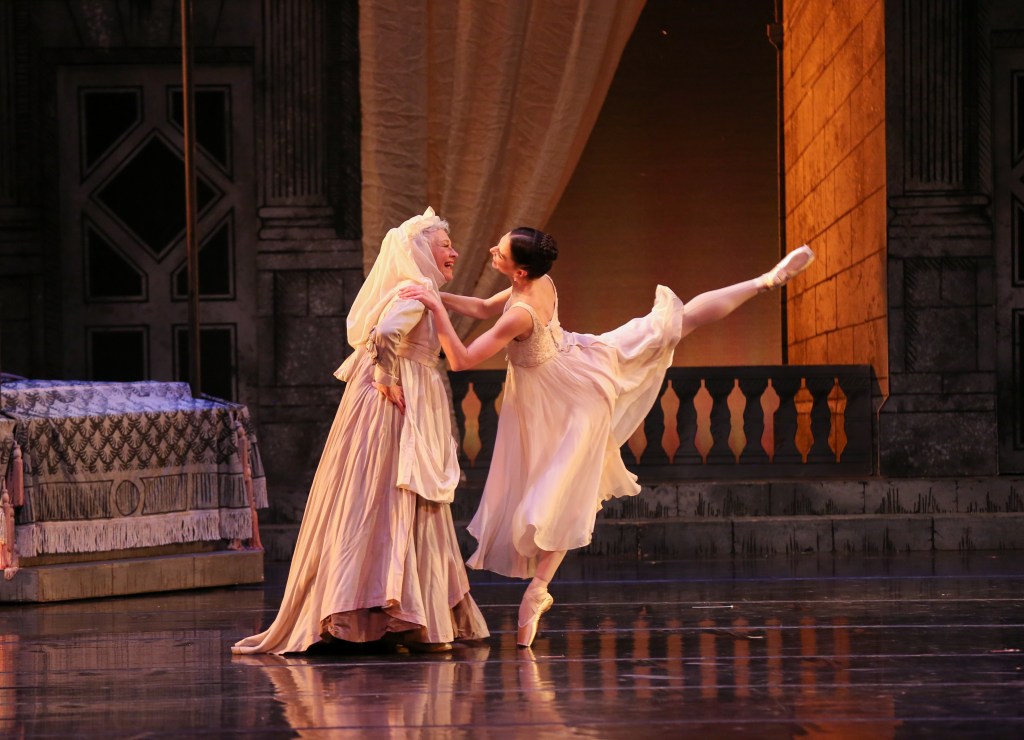
Among other supporting figures that made a big impact was Susan Israel Massey as Juliet’s Nurse. A character role that did not require much dancing, Massey was delightful: loving and loyal to Juliet, daring and subversive in her support of her young charge, and humorous in the marketplace scene.

Ma Cong, the company’s Associate Artistic Director, who took on his role in June 2020 in the midst of a pandemic, was cast in the role of Lord Capulet, Juliet’s stern and unyielding (abusive might not be too strong a word) father. If I am not mistaken, this was his first onstage appearance with the Richmond Ballet.

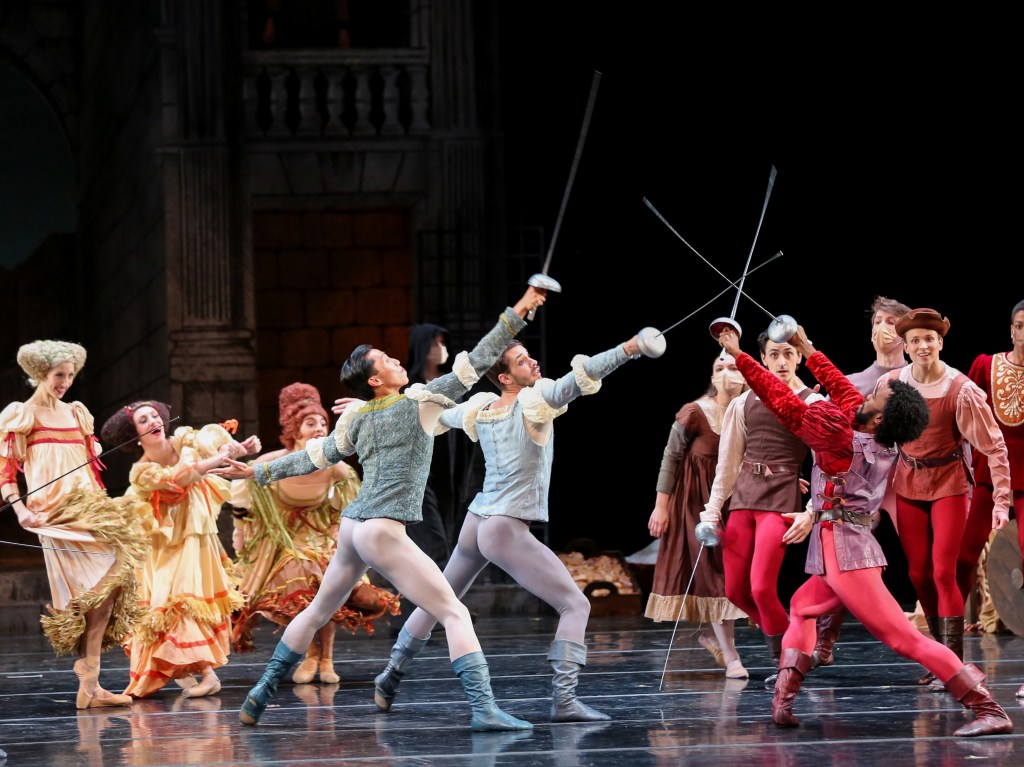
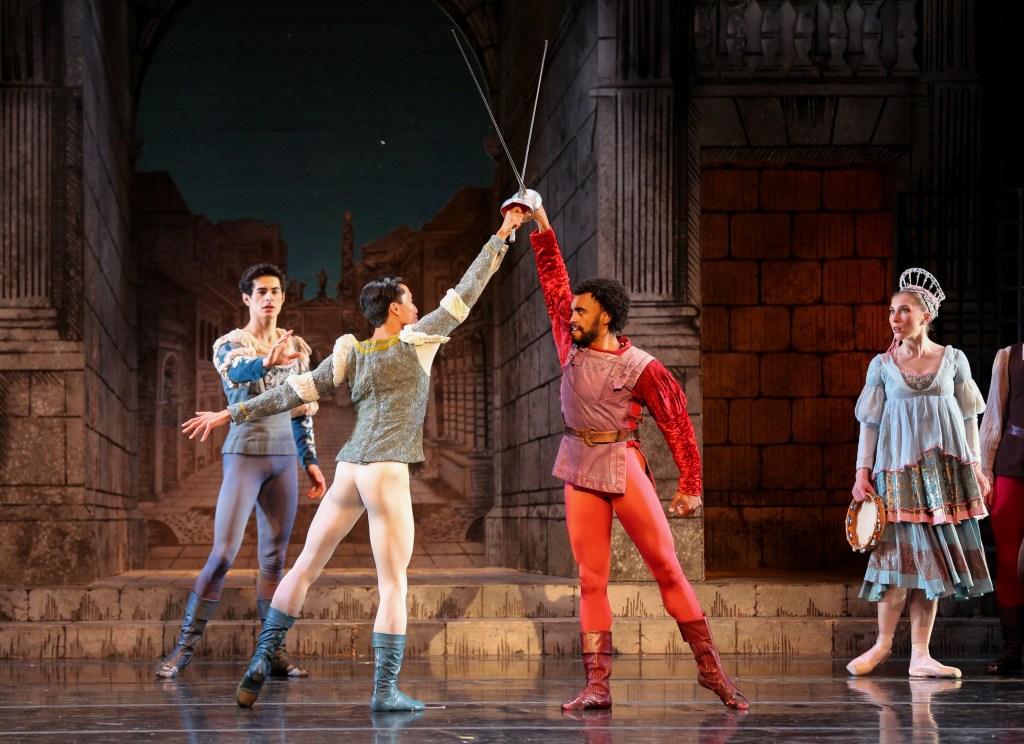
Ira White was thrilling in the role of Tybalt, Juliet’s passionate and short-tempered first cousin. White engaged in a lot of swordplay with the gentlemen of the rival House of Montague – Romeo and his sidekicks Benvolio (Colin Jacob) and Balthasar (Zacchaeus Page). The fight scenes lit up the stage with a perfect balance of athleticism and art.

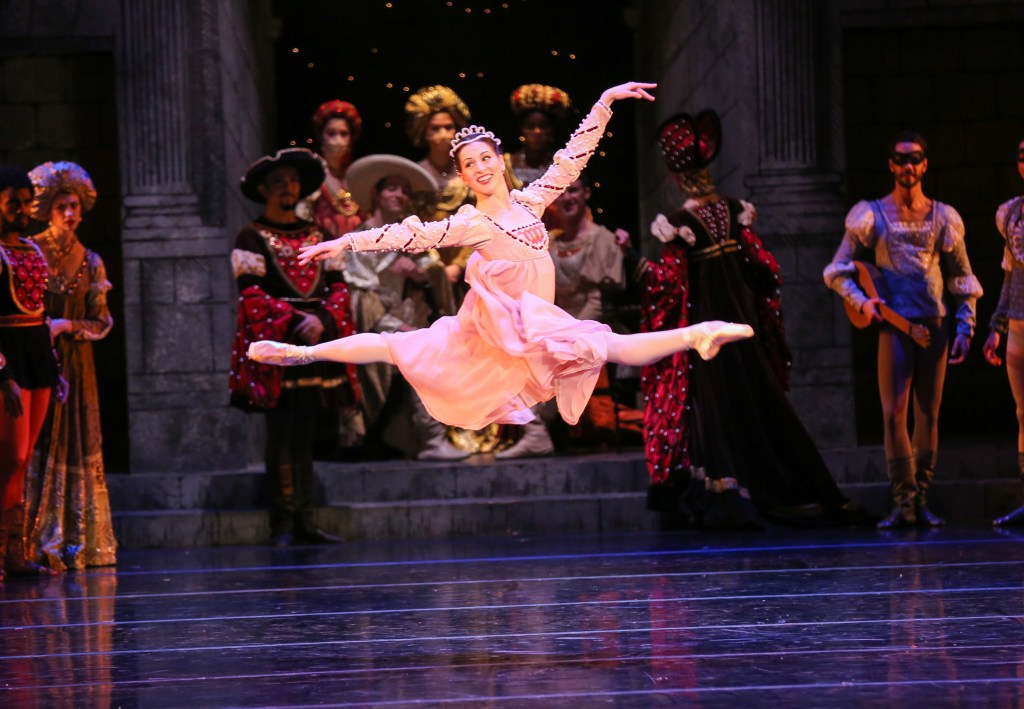
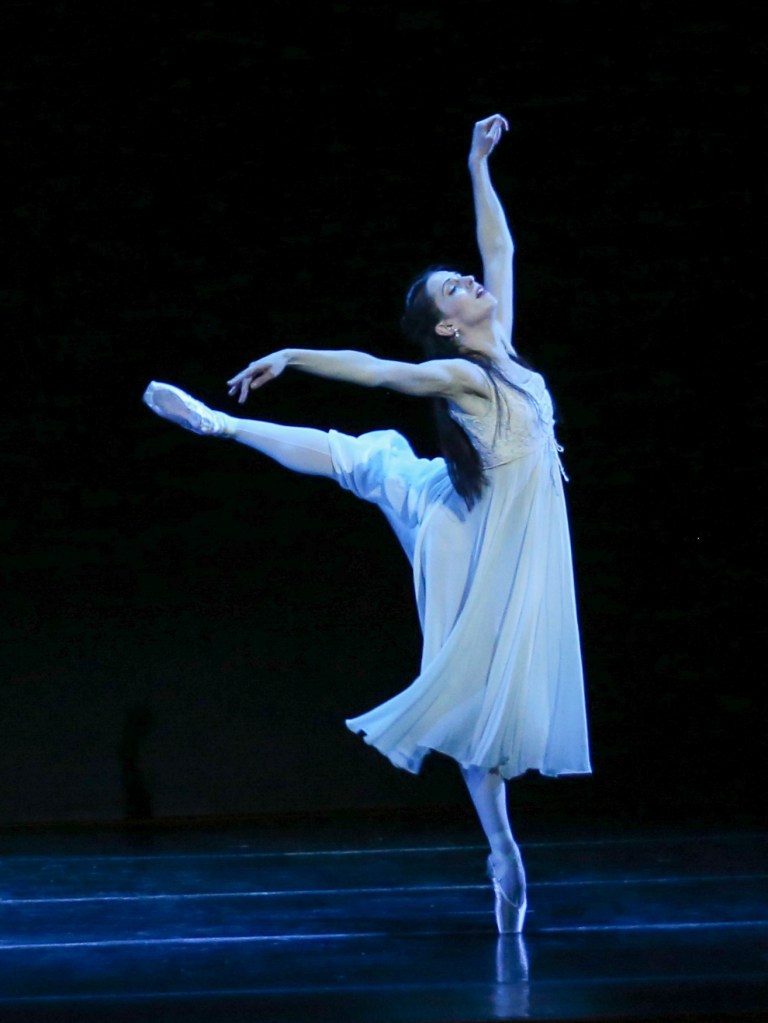
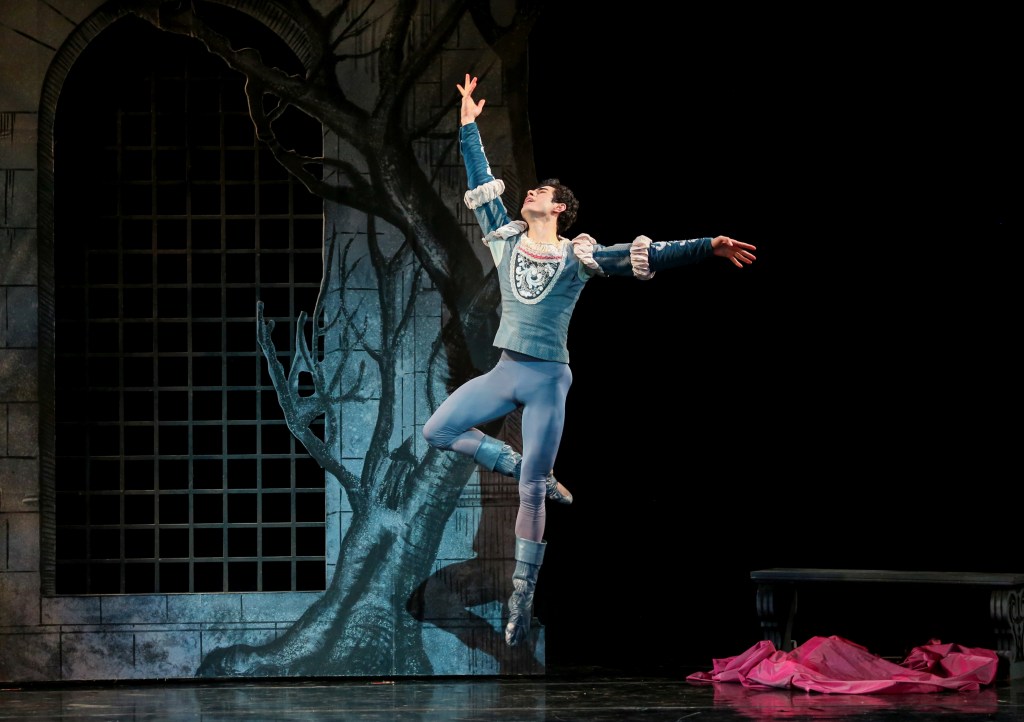
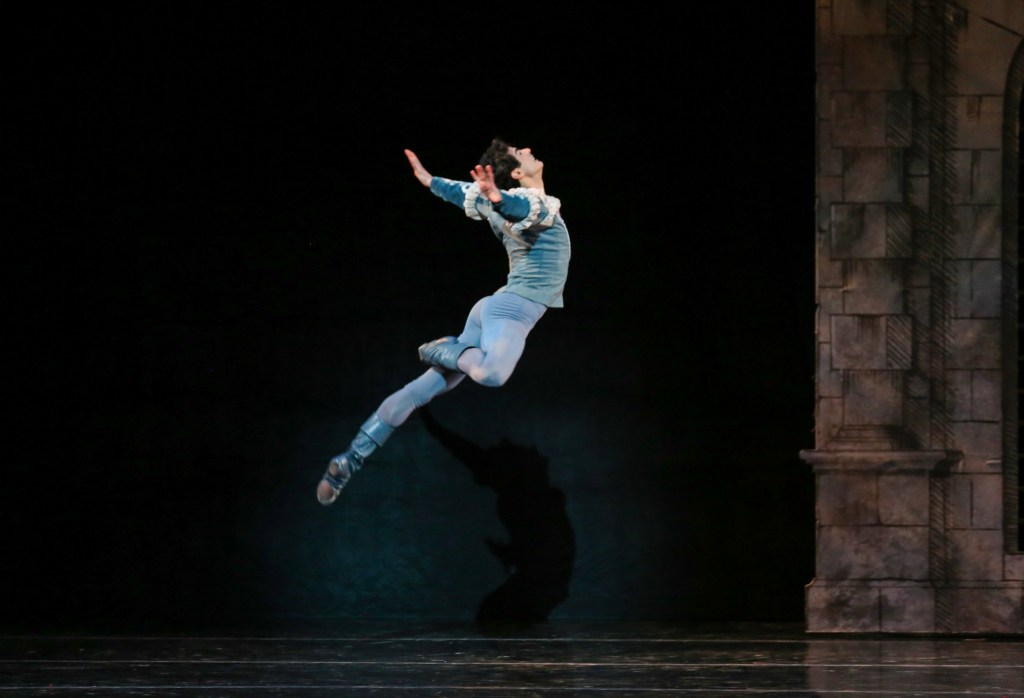
As for the title roles, Sabrina Holland danced the role of Juliet, and Khaiyom Khojaev was her Romeo, roles that require equal parts dancing, acting, and mime. There are no long dance scenes in Romeo & Juliet, and no grand pas de deux, so viewers must soak up every brief encounter, every precious stolen duet between the young lovers. The brevity of each encounter, each step, each lift makes their partnership all the more endearing. Personally, in his group scenes I would have liked to have seen Khojaev adopt some of the feistiness required of White. Tybalt certainly had confidence to spare. But in his solo turns Khojaev’s Romeo soared flawlessly.

Paris (Joe Seaton) the contender favored by Juliet’s parents (Ma Cong and Lauren Fagone), is given short shrift. Juliet flicks away his hand every time he tries to touch her. The poor guy is never even in the running. The tension and family dynamics in the scenes with Juliet, her parents, her nurse, and Paris is palpable and presages the unhappy ending that is sure to come.

Overall, Romeo & Juliet is a family-friendly ballet, and one that can be enjoyed by people who say they do not “understand” ballet. And if you don’t recall the details of Romeo and Juliet from high school, there is a handy scene-by-scene synopsis in the digital program. And the familiar score, played live by the Richmond Symphony, can easily stand alone.

I enjoy the intimate Richmond Ballet Studio Performances that are scheduled four times each season, but there is nothing like a full-scale, evening-length ballet and Romeo & Juliet is a personal and audience favorite, judging by the size, diverse composition, and positive reactions of Friday’s opening night house. At the time of this writing, there are two remaining opportunities to see this run of the Richmond Ballet’s Romeo & Juliet.

Julinda D. Lewis is a dancer, teacher, and writer who was born and raised in Brooklyn, NY and now lives in Eastern Henrico County, RVA.

Romeo & Juliet Performance Schedule

Friday, February 18 @7:00PM

Saturday, February 19 @7:00PM

Sunday, February 20 @2:00PPM

COVID-19 Protocols: Upon entering the theatre, all audience members ages 12 and above are required to show printed or digital proof of full vaccination against COVID-19 or of a professionally-administered negative COVID-19 test taken within 72 hours of the performance. Patrons ages 18 and above will also need to show a photo ID. All patrons ages 2 and above will continue to be required to wear masks. Eating and drinking are allowed only in designated areas of the lobby.


Photos of the Richmond Ballet’s Romeo & Juliet. Photos by Sarah Ferguson. All rights reserved.