RICHMOND BALLET’S “CINDERELLA”: Happily Ever After

Richmond Ballet’s CINDERELLA: Humor & Romance Unite

A Dance Review by Julinda D. Lewis

At: The Carpenter Theatre at Dominion Energy Center, 600 E. Grace St., RVA 23219

Performances: February 14-16 @ 7:00pm; February 16 @2:00pm; and February 17 @1:00pm

Ticket Prices: Start at $25

Info: (804) 344-0906 x224 or etix.com

Magic. Magic with a generous dose of humor. The Richmond Ballet’s 2019 production of Malcolm Burn’s Cinderella is the sort of magical ballet that makes little girls want to become ballerinas. (Not trying to be sexist here, just speaking from personal experience or memory.)

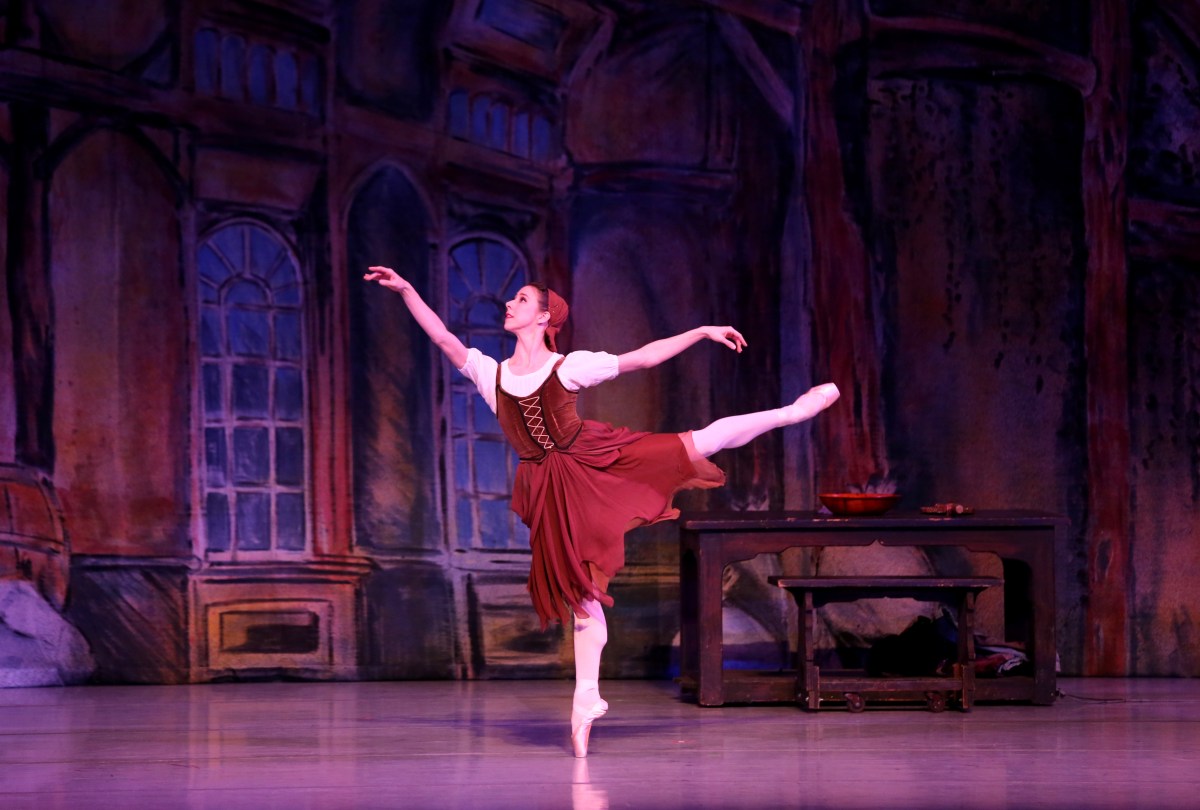
Set on the grand Dominion Energy Center’s Carpenter Theatre stage, with storybook scenery, elaborate costumes, and props by Peter Farmer, lighting by MK Stewart, and additional costume design by Tamara Cobus, Burn’s choreography soars into fairyland and carries the audience willingly along for the journey. Sergei Prokofiev’s romantic score is played beautifully by the Richmond Symphony, conducted by Erin Freeman.

Cinderella, her bullying stepsisters and unsympathetic stepmother, her kind but defeated father, the fairy godmother and the fairies of the seasons, the magical mice and the charming Prince are all here in this traditional fairy tale. But it’s been awhile, and I didn’t remember just how amusing this ballet is! (On opening night there was one woman in the audience who had an infectious laugh – for the first act. By acts two and three, she had progressed to laughing uncontrollably, often at the most inappropriate times.)

The physical comedy of Elena Bella (a stepsister) and Trevor Davis (The Jester) are personal highlights of the ballet. Bello is a petite powerhouse with stunning technique and a penchant for comedy, which she also demonstrated as Puck in Midsummer Night’s Dream. Davis also managed to perfect a blend of technique and comedy.

And, of course, the delicious comicality (yes, that’s a real word) of having the second stepsister played by a man, Matthew Frain, goes without saying. I was excited when I saw him appear in toe shoes, and yes, he did manage to get in a few steps on pointe. And while his role requires him to perform in an over-the-top klutzy style, he worked diligently with company members to prepare. [See a video clip of him preparing for his role with his “sister” Elena Bello: https://www.richmond.com/studio/entertainment/dancer-matthew-frain-as-cinderella-s-step-sister/video_9f728237-58fc-5a45-a063-ff64851d227a.html].

Among the more traditional roles, Cody Beaton is Cinderella and Fernando Sabino is her Prince. Their pas de deux is lush, unhurried, and beautiful. Their unlikely love story – the stuff of fairy tales – is helped along by the Fairy Godmother (Lauren Archer) and the fairies of the Seasons. Melissa Robinson is the Spring Fairy; Izabella Tokev is Summer; Abi Goldstein is Winter; and Eri Nishihara is Autumn. Nishihara took my breath away with her effortless flexibility; it seemed that each time she lifted her leg it floated to the back of her head.

Burn gives attention to the smallest detail. Even minor characters are given memorable representations, such as Mate Szentes as the pretentious Dancing Master and Khaiyom Khojaev as The Violinist with super-exaggerated gestures. I adore the Chimes: the twelve hooded figures who signal Cinderella’s curfew turn their heads on signal revealing glowing red “eyes.” Each season fairy is accompanied by a trio of student apprentices, and the guests at the Prince’s ball are all given authentic gestures and organic movement patterns that make the entire scene flow like a dream.

Humor, romance, fairy tale enchantment. What a beautiful offering for the Valentine weekend. I so much prefer Cinderella to Romeo and Juliet for the Valentine week, as I personally find that classic tale too depressing for a romantic date. Cinderella is a story ballet that allows you to fully escape into fantasy for approximately two and a half hours (three acts, two intermissions) – maybe even longer if you plan your evening right. . .

Julinda D. Lewis is a dancer, teacher, and writer who was born in Brooklyn, NY and now lives in Eastern Henrico County.

———-

Photo Credits:

Richmond Ballet in Cinderella by Malcolm Burn. Richmond Ballet 2019. All Rights Reserved. Photos by Sarah Ferguson.

This slideshow requires JavaScript.

CYRANO DE BERGERAC: Everyone Nose

CYRANO DE BERGERAC: Unrequited Love

A Theater Review by Julinda D. Lewis

At: Swift Creek Mill Theatre, 17401 Jefferson Davis Highway, Colonial Heights, VA 23834

Performances: January 26 – March 2, 2019

Ticket Prices: $40 Theater only; $57 Dinner & Theater

Info: (804) 748-5203 or swiftcreekmill.com

Edmond Rostand wrote Cyrano de Bergerac in 1897 and many are familiar with this classic, either as a reading assignment in high school or from Steve Martin’s 1987 comedy named for Cyrano’s love interest, “Roxanne.” But it is another thing entirely to see Cyrano performed live onstage, and still be moved to laughter by the 17th century poet’s flowery words and braggadocio and touched by the hero’s uncharacteristically humble acceptance of unrequited love. And yes, this is fiction, but it is based on a real person.

The current production onstage at Swift Creek Mill Theatre, adapted by Emily Frankel and directed by John Moon, is a delightful period comedic romp. Like every production at Swift Creek, it is one of artistic director Tom Width’s favorites. This one earns a special place of honor because, he writes in the program notes, it “confirm[s] the ability of this story’s themes to transcend time and place.” Cyrano, a talented poet, playwright, musician, and soldier, is in love with his beautiful cousin Roxane, but due to his unusually large nose, he lacks the confidence to approach her. Instead, he writes love letters to her on behalf of Christian, a fellow cadet whom he befriends at Roxane’s request.

The production is dedicated to the beloved Andy Boothby, who transitioned suddenly on November 26, and had been cast in the title role, which is now being filled by Matt Bloch. Even with the flamboyantly large prosthetic nose in place, Bloch isn’t ugly; in fact, he is so far from ugly that this casting decision requires good acting in collaboration with a suspension of belief by the audience. Looks aside, Bloch does a commendable job as Cyrano, a role that is both verbally and physically demanding. The final scene, in which he visits Roxane who has retired to a convent after Christian dies on the battlefield, is more touching than I expected. Thankfully, director Moon keeps it simple and brief.

David Janosik plays Christian, whose love for Roxanne is also unrequited, because she doesn’t know that the words that are winning her over are not his own, but those of her cousin Cyrano. I wanted to feel sorry for Christian, but it was difficult to balance this desire with rooting for Cyrano to overcome his insecurities about his looks and find true love.

The lovely Rachel Rose Gilmour is well cast as the fair Roxane. It was helpful to see the scene in which she deftly deflects her lecherous uncle, DeGuiche – a scene performed for the Acts of Faith Preview – in context. In her scene with the tongue-tied Christian she is abrupt and amusing.

Other strong characters include Walter C. A. Riddle as Cyrano’s second in command, Capt. LeBret and Jon Cobb as the play’s antagonist, DeGuiche. Debra wagoner provided some wonderfully comedic moments as Roxane’s Duenna, and her perpetual giggle was simultaneously girlish and naughty.

Frank Foster’s simply elegant design, consisting mostly of a soaring archway with moveable benches and posts, transformed, with the help of Joe Doran’s lights, from a theater to a pastry shop, a court yard, a battlefield, and finally the garden of a convent. Maura Lynch Cravey’s elaborate period costumes, which included lace collars and cuffs, capes, plumed hats, and long hair for the men, and the women’s extended skirts, were as flamboyant as Foster’s design was unassuming.

As for those enduring themes, there is pride versus humility, physical beauty versus inner beauty, integrity and deception, bravery and revenge, chivalry and love, and of course, there is sword-fighting!


Julinda D. Lewis is a dancer, teacher, and writer who was born in Brooklyn, NY and now lives in Eastern Henrico County.

———-

Photo Credits:

Robyn O’Neill


This slideshow requires JavaScript.

BECKY’S NEW CAR: Placing a Marker in Life

BECKY’S NEW CAR: Cruising Through Midlife Crisis

A Theater Review by Julinda D. Lewis

At: CAT Theatre, 419 No. Wilkinson Rd., RVA 23227

Performances: February 8-23, 2019; Acts of Faith Talkback after Sunday matinees

Ticket Prices: $23 General admission; $18 RVATA Members; $13 Students

Info: (804) 804-262-9760 or cat@cattheatre.com

From the moment Becky Foster bustles onstage, still dressed for work, talking over the hum of her hand-held vacuum, tossing a roll of toilet tissue towards one audience member to place in the bathroom, asking another to place a waste basket under a leak, and sipping from a can of Sprite, it is obvious something in her life is out of balance. The she has a talk with her son Chris, a twenty-something graduate student who still lives at home, and the question of what he is going to do with his life turns into what she is doing with her life, and we’re off and running. Steven Dietz’s non-stop comedy, Becky’s New Car, has just enough of a tinge of reality to make us care about what happens to these characters, or at least make some moral or practical judgments about their actions.

Kerrigan Sullivan slides easily into the role of Becky (Rebecca) Foster, a middle-aged woman with a decent job as an office manager in a successful car dealership, married to a successful roofer, mother of a son who is a nice young man who, like many nice young men, seems in no hurry to rush into adulthood. Sullivan’s role requires lots of interaction with the audience, which also seems natural to Sullivan, who must segue smoothly between acting and narrating.

Scott Bergman makes Becky’s husband Joe seem like such a solid, likeable guy that it becomes difficult to relate to Becky’s dissatisfaction or to sympathize with her subsequent decisions. At one point Becky enlisted three women from the audience – including me – to help her decide if she should attend a party and pursue an extra-marital relationship. We unanimously said no, and of course she had to find three more willing sympathizers – or there would have been no reason for a second act.

Referring back to a September 2011 Va-Rep Hanover production of this show, Becky’s New Car by Steven Dietz, I confirmed that at that time I had been invited onstage to assist Melissa Johnston Price, who was playing the role of Becky, get dressed for the party. As I write this review, I recall that I helped that earlier Becky with her necklace. Interestingly, although I knew I had seen – and even reviewed – Becky’s New Car nearly 8 years ago, I did not remember details, so watching this production was like watching it for the first time.

Mark Atkinson was interesting as Becky’s paramour, the wealthy Walter Flood. Where all the other characters seemed realistic, Walter was more of a caricature of the wealthy businessman with the waterfront estate. I’m not sure if Walter’s affected speech and mannerisms were a decision of the actor or the director, Ann Davis, but he seemed to be using a different style of acting than everyone else.

The rest of the cast includes Jimmy Mello as Becky’s son, Chris; Maura Mazurowski as Walter’s daughter Kenni – who develops an interesting and convoluted relationship that could only happen in high comedy – Daryl Scruggs as Becky’s emotionally needy co-worker Steve, and Tricia Hawn as Walter’s family friend, Ginger.

Becky’s New Car is not short on laughs, but the first act seemed to drag a bit. I think we were all smart enough to get it if the pacing had been bumped up a bit. The second act seemed to find a more satisfactory stride and Becky soon crashed and burned into the entirely avoidable disaster that was clear to everyone except Becky. The look on Becky’s face when she sees Joe and Walter sharing beers in her living room is priceless. Her subsequent actions change everyone’s lives.

Lin Heath’s multi-purpose set works surprisingly well. The center and stage left comprise the Foster’s living room and doors to other rooms into and out of the house. Stage right has Becky’s office, separated from the home by a single step and lighting, rather than a physical wall.A wall at the rear of the living room served as a deck or patio on Walter’s estate, but the location or construction of the wall was oddly distracting. Even more so, Becky’s car – both the old one and the new one – are represented by office chairs. I had hoped for something more, given the title. Charlotte Scharff’s costumes are realistic, from Joe’s work shirt with his name on it to Becky’s work wardrobe and the party clothes, but what really stands out is the onstage costume change, assisted by three women selected from the audience.

There is a lot of audience involvement, which is surprisingly organic and a lot less intrusive than one might expect. One might wonder how a comedy might qualify as an Acts of Faith Theatre Festival entry, but it is the life-stage challenges and how they are handled that provides plenty of material for discussion – both among audience members, and for the Sunday matinee talkbacks.

Julinda D. Lewis is a dancer, teacher, and writer wh was born in Brooklyn, NY and now lives in Eastern Henrico County.

———-

Photo Credits: Daryll Morgan Studios

Acts of Faith logo

CAT Theatre - Becky's New Car - Daryll Morgan Studios-7
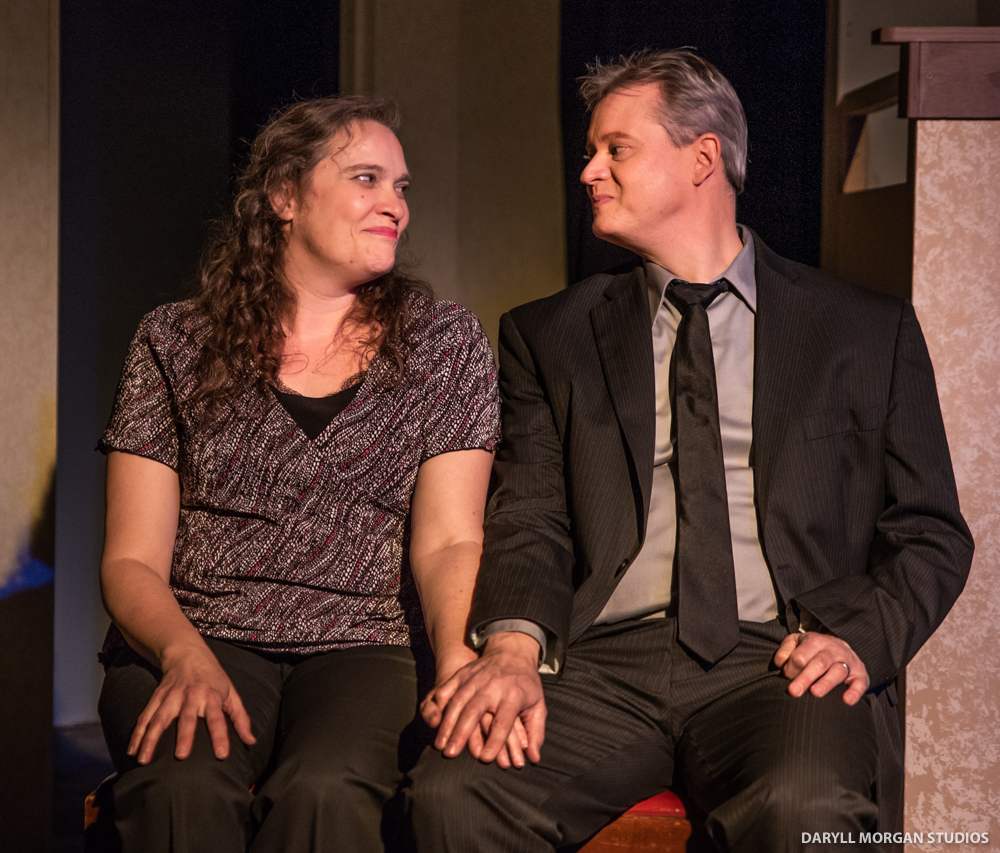
Kerrigan Sullivan and Mark Atkinson
CAT Theatre - Becky's New Car - Daryll Morgan Studios-16
Kerrigan Sullivan as Becky
CAT Theatre - Becky's New Car - Daryll Morgan Studios-17
Scott Bergman, Jimmy Mello, Kerrigan Sullivan, Maura Mazurowski, Mark Atkinson, Daryl Scruggs and Tricia Hawn
CAT Theatre - Becky's New Car - Daryll Morgan Studios-19
Kerrigan Sullivan and Scott Bergman

HUCK & TOM: Rolling on the River

Huck & Tom: And the Mighty Mississippi

A Theater Review (& some other thoughts) by Julinda D. Lewis

At: Virginia Rep’s Children’s Theatre at Willow Lawn; 1601 Willow Lawn Drive, RVA 23230

Performances: January 25 – March 3, 2019

Ticket Prices: Start at $21

Info: (804) 282-2620 or virginiarep.org

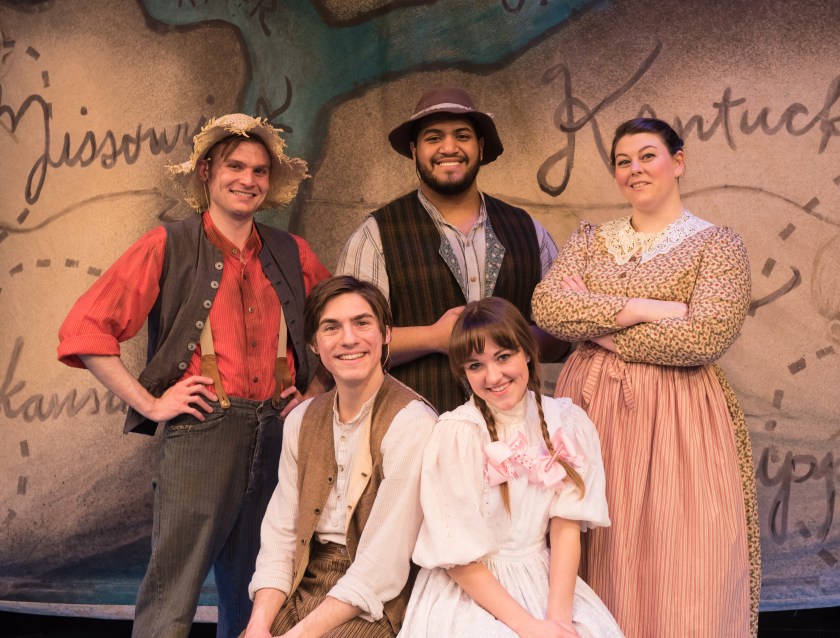
The latest production of the Virginia Rep Children’s Theatre at Willow Lawn is Huck & Tom and the Mighty Mississippi, a collection of short adventures from Mark Twain’s books about Huckleberry Finn and Tom Sawyer. The production is adapted from the works of Mark Twain, with book and lyrics by Peter Howard, and music and lyrics by Ron Barnett. Colorful and lively, with a few pleasant songs, some period costumes (Becky’s is especially pretty), and creative use of crates to change scenes (the cemetery was quite inspired), this production is recommended for ages 6-12 but is probably best suited for the higher end of this age range, through middle school.

James Hendley and Joel White share good chemistry as Tom and Huck, respectively, with Caitlin Sneed bringing balance as Aunt Polly and Rachel Jones as an adorable Becky. Alvan Bolling II rounds out the cast as Jim.

Throughout the show, which runs just under an hour, with no intermission, characters remind one another and the audience that there isn’t enough time to tell the entire story and encourage audience members to check out the books from their libraries to find out the rest of the story. David Tousley’s set, which includes movable fences, a raft, and the aforementioned crates, includes a background of fencing and gigantic books.

I always like the program for the children’s productions. One side is a frameable poster keepsake, and the other contains all the usual program information. This one includes “Five Fun Facts” about the author and his books, such as Mark Twain’s real name, a nautical term named for Twain, Twain’s early jobs, and some facts about the Mississippi River. In keeping with this theme, I will offer five observations about this production.

One. First, let me defer to my panel of experts: Kingston and Nicole, both age 10, and Emmitt, age 4. Emmitt said he liked “everything” but was not able to offer any details. Kingston and Nicole also said they liked everything, but given that they are in double digits, I couldn’t let them get away with that. Nicole then offered that she found it confusing with one actor just fell down on the floor when the narrator said he’d been shot in the leg. An audible “bang,” she and Kingston agreed, would have made it better. When I asked them how they felt about Huck trying to decide whether to turn in Jim for the runaway slave reward and save himself or to help Jim escape to freedom, neither of them was mature enough to have fully grasped the gravity of the situation. Most of the audience was probably in the 4-10 year age range, so I’m not sure many of them grasped the significance of this dilemma.

Two. Throughout the production, young audience members were urged to read the books for themselves. Most if not all raised their hands when they were asked if they liked to read. I wonder how many of the parents present are aware that these beloved classics are among the most frequently banned books in the USA? Mostly because in the original texts there is liberal use of the word “nigger,” as Jim is referred to as Nigger Jim. Is this something you want to discuss with your elementary school child?

Three. Kingston was able to relate to some of the historical references, remembering that they had been covered in his fourth grade SOLs.  So, kudos for making theater both educational and entertaining, and finding connections with what the kids are learning in school.

Four. Emmitt, age 4, is usually completely enthralled by theater, especially if there is music involved. But this time he was ready to leave about halfway through.

Five. Huck & Tom is a colorful, lively production, with lots of visual interest, movement, and energetic performances by its cast of five, and is well-directed by Kikau Alvaro. Based on my experience, it is best suited for children ten or older, and should be accompanied by sort of discussion. This production is a part of the Acts of Faith Theatre Festival, and the suggested faith connection is “growing up,” which is linked to the scripture Proverbs 22:6 – “Train up a child in the way he should go: and when he is old, he will not depart from it.” Depending on the age and maturity of the child, and the personal beliefs of the family, there are so many directions this discussion could take.


Sensory Friendly Performances

A Sensory Friendly family performance will be offered on Saturday, February 16 at 10:30 a.m. Please see the website for more details: http://va-rep.org/sensory_friendly.html

Performance Schedule

Evening performances at 7:00 p.m. on select Fridays

Matinee performances at 2:00 p.m. every Saturday and Sunday

Matinee performances at 10:30 a.m. on select Saturdays

Julinda D. Lewis is a dancer, teacher, and writer who was born in Brooklyn, NY and now lives in Eastern Henrico County.

———-

Photo Credits: Aaron Sutten

Acts of Faith logo

Huck and Tom and the Mighty Mississippi
Rachel Jones. Photo by Aaron Sutten.
Huck and Tom and the Mighty Mississippi
James Hendley, center. Alvan Bolling II, Caitlin Sneed, left. Rachel Jones, right. Photo by Aaron Sutten.
Huck and Tom and the Mighty Mississippi
Alvan Bolling II and Joel White. Photo by Aaron Sutten.
Huck and Tom and the Mighty Mississippi
Joel White, Alvan Bolling II, Caitlin Sneed, Rachel Jones, and James Hendley. Photo by Aaron Sutten.

OEDIPUS: Greek Tragedy in a Black Southern Church

OEDIPUS:A GOSPEL MYTH

A Theater Review by Julinda D. Lewis

At: The Firehouse Theatre, 1609 W. Broad Street, RVA 23220

Performances: February 1-23, 2019; 7:30 PM evenings and 4:00 PM Sunday matinees; Acts of Faith Talkbacks on February 10 & 17

Ticket Prices: $15 – $35

Info: (804) 355-2001 or firehousetheatre.org

Pride. Fate. Abuse of power. Patricide. Incest. Here’s a good one: hamartia (the fatal flaw that leads to the downfall of the tragic hero). Make no mistake about it; Oedipus: A Gospel Myth is a classic Greek tragedy with all the elements and accoutrements. It’s just set in a black church in the south in the 1920s.

Instead of a Greek chorus, there’s a soulful gospel trio (Shantell Dunnaville, Shalimar Hickman Fields, and Shalandis Wheeler Smith – whose names all just happen to start with the same letter). Instead of choir robes, they wore a version of a simple Greek tunic or chiton over bedazzled golden shirts. In addition to traditional music, including a beautiful rendition of the new-to-me “Rusty Old Halo,” sung by Fields, the trio provided ongoing silent reactions to the tragedy. One could just imagine them gossiping about what they had seen and heard after the service. Michael Jones accompanied them on piano, behind their pew that occupies the left side of the stage and provided the soundscape as well. Billy Dye was the music consultant – his first time working on a Firehouse Theatre production – and he and Gonzalez drew maximum creative power from these three singers and single musician.

For those not familiar with the story of Oedipus (maybe you slept through it in high school), it might help to review a brief synopsis prior to seeing the show. Even with the change of setting and an all-black cast, the integrity of the story remains. Oedipus, our tragic hero, was born to the king and queen of Thebes, but a prophecy warned that Oedipus would kill his father and marry his mother. To thwart the prophecy, infant Oedipus was bound and left on a mountain to die. Of course, he didn’t die there, or there would be no story. And, of course, one can see parallels with biblical characters and stories.

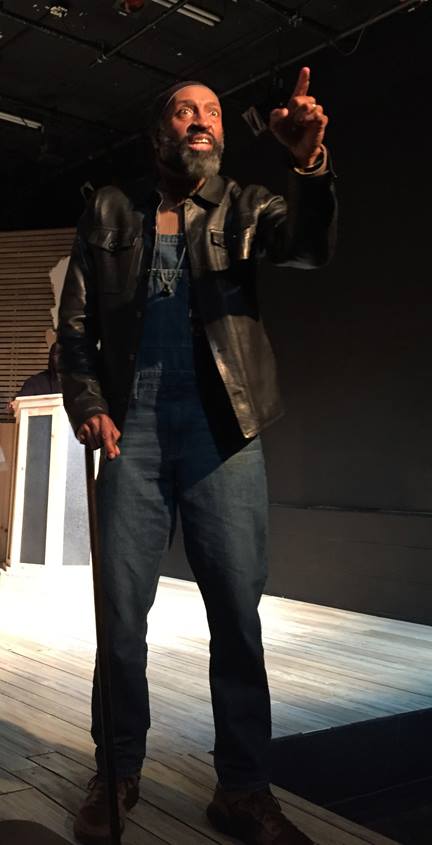
This version of Oedipus: A Gospel Myth may be the brainchild of director/set designer Vinnie Gonzalez and his stellar cast, including dl Hopkins as Oedipus, Jeremy V. Morris as the Preacher, Toney Q. Cobb as Teiresias/the Messenger, and Patricia Alli as Jocasta, but the author is still listed as Sophocles. If you have a hard time imagining a black southern congregation relating to the language and mythology of ancient Greece, just remember that they have already been steeped in the language and parables of the King James Bible.

It’s not entirely clear that the congregation, with input from the audience, is performing Sophocles’ play in a dramatic sermon that juxtaposes the flawed nature of humankind with mankind’s role in destiny, that attempts to reconcile the contradictions between God’s grace and human suffering. At times it seems that there are two stories running parallel, with occasional intersection.

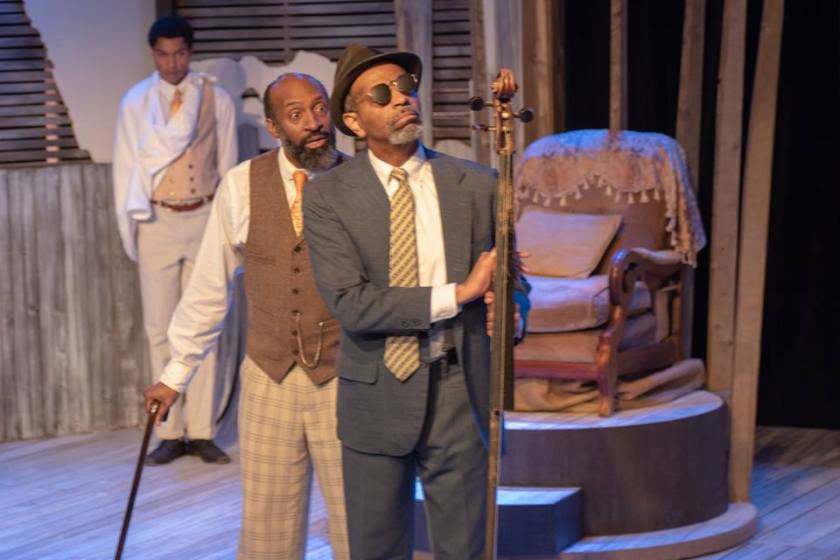
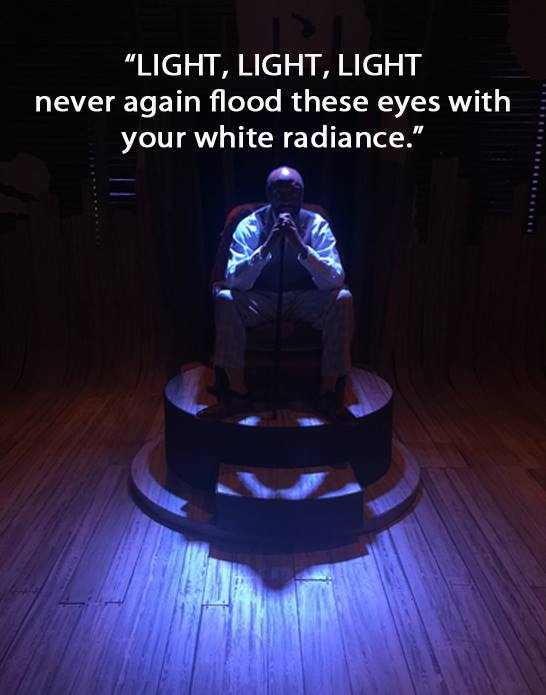
Morris begins his role early, greeting audience members in his preacher’s robe as we file into the theater. One might expect a collection plate to be passed.  Morris presides from his pulpit, on the right. Centerstage is Oedipus’ throne, set on a raised platform with seven intimidating posts that made me think of The Emperor Jones.  Hopkins is dressed in trousers and a double-breasted vest, and uses a cane which, along with his slight limp, are significant factors.

Both give intense performances, with extended sermons and soliloquies. R.O. Crews, as Jocasta’s brother, Kreon, gave a strong, more subtle performance. His role provided background information as well as took the edge off the otherwise unrelenting tragedy. There were few light moments, but in Act One there was a reference to “making Thebes great again.” Keaton Hillman was a silent servant throughout the first act but was charged with delivering the most devastating news of the entire drama in Act Two. This is quite graphic, but if you want to find out what happens, you’ll have to go see it for yourself.

The cast also includes J. Ron Fleming, Jr. as the Shepherd, Miles Hopkins as a Servant Boy, and Akilah Matthews and Rayden Tyler as Oedipus’ young daughters. Steven Koehler’s lighting is subtle, sometimes shining through the horizontal slats that make up the rear walls. Gonzalez has taken the floor boards and extended them part of the way the rear walls, which have intermittent patches of what could be broken bits of plaster.

Oedipus: A Gospel Myth has a running time of about 120 minutes, with one intermission, but the first act does seem to drag a bit, while the second act races along to the shocking revelations. Even with no prior knowledge of the story, or of the genre of Greek tragedy in general, my theater partner found this to be a moving and powerful drama that touched on very human issues.

And if any of this sounds vaguely familiar, there was an all-black musical, The Gospel at Colonus, that premiered at Brooklyn Academy of Music in 1983. It was based on the second work in Sophocles’ trilogy of Theban tragedies (Oedipus Rex, Oedipus at Colonus, and Antigone) and the cast included gospel singers and church choirs.

Julinda D. Lewis is a dancer, teacher, and writer who was born in Brooklyn, NY and now lives in Eastern Henrico County.

———-

Photo Credits: Bill Sigafoos

Acts of Faith logoOedipus.1

Oedipus.2
Keaton Hillman, dl Hopkins and Toney Q. Cobb
Oedipus.3
dl Hopkins
Oedipus.4
dl Hopkins, rehearsal photo


STARR FOSTER DANCE: CRAVE…what if?

STARR FOSTER DANCE: Crave – a New Work

A Dance Review by Julinda D. Lewis

At: TheatreLAB The Basement, 300 East Broad Street, RVA 23219

Performances: February 1-3: Friday @8PM; Saturday @3:00, 5:00 & 8:00 PM; Sunday @1:00 PM & 3:00 PM

Ticket Prices: $12

Info: (804) 304-1523, https://www.brownpapertickets.com/event/4033169

Starrene Foster’s new work, Crave, poses the question, “What if, in one moment, you had changed your mind during your journey. And if so, how would that change affect the final outcome?” The ways in which she responds to this prompt are intriguing, thought-provoking, and sensual.

On entering The Basement performance space, there is a small exhibit by four participating artists. Douglas Hayes (the company’s art director) showed a pair of digital duotone prints showing the same model, in the same pose and lighting, but one was taken in 2003 and the other in 2019. Wolfgang Jasper’s charcoal drawing, “Frictionless Pivot” and digital print “Communal Madness” show the same elements, but one has been digitally reconfigured. Beth B. Jasper’s “Negotiation,” created with pen and ink on rice paper started as two separate drawings but ended as two panels, with the initial shape in one flipped over. And Fiona Ross’ “Staves #25C” and “Staves #28C” follow specific rules of placement that lead to different outcomes. A brief study of the artwork will prove helpful when watching Crave.

Our programs were marked with a letter “N” or “S,” indicating whether we were to start out seated on the North Stage or South Stage of the performance space.  There are about twenty seats on each side, and a wall – I mean a curtain – separates the two sides. During the 10-minute intermission, the audience members change sides.

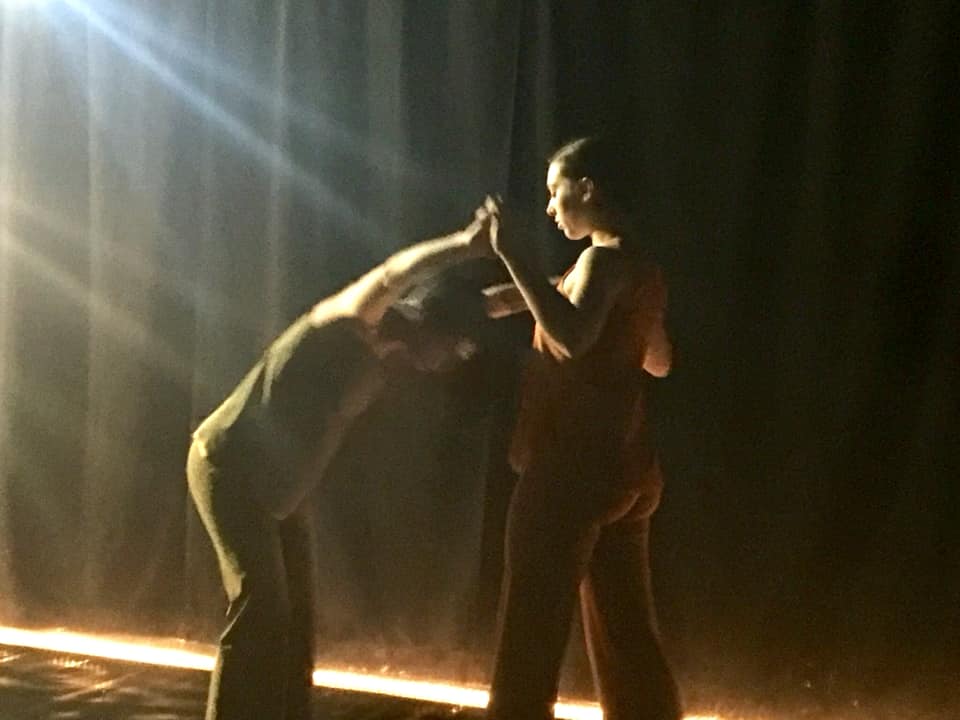
We started on the North Stage, where Kierstin Kratzer and Mattie Rogers danced with a quiet intensity that sometimes pulled me to the edge of my seat. Billy Curry’s original score was a soundscape of trains, industrial noises, and rhythmic music. Foster, who frequently uses dark lighting, did not disappoint, but there were bright lights overhead that created a not unpleasant, somehow softened glare. We could see the dancer’s faces, but not their features. We knew they were looking at each other, but we couldn’t see their eyes. They were dressed in monochromatic slightly loose, softly flowing tunics and pants that became part of the choreography.

Kratzer and Rogers sometimes flowed together organically, sometimes challenged one another, lifting, pushing, pulling; one would occasionally head butt the other in the belly, and one stood vibrating as if receiving an electric shock from her partner’s fingers. The flow and variety of movement was mesmerizing, and before you knew it, it was intermission.

Changing to the South Stage, we saw Caitlin Cunningham and Kelsey Gagnon dancing, and like Wolfgang Jasper’s drawings, the elements were the same as those used by Kratzer and Rogers, but reconfigured. They were dressed identically to the other duo. They started from a similar position. There was that kick and high leg swing. That’s the same grab of the toe. There’s the vibratory movement – but different. It was all familiar, but all new. There was the sound of the train and yes, that upbeat rhythm. But there was a sense of déjà vu, a time shift or a manipulation of time and space.

One had a sense that the other duo was happening on the other side of the curtain, but try as I might, I never actually heard them. Having the audience move is rare, but it has been done before. It’s not always possible and the flexible and intimate space of The Basement was ideal for this elemental manipulation. It enhanced the sense that time and space had shifted. The cast members change, too. For some performances, Fran Beaumont and Cristina Peters will dance on the North Stage, while Shelby Gratz and Erick Hooten dance on the South Stage. With a running time of just about 45 minutes including intermission, Crave packs a lot of punch in a small space in a short time. There are only 6 performances over a 3-day period, so if you can this piece is worth seeing. Try really hard. I love the way Foster has manipulated all the elements – including her audience.

Julinda D. Lewis is a dancer, teacher, and writer who was born in Brooklyn, NY and now lives in Eastern Henrico County.

———-

Photo Credits: Starr Foster Dance by Douglas Hayes.

RED VELVET: The Politics of Theater

RED VELVET: The Terrors of the Earth

A Theater Review by Julinda D. Lewis

By: Quill Theatre

At: Libby S. Gottwald Playhouse, Dominion Energy Center, 600 E. Grace Street, RVA 23219

Performances: January 18 – February 9, 2019, Thursdays-Saturdays @8:00pm & Sundays @2:00pm.

Ticket Prices: $22-$32

Info: (804) 340-0115 or quilltheatre.org

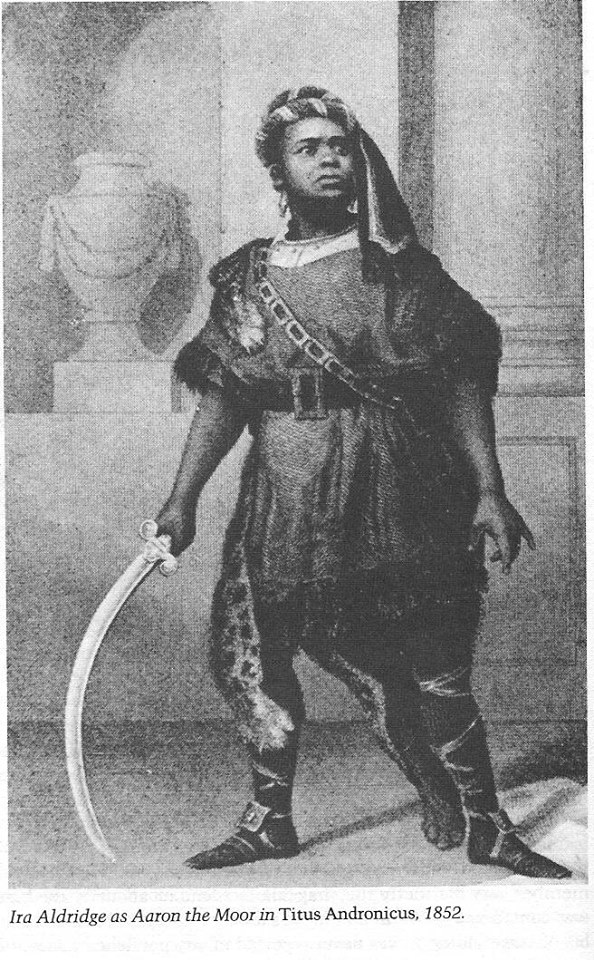
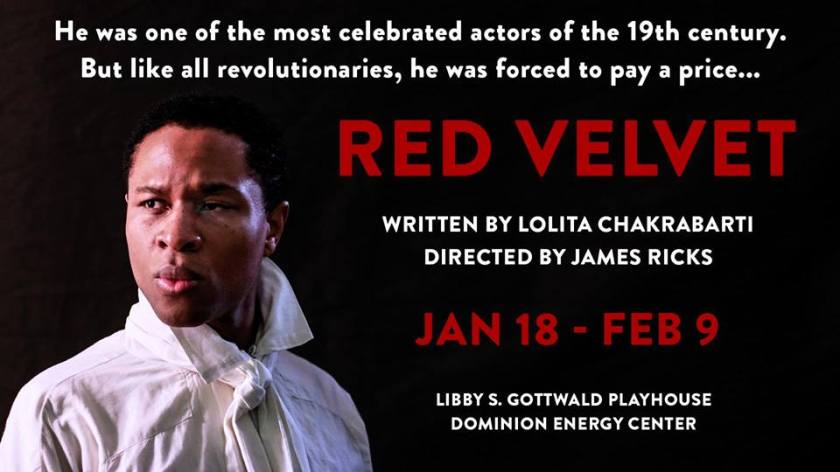
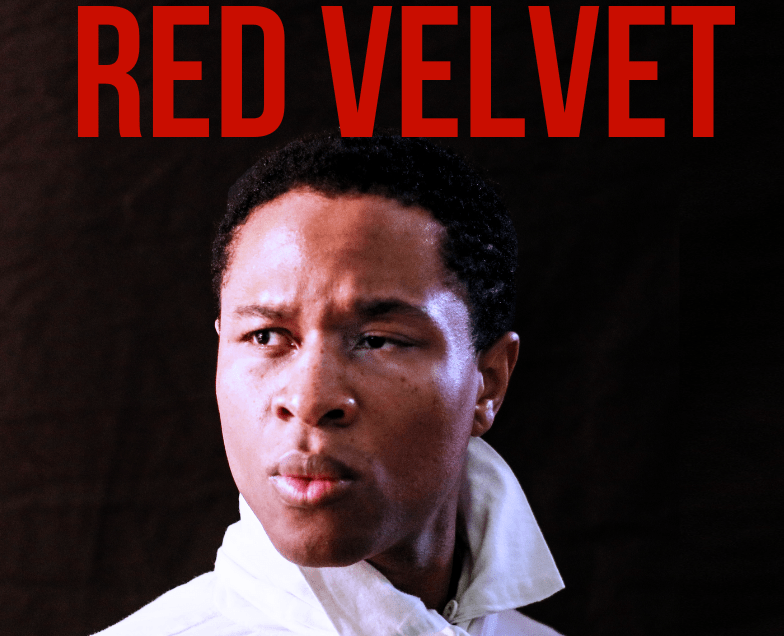
Raise your hand if you’ve ever heard of Ira Aldridge. Those words are a program note for the 2012 play, Red Velvet, but also the opening line of the Acts of Faith Preview on Monday, January 14. But seriously, have you ever heard of him? I had. Like many other black American performers, Ira Frederick Aldridge (1807-1867) found that he had to leave the USA in order to pursue his craft. And from what we can see from Lolita Chakrabarti’s two-act play, life wasn’t exactly a piece of cake in Europe, either. (Okay, so “red velvet” does not refer to cake but to stage curtains.)

The play opens and ends with Aldridge, touring as King Lear near the end of his career, being pursued by a pushy Polish woman journalist – whom he derisively refers to as a “skirt.” Jamar Jones stars as a larger than life Aldridge, and at times the drama of Aldridge’s life and the drama he portrays onstage overlap. The journalist, Halina, played by Rachel Dilliplane, digresses into a tirade on the unfairness of being the only woman in her office – a valid complaint, but this story is about Aldridge, and there just isn’t time to focus on her. Halina’s questions about Aldridge’s ground breaking performance as the first black actor to portray Othello at London’s Covent Garden in 1833 lead the aging and apparently ailing Aldridge to review his life – and this is the gist of Chakrabarti’s play.

Aldridge arrives in London to replace the legendary Shakespearean actor Edmund Kean who has collapsed while playing Othello. Kean’s son, Charles, played with supercilious contempt by Cole Metz, who is also a member of the company, expects to step into the role. But the entire company, with the exception of a delightfully smug young cast member, Henry, played by Stevie Rice, are shocked when Aldridge arrives. At one point, Charles throws a full-blown temper tantrum, complete with stomping and screaming. One actress, Betty Lovell, also played by Dilliplane, remarks that when she read the reviews about Aldridge’s “dark” performance, she thought they were referring to his demeanor, not his complexion.

Although it is not entirely clear, what with all the ambient sound, the flurry of accents, and the period language, England is in the midst of riots about the abolition of slavery, and members of the theater company are firmly rooted on both sides of the slavery versus anti-slavery debate. Bernard, played by John Cauthen, just wants sugar for his tea, and doesn’t care how it’s made. Echoing the headlines of recent news, Bernard advocates for “closed borders.” Some players just want to get on with the show. Some are appalled at the idea of Aldridge interacting with leading actress Ellen Tree, played by Frances Saxton. Ellen is also engaged to Charles, and soon rumors of physical abuse and sexual impropriety begin to fly.

Key to this entire experiment is theater manager Pierre Laporte, played by Eddie Webster complete with a French-ish accent. It seems Laporte and Aldridge are long-time friends, and Laporte is brave enough, and European enough, to buck conservative British tradition and shake things up a bit. Unfortunately, it isn’t enough, and there is an intense second act fight between Laporte and Aldridge that actually gets physical. “Theater,” Laporte assures us, “is a political act.”

At one point, the actors read the racially charged reviews that begin to come in after Aldridge’s first performance. Some refer to the absurdity of a black man playing Othello, the Moor, while others completely ignore Aldridge’s talent, but focus on the shape of his lips, which, the assert, prevent him from properly pronouncing the words. Watching it all from the rear is Connie, a Jamaican-born servant who quietly serves tea to the actors. Connie, played by Desirèe Dabney, could be just another stereotype – the “mammie” caricature, or the always stout black woman who takes care of everything. I was pleased when she was, briefly, given a voice in the second act, where she reminded Aldridge that people see what they want to see, but her supporting role never completely broke the stereotype.

Director James Ricks has done an excellent job corralling all this intense material into something that makes sense most of the time, but the first act seemed to get bogged down. The second act ramped up in intensity, often pulling me to the edge of my seat. This is not a story that can be told in one two-act play. David Melton kept the scenic design simple, yet effective: a chaise lounge, a desk, a few chairs, a screen that were moved between scenes. I also liked Cora Delbridge’s dresses for the women, as well as Charles’ foppish ensemble, complete with walking stick.


Julinda D. Lewis is a dancer, teacher, and writer who was born in Brooklyn, NY and now lives in Eastern Henrico County.

———-

Photo Credits: Photos from Quill Theatre’s Facebook page

aldridge1aldridge3

aldridge2 (2)
Jamar Jones

ROGER B. HEARD & THE TIGHT 45: A Man with a Deadline

ROGER B. HEARD & THE TIGHT 45: Voiceover Master with a Deadline

A Theater Review by Julinda D. Lewis

At: HATTheatre, 1124 Westbriar Dr., RVA (Tuckahoe) 23238

Performances: January 11-19, 2019

Ticket Prices: $25 Adults; $20 Seniors; $15 Youth, Groups, Students & RVATA; Reservations Required – No tickets at the door

Info: (804) 343-6364 or hattheatre.org

It was interesting that two of the first shows of the new year shared a theme. On Friday night I attended 5th Wall Theatre’s production of Talk Radio at TheatreLAB the basement, then on Saturday I attended Roger B. Heard & the Tight 45, which made its world premiere on Friday. A coproduction of Free Jambalaya and HATTheatre at HATTheatre’s west end black box theater, Roger B. Heard is a three-person production written by Alex Mayberry and directed by James Nygren.

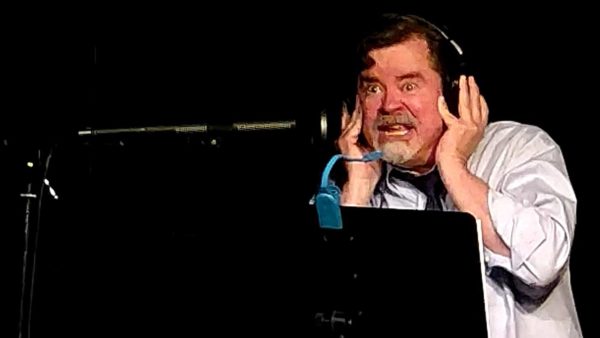
Dale Leopold plays Roger B. Heard, a veteran voiceover actor with a great talent but, unfortunately, a small bank account. The rent is due, and he has several projects to record, but his studio time has been limited. It seems a musician by the name of Dirty Metal Lefty has reserved all but 45 minutes of the available studio time. With the help of the studio operator Betty Robb, delightfully played by Emily Turner, Roger churns out one assignment after another. A perfectionist, he doesn’t have time for mistakes or retakes. Wouldn’t you know, a picky client calls in and wants him to redo a single line in a previously recorded ad – over and over and over. In a flash of brilliance, Betty Robb suggests playing back the original version. Problem solved! Betty Robb keeps things moving with her snappy comebacks and no-nonsense demeanor, adding moments of humor and balance to Roger’s feverish personality.

Roger and Betty Robb (she is always referred to by her full name) embark on an impossibly tight schedule, hoping to complete an ambitious roster of voice overs in 45 minutes: a morning motivation; Tales of Fantastica, in which Roger voices six characters and a narrator; a chair sales pitch; a multi-lingual bait shop phone menu, in which one of the languages was a pseudo hillbilly dialect; a congressional campaign ad that seemed guaranteed not to get the candidate elected; the reading of a chapter of a celebrity memoire; a monster bass fishing tournament; TV dubs for an action movie; the voices and sound effects for a game called Dojo Crusader; and a tribute to a religious leader performed in English and Swahili. Listening to Leopold transition from voice to voice, character to character is both amusing and anxiety inducing. We know he’s on a deadline, and Betty Robb keeps us aware of the time.

The only other character is Dirty Metal Lefty, aka Doc Thomas, a musician and songwriter who fills the pre-show space and a final scene with Roger B.  Dirty Metal Lefty is billed as a Richmond musician, so that leaves unanswered the question of her British accent. And I guess I was the only one who was a little slow and didn’t realize that Dirty Metal Lefty played a left-handed guitar until she asked that Roger be given a right-handed one to join her in a song.

There is even some audience participation. For instance, I found myself assigned as a last-minute “intern” assigned to play the tambourine for Dirty Metal Lefty, and a couple sitting behind me had been assigned to participate in a call and response. Due to the threat of severe weather, there were only about 10-12 people in Saturday’s audience, and the Sunday performance was cancelled, but there are two more opportunities to see this show on January 18 and 19 at 8:00 PM.

This is one of the quirkiest shows ever, it runs under an hour with no intermission and the only pretense at a plot is Roger’s deadline. And, if he’s so good, why is he so broke?


Julinda D. Lewis is a dancer, teacher, and writer who was born in Brooklyn, NY and now lives in Eastern Henrico County.

———-

Photo Credits: photos uncredited at the time of publication

hattheatre

hattheatre2
Dale Leopold
hattheatre3
Dirty Metal Lefty (Doc Thomas), Dale Leopold, and Emmy Turner

THE LEGEND OF THE POINSETTIA: 18 Years Strong

THE LATIN BALLET OF VIRGINIA: LEGEND OF THE POINSETTIA 2019

A Dance Review and Related Thoughts by Julinda D. Lewis

At: The Cultural Arts Center at Glen Allen, 2880 Mountain Road, Glen Allen, VA, 23192

Performance Were: January 10-13, 2019

Ticket Prices Were: $10 – $20

Info: (804) 356- 3876 or http://www.latinballet.com

This won’t be the first time I’ve said that The Latin Ballet of Virginia’s annual production of The Legend of the Poinsettia has become, for many, a new or alternative holiday tradition. But this year I had the pleasure of introducing the production to ten people, children and adults, who had never before seen it. Everyone I had a chance to speak to during intermission or after the show was enthralled by the variety and range of the dancing, the colorful costumes, and the energy of the music and dancing. One mother said she had a hard time following the story, which is told in Spanish and English, mostly Spanish, but I suggested she read her program later – it explains pretty much everything, much like the synopsis of an opera.

This year the fickle Richmond winter weather caused some concern, with a wintry mix of snow, sleet, and rain predicted around the time of the two Saturday performances and the Sunday matinee. The company generously offered to allow people who had made reservations for Sunday afternoon to exchange their tickets for one of the two Saturday performances. The Saturday matinee seemed to be a full house, and snow flurries were swirling around the parking lot of the Cultural Arts Center at Glen Allen as we made our way out after the show and the cast prepared for the evening show.  As of this writing, the weather seemed to be kind enough to allow the Sunday matinee to go on as planned.

The Legend of the Poinsettia tells the story of Little Maria (with Rebeca Dora Barragán and Emery Velasquez alternating in the role), who, after the sudden death of her mother, with whom she was weaving a colorful blanket, finds herself in need of a gift to present to the Baby Jesus on Epiphany Day. January 6 is Three King’s Day or Dia de los Tres Reyes Magos, which celebrates the 12th day of Christmas and the legend of the three Wise Men bringing gifts to the Christ Child. So, for those who did not take down their Christmas trees on January 1, just say you were waiting to celebrate Epiphany! It is also the story of “the true spirit of giving,” as well as a cultural history of how the poinsettia came to be a symbol of Christmas.

The Legend of the Poinsettia is a family-friendly, multi-cultural, multi-generational festival featuring the dances, music, and costumes of Mexico (the origin of the legend and of the poinsettia plant, with Micas de Aguinalda or Christmas Masses and nine days of posadas leading up to Christmas, with reenactments of the pilgrimage of Mary and Joseph), Colombia (King’s birthplace, which also celebrates the nine nights before Christmas with las novenas including songs, prayers, and nativity scenes), Venezuela (the home of the gaitas or festive songs that blend the Spanish and African cultures), the Dominican Republic (home of the bachata, a mixture of Cuban bolero and son), Puerto Rico (home of the Christmas parrandas or musical festivities) and Spain (home of flamenco and the Christmas novenas). A blend of solemn candle lighting and prayers with festive singing and dancing is the common thread that ties together the many cultures and traditions, concluding with the miracle of the poinsettia plant, represented by dancers in red and green.

This year’s cast included new and familiar faces. Young Marisol Betancourt Sotolongo has appeared in all eighteen productions. Antonio Hidalgo Paz, of Spain, and artistic director of Flamenco Vivo, has become a staple figure, partnering King in a flamenco duet and taking on the role of Papa. Frances Wessells, Professor Emerita of VCUDance appeared in her recurring role as Abuelita/the grandmother. She was greeted with cheers of “go Frances, go Frances,” in deference to her still performing at the age of 99! One of my students was most impressed by the energy or “hype” of the men: Roberto Whitaker, Jay Williams, Glen Lewis, Nicolás Guillen Betancourt Sotolongo, and DeShon Rollins.

There are daytime school productions and a weekend of family shows, but if you missed them all, keep your eyes open for next year’s production. It’s a must see.


Julinda D. Lewis is a dancer, teacher, and writer who was born in Brooklyn, NY and now lives in Eastern Henrico County.

—–

Photo Credits: Photos from Latin Ballet Facebook page.

TALK RADIO: Late Night With Barry Champlain

TALK RADIO: When They Go Low, Barry Goes in For the Kill

A Theater Review by Julinda D. Lewis


5th Wall Theatre

At: TheatreLAB The Basement, 300 E. Broad St. RVA 23219

Performances: January 10-26, 2019

Ticket Prices: $32 General Admission; $20 Students; $20 RVATA Cardholders; $10 ARGS Students

Info: (804) 359-2003 or https://www.brownpapertickets.com/event/3921247

Barry Champlain (Scott Wichmann) is a talk radio host, a provocative shock jock of a nightly show. He is quick to mock his callers and even quicker to cut them off mid-sentence when they begin to bore him. Barry is caustic and cruel; he drinks too much, smokes too much, and washes down his drugs with liquor. He is brilliant but unlikeable, and he is mesmerizing. He brings in ratings.

Talk Radio was written in 1987 by Eric Bogosian who originally played the starring role. Based on an original idea by Tad Savinar and created by Bogosian and Savinar, the play is loosely based on the story of real-life talk radio host Alan Berg who was gunned down in his Denver, Colorado driveway in 1984. There is one brief hint of this bit of history when a mysterious package is delivered to Barry at his Cleveland, Ohio studio at WTLK Radio.

Director Morrie Piersol deftly manages to avoid making Talk Radio feel dated, most of the time. It’s both frightening and illuminating to find that the concerns of late night callers have not changed much in thirty years. It’s also hard to imagine anyone other than Wichmann playing this role with its multiple and often overlapping layers of darkness, humor, edginess, and impending doom.

There is an onstage support team surrounding Barry that is supposed to keep him from running off the track. There’s his Executive Producer, Dan Woodruff (Chandler Hubbard) who brings the news that Barry’s show is about to be nationally syndicated. Stu Noonan (PJ Freebourn) is Barry’s operator who screens and feeds his callers; Spike (Jimmy Mello) is the long-suffering and mostly silent sound engineer; Linda Macarthur (Haliya Roberts) is the Assistant Producer and Barry’s sometimes girlfriend.

In brief monologues, Woodruff, Freebourn, and Roberts share background and insight into Barry. This makes him more human, but no less caustic. When told that the show is going to be nationally syndicated, he deliberately says outrageous things about the sponsors. The most interesting interactions are between Barry and his unseen callers, voiced by Darrelle Brown, George Dippold, Chandler Hubbard, Gina McKenzie, John Mincks, and Paige Reisenfeld.

There are the sad people like the panda lady and the guy who eats dinner with his cat. There’s a sixteen year old girl left pregnant by her apparently much older boyfriend, and the lady who wants to know why there aren’t any new episodes of I Love Lucy. And then there are the right wingers, the anti-Semites, the racists, and the crazies, like Chet who calls back after sending that threatening package to Barry at the studio. For most of them, Barry calls their bluff, mocks them, leads them on, gains their trust, then cuts them off. But then there’s Kent (John Mincks), the kid who parties while his parents are away. He calls in with a scary story about his girlfriend overdosing, and against all advice and common sense, Barry calls him a liar. Of course, he was right, and the next thing you know Kent shows up at the station and joins Barry at his desk for some live on-air repartee that gets quite wild and out of control. Dan says he’s in control of this train, but one wonders. Barry seems headed for an on-air breakdown, but the more outrageous he becomes, the more the listeners like it!

Darrell Brown also plays the brief opening role of financial talk show host Sidney Greenberg with George Dippold as his operator Bernie. Gina Maria McKenzie is Dr. Susan Fleming, a psychologist, who share the closing scene with her assistant, Rachel (Paige Reisenfeld). They all do multiple duty as the invisible callers, using a variety of dialects and accents.

TJ Spencer designed and constructed the authentic-looking set. Roger Price did a great job as sound designer and sound technician. I don’t know, but since this was done in the style of an on-air radio show, it seems that a bit more was involved than in most productions, and it all worked seamlessly. Erin Barclay designed the lighting, which did not require any special effects, and Sheila Russ designed the costumes.

Talk Radio is an intense and disturbing show that often pulled me to the edge of my seat. It covers a lot of ground, from people to politics. It’s harsh and raw and surprisingly still relevant – perhaps even more so in today’s political climate. Oh, and there is a full page advertisement near the back of the program that reads, “Radio’s dead. Start a Podcast!” Hmm.


Julinda D. Lewis is a dancer, teacher, and writer who was born in Brooklyn, NY and now lives in Eastern Henrico County.

———-

Photo Credits: Tom Topinka

064 talk radio dr [pc-tom topinka] 01-09-19
Scott Wichmann and John Mincks
037 talk radio dr [pc-tom topinka] 01-09-19
Scott Wichmann
021 talk radio dr [pc-tom topinka] 01-09-19
Rear: PJ Freebourn, Chandler Hubbard, Haliya Roberts, and Jimmy Mello. Front: Scott Wichmann.
010 talk radio dr [pc-tom topinka] 01-09-19
Darrelle Brown