
THE COMPLETE WORKS OF WILLIAM SHAKESPEARE

(abridged)

A Theater Review by Julinda D. Lewis

Presented by: Richmond Shakespeare

At: Libby S. Gottwald Playhouse, 600 E. Grace St., RVA 23219

Performances:

Ticket Prices: $22-$47 [Adults $47; Seniors 65+ with ID $42; Military with ID $27; College Students with ID & Children $22] Seating is General Admission.

Info: (804) 340-0115 or http://www.richmondshakespeare.org

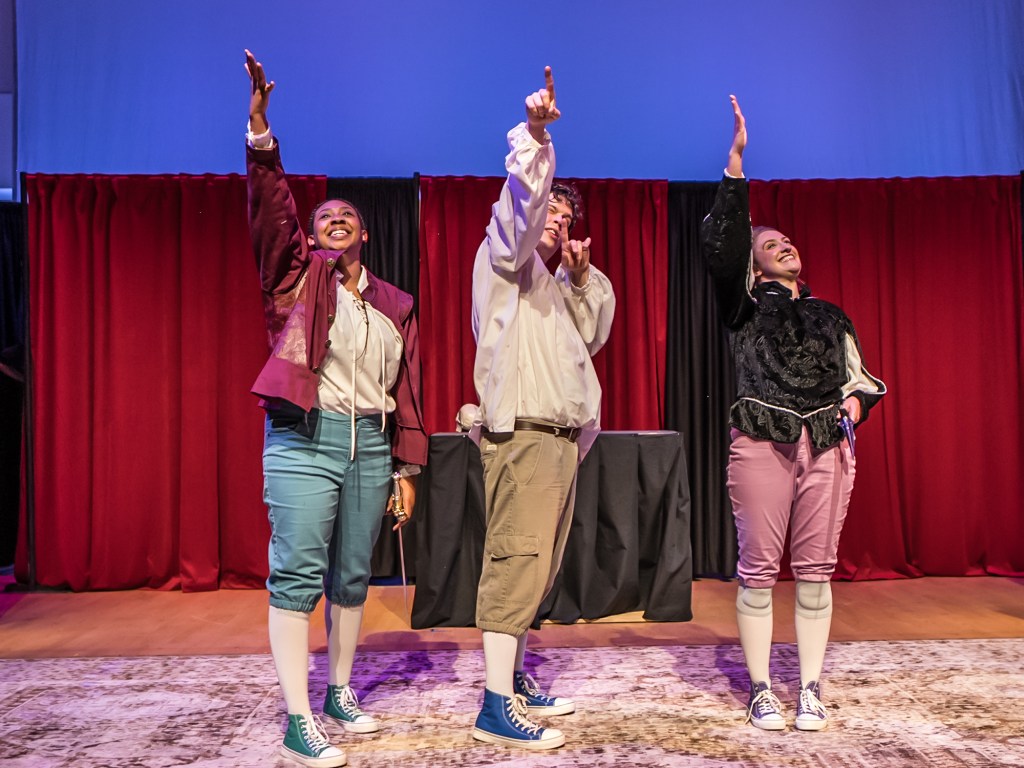
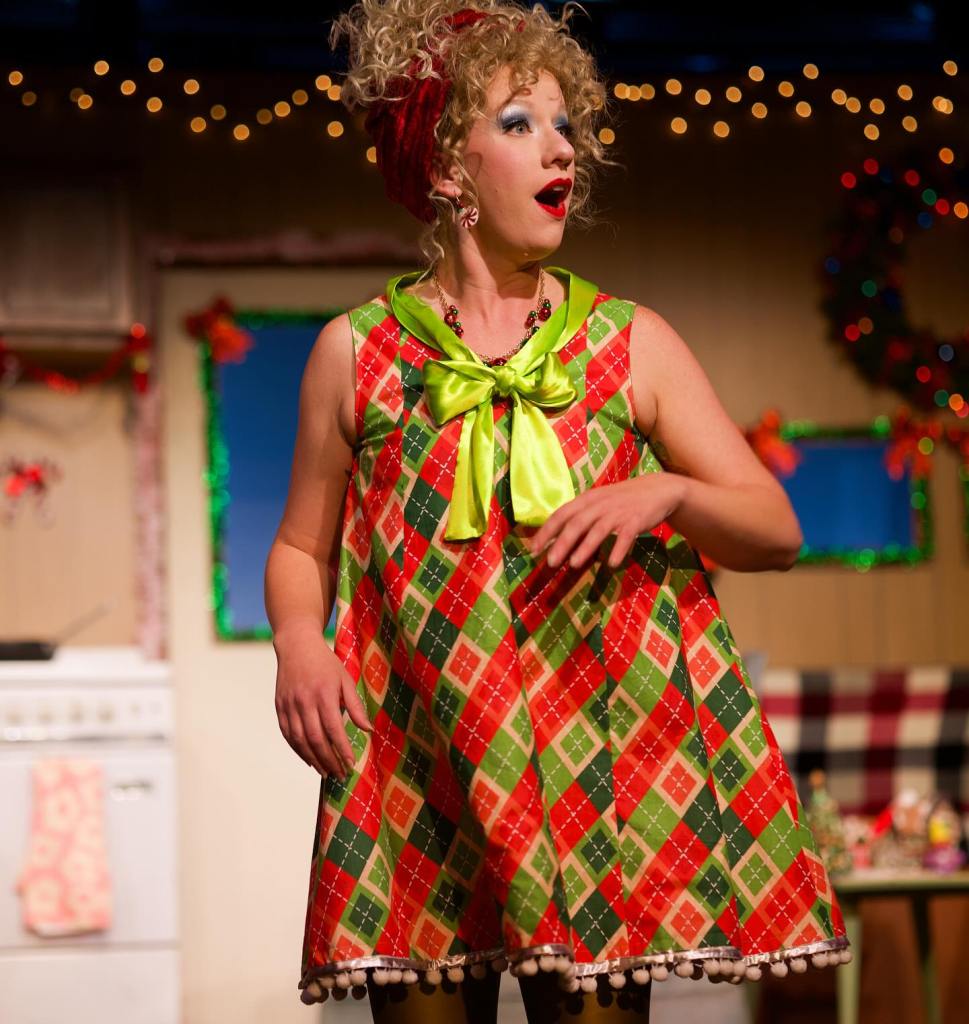
There’s not much that needs to be said about The Complete Works of William Shakespeare (abridged). The title tells (most of) it all. William Shakespeare is considered (one of) the most famous writers of all time. And in his time, he wrote 37 plays, 154 sonnets, 2 long narrative poems, and a number of other works. The task of The Complete Works of William Shakespeare (abridged) is to perform ALL 37 of Shakespeare’s play in 97 minutes.  Of course, this is impossible. What we get is a side-splitting comedic take on Shakespeare that includes scenes, passages, or catch phrases from every play, along with a more extensive treatment of Romeo and Juliet at the top of the show and Hamlet at the end.

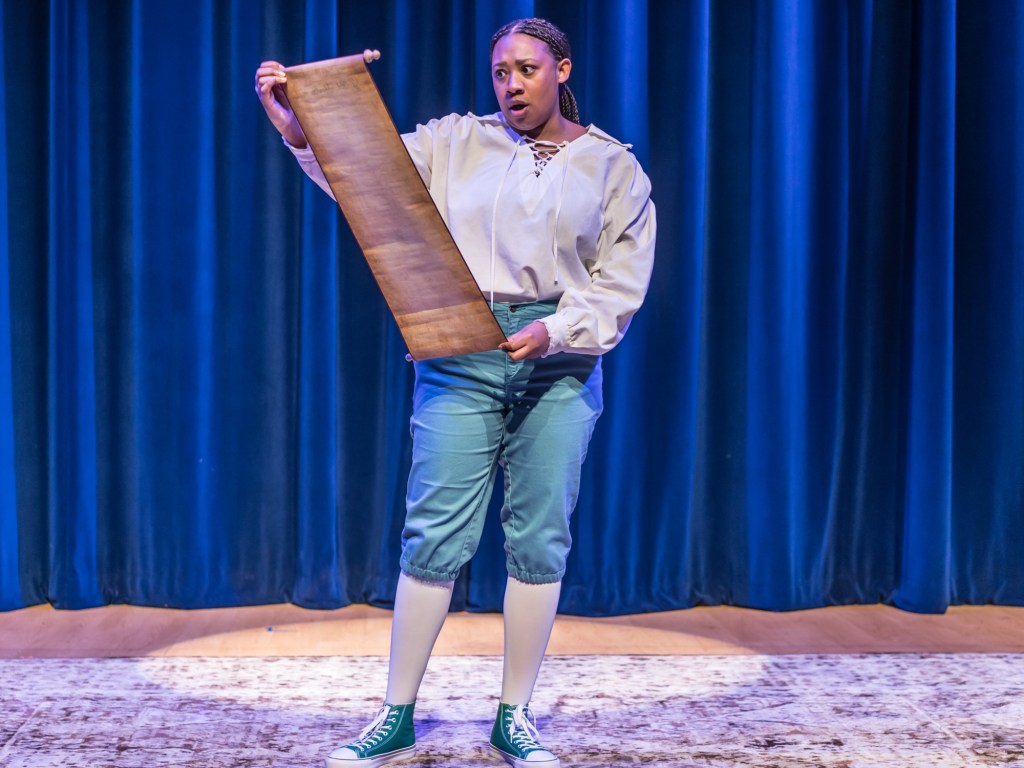
Sydnee S. Graves, one of the trio of thespians in this production, sets the pace with her well-timed introduction by unrolling a long scroll that contains the notes for her “brief” introduction. Graves invites us, in elaborate and flowery terms, to share space in the theater – the place where the magic happens.

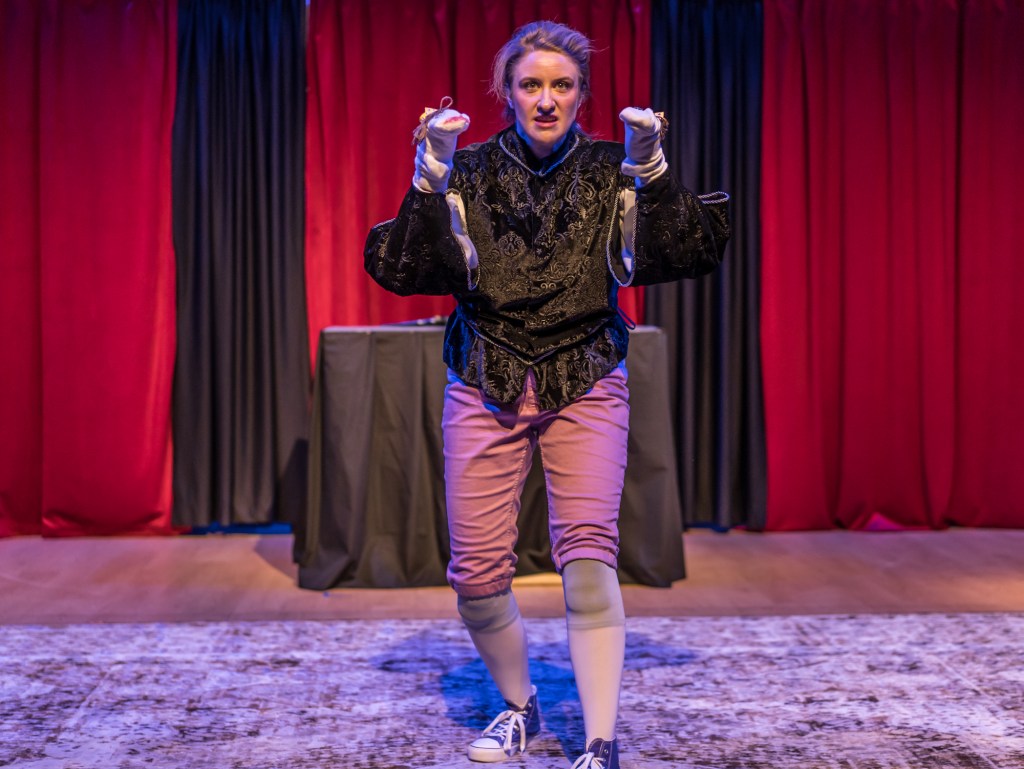
Rachel Marrs is introduced by Graves as a pre-eminent Shakespearean scholar, and Marrs arrives in a black academic gown that does little to conceal her lack of scholarship – all in good fun, of course!

Joshua Mullins completes the pre-show banter with a ChatGPT – generated biography of Shakespeare that conflates the words and deeds of Shakespeare with America’s  16th president – Abraham Lincoln. (This is clearly propaganda designed to convince the audience that reading is fundamental.

Highlights of the show include the rendering of Shakespeare’s first tragedy, Titus Andronicus, as a cooking show, and Othello summarized as a performance by a rap trio. All 14 comedies are rolled into a single medley, Macbeth is performed by two of the actors in kilts, their swords replaced by golf clubs, while Two Noble Kinsman, a play authored jointly by Shakespeare and John Fletcher, (and here characterized as neither a comedy or a tragedy, but a “bad” play) offers Mullins an opportunity to shill T-Mobile Kinsman cell phone service.

Shakespeare’s histories are grouped together and played as a football game. All 154 sonnets have supposedly been printed on a single 3×5 index card that proves impossible for even a young audience member with strong eyes to read – even after Marrs offers her a series of magnifying glasses. But there are two scenes that stood out for me. The first is the abridged Othello performed as a lively rap performance and the second occurred when in the midst of an argument about not wanting to perform Hamlet, Mullins, who has been acting the fool all night, surprises audience and fellow cast members alike by delivering Hamlet’s soliloquy with heartfelt sincerity.

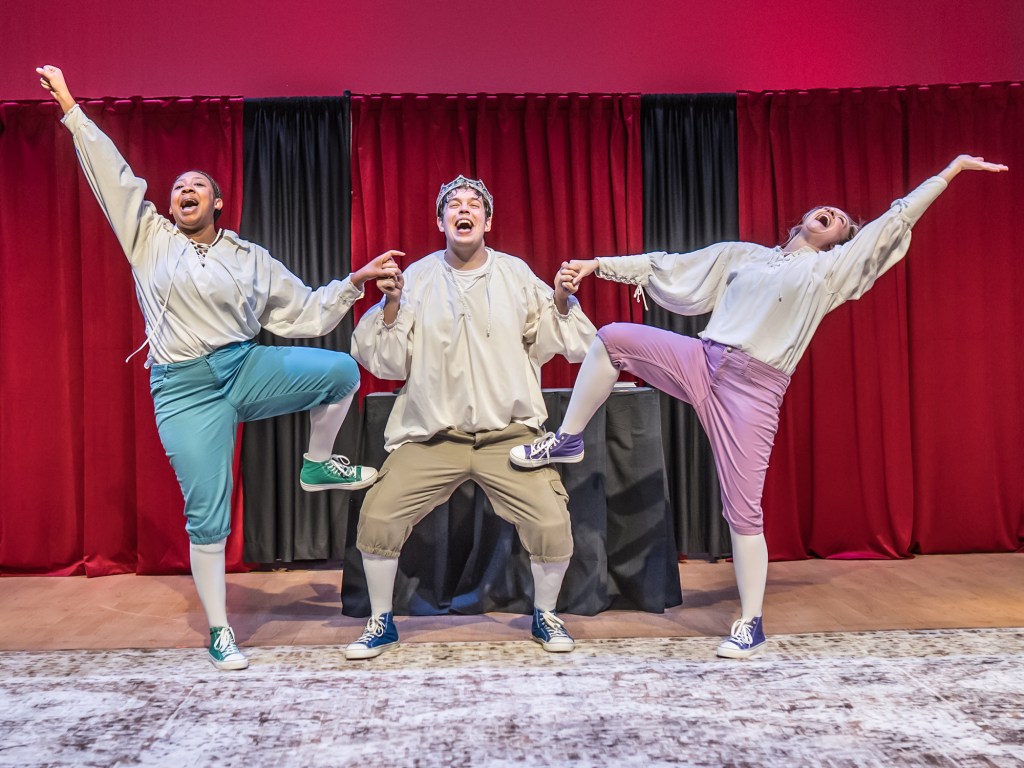
Dressed in a foundation of short pants, long-sleeved peasant-style shirts, and colorful high-top chucks, the tripartite ensemble moves at breakneck speed, adding and subtracting garments, wigs, and props for each play or scene. Shakespeare wrote plenty of racy dialogue and the salacious plot elements and double entendre are emphasized. There are many references to buns and sausages, and Horatio is misnomered as Fellatio, to name just two and, lest I forget, there is high level and intricate audience participation – with multiple parts! Mullins takes an unnatural level of juvenile-level glee in a long-running bit about vomiting, and he runs across the width of the audience, even up the stairs, to pretend to spew vomitus on audience members or in their drinks.

Graves, Marrs, and Mullins have quite different assignments, with Graves seeming to take on the bulk of the organizing and public interaction, such as announcements. Marrs is in charge of history and props. Mullins is, well, Mullins – a master of quick change and pratfalls. The three of them together form a solid ensemble knit together under a banner of riotous comedy, and often very physical humor. They must be exhausted at the end – after performing multiple versions of Hamlet. Speaking of the end, in his end notes for this production, Director Joe Pabst writes, “Comedy is one thing I know a lot about,” and “I love figuring out what makes people laugh.” To that end, I say to Pabst, “No lies detected,” and “You understood the assignment.”

—–

Julinda D. Lewis is a dancer, teacher, and writer who was born in Brooklyn, NY and now lives in Eastern Henrico County. When not writing about theater, she teaches dance history at VCU and low impact dance fitness classes to seasoned movers like herself and occasionally performs.

—–

The Complete Works of William Shakespeare (abridged)

Written by Adam Long, Daniel Singer, Jess Winfield

with new revisions by Daniel Singer and Jess Winfield

Directed by Joe Pabst

CAST

Sydnee S. Graves

Rachel Marrs

Joshua Mullins

PRODUCTION TEAM

Costume Design      ……………    Anna Bialkowski

Lighting Design       ……………    Trisan Ketcham

Scenic Design          ……………    James Ricks

Production State Manager ……   Jordan Dively

Run Time: 97 minutes; there is one intermission

———-

The Complete Works of William Shakespeare

– Comedies –

All’s Well That Ends Well

As You Like It

The Comedy of Errors

Love’s Labour’s Lost

Measure for Measure

The Merchant of Venice

The Merry Wives of Windsor

A Midsummer Night’s Dream

Much Ado About Nothing

The Taming of the Shrew

The Tempest

Twelfth Night

The Two Gentlemen of Verona

The Winter’s Tale

– Tragedies –

Antony and Cleopatra

Coriolanus

Cymbeline

Hamlet

Julius Caesar

King Lear

Macbeth

Othello

Romeo and Juliet

Timon of Athens

Titus Andronicus

Troilus and Cressida

– Histories –

Henry IV, Part I

Henry IV, Part II

Henry V

Henry VI, Part I

Henry VI, Part II

Henry VI, Part III

Henry VIII

King John

Pericles

Richard II

Richard III

The Complete Works of William Shakespeare (abridged) premiered at the Edinburgh Festival Fringe in 1987.

Photo Credits: Richmond Shakespeare Facebook page
One-Time
Monthly
Yearly

Make a one-time, monthly, or annual donation to show how much you love rvart review.

Make a monthly donation

Make a yearly donation

Choose an amount

$5.00
$15.00
$100.00
$5.00
$15.00
$100.00
$5.00
$15.00
$100.00

Or enter a custom amount

$

Your contribution is appreciated.

Your contribution is appreciated.

Your contribution is appreciated.

DonateDonate monthlyDonate yearly

DETROIT ‘67

Everybody Needs Love

A Reflection on a Theater Experience by Julinda D. Lewis

Presented By: The Firehouse Theatre on the Carol Piersol Stage

At: 1609 W. Broad Street, RVA 23220

Performances: March 12-30, 2025

Ticket Prices: $5.00 – $35

Info: (804) 355-2001 or firehousetheatre.org

The 12th Street Riot or Detroit Uprising in the summer of 1967 has been characterized as one of the bloodiest urban riots in the US. The police raid of an after-hours joint (i.e., an unlicensed bar) erupted into bloody confrontations between Detroit’s Black population and the Detroit Police Department. The 82nd Airborne Division, 101st Airborne Division, Michigan Army National Guard, and Michigan State Police were all called into action by Michigan’s Governor George W.  Romney and President Lyndon B. Johnson. By the time it was all over, there were 43 dead, 1,189 injured, 7,200 arrested, 400 buildings burnt or destroyed.

This incident was widely covered in the news, but even though I was alive at the time I don’t remember anything about it. I was 12 years old and living 600 miles away in Brooklyn, NY. But this show’s Director, Dr. Tawnya Pettiford-Wates, Professor of Acting and Directing Pedagogy at Virginia Commonwealth University, who was also a child at the time, was visiting with her family in Detroit when the rioting began. This gives Dr. T. a unique perspective on the history and background of the actions of this play.

NOTE: See Rich Griset’s preview in Style Weekly for interesting background information: https://www.styleweekly.com/we-almost-lost-detroit/

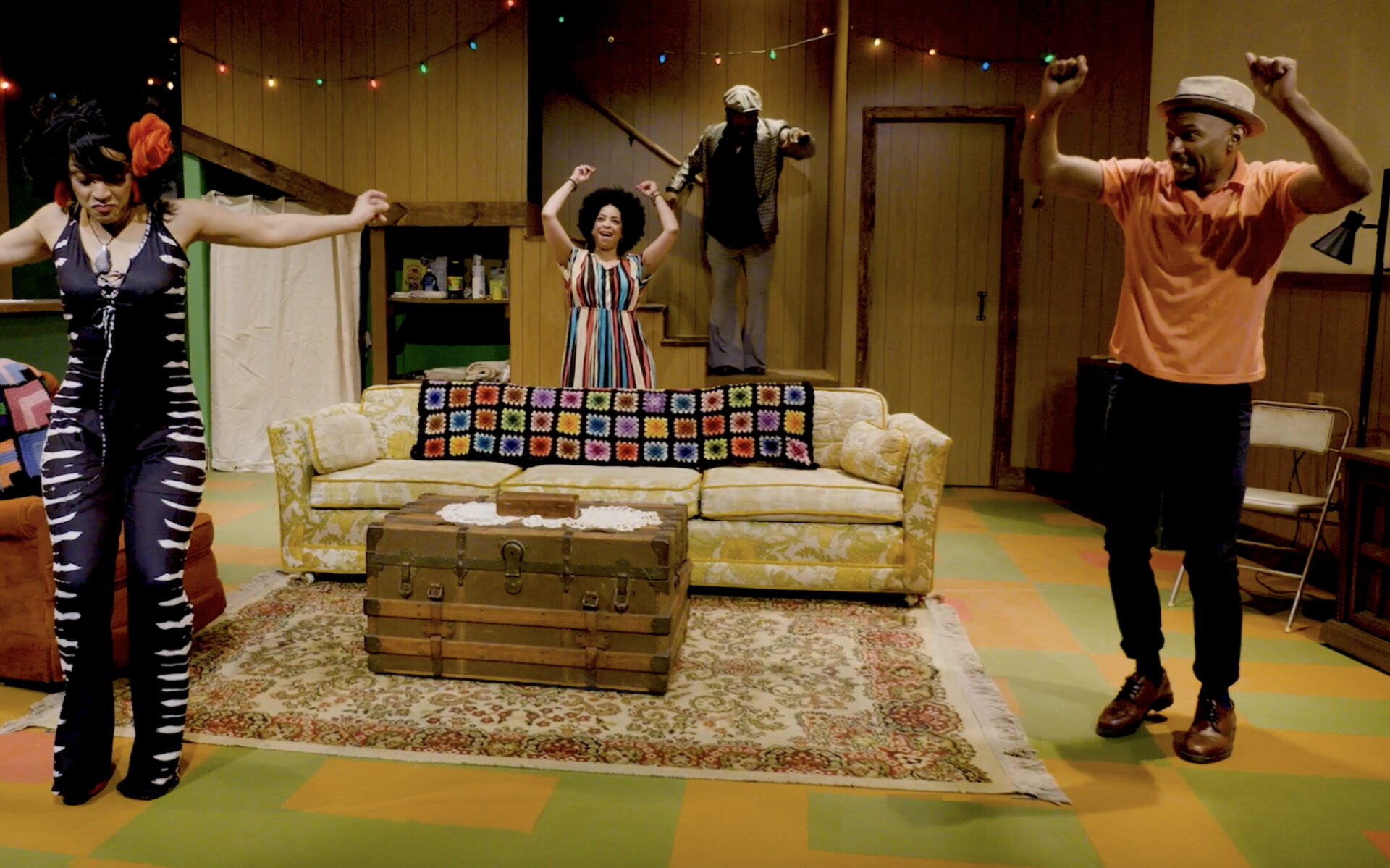
Many of us who were born in or grew up in urban Black communities in the 1950s and 1960s also felt a sense of familiarity with Detroit ’67 as soon as we walked into the Firehouse Theatre and saw the stage set – a basement recreation room meticulously designed down to the most minute detail by Mecedes Shaum. There was the familiar wood paneling, the tiled floor, the comfy sofa that had been given a second life from the upstairs living room, the bar, the beaded curtains, the family photos lining the stairs, the folding card table and chairs for playing spades or pinocle, the obligatory photos and posters of Malcolm X and other heroes. There was the washing machine – but no dryer because clothes were hung outside on sunny days or dried on a line stretched across the basement on rainy days. And anchoring all of this – the record player, which was replaced by the hi-fi, and then, as it was on this stage, by the latest technology – the 8-track player.

The first two things to catch your attention on entering the space are the set and the music. Which you notice first is probably determined by if you are predominantly an auditory or visual learner. I’m a visual-kinesthetic learner, so the set caught my eye, and the Motown soundscape caressed my ears and moved my body simultaneously. The Temptations, Smokey Robinson and the Miracles, Mary Wells, the Four Tops, Gladys Knight and the Pips and more provided the heartbeat of Detroit ’67 and took centerstage as the main characters, siblings Chelle (short for Michelle) and Lank (short for Langston) – played by Firehouse Associate Artistic Director Katrinah Carol Lewis and actor David Lyve Watkins – prepared to open their basement hideaway as an after-hours joint. I was familiar with rent parties growing up in New York, but apparently these after-hours party venues were how Black entrepreneurs or families in need of a little extra cash made their money.

As Detroit ’67 opens, Chelle and Lank are making plans, having inherited their parents’ house and some money as well. Chelle is looking forward to using her share to pay her son’s tuition. We never see the young man as he’s away at school attending Tuskegee University in Alabama – and yes, it’s summertime, but he’s staying to work, and apparently there is a young lady involved as well. The problem – or one of the problems – arises when Chelle’s plans and her brother’s plans conflict. Reminding me of a similar conflict in Lorraine Hansberry’s A Raisin in the Sun, Lank wants to use their inheritance to invest in a business. A local bar is up for sale, as a result of the phenomenon known as “white flight” and Lank’s best friend, Sly (played by Jeremy V. Morris) is a local entrepreneur (okay, he’s the local numbers runner, used car salesman, and general hustler) already has half the money needed to purchase the bar and the required license.

“Niggas deserve nice stuff, too!”

Did I say, “one of the problems?” Well, yes. The first was the riots, remember? The second was how to use the inheritance. And the third involves a mysterious stranger named Caroline. Lank and Sly find Caroline stumbling alongside the road late one night. Stopping to see if she needs help, they offer her a ride in their truck, but she passes out. So, they bring her home to Lank’s house. But, you see, Lank and Sly are two Black men, and Caroline is white. And it’s 1967 and a race riot has just broken out. This is bad, unbelievably bad. And it gets worse.

The mystery of who Caroline is and what happened to her remains unresolved at the end of Act 1. It’s only after Chelle has to bail Lank out of jail that Caroline buys a train ticket and finally reveals what happened the night Lank and Sly found her – and no, I’m not going to tell you here, you will find out when you go see the show.

Detroit ’67 is warm, funny, and terrifying. It has all the “feels” as playwright Dominique Morisseau (Pipeline, November Theatre, Oct-Nov, 2021 https://jdldancesrva.com/2021/10/16/pipeline/ and Sunset Baby by Blk Virginia Theatre Alliance coming to VaRep’s Theatre Gym in April 2025) explores themes of family dynamics, dreams of black folks, racial tension, racial profiling, police brutality, financial and social inequality, and even love and joy.

Chelle is a strong-willed woman who resists change, but she is loving and has a fierce loyalty to her younger brother and her son. Lank is ambitious but impulsive; some would call him a dreamer, others a visionary. Lank’s best friend Sylvester aka Sly has a business mind balanced by a compassionate spirit. Chelle’s friend Bunny is also an entrepreneur, but she hides her brains under an endless wardrobe of close-fitting jumpsuits and a huge flower in her hair. And the mysterious Caroline wears the shortest of mini-dresses accessorized with tall white go-go boots. (If you are not familiar with this style, now is a good time to search for an image.) Kudos to Costume Designer Margarette Joyner for the 1960s wardrobe. Each character’s wardrobe perfectly reflects their personality, from the flashiness of Bunny and Sly to the conservative maxi-dresses and Angela Davis-style afro favored by Chelle to the subdued casual attire that distinguishes Lank.

Dr. T’s direction lends itself to multi-dimensional portrayal of all five characters. I have long been familiar with the work of Lewis and Morris and Dr. T. I have seen all three of them perform in and/or direct powerful works that tell important stories.  This is a production that does not disappoint, This is a well-chosen ensemble that, even on the fourth performance (two nights of previews, and one night after opening night) seems to have achieved that place where they are moving as one. We see them laugh and dance and drink, but we also see them cry and fight for their beliefs, for their heritage, their freedom, their dignity, and for love. A favorite scene is when Sly woos Chelle, spilling his heart in song, and after much protest, Chelle finally gives Sly a sliver of hope that she might just care for him, too. They laugh, they argue, and in a little more than two hours we get to know these people, to recognize them as family, as friends, as people we have encountered, as people we care about.

Now if you feel that you can’t go on
Because all of your hope is gone
And your life is filled with much confusion
Until happiness is just an illusion
And your world around is crumblin’ down
Darling, reach out, come on girl, reach on out for me
Reach out, reach out for me
I’ll be there, with a love that will shelter you
I’ll be there, with a love that will see you through

(“Reach Out, I’ll Be There” by the Four Tops, 1966)

During the recent Super Bowl, Pulitzer Prize winning artist Kendrick Lamar borrowed the words of an earlier poet, Gil Scott Heron, to remind us that “the revolution will not be televised.” What Lamar and Morisseau both reveal to us is that the revolution will be accompanied by a sound. In a brief conversation after Saturday night’s program, Dr. T. mentioned the resistance in the music. There is resistance and resiliency in the rhythms of Motown, the rhythms of the African diaspora, in the context of history and the rhythms of the spoken word, and in the cadence of storytelling enveloped in the lyrics and its connection to family and community. Just before leaving the theater, my friend Tony asked me, how many synonyms are there for “excellent?” I don’t have an answer for that, but maybe you do. Let me know, comment here, after you see this show. I’ll be waiting.

—–

Julinda D. Lewis is a dancer, teacher, and writer who was born in Brooklyn, NY and now lives in Eastern Henrico County. When not writing about theater, she teaches dance history at VCU and low impact dance fitness classes to seasoned movers like herself and occasionally performs.

—–

DETROIT ‘67

Written by Dominique Morisseau

Directed by Dr. Tawnya Pettiford-Wates

Cast

Chelle             ……….           Katrinah Carol Lewis

Lank                ……….           David Lyve Watkins

Bunny             ……….           Nicole Cowans

Sly                   ……….           Jeremy V. Morris

Caroline        ……….           Marie Lucas

Chelle/Bunny U/S……….   Nia Simone

Lank/Sly U/S ……….           Isaac Watson

Caroline U/S ……….           Emily Wolfteich

Production Team

Direction                               ……….           Dr. Tawnya Pettiford-Wates

Directing Observation       ……….           Solomon Marley

Scenic Design                      ……….           Mercedes Schaum

Costume Design                  ……….           Margarette Joyner

Lighting Design                   ……….           Michael Crevoisier

Sound Design                      ……….           Kyle Epps

Stage Management             ……….           Emily Vial

Run Time: About 2 ½ hours; there is 1 intermission

Tickets: $5 to $35

Info: (804) 355-2001 or FirehouseTheatre.org

Performance Schedule:

Wednesday, March 12       7:30PM          Preview

Thursday, March 13             7:30PM          Preview

Friday, March 14                 7:30PM          Opening Night

Saturday, March 15             7:30PM         

Sunday, March 16               2:00PM          Pay What You Will /Member Post-Show Mixer

Friday, March 21                  7:30PM

Saturday, March 22             2:00PM          Pay What You Will

Saturday, March 22             7:30PM         

Sunday, March 23               2:00PM          Pay What You Will

Thursday, March 27            7:30PM

Friday, March 28                  7:30PM

Saturday, March 29             2:00PM

Saturday, March 29             7:30PM

Sunday, March 30               2:00PM          Closing Performance

World Premiere at the Public Theater,  March 12, 2023.

———-

Photo Credits: No photos available at the time of publication

One-Time
Monthly
Yearly

Make a one-time, monthly, or annual donation to show how much you love rvart review

Make a monthly donation

Make a yearly donation

Choose an amount

$5.00
$15.00
$100.00
$5.00
$15.00
$100.00
$5.00
$15.00
$100.00

Or enter a custom amount

$

Your contribution is appreciated.

Your contribution is appreciated.

Your contribution is appreciated.

DonateDonate monthlyDonate yearly
SNAPSHOTS: A MUSICAL SCRAPBOOK

“Memories, like photographs, can fade, but they never really leave.”

A Theater Reflection by Julinda D. Lewis

Presented by HATTheatre

At: HATTheatre, 1124 Westbriar Dr., Richmond, VA 23238

Performances: March 14-23, 2025

Ticket Prices: $30 General Admission. $25 Seniors/Students/Military. $20 Youth up  to 17.

Info: 804-343-6364  or https://hattheatre.org

Empty nesters Sue (Debra Wagoner) and Dan (Mark Persinger) have come to a crossroads in their relationship. They have known each other since childhood, but Sue is fed up and has stolen away to the attic to reminisce, leave a note, and pack her bag. Dan uncharacteristically arrives home early from work and interrupts Sue’s plans. They end up spending the night looking through boxes of old photos, leading to a journey of discovery. This is a great relationship story for all of us. It is more than just a love story, but a story of how love starts, how it changes, how it endures, and how it affects people.

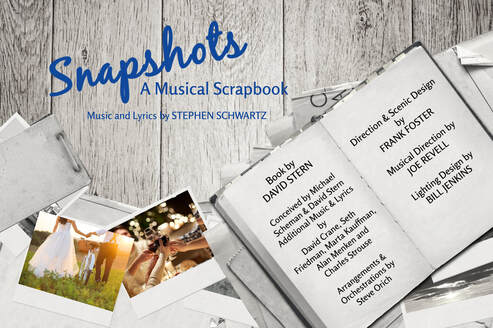
What makes this story special is that it is fueled by a playlist of songs from Stephen Schwartz’s vast repertoire of shows and steered by the dynamic artistry of Wagoner and Persinger and the four other actors who portray Sue and Dan – as well as other characters in their lives – at various stages of their lives, from elementary school to the present.

The supporting cast consists of Alanna Wilson and Joshua Smith as 11-17 year old Susan and Daniel and Shannon Schilstra and Gravins as the middle childhood Susie and Danny. They also portray a slew of other characters, including a hilarious scene where Wilson, Schilstra, and Gavins depict three of Dan’s wildly different yet uniformly vindictive ex-girlfriends.

Described as “part revue and part book musical” Snapshots is surprisingly personal and intimate. Other moments that stood out for me include Schilstra’s welcoming of the young Danny (Gravins) when he and his father move into the neighborhood; when the young Danny presents Susie with a book (A Time to Keep, Tasha Tudor’s book of holidays for ages 5-8), which she keeps throughout their years together; Sue’s dreams, expressed as a metaphor of becoming a lion tamer; Wagnor and Persinger’s “Code of Silence” duet; and the interactions the middle-aged Sue and Dan have with their younger selves, often accompanied by beautiful harmonizing.

Frank Foster’s direction infuses the production with levity and seamless pacing. The entire play takes place in the couple’s attic, suitably cluttered with an eclectic collection of memorabilia but not overdone, also designed by Foster. The Sue/Susan/Susie characters are usually identifiable by a red top in an age-appropriate style, worn over jeans. The younger versions of Dan usually wear variations of plaid shirts, also with jeans, while the mature Dan inexplicably prefers khakis.

I left this thoroughly enjoyable event with just two questions – not burning questions, but more of the “things that make you go “hmmmm” variety: a tender scene depicting the birth of Sue and Dan’s son, Matthew left me wondering why the blanket used to portray the infant was so impossibly tiny, and what we had the pleasure of seeing and hearing the music for this lovely and beautifully performed show played from up front. Musical Director Joe Revell did a magnificent job on keyboards hidden on the back where we couldn’t see him.

I’m not a singer, but I’ll close with this line from a duet by Sue and Dan, taken from Schwartz’s Reluctant Pilgrim CD: “You cannot close the acorn once the oak begins to grow.”

———-

Julinda D. Lewis is a dancer, teacher, and writer who was born in Brooklyn, NY and now lives in Eastern Henrico County. When not writing about theater, she teaches dance history at VCU and low impact dance fitness classes to seasoned movers like herself and occasionally performs.

———-

SNAPSHOTS: A Musical Scrapbook

Music and Lyrics by Stephen Schwartz

Book by David Stern

Directed by Frank Foster

Musical Direction by Joe Revell

Cast

Sue     ………………..Debra Wagoner

Dan     ………………..Mark Persinger

Susan ………………..Alanna Wilson

Daniel ………………..Joshua Louis Smith

Susie  ………………..Shannon Schilstra

Danny ………………..Joey Gravins

Creative Design Team

Music & Lyrics by Stephen Schwartz

Book by David Stern

Conceived by Michael Scheman & David Stern

Additional Music & Lyrics by David Crane, Seth Friedman, Marta Kauffman, Alan Menken, and Charles Strouse

Arrangements & Orchestration by Steve Orch

Direction & Scenic Design by Frank Foster

Musical Direction by Joe Revell

Lighting Design by Bill Jenkins

Stage Management by Ashton Lee

Costumes by Suzanne Riker

Light Board Operation: Matthew Geniesse

Sound Board Operation: Ashton Lee

Box Office/House Manager: Vickie L. Scallion

Dates

March 14-23, 2025

Ticket Information

Ticket Prices: $30 General Admission. $25 Seniors/Students/Military. $20 Youth up to 17

Info: 804-343-6364  or https://hattheatre.org

Run Time

Approximately 2 hours, 10 minutes, including one 10-minute intermission

Photo Credits: N/A

Musical Numbers

“Snapshots,” “Code of Silence,” “So Far”: from the CD Reluctant Pilgrim (1997)

“New Kid in the Neighborhood”: from Captain Louie, Music & Lyrics by Stephen Schwartz (1986, 2009)

“No Time At All,” “Extraordinary,” “Corner of the Sky,” “With You,” “Morning Glow”: from Pippin, Music & Lyrics by Stephen Schwartz (1972, 2002)

“Popular,” “I’m Not That Girl,” “Making Good”: from Wicked, Music & Lyrics by Stephen Schwartz (2003)

“All For the Best,” “All Good Gifts”: from Godspell, Music & Lyrics by Stephen Schwartz (1971, 1889, 2012)

“If We Never Meet Again”: from Rags, Music by Charles Strouse, Lyrics by Stephen Schwartz

“Nothing to Do With Love,” “Moving in With Susan (aka Moving in with Linda)”: from Personals, Music by Stephen Schwartz, Lyrics by Marta Kauffman, Seth Friedman & David Crane (1985, 1986)

“Endless Delights,” “Meadowlark,” “Chanson,” from The Baker’s Wife, Music & Lyrics by Stephen Schwartz (1977, 1990)

“How Does She Know? (aka “That’s How You Know”) from Enchanted, Music by Alan Menken, Lyrics by Stephen Schwartz (2007)

“The Spark of Creation,” “Parents’ Day” (aka “Father’s Day”), “The Hardest Part of Love,” “In Whatever Time We Have”: from Children of Eden, Music & Lyrics by Stephen Schwartz (1989, 1998, 2000)

“Fathers and Sons”: from Working, Music & Lyrics by Stephe Schwartz (1978)

“Cacophony” ©2017 by Stephen Schwartz

One-Time
Monthly
Yearly

Make a one-time, monthly, or annual donation to show your support for rvart review

Make a monthly donation

Make a yearly donation

Choose an amount. No amount is too great or too small.
We don’t ask you to subscribe, we don’t charge you to get past a firewall, and we do not receive any funding.

$5.00
$15.00
$100.00
$5.00
$15.00
$100.00
$5.00
$15.00
$100.00

Or enter a custom amount

$

Thank you!
Your contribution is appreciated.

Your contribution is appreciated.

Your contribution is appreciated.

DonateDonate monthlyDonate yearly
SANCTUARY CITY

“Speak to the children of Israel, saying: ‘Appoint for yourselves cities of refuge.’” Joshua 20:2 (NKJV)

A Theater Review by Julinda D. Lewis

Presented by 5th Wall Theatre

At: Richmond Triangle Players, Robrt B. Moss Theatre, 1300 Altamont Ave, RVA 23230

Performances: March 6 – 22, 2025

Ticket Prices: $30/Adults, $15/Students

Tickets & Info: https://5thwalltheatre.ludus.com or https://www.5thwalltheatre.org/ or email info@5thwalltheatre.org

Looking back at my October 2024 review of H*tler’s Tasters”  I noted that the opening paragraph of that review is appropriate for this one, so I’m going to use it again: The 5th Wall Theatre’s 2024/2025 season is billed as a celebration of empowering stories that inspire change. The “theatre beyond boundaries’” production of Pulitzer Prize-winning author Martyna Majok’s SANCTUARY CITY fulfills this promise on several levels.

Set in Newark, NJ in 2001, shortly after the earth-shattering events of 9/11, just across the Hudson River, SANCTUARY CITY tells the story of two teen-age friends as they navigate not only the usual trials that impede a smooth transition from teen to young adult, these two, known simply as B and G, must also contend with the extra challenges of being the children of immigrants. Oh, and not just immigrants, but immigrants who have over-stayed their visas. Let’s add to that, immigrants who have over-stayed their visas right after a major terrorist attack that damaged the Pentagon and destroyed the World Trade Center.

And while we’re at it, why not toss in domestic abuse, parental abandonment, financial stress, and sexual identity. Majok cleverly did not use names for the characters or specify their national origin, leaving that open for wider interpretation and inclusiveness depending on the cast and the locale.

Like so much of local theater in recent months, this production is heartfelt and relevant. It brings recent history into perspective into perspective, making it tangible, giving a face to “woke” and forcing us to think about how policies and legislation affects the lives of real people.

SANCTUARY CITY runs about 90 minutes with no intermission, but it does have two distinct parts. The first half or so takes place in a minimalist setting, with a simple bench set in front of a wall of windows. Dasia Gregg’s scenic design is gray and institutional, deliberately lacking in the details that suggest hominess and permanence. It looks like a bus station or a waiting room in a government building, but it serves as a variety of locations from B’s bedroom to the high school gym where B and G attend their senior prom.  For the second half, the bench is removed, and the wall of windows opens up to reveal B’s apartment – presumably, the same apartment he inherited when his mother, fearing deportation, returned to her home country, leaving B, a 17-year-old high school student, to fend for himself.

G’s mother, on the other hand, managed obtain citizenship for herself and her daughter, opening the door for G to attend college in Boston. The school, like the other details, is never named, but we know Boston is home to Harvard, MIT, and several other schools. 

G spends more time at B’s apartment than with her own mother, whose abusive boyfriends make G’s life unbearable to the point that the play opens with her banging on B’s bedroom window, coatless on a cold night, seeking refuge. For much of the first half, the two share B’s twin bed, with his mother’s permission.

The first half is a series of non-chronological scenes that create a sense of anxiety and uncertainty for the viewer. This seems to have been the playwright’s intention, but Juliana Caycedo, in her directorial debut, successfully balanced the edginess with flavorful dashes of humor.

I was excited to see that B would be played by Erich Appleby whose performance in the recent Water by the Spoonful (Firehouse Theatre) was most impressive. G is played by Anne Michelle Forbes (who was also in Water by the Spoonful) and the third character, Henry, who does not appear until well into the second half, is played by Keaton Hillman (whom I have seen mature into a seasoned actor on a variety or RVA stages).

It is fascinating to observe Appleby and Forbes navigate the delicate and difficult issues faced by two teens of immigrant parents: overstaying their visas, not having the proper documents or the financial means to become “legal,” accepting abuse at home and at work for fear that speaking up would lead to deportation. These young people, undocumented immigrants who arrived in the US as children, and whose only known home is the USA, are the people who would be labeled “Dreamers” (Development, Relief, and Education for Alien Minors Art) and for whom the Obama administration created DACA, the Deferred Action for Childhood Arrivals program in June 2012.

G and B forge a plan to help B stay and become legal. They play to get married. They practice what to say to pass their interview with the immigration authorities. And then G get accepted to a college in Boston. They live in Newark, more than 200 miles and a 5-6 hour bus ride away. But while away at school, G develops cold feet. If their plan fails, the penalty is a $250,000 fine and 5 years in prison. She doesn’t come home for holiday breaks as planned, and when she finally shows up, after 3 ½ years, their close bond has been broken, and G has become involved with Henry, a law student. Henry is first generation American-born, the son of immigrants, also from an unnamed nation.

SANCTUARY CITY is educational, informative, and addresses issues that we, as a nation, are wrestling with right now. There are no easy solutions. There are issues of border security and national security, drugs, crime, employment, social integration, social services, economic impact, language, and racism. The topic is one that either leaves you speechless and weeping or ready to take up arms and march into battle. The acting in SANCTUARY CITY is mesmerizing. It may take a bit of adjusting to get used to the disjointed, non-linear format of the first half, but the discomfort is necessary. One cannot expect to sit comfortably in one’s seat and sip one’s cocktail. This is the sort of production that goes beyond the superficial and delves deeply into characters and issues of society and social justice and economics and education and…things that matter to us. It is about something that happened between 2001 and 2006, but it is also about real people, right now. This is not light entertainment; it is art that serves a cause.

One scene that sticks with me is when B describes the time he secretly took a bus to Boston to visit G, to surprise her. He walked around the campus. He pretended to have lost his ID, and other students readily gave him access. He had lunch and sat in on classes and even participated. In one class he answered a question eloquently, because he had read the book (G shared her books with him). But then, he left without speaking to G. He saw her, but he left.

So, I leave you with this: Who is welcome at the table? Who will we allow to walk away without sharing their talents and gifts and who will we make room for? For whom are we willing to fight? Is there a B or G or Henry in your life, and if not, why not?

———-

Julinda D. Lewis is a dancer, teacher, and writer who was born in Brooklyn, NY and now lives in Eastern Henrico County. When not writing about theater, she teaches dance history at VCU and low impact dance fitness classes to seasoned movers like herself and occasionally performs.

———-

SANCTUARY CITY

Written by Martyna Majok

Directed by Juliana Caycedo

CAST

B                                  ……….           Erich Appleby

G                                 ……….           Anne Michele Forbes

Henry                         ……….           Keaton Hillman

Aidan Campbell      ……….           u/s for B

Katherine Nguyen   ……….           u/s for G

DJ Cummings-Herdoiza …..         u/s for Henry

PRODUCTION TEAM

Directed by               ……….             Juliana Caycedo

Production Stage Management        ……….            Tariq Karriem

Scenic Design by     ……….           Dasia Greff

Lighting Design by  ……….            Gretta Daughtry

Sound Design by       ……….            Kyle Epps

Costume Design by   ……….            Sassy Rychalski

Prop Master              ……….           Tariq Karriem

Technical Director   ……….           Rebecka Russo

Dialect Coach           ……….           Harrison Runion

Intimacy Coordinator         ……….           Dorothy Dee-D Miller

Photos by                  ……….           Destiny Martinez

Performance Schedule:

Thursday, March 6, 7:30PM | PREVIEW

Friday, March 7, 7:30PM | OPENING NIGHT

Saturday, March 8, 7:30PM

Sunday, March 9, 2:30PM | MATINEE with Talkback with the cast & Creative Team

Thursday, March 13, 7:30PM

Friday, March 14, 7:30PM

Saturday, March 15, 7:30PM

Sunday, March 16, 2:30PM | MATINEE

Tuesday, March 18, 7:30PM | INDUSTRY NIGHT, pay what you will

Thursday, March 20, 7:30PM | TALKBACK, Reestablish Richmond

Friday, March 21, 7:30PM

Saturday, March 22, 7:30PM | CLOSING NIGHT

Saturday, November 2, 2024, 7:30PM | Closing Night

Tickets: $30/Adult; $15/Student

Run Time: 90 minutes, no intermission

SANCTUARY CITY had its World Premiere at New York Theatre Workshop, Jim Nicola, Artistic Director, Jeremy Blocker, Managing Director, 2020. SANCTUARY CITY was developed, in part, at the 2018 Sundance Institute Theatre Lab.

One-Time
Monthly
Yearly

Make a one-time donation
to support rvart review
we are non-funded and appreciate
donations

Make a monthly donation

Make a yearly donation

Choose an amount

$5.00
$15.00
$100.00
$5.00
$15.00
$100.00
$5.00
$15.00
$100.00

Or enter a custom amount

$

Your contribution is appreciated.

Your contribution is appreciated.

Your contribution is appreciated.

DonateDonate monthlyDonate yearly
THE DIARY OF ANNE FRANK

All That Remains

At: The Swift Creek Mill Theatre, 17401 U.S. Route One, Chesterfield, VA 23834

Performances: January 25 – February 15, 2025

Ticket Prices: $44-49. Ask about discounts for students, seniors, and veterans.

Info: (804) 748-5203 or https://www.swiftcreekmill.com

A Theater Reflection by Julinda D. Lewis

Let’s be clear, this is not an easy production to see. I can only imagine how the cast manages to perform The Diary of Anne Frank day after day, night after night. It was so deeply moving that after a Wednesday matinee performance going out into the welcoming sunlight of an unseasonably warm winter day seemed surreal and a bit irreverent.

This is a script based on the diaries of Anne Frank, written when she was only 13-15 years old and she along with her family spent more than two years in hiding in Amsterdam while Hitler’s army occupied Amsterdam. Occupied seems too gentle a word. Todd A. Schall Vess has designed a simple but layered set that appropriately captures the era. While the quarters may be camped for seven people, the set appeared more spacious than the scene I imagined in my mind’s eye.

The need for quiet

The lack of privacy

The terror of footsteps

The updated script, Producing Artistic Director informed us during his pre-show curtain talk, contains material that was not available for the original production. This is Swift Creek Mill’s fifth production of The Diary of Anne Frank but my first experience with the play.

Kudos to Director Debra Clinton and this phenomenal cast for having the courage to take us on this journey at this point in time. The Mill chose this production more than a year ago, when they could not have known how relevant it would be in January 2025.

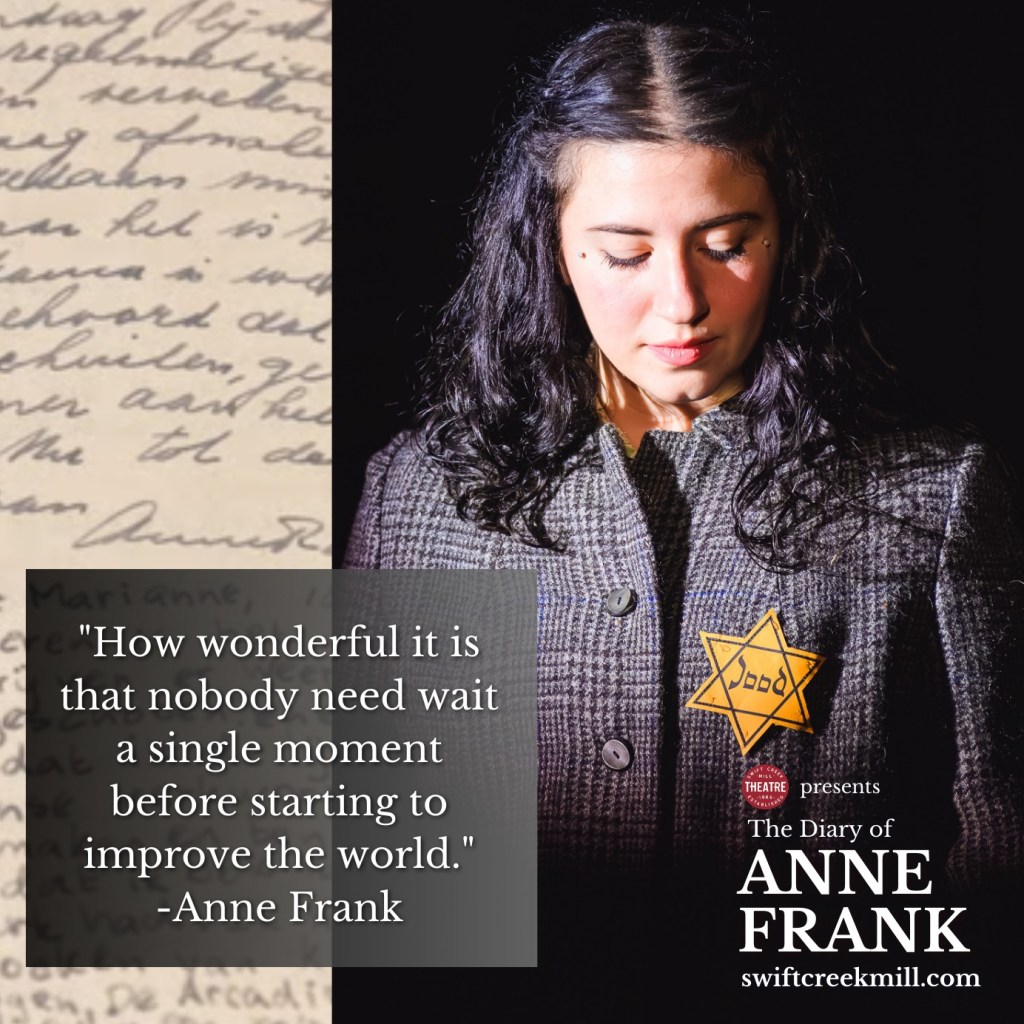
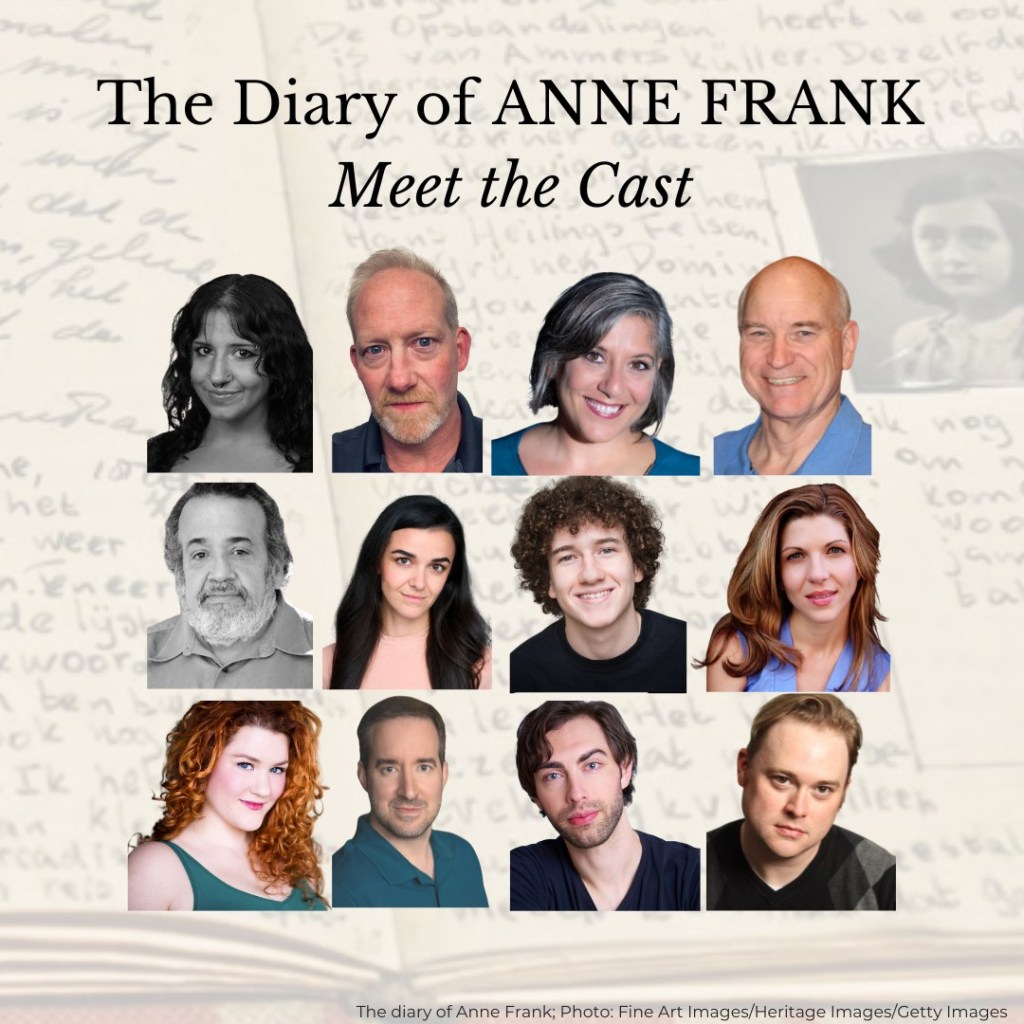
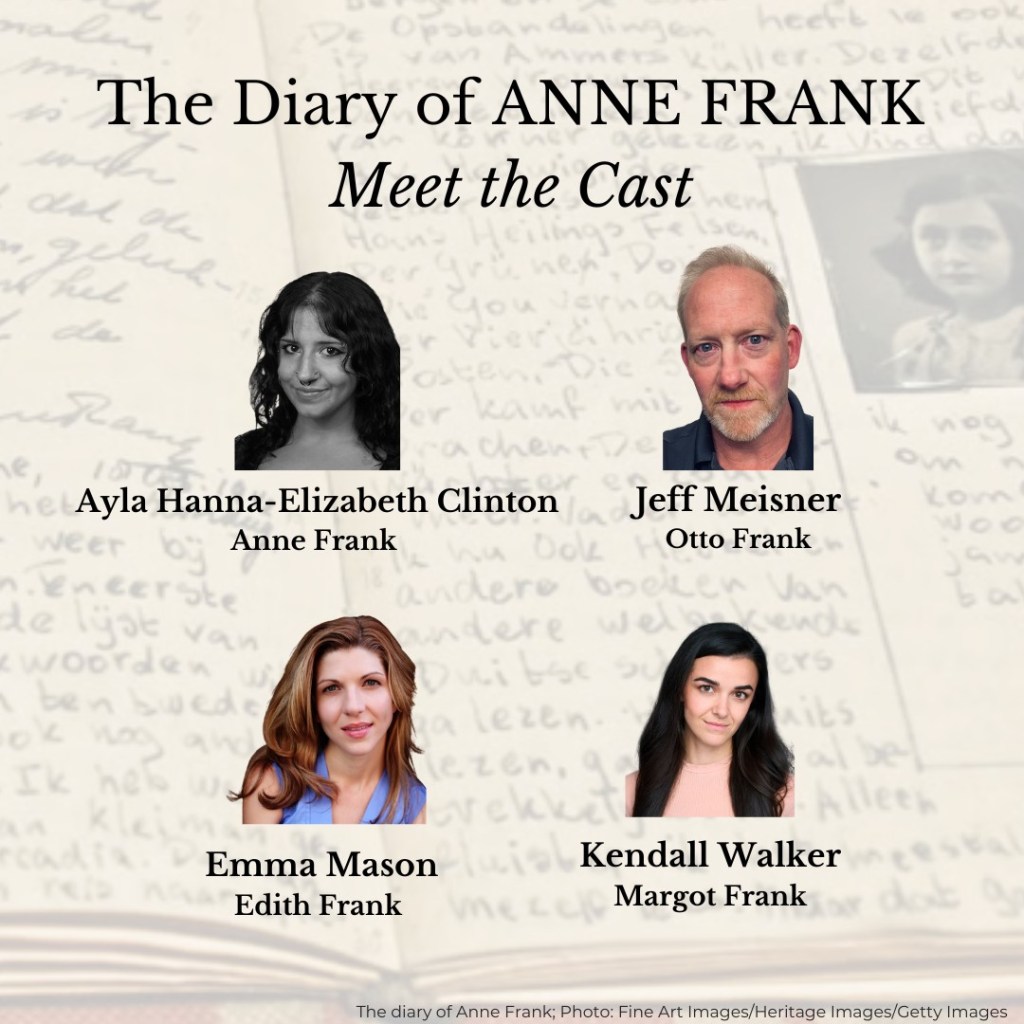
Ayla Clinton stepped into the shoes of the lead role, Anne Frank. Their youthful enthusiasm, so out of place, was a ray of sunshine in this battle against spiritual darkness. Kendall Walker played Anne’s sister, Margot – more subdued and therefore more socially acceptable – and Jeff Meisner and Emma Mason carried the roles of Anne’s parents, Otto and Edith with dignity beyond understanding. We see them as loving, educated people, someone you might like to have as neighbors in another life.

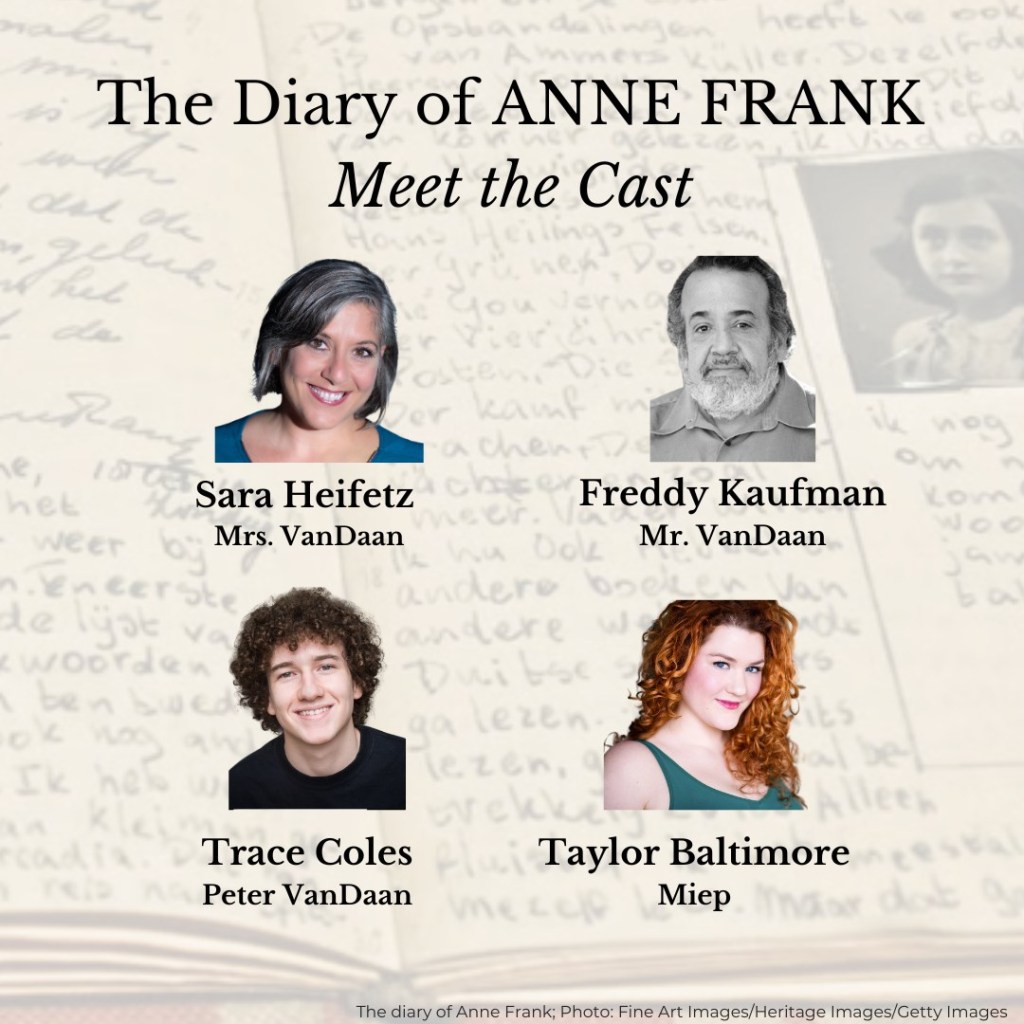
The Frank family shared their hiding place with the Van Daan family. Sara Heifetz and Fred Kaufman took on the roles of a bickering couple whose sometimes embarrassingly public revelations of one another’s shortcomings added a bit of much needed humor while a growing friendship between their shy son Peter, played by Trace Coles and the exuberant Anne provided a subplot of optimism and romance that fueled a false hope that things might turn out differently this time around.

The enmity between the Van Daan’s was also quite realistic, and I loved the authenticity of the complicated relationship Heifetz and Kaufman depicted in their roles. Mrs. Van Daan’s reluctance to give up her wholly impractical fur coat was not about materialism – it was about holding on to the only existing reminder of her father. The tears started to form when Heifetz uttered the deceptively simple line, “If you’re hungry, just hold on to me.”

Thinner.

Paler.

A lot hungrier.

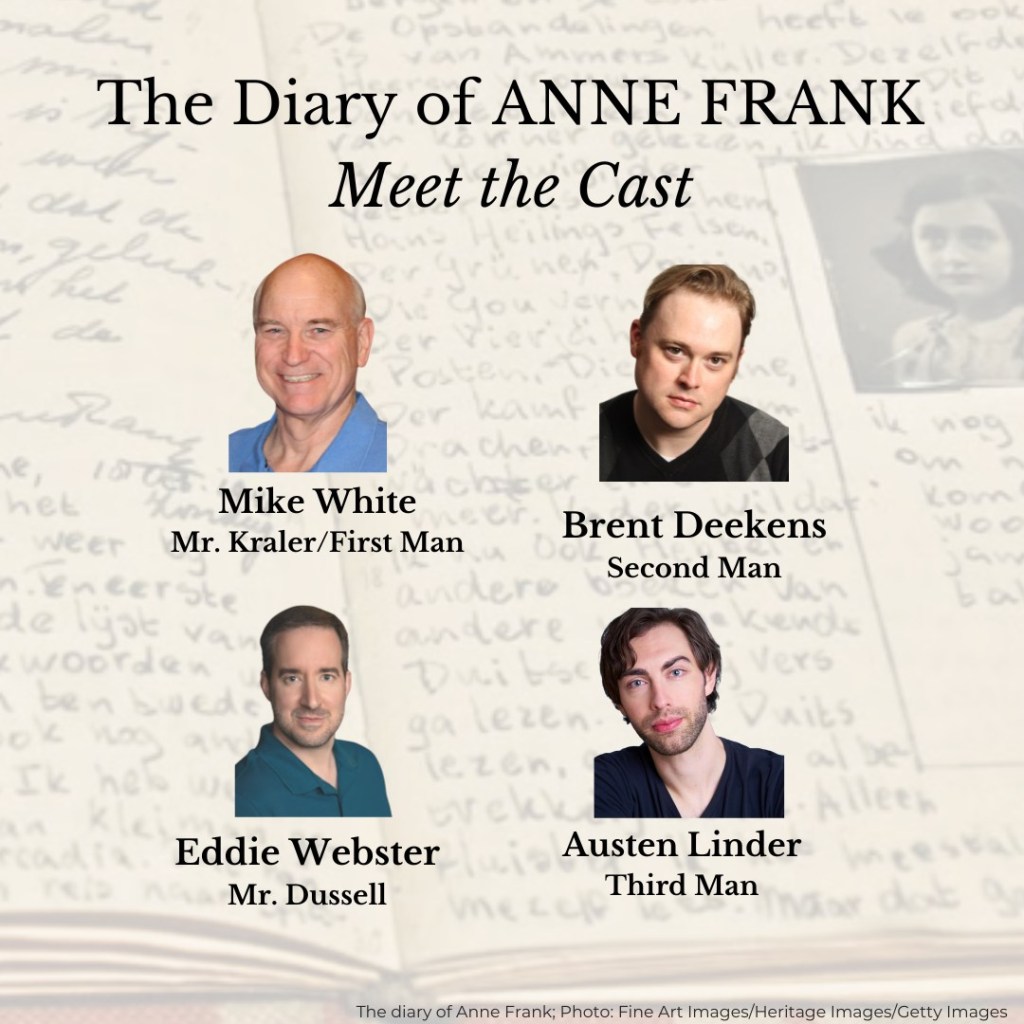
Taylor Baltimore’s role as the engineer and manager of the makeshift refuge might be considered a supporting role, but it was so essential. When Miep came, she didn’t bring just food and books, she brought the breath of life. It was temporary and insufficient, but it was all they had. When Miep introduced Mr. Dussel, a dentist played by Eddie Webster, into the already tense and crowded community, the delicate balance temporarily tipped, and it took a while for the group to reestablish equilibrium. Thinking, again, of our world today, there are so many lessons to be learned from this story – and from the careful handling of it by Director Clinton and this phenomenal ensemble.

But for all their hard work, they could not change history. The final transport left on September 3, 1944. The destination – the extermination camps. And for all the hope, the prayers, the tears, the love, the sacrifice, the loss, the lack…

All that remains…

…the cast stood quietly

…some audience members stood and clapped, the most subdued applause ever

…some sat weeping

…never…again…

…dear G-d, never again…

———-

Julinda D. Lewis, EdD is a dancer, minister of dance,  teacher, and writer who was born in Brooklyn, NY and currently resides in Eastern Henrico County. When not writing about theater and dance, she teaches dance history at VCU and low impact dance fitness classes to seasoned movers like herself and occasionally performs.

———-

THE DIARY OF ANNE FRANK

By Frances Goodrich and Albert Hackett

Newly adapted by Wendy Kesselman

Directed by Debra Clinton

CAST

Anne Frank   …..      Ayla Clinton

Otto Frank    …..      Jeff Meisner

Edith Frank   …..      Emma Mason

Margot Frank…..     Kendall Walker

Miep Gies     …..      Taylor Baltimore

Peter Van Daan…..  Trace Coles

Mr. Kraler      …..      Mike White

Mrs. Van Daan…..    Sara Heifetz

Mr. Van Daan…..     Fred Kaufman

Mr. Dussel     …..      Eddie Webster

First Man       …..      Mike White

Second Man …..      Bent Deekens

Third Man     …..      Austen Linder

Voice Actors …..      Roger Price, Meg Price, Melissa Johnston Price

CREATIVE TEAM

Directed by Debra Clinton

Scenic Design by Todd A. Schall-Vess

Lighting Design by Joe Doran

Costume Design by Maura Lynch Cravey

Technical Direction by James Nicholas

Sound Design by James Nicholas

PRODUCTION STAFF

Producing Artistic Director …. Tom With

Technical Director ….. James Nicholas

Stage Manager ….. Sandy Lambert

Assistant Stage Manager/Props ….. Tom Width

Light/Sound Board Operator ….. Brent Deekens

Set Crew ….. R Jonathan Shelley, Peter Proust, Brent Deekens, Christopher Samoski

Scenic Painter ….. Amber Kilpatrick

Lighting Crew ….. Brent Deekens, Alleigh Scantling

Photographer …..Daryll Morgan

Setting:

The play takes place on the top floors of the annex to an office building in Amsterdam, Holland, during the years of World War II.

Run Time:

About 2 hours with 1 intermission

Tickets:

Regular $44-49. Discounts for Seniors, Military & Veterans

Photographer: Darryl Morgan

One-Time
Monthly
Yearly

Make a one-time, monthly, or annual donation to show your support of
rvart review.
no amount is too small, or too large.

Make a monthly donation

Make a yearly donation

Choose an amount

$5.00
$15.00
$100.00
$5.00
$15.00
$100.00
$5.00
$15.00
$100.00

Or enter a custom amount

$

Your contribution is appreciated. Thank you. – Julinda

Your contribution is appreciated.

Your contribution is appreciated.

DonateDonate monthlyDonate yearly
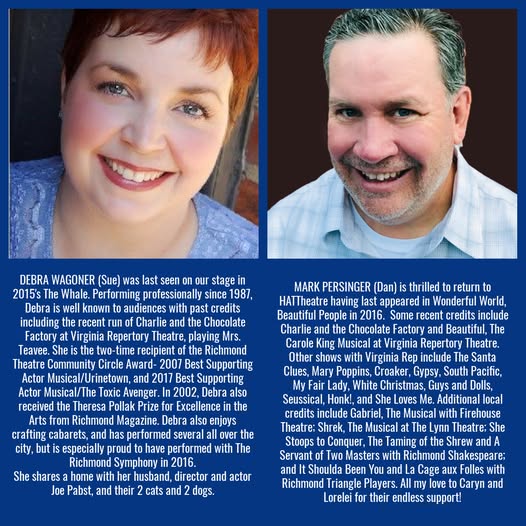
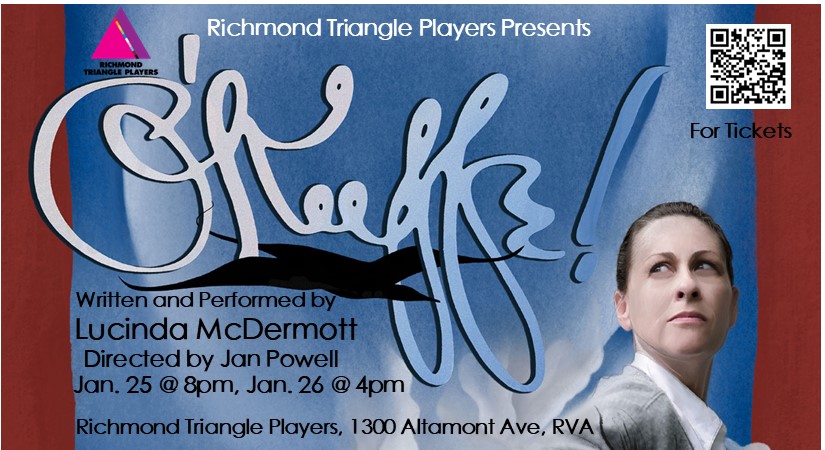
O’KEEFFE!

A One-Woman Show About Art, Life, and Love

Written and Performed By: Lucinda McDermott

At: Richmond Triangle Players at the Robert B. Moss Theatre, 1300 Altamont Avenue,  RVA 23220

Performances: January 25 & 26, 2025

Ticket Prices: $45

Info: (804) 346-8113 or rtriangle.org

A Theater Reflection by Julinda D. Lewis

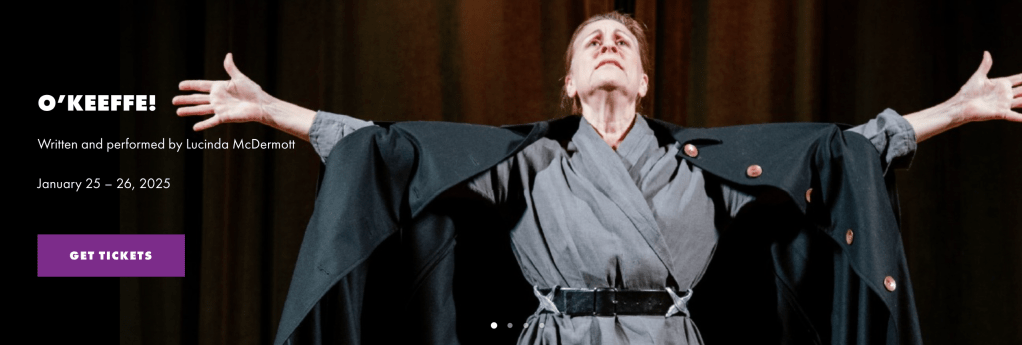
In this mesmerizing one-woman show about the American artist Georgie O’Keeffe, Lucinda McDermott, who both wrote and stars in the play, stated early on, “I will not be mediocre.” That simple statement was a battle cry that foreshadowed what we know of the life of the artist, O’Keeffe. It was a statement first of faith and in retrospect of fact, about the work of playwright and actor Lucinda McDermott.

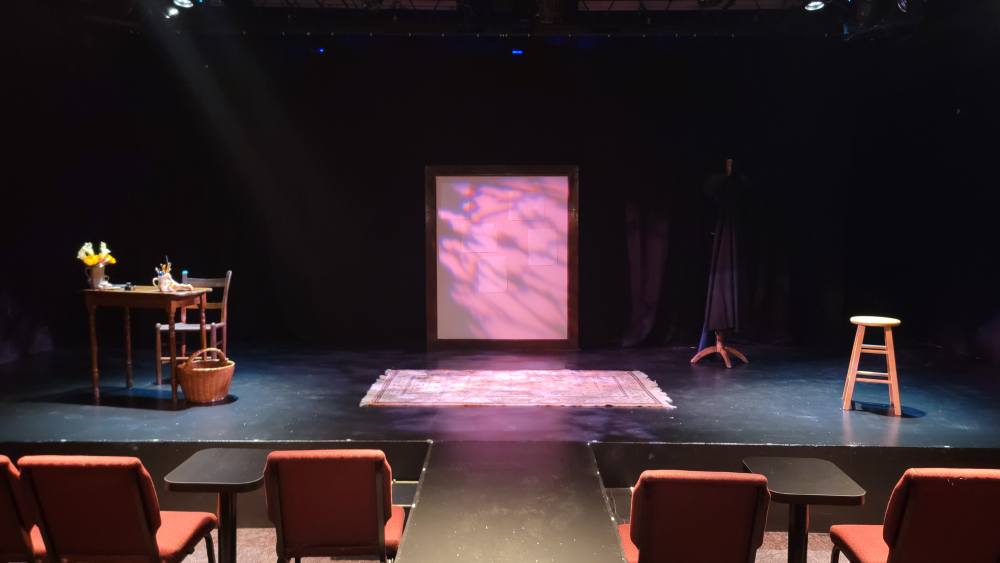
More than a biography, better than a documentary, O’Keeffe briefly immerses the audience into the world that created Georgia O’Keeffe. On a simply dressed stage – just a small desk, a chair, a basket on our left, a coat rack on our right, and a gigantic framed blank canvas upstage center – McDermott reveals her subject with reverence, humor, and love. To borrow a line from the script, McDermott “fills the space in a beautiful way.”

I imagine those who came as fans of the artist left affirmed and those who came as blank slates left with the satisfaction of having filled a void they didn’t know they had. O’Keeffe explores the things that inspired O’Keeffe as well as the challenges faced by a woman artist existing in a man’s world, more specifically as a woman artist living in the shadow of a well known and successful man – a renowned photographer more than 20 years her senior who also managed her career. The play dares explore the question, did Alfred Stieglitz exploit, manipulate, or otherwise (re-)direct the course of O’Keeffe’s life?

There is no doubt a popular, powerful, older male mentor can open doors closed to other women. And although McDermott did not dwell on it, there was mention of how he would not allow her to have children, her lengthy, life-affirming retreat to New Mexico, and even allusions to her affair with a mutual friend, the Harlem Renaissance writer, Jean Toomer and his long-term affair with arts patron Dorothy Norman. Yet this is a love story, and their marriage lasted in some form for 30 years.

“It’s an unpleasant sensation, squeezing the life out of someone; you won’t like what’s left.”

McDermott’s storytelling skills are immersive all on their own, yet in and as O’Keeffe, she takes it to another level. At one point, as an example, McDermott asked the audience to close our eyes to listen to music (the sound design was the work of her own real-life husband, Jonathan Piro) and then she asked three people to describe what they had seen in their mind’s eye.

McDermott commands the stage for about two hours, not so much playing the role O’Keeffe, as embodying the spirit of the artist, with time for one intermission, and not one minute of her stage time is dull or wasted. O’Keeffe resurrects the artist and allows her – not McDermott, but O’Keeffe – to lead us on an amazing journey of discovery: it is art process; it is love story; it is the heart of an artist, taken out, bared, and entrusted to a group of people who may have entered as strangers but who left as co-conspirators, a group unified by a common experience who cradled it, acknowledged its strengths and admired its cracks, and returned it to its owner so it could be shared again and again…and again.

NOTE: To answer a question raised – by McDermott? by O’Keeffe? – why do critics get paid for their opinions and the rest of us don’t? It’s combat pay, needed to buy bandages for the wounds from the darts and daggers others tossed at those who dared to defy social conventions and express an opinion, whether popular or not. And I make a distinction, in these days of social media, between the professional reviewer or academic critic and those who use and abuse social media for the sole purpose of inflicting harm on others for no other reason, apparently, than for sport. But that’s a whole other discussion.

———-

Julinda D. Lewis is a dancer, minister of dance, teacher, and writer who was born in Brooklyn, NY and currently resides in Eastern Henrico County. When not writing about theater, she teaches dance history at VCU and low impact dance fitness classes to seasoned movers like herself and occasionally performs.

———-

O’KEEFFE

Written & Performed by Lucinda McDermott

Directed by Dr. Jan Powell

Cast

Lucinda McDermott as Georgia O’Keeffe

Creative Team

  Playwright/Actor/Producer:Lucinda McDermott
                                      Director:Jan Powell
Sound Design/Co-Producer:Jonathan Piro
                     Costume Design:Elizabeth Weiss Hopper
                       Lighting Design:Andrea Stratton
Master Electrician:Gabriel Beard

Performance Schedule

Saturday, January 25, 2025           8:00PM

Sunday, January 26, 2025              4:00PM         

Tickets

Ticket Prices: $45

Run Time

Approximately 2 hours, including one intermission

Photos N/A [from Lucinda McDermott’s Facebook page]

One-Time
Monthly
Yearly

Make a one-time donation to show your support of rvart review

Make a monthly donation

Make a yearly donation

Choose an amount, any amount, large or small, will be appreciated.

$5.00
$15.00
$100.00
$5.00
$15.00
$100.00
$5.00
$15.00
$100.00

Or enter a custom amount

$

Your contribution is appreciated. Thank you!

Your contribution is appreciated.

Your contribution is appreciated.

DonateDonate monthlyDonate yearly

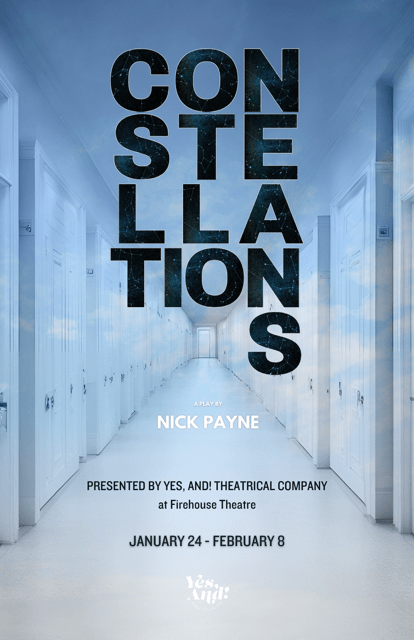
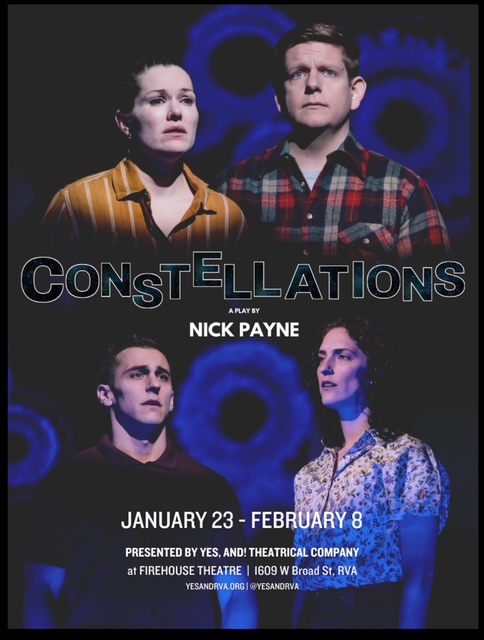
CONSTELLATIONS

Experience the Multiverse

Produced By: Yes, And! Theatrical Company in residency with New Theatre at Firehouse

At: The Firehouse Theatre, 1609 West Broad St., Richmond, RVA 23220

Performances: January 3 – February 8, 2025

Ticket Prices: $40 general admission; $15 for return visits; $100 for Season 3 Tickets [four shows]

Info: Email: yesandrva@gmail.com; Website: yesandrva.org; Facebook: http://www.facebook.com/yesandrva/

A Theater Review by Julinda D. Lewis

CONSTELLATIONS is, by design, a play of endless possibilities. Playwright Nick Payne has the two actors speak multiple versions of the same lines throughout the course of the play. Director Maggie Roop takes it a step further by having each actor learn both roles and rotating the pairings of partners throughout the run. (Do the math; that results in six possible pairs). Roop describes the resulting product as a Sci-Fi Rom-Com.

WARNING: It is impossible to talk about this play without touching on some spoilers, so if you want to retain your sense of awe and wonder, stop reading here, go see the play, and then come back to finish.

The gist of CONSTELLATIONS is the relationship between Marianne, a physicist who leaps enthusiastically into discourse on quantum mechanics and multiple universes, and Roland, a beekeeper. The two meet at a barbeque and begin a relationship that might be romantic or might not be. It might be rocky or smooth. It might be challenged by infidelity – or not, or it might be on her part, or may his. But after a time, they reconnect at a ballroom dance class – again, for assorted reasons, depending on which version of the story is told at any given time. Eventually they marry, and Marianne falls ill. For all her love of words, that is the first thing she begins to struggle with and, with Roland’s help, she embarks on a journey to seek assisted suicide (which reminded me of Ronan Carr’s The Barber of Moville, which I also saw here at the Firehouse Theatre, in June of 2022: https://jdldancesrva.com/2022/06/28/the-barber-of-moville/ Both plays came from “across the pond,” as Payne is British and Carr hails from Dublin).

I saw CONSTELLATIONS on opening night with John-Michael Jalonen in the role of Roland and Ashley Thompson playing Marianne. I am not familiar with either actor but based on their tightly woven performances in this delightfully quirky two-hander, I would enjoy seeing more of them. Jalonen initially portrays Roland as sort of an everyman but gradually adds more depth and texture to the character. Similarly, Thompson starts off playing Marianne as someone aloof and driven by some sort of mystical philosophical angst but gradually lets us in – as much as you can get close to someone who straddles the multiverse. Ultimately, it seems that the multiverse that most affected Marianne and Roland came from within, rather than from any external sources or forces.

The tragic circumstances are balanced with generous doses of wry humor – spoken in British accents. Director Maggie Roop has ensured that the timing is impeccable, especially when scenes are repeated or revised with alternate outcomes. At times, the two characters are transported into an alternate reality, signaled by changes in their voices, robotic stance, and otherworldly lighting.

Scenic Designer Alyssa Sutherland set CONSTELLATIONS on a multilevel series of wooden platforms with wire mesh sides; honeycombs adorn the walls, an alternative “universe” with two rows of audience seating was added to one side, near the bar, and Kelsey Cordrey filled the auditory space with a dull somewhat ominous rumble. Oh, and there was honey. A honey jalapeño moonshine cocktail at the bar, and straws of straight honey at the box office in the lobby. Sweet.

———-

Julinda D. Lewis is a dancer, minister of dance, teacher, and writer who was born in Brooklyn, NY and currently resides in Eastern Henrico County. When not writing about theater, she teaches dance history at VCU and low impact dance fitness classes to seasoned movers like herself and occasionally performs.

———-

CONSTELLATIONS

Written by Nick Payne

Directed by Maggie Roop

Cast

4 actors each portray both roles, Roland and Marianne, and the actor pairings change throughout the run:

John-Michael Jalonen

Marie Lucas

Ashley Thompson

Adam Turck

Production Team

Scenic Design – Alyssa Sutherland

Costume  Design – Emily Atkins

Lighting Design – Michael Jarett

Sound Design – Kelsey Cordrey

Dialect Coach – Erica Hughes

Intimacy Coordinator – Michelle Greensmith

Fight Choreography – Axle Burtness

ASL Coordinator – Allison Polson

Production Stage Manager – Grace Labelle

Assistant Stage Manager – Kennedy Shahan

Director of Production & Scenic Painter – Todd Labelle

Technical Director – Emily Vial

YES, AND! THEATRICAL COMPANY

in residency with NEW THEATRE at FIREHOUSE

Artistic Director – Maggie Roop

Executive Director – Matt Shofner

Performance Schedule

Thursday, January 23, 2025          7:30PM          Preview

Friday, January 24, 2025               7:30PM          Opening Night

Saturday, January 25, 2025           7:30PM

Tuesday, January 28, 2025            7:30PM          Pay What You Can*

Thursday, January 30, 2025          7:30PM

Friday, January 31, 2025                7:30PM

Saturday, February 1, 2025           7:30PM

Sunday, February 2, 2025              2:00PM          Pay What You Can*

Tuesday, February 4, 2025            7:30PM          Pay What You Can*

Thursday, February 6, 2025          7:30PM

Friday, February 7, 2025                7:30PM

Saturday, February 8, 2025           2:00PM

Saturday, February 8, 2025           7:30PM

Tickets

Ticket Prices: $40 general admission; $15 if you return to see a different actor pairing; $20 Rush Rickets at the Box Office one hour prior to all performances

*Pay What You Can: $5 suggested minimum at the door; $10 minimum in advance

Run Time

Approximately 70 minutes with no intermission

Photos N/A

CONSTELLATIONS was originally produced on Broadway by the Manhattan Theatre Club, Lynne Meadow, Artistic Director, Barry Grove Executive Producer, and The Royal Court Theatre by special arrangement with Ambassador Theatre Group and Dodges on December 16, 2014.

One-Time
Monthly
Yearly

START THE YEAR OFF WITH A one-time OR MONTHLY donatiON TO SUPPORT RVART REVIEW

Make a monthly donation

Make a yearly donation

Choose an amount – any amount will be appreciated.

$5.00
$15.00
$100.00
$5.00
$15.00
$100.00
$5.00
$15.00
$100.00

Or enter a custom amount

$

Your contribution is appreciated.

Your contribution is appreciated.

Your contribution is appreciated.

DonateDonate monthlyDonate yearly
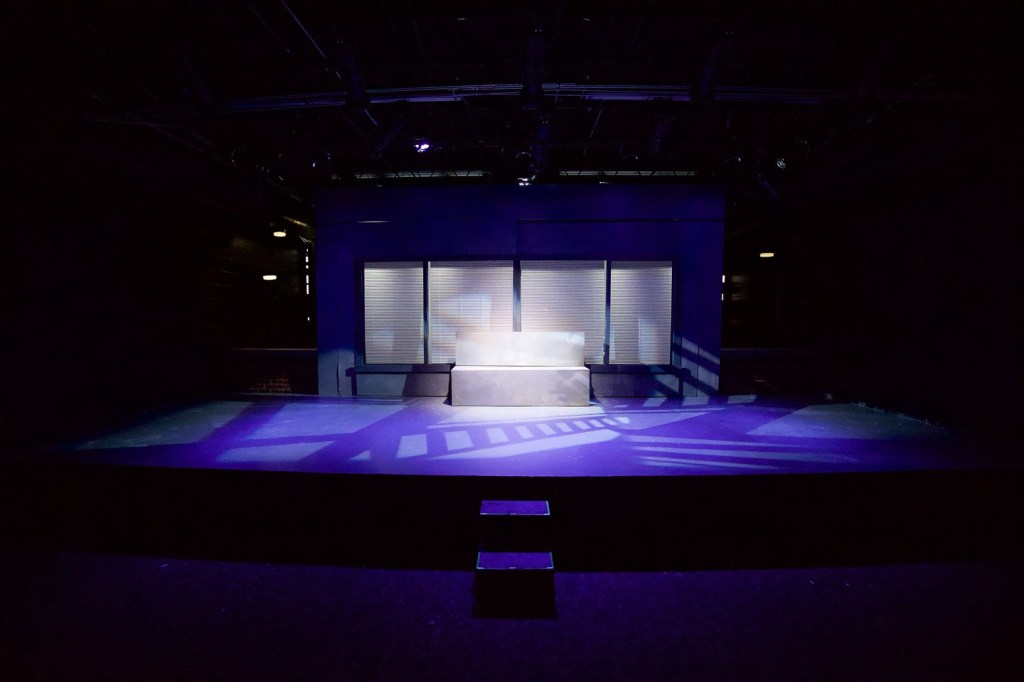
PAGE TO STAGE III

Dance + Literature = Magic

A Reflection on StarrFosterDance by Julinda D. Lewis

At: The Firehouse, 1609 West Broad St., Richmond, RVA 23220

Performances: December 5-8, 2024

Ticket Prices: $20-25 General Admission; Date Night tickets 2 for $40

Info: (804) 304-1523 or starrfosterdance.org or firehousetheatre.org

Program & Casting:

All Choreography by Starrene Foster

Art Director: Douglas Hayes

Lighting Design by Greta Daughtrey (for all pieces)

Music Director: Daniel Deckelman

Starr Foster Dance Performing Artists: Shannon Comerford, Madison Ernstes, Molly Huey, Angela Palmisano

Guest Artists: Sara Burtner, Danielle Cecile, Hailey Clevenger, Ma-Siya Dycus, Olivia Gotsch, Janelle Ragland, Roya Baker-Vahdani

Living Tidal

Inspired by an excerpt from a memoir written by Sheena Jeffers

Performed by Fran Beaumont, Shannon Commerford, Madison Ernstes, Molly Huey, Angela Palmisano

Music by Scott Buckley, Balefire

Costumes designed and constructed by Starrene Foster

Ned, Steven

Inspired by a story written by Dr. Tim Wenzell

Performed by Molly Huey & Angela Palmisano

Original Music Composition by Daniel Deckelman

Costume Design by Starrene Foster

A Soft Neglect

Inspired by a poem by Tara Shea Burke

Performed by Sara Burtner, Danielle Cecile, Hailey Clevenger, Ma-Siya Dycus, Madison Ernstes, Olivia Gotsch, Janelle Ragland, Roya Baker-Vahdani

Music by Pieter de Graaf, OCD

Costumes Designed and Constructed by Starrene Foster

Elegy to Childhood

Inspired by a story written by Judith Rice

Performed by Fran Beaumont, Shannon Comerford, Molly Huey, Angela Palmisano

Music by Morryc, Saint-Saens

Costume Designed and Constructed by Tamara Cobus

Good Mourning

Inspired by a poem written by Geraldine Beaumont

Performed by Shannon Comerford & Fran Beaumont

Original Music Composition by Daniel Deckelman

Costume Designed and Constructed by Johann Stegmeir

Not a Dream

Inspired by an excerpt from a memoir written by Caitlin McGill

Performed by Madison Ernstes

Music by Valgeir Sigurõsson, The Crumbling

Costume Designed and Constructed by Starrene Foster

Middle Passage

Inspired by a poem written by Y.B. Taylor

Performed by Fran Beaumont, Shannon Comerford, Madison Ernstes, Molly Huey, Angela Palmisano, and guest artists Sara Burtner, Danielle Cecile, Hailey Clevenger, Ma-Siya Dycus, Olivia Gotsch, Janelle Ragland, Roya Baker-Vahdani

Music by Ran Bagno, Sticks (Vertigo 20)

Costume Designed and Constructed by Starrene Foster

**********

A few days before the opening of Starr Foster’s latest iteration of her Page to Stage project, I sat with Starr watching her company rehearse. It was the night of the Richmond Dance Awards, and during the rehearsal Starr received word that her company had been recognized as the Best Professional Dance Company in Richmond for the 2024 season. She was honored but humble. I was not surprised that she was honored. I was also not surprised that she was humble. She deserved it. But she had work to do, and celebrating would come later.

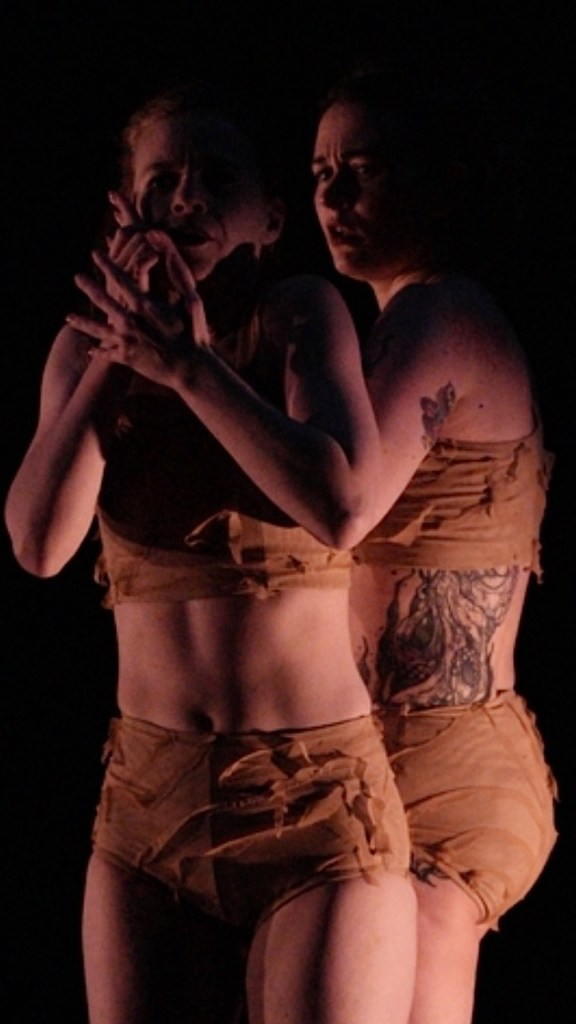
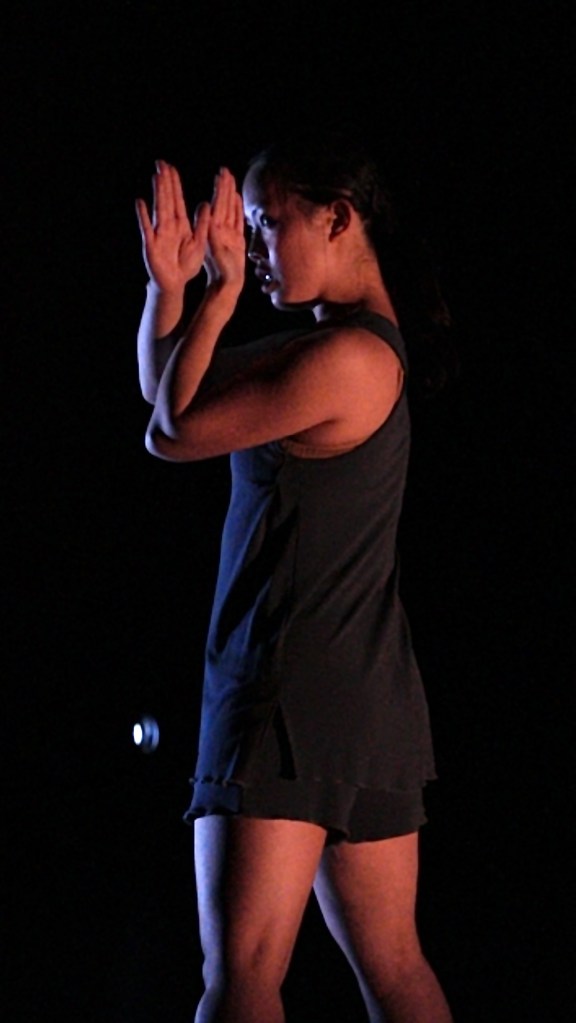
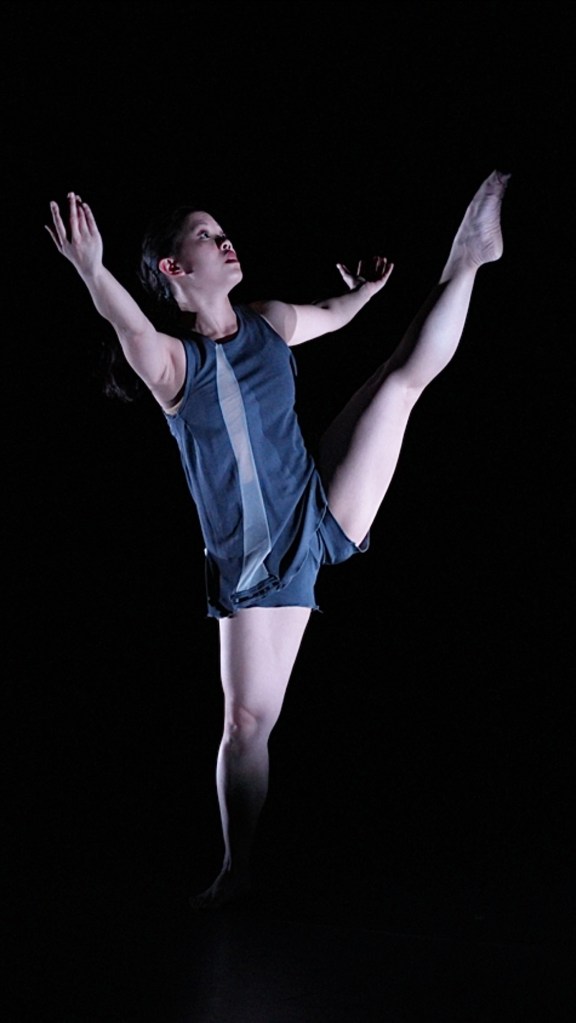
Page to Stage III, like its predecessors, is an artistic marriage of dance with poetry or short stories. Building on the programs that came before (in 2015 and 2022), the concept has matured, it has reached a place of balance and – dare I say – perfection. There was drama, humor, and even controversy. It’s dance for people who like movement, and movement for people who like words – a visualization of the words on paper, but without mimicking or condescending.

The program began with Living Tidal, a work for five dancers inspired by Sheena Jeffers’ story of the end of a relationship – that point when you feel you no longer belong, that you’re in the wrong place, when, quite simply, “our time has come.” For the stage Foster crafted a tight drama that veers away from the idea of a couple. It becomes personal, not just for Foster or Jeffers, but for each of us in our own way.

Ned, Steven is a comedic duet performed by two dancers in workman-like jumpsuits with name tags. Here, Foster has taken a tiny snippet of a story and turned it into a whole scenario – one can’t help but wonder what goes on Foster’s mind to produce these flashes of brilliance. The one word that best describes A Soft Neglect is “relational.” The work, performed by the talented troupe of guest performers, ended with a haunting image of the soloist’s chattering hands that, for me, seemed to perfectly capture the poet’s words: “Maybe families kill. Not with their hands, but a soft neglect – they let the needy bird stay stuck chirping in the mud, one foot too deep to be free.”

The first half of this program closed with Elegy to Childhood. The dancers began in individual squares of light, moving with simplicity and repetition that contrasted interestingly with the edgy, anxious complexity of Good Mourning that opened the second half. Even more noteworthy, the poem, Good Mourning by Geraldine Beaumont, was written by a company member who also performed in the duet. Not a Dream, inspired by a story by Caitlin McGill, is filled with subtle details and articulations of the smallest joint, in stark contrast to big, bold movements. Overall, the work – the only solo on the program, performed by the talented and versatile Madison Ernstes, reminded me of a visualization of good touch/bad touch.

The program concluded with what could have been the most controversial work on the program. The title, Middle Passage refers, of course, to the transporting of enslaved Africans from West Africa to the Americas. This is a topic most White choreographers would – rightfully – steer clear off, for obvious reasons [you know…appropriation].  Author Y.B. Taylor, who, according to Style Weekly, was Huguenot High School’s first African American homecoming queen in 1971 and one of six African American students to integrate Albert H. Hill Junior High School in 1966 has an interesting personal history and was apparently more than willing to entrust her story to Starr Foster. [https://www.styleweekly.com/third-times-a-charm/]https://www.styleweekly.com/third-times-a-charm/https://www.styleweekly.com/third-times-a-charm/

Rather than a retelling of the horrors of the cross-Atlantic slave trade, Taylor’s poem, written on a flight home from Europe, contrasts her own experience with that of those earlier, reluctant passengers. Given this perspective, Middle Passage becomes a story that belongs to anyone in a period of major transition. Given that Foster’s company is an all-female ensemble, it becomes a story of women.

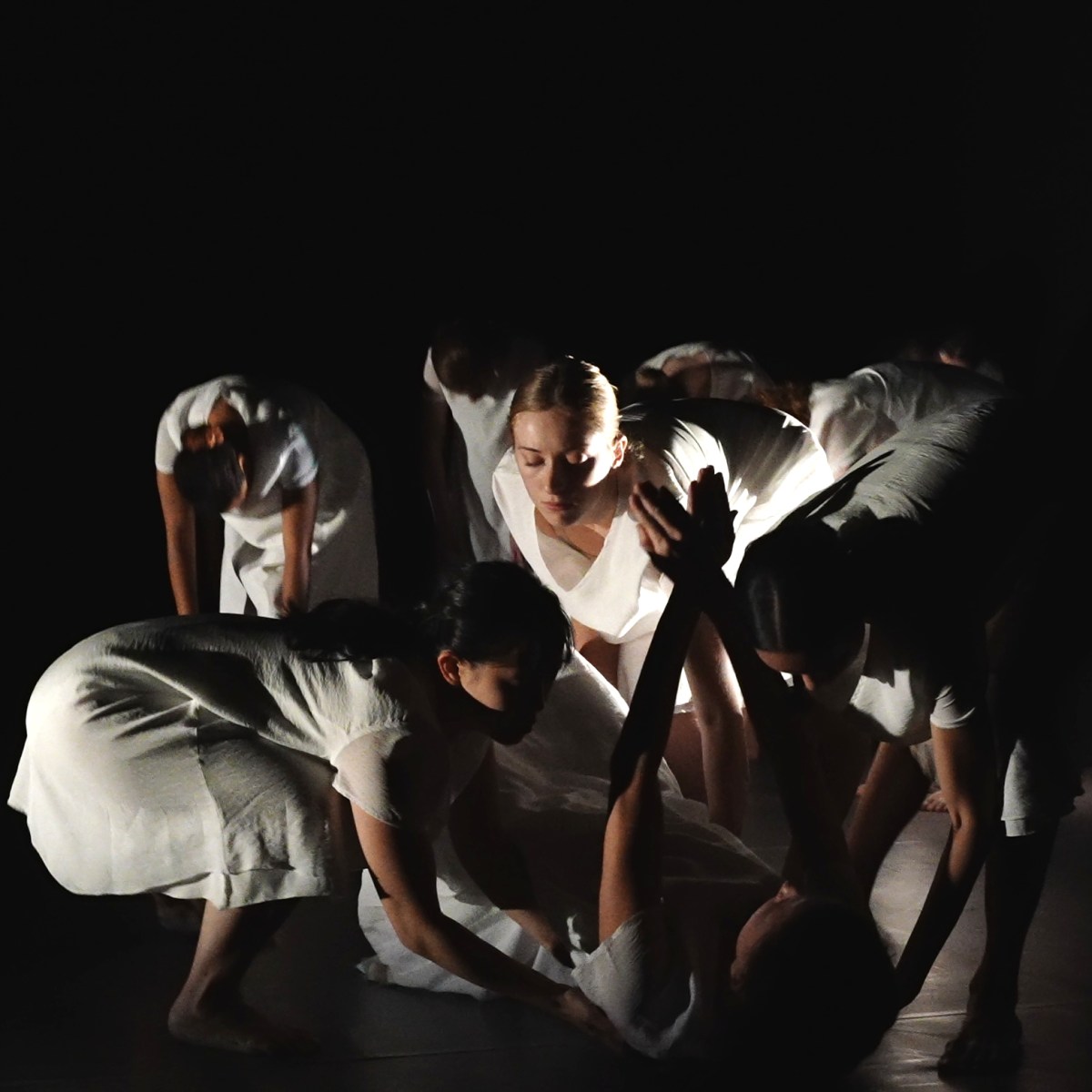
Mechanical sounds, distant whirrs and thunderings and the echoes of time ticking away support the movement. A group of women leans side-to-side, moving as a unit, their palms barely supporting their heads. Little tags on their dresses, barely visible to the naked eye, subliminally suggest a label, a brand, a way, perhaps, of reminding someone they are a commodity – but maybe I’m going deeper than necessary. At the end, the women are kneeling, but not bowed – resilient, resistant, released…

Some say the third time is the charm. This is Foster’s third iteration of Page to Stage, and the shows just keep getting better. This program developed a unique collaboration of words and movement, not a visualization of the word, but a whole new creation with a life of its own, and an underlying theme of various kinds of relationships. Taken together, the separate works seem meant to be together – and they are also worthy of discussion. A casual post-performance discussion with a friend predictably revealed questions – even a bit of confusion – about Middle Passage. I hope there are future opportunities to pursue much needed discussions about difficult topics to their logical conclusion: a deeper understanding and greater inclusiveness.

———-

Julinda D. Lewis is a dancer, teacher, and writer who was born in Brooklyn, NY and now lives in Eastern Henrico County. When not writing about theater, she teaches dance history at VCU and low impact dance fitness classes to seasoned movers like herself, and occasionally performs.

———-

Starr Foster Dance presents

PAGE TO STAGE III

Combining the arts of writing and dance

Artistic Director/Choreography by: Starrene Foster

Art Director: Douglas Hayes

Lighting Designer: Gretta  Daughtrey

Music Director: Daniel Deckelman

Company Artists: Fran Beaumont, Shannon Comerford, Madison Ernstes, Molly Huey, Angela Palmisano

Performing Guest Artists: Sara Burtner, Danielle Cecile, Hailey Clevenger, Ma-Siya Dycus, Olivia Gotsch, Janelle Ragland, Roya Baker-Vahdani

IMPORTANT PROGRAM NOTE: The poetry and stories appearing in the playbill and on the Starr Foster Dance website were published with the permission of the authors and publishers. All material is protected by copyright under U.S. Copyright laws and may not be copied or reproduced without permission of the copyright holder.

Starr Foster Dance is a Resident Company of the Firehouse Theatre

Performance Schedule

Thursday, December 5th, 7:30PM

Friday, December 6th, 7:30PM

Saturday, December 7th, 2:00PM & 5:00PM

Sunday, December 8th, 2:00PM

Post-performance Q&A after the Thursday and Saturday evening performances

Champagne toast after the Friday evening performance

Run Time

About 2 hours

One-Time
Monthly
Yearly

Won’t you Please Make a one-time donation to support rvart review?

Make a monthly donation

Make a yearly donation

Choose an amount

$5.00
$15.00
$100.00
$5.00
$15.00
$100.00
$5.00
$15.00
$100.00

Or enter a custom amount

$

Thank you!
Your contribution is appreciated.

Your contribution is appreciated.

Your contribution is appreciated.

DonateDonate monthlyDonate yearly
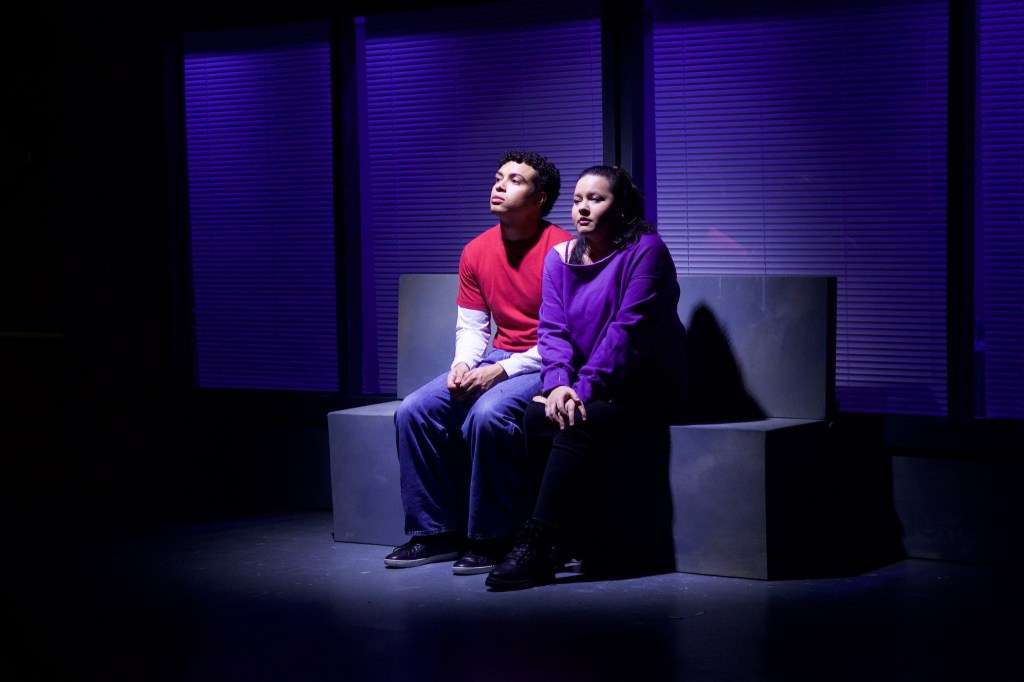
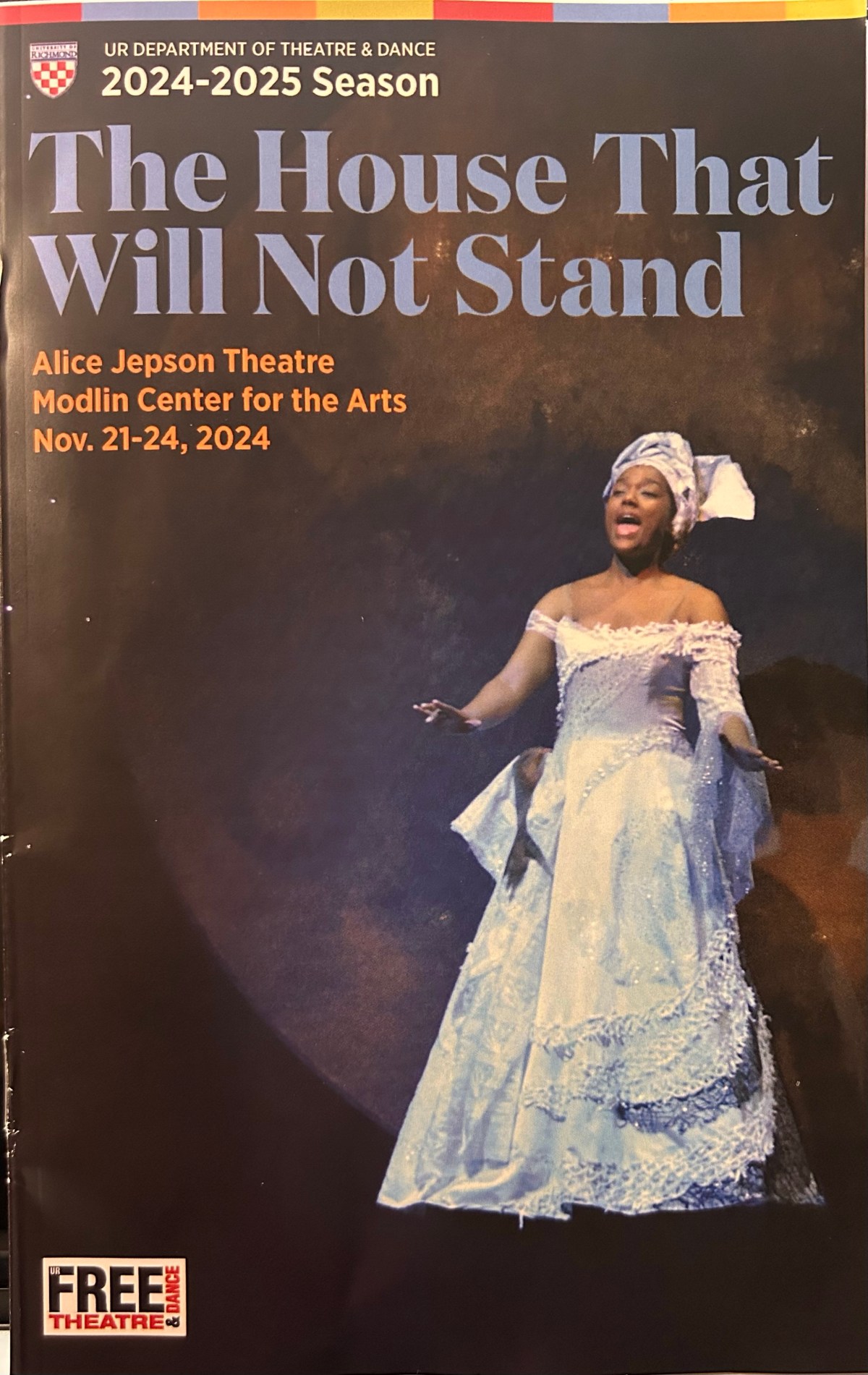
THE HOUSE THAT WILL NOT STAND

You May Be the Wealthiest Colored Woman in New Orleans, But You Built This House on Sand

A Theater Reflection by Julinda D. Lewis

Produced by: UR Free Theatre & Dance

At: Alice Jepson Theatre, Modlin Center for the Arts, 453 Westhampton Way, University of Richmond, VA 23173

Performances:  November 21-24, 2024

Ticket Prices: FREE

Info: (804) 289-8980 or modlinarts@richmond.edu

———-

            This play was not on my radar – my list of local 2024-25 productions to view for consideration for the Richmond Theatre Community Circle awards, but at the last minute I heard about it from people whose opinion I trust, and I realized I had time in my often complicated schedule to see the very last show. I am so glad I did.

            I learned a lot from this 19th century historic drama – a tale that is so very relevant today. This household of free Creole and enslaved Black women in New Orleans on the cusp of the transfer of the Louisiana territory from France to the USA redefines what it means to be free. A lengthy quote from director Lucretia Marie Anderson seems appropriate here:

           In my initial reading of this play, I was transported back to that sense of grief and longing that pervaded the household of Bernarda [Alba, by Federico Garcia Lorca] and the stark and witty differences in how Gardley infused his memories from his own upbringing by resilient, resourceful, catty, joyful, spiritual, and heartbroken Black women in New Orleans. Creating the world in which the women in this play exist has been an honor and a collaboration with all of the magic we could muster.

            This is a hauntingly beautiful play that captures the power, the magic, the tragedy, and the strength of the recently widowed Beartrice Albans and her three daughters: Maude Lynn [run the names together, without a breath], the pious one, Odette, the dark one, and Agnès, the one most desperate to break away.

            Even the supporting characters all hold major roles: Makeda is the Haitian slave of Beartrice, La Veuve is Beartrice’s catty arch enemy, and Marie Josephine is Beartrice’s “crazy” sister who is kept hidden away in the attic. A most unusual central figure – the leading man, one might say, is Lazare Albans, the deceased white man who was Beartrice’s lover and the father of her three daughters. Lazare, who died just hours ago as the play begins, holds a prominent position as a corpse resting in state on the family’s dining room table.

            To understand The House That Will Not Stand, one needs to know a bit about New Orleans cultural history. There was a practice, prevalent from the 1600s to the 1800s) known as plaçage. A way to circumvent the laws preventing interracial marriages, plaçage allowed free women of color (light-skinned Black, mixed race, Creole) to set up households with their white lovers. Unlike common-law marriages or strictly commercial exchanges, like prostitution plaçage provided the women with homes, acknowledged the children, and assigned some contractual rights to income, property, and even limited rights to inheritance.

            In The House That Will Not Stand, not only is Beartrice’s family under attack, but the entire system is about to fall. The transfer of the Louisiana Territory to US law will mean that free women of color, who owned property and even slaves of their own – would be subject to be sold into slavery. For Beartrice, the attack was more immediate Lazare’s white wife, whom he apparently never legally divorced, has the legal right to claim his house and property simply because she is white. His will, leaving his estate to Beartrice and his daughters, has little no bearing under US law – and this is one of the places where the past seems to overlap with the present.

            While Beartrice is fighting for her daughters – adamant that they should not be sold into the plaçage system, her daughter Agnès sees the arrangement as a way to meet a handsome lover and escape the tight discipline of her over-bearing mother While Beartrice is fighting for her own freedom, her house servant, Makeda is fighting for her own freedom. Beartrice has repeatedly reneged on her promise to sign Makeda’s manumission (freedom) papers. While Beartrice is fighting for her freedom, and that of her daughters, and Makeda is hellbent on walking away from slavery, Beartrice’s own sister is imprisoned in the attic – apparently for the “crime” of loving a Black man, a drummer.

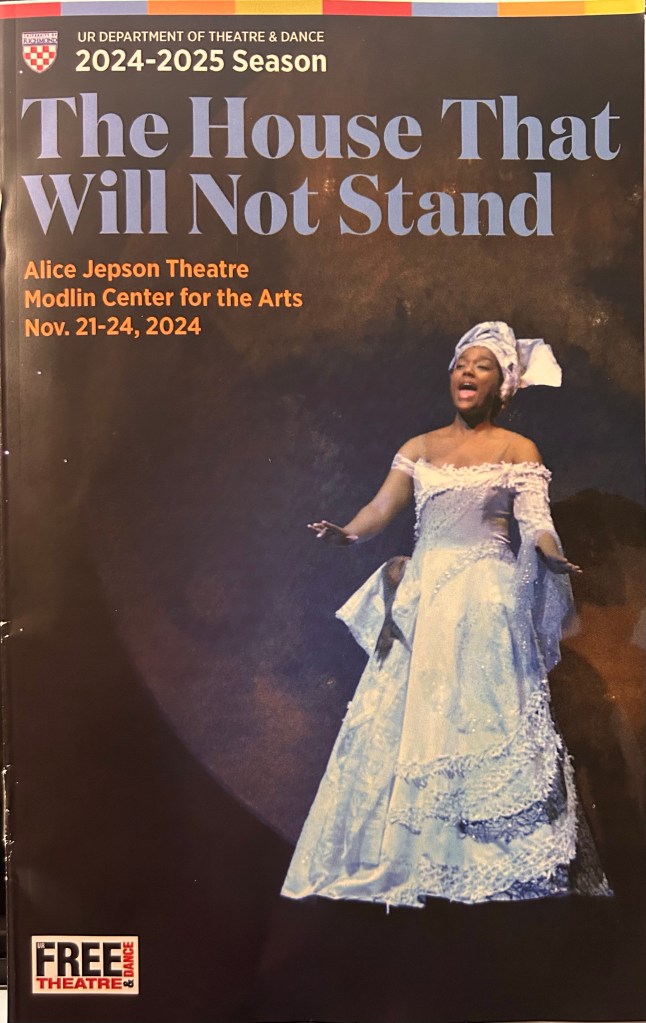
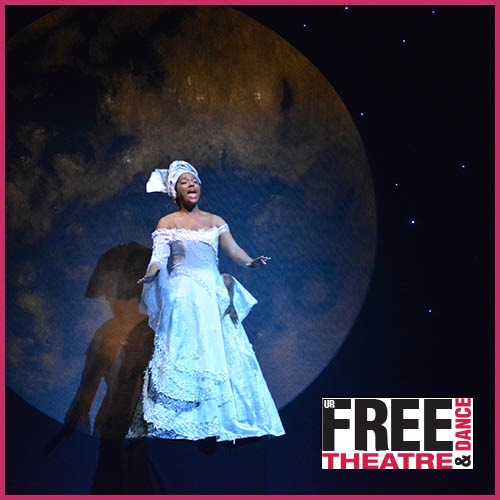
            An intricate, multi-leveled set and absolutely stunning costumes supported this cast of strong, beautiful women. Dr. Tiffany (Doc) Jana wore the role of Beartrice Albans as if it were a mantle bestowed upon her by the ancestors. Nia Simone was beautiful and cunning as the eldest sister, Agnès, who seemed to be cracking under the social pressure to be “placed” well.  Melanie Sanchez was adept at covering Maude Lynn in a façade of syrupy sweetness that, in the end, failed to completely sheath her claws. Mikaela Craft was heartbreakingly naïve as the beautiful younger sister who was burdened with the “curse” of having darker skin than her sisters and mother.

            I wouldn’t be mad with Zakiyyah Jackson if she tried to claim the title of lead for her role as what I would dare to describe as the twice-enslaved Makeda (twice, because she was held as chattel by another woman of color). Marjie Southerland, the attic dwelling sister, Marie, found freedom only by dancing off into the arms of her deceased lover, never to be seen again – and no one else in her house seemed to find that odd? Makeda had her black bag of tricks, but Marie’s magic may have been more powerful, as it was all in her mind and the swing of dancing hips. Shalandis Wheeler Smith brought the tea, the laughs, and stirred up the trouble as the catty La Veuve. But no matter how messy she tried to be, Beartrice was able to match her, word for word, without batting an eye. These women may have been dressed as genteel ladies, but underneath their bustle and layers of lace, they were tough as nails and twice as hard.

            I unknowingly selected the perfect seat, an aisle seat in the last row, where the actors made entrances and exits, where the masked drummer appeared, and where Marie flew off to find her final freedom.

            Lazare was also a constant presence. While his body lay cooling on the dining room table – a practice I have heard of, but never experienced – he did make an appearance as an apparition in the mirror when Makeda, at Marie’s request, allowed his spirit to possess her body to confirm the true cause of his death. Let’s just say that when a woman who doesn’t normally cook offers you a pie, don’t eat it.

            There was so much history and culture to process in these two hours: the whole social system of plaçage, the body in the dining room, the covered mirrors, the aunt in the attic, the colorism and caste system, the Creole balls, the white wife and the colored mistress, a woman seeking freedom in a relationship with a man who could never see her as an equal, the fear of the approaching Yankees, the fear of losing a familiar way of life, a preference for the devil you know rather than the uncertainty of the devil you only know of…What does freedom look like to you?

            What an amazing household, and how deftly they were managed for an  immersive viewing experience by Lucretia Marie Anderson. Gardley has written a masterful collaboration of drama, humor, family dynamics, tragedy, history, social (in)justice, liberation, and magic. This is a work that deserves to be seen by a larger audience. I can only imagine what a life-affirming and yet draining experience it must have been for the cast.

———-

Julinda D. Lewis is a dancer, teacher, and writer who was born in Brooklyn, NY and now lives in Eastern Henrico County. When not writing about theater, she teaches dance history at VCU and low impact dance fitness classes to seasoned movers like herself, and occasionally performs. Her most recent (ad)venture was the premiere of a solo work, The Waters of Babylon or Psalm 137 Revisited: a Post-Exodus Reflection in Movement Choreographed From Collective Memories for the debut of the Critical Race Theatre Project, right here at RTP in August 2024.

———-

THE HOUSE THAT WILL NOT STAND

By Marcus Gardley

Directed by Lucretia Marie Anderson

Cast

Dr. Tiffany (Doc) Jana …    as Beartrice Albans

Nia Simone               ……    as Agnès Albans

Melanie Sanches     ……    as Maude Lynn Albans

Mikaela Craft            ……    as Odette Albans

Zakiyyah Jackson    ……    as Makeda

Shalandis Wheeler Smith   as La Veuve

Majie Southerland  ……    as Marie Josephine

Bill Blair                     ……    as Lazare

Production & Design

Playwright                 ……    Marcus Gardley

Director                     ……    Lucretia Marie Anderson

Scenic Design          ……    Emmy Weldon

Costume Design      ……    Johann Stegmeir

Lighting & Sound Design  Maja E. white

Vocal Direction & Composition

……    Mara Smith

Choreography         ……    Deandra Clarke

Production Stage Management

……    Holly Trenbath

Assistant Stage Manager   Leland Solesby

Drummer                  ……    Austin Martin

Props Crew               ……    David Hensley, Leah Marchetti

Board Operators     ……    Jerry Chen, Charlotte Donelan,

Tina Li, Louisa Stringer, Gareth Woo

Run Crew                  ……    Gabrielle Lindsay, Leah Marchetti

Wardrobe Crew       ……    Chuhan Fang, Taylo Harris, Maddi Lewis

Director of Costume  ….    Heather Hogg

Technical Supervisor & Fight Choreographer

                                    ……    Phil Hayes

Technical Assistant ……    Tomya Pryor

Lighting & Sound Supervisor

                                    ……    Robby Williams

Guest Costume Artists       Tinia Crider, Robyn Gebhart, Karl Green,

                                                Susan Rich

Costume Shop Staff …..     Eliza Hummerstone, Jaize Francis, Alisha Tosto,

                                                Michael Florentin

Electrics Crew          ……    Alex Broening, Connor Smith, Bonny Bruzos

Scene Shop Staff     ……    Hope Amberger, Fitch Melson, Jake Litman,

                                                Megan Montoya

Scene Shop Assistants ..    Patrick Michael, Cameron Peterson, Felicia Chen

Scenic Artists            ……    Tyeon Ford, Leah Marchetti, Darcel Pham

Scenic Carpenters & Painters      

                                    ……    Jonathan Beagle, Jaleel Grinnage, Taylo Harris,

                                                Rachell Lee, Jason Liang, Ly Nguyen, Vanessa

                                                Romero, Louisa Stringer, Zachiah Zook

Production Manager & Dialect Coach

                                    ……    Erica Hughes

Poster Design           ……    Jeane Minnix

Setting & Time

The home of Beartrice, a free colored woman, New Orleans, Louisiana Territory,1830s

Run Time

Approximately two hours, with one intermission

Schedule of Performances

Thursday, November 21, 7:30PM

Friday, November 22, 7:30 PM

Saturday, November 23, 7:30PM

Sunday, November 24, 2:00PM

Ticket Information

FREE, Reservations Required.

Info: (804) 289-8980 or modlinarts@richmond.edu

Photo Credit

Unavailable

One-Time
Monthly
Yearly

Make a one-time donation
to support RVART Review (jdldances)
this publication is a labor of love
and exists only with your donations

Make a monthly donation

Make a yearly donation

Choose an amount

$5.00
$15.00
$100.00
$5.00
$15.00
$100.00
$5.00
$15.00
$100.00

Or enter a custom amount

$

Your contribution in any amount is greatly appreciated.

Your contribution is appreciated.

Your contribution is appreciated.

DonateDonate monthlyDonate yearly
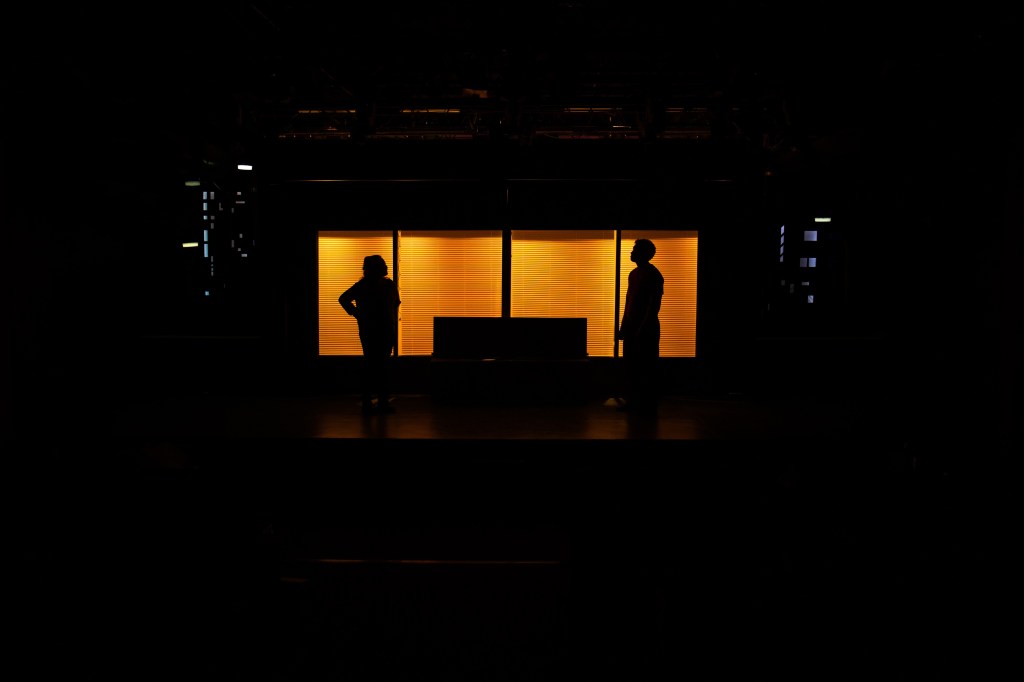
A CAMPY CHRISTMAS

WITH BELLS ON by Darrin Hagen

WHO’S HOLIDAY by Matthew Lombardo

With Bells On and Who’s Holiday!

A Theater Review by Julinda D. Lewis

At: Richmond Triangle Players at the Robert B. Moss Theatre | Carpenter Foundation Stage, 1300 Altamont Ave, RVA 23230

Performances:  November 13 – December 22, 2024, 2024

Ticket Prices: $55

Info: (804) 346-8113 or rtriangle.org

———-

For some, the holiday season is heralded by a performance of The Nutcracker ballet. For others, it may be the arrival of the Richmond Triangle Players’ annual Christmas play. This year’s offering is a double bill of one-act plays: Darrin Hagen’s With Bells On and Matthew Lombardo’s Who’s Christmas.

First up is a zany yet somehow heart-warming tale of an introverted divorcé and a towering drag queen who get stuck in an elevator a few days before Christmas. Wette Midler plays the “glamazon” Natasha, who is on her way to an important, life-affirming pageant, while Doug Schneider plays Ted, an accountant who is venturing out on his own for the first time since his divorce.

William Luther’s scenic design is a simple open sided box, providing a wide-angled perspective of an elevator car, while all the attention is on Natasha, decked out in a glittery green Christmas themed dress topped off with an illuminated fascinator. Kudos to Alex Valentin for designing the posh queenly garb.  

With Bells On is equal part light-hearted romp and entwined tales of self-discovery or liberation, in which Midler and Schneider’s characters gradually, warily warm up to one another, find a point of connection, and hang on for dear life. Along the way, they leave a trail of verbal gems the way Hansel and Gretel dropped breadcrumbs.

Natasha, feeling threatened by the more diminutive Ted, says, “I have fuchsia belt in whipping your ass.” (This reminded me of a line by the great poet James Brown: I don’t know karate, but I know ka-razor! from “The Payback.”) Later she says, “If you’re not standing out, you’re lurking.” Softening up, she parries with, “Do you know what drag queens call Halloween? Amateur night!” Midler is a force and a vision, but she and Schneider share space as equals who balance each other in sometimes unexpected ways. And, BTW, where can I get those green pumps in a size 10W?

Emily Dandridge held her own in a one-handed performance as a grown-up Cindy Loy Who, sharing just a tad TMI on her relationship with that mean old Grinch. (And yes, isn’t it a coincidence that, what with the near-simultaneous of the film version of Wicked, green is suddenly “in” as an identity (for lack of a better word).

This Cindy Lou Who has traded pink pajamas for metallic gold leggings and a Christmas-themed top – just the thing to wear while searching for tramadol in the couch cushions and washing it down with a cocktail of clear spirits (gin and vodka, I think). This Cindy Lou Who may be down on her luck, having spent time in prison and living in a well-worn trailer at the foot of Mount Crumpit, but she’s smart, exhibiting advanced critical thinking skills as each of her so-called friends calls to cancel their attendance at her holiday party, Highlights of Dandridge’s performance include an unexpected rap performance and sharing a very much real pan of pigs-in-blankets with the audience.

I don’t know if it was the luck of the draw or if a certain seat (whose location I will not disclose, just in case it’s part of the plot – I mean script) is always selected, but on opening night my husband Albert Ruffin was selected from the audience to join Cindy Lou onstage to be plied with alcohol and offered a little extra for dessert. It may have been all in good fun, but now I must live with the aftermath of him walking around talking about (a) how much fun he had and (b) how he always dreamed of a career onstage.

Thinking back, I think I like this version of Who’s Christmas more than I did RTP’s 2018 version. (See my review of the 2018 version here: https://wordpress.com/post/jdldancesrva.com/700). This parody has its dark moments, its alarming images, and it is not without valuable life lessons on the downside of mixed marriage, diversity, and who your real friends are. Dandridge did a decent job of interacting with the audience, as this play requires. So, grab a drink, sit back, and enjoy the show. No stress. No worries. No need to overthink.

———-

Julinda D. Lewis is a dancer, teacher, and writer who was born in Brooklyn, NY and now lives in Eastern Henrico County. When not writing about theater, she teaches dance history at VCU and low impact dance fitness classes to seasoned movers like herself, and occasionally performs. Her most recent (ad)venture was the premiere of a solo work, The Waters of Babylon or Psalm 137 Revisited: a Post-Exodus Reflection in Movement Choreographed From Collective Memories for the debut of the Critical Race Theatre Project, right here at RTP in August 2024.

———-

A CAMPY CHRISTMAS

Act One: WITH BELLS ON

Written by Darrin Hagen

Act Two: WHO’S HOLIDAY!

Written by Matthew Lombardo

Directed by Joe Pabst

Cast

Wette Midler as Natasha in With Bells On

Doug Schneider as Ted in With Bells On

Emily Dandridge as Cindy Lou Who in Who’s Holiday!

Understudies

Keegan Ferrell u/s for Natasha

Travis Williams u/s for Ted

CC Gates u/s for Cindy Lou Who

Production & Design

Playwrights – Darrin Hagen (With Bells On) and Matthew Lombardo (Who’s Holiday!)

Director – Joe Pabst

Scenic Design – William Luther

Lighting Design – Gabriel Beard

Costume Design – Alex Valentin

Sound Design – Lucian Restivo

Props Design – Tim Moehring

Hair & Makeup Design – Luke Newsome

Production Stage Manager – Lucian Restivo

Assistant Stage Manager – Finn Thomason

Gender Consultant – August Hundley

Master Electrician – Gabriel Beard

Technical  Director & Scenic Artist – Rebecka Russo

Backstage Crew – Adri Ulm

Scenic Construction – David Ballas, Hunter Keck, Marcos O’Connor, Katie White

Settings & Times

With Bells On – An elevator in a high-rise apartment building, a few days before Christmas

Who’s Christmas! – A dilapidated trailer at the base of Mount Crumpit, Christmas Eve

Run Time

Approximately two hours, with one fifteen-minute intermission

Schedule of Performances

Thursday, November 21 at 8:00PM – OPENING NIGHT

Fridays, November 22, 29 & December 6, 13 & 20 at 8:00PM

Saturday, November 7 at 2:00PM

Saturdays, November 22, 29 & December 6, 13 & 20 at 8:00PM

Sundays, November 24,  & December 1, 8, 15 & 22 at 4:00PM

Wednesday, December 18 at 8:00PM

Thursdays, December 5, 12 & 19 at 8:00PM

Ticket Information

$55, Info: (804) 346-8113 or rtriangle.org

Photo Credit

One-Time
Monthly
Yearly

Make a one-time HOLIDAY donation
if you enjoy reading RVART Review

Make a monthly donation

Make a yearly donation
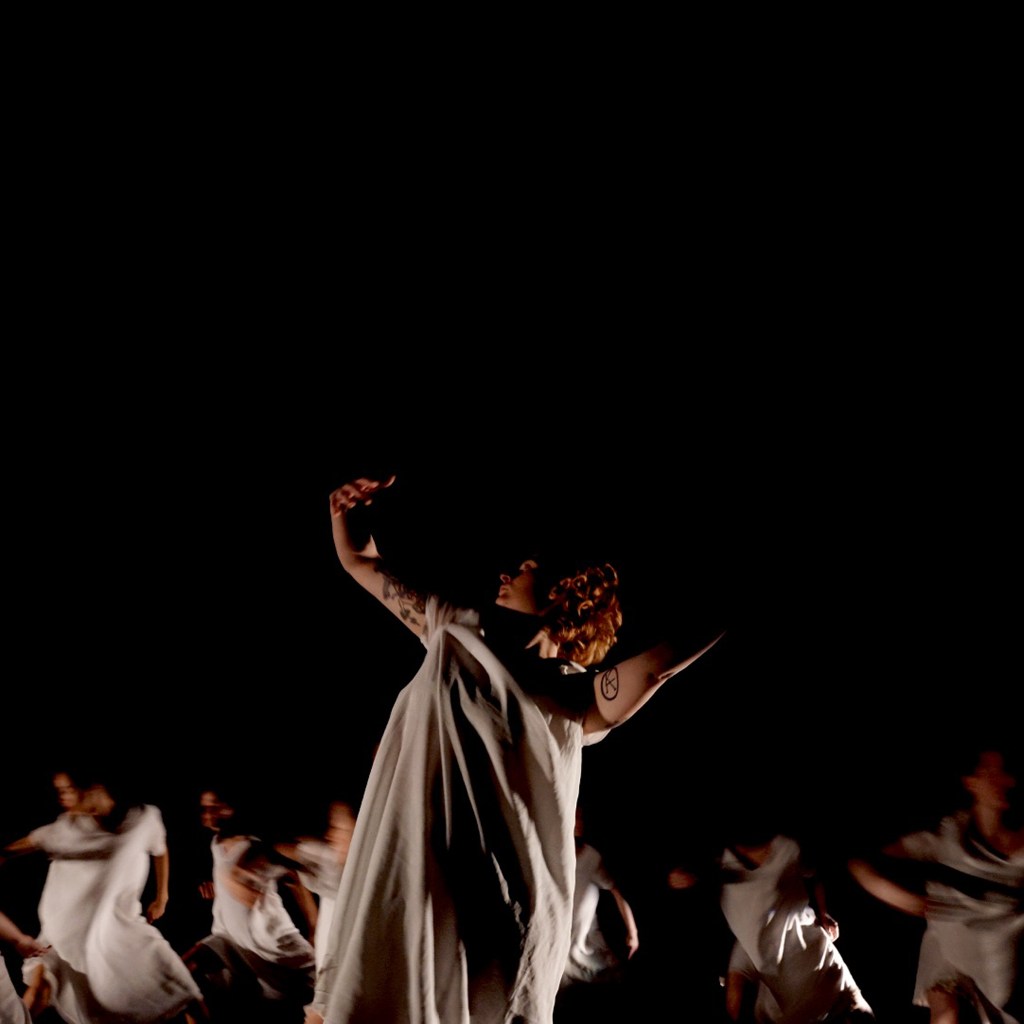
Choose an amount

$5.00
$15.00
$100.00
$5.00
$15.00
$100.00
$5.00
$15.00
$100.00

Or enter a custom amount – no amount is too large…

$

Your contribution is appreciated.

Your contribution is appreciated.

Your contribution is appreciated.

DonateDonate monthlyDonate yearly