
A HOTEL ON MARVIN GARDENS

A HOTEL ON MARVIN GARDENS

“All I want is to run everything and always be right.” – K.C.

A Theater Review by Julinda D. Lewis

CAT – Chamberlayne Actor’s Theatre

At: Dogtown Dance Theatre, 109 W. 15th St., RVA 23224

Performances: February 4 – 12 2022

Ticket Prices: $24.00 General Admission. $20.00 Seniors

Info: http://www.cattheatre.com

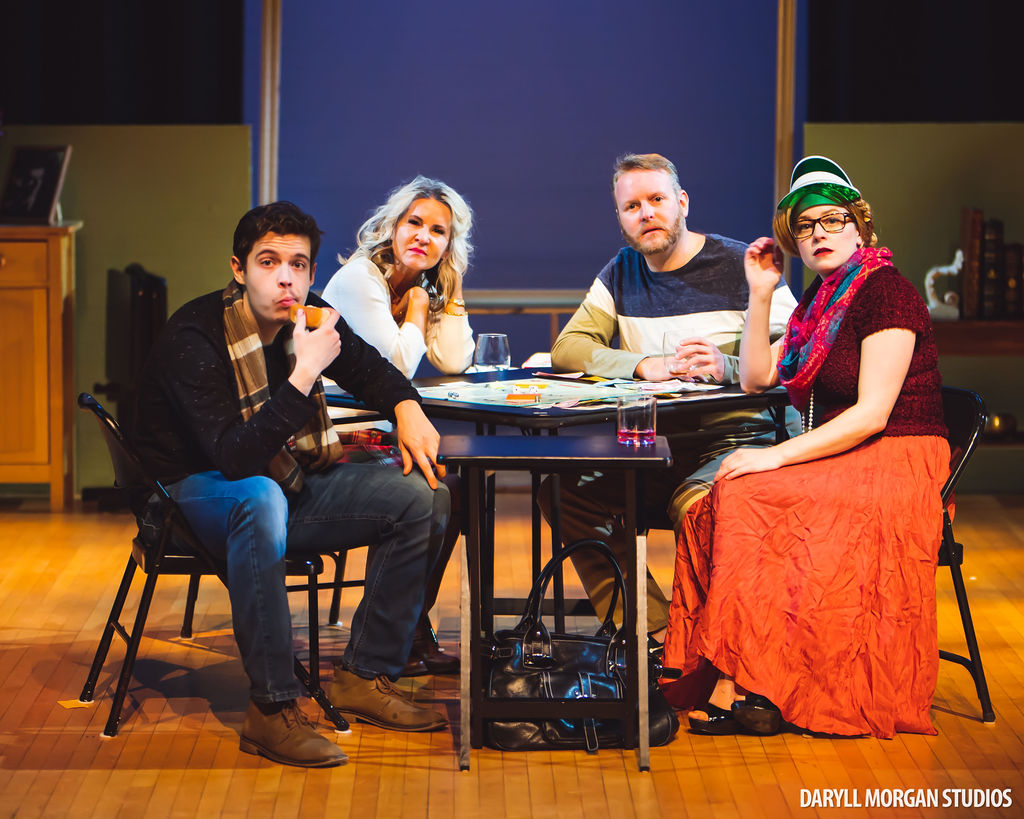
Watching four other people play a game of monopoly could be about as exciting paint dry, After all, it is a long and sometimes slow-moving game, and not exactly the sort of thing that draws spectators. Yet this is exactly what playwright Nagle Jackson expects us to do.

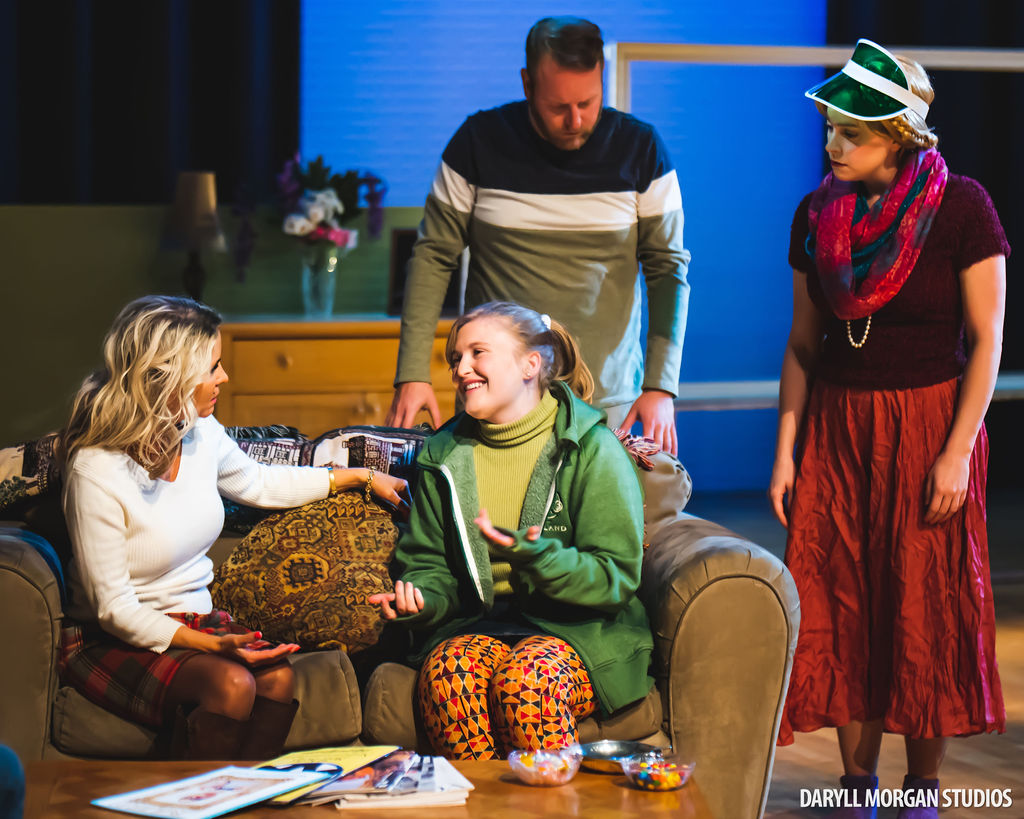
Under the smart direction of Amber dePass, and with an amiable cast led by Crystal Oakley, A HOTEL ON MARVIN GARDENS is both an amusing evening of live theater and an opportunity to use a board game that celebrates capitalism as a metaphor for the use and mis-use of corporate power.

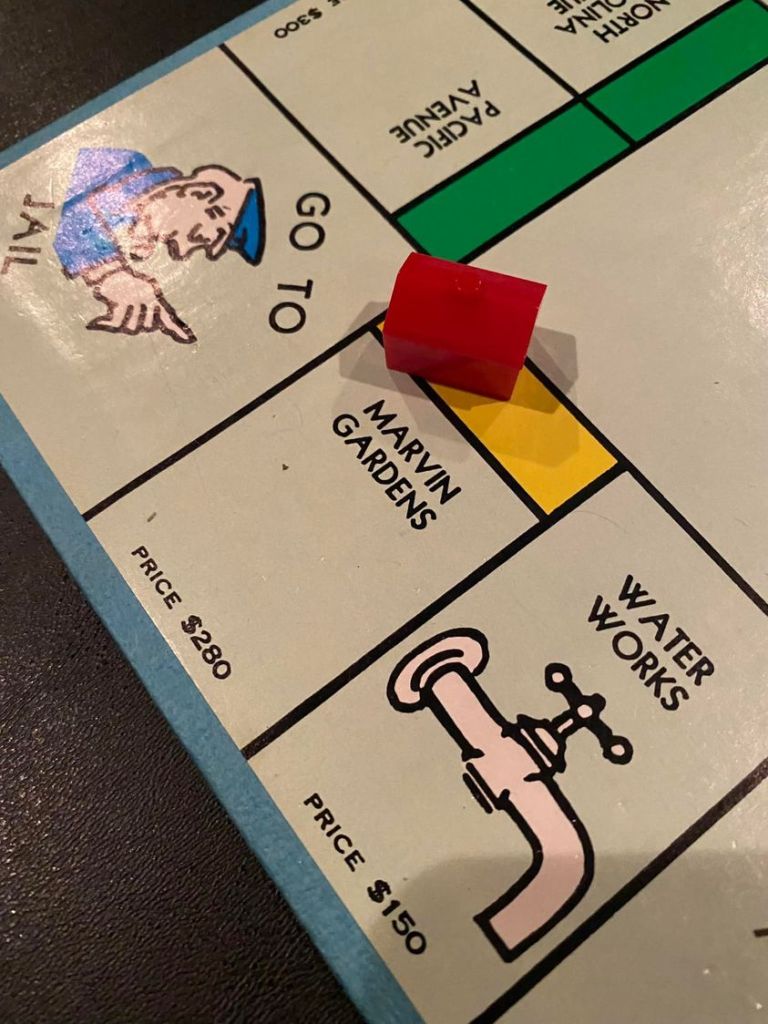
Set on a private island whose owner and sole resident, K.C. has named her magazine ME, A HOTEL ON MARVIN GARDENS ironically takes place on April Fool’s Day. It is a long-standing tradition for K.C. to host an annual gathering on April 1st, the centerpiece of which is a game of Monopoly that comes with a boatload of unwritten rules. K.C. always gets the top hat. K.C. always gets Marvin Gardens, the most expensive property on the board. And K.C. always wins.

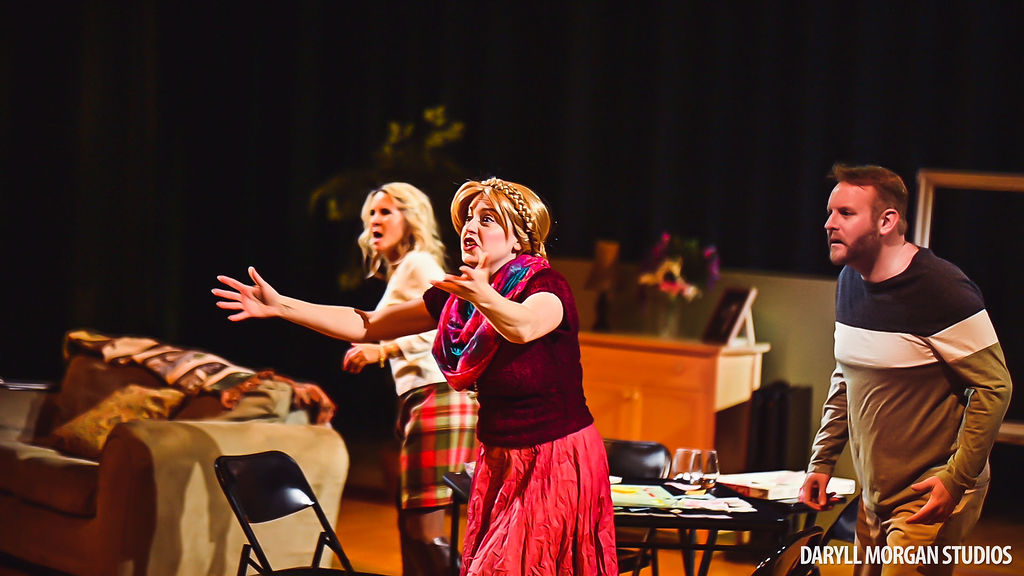
On this occasion, K.C. (Oakley) is joined by her publisher and weekend lover Bo (Aaron Willoughby), her Managing Editor Henry (Joshua Mullins) whom she plans to fire after the party, and his plus one, Erna (Kyle Billeter) who is the magazine’s food editor. At the end of Act One, just as we’re beginning to think this is going to be a long and uneventful day, the author shakes things up by tossing in a surprise visitor. Rose (Liv Meredith) found herself stranded after turning down the advances of her date; angered, he gets in his little boat and leaves her stranded on the island in the middle of a storm. Rose surprises many in the audience when she reveals she is a teacher. Her language and demeanor could have belonged to a high school or college student, but Henry soon takes note of her.

Willoughby’s Bo is a low-key and suitable foil for Oakley’s over-bearing and narcissistic K.C.

I’m not sure what to think of Henry. At times he stands up for himself with confidence, at times he gives in to pretentious free-spirited outbursts, and then there are those other, uncharacterizable moments. I personally was outraged when, during a scheduled bread in K.C.’s precise schedule for game day, Henry went outside and urinated on the rocks – only to come back inside, pick up his drink, and return to the bar without washing his hands!

Billeter’s portrayal of the quirky food critic Erna is undoubtedly the most lovable character. And of course, she raises K.C.’s hackles. No one appears to notice when, on at least two separate occasions, Erna drops her indeterminate European accent when reminiscing about the joys of tuna melts and tuna casseroles, and even lets it slip that her mother was the Queen of Velveeta. Hmm.

A HOTEL ON MARVIN GARDENS seemed to be just what the welcoming audience needed. It was also a minor triumph for CATTheatre, which became a nomadic troupe in the  midst of a pandemic. Their first show after emerging from behind masks was performed at Atlee High School. This one found a home at Dogtown Dance Theatre in Manchester, and the next performance will head west to HatTheatre. Undaunted, the show must go on! A HOTEL ON MARVIN GARDENS has one more weekend of performances, February 11 & 12, at Dogtown Dance Theatre. Just remember, K.C. always gets the top hat and K.C. always wins – even if it means she’s left all alone. Oh, and enter K.C.’s kitchen at your own peril. And you should probably avoid the Pump House…

Julinda D. Lewis is a dancer, teacher, and writer who was born in Brooklyn, NY and now lives in Eastern Henrico County.

A HOTEL ON MARVIN GARDENS

Written by Nagle Jackson

Directed by Amber dePass

Cast

K.C.                Crystal Oakley

Bo                   Aaron Willoughby

Henry              Joshua Mullins

Erna                 Kyle Billeter

Rose                Liv Meredith

Design Team

Stage Manager            Nancy McMahon

Assistant Stage Manager, Costume Design, Set Dresser        Jenn Fisher

Lighting Design          Kaylin Corbin

Set Design                   Andrew Way

Ticket Information

www.cattheatre.com

Ticket prices range from $24.00 General Admission. $20.00 Seniors.

Run Time

The play runs about 1 hour 50 minutes including 1 intermission

Photo Credits: Daryll Morgan Studios

———-

A DOLL’S HOUSE, Part 2

Nora Returns 15 Years After Slamming That Door

A Theater Review by Julinda D. Lewis

At: The November Theatre Arenstein Stage, 114 West Broad Street, RVA 23220

Performances: February 4 – 27, 2022

Ticket Prices: $36-$56. Discounted group rates and rush tickets available.

Info: (804) 282-2620 or www.virginiarep.org

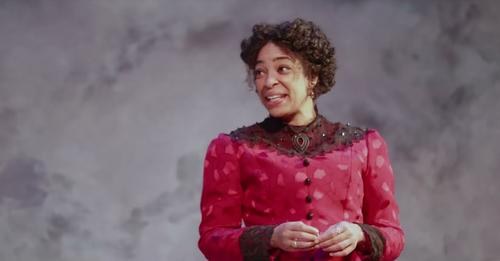
If Nora and Torvald were on social media, there is no doubt their relationship status would be, “It’s Complicated.” When Nora walked out of the home she shared with her husband Torvald at the end of Ibsen’s play, A Doll’s House (1879) it was described as “the slam heard ‘round the world.” Nora’s decision to leave her husband and children was so scandalous Ibsen was forced to write an alternate ending. For 138 years people were left to ponder what happened to Nora.

In 2017 American playwright Lucas Hnath provided us with some of the answers. A Doll’s House,  Part 2 begins with a knock on the door – the same door Nora slammed in 1879. Opening the door to self-exploration was also an open invitation for scandalous speculation and unstoppable feminist progress. Hnath has Nora return after a fifteen year absence to settle some unfinished business.

It is both fascinating and satisfying to see Katrinah Carol Lewis, who played Nora in a 2018 production at what was then TheatreLab, The Basement. In December 2018 I described Lewis’ performance as Nora as one of her most highly charged among many challenging roles. “With her naturally large eyes accented by makeup, and in the intimate space of The Basement, it was easy to see every nail biting emotion, to hear every breath, to practically feel her trembling.” [Follow this link to read my entire review of Ibsen’s A Doll’s House: https://jdldancesrva.com/2018/12/08/a-dolls-house-well-shut-the-door/.]

Nora in 1894 is no trembling bride. Her first knock at the door is confident; the second is commanding. She wears the finest clothes, and sits  with her legs spread apart and leaning forward, forearms resting on her thighs, in her straight-backed chair. In many ways, both financial and experiential, this older and wiser Nora has achieved success. But as the story unfolds, it becomes obvious that in more ways than she would like, the new Nora has retained much of the old Nora.

Ibsen’s A Doll’s House is not a prerequisite for Hnath’s A Doll’s House, Part 2. There are plenty of references to Ibsen’s work to fill in the essential background, but if you are familiar with the original, and even better, if you have seen Lewis in the original, it is a much more fulfilling journey.

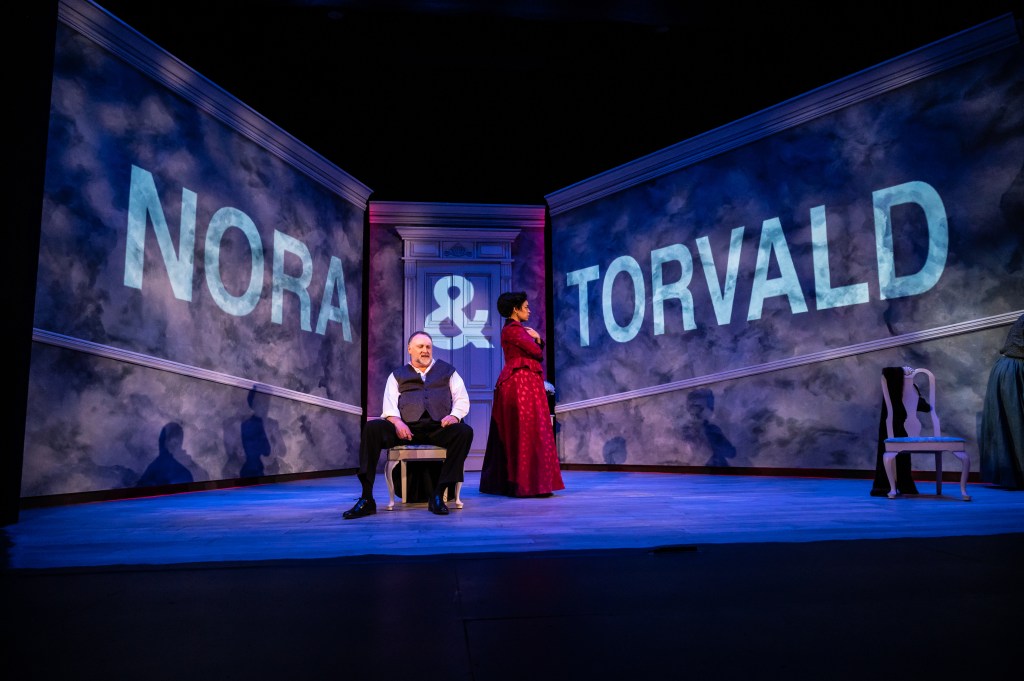
Lewis and David Bridgewater, who plays Torvald in this new production, circle around each other like wary cats, avoiding physical contact – or even eye contact – until their climactic scene in the final third of the play. Then their explosive interaction reveals to the audience that what Nora has endured in search of the elusive “true marriage,” a marriage of equals, was right under her nose the entire time. In one fleeting moment, the estranged couple drop their masks, we glimpse the manifestation of what she always wanted, and before we can fully absorb it, before we can get all sentimental about it, it is gone – and so is she. Again. While A Doll’s House, Part 2 answers many questions raised in the original, it leaves us with just as many, if not more, than we had before.

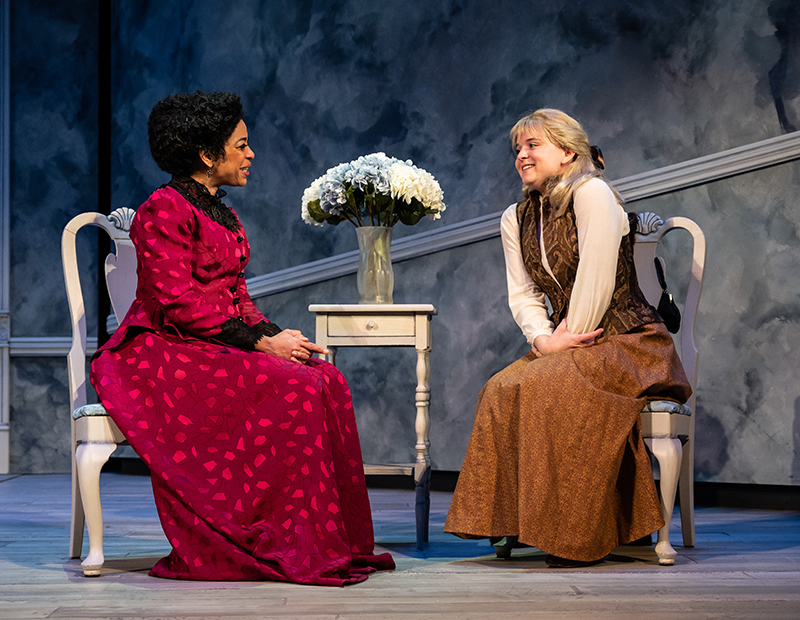
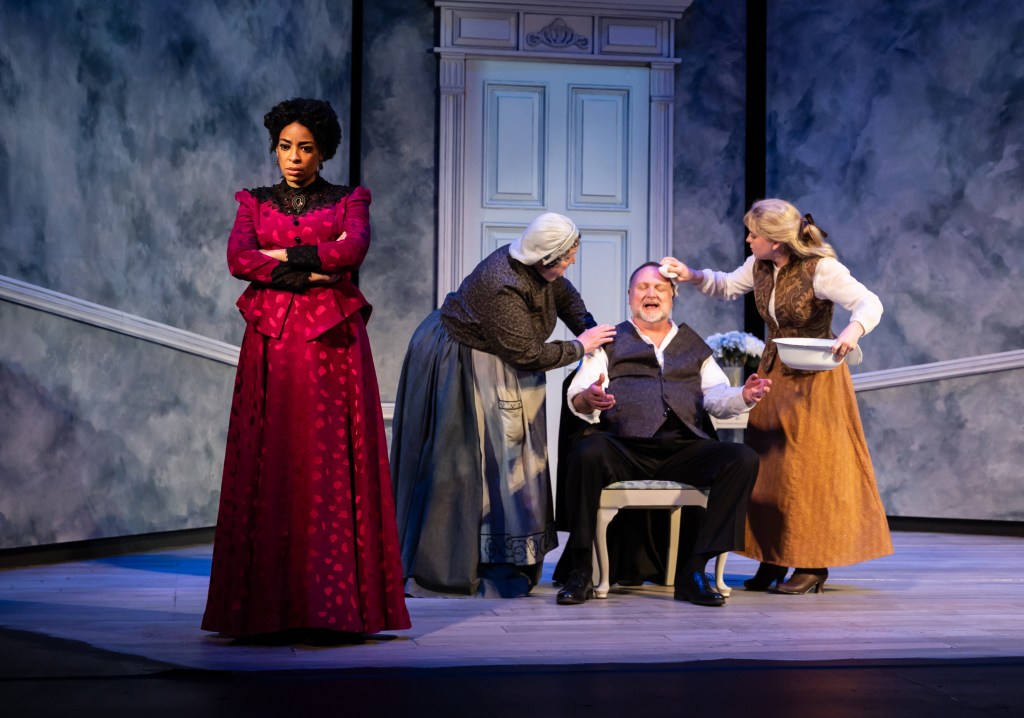
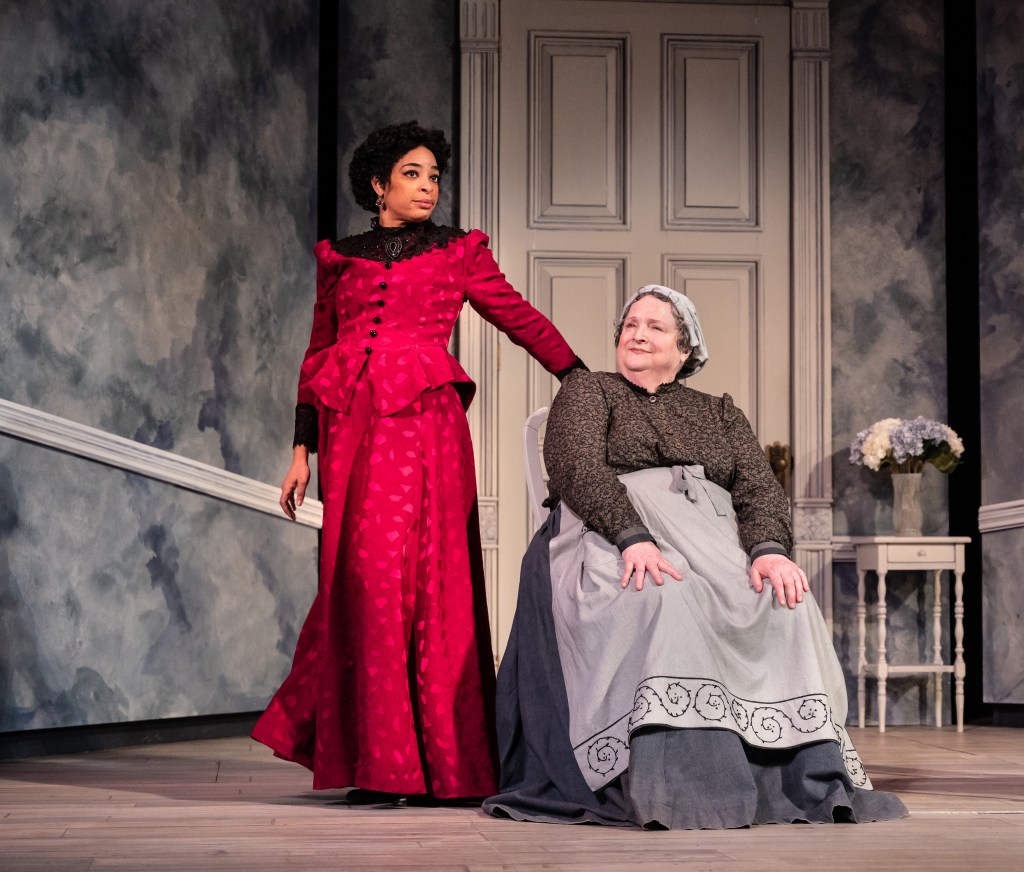
Everything in A Doll’s House, Part 2 has been pared down. The set consists of two elegantly painted or papered walls, a gigantic door, two formal straight-backed chairs, and a small table holding a vase of flowers. The little details that make the space a home have been omitted – or, as Anne Marie says, anything that belonged to Nora was thrown away when she left. The cast has been pared down to just two leading actors (Lewis and Bridgewater) and two supporting actors: Catherine Shaffner as the beleaguered nanny turned housekeeper, Anne Marie and Katy Feldhahn as the Helmer’s youngest child, Emmy. The play itself has been paired down, from Ibsen’s three acts and two intermissions to a 90-minute production performed without intermission.

What has not been pared down is the family dysfunction. Emmy, who has spent the better part of her life without a mother is so much like Nora it’s shocking. As a child, Emmy asked her two older brothers to tell her what they remembered about their missing parent. It may be a genetic or spiritual connection but neither of them seems to be aware of it – or, perhaps, it is just their habit to deny the obvious. Shaffner, in the role of Anne Marie who raised young Nora as well as her children, provides important connecting links between the past and the present, as well as a few welcome comedic outbursts of foul language.

Sharon Ott’s direction retains the main characters’ affectations and packs a lot of emotions and family drama into a much shorter production time. Although there did seem to be a bit of a lull bnear the end of the first half, Emmy’s appearance turned up the heat – and her Option 3 turned the tables on Nora.

Nora and Torvald are not likeable people, but they are familiar. We know people with some of their least likable characteristics. They are members of our own families and sometimes they are us. A Doll’s House, both the original and Part 2, was not intended to give the viewer a satisfying or happy ending. Both make us question gender, marriage, institutions, laws, and systems. They force us to look at the familiar from new perspectives and encourage us to question why we accept things the way they are – and consider what might happen if we walk out the door, or even knock it off its hinges.

Julinda D. Lewis is a dancer, teacher, and writer who was born in Brooklyn, NY and now lives in Eastern Henrico County.

A Doll’s House, Part 2

By Lucas Hnath

Cast

Nora                                                                Katrinah Carol Lewis

Torvald                                                            David Bridgewater

Anne Marie                                                     Catherine Shaffner

Emmy                                                              Katy Feldhahn

Nora Understudy                                          Donna Marie Miller

Torvald Understudy                                    David Watson

Anne Marie Understudy                            Lisa Kotula

Emmy Understudy                                       Sharaia Hughes

Direction & Design

Direction Sharon Ott

Assistant Director                                        Cam Nickel

Scenic Design                                                 Katherine Field

Costume Design                                            Sue Griffin, Marcia Miller Hailey

Lighting Design                                             BJ Wilkinson

Sound Design                                                  Jacob Mishler 

Stage Management                                      Shawanna Hall

Ticket Information

Box Office: 804-282-2620

www.virginiarep.org

Ticket prices range from $36 – $56/

Discounted Group Rates and Rush tickets are available.

Run Time

The play runs about one hour and 35 minutes with no intermission

Here’s a little video teaser:

Photo Credits: Aaron Sutten [production photos were not yet available at the time of publication] NOTE: Photos updated February 8, 2022.

———-

Virginia Rep COVID Guidelines

To provide the highest level of safety, all patrons are required to show proof of vaccination, or proof that they have received a negative COVID test by a professional technician within 48 hours of the performance date/time.

Patrons must show your vaccination card or a photo of the card on your phone, along with a valid photo ID, when you arrive for the performance. If you are unable to be vaccinated, you may provide proof of a Rapid COVID-19 antigen test taken within 48 hours of your performance. At home tests will not be accepted.

Please see the Virginia Rep Covid Safety FAQ for details.

In accordance with current city, state, and CDC guidance, face masks are REQUIRED at all times while you are in the building, regardless of whether or not you have been vaccinated.
At this time, no food or drink is allowed in the theatre.

MURDER FOR TWO

Murder for Two Slays as a Two-for-One: Half Murder Mystery, Half Comedy

At: The Swift Creek Mill Theatre, 17401 U.S. Route 1, S. Chesterfield, VA 23834

Performances: January 29 – February 26, 2022

Ticket Prices: $49. $44 for seniors, students, military, and first responders.

Info: (804) 748-5203 or https://www.swiftcreekmill.com

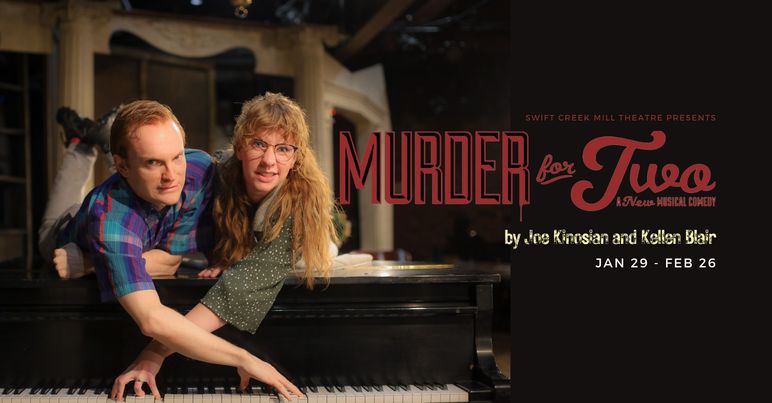
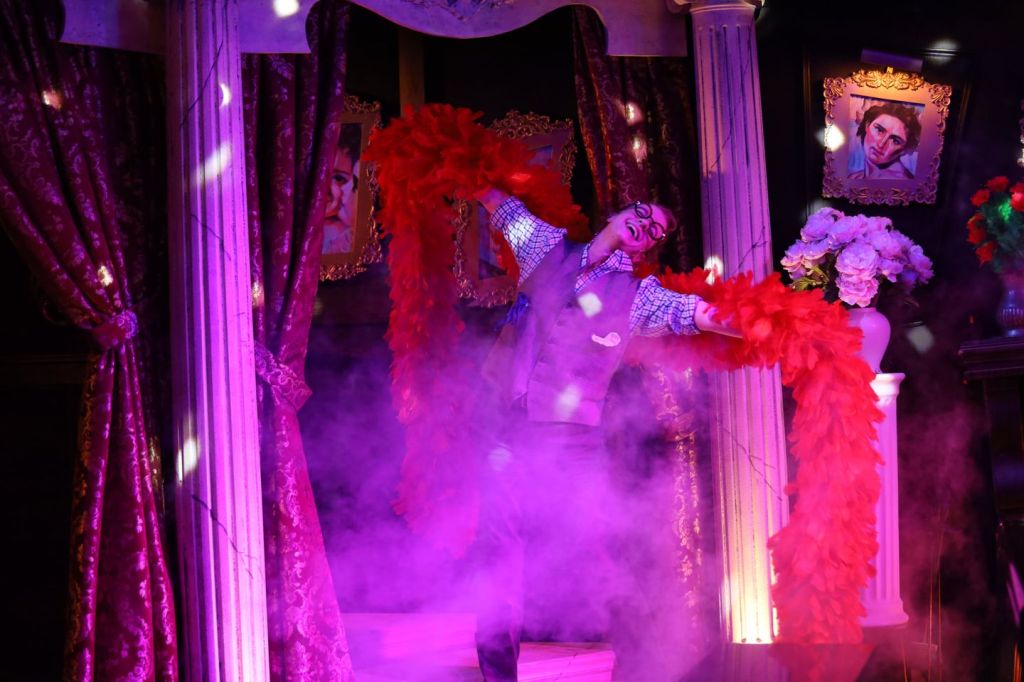
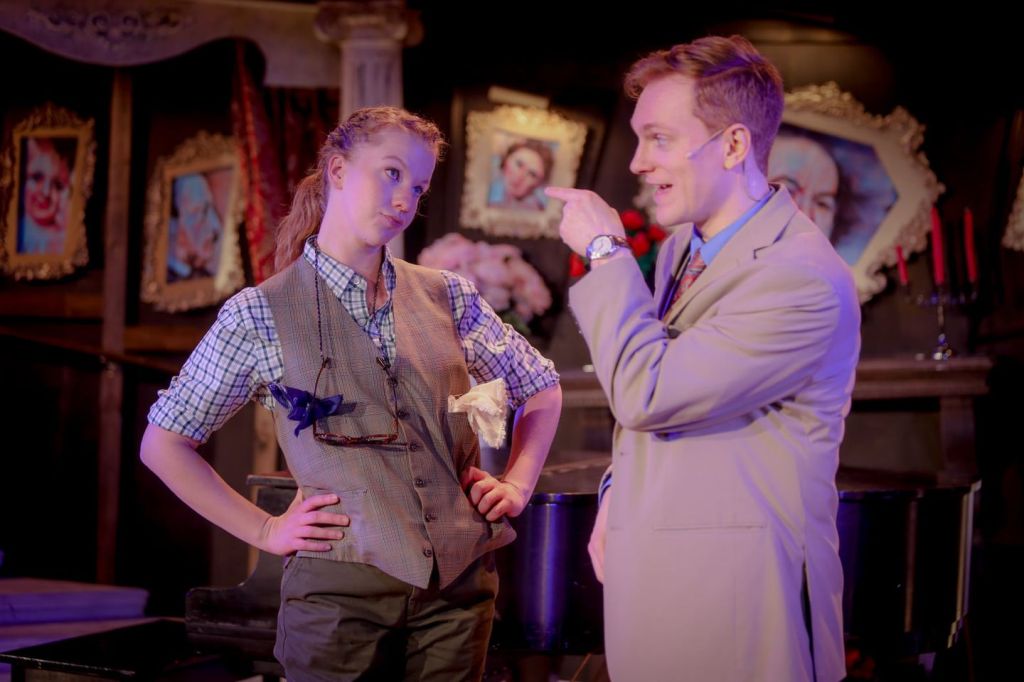
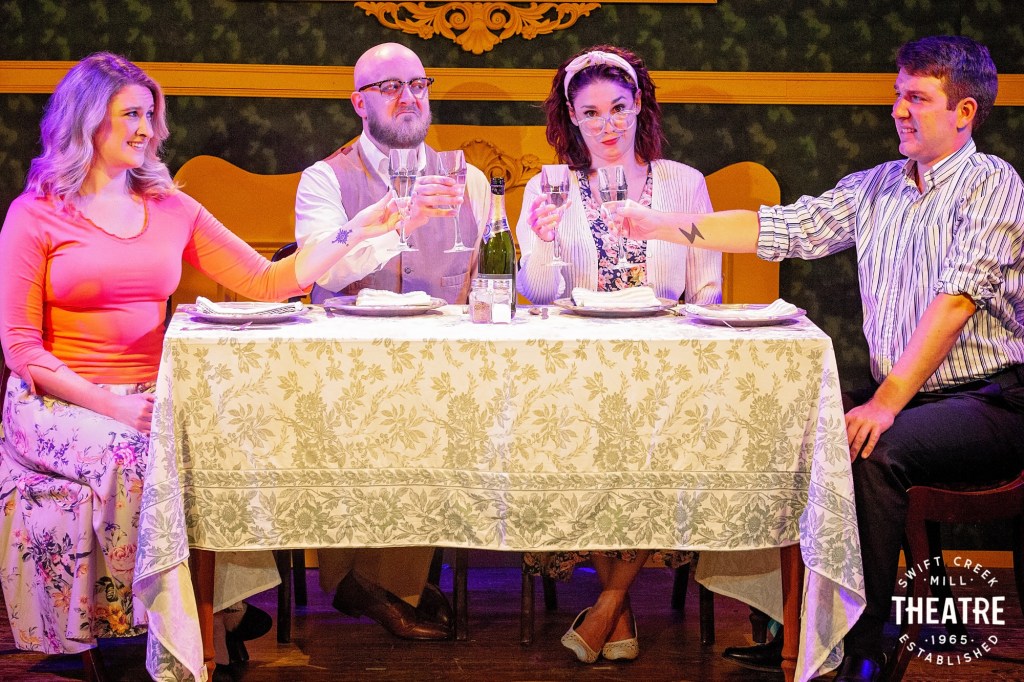
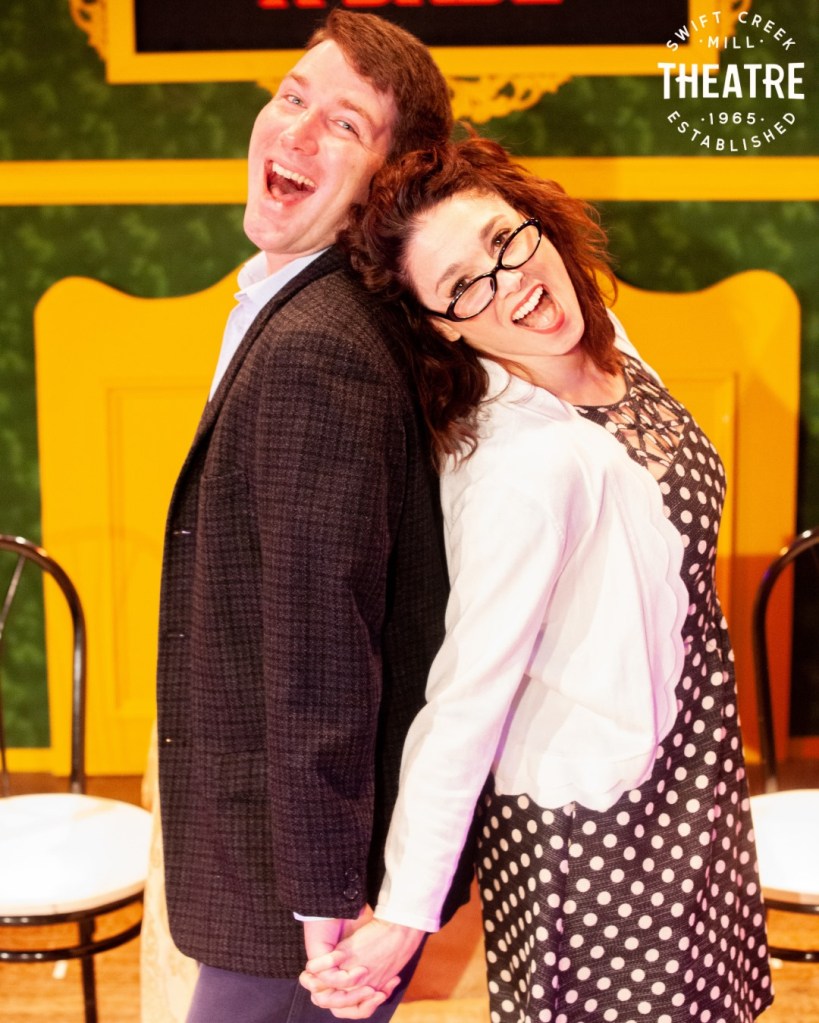
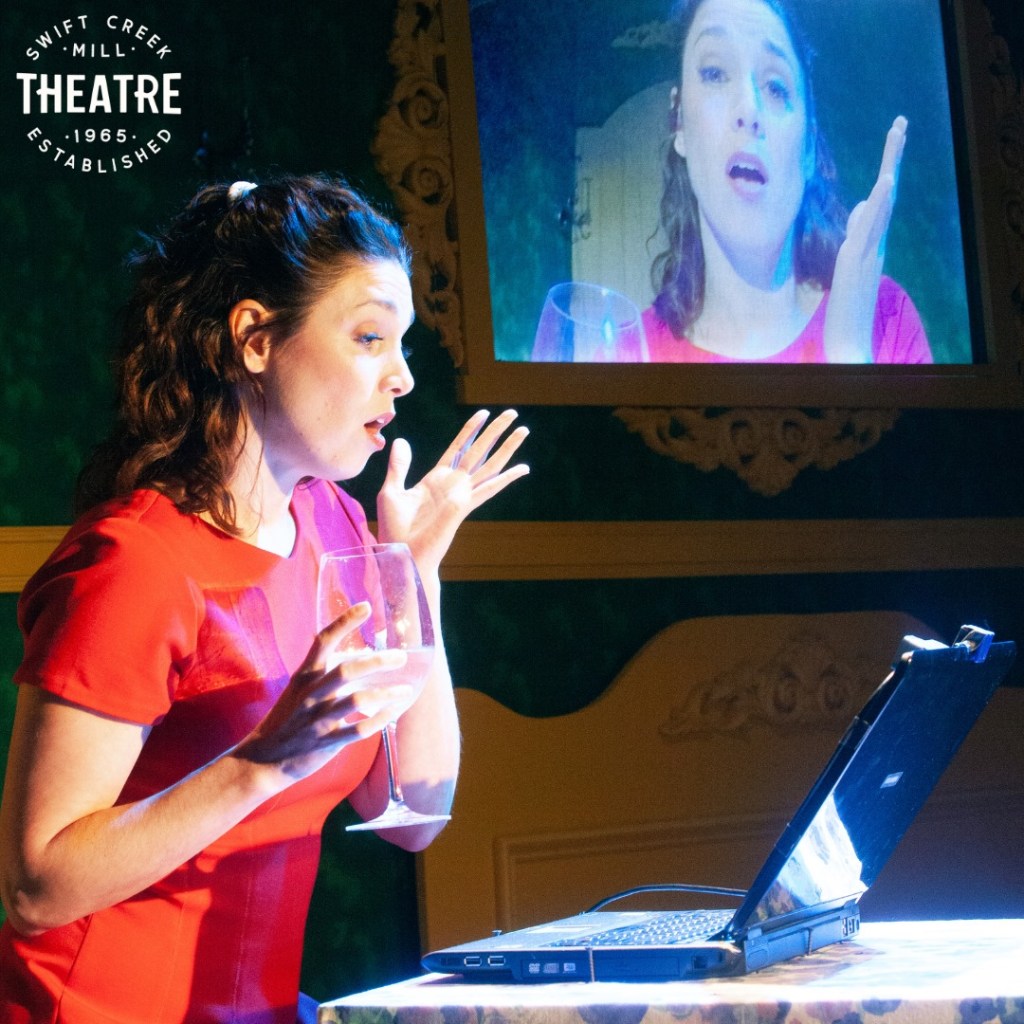
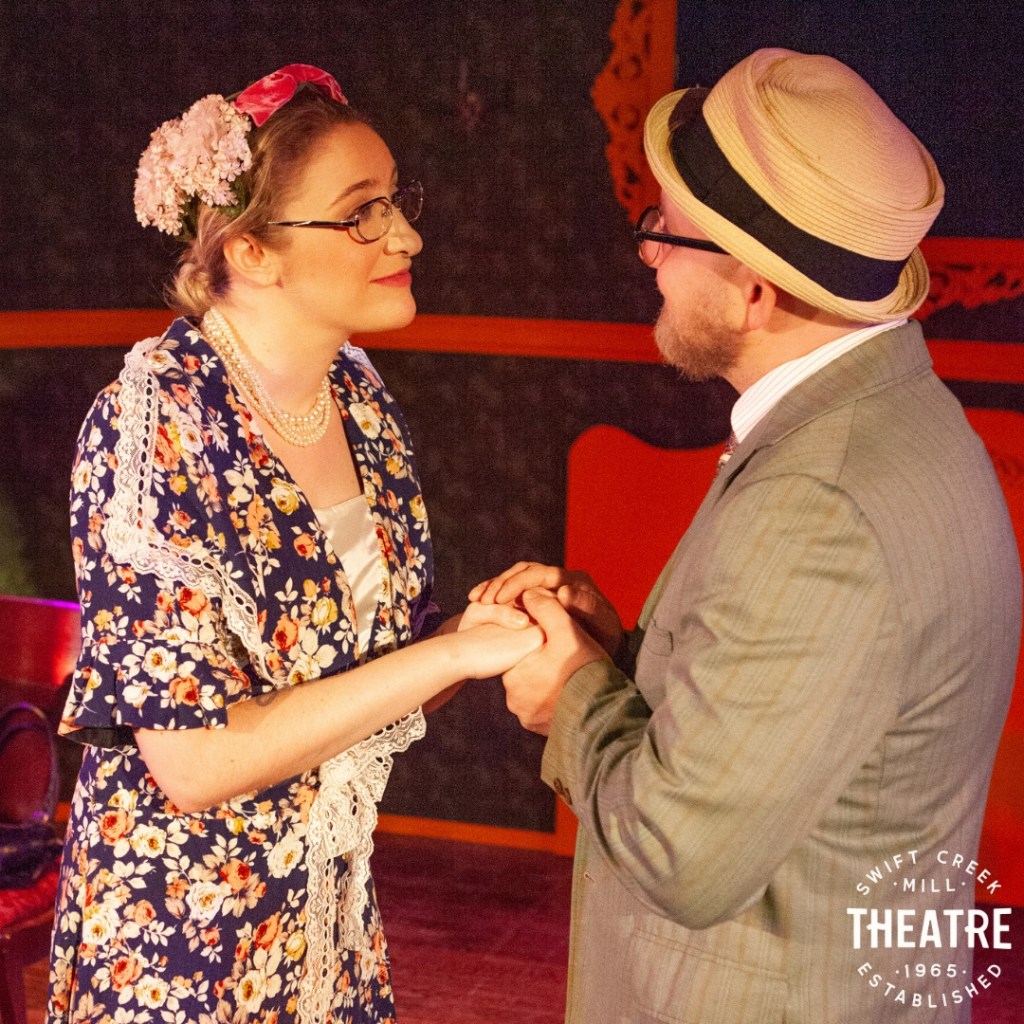
The two actors who play ALL the characters in MURDER FOR TWO come onstage wearing birthday party hats, and immediately begin a series of zany and wordless shenanigans. Their wacky introduction requires them to dress the stage with pedestals, vases filled with flowers, magician’s trick bouquets, and comic sound effects. The stage itself, designed by Tom Width, features stall Greek columns, crazily angled doors, and portraits over the fireplace that have as many as seven sides and angles. A baby grand dominates the center of the stage and could very well be given credit as a third character. As the play progresses it becomes clear that this musical comedy murder mystery, written by Joe Kinosian and Kellen Blair is, as Director Tom Width describes it in his program notes, “quirky in the best possible ways.”

Mark Schenfisch plays Marcus Moscowicz, an ambitious police officer with all-consuming dreams of becoming a detective. Marcus initially appears as to be insufferably arrogant and narcissistic, but Schenfisch gradually digs down and mines the underlying integrity that drives his character.

Most remarkable, however, is Emily Berg-Poff Dandridge who plays ALL the other characters – with one notable exception I will not reveal here because I don’t want to spoil it for those of you who have not yet seen MURDER FOR TWO. The mystery revolves around who killed the prolific author Arthur Whitney who was unceremoniously murdered as he arrived for his own surprise birthday party as the remote mansion where he lives – or lived – with his wife. It is worth noting that Whitney was not well liked. All who gathered to celebrate his birthday had appeared as a character in one of his books, making them all plausible suspects.

Dandridge play the roles of the newly widowed Dahlia Whitney, the Whitney’s feisty and constantly bickering neighbors, Murray and Barb Flandon, Whitney’s talkative and over-achieving niece Stef, a well-known ballerina names Barrett Lewis who has a vaguely Russian accent that does not match her name, Dr. Griff – a local psychiatrist who conveniently ignores the ethics of doctor-patient confidentiality – and, last but not least, Timmy, Yonkers, and Skid, the only remaining members of a twelve-member boys’ choir who were invited to provide entertainment for the birthday party.

As required by the script, Dandridge swiftly transitions between these nine characters using a pair of large round eyeglasses and a red baseball cap as the only notable props. The majority of the characterizations are accomplished through shifting the actor’s center of gravity, changing the posture, and adjusting the voice, accent, and phrasing – often in mid-sentence. The result is that Dandridge often interrupts herself and does it so well we almost forget that there is a single actor creating multiple characters. Thank you, Emily Dandridge, for an outstanding performance.

As far as mysteries go, the authors have written in enough details, anecdotes, and red herrings to keep things interesting. The biggest of these is Dahlia Whitney’s increasingly colorful, complex, and loud musical confessions.

And then there’s the piano. MURDER FOR TWO is a musical, but not the breaking-into-song or catchy-show-tunes type of musical. Instead of the usual offstage band, both actors play the piano, using it like anther character’s voice or as a substitute for their own. Sometimes they do sing, but most often the piano seems to be another voice rather than an instrument to accompany the human voices.  Speaking of voices there is one character who is NOT voiced by Dandridge who is represented by a sound effect reminiscent of the muted trombone voice of the invisible adults on Peanuts animated shows.

MURDER FOR TWO is filled with a steady stream of surprises. The director makes sure the pace rarely lags. This show might even trigger sensory overload for some viewers. The story is complex enough to hold the audience’s attention for ninety minutes with no intermission and the lighting is as wacky as the plot. I especially liked the effect of the arriving automobiles, and there are plenty of other special effects that surprise, stun, and amaze. The physical set screams comedy, and the writers and actors have successfully met the challenge of this hybrid genre of theatre without detriment to either the comedy or the mystery elements. The rapid transitions and complexity sometimes make it a challenge for the audience as well, and there are occasional asides or moments when the audience is directly addressed – giving us a moment to catch up. MURDER FOR TWO is “extra” and that’s one of the best things about it.

MURDER FOR TWO

Book and Music by Joe Kinosian

Book and lyrics by Kellen Blair

Cast:

Mark Schenfisch as Marcus Moscowicz

Emily Berg-Poff Dandridge as The Suspects

Direction and Design Team:

Directed by Tom Width

Musical Direction by Mark Schenfisch

Costume Design by Maura Lynch Cravey

Lighting Design by Joe Doran

Scenic Design by Tom Width

Technical Direction by Liz Allmon

Run Time:

90 minutes, no intermission

Tickets:

$49

$44 for seniors, students, military, and first responders.

Photos: Robyn O’Neill

BAREFOOT IN THE PARK

A Romantic Comedy

Corie: You wouldn’t even walk barefoot with me in

Washington Square Park!

Paul: It was 17 degrees!

A Theater Review by Julinda D. Lewis

Presented By: Virginia Rep

At: Hanover Tavern, 13181 Hanover Courthouse  Road, Hanover, VA 23069

Performances: December 11, 2021 – January 9, 2022

Ticket Prices: $48. Prices are subject to change during the run. Discounted Group Rates and Rush Tickets are available.

Info: (804) 282-2620 or www.virginiarep.org

First, let’s be clear: yes, it’s December, and SURPRISE! – Neil Simon’s BAREFOOT IN THE PARK is not a Christmas show. What it is, is a delightful romantic comedy that appears to be as much fun for the actors as it is for the audience.

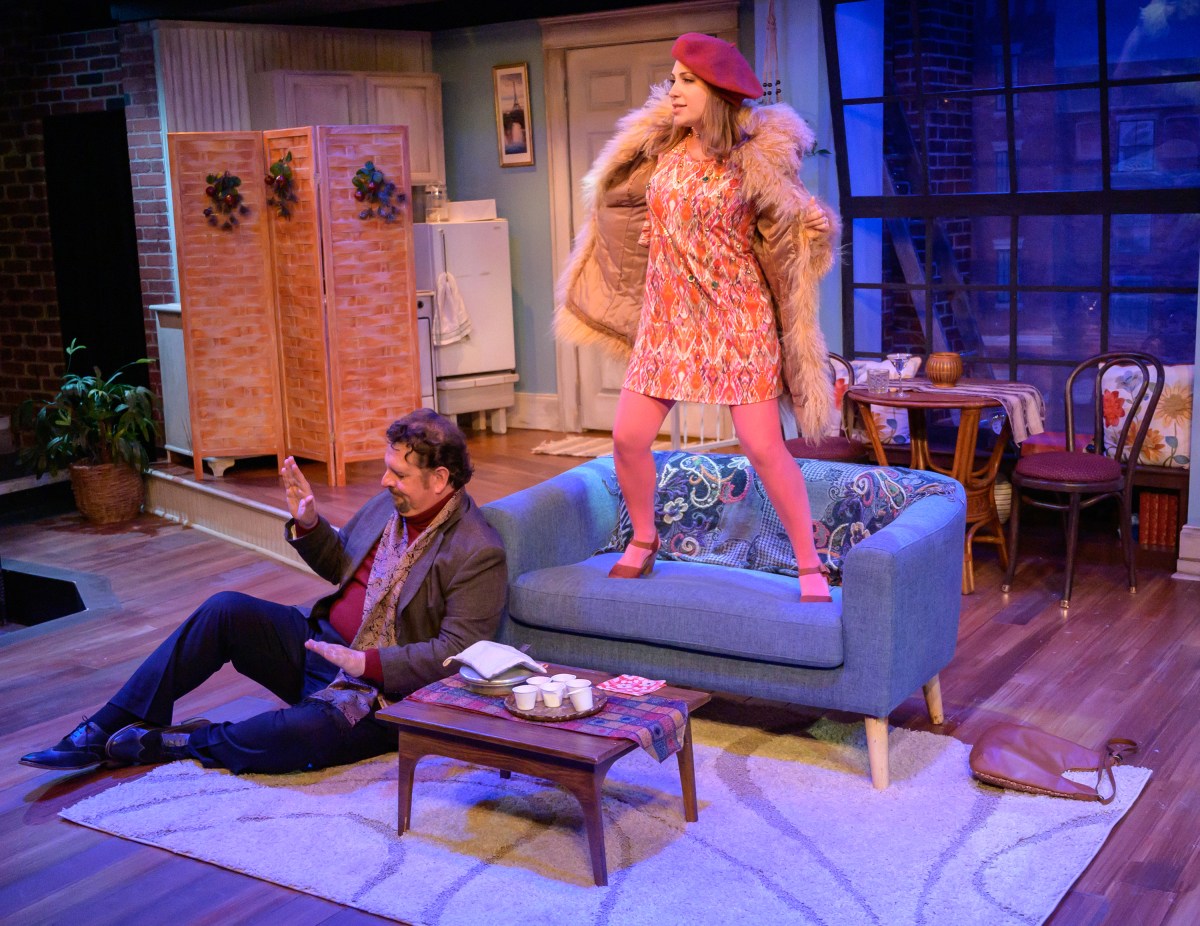
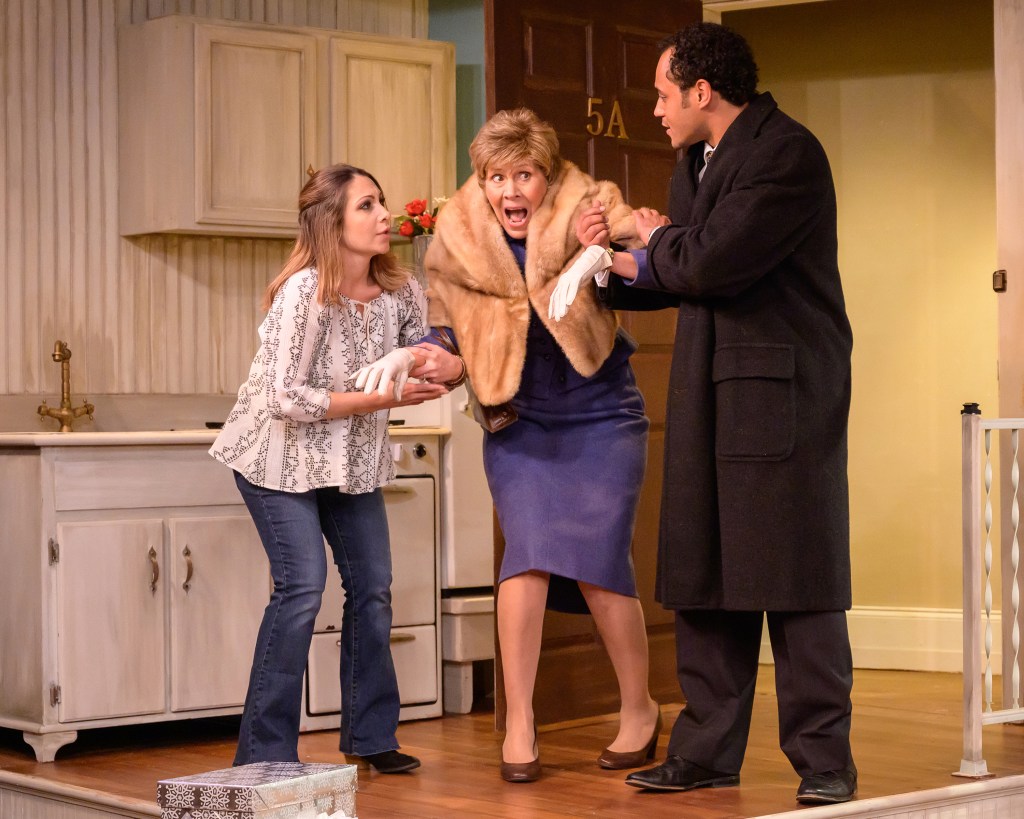
The plot is a simple one: two newlyweds move into their first apartment after spending their honeymoon is an upscale New York City hotel. Their new home is a fifth floor walk up in a Manhattan brownstone. Let’s just say it’s a fixer-upper. There’s a kitchenette, a bathroom with no bathtub (but at least the bathroom is inside the apartment – those familiar with old New York apartments know what I’m talking about), and a bedroom so small that when you open the door it hits the double bed, which you have to climb over to reach the closet, which is leaking. Speaking of leaks, there is a hole in the skylight – you know, the window in the roof – and it’s February. The apartment quickly drives home this young couple’s differences: she’s impulsive and free-spirited and he is a conservative lawyer who is more compatible with his mother-in-law than her own daughter has ever been.

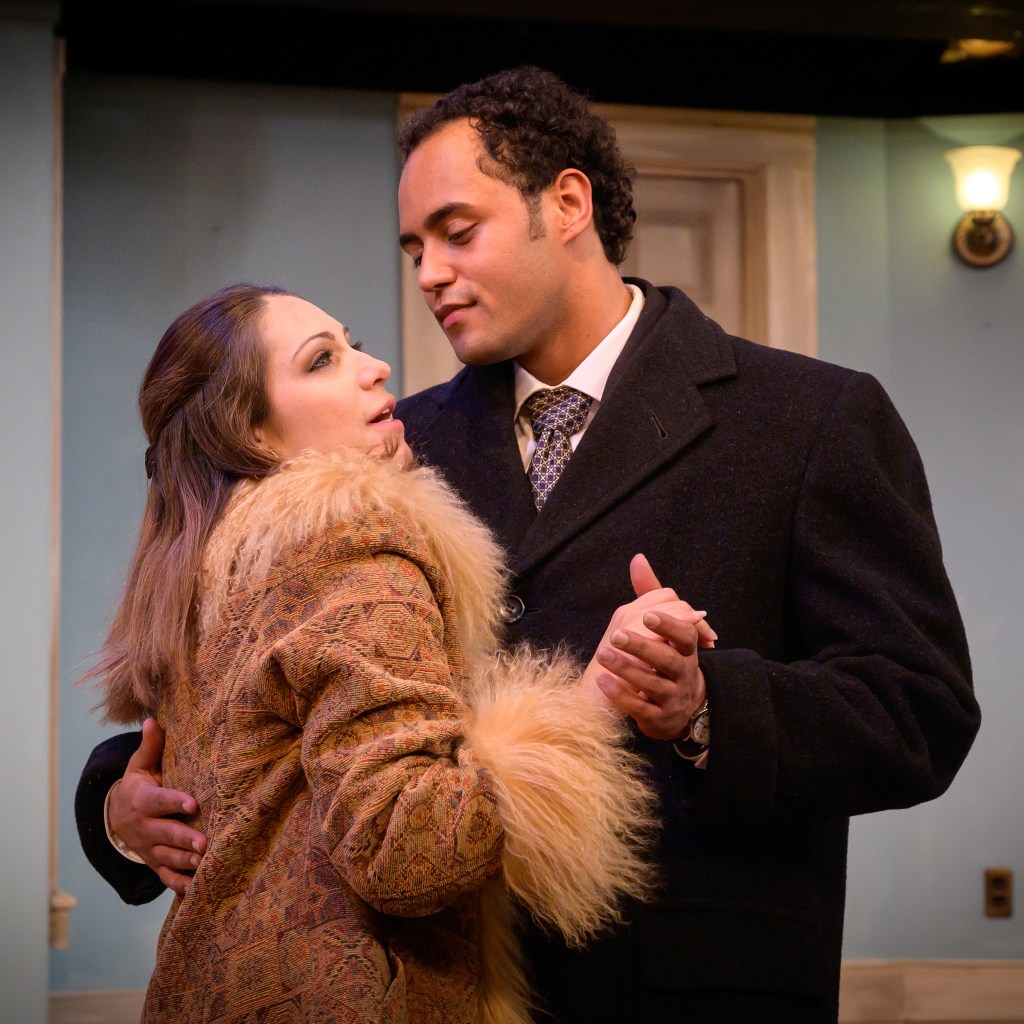
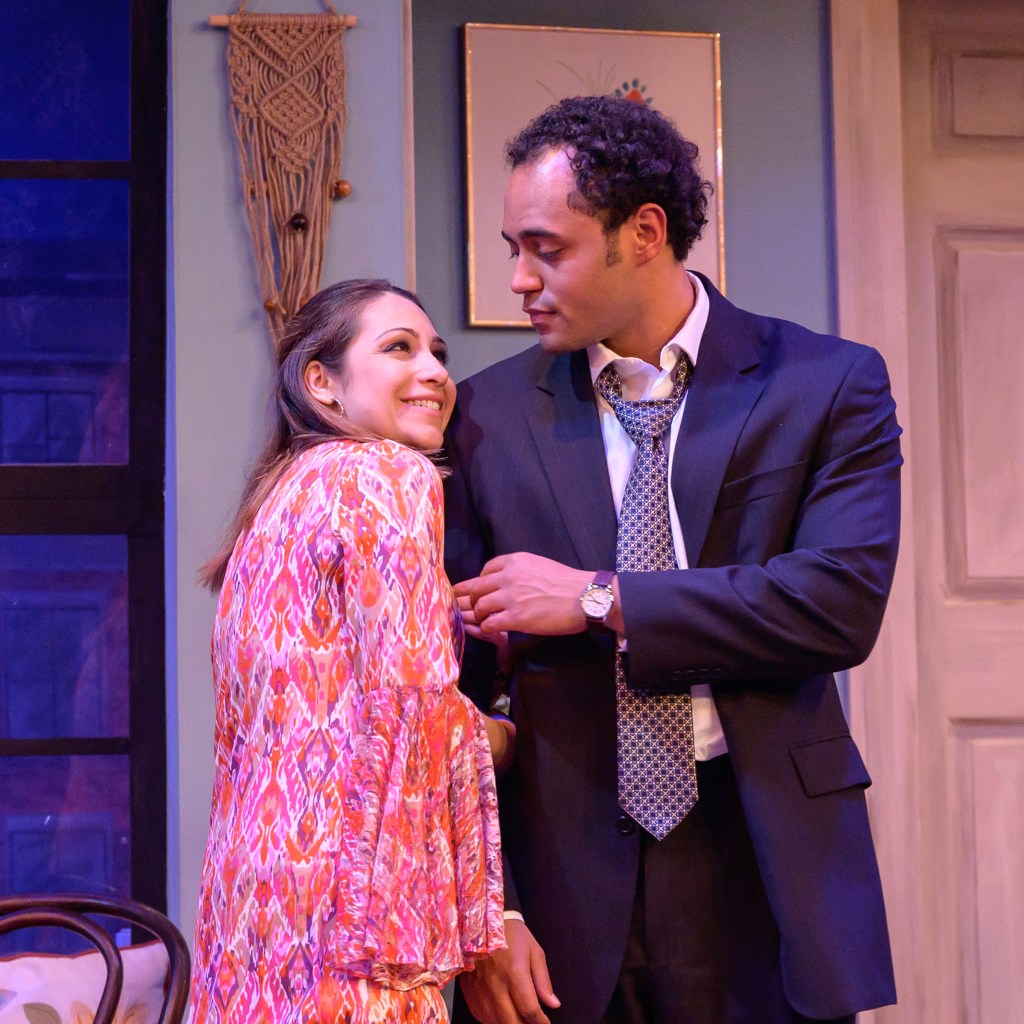
Rachel Rose Gilmour was perfectly cast as newlywed housewife Corie Bratter. (And yes, I’m using the terms that would have been used in 1968.) Her brightly colored wardrobe captures both the period and her character’s personality. Trevor Lawson demonstrates enviable restraint as the husband who is hit with one surprise after another: the rent is twice as much as Corie is willing to tell her mother they actually pay; Paul saw the third floor apartment prior to moving in, not realizing their apartment was on the fifth floor – not counting the outside stoop, and of course there is the matter of the tiny kitchen, the lack of a bathtub, and the miniscule size of the bedroom. To make matters worse, their furniture is delayed.

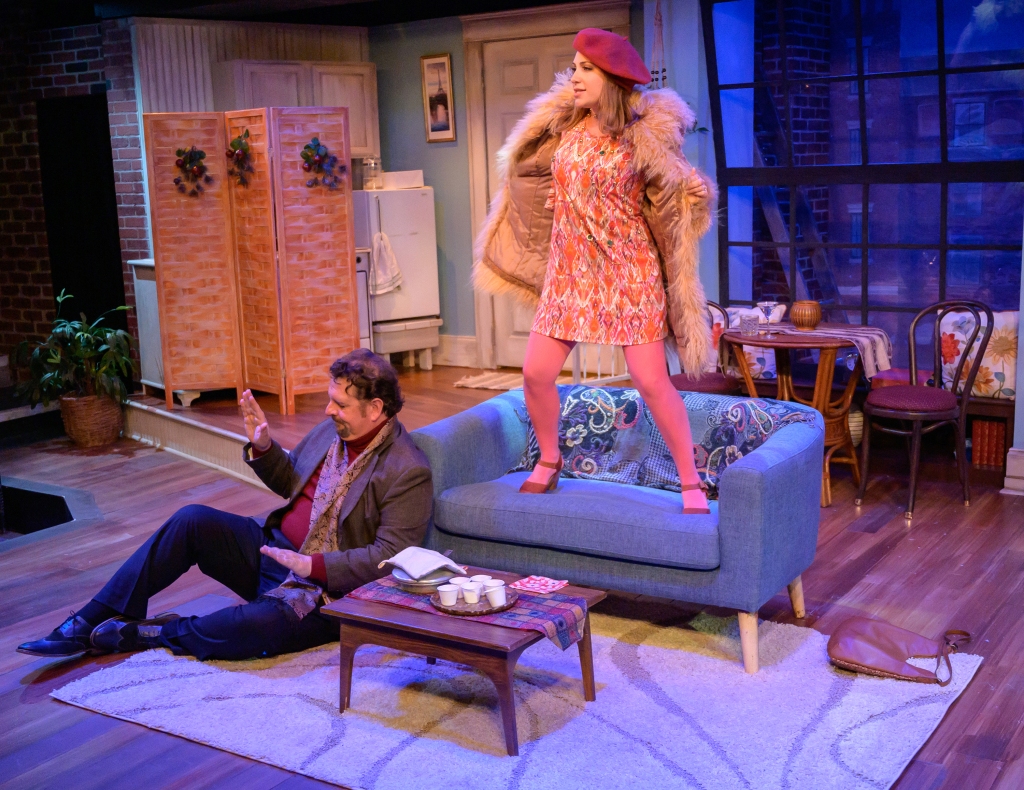
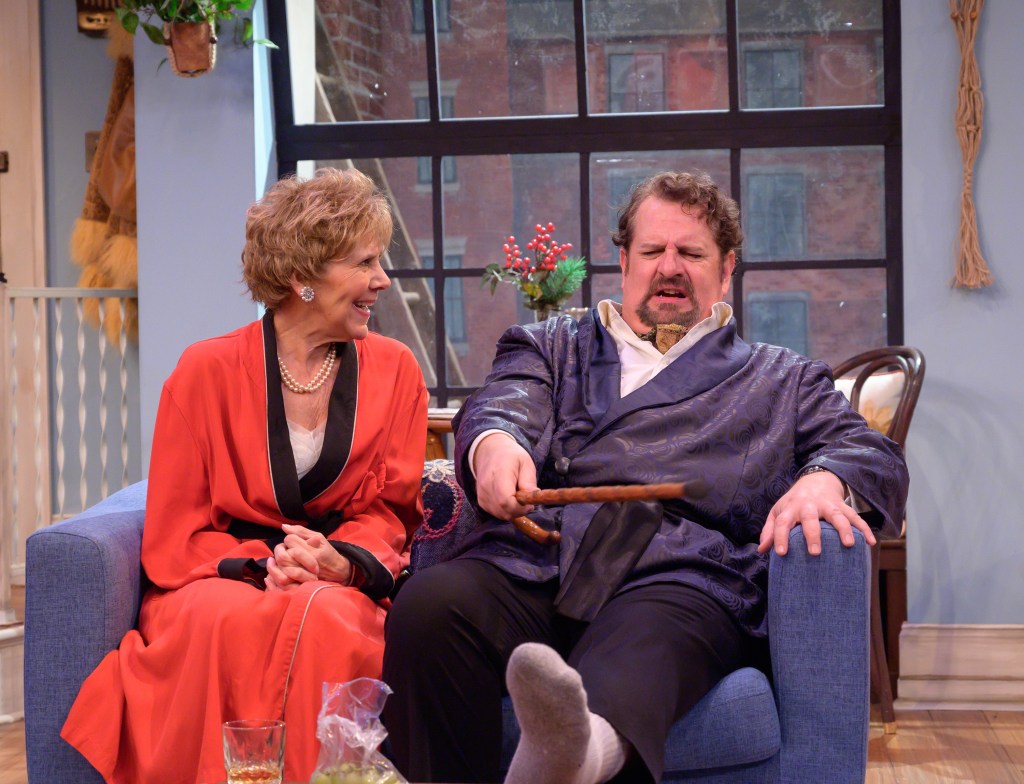
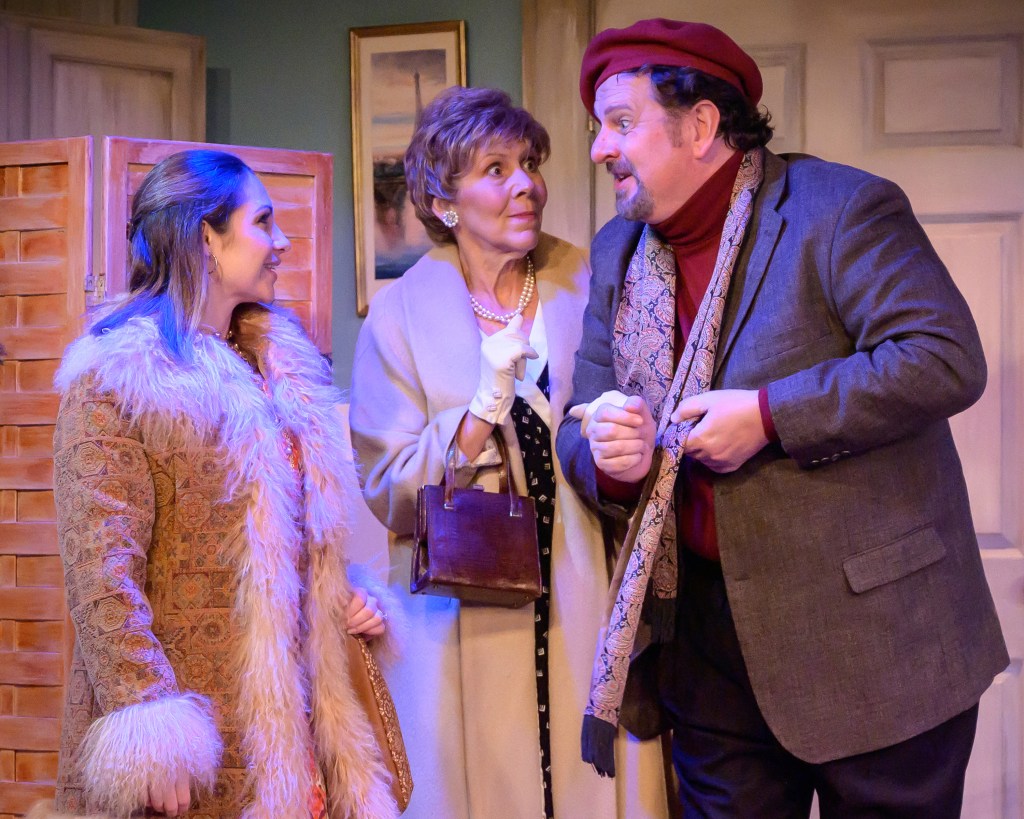
As compelling as Gilmour and Lawson are, it was Jill Williams, reprising her 2005 role as Corie’s mother, Ethel Banks, who stole the show. Williams reminds me – and I truly mean this as a compliment – of Carol Burnett. Her carriage, her facial expressions ( especially when commenting on her daughter’s apartment), her gestures, her delivery all work together to deliver pure, belly laughing comedy. I simply loved Jill Williams in this role. Opposite Williams was Joe Pabst, also reprising his role as the eccentric neighbor Victor (pronounced “Wicktor”) Velasco. How eccentric is he? I am glad you asked. Not only does he cavort about in a beret, a dressing gown, and slippers, he is a shameless flirt and moocher, and we first meet him when he knocks on the Bratters’ door so he can climb through their window to gain access to his attic apartment, But I won’t give it all away. Go see it to find out why, it’s well worth the trip.

Supporting roles include Quan Chau as the telephone repair man and Williams’ husband Eric Williams as a delivery man. Who’s old enough to remember when the telephone was connected to the wall and the phone number was alpha-numeric? The Bratter’s new phone number was El Dorado 5-8191.One further cast note – and I had to think about whether to mention this at all, but I think it is relevant. This cast of Barefoot in the Park is an example of color-blind casting. Yes, an Asian actor plays the telephone repair man, but even more significantly, the leading man is played by a person of color. It would have been quite unusual to see an interracial couple in New York in 1968, or a black male lawyer living in midtown Manhattan who was completely accepted by his white mother in law who lives in New Jersey. Yeah. All of that would have made this an entirely different type of play – and the word “comedy” would not have been part of it.

While much less elaborate than many period apartments that have been constructed on the Hanover Tavern stage, Terrie Powers’ set design quickly transformed from a hideous empty shell into a warm and inviting home with just a few pieces of furniture and some well-chosen decorations. Logistically, there were a couple of things that seemed a little off. The fourth wall apparently held a mirror, but sometimes the actors seemed to be looking through the wall. And the other was the existence of a wood-burning stove in the apartment which may not have been a housing code violation in 1968 but it would certainly have been unlikely for a landlord to allow a tenant to use it.

There is plenty of physical comedy in Barefoot in the Park, much of it stemming from the never-ending flights of stairs. Director Jan Guarino set a brisk pace, and the cast maintains the standard she set. There are falls (or near misses), an accident, a drunken scene, and missing clothes. There is the running joke of using the Bratter bedroom to access Victor’s apartment. Corie, Paul, and their visitors must navigate each time they enter or exit the building. After a wild night on the town – after Corie tricks her mother into going on a blind date with Victor – Paul ends up climbing the stairs with his MIL on his back. And since it’s February, we cannot really be surprised when a few snowflakes drift through the open skylight.

Barefoot in the Park addresses big themes like opposites attract, the importance of being yourself, and the power of love. But the comedy is what makes this spirit-lifting winner.

**********

FUN FACT: The average rent for a NYC apartment in 1970 was $102. The average rent for a 1-bedroom apartment in NYC in 2021 is $3,250 and is closer to $4,000 per month in the midtown neighborhood where Neil Simon’s play is set. Corrie and Paul are paying about $145 per month, but she insists on telling her mother they are paying only about $75.63.

FUN FACT: Corie and Paul spent their Honeymoon at the Plaza Hotel. In 1968 the Plaza cost $30 per night; current rates are about $850 per night.

FUN FACT: A Brownstone is a rowhouse, made of brick fronted with brownstone that was originally popular because of its natural look and low price, compared to other stone finishes. Found mostly in Brooklyn and Manhattan, brownstone homes were originally single-family homes. Many were subdivided into apartments. Most existing brownstone homes are about 100 years old, and as they are no longer constructed the prices have gone up. When I graduated from high school in 1973 my grandmother sold the small Brooklyn brownstone where I grew up for $30,000. Now, 48 years later, it is currently assessed at $1,149,500.

**********

Barefoot in the Park

by Neil Simon

Directed by Jan Guarino

Cast

Corie Bratter ……..………… Rachel Rose Gilmour

Paul Bratter ………;;;;;……. Trevor Lawson

Ethel Banks …………….….… Joy Williams

Victor Velasco ………………. Joe Pabst

Telephone Repairman …. Quan Chau

Delivery Man ………….…….. Eric Williams

Ethel Banks understudy .. Terrie Powers

Creative Team

Scenic Design: Terrie Powers

Costume Design: Sue Griffin & Marcia Miller Hailey

Lighting Design: Matt Landwehr

Sound Design: Jacob Mishler

Stage Management: Sam Shahinian

Run Time: 2 hours and 10 minutes including 2 intermissions

Note: At this time, no food or drink is allowed inside the theater

Julinda D. Lewis is a dancer, teacher, and writer who was born in Brooklyn, NY and now lives in Eastern Henrico County.

———-

Photo Credits: Aaron Sutten

SIX DANCE LESSONS IN SIX WEEKS

“If You Say You Real Age Out Loud, Your Face Hears You”

A Theater Review by Julinda D. Lewis

Presented by: The Illuminated Stage Theatre Company

At: The Perkinson Center for the Arts and Education, 11810 Centre Street, Chester VA 23831

Performances: November 19 – December 5, 2021

Ticket Prices: $35. $20 for students.

Theatre Company Info: (804) 452-7011 or http://www.illuminatedstage.org

Venue Info: (804) 748-5555 or info@perkinsoncenter.org.

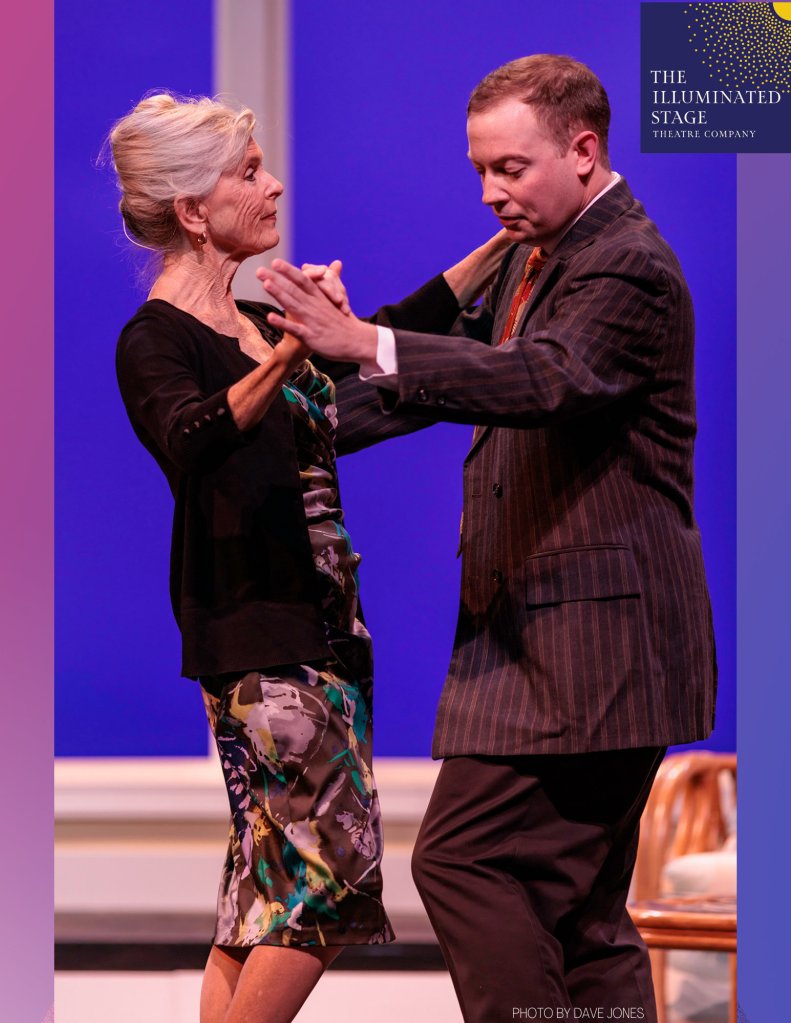
A retired woman hires a private dance instructor to give her lessons in her St. Petersburg Beach, FL condo while her husband is away. But wait – she already knows all the steps, and her husband is mysteriously never around. The first meeting between the caustic gay male dance instructor and the cautious wife of a Southern Baptist minister starts off on the wrong foot but over the course of six weeks secrets and lies are revealed and an unlikely intergenerational relationship develops.

SIX DANCE LESSONS IN SIX WEEKS is funny and heart-warming, filled with hope and enhanced by a magnificent view, and I absolutely love Kelly Kennedy and Travis West as Lily “the tight-arsed old biddy” Harrison and her dance instructor Michael “I’m not crazy, I’m Italian” Minetti.

Week One – The Swing

Michael and Lily stumble over the facades they put up to keep people away. His foul mouth and her constraint are two sides of the same coin.

Week Two – The Tango

Michael continues to make up elaborate background stories for each dance style, but none as elaborate as the stories he and Lily make up as background for their own lives. The value of those coins is measured in units of bitterness and regret.

Week Three – The Viennese Waltz

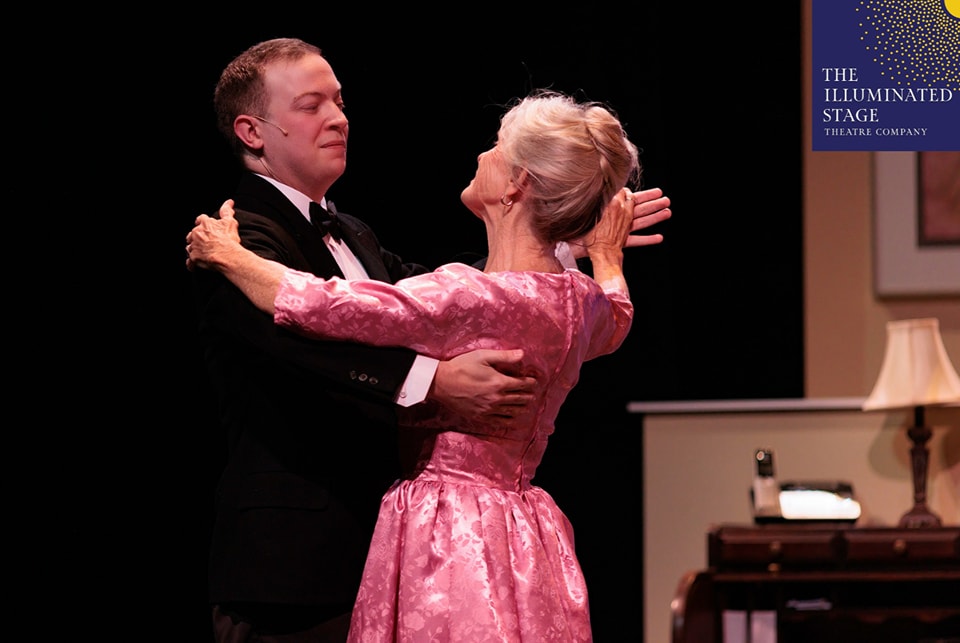
Lily dons a pretty pink dress and brings out a sacher torte. Michael calls her out, “You don’t really need an instructor for the waltz, do you?” “No,” she replies, “but I do need a partner.”

Week Four – The Foxtrot

When Michael sees Lily he exclaims, “Cuban heels! Your seductive slut!” and Lily retorts, “If you say your real age out loud, your face hears you.”

Week Five – The Cha-Cha

The two venture out to dance. Lily wears a pretty blue gown and Michael sports a shiny blue patterned blazer. When Lily says, “People are alone because they want to be or because other people think they should be,” she directs her words at Michael, but they apply equally to herself. The list of loss and loneliness grows as new seeds of hope are planted. The coin of the realm has undergone a transformation.
Week Six – Contemporary Dance

The Pony, the Jerk, the Twist, the Hitch Hike, and the Monkey are unusual vehicles of deliverance, but they seem to get the job done. Speaking of job done, the six lessons have come to an end, but wait, there’s more.

Week Ten – Bonus Lesson

Secrets revealed, lies uncovered and forgiven, and lessons learned. Oh, not just dance lessons, but lessons about love, forgiveness, friendship, age-ism, sex-ism, intolerance, loss, and acceptance. The dividends yielded are priceless.
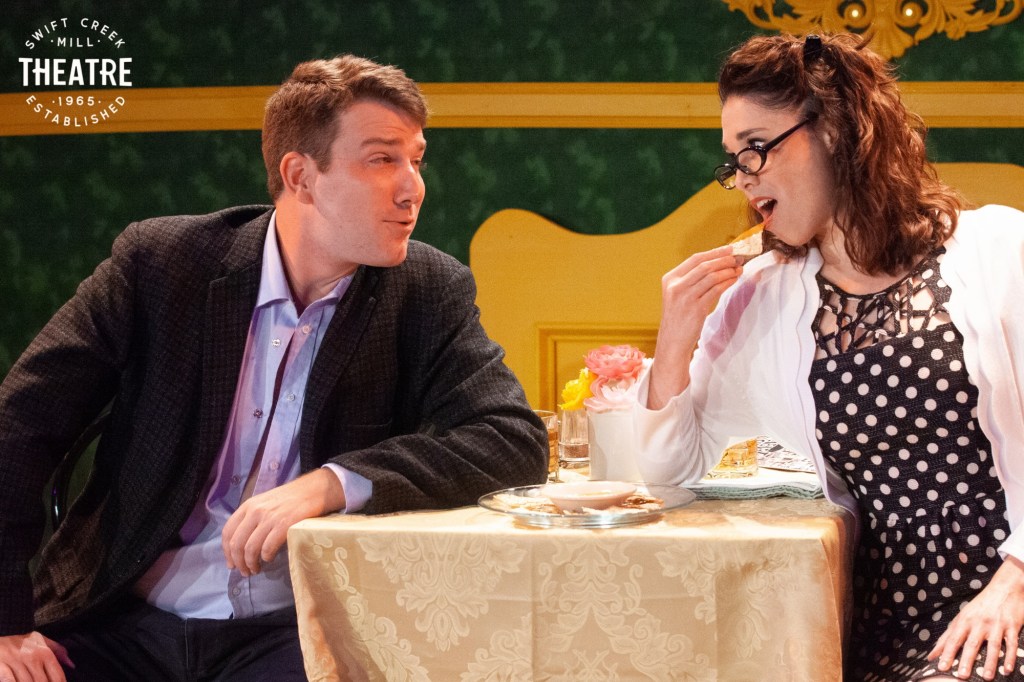
I would not describe SIX DANCE LESSONS IN SIX WEEKS as a musical and yet the dancing serves the same function as the songs and music in a musical. I would not describe SIX DANCE LESSONS IN SIX WEEKS as a Christmas show and yet it is ideal for this season.

After having seen the Illuminated Stage production of Every Brilliant Thing in September (see my review here: https://jdldancesrva.com/2021/09/21/every-brilliant-thing/), it seems that this company has a definite heart for telling stories that inspire, heal, and meet real, often unspoken needs. SIX DANCE LESSONS IN SIX WEEKS does all of that and more.

SIX DANCE LESSONS IN SIX WEEKS is directed by company Artistic Director Julie Fulcher-Davis with clear intent and a palpable tension between the two characters that achieves a sometimes uneasy balance of irreverent humor and genuine compassion. The intersection of the script, actions, and feelings are as unlikely as the friendship between Michael and Lily – and yet, through the magic of theater, it works.

SIX DANCE LESSONS IN SIX WEEKS

Written by Richard Alfieri

Cast:

Kelly Kennedy as Lily Harrison

Travis West as Michael Minetti

Creative Team:

Directed by Julie Fulcher-Davis

Stage Manager: Leanna Hicks

Lighting Designer: Andrew Bonniwell

Set Designer: Vinnie Gonzalez

Costume Designer: Elizabeth Weiss Hopper

Light Board Operator: Leanna Hicks

Sound Board Operator: Matt Nixon

Backstage Crew: Alice Hallock, Samantha Robinson, and Isabella Koontz

Technical Advisor: Jon Shelley

Photographer: Dave Jones

Run Time:

About 90 minutes, with one intermission

Performance schedule:

Fri, Sat @8:00PM Nov 19, 20, 26, 27 and Dec 3, 4

Sun, @3:00PM Nov 21, 28 and Dec 5

Tickets:

$35

$20 for students

Photos:

Dave Jones

WINTER WONDERETTES

It’s The Annual Christmas Party & Santa is Missing!

At: The Swift Creek Mill Theatre, 17401 U.S. Route 1, S. Chesterfield, VA 23834

Performances: November 20, 2021 – January 1, 2022

Ticket Prices: $49. $44 for seniors, students, military, and first responders.

Info: (804) 748-5203 or https://www.swiftcreekmill.com

The year is 1968 and it is the annual staff Christmas Party at Harper’s Hardware in Springfield USA. (Take your pick, there are 30-40 towns and cities named Springfield, depending on your source.)

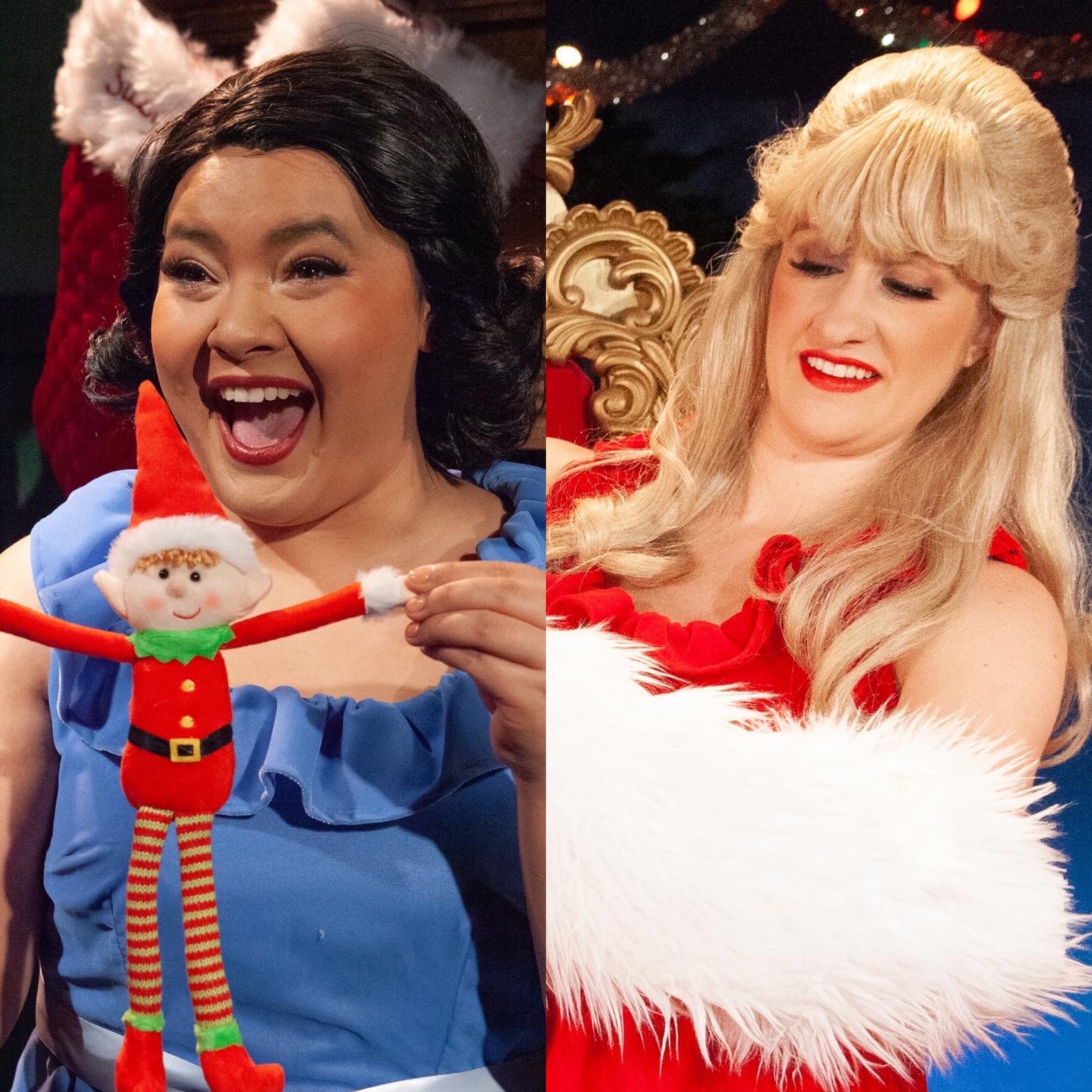
The store has been decorated with gigantic gift boxes and the actors complete the decorating onstage, festooning a fireplace, adding a tree topper, and turning on the lights that extend throughout the theater, bringing the audience into the performing space. Did I say actors? I meant the Marvelous Wonderettes, the former Springfield High Song Leaders, created by Roger Bean in 1999 for a one-act musical in a black box theater in Milwaukee. The quartet of friends, Missy, Suzy, Betty Jean, and Cindy Lou, met with such popularity that the Marvelous Wonderettes gave birth to three sequels. WINTER WONDERETTES debuted in November 2003 and in 2008 the harmonizing of the girl group caught the attention and heart of Swift Creek Mill Artistic Director Tom Width at a performance at the Westside Arts Theatre in NYC.

Now, the four are decorating and harmonizing on the Swift Creek Mill Theatre stage that has been transformed by Width’s scenic design magic into a classic hardware store, the very same hardware store where Betty Jean has been employed since graduating from high school. The tree has been lit, the stage has been illuminated, Santa’s throne has been wheeled centerstage, and Santa’s entrance song has been sung, but where is Santa?

There is just enough of a plot to keep WINTER WONDERETTES from being a concert. We learn that Missy is newly married, while Betty Jean who has risen to a position in corporate sales has recently separated from her husband, Johnny. Suzy is pregnant and married to her high school sweetheart Ritchie who is allegedly running the lights for the program and Cindy Lou is the group’s designated bad girl (with a heart of gold).

These roles have been brilliantly cast with Anne Michelle Forbes and her outrageously contagious giggle as Suzy, Georgi Hicks as Missy, Rachel Marrs as Cindy Lou, and Alanna Wilson as Betty Jean. Maura Lynch Cravey has dressed them in matching dresses, in red, green, purple, and blue, with a festive ruffle around the neck and a satiny ribbon tied at the waist. These are topped off with 1960’s hairstyles that are puffy but stop short of the extreme bouffant or mile high beehive.

The songs are as classic as the hairstyles, from Act One’s “Rockin’ Christmas Medley” (“Rockin’ Around the Christmas Tree,” “Jingle Bell Rock,”) traditional songs (“O Tannenbaum,” “Santa Clause is     Comin’ to Town) and Betty Jean’s heartfelt “Christmas Will Be Just Another Lonely Day” to the “Bells Medley” and “Santa Baby” in Act Two. And then there’s Suzy’s stunning tap-dance turn as “Suzy Snowflake.”

WINTER WONDERETTES is a traditional, feel-good Christmas musical comedy, but it would not be complete without a few twists and turns. When Betty Jean runs off in search of the missing Santa/Mr. Harper, she returns with a stack of envelopes. After passing them out to the staff – many of whom are audience members – everyone is devastated to find the envelopes contain pink slips instead of the expected Christmas bonus checks. The audience is also included in a game of Find the Elf and Missy’s new husband is also selected from the audience.

Oh, and lest I forget. Is it just me, or do the Santa dolls the four women hold at the top of the show look like Tom Width?

With some 25 songs and a lively, unseen band under the direction of Paul Deiss, WINTER WONDERETTES moves along at a lively pace that doesn’t even seem like an hour and forty-five minutes. This show doesn’t make you work, doesn’t make you weigh options or ethics, it’s just pure, delightful, musical entertainment that hits the holiday spot – with a few snowflakes thrown in for good measure.

WINTER WONDERETTES

Written and Created by Roger Bean

Word Arrangements by Roger Bean & Brian Baker

Musical Arrangements by Brian Baker

Cast:

Georgi Hicks as Missy

Anne-Michelle Forbes as Suzy

Alanna Wilson as Betty Jean

Rachel Marrs as Cindy Lou

Direction and Design Team:

Directed by Tom Width

Musical Direction by Paul Deiss

Lighting Design by Joe Doran

Costume Design by Maura Lynch Cravey

Scenic Design by Tom Width

“Suzy Snowflake” choreography by Alissa Pagnotti

Technical Direction by Liz Allmon

Orchestra:

Keyboard: Paul Deiss

Drums: James Oyan

Reeds: Sheri Oyan

Bass: Greg DeBruyn

Guitar: Sam Kindle

Run Time:

100 minutes, one intermission

Performance schedule:

Thu, Fri, Sat @8:00PM Nov 20, 26, 27,

Dec 2, 3, 8, 9, 10, 11, 16, 17, 18, 23, 30, Jan 1

Sat, Sun, Wed @2:30PM Nov 27, Dec 1, 12, 15, 22, Jan 1

Tickets:

$49

$44 for seniors, students, military, and first responders.

Rush – $25 Theatre Only tickets and $15 Student Theatre Only tickets, based on availability one hour prior to any show.

Photos: Robyn O’Neill

LEFT: Anne Michelle Forbes and Georgi Hicks

RIGHT: Rachel Marrs (purple), Georgi Hicks (red), Alanna Wilson (green), and Anne Michelle Forbes (blue)

EVERY BRILLIANT THING

#7 People Falling Over

A Theater Review by Julinda D. Lewis

Presented by: The Illuminated Stage Theatre Company

At: The Perkinson Center for the Arts and Education, 11810 Centre Street, Chester VA 23831

Performances: September 17 – October 3, 2021

Ticket Prices: $40. $25 for students.

Theatre Company Info: (804) 452-7011 or http://www.illuminatedstage.org

Venue Info: (804) 748-5555 or info@perkinsoncenter.org.

The spanking new Perkinson Center for the Arts and Education (opened November 2020) hosted the first performance by its new resident theater troupe, the Illuminated State Theatre Company (Artistic Director Julie Fulcher-Davis) and it was everything you could have hoped for.

September is National Suicide Awareness Month, and EVERY BRILLIANT THING is a special show, quite unlike any other you are likely to encounter. Written by Duncan Macmillan with Jonny Donahoe, the one-actor play walks us gently through one person’s journey through the pain of her mother’s depression and suicide. Tender, warm, and at times surprisingly humorous, EVERY BRILLIANT THING is a rich and relevant theatrical experience. Written initially as a short story authored by Macmillan, it grew into a monologue, and finally, with the collaboration of Donahoe, grew into a full-fledged play that premiered in 2014, with successful runs at the Edinburgh Fringe Festival, in London, and in New York.

#1. Ice cream

#10. Kind old people who aren’t weird and don’t smell bad

At a loss as to what to do on finding that her mother has been hospitalized because she can’t think of a reason to live, the young 7-year-old daughter stands outside her father’s study, waiting to see what record he plays. If it sounds like the notes are falling downstairs, she knows to stay away. When she hears the jangling, discordant sounds on the other side of the door, she heads downstairs to fend for herself. What results is the beginning of a list of things worth living for. By the time her mother comes home from the hospital, the list has grown to eight pages. She continues to add to it through high school, college, and into adulthood.
#23. Batman
#24. Spaghetti with meatballs

Louise Keeton, who stars as the otherwise unnamed Narrator, quickly established a rapport with the audience at Sunday’s matinee. The script calls for audience participation, and Keeton flows seamlessly from narrating the play to performing the role of the daughter, calling on various audience members to join her onstage for coached or spontaneous roles as the family Veterinarian, her Dad, a university Lecturer, her college boyfriend (and later husband) Sam, and her elementary school guidance counselor Mrs. Patterson. Keeton is so engaging that no one refused her offer to join her onstage. Some were given lines, others were required to improvise, and it all came together to create theater magic.

#319. Laughing so hard you shoot milk out of your nose

#521. The word “phlegm”

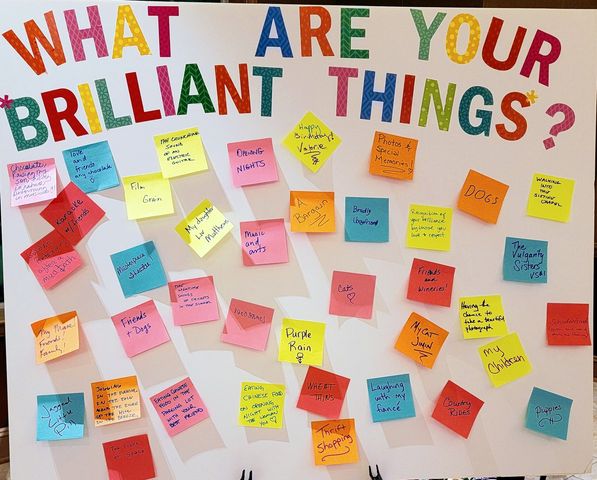
For this uniquely interactive and immersive production, each audience member was offered the opportunity, on entering the building, to write a few words on a Post-It note and share it on a white board. We also received a pair of numbered strips, each containing an item from the list. Mine were #7. People falling over, and #996. Really good oranges.

#823. Skinny dipping

#993. Having dessert as a main course

Keeton inhabits this role like a well-worn sweater. Whether narrating the story of having her childhood pet euthanized, or reading the Samaritans’ Media Guidelines for Reporting Suicide [https://www.samaritans.org/about-samaritans/media-guidelines/media-guidelines-reporting-suicide/] she is fully present, and we are right there with her. What a wonderful vehicle for Keeton; I’ve never seen her stronger: sweet, sentimental, vulnerable, insightful, warm, reflective, caring. Each emotion is treated with integrity.

#999. Sunlight

#2000. Coffee

Remarkably, Keeton and director Julie Fulcher-Davis have struck a balance that invites humor to naturally inhabit the scenes. This ebb and flow prevents EVERY BRILLIANT THING from becoming, well, depressing and morbid. Driving in the car with her dad, on the way to the hospital to visit her mother, the little girl keeps asking “why.” The audience member selected to participate in this scene as the Dad delivered his lines with just the right cadence and inflection. In another car scene, we are reminded that “In order to live in the present we have to be able to imagine a future that is better than our past.” There are many quirky and endearing touches, such as the family’s tradition of gathering around the piano in the kitchen to sing soul songs.

#2005. Vinyl records

#9995. Falling in love

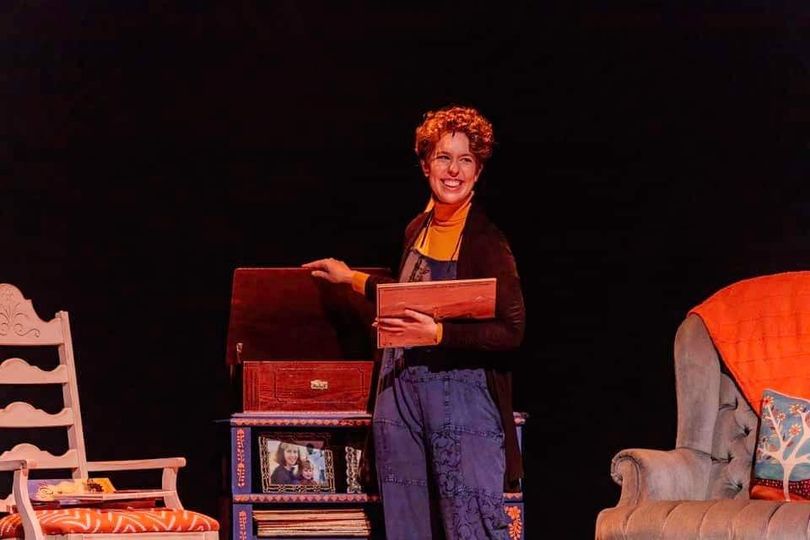
Fulcher-Davis, who is also credited with the set and costumes, has kept things simple yet elegant. A straight-backed chair and a comfy chair, a bookcase with books, a lamp, and a record player occupy a platform centerstage. There are a couple of chairs on one side, and a kitchen table that doubles as a piano on the other side of the stage. A large screen provides a home for beautiful projections that enhance the dimensionality of the space. Wonderful music accompanies each scene and shows off the venue’s top-notch acoustics, while Gretta Daughtery’s lighting is subtle and effective.

#777,777. The prospect of dressing up as a Mexican wrestler

#826,979. The fact that Beyonce is Gustav Mahler’s eighth cousin, four times removed

I’ve seen this play before, performed by a male actor, and in all honesty it feels entirely different. Looking back at the review I wrote of Chris Hester’s performance at the HATTheatre in March 2019, I would not change a word of what I said then, but Keeton brings a whole new set of feelings and nuances to the role. At this writing, there is only one more weekend left, and I highly recommend get a ticket. You won’t regret it.

#1,000,000. Listening to a record for the first time

END SCENE

EVERY BRILLIANT THING

Cast:

Louise Keeton

Creative Team:

Directed by Julie Fulcher-Davis

Written by Duncan Macmillan with Jonny Donahoe

Stage Manager: Hannah Hoffert

Lighting Designer: Gretta Daughtery

Set & Costumes: Julie Fulcher-Davis

Light Board Operator: Hannah Hoffert

Sound Board Operator: Zach Birnbaum

Backstage Coordinator: Lanham Hoffert

Technical Advisor: Jon Shelley

Run Time:

Just under an hour and a half with no intermission.

Performance schedule:

Fri, Sat @8:00PM Sept 24 & 25, Oct 1 & 2

Sun @3:00PM Sept 26 & Oct 3

Tickets:

$40. $25 for students

Photos: (Credits not available at the time of publication)

I LOVE YOU, YOU’RE PERFECT, NOW CHANGE

A Modern Romantic Musical Comedy: “Everything you have ever secretly thought about dating, romance, marriage, lovers, husbands, wives and in-laws, but were afraid to admit.”

At: The Swift Creek Mill Theatre, 17401 Jefferson Davis Highway, Chesterfield, VA 23834

Performances: September 11 – October 23, 2021

Ticket Prices: $44-$49

Info: (804) 748-5203 or https://www.swiftcreekmill.com

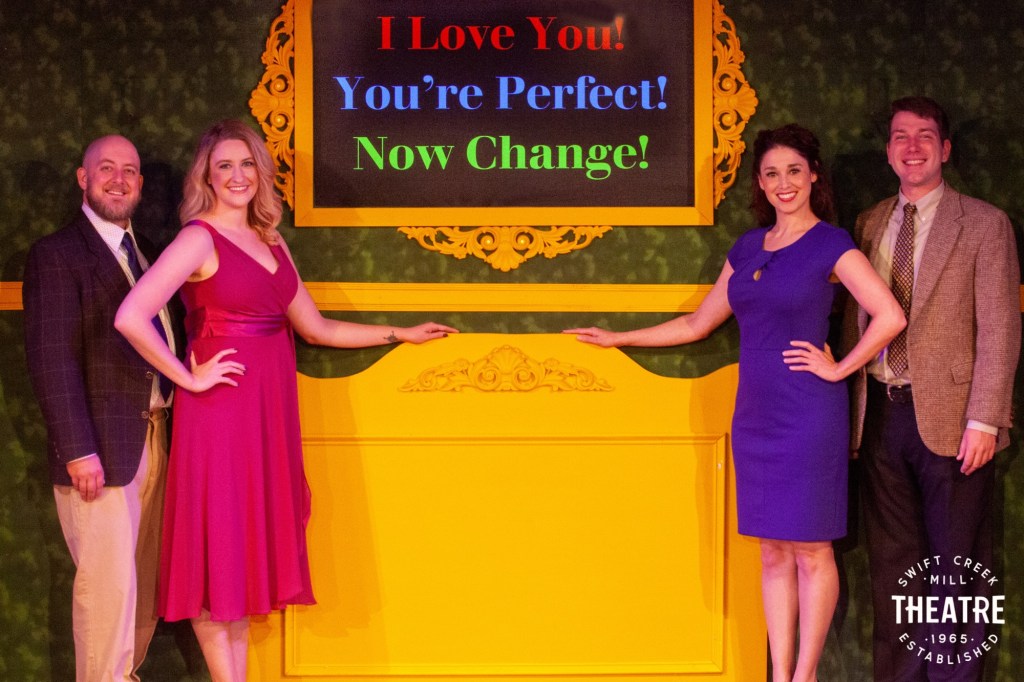
I LOVE YOU, YOU’RE PERFECT, NOW CHANGE is musical comedy balm for the over-whelmed pandemic soul. After a year and a half of pandemic restrictions, and one year after bailing out of the worst flood in the building’s history (https://www.chesterfieldobserver.com/articles/historic-flooding-leaves-swift-creek-mill-theatre-under-water/), The Swift Creek Mill Theatre has reopened its doors to a live audience. This delightful romantic musical comedy was originally scheduled to open in 2020, but the work was put on hold due to the pandemic.

Opening at full capacity, with no social distancing between seats, a fully masked staff welcomed a fully masked audience that had access to digital programs. Love them or hate them, digital programs are here to stay. Opening night featured a pre-show reception with a light buffet instead of a full dinner, but going forward, dinner will be served prior to the show (with plated table-side service instead of a buffet line), and the bar is open.

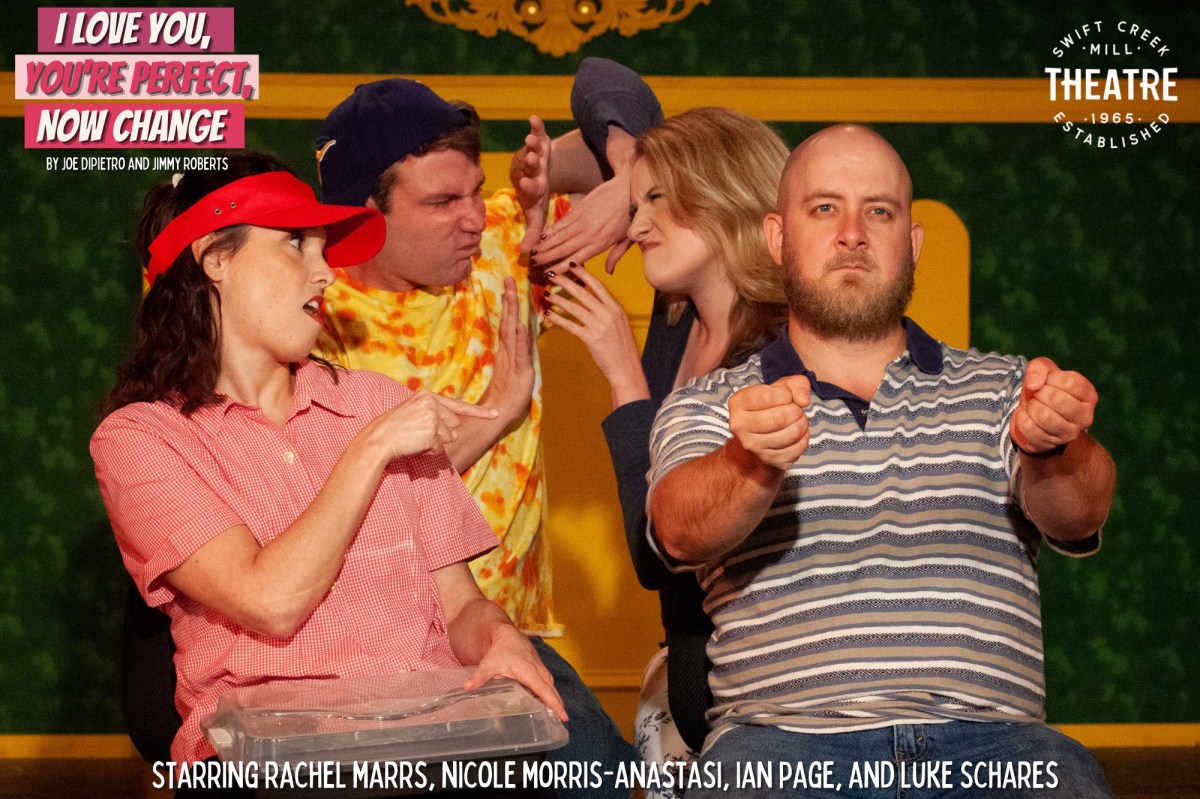
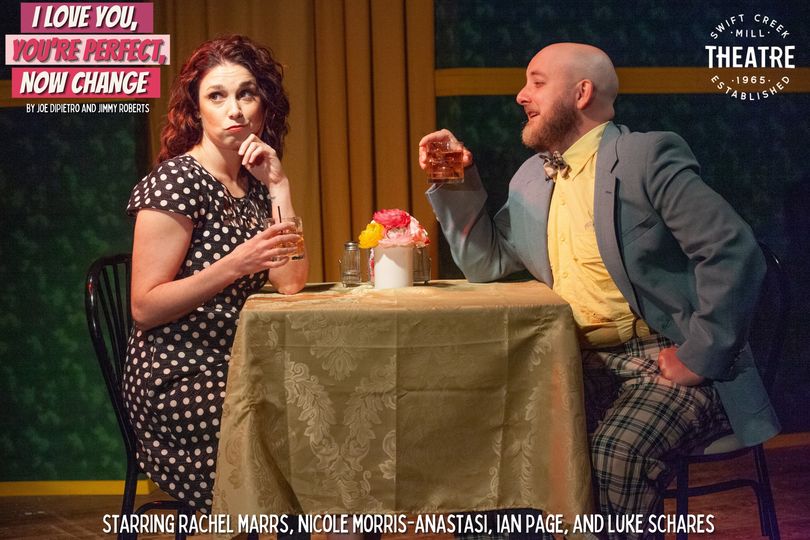
But enough about housekeeping. Let’s talk about the show; after all, that’s why you came here. It appeared that dynamic quartet of actors – Rachel Marrs, Nicole Morris-Anastasi, Ian Page, and Luke Shares – found just as much enjoyment in their multiple roles as we did. Tom Width first directed this show in 2006, and it has since been updated. Sprinkled throughout the vignettes are references to Google and Netflix, Tinder dating profiles, and the Jennie Craig weight management system. There are local references to Joe’s Inn and the VMFA as well.

I LOVE YOU, YOU’RE PERFECT, NOW CHANGE was written as a series of vignettes, each of which could stand alone, but which, taken all together, follow a more or less chronological timeline of relationships from dating to marriage, concluding with a charming encounter by an elderly couple. The scenes are familiar, relatable, and consistently amusing. Oh, and the actors’ voices are perfect for their roles, whether singing or speaking.

Among my favorites: Morris-Anastasi and Page were hilarious as two awkward people who turned out to be made for each other in “A Stud and a Babe.” Then there was Schares and Marrs at the movies, where he tried to maintain a tough, macho attitude only to be drawn into all the feelings in “Tear Jerk.”

My initial question about whether a scenic element represented a fireplace or a headboard was answered in “And Now It’s Sexy Time,” a scene that explored the wisdom of employing a lawyer to negotiate a couple’s intimacy requirements. “When a Man Texts a Woman: A Picture of His” tackled one of the more contemporary sticky issues with a balance of humor and insight, while “Scared Straight” was assuredly the most outrageous scene. Here, a singles group facilitator took a small gathering to prison to receive relationship advice from a serial killer played by Schares. Schares’ prosthetic teeth slipped out at one point, and he deftly replaced them, earning a laugh without missing a beat.

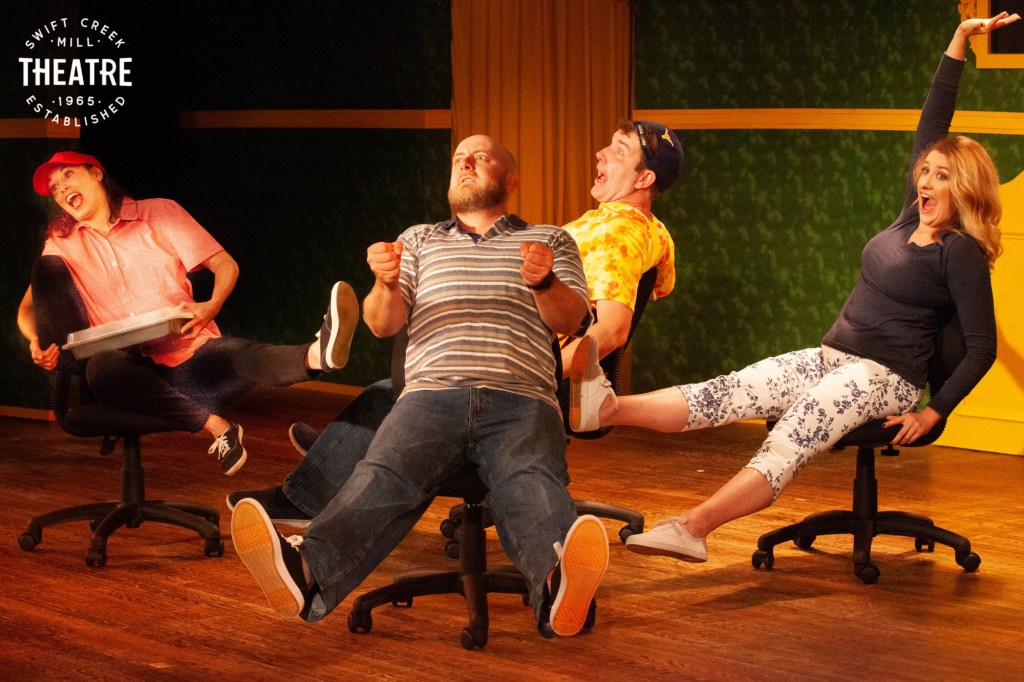
There was a scene with a family of doting parents composed of two dads and a vignette about driving with the family that included ingenious choreography for four rolling office chairs. Marrs and Schares brought warmth and tenderness to the final scene, “Funerals are for Dating.” It was delightful to watch Marrs’ character shed her stodgy church-lady demeanor and spontaneously dance with her flirtatious partner. And I must mention Marrs’ expressive face throughout. She has an excellent command of physical comedy – at times reminding me of Lucille Ball.

With a total of twenty scenes spread over two acts, there truly is something for everyone. I LOVE YOU, YOU’RE PERFECT, NOW CHANGEis a wonderful welcome back to SCM. If you need a relaxed, enjoyable evening of theater, with good, solid performances and lots of laughs, you can’t go wrong here. In his Director’s Notes, Tom Width refers to “the shock of recognition” principle that allows us to take comfort in knowing that you’re not the only one who has thought or gone through this – whatever “this” is for you.

 I LOVE YOU, YOU’RE PERFECT, NOW CHANGE is timeless and inclusive. The authors apparently made provision for including local and updated references.

While not the familiar, sing-along type, the lyrics are straightforward, and you can understand every word. It helps that the music, played by an unseen four-piece orchestra, is upbeat and supports the song lyrics, spoken dialogue, and action. Joe Doran’s lighting is subtle yet effective, and Maura Lynch Cravey has fun with the costumes. Her ugly bridesmaid’s dress may have reached a new pinnacle of hideousness. I wouldn’t change a thing about I LOVE YOU, YOU’RE PERFECT, NOW CHANGE!

Cast:

Rachel Marrs

Nicole Morris-Anastasi

Ian Page

Luke Schares

Production Team:

Book and Lyrics by Joe DiPietro

Music by Jimmy Roberts

Directed by Tom Width

Costume Design by Maura Lynch Cravey

Lighting Design by Joe Doran

Scenic Design by Tom Width

Technical Direction by Liz Allmon

​​

Orchestra:

Conductor/Keyboard: Shellie Johnson

Reeds: Sheri Oyan

Drums: James Oyan

Guitar/Bass: Greg DeBruyn

Run Time:

150 minutes

Performance schedule:

Thu, Fri, Sat @8:00PM Sept 11, 17, 18, 24, 25, 30

Sun, Wed @2:30PM Sept 19, 29

Thu, Fri, Sat @8:00PM Oct 1, 2, 7, 8, 14, 15, 16, 21, 22, 23

Sun, Wed @2:30PM Oct 6, 17

Tickets:

$49

$44 for seniors, students, military, and first responders.

Rush – $25 Theatre Only tickets and $15 Student Theatre Only tickets, based on availability one hour prior to any show.

Photos: Robyn O’Neill

Go to Kindle Direct Publishers https://kdp.amazon.com to find and purchase books written or edited by Julinda.

THE BOTTOM SHOW: A “New” Play by William Shakespeare (Mostly)

THE BOTTOM SHOW: or ‘The Merry Conceited Humours of Bottom the Weaver

A Theater Review by Julinda D. Lewis

At: Agecroft Hall, 4305 Sulgrave Road, RVA 23221

Performances: Fridays, July 9 – August 13, 2021

Ticket Prices: $33 ($28 for Seniors and Groups 10+, $23 for RVA On Stage, $20 for Students)

Info: (804) 340-0115 or quilltheatre.org

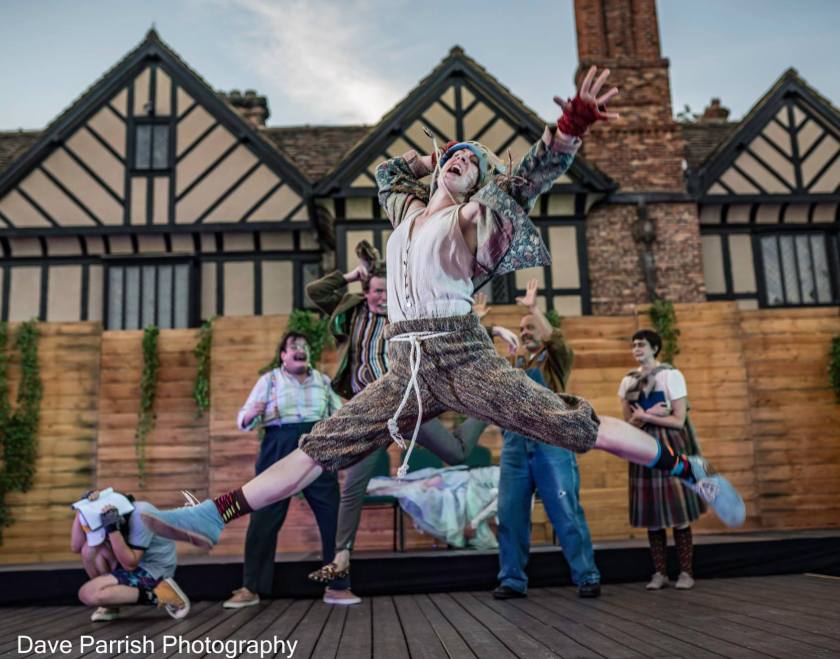
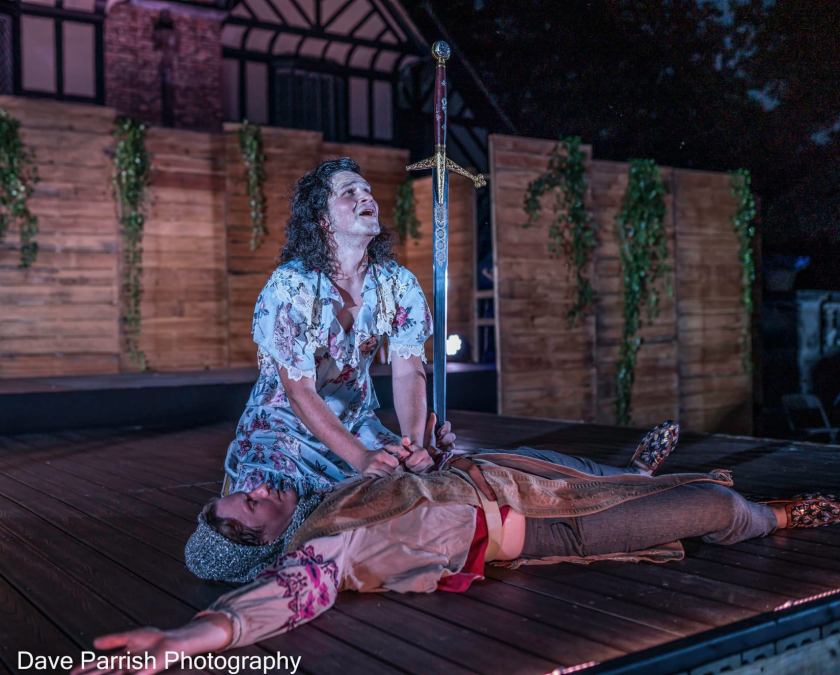
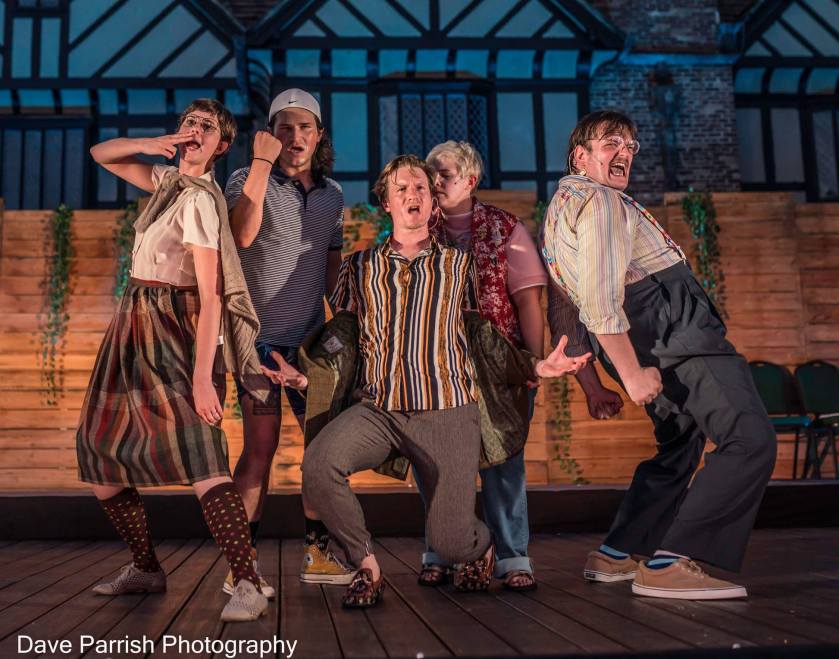
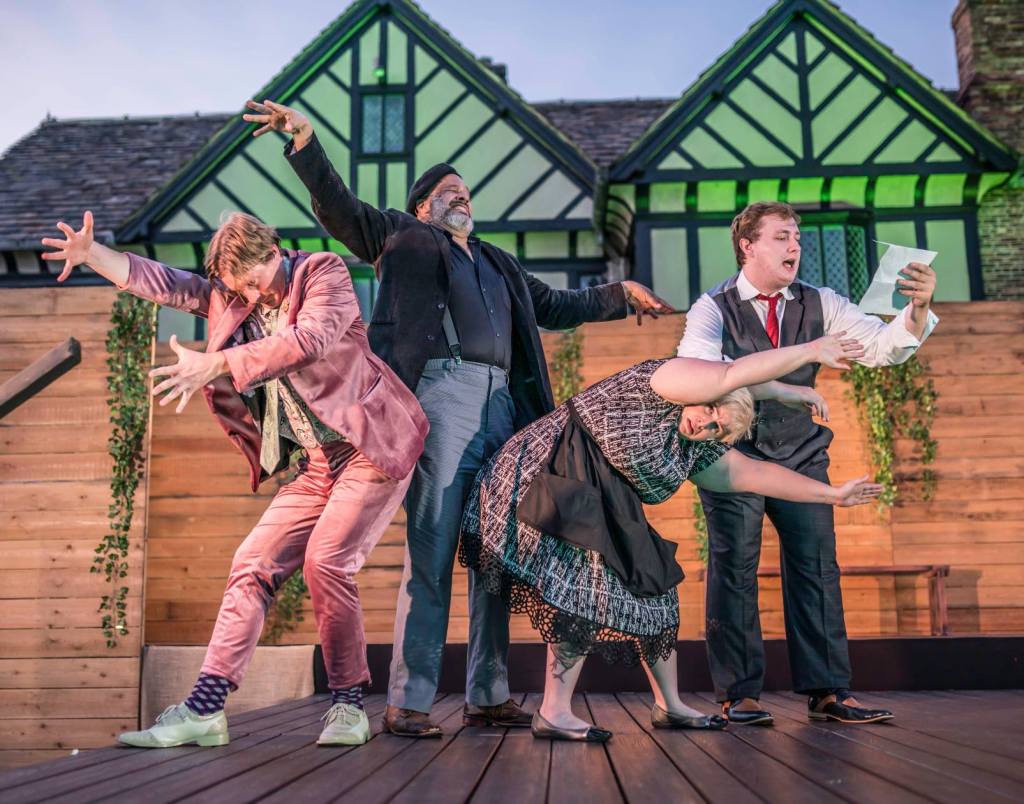
The Bottom Show: A New Play by William Shakespeare (Mostly), directed by Quill Theatre’s artistic director James Ricks, comes with a WARNING: “This show is devoid of anything vaguely intellectual, serious or romantic. Contains low-brow humor and semi-popular music.” Perhaps the best way to describe The Bottom Show to anyone who hasn’t seen it is that it is Shakespeare for those who think Shakespeare is too high-brow or too difficult to understand – as well as for those who don’t. In other words, it’s for everybody!

Populated, with but one exception, by the same cast who carry the roles of Twelfth Night Thursdays, Saturdays, and Sundays, The Bottom Show – named for a character from A Midsummer Night’s Dream, it is a comic adaptation of that play – runs on Fridays in tandem with Twelfth Night. And if physical humor was evident in Twelfth Night, it is the very foundation of The Bottom Show – so much so that each cast member deserves a large bag of Epsom salts, a jar of tiger balm, and a painkiller of choice for each week of the run.

The premise of The Bottom Show is that a group of amateur thespians – “mechanicals” or tradesmen by day – set to work to put on a show for the entertainment of Theseus, the Duke of Athens, and his lovely lady, Hippolyta. But, of course, their plans run afoul of a group of fairies who are involved in some soap opera style drama of their own. Toss in snippets of popular and vaguely familiar rock and pop songs and sprinkle liberally with references to the plague that shall not be named, spread out some lawn chairs and break out the snacks and you have the makings of a perfect summer night’s entertainment. Musical highlights included Levi Meerovich playing an accordion and singing Lady Gaga’s “Bad Romance” and a moment of four-part harmony on “Life Could Be a Dream” that somehow managed a seamless segue into The Backstreet Boys’ “I Want It That Way.”

Kurt Benjamin Smith works hard – and quite successfully – at portraying Bottom as a terrible yet pretentious actor while Erica Hughes provides a wonderful counterbalance as a voice of reason keeping this rowdy band under control. Michael Blackwood is pretty much a straight arrow as Theseus, but lets loose his inner drag queen as Titania, the queen of the fairies, in one of the breakout musical sequences of the show. Lucretia Marie plays Oberon, the king of the fairies whose desire to exact revenge on the stubborn Titania sets in motion much of the havoc and hijinks of both A Midsummer Night’s Dream and The Bottom Show and later appears as Hippolyta – the latter in a white pantsuit that gives a nod to recent political events that shall also remain unnamed.

The amateur thespians’ show includes lengthy prologues designed to ease the fears of the “ladies” – at one point drawing a disdainful sidebar from Penny Quince. There is a delightfully annoying portrayal of the moon (I think that was Michelle Greensmith, but it’s hard to keep everyone and their shenanigans straight) and a scene with “The Wall” (Foster Solomon) that teases out alternate meanings of the word “bottom.” And, of course, one can never overlook Puck – Emily Berry leapt and flipped about the stage with supernatural energy. The entire evening, running about 90 minutes without an intermission, is magical.

The Bottom Show

By William Shakespeare

Cast

Bottom – Kurt Benjamin Smith

Penny Quince – Erica Hughes

Flute – Mitchell Ashe

Snug – Levi Meerovich

Snout – Foster Solomon

Starveling – Michelle Greensmith

Titania/Theseus – Michael Blackwood

Antonio – Lucretia Marie

Oberon/Hippolyta – Lucretia Marie

Puck/Philostrate – Emily Berry

Musician – Lennon Hu

Direction & Design

Director:  James Ricks

Assistant Director: Cole Metz

Stage Manager: Nata Moriconi

Technical Director: Ryan Delbridge

Lighting Design: BJ Wilkinson

Costume Design: Cora Delbridge

Music Direction: Levi Meerovich

Choreography: Nicole Morris-Anastasi

Sound Mixing: Todd Schall-Vess

Additional Dialogue: James Ricks, Bo Wilson, Bradley Carter

Assistant Stage Manager: Lane Woodward

Assistant Stage Manager: Hope Jewell

Julinda D. Lewis is a dancer, teacher, and writer who was born in Brooklyn, NY and now lives in Eastern Henrico County.

———-

Photo Credits: Dave Parrish Photography & Quill Theatre Facebook page

TWELFTH NIGHT: Shakespeare on the Back Lawn

A Theater Review by Julinda D. Lewis

At: Agecroft Hall, 4305 Sulgrave Road, RVA 23221

Performances: July 8 – August 14, 2021

Ticket Prices: $33 ($28 for Seniors, $23 for RVA On Stage, $20 for Students)

Info: (804) 340-0115 or quilltheatre.org

For their first show at Agecroft Hall after “the plague that shall remain nameless” the Quill Theatre chose Shakespeare’s zany romantic comedy, Twelfth Night. The play takes its name from the Twelfth Night as it was created as holiday entertainment marking the Epiphany, or the end of the Christmas season. In addition to the shipwreck, unrequited love, deception, revenge, mistaken identities, cross-dressing, androgyny, and numerous other elements that Shakespeare wrote into the plot, Quill Theatre updated the play with colorful and whimsical costuming (e.g., Feste’s flower child ensemble, Malvolio’s bell bottoms and yellow stockings) and a sound score that featured 1960s pop hits (think the Beatles, the Monkees, and Elvis).

Meerovich, who plays the fool Feste as well as serves as musical director, opens the show with a lively serenade that sets the tone for the evening and Lucretia Marie who plays the minor but nonetheless important role of the sea captain, Antonio, who saves the shipwrecked Sebastian, reads the evening’s announcements. Before you know it, the play has begun, with some major characters popping up from amidst the audience from time to time. The show runs about 2.5 hours, with one intermission, but director Jan Powell established an easy, organic pace that complemented the casual layout, with the audience spread out over the back lawn under a clear sky, accentuated by a lovely sunset, a pastoral setting, and welcome breezes from the nearby river – as well as the occasional passing train.

For those who need a refresher – or an introduction – Twelfth Night recounts the tale of noble-born twins Viola and Sebastian who are shipwrecked off the coast of Illyria, a region of the Balkan Peninsula. The twins are separated, each thinking the other has drowned. Sebastian is rescued by Antonio, a sea captain, and the two remain peripheral for much of the play while Viola, after being saved by an unnamed rescuer, disguises herself as a boy, takes the name Cesario, and becomes a servant to Duke Orsino, who is in love with the fair Olivia, who is mourning her deceased brother. To complicate matters, Viola/Cesario falls in love with Orsino, and Olivia falls in love with Cesario who has come to plead the case of Orsino. While all this is going on, Olivia’s maid Maria, Olivia’s rowdy uncle Toby and his friend Sir Andrew conspire to convince Olivia’s household steward Malvolio that Olivia is in love with him. Feste, a court jester and roving musician, weaves between all the characters, collecting tips and keeping the audience entertained with musical divertissements.

Emily Berry and Mitchell Ashe played the shipwrecked twins, each believing the other had drowned until the final scene. Dressed identically, with Berry disguised as a boy, both become involved in relationships that bend and blend gender boundaries. Berry’s character is in a triangle with Olivia and Orsino while Ashe’s character inadvertently risks breaking the bonds of trust established with the sea captain who helped him at great personal risk. Both ultimately end up in conventional male-female couplings. Berry has a lot more stage time than Ashe, increasing the audience’s anticipation of their ultimate reunion – which drew cheers on Thursday night.

Michael Blackwood and Lucretia Marie, as the benefactors of the twins, provided solid dramatic counterpoint to the constant hilarity delivered by Cole Metz, Levi Meerovich, Foster Solomon, and Kurt Benjamin Smith, much of which was instigated by Erica Hughes’ character. Thanks to their unrelenting and often physical humor, it was easy to keep up with the flow of the action even when the sound system failed us. Sometimes, it seems depending on where the actors were standing, words and lines got lost, and for awhile there was a bit of static coming from some of the speakers. But this was a new configuration for the Richmond Shakespeare Festival, and I trust that these issues will be worked out during the run of the show.

A modest set (no credit given on the PDF version of the digital program I have) consisting of a simple wooden fence with a few green vines and some lovely rainbow colored lighting by BJ Wilkerson provided atmosphere without overwhelming the backdrop – Agecroft Hall, a Tudor mansion that, we were reminded, stood in England while Shakespeare was still alive. The audience saw scattered across the spacious lawn on lawn chairs and blankets, in clusters as close to others as you chose to be. I don’t recall seeing any masks, but you could certainly wear one if you want to. All in all, Twelfth Night delivered a delightful night of theater, and its utter nonsense provided a welcome sense of normalcy.

Twelfth Night

By William Shakespeare

Cast

Viola – Emily Berry

Olivia – Michelle Greensmith

Orsino – Michael Blackwood

Malvolio – Cole Metz

Feste – Levi Meerovich

Toby Belch – Foster Solomon

Andrew Aguecheek – Kurt Benjamin Smith

Maria – Erica Hughes

Sebastian – Mitchell Ashe

Antonio – Lucretia Marie

Direction & Design

Director:  Dr. Jan Powell

Assistant Director: Melissa Rayford

Stage Manager: Nata Moriconi

Technical Director: Ryan Delbridge

Lighting Design: BJ Wilkinson

Costume Design: Anna Bialkowski

Music Direction: Levi Meerovich

Sound Mixing: Todd Schall-Vess

Intimacy Director: Lucinda Piro

Assistant Stage Manager: Lane Woodward

Assistant Stage Manager: Hope Jewell

Julinda D. Lewis is a dancer, teacher, and writer who was born in Brooklyn, NY and now lives in Eastern Henrico County.

———-

Photo Credits: Dave Parrish Photography & Quill Theatre Facebook page