Fanny Church wears a wide-brimmed hat as she reminisces over each familiar object before she wraps it in bubble wrap and places it in a box. Fanny, the wife of a well-known poet, Gardner Church, is packing up to move out of their long-time Boston home. The Church’s are getting older, Gardner’s memory is not what it once was, and it is time to downsize.
In the first scene Fanny eagerly awaits the arrival of their daughter, Margaret or Mags, who is coming to help her parents pack and sort through the memorabilia of a life well lived. But the arrival of Mags, a successful artist who lives in New York, brings its own revelations and complications.
Author Tina Howe and director Kerrigan Sullivan skillfully guide us through this challenging rite of passage with an unpredictable itinerary of heart-wrenching loss, thirst-quenching humor, poignant insights on growing older, and shocking moments of cruelty.
At times, Painting Churches reminded me of Ronan Carr’s Th Barber of Moville in which the barber, Molly, realizing she has declining mental capacities, has made elaborate end-of-life plans that do not take into account her husband’s ability to carry them out. (See my review of that play when I saw it at the Firehouse in June 2022: https://jdldancesrva.com/2022/06/28/the-barber-of-moville/)
Here in Painting Churches, apparently named for Mags’ obsession with painting her parents’ portrait, the versatile Jacqueline Jones takes on the role of the mother, Fanny Sedgwick Church. It is a role that requires Jones to ride an emotional roller coaster, onemoment reminiscing about the family silver and the next joining her husband in recreating scenes from classic paintings, one moment stumbling in the darkness of forgotten memories, and the next waltzing gaily with her husband, one moment watching over her declining husband like a hawk, and the next cruelly demeaning him because of his memory and health issues. Fanny copes with laughter and copious amounts of alcohol.
Daniel Moore plays the role of Gardner Church, the poet and patriarch who appears to be blissfully unaware of his cognitive challenges as he ignores Fanny’s slights and jabs, happily reciting the poetry of William Butler Yeats and Robert Frost from memory. In a tender moment with his daughter Mags, we discover that even his pet bird can recite poetry. Gardner comes across as the “good cop” parent to Fanny’s “bad cop,” but even though he seems to be the kinder gentler parent, we eventually find that neither Gardner nor Fanny ever truly understand their daughter.
The first thing that struck me when Mags arrived, late and flushed, is that she and her parents never seem to communicate. They talk at each other, and about each other, but while speaking in the same room, it’s almost as if the audience is witnessing small snippets of several unrelate conversations. Constance Moreau, as Mags, has mastered this disconnect to the extent that it alerts us to the possibility that something is not quite right. When we finally hear the story of Mags’ childhood masterpiece, I felt – uncomfortably – that we had just been introduced to a whole new level of family dysfunction.
At its heart, Painting Churches is a well-crafted, poetically structured tale about the stresses of an evolving parent-child dynamic in which there are no winners and no losers – there is just life. Each of these characters is given the time and space to develop into full-fleshed beings, neither all good nor all bad. That makes us laugh even harder at their antics and hurt even more deeply for their failings. Oh, and on a lighter note, special mention for the number of times Jones and Moore have to get up and down from the floor! I hope supplies of Tiger Balm for the run of the show were written into their contracts.
And finally, I would be remiss to end without mentioning that this is the Chamberlayne Actor’s Theatre’ 60 year of producing, first as a community theater company and later joining the ranks of Richmond’s professional theater community, and it is their first year in their new home at Hanover Tavern after several years as Richmond nomads after losing their long-term space in the Chamberlayne Farms area on N. Wilkinson Rd.
Painting Churches, produced by Zack Owen, with lighting design by Alleigh Scantling, Costumes designed by Lindsey Ladnier, Scenic and Properties design by Hailey Bean and Sound design by Kerrigan Sullivan, who also directed, runs through October 19.
———-
Julinda D. Lewis is a dancer, teacher, and writer who was born in Brooklyn, NY and now lives in Eastern Henrico County, VA. When not writing about theater and dance, she teaches dance history at VCU and low impact dance fitness classes to seasoned movers like herself, and occasionally performs. Her most recent (ad)venture was the premiere of a solo work, The Waters of Babylon or Psalm 137 Revisited: a Post-Exodus Reflection in Movement Choreographed From Collective Memories for the debut of the Critical Race Theatre Project, right here in Richmond at RTP in August 2024.
Duality: duality refers to having two parts, often with opposite meanings, like the duality of good and evil. If there are two sides to a coin, metaphorically speaking, there’s a duality. War and peace. Love and hate. Up and down. Black and white
“Americans make movies; the French make films.”
We first encounter Lee and Austin engaged in a contentious discussion in their mother’s kitchen in her California home. The brothers have not seen one another in five years. Austin is house-sitting for their mother who is on vacation in Alaska. Their father is, apparently, living somewhere in the Mojave desert in dire straits. Austin, a screenwriter, is trying to work on a script – by candlelight – while Lee, a drifter who makes a living by nefarious means, sits on the counter drinking beers one after the other and interrupting Lee’s work. Nothing unusual about that. At first. But oh, it quickly becomes apparent that this sibling relationship is deeply, disturbingly dysfunctional.
“I come in through the window; I go out through the door.”
Landon Nagel and Stevie Rice alternate in the roles of the brothers, and on this Saturday afternoon Nagel wore the button down khaki role of Austin while Rice stepped into Lee’s scruffy black and white wingtips and battered trench coat. Both actors seemed to be in the exact right roles, so I’d love to have an opportunity to see this show again with the two in the opposite roles.
“Toast is kind of like salvation.”
Nagel and Rice both gave riveting performances to the sparse but attentive Saturday matinee audience in this iteration, with Rice’s character double-crossing his brother by pitching a story to his brother’s agent, effectively usurping his brother’s deal – along with his fragile self-esteem. While Act One is contentious, Act Two is nothing short of a dumpster fire (not the writing the situation), with the two brothers switching roles (not the roles they were cast in but their hierarchical roles, their roles in the family, their relationship to one another). The psychological wreckage echoes the physical wreckage of their mother’s pristine kitchen. And wouldn’t you know it – just when you think things have hit rock bottom, Mom returns unexpectedly. But her response to the emotional and material upheaval that greets her gives new meaning to the word dysfunctional.
On his website, Shepard says of True West:
“I wanted to write a play about double nature, one that wouldn’t be symbolic or metaphorical or any of that stuff. I just wanted to give a taste of what it feels like to be two-sided. It’s a real thing, double nature. I think we’re split in a much more devastating way than psychology can ever reveal. It’s not so cute. Not some little thing we can get over. It’s something we’ve got to live with.”
In the blink of an eye True West flips from the violent (e.g., Lee smashing a typewriter with a golf club or a vicious fight between the two brothers involving a garroting) to the humorous (e.g., a tale of lost teeth or an award-worthy drunken ramble involving toast – lots and lots of toast). The normalcy of the serene kitchen with its white cupboards and abundance of plants (keep your eye on the plants!) and the reassuringly normal ambient sounds of chirping crickets and barking dogs amplify the outrageousness of the brothers’ interactions, of their very relationship.
True West is a dark comedy, and so much more, The seemingly simple title is a commentary on the wild west, the American dream, and a reality check on what is real and what is mere illusion. Even though Austin and Lee are exaggerated, they are real people with real issues; they are authentic in their dysfunction.
Supporting roles were capably filled by Otto Konrad as the disingenuous agent, Saul and Jane Petkofsky as the elusive Mom – but this is basically a two-hander, and both Nagel and Rice shine in their respective roles. Rusty Wilson’s direction keeps things moving so that I was startled when intermission arrived and appropriately stunned at the ending. There’s truly no way to prepare, just hang onto the edge of your seats and go along for a truly wild ride.
Julinda D. Lewis is a dancer, teacher, and writer who was born in Brooklyn, NY and now lives in Eastern Henrico County. When not writing about theater, she teaches dance history at VCU and low impact dance fitness classes to seasoned movers like herself, and occasionally performs. Her most recent (ad)venture was the premiere of a solo work, The Waters of Babylon or Psalm 137 Revisited: a Post-Exodus Reflection in Movement Choreographed From Collective Memories for the debut of the Critical Race Theatre Project, right here at RTP in August 2024.
———-
TRUE WEST
by Sam Shepard
Directed by Rusty Wilson
This performance is dedicated in memory of Carol Piersol, the beloved Founding Artistic Director of Firehouse
CAST
Austin/Lee ……………………. Landon Nagel
Austin/Lee ……………………. Stevie Rice
Saul ……………………. Otto Konrad
Mom ……………………. Jane Petkofsky
PRODUCTION TEAM
Direction ………. Rusty Wilson
Scenic Design ………. Joseph Lavigne
Costume Design ………. Sarah Grady
Production State Manager ………. Sharon Gregory
Sound Design ………. Grace Brown LaBelle
Lighting Design ………. Andrew Bonniwell
Fight Choreography ………. Aaron Orensky
Composer ………. Drew Perkins
Properties Design ………. Emily Vial
Photo Credits ………. Jason Collins Photography
RUN TIME
1 hour 45 minutes; there is one intermission
PERFORMANCE SCHEDULE
Opening Night – Friday, September 20 at 7:30PM
Running Fridays and Saturdays, September 20, 21, 27, 28, October 4, 5, at 7:30PM;
Thursday, October 3, 7:30PM; Saturdays and Sundays, September 21, 22, 28, 29, & October 5 at 2:00PM.
At: The Richmond Ballet Studio Theatre, 407 E Canal St, RVA 23219
Performances: September 17-22, 2024
Ticket Prices: $25 – $51
Info: (804) 344-0906, etix.com, or richmondballet.com
THE PROGRAM
EN CHALANT
Choreography by Ma Cong
Music by Nils Frahm, Hauschka, and Jóhann Jóhannsson
Costume Design by Rebecca Turk
Lighting Design by Trad A Burns
World Premiere: September 17, 2024, Richmond Ballet, Richmond Ballet Studio Theatre, Richmond, VA
WHAT’S GOING ON
Choreography by Val Caniparoli
Music by Leonard Cohen, Bob Dylan, Marvin Gaye, Meanie, Buffy Sainte-Marie, Jimmie Rodgers, Pete Seeger
Assistant to the Choreographer: Maiqui Manosa
Staged by Jerri Kumery
Costume Design by Susan Roemer
Lighting and Projection Design by Trad A Burns
Music Research by Lauren Morrison
World Premiere: May 10, 2022, Richmond Ballet, Richmond Ballet Studio Theatre, Richmond, VA
Fifteen years ago Ma Cong presented his first work for the Richmond Ballet as a guest artist participating in the company’s annual New Works Festival. This week, he presented his first full length work as the newly installed Artistic Director of the Richmond Ballet.
“En Chalant,” a work he described as “the complete opposite of nonchalant” is an abstract ballet that takes its inspiration from the music – in this case a selection of contemporary classic compositions by three composers, two German and one Icelandic, known for their contemporary classic work infused with elements of electronic music or, in one case, prepared piano.
In Ma’s own words, “En Chalant” is an exploration into “the deeply human feeling of seeking connection through the shared experience of music.” To the viewer, it is a stunningly beautiful work with its simple black and nude costuming that praises the human form. Designer Rebecca Turk explained that the limb-lengthening design – featuring a soft sculpted neckline for the women and bare chest for the men – was inspired by the lines of the calla lily. Abstract, elegant, and edgy was the goal and the achievement. Trad A. Burns took his cue from the music and movement in designing the lighting that started off as a sort of wavy sun burst that evolved throughout the development of the dance, eventually returning to its original shape. “I hear music in color,” he said during the opening night post-performance discussion.
The first movement, “Radar,” by Volker Bertelmann who performs under the name Hauschka, floods the stage with motion – quick, winding, lively, purposeful, yet lighthearted. The second section, set to the music of Nils Frahm, “Some,” strives to achieve new shapes in partnering. Ma succeeds in bringing the music to human form, combining both classical and contemporary elements of the music and dance.
In the third section, performed to Jóhann Jóhannsson’s “Payphone,” further explores partnering, extending to a trio that somehow still manages to feel like a duet, as when Aleksey Babayev seemingly effortlessly supports Eri Nishihara and Celeste Gaiera in tandem. By the fourth movement, Burns’ projection has evolved from a sunburst to a single horizontal shaft to four radiating bars, to a galaxy – an animated swirl of not-quite concentric not-quite circles. The piece turns somewhat moody, somewhat futuristic, and I thought I heard a thunderclap in the distance near the end of Jóhannsson’s “The Rocket Builder (Lo Pan!).”
For the final section, Ma returns to Bertelmann/Hauschka and Burns resurrects the original sun ray and bathes the stage in a golden glow. Classical ballet lines both blend and contrast with quirky contemporary shapes and movements: big and open versus small and inward, sort of like if Balanchine met Fosse.
WE NEED LEADERS NOT IN LOVE WITH MONEY BUT IN LOVE WITH JUSTICE. – MLK, Jr.
The second half of the program saw the return of Val Caniparoli’s “What’s Going On,” a contemporary work that begins and ends with quotes by the Rev. Dr. Martin Luther King, Jr. and features protest songs and music by artists familiar to those of us who were in high school during the final years of the Vietnam war: Marvin Gaye’s “What’s Going On,” Buffy Sainte-Marie’s “Little Wheel Spin and Spin,” Melanie’s gospel-folk protest song from Woodstock, 1969 “Lay Down (Candles in the Rain),” Bob Dylan’s “All Along the Watchtower,” which became Jimi Hendrix’s biggest hit, as well as his “Things Have Changed,” Pete Seeger’s “Where Have all the Flowers Gone?” and more.
While the soundtrack is from the hey day of the Boomer generation, the subject matter spans decades and generations: the Civil Rights movement, AIDS, COVID-19, forest fires, climate change, equality, equity, decent housing, measles, childhood vaccines, the pandemic of 1918, Woodstock, big pharma, the Tulsa race massacre, the war on reproductive rights, the murder of trans people, the hanging of a man in Iran for being homosexual, the list goes on…And yes, there is a list – a projection of news articles, photos of anti-war protestors. This is the backdrop for Caniparoli’s “exploration of the modern human experience,” a work that uses music, visual images, and a blend of ballet, contemporary dance, and social dance to remind us of where we came from, and stirring up memories for some and planting the seeds of history in others. Dressed in everyday clothing, with lots of denim and a subdued brown – lighter than brown but deeper than tan – in various styles from skirts and dresses to shorts and jumpsuits, the dancers march, leap, stride.
In one striking scene, Izabella Tokev performs a tortured solo, to Pete Seeger’s “Where Have All the Flowers Gone?” as Alejandro Marino Hechavarria (how I love to say that name) and Ira White stride backwards in a low lunge across the back of the stage and as the song ends she slides into a prostrate position that mirrors the projection of a woman stretched forlornly across the grave a soldier who was returned home in a wooden box.
There is much to hear, see, and think about in “What’s Going On?” Caniparoli may have intended the final song, Bob Dylan’s “Things Have Changed” and the full group finale as an uplifting, hopeful conclusion, but are we really there yet? This work is dynamic and moving yet at the same time disturbing. In some ways, it reminds me of the group works created by Talley Beatty (e.g., “The Road of the Phoebe Snow”) and Donald McKayle (e.g., “Blues Suite”) and other creative expressions of embodied resistance in the 1950s and 1960s and beyond, but that would take us into a discussion of cultural identity and appropriation versus appreciation, and that’s a whole other article.
This is the kind of work that deserves a post-performance discussion – every single time it is performed.
EVERYTHING THAT IS DONE IN THE WORLD IS DONE BY HOPE. -MLK, Jr.
Finally, this program marks the end of the Richmond Ballet’s Studio series that started in 2002. During the past 22 years, 60 new works were premiered in the studio theatre as well as 33 New Works Festival sketches or works-in-progress. In March 2025, the Richmond Ballet will move the studio series to the Virginia Museum of Fine Arts, under the banner of Moving Art. Moving Art 1 begins March 20 with works by Ma Cong, Christopher Wheeldon, and Val Caniparoli. In Ma’s work, “Pentaptych,” a painter will be onstage with the dancers creating a one-of-a-kind painting for each performance. Moving Art 2 begins May 8, and will feature works by Joshua L. Peugh, Stoner Winslett, the company’s recently retired artistic director, and Yury Yanowsky, who will show the completed version of a work he began at the 2023 New Works Festival.
And of course, The Nutcracker returns to Dominion Energy Center beginning December 7 and Cinderella will be looking for her prince February 14-16. There is much to do, much to look forward to in the coming months.
———-
Julinda D. Lewis is a dancer, teacher, and writer who was born in Brooklyn, NY and now lives in Eastern Henrico County. When not writing about theater, she teaches dance history at VCU and low impact dance fitness classes to seasoned movers like herself, and occasionally performs. Her most recent (ad)venture was the premiere of a solo work, The Waters of Babylon or Psalm 137 Revisited: a Post-Exodus Reflection in Movement Choreographed From Collective Memories for the debut of the Critical Race Theatre Project, right here at RTP in August 2024.
———-
Photos by Sarah Ferguson (background images in “What’s Going On” photos licensed for remix)
En ChalantEn ChalantEn ChalantWhat’s Going OnWhat’s Going OnWhat’s Going OnWhat’s Going On
RICHMOND BALLET: STUDIO FINALEOne Door Closes, Another OpensA Dance Review By: The Richmond BalletAt: The Richmond Ballet Studio Theatre, 407 E Canal St, RVA 23219Performances: September 17-22, 2024Ticket Prices: $25 – $51Info: (804) 344-0906, etix.com, or richmondballet.comTHE PROGRAMEN CHALANTChoreography by Ma CongMusic by Nils Frahm, Hauschka, and Jóhann JóhannssonCostume Design by Rebecca TurkLighting Design by Trad A BurnsWorld Premiere: September 17, 2024, Richmond Ballet, Richmond Ballet Studio Theatre, Richmond, VAWHAT’S GOING ONChoreography by Val CaniparoliMusic by Leonard Cohen, Bob Dylan, Marvin Gaye, Meanie, Buffy Sainte-Marie, Jimmie Rodgers, Pete SeegerAssistant to the Choreographer: Maiqui ManosaStaged by Jerri KumeryCostume Design by Susan RoemerLighting and Projection Design by Trad A BurnsMusic Research by Lauren MorrisonWorld Premiere: May 10, 2022, Richmond Ballet, Richmond Ballet Studio Theatre, Richmond, VA Fifteen years ago Ma Cong presented his first work for the Richmond Ballet as a guest artist participating in the company’s annual New Works Festival. This week, he presented his first full length work as the newly installed Artistic Director of the Richmond Ballet. “En Chalant,” a work he described as “the complete opposite of nonchalant” is an abstract ballet that takes its inspiration from the music – in this case a selection of contemporary classic compositions by three composers, two German and one Icelandic, known for their contemporary classic work infused with elements of electronic music or, in one case, prepared piano. In Ma’s own words, “En Chalant” is an exploration into “the deeply human feeling of seeking connection through the shared experience of music.” To the viewer, it is a stunningly beautiful work with its simple black and nude costuming that praises the human form. Designer Rebecca Turk explained that the limb-lengthening design – featuring a soft sculpted neckline for the women and bare chest for the men – was inspired by the lines of the calla lily. Abstract, elegant, and edgy was the goal and the achievement. Trad A. Burns took his cue from the music and movement in designing the lighting that started off as a sort of wavy sun burst that evolved throughout the development of the dance, eventually returning to its original shape. “I hear music in color,” he said during the opening night post-performance discussion. The first movement, “Radar,” by Volker Bertelmann who performs under the name Hauschka, floods the stage with motion – quick, winding, lively, purposeful, yet lighthearted. The second section, set to the music of Nils Frahm, “Some,” strives to achieve new shapes in partnering. Ma succeeds in bringing the music to human form, combining both classical and contemporary elements of the music and dance. In the third section, performed to Jóhann Jóhannsson’s “Payphone,” further explores partnering, extending to a trio that somehow still manages to feel like a duet, as when Aleksey Babayev seemingly effortlessly supports Eri Nishihara and Celeste Gaiera in tandem. By the fourth movement, Burns’ projection has evolved from a sunburst to a single horizontal shaft to four radiating bars, to a galaxy – an animated swirl of not-quite concentric not-quite circles. The piece turns somewhat moody, somewhat futuristic, and I thought I heard a thunderclap in the distance near the end of Jóhannsson’s “The Rocket Builder (Lo Pan!).” For the final section, Ma returns to Bertelmann/Hauschka and Burns resurrects the original sun ray and bathes the stage in a golden glow. Classical ballet lines both blend and contrast with quirky contemporary shapes and movements: big and open versus small and inward, sort of like if Balanchine met Fosse. WE NEED LEADERS NOT IN LOVE WITH MONEYBUT IN LOVE WITH JUSTICE. – MLK, Jr.The second half of the program saw the return of Val Caniparoli’s “What’s Going On,” a contemporary work that begins and ends with quotes by the Rev. Dr. Martin Luther King, Jr. and features protest songs and music by artists familiar to those of us who were in high school during the final years of the Vietnam war: Marvin Gaye’s “What’s Going On,” Buffy Sainte-Marie’s “Little Wheel Spin and Spin,” Melanie’s gospel-folk protest song from Woodstock, 1969 “Lay Down (Candles in the Rain),” Bob Dylan’s “All Along the Watchtower,” which became Jimi Hendrix’s biggest hit, as well as his “Things Have Changed,” Pete Seeger’s “Where Have all the Flowers Gone?” and more. While the soundtrack is from the hey day of the Boomer generation, the subject matter spans decades and generations: the Civil Rights movement, AIDS, COVID-19, forest fires, climate change, equality, equity, decent housing, measles, childhood vaccines, the pandemic of 1918, Woodstock, big pharma, the Tulsa race massacre, the war on reproductive rights, the murder of trans people, the hanging of a man in Iran for being homosexual, the list goes on…And yes, there is a list – a projection of news articles, photos of anti-war protestors. This is the backdrop for Caniparoli’s “exploration of the modern human experience,” a work that uses music, visual images, and a blend of ballet, contemporary dance, and social dance to remind us of where we came from, and stirring up memories for some and planting the seeds of history in others. Dressed in everyday clothing, with lots of denim and a subdued brown – lighter than brown but deeper than tan – in various styles from skirts and dresses to shorts and jumpsuits, the dancers march, leap, stride. In one striking scene, Izabella Tokev performs a tortured solo, to Pete Seeger’s “Where Have All the Flowers Gone?” as Alejandro Marino Hechavarria (how I love to say that name) and Ira White stride backwards in a low lunge across the back of the stage and as the song ends she slides into a prostrate position that mirrors the projection of a woman stretched forlornly across the grave a soldier who was returned home in a wooden box. There is much to hear, see, and think about in “What’s Going On?” Caniparoli may have intended the final song, Bob Dylan’s “Things Have Changed” and the full group finale as an uplifting, hopeful conclusion, but are we really there yet? This work is dynamic and moving yet at the same time disturbing. In some ways, it reminds me of the group works created by Talley Beatty (e.g., “The Road of the Phoebe Snow”) and Donald McKayle (e.g., “Blues Suite”) and other creative expressions of embodied resistance in the 1950s and 1960s and beyond, but that would take us into a discussion of cultural identity and appropriation versus appreciation, and that’s a whole other article. This is the kind of work that deserves a post-performance discussion – every single time it is performed. EVERYTHING THAT IS DONE IN THE WORLDIS DONE BY HOPE. -MLK, Jr. Finally, this program marks the end of the Richmond Ballet’s Studio series that started in 2002. During the past 22 years, 60 new works were premiered in the studio theatre as well as 33 New Works Festival sketches or works-in-progress. In March 2025, the Richmond Ballet will move the studio series to the Virginia Museum of Fine Arts, under the banner of Moving Art. Moving Art 1 begins March 20 with works by Ma Cong, Christopher Wheeldon, and Val Caniparoli. In Ma’s work, “Pentaptych,” a painter will be onstage with the dancers creating a one-of-a-kind painting for each performance. Moving Art 2 begins May 8, and will feature works by Joshua L. Peugh, Stoner Winslett, the company’s recently retired artistic director, and Yury Yanowsky, who will show the completed version of a work he began at the 2023 New Works Festival. And of course, The Nutcracker returns to Dominion Energy Center beginning December 7 and Cinderella will be looking for her prince February 14-16. There is much to do, much to look forward to in the coming months. ———-Julinda D. Lewisis a dancer, teacher, and writer who was born in Brooklyn, NY and now lives in Eastern Henrico County. When not writing about theater, she teaches dance history at VCU and low impact dance fitness classes to seasoned movers like herself, and occasionally performs. Her most recent (ad)venture was the premiere of a solo work, The Waters of Babylon or Psalm 137 Revisited: a Post-Exodus Reflection in Movement Choreographed From Collective Memories for the debut of the Critical Race Theatre Project, right here at RTP in August 2024.
“To Have Faith is to Have Wings”: The Backstory – or – A Prequel To the Tale of the Boy Who Would Not Grow Up
A Theater Review by Julinda D. Lewis
Presented By: Firehouse Theatre
At: 1609 W. Broad Street, RVA 23220
Performances: August 16 – September 1 2024
Ticket Prices: $1.00 – $35
Info: (804) 355-2001 or firehousetheatre.org
While it is based on a children’s book, Peter and the Starcatcher, a play with music (as opposed to a musical) is filled with innuendo and powered by linguistic and cultural references that are aimed at adults. So, yes, it is family friendly. It is also a fantastic fantasy adventure that delights the eye and ear and keeps the audience laughing. I don’t want to spoil it for you, but the Act 2 opening is one of the most memorable scenes ever; sit in the first row if you can.
Peter and the Starcatcher provides the backstory to Peter Pan as well as Captain Hook and Tinker Bell. Based on the 2004 novel of the same name, written by Dave Barry and Ridley Pearson, Rick Elice adapted the story for the stage. The play premiered in California, opened Off-Broadway in 2011 and on Broadway in 2012. Some may recall that the play was produced by Va Rep in 2015.
Chase Kniffen has designed an appropriately fantastical set that helps provide a big stage feel and Kasey Brown’s costumes are whimsical and extremely creative. Nathaniel Shaw’s direction is seamless, all the best lines are perfectly times and the pacing is swift enough to keep the audience on our toes but paced to keep us from getting lost. There is music, but not the kind where characters burst out into song for no reason, and at one point we are treated to a near-show stopping Rockettes-style high kick line. Kudos to the entire production team for making this production look and sound great.
This is one of those productions where, in addition to working their butts off, it also looks like the cast had as much fun as the audience. The casting was perfection. It’s hard to think where to begin, so I’ll just follow the program order. And yes, this is one of the few times I will make mention of each and every cast member – because they deserve it.
It was great to see Scott Wichmann back on stage and his role of the Black Stache, who is affected by chronic malapropism, is undeniably and devilishly over the top. Shannon Schilstra plays Molly, a young woman liberated ahead of her time, with youthful exuberance and a level of confidence most of us wish we had at that age (her character is 13 years old). Lukas D’Errico is the Boy (also 13) who eventually earns the name Peter and the right to wear the Hero’s hat. The scene in Act 2 where Boy first sees sunlight is heartwarming.
Peter’s companions, Ted and Prentiss, also orphans who are sold into slavery along with him, are played by Madison Hatfield and August Hundley. There is a running joke about Ted’s obsession with food that culminates in a hilarious scene in which, after struggling to figure out how to eat a pineapple, one of the pirates accidentally slices a pineapple in half providing Hatfield the opportunity to finally satiate her character’s fixation. Hundley finds and maintains a delicate balance as their character Prentiss seesaws between declaring himself the leader and just wanting to be a boy. Both are starved – for both food and love – and Ted occasionally slips and, endearingly, calls Molly Mother.
Paul Major plays Black Stache’s bumbling first mate, Smee, who actually spends much of his time correcting Stache’s wildly humorous misuse of words, and occasionally – an accidentally – coming up with some life-saving ideas. Elle Meerovich takes on several roles, including the flask-toting headmaster of the boys’ orphanage, a pirate, Fighting Prawn (king of the Mollusk tribe), and a sailor but their most memorable moment was holding an unwavering note in a song for a thrillingly long time. Whew! But wait, there’s more…
Chewie Lo Moore really digs in as Bill Slank, the cruel captain of The Neverland who switches the treasure chest with the decoy trunk at the start of the adventure, thus activating the action adventure aspect of the play. He also plays Hawking Clam, the son of the Mollusk king, Fighting Prawn. Joshua Mullins plays a supporting role as the good Captain Scott, the captain of the Wasp, based on a real-life British Royal Navy Officer of the same name, as well as – ironically – an incompetent sailor named Mack.
It seems too long since we’ve seen Alexander Sapp onstage, yet here he is as Lord Astor, Molly’s father, a Starcatcher on a secret mission that endangers everyone to some extent or another. Some of the funniest scenes occur when Lord Astor has to communicate with his daughter Molly. Because of the nature of his mission, they communicate in Dodo – yes, the language of the extinct bird – or Norse Code, apparently an ancient Viking precursor of Morse Code. After causing all this havoc, Sapp just strolls off at the end with utter nonchalance that makes you wonder, did that just happen?
One of my favorite roles was that of Molly’s nanny, Mrs. Bumbrake, played by Robert Throckmorton in the role of the “pantomime dame,” a woman’s role traditionally written for a male actor. Throckmorton also played Teacher, a wise mermaid who is instrumental in changing the direction of the Boy for the better. This was not Throckmorton’s first time in this dual role in Neverland or Mollusk Island, but the intimacy of the Firehouse Theatre certainly made it the memorable for me. The pairing of Throckmorton with William Vaughn, in the role of the smitten Alf, was a winning combination, but let’s not forget that Alf’s first claim to fame is a really potent case of flatulence.
Peter and the Starcatcher has adventure, magic/fantasy, whimsy, humor – and pirates. It also touches on serious topics like love and loyalty, friendship, greed, perseverance, and commitment. It truly has something for everyone, and reminds us why we love to go to see live theatre.
—–
PETER AND THE STARCATCHER
Written by Rick Elise
Music by Wayne Barker
Directed and Choreographed by Nathaniel Shaw
Cast
Black Stache ………. Scott Wichmann
Molly ………. Shannon Schilstra
Boy ………. Lukas D’Errico
Ted ………. Madison Hatfield (Molly u/s)
Prentiss ………. August Hundley (Boy u/s)
Smee ………. Paul Major
Grempkin/ ………. Elle Meerovich
Fighting Prawn/
Sanchez
Bill Slank/ ………. Chewie Lo Moore
Hawking Clam
Capt. Scott/ ………. Joshua Mullins (Stache u/s)
Mack
Lord Aster ………. Alexander Sapp
Mrs. Bumbrake/ …….. Robert Throckmorton
Teacher
Alf ………. William Vaughn
Grempkin/Mrs. Bumbrake u/s………. Gracie Berneche
Capt. Scott/Lord Aster u/s ………. Thomas Kaupish
Ted/Prentiss u/s ………. Jovan Long
Alf/Smee/Bill Slank u/s ………. David Rogozenski
Production Team
Direction/Choreography ………. Nathaniel Shaw
Music Direction ………. Kim Fox
Assistant Direction ………. Katie Logan
Scenic/Projection Design ………. Chase Kniffen
Costume Design ………. Kasey Brown
Lighting Design ………. BJ Wilkinson
Assistant Lighting Design ………. TJ Washington
Sound Design ………. Grace Brown LaBelle
Props Design ………. Tim Moehring
Dialect Coach ………. Erica Hughes
Percussionist ………. Steve Raybould
Directing Observation ………. Christian Trimmingham
Stage Management ………. Emily Vial
Assistant State Management ………. Isabel Stone
Run Time: About 2 hours 10 minutes; there is 1 intermission
———-
Photo Credits: Firehouse Facebook page
One-Time
Monthly
Yearly
Make a one-time or MONTHLY donation to support the continued publication of rvart review now
Make a monthly donation
Make a yearly donation
Choose an amount
$5.00
$15.00
$100.00
$5.00
$15.00
$100.00
$5.00
$15.00
$100.00
Or enter a custom amount
$
Thank you. Your contribution is appreciated. Julinda D. Lewis, EdD
Chandler Hubbard, local actor (Corpus Christi, The Altruists, Mr. Burns, a Post-Electric Play, and Stupid F!%king Bird) and playwright (Animal Control reviewed here in April and July 2019)and Molly House) has done it again! And by “done it again” I mean that he has taken as subject matter “real-life subjects and their accompanying emotions – anger, blame, justice, and ultimately compassion. Sometimes it’s difficult to decide whether to laugh or cry” https://wordpress.com/post/jdldancesrva.com/1249). By “done it again” I mean that Chandler’s work delivers a surprising play that “presents many sides of a story, demonstrating how difficult it is to judge others. It makes subtle parallels between the behavior of people…[and] mostly it reminds us that even the most unlikely person may be deserving of compassion” (https://wordpress.com/post/jdldancesrva.com/15140). I am not saying that Roman À Clef is anything like Animal Control, but that Chandler has a unique vision, a wonderful way with words, and – together with his production team – an insightful and humorous eye for presenting his words and vision to an audience.
Roman À Clef is a family play, but not a family-friendly play. First, in English, the title means “novel with a key,” a French phrase for a literary device in which real people, places, and things are given fictitious names, blurring the line between reality and non-reality, fact and fantasy, fiction and non-fiction. In Roman À Clef, a theater company rehearses a play that is about the fictitious playwright’s real family. But, one wonders, how much is based on reality?
Sharon Ott ably directed the three-acts of shenanigans, all of which were executed by a stellar cast. Andrew Bryce, in his Firehouse debut, leads the ensemble as Jack, the director of the fictional play, whose work blurs the line between fact and fiction and creates new perspectives and reveals new dimensions of family trauma. eventually – inevitably?—it is revealed that the reason Jack’s cast can never satisfy his unattainable demands is because he has not yet put to rest his own demons. Even the title of Jack’s play, Apple, Tree: Far From, Not is a pretentious portent of things to come.
Among the well-cast cast members of the play-within-a-play and Jack’s family are a mix of familiar and new faces: newcomer Reese Bucher, Lukas D’errico (Firehouse debut), Richmond newcomer Alex Harris, Tippi Hart (a VCU professor of theater movement in her first full Firehouse production), Keaton Hillman, Kelli Kennedy, Donna Marie Miller, Landon Nagel, and Tatjana Shields (Firehouse debut).
While this was a true ensemble, there were a few who stood out to me. Reese Bucher as Spawn, a newcomer in the character she played as well as on this stage, brought a genuine freshness and energy that that exploded off the stage and landed like glitter on her cast-mates. Likewise, Keaton Hillman in the role of McKnight, whom I’ve had the pleasure of watching develop as a theater artist on various Richmond stages over the years, gave a seamless performance in a role that seemed to have been written expressly with him in mind. Not to mention, seeing his lanky frame rocking bootie shorts and a propeller beanie was hilarious.
There were also some striking performances from the ranks of the more seasoned cast members. Kelly Kennedy strikes an interesting balance between frailty and perseverance, equal parts victim and victor as Jack’s mother Lois. Tippi Hart as the stage version of Jack’s mother, Queenie, is lovable but confused, looking kind of like a drag queen in the early stages of dementia. And Donna Marie Miller convincingly plays Jack’s sister Fiona as the family conciliator, the one who tries to smooth things over at all costs.
The problem is, there is no smoothing over the family trauma that fuels Jack’s family and bleeds into his present. The masks we wear are symbolically represented in Chris Raintree’s stunning set. It starts off as a cartoon caricature of a home, centered around the kitchen – the metaphorical heart of every home. In act two, the mask is removed to reveal the real kitchen of Jack’s childhood home, and begins to cover the source of his family’s dysfunction. Hubbard calls this act “A Family Home (without a family). For the third act, the mask is returned, but there are cracks in it, and bits of reality peak through. This is “A Performance, A Reckoning. All of it. All together. Now.”
And that title pretty much sums it up. There isn’t much more to say, other than: Hubbard has created a masterful piece of theater. His words tell hard stories with beauty, and humor, and truth. Roman À Clef is immersive; details matter, from the script to the costumes to the set to the character’s names (e.g., McKnight, Bishop, Queenie, Kingston, Spawn, Rookie). Sharon Ott’s direction tapped into the trauma and helped dissipate the energy in a way that made it palatable for an audience, the ensemble appeared to be committed to the work, and Chris Raintree’s set design captivated us in ways that words alone could not convey. Chandler Hubbard’s Roman À Clef manages to tap into areas many shy away from, and makes us glad he went there – and invited us to join him.
———-
Julinda D. Lewis is a dancer, teacher, and writer who was born in Brooklyn, NY and now lives in Eastern Henrico County. When not writing about theater, she teaches dance history at VCU and low impact dance fitness classes to seasoned movers like herself, and occasionally performs.
———-
ROMAN À CLEF
A World Premiere by Chandler Hubbard
Directed by Sharon Ott
May 8-26, 2024
Time: Here and Now
Place: Firehouse Theatre
Act I – A Rehearsal.
Act II – A Family Home (without a family).
Act III – A Performance. A Reckoning. All of it. All together. Now.
Roman À Clef is a product of the TNT New Play Incubator.
CAST
Jack ……………………. Andrew Bryce
Mike ……………………. Alex Harris
Lois ……………………. Kelly Kennedy
Fiona ……………………. Donna Marie Miller
McKnight ……………………. Keaton Hillman
Bishop ……………………. Tatjana Shields
Queenie ……………………. Tippi Hart
Kingston ……………………. Landon Nagel
Spawn ……………………. Reese Bucher
Rookie ……………………. Lukas D/Errico
Mike/Kingston u/s ………….. Patrick Rooney
Lois u/s ……………………. Gina Marie McKenzie
Fiona/Queenie u/s ……………. Rachel Garmon
Bishop/Spawn u/s ……………. Kylee Marquez-Downie
Rookie u/s ……………………. Aidan Campbell
McKnight u/s ……………. Evan Kagarise
Jack u/s ……………………. Thomas Kaupish
PRODUCTION TEAM
Direction ………. Sharon Ott
Assistant Direction ………. Molly Marsh
Scenic Design ………. Chris Raintree
Assistant Scenic Design ………. Sarah Cook
Costume Design ………. Cora Delbridge
Lighting Design ………. BJ Wilkinson
Assistant Lighting Design ………. Reid Hardymon
Sound Design ………. Kyle Epps
Intimacy/Fight Direction ………. Stephanie Hart
Movement Direction ………. Nathaniel Shaw
Developmental Dramaturgy …. Naysan Mojgani
Stage Management ………. Emily Vial
Asst. State Management ………. Juliet Grace Grochowski
RUN TIME
90 minutes with two intermissions
PERFORMANCE SCHEDULE
Previews Wednesday – Thursday, May 8-9 at 7:30pm
Opening Night – Friday, May 10 at 7:30pm
Running Thursday – Sunday through May 26, 2024
TICKETS
$35
$15 tickets available for college and high school students.
Pay-What-You-Will performances offered for both preview performances,
as well as all matinees (excluding closing, May 26th).
Photos by Bill Sigafoos
One-Time
Monthly
Yearly
Make a one-time donation to help keep RVART REVIEW ALIVE
This is a rare (for me) re-review. I first saw this production of Zero Hour at the Weinstein Jewish Community Center nearly a year ago (“Jason Marks is Zero Mostel,” RVArt Review, April 6, 2023, https://jdldancesrva.com/2023/04/06/jason-marks-is-zero-mostel/). But, humor me. Don’t read or re-read that review until after you read this one, and I’ll do the same. I won’t go back and re-read that first review until I finish writing this one.
With this VaRep partnership, while the location is different, Debra Clinton is still the director, and Jason Marks is still Zero Mostel. This time, the story and the script were familiar, but the production was just as fresh and vital as it had been the first time. This did not feel like a re-run; Mostel was such a complex and dynamic person that there was still much to learn that I had missed the first time, or that I saw with new eyes after the passage of time – and world events.
Jason Marks dives so deeply into the character that it is easy to forget he is an actor – we are spending an evening with Zero Mostel. Samuel Joel “Zero” Mostel was born February 28, 1915 (my birthday, but 4 decades before me) in Brooklyn, NY (as was I).
As a comedian, Mostel rose in stature to become a headliner at New York’s Café Society, a popular night spot and as an actor, Mostel specialized in comic roles: he was, perhaps, best known for his portrayal of Tevya in Fiddler on the Roof on Broadway.
Somewhere along the way, during the presidency of Harry S. Truman, the USA became embroiled in blacklisting activities. After World War II, the USA and Russia became involved in a “Cold War,” and People – particularly actors and other creatives – who were suspected of being members of or sympathizing with the Communist Party – were brought before the House Un-American Activities Committee (HUAC) where they were questioned and expected to name names. Many citizens were tried, and many actors were blacklisted or prevented from working in film, television, or on stage. Mostel (or maybe I should say the playwright, Jim Brochu) mentions a few well-known names who were caught up in this wide-ranging net, including the renowned choreographer Jerome Robbins and the comedian and actress Lucille Ball, TV star Phil Silvers, screen writer Ring Lardner, Jr., and screen writer Martin Berkeley who is described in Zero Hour as “the Babe Ruth of stool pigeons.”
Other victims of the Red Scare: Orson Wells, Burgess Meredith (credited, in the script, with the line, “hold onto your tits, it’s Zero Hour!”), Arthur Miller, Charlie Chaplin, Lena Horne, Langston Hughes, Pete Seeger, Gypsy Rose Lee, Artie Shaw, Dashiell Hammett, and the list goes on and on and on…
There are many memorable moments in Zero Hour, both dramatic and historic. The one-hander paints a vivid picture of Mostel’s journey “from blacklist to White House in 10 years.” We learn of Mostel’s tumultuous love affair with his second wife, Kate. A former Radio City Music Hall Rockette, Mostel’s Orthodox Jewish parents did not accept Kate because she wasn’t Jewish, and his parents never met Kate or their two grandchildren.
Then there’s the horrible bus accident in 1960 that nearly ended his life as well as his career, leaving him crippled and in pain. But he stubbornly avoided amputation, and went on to star in Waiting for Godot, Rhinoceros, and the Broadway musical, A Funny Thing Happened on the Way to the Forum. Marks shares all of this and more with a wild and vivid mixture of humor, sarcasm, and melodrama while his character is being interviewed by an invisible rookie reporter. “Why do I call you putz?” Mostel asks the report early in the interview, “because I don’t know your name!”
Mostel warms up to his interview as we warm up to him. The interview takes place in Mostel’s West 28th Street painter’s loft. In addition to being a prolific and popular performer, Mostel was also a visual artist whose abstract paintings have been sold at auction and displayed in galleries and museums. My notes from the show list 5,000 paintings, 15 Broadway shows, and 25 movies.
Zero Houris an engaging tour de force that is equally entertaining and educational. And now, I feel, is the time to go back and read what I said about Zero Hour the first time I saw it:
“Zero Hour is one of the funniest shows I’ve ever seen and it appears to have been a perfect vehicle for Jason Marks.” – Yes, I still hold this opinion!
“Zero Hour is a skillful balance of biography and entertainment. For those unfamiliar with Zero Mostel, it is informative, and for those who were already fans, it might reveal a few unknown nuggets.” – Again, I second that first impression.
“All of this, and more, is lovingly and capably captured by Marks under the director of Debra Clinton. Clinton, in the Director’s notes, paid homage to Mostel’s individuality – his commitment to standing up for what he believed even to the detriment of his career – “his honesty, passion, and empathy.” – ditto
And finally, I often find it weird to read things I’ve written previously, but this holds true. That’s my story and I’m sticking to it: Sometimes it was hard to tell where Marks ended and Mostel began. I am sure playwright Jim Brochu who originally starred in his own play, would approve of Marks’ interpretation.” There are a FEW opportunities remaining to see this production of Zero Hour. I suggest you go see it. You won’t be sorry.
———-
Julinda D. Lewis is a dancer, teacher, and writer who was born in Brooklyn, NY and now lives in Eastern Henrico County. When not writing about theater, she teaches dance history at VCU and low impact dance fitness classes to seasoned movers like herself, and occasionally performs.
———-
ZERO MOSTEL
Written by Jim Brochu
Directed by Debra Clinton
Cast List
Zero Mostel – Jason Marks
Direction & Design
Direction – Debra Clinton
Set & Lighting Design = Todd Schall-Vess
Wig Design = Kevin S. Foster II
Stage Management – Hayley Tsutsumi
Zero Hourruns March 15 – April 7, 2024
at the Theatre Gym at the November Theatre, 114 W. Broad Street, Richmond, VA 23220
Run Time
The play is presented in two 45-minute acts with one 15 minute intermission
Unaffordable housing. Gentrification. Homelessness. These are serious issues that Philip Ridley has addressed in a two-act dark comedy, a satire that crosses the line from morality to immorality again and again and again.
Jill and Ollie are expecting their first child, but they reside in a drug and crime ridden neighborhood – Red Ocean Terrace. One day they receive a miracle; a hand-delivered letter offers the too-good-to-be-true deal of a free house. The house is in need of renovation, and therein lies the thick of the plot. The young couple accidentally discovers an unorthodox method of renovating their house, room by room. This involves Ollie driving the streets in search of anonymous homeless “renovators” – the “vermin” of the title. (For an explanation of the “radiant” part, you’ll need to see the show to figure it out.)
5th Wall’s Creative Producer, Kaitlin Paige Longoria, plays the role of Jill and Matt Mitchell is Ollie. Longoria wears a child-like dress with short socks and a bow in her hair, while Mitchell wears a button down shirt and – I think – khakis. Jill is a bit manipulative, and Matt somewhat of a push-over. They both look fresh, clean cut, and innocent, and speak clearly in standard English, all of which makes their nefarious renovation activities all the more creepy.
Miss Dee, their ersatz realtor/benefactor, who represents a government program for Social Regeneration Through the Creation of Dream Homes, knows entirely too much about them. Ollie seems to protest briefly, but then both he and Jill all too easily accept that Miss Dee seems to have psychic abilities. But it’s worse than that. Miss Dee’s red coat subtly or not-so-subtly reminds us of Satan, and at the end she addresses the audience with a stack of contracts and offers for us to accept.
Emily Adler, who plays the snide and omniscient Miss Dee, also briefly takes on the role of Kay, one of the homeless “renovators.” This scene brought me near tears, as Kay, after sharing the testimony of her traumatic childhood and life on the streets, gladly offers herself as a sacrifice, giving Jill a kiss on the cheek before heading off to meet her demise at the end of Ollie’s “magic wand.” Whew!
As disturbing as it was, I was able to follow the story and found a certain clarity and logic until the end, when Jill and Ollie held a garden party – “the birthday party from hell,” for their son’s first birthday. During the party, they enact the roles of all the guests – their nearby neighbors – using different body language and accents for each couple. This section was simultaneously hilarious and even more disturbing than the main storyline that led up to it. It was as if the characters morphed and time-travelled from a Get Out situation to a Monty Python platform, from a classic morality play to a really bad Saturday Night Live skit.
Radiant Vermin is performed with a minimalistic set designed by Daniel Allen. A simple white wall – wainscotting or molding, I think it’s called – and a trio of matching white boxes with hinged lids that hold the few simple props, such as some candle sticks and party hats. There is no other furniture and we depend on the actors to create the changes of scene.
Both Ollie and Jill frequently speak directly to the audience, as does Miss Dee at the end. Ollie and Jill share the task of narrating the story, starting after the birth of their first child, then going back in time in an extended flashback with breaks to inform the audience of the changes in time and location.
During the garden party, Ollie experiences a mental breakdown and when they are alone Jill begins to see and hear things, and is eventually overcome by a choking sensation that we can attribute to her conscience. Ollis is also briefly overcome by this choking, but neither of them is willing to give up their pursuit of more and more material things, even if it costs them everything.
Radiant Vermin leaves much to the audience’s imagination, and Longoria and Mitchell prove to be pretty effective story tellers. Director Morrie Piersol successfully lures us in so that we barely realize when we begin to support the atrocities committed by this oh-so-ordinary couple and we feel uncomfortable – and rightly so – when this is brought to our attention. I could hardly believe two hours had passed at the end of the show. If you have a strong moral compass, this show may not be for you. But if you are intrigued by the weird or enjoy psychological thrillers, or – like me – have a penchant for reading about mass murderers, this might just be your cup of tea.
———-
Julinda D. Lewis is a dancer, teacher, and writer who was born in Brooklyn, NY and now lives in Eastern Henrico County. When not writing about theater, she teaches dance history at VCU and low impact dance fitness classes to seasoned movers like herself, and occasionally performs.
Sondheim and Lapine’s extravagant musical, Into the Woods (1987), has a lot going on. For one thing, there is a large cast of characters drawn from various Grimm’s fairy tales, from Little Red Riding Hood to Jack (of the magic beans and giant fame). There are princesses in towers (Rapunzel) and elsewhere (Cinderella) and princes who do not live up to expectations for “happily ever after” – Cinderella’s prince and Rapunzel’s prince, who are brothers with lustful, wandering eyes for the purpose of this plot. There are peasants and royalty, a wicked witch, a wolf with pedophilic tendencies, and a little girl with an implied eating disorder. There is a narrator that the other characters, in a rare show of solidarity, throw under the bus – and that’s just for starters. And just in case you were wondering – as you should have been – despite the Disney inspired costumes and light-hearted, guffaw-inducing moments that pepper Act 1, this is not a family-friendly show. Half the lead characters meet untimely deaths in Act 2. The bloody demise of those who are smushed by the giant’s foot is indicated by a red wash on the background, and sometimes accompanying sound effects.
Be careful what you wish for.
At the center of the main plot we find The Baker and The Baker’s Wife (Durron Marquis Tyre-Gholson and Maggie Marlin-Hess). The childless couple wish more than anything for a baby, but soon discover that their barrenness is the result of a witch’s curse that goes back a generation when The Baker’s father helped himself to the witch’s garden. Tyre-Gholson (who, much to my surprise, is making his Richmond Shakespeare debut) deftly establishes himself as a reluctant hero. He tries on the cloak of an alpha male, but it doesn’t fit him well, yet we find ourselves cheering for him and his persistence in the face of probable defeat as he sets off on a life changing scavenger hunt in the woods. Marlin-Hess, similarly, achieves a delicate balance. She is, at once, the supportive wife of the baker, a woman with an independent mind and a resolute disposition (think, by any whatever means necessary), who holds an emergent passion that finds unforeseen fulfillment in the woods.
The prettier the flower, the farther from the path.
Into the Woods is very much an ensemble show, with strong leads and strong voices singing what I would characterize as challenging music, but some characters nevertheless stand out. My hands-down favorite is Little Red Riding Hood (Gracie Berneche) who wrings every last drop of humor and drama from each line she speaks. Now, normally, it is bad manners to mention an actor’s size, but in this case, Berneche’s stature is key to her role. Constantly referred to as a “little girl,” this Riding Hood makes a running joke of scarfing down the goodies she’s supposed to be taking to Grandma’s house. She deliberately talks with her mouth full, and creates one of the show’s funniest physical comedy moments as she and The Baker’s Wife juggle sweets and cakes as Riding Hood tries to fill her basket – a basket, by the way, that she commandeered from The Baker’s Wife. Berneche’s childlike allure makes it all more creepy when The Wolf (Terence Sullivan) peppers her with sexual innuendo, while diverting her from the path to her grandmother’s house in the woods. The dual role of The Wolf/Cinderella’s Prince emphasizes the lustful, narcissistic nature of both characters as they seduce, respectively, Little Red Riding Hood and The Baker’s Wife, in the woods. Sullivan’s dual roles are masterfully delicious and shiver-inducing – perhaps playing on the appeal of the bad boy. But also, the wolf’s ears, tail, and leather jacket are one of the best, most fun costumes, as well.
“You’re so nice. You’re not good, you’re not bad, You’re just nice. I’m not good, I’m not nice, I’m just right. I’m the witch.
Going back to the idea that this is an ensemble, it seems both appropriate and anathema that The Witch (Susan Sanford) had the star’s turn during the closing bows. The Witch, after all, is the only character that has the ability to fill in any of the backstory. At the same time, she does not have the most lines or greatest stage time. But Sanford’s rich vocals and The Witch’s makeover from old hag to bewitching diva, are worthy of recognition. Speaking of which, The Witch’s Act 2 costume and the costumes and wigs of Cinderella’s Stepmother (Hannah Zold Story) and Stepsisters Florinda (Katherine S. Wright) and Lucinda (Kylee Márquez-Downie) reminded me of drag queens – but without the expected sassiness. The Witch loses her powers and Florinda and Lucinda have their eyes pecked out. These characters’ journey into the woods do not bring about the desired results.
Slotted spoons don’t hold much soup.
In my humble opinion, Jack’s Mother (Lauren Leinhaas-Cook) was decidedly more evil than The Witch. She certainly wouldn’t win any awards for mother of the year. She berates and belittles Jack, then defends him when it’s time for him to face the consequences of his actions. These are the actions of an enabler. This role gives Leinhaas-Cook an opportunity to enjoy being nasty, and we don’t feel any great loss at her accidental demise. Let’s face it, Jack (Lukas D’Errico) would never be able to grow up under her nagging eye. In the end, he’s left looking for someone to take care of him, because his mother never taught him how to be an adult. She just sent him off on fruitless and self-serving quests into the woods. The Witch, who had whisked away Rapunzel (Sara Dabney Tisdale) from her parents at birth was no model mother, either. Locked away in a tower in the woods, Rapunzel ended up the single mother of twins, lost her Prince, her mind, and eventually her life as well. Apparently, one does not develop good life coping skills living in isolation in the woods.
Careful the things you say…children will listen.
While Act 1 is a quest to find fulfillment of all the characters’ wishes, Act 2 shows us what happens after “happily ever after.” With Act 1 running approximately 90 minutes, it almost seems as if the show is over at the end of Act 1. But wait, there’s more. Act 2 shows us the consequences of getting what you wished for. There is a fantastic scene in which the surviving characters – after much of the slaughter and bloodshed – all point the finger of blame at each other: The Baker, The Baker’s Wife, The Witch, Jack, Jack’s Mother, Little Red Riding Hood (who is never at a loss for snarky comments, with accompanying facial expressions and body language). It’s a comedy. It’s a parody. It’s a satire. It’s a musical. It’s a morality play. It’s a metaphor for Life. Into the Woods is where life happens. Some emerge triumphant, some do not emerge at all. As 2010 Internet sensation Antoine Dodson once said, “Hide yo’ kids, hide yo’ hide yo’ husbands ‘cause they’re rapin’ everybody out here.” Go see Into the Woods, but leave your kids at home.
—–
Julinda D. Lewis is a dancer, teacher, and writer who was born in Brooklyn, NY and now lives in Eastern Henrico County. When not writing about theater, she teaches dance history at VCU and low impact dance fitness classes to seasoned movers like herself, and occasionally performs.
—–
INTO THE WOODS
Book by James Lapine
Music and Lyrics by Stephen Sondheim
Directed by Jase Smith Sullivan
Musical Direction by Kim Fox
Cast
Narrator/Mysterious Man …………… J.C. Bussard
Cinderella …………… Grey Garrett
Jack …………… Lukas D’Errico
Jack’s Mother …………… Lauren Leinhaas-Cook
Milky White …………… Katherine Malanoski
The Baker …………… Durron Marquis Tyre-Gholson
The Baker’s Wife …………… Maggie Marlin-Hess
Cinderella’s Stepmother …………… Hannah Zold Story
Florinda …………… Katherine S. Wright
Lucinda/US Cinderella …………… Kylee Márquez-Downie
Little Red Riding Hood …………… Gracie Berneche
The Witch …………… Susan Sanford
Cinderella’s Father/The Steward ……….. Eddie Webster
Cinderella’s Mother/Granny/The Giant … Heidi Johnson Taylor
The Wolf/Cinderella’s Prince …………… Terence Sullivan
Rapunzel …………… Sara Dabney Tisdale
Rapunzel’s Prince …………… Field Oldham
Ensemble/US The Wolf/Princes ………… Thomas Kaupish
Ensemble/US Jack …………… Milo Jones
Ensemble/US Little Red Riding Hood ….. Belén Tarifa
Production Team
Artistic Director …………… James Ricks
Managing Director …………… Jase Smith Sullivan
Music Director …………… Kim Fox
Production Stage Manager ……… Shawanna Hall
Assistant State Manager/
Properties Design …………… Jordan Dively
Assistant State Manager/
Character Double …………… Diandra Chiaffino-Butts
Hair and Makeup Design …….…. Amanda Blake
Costume Design …………… Keith Walker
Lighting Design …………… Michael Jarrett
Puppet Design …………… Heidi Rugg
Scenic Design …………… Todd LaBelle
Scenic Design …………… Katherine Malanoski
Sound Design …………… Grace Brown LaBelle
Production Manager/
Sound Board Operator ……….. MariaElisa Costa
House Manager/
Production Assistant ………… Kiari Hicks
Costume Assistant …………… Susan Frye
Master Electrician …………… Emily Vial
Follow Spot Operator …………… Parker Beard
Follow Spot Operator …………… Wyatt Roberts
Box Office …………… Nata Moriconi
Musicians
Conductor/Keyboard 1…………… Kim Fox
Bass …………… Bea Kelly
Drums …………… Steve Raybould
Cello …………… Lauramarie Laskey
Clarinet …………… Marc Krauss
Flute …………… Stephanie Shumate
French Horn …………… Gretchen Georgas
Keyboard 2/Synthesizer ………… Ian Krauss
Trumpet …………… Steve Fenick
Violin …………… Marissa Resmini
Run Time: approximately 3 hours, with one 15-minute intermission
———-
Photo Credits: Photos from Richmond Shakespeare Facebook page
One-Time
Monthly
Yearly
Make a donation to support the publication of RVART Review
Make a monthly donation
Make a yearly donation
Choose an amount
$5.00
$15.00
$100.00
$5.00
$15.00
$100.00
$5.00
$15.00
$100.00
Or enter a custom amount
$
Your contribution is greatly appreciated. Thank you. Julinda D. Lewis
When I say that Liza Birkenmeier’s 4-character, one-act play, DR. RIDE’S AMERICAN BEACH HOUSEis weird, please understand that is an observation, not a judgment. There is a reason why the Yes, And! Theatrical Company – now in its second year of production –- chose this play. I suspect it has something to do with exploration (inner, and self, more than space) and identity (woman as subject, not object, as well as gender and sexuality), and history (personal history as well as the history of Dr. Sally Ride and the American space program).
Set on a rooftop in St. Louis in June 1983, on the eve of the launch of the Challenger space shuttle that carried Dr. Sally Ride, the first American woman to go into space, DR. RIDE’S AMERICAN BEACH HOUSE is both non-linear and non-conforming. Two long-time friends, both poetry majors who have apparently simultaneously run into a writing block, come to the rooftop for the weekly meeting of The Two Serious Ladies Book Club. The club is named for a novel by Jane Bowles in which two women explore – depending in which review you read – “living outside themselves” or descend in debauchery. After forming the book club, however, our leading ladies, Harriet (Ashley Thompson) and Matilda (Rachel Marrs) realize they don’t really like to read, so they spend the time drinking beer and talking.
One day, their complacent little world is shaken up when (a) Harriet shares a harrowing tale of a sexual encounter with a stranger – a bearded biker, no less – and (b) Matilda invites a new friend, Meg (Kasey Britt) whose insight sheds new light on the friends’ sexual tension and life in general, and (c) their lives are all shifted by the imminent space launch that is the main topic on their rooftop radio.
Harriet is high strung and annoying, but about two thirds of the way through we find out she has good reason to be, and in spite of her irksome character, we cannot tear ourselves away from the story she weaves throughout. Perhaps Harriet’s calling was not for poetry, but for fiction or drama…Matilda, who has a husband and a sick child at home, would rather spend her time with Harriet, and is given to bursting out in song – revealing that Rachel Marrs has a stunningly beautiful singing voice and can even attempt a decent Irish step or two.
Most intriguing, however, is Meg. Back stories and character development are not a main point of DR. RIDE’S AMERICAN BEACH HOUSE, so we know that Meg works at a hospital across the street from where Harriet and Norma live, and may – or may not –- be a nurse. She does, however, provide some music therapy for Harriet in the midst of her breakdown, which leads to one of this play’s most delightful moments.
The fourth character is Norma (Jacqueline Jones) – who is either Harriet’s landlady or neighbor. At any rate, it seems that Norma is the caretaker of the Ivan Brock House, named for fictional poet and the house where Harriet lives. Norma is concerned with three things: safety, money, and Harriet’s leaky air conditioning unit. Jones’ two or three appearances are all too brief, as Norma, who seems to be on the far right of some spectrum or another, shares complaints and almost incidentally drops pearls of wisdom and insight on the younger women.
DR. RIDE’S AMERICAN BEACH HOUSE is directed by Kelsey Cordrey with a light touch, a good dose of wit, and a loving respect for words. Cordrey and the cast make us see or at least ponder connections between barbecue and beer, a beach house and a rooftop, an astronaut launching into space and an ordinary person (is there such a thing?) exploring the unexplored landscape of their life. It’s only about 90 minutes long, and the first few minutes are rather slow going, but about midway through – and even more so afterwards – it becomes clear that there is more to explore here than at first meets the eye.
Cordrey explains at least part of the “why” in her director’s note: “Pretty much every queer person I know has felt the urge to “go away” before. To escape to a place, whether literal or figurative, what would be more. More accepting, more fulfilling, more exciting, or more loving”.
Adam Dorland has designed a simple but effective rooftop setting with a couple of chairs, some stacked crates that serve as a table, an HVAC unit, and lots of brick wall constructed at an angle that juts slightly off the edge of the stage. Candace Hudert’s sound design is mostly subtle, and makes use of the ubiquitous 1980s boom box and cassette tapes – remember those???
If you like your theater to have a clear beginning, middle and end, and to tie up all the loose ends with a happy ending, DR. RIDE’S AMERICAN BEACH HOUSE won’t fulfill those needs. If you like theater that asks questions and challenges you to think about why things are the way they are, then this is your kind of play. And if you’re undecided, or not sure, I would urge you to give it a try and discuss it after – maybe with three friends, over a bottle of wine or some beers.
FUN FACTS ABOUT DR. SALLY RIDE
Sally Kristen Ride (1951-2012) was a physicist and the first female American astronaut
Sally Ride was married to Steven Hawley (1982-1987) and had a long-term partner, Tam O’Shaughnessy (1985-2012)
Dr. Ride did not publicly reveal her sexuality until her death, in a carefully worded obituary she wrote before she died
In 1972, while an undergraduate at Stanford University, Sally Ride played tennis great Billy Jean King in a mixed doubles exhibition
One morning, at breakfast, in 1977, while she was a doctoral student at Stanford University, Sally Ride read an article in the student newspaper that NASA was opening up applications to women for the first time, so she applied
Dr. Ride’s younger sister, Bear, is a Presbyterian minister – she is also queer
Sally Ride was a Trekkie
Sally Ride and her partner Tam O’Shaughnessy co-authored several science books for children
The Astronaut Beach House is a two-story building located in Cape Canaveral, FL use to house astronauts prior to their launch. The house is also used as a conference center, and hosts barbecues for astronauts and their families prior to a launch
———-
Julinda D. Lewis is a dancer, teacher, and writer who was born in Brooklyn, NY and now lives in Eastern Henrico County. When not writing about theater, she teaches dance history at VCU and low impact dance fitness classes to seasoned movers like herself, and occasionally performs.
———-
DR. RIDE’S AMERICAN BEACH HOUSE
Written by Liza Birkenmeier
Directed by Kelsey Cordrey
Principal Cast
Ashley Thompson as Harriet
Rachel Marrs as Matilda
Kasey Britt as Meg
Jacqueline Jones as Norma
Understudy Cast
Juliette Aaslestad u/s for Harriet
Amber James u/s for Matilda
Davis Erney u/s for Meg
Nicole Morris-Anastasi us for Norma
Production Team
Scenic Design – Adam Dorland
Costume Design – Amber Martinez
Lighting Design – Steve Koehler
Sound Design – Candace Hudert
Properties Design – Margaret Dodson-Cordrey
Intimacy Direction – Tippi Hart
Production Manager – Todd LaBelle
Production Stage Manager – Crimson Piazza
Asst. State Manager – Marcely Villatoro
YES, AND! THEATRICAL COMPANY
in residence with NEW THEATRE at FIREHOUSE
Artistic Director – Maggie Roop
Managing Director – Nicole Morris-Anastasi
Executive Director – Matt Shofner
Dr. Ride’s American Beach House
Commissioned and Developed by Ars Nova
Jason Eagan, Founding Artistic Director | Renee Blinkwolt, Managing Director
World Premiere produced by Ars Nova, New York City, October 21, 2019
Performance Schedule
Thursday, March 7, 2024 7:30PM Preview
Friday, March 8, 2024 7:30PM Opening Night
Saturday, March 9, 2024 7:30PM
Tuesday, March 12,2024 7:30PM Industry Night
Thursday, March 14, 2024 7:30PM Understudy Performance
Friday, March 15, 2024 7:30PM
Saturday, March 16, 2024 7:30PM
Sunday, March 17, 2024 2:00PM
Tuesday, March 19, 2024 7:30PM Industry Night
Friday, March 22, 2024 7:30PM
Saturday, March 23, 2024 7:30PM Closing Night
Tickets
Ticket Prices: $35 general admission
Run Time
1 hour 36 minutes with no intermission
Notes
Please be aware that an herbal cigarette will be smoked for a brief moment onstage
Photos by Tom Topinka
The real-life NASA Beach House
One-Time
Monthly
Yearly
Make a donation in support of RVArt review
Make a monthly donation
Make a yearly donation
Choose an amount
$5.00
$15.00
$100.00
$5.00
$15.00
$100.00
$5.00
$15.00
$100.00
Or enter a custom amount
$
Your contribution is greatly appreciated. Thank you.
Set on the Brooklyn Bridge where five strangers go to seek solitude and solace, FROM UP HERE (2012) is a uniquely moving and relatable one-act musical.
There’s Henry (Doug Schneider), an older man, a widower who comes to the bridge to reminisce about his beloved wife of forty years. They met on the bridge by accident – literally. Emily (Elise Cumbia) is a sensitive young woman struggling with the news of an unnamed but apparently life-threatening illness. Her illness – likely some form of cancer – makes her reconsider her commitment to her boyfriend. Emily’s long-term boyfriend Dan (Erik DeMario) is a photographer whose current project, taking impromptu photographs of strangers on the Brooklyn Bridge, is instrumental in creating intersections between these strangers.
Jill (Alanna Wilson) is a kind young woman who discovers she is pregnant after a rare one-night stand with a man who subsequently ghosted her. And finally, there is Alan (Aaron Hoffman) is a harried businessman who seems always on the brink of calamity, leaving him little time for human interaction.
Since it’s Sunday, I’ll take a page from my preaching friends and offer just three points about this play, and then you’ll be free to go see it for yourself.
First, each and every one of these characters is likeable. They are people we care about, and even though this one-act musical runs for under 90 minutes, we feel that we get to know the character of each of these people. It doesn’t matter what happened before we met them – or before they met each other. What matters is that now we know them, and we care about them.
Second, each and every one of these actors can sing, but I (who am NOT a singer or musician) was especially impressed by Erik DeMario and Elise Cumbia. DeMario, at times, reminded me of an opera singer. It comes as no surprise to find, in DeMario’s bio, that he has performed with the Virginia Opera, VCU Opera, and the Richmond Symphony, among other companies. Cumbia’s clear tone reflects her background in musical theatre and no doubt serves her well with her work with her church choir.
Several times all five share the stage, singing the show’s motif: “This isn’t the end. This is the beginning.” This isn’t the end of life – despite the implications that, at some point, each has considered jumping off the bridge. No, it isn’t the end of life, but the beginning of a new phase of life, and during the course of a year, they help each other through the trials and tribulations that have led them to this point.
And finally, because I promised three points, FROM UP HERE seems different from most musicals. For one thing, it’s just one-act. In my experience, musicals tend to run longer than non-musical productions. Also, as I mentioned earlier, FROM UP HERE reminded me somewhat of an opera. The songs were not catchy, sing-along tunes, but seemed designed with the intention of moving the narrative. And then, this musical is not high school bullies or rivalries or romance. It is about change and choices and consequences. Why did author Lambert – a Texas born actor and writer who, after living and working in New York, now lives and works in the UK – set this musical very specifically on the Brooklyn Bridge? Perhaps it was because the Brooklyn Bridge is a kind of suspension bridge, and each of these five characters is suspended between their past and their future.
The play is set against a backdrop of a painting that strongly suggests the Brooklyn Bridge. As one who, for many years, walked across the Brooklyn Bridge and back every Saturday morning for exercise (followed by pancakes), it would take a feat of engineering to produce an accurate rendering of the historic bridge.
Lambert’s script calls for four musicians or instruments (piano, reed such as flute, clarinet or saxophone, violin + glockenspiel, and cello) but notes that the music can be performed with only a piano. The artistic team for this production decided to use piano and violin, with musical director Leilani Fenick and violinist Kristen Presley seated upstage center. The music was wonderful, as the two not only accompanied the songs but also supplied the soundscape, such as telephone ringtones. Somehow, inexplicably, having the musicians so present made me feel less intrusive as an audience member, less voyeuristic, and more like a participant observer.
Frank Foster’s direction elicits an authenticity from each character that helps lure in the audience, and once there, we are fully committed. FROM UP HERE, which could allude to the nearly 120 feet the bridge soars above the East River or the nearby Brooklyn Heights neighborhood, is a surprisingly unexpected treat: a delightful, warm, and relatable musical that leaves a lingering impression.
———-
Julinda D. Lewis is a dancer, teacher, and writer who was born in Brooklyn, NY and now lives in Eastern Henrico County. When not writing about theater, she teaches dance history at VCU and low impact dance fitness classes to seasoned movers like herself, and occasionally performs.
FROM UP HERE
Written by Aaron Lee Lambert
Developed by Perfect Pitch with Adam Day Howard, Benjamin Murray and Adrianne Salmon
Directed by Frank Foster
Musical Direction by Leilani Fenick
Cast
Doug Schneider as Henry
Elise Cumbia as Emily
Erik DeMario as Dan
Alanna Wilson as Jill
Aaron Hoffman as Alan
Creative Design Team
Written by Aaron Lee Lambert
Direction & Scenic Design by Frank Foster
Musical Direction by Leilani Fenick
Stage Management by Matthew Geniesse
Lighting Design by Weston Corey
Costumes by in:commonthreads
Set Painting by Amy Sullivan
Light Board Operation: Jordan Rypkema
Box Office/House Manager: Vickie L. Scallion
Piano: Leilani Fenick
Violin: Kristin Presley
Dates
March 2-15, 2024
Ticket Information
Ticket Prices: $30 General Admission. $25 Seniors/Students/Military. $20 Youth









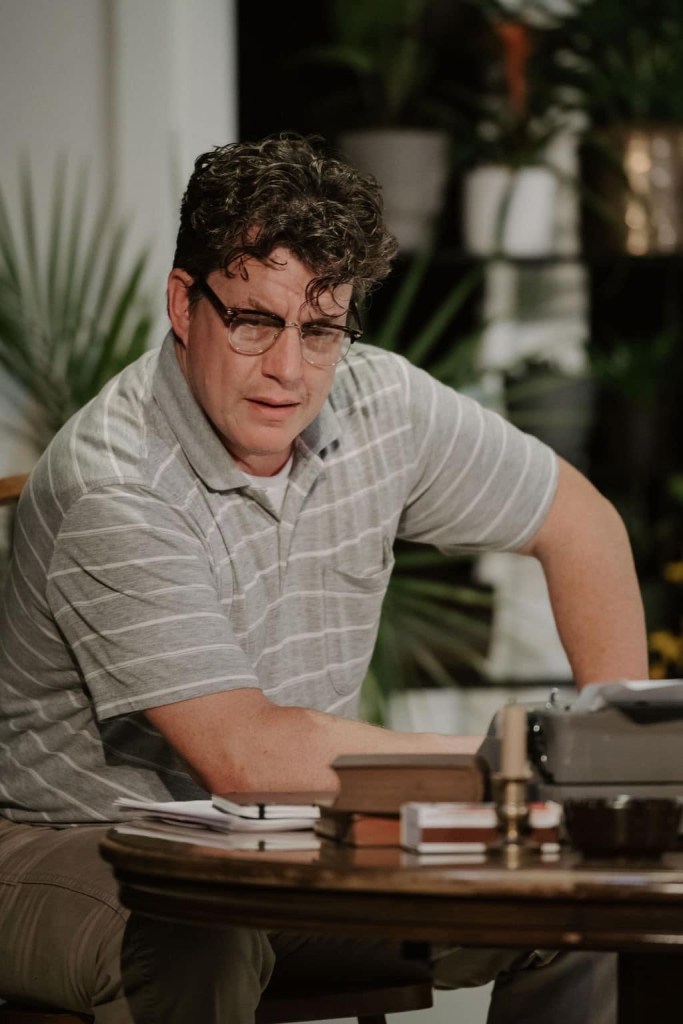
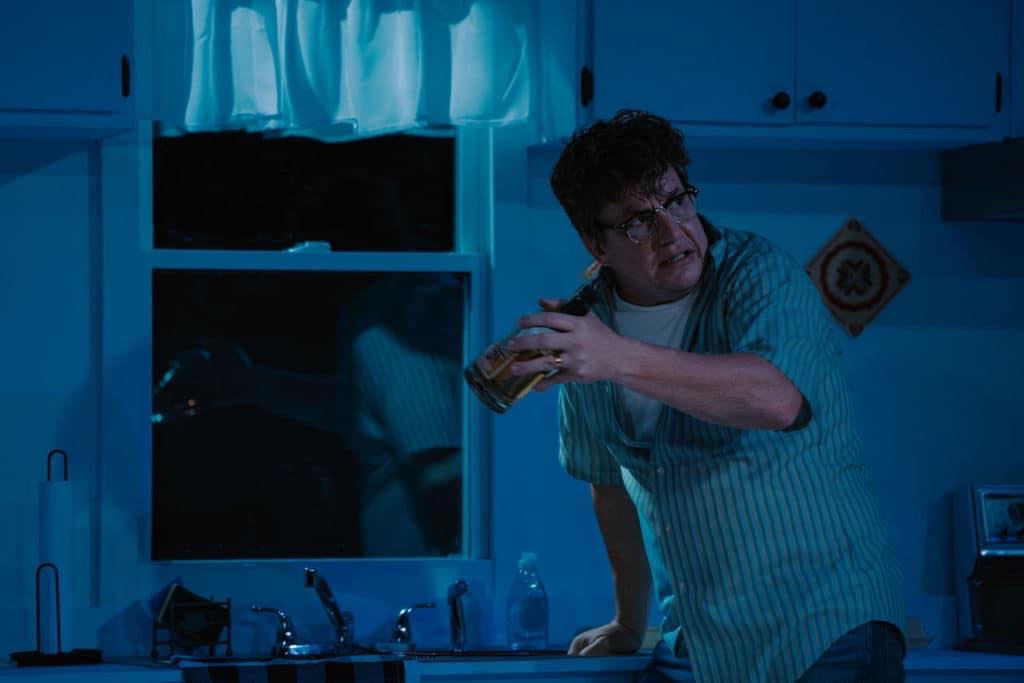
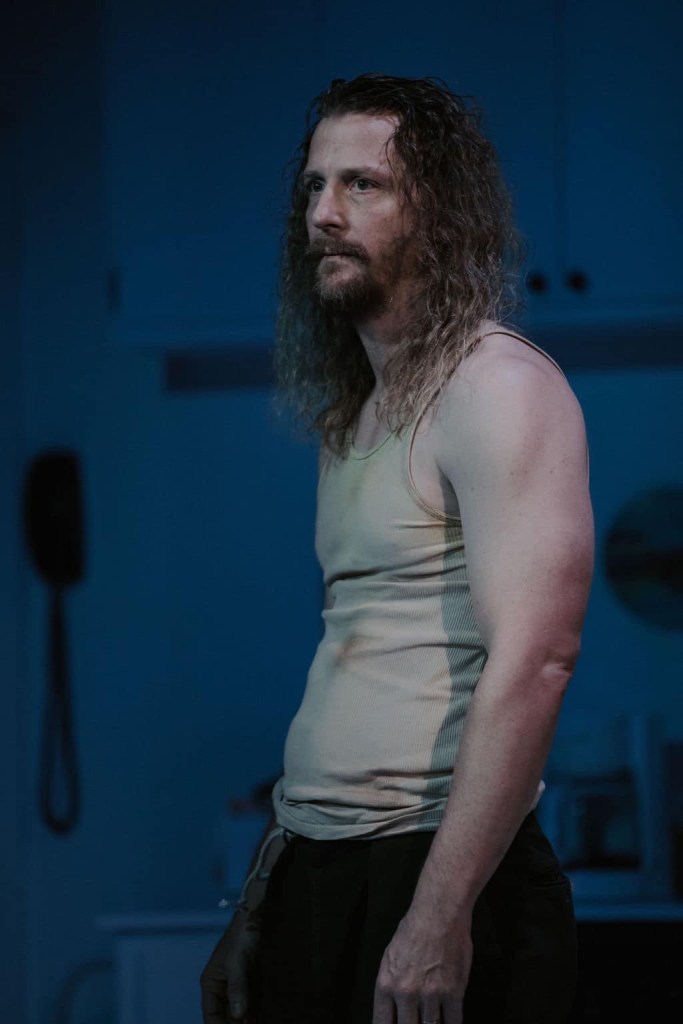
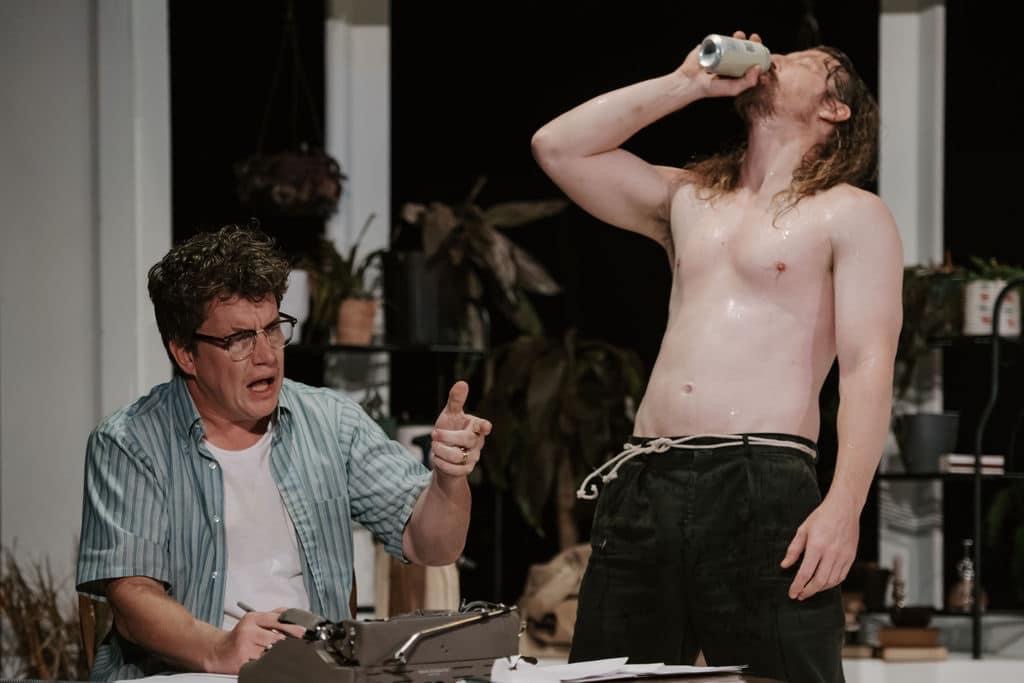
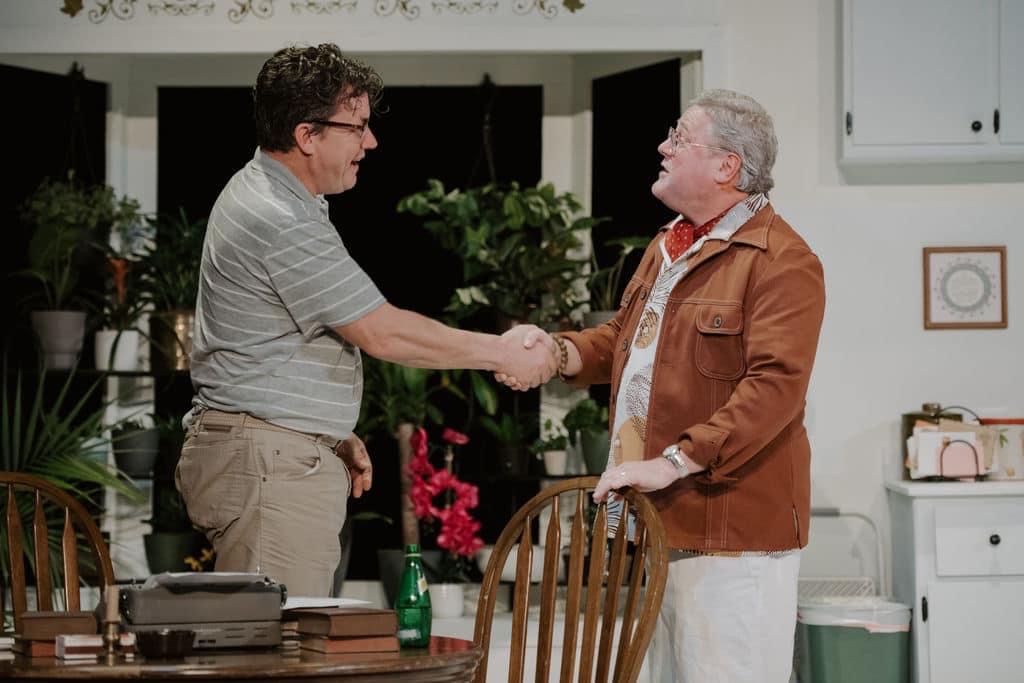
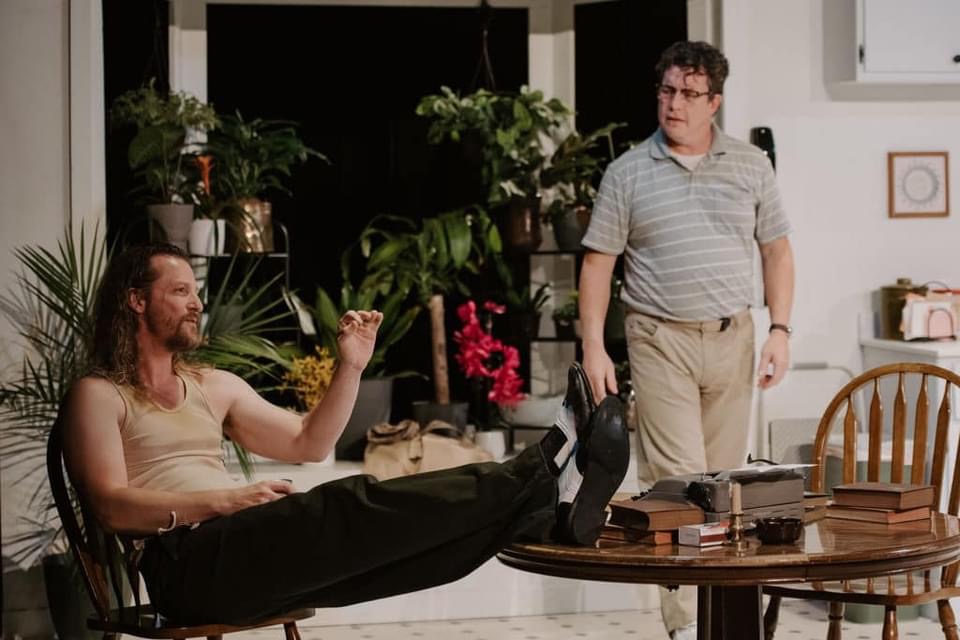
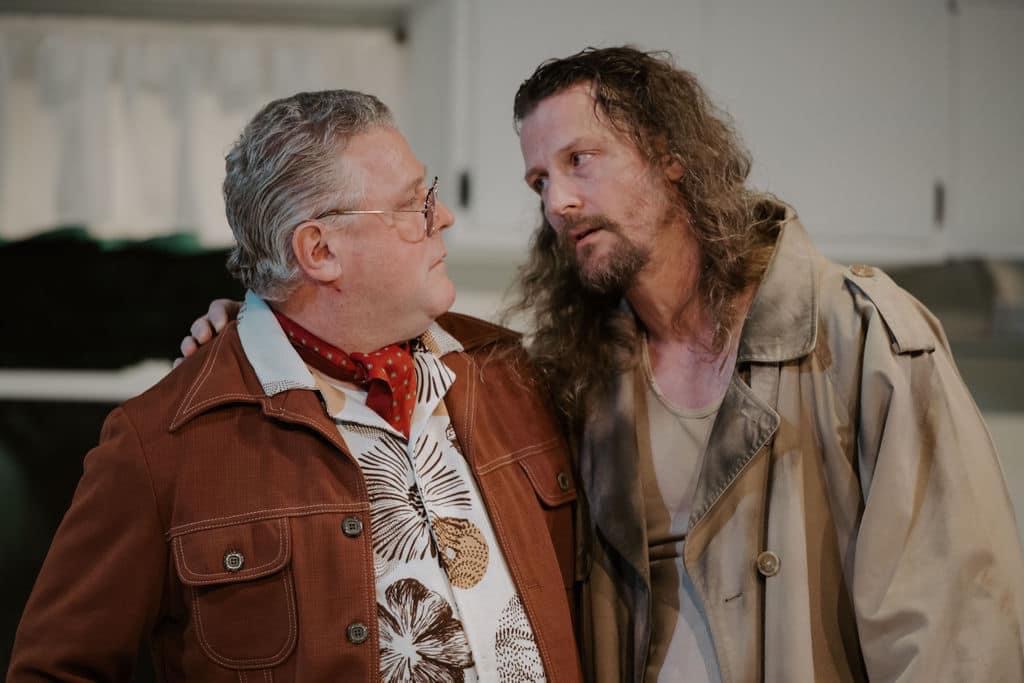
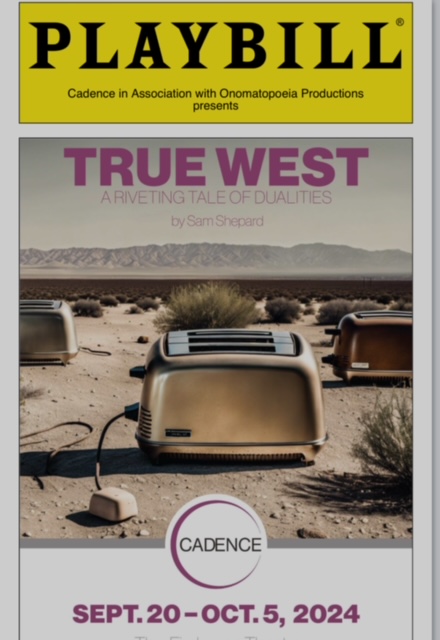
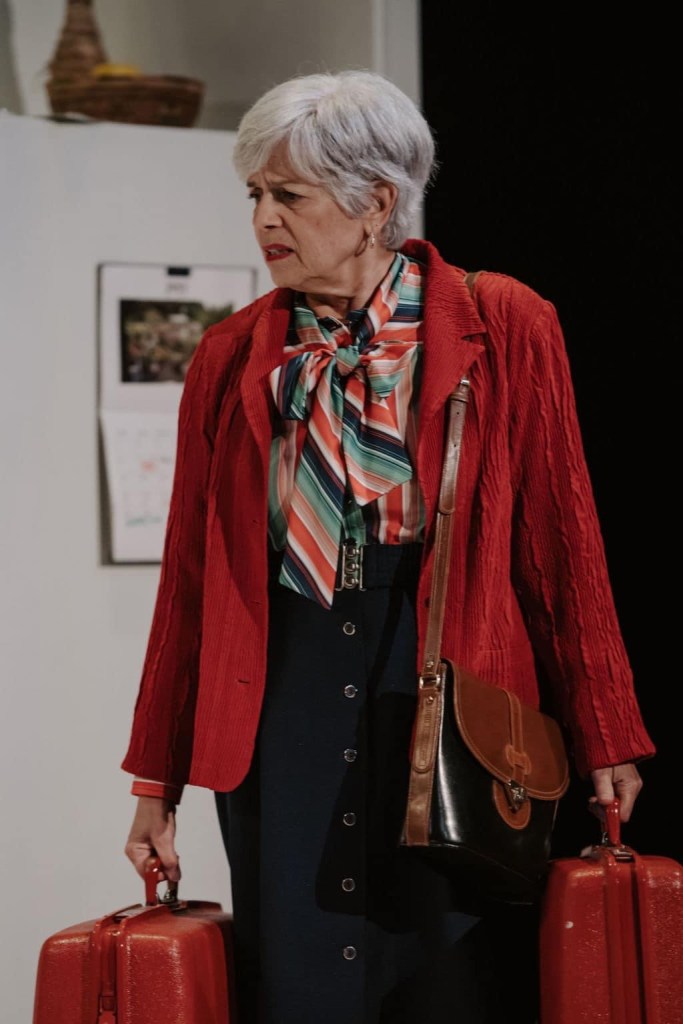
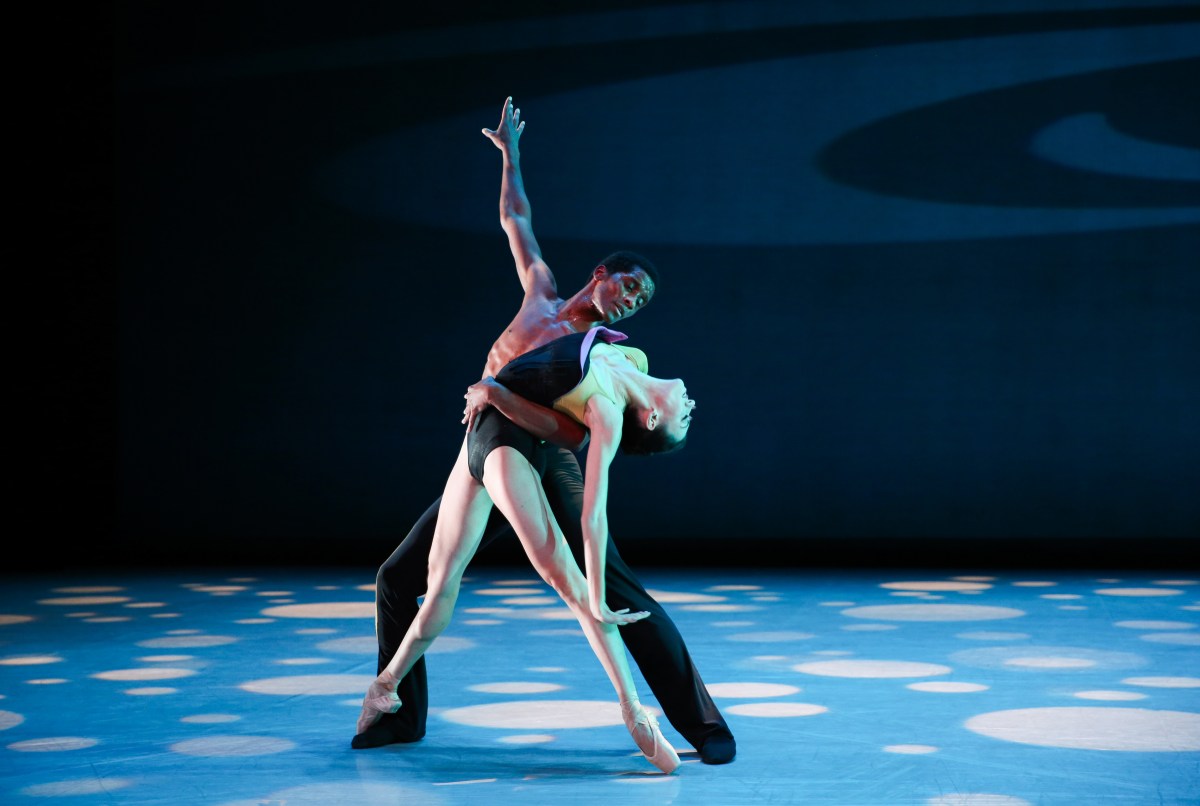
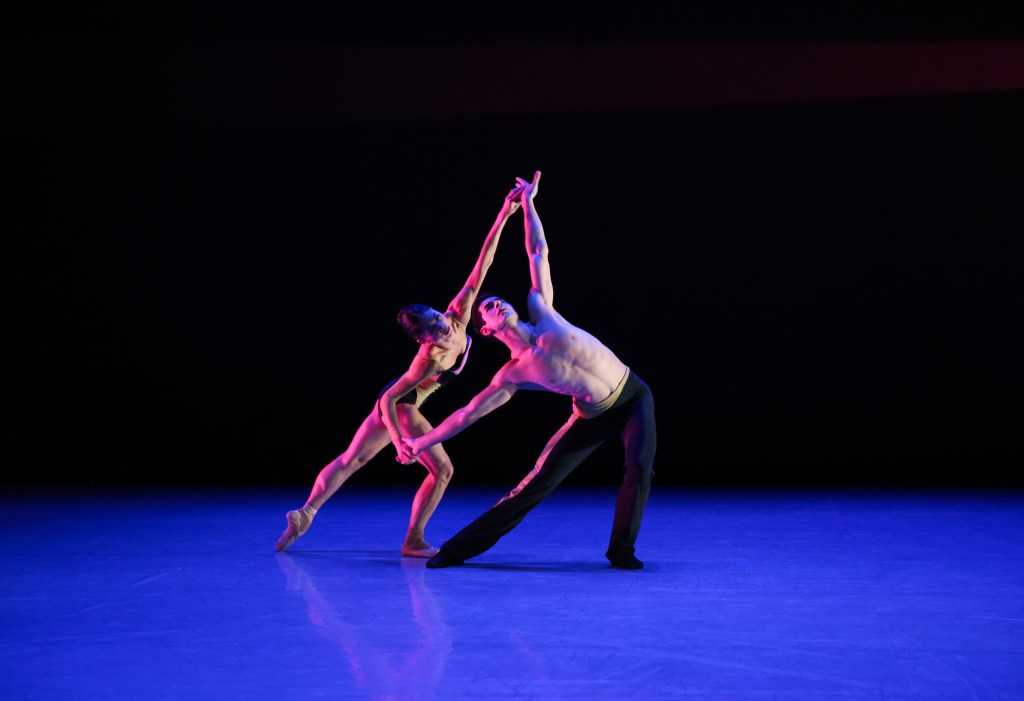
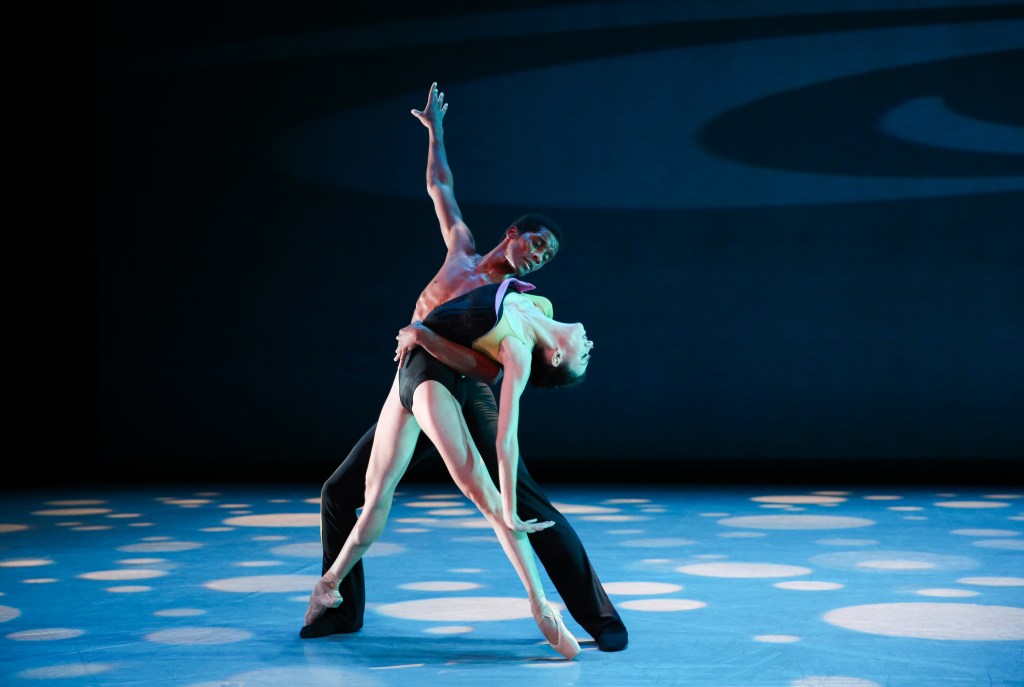
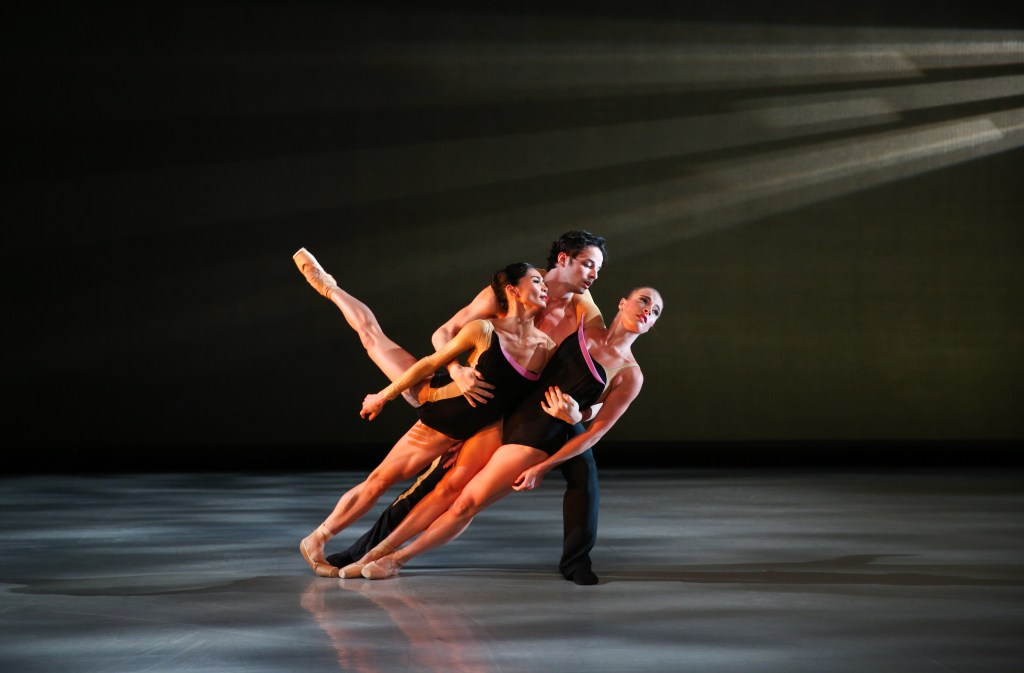
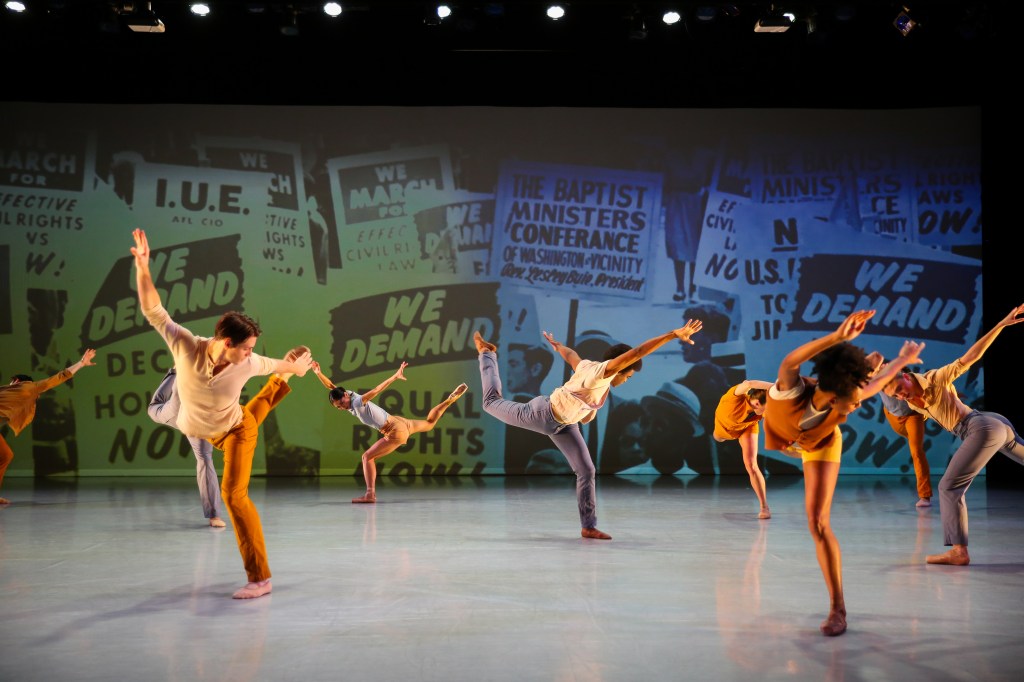
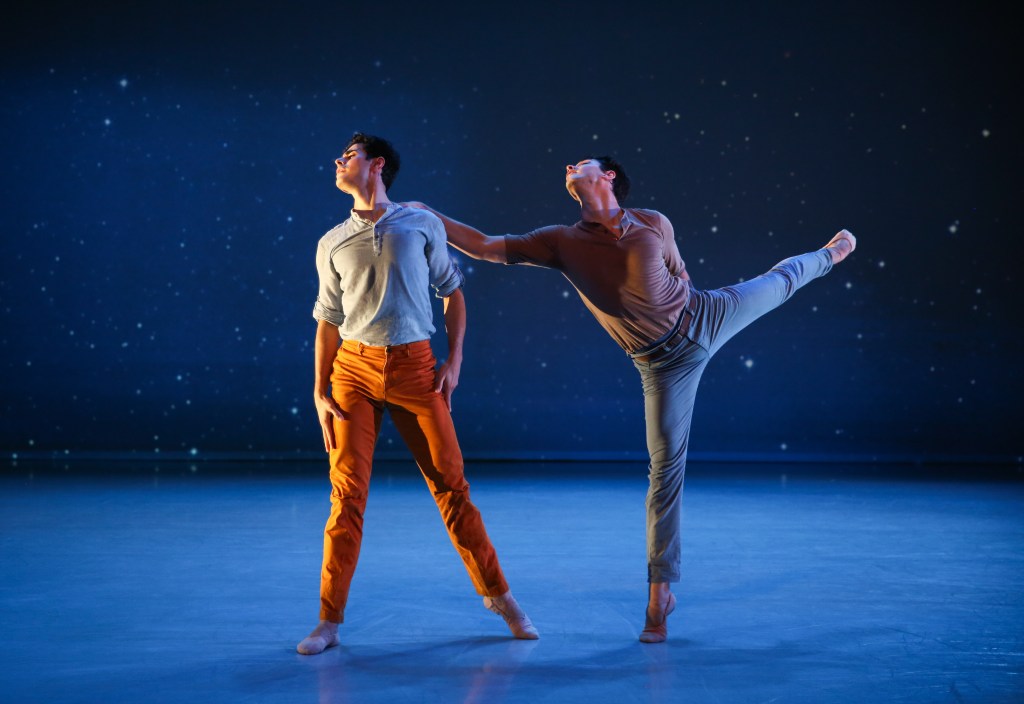
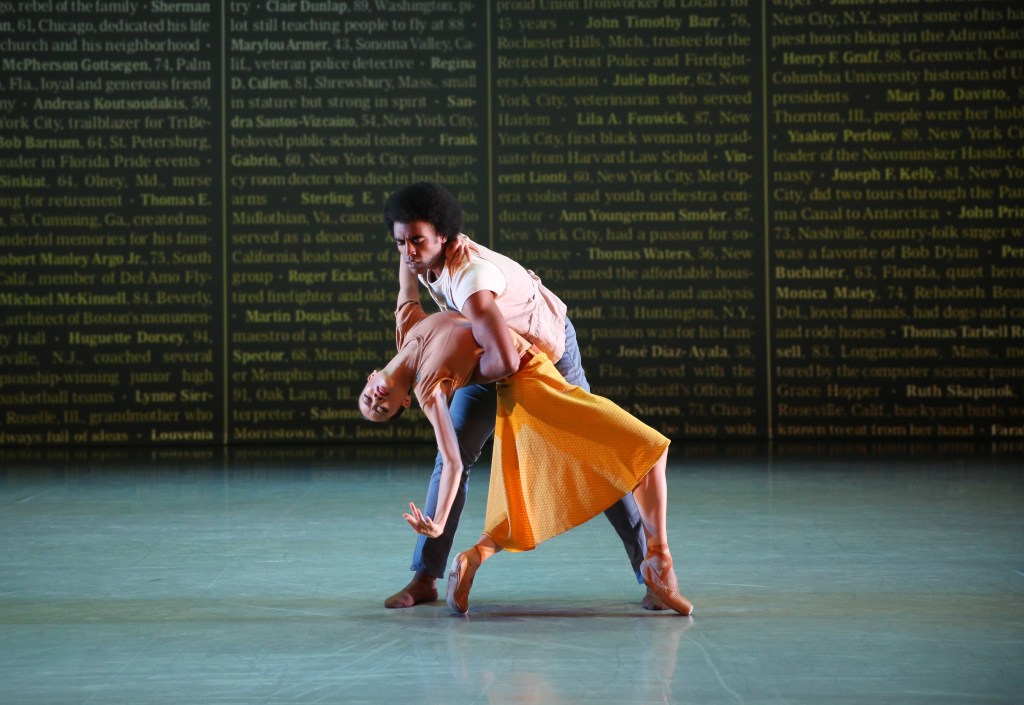
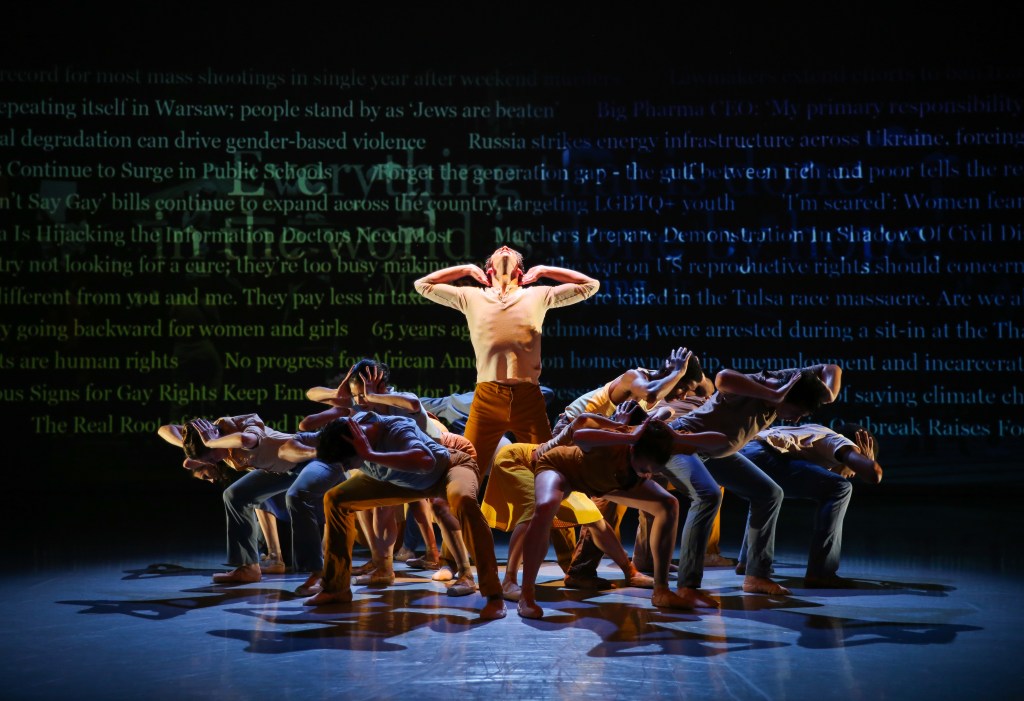
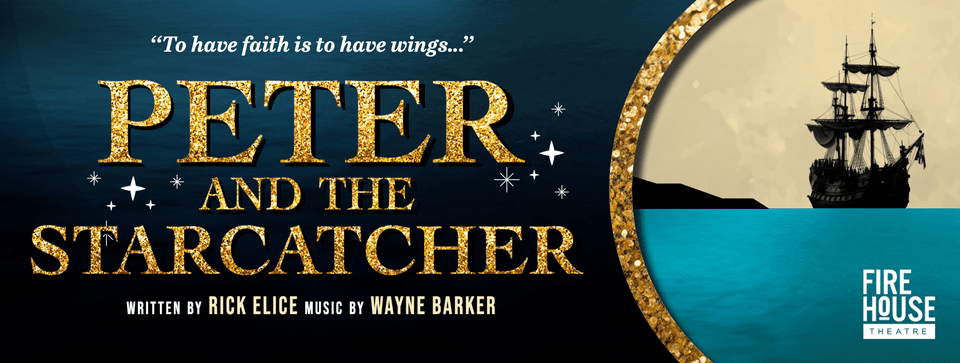
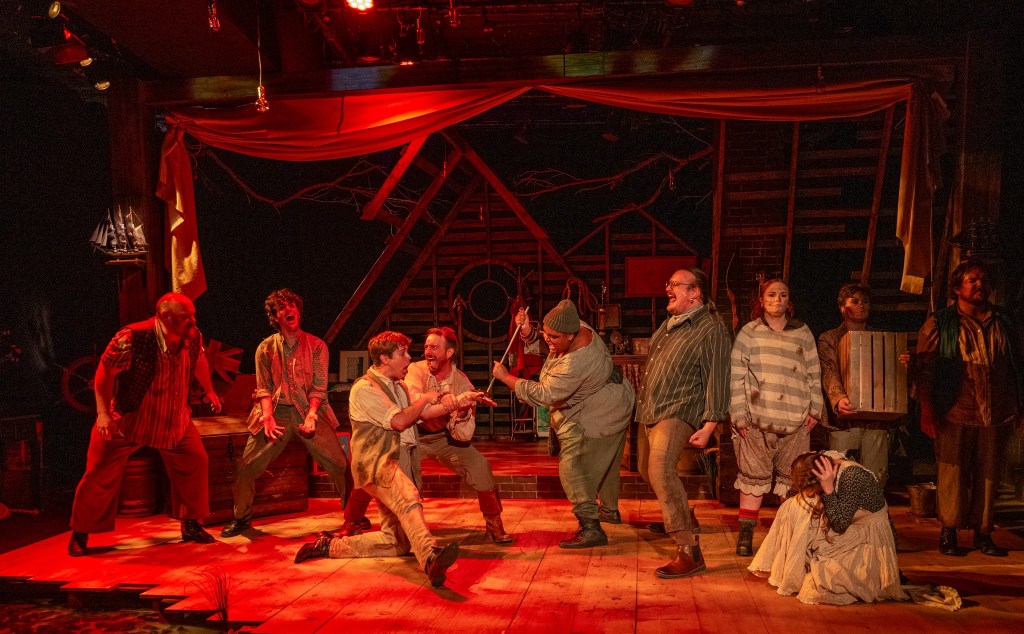
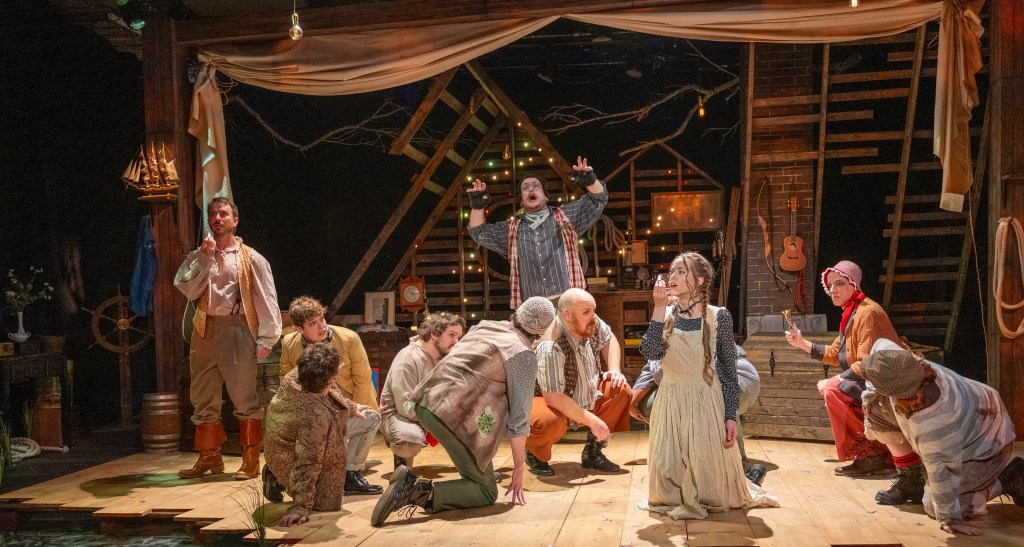
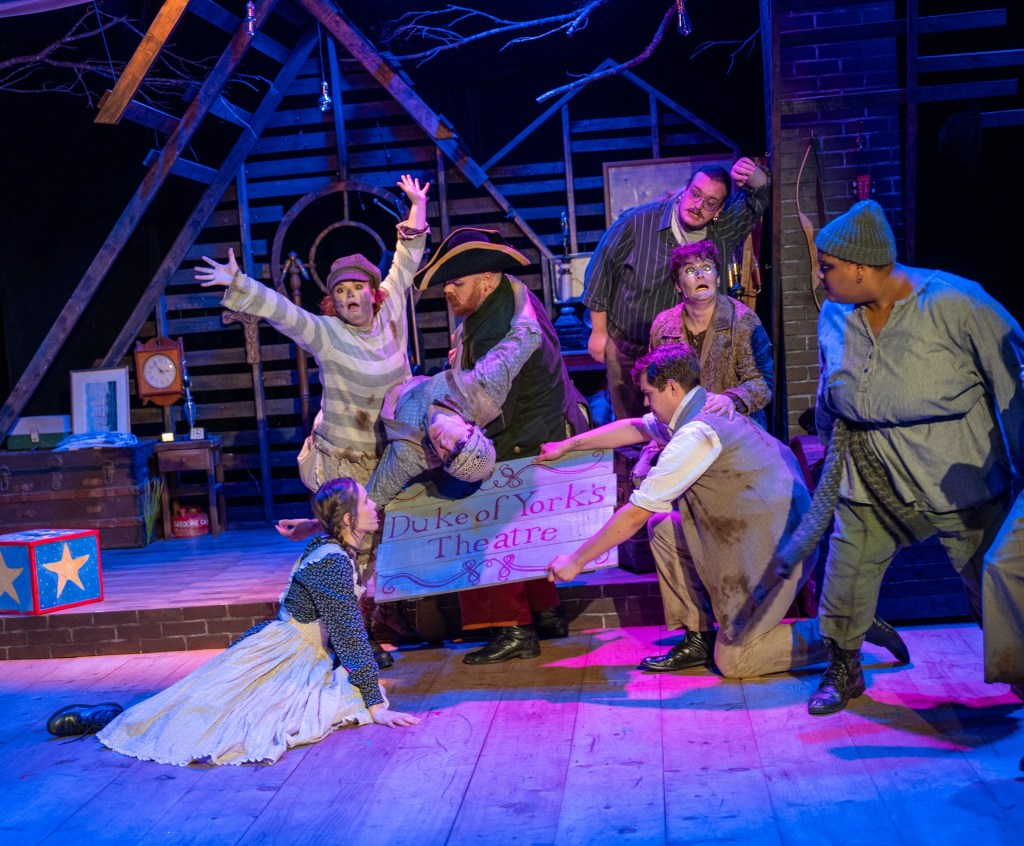
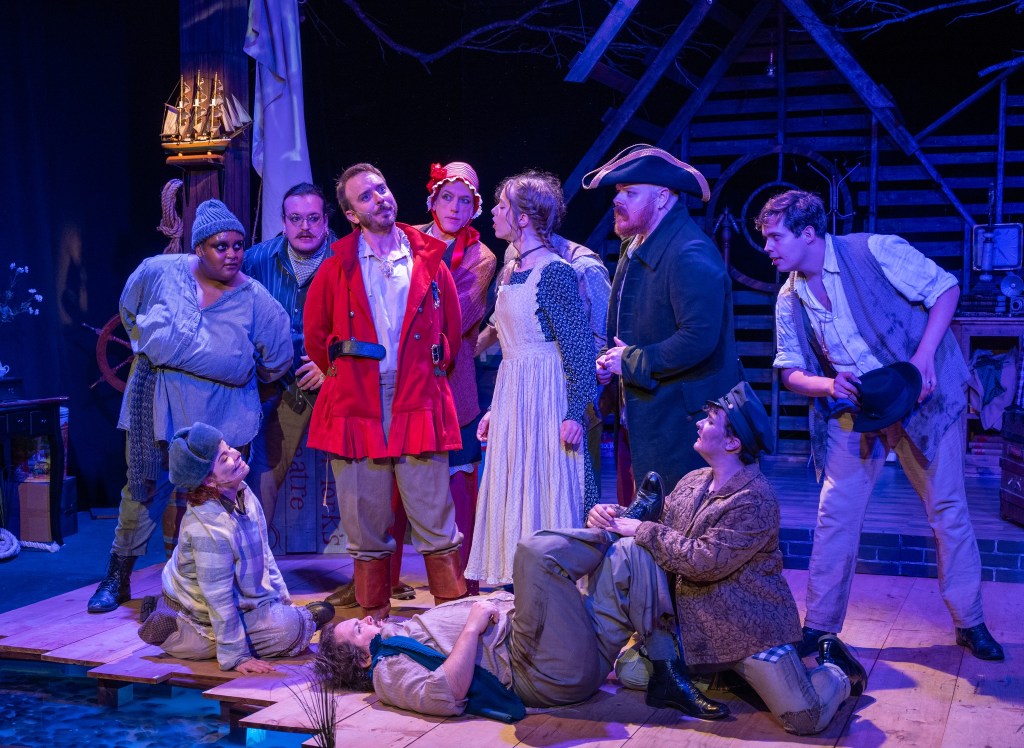
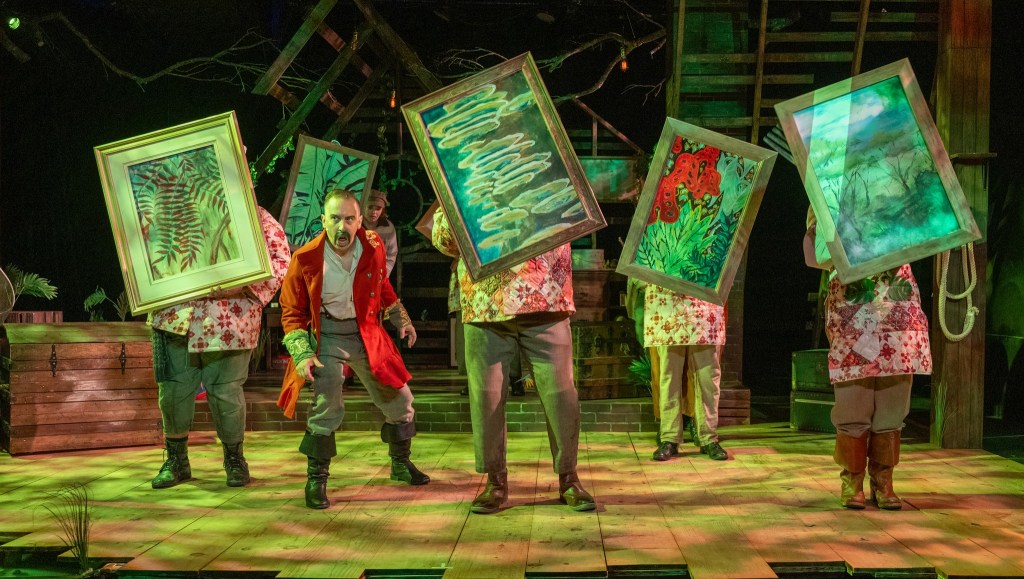
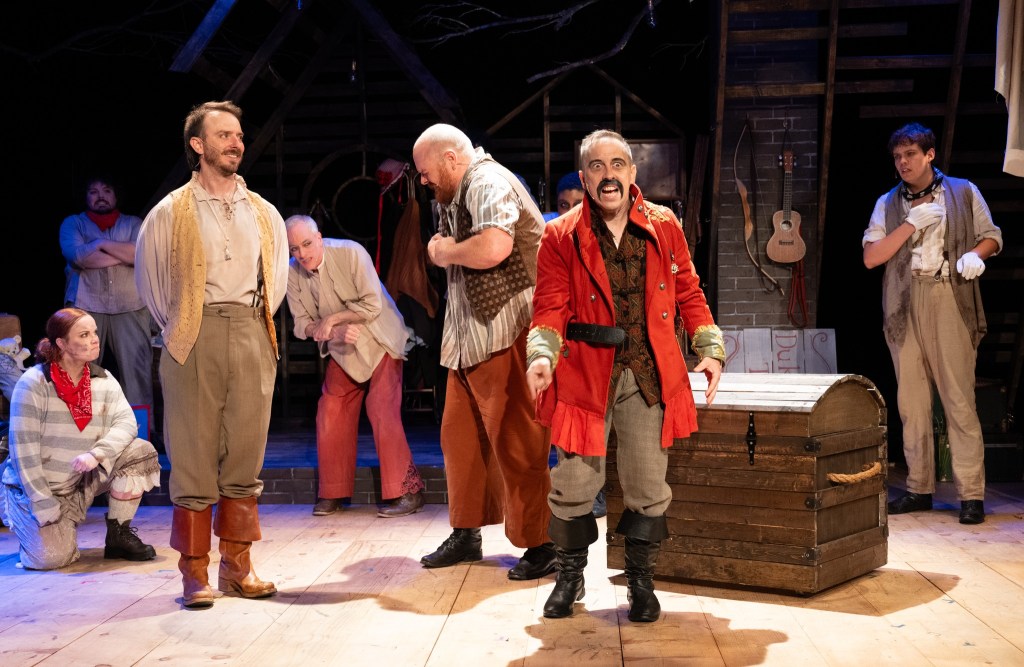
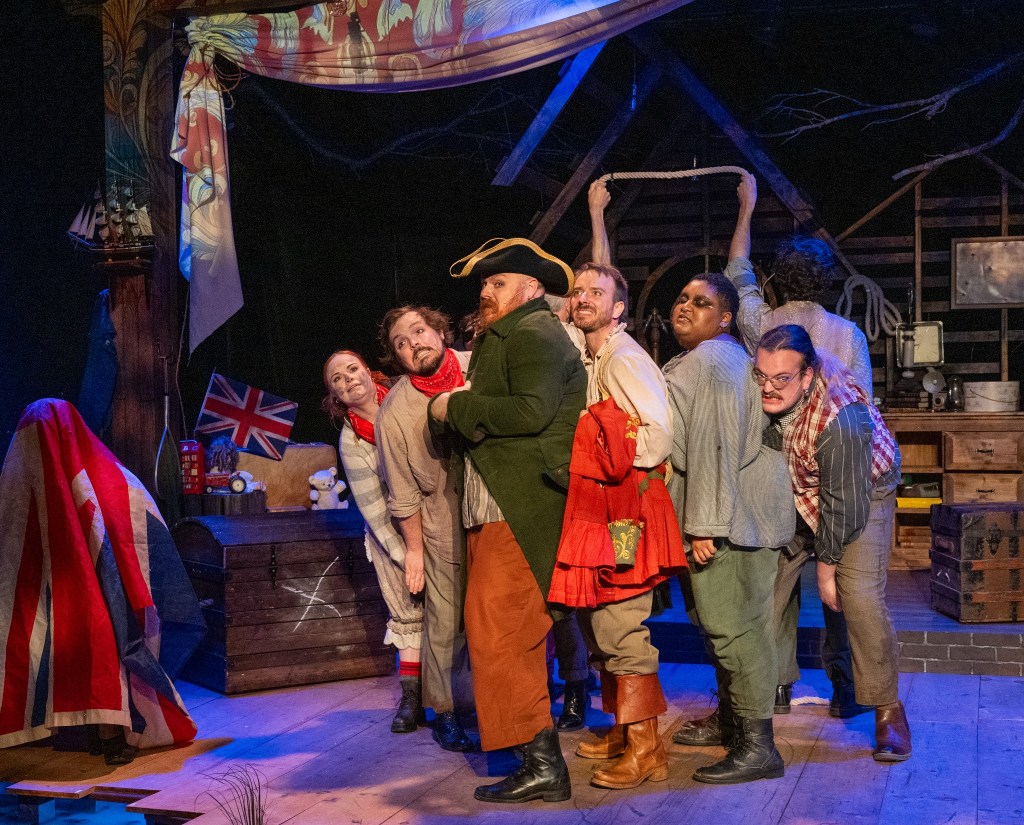
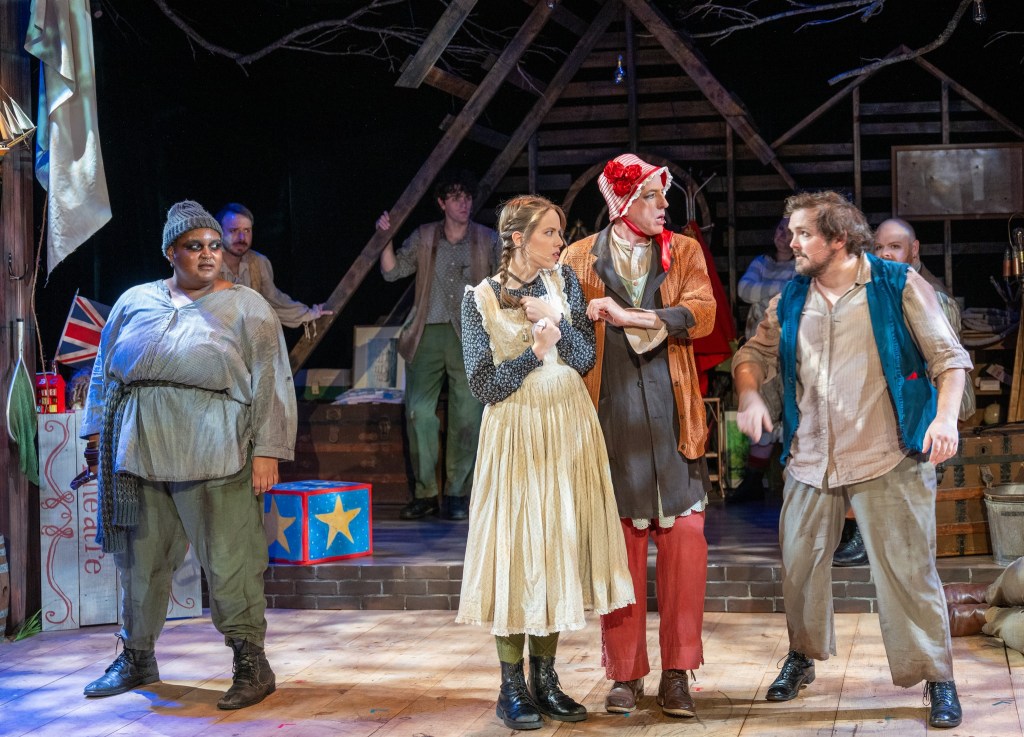


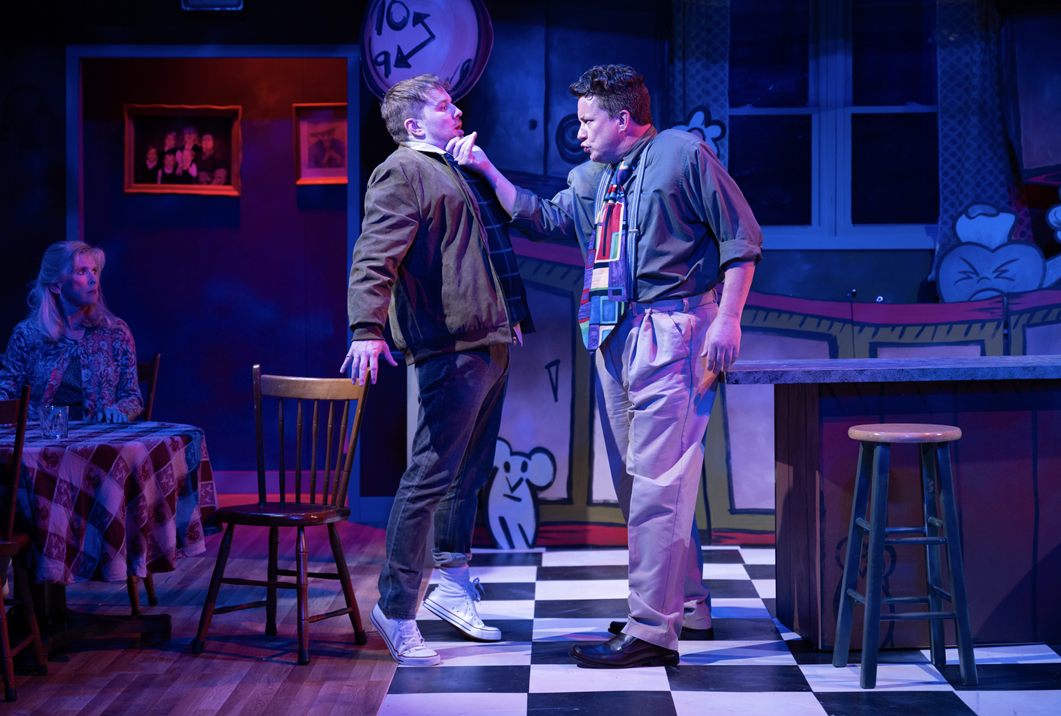

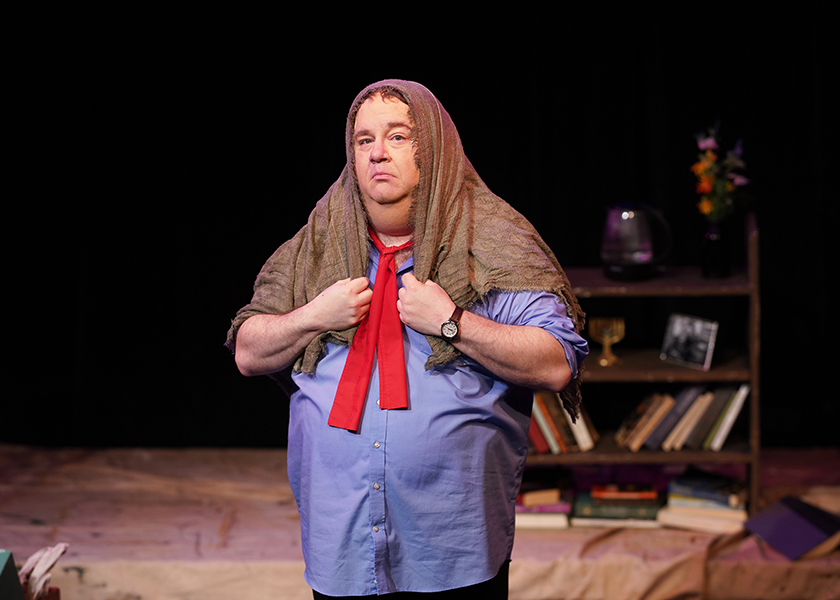
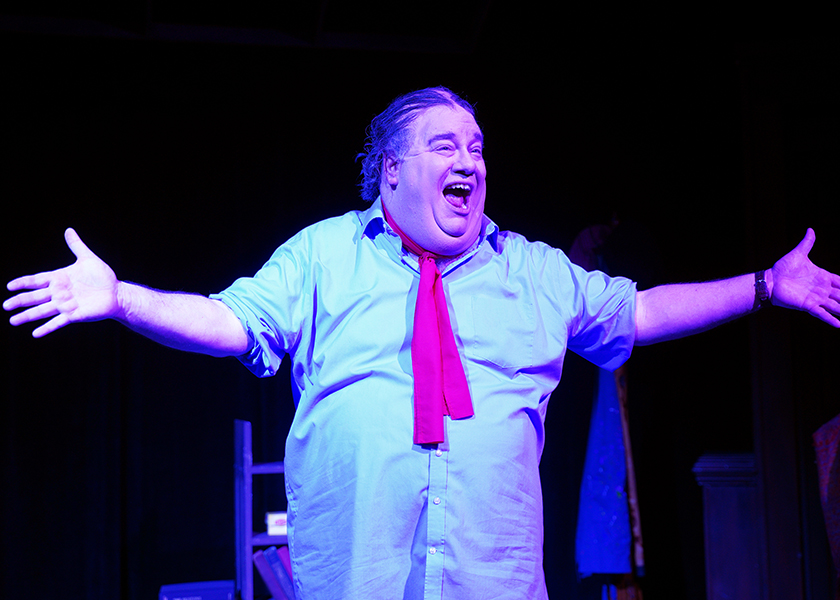
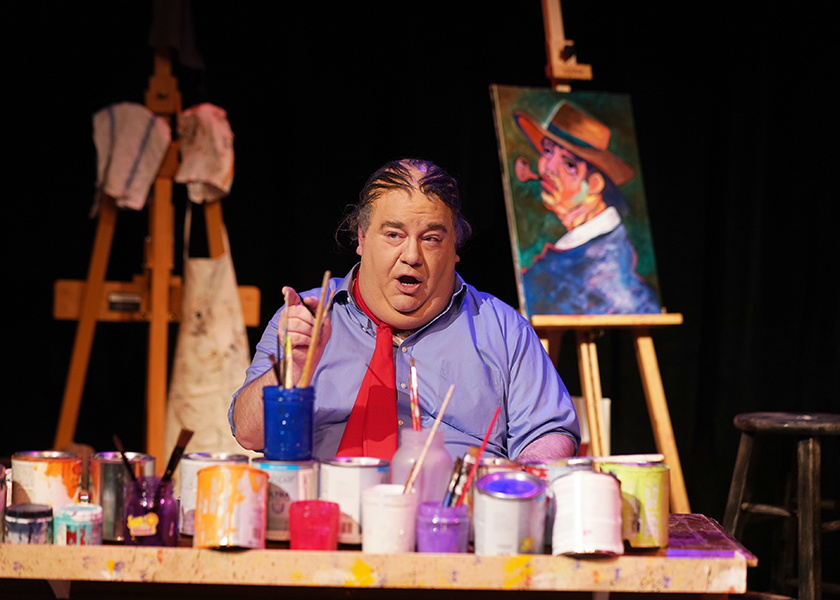

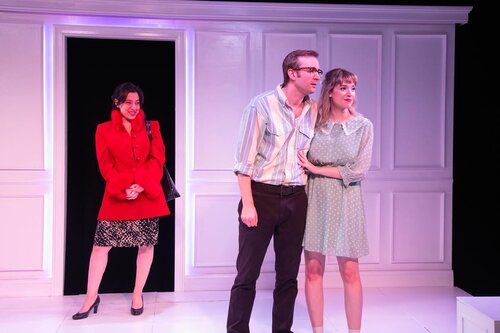
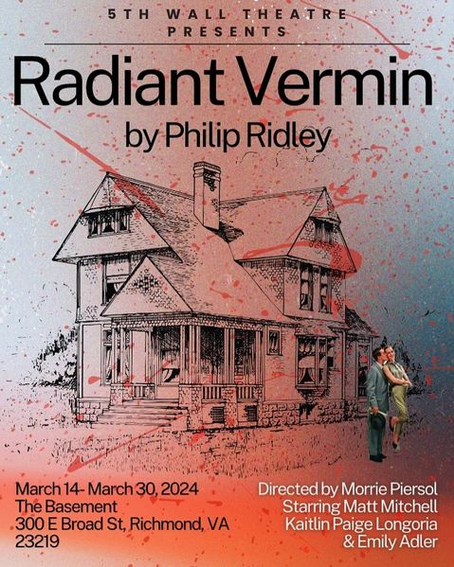
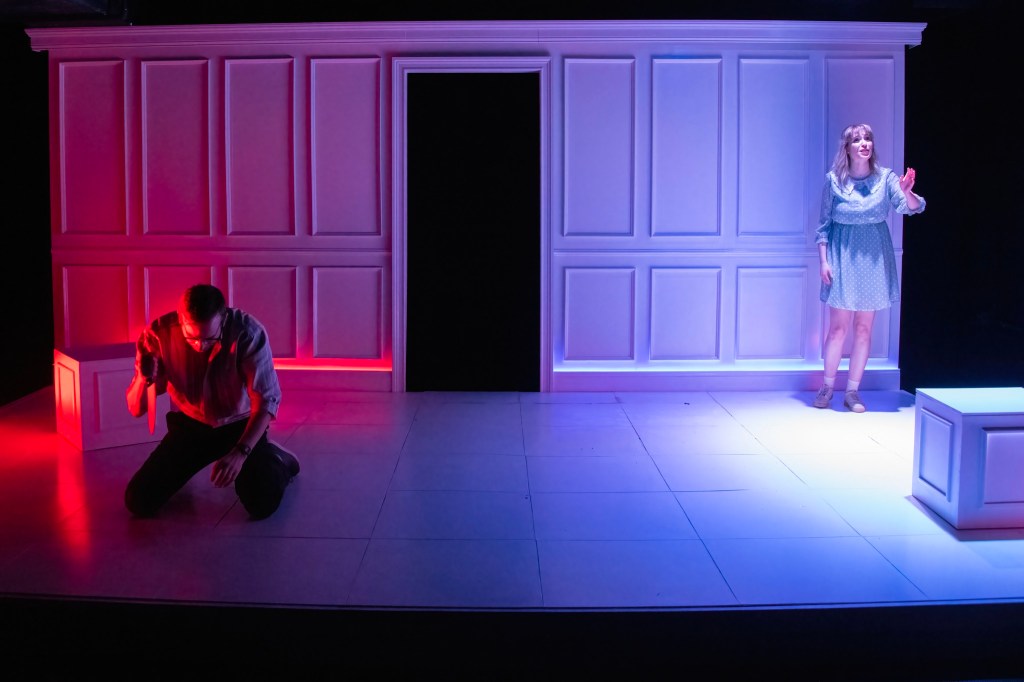
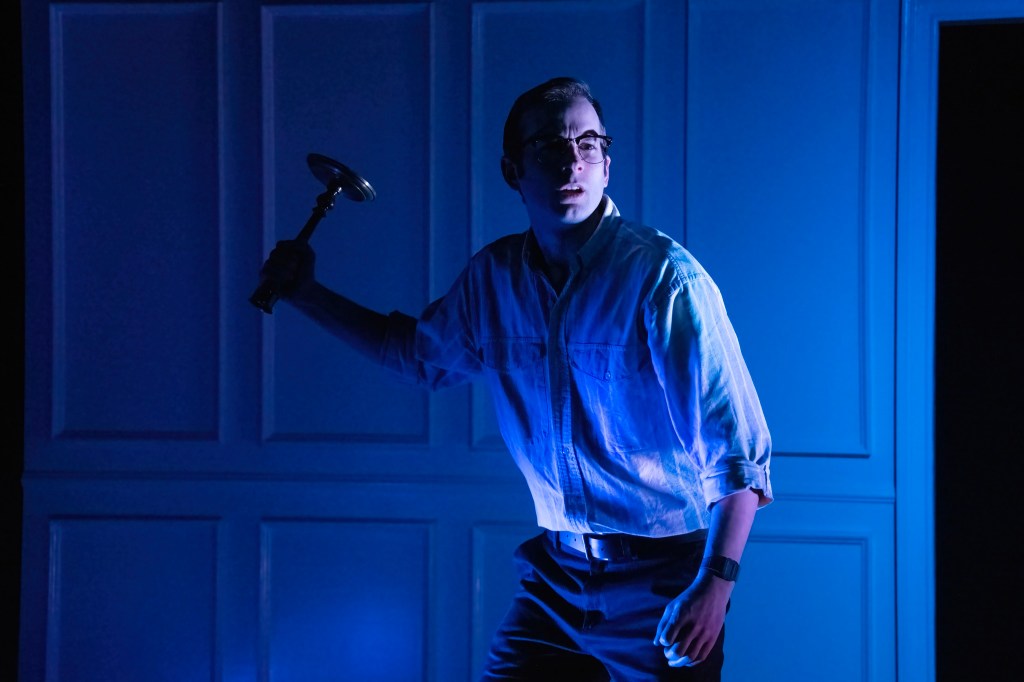
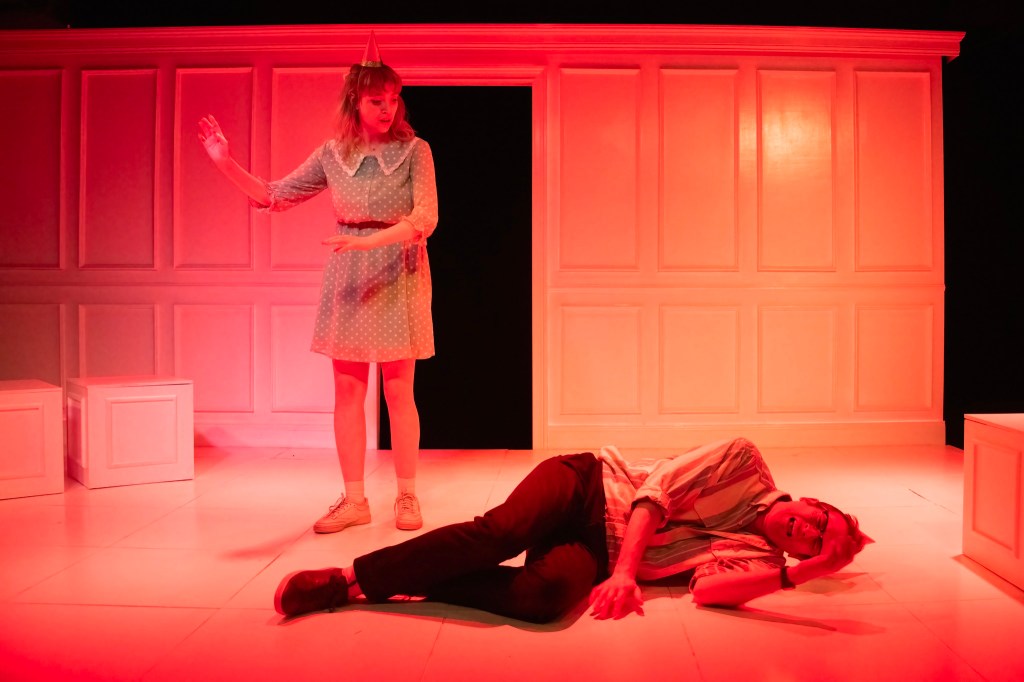


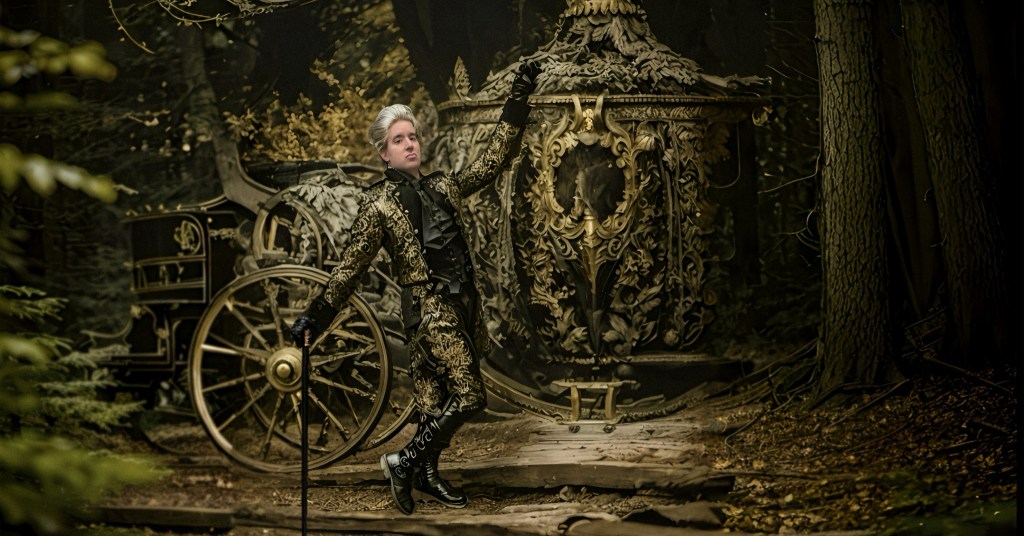
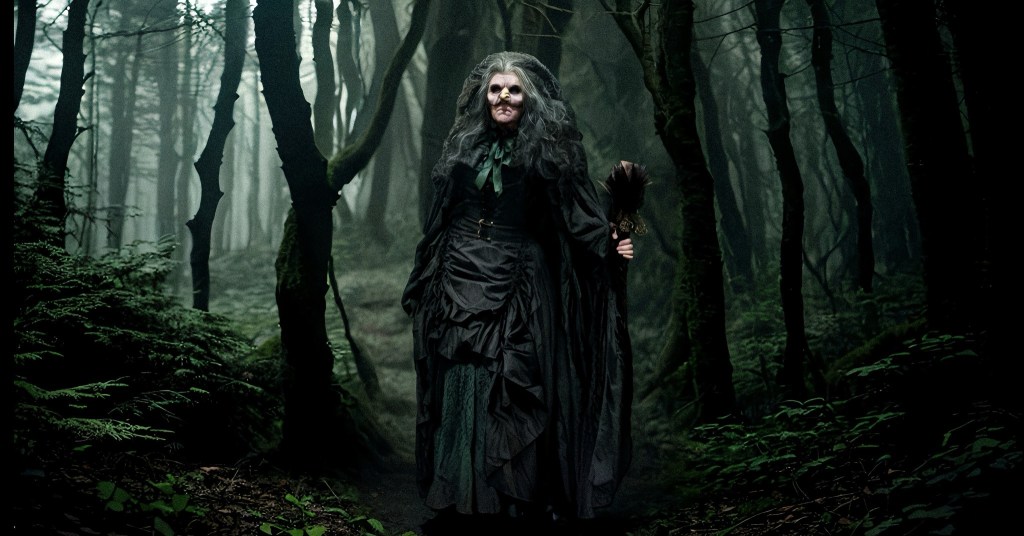
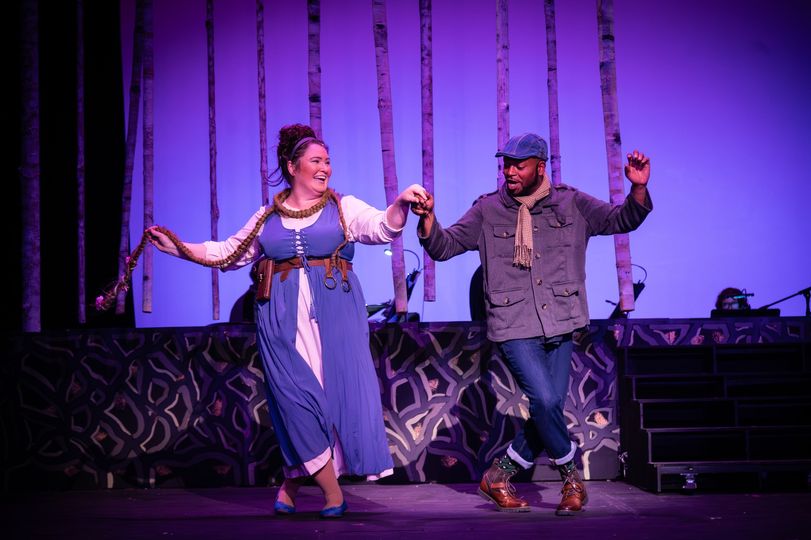
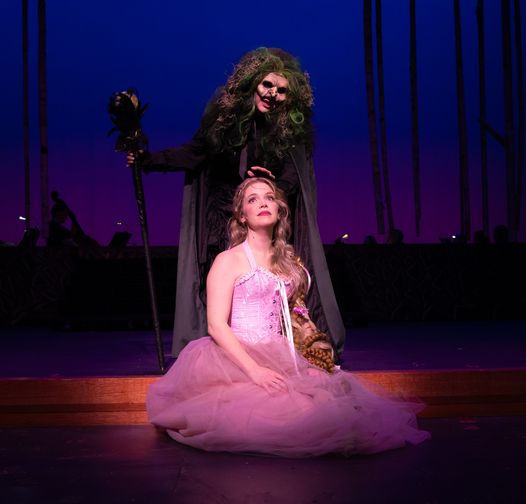

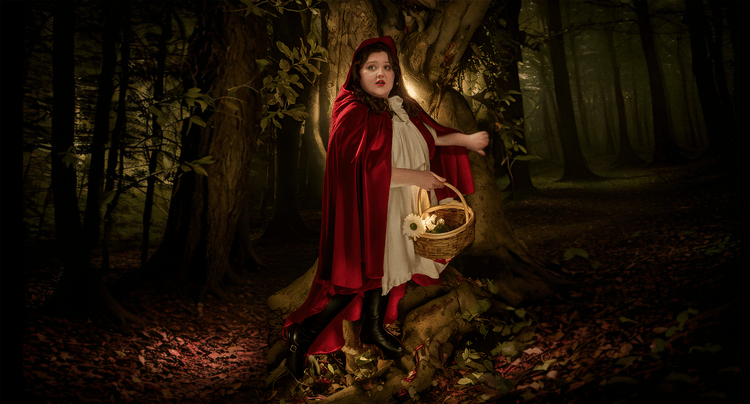
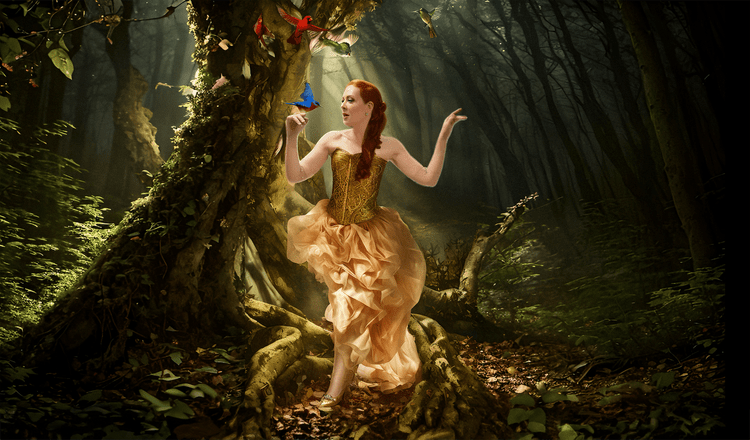

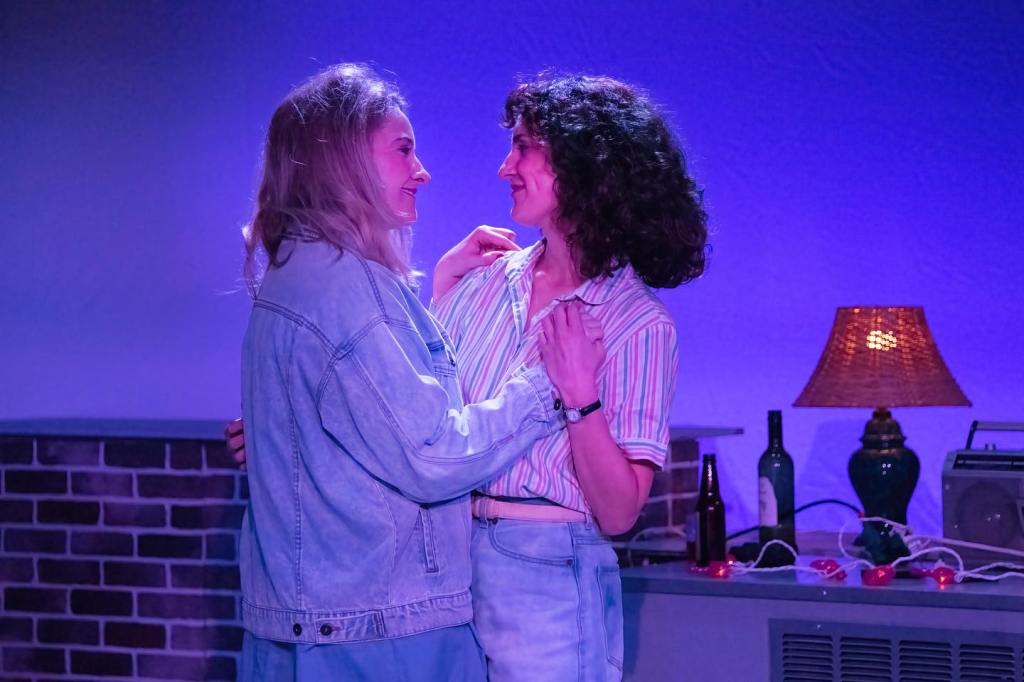
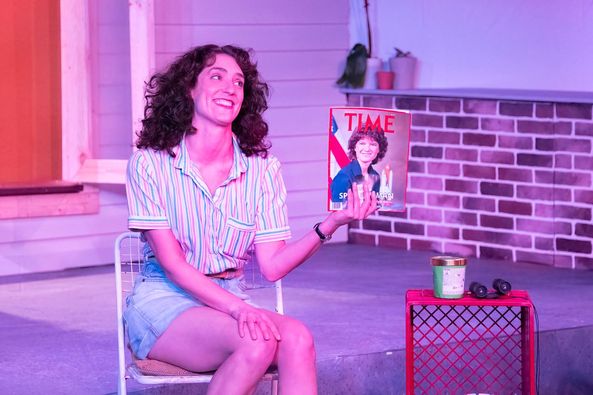



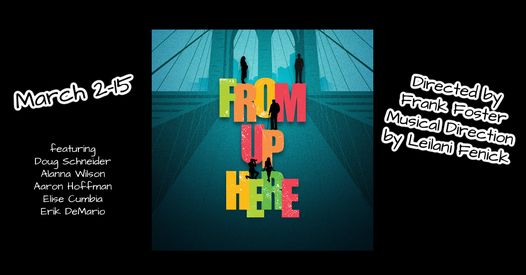
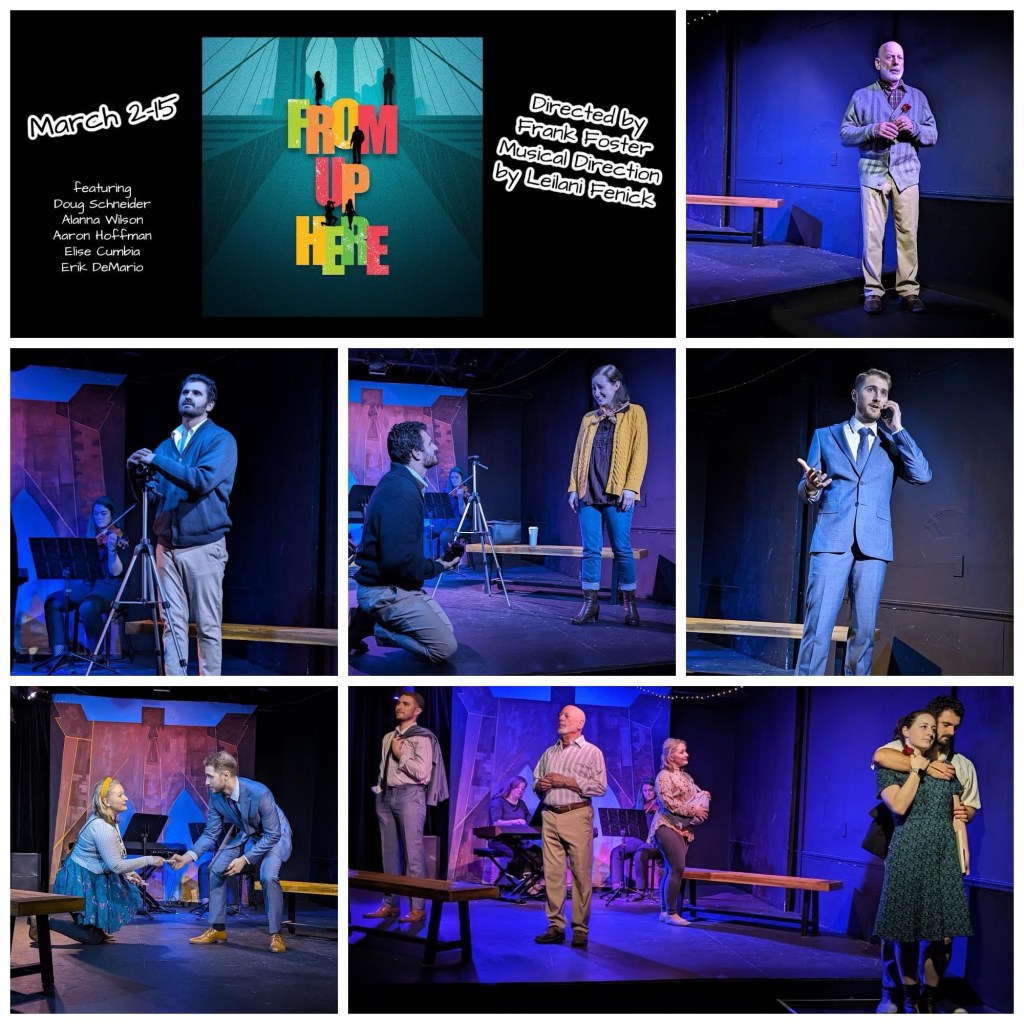
 RVArt Review