
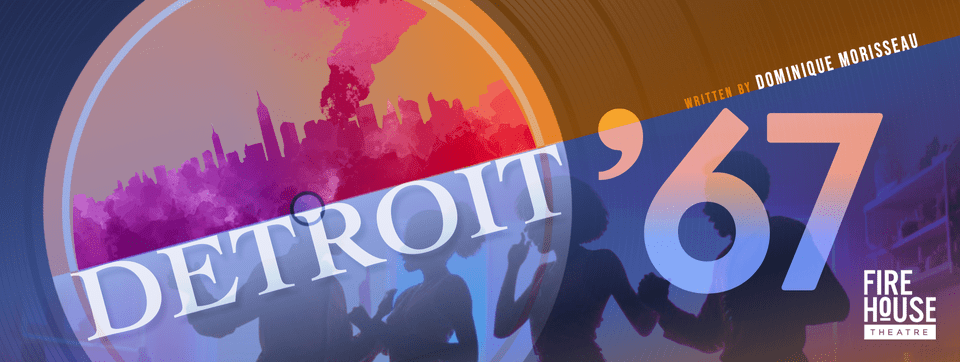
Everybody Needs Love
A Reflection on a Theater Experience by Julinda D. Lewis
Presented By: The Firehouse Theatre on the Carol Piersol Stage
At: 1609 W. Broad Street, RVA 23220
Performances: March 12-30, 2025
Ticket Prices: $5.00 – $35
Info: (804) 355-2001 or firehousetheatre.org
The 12th Street Riot or Detroit Uprising in the summer of 1967 has been characterized as one of the bloodiest urban riots in the US. The police raid of an after-hours joint (i.e., an unlicensed bar) erupted into bloody confrontations between Detroit’s Black population and the Detroit Police Department. The 82nd Airborne Division, 101st Airborne Division, Michigan Army National Guard, and Michigan State Police were all called into action by Michigan’s Governor George W. Romney and President Lyndon B. Johnson. By the time it was all over, there were 43 dead, 1,189 injured, 7,200 arrested, 400 buildings burnt or destroyed.
This incident was widely covered in the news, but even though I was alive at the time I don’t remember anything about it. I was 12 years old and living 600 miles away in Brooklyn, NY. But this show’s Director, Dr. Tawnya Pettiford-Wates, Professor of Acting and Directing Pedagogy at Virginia Commonwealth University, who was also a child at the time, was visiting with her family in Detroit when the rioting began. This gives Dr. T. a unique perspective on the history and background of the actions of this play.
NOTE: See Rich Griset’s preview in Style Weekly for interesting background information: https://www.styleweekly.com/we-almost-lost-detroit/
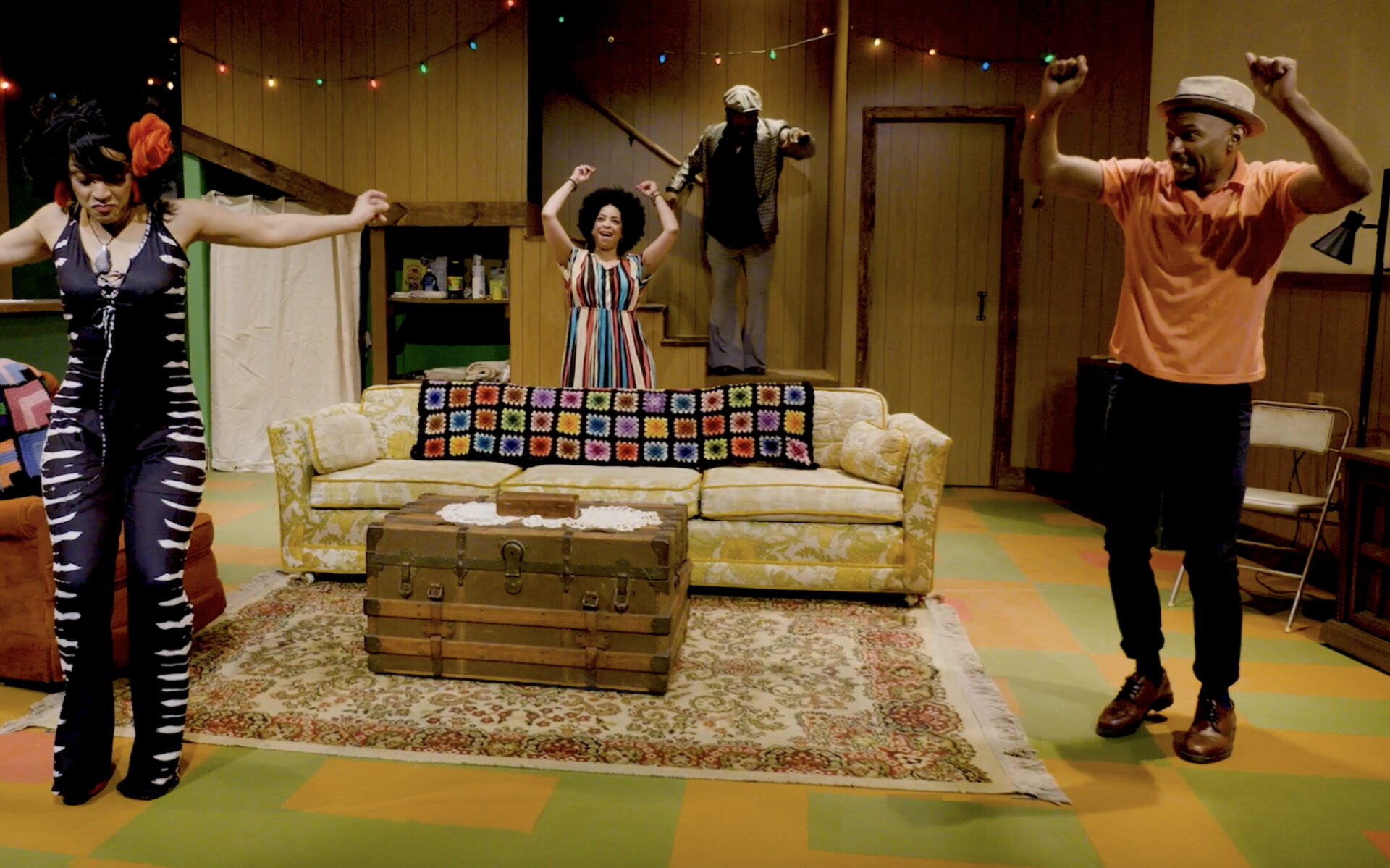
Many of us who were born in or grew up in urban Black communities in the 1950s and 1960s also felt a sense of familiarity with Detroit ’67 as soon as we walked into the Firehouse Theatre and saw the stage set – a basement recreation room meticulously designed down to the most minute detail by Mecedes Shaum. There was the familiar wood paneling, the tiled floor, the comfy sofa that had been given a second life from the upstairs living room, the bar, the beaded curtains, the family photos lining the stairs, the folding card table and chairs for playing spades or pinocle, the obligatory photos and posters of Malcolm X and other heroes. There was the washing machine – but no dryer because clothes were hung outside on sunny days or dried on a line stretched across the basement on rainy days. And anchoring all of this – the record player, which was replaced by the hi-fi, and then, as it was on this stage, by the latest technology – the 8-track player.
The first two things to catch your attention on entering the space are the set and the music. Which you notice first is probably determined by if you are predominantly an auditory or visual learner. I’m a visual-kinesthetic learner, so the set caught my eye, and the Motown soundscape caressed my ears and moved my body simultaneously. The Temptations, Smokey Robinson and the Miracles, Mary Wells, the Four Tops, Gladys Knight and the Pips and more provided the heartbeat of Detroit ’67 and took centerstage as the main characters, siblings Chelle (short for Michelle) and Lank (short for Langston) – played by Firehouse Associate Artistic Director Katrinah Carol Lewis and actor David Lyve Watkins – prepared to open their basement hideaway as an after-hours joint. I was familiar with rent parties growing up in New York, but apparently these after-hours party venues were how Black entrepreneurs or families in need of a little extra cash made their money.
As Detroit ’67 opens, Chelle and Lank are making plans, having inherited their parents’ house and some money as well. Chelle is looking forward to using her share to pay her son’s tuition. We never see the young man as he’s away at school attending Tuskegee University in Alabama – and yes, it’s summertime, but he’s staying to work, and apparently there is a young lady involved as well. The problem – or one of the problems – arises when Chelle’s plans and her brother’s plans conflict. Reminding me of a similar conflict in Lorraine Hansberry’s A Raisin in the Sun, Lank wants to use their inheritance to invest in a business. A local bar is up for sale, as a result of the phenomenon known as “white flight” and Lank’s best friend, Sly (played by Jeremy V. Morris) is a local entrepreneur (okay, he’s the local numbers runner, used car salesman, and general hustler) already has half the money needed to purchase the bar and the required license.
“Niggas deserve nice stuff, too!”
Did I say, “one of the problems?” Well, yes. The first was the riots, remember? The second was how to use the inheritance. And the third involves a mysterious stranger named Caroline. Lank and Sly find Caroline stumbling alongside the road late one night. Stopping to see if she needs help, they offer her a ride in their truck, but she passes out. So, they bring her home to Lank’s house. But, you see, Lank and Sly are two Black men, and Caroline is white. And it’s 1967 and a race riot has just broken out. This is bad, unbelievably bad. And it gets worse.
The mystery of who Caroline is and what happened to her remains unresolved at the end of Act 1. It’s only after Chelle has to bail Lank out of jail that Caroline buys a train ticket and finally reveals what happened the night Lank and Sly found her – and no, I’m not going to tell you here, you will find out when you go see the show.
Detroit ’67 is warm, funny, and terrifying. It has all the “feels” as playwright Dominique Morisseau (Pipeline, November Theatre, Oct-Nov, 2021 https://jdldancesrva.com/2021/10/16/pipeline/ and Sunset Baby by Blk Virginia Theatre Alliance coming to VaRep’s Theatre Gym in April 2025) explores themes of family dynamics, dreams of black folks, racial tension, racial profiling, police brutality, financial and social inequality, and even love and joy.
Chelle is a strong-willed woman who resists change, but she is loving and has a fierce loyalty to her younger brother and her son. Lank is ambitious but impulsive; some would call him a dreamer, others a visionary. Lank’s best friend Sylvester aka Sly has a business mind balanced by a compassionate spirit. Chelle’s friend Bunny is also an entrepreneur, but she hides her brains under an endless wardrobe of close-fitting jumpsuits and a huge flower in her hair. And the mysterious Caroline wears the shortest of mini-dresses accessorized with tall white go-go boots. (If you are not familiar with this style, now is a good time to search for an image.) Kudos to Costume Designer Margarette Joyner for the 1960s wardrobe. Each character’s wardrobe perfectly reflects their personality, from the flashiness of Bunny and Sly to the conservative maxi-dresses and Angela Davis-style afro favored by Chelle to the subdued casual attire that distinguishes Lank.
Dr. T’s direction lends itself to multi-dimensional portrayal of all five characters. I have long been familiar with the work of Lewis and Morris and Dr. T. I have seen all three of them perform in and/or direct powerful works that tell important stories. This is a production that does not disappoint, This is a well-chosen ensemble that, even on the fourth performance (two nights of previews, and one night after opening night) seems to have achieved that place where they are moving as one. We see them laugh and dance and drink, but we also see them cry and fight for their beliefs, for their heritage, their freedom, their dignity, and for love. A favorite scene is when Sly woos Chelle, spilling his heart in song, and after much protest, Chelle finally gives Sly a sliver of hope that she might just care for him, too. They laugh, they argue, and in a little more than two hours we get to know these people, to recognize them as family, as friends, as people we have encountered, as people we care about.
Now if you feel that you can’t go on
Because all of your hope is gone
And your life is filled with much confusion
Until happiness is just an illusion
And your world around is crumblin’ down
Darling, reach out, come on girl, reach on out for me
Reach out, reach out for me
I’ll be there, with a love that will shelter you
I’ll be there, with a love that will see you through
(“Reach Out, I’ll Be There” by the Four Tops, 1966)
During the recent Super Bowl, Pulitzer Prize winning artist Kendrick Lamar borrowed the words of an earlier poet, Gil Scott Heron, to remind us that “the revolution will not be televised.” What Lamar and Morisseau both reveal to us is that the revolution will be accompanied by a sound. In a brief conversation after Saturday night’s program, Dr. T. mentioned the resistance in the music. There is resistance and resiliency in the rhythms of Motown, the rhythms of the African diaspora, in the context of history and the rhythms of the spoken word, and in the cadence of storytelling enveloped in the lyrics and its connection to family and community. Just before leaving the theater, my friend Tony asked me, how many synonyms are there for “excellent?” I don’t have an answer for that, but maybe you do. Let me know, comment here, after you see this show. I’ll be waiting.
—–
Julinda D. Lewis is a dancer, teacher, and writer who was born in Brooklyn, NY and now lives in Eastern Henrico County. When not writing about theater, she teaches dance history at VCU and low impact dance fitness classes to seasoned movers like herself and occasionally performs.
—–
DETROIT ‘67
Written by Dominique Morisseau
Directed by Dr. Tawnya Pettiford-Wates
Cast
Chelle ………. Katrinah Carol Lewis
Lank ………. David Lyve Watkins
Bunny ………. Nicole Cowans
Sly ………. Jeremy V. Morris
Caroline ………. Marie Lucas
Chelle/Bunny U/S………. Nia Simone
Lank/Sly U/S ………. Isaac Watson
Caroline U/S ………. Emily Wolfteich
Production Team
Direction ………. Dr. Tawnya Pettiford-Wates
Directing Observation ………. Solomon Marley
Scenic Design ………. Mercedes Schaum
Costume Design ………. Margarette Joyner
Lighting Design ………. Michael Crevoisier
Sound Design ………. Kyle Epps
Stage Management ………. Emily Vial
Run Time: About 2 ½ hours; there is 1 intermission
Tickets: $5 to $35
Info: (804) 355-2001 or FirehouseTheatre.org
Performance Schedule:
Wednesday, March 12 7:30PM Preview
Thursday, March 13 7:30PM Preview
Friday, March 14 7:30PM Opening Night
Saturday, March 15 7:30PM
Sunday, March 16 2:00PM Pay What You Will /Member Post-Show Mixer
Friday, March 21 7:30PM
Saturday, March 22 2:00PM Pay What You Will
Saturday, March 22 7:30PM
Sunday, March 23 2:00PM Pay What You Will
Thursday, March 27 7:30PM
Friday, March 28 7:30PM
Saturday, March 29 2:00PM
Saturday, March 29 7:30PM
Sunday, March 30 2:00PM Closing Performance
World Premiere at the Public Theater, March 12, 2023.
———-
Photo Credits: No photos available at the time of publication
Make a one-time, monthly, or annual donation to show how much you love rvart review
Make a monthly donation
Make a yearly donation
Choose an amount
Or enter a custom amount
Your contribution is appreciated.
Your contribution is appreciated.
Your contribution is appreciated.
DonateDonate monthlyDonate yearly









 RVArt Review