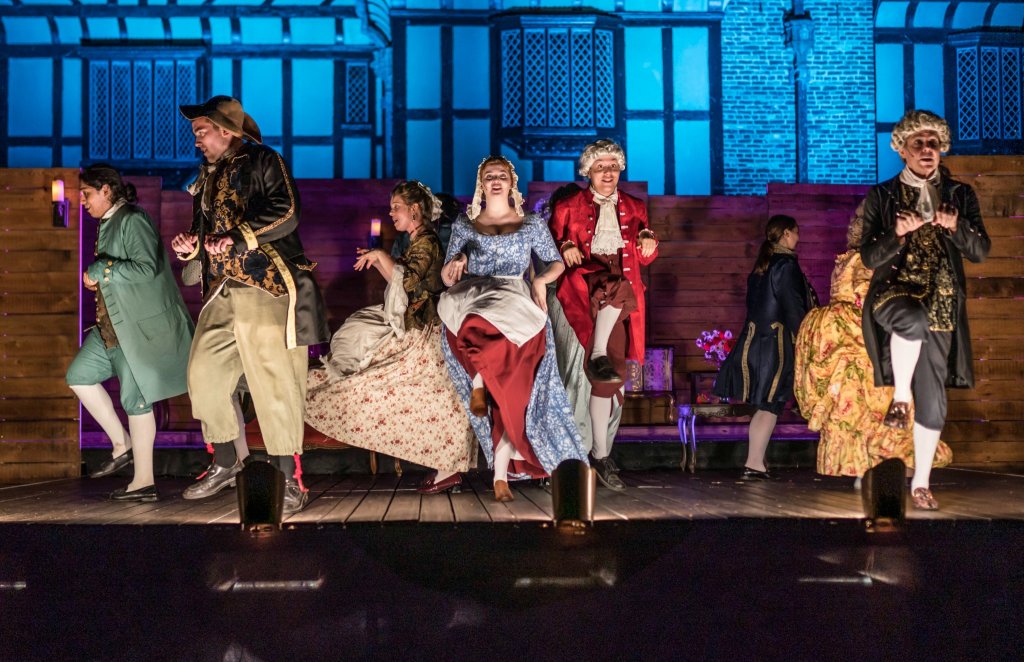
LONG DAY’S JOURNEY INTO NIGHT

Family Dysfunction as Fine Art

A Theater Reflection by Julinda D Lewis

Presented by: Cadence Theatre

At: Firehouse Theatre on the Carol Piersol Stage, 1609 W Broad St., RVA 23220

Performances: September 26 – October 11, 2025

Ticket Prices: $5-$40

Info: (804) 233-4894 or (804) 355-2001 or firehousetheatre.org

Where to begin?

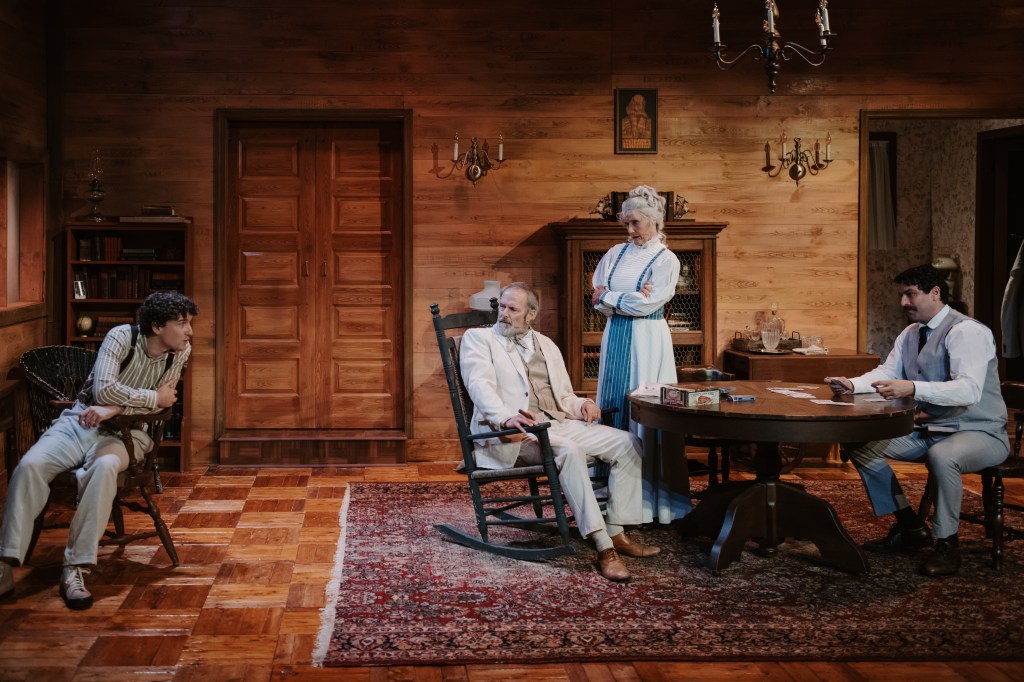
Eugene O’Neill’s Long Day’s Journey into Night stands out as a hauntingly authentic exploration of family bonds, dysfunction, addiction, and shadows from the past. From the very first moments, the play immerses the audience in a poignant portrayal of the Tyrone family, using the power of simplicity. Taking place over the course of a single summer day at the Tyrone family’s Connecticut summer home, O’Neill reveals the family’s struggles with personal demons and the inescapable grip of regret. He also reveals these things about his own family as the Tyrone family finds parallels in O’Neill’s own parents, himself and his older brother. Whereas most authors advise that the names do not reflect real people, O’Neill has borrowed freely from his own family tree – shifting and borrowing, but using real names, nonetheless.

Messiness aside, O’Neill’s masterful use of language and his rich character development invites viewers to immerse themselves into the complexities of love and despair, presenting a work that is simultaneously unsettling and profoundly relatable. Each character feels like a reflection of O’Neill’s own experiences – because they are. This personal history adds layers of authenticity to a narrative that is both a personal tragedy and a universal commentary on the human condition.

Long Day’s Journey into Night was written 1939-1941 but was published posthumously and first performed in February of 1956, more than two years after O’Neill’s death (October 16, 1888 – November 27, 1953). It is considered by many to be the author’s master work and earned a Tony award for Best Play and a Pulitzer Prize for Drama.

The title, though? Some believe it refers to the setting of play, taking place over the course of a single summer day. The play opens just after the Tyrone family has completed breakfast and concludes in the evening, after dinner. Others say the title refers to the literal passage of time, from morning to evening. Summer days are longer than others, as far as hours of daylight. Then, of course, there is the metaphorical meaning that says the title refers to the family’s descent into the darkness of despair. This explanation focuses on the symbolism of the family’s journey through addiction, regret, and blame, moving from a false sense of hope in the morning to a bleak, unresolved midnight. This explanation also suggests the characters’ individual and collective journeys back in time as they resurrect past hurts and relive their failures, making the day seem to stretch out in a cyclical fashion, like a vintage Groundhog Day. There is also the long day for the audience, as the play runs approximately four hours, including two ten-minute intermissions.

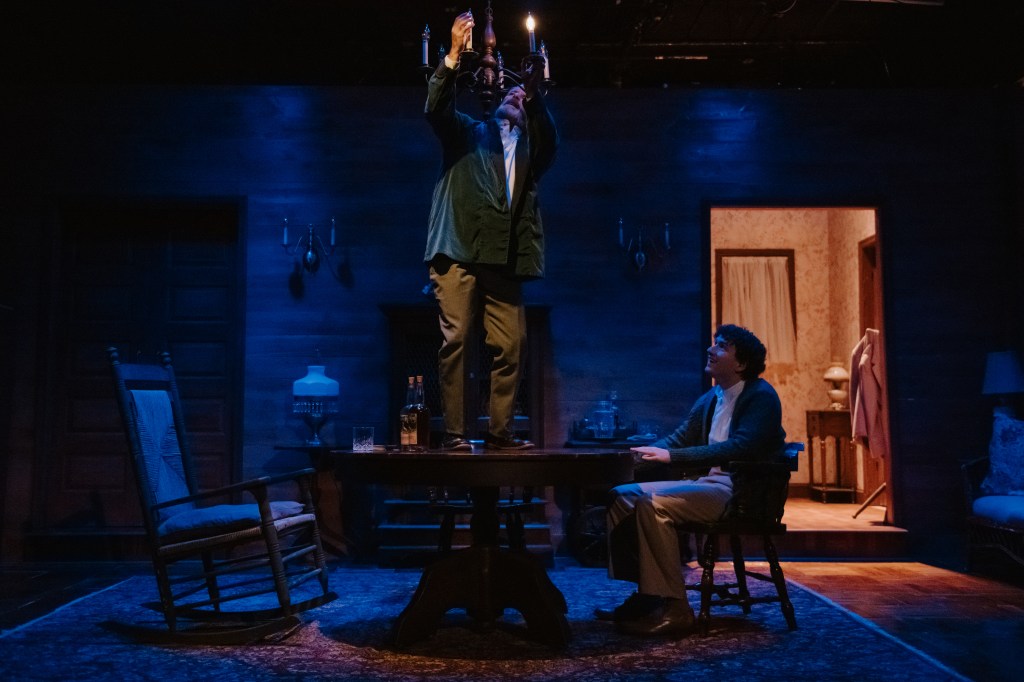
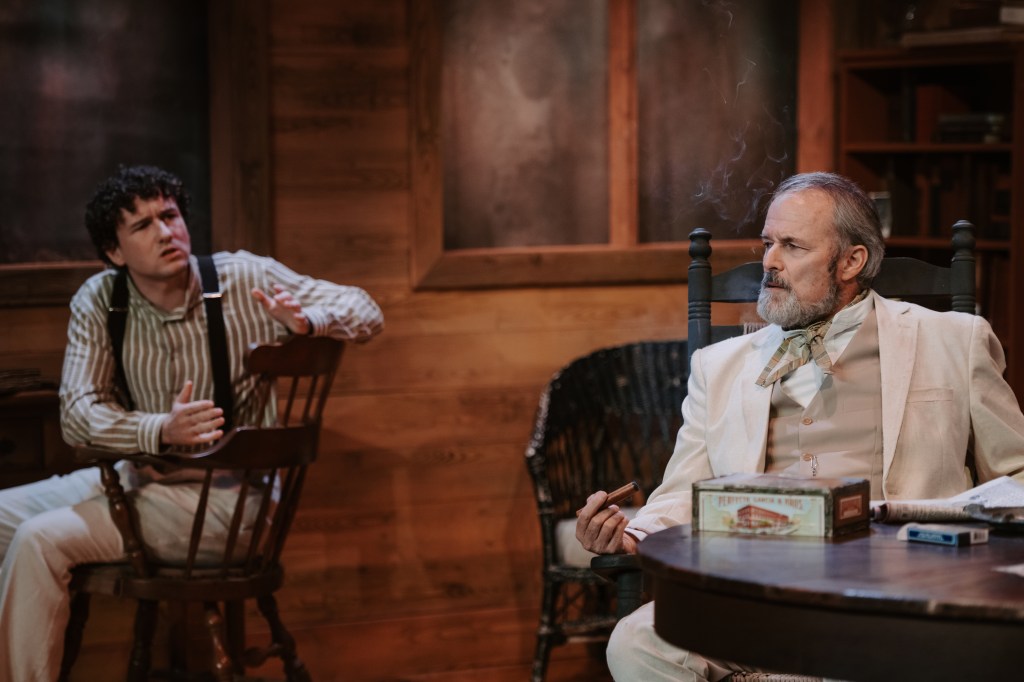
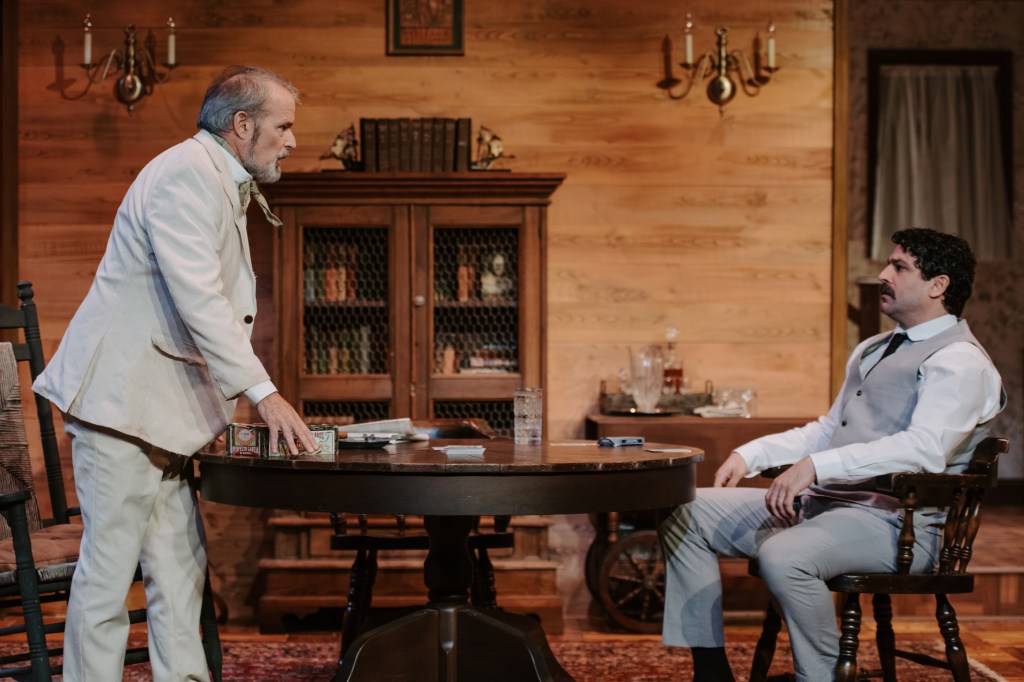
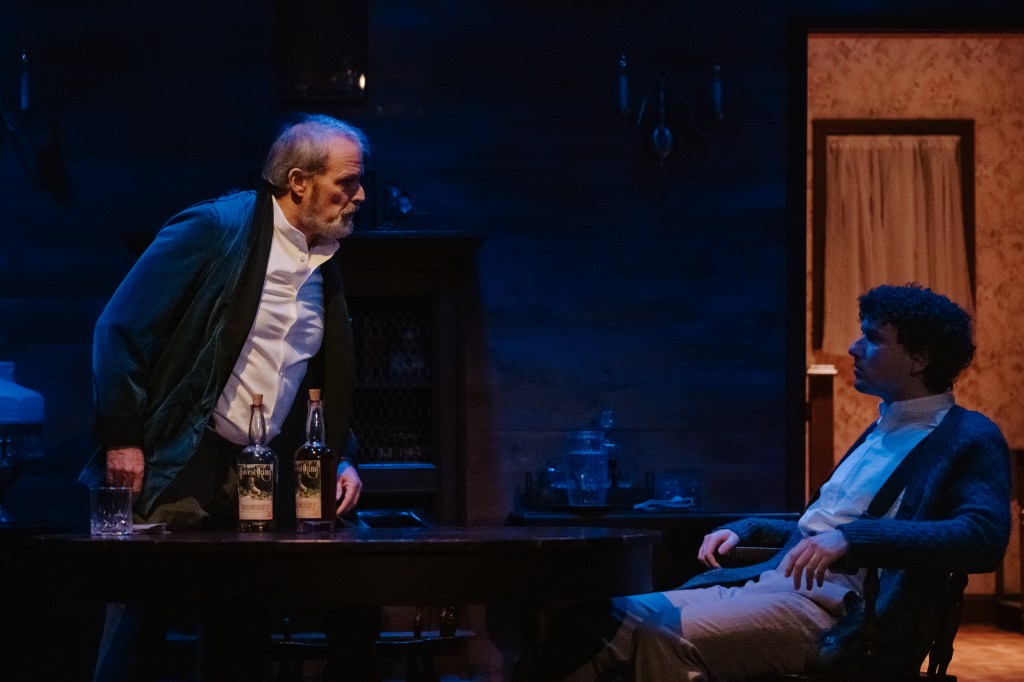
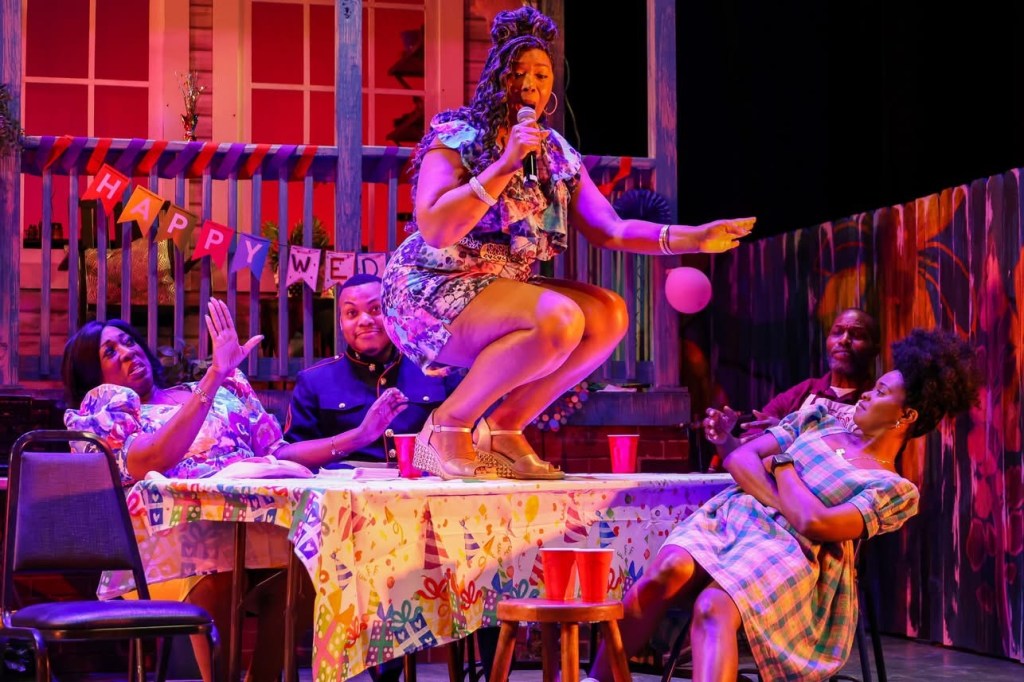
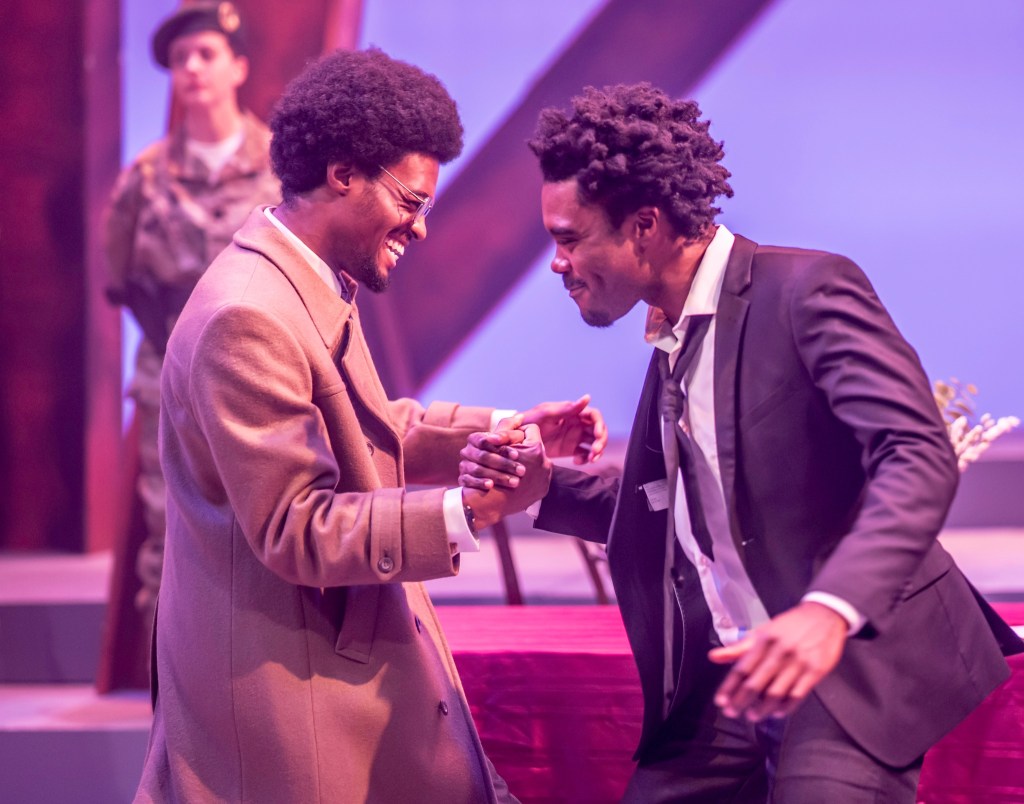
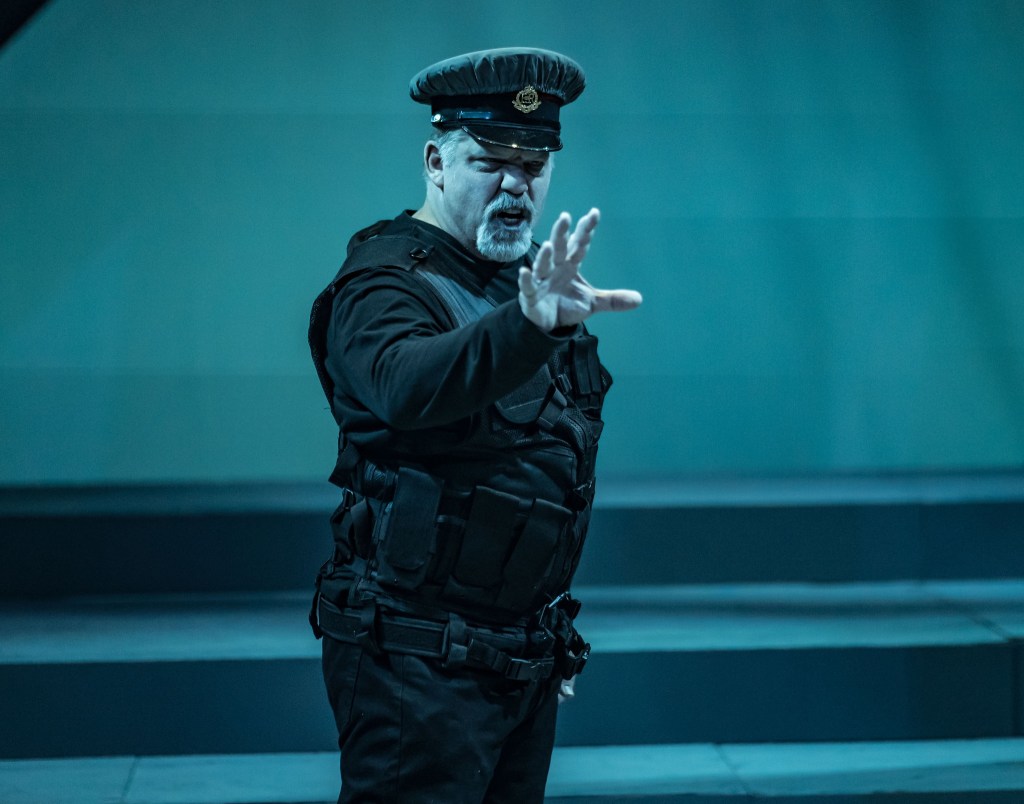
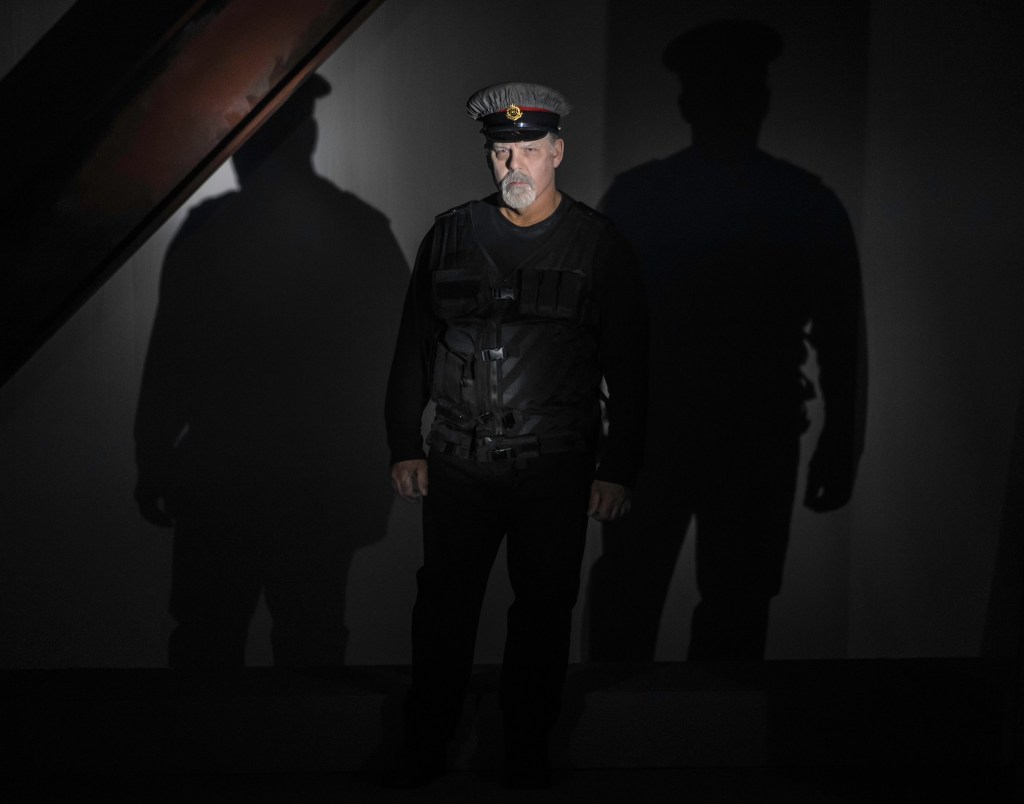
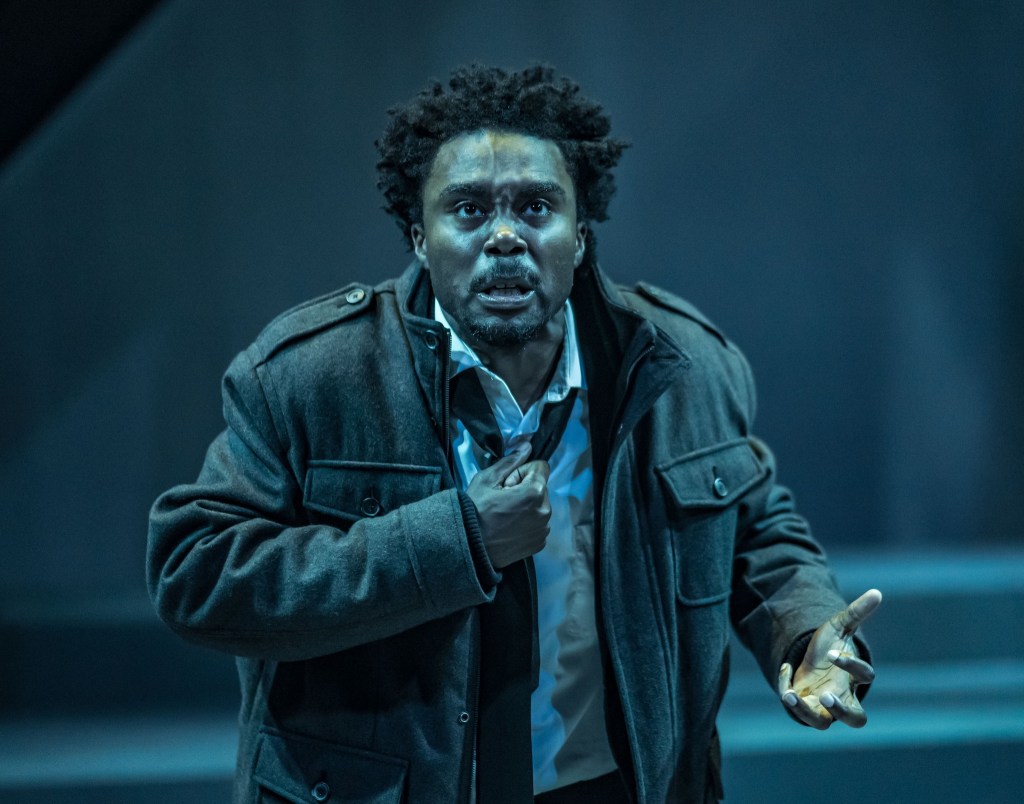
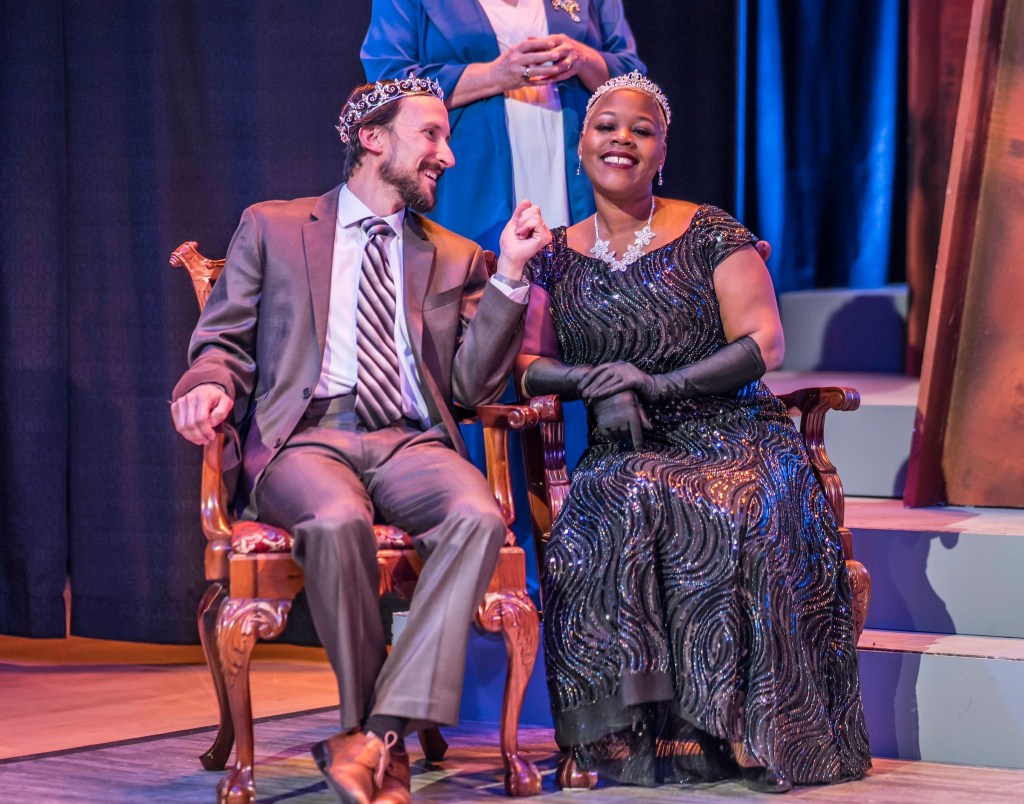
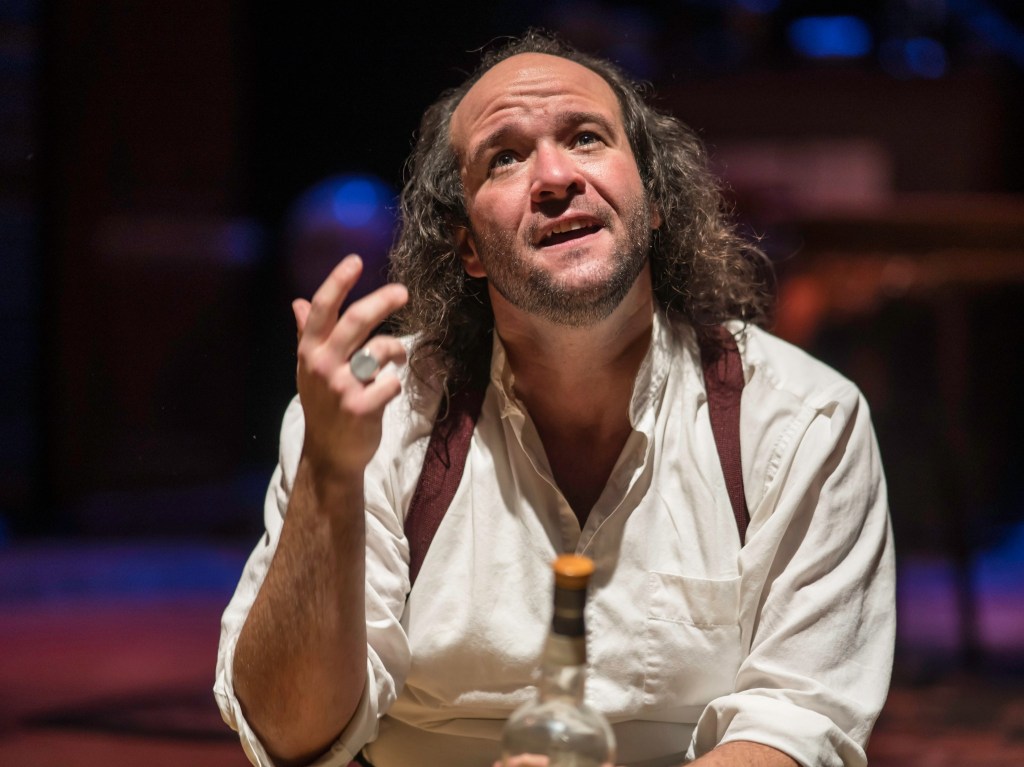
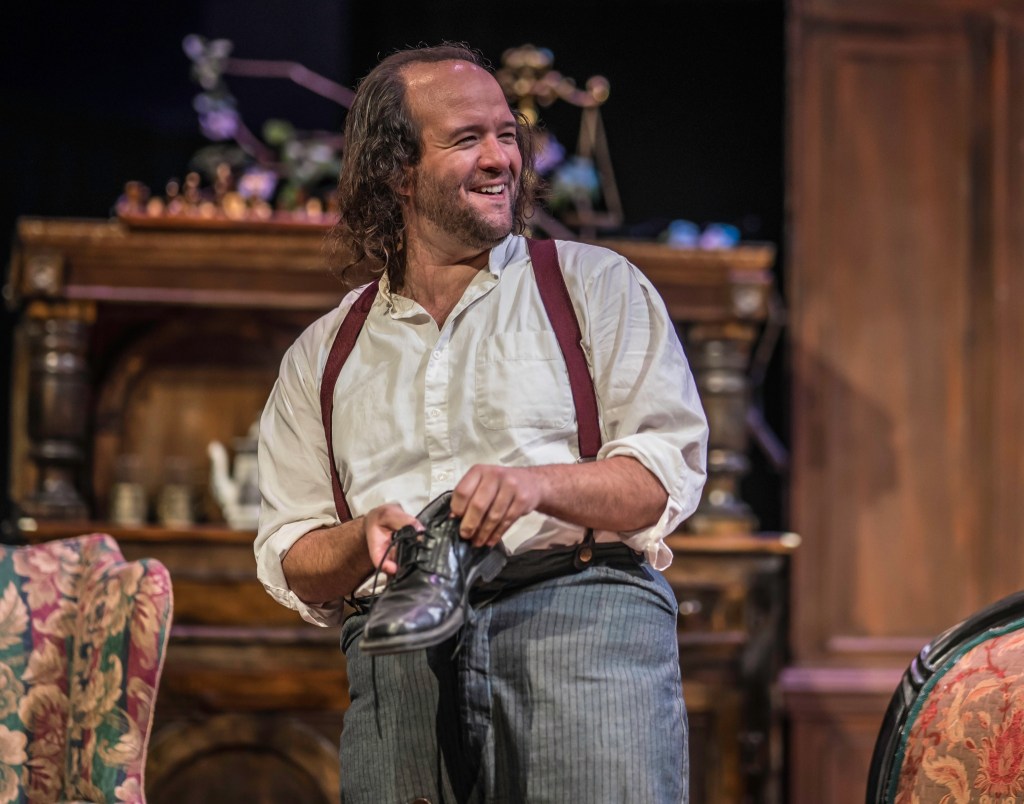
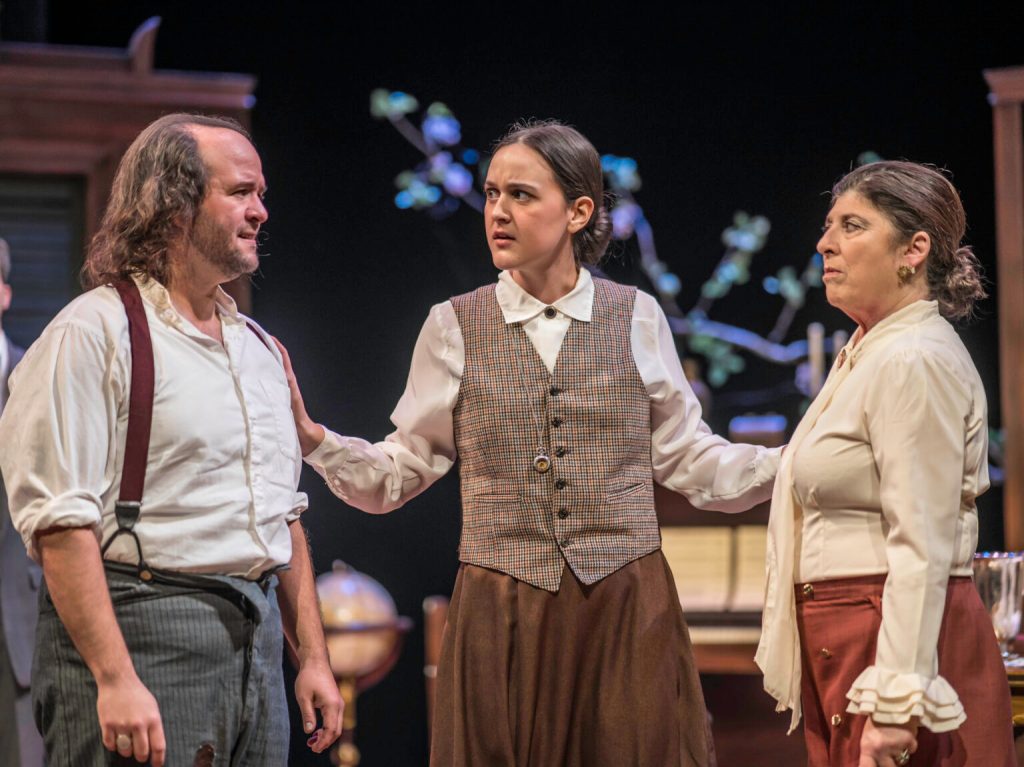
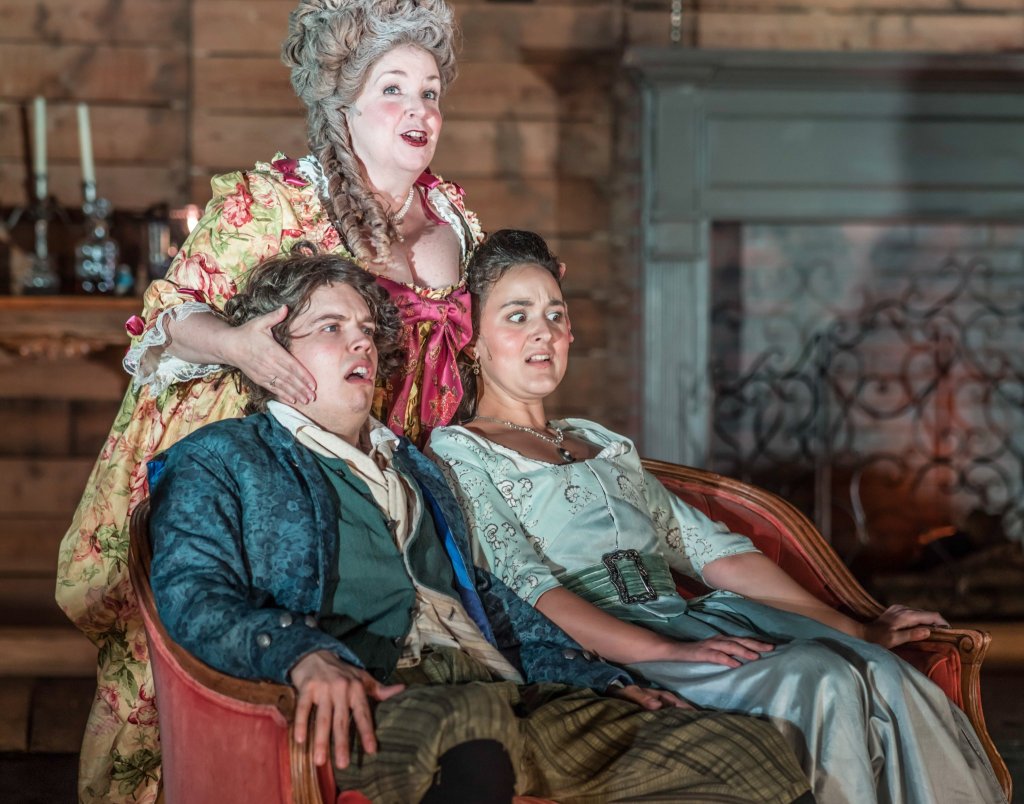
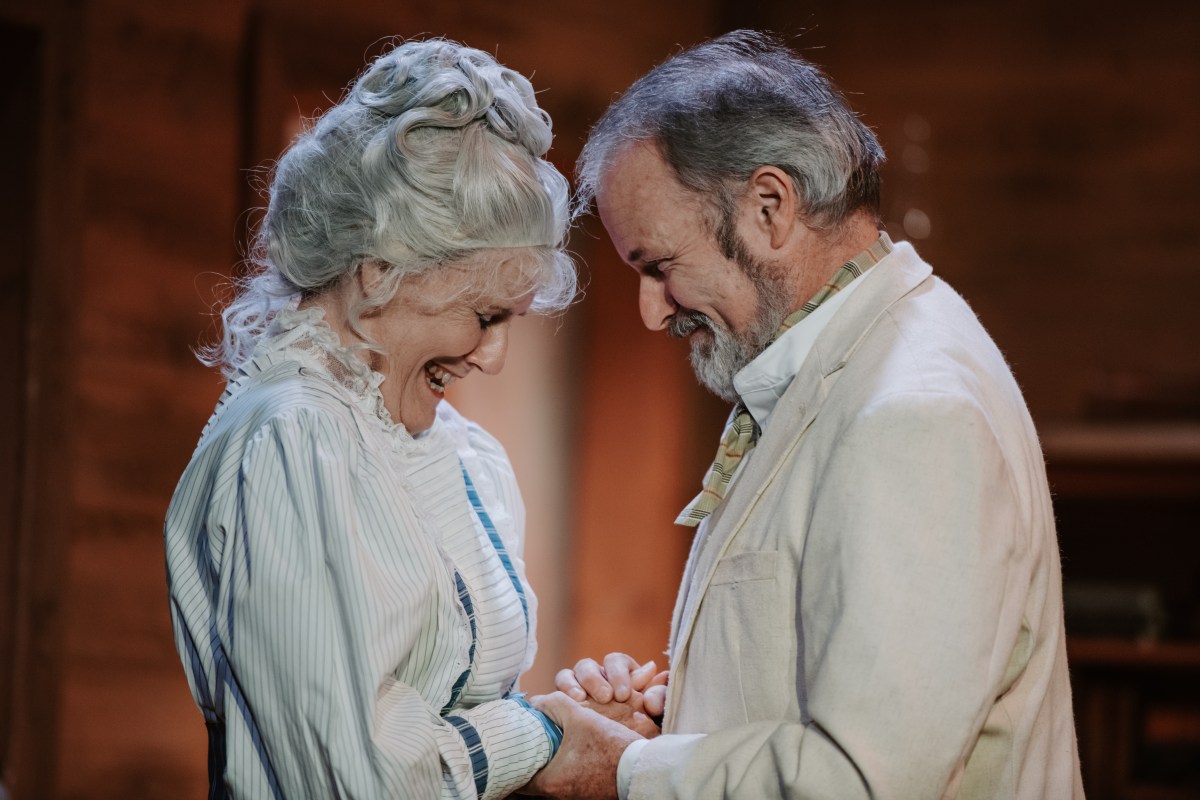
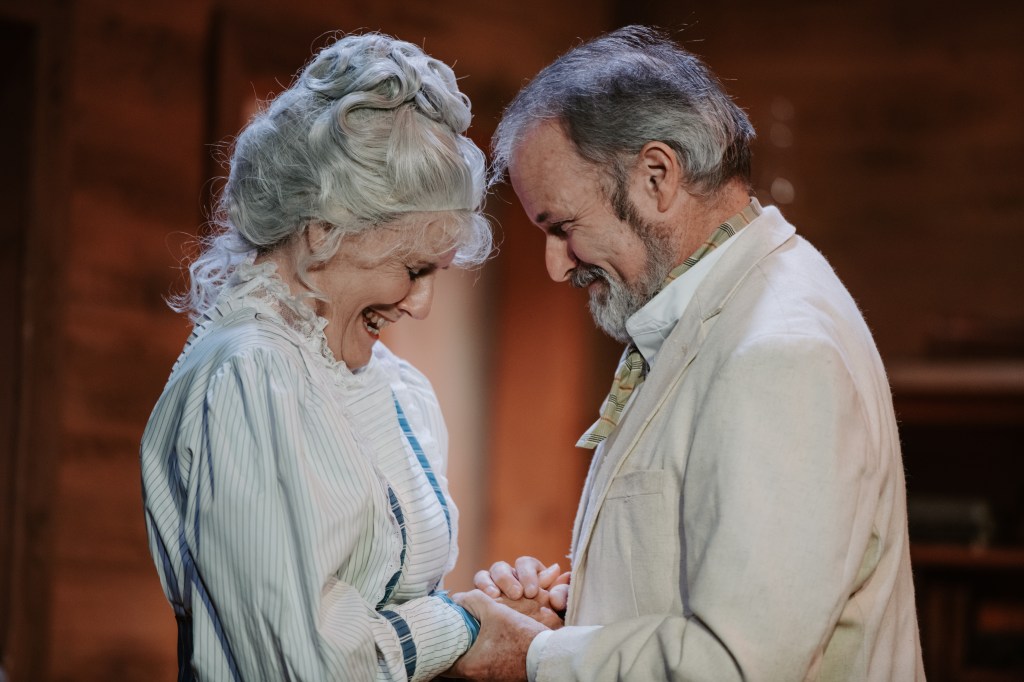
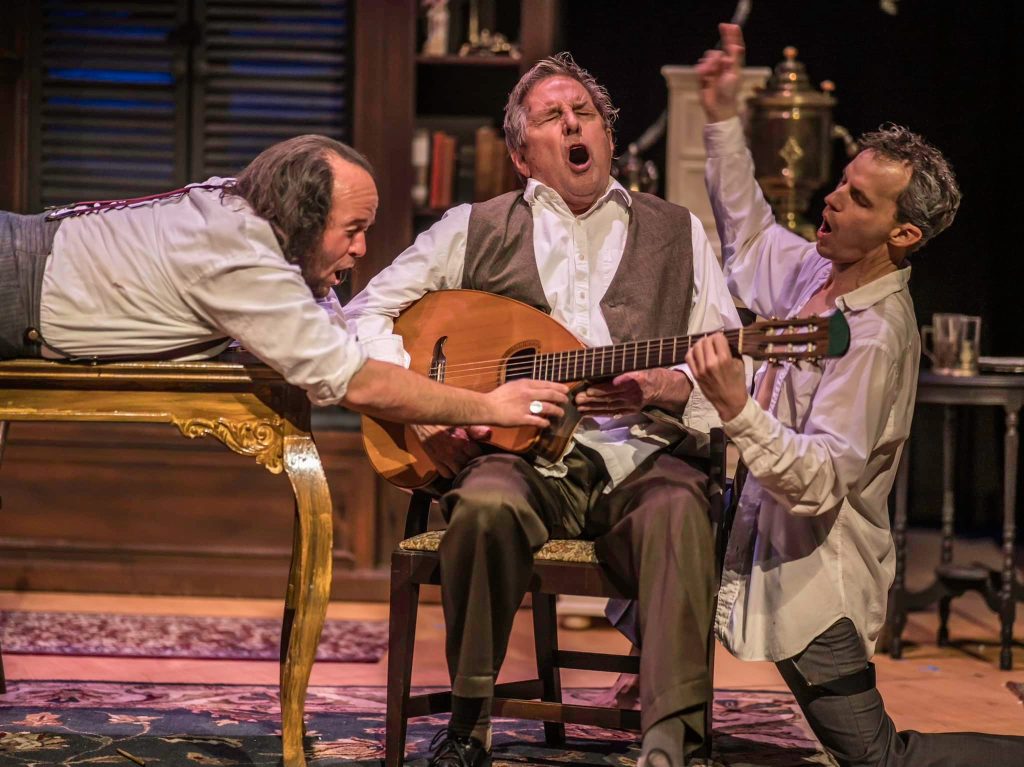
Long Day’s Journey into Night is difficult to watch – and not just because it’s long. There is the subject matter, which might be triggering for some. The father, James Tyrone, was a successful but now fading Irish-American actor who dabbles in real estate investment, drinks too much, and is somewhat of a miser. In one hilarious scene he climbs atop a table to twist on the bulbs of a chandelier because his son complained about his miserly ways. He had been sitting under the light of a single bulb to save money. (In retrospect, I wonder if he rotated the lit bulb, so they would burn out evenly…) Another humorous moment occurs when James suddenly becomes aware that his sons have been watering down his prized whiskey. Matt Radford Davies plays the domineering, frayed at the seams actor with apparent ease and reveals the positive and negative aspects of James’ personality is a way that paints him as neither all villain nor all hero. It feels as if Davies has walked in Tyrone’s/O’Neill’s’ shoes, or at least tried them on long enough to absorb their essence.

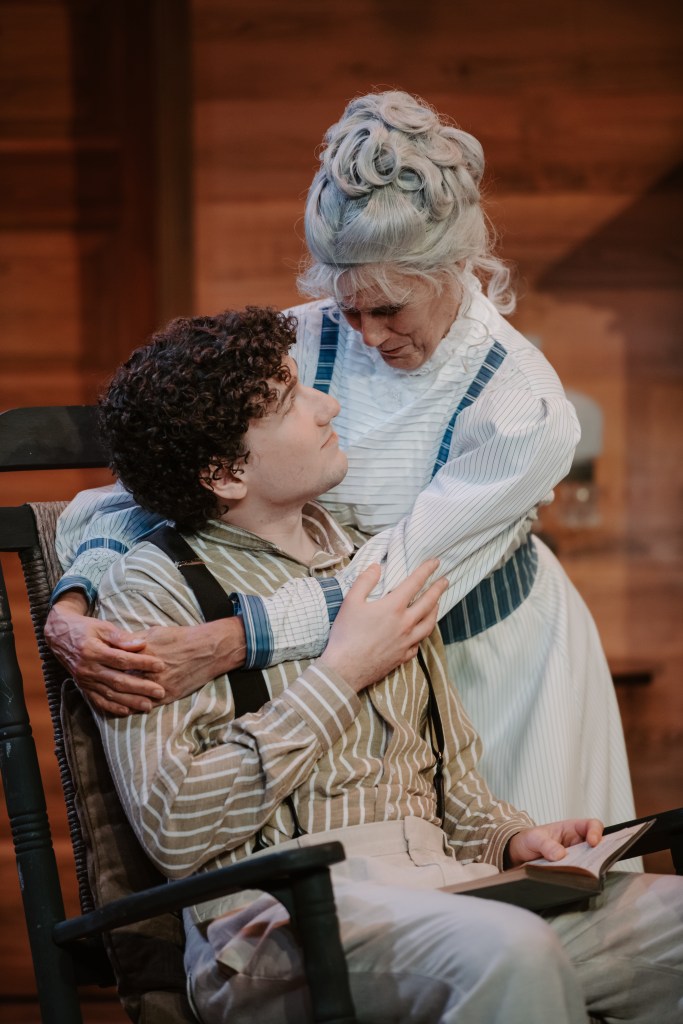
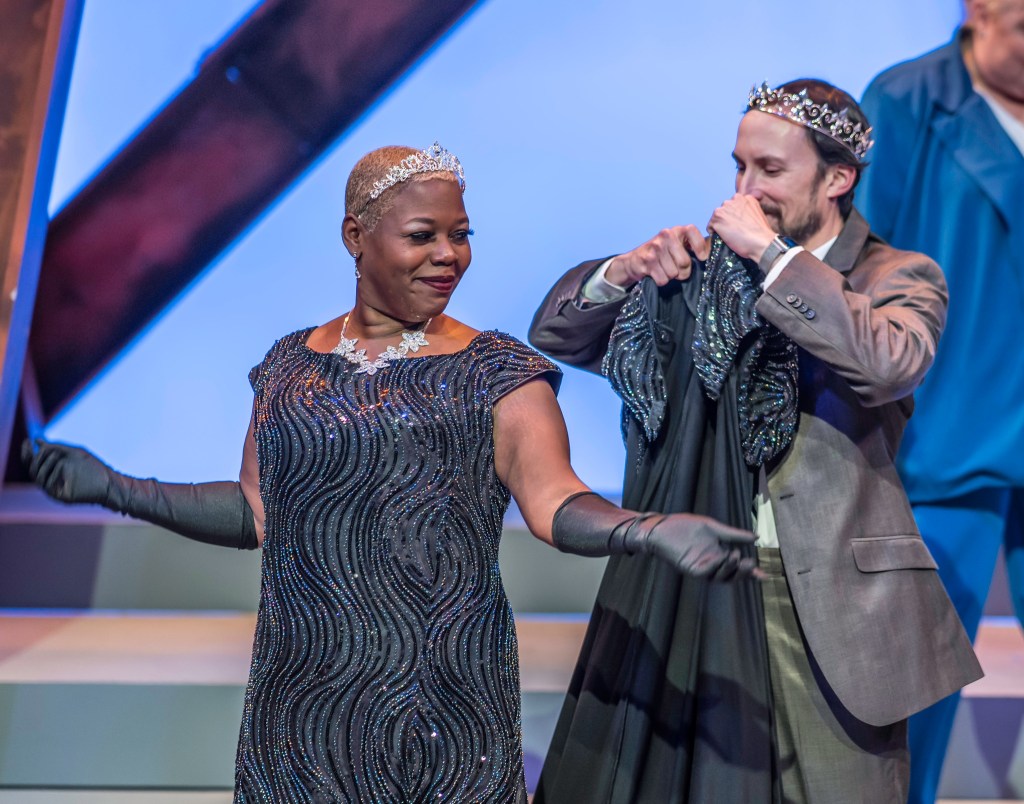
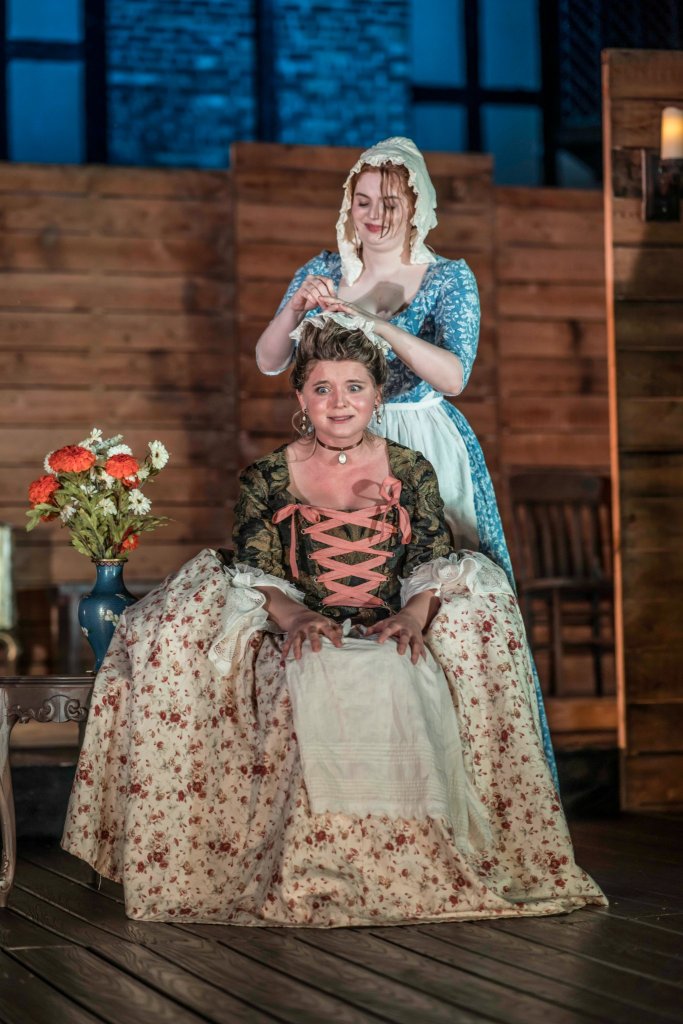
Mary, the mother, has a mysterious illness that is alluded to throughout the first act but never confirmed until about the midpoint of the play. This brings up another triggering idea – the medical negligence of women, especially pregnant women – as well as the prevalence of addiction to prescription pain killers. Yes, even in 1912, when this play was set. Robin Arthur’s erratic movements, her repetitious dialogue, her fixation with her hair, her obsessiveness in regard to her younger son, and her aggressively mysterious demeanor make sense as the source of her pain is revealed.

“I know you still love me in spite of everything.” – Mary

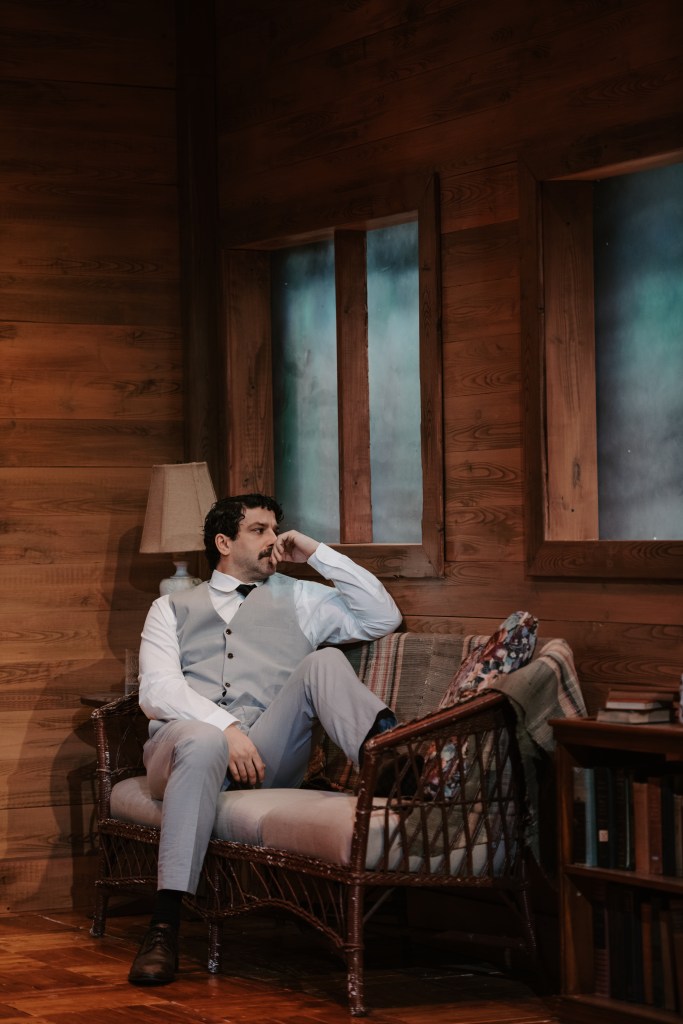
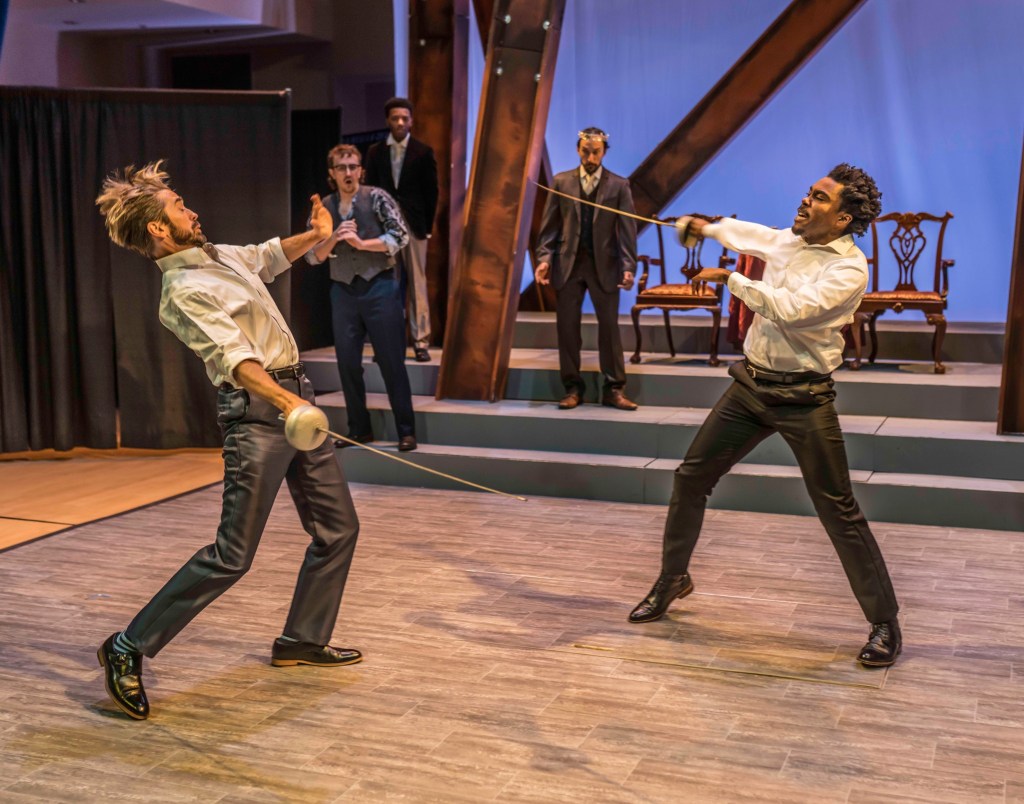
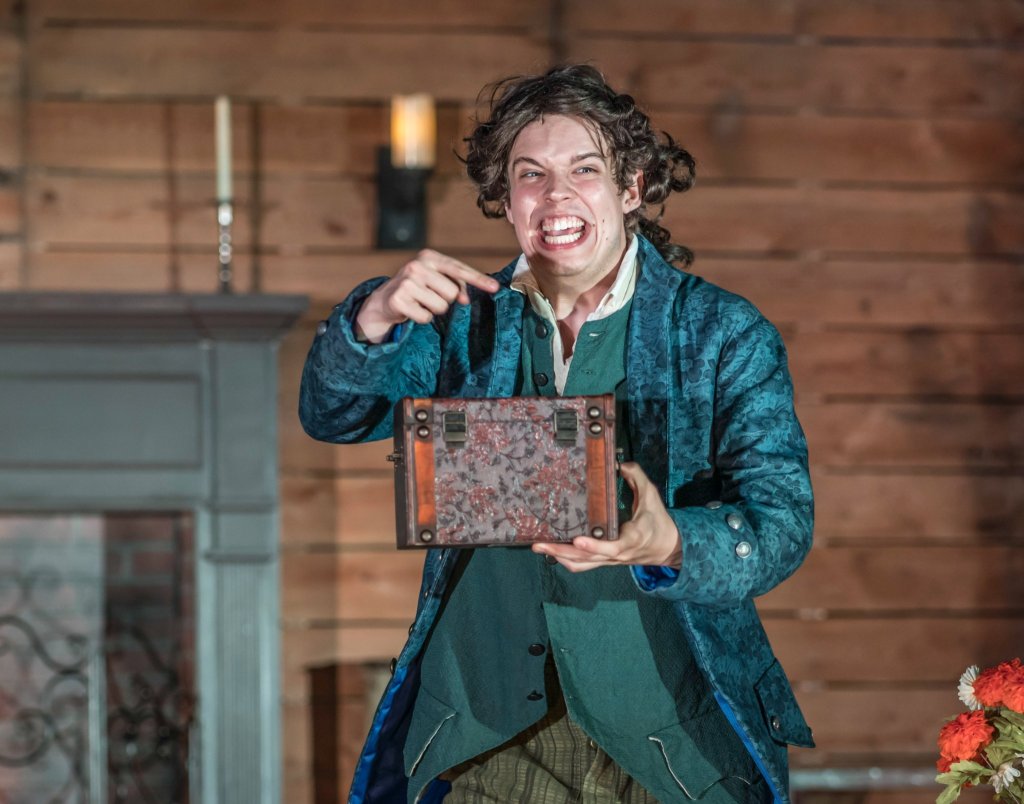
Jamie Tyrone, the elder son, is an actor, like his father. He drinks too much, like his father. But unlike his father, he lacks ambition and a sense of purpose. Axel Burtness is well cast in this role, and shines best in a scene where Jamie warns his younger brother that, as much as he loves him, he will try to sabotage him and wreck any success or happiness that may come his way.

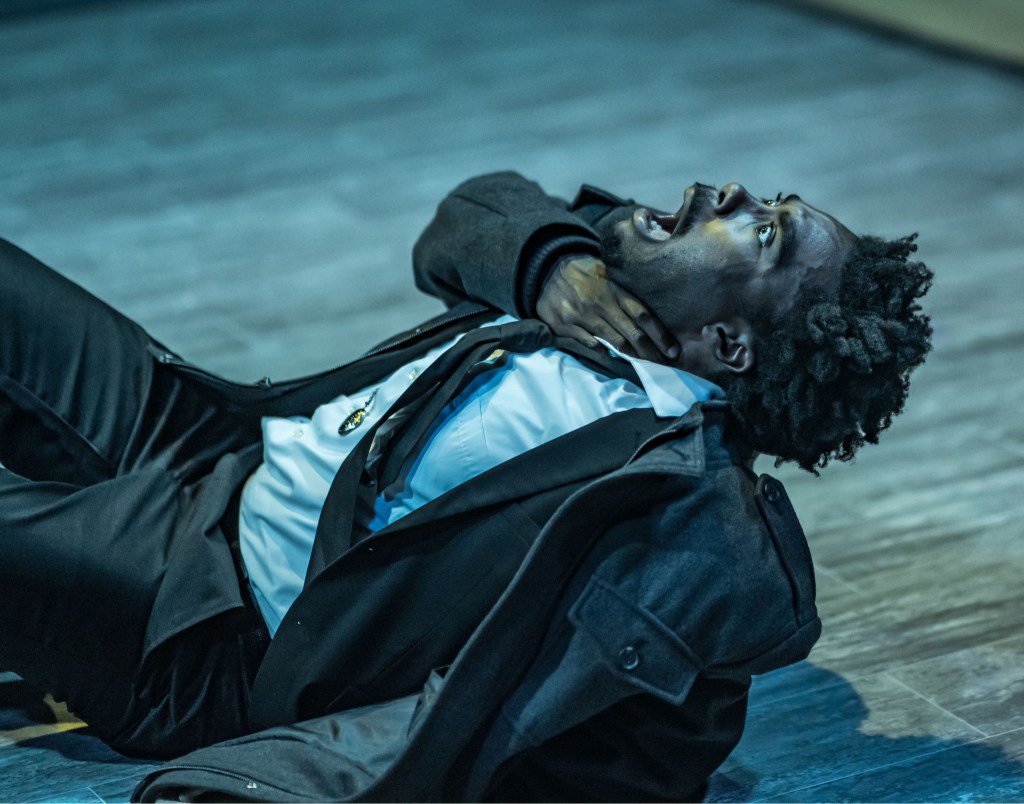
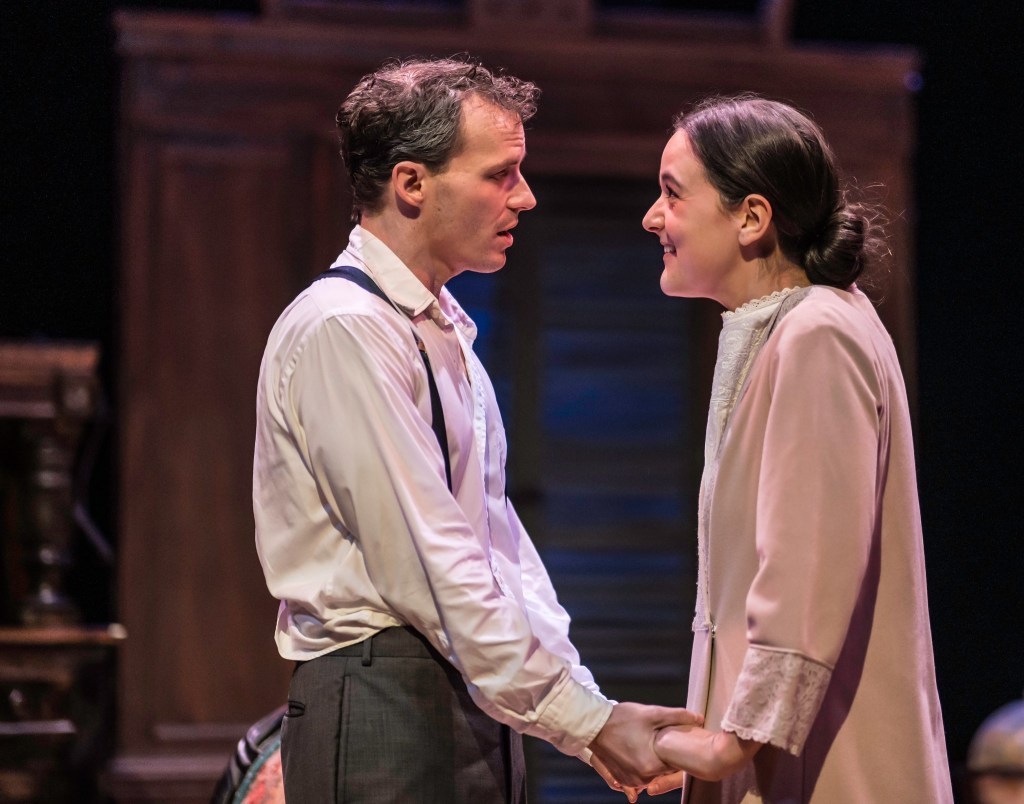
Edmund, the younger son, has a double burden. Unknowingly, he was a replacement baby, conceived to replace a baby who died of measles that may have been intentionally passed on to him. It was this birth that triggered Mary’s constant pain and need for medication. To make matters worse, Edmund has contracted consumption – another name for tuberculosis. (It was called consumption because the illness sometimes seemed to consume the individual who had it.) This, of course, makes Mary even more depressed. Trace Coles brings just the right balance of innocence and defiance.

“Who wants to see life as it is if you can help it?” – Edmund

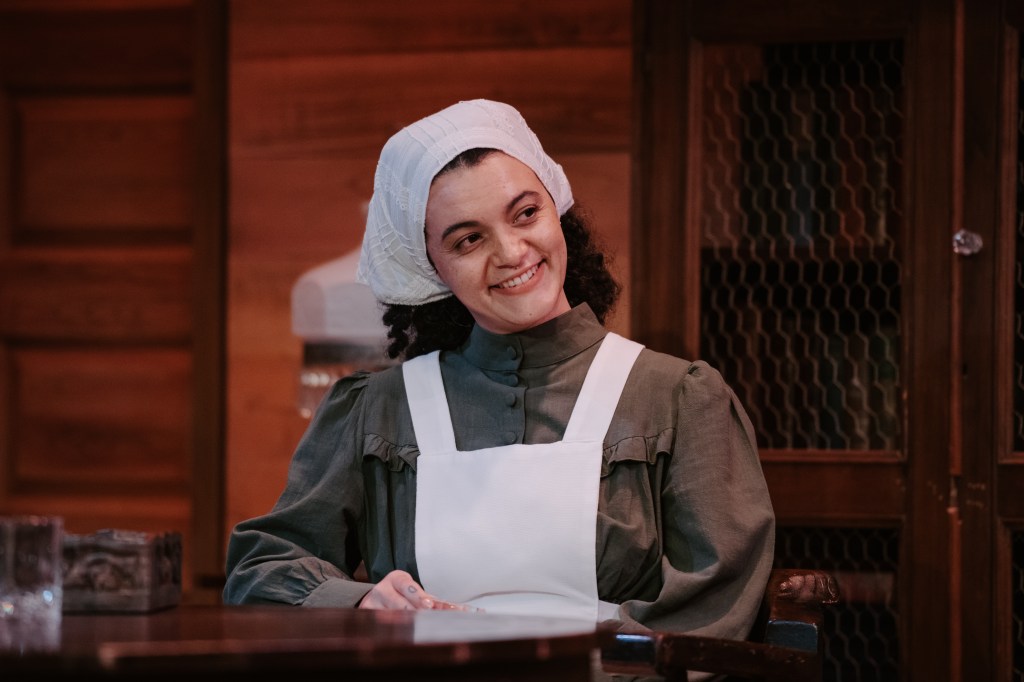
While several other characters are mentioned, no others make an appearance onstage other than Cathleen the maid. Ruby Joy Garcia’s role seemed headed in the direction of stereotypical household help, until the day Mary invites her to sit and keep her company – and have a drink. The elevates Garcia’s role (i.e., status) both literally and figuratively and brings more depth to her character. The moment when the whiskey emboldens her to talk back is a priceless gem.

Both sons, given enough to drink, are prone to spouting poetry and lines from Shakespeare – or Baudelaire, or Ernest Dowson, or Algernon Charles Swinberg.

“Be drunk with wine, with poetry, with virtue.” Charles Baudelaire

Long Day’s Journey into Night is a deeply impactful play, and like any work of art, it reveals both positive and negative aspects. On the plus side,  O’Neill has given us rich, complex, multi-dimensional characters that resonate with many audience members. The play masterfully explores themes of addiction, illness, and family dysfunction. Allowing his audiences to connect with the characters on a personal level. Then there is the frequent use of beautiful and poignant poetic language. This elevates the dialogue and the overall experience. The play’s universal themes of regret, love, and the search for redemption all speak to fundamental human experiences, making it a timeless work that continues to resonate with new generations. A long with that, the infusion of O’Neill’s personal experiences adds depth and authenticity, providing a unique perspective on the struggles of addiction and family dynamics.

On the other hand, the subject matter is extraordinarily heavy. The play’s themes can be quite dark and may make the play emotionally challenging for some viewers, particularly those who have experienced similar issues in their own lives. Then there is the matter of the four-hour runtime and a slower pace may not engage all audiences, potentially making the play feel lengthy, especially for those unfamiliar with dramatic theater. I would not bring someone to see this play as their introduction to live theater.

Finally, the overall atmosphere of the play is often somber, which may leave some viewers feeling overwhelmed or despondent rather than uplifted. The intricate exploration of relationships and personal struggles requires careful attention and may lead to reflection or revelations, which could be challenging for some audience members – and perhaps to the actors as well. While it’s a vital aspect of the narrative, the portrayal of addiction might be unsettling for some, as it reflects painful realities that all too many face in reality.

So, while Long Day’s Journey into Night is a masterful exploration of complex themes and relationships, that is beautifully acted and well directed by Rusty Wilson, it also presents its audience with challenges due to its heavy emotional weight and slow pacing – and it’s not that the pace is too slow, the pacing is an accurate depiction of real time, a time, perhaps, when people were not as rushed because they didn’t have or expect near instantaneous results to their queries and problems as we have come to expect due to technology.

Long play, long reflection. Bottom line, if you’ve never seen it, put it on your bucket list. I’m a theater nerd, a theater junkie, so I was excited to take in the author’s language, Daniel Allen’s shabby-genteel set, and Nancy Coles’ period costumes. But on the other hand, I did not tell my husband ahead of time exactly how long it was going to be…

—–

Julinda D. Lewis is a dancer, teacher, and writer who was born in Brooklyn, NY and now lives in Eastern Henrico County. When not writing about theater, she teaches dance history at VCU and low impact dance fitness classes to seasoned movers like herself and occasionally performs. Julinda was recently awarded the Dean’s Distinguished Adjunct Faculty Award 2023-24 Academic Year by VCU School of the Arts and the 2025 Pioneer Award in Dance Ministry by Transformation International Worship Ministries, Newport News, VA.

—–

LONG DAY’S JOURNEY INTO NIGHT

Written by Eugene O’Neill

Directed by Rusty Wilson

CAST

James Tyrone – Matt Radford Davies

Mary Cavan Tyrone – Robin Arthur

Jamie Tyrone – Axle Burtness

Edmund Tyrone – Trace Coles

Cathleen – Ruby Joy Garcia

PRODUCTION TEAM & CREW

Director – Rusty Wilson

Stage Manager – Joshua Kreis McTiernan

Assistant Stage Manager – Natalie Masaitis

Scenic Designer – Daniel Allen

Scenic Painter – Emily Hake Massie

Costume Designer – Nancy Coles

Lighting Designer – Steve Koehler

Sound Designer – Justice Craig

Sound Associate – Julie Vo

Fight Director – Aaron Orensky

Dialect Coach – Erica Hughes

Dramaturg – Alana Wiljanen

Set Decorator – Michael Maddix

Composer/Musician – Daniel Clarke

Director of Production – Todd LaBelle

Technical Director – Emily Vial

A/V Supervisor – Grace LaBelle

Running Crew – Terra Comer, Natalie Masaitis

Production Assistant – Terra Comer

Board Operator – Joshua Kreis McTiernan

Performance Schedule: Thursdays, Fridays, Saturdays @7:00PM and Sundays @2:00PM

Run Time: 4 hours with two10-minute intermissions

Setting: A summer day in August 1912 at the Tyrone family summer home in Connecticut.

Premiere: The play officially premiered at the Royal Dramatic Theatre in Stockholm, Sweden, February 10, 1956. O’Neill had wanted it to remain unpublished for 25 years after his death, but his widow overrode his wishes. The play opened on Broadway at the Helen Hayes Theatre on November 7, 1956.

Photos: Jason Collins Photography,Courtesy of Anna Senechal Johnson
One-Time
Monthly
Yearly

Make a one-time, Monthly, or annual donation to support Julinda & RVART Review

Make a monthly donation

Make a yearly donation

Choose an amount

$5.00
$15.00
$100.00
$5.00
$15.00
$100.00
$5.00
$15.00
$100.00

Or enter a custom amount

$

Your contribution no matter how small or how large is appreciated. Thank you.

Your contribution is appreciated.

Your contribution is appreciated.

DonateDonate monthlyDonate yearly

A MIDSUMMER NIGHT’S DREAM

Potions, Poetry & the Power of Dreams

A Theater Review by Julinda D. Lewis

Presented by: Richmond Shakespeare

Performances: June 19 – July 20, 2025 [Extended to July 27!]

At: Agecroft Hall, 4305 Sulgrave Rd., RVA 23221

Ticket Prices: $22-$47 [Adults $47; Seniors 65+ with ID $42; Military with ID $32; College Students with ID $27 & Children 18 and under $22] Seating is General Admission.

Info: (804) 340-0115 or http://www.richmondshakespeare.org

Shakespeare wrote A Midsummer Night’s Dream in around 1595 or 1596. Here we are in 2025, watching Shakespeare’s sixteenth century comedy about people in Ancient Greece (c. 12th century) being performed by a cast of characters in 1950’s attire. Now that, my friend, is the definition of timeless. [NOTE: A brief synopsis of the play is provided at the end of this reflection.]

As Director James Ricks notes in the Midsummer program, the play was most likely originally performed in an outdoor venue where, much like at Agecroft Hall, the close proximity of audience and actors created a uniquely intimate dynamic. “Here,” Ricks wrote, “we have assembled to ‘rehearse most obscenely and courageously,’ employing Shakespeare’s original practices with a touch of modern technology.”

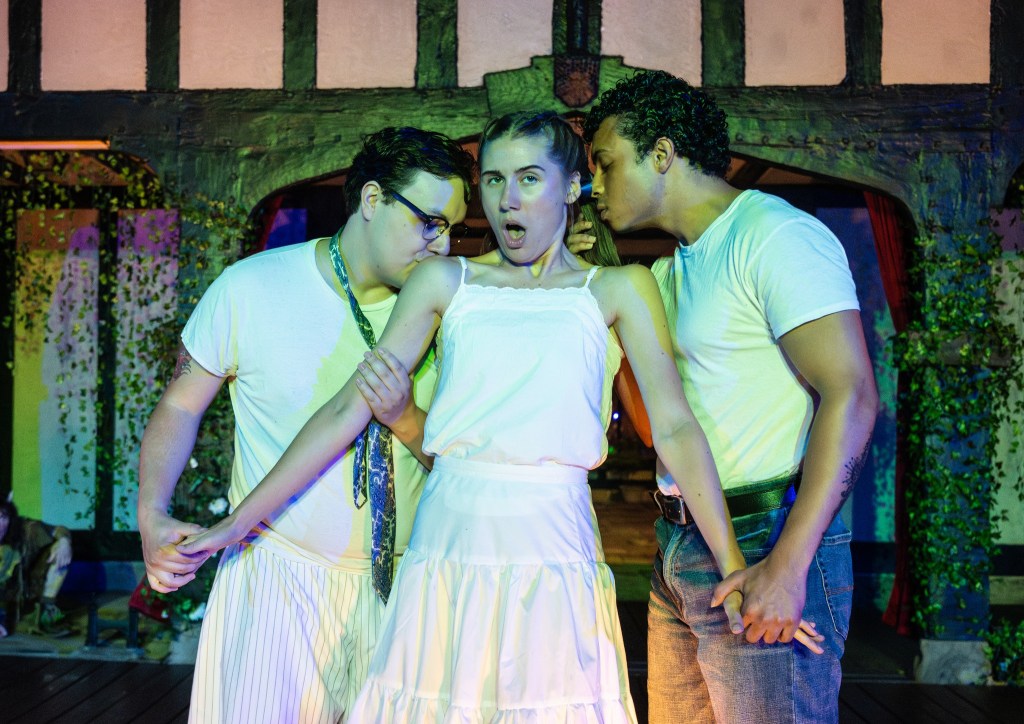
Lysander (Erich Appleby) slouches onstage looking like he’s auditioning for a role as “the Fonz” in Happy Days and Demetrius (Gordon Graham) shows up wearing his preppy letterman sweater. Hermia (Erin Chaves) wears pink pedal pushers, completing the 1950’s casual couture look, while Hermia’s father, Egeus (Erica Hughes) inexplicably sports the wide-brimmed hat and accent of a landed southern planter. Theseus, the Duke of Athens (Arik Cullen) cautions Hermia in his best Shakespearean intonation to “fit your fancies to your father’s will,” while Bottom (James Ricks), channels Marlon Brandon c.1954 spouting, “I could’a been a contender!”  

And did I mention the doo-wop songs? OMG there were doo wop songs sung by proper quartets with outstanding harmony offering such classics as “In the Still of the Night,” “At Last,” and “A Sunday Kind of Love.” A Midsummer Night’s Dream was filled with one surprise after another – all good – starting when I opened my program and saw that Richmond Shakespeare’s Artistic Director James Ricks had cast himself in the role of Bottom.

What bold choices. What unlikely pairings. What a brilliant production! This is a true ensemble, with nearly every actor getting a chance to shine. Let’s take a look:

Erick Appleby’s insouciance as Lysander, one of the two young male love interests, early on set a tone and laid a foundation for what to expect going forward. Erin Chaves, in the role of Lysander’s beloved Hermia, seems always on the verge of being the mean girl, but it’s obvious she’s got “home training” – as who wouldn’t with an over-bearing parent like Egeus (more about Erica Hughes in just a moment). Gordon Graham as Demetrius was the nerdy guy most likely to be approved by the parents, I almost felt sorry for him under the pressure of hot pursuit by the love-struck Helena, played with over-the-top angst by Paisley LoBue.

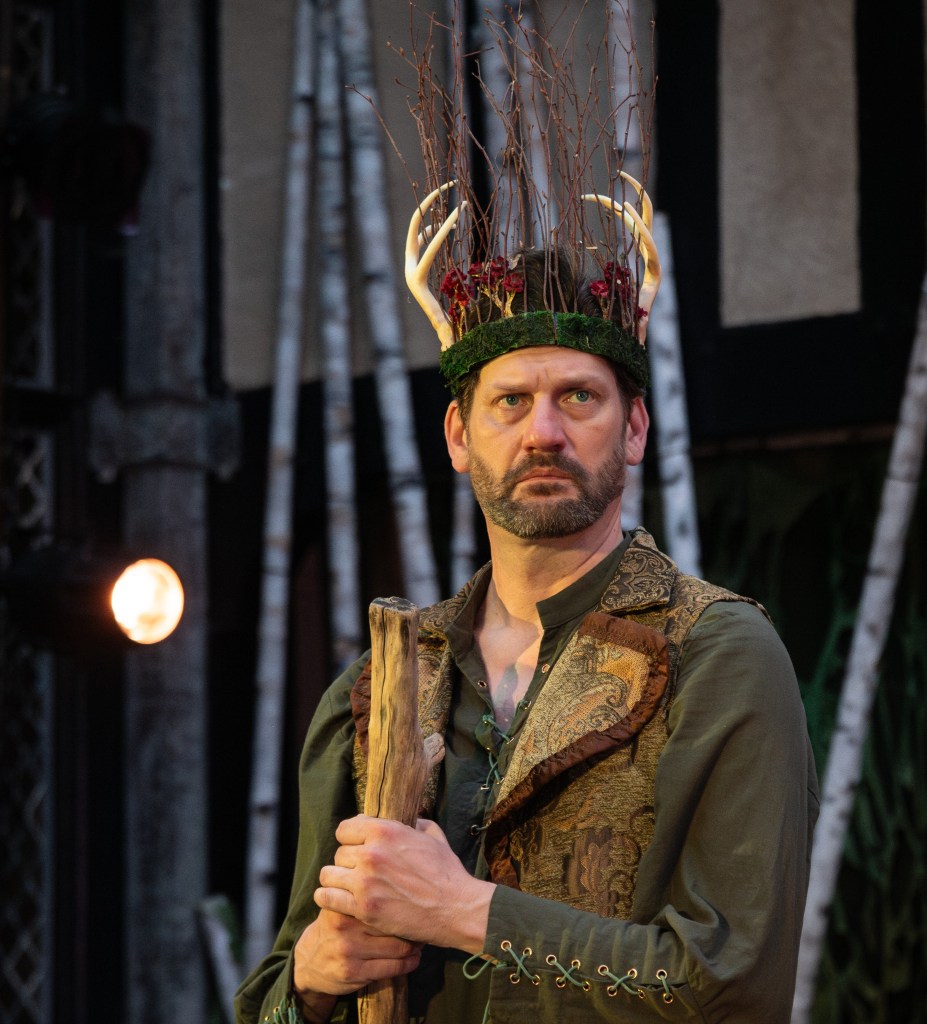
Arik Cullen was regal as Theseus, the Duke of Athens, and almost villainous as Oberon, the King of the Fairies and husband of the Fairy Queen Titania, with whom he is at odds. Jianna Hurt doesn’t have much to do as Theseus’ fiancée Hippolyta but makes up for it in her role as Titania where she gets to be beautiful, independent, and inadvertently funny (when she awakens to fall in love with a donkey) – and also gets to sing her heart out.

Erica Hughes, whose mastery of dialects I have long admired, played Egeus as a domineering parent with a southern accent, but it was as Quince, the leader of the mechanicals – a group of laborers (e.g., a baker, a weaver, a carpenter, etc.) who moonlight as incredibly inept actors whose goal is to perform the play-within-a-play Pyramus and Thisbe for the royal wedding program of Theseus and Hippolyta that she really shines. It is as part of this group that James Ricks has brilliantly inserted himself as Bottom, an overly confident weaver who enthusiastically volunteers to play every part in the play. Ricks turns what might otherwise have been a minor character into a highlight of every scene he tackled.

The ensemble-within-the-ensemble, who played the mechanicals as well as Titania’s fairy court included Alex Godschalk, Enrique Gonzalez, Elle Meerovich, Toby O’Brien, and Abe Timm. Meerovich also served as the play’s Music Director (the main play, that is, not the play-within-the-play) and got to lead at least one song – of course – but also made a lasting impression as The Wall in Pyramus and Thisbe – an intentionally bad parody of a Shakespeare play.

I did not forget about Puck – the mischievous assistant to Oberon whose hurried and impish nature leads to a mistake that sets in motion an epic series of misadventures. Abe Timm (he/she/them) is the most delightful, most energetic Puck I’ve ever seen, and I have seen a few – in both play and ballet form. (And I must confess, the last time I saw a Richmond Shakespeare production of A Midsummer Night’s Dream I was wholly partial because the role was played by Raven Lorraine, who was once a Brownie Girl Scout in the troop I led…)

But to get back to this production, this represents some of James Ricks’ finest work – both as director and as actor. The musical direction by Meerovich added delightfully unexpected and highly satisfying 1950’s harmony and the choreography by Starrene Foster wasn’t so much dance phrases as organic movement designed to keep everyone and everything flowing in one accord.

What more can be said about this production…other than this is what theater was meant to be.

—–

Julinda D. Lewis is a dancer, teacher, and writer who was born in Brooklyn, NY and now lives in Eastern Henrico County. When not writing about theater, she teaches dance history at VCU and low impact dance fitness classes to seasoned movers like herself and occasionally gets to perform.

—–

A MIDSUMMER NIGHT’S DREAM

Written by William Shakespeare

Directed by James Ricks

CAST

Lysander                               …..      Erich Appleby

Hermia                                   …..      Erin Chaves

Oberon/Theseus                 …..      Arik Cullen

Attendant/Fairy                   …..      Kara Finnegan

Starveling/Mustardseed    …..      Alex Godschalk

Flute/Peasblossom             …..      Enrique Gonzalez

Demetrius                             …..      Gordon Graham

Quince/Egeus          .           …..      Erica Hughes

Titania/Hippolyta                …..      Jianna Hurt

Helena                                   …..      Paisley LoBue

Snout/Moth                          …..      Elle Meerovich

Snug/Cobweb                     …..      Toby O’Brien

Bottom                                  …..      James Ricks

Puck/Philostrate                  …..      Abe Timm

PRODUCTION TEAM

Artistic Director/Bottom/

            Director/Production

            Management/

            Scenic Design/

            Sound Design          …..      James Ricks

Managing Director             …..      Jase Smith Sullivan

Production Manager/

Stage Manager        …..      Nata Moriconi

Assistant Stage Manager/

Props Design            …..      Jordan Dively

Assistant Stage Manager   …..      Kathleen Acree

Costume Design                  …..      Anna Bialkowski

Lighting Design                   …..      Griffin Hardy

Choreographer                   …..      Starrene Foster

Music Director/Arranger   …..      Elle Meerovich

Intimacy Director                 …..      Dorothy “Dee D.” Miller

Assistant Director                …..      Andrew Gall

Run Time: About 2 hours 30 minutes; there is one intermission

Setting: Ancient Athens and the nearby forest, approximately 12th Century B.C.

Photo Credits: Aaron Sutten; Richmond Shakespeare Website & Facebook page

A Brief Synopsis of William Shakespeare’s A Midsummer Night’s Dream:

A Midsummer Night’s Dream is a comedic play by William Shakespeare that intertwines the lives of four young Athenian lovers—Hermia, Lysander, Helena, and Demetrius—with a group of mischievous fairies and a troupe of amateur actors. The play is set in the mystical woods outside of Athens, where magic and whimsy reign.

The story begins with Hermia, who is in love with Lysander, but her father Egeus insists she marries Demetrius, who is in love with her. Disregarding her father’s wishes, Hermia flees with Lysander into the forest, followed by Helena, who harbors unrequited feelings for Demetrius. In the enchanted woods, the fairy king Oberon and his queen Titania are embroiled in their own domestic quarrel, leading Oberon to seek revenge using a magical flower that causes love at first sight.

As Oberon instructs his mischievous servant Puck to apply the potion to Titania and to Demetrius so he will fall in love with Helena, chaos ensues. Mistaken identities and unintentional enchantments result in a tangled web of romantic confusion among four young lovers. Meanwhile, a group of amateur actors, led by the bumbling Bottom, unknowingly becomes part of the fairy mischief, resulting in humorous transformations and antics.

Ultimately, love prevails as the magic wears off, misunderstandings are resolved, and the couples reunite correctly. The play concludes with the characters returning to Athens, ready to celebrate their marriages, and Puck delivers a final monologue inviting the audience to view the events as a dream. Shakespeare’s exploration of love, fantasy, and reality culminates in a lively and whimsical tapestry that highlights the folly and joy of human emotion.

[This synopsis was generated with the assistance of AI.]

One-Time
Monthly
Yearly

Make a one-time, monthly, or annual donation to show how much you appreciate rvart review – we receive no funding other than your generous donations

Make a monthly donation

Make a yearly donation

Choose an amount

$5.00
$15.00
$100.00
$5.00
$15.00
$100.00
$5.00
$15.00
$100.00

Or enter a custom amount

$

Your contribution is appreciated.

Your contribution is appreciated.

Your contribution is appreciated.

DonateDonate monthlyDonate yearly
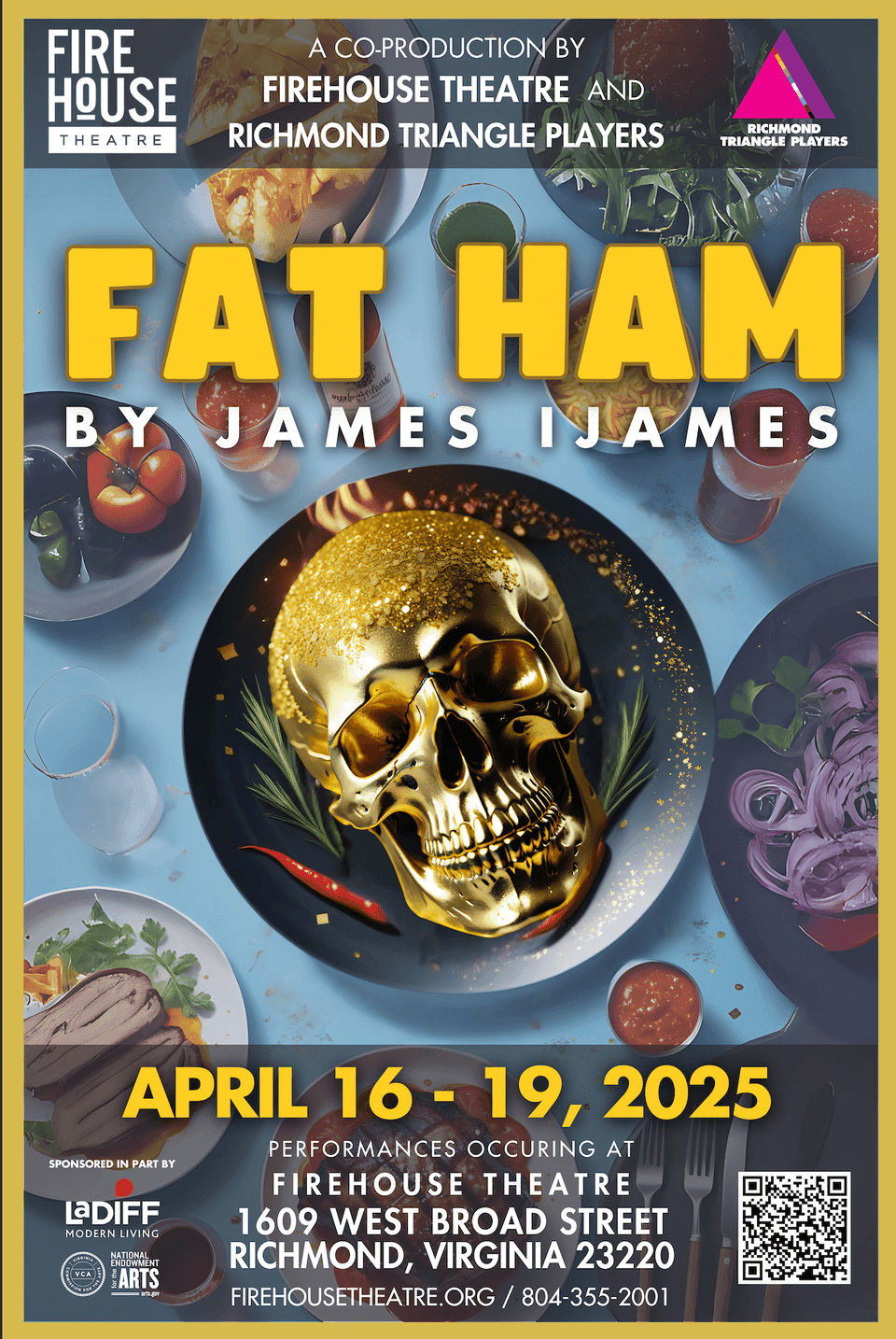
FAT HAM

A Co-Production of Firehouse Theatre and Richmond Triangle Players

A Reflection on a Unique Theater Experience by Julinda D Lewis

At: Firehouse Theatre, 1609 W Broad St., RVA 23220

Performances: April 16-19, 2025

Ticket Prices: $45 [all shows SOLD OUT]

Info: (804) 355-2001 or firehousetheatre.org

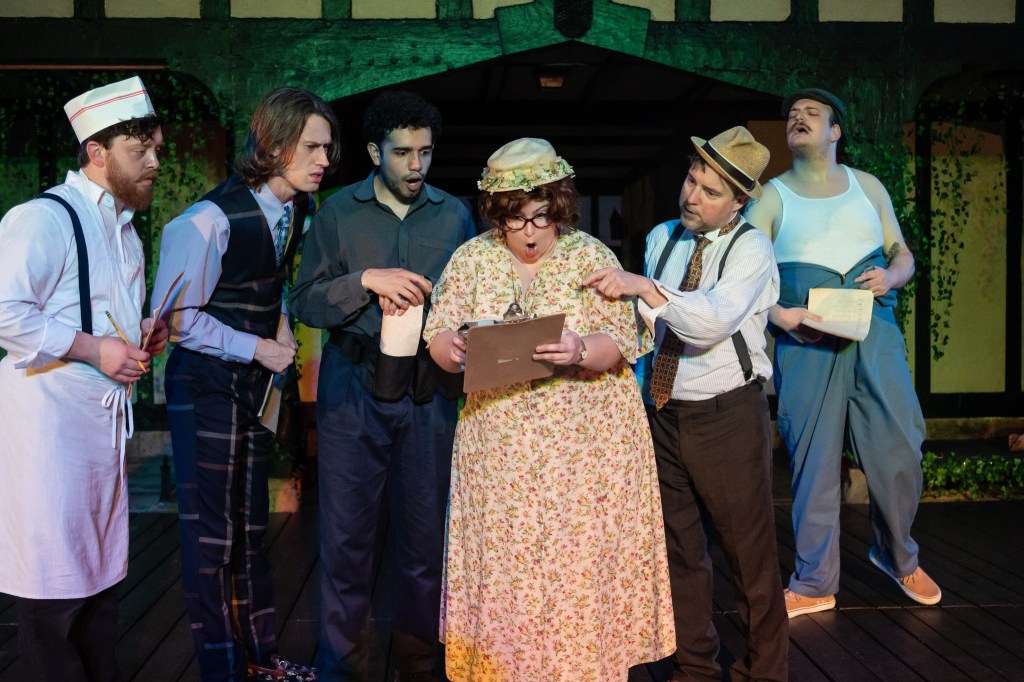
Fat Ham is what happens when Shakespeare gets invited to the BBQ and there’s brown liquor and the Electric Slide – the only thing missing is a game of Spades.

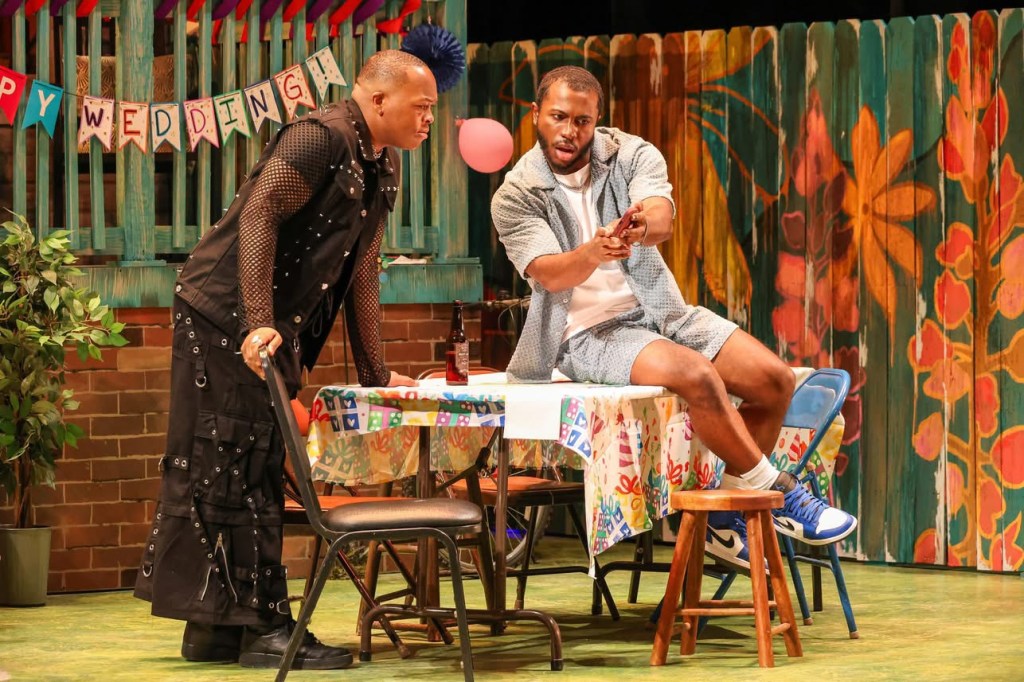
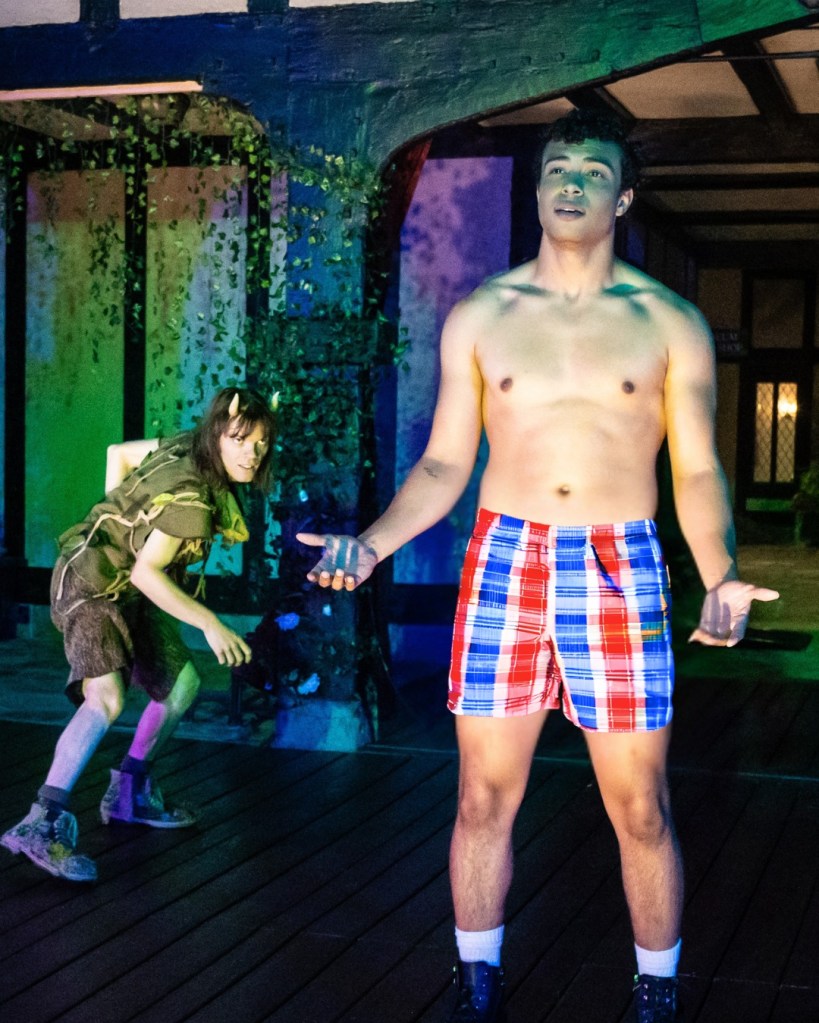
What is Fat Ham? James Ijames’ 2022 Pulitzer prize winning play is a modern-day take on Shakespeare’s Hamlet. Set in a small town in North Carolina (or Virginia, or Maryland, or Tennessee), Juicy’s father, Pap, has died and his mother, Tedra, immediately married her deceased husband’s brother, Rev. Mere moments into the contemporary tragedy (or tragi-comedy), Pap appears to Juicy and his friend Tio as a ghost. As if to make sure we get the “comedy” part of tragi-comedy, Pap has thrown a large white sheet, complete with pasted on black eyeballs, over his pristine white funeral suit and strolls into the backyard using the gate. I’m not the only one who wondered why he didn’t just walk through the fence, as his son, Juicy also asked why he wasn’t floating! Point made, he subsequently ditches the sheet and appears in his white suite with a wide-brimmed white hat and white shoes.

Named in honor of Shakespeare’s Hamlet and the BBQ restaurant owned by the play’s fictional family, Fat Ham is equal parts family tragedy and side-splitting comedy. Pap has roused himself from the grave to ask his son to seek revenge. Apparently, while in prison serving a sentence for stabbing a man, he himself became the target of a hitman when his own brother, Rev, has him killed. The plot thickens when Pap, Rev, and just about every other adult in his life           questions Juicy for being “soft,” calling him a sissy and other choice names.

As the drama unfolds, two of Juicy’s friends come – or get forced out – of the closet. Tedra’s conflict is also internal as she faces her own insecurities that make her think she can find her worth only in the arms of man. Criticism is met with a variety of explanations, all ending with, “it’s biblical” or  “it’s in the bible.”

There was plenty of drama off the stage as well. After a successful run in Norfolk earlier in the year, Virginia Rep was set to bring Fat Ham to the November Theatre but cancelled at the last minute due to their on-going financial problems that surfaced for the public in the fall of 2024. While it may be true that finances were the source of the cancellation, the optics were not good. Fat Ham is very much a Black and Queer play, and with all the controversy over Black History Month, DEI, and the like, well feelings were ruffled.

In what was a huge surprise to many if not most of us (the RVA theater community), the Firehouse Theatre, under the direction of Producing Artistic Director Nathaniel Shaw and Richmond Triangle Players, where Philip Crosby is Executive Director, joined together to co-produce Fat Ham with the same Norfolk cast that was originally expected to bring this production to the River City. The five performances were fully sold out before most of the general public even heard about the event. So, for many reasons, Fat Ham is not just any play, this was not just any production, and I felt blessed to secure a seat.

Bringing this show to life, complete with physical comedy, amazing soliloquys, some of which reference Shakespeare and some of which are taken verbatim from the bard’s Hamlet – such as  “what a piece of work is a man” – is a dynamic cast consisting of Marcus Antonio as Juicy/Hamlet, Kevin Craig West as Pap/the ghost of Hamlet’s father and Rev/Claudius, Cloteal L. Horne as Tedra/Hamlet’s mother, Gertrude, and Adam E. Moskowitz as Juicy’s/Hamlet’s sidekick Tio/Horatio. Notice the pattern that is beginning to emerge? Jordan Pearson plays Larry/Laertes, Janae Thompson is his sister Opal/Ophelia, and Candice Heidelberg is their mother Rabby/Polonius.

Antonio is alternately sly, soft, philosophical, and just generally endearing as Juicy (although I had a hard time swallowing that name, LOL). Horne is so over-the-top as his mother, Tedra, that the moments when she is serious are all the more powerful. She stands up for Juicy, refusing to allow Rev to spread his homophobic poison and at the same time, like most of the Black mothers I grew up in community with, was very protective of her son while maintaining a boundary that defined how people defined her and her life choices.

Jordan Pearson was a supporting character who came later on the scene but made a huge impact, transforming from a straight-edged marine to puffed sleeves, feathers, and a metallic gold head piece. Moskowitz – who reminded me more than once of a version of Spike Lee, perhaps from Do the Right Thingshared a bizarre sexual fantasy involving a gingerbread man, a snowball fight, and fellatio that had his character questioning the origins of his weed. It was the kind of story, a confession, that one has to blame on the weed, or on alcohol, in order to be able to hold one’s head up in public ever again!

Another memorable scene Moskowitz shared with Antonio involved Juicy asking his friend Tio about his shoes. This gives rise to another direct Shakespearean reference, “You remember Yurick?” It seems Yurick (who was not give a contemporary name) was Juicy and Tio dead friend, and Tio bought Yurick’s shoe at a yard sale being held to raise money for Yurick’s funeral.

Thompson’s Opal, unlike Ophelia, does not end in death by drowning – or any other means – but, rather, with affirmation and freedom. While her brother, Larry/Laertes, is not happy with the military life he is living to please his mother, Opal longs for it – it would provide her freedom she does not currently have as a woman, as a Black woman, as a Queer Black woman.

West, who played the unlikeable brothers Pap (God doesn’t want him and the devil won’t have him) and Rev (a blend of charming yet controlling as are most narcissists), redeemed himself – in the eyes of the audience and his fellow cast member – with a shocking and hilarious death scene.

Unlike a Shakespearean tragedy that ends with most of the main characters dead and strewn about the stage, Fat Ham  ends with the cast breaking out in dance. (I believe the script may have originally called for a disco ball to descend at this point.) With the suddenness of this production’s manifestation, and the fun-size stage at Firehouse, it was not possible to transport the stage used in Norfolk, so Firehouse staff constructed a new set in 48 hours!

There is tragedy. There is the angst of young people seeking purpose. There’s the dysfunction that results from the machinations of adults trying to make the best of a difficult situation, the burdens society expects them to carry, and the weight of tragedy. There is also humor and an earnest attempt to make the best of whatever life throws at you. As Tio says, “Why be miserable trying to make somebody else happy?”

—–

Julinda D. Lewis is a dancer, teacher, and writer who was born in Brooklyn, NY and now lives in Eastern Henrico County. When not writing about theater, she teaches dance history at VCU and low impact dance fitness classes to seasoned movers like herself and occasionally performs.

—–

FAT HAM

Written by James Ijames

Directed by Jerrell L. Henderson

CAST

Marcus Antonio           …..        Juicy

Candice Heidelberg  …..        Rabby

Cloteal L. Horne          …..        Tedra

Adam E. Moskowitz   …..        Tio

Jordan Pearson            …..        Larry

Janae Thompson         …..        Opal

Kevin Craig West         …..        Pop/Rev

CREATIVE TEAM

Jerrell L. Henderson  …..        Director

James Ijames               …..        Playwright

Nia Safarr Banks         …..        Costume Designer

Caitlin McLeod            …..        Scenic Designer

Jason Lynch                  …..        Lighting Designer

Sartje Pickett                …..        Sound Designer

Kim Fuller                       …..        Production State Manager

Performance Schedule:

Wednesday, April 16, 2025   7:30PM  Opening Night

Thursday, April 17, 2025        7:30PM

Friday, April 18, 2025               7:30PM

Saturday, April 19, 2025         2:00PM

Saturday, April 19, 2025         7:30PM   Closing Performance

Run Time: about 1 hour 45 minutes with no intermission

Photo Credit:  Photos on Firehouse & Richmond Triangle Players Facebook pages by Erica Johnson @majerlycreative

One-Time
Monthly
Yearly

Make a one-time, monthly, or annual donation to support rvart review

Make a monthly donation

Make a yearly donation

Choose an amount

$5.00
$15.00
$100.00
$5.00
$15.00
$100.00
$5.00
$15.00
$100.00

Or enter a custom amount

$

Your contribution is appreciated.

Your contribution is appreciated.

Your contribution is appreciated.

DonateDonate monthlyDonate yearly
INTO THE WOODS

Once Upon a Time, Later – or – What Happens After “Happily Ever After?”

A Musical Theater Review by Julinda D. Lewis

Presented By: Richmond Shakespeare

At: Cramer Center for the Arts, The Steward School, 11600 Gayton Rd., RVA 23238

Performances: March 7-24, 2024

Ticket Prices: $22-$47 [Adults $47; Seniors 65+ with ID $42; Military with ID $22; Students $22]

Info: (804) 340-0115 or http://www.richmondshakespeare.org

What happens after “happily ever after?”

Sondheim and Lapine’s extravagant musical, Into the Woods (1987), has a lot going on. For one thing, there is a large cast of characters drawn from various Grimm’s fairy tales, from Little Red Riding Hood to Jack (of the magic beans and giant fame). There are princesses in towers (Rapunzel)  and elsewhere (Cinderella) and princes who do not live up to expectations for “happily ever after” – Cinderella’s prince and Rapunzel’s prince, who are brothers with lustful, wandering eyes for the purpose of this plot. There are peasants and royalty, a wicked witch, a wolf with pedophilic tendencies, and a little girl with an implied eating disorder. There is a narrator that the other characters, in a rare show of solidarity, throw under the bus – and that’s just for starters. And just in case you were wondering – as you should have been – despite the Disney inspired costumes and light-hearted, guffaw-inducing moments that pepper Act 1, this is not a family-friendly show. Half the lead characters meet untimely deaths in Act 2. The bloody demise of those who are smushed by the giant’s foot is indicated by a red wash on the background, and sometimes accompanying sound effects.

Be careful what you wish for.

At the center of the main plot we find The Baker and The Baker’s Wife (Durron Marquis Tyre-Gholson and Maggie Marlin-Hess). The childless couple wish more than anything for a baby, but soon discover that their barrenness is the result of a witch’s curse that goes back a generation when The Baker’s father helped himself to the witch’s garden. Tyre-Gholson (who, much to my surprise, is making his Richmond Shakespeare debut) deftly establishes himself as a reluctant hero. He tries on the cloak of an alpha male, but it doesn’t fit him well, yet we find ourselves cheering for him and his persistence in the face of probable defeat as he sets off on a life changing scavenger hunt in the woods. Marlin-Hess, similarly, achieves a delicate balance. She is, at once, the supportive wife of the baker, a woman with an independent mind and a resolute disposition (think, by any whatever means necessary), who holds an emergent passion that finds unforeseen fulfillment in the woods.

The prettier the flower, the farther from the path.

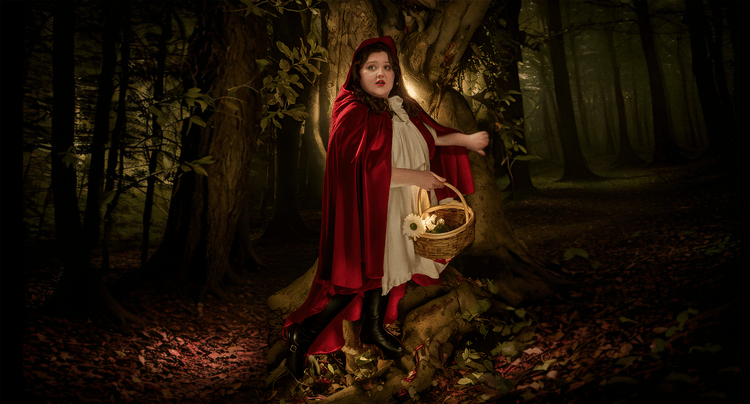
Into the Woods is very much an ensemble show, with strong leads and strong voices singing what I would characterize as challenging music, but some characters nevertheless stand out. My hands-down favorite is Little Red Riding Hood (Gracie Berneche) who wrings every last drop of humor and drama from each line she speaks. Now, normally, it is bad manners to mention an actor’s size, but in this case, Berneche’s stature is key to her role. Constantly referred to as a “little girl,” this Riding Hood makes a running joke of scarfing down the goodies she’s supposed to be taking to Grandma’s house. She deliberately talks with her mouth full, and creates one of the show’s funniest physical comedy moments as she and The Baker’s Wife juggle sweets and cakes as Riding Hood tries to fill her basket – a basket, by the way, that she commandeered from The Baker’s Wife. Berneche’s childlike allure makes it all more creepy when The Wolf (Terence Sullivan) peppers her with sexual innuendo, while diverting her from the path to her grandmother’s house in the woods. The dual role of The Wolf/Cinderella’s Prince emphasizes the lustful, narcissistic nature of both characters as they seduce, respectively, Little Red Riding Hood and The Baker’s Wife, in the woods. Sullivan’s dual roles are masterfully delicious and shiver-inducing – perhaps playing on the appeal of the bad boy. But also, the wolf’s ears, tail, and leather jacket are one of the best, most fun costumes, as well.

“You’re so nice. You’re not good, you’re not bad, You’re just nice. I’m not good, I’m not nice, I’m just right. I’m the witch.

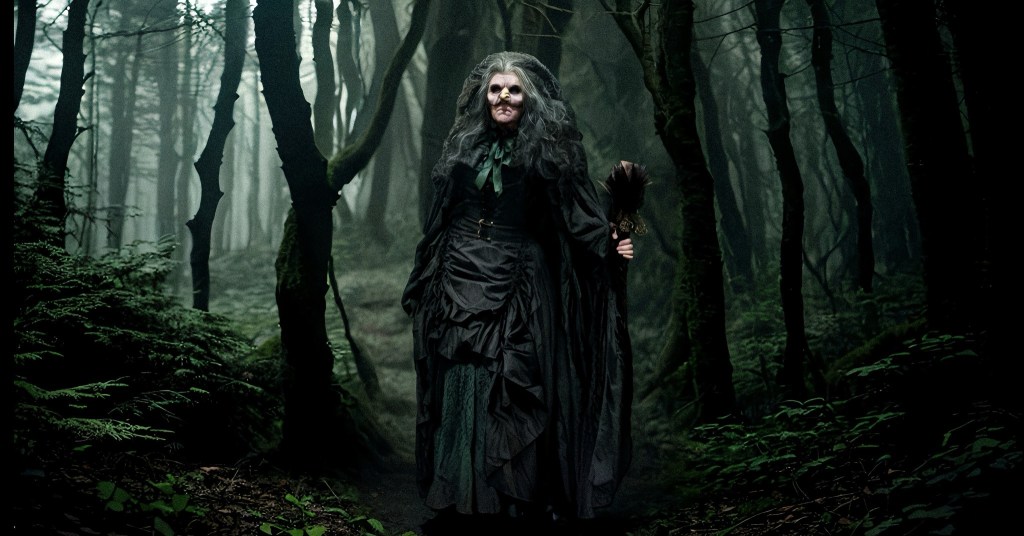
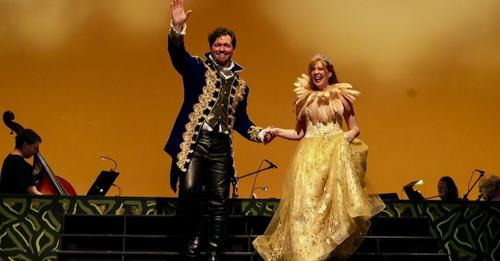
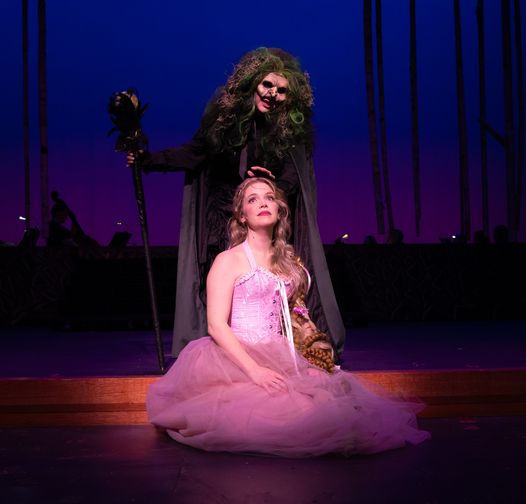
Going back to the idea that this is an ensemble, it seems both appropriate and anathema that The Witch (Susan Sanford) had the star’s turn during the closing bows. The Witch, after all, is the only character that has the ability to fill in any of the backstory. At the same time, she does not have the most lines or greatest stage time. But Sanford’s rich vocals and The Witch’s makeover from old hag to bewitching diva, are worthy of recognition. Speaking of which, The Witch’s Act 2 costume and the costumes and wigs of Cinderella’s Stepmother (Hannah Zold Story) and Stepsisters Florinda (Katherine S. Wright) and Lucinda (Kylee Márquez-Downie) reminded me of drag queens – but without the expected sassiness. The Witch loses her powers and Florinda and Lucinda have their eyes pecked out. These characters’ journey into the woods do not bring about the desired results.

Slotted spoons don’t hold much soup.

In my humble opinion, Jack’s Mother (Lauren Leinhaas-Cook) was decidedly more evil than The Witch. She certainly wouldn’t win any awards for mother of the year. She berates and belittles Jack, then defends him when it’s time for him to face the consequences of his actions. These are the actions of an enabler. This role gives Leinhaas-Cook an opportunity to enjoy being nasty, and we don’t feel any great loss at her accidental demise. Let’s face it, Jack (Lukas D’Errico) would never be able to grow up under her nagging eye. In the end, he’s left looking for someone to take care of him, because his mother never taught him how to be an adult. She just sent him off on fruitless and self-serving quests into the woods. The Witch, who had whisked away Rapunzel (Sara Dabney Tisdale) from her parents at birth was no model mother, either. Locked away in a tower in the woods, Rapunzel ended up the single mother of twins, lost her Prince, her mind, and eventually her life as well. Apparently, one does not develop good life coping skills living in isolation in the woods.

Careful the things you say…children will listen.

While Act 1 is a quest to find fulfillment of all the characters’ wishes, Act 2 shows us what happens after “happily ever after.” With Act 1 running approximately 90 minutes, it almost seems as if the show is over at the end of Act 1. But wait, there’s more. Act 2 shows us the consequences of getting what you wished for. There is a fantastic scene in which the surviving characters – after much of the slaughter and bloodshed – all point the finger of blame at each other: The Baker, The Baker’s Wife, The Witch, Jack, Jack’s Mother, Little Red Riding Hood (who is never at a loss for snarky comments, with accompanying facial expressions and body language). It’s a comedy. It’s a parody. It’s a satire. It’s a musical. It’s a morality play. It’s a metaphor for Life. Into the Woods is where life happens. Some emerge triumphant, some do not emerge at all. As 2010 Internet sensation Antoine Dodson once said, “Hide yo’ kids, hide yo’ hide yo’ husbands ‘cause they’re rapin’ everybody out here.” Go see Into the Woods, but leave your kids at home.

—–

Julinda D. Lewis is a dancer, teacher, and writer who was born in Brooklyn, NY and now lives in Eastern Henrico County. When not writing about theater, she teaches dance history at VCU and low impact dance fitness classes to seasoned movers like herself, and occasionally performs.

—–

INTO THE WOODS

Book by James Lapine

Music and Lyrics by Stephen Sondheim

Directed by Jase Smith Sullivan

Musical Direction by Kim Fox

Cast

Narrator/Mysterious Man       ……………    J.C. Bussard   

Cinderella                                ……………    Grey Garrett

Jack                                         ……………    Lukas D’Errico

Jack’s Mother                         ……………    Lauren Leinhaas-Cook

Milky White                            ……………    Katherine Malanoski

The Baker                               ……………    Durron Marquis Tyre-Gholson

The Baker’s Wife                   ……………    Maggie Marlin-Hess

Cinderella’s Stepmother         ……………    Hannah Zold Story

Florinda                                   ……………    Katherine S. Wright

Lucinda/US Cinderella           ……………    Kylee Márquez-Downie

Little Red Riding Hood          ……………    Gracie Berneche

The Witch                               ……………    Susan Sanford

Cinderella’s Father/The Steward ………..     Eddie Webster

Cinderella’s Mother/Granny/The Giant …    Heidi Johnson Taylor

The Wolf/Cinderella’s Prince ……………    Terence Sullivan

Rapunzel                                 ……………    Sara Dabney Tisdale

Rapunzel’s Prince                   ……………    Field Oldham

Ensemble/US The Wolf/Princes …………    Thomas Kaupish

Ensemble/US Jack                  ……………    Milo Jones

Ensemble/US Little Red Riding Hood …..    Belén Tarifa

Production Team

Artistic Director          ……………    James Ricks

Managing Director      ……………    Jase Smith Sullivan

Music Director            ……………    Kim Fox

Production Stage Manager ………    Shawanna Hall

Assistant State Manager/

     Properties Design   ……………    Jordan Dively

Assistant State Manager/

     Character Double   ……………    Diandra Chiaffino-Butts

Hair and Makeup Design  …….….    Amanda Blake

Costume Design          ……………    Keith Walker

Lighting Design          ……………    Michael Jarrett

Puppet Design             ……………    Heidi Rugg

Scenic Design                         ……………    Todd LaBelle

Scenic Design                         ……………    Katherine Malanoski

Sound Design              ……………    Grace Brown LaBelle

Production Manager/

     Sound Board Operator ………..    MariaElisa Costa

House Manager/

     Production Assistant  …………    Kiari Hicks

Costume Assistant      ……………    Susan Frye

Master Electrician       ……………    Emily Vial

Follow Spot Operator ……………    Parker Beard

Follow Spot Operator ……………    Wyatt Roberts

Box Office                  ……………    Nata Moriconi

Musicians

Conductor/Keyboard 1……………   Kim Fox

Bass                             ……………    Bea Kelly

Drums                         ……………    Steve Raybould

Cello                            ……………    Lauramarie Laskey

Clarinet                       ……………    Marc Krauss

Flute                            ……………    Stephanie Shumate

French Horn                ……………    Gretchen Georgas

Keyboard 2/Synthesizer …………     Ian Krauss

Trumpet                       ……………    Steve Fenick

Violin                          ……………    Marissa Resmini

Run Time: approximately 3 hours, with one 15-minute intermission

———-

Photo Credits: Photos from Richmond Shakespeare Facebook page

One-Time
Monthly
Yearly

Make a donation to support the publication of RVART Review

Make a monthly donation

Make a yearly donation

Choose an amount

$5.00
$15.00
$100.00
$5.00
$15.00
$100.00
$5.00
$15.00
$100.00

Or enter a custom amount

$

Your contribution is greatly appreciated. Thank you.
Julinda D. Lewis

Your contribution is appreciated.

Your contribution is appreciated.

DonateDonate monthlyDonate yearly
BORN WITH TEETH

Words Matter

A Theater Review of an East Coast Premiere by Julinda D. Lewis

By: Richmond Shakespeare

At: Gottwald Playhouse at Dominion Energy Center, 600 E. Grace St., Richmond, VA 23219

Performances: January 25 – February 11, 2024

Ticket Prices: $20 – $45

Info: (804) 340-0115 or http://www.richmondshakespeare.org

Death and life are in the power of the tongue…  – Proverbs 18:21

The time is the late 1590s. The place is a private room in a London tavern. The political climate is volatile – an authoritarian regime is in charge, freedom of speech does not exist, heretics and atheists – and apparently Catholics – are tortured and killed. A plague was ravaging society – the Black Death – a pandemic that killed thousands, causing the collapse of what little social structure remained after the political purge, leaving fields unplowed, and little to eat.

There are more spies than crimes to spy out. – BWT

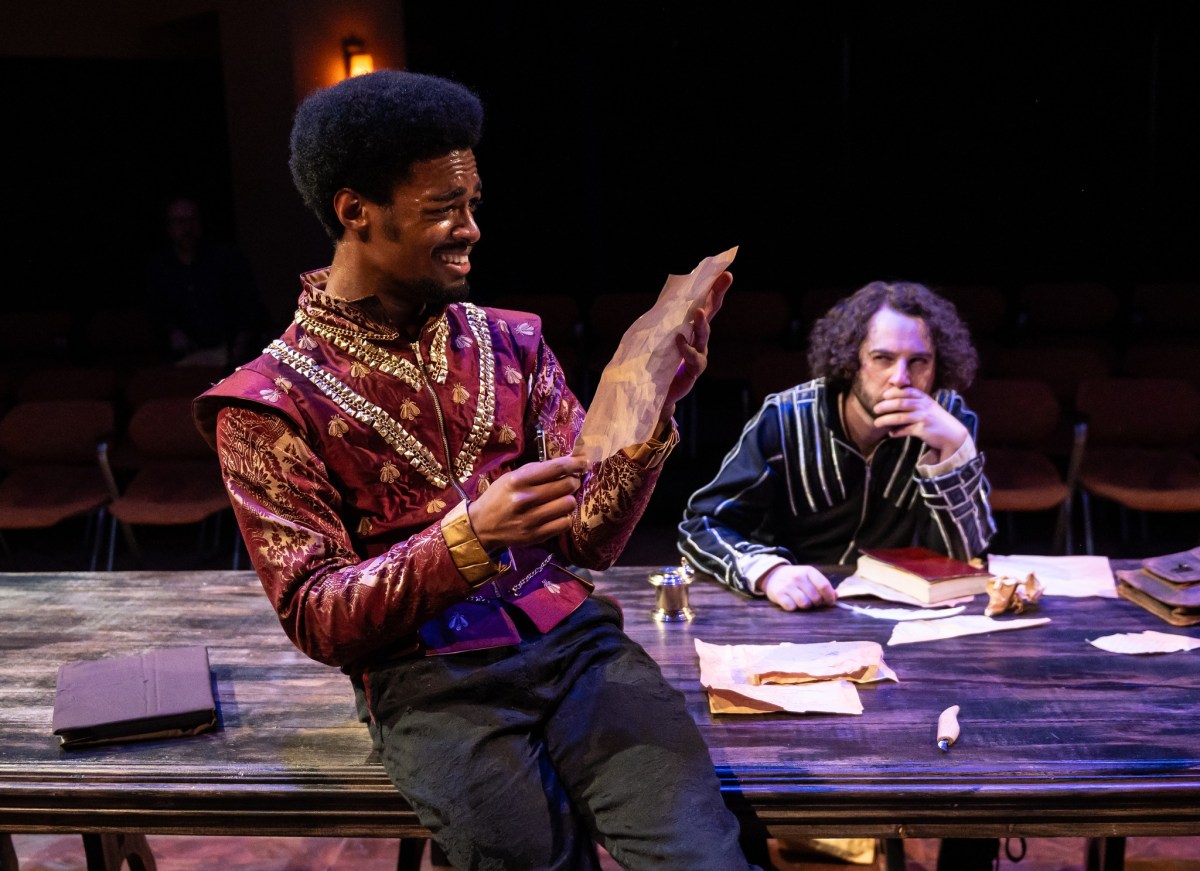
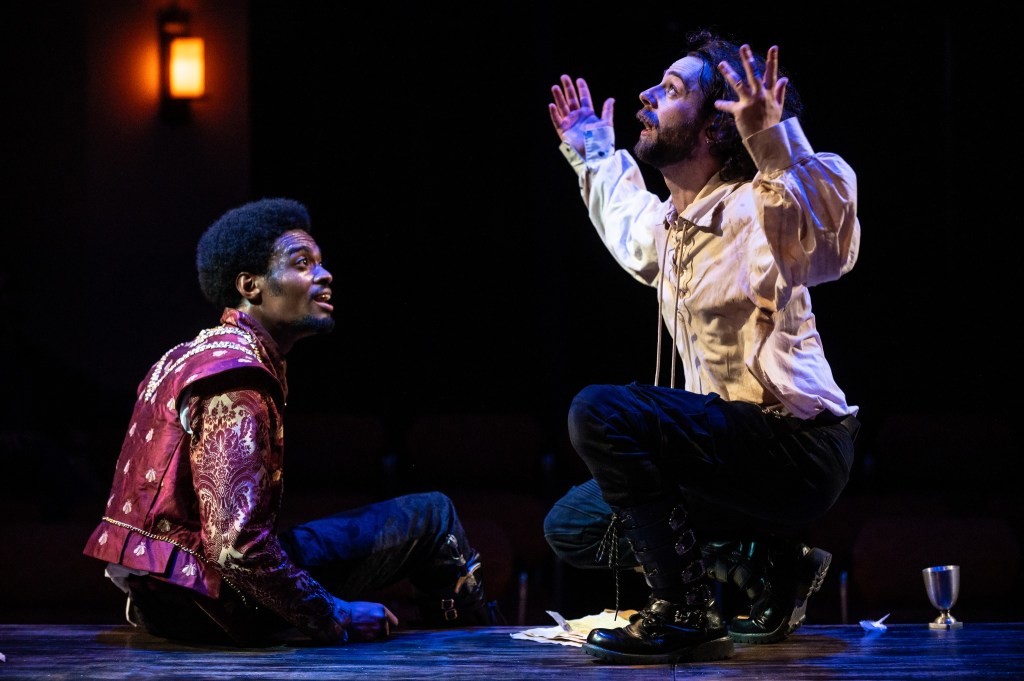
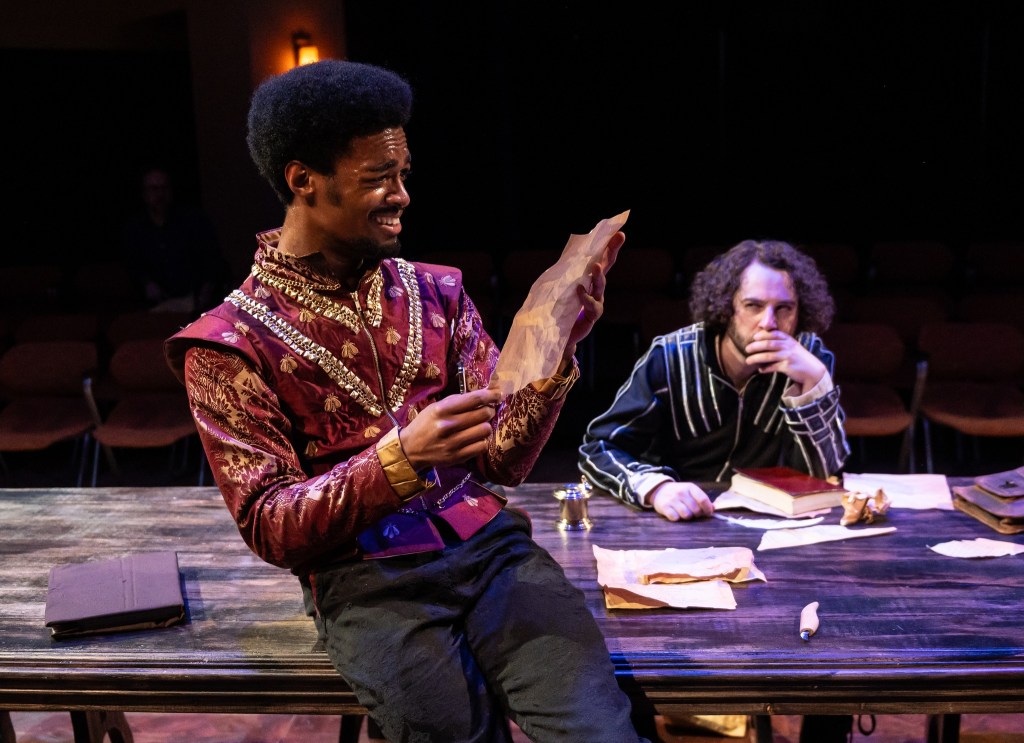
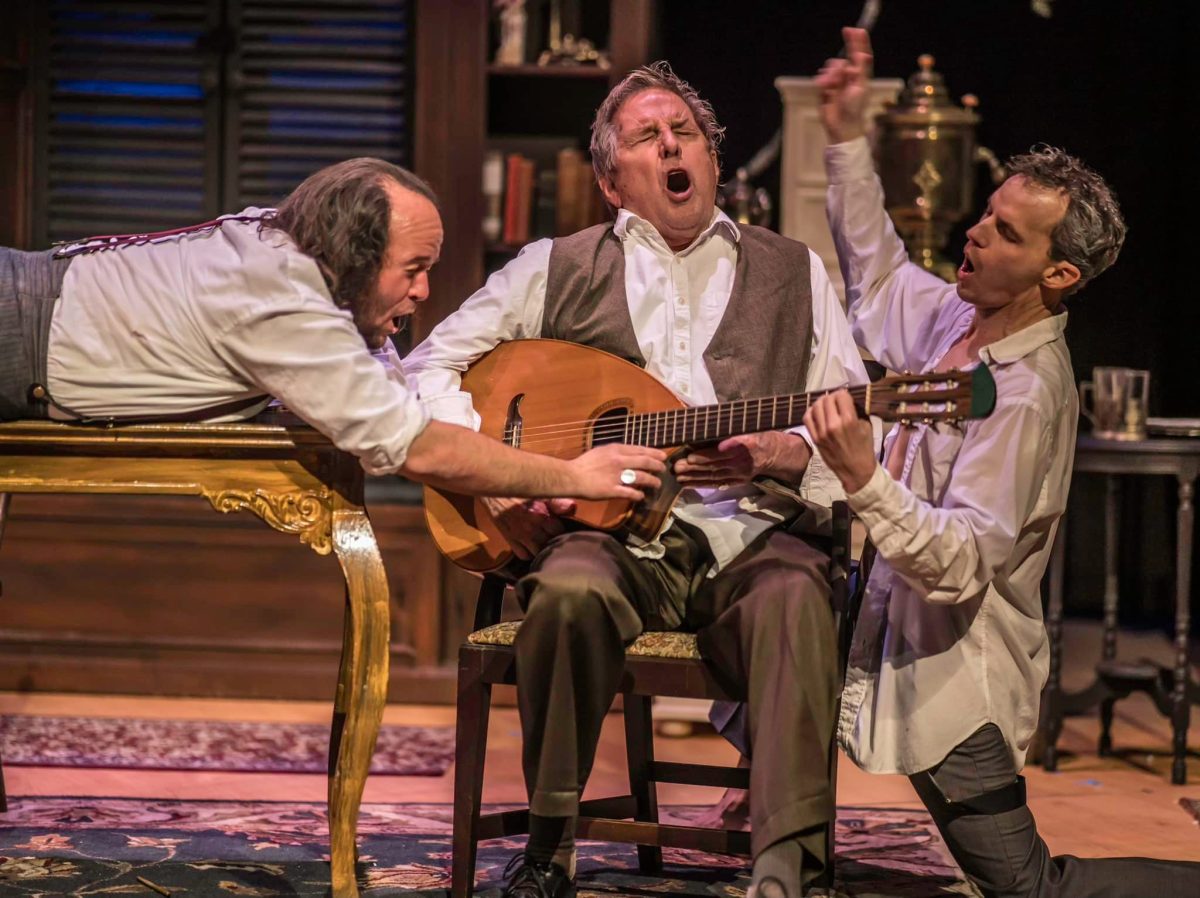
This is where playwright Liz Duffy Adams saw fit to open up a voyeuristic window into the world of two writers – the well-established Christopher “Kit” Marlowe (Avery Michael Johnson) and the upstart William Shakespeare (James Murphy) – as they meet in the private back room of a pub to collaborate on a series of historic plays. But this collaboration is a contentious literary partnership, rife with jealousy, political unrest, and rumors of espionage, religious persecution, and sexual tension. This collaboration is Born With Teeth.

We are subjects, not citizens. – BWT

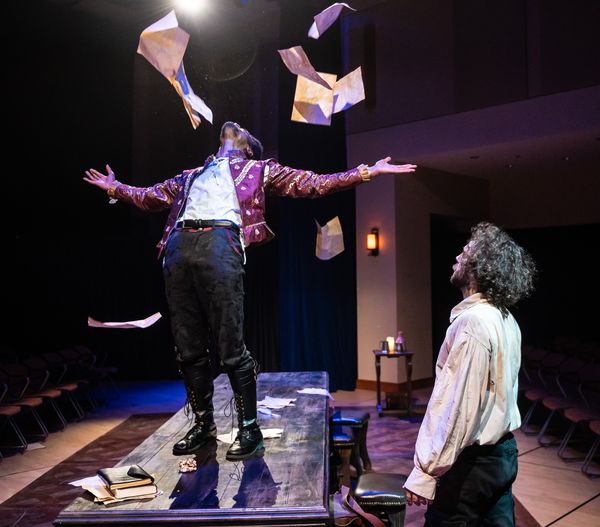
The flexible space of the Gottwald Theatre has been transformed for this occasion. A long (perhaps 12’?) table dominates the room, slashing diagonally through the space. It is placed on a sturdy parquet floor, and surrounded by 10 leather topped rectangular stools. The audience is seated on either side of the table, close enough for the first row to be showered by scattered sheets of paper during the two playwrights’ scuffles. This awesome set was designed and constructed by W. Reed West III.

You are so much stupider than you look; how is that possible? – BWT

William Shakespeare and Christopher Marlowe did indeed collaborate on the Henry VI trilogy, Parts I, II, and III, Marlow was stabbed to death in the summer of 1593. But much of the relationship between Shakespeare and Marlowe – both their authorship and personal  – is a matter of speculation and mystery. So that raises the question, how much of Born With Teeth is historical clarification, and how much is pure fantasy? And given the truths expressed and exposed of human interaction – oppression, suppression, persecution, ego, love – does the former question matter?

Worse than nowhere is somewhere you don’t want to be. – BWT

Avery Michael Johnson and James Murphy literally burst onstage, and give us a solid 90 minutes of drama, melodrama, angst, bravado, fear, backstabbing, lust, equivocation, love, revelation, caution, optimism, conciliation, espionage, and more. Born With Teeth is loud, frightening, and funny – sometimes all at once. Marlowe denigrates the upstart Shakespeare, until he reads a page or two of the play they’re working on and realizes that Shakespeare can, indeed, write. But at a time when there is not such thing as freedom of speech or religion, words can cut more sharply that a sword, and speech can be the currency of life or death.

I don’t deny God, I just don’t like him very much. – BWT

Murphy plays the role of Shakespeare with a bit of caution, much more reserved than his more outgoing and outrageous counterpart who may, in turn, be overly confident in the sovereignty of his benefactor. Johnson’s Marlowe never walks but strides. He stomps about in his tall boots – there’s a knife strapped into the right one – he leaps from the floor to the top of the table and lands on the tabletop, the floor, or Shakespeare like a cross between a  pouncing panther and a WWE wrestler. Sitting in the front row, I could see each bead of sweat on Johnson’s brow and distinctly hear the intake of breath when he rapaciously sniffed Murphy. Born With Teeth is a physically demanding play, fueled by quick dialogue that is alternately witty, cutting, and always demanding. It isn’t Shakespeare, but it is the essence of Shakespeare. It isn’t classical, but it is archetypal. It isn’t orthodox, but it does all the things you want live theatre to do.

—–

Julinda D. Lewis is a dancer, teacher, and writer who was born in Brooklyn, NY and now lives in Eastern Henrico County. When not writing about theater, she teaches dance history at VCU and low impact dance fitness classes to seasoned movers like herself, and occasionally performs.

—–

BORN WITH TEETH

by Liz Duffy Adams

Directed by Andrew Gall

Cast

Kit                   ……………    Avery Michael Johnson

Will                 ……………    James Murphy

Production & Design Team

Artistic Director          …….   James Ricks

Managing Director    …….   Jase Smith Sullivan

Playwright                   …….   Liz Duffy Adams

Director                       …….   Andrew Gall

Stage Manager            …….   MariaElisa Costa

Assistant Stage Manager …   Kiari Hicks

Costume Design          …….   Anna Bialkowski

Intimacy Choreographer  …   Lucinda McDermott

Lighting Design          …….   Tristan Ketcham

Set Design                   …….   W. Reed West III

Sound Design              …….   James Ricks

Run Time: About 90 minutes; no intermission

Content Disclosure: This production contains mature themes, strong language, & sexual/suggestive content.

———-

Photo Credits: Promotional Video by Eric Hackler & Photos from Richmond Shakespeare Facebook

https://www.facebook.com/watch/?v=1088997112419759

One-Time
Monthly
Yearly

Make a donation to support
rvart review

Make a monthly donation

Make a yearly donation

Choose an amount

$5.00
$15.00
$100.00
$5.00
$15.00
$100.00
$5.00
$15.00
$100.00

Or enter a custom amount

$

Your contribution is appreciated. Thank you!

Your contribution is appreciated.

Your contribution is appreciated.

DonateDonate monthlyDonate yearly
HAMLET

A Theater Review [with post-credit cookies] by Julinda D. Lewis

By: Richmond Shakespeare

At: Gottwald Playhouse at Dominion Energy Center, 600 E. Grace St., Richmond, VA 23219

Performances: October 19 – November 12, 2023 | EXTENDED to November 17

Ticket Prices: $20 – $45

Info: (804) 340-0115 or quilltheatre.org

Everyone has heard of Hamlet. Some of us read it in high school. Some have seen productions on stage or film. Others have avoided it like the plague. Wherever you sit along this spectrum, Richmond Shakespeare’s Hamlet will bring out a new-found love and admiration for Shakespeare’s most well-known drama. Seriously. I personally know people who either knew little to nothing about Hamlet or had an aversion to Shakespeare in general, who raved about this production after seeing it.              

Hamlet is a play about loss, unbearable grief, betrayal, revenge. . .and a ghost. When Prince Hamlet’s father, the King of Denmark, dies suddenly – under suspicious circumstances – Hamlet’s mother marries his uncle Claudius. Hamlet and members of the king’s guard experience a visitation from a ghost who appears to be the spirit of Hamlet’s father, and set the stage for a revenge plot.

Joshua Carter is an engaging and intense Hamlet, who cunningly slips in and out of madness. His grief appears authentic and his unhinged rants convincing. Physically he is controlled and seems always on the verge of erupting like a human volcano. His voice is beautifully resonant, well-modulated, and his gestures are tight and just eccentric enough to place him outside of our time. This is significant because this Hamlet is clothed in contemporary garments.

At the celebration of the new King’s court, the attendees wear tuxedos and most of the women wear semi-formal or business attire. Interestingly, Ophelia, Hamlet’s sometime love interest, favors cowboy boots – glittery ones for special occasions.

Joseph Yeargain, as Claudius, is suave and slimy at the same time, and it’s never clear whether Hamlet’s mother, Gertrude (Lucretia Marie) is involved in the murder and power plots or if she just goes along with whatever the men in her life tell her to do. Neither scenario is enough to stir any real sympathy for her.

The same cannot be said for Ophelia. Rosemary Richards tugs on our heartstrings as she plays her heart out, from the heights of love to the depths of despair, from beautiful fair maiden to a wretched shell of herself.

All is not doom and gloom. Avery Michael Johnson gives new meaning to the word “loyalty” as Hamlet’s friend, Horatio, and someone made an absolutely brilliant and hilarious decision to cast Toby O’Brien and Rachel Garmon-Williams as Hamlet’s friends Rosencrantz and Guildenstern. Did I remember to say Hamlet’s stoner friends?

The entire ensemble, including Jody Ashworth as the Ghost of Hamlet’s father, MaryBeth Adams as the king’s counselor, Polonius, Robbie Winston as Laertes (son of Polonius and brother to Ophelia), John Moon as an unintentionally witty gravedigger are deserving of recognition, individually and as a collective. James Ricks’ direction is intuitive and when the play is over it comes as a shock to discover that nearly three hours have passed.

Don’t get thee to a nunnery, but do get thee to the Gottwald Theatre to see this marvelous production. Oh, and I sat with my husband and a friend in the front row of a bank of seats that is practically on the stage. My heart was in my mouth during the sword fight, and from my vantage point I also got to see the expressions of other audience members. Be daring – sit there! You can always change your seat after intermission if you chicken out. Your estimation of William Shakespeare, Hamlet, and Richmond Shakespeare will be forever elevated.

—–

Julinda D. Lewis is a dancer, teacher, and writer who was born in Brooklyn, NY and now lives in Eastern Henrico County. When not writing about theater, she teaches dance history at VCU and low impact dance fitness classes to seasoned movers.

—–

Hamlet

by William Shakespeare

Directed by James Ricks

Cast

Hamlet             ……………    Joshua Carter

Claudius          ……………    Joseph Yeargain

Gertrude          ……………    Lucretia Marie

Ghost/Player King  ………    Jody Ashworth

Horatio            ……………    Avery Michael Johnson

Polonius          ……………    MaryBeth Adams

Ophelia            ……………    Rosemary Richards

Laertes            .……………    Robbie Winston

Guildenstern/Francisco/Player

Queen/Priest ………   Rachel Garmon-Williams

Rosencrantz/Fortinbras/

Bernardo …………   Toby O’Brien

Gravedigger/Marcellus/

Player  ……………  John Moon

Voltimand/Osric/

            Player  …………….  Keegan Ferrell

Ensemble         ……………..  Kenjae Lundy, Milind Murthy

Production & Design Team

Artistic Director          …….   James Ricks

Managing Director    …….   Jase Smith Sullivan

Costume Design          …….   Keith Walker

Lighting Design          …….   Gretta Daughtrey

Set Design                   …….   Frank Foster

Sound Design              …….   Kate Statelman

Production Manager  …….   Melissa Johnston-Price

Stage Manager            …….   MariaElisa Costa

Fight Choreography   …….   Aaron Orensky

Assistant Stage Manager …   Diandra Chiaffino-Butts

Properties                    …….   Jordan Dively

Run Time: About 3 hours including one intermission

———-

Photo Credits: David Parrish Photography

HAMLET ON NBC “12 ABOUT TOWN”

https://www.nbc12.com/video/2023/11/03/hamlet-continues-through-nov-17/

AN OBSERVATION

In Act I Hamlet is seen reading – and eating the pages of – a book, Holy Blood, Holy Grail by Michael Baigent, Richard Leigh, and Henry Lincoln. The authors propose that Jesus married Mary Magdalene and had children with her whose descendants later emigrated to southern France where they became part of a secret society called the Priory of Sion. The authors further concluded that the Holy Grail of legend is both the womb of Mary Magdalene and the sacred royal bloodlines she birthed.

AN ANALOGY

Hamlet:Claudius as David:Saul

Just as the biblical David had a chance to kill the treasonous King Saul while hiding in a cave, but he chose not to, Prince Hamlet had a chance to kill his uncle, the treasonous King Claudius, as he prayed, but he chose not to.

YOU DO SPEAK SHAKESPEARE!: Phrases We Got From Hamlet

To thine own self be true.

Something is rotten in the state of Denmark.

Murder most foul.

Pernicious woman!

There are more things in heaven and earth, Horatio, that are dreamt of in your philosophy.

The time is out of joint.

Although this be madness, there’s method in it. [i.e., a method to one’s madness]

There is nothing good or bad but thinking makes it so.

What a piece of work is a man.

I know a hawk from a handsaw.

The play’s the thing!

To be or not to be…

Conscience makes cowards of us all.

Get thee to a nunnery!

Oh, woe is me!

Madness in great ones must not unwatched go.

Suit the action to the word.

The lady doth protest too much!

Act your age!

Sweets to the sweet.

The dog will have his day.

The grinding of the ax.

Good night, sweet prince.

One-Time
Monthly
Yearly

Make a donation to support
rvart review

if you like what you read here,
Make a monthly donation

Make an annual donation
no amount is too small –
but the bigger the better!

Choose an amount

$5.00
$15.00
$100.00
$5.00
$15.00
$100.00
$5.00
$15.00
$100.00

Or enter a custom amount

$

Thank you. Your contribution is appreciated.

Your contribution is appreciated.

Your contribution is appreciated.

Donate hereDonate hereDonate here

UNCLE VANYA

Every Family Has a Drunk Uncle…

A Theater Review by Julinda D. Lewis

By: Richmond Shakes (formerly Quill Theatre)

At: Dominion Energy Center’s Libby S. Gottwald Playhouse, 600 E. Grace St., RVA 23219

Performances: January 26 – February 12, 2023

Ticket Prices: $22-$42

Info: (804) 340-0115 or https://richmondshakespeare.org/

Rarely – if ever – have I described a production as a sad comedy, but that would be an accurate description of UNCLE VANYA, written by Anton Chekhov and  adapted by Conor McPherson. First performed at the turn of the twentieth century, UNCLE VANYA remains relevant and contemporary as adapted by McPherson and under the expert direction of Dr. Jan Powell.

One thing – well, eight really– that made this production successful was the uniformly outstanding cast. Bryan Austin was relentlessly amusing yet authentic and endearing in the title role and it was his authenticity that kept his moments of wallowing in self-pity and regret from becoming shallow and vainglorious tropes. Calie Bain was a breakout star as Vanya’s niece, Sonya. In spite of the early death of her mother, her father’s re-marriage to a woman seemingly closer in age to Sonya than her father, and her unrequited love – made even more soul-crushing by the geographical isolation of their country estate – Sonja remained a bright light of hopefulness. She was the connection that made it possible for this stunningly dysfunctional family to attempt reconciliation and settle on renovation.

Lindsey Zelli as the beautiful young second wife, Yelena, displayed unexpected and sometimes uncomfortable depth. In spite of past estrangements and current rivalrous entanglements, Yelena demonstrated genuine fondness and care for Sonya. Matt Hackman’s Dr. Astrov was also multi-faceted. Totally unaware of Sonja’s love for him (really???), he was equally infatuated with her step mother, and focused on ecological issues with a passion that I am sure was way ahead of his time.

Kelly Kennedy made the most of her nearly innocuous supporting role as Nana – not, as one might think, the grandmother, but an elderly nurse who has become the family caretaker. Sitting in her chair, quietly observing or serving up hot tea, her knitting needles seemed to be a metaphor for her role in the family drama.

Alan Sader and Debra Clinton’s characters infuriated me. Sader played the pompous and manipulative Professor Alexandr Serebryakov (father of Sonya, husband of Yelena, son of Mariya, and brother-in-law of Vanya) and of course he is really good at it. It’s the kind of role where you don’t want to meet the actor soon after because you want to curl your lip and turn up your nose at his character. Clinton’s character was infuriating for a different reason. Mariya’s favoritism for her more successful son, Alexandr and disdain for the hard-working Vanya seemed passive-aggressive and possibly the result of oppression or lack of fulfillment in her own life.

For those, like me, unfamiliar with the characters, it took awhile to get a handle on the role of Telegin (Bill Blair). Affectionately called Waffles (apparently because of the condition of his skin), Telegin is a family friend, neighbor, and hanger-on who tries to fit in where he can – often with awkward results.

What makes Uncle Vanya resonate with me is these lovingly developed and multi-dimensional characters. They are familiar and seem to fit right in with contemporary issues: family dysfunction, changing inter-generational roles, the troublesome hierarchy of inheritance, and even the forced soul-searching of pandemic isolation.

Reed West’s set design – much more elaborate than Richmond Shakes’ usually sparse environments – is solidly built of sturdy, dark wood. Little details, like a chess set atop a cabinet, Nana’s knitting basket, and the clean but worn rugs support the narrative of crumbling gentility. And what can I say about the individual application of autumn leaves on the tree branches during intermission? Gretta Daughtrey’s lighting is effective and unintrusive; the storm, for example, is subtle but unmistakable. So, too, are James Ricks’ sound design, that included gentle ambient sounds, and Anna Bialkowski’s earth-toned costumes – with a jewel-toned garment or two for Yelena, and a caped-overcoat for the Professor. 

Uncle Vanya is a satisfying evening of theater performed by a stellar cast – and I say this even though I am not in the least a fan of Chekhov. There isn’t much action. Plot is virtually non-existent. But the characters are immersed in the words and that fully engages the audience in a way that creates the best kind of theater magic. Try to see it before it closes.

Uncle Vanya

By Anton Chekhov

Adapted by Conor McPherson

Cast

Nana    ………. Kelly Kennedy

Astrov ………. Matt Hackman

Vanya  ………. Bryan Austin

Telegin………. Bill Blair

Serebryakov………. Alan Sader

Sonya  ………. Calie Bain

Yelena ………. Lindsey Zelli

Mariya ……….Debra Clinton

Production Team

Artistic Director: James Ricks

Managing Director: Jase Sullivan

Director: Dr. Jan Powell

Assistant Director: Sarbajeet Das

Stage Manager: Lauren Langston

Assistant Stage Manager: Carrisa Lanstra

Costume Design: Anna Bialkowski

Light Designer: Gretta Daughtrey

Scenic Design: W. Reed West III

Sound Design: James Ricks

Properties Design: Emily Hicks

Map Art Work: Katherine Wright

Promotional Photography: Peyton Lyons

Run Time: About 2 ½ hours including one intermission

Julinda D. Lewis is a dancer, teacher, and writer who was born in Brooklyn, NY and now lives in Eastern Henrico County.

———-

Photo Credits: Peyton Lyons and David Parrish Photography

 TOP LEFT: Bryan Austin, Bill Blair, Matt Hackman. TOP CENTER: Matt Hackman and Calie Bain. TOP RIGHT: Bryan Austin. BOTTOM LEFT: Bryan Austin. BOTTOM RIGHT: Bryan Austin, Calie Bain and Debra Clinton
One-Time
Monthly
Yearly

RVART Review depends on the generosity of readers to continue to exist. thank you.

Make a monthly donation

Make a yearly donation

Choose an amount

¤5.00
¤15.00
¤100.00
¤5.00
¤15.00
¤100.00
¤5.00
¤15.00
¤100.00

Or enter a custom amount

¤

Your contribution is appreciated.

Your contribution is appreciated.

Your contribution is appreciated.

DonateDonate monthlyDonate yearly
SHE STOOPS TO CONQUER:

THE PLAY THAT USHERED IN A NEW WAVE OF HUMOR

A Theater Review by Julinda D. Lewis

By: Quill Theatre’s Richmond Shakespeare Festival

At: Agecroft Hall & Gardens, 4305 Sulgrave Road, Richmond, VA 23221

Performances: July 7-31, 2022

Ticket Prices: $20-$33

Info: (804) 353-4241 or quilltheatre.org

Dating back to 1773, She Stoops to Conquer has long been considered one of the most popular English-language comedies. Interestingly, it was a major theatrical success by a relatively unknown playwright – Oliver Goldsmith – and the play that set Director James Ricks, then a middle school student, ablaze with a passion for live theater. It is also credited with being the source of the phrase, “ask me no questions and I’ll tell you no lies.”

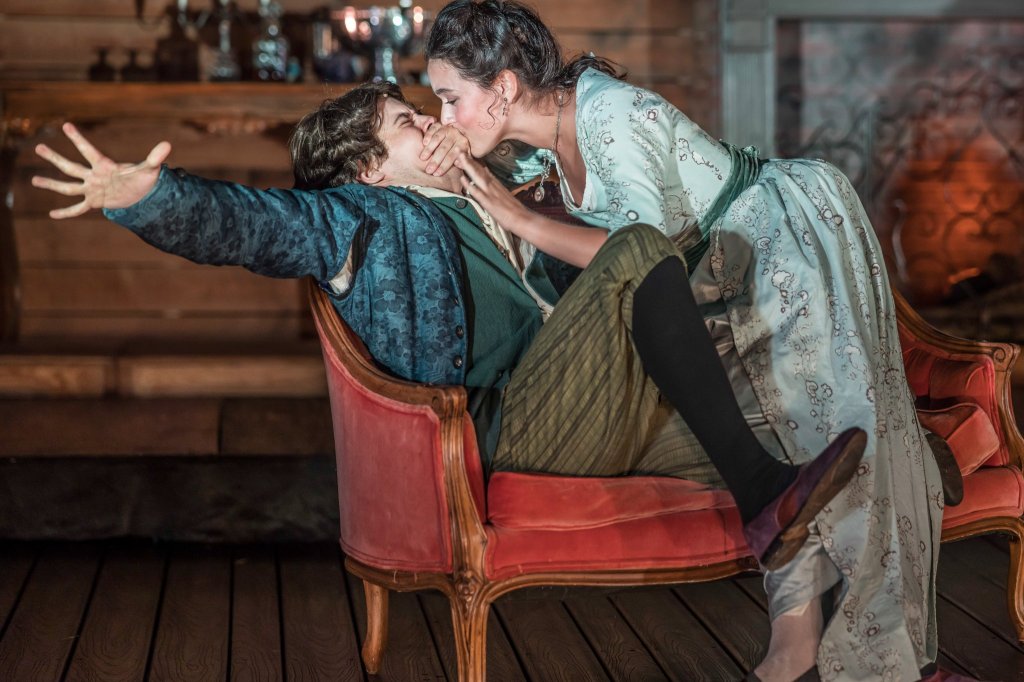
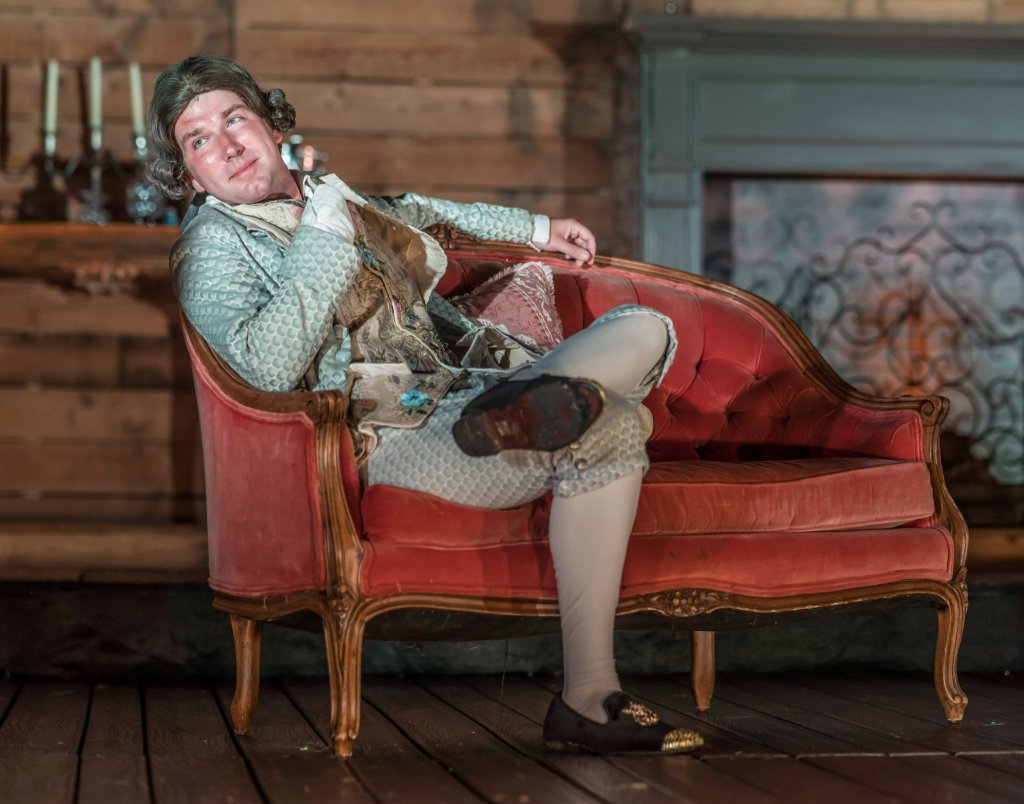
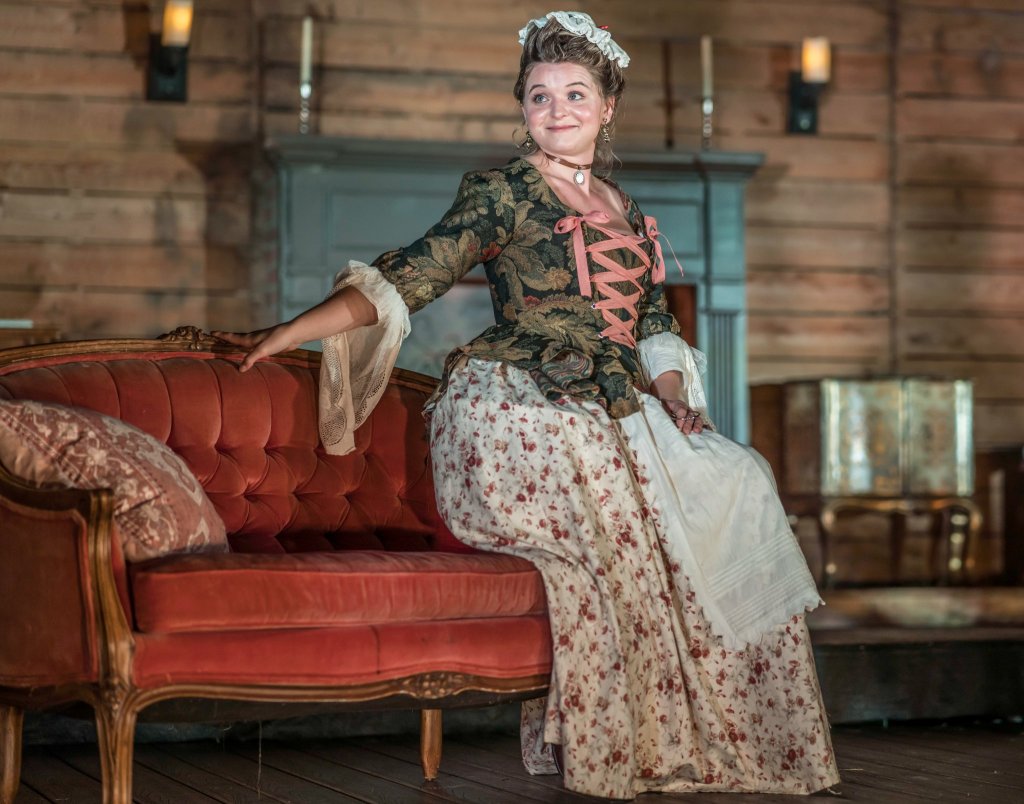
The plot is a familiar one – two affluent families, the Hardcastles and the Marlows, arrange to introduce their children, Kate and Charles, with an end goal of marriage. But Kate’s spoiled, immature older half-brother Tony Lumpkin sees this as an excellent opportunity to wreak havoc of monumental proportions. Tony likes to hang out with the masses at the local pub – at one point Mr. Hardcastle say of him, disparagingly, “the only school he’ll ever go to is the ale house.” And that is precisely where he is when he intercepts his sister’s would-be suitor and his traveling companion – at the local pub – as they search for the remotely-located country home of the Hardcastle family. Tony convinces Charles that the Hardcastle estate is an inn. There ensues a “comedy of errors,” and one fascinating result is that young Charles Marlow, who has been described as educated and shy, imperiously treats his unsuspecting hosts as servants, displaying a side Kate was not expecting. Kate, however, has her own agenda, and disguises herself as a barmaid to further explore the character of her would-be suitor.

Like any good sitcom, there are subplots and counter-plots to the main theme. These include a secret love-affair between Kate’s cousin Constance and young Marlow’s friend George Hastings, Mrs. Marlow’s attempts to hide an inheritance, and Tony’s attempts to avoid an arranged marriage of his own. This simplified synopsis does not do justice to the live production. She Stoops to Conquer is neither trite nor stereotypical. Supporting characters are as interesting as leading characters – establishing a sort of social equality that was far ahead of its time.

Debra Wagoner was delightful in the role of Mrs. Hardcastle, the master (or mistress) of much of the seemingly unintended humor. In one of the latter scenes, she gets her comeuppance when her own son (Josh Mullins as Tony Lumpkin) tricks her into thinking she is lost in the wilderness. Mark Persinger as her husband, proved to be a stark contrast to Wagoner’s character and brought his own unique style of humor. Hardcastle, you see, is decidedly old-fashioned, stuck in the past and despises anything modern, while his wife (a social climber) and daughter (a sensible young woman with a mind of her own) yearn for modern fashions and are attracted by the lure of the city. Wagoner proved to be a capable antagonist, while Katy Feldhahn (Kate) was more than capable of conquering.

Josh Mullins, as Mrs. Hardcastle’s spoiled son, happily wreaked havoc at every turn. Calie Bain as Kate and Tony’s cousin (and Tony’s reluctant intended) Constance Neville was solid and dependable in a somewhat predictable and unremarkable role while Ian Page played his role close to the edge and over the top as the socially challenged Young Marlow.

That being said, She Stoops to Conquer was a delightful summer divertissement, comedically ahead of its time, pleasant and fairly well-paced, with direction by James Ricks. It just wasn’t my cup of tea, but I would certainly give it a second chance in the future.
NOTE: Unfortunately, this summer’s Shakespeare Festival took the brunt of the summer storms. Both productions at Agecroft Hall were plagued by cancellations due to weather, and, alas, the closing production of She Stoops to Conquer was no exception.
She Stoops to Conquer

By Oliver Goldsmith

Directed by James Ricks

Cast

Mrs. Hardcastle……………  Debra Wagoner

Mr. Hardcastle ……………   Mark Persinger

Tony Lumpkin ……………   Josh Mullins

Kate Hardcastle ..…………   Katy Feldhahn

Constance Neville…………   Calie Bain

Young Marlow….…………   Ian Page

George Hastings.…………    William Cardozo

Sir Charles/Landlord ……  John Cauthen

Pimple/Betty ………………..   Els Dusek

Diggory/Fellow ..…………    Alex Chapman

Roger/Jeremy .……….……    Audrey Sparrow

Production Team

Director:  James Ricks

Stage Manager: Nata Moriconi

Costume Designer: Cora Delbridge

Lighting Designer: Andrew Bonniwell

Props Designer: Emily Hicks

Music Director: Jason Marks

Choreographer: Nicole Morris-Anastasi

Dialect Coach: Harrison Runion

Assistant Stage Manager: Hope Jewell

Stage Construction: Kevin Johnson

Production Manager: James  Ricks

Run Time: About 2 ½ hours with one intermission

Julinda D. Lewis is a dancer, teacher, and writer who was born in Brooklyn, NY and now lives in Eastern Henrico County.

———-

Photo Credits: David Parrish Photography