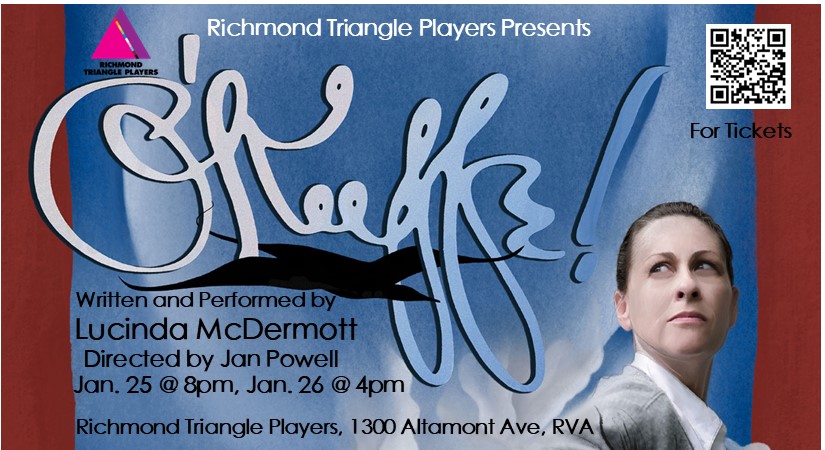
O’KEEFFE!

A One-Woman Show About Art, Life, and Love

Written and Performed By: Lucinda McDermott

At: Richmond Triangle Players at the Robert B. Moss Theatre, 1300 Altamont Avenue,  RVA 23220

Performances: January 25 & 26, 2025

Ticket Prices: $45

Info: (804) 346-8113 or rtriangle.org

A Theater Reflection by Julinda D. Lewis

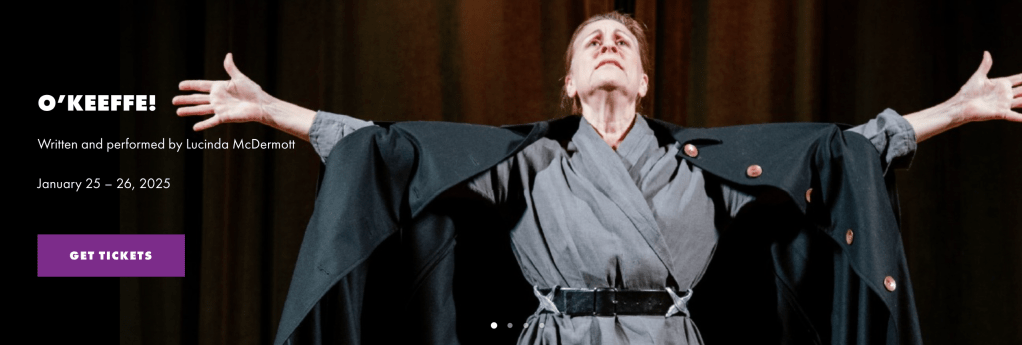
In this mesmerizing one-woman show about the American artist Georgie O’Keeffe, Lucinda McDermott, who both wrote and stars in the play, stated early on, “I will not be mediocre.” That simple statement was a battle cry that foreshadowed what we know of the life of the artist, O’Keeffe. It was a statement first of faith and in retrospect of fact, about the work of playwright and actor Lucinda McDermott.

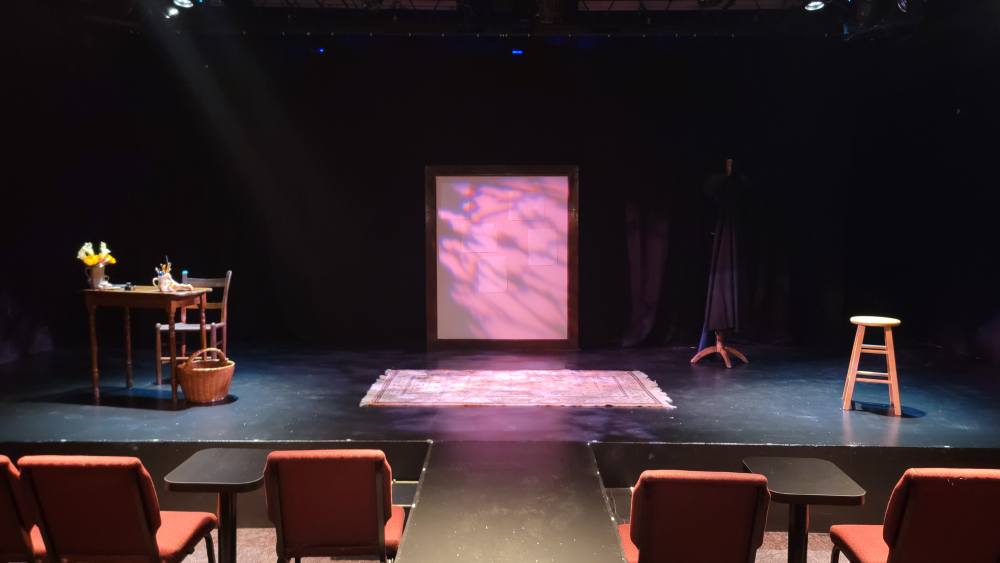
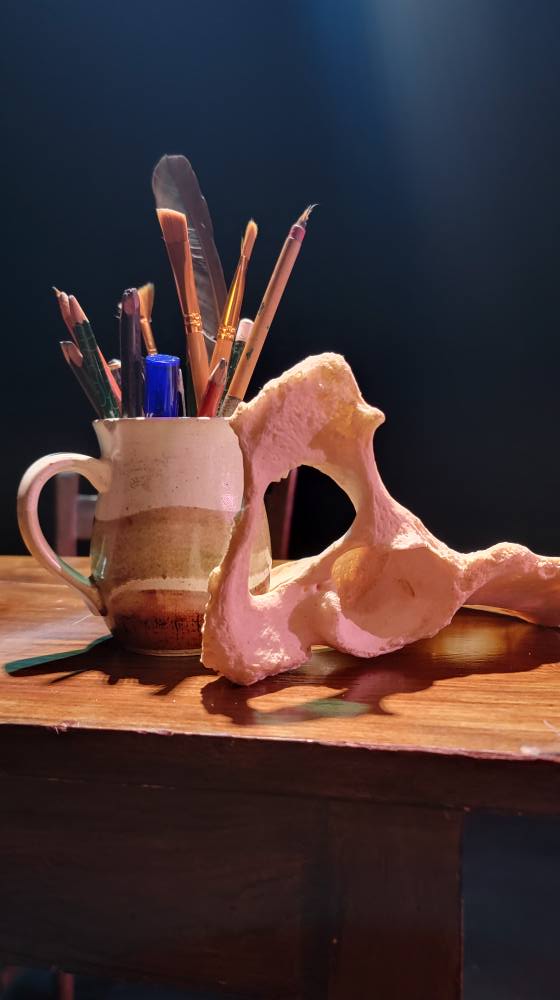
More than a biography, better than a documentary, O’Keeffe briefly immerses the audience into the world that created Georgia O’Keeffe. On a simply dressed stage – just a small desk, a chair, a basket on our left, a coat rack on our right, and a gigantic framed blank canvas upstage center – McDermott reveals her subject with reverence, humor, and love. To borrow a line from the script, McDermott “fills the space in a beautiful way.”

I imagine those who came as fans of the artist left affirmed and those who came as blank slates left with the satisfaction of having filled a void they didn’t know they had. O’Keeffe explores the things that inspired O’Keeffe as well as the challenges faced by a woman artist existing in a man’s world, more specifically as a woman artist living in the shadow of a well known and successful man – a renowned photographer more than 20 years her senior who also managed her career. The play dares explore the question, did Alfred Stieglitz exploit, manipulate, or otherwise (re-)direct the course of O’Keeffe’s life?

There is no doubt a popular, powerful, older male mentor can open doors closed to other women. And although McDermott did not dwell on it, there was mention of how he would not allow her to have children, her lengthy, life-affirming retreat to New Mexico, and even allusions to her affair with a mutual friend, the Harlem Renaissance writer, Jean Toomer and his long-term affair with arts patron Dorothy Norman. Yet this is a love story, and their marriage lasted in some form for 30 years.

“It’s an unpleasant sensation, squeezing the life out of someone; you won’t like what’s left.”

McDermott’s storytelling skills are immersive all on their own, yet in and as O’Keeffe, she takes it to another level. At one point, as an example, McDermott asked the audience to close our eyes to listen to music (the sound design was the work of her own real-life husband, Jonathan Piro) and then she asked three people to describe what they had seen in their mind’s eye.

McDermott commands the stage for about two hours, not so much playing the role O’Keeffe, as embodying the spirit of the artist, with time for one intermission, and not one minute of her stage time is dull or wasted. O’Keeffe resurrects the artist and allows her – not McDermott, but O’Keeffe – to lead us on an amazing journey of discovery: it is art process; it is love story; it is the heart of an artist, taken out, bared, and entrusted to a group of people who may have entered as strangers but who left as co-conspirators, a group unified by a common experience who cradled it, acknowledged its strengths and admired its cracks, and returned it to its owner so it could be shared again and again…and again.

NOTE: To answer a question raised – by McDermott? by O’Keeffe? – why do critics get paid for their opinions and the rest of us don’t? It’s combat pay, needed to buy bandages for the wounds from the darts and daggers others tossed at those who dared to defy social conventions and express an opinion, whether popular or not. And I make a distinction, in these days of social media, between the professional reviewer or academic critic and those who use and abuse social media for the sole purpose of inflicting harm on others for no other reason, apparently, than for sport. But that’s a whole other discussion.

———-

Julinda D. Lewis is a dancer, minister of dance, teacher, and writer who was born in Brooklyn, NY and currently resides in Eastern Henrico County. When not writing about theater, she teaches dance history at VCU and low impact dance fitness classes to seasoned movers like herself and occasionally performs.

———-

O’KEEFFE

Written & Performed by Lucinda McDermott

Directed by Dr. Jan Powell

Cast

Lucinda McDermott as Georgia O’Keeffe

Creative Team

  Playwright/Actor/Producer:Lucinda McDermott
                                      Director:Jan Powell
Sound Design/Co-Producer:Jonathan Piro
                     Costume Design:Elizabeth Weiss Hopper
                       Lighting Design:Andrea Stratton
Master Electrician:Gabriel Beard

Performance Schedule

Saturday, January 25, 2025           8:00PM

Sunday, January 26, 2025              4:00PM         

Tickets

Ticket Prices: $45

Run Time

Approximately 2 hours, including one intermission

Photos N/A [from Lucinda McDermott’s Facebook page]
One-Time
Monthly
Yearly

Make a one-time donation to show your support of rvart review

Make a monthly donation

Make a yearly donation

Choose an amount, any amount, large or small, will be appreciated.

$5.00
$15.00
$100.00
$5.00
$15.00
$100.00
$5.00
$15.00
$100.00

Or enter a custom amount

$

Your contribution is appreciated. Thank you!

Your contribution is appreciated.

Your contribution is appreciated.

DonateDonate monthlyDonate yearly
ZERO HOUR

VaRep-JCC Partnership

A Theater Review

Produced By: Virginia Rep in partnership with the Weinstein JCC Jewish Family Theatre

At: Theatre Gym, in the November Theatre complex, 114 W. Broad St., RVA 23220

Performances: March 15-April 7, 2024

Ticket Prices: $40

Info: (804) 390-3390; http://www.virginiarep.org

This is a rare (for me) re-review. I first saw this production of Zero Hour at the Weinstein Jewish Community Center nearly a year ago (“Jason Marks is Zero Mostel, RVArt Review, April 6, 2023, https://jdldancesrva.com/2023/04/06/jason-marks-is-zero-mostel/). But, humor me. Don’t read or re-read that review until after you read this one, and I’ll do the same. I won’t go back and re-read that first review until I finish writing this one.

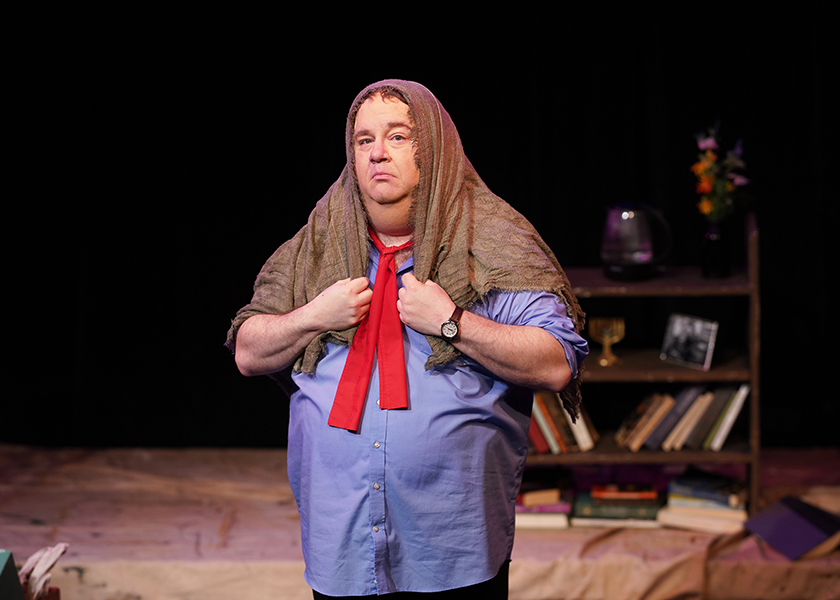
With this VaRep partnership, while the location is different, Debra Clinton is still the director, and Jason Marks is still Zero Mostel. This time, the story and the script were familiar, but the production was just as fresh and vital as it had been the first time. This did not feel like a re-run; Mostel was such a complex and dynamic person that there was still much to learn that I had missed the first time, or that I saw with new eyes after the passage of time – and world events.

Jason Marks dives so deeply into the character that it is easy to forget he is an actor – we are spending an evening with Zero Mostel. Samuel Joel “Zero” Mostel was born February 28, 1915 (my birthday, but 4 decades before me) in Brooklyn, NY (as was I).

As a comedian, Mostel rose in stature to become a headliner at New York’s Café Society, a popular night spot and as an actor, Mostel specialized in comic roles: he was, perhaps, best known for his portrayal of Tevya in Fiddler on the Roof on Broadway.

Somewhere along the way, during the presidency of Harry S. Truman, the USA became embroiled in blacklisting activities. After World War II, the USA and Russia became involved in a “Cold War,” and  People – particularly actors and other creatives – who were suspected of being members of or sympathizing with the Communist Party –  were brought before the House Un-American Activities Committee (HUAC) where they were questioned and expected to name names. Many citizens were tried, and many actors were blacklisted or prevented from working in film, television, or on stage. Mostel (or maybe I should say the playwright, Jim Brochu) mentions a few well-known names who were caught up in this wide-ranging net, including the renowned choreographer Jerome Robbins and the comedian and actress Lucille Ball, TV star Phil Silvers, screen writer Ring Lardner, Jr., and screen writer Martin Berkeley who is described in Zero Hour as “the Babe Ruth of stool pigeons.”

Other victims of the Red Scare: Orson Wells, Burgess Meredith (credited, in the script, with the line, “hold onto your tits, it’s Zero Hour!”), Arthur Miller, Charlie Chaplin, Lena Horne, Langston Hughes, Pete Seeger, Gypsy Rose Lee, Artie Shaw, Dashiell Hammett, and the list goes on and on and on…

There are many memorable moments in Zero Hour, both dramatic and historic. The one-hander paints a vivid picture of Mostel’s journey “from blacklist to White House in 10 years.” We learn of Mostel’s tumultuous love affair with his second wife, Kate. A former Radio City Music Hall Rockette, Mostel’s Orthodox Jewish parents did not accept Kate because she wasn’t Jewish, and his parents never met Kate or their two grandchildren.

Then there’s the horrible bus accident in 1960 that nearly ended his life as well as his career, leaving him crippled and in pain. But he stubbornly avoided amputation, and went on to star in Waiting for Godot, Rhinoceros, and the Broadway musical, A Funny Thing Happened on the Way to the Forum. Marks shares all of this and more with a wild and vivid mixture of humor, sarcasm, and melodrama while his character is being interviewed by an invisible rookie reporter. “Why do I call you putz?” Mostel asks the report early in the interview, “because I don’t know your name!”

Mostel warms up to his interview as we warm up to him. The interview takes place in Mostel’s West 28th Street painter’s loft. In addition to being a prolific and popular performer, Mostel was also a visual artist whose abstract paintings have been sold at auction and displayed in galleries and museums. My notes from the show list 5,000 paintings, 15 Broadway shows, and 25 movies.

Zero Hour is an engaging tour de force that is equally entertaining and educational. And now, I feel, is the time to go back and read what I said about Zero Hour the first time I saw it:

Zero Hour is one of the funniest shows I’ve ever seen and it appears to have been a perfect vehicle for Jason Marks.” – Yes, I still hold this opinion!

Zero Hour is a skillful balance of biography and entertainment. For those unfamiliar with Zero Mostel, it is informative, and for those who were already fans, it might reveal a few unknown nuggets.” – Again, I second that first impression.

“All of this, and more, is lovingly and capably captured by Marks under the director of Debra Clinton. Clinton, in the Director’s notes, paid homage to Mostel’s individuality – his commitment to standing up for what he believed even to the detriment of his career – “his honesty, passion, and empathy.” – ditto

And finally, I often find it weird to read things I’ve written previously, but this holds true. That’s my story and I’m sticking to it: Sometimes it was hard to tell where Marks ended and Mostel began. I am sure playwright Jim Brochu who originally starred in his own play, would approve of Marks’ interpretation.” There are a FEW opportunities remaining to see this production of Zero Hour. I suggest you go see it. You won’t be sorry.

———-

Julinda D. Lewis is a dancer, teacher, and writer who was born in Brooklyn, NY and now lives in Eastern Henrico County. When not writing about theater, she teaches dance history at VCU and low impact dance fitness classes to seasoned movers like herself, and occasionally performs.

———-

ZERO MOSTEL

Written by Jim Brochu

Directed by Debra Clinton

Cast List

Zero Mostel – Jason Marks

Direction & Design

Direction – Debra Clinton

Set & Lighting Design = Todd Schall-Vess

Wig Design = Kevin S. Foster II

Stage Management – Hayley Tsutsumi

Zero Hour runs March 15 – April 7, 2024

at the Theatre Gym at the November Theatre, 114 W. Broad Street, Richmond, VA 23220

Run Time

The play is presented in two 45-minute acts with one 15 minute intermission

Tickets

Box Office: (804) 282-2620

Information: http://www.virginiarep.org

Full Price Tickets: $40.00

Discounted Group Rates available

Show Photography by Jay Paul

One-Time
Monthly
Yearly

Make a donation if you like what you read here
rvart review is independently produced and received no outside funding or advertising revenue

Make a monthly donation

Make a yearly donation

Choose an amount

$5.00
$15.00
$100.00
$5.00
$15.00
$100.00
$5.00
$15.00
$100.00

Or enter a custom amount

$

Your contribution is appreciated.

Your contribution is appreciated.

Your contribution is appreciated.

DonateDonate monthlyDonate yearly
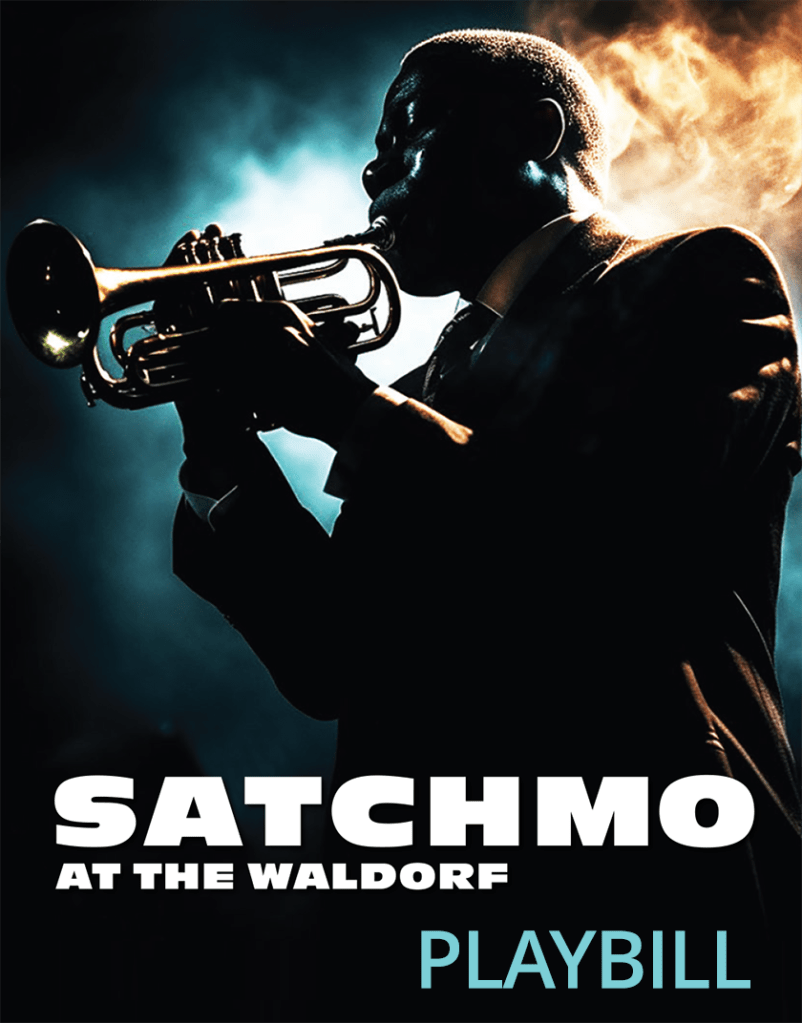
SATCHMO AT THE WALDORF

“I Smile for the People ‘Cause I Like to See Them Smiling Back”

and I Think to Myself, What a  Wonderful World*

A Theater Review by Julinda D. Lewis

By: Virginia Repertory Theatre (Virginia Rep)

At: The Sara Belle and Neil November Theatre | Marjorie Arenstein Stage

When: March 1 – April 7, 2024

Ticket Prices: $39-$59.

Info: (804) 282-2620 or www.virginiarep.org

I see trees of green
Red roses too
I see them bloom
For me and you
And I think to myself
What a wonderful world

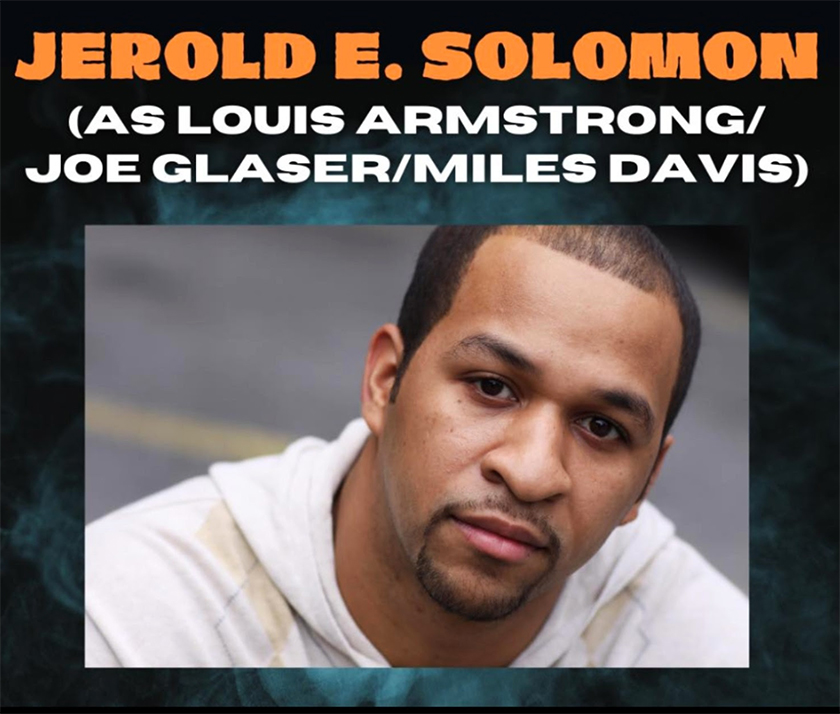
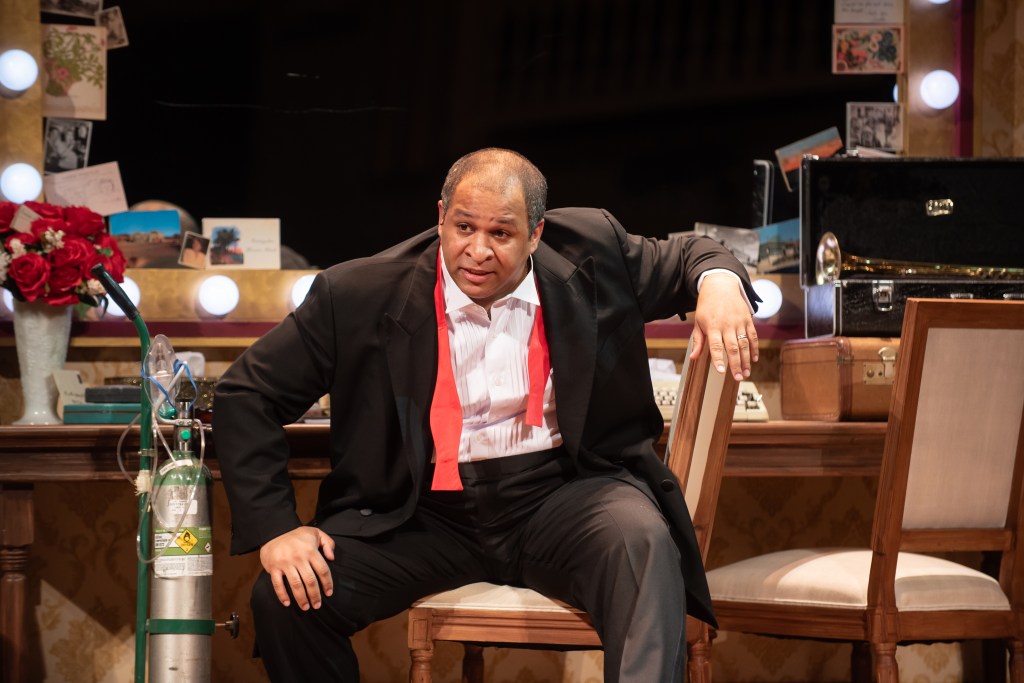
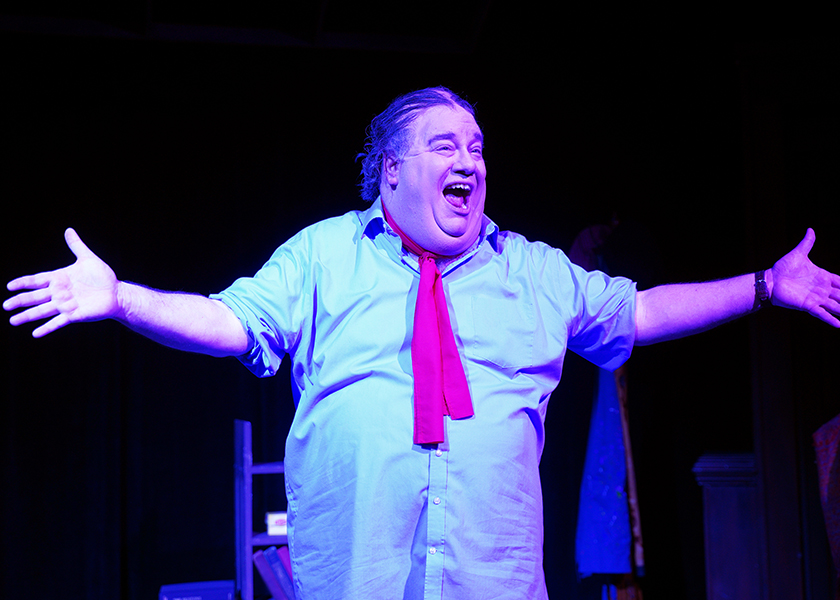
American trumpeter, vocalist, and jazz innovator Louis Armstrong died in New York City, July 6, 1971 at age 69 of a heart attack. Terry Teachout’s one-man play, SATCHMO AT THE WALDORF (2012),is a work of historical fiction set in a comfortably appointed dressing room at the Waldorf Astoria’s Empire Room a few months before Armstrong’s death. The VaRep production features Jerold E. Solomon, who catches us off-guard in the first 30 seconds of the play by (a) stumbling into the dressing room and heading straight for an oxygen tank, (b) speaking in an amazingly accurate approximation of Armstrong’s gravelly voice, and (c) immediately announcing, “I shit my pants.”

Although it is a work of fiction, SATCHMO AT THE WALDORF has so much historical truth that it is an educational experience. We learn of Armstrong’s four wives and how he finally got it right with his fourth wife, Lucille – the first dark-skinned Black woman hired by Harlem’s Cotton Club. We share the outrage when he talks about traveling in the south during the era of Jim Crow segregation when even internationally known starts like Armstrong could not stay in a hotel or eat in a restaurant. We hear about Armstrong’s long-tern symbiotic relationship with his manager, Joe Glaser, and the heartache the followed when all Glaser left him on his death – his best friend and client/business partner – was a “tip.” There was a time spent working for the notorious crime boss Al Capone. He had beef with jazz trumpeter and bandleader Dizzie Gillespie and unpleasant rivalry with the influential jazz trumpeter and bandleader Miles Davis, who called him an Uncle Tom. We learn of Armstrong’s wide-ranging and eclectic interest in multiple music genres, including classical, opera, and country.

I see skies of blue
And clouds of white
The bright blessed day
The dark sacred night
And I think to myself
What a wonderful world

Solomon arrives onstage carrying a trumpet, which he immediately places in its case. He does not attempt to play or portray trumpet playing, nor does he sing, although he does toss off a little scatting. Solomon’s depiction of Armstrong’s voice is unwavering and I kept wondering if it was painful. But wait, that’s not all. When portraying Glaser, Solomon seamlessly shifts to a stereotypical New York Jewish accent without missing a beat. The portrayals of the outspoken Davis are less outstanding – although I think the reason lies less with Solomon than with the script. For someone known to be so outspoken and independent, Davis is written as a flat, uni-dimensional.

The colors of the rainbow
So pretty in the sky
Are also on the faces
Of people going by
I see friends shaking hands
Saying, “How do you do?”
They’re really saying
I love you

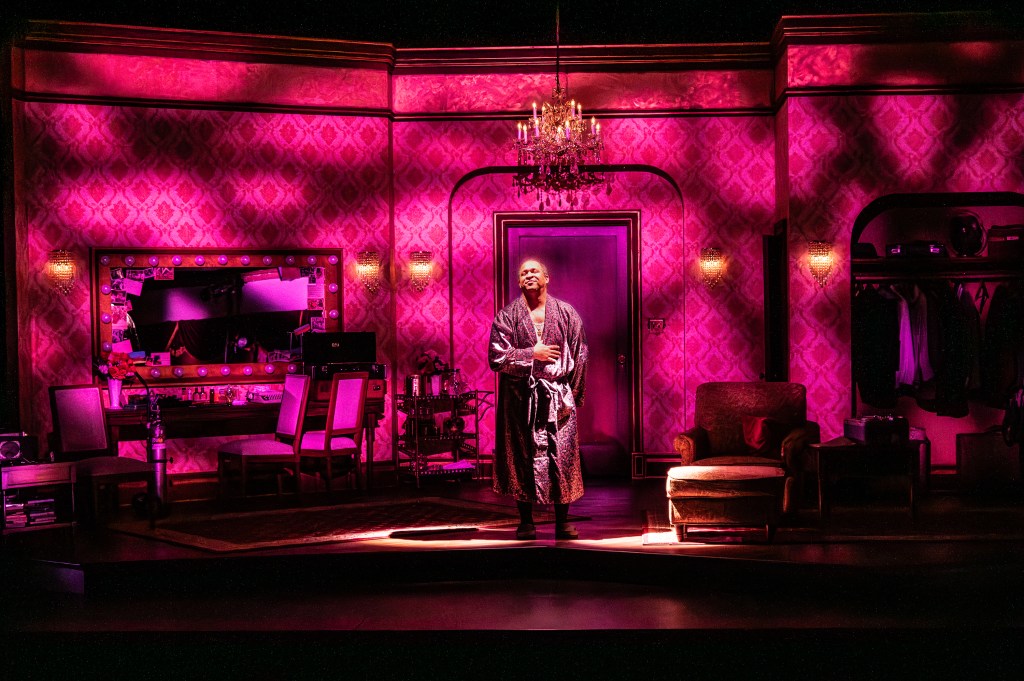
Mercedes Schaum’s set is sturdy and well appointed with a makeup area, a lounge area, two carpets, a wardrobe, an offstage bathroom and all the amenities one would expect from an exclusive venue located in a five-star hotel. Joe Doran’s lighting is mostly non-descript, but occasionally reaches for some noteworthy effects. I was surprised by the short audience on a Saturday night, the second night of the run. I’m not sure if this was due to a lack of interest in the subject matter or to the political activity occurring in the nearby downtown area, or to the 7PM curtain, or the fact that this play is a one-hander (rare for a VaRep mainstage production), or a combination of factors. Granted, Louis Armstrong may not be everyone’s cup of tea, and – as I found out shortly after the show – not everyone knows that Satchmo, a contraction of Satchel Mouth, was one Armstrong’s nicknames.

I hear babies cry
I watch them grow
They’ll learn much more
Than I’ll ever know
And I think to myself
What a wonderful world
Yes, I think to myself
What a wonderful world
Ooh, yes

I, for one, thoroughly enjoyed Solomon’s performance and the impromptu history lesson of Satchmo at the Waldorf – it appealed to my artsy side and my nerdy side. What a wonderful combination.

———-

Julinda D. Lewis is a dancer, teacher, and writer who recently had both knees replaced due to a manufacturer’s recall. Born in Brooklyn, NY, she now lives in Eastern Henrico County where she can be found kicking up her heels as best she can any day of the week.

———-

SATCHMO AT THE WALDORF

Written by Terry Teachout

Directed by Rick Hammerly

Cast

Louis Armstrong/Joe Glaser/Miles Davis             ……….         Jerold E. Solomon

u/s Louis Armstrong/Joe Glaser/Miles Davis ……….       David Watkins

Direction & Design

Direction ………………………….             Rick Hammerly

Scenic Design ……………………             Mercedes Schaum

Costume Design …………………             Sue Griffin

Lighting Design …………..………            Joe Doran

Sound Design ……………………..           Jonathan Pratt

Stage Management ………….…..          Donna Warfield

Ticket Information

Box Office: (804) 282-2620

www.virginiarep.org

Tickets range from $39 – $59

Run Time

The play runs for approximately 95 minutes; there is no intermission.

Lyrics to “It’s a Wonderful World”

Source: LyricFind

Songwriters: George David Weiss & Robert Thiele

“What a Wonderful World” lyrics © BMG Rights Management, Concord Music Publishing LLC

Photo Credits: Aaron Sutten

One-Time
Monthly
Yearly

Make a donation
TO SUPPORT rvaRT rEVIEW

Make a monthly donation

Make a yearly donation

Choose an amount

$5.00
$15.00
$100.00
$5.00
$15.00
$100.00
$5.00
$15.00
$100.00

Or enter a custom amount

$

Your contribution is appreciated.

Your contribution is appreciated.

Your contribution is appreciated.

DonateDonate monthlyDonate yearly
JASON MARKS IS ZERO MOSTEL

The Third Choice: Comedy Fueled by Real Life

A Theater Review by Julinda D. Lewis

A Jewish Family Theatre Presentation

At: The Sarah Bell November Theatre at the Weinstein JCC, 5403 Monument Ave., RVA 23226

Performances: March 29 – April 2, 2023

Ticket Prices: $20 for JCC Members; $25 for non-members

Info: (804) 285-6500 or https://weinsteinjcc.org/programs/arts-and-ideas/zero-hour/

First, some housekeeping. Well…acknowledgements. And…maybe a confession. I have been viewing and writing about dance and theater in RVA for more than 25 years, but this is the first time I have seen a show at the Weinstein JCC. It’s not that I haven’t know about shows there, or been invited, I just never seemed to have found the time to fit it into my schedule. Jason Marks sent me a DM about this show, which opened while I was out of town for a performing residency, and I somehow found myself driving straight from a DC dance space directly to the Firehouse Theatre on a Friday night, then to the JCC on Saturday after spending the morning in rehearsal and the afternoon at the Nature Center celebrating my youngest grandchild’s first birthday, and ending the weekend at Atlee High School for the final performance of a CAT show. That’s how “retired” people roll.

Second – and last – I appreciate growing up in Brooklyn and attending the Bronx High School of Science. That background made many of the Zero Hour’s references familiar and the humor genuine – unforced and abundant. So I could sum up right here and just say that Zero Hour is one of the funniest shows I’ve ever seen and it appears to have been a perfect vehicle for Jason Marks. But I won’t – sum up just now – because that wouldn’t be fair or fun.

Zero Hour is a skillful balance of biography and entertainment. For those unfamiliar with Zero Mostel, it is informative, and for those who were already fans, it might reveal a few unknown nuggets. Mostel (who, like me, was born in Brooklyn and also shares my birthday, February 28) was active at a time when the US was obsessed with the Red Plague or Red Scare, when McCarthyism (which took its name from US Senator Joseph McCarthy) insinuated that the government and Hollywood, among other industries, were being infiltrated by the dreaded specter of Communism. Numerous investigations were directed at the film industry leading to the blacklisting of industry professionals – including Zero Mostel.

The freedom of any society varies proportionately with the volume of its laughter. – Zero Mostel

The heart is, truly, the source of love. The proof is that if you remove it from someone, they will almost certainly never love again. – Zero Mostel

An unfortunate encounter with a NYC bus in 1960 nearly cost him a leg. The leg was saved, but he lived the rest of his life in pain. But on the bright side, the accident saved him from having to perform in a reportedly bad play, The Good Soup. But there were plenty of memorable roles on his resume, from Tevya in the original Broadway production of Fiddler on the Roof to Pseudolos in A Funny Thing Happened on the Way to the Forum, from classics like Ionesco’s Rhinoceros to special appearances on The Electric Show, Sesame Street, and The Muppet Show.

There are several explanations for how Samuel Joel Mostel came to be known as Zero. One is that his mother coined the nickname because of his poor grades in school – but one bio notes that he was a “A” student. Another explanation is that a press agent once said of him, “Here’s a guy starting from nothing.”

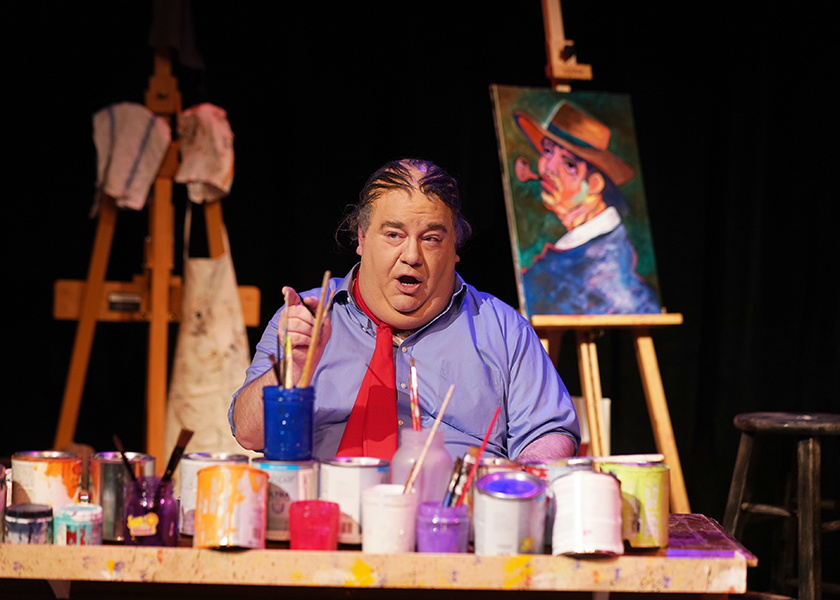
Known widely as an actor and singer as well as a comedian, Mostel developed a talent for painting and drawing from childhood. He took art classes provided by a community program that served Jewish immigrants and their children, and later attended City College of New York and then enrolled in a master’s program in art at New York University (which also happens to be my alma mater). Zero Hour is set in Mostel’s NYC art studio, just two months before the end of his life, on a day when he is being interviewed by a New York Times journalist – whom Mostel contentiously greets by calling him a putz (idiot; jerk) because “I don’t know your name.” BTW, Mostel didn’t care to learn the reporter’s name until near the end of the play, because “I don’t want to know your name; this is an interview, not a relationship.

“That’s it, baby, when you’ve got it, flaunt it! Flaunt it!” – Max Bialystock, played by Zero Mostel in the 1967 movie, “The Producers”

From House Un-American Activities Committee (HUAC) hearings to his mother’s displeasure at his Catholic shiksa (gentile) wife, from his dislike of choreographer/director Jerome Robbins to often being not the first or even second but the third choice for roles he made legendary, from being blacklisted to being invited to the LBJ White House where “the thought of having to eat with Texans was too much!”), all of this, and more, is lovingly and capably captured by Marks under the director of Debra Clinton. Clinton, in the Director’s notes, paid homage to Mostel’s individuality – his commitment to standing up for what he believed even to the detriment of his career – “his honesty, passion, and empathy.” Given the larger-than-life persona of Mostel, perhaps it should come as no surprise that the reporter is a disembodied and oddly reticent character, given his profession; we never actually see him or hear him. The HUAC investigator, however, is voiced by Roger Price. It probably would not have mattered how much or how little the reporter talked, there wasn’t a dull moment with Mostel’s explosive personality. Sometimes it was hard to tell where Marks ended and Mostel began. I am sure playwright Jim Brochu who originally starred in his own play, would approve of Marks’ interpretation.

“It’s not about absurdity, it’s about conformity.” – Zero Mostel

———-

Julinda D. Lewis is a dancer, teacher, and writer who was born in Brooklyn, NY and now lives in Eastern Henrico County.

———-

ZERO HOUR

By Jim Brochu

Starring Jason Marks as Zero Mostel

Directed by Debra Clinton

Production Team:

Set and Lighting Design + Photos: Todd Schall-Vess

Production Stage Management: Hayley Tsutsumi

Performance Schedule:

March 29: 7:30PM

March 30: 7:30PM

April 1: 8:30PM

April 2: 2:00 PM

Run time: approximately 2 hours, with one intermission

Photos by Todd Schall-Vess

One-Time
Monthly
Yearly

Your donation of any size
makes a difference!

Make a monthly donation

Make a yearly donation

Choose an amount

¤5.00
¤15.00
¤100.00
¤5.00
¤15.00
¤100.00
¤5.00
¤15.00
¤100.00

Or enter a custom amount

¤

Your contribution is appreciated.

Your contribution is appreciated.

Your contribution is appreciated.

DonateDonate monthlyDonate yearly