MURDER ON THE ORIENT EXPRESS 

A Theater Review by Julinda D. Lewis 

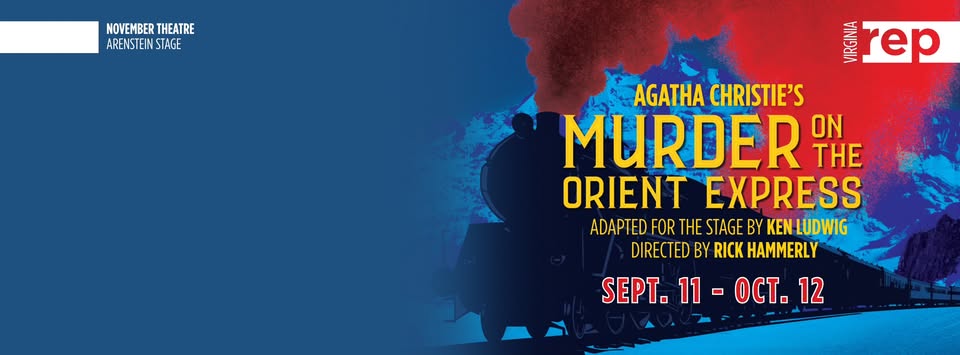
By: Virginia Repertory Theatre (Virginia Rep) 

At: the November Theatre Arenstein Stage, 114 West Broad St, Richmond VA 23220 

When: September 11 – October 12, 2025 

Ticket Prices: $35-$62   

Info: (804) 282-2620 or www.virginiarep.org 

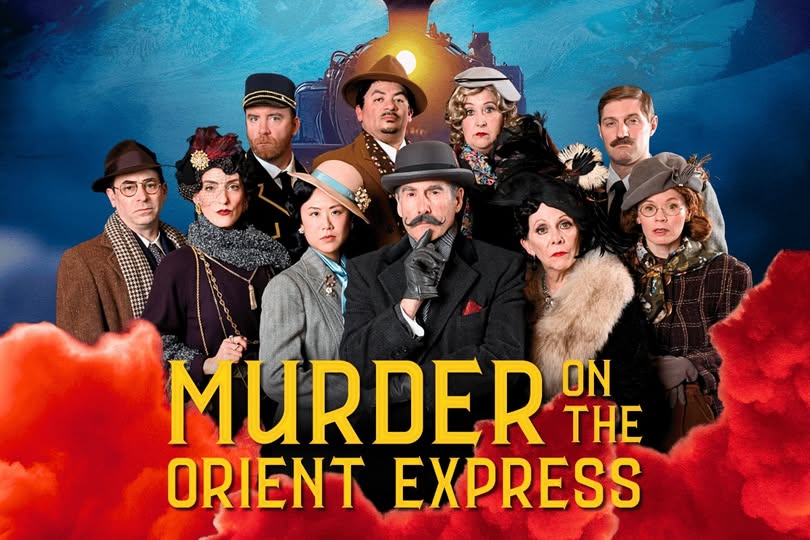
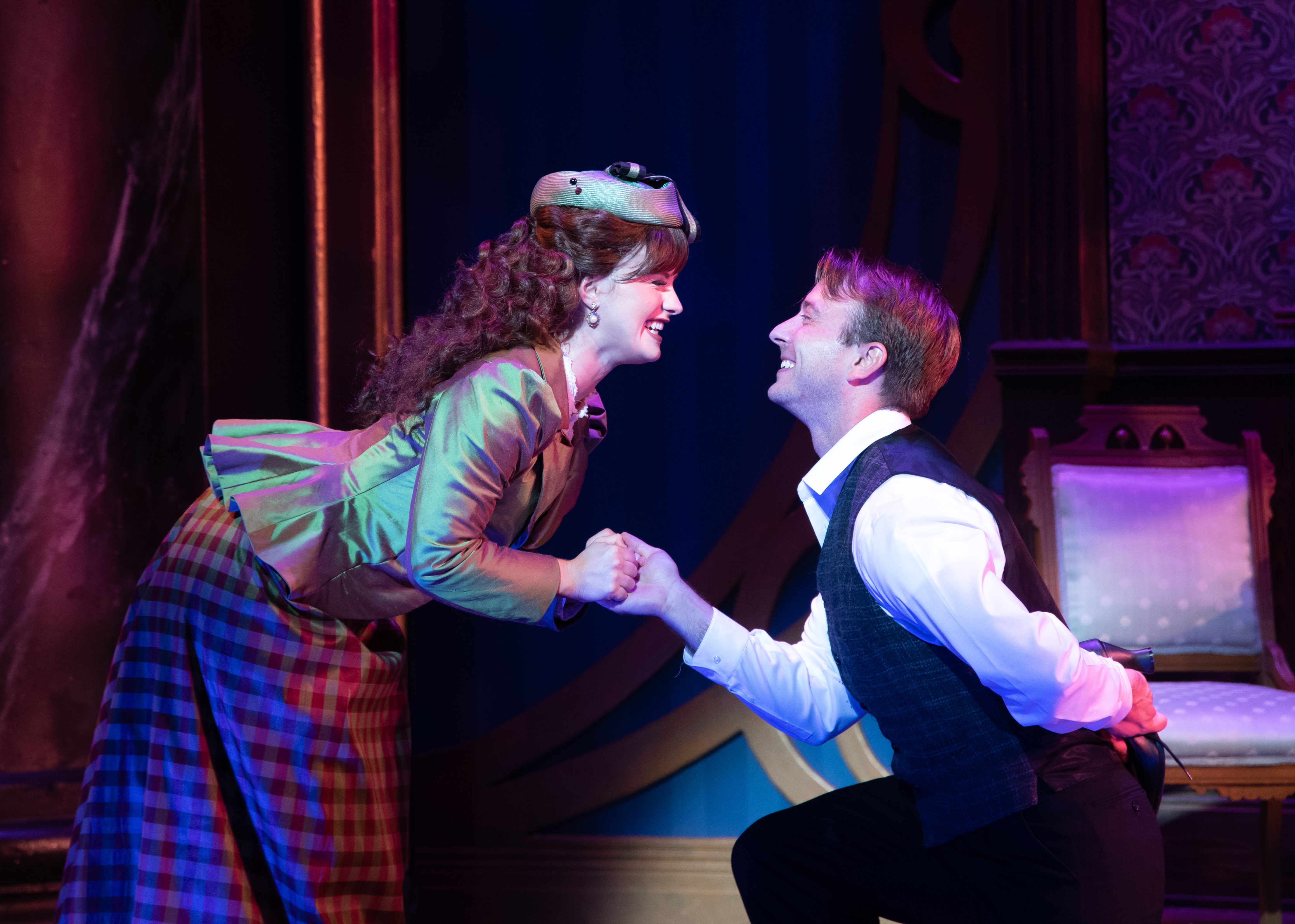
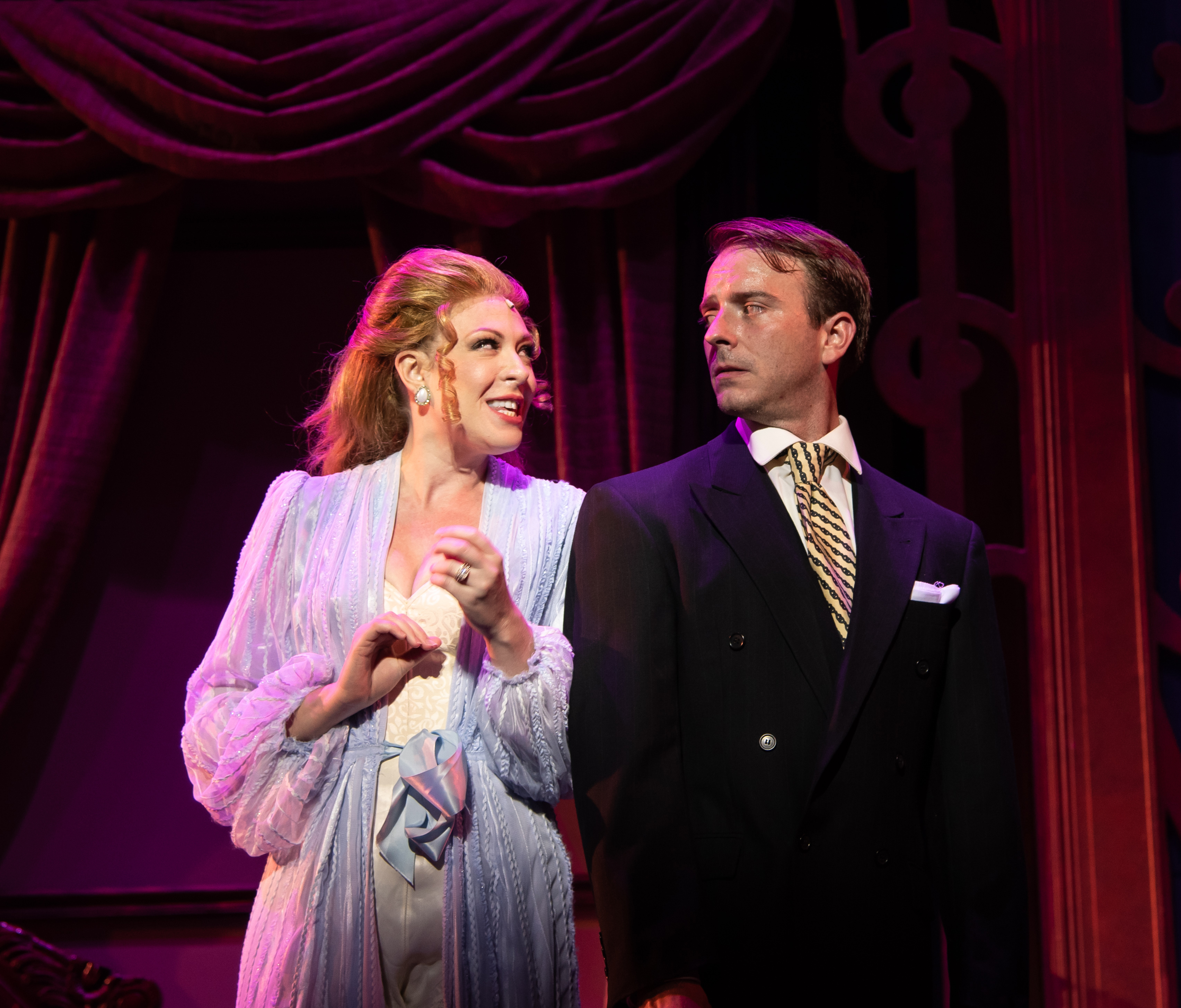
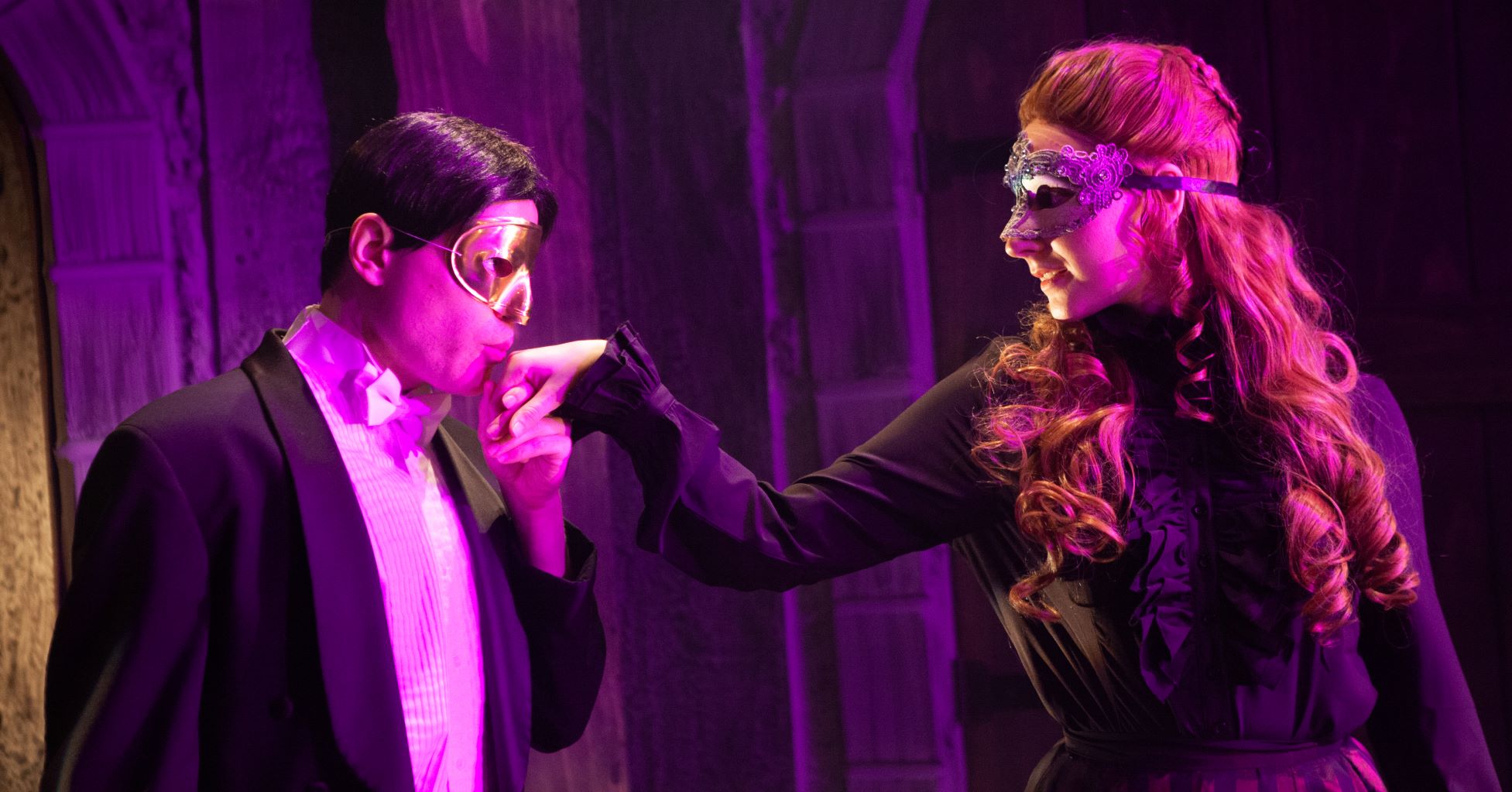
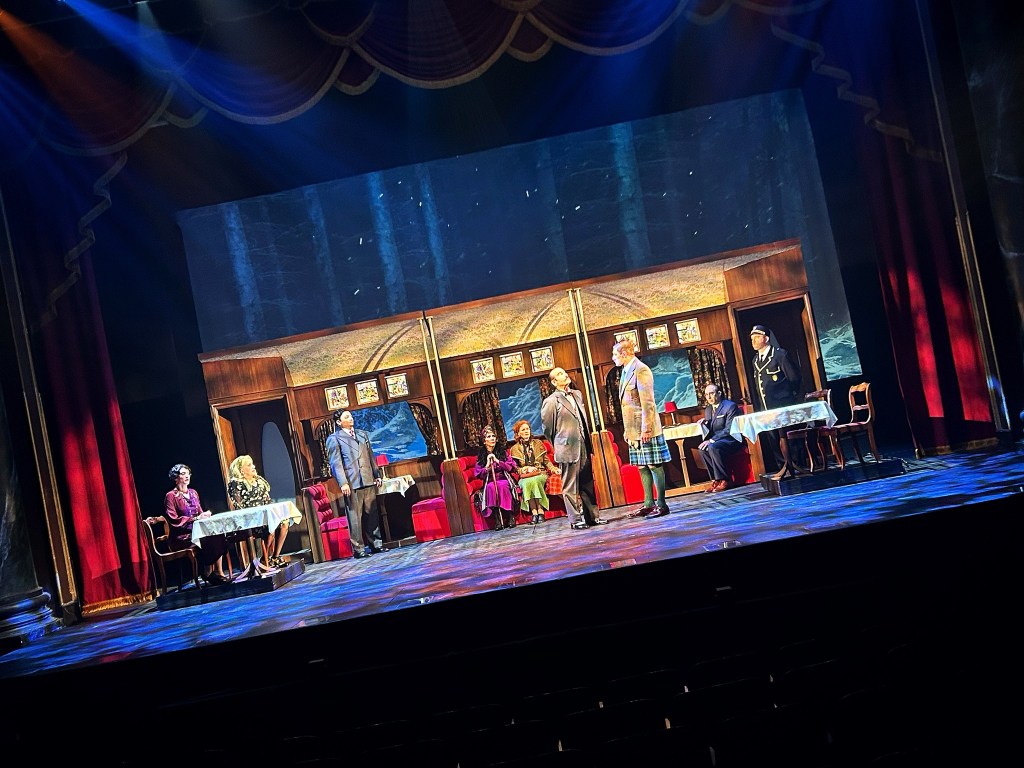
Train whistles and schedule announcements greet those who enter the November Theatre for the Virginia Rep 2025-26 season opener – Agatha Christie’s Murder on the Orient Express. An authentic literary and theater murder mystery classic, Murder on the Orient Express has murder, romance, conspiracy, locked doors, humor, nobility, a wide array of accents and dialects, and a dynamic set design worthy of its own program credit. All that was missing was the heady aroma of creosote, brake dust, diesel fuel, and the other components of railroad life. 

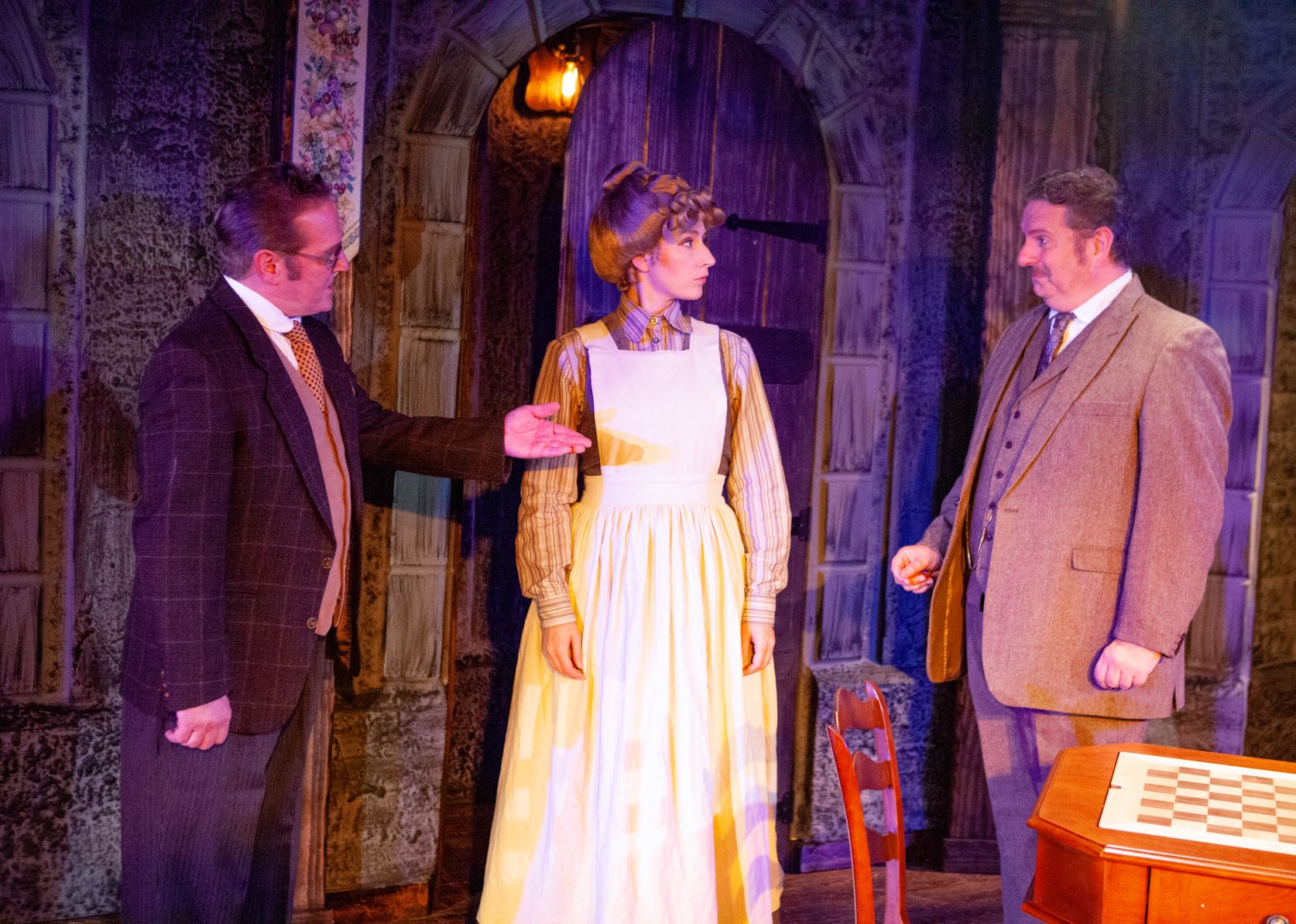
Director Rick Hammerly and his talented production team kept enough of the familiar touch stones and the stereotypically drawn murder mystery characters to make us feel right at home, yet balanced these with delightful surprises that never failed to impress.  

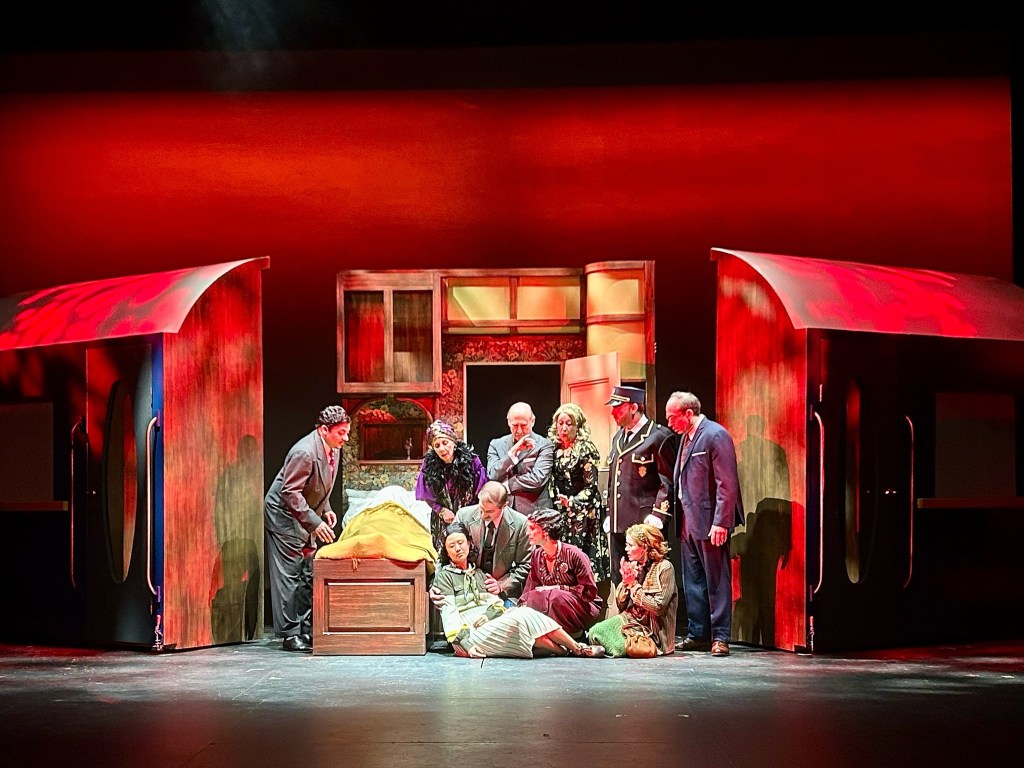
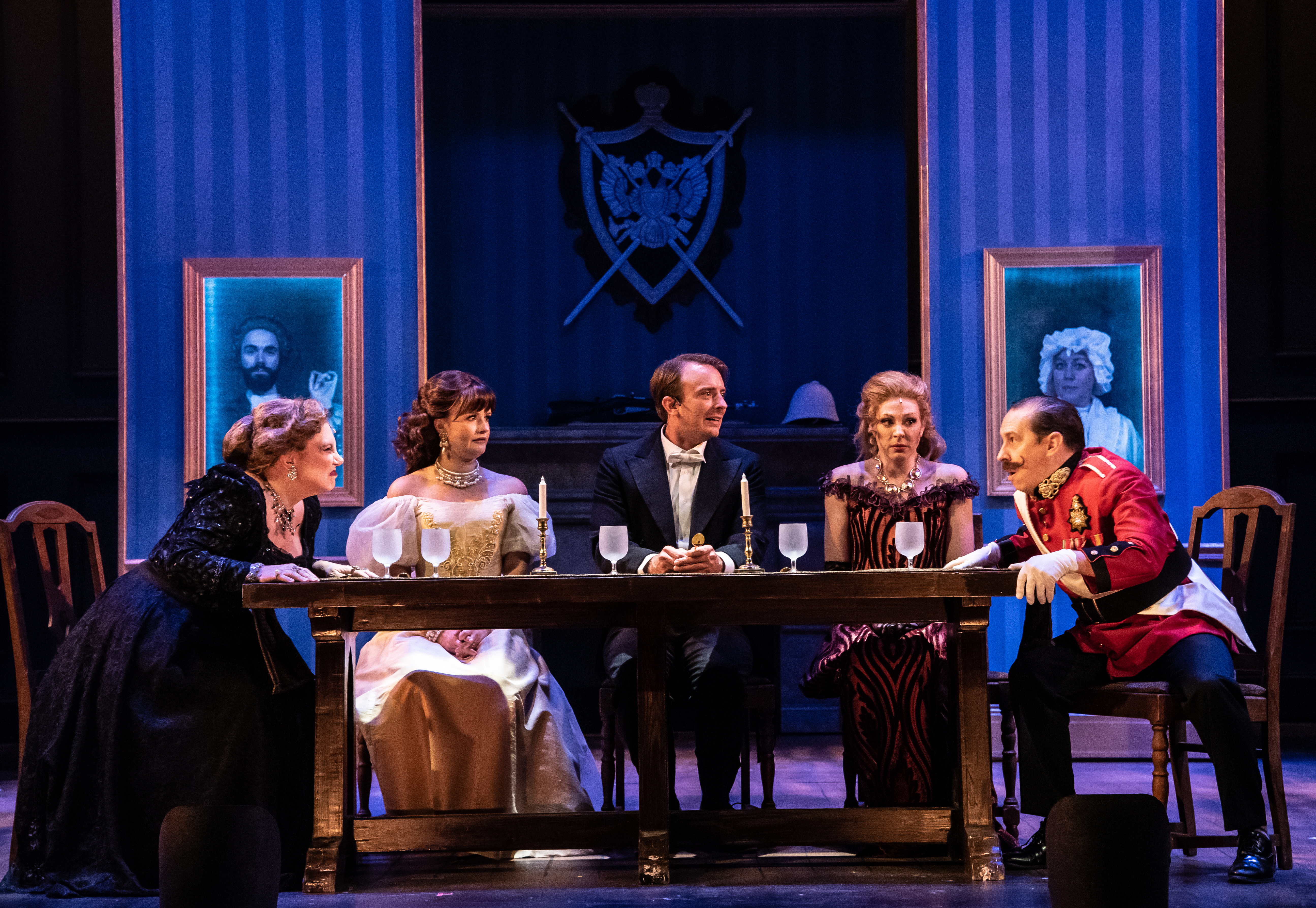
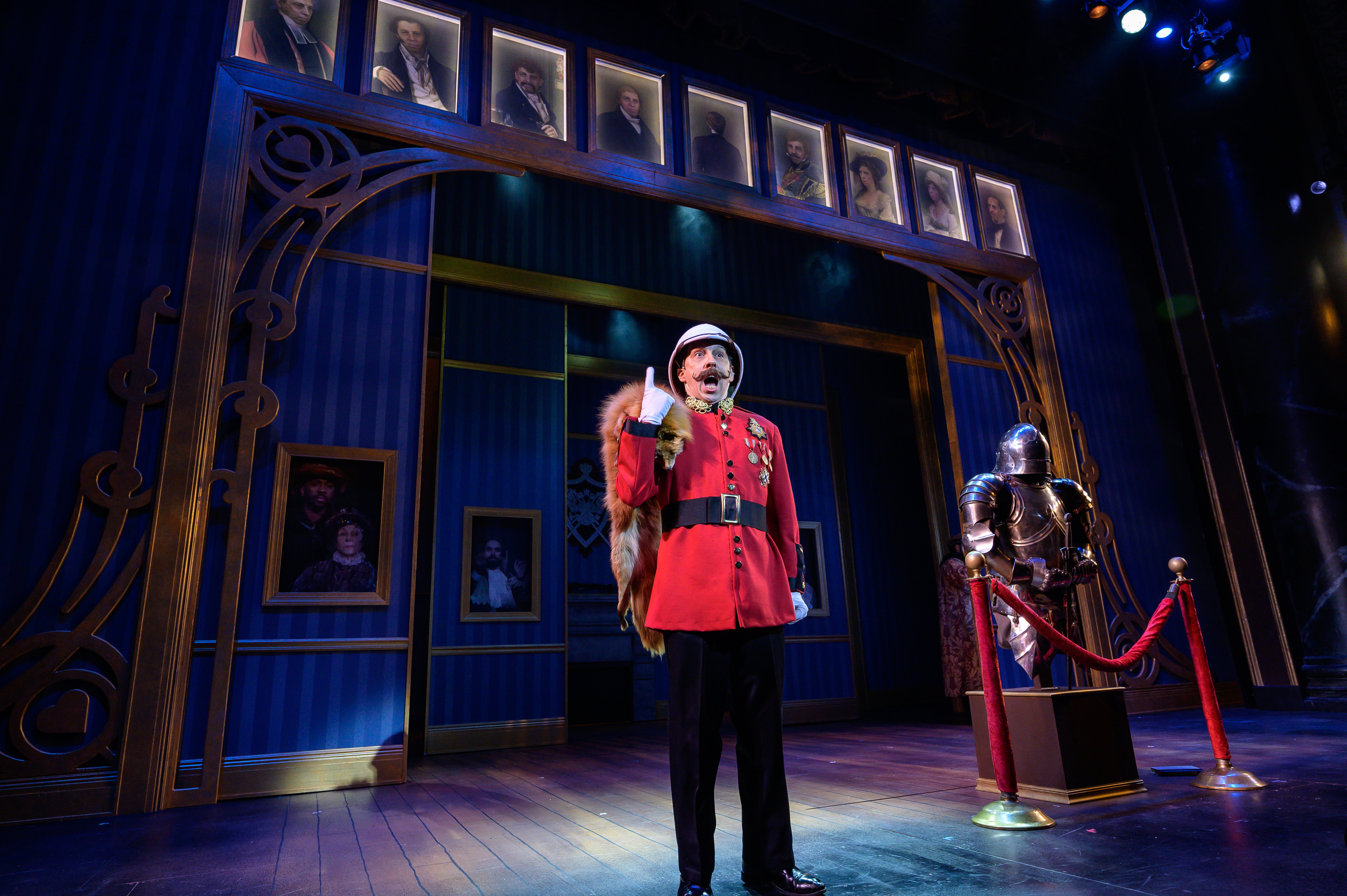
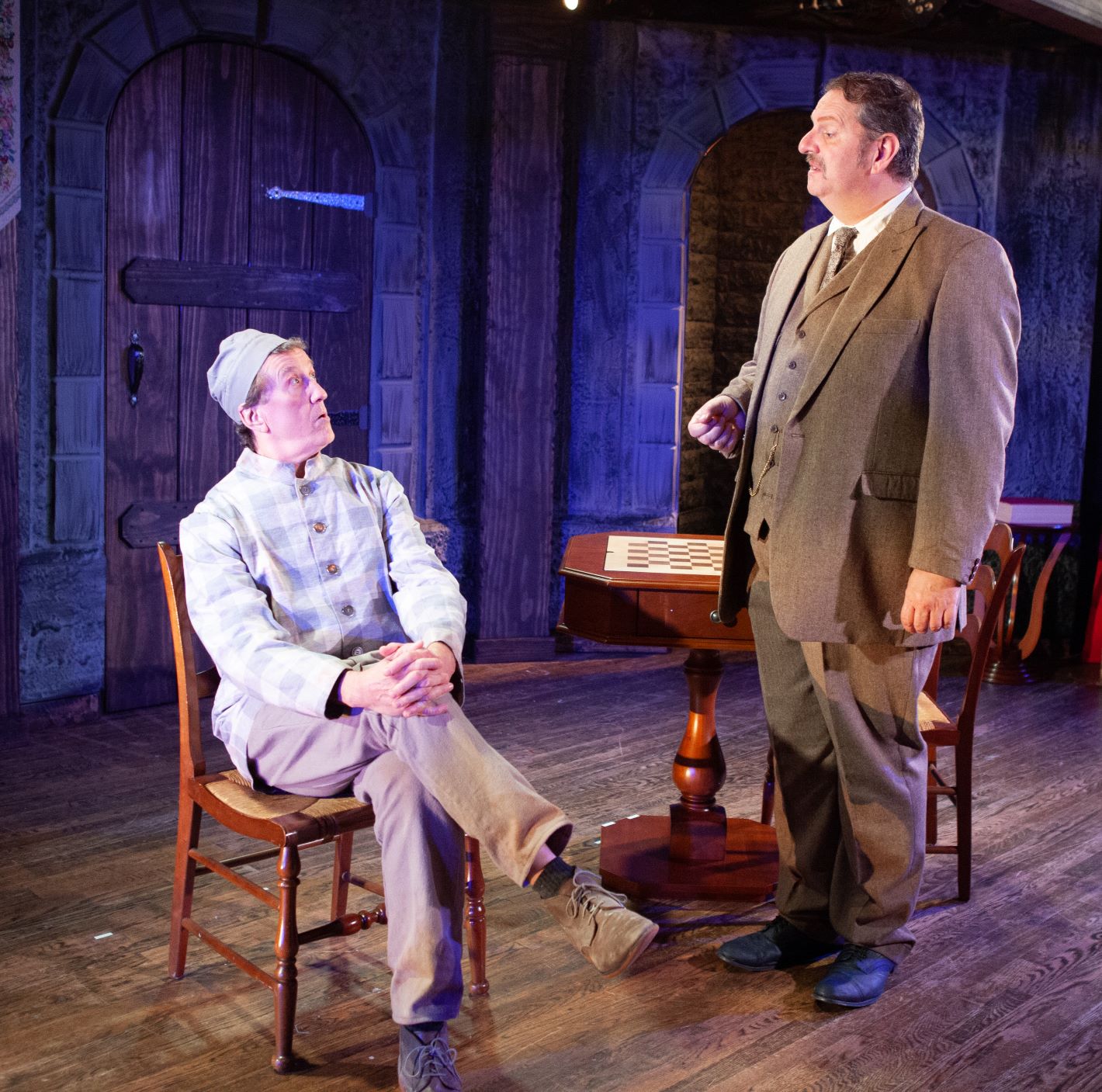
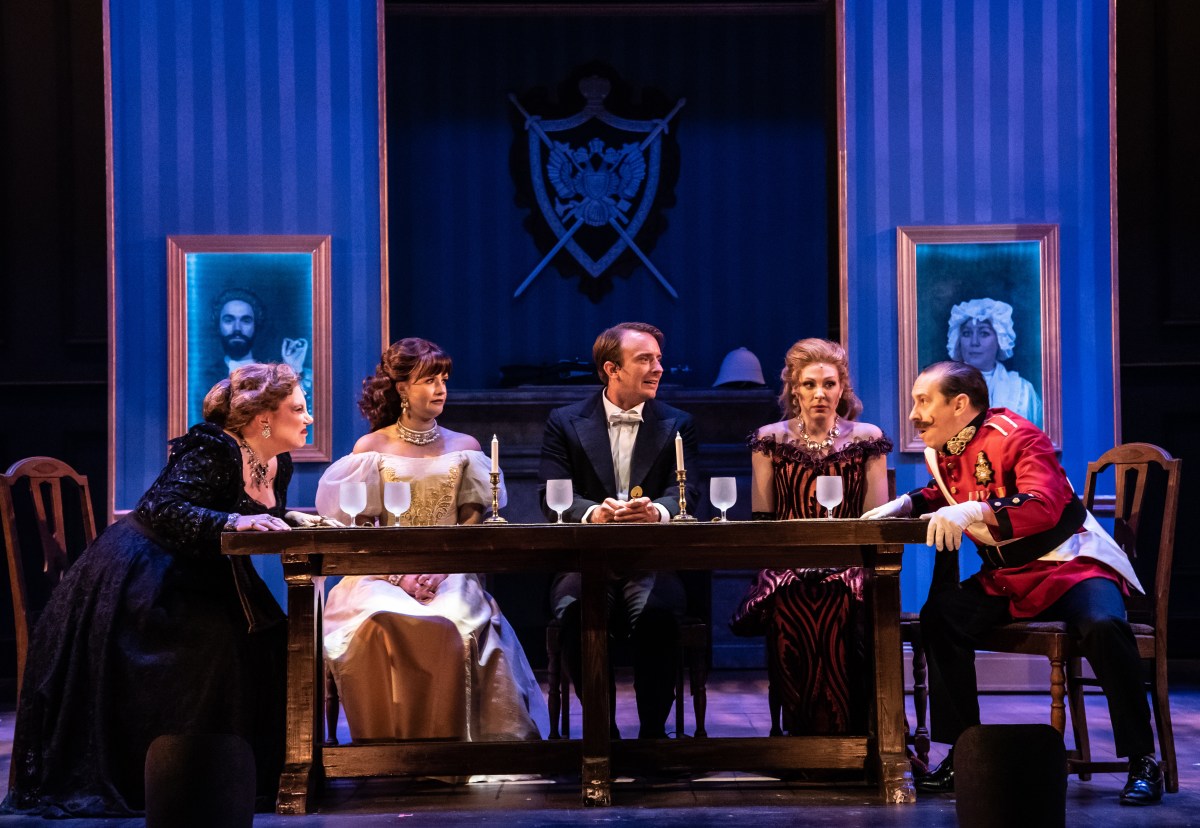
First, there was a bit of video, providing some background on the kidnapping of a little girl, Daisy. Then Hercule Poirot (Lawrence Redmond) gave a brief introductory curtain speech. In the brief time it took Redmond to speak, the crew transformed the previously bare space consisting of little more than a fat white screen into a passable representation of luxury hotel dining room. Three-dimensional set elements and two-dimensional projections and lighting effects blended in a collaboration that set new standards. Were those pedestrians moving outside the hotel windows? Or were they crew preparing for the next scene change? Either way, they added depth and nuance to the visual presentation. Kudos to scenic designer Chris Raintree, projection designer Tennessee Dixon, and lighting designer BJ Wilkinson. 

Then, there is the matter of a dynamic actors, all larger than life figures who inhabited the cast of characters with enthusiasm, grace, and humor. Redmond gave us Poirot’s sharp intellect, meticulous, observant. Frank Britton in the role of Poirot’s friend, Monsieur Bouc, the director of the railroad company, played the comedic foil – up to a point. It was his simple perspective that, in the end provided a resolution to the story’s weighty moral dilemma.  

McLean Fletcher portrays Greta Ohlsson as a modest and devout missionary who only wants to help children in Africa, but she is obviously hiding something. And why, exactly, is she posing as an aide to Princess Dragomiroff? Ah yes, Princess Dragomiroff, covered in layers of fine fabrics and jewels and better known to us as the talented Jan Guarino. The Princess’ embroidered handkerchief, is found (planted?) at the scene of the crime in an attempt to mislead the investigation. 

As the snooty but nameless Head Waiter in the first scene, John-Michael Jalonen sets the stage for the opulence and luxury of the other characters, those who are waiting at the hotel to board the luxurious Orient Express on its way from Istanbul, Turkey to London, England. Most of the passengers are traveling in first class compartments and the trip would have taken about four days if the train had not been stranded due to a heavy snowstorm in Yugoslavia. BTW, service on the original Orient Express began in 1883 and ended in 2009, although other companies have stepped in to provide Orient Express travel experiences. But I digress.  

Matt Meixler plays Hector MacQueen, personal assistant to Ratchett/Cassetti, the murder victim. MacQueen is a master of misdirection, but he is the one who reveals Ratchett’s true identity to Poirot. If there was a female lead in Murder on the Orient Express, it would surely be Susan Sanford in the role of the obnoxiously loud, hard drinking, “ugly American” Helen Hubbard. Sanford hits all the stereotypes and mixes them with steroids, making us feel simultaneously horrified and amused by Hubbard’s shenanigans. Hubbard, by the way, has the compartment next to Ratchett/Cassetti, and there is a connecting door… 

Continuing with our little game of Clue, there is Ashey Thompson as Countess Andrenyi, whose key role seemed to be beautiful – a role she portrayed with apparent ease — while her real identity was kept hidden from Hercule Poirot. Charlene Hong White takes on the role of the governess, Mary Debenham – another, like Greta Ohlsson, who seems to have a lot of secrets. Poirot noted Mary with suspicion while in the hotel, before ever boarding the train or becoming aware of a murder. Both White and Fletcher are masterful at playing innocent while letting us know they are hiding something just beneath the surface of their cool, beautiful exteriors. 

Nathan Whitmer is stalwart and blustering in the role of English military officer Colonel Arbuthnot. Arbuthnot isn’t too good at hiding his relationship with Mary Debenham, but Whitmer looks great in a kilt. Travis Williams plays the all-important role of Michel, the Conductor – the man who has access to all the train’s compartments, and perhaps access to an extra conductor’s uniform… 

So, there you have it, the backgrounds of the passengers and other cast members. A diagram of how they are connected would further help keep everybody straight, but would definitely be a spoiler, so you’re on your own for that.  

This high-powered, heavy weight ensemble took us on a most delightful journey that hit most of the elements of a great murder mystery. There was a compelling, locked-door murder. There was an intriguing setting – a train stuck on the tracks far from help, during a major snowstorm. Not only could the train not move, but communications were also lost with dispatchers. There was a victim, and a crime a murder method, and nearly a dozen suspects, with opportunity and hidden motives. A world class detective just happened to be on board, to investigate the clues and red herrings left to misdirect the audience. 

What makes this story even more intereting is the moral dilemma posed near the end. Is murder ever okay? Is there ever a time when, in the words of several fictional and real-life characters, “sometimes the som’bitch needed killin’?” Pack your bags, pick up a drink before boarding, and go find out for yourself. Let me know what you decide. 

———- 

Julinda D. Lewis is a dancer, teacher, and writer who was born in Brooklyn, NY and now lives in Eastern Henrico County. When not writing about theater, she teaches dance history at VCU and low impact dance fitness classes to seasoned movers like herself and occasionally performs. Julinda was recently awarded the Dean’s Distinguished Adjunct Faculty Award 2023-24 Academic Year by VCU School of the Arts and the 2025 Pioneer Award in Dance Ministry by Transformation International Worship Ministries, Newport News, VA. 

———- 

AGATHA CHRISTIE’S MURDER ON THE ORIENT EXPRESS 

Adapted for the stage by Ken Ludwig 

Directed by Rick Hammerly 

Cast 

Lawrence Redmond ….. Hercule Poirot 

Frank Britton ….. Monsieur Bouc / u/s Poirot 

McLean Fletcher ….. Greta Ohlsson /u/s Princess Dragomiroff 

Jan Guarino ….. Princess Dragomiroff 

John-Michael Jalonen ….. Head Waiter / u/s MacQueen, u/s Michel 

Matt Meixler ….. Hector MacQueen 

Susan Sanford ….. Helen Hubbard 

Ashley Thompson ….. Countess Andrenyi 

Charlene Hong White ….. Mary Debenham 

Nathan Whitmer ….. Colonel Arbuthnot / Samuel Ratchett 

Travis Williams ….. Michel the Conductor / u/s Arbuthnot, u/s Ratchett 

Rachel Dilliplane ….. u/s Mary, u/s Countess 

Lily Marcheschi ….. u/s Greta Ohlsson, u/s Helen Hubbard 

Mark Persinger ….. u/s Monsieur Bouc, u/s Head Waiter 

Recorded Voices ….. Frederic Blasco, Rachel Dilliplane, Emily Goodman, Lily Marcheschi, Mark Persinger, Guy Seigneuric, Travis Williams 

Direction & Design 

Directed by ….. Rick Hammerly 

Scenic Design ….. Chris Raintree 

Projection Design ….. Tennessee Dixon 

Costume Design ….. Kendra Rai 

Wig Design ….. Alia Radabaugh 

Lighting Design ….. BJ Wilkinson 

Dialects ….. Amanda Durst 

Sound Design ….. Joey Luck 

Fight & Intimacy Direction ….. Casey Kaleba 

Stage Management ….. Ginnie Willard 

For This Production 

Assistant Stage Manager ….. Hannah Hoffert 

Rehearsal Stage Manager ….. Justin Janke 

Assistant Lighting Designer ….. Griffin Hardy 

Carpenters …..Van Montes, Avery Rose 

Scenic Artists ….. Julie Gallager, Van Montes 

Electricians ….. Rylie Vann, Griffin Hardy 

Stitchers ….. Sarah Grady, Kate Koyiades, Maggie Ronck 

Fly Rail and Deck Crew ….. Daryus Gazder, Logan Graves, Bien Quiroz 

Light Board Operator ….. Rylie Vann 

Sound Board Operator ….. Amaya “AJ” Rose 

Wardrobe Supervisor ….. Emily Andrew Mateos 

Video Production ….. Tennessee Dixon, Rick Hammerly, Hannah Hoffert, Joey Luck, Hans Paul, Jonathan Pratt, Ginnie Willard, Kacey Yachuw 

Photographer ……………………… Aaron Sutten 

Ticket Information 

Box Office: (804) 282-2620 

www.virginiarep.org 

Ticket Prices: $35 – $62 

Performance Schedule 

September 11 – October 12, 2023, with performances 

Thursdays, Fridays, and Saturdays at 7:00 PM, select Saturdays at 2PM, Sundays at 3PM, and select Wednesday evenings and matinees. 

Run Time 

The play runs for approximately 2 hours with one 15-minute intermission 

World Premiere produced by the American Repertory Theatre at Harvard University, August 2, 2015 

Originally Staged by McCarter Theater Center, Princeton, NJ 

Photo Credits: Aaron Sutten  
One-Time
Monthly
Yearly

Make a one-time, monthly, or annual donation

Make a monthly donation

Make a yearly donation

Choose an amount

$5.00
$15.00
$100.00
$5.00
$15.00
$100.00
$5.00
$15.00
$100.00

Or enter a custom amount

$

Your contribution is appreciated.

Your contribution is appreciated.

Your contribution is appreciated.

DonateDonate monthlyDonate yearly
Dial M for Murder

What’s So Important About the Fifth Step?

A Theater Review by Julinda D. Lewis

By: Virginia Repertory Theatre (Virginia Rep), The Barksdale Season

At: Hanover Tavern, 13181 Hanover Courthouse Road, Hanover, Virginia 23069

When: March 28 – April 27, 2025

Ticket Prices: $54  

Info: (804) 282-2620 or www.virginiarep.org

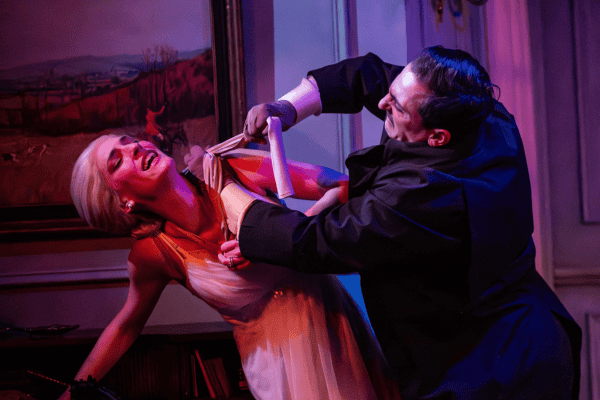
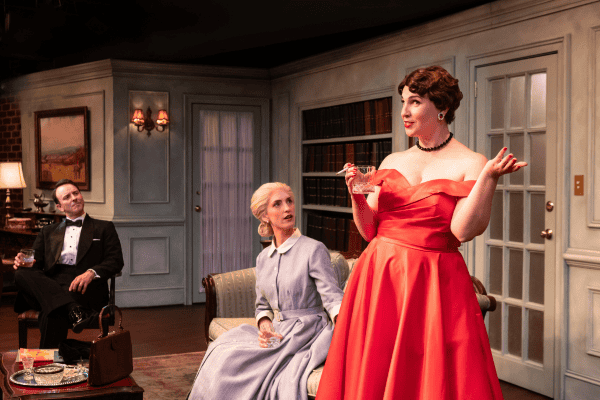
Dial M for Murder is a classic 1950s stage thriller, a murderous melo-drama filled with plot twists and scandal. Tony Wendice married his wife Margot for her money, and now he wants to get rid of her – but he also wants to keep her money. The logical solution, since this is a Hitchcockian style murder mystery, is to kill her. Thanks to their mutual friend, a successful American crime writer named Max, Tony has the background – and the motive – to plan the perfect murder. But will he be able to get away with it?

Jeffrey Hatcher’s adaptation kept the basic plot and Frederick Knott’s location: a 1950s London flat, but one major change is that  Hatcher changed the Wendice’s friend Max, with whom Margot had and broke off an affair, from Max to Maxine. This means Margot was engaged in a lesbian affair and gives even more of an edge to the scandal since same-sex partnerships were not exactly acceptable in the 1950s.

Tony’s carefully planned plot goes awry, but he quickly improvises a Plan B, resulting in Margot being charged with the murder of the man Tony had hired to kill her. Margot doesn’t know who to trust, and if not for the fortuitous partnership between Maxine and a keen-eyed detective, Hubbard, this play might well have ended with her hanging from the gallows. Fast-paced and seasoned with a dash of humor, Dial M for Murder is a deliciously entertaining divertissement. Unlike some of the serious – and seriously good – theater I’ve seen in the past few months, this play doesn’t require you to think about social issues, it doesn’t draw parallels with historical events, and it doesn’t attempt to teach us moral lessons. It’s pure fun – a class murder mystery with smart plot twists and stereotypical characters we recognize and welcome into our lives for a little over two hours.

5 Motives for Murder

Money

Fear

Jealousy

Revenge

To protect a loved one

This production has a stellar cast, many of whom will be familiar to those who frequent local theater. Margot is played by Ashley Thompson (5 Lesbians Eating a Quiche, Dr. Ride’s American Beach House, and Buried Child). Tony is played by Alexander Sapp (Peter and the Starcatcher, Sweeney Todd). Maxine is played by Rachel Dilliplane (5 Lesbian Eating a Quicke, The Laramie Project, and Moriarty u/s). The shoes of the would be hired killer, Legate, are filled by Adam Turck (Constellations, The Laramie Project, The Inheritance, Animal Control, Buried Child). The newest face was that of Jim Meisner, Jr. in the role of Inspector Hubbard. Dial M for Murder marks Meisner’s Virginia Rep debut and his first performance after a more than 25-year hiatus from the stage.

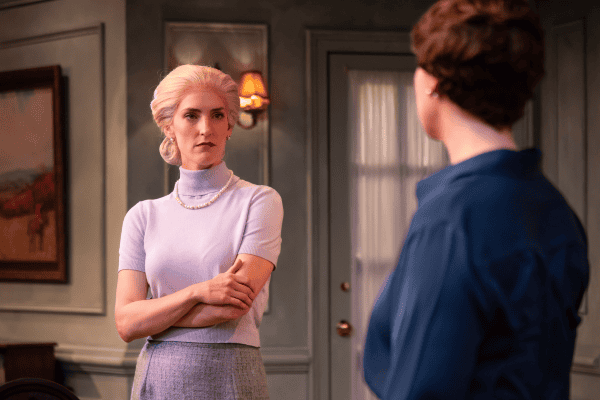
The sexual tension between Margot and Maxine is obvious from the opening scene, highlighted by Thompson’s conservative couture and wig and Dilliplane’s more bold fashion choices and short haircut. No separate credit was given for wigs, so I will assume that Sarah Grady gets the well-deserved credit for both hair and costumes. Even the tan trench coats play an important role later in the denouement when Inspector Hubbard sets a trap to expose Tony.

“Everything has its price.” – Tony Wendice

Sapp is smooth with his lies in front of the other cast members and a master of the villainous side eye when playing to the audience. Turck is suitably sleezy as Tony’s corrupt former classmate turned hitman. And last but not least, Meisner is heroic as the blustery bumbling Inspector. (Is anyone else old enough to remember the bumbling TV detective, Colombo?)

This impressive ensemble was under the capable direction of Mel Rayford, also making their VaRep debut. Rayford skillfully guided the cast and audience through all the twists and turns, through layers of subplots and intrigue, encouraging us to find amusement in murder, to willingly turn corners into fictional depravity, and then to vigorously applaud when we emerged, safe and sound and strangely exhilarated for having taken the journey.

A Word of Caution

Beware of anyone who puts mushrooms in their spaghetti.

(You’ll know why if you’ve seen the play.)

———-

Julinda D. Lewis is a dancer, teacher, and writer who recently had both knees replaced due to a manufacturer’s recall. Born in Brooklyn, NY, she now lives in Eastern Henrico County where she can be found kicking up  her heels as best she can any day of the week.

———-

DIAL M FOR MURDER     

Adapted by Jeffrey Hatcher (2022)

From the Original by Frederick Knott (1952)

Directed by Mel Rayford

Cast

Ashley Thompson ……………….             Margot Wendice

Rachel Dilliplane …………………             Maxine Hadley

Alexander Sapp ………………….             Tony Wendice

Adam Turck ………………………             Lesgate

Jim Meisner, Jr. ………………….             Inspector Hubbard

Kendall Walker …………………..             Margot U/S, Maxine U/S

Travis Williams  ..…………………             Lesgate U/S, Hubbard U/S

Chandler Hubbard ………………             Tony U/S

Direction & Design

Direction ………………………….             Mel Rayford

Scenic Design ……………………             Frank Foster

Costume Design …………………             Sarah Grady

Lighting Design …………..………            Steve Koehler

Sound Design …………………….            Jonathan Pratt

Fight Director …………………….             Casey Kaleba

Dialect Coach …………………….             Nicole Cowans

Stage Management ………….…..            Hannah Hoffert

Assistant Stage Manager ………..            Amber Hooper

Photographer ……………………..            Aaron Sutten

Videographer ……………………..            Austin Lewis

Ticket Information

Box Office: (804) 282-2620

www.virginiarep.org

Ticket Price: $54

Run Time

The play runs for approximately 2 hours 15 minutes; including one intermission.

Photo Credits Aaron Sutten

One-Time
Monthly
Yearly

Make a one-time, monthly, or annual donation to support RVArt review

Make a monthly donation

Make a yearly donation

Choose an amount

$5.00
$15.00
$100.00
$5.00
$15.00
$100.00
$5.00
$15.00
$100.00

Or enter a custom amount

$

Your contribution is appreciated.

Your contribution is appreciated.

Your contribution is appreciated.

DonateDonate monthlyDonate yearly
COTTON PATCH GOSPEL

Jesus Christ Super Star –> Jesus Christ Good Ole Boy – OR – If Jesus Had Been Born in an Abandoned Doublewide and the Sermon on the Mount Had Been Delivered Atop Stone Mountain

At: The Swift Creek Mill Theatre, 17401 U.S. Route One, Chesterfield, VA 23834

Performances: March 15 – April 12, 2025

Ticket Prices: $44-49. Ask about discounts for students, seniors, and veterans.

Info: (804) 748-5203 or https://www.swiftcreekmill.com

A Theater Reflection by Julinda D. Lewis

I recently read a post that read something along the lines of “expect something wonderful each day.” Some days it’s easier to find something wonderful than others. Other days it’s a real stretch. I usually don’t do much, if any, pre-show research before going to see a show. I want to approach each show with as little bias as possible. So, I was totally, pleasantly surprised by Cotton Patch Gospel – it was easily my “something wonderful” on Saturday night, March 22.

Cotton Patch Gospel is a sung-through musical (i.e., songs are used instead of spoken dialogue, with minimal speech) retelling of “The Gospel of Matthew” set in modern-day rural Georgia (the US State, not the Eastern European nation). Given the geographical re-location, Joe and Mary travel to Atlanta instead of Jerusalem, Jesus is born in a borrowed trailer (they didn’t indicate if it was a double-wide), the baby Jesus is placed in an apple crate and when the family has to flee for their lives, they run off to Mexico, instead of Egypt.

The adult Jesus later gives the Sermon on the Mount from the top of Stone Mountain (which, BTW, is home to the world’s largest bas-relief artwork – a memorial to Confederate leaders Jefferson Davis, Robert El. Lee, and Stonewall Jackson). In the Cotton Patch Gospel Herod, the Governor of the state, drops a bomb on a church where Jesus was supposed to be – killing 14 innocent children in the process. In other familiar stories, after being baptized, Jesus is tempted by Satan, who tries to get Him to turn stones into grits, Jesus feeds 5,000 people with crackers and sardines, and Peter tap dances on water. Jesus makes His final entry into Jerusalem/Atlanta riding an old VW bus while his followers toss magnolia blossoms.

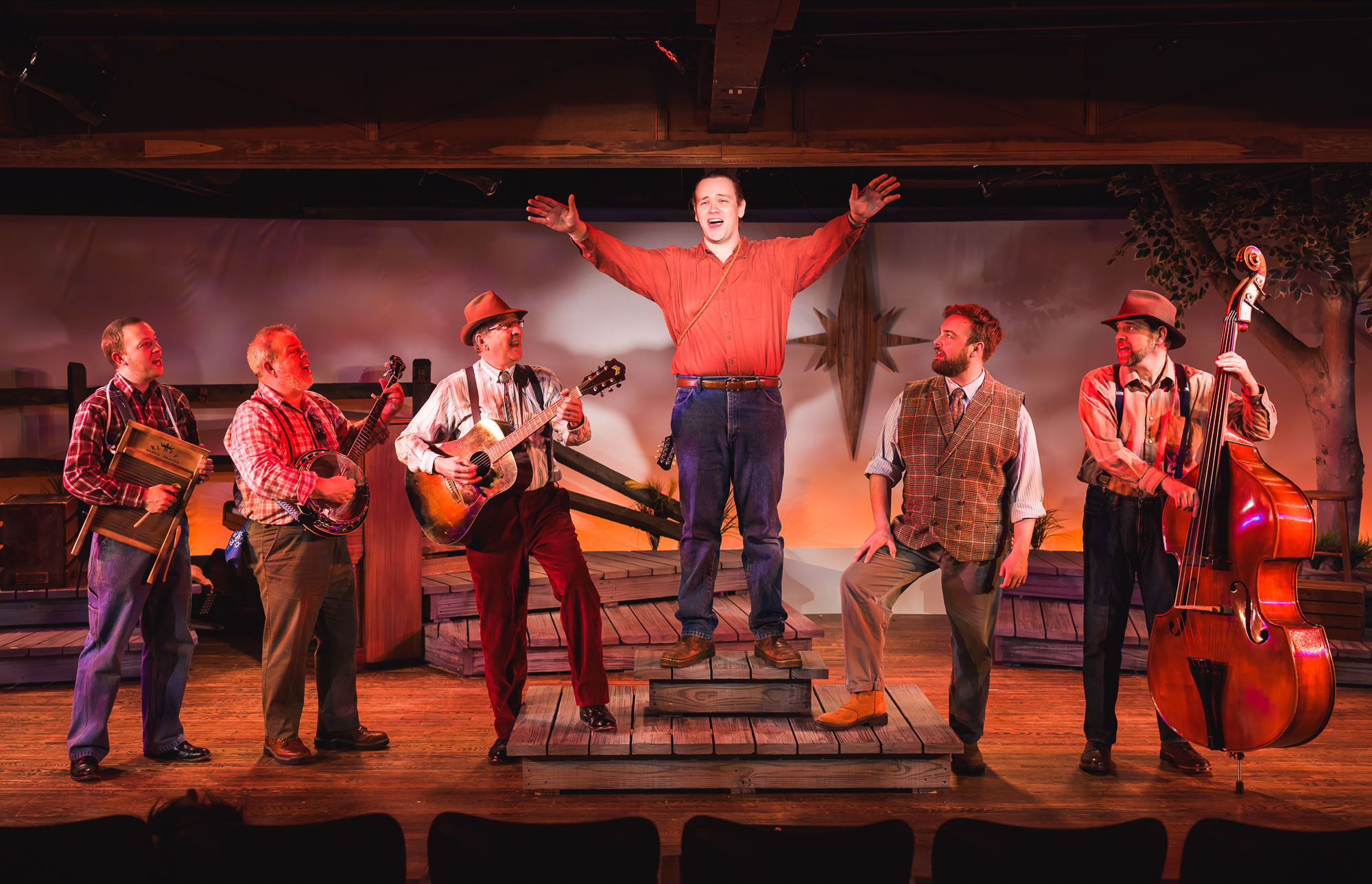
The entire story is delivered in beautiful harmony and lively blue grass music (with occasional forays into blues or gospel) performed by a six-member cast whose members all take on triple roles as actors, singers, and musicians. Jonmichael Tarleton and Dew Redling lead the cast, making their Swift Creek Mill debuts. Tarleton takes on the roles of Matthew, Joe, and sometimes Satan, while Dew Redling is appealing as Jesus, a simple country boy who doesn’t quite fit in. While Tarleton and Redling stood out as personal favorites, Cotton Patch Gospel is a true ensemble effort, and the cast worked well together keeping us laughing and entertained while remaining true to the Gospel.

The rest of the ensemble consists of Travis West (a cattle farmer, John, Andy, a reverend, Jud/Judas, and others), Bryan Harris (Herod, Mary, a televangelist, and others), Eric Williams (a Messenger/angel, Pilate, a senator, and others), and Greg DeBruyn (Satan, a tourist, a businessman, and others).

SCM Artistic Director Tom Width took time during his curtain talk to let us know that there have been times when audience members left shortly after the performance started. If you are a very conservative Christian, this might not sit well with your sensibilities, although there is nothing irreverent about this musical. But that’s just my opinion as a theatergoer who happens to be a licensed ordained minister of dance – and one who spent my fair share of years teaching Sunday School and Vacation Bible School in a Baptist church. LOL.

Harry Chapin (a singer, songwriter, and storyteller) along with writers Tom Key and Russell Treyz based their work on Clarence Jordan’s Cotton Patch Gospel – Matthew and John which “recasts the stories of Jesus…into the language and culture of the mid-20th century South (Smyth & Helwys Books). The author, Clarence Jordan, a farmer as well as a bible scholar, was the founder of Koinonia Farm, born out of the Civil Rights era and described by his publisher as “an interracial, Christian farming community.” Interestingly, Koinonia Farm gave birth to the concept of partnership housing, resulting in the establishment of Habitat for Humanity. In 2012, Clarence Jordan’s Cotton Patch Gospel: The Complete Collection was compiled, and it boasts an introduction by President Jimmy Carter.

Tom Width’s scenic design is simple and rustic, featuring lots of wooden planks and crates and light up star on the wall that reminds me of Christmas. Cast member Travis West provided the musical direction that kept the action moving and carried the audience right along with him. Maura Lynch Cravey casually dressed the cast in denim and plaid and variations thereof.

So, all of that – a foot-patting musical, a bible lesson, a geography lesson, a cultural tour, and a history lesson all wrapped up in one neat package. So unexpected and so delightful. Yep, that was my something wonderful last Saturday evening.

NOTE: After seeing this production, SCM posted an unfortunate update. Several Cotton Patch Gospel cast members tested positive for COVID, and several performances had to be cancelled. Please check the company’s website or contact the box office if you plan to go to see when shows resume and locate possible dates to attend.

———-

Julinda D. Lewis, EdD is a dancer, minister of dance,  teacher, and writer who was born in Brooklyn, NY and currently resides in Eastern Henrico County. When not writing about theater and dance, she teaches dance history at VCU and low impact dance fitness classes to seasoned movers like herself and occasionally performs.

———-

COTTON PATCH GOSPEL

Book by Tom Key and Russell Treyz

Music and Lyrics by Harry Chapin

Directed by Tom Width

CAST

Jonmichael Tarleton           as Matthew/Joe/Caiphus/Satan III/Timmy/Gossip/et al

Dew Redling             as Mother/Jesus/et al

Travis West               as Cattle Farmer/John/Andy/revisal/Tanya/Jud/Gossip/et al

Bryan Harris              as Herod/Dr. Troy/TV Preacher/Mary/Gossip/et al

Eric Williams             as Messenger/Mabry/Satan II/Senator/Pilate/Gossip/et al

Greg DeBruyn          as Satan I/Mr. Tetum/Tourist/Businessman/Gossip/et al

CREATIVE TEAM

Directed by Tom Width

Musical Direction by Travis West

Scenic Design by Tom Width

Lighting Design by Joe Doran

Costume Design by Maura Lynch Cravey

Technical Direction by James Nicholas

PRODUCTION STAFF

Producing Artistic Director …. Tom With

Technical Director ….. James Nicholas

Stage Manager ….. Sandy Lambert

Assistant Stage Manager/Props ….. Tom Width

Scenic Carpenter … Peter Prout

Light/Sound Board Operator ….. Brent Deekens

Set Crew ….. Peter Prout, Brent Dieken’s, Nathan Hamill

Scenic Painter ….. Dasia Gregg

Lighting Crew ….. Brent Deekens, Liz Allmon, R. Jonathan Shelley

Photographer …..Daryll Morgan

Time and Place:

Here and Now

Run Time:

About 2 hours with 1 intermission

Tickets:

Regular $44-49. Discounts for Seniors, Military & Veterans

Photographer: Darryl Morgan

Musical Numbers:

Act One:

            Somethin’s Brewin in Gainesville

            Baby Born to God

            I Did It

            Mama is Here/I Did It

            It Isn’t Easy Growin’ Up to Be Jesus

            Sho’ “Nuff

            From That Day On

            Turn It Around

            When I Look Up

            Ain’t No Busy Signals on the Hotline to God

            Spitball Me, Lord, Over the Homeplate of Life

            Miracle on Stone Mountain

            Love the Lord Your God

            Blind Date

            Goin’ to Atlanta

Act Two:

            Are We Ready?

            You Are Still My Boy

            We Gotta Get Organized

            We’re Gonna Live It While It Lasts

            Jubilation

            Dangerous Man

            Jud

            Hey, What’s Goin’ On

            Thank God for Governor Pilate

            One More Tomorrow

            I Wonder      

The Cast of Cotton Patch Gospel
Dew Redling/Jesus
One-Time
Monthly
Yearly

Make a one-time, monthly, or annual donation to show how much you love RVART Review

Make a monthly donation

Make a yearly donation

Choose an amount

$5.00
$15.00
$100.00
$5.00
$15.00
$100.00
$5.00
$15.00
$100.00

Or enter a custom amount

$

Your contribution is appreciated. Thank you!

Your contribution is appreciated.

Your contribution is appreciated.

DonateDonate monthlyDonate yearly

A SOLDIER’S PLAY

They still hate you!: Racism Institutionalized, Internalized, Ignited

At: The Swift Creek Mill Theatre, 17401 U.S. Route 1, S. Chesterfield, VA 23834

Performances: January 28 – March 4, 2023

Ticket Prices: $15-$49

Info: (804) 748-5203 or https://www.swiftcreekmill.com

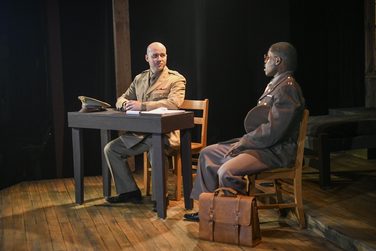
Charles Fuller’s A Soldier’s Play is set on a fictitious Army base, Fort Neal, Louisiana, in 1944 – at a time when the U.S. Army was still legally segregated. But the mystery and inflammatory speculation surrounding the murder of Tech/Sergeant Vernon C. Waters could have been taken directly from the latest news in 2023.

When I think of this Pulitzer Prize-winning play, the first thing that comes to mind is Adolph Caesar who played the role of Sergeant Waters in the original off-Broadway production by the Negro Ensemble Company, New York, 1981. In that production, Denzel Washington also appeared as Private First Class Melvin Peterson and Samuel L. Jackson played the role of Private Louis Henson.

I can’t help but wonder, how did the actors and audiences of 1981 feel about A Soldier’s Play and how do their thoughts and experiences compare to those of the actors and audiences of 2023? The more things change (?) the more they stay the same – and this trope especially rings true when it comes to matters of race in America.

Along those same lines, the ”trigger warnings” of  strong language, racial slurs, physical violence and gunshot effects may have been startling 40 years ago, but seem de rigueur by today’s standards where life imitates art imitates life. Director Shanea N. Taylor wrote in her notes, “Charles Fuller believed, ‘You can change the world with words.’ 40 some years later from winning the Pulitzer Prize for his words, we find ourselves in a position where we might question whether this rings true.”

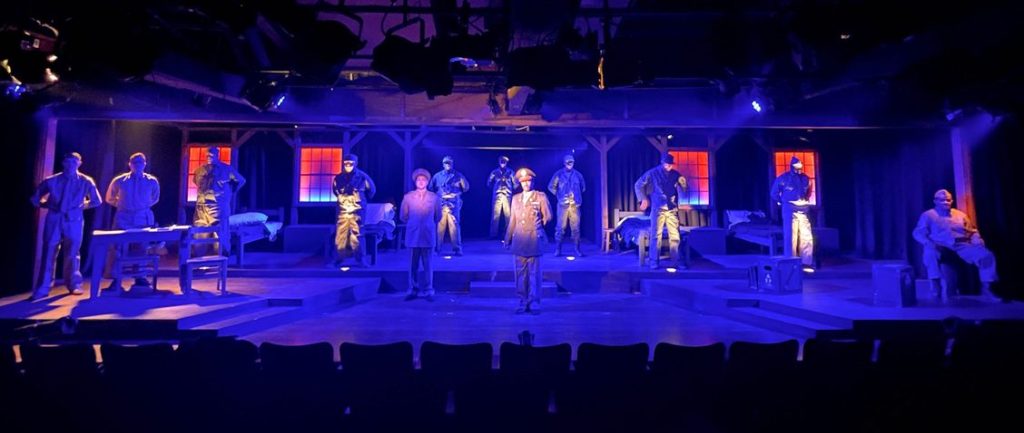
In A Soldier’s Play we get to see – and internalize – the impact of 9 Black men sharing a stage and sharing words and thoughts normally reserved for the relative safety of Black spaces (e.g., home, the barber shop). Do Fuller’s words sufficiently explain the burden of how racism can make a Black man hate himself? Or are we so committed to the fallacy that racism is over that only those directly affected can truly understand? A Soldier’s Play opens the door to further understanding.

This deeply troubling story shines as an ensemble work. The comraderie and banter between the characters feels authentic (coming from one who has never been in a military environment). It comes as no surprise that the Black soldiers are given the most menial and dirtiest tasks: painting, cleaning, manual labor. In spite of their sub par treatment, they want to serve the only country they know. When orders come to ship out, they are excited. Ike wants to know if the colored boys can fight? There is only one response, “I’ve been fighting all my life.”

The soldiers’ relationships seem even more solidified by the passive aggressive racism of their white Captain, played by Chandler Hubbard. You see, Captain Taylor is aware of his own racism, and readily admits that he is disgusted by the very thought of Captain Davenport (Keydron Dunn), the Black lawyer sent to investigate the murder of Sergeant Waters. At the same time, he holds on to a sense of justice in wanting to solve the murder – but not so much so that he is willing to discipline the white officers under his command who are overtly racist (Hunter Keck and Gordon Little Eagle Graham). Waters is – or was – an ambitious Black officer who is himself offended by the presence of southern Black men who do not live up to his standards. This information gives added meaning to his final words before being shot, “They still hate you!” No matter how hard he tries to assimilate, no matter if he works hard and send his children to predominantly white schools, he is still Black, and still the recipient of institutional and personal racism.

There were some standouts in the ensemble: Joshua Maurice Carter as Private C.J. Memphis, the innocent young man who was driven to suicide by Sergeant Waters’ mental attacks; Kamau “Mu Cuzzo” Akinwole as Private James Wilkie, an unwilling pawn in Waters’ machinations; Erich Appleby as the earnest Corporal Bernard Cobb. Hubbard did an amazing job establishing a balance between doing the eight thing and embracing the comfort of his upbringing. But A Soldier’s Play works best within the framework of the ensemble. The one weak link, unfortunately, seemed to be Keydron Dunn in the import role of the key figure, Captain Richard Davenport. I found out later that Dunn was under the weather the night I saw the show, so that may account for the fumbled lines and uneven performance – so unlike his usual execution.

Mercedes Schaum has designed a stark barracks, consisting of just a few cots and footlockers, but Joe Doran’s lighting adds satisfying emotional depth and visual dimension. Taylor’s direction allows the story to unfold at a natural pace – perhaps less inflammatory than I was expecting, or less shocking that my memory allowed for – but nonetheless satisfying. If you have never seen A Soldier’s Play or, like me, have not revisited it in some 40 years, please see it. It’s the kind of theatre that stays with you for a lifetime.

———-

Julinda D. Lewis is a dancer, teacher, and writer who was born in Brooklyn, NY and now lives in Eastern Henrico County.

———-

A SOLDIER’S PLAY

By Charles Fuller

Directed by Shanea Taylor

Cast:

Tech/Sergeant Vernon C. Waters: Larry Akin Smith

Captain Charles Taylor: Chandler Hubbard

Corporal Bernard Cobb: Erich Appleby

Private First Class Melvin Peterson: K’Hari Zy’on

Corporal Ellis: Gary King

Private Louis Henson: Tre’ LaRon

Private James Wilkie: Kamau “Mu Cuzzo” Akinwole

Private Tony Smalls: Kieryn Burton

Captain Richard Davenport: Keydron Dunn

Private C.J. Memphis: Joshua Maurice Carter

Lieutenant Byrd: Hunter Keck

Captain Wilcox: Gordon Little Eagle Graham

Creative Team:

Directed by Shanea Taylor

Scenic Design by Mercedes Schaum

Lighting Design by Joe Doran

Costume Design by Maura Lynch Cravey

Technical Direction by Liz Allmon

Fighting/Intimacy Consulting by Stephanie “Tippi” Hart

Run Time:

About two hours with one intermission

Tickets:

Regular $49. Seniors, Military & First Responders $44. Students $15.

Photos: Kieran Rundle

One-Time
Monthly
Yearly

rvart review depends on your generous donations – thank you!

Make a monthly donation

Make a yearly donation

Choose an amount

¤5.00
¤15.00
¤100.00
¤5.00
¤15.00
¤100.00
¤5.00
¤15.00
¤100.00

Or enter a custom amount

¤

Your contribution is appreciated.

Your contribution is appreciated.

Your contribution is appreciated.

DonateDonate monthlyDonate yearly
MURDER FOR TWO

Murder for Two Slays as a Two-for-One: Half Murder Mystery, Half Comedy

At: The Swift Creek Mill Theatre, 17401 U.S. Route 1, S. Chesterfield, VA 23834

Performances: January 29 – February 26, 2022

Ticket Prices: $49. $44 for seniors, students, military, and first responders.

Info: (804) 748-5203 or https://www.swiftcreekmill.com

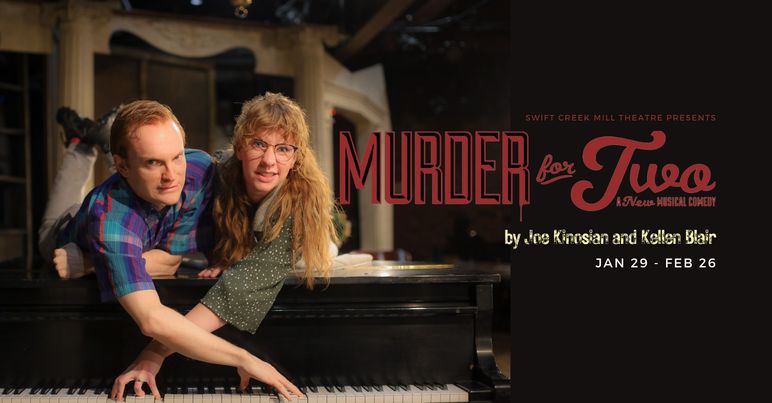
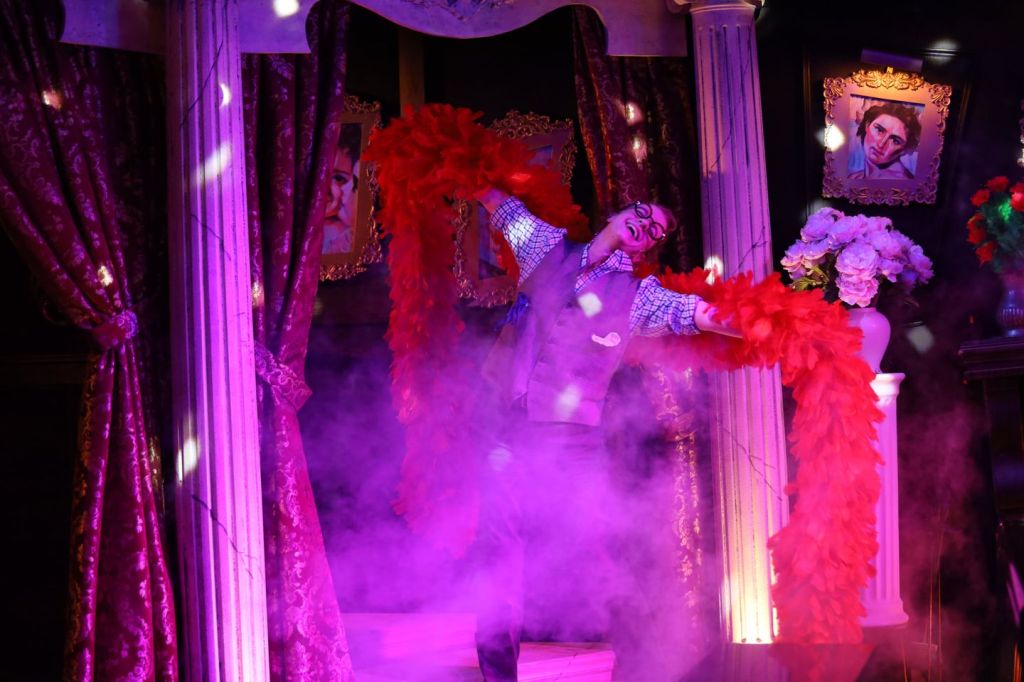
The two actors who play ALL the characters in MURDER FOR TWO come onstage wearing birthday party hats, and immediately begin a series of zany and wordless shenanigans. Their wacky introduction requires them to dress the stage with pedestals, vases filled with flowers, magician’s trick bouquets, and comic sound effects. The stage itself, designed by Tom Width, features stall Greek columns, crazily angled doors, and portraits over the fireplace that have as many as seven sides and angles. A baby grand dominates the center of the stage and could very well be given credit as a third character. As the play progresses it becomes clear that this musical comedy murder mystery, written by Joe Kinosian and Kellen Blair is, as Director Tom Width describes it in his program notes, “quirky in the best possible ways.”

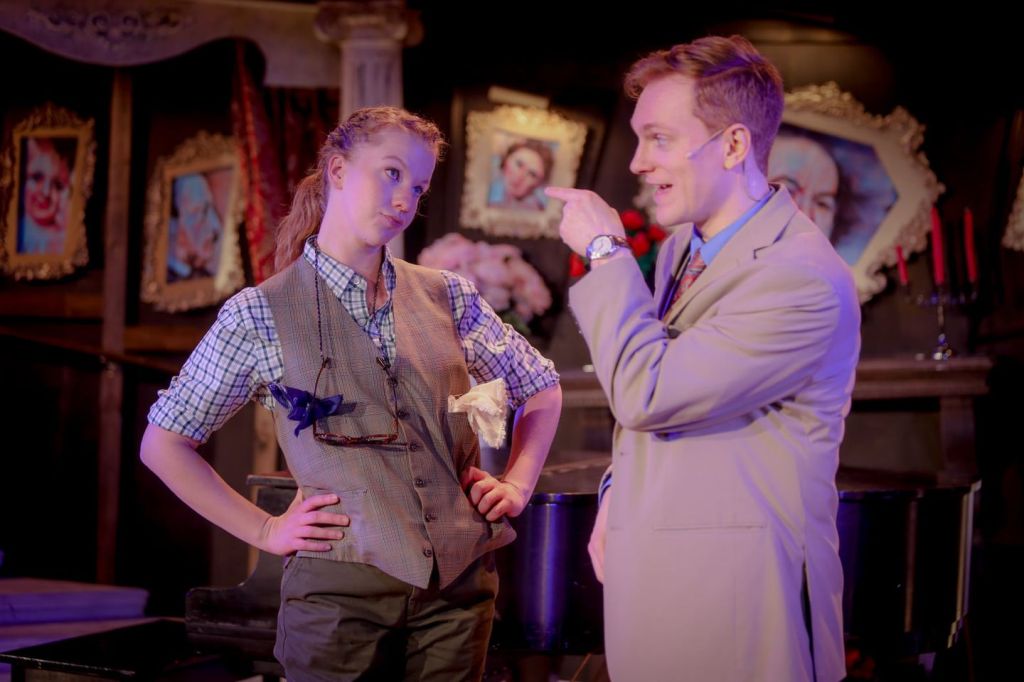
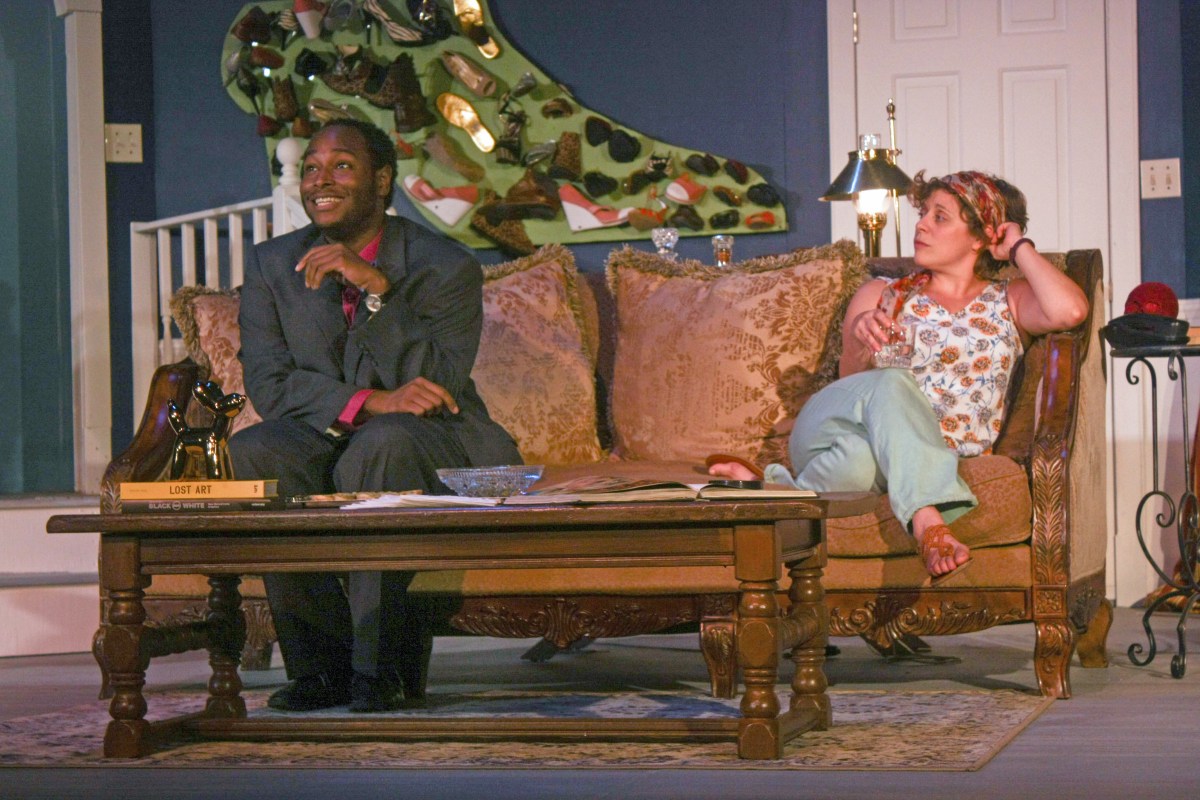
Mark Schenfisch plays Marcus Moscowicz, an ambitious police officer with all-consuming dreams of becoming a detective. Marcus initially appears as to be insufferably arrogant and narcissistic, but Schenfisch gradually digs down and mines the underlying integrity that drives his character.

Most remarkable, however, is Emily Berg-Poff Dandridge who plays ALL the other characters – with one notable exception I will not reveal here because I don’t want to spoil it for those of you who have not yet seen MURDER FOR TWO. The mystery revolves around who killed the prolific author Arthur Whitney who was unceremoniously murdered as he arrived for his own surprise birthday party as the remote mansion where he lives – or lived – with his wife. It is worth noting that Whitney was not well liked. All who gathered to celebrate his birthday had appeared as a character in one of his books, making them all plausible suspects.

Dandridge play the roles of the newly widowed Dahlia Whitney, the Whitney’s feisty and constantly bickering neighbors, Murray and Barb Flandon, Whitney’s talkative and over-achieving niece Stef, a well-known ballerina names Barrett Lewis who has a vaguely Russian accent that does not match her name, Dr. Griff – a local psychiatrist who conveniently ignores the ethics of doctor-patient confidentiality – and, last but not least, Timmy, Yonkers, and Skid, the only remaining members of a twelve-member boys’ choir who were invited to provide entertainment for the birthday party.

As required by the script, Dandridge swiftly transitions between these nine characters using a pair of large round eyeglasses and a red baseball cap as the only notable props. The majority of the characterizations are accomplished through shifting the actor’s center of gravity, changing the posture, and adjusting the voice, accent, and phrasing – often in mid-sentence. The result is that Dandridge often interrupts herself and does it so well we almost forget that there is a single actor creating multiple characters. Thank you, Emily Dandridge, for an outstanding performance.

As far as mysteries go, the authors have written in enough details, anecdotes, and red herrings to keep things interesting. The biggest of these is Dahlia Whitney’s increasingly colorful, complex, and loud musical confessions.

And then there’s the piano. MURDER FOR TWO is a musical, but not the breaking-into-song or catchy-show-tunes type of musical. Instead of the usual offstage band, both actors play the piano, using it like anther character’s voice or as a substitute for their own. Sometimes they do sing, but most often the piano seems to be another voice rather than an instrument to accompany the human voices.  Speaking of voices there is one character who is NOT voiced by Dandridge who is represented by a sound effect reminiscent of the muted trombone voice of the invisible adults on Peanuts animated shows.

MURDER FOR TWO is filled with a steady stream of surprises. The director makes sure the pace rarely lags. This show might even trigger sensory overload for some viewers. The story is complex enough to hold the audience’s attention for ninety minutes with no intermission and the lighting is as wacky as the plot. I especially liked the effect of the arriving automobiles, and there are plenty of other special effects that surprise, stun, and amaze. The physical set screams comedy, and the writers and actors have successfully met the challenge of this hybrid genre of theatre without detriment to either the comedy or the mystery elements. The rapid transitions and complexity sometimes make it a challenge for the audience as well, and there are occasional asides or moments when the audience is directly addressed – giving us a moment to catch up. MURDER FOR TWO is “extra” and that’s one of the best things about it.

MURDER FOR TWO

Book and Music by Joe Kinosian

Book and lyrics by Kellen Blair

Cast:

Mark Schenfisch as Marcus Moscowicz

Emily Berg-Poff Dandridge as The Suspects

Direction and Design Team:

Directed by Tom Width

Musical Direction by Mark Schenfisch

Costume Design by Maura Lynch Cravey

Lighting Design by Joe Doran

Scenic Design by Tom Width

Technical Direction by Liz Allmon

Run Time:

90 minutes, no intermission

Tickets:

$49

$44 for seniors, students, military, and first responders.

Photos: Robyn O’Neill

One-Time
Monthly
Yearly

Make a one-time donation

Make a monthly donation

Make a yearly donation
Choose an amount

¤5.00
¤15.00
¤100.00
¤5.00
¤15.00
¤100.00
¤5.00
¤15.00
¤100.00

Or enter a custom amount

¤

Your contribution is appreciated.

Your contribution is appreciated.

Your contribution is appreciated.

Click Here to Support RVArt Review with
a one-time or monthly donation
Click Here to Support RVArt Review with
a one-time or monthly donation
Click Here to Support RVArt Review with
a one-time or monthly donation

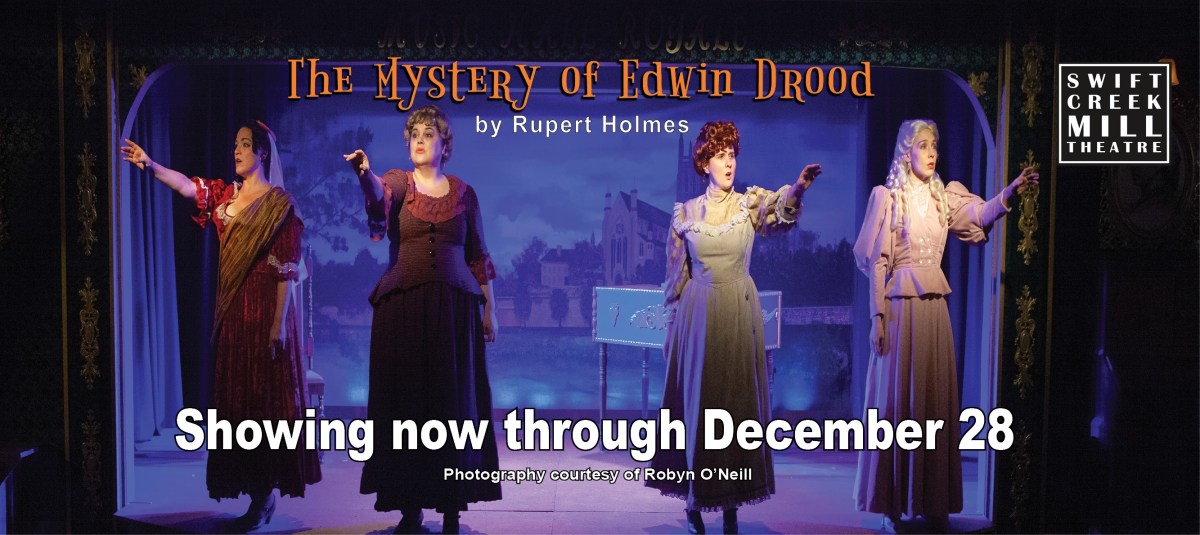
THE MYSTERY OF EDWIN DROOD: Not Just Another WhoDunIt, But Was-It-Even-Done?

THE MYSTERY OF EDWIN DROOD: A Different Ending Every Night!

A Theater Review by Julinda D. Lewis

At: Swift Creek Mill Theatre, 17401 Jefferson Davis Highway, Colonial Heights, VA 23834

Performances: November 16 – December 28, 2019

Ticket Prices: $40 Theater only; $35 Seniors, Military & Students; $18 Dinner

Info: (804) 748-5203 or swiftcreekmill.com

Swift Creek Mill Theatre opened the 2019-2020 season with Jeffrey Hatcher’s unconventional Sherlock Holmes mystery, Holmes and Watson (https://jdldancesrva.com/2019/09/21/holmes-and-watson-its-not-what-you-think/) and now they’re presenting another non-traditional mystery, Rupert Holmes’ The Mystery of Edwin Drood.

The Mystery of Edwin Drood is based on the unfinished last novel of Charles Dickens, who died of a stroke while working on the book. Hatcher, who wrote the book, music, and lyrics (now there’s an accomplishment you don’t see every day), infused Dickens’ story with humor by setting it as a play within a play, performed by the members of the Music Hall Royale, a Victorian music hall.

The cast – actual and fictitious – is rowdy and bawdy. They start out mingling in the audience, telling cheesy jokes, sitting next to audience members, and testing the waters with double entendre. The huge cast – nearly twenty – often spills over the edges of the relatively small stage, and director Tom Width, who clearly enjoys this unbridled parody, uses this to heighten the comic effect and interactive nature of the show.

There are some strong voices, particularly Michael Gray as the protagonist John Jasper, and Paige Reisenfeld as the romantic interest, Rosa Bud. Ian Page, an antagonist, uses a high-stepping walk and simmering facial expressions to great comic effect. The “Chairman”  or Master of Ceremonies, Richard Travis, is appropriately blundering and bombastic by turn and keeps things rolling along with the help of his gavel-wielding stagehand, Alvan Bolling, II.

The title role of Edwin Drood is played by Alice Nutting – a character who is a male impersonator (yes, that was a thing in Victorian theater) – who is in turn portrayed by actor Rachel Marrs.

Donna Marie Miller, in her first Swift Creek show, is also quite funny; her character even makes fun of her unidentifiable accent, and Jacqueline O’Connor was fascinating as her character, a drug-dealing prostitute, ranged from bawdy to tender when she reminisced about being leading lady Rosa Bud’s former nanny, then ended up being paired with the very amusing drunken sexton Michael McMullen in an engineered happy ending. They were paired by audience applause!

As Act 2 winds down – it actually sort of stumbles to a false end due to the death of its author – the audience is called on to vote for the murderer of Edwin Drood, who disappeared one night never to be seen or heard from, for some six months! The audience vote determines who sings the final two songs (not including the finale) and how the final scene ends.

In addition to directing, Tom Width also did the scenic design, a replica of a Victorian music hall stage embellished with lighting by Joe Doran, lively choreography by Alissa Pagnotti, and some lovely period costumes by Maura Lynch Cravey. Musical director Gabrielle Maes kept things moving along, but all too frequently the music was too loud, overpowering the vocals, to the point where an occasional word and even entire phrases got swallowed up. At least two people who were sitting behind me on the right hand side moved to empty center seats during intermission, hoping to balance the uneven sound. I didn’t get a chance to ask later if it had made a difference.

Ultimately, The Mystery of Edwin Drood is lite entertainment (yes, I meant to spell it that way); it amuses without pushing a message or focusing on a moral or worries about being politically correct or any of that. There’s a low-key holiday factor, with a Christmas tree downstage right, a few wreaths and an un-stressed mention of Christmas by one or more of the characters.

Julinda D. Lewis is a dancer, teacher, and writer who was born in Brooklyn, NY and now lives in Eastern Henrico County.

———-

Photo Credits: Robyn O’Neill Photography


Alvin Ailey
https://www.amazon.com/gp/product/1093389303/ref=as_li_tl?ie=UTF8&tag=rvartreview-20&camp=1789&creative=9325&linkCode=as2&creativeASIN=1093389303&linkId=c39a9d5181692735b3b75883d732cd03

Whistlin Women
https://www.amazon.com/gp/product/1072107546/ref=as_li_tl?ie=UTF8&tag=rvartreview-20&camp=1789&creative=9325&linkCode=as2&creativeASIN=1072107546&linkId=78c578738db659724289dda2116d985c

BookCoverImage
https://www.amazon.com/gp/product/1491223162/ref=as_li_qf_asin_il_tl?ie=UTF8&tag=rvartreview-20&creative=9325&linkCode=as2&creativeASIN=1491223162&linkId=a0220c19d8b7447d47e9683000fe3035

BookCoverImage2
https://www.amazon.com/gp/product/1492287601/ref=as_li_qf_asin_il_tl?ie=UTF8&tag=rvartreview-20&creative=9325&linkCode=as2&creativeASIN=1492287601&linkId=1e7b04062aac6be4579745cd37fb0ab2

41SR4yCI7aL._SL160_
https://www.amazon.com/gp/product/B0791TX5P5/ref=as_li_qf_asin_il_tl?ie=UTF8&tag=rvartreview-20&creative=9325&linkCode=as2&creativeASIN=B0791TX5P5&linkId=08cacc62054100f00d2a6fcfbf97f3e4

ART OF MURDER: And Then There Were…

THE ART OF MURDER: Die Laughing

A Theater Review by Julinda D. Lewis

At: CAT Theatre, 419 No. Wilkinson Rd., RVA 23227

Performances: September 27 – October 12, 2019

Ticket Prices: $25 Adults; $20 RVATA Members; $15 Students

Info: (804) 804-262-9760 or cat@cattheatre.com

About halfway into his second line, I wanted Jack Brooks dead. The man, played by Aaron Willoughby, is so obnoxious, narcissistic, and misogynistic, I could never develop any sympathy for him. And it only gets worse after the opening scene, where he emerges from his isolation tank and proceeds to strut around in his swim trunks and an open robe. I don’t know Willoughby, a teacher at the Center for Communications and Media Relations at Varina High School who is performing in his first CAT production, but I attribute Brook’s rotten demeanor to Willoughby’s acting abilities – and the script – and not to any personal shortcomings.

Joe DiPietro’s Art of Murder, a 2000 Edgar Award winner for Best Mystery Play, is a comedy murder mystery full of plot twists and turns and laugh-out-loud moments. The problem is that with the exception of Kate, the Brook’s Irish maid, none of DiPietro’s characters is likeable. And even Kate, played by Charlotte Topp with a warm-as-fresh-baked-bread Irish accent, seems to have something up her sleeve, too.

Jack Brooks is despicable, and his treatment of Kate and his wife Annie, played by Emily Turner, make him a likely candidate for murder. Turner’s character is complex, in turn angry, beleaguered, soft, and sharp. The winding path of the plot keeps her deliberately enigmatic. We don’t like to see women abused, but Annie. . .well, you have to meet her and decide for yourself what her story really is.

There is nothing subtle or enigmatic about the Brooks’ art dealer and friend, Vincent Cummings. Cummings is played with over-the-top flamboyance by D.C. Hopkins (not to be confused with dl Hopkins). Without giving away too much of the mystery, Cummings walks unwittingly into a set up, but he brings his own baggage, so I couldn’t muster up much sympathy for him, either.

All-in-all, Art of Murder is 100 minutes of comedic dysfunction, kept moving along at a fairly swift pace by director Zachary Owens. It’s just a matter of who gets murdered, and when, and by whom – we don’t really care why.

Art of Murder, set in a large country house in Connecticut (a murder mystery standard), on an autumn evening about 10 years ago, opens with Jack and Annie, a wildly famous celebrity artist and his less-celebrated artist wife, awaiting the arrival of their art dealer, Vincent. Jack has a grudge against Vincent, and he and Annie have summoned Vincent for dinner, where they are plotting to execute Vincent’s murder. Or are they? At one point Annie says to Vincent (yes, Vincent, not Jack) “I’ve never killed anyone before.” His response is “It’s always good to try new things.”

There’s – possibly – murder and suicide, red herrings and mis-direction, a gun filled with blanks (or are they?) and props that turn up in the wrong place, an escape from a locked box, a disembodied voice, and all manner of deceptions. Elizabeth Allmon’s set is a standard murder mystery genre room but lacks the elegance of a large country estate owned by a wealthy artist, and Sheila Russ’ costumes for Annie and Jack look more like they came from a thrift store than from a couture boutique, as their lifestyle demands. One prominent prop, Jack’s isolation tank, is a roughhewn black box, more reminiscent of a coffin than a sleek example of spa-inspired technology. Alan Armstrong gets to have fun with lighting, and Hunter Mass gets creative with the sound design. Tchaikovsky’s “Swan Lake” plays before the show starts, and “Ave Maria” ushers in the intermission. Aaron Orensky’s fight choreography is graphic, but I found it visually dissonant and unconvincing that Jack could so easily manhandle Vincent, given that Hopkins is so much more solidly built than Willoughby.

Art of Murder raises many questions. Most of the plot questions are eventually answered, leaving questions like what was the playwright thinking, and are the over-the-top performances intentional, and are the outbursts of anger meant to move the plot along by layering levity with a shot of reality, or were they thinly disguised rants by the playwright? There are only four people in the cast, so the possibilities – who gets murdered and who does the murdering – are not endless, yet DiPietro still manages to throw in some head-scratching surprises.

It’s interesting that of the current fall productions – and this one is the opening of CAT Theatre’s 56th consecutive season of providing community theater in Richmond – there are three mysteries, including Holmes & Watson a contemporary Sherlock Holmes style mystery at Swift Creek Mill (https://jdldancesrva.com/2019/09/21/holmes-and-watson-its-not-what-you-think), and A Gentleman’s Guide to Love and Murder a comedic musical murder mystery at Virginia Rep (https://jdldancesrva.com/2019/10/03/a-gentlemans-guide-to-love-murder-whos-turn-to-die).


FYI:

D.C. Hopkins, a graduate of Christopher Newport University, has toured with Virginia Rep for their shows “I Have a Dream” and “The Jungle Book.”

dl Hopkins is an award winning actor, veteran poet, and former Artistic Director of the African American Repertory Theatre of Virginia who was aa founding member of Ernie McClintock’s Jazz Actors Theatre.


Julinda D. Lewis is a dancer, teacher, and writer who was born in Brooklyn, NY and now lives in Eastern Henrico County.

———-

Photo Credits: Ellie Wilder


Modern Personal Isolation Tank/Float Tank

Isolation tank


A GENTLEMAN’S GUIDE TO LOVE & MURDER: Who’s Turn to Die?

A GENTLEMAN’S GUIDE TO LOVE AND MURDER: A Musical Comedy Tour de Force!

A Theater Review by Julinda D. Lewis

At: The November Theatre Marjorie Arenstein Stage

Performances: September 27 – October 20, 2019

Ticket Prices: $36-63

Info: (804) 282-2620 or www.virginiarep.org

A Gentleman’s Guide to Love and Murder has a love triangle, dysfunctional family dynamics, people who marry for money over love, a leading man who is a serial killer, and Scott Wichmann playing 8 different characters.

Written by Robert L Freedman (book and lyrics) and Steven Lutvak (music and lyrics), based on a novel by Rod Horniman, and directed and choreographed by Kikau Alvaro, A Gentleman’s Guide to Love & Murder is a delightful musical comedy in the hands of a dynamic and talented cast.

After an opening prologue by the ensemble, dressed in elegant mourning attire – a premonition of what is to follow – the audience meets Monty Navarro, sitting at a small desk on the eve of his sentencing for murder, writing his memoirs, including a full confession of how eight members of his family mysteriously died in less that a year. Alexander Sapp plays Navarro, the son of a recently deceased washerwoman who, it turns out, is related to the D’Ysquiths, a wealthy family who made their fortune in banking and finances. In fact, Monty is eighth in line to becoming the Earl of Highhurst, and Sapp seems to have as much fun playing Monty as the audience does watching him plot and plan his way to success, with time out to for romance. Never mind that his love interest, Sibella Hallward, decides to marry someone else. Grey Garrett’s portrayal of the vain and materialistic Sibella is spot on – a perfect balance of comedy and musical theater diva.

Debra Wagoner, as the mysterious Marietta Shingle, has a couple of surprises that are integral to the plot. She is supported by an ensemble that includes Georgia Rogers Farmer, Maxwell Porterfield, Daniel Pippert, Adrienne Eller, Lauren Leinhaus-Cook, Theodore Sapp, and Derrick Jaques.


No, I did not forget to mention Scott Wichmann. This is one of those awkward situations in which the most memorable character is not the leading man, but a supporting character – in this case eight supporting characters, all played by Wichmann. It’s not even fair to call Wichmann a supporting character, as he portrayed all the D’Ysquith heirs in line for the title Earl of Highhurst – including an inebriated cleric, a body-building lord mayor, and a country squire who is married but seems to prefer the companionship of men.

There’s Lady Hyacinth, whose interest in helping the poor and disadvantaged provides a perfect opening to send her off to her death in poverty stricken Egypt or serving the lepers in India. Surviving these dangerous missions, Monty sends her off to deepest, darkest Africa to work with a tribe of cannibals. (It’s 1909, and no one had yet been warned to be politically correct or culturally sensitive.) Lady Salome D’Ysquith Pumphrey is such a bad actress that when Monty replaces the blanks in her prop gun with real bullets and she shoots herself on stage, the audience applauds her death, perhaps not realizing she has really died. Both Lady Hyacinth and Lady Salome are played by Wichmann. Each character has a different voice, posture, and gait. The Reverend Lord Ezekial D’Ysquith, for example, has a distinctive, stylized teetering walk.

Each also has a distinct style of dressing, thanks to costume designer Sue Griffin. Visually, the production is also enhanced by Chris Raintree’s expansive set, characterized by multiple movable set components (ranging from Monty’s modest home to Lord Adalbert D’Ysquith’s mansion – an expansive mansion so grand that it offers tours to tourists.

Sandy Dacus’ music direction, along with Alvaro’s direction kept things moving along at a fair clip, although there were a few moments when I thought something should have been tightened up. The first act lasts nearly 90 minutes, with a total run time of about 2 ½ hours. For the most part, the musical selections do not cater to foot-tapping show tunes, but rather to sung narrative that advances the story line – when all the words are clear; sometimes they were not at Wednesday’s matinee.

The surprise ending brings about an unlikely alliance and opens the door to a sequel. A Gentleman’s Guide to Love and Marriage is delightful musical comedy, satisfyingly delivered by a death-defying cast.


Julinda D. Lewis is a dancer teacher, and writer who was born in Brooklyn, NY and now lives in Eastern Henrico County.

———-

Photo Credits: Aaron Sutten

A Gentleman's Guide to Love and Murder
Lauren Leinhaas-Cook, Adrienne Eller, Alexander Sapp, Grey Garrett and Scott Wichmann. Photo by Aaron Sutten.

A Gentleman's Guide to Love and Murder
Adrienne Eller and Alexander Sapp. Photo by Aaron Sutten.

A Gentleman's Guide to Love and Murder
Grey Garrett and Alexander Sapp. Photo by Aaron Sutten.

A Gentleman's Guide to Love and Murder
Scott Wichmann. Photo by Aaron Sutten.


41SR4yCI7aL._SL160_
https://www.amazon.com/gp/product/B0791TX5P5/ref=as_li_qf_asin_il_tl?ie=UTF8&tag=rvartreview-20&creative=9325&linkCode=as2&creativeASIN=B0791TX5P5&linkId=08cacc62054100f00d2a6fcfbf97f3e4

Alvin Ailey
https://www.amazon.com/gp/product/1093389303/ref=as_li_tl?ie=UTF8&tag=rvartreview-20&camp=1789&creative=9325&linkCode=as2&creativeASIN=1093389303&linkId=c39a9d5181692735b3b75883d732cd03

Whistlin Women
https://www.amazon.com/gp/product/1072107546/ref=as_li_tl?ie=UTF8&tag=rvartreview-20&camp=1789&creative=9325&linkCode=as2&creativeASIN=1072107546&linkId=78c578738db659724289dda2116d985c

Apple Watch
https://www.amazon.com/gp/product/B07K37HKT8/ref=as_li_qf_asin_il_tl?ie=UTF8&tag=rvartreview-20&creative=9325&linkCode=as2&creativeASIN=B07K37HKT8&linkId=c73d0d03604f60526a472839af36bdc0

Amazon Hangover Patch
https://www.amazon.com/gp/product/B00I3F4QSQ/ref=as_li_qf_asin_il_tl?ie=UTF8&tag=rvartreview-20&creative=9325&linkCode=as2&creativeASIN=B00I3F4QSQ&linkId=afcc32f109bd1f651ef418fd13253ca8


HOLMES AND WATSON: It’s Not What You Think

HOLMES AND WATSON: To Tell the Truth

A Theater Review by Julinda D. Lewis

At: Swift Creek Mill Theatre, 17401 Jefferson Davis Highway, Colonial Heights, VA 23834

Performances: September 14 – October 12, 2019

Ticket Prices: $40 Theater only; $58.95 Dinner & Theater; $10-$20 rush tickets available depending on availability

Info: (804) 748-5203 or swiftcreekmill.com

They got me. They got me good!

Jeffrey Hatcher’s Holmes and Watson is not your traditional Sir Arthur Conan Doyle Sherlock Holmes mystery. Published in 2018, this fast-paced one-act mystery takes place after the death of Sherlock Holmes at Reichenbach Falls. Mysteriously, the bodies of Holmes and his arch nemesis Moriarty were never found. So. . .

On a remote island off the coast of Scotland in 1894, Dr. Watson is summoned to identify which of three mysterious men all claiming to be Sherlock Holmes is the real sleuth. And that, my friends, is about all I can tell you without giving away the plot and spoiling the fun. This is, after all, a mystery, and it is chock full of clues and red herrings, misdirection and rabbit holes. Fakes, frauds, telegrams, and mad men, oh my!

Running under 90 minutes, and performed without intermission, returning guest director John Moon keeps the pace fast with a tight-knit ensemble and there is nearly as much laughter as mystery. Joe Pabst is Watson, Richard Koch plays Dr. Evans, and there are three Holmes characters. Daniel Moore is Holmes #1, a somewhat menacing figure with a tendency to violent outbursts. Axel Burtness is Holmes #2, who wears a crazed look to match his straight jacket. And Jonathan Hardison is Holmes #3, who is deaf and mute. The cast is rounded out by Irene Kuykendall as the Matron and Travis Williams as the Orderly. But no one and nothing is what it appears to be.

There were some scenes where I questioned the behavior of an actor, but the final scene revealed all and explained what might otherwise appear to be lapses or omissions. Ahh, hindsight.

Joe Doran’s lighting adds depth and drama to Tom Width’s relatively simple and minimalist set – a former fortress turned lighthouse turned asylum, it is appropriately dark and shadowy. Maura Lynch Cravey’s costumes add a bit of color and visual appeal, and there are several gun shots and loud noises.

Holmes and Watson is quite an enjoyable evening and keeps the audience engaged. There is enough mystery to please a true Sherlock Holmes or mystery fan, but you don’t have to know a lot about Sherlock Holmes to appreciate the puzzle. I actually enjoyed having the wool pulled over my eyes because it was done so cleverly.


Julinda D. Lewis is a dancer, teacher, and writer who was born in Brooklyn, NY and now lives in Eastern Henrico County.

———-

Photo Credits: Robyn O’Neill

H&W-164H&W-82

H&W-34
Richard Koch, Irene Kuykendall, and Joe Pabst

H&W-21
Daniel Moore, Axel Burtness, and Johnathan Hardison


Apple Watch
https://www.amazon.com/gp/product/B07K37HKT8/ref=as_li_qf_asin_il_tl?ie=UTF8&tag=rvartreview-20&creative=9325&linkCode=as2&creativeASIN=B07K37HKT8&linkId=c73d0d03604f60526a472839af36bdc0

41SR4yCI7aL._SL160_
https://www.amazon.com/gp/product/B0791TX5P5/ref=as_li_qf_asin_il_tl?ie=UTF8&tag=rvartreview-20&creative=9325&linkCode=as2&creativeASIN=B0791TX5P5&linkId=08cacc62054100f00d2a6fcfbf97f3e4

Alvin Ailey
https://www.amazon.com/gp/product/1093389303/ref=as_li_tl?ie=UTF8&tag=rvartreview-20&camp=1789&creative=9325&linkCode=as2&creativeASIN=1093389303&linkId=c39a9d5181692735b3b75883d732cd03

Whistlin Women
https://www.amazon.com/gp/product/1072107546/ref=as_li_tl?ie=UTF8&tag=rvartreview-20&camp=1789&creative=9325&linkCode=as2&creativeASIN=1072107546&linkId=78c578738db659724289dda2116d985c