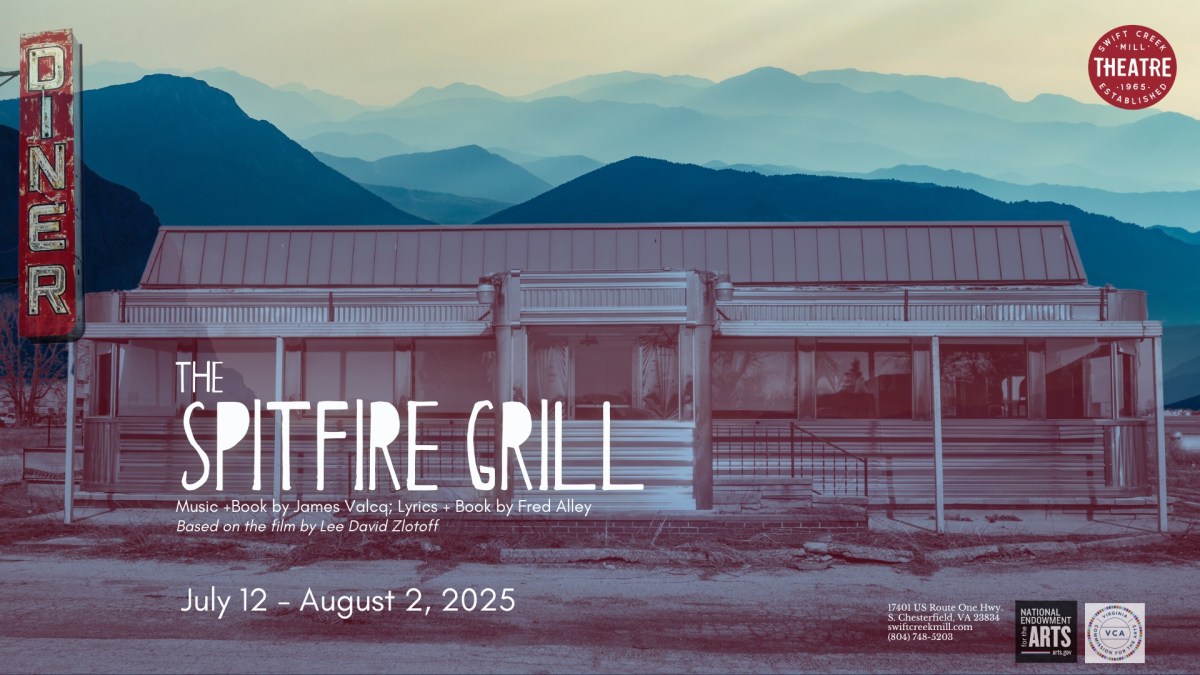
THE SPITFIRE GRILL

Order Up!

At: The Swift Creek Mill Theatre, 17401 U.S. Route One, Chesterfield, VA 23834

Performances: July 12 – August 2, 2025

Ticket Prices: $44-49. Ask about discounts for students, seniors, and veterans.

Info: (804) 748-5203 or https://www.swiftcreekmill.com

A Theater Reflection by Julinda D. Lewis

I’ve said it before and I’ll say it again, there’s something about summer that demands a musical. I also have a soft spot for diners and shows that take place in diners. (See my review of Waitress, another summer musical set in a diner: https://jdldancesrva.com/2025/07/12/waitress/ ) The Spitfire Grill, by James Valcq (music and book) and Fred Alley (lyrics and book) is particularly heartwarming.

In his director’s notes, Tom Width sums it up: “I find the show to be ‘hometown gold’ with its themes of family, heartbreak, resilience, and redemption along with a healthy dose of downhome charm and humor – all wrapped up in a musical score that rings true to the nature of its setting.” Nothing more needs to be said, but I’ll say a few more things anyway.

A stereotypical musical often feature a predictable plot, idealized characters, romantic storylines, upbeat tunes, elaborate choreography, and a happy ending. The Spitfire Grill has many of these characteristics but neatly sidesteps familiar tropes and simplistic portrayals of characters in favor of more complex individuals involved in less familiar situations and more unpredictable relationships.

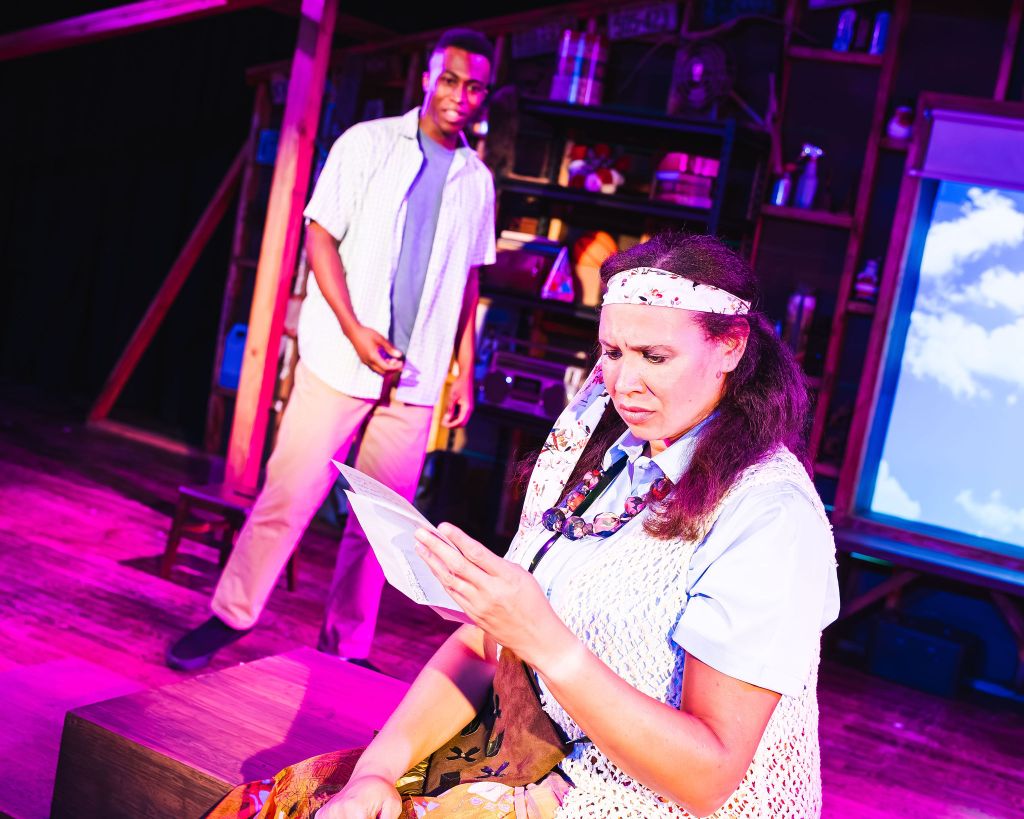
Our first glimpse of our heroine, Percy, is from behind bars, just before she is released from prison where she has spent the past five years. By the end of Act 1, the plot still has not revealed why Percy was in prison – although I had my suspicions (based on her age and the length of her sentence), which were confirmed later in Act 2 with a conversation between Percy and her new friend Shelby.

Percy is not the only character with a secret. Her new – and reluctant – employer and ultimately friend, Hannah, also carries a heavy burden she needs help to let go. Perhaps Hannah’s hip problem and subsequently fall are overly active metaphors for her crippling burden. There is, after all, a longstanding literary history of spiritual meaning attached to dislocated or injured hips associated with struggle, growth, a turning point, or transformation.

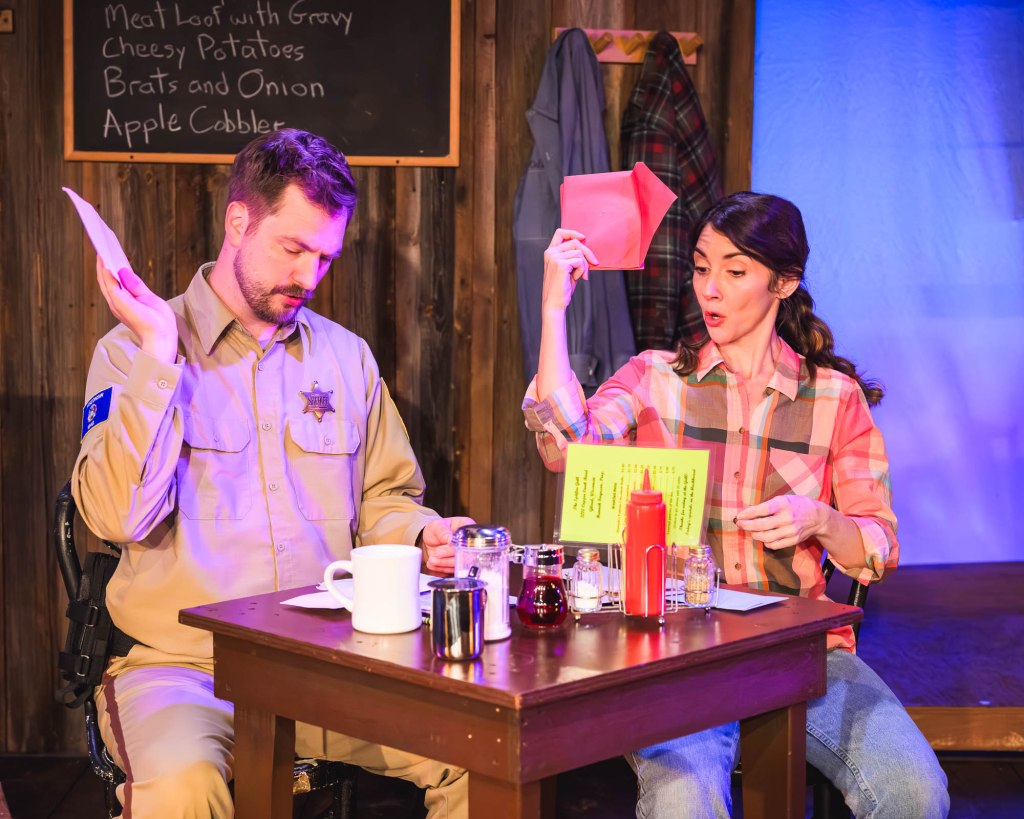
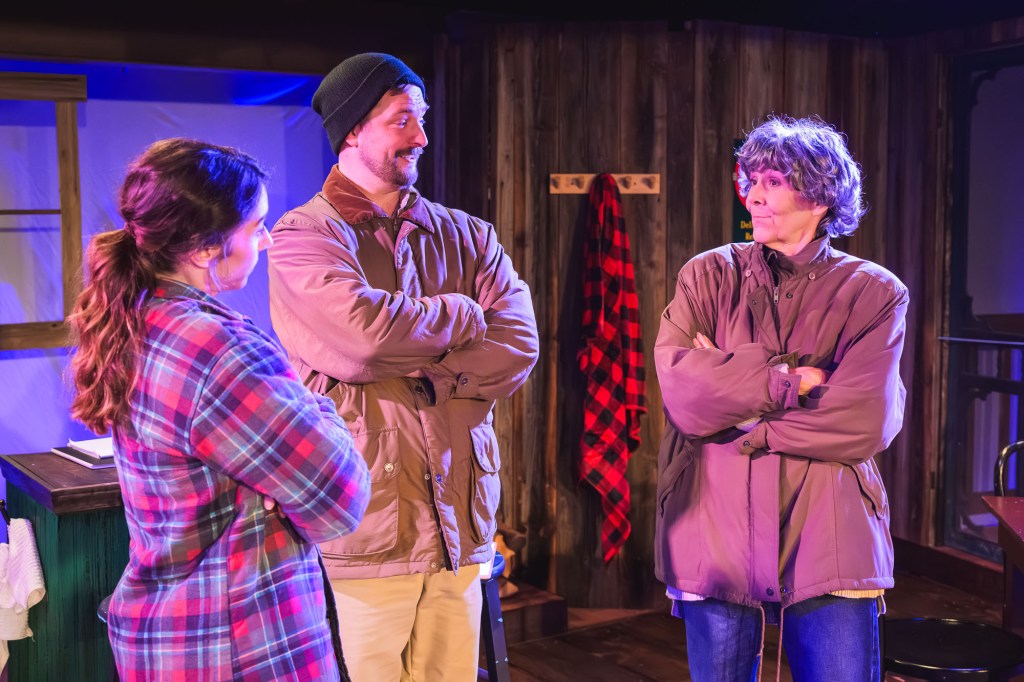
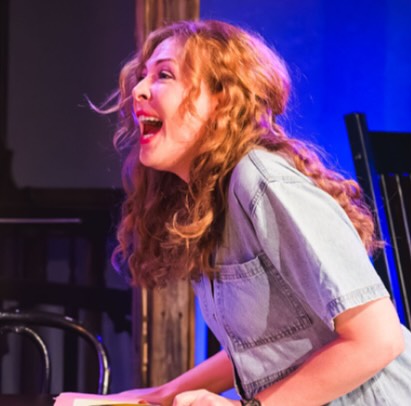
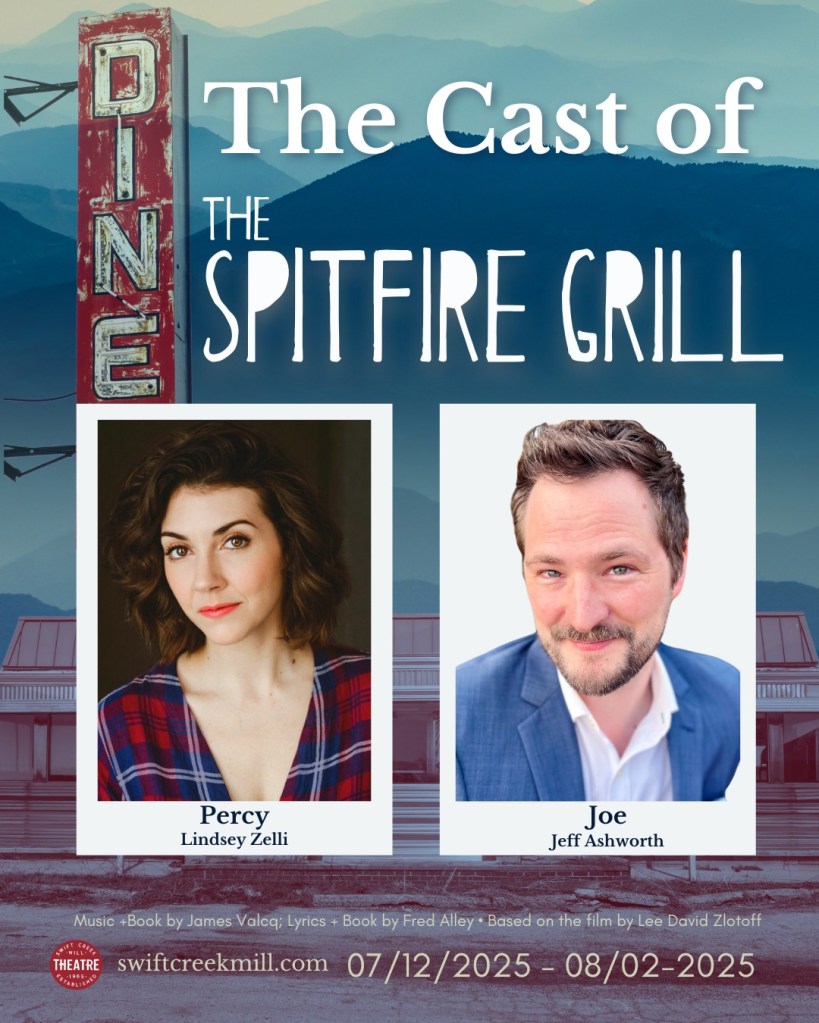
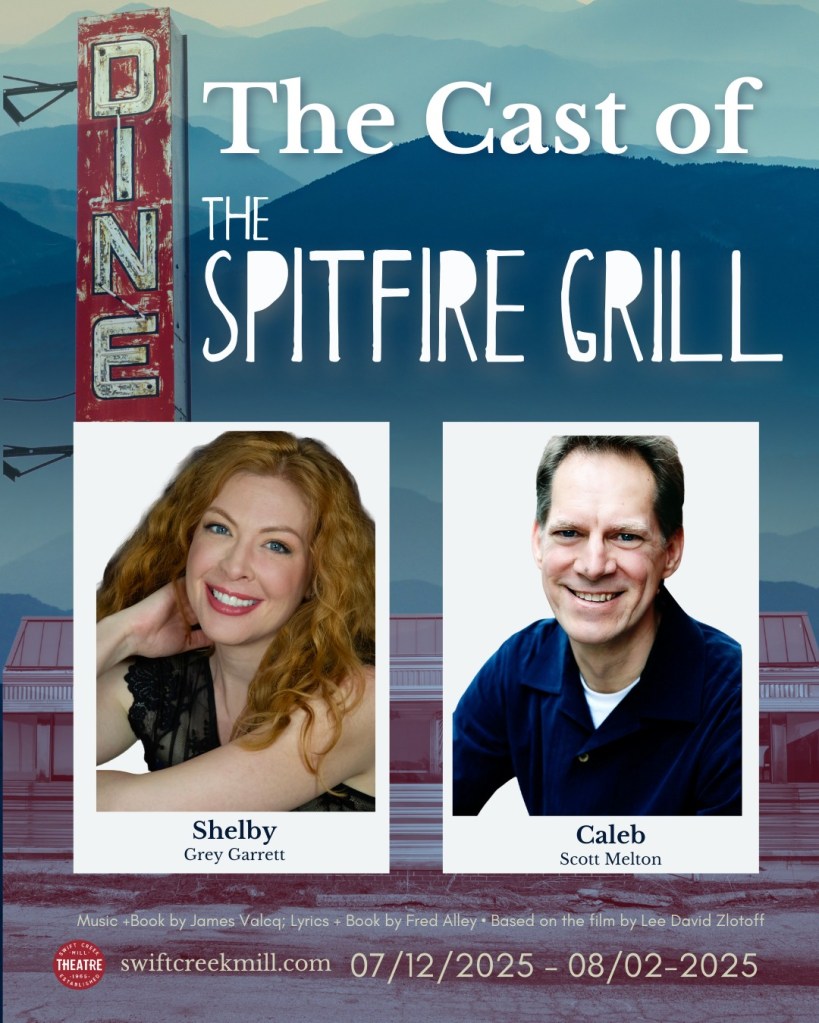
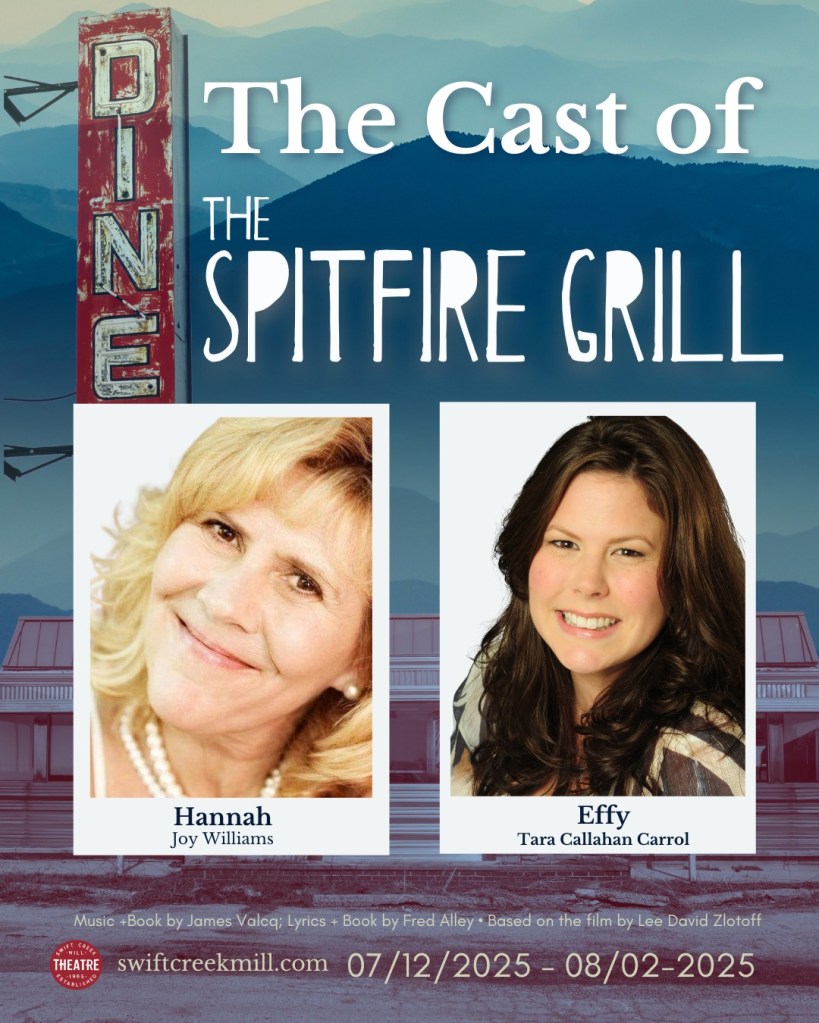
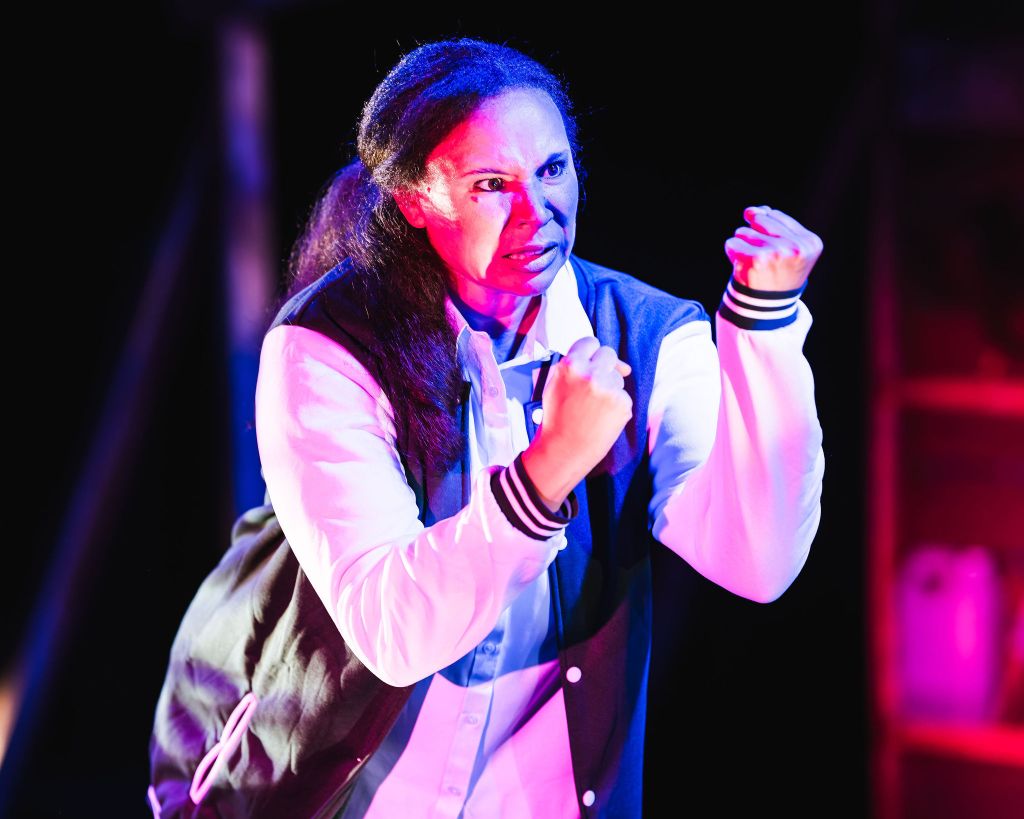
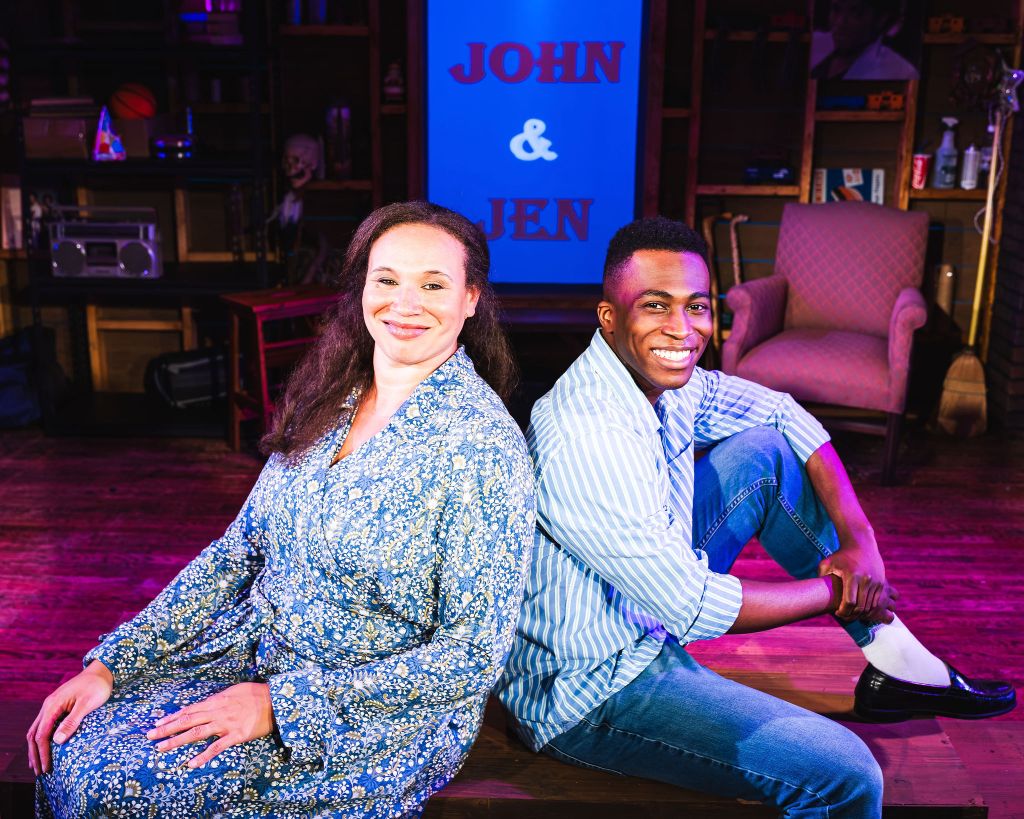
I loved the raw and genuine relationship that develops between the two women portrayed by Lindsey Zelli as the broken but remarkably resilient young woman who is Percy Talbott and Joy Williams as the no-nonsense but tenderhearted matriarch Hannah Ferguson. Offering a counter to these two is Grey Garrett as Shelby Thorpe. A bit older than Percy, Shelby lacks Percy’s grit and independence but has the advantage of discernment and comes into her own under the tempering tension created by navigating Percy’s grittiness and Hannah’s steeliness. (Hmm. This made me think of the trio of women in Waitress, as well, and how each contributed something the other lacked, but I digress.) At one point Percy says, “Do you think if a wound goes deep enough the healing can hurt just as bad as what caused it?”

Offering a welcome comedic element is Effy Krayneck, the little town of Gilead, Wisconsin’s postmistress and self-appointed gossipmonger. When there isn’t any gossip to monger, Effy just makes up some juicy tidbit to smear around the diner like jelly on toast. Since Percy is the newest resident in town, the lion’s share of gossip is about her. Tara Callahan Carroll plays this role with great timing and just the right amount of exaggeration. But even Effy’s penchant for histrionics and hyperbole has a basis in community care. From what I could tell, the people who daily gather in Hannah’s Spitfire Grill are her chosen family, the people who really matter to her.

Jeff Ashworth treads carefully and with confidence in the roll of Sheriff Joe, the town’s law enforcement as well as Percy’s parole officer, friend, and potential love interest. Percy’s rebuff of Joe’s premature marriage proposal may or may not signal an end to any romantic relationship between the two of them, but it definitely causes a ripple in the usual happily ever after ending one expects in a musical.

Likewise, “it’s complicated” could be applied to the relationship between the soft-spoken Shelby and her husband Caleb, who is played with palpable tension by Scott Melton. Caleb, who is also Hannah’s nephew and gratuitous caretaker, appears to be at least a decade older than Shelby. He clings to an outdated sense of patriarchy and is highly resistant to change. There is a lot of love in Gilead, Wisconsin, but it doesn’t necessarily seem to be the romantic kind.

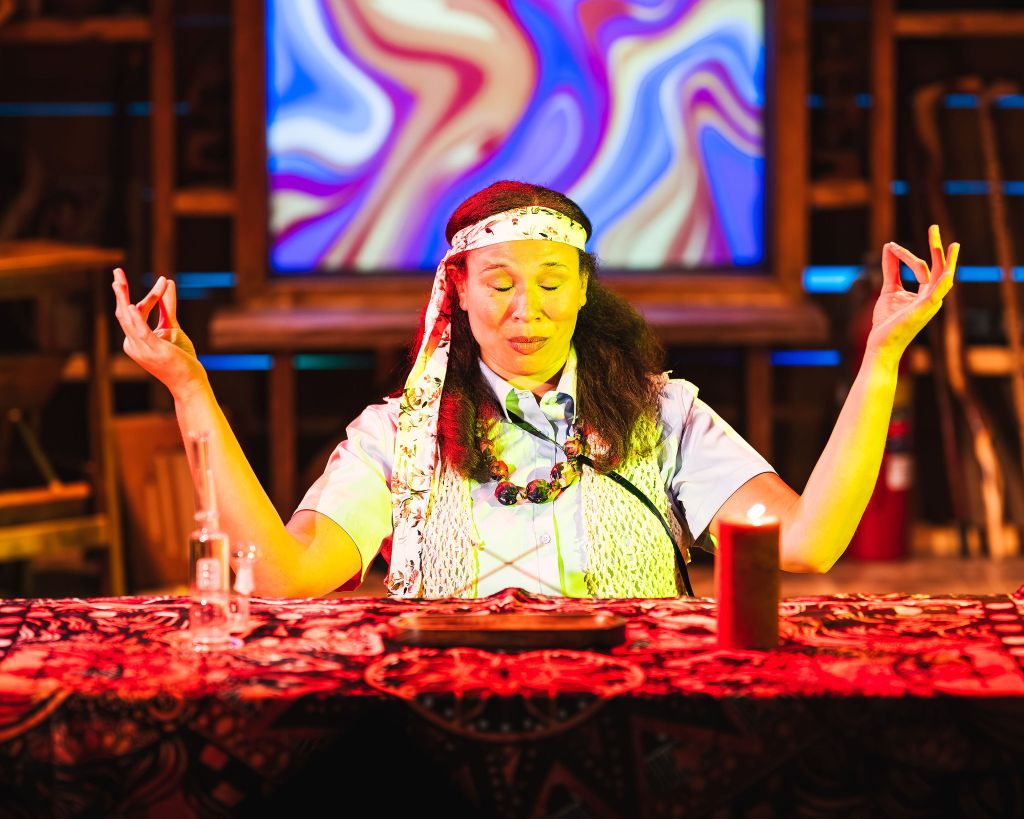
And then the authors introduce a mythical, mystical supernatural element. It’s subtle yet powerful. A nameless character identified in the program only as The Visitor brings a surprise revelation. Like the concept of a dislocated hip, the concept of a “visitor” comes attached to the idea of a catalyst for change, a disruption that forces needed transformation.

The Visitor in The Spitfire Grill makes several significant appearances but never speaks. Adding to this sense of mystery, The Visitor is played by Brian Vaughan or Austen Linder. Vaughan filled the role during the Wednesday matinee I viewed and joined Zelli to beautifully recreate a scene that had special meaning for Percy, a scene that gave Percy hope as she prepared to re-enter the world after prison. I’m not aware of the authors’ intent – it could simply be a result of the character’s earlier trauma (explained in the development of the story) but setting this scene in silence was more effective than it could ever have been if The Visitor spoke.

The Spitfire Grill is folksy or country, depending on your perspective. Lines like Effy’s enigmatic “if you’ve got the thread, you’ll find the needle” make perfect sense in this atmosphere. The accents are broad, and the singing is soulful and haunting. At one point, as Percy sings about jumping out of the frying pan into the fire, Lindsey Zelli quite casually holds a note for an impressively long time while swatting flies with a spatula. Drawn together by the unlikely device of a raffle, the cast moved together like a well-oiled ensemble through director Tom Width’s simple but genuine set. There seemed to be a concerted effort to portray real people that stirred the edges of our collective memory, rather than characters acting for our entertainment, and that’s what made The Spitfire Grill so satisfying. Order up!

Here’s a link to a video preview of The Spitfire Grill: https://www.facebook.com/swiftcreekmilltheatre/videos/1486417315855918 or www.swiftcreekmill.com

———-

Julinda D. Lewis, EdD is a dancer, minister of dance,  teacher, and writer who was born in Brooklyn, NY and currently resides in Eastern Henrico County. When not writing about theater and dance, she teaches dance history at VCU and low impact dance fitness classes to seasoned movers like herself and occasionally gets to perform.

———-

THE SPITFIRE GRILL

Music & Book by James Valcq

Lyrics & Book by Fred Alley

Based on the filmy Lee David Zlotoff

Directed by Tom Width

CAST

Lindsey Zelli              as Percy Talbott

Jeff Ashworth           as Sheriff Joe

Joy Williams             as Hannah Ferguson

Grey Garrett             as Shelby Thorpe

Tara Callahan Carroll          as Effy Krayneck

Scott Melton             as Caleb Thorpe

Brian Vaughan or Austen Linder as The Visitor

Catherine McMullan           U/S for Percy Talbott

ORCHESTRA

Shellie Johnson       Keyboard Conductor

Finn Koehler             Synthesizer

Chris Johnston        Violin

Ed Drake                   Guitar/Mandolin

CREATIVE TEAM

Directed by Tom Width

Musical Direction by Shellie Johnson

Scenic Design by Tom Width

Lighting Design by Steve Koehler

Costume Design by Maura Lynch Cravey

Technical Direction by James Nicholas

PRODUCTION STAFF

Producing Artistic Director …. Tom With

Lead Carpenter ….. Peter Prout

Stage Manager ….. Sandy Lambert

Assistant Stage Manager/Props ….. Tom Width

Light Board Operator ….. Brent Deekens

Set Crew ….. Peter Prout, Brent Deekens, Hailey Bean, PJ Llewellyn, Thomas Doersch, Paul Deiss

Lighting Crew ….. Brent Deekens

Photographer ….. Daryll Morgan

Wig Design ….. Alia Radabaugh

Time and Place:

A Small Town, not long ago

Run Time:

About 2 hours, with 1 fifteen-minute intermission

Performances:

July 12 – August 2, 2025

Thursdays, Fridays, Saturdays at 8:00PM

Select Wednesdays at 2:30PM

Tickets:

Regular $44-49. Discounts for Seniors, Military & Veterans

Photographer: Daryll Morgan

The Spitfire Grill premiered off-Broadway at the Duke Theatre on 42nd Street on September 7, 2001.

MUSICAL NUMBERS

Act One

A Ring Around the Moon ….. Percy

Hannah’s Harangue ….. Hannah

Somethin’s Cookin’ at the Spitfire Grill ….. Company

Hannah Fell Down ….. Effy

Hannah Had a Son ….. Shelby

When Hope Goes ….. Shelby

Ice and Snow ….. Caleb, Joe and Effy

Shelby’s Ad ….. Shelby

The Colors of Paradise ….. Percy and Shelby

Diggin’ Stone ….. Caleb

This Wide Woods ….. Joe and Percy

Forgotten Lullaby ….. Hannah

Shoot the Moon ….. Hannah and Company

Act Two

Opening, Act II ….. Shelby, Percy and Hannah

Come Alive Again ….. Hannah and Company

Foret for the Trees ….. Joe

Wild Bird ….. Shelby

Sunrise ….. Percy

Shine ….. Percy

Way Back Home ….. Hannah

Dear Mrs. Ferguson ….. Effy and Joe

The Last Letters ….. Shelby and Percy

Finale ….. Company
One-Time
Monthly
Yearly

Make a one-time, monthly or annual donation to support rvart review

Make a monthly donation

Make a yearly donation

Choose an amount

$5.00
$15.00
$100.00
$5.00
$15.00
$100.00
$5.00
$15.00
$100.00

Or enter a custom amount – no amount is too small or too large

$

Your contribution is appreciated.

Your contribution is appreciated.

Your contribution is appreciated.

DonateDonate monthlyDonate yearly
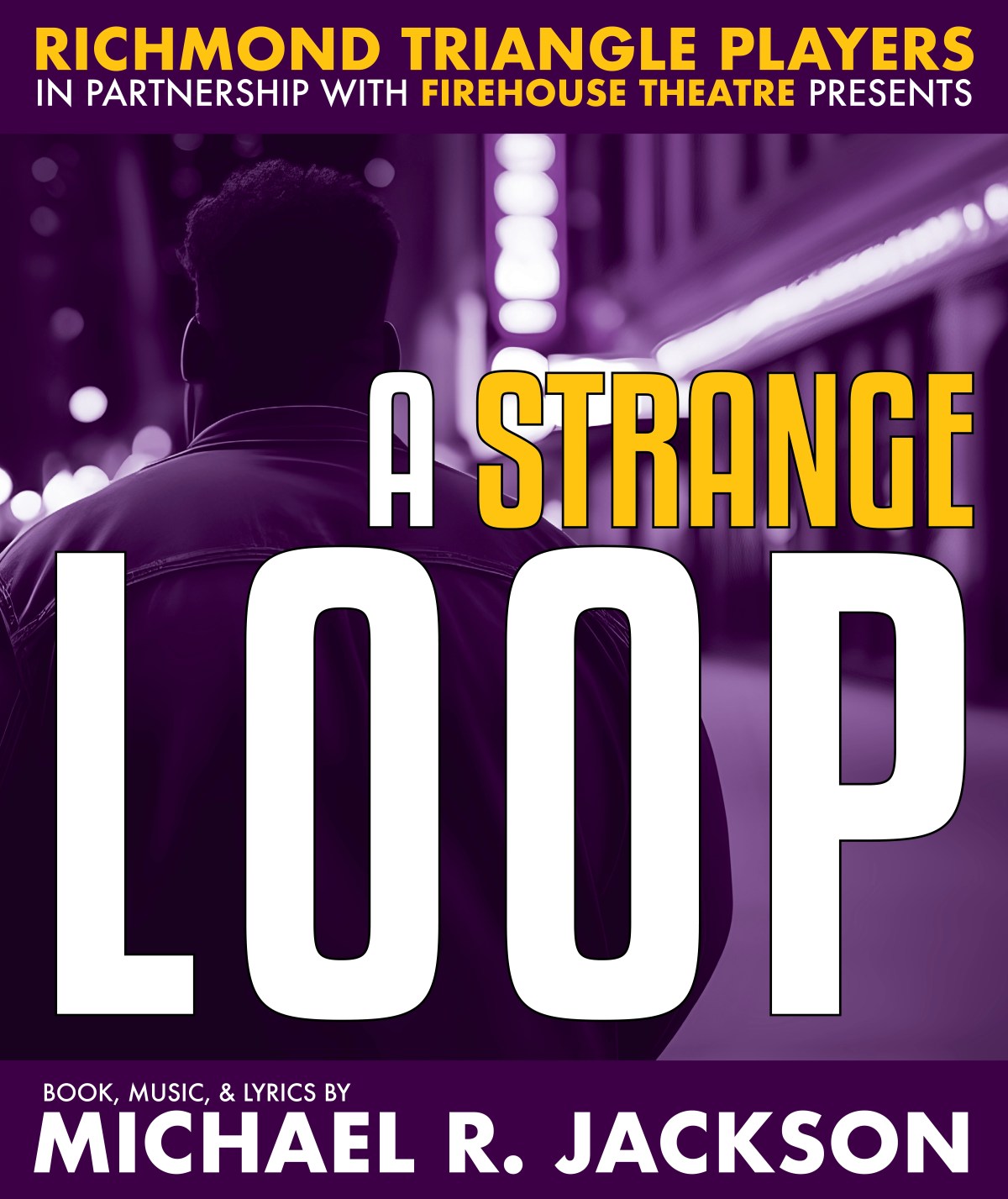
A STRANGE LOOP

Or, How to be a Big, Black, Queer-Ass Broadway Musical

Presented by: Richmond Triangle Players in Partnership with Firehouse Theatre

At: Richmond Triangle Players at the Robert B. Moss Theatre, 1300 Altamont Avenue,  RVA 23220

Performances: June 20 – August 9, 2025

Ticket Prices: $55

Info: (804) 346-8113 or rtriangle.org

A Reflection on Theater and Things Relative by Julinda D. Lewis

———-

Michael R. Jackson’s Pulitzer Prize-winning musical, A Strange Loop (2019) follows the life of Usher – no, not that Usher – a Black, queer writer who works as an usher in theaters while writing his own musical about a Black queer usher who is writing a musical…about a Black queer usher who is writing a musical…

“Who knew slavery, police violence, and intersectionality could be so lucrative.”

A Strange Loop is at once as new as the latest dance craze and as old as the theater itself. The chorus of six nameless characters referred to in the program as “Thoughts” draws on the ancient Greek chorus. The Thoughts personify Usher’s inner struggles with identity and purpose. At times they represent social issues and personal demons, and at other times they represent people in Usher’s life. Come to think of it, Usher is not so much the lead character’s name as his occupation; he works as a Disney usher while struggling to overcome his writer’s block. Sometimes, the people are the issues, and sometimes the issues are the people. And since Usher is a young Black queer individual, these inner struggles encompass issues of racism, identity, homophobia, and self-doubt. Since Usher is a writer, A Strange Loop is also an exploration of the mind of creatives.

In science and technology, “a strange loop” is a concept proposed by Pulitzer prize-winning cognitive scientist and author Douglas Richard Hofstadter in his book I Am A Strange Loop (2007). In this book, Hofstadter (the son of Nobel Prize-winning physicist Richard Hofstadter) explores the sense of “I” or what is a “self” through the lens of self-referential systems. While these systems have different meanings in different fields, they most often are represented by a loop.

Playwright Jackson uses the term to refer to a self-referential thought structure or loop, in which an individual may find themselves trapped in a loop of thoughts – all too often negative thoughts – that keeps returning to the same point. For our protagonist, Usher, the loop circles around the themes of identify, self-doubt, and the writing process. Each theme in complete in itself, but in A Strange Loop the thoughts are compounded and complex, forming a never-ending loop that feeds on his insecurities which are, in turn, reinforced by social and familial pressures.

In a 2022 interview for Outreach: An LGBTQ Catholic Resource, Jackson said, “It’s very simple. The ideology is so intact that when you have that filter or that loop in yourself, nothing will break it until you break it or until your perception shifts.”  [https://outreach.faith/2022/06/interview-a-strange-loop-playwright-michael-r-jackson-talks-faith-compassion-and-sexuality/] A Strange Loop is a musical journey towards breakthrough and perception shift.

And yes, all this background may sound like technical, scientific mumbo jumbo to some, but it is key to understanding this play and this character. Who among us has not been affected by negative self-talk? And this play, this big, complex musical wonder, has been recognized many times over for its heartfelt message. A Strange Loop won the 2022 Tony Award for Best Musical and Best Book of a Musical. It also won the 2020 Pulitzer Prize for Drama even before its Broadway run.  The Pulitzer committee recognized Jackson’s work as “a metafictional musical that tracks the creative process of an artist transforming issues of identity, race, and sexuality that once pushed him to the margins of the cultural mainstream” while acknowledging the universality of human fears and insecurities. There were other awards, too – Drama Desk, New York Drama Critics’ Circle, and numerous nominations in multiple categories. You can be intellectual and artistic at the same time. A Strange Loop is a lot of things, all at once, and probably deserves more than one viewing.

This Richmond production, under the masterful direction of the multi-talented Katrinah Carol Lewis, with musical direction by Ben Miller and choreography by Deandra Clarke boasts a stellar cast headed up by Marcus Antonio. Antonio was most recently seen at the Firehouse/TP production of Fat Ham [https://jdldancesrva.com/2025/04/17/fat-ham/] where he gave an alternately sly, philosophical, and just generally endearing performance as the main character Juicy, modeled after Hamlet. In A Stange Loop, you forget Antonio is acting. He embodies the character of Usher with authenticity, but also with grace – and I’m not just talking about the physical kind of grace, but the spiritual kind of grace as well. And did I mention he can sing his butt off? You need to see and hear it for yourself.

Each and every one of the “Thoughts,” deserves special mention, but I know I would omit something or someone important. At one point they form a parade of past heroes including Harriet Tubman, Marcus Garvey, James Baldwin, Whitney Houston, Zora Neal Hurston. When Zakiyyah Jackson/Thought #1 takes on the persona of an older Black woman who shares her wisdom and advice with Usher, she reminds me of the fabulous Phylicia Rashaad. Her last appearance on the RTP stage was, in fact, in a production of How Black Mothers Say I Love You [https://www.facebook.com/share/v/19WrqXMdBi/ ] TeDarryl Perry/Thought #4 and the understudy for Usher simply nails it as Usher’s mother. The red dress, the mannerisms, the attitude that flips without notice from, “The bible says homosexuality is worse than murder” or “Why do you hate me; you’re selfish” to love reminds me of people in my own extended family. I’m sure we all know at least one like her, or him.

I couldn’t believe that Anthony Cosby Jr., most recently seen in last season’s Yes, And! Production of Pass Overand known for his fabulous Prince tribute shows, was just now making his RTP debut as Thought #5. Likewise, it was awesome to watch Keaton Hillman/Thought #6 add to his growing repertoire of memorable characters. I haven’t seen Todd Patterson/Thought #3 sing and dance this much since BootyCandy (2022) [https://jdldancesrva.com/2022/06/17/bootycandy/]. I am not yet familiar with the beautiful Nesziah Dennis/Thought #2 but thoroughly enjoyed her performance and look forward to seeing more of them in the future.

With all the trauma in A Strange Loop, there is no deficit of humor. The parents’ names are Serabi and Mufasa, and the granddaughter is Nyla. Besides paying homage to The Lion King, it seems a bit of an inside joke that they are also the King and Queen of the Pridelands.

There are plenty of biblical references as well, from things people think are in the bible but actually aren’t (e.g., AIDS is God’s punishment for not living right) to actual bible quotes (e.g., But these, like natural brute beasts made to be caught and destroyed, speak evil of the things they do not understand, and will utterly perish in their own corruption – 2 Peter 2:12 NKJV).

Production-wise, A Strange Loop utilizes the space at RTP so well that the stage seemed wider and deeper than it actually is – in other words, bigger than life. Frank Foster’s scenic design consisted of strands of light, in curving bands like a roller coaster or strands of DNA, and 18 slim poles. Michael Jarett’s lighting was evocative, simple, and dramatic in turn.

This is a musical, so I would be derelict not to mention the music, which encompasses multiple genres including R&B and gospel – sometimes with full choir robes. The songs were fully integrated into the book, with lyrics that seamlessly expanded the storytelling aspects of the show. One of the most memorable, near the end, was “Memory Song,” a work that kind of summarizes the intent and direction of the entire work, touching on Usher’s childhood memories and relationships, his sexuality, and his faith. [See the lyrics to “Memory Song” below.] In his bio, TeDarryl Perry wrote that this performance is dedicated to “all those Black, gay boys who chose to go on back to the Lord.”

In the end, A Strange Loop, while frequently referred to by participants as “a big, black, and queer ass American Broadway show,” is not just a niche show. It is for Black, queer people. It is for people who are exploring their sexuality or identity. It is for people who care abut mental health and identity. It is for anyone who has ever experiences self-doubt or self-hate. It is for people who have been bullied and people who have bullied others. It is for people who love a good story. It is for people who care about other people. It is for people who care. A loop is never-ending. The only way out is to break through.

Here’s a link to a preview of A Strange Loop: https://www.facebook.com/share/v/19WrqXMdBi/

Here are the lyrics to “Memory Song”:

Five foot four, high school gym
Sneaking a cupcake
These are my memories

Shooting hoops off the rim
Slow on the uptake
These are my memories

After gym, the locker room
My eyes photographing
Naked me measures in at four and a half inches
These are my memories

Of one lone, Black, gay boy I knew
Who chose to turn his back on the Lord
One lone, Black, gay boy I knew
Who chose to turn his back on the Lord

Guild and shame
Jesus’ name
Church every Sunday
These are my memories

Eat his body
Drink his blood
Communion buffet
These are my memories
Sweet, sour memories

After church we’re driving home to radio crackle
Jazz music or Motown blues
And skin is a shackle
For one lone, Black, gay boy I knew
Who chose to turn his back on the Lord
One lone, Black, gay boy I knew
Who chose to turn his back on the Lord

These are my memories
Sweet, sour memories
This is my history
This is my mystery

Mom is napping on the couch
And dad cuts the grass
While I watch TV all day long
Young & the Restless
Like one lone, black, gay boy I knew
Who chose to turn his back on the Lord
One lone, black, gay boy I knew
Who chose to turn his back on the Lord

Dad is drunk and on the couch
While mom eats a porkchop
Daily bread mill
Daily treadmill won’t ever stop
One lone, Black, gay boy I knew
Who chose to turn his back on the Lord
One lone, Black, gay boy I knew
Who chose to turn his back on the Lord

I am lying on the couch
I dream that I’m flying
Flapping both my wings so hard
To keep me from dying
With a crown of godforsaken thorns on my head
Like all those black, gay boys I knew
Who chose to go on
Back to the Lord (like all those black, gay boys you knew who chose to go on back to the Lord)

All those Black, gay boys I knew
Who chose to go on
Back to the Lord (all those Black, gay boys you knew who chose to go on back to the Lord)
All those Black, gay boys I knew
Who chose to go on
Back to the Lord! (all those Black, gay boys you knew who chose to go on back to the Lord)
And one lone, Black, gay boy I knew
Who chose to turn his back-
On the Lord- (chose to turn his back on, chose to turn his back on the Lord)
Instead

Source: Musixmatch |Songwriters: Michael Jackson | Memory Song lyrics © Kobalt Music Services America Inc.

———-

Julinda D. Lewis is a dancer, minister of dance, teacher, and writer who was born in Brooklyn, NY and currently resides in Eastern Henrico County. When not writing about theater, she teaches dance history at VCU and low impact dance fitness classes to seasoned movers like herself and occasionally performs.

———-

A STRANGE LOOP

Book, Music, & Lyrics by Michael R. Jackson

Directed by Katrinah Carol Lewis

Cast

Marcus Antonio ….. Usher

Zakkiyah Jackson ….. Thought #1

Nesziah Dennis ….. Thought #2

Todd Patterson ….. Thought #3

TeDarryl Perry ….. Thought #4 & U/S Usher

Anthony Cosby Jr ….. Thought #5

Keaton Hillman ….. Thought #6

Understudies

Nia Frazier ….. Thoughts

Sydnee S. Graves ….. Thoughts

A Strange Loop Band

Conductor/Keyboard ….. Ben Miller

Guitar ….. Lake Stiles

Drums ….. Joe Lubman

Reeds ….. Jalen Wise

Creative Team

Scenic Design ….. Frank Foster

Lighting Design ….. Michael Jarett

Costume, Hair, & Makeup Design ….. Margarette Joyner

Sound Design …. Grace Brown LaBelle

Props Design ….. Tim Moehring

Production Stage Manager ….. Lauren Langston

Choreography ….. Deandra Clarke

Music Direction ….. Ben Miller

For This Production

Assistant Stage Managers ….. Christopher R. Smith, Finn Thomason

Intimacy Director ….. Nora Ogunleye

Gender Consultant ….. August Hundley

Technical Director ….. Emily Vial

Master Electrician ….. Griffin Hardy

Sound Assistant ….. Julie Vo

Set Construction ….. David Allan Ballas, Grace Brown Labelle, Todd Labelle, Emily Vial, Patrick Rooney

World Premiere by Playwrights Horizons, Inc. in association with Page 73 Productions in New York City in 2019.

Performance Schedule

June 20 – August 9, 2025

Sundays at 4:00PM

Wednesdays at 8:00PM

Thursdays at 8:00PM

Fridays at 8:00PM

Saturdays at 8:00PM, closing August 9

Tickets

Ticket Prices: $55

Run Time

About 2 hours with no intermission

Setting

A loop within a loop within a loop inside a perception of one man’s reality.

Photos from the RTP Facebook page

One-Time
Monthly
Yearly

Make a one-time, monthly, or annual donation to show your love for rvart review

Make a monthly donation

Make a yearly donation

Choose an amount

$5.00
$15.00
$100.00
$5.00
$15.00
$100.00
$5.00
$15.00
$100.00

Or enter a custom amount – no amount is too small ($1.00) or too large (the sky’s the limit)!

$

Your contribution is appreciated.

Your contribution is appreciated.

Your contribution is appreciated.

DonateDonate monthlyDonate yearly
FAT HAM

A Co-Production of Firehouse Theatre and Richmond Triangle Players

A Reflection on a Unique Theater Experience by Julinda D Lewis

At: Firehouse Theatre, 1609 W Broad St., RVA 23220

Performances: April 16-19, 2025

Ticket Prices: $45 [all shows SOLD OUT]

Info: (804) 355-2001 or firehousetheatre.org

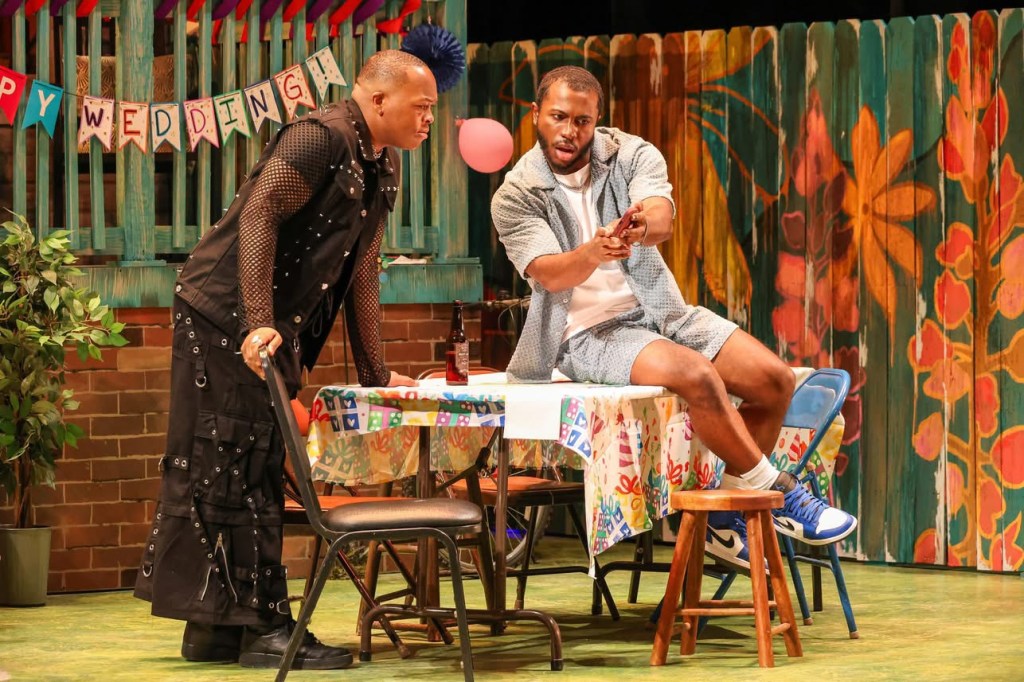
Fat Ham is what happens when Shakespeare gets invited to the BBQ and there’s brown liquor and the Electric Slide – the only thing missing is a game of Spades.

What is Fat Ham? James Ijames’ 2022 Pulitzer prize winning play is a modern-day take on Shakespeare’s Hamlet. Set in a small town in North Carolina (or Virginia, or Maryland, or Tennessee), Juicy’s father, Pap, has died and his mother, Tedra, immediately married her deceased husband’s brother, Rev. Mere moments into the contemporary tragedy (or tragi-comedy), Pap appears to Juicy and his friend Tio as a ghost. As if to make sure we get the “comedy” part of tragi-comedy, Pap has thrown a large white sheet, complete with pasted on black eyeballs, over his pristine white funeral suit and strolls into the backyard using the gate. I’m not the only one who wondered why he didn’t just walk through the fence, as his son, Juicy also asked why he wasn’t floating! Point made, he subsequently ditches the sheet and appears in his white suite with a wide-brimmed white hat and white shoes.

Named in honor of Shakespeare’s Hamlet and the BBQ restaurant owned by the play’s fictional family, Fat Ham is equal parts family tragedy and side-splitting comedy. Pap has roused himself from the grave to ask his son to seek revenge. Apparently, while in prison serving a sentence for stabbing a man, he himself became the target of a hitman when his own brother, Rev, has him killed. The plot thickens when Pap, Rev, and just about every other adult in his life           questions Juicy for being “soft,” calling him a sissy and other choice names.

As the drama unfolds, two of Juicy’s friends come – or get forced out – of the closet. Tedra’s conflict is also internal as she faces her own insecurities that make her think she can find her worth only in the arms of man. Criticism is met with a variety of explanations, all ending with, “it’s biblical” or  “it’s in the bible.”

There was plenty of drama off the stage as well. After a successful run in Norfolk earlier in the year, Virginia Rep was set to bring Fat Ham to the November Theatre but cancelled at the last minute due to their on-going financial problems that surfaced for the public in the fall of 2024. While it may be true that finances were the source of the cancellation, the optics were not good. Fat Ham is very much a Black and Queer play, and with all the controversy over Black History Month, DEI, and the like, well feelings were ruffled.

In what was a huge surprise to many if not most of us (the RVA theater community), the Firehouse Theatre, under the direction of Producing Artistic Director Nathaniel Shaw and Richmond Triangle Players, where Philip Crosby is Executive Director, joined together to co-produce Fat Ham with the same Norfolk cast that was originally expected to bring this production to the River City. The five performances were fully sold out before most of the general public even heard about the event. So, for many reasons, Fat Ham is not just any play, this was not just any production, and I felt blessed to secure a seat.

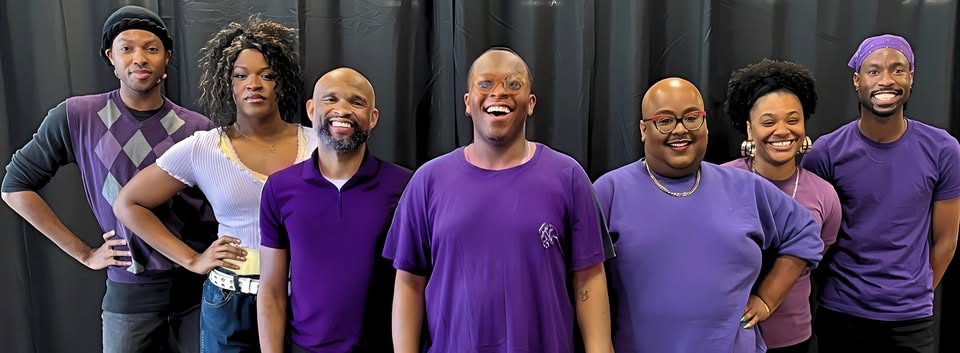
Bringing this show to life, complete with physical comedy, amazing soliloquys, some of which reference Shakespeare and some of which are taken verbatim from the bard’s Hamlet – such as  “what a piece of work is a man” – is a dynamic cast consisting of Marcus Antonio as Juicy/Hamlet, Kevin Craig West as Pap/the ghost of Hamlet’s father and Rev/Claudius, Cloteal L. Horne as Tedra/Hamlet’s mother, Gertrude, and Adam E. Moskowitz as Juicy’s/Hamlet’s sidekick Tio/Horatio. Notice the pattern that is beginning to emerge? Jordan Pearson plays Larry/Laertes, Janae Thompson is his sister Opal/Ophelia, and Candice Heidelberg is their mother Rabby/Polonius.

Antonio is alternately sly, soft, philosophical, and just generally endearing as Juicy (although I had a hard time swallowing that name, LOL). Horne is so over-the-top as his mother, Tedra, that the moments when she is serious are all the more powerful. She stands up for Juicy, refusing to allow Rev to spread his homophobic poison and at the same time, like most of the Black mothers I grew up in community with, was very protective of her son while maintaining a boundary that defined how people defined her and her life choices.

Jordan Pearson was a supporting character who came later on the scene but made a huge impact, transforming from a straight-edged marine to puffed sleeves, feathers, and a metallic gold head piece. Moskowitz – who reminded me more than once of a version of Spike Lee, perhaps from Do the Right Thingshared a bizarre sexual fantasy involving a gingerbread man, a snowball fight, and fellatio that had his character questioning the origins of his weed. It was the kind of story, a confession, that one has to blame on the weed, or on alcohol, in order to be able to hold one’s head up in public ever again!

Another memorable scene Moskowitz shared with Antonio involved Juicy asking his friend Tio about his shoes. This gives rise to another direct Shakespearean reference, “You remember Yurick?” It seems Yurick (who was not give a contemporary name) was Juicy and Tio dead friend, and Tio bought Yurick’s shoe at a yard sale being held to raise money for Yurick’s funeral.

Thompson’s Opal, unlike Ophelia, does not end in death by drowning – or any other means – but, rather, with affirmation and freedom. While her brother, Larry/Laertes, is not happy with the military life he is living to please his mother, Opal longs for it – it would provide her freedom she does not currently have as a woman, as a Black woman, as a Queer Black woman.

West, who played the unlikeable brothers Pap (God doesn’t want him and the devil won’t have him) and Rev (a blend of charming yet controlling as are most narcissists), redeemed himself – in the eyes of the audience and his fellow cast member – with a shocking and hilarious death scene.

Unlike a Shakespearean tragedy that ends with most of the main characters dead and strewn about the stage, Fat Ham  ends with the cast breaking out in dance. (I believe the script may have originally called for a disco ball to descend at this point.) With the suddenness of this production’s manifestation, and the fun-size stage at Firehouse, it was not possible to transport the stage used in Norfolk, so Firehouse staff constructed a new set in 48 hours!

There is tragedy. There is the angst of young people seeking purpose. There’s the dysfunction that results from the machinations of adults trying to make the best of a difficult situation, the burdens society expects them to carry, and the weight of tragedy. There is also humor and an earnest attempt to make the best of whatever life throws at you. As Tio says, “Why be miserable trying to make somebody else happy?”

—–

Julinda D. Lewis is a dancer, teacher, and writer who was born in Brooklyn, NY and now lives in Eastern Henrico County. When not writing about theater, she teaches dance history at VCU and low impact dance fitness classes to seasoned movers like herself and occasionally performs.

—–

FAT HAM

Written by James Ijames

Directed by Jerrell L. Henderson

CAST

Marcus Antonio           …..        Juicy

Candice Heidelberg  …..        Rabby

Cloteal L. Horne          …..        Tedra

Adam E. Moskowitz   …..        Tio

Jordan Pearson            …..        Larry

Janae Thompson         …..        Opal

Kevin Craig West         …..        Pop/Rev

CREATIVE TEAM

Jerrell L. Henderson  …..        Director

James Ijames               …..        Playwright

Nia Safarr Banks         …..        Costume Designer

Caitlin McLeod            …..        Scenic Designer

Jason Lynch                  …..        Lighting Designer

Sartje Pickett                …..        Sound Designer

Kim Fuller                       …..        Production State Manager

Performance Schedule:

Wednesday, April 16, 2025   7:30PM  Opening Night

Thursday, April 17, 2025        7:30PM

Friday, April 18, 2025               7:30PM

Saturday, April 19, 2025         2:00PM

Saturday, April 19, 2025         7:30PM   Closing Performance

Run Time: about 1 hour 45 minutes with no intermission

Photo Credit:  Photos on Firehouse & Richmond Triangle Players Facebook pages by Erica Johnson @majerlycreative

One-Time
Monthly
Yearly

Make a one-time, monthly, or annual donation to support rvart review

Make a monthly donation

Make a yearly donation

Choose an amount

$5.00
$15.00
$100.00
$5.00
$15.00
$100.00
$5.00
$15.00
$100.00

Or enter a custom amount

$

Your contribution is appreciated.

Your contribution is appreciated.

Your contribution is appreciated.

DonateDonate monthlyDonate yearly

COTTON PATCH GOSPEL

Jesus Christ Super Star –> Jesus Christ Good Ole Boy – OR – If Jesus Had Been Born in an Abandoned Doublewide and the Sermon on the Mount Had Been Delivered Atop Stone Mountain

At: The Swift Creek Mill Theatre, 17401 U.S. Route One, Chesterfield, VA 23834

Performances: March 15 – April 12, 2025

Ticket Prices: $44-49. Ask about discounts for students, seniors, and veterans.

Info: (804) 748-5203 or https://www.swiftcreekmill.com

A Theater Reflection by Julinda D. Lewis

I recently read a post that read something along the lines of “expect something wonderful each day.” Some days it’s easier to find something wonderful than others. Other days it’s a real stretch. I usually don’t do much, if any, pre-show research before going to see a show. I want to approach each show with as little bias as possible. So, I was totally, pleasantly surprised by Cotton Patch Gospel – it was easily my “something wonderful” on Saturday night, March 22.

Cotton Patch Gospel is a sung-through musical (i.e., songs are used instead of spoken dialogue, with minimal speech) retelling of “The Gospel of Matthew” set in modern-day rural Georgia (the US State, not the Eastern European nation). Given the geographical re-location, Joe and Mary travel to Atlanta instead of Jerusalem, Jesus is born in a borrowed trailer (they didn’t indicate if it was a double-wide), the baby Jesus is placed in an apple crate and when the family has to flee for their lives, they run off to Mexico, instead of Egypt.

The adult Jesus later gives the Sermon on the Mount from the top of Stone Mountain (which, BTW, is home to the world’s largest bas-relief artwork – a memorial to Confederate leaders Jefferson Davis, Robert El. Lee, and Stonewall Jackson). In the Cotton Patch Gospel Herod, the Governor of the state, drops a bomb on a church where Jesus was supposed to be – killing 14 innocent children in the process. In other familiar stories, after being baptized, Jesus is tempted by Satan, who tries to get Him to turn stones into grits, Jesus feeds 5,000 people with crackers and sardines, and Peter tap dances on water. Jesus makes His final entry into Jerusalem/Atlanta riding an old VW bus while his followers toss magnolia blossoms.

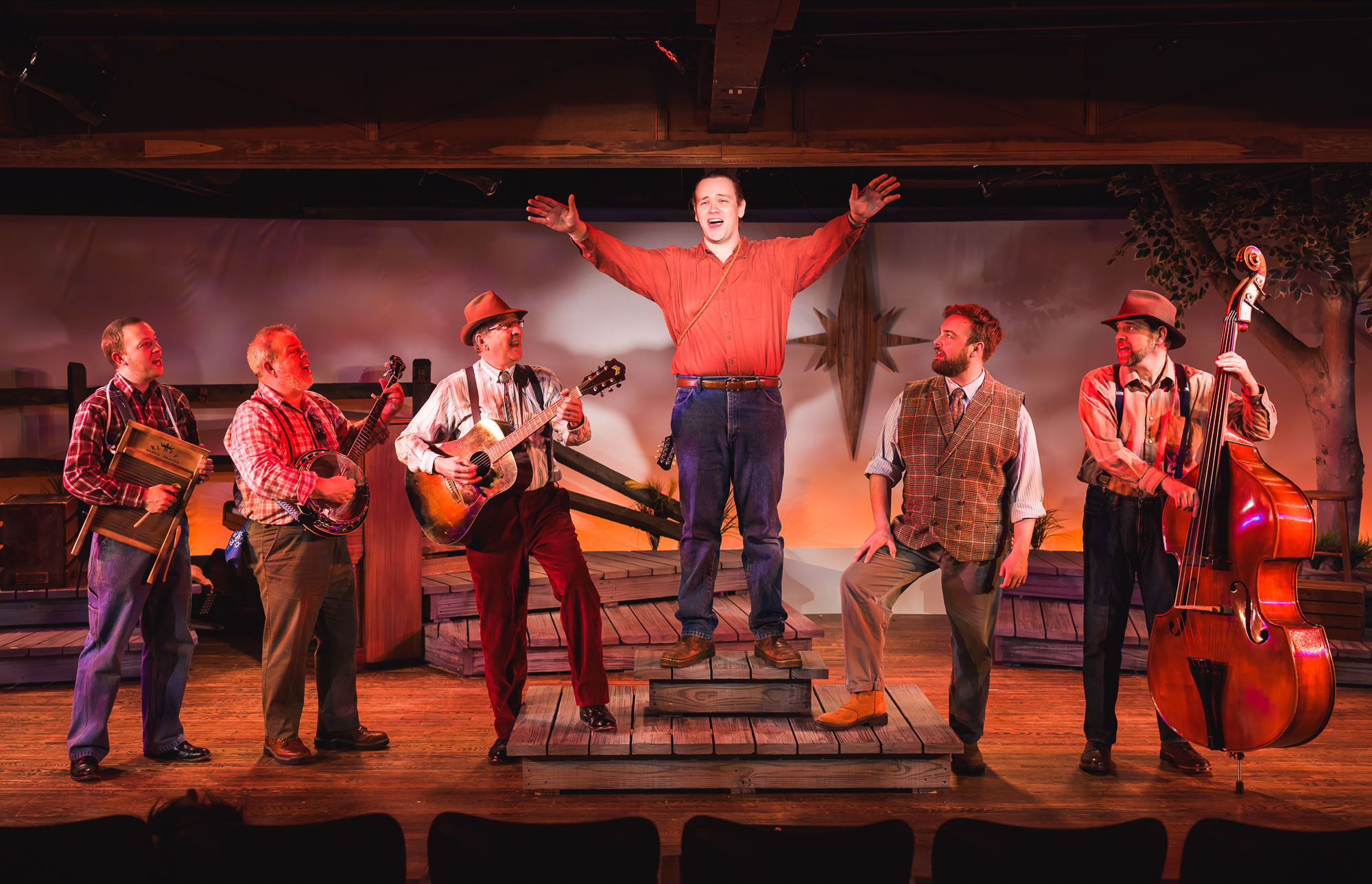
The entire story is delivered in beautiful harmony and lively blue grass music (with occasional forays into blues or gospel) performed by a six-member cast whose members all take on triple roles as actors, singers, and musicians. Jonmichael Tarleton and Dew Redling lead the cast, making their Swift Creek Mill debuts. Tarleton takes on the roles of Matthew, Joe, and sometimes Satan, while Dew Redling is appealing as Jesus, a simple country boy who doesn’t quite fit in. While Tarleton and Redling stood out as personal favorites, Cotton Patch Gospel is a true ensemble effort, and the cast worked well together keeping us laughing and entertained while remaining true to the Gospel.

The rest of the ensemble consists of Travis West (a cattle farmer, John, Andy, a reverend, Jud/Judas, and others), Bryan Harris (Herod, Mary, a televangelist, and others), Eric Williams (a Messenger/angel, Pilate, a senator, and others), and Greg DeBruyn (Satan, a tourist, a businessman, and others).

SCM Artistic Director Tom Width took time during his curtain talk to let us know that there have been times when audience members left shortly after the performance started. If you are a very conservative Christian, this might not sit well with your sensibilities, although there is nothing irreverent about this musical. But that’s just my opinion as a theatergoer who happens to be a licensed ordained minister of dance – and one who spent my fair share of years teaching Sunday School and Vacation Bible School in a Baptist church. LOL.

Harry Chapin (a singer, songwriter, and storyteller) along with writers Tom Key and Russell Treyz based their work on Clarence Jordan’s Cotton Patch Gospel – Matthew and John which “recasts the stories of Jesus…into the language and culture of the mid-20th century South (Smyth & Helwys Books). The author, Clarence Jordan, a farmer as well as a bible scholar, was the founder of Koinonia Farm, born out of the Civil Rights era and described by his publisher as “an interracial, Christian farming community.” Interestingly, Koinonia Farm gave birth to the concept of partnership housing, resulting in the establishment of Habitat for Humanity. In 2012, Clarence Jordan’s Cotton Patch Gospel: The Complete Collection was compiled, and it boasts an introduction by President Jimmy Carter.

Tom Width’s scenic design is simple and rustic, featuring lots of wooden planks and crates and light up star on the wall that reminds me of Christmas. Cast member Travis West provided the musical direction that kept the action moving and carried the audience right along with him. Maura Lynch Cravey casually dressed the cast in denim and plaid and variations thereof.

So, all of that – a foot-patting musical, a bible lesson, a geography lesson, a cultural tour, and a history lesson all wrapped up in one neat package. So unexpected and so delightful. Yep, that was my something wonderful last Saturday evening.

NOTE: After seeing this production, SCM posted an unfortunate update. Several Cotton Patch Gospel cast members tested positive for COVID, and several performances had to be cancelled. Please check the company’s website or contact the box office if you plan to go to see when shows resume and locate possible dates to attend.

———-

Julinda D. Lewis, EdD is a dancer, minister of dance,  teacher, and writer who was born in Brooklyn, NY and currently resides in Eastern Henrico County. When not writing about theater and dance, she teaches dance history at VCU and low impact dance fitness classes to seasoned movers like herself and occasionally performs.

———-

COTTON PATCH GOSPEL

Book by Tom Key and Russell Treyz

Music and Lyrics by Harry Chapin

Directed by Tom Width

CAST

Jonmichael Tarleton           as Matthew/Joe/Caiphus/Satan III/Timmy/Gossip/et al

Dew Redling             as Mother/Jesus/et al

Travis West               as Cattle Farmer/John/Andy/revisal/Tanya/Jud/Gossip/et al

Bryan Harris              as Herod/Dr. Troy/TV Preacher/Mary/Gossip/et al

Eric Williams             as Messenger/Mabry/Satan II/Senator/Pilate/Gossip/et al

Greg DeBruyn          as Satan I/Mr. Tetum/Tourist/Businessman/Gossip/et al

CREATIVE TEAM

Directed by Tom Width

Musical Direction by Travis West

Scenic Design by Tom Width

Lighting Design by Joe Doran

Costume Design by Maura Lynch Cravey

Technical Direction by James Nicholas

PRODUCTION STAFF

Producing Artistic Director …. Tom With

Technical Director ….. James Nicholas

Stage Manager ….. Sandy Lambert

Assistant Stage Manager/Props ….. Tom Width

Scenic Carpenter … Peter Prout

Light/Sound Board Operator ….. Brent Deekens

Set Crew ….. Peter Prout, Brent Dieken’s, Nathan Hamill

Scenic Painter ….. Dasia Gregg

Lighting Crew ….. Brent Deekens, Liz Allmon, R. Jonathan Shelley

Photographer …..Daryll Morgan

Time and Place:

Here and Now

Run Time:

About 2 hours with 1 intermission

Tickets:

Regular $44-49. Discounts for Seniors, Military & Veterans

Photographer: Darryl Morgan

Musical Numbers:

Act One:

            Somethin’s Brewin in Gainesville

            Baby Born to God

            I Did It

            Mama is Here/I Did It

            It Isn’t Easy Growin’ Up to Be Jesus

            Sho’ “Nuff

            From That Day On

            Turn It Around

            When I Look Up

            Ain’t No Busy Signals on the Hotline to God

            Spitball Me, Lord, Over the Homeplate of Life

            Miracle on Stone Mountain

            Love the Lord Your God

            Blind Date

            Goin’ to Atlanta

Act Two:

            Are We Ready?

            You Are Still My Boy

            We Gotta Get Organized

            We’re Gonna Live It While It Lasts

            Jubilation

            Dangerous Man

            Jud

            Hey, What’s Goin’ On

            Thank God for Governor Pilate

            One More Tomorrow

            I Wonder      

The Cast of Cotton Patch Gospel
Dew Redling/Jesus
One-Time
Monthly
Yearly

Make a one-time, monthly, or annual donation to show how much you love RVART Review

Make a monthly donation

Make a yearly donation

Choose an amount

$5.00
$15.00
$100.00
$5.00
$15.00
$100.00
$5.00
$15.00
$100.00

Or enter a custom amount

$

Your contribution is appreciated. Thank you!

Your contribution is appreciated.

Your contribution is appreciated.

DonateDonate monthlyDonate yearly

SNAPSHOTS: A MUSICAL SCRAPBOOK

“Memories, like photographs, can fade, but they never really leave.”

A Theater Reflection by Julinda D. Lewis

Presented by HATTheatre

At: HATTheatre, 1124 Westbriar Dr., Richmond, VA 23238

Performances: March 14-23, 2025

Ticket Prices: $30 General Admission. $25 Seniors/Students/Military. $20 Youth up  to 17.

Info: 804-343-6364  or https://hattheatre.org

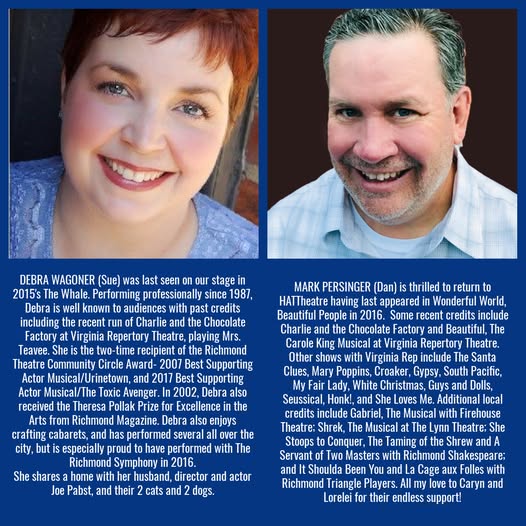
Empty nesters Sue (Debra Wagoner) and Dan (Mark Persinger) have come to a crossroads in their relationship. They have known each other since childhood, but Sue is fed up and has stolen away to the attic to reminisce, leave a note, and pack her bag. Dan uncharacteristically arrives home early from work and interrupts Sue’s plans. They end up spending the night looking through boxes of old photos, leading to a journey of discovery. This is a great relationship story for all of us. It is more than just a love story, but a story of how love starts, how it changes, how it endures, and how it affects people.

What makes this story special is that it is fueled by a playlist of songs from Stephen Schwartz’s vast repertoire of shows and steered by the dynamic artistry of Wagoner and Persinger and the four other actors who portray Sue and Dan – as well as other characters in their lives – at various stages of their lives, from elementary school to the present.

The supporting cast consists of Alanna Wilson and Joshua Smith as 11-17 year old Susan and Daniel and Shannon Schilstra and Gravins as the middle childhood Susie and Danny. They also portray a slew of other characters, including a hilarious scene where Wilson, Schilstra, and Gavins depict three of Dan’s wildly different yet uniformly vindictive ex-girlfriends.

Described as “part revue and part book musical” Snapshots is surprisingly personal and intimate. Other moments that stood out for me include Schilstra’s welcoming of the young Danny (Gravins) when he and his father move into the neighborhood; when the young Danny presents Susie with a book (A Time to Keep, Tasha Tudor’s book of holidays for ages 5-8), which she keeps throughout their years together; Sue’s dreams, expressed as a metaphor of becoming a lion tamer; Wagnor and Persinger’s “Code of Silence” duet; and the interactions the middle-aged Sue and Dan have with their younger selves, often accompanied by beautiful harmonizing.

Frank Foster’s direction infuses the production with levity and seamless pacing. The entire play takes place in the couple’s attic, suitably cluttered with an eclectic collection of memorabilia but not overdone, also designed by Foster. The Sue/Susan/Susie characters are usually identifiable by a red top in an age-appropriate style, worn over jeans. The younger versions of Dan usually wear variations of plaid shirts, also with jeans, while the mature Dan inexplicably prefers khakis.

I left this thoroughly enjoyable event with just two questions – not burning questions, but more of the “things that make you go “hmmmm” variety: a tender scene depicting the birth of Sue and Dan’s son, Matthew left me wondering why the blanket used to portray the infant was so impossibly tiny, and what we had the pleasure of seeing and hearing the music for this lovely and beautifully performed show played from up front. Musical Director Joe Revell did a magnificent job on keyboards hidden on the back where we couldn’t see him.

I’m not a singer, but I’ll close with this line from a duet by Sue and Dan, taken from Schwartz’s Reluctant Pilgrim CD: “You cannot close the acorn once the oak begins to grow.”

———-

Julinda D. Lewis is a dancer, teacher, and writer who was born in Brooklyn, NY and now lives in Eastern Henrico County. When not writing about theater, she teaches dance history at VCU and low impact dance fitness classes to seasoned movers like herself and occasionally performs.

———-

SNAPSHOTS: A Musical Scrapbook

Music and Lyrics by Stephen Schwartz

Book by David Stern

Directed by Frank Foster

Musical Direction by Joe Revell

Cast

Sue     ………………..Debra Wagoner

Dan     ………………..Mark Persinger

Susan ………………..Alanna Wilson

Daniel ………………..Joshua Louis Smith

Susie  ………………..Shannon Schilstra

Danny ………………..Joey Gravins

Creative Design Team

Music & Lyrics by Stephen Schwartz

Book by David Stern

Conceived by Michael Scheman & David Stern

Additional Music & Lyrics by David Crane, Seth Friedman, Marta Kauffman, Alan Menken, and Charles Strouse

Arrangements & Orchestration by Steve Orch

Direction & Scenic Design by Frank Foster

Musical Direction by Joe Revell

Lighting Design by Bill Jenkins

Stage Management by Ashton Lee

Costumes by Suzanne Riker

Light Board Operation: Matthew Geniesse

Sound Board Operation: Ashton Lee

Box Office/House Manager: Vickie L. Scallion

Dates

March 14-23, 2025

Ticket Information

Ticket Prices: $30 General Admission. $25 Seniors/Students/Military. $20 Youth up to 17

Info: 804-343-6364  or https://hattheatre.org

Run Time

Approximately 2 hours, 10 minutes, including one 10-minute intermission

Photo Credits: N/A

Musical Numbers

“Snapshots,” “Code of Silence,” “So Far”: from the CD Reluctant Pilgrim (1997)

“New Kid in the Neighborhood”: from Captain Louie, Music & Lyrics by Stephen Schwartz (1986, 2009)

“No Time At All,” “Extraordinary,” “Corner of the Sky,” “With You,” “Morning Glow”: from Pippin, Music & Lyrics by Stephen Schwartz (1972, 2002)

“Popular,” “I’m Not That Girl,” “Making Good”: from Wicked, Music & Lyrics by Stephen Schwartz (2003)

“All For the Best,” “All Good Gifts”: from Godspell, Music & Lyrics by Stephen Schwartz (1971, 1889, 2012)

“If We Never Meet Again”: from Rags, Music by Charles Strouse, Lyrics by Stephen Schwartz

“Nothing to Do With Love,” “Moving in With Susan (aka Moving in with Linda)”: from Personals, Music by Stephen Schwartz, Lyrics by Marta Kauffman, Seth Friedman & David Crane (1985, 1986)

“Endless Delights,” “Meadowlark,” “Chanson,” from The Baker’s Wife, Music & Lyrics by Stephen Schwartz (1977, 1990)

“How Does She Know? (aka “That’s How You Know”) from Enchanted, Music by Alan Menken, Lyrics by Stephen Schwartz (2007)

“The Spark of Creation,” “Parents’ Day” (aka “Father’s Day”), “The Hardest Part of Love,” “In Whatever Time We Have”: from Children of Eden, Music & Lyrics by Stephen Schwartz (1989, 1998, 2000)

“Fathers and Sons”: from Working, Music & Lyrics by Stephe Schwartz (1978)

“Cacophony” ©2017 by Stephen Schwartz

One-Time
Monthly
Yearly

Make a one-time, monthly, or annual donation to show your support for rvart review

Make a monthly donation

Make a yearly donation

Choose an amount. No amount is too great or too small.
We don’t ask you to subscribe, we don’t charge you to get past a firewall, and we do not receive any funding.

$5.00
$15.00
$100.00
$5.00
$15.00
$100.00
$5.00
$15.00
$100.00

Or enter a custom amount

$

Thank you!
Your contribution is appreciated.

Your contribution is appreciated.

Your contribution is appreciated.

DonateDonate monthlyDonate yearly

HONKY TONK ANGELS

Nashville Dreams

At: The Swift Creek Mill Theatre, 17401 U.S. Route One, Chesterfield, VA 23834

Performances: November 16 – December 28, 2024

Ticket Prices: $44-49. Ask about discounts for students, seniors, and veterans.

Info: (804) 748-5203 or https://www.swiftcreekmill.com

Written by Ted Swindley, who also gave us Always…Patsy Cline (1988), Honky Tonk Angels (2002) is a heart-warming and amusing musical about a trio of  aspiring female country singers. Swift Creek Mill last produced this show 11 years ago, with Robyn O’Neill, Debra Wagoner, and Robin Arthur who are credited in the current program as Angels Emerita. 

The current cast consists of three talented women who are all making their Swift Creek Mill Theatre debut. Kimberly Strother an afternoon host for a local NPR affiliate radio station, has the role of Angela Bodine, a Texas homemaker with six kids, a philandering husband, a love for comedian Roseanne Barr, a penchant for seeing the brighter side of things, and a need to claim her identity before it’s gone forever.

Chelsea Shaul, a recent graduate of Randolph Macon College with a degree in Theatre and Psychology, is making her professional debut as Darlene Purvis , a beautiful and innocent young woman who lives with her widowed father in a West Virginia coal mining town. She has a guitar and no prospects, since her boyfriend, Billy Joe McAllister, jumped off the Tallahatchie Bridge.

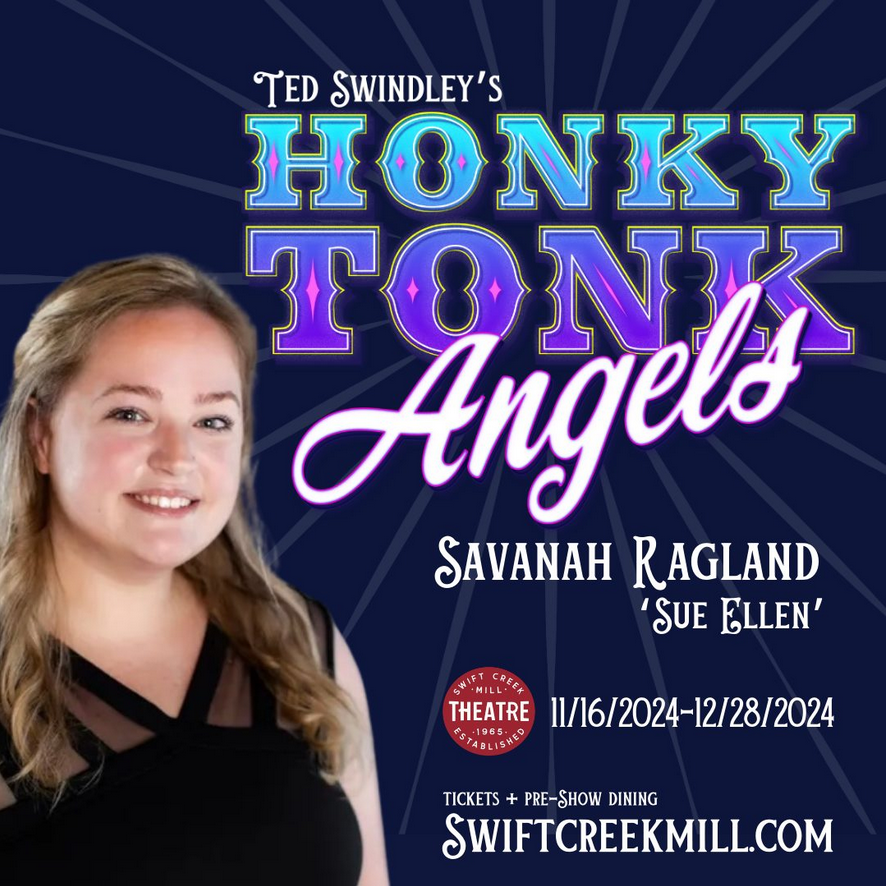
Savanah Ragland, a Chesterfield County Public Schools employee, fills out the cast as Sue Ellen Smith Barney Fife, a twice divorced, Texas-born, Los Angeles-based secretary to a “hands-on” boss. She has unfinished business and unfulfilled dreams.

The lives of the three women intersect on a Greyhound bus as the three independently start their journeys to Nashville and stardom. The fun begins on the bus as Sue Ellen feigns disinterest, Darlene oozes naiveté, and Sue Ellen plies everyone with a seemingly endless supply of baloney sandwiches. The scene concludes with Sue Ellen celebrating the newly united trio with a shower of pork rind confetti.

Act Two is pretty much a farewell concert as the newly christened Honky Tonk Angels conclude a successful six-week run at a Nashville venue, the appropriately named, Honky Tonk Heaven. The two-act musical is filled with approximately thirty songs, many of them familiar, such as “Stand By Your Man,” Loretta Lynn’s “Coal Miner’s Daughter,” Dolly Parton’s “9 to 5” and “I Will Always Love You,” Bobbie Gentry’s “Ode to Billie Joe,” and more.

A highlight, for me, was Kimberly Strother’s campy rendition of “Harper Valley PTA” in Act Two. Near the top of Act One, Savanah Ragland angrily sang her way through “Stand By Your Man” as her character, Sue Ellen, resolved to claim her independence, while Chelsea Shaul (Darlene) reveals what it was that she and Billie Joe threw off the Tallahatchie Bridge. All three of the Angels proved entertaining with song-related backstories and endearing qualities expressed through both familiar and novelty songs, for the most part beautifully rendered, both individually and together.

Audience engagement was apparent – and encouraged – with sporadic periods of handclapping and a few moments when the cast invited audience participation, but there weren’t many takers, at least not on opening night. This may be part of the reason why it seemed that, while the second act featured a more cohesive set and multiple costume changes, I thought the strongest performances occurred in the first act.

Act Two seemed to run out of steam before they ran out of songs to sing. This was even reflected in the script as the Angels attempted to change their song repertoire and their style to reflect a more conservative image. Darlene’s femme fatale number, “Help Me Make It Through the Night” didn’t quite seem to convey the required depth of feeling and the collaborative “Cleopatra: Queen of Denial” somehow fell short of humor or parody but instead took an unexpected turn and drifted towards the shore of the murky sea of offensiveness.

Honky Tonk Angels is mostly fluff. It makes us feel confident that we all know more country music than we ever thought we knew. It’s a feel-good musical, with a paper-thin plot that serves as a vehicle to deliver the songs. It doesn’t require us to focus on the twists and turns of a plot or the nuances of the acting or to remember significant details that might be necessary to understand the denouement later on. With this in mind, go, have a no-stress good time – and don’t forget to sing along when asked.

———-

Julinda D. Lewis, EdD is a dancer, teacher, and writer who was born in Brooklyn, NY and now lives in Eastern Henrico County. When not writing about theater and dance, she teaches dance history at VCU and low impact dance fitness classes to seasoned movers like herself, and occasionally performs. Her most recent (ad)venture was the premiere of a solo work, The Waters of Babylon or Psalm 137 Revisited: a Post-Exodus Reflection in Movement Choreographed From Collective Memories for the debut of the Critical Race Theatre Project.

———-

HONKY TONK ANGELS

By Ted Swindley

Directed by Tom Width

CAST

Kimberly Strother as Angela

Chelsea Shaul as Darlene

Savanah Ragland as Sue Ellen

ORCHESTRA

Piano/Conductor…Paul Deiss

Guitar………………Ed Drake

Fiddle………………Drew Perkins

Bass…………………Sheri Oyan

Drums………………Julie Fulcher-Davis

CREATIVE TEAM

Directed by Tom With

Musical Direction by Paul Deiss

Scenic Design by Tom Width

Lighting Design by Joe Doran

Costume Design by Maura Lynch Cravey

Technical Direction by James Nicholas

Setting:

Act One: Los Angeles, CA; Waxahatchie, TX; somewhere in the Mississippi Delta; and a Greyhound bus.

Act Two: Honky Tonk Heaven in Nashville, TN

Run Time:

About 2 hours with 1 intermission

Tickets:

Regular $44-49. Discounts for Seniors, Military & Veterans

Photographer: Darryl Morgan

One-Time
Monthly
Yearly

Make a one-time donation
directly to RVArt REVIEW

Make a monthly donation

Make a yearly donation

Choose an amount

$5.00
$15.00
$100.00
$5.00
$15.00
$100.00
$5.00
$15.00
$100.00

Or enter a custom amount – no amount is too small…or too large.

$

Thank you! Your contribution is appreciated.

Your contribution is appreciated.

Your contribution is appreciated.

DonateDonate monthlyDonate yearly

JOHN & JEN

When Love Hurts – or – Hate Feels Like the Taste of Tomatoes

At: The Swift Creek Mill Theatre, 17401 U.S. Route One, Chesterfield, VA 23834

Performances: September 7-28, 2024

Ticket Prices: $44-49. Ask about discounts for students, seniors, and veterans.

Info: (804) 748-5203 or https://www.swiftcreekmill.com

Until a few weeks ago I had never heard of JOHN & JEN and I usually do not read about a show prior to seeing it in order to remain as unbiased as possible when I do see it. But now that I have seen this heart-warming sung-through musical, created for a cast of two actors playing three roles, it has earned a place as one of the most memorable musicals I’ve ever seen. [See the addendum at the end of this review!]

JOHN & JEN started out as a 10-minute musical – a labor of love created by two artists – a composer and a lyricist – who wanted to work together. Their 10-minute work became a full one-act musical, and eventually a second-act was added, with a twist that proved to be a natural outgrowth of the first act.

POSSIBLE SPOILER ALERT

It’s difficult to talk about JOHN & JEN without giving away the plot twist, so if you plan to see this show and want to be surprised, I suggest you stop reading now and come back to finish after you’ve seen the show. This little discussion starter will still be here.

POSSIBLE SPOILER ALERT

JOHN & JEN is a story of familial love and dysfunction. It is a multi-generational tale that spans nearly 4 decades, from 1952 to 1990, and is liberally sprinkled with social references that define each era. JOHN & JEN is also a story of family trauma and the resulting fallout. Most of all, JOHN & JEN is the story of a brother and sister and an inextricably linked story of a mother and son, a story of learning to let go in order to move on.

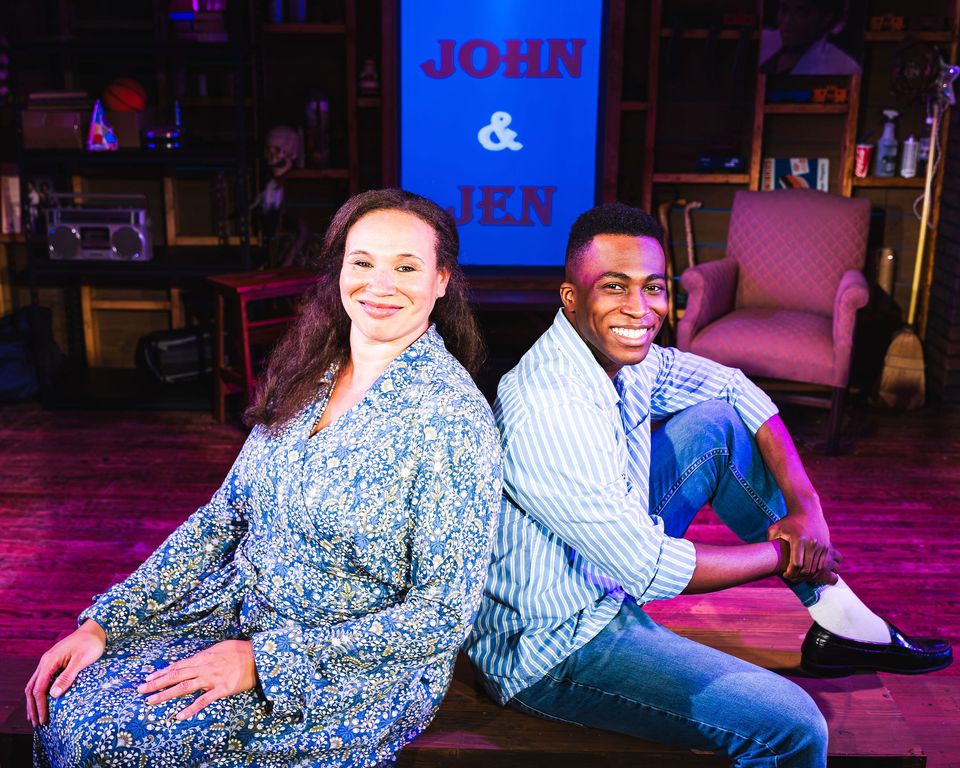
Nicole Pearson plays the role of Jen, and Malcolm Holmes plays the roles of John – and that’s not a typo, but it is the spoiler.

Act 1 opens with young Jen welcoming her baby brother “Welcome to the World” offers words of caution about the dangers he may face, and promises to always protect him. As we watch the two grow up, we learn that all is not well in this household – at least, not as seen through the eyes of Jen who seems to shoulder adult-level responsibilities at a very early age. It is Jen who explains why Santa can’t come one year. It is Jen who dominates a hilarious game of playing school, where we learn about George Washington and his dog Martha crossing the parted waters of the Potomac River. Yet, despite her best intentions to never leave her little brother, Jen seems to jump at the chance to leave home to attend college in New York where she quickly finds her tribe among the community of hippies and Viet Nam draft dodgers. It is this last that causes an irreparable rift.

Malcolm Holmes plays the role of the young John with an uncanny mastery of the nuances of a young boy that manages not to appear mocking or dismissive. While both  Pearson and Holmes bring a sort of “every-man” energy to their roles, by which I mean they lull us into feeling we know these people, there is one scene that really  resonated with me. When 12 year old John begged 17 year old Jen to take him with her when she leaves for college, I was transported back to a time when my 5 year old son would suddenly burst into tears because he missed his 18 year old sister who was attending college in another state. This is the kind of energy Lippa and Greenwald wrote into JOHN & JEN. It is the kind of energy Tom Width brought to his direction, and it is the essence of the energy Pearson and Holmes manifested throughout the play.

While there are clear mile markers along the way, one thing JOHN & JEN never does is tell us where the family lives, leaving the door open for it to be wherever you live or lived at that time. The play takes us on a stroll through memory lane – or along the paths of history, depending on your age. 1964 is a Beatles collage. 1966 is an increased US presence in southeast Asia.  1967 is the “summer of love” and the Generation Gap. 1968 is Richard Nixon – and Jen has missed 2 years of John’s baseball games and Dad says you don’t love us anymore. 1969 is men walking on the moon and the NY Mets win the World Series.

John and Jen part on less than good terms, Jen to move to Canada with her draft dodging boyfriend and John to join the Navy. Act 1 ends with Jen unfolding a flag and draping it over a box as an uncharacteristically silent figure of John, wearing dress whites, observes from a distance. Pearson’s facial expressions and body language tell the subplot of the words that emerge from her throat. Holmes’ general exuberance make his moments of quiet watching and discernment all the more poignant.

In Act 2 we see a reprise of Jen singing her “Welcome” song over a cradle, but this time the cradle holds her son, also named John. As Jen’s son grows, she makes the same promises to protect him she once made to her brother, even showering her son with her brother’s old clothes and toys, something this new generation John cannot relate to. As the years pass, Jen seem incapable of distinguishing between the two Johns, finally reaching the point of breakdown – or breakthrough – as she sits perusing a photo album. That, along with a visit to her brother’s grave on what would have been his 32nd birthday, jars Jen to accept a new reality and to finally move on. This come out as the final song, “Every Good-bye is Hello.”

For those who – inexplicably – do not like musicals, JOHN & JEN may not be for you. This is, after all, a sung-through musical in which most of the dialogue is sung rather than spoken, straddling that gray line you may never have known existed between musical and opera. Not only is it a musical, but it is also a two-person musical, so there are no distractions, no avoiding the fact that even simple statements are sung. But – and this is a big but – Pearson and Holmes are fantastic singers!

I’ll say it again, Pearson and Holmes are fantastic singers. They are really, really, really, really, really good! And while I don’t know the technical terms (I was a dance major, not a theater or music major), their voices are clear and they have the ability to lift you with them when they soar, to drag you down with them when they mourn, and to make you smile and feel hope when they harmonize. This is even more amazing in that Lippa and Greenwald did not write the kind of toe tapping sing-along songs that audiences find themselves humming for days or months after. This is music in the role of a character that moves us through the acts and scenes. This is music that entertains, but does so almost peripherally as it marches along doing the job of immersing the audience in the telling of the story.

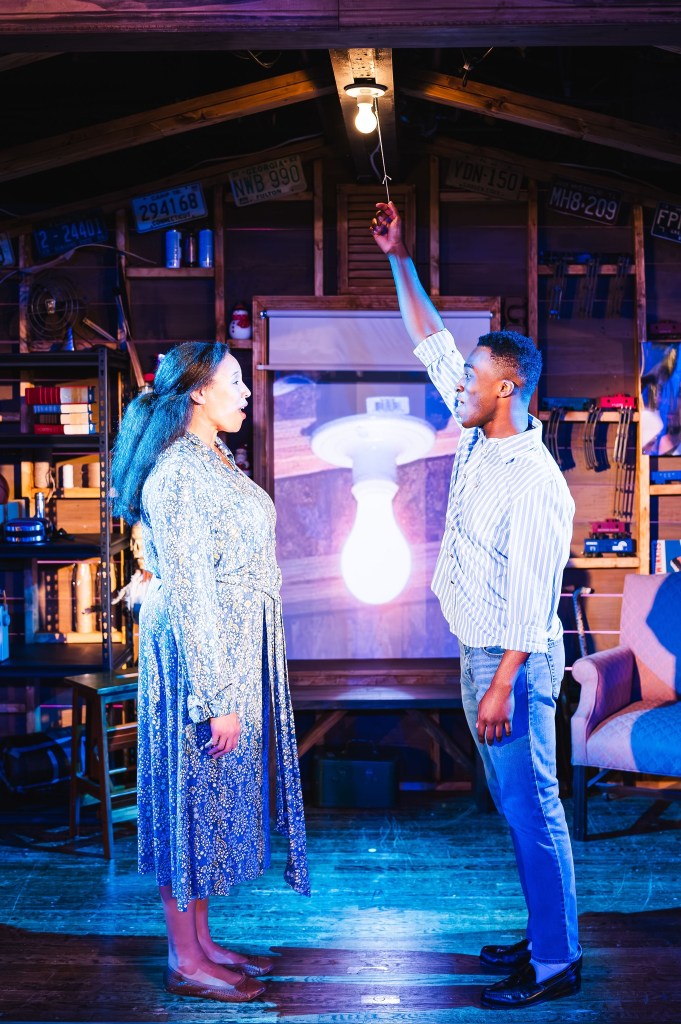
Width also, as he usually does, executed the scenic design. The set for JOHN & JEN is an attic with its steep walls and rough-hewn beams and shelving. Just as Holmes and Pearson infuse their characters with a sense of familiarity, so Width does with the set. There are boxes and bins, errant toys, a boom box, books, a clothing rack, camping equipment, a poster of Michael Jackson, along with most of the props the two actors will need. I felt like I was back in my great aunt’s attic where I used to play as a child, and found myself scanning the corners to see if I would find her old Singer sewing machine hiding there.

During his pre-show curtain talk, Width remarked that JOHN & JEN is a show that is much loved by theatre professionals, but little known to audiences. It is an unexpected treasure worth sharing.

FYI: Hate feels like

———-

Julinda D. Lewis, EdD is a dancer, teacher, and writer who was born in Brooklyn, NY and now lives in Eastern Henrico County. When not writing about theater and dance, she teaches dance history at VCU and low impact dance fitness classes to seasoned movers like herself, and occasionally performs. Her most recent (ad)venture was the premiere of a solo work, The Waters of Babylon or Psalm 137 Revisited: a Post-Exodus Reflection in Movement Choreographed From Collective Memories for the debut of the Critical Race Theatre Project.

———-

JOHN & JEN

Music by Andrew Lippa

Lyrics by Tom Greenwald

Book by Tom Greenwald and Andrew Lippa

John & Jen premiered at the Goodspeed Opera House,

East Haddam, Connecticut in 1993

Directed by Tom Width

CAST

Malcolm Holmes as John

Nicole Pearson as Jen

CREATIVE TEAM

Directed by Tom With

Musical Direction by Paul Deiss

Scenic Design by Tom Width

Lighting Design by Joe Doran

Costume Design by Maura Lynch Cravey

Technical Direction by Liz Allmon

Setting:

Somewhere in the USA and Canada, between 1952 and 1990

Run Time:

About 90 minutes with 1 intermission

Tickets:

Regular $44-49. Discounts for Seniors, Military & Veterans

Photographer: Daryll Morgan Studios

ADDENDUM: OMG. I was just reminded that I reviewed the Richmond premiere of this work in 2018 at HATTheatre! I had 4 surgeries and 20 radiation treatments in 2018 so my memory of that year may be more than a little bit clouded. Here is a link to that review, offering a totally different view of this show.

JOHN & JEN: A Musical of Second Chances

One-Time
Monthly
Yearly

Make a one-time donation

Make a monthly donation

Make a yearly donation

Thank you for making a one-time, monthly, or annual donation in support of RVArt Review.

Choose an amount

$5.00
$15.00
$100.00
$5.00
$15.00
$100.00
$5.00
$15.00
$100.00

Or enter a custom amount

$

Your contribution is appreciated.

Your contribution is appreciated.

Your contribution is appreciated.

DonateDonate monthlyDonate yearly
INTO THE WOODS

Once Upon a Time, Later – or – What Happens After “Happily Ever After?”

A Musical Theater Review by Julinda D. Lewis

Presented By: Richmond Shakespeare

At: Cramer Center for the Arts, The Steward School, 11600 Gayton Rd., RVA 23238

Performances: March 7-24, 2024

Ticket Prices: $22-$47 [Adults $47; Seniors 65+ with ID $42; Military with ID $22; Students $22]

Info: (804) 340-0115 or http://www.richmondshakespeare.org

What happens after “happily ever after?”

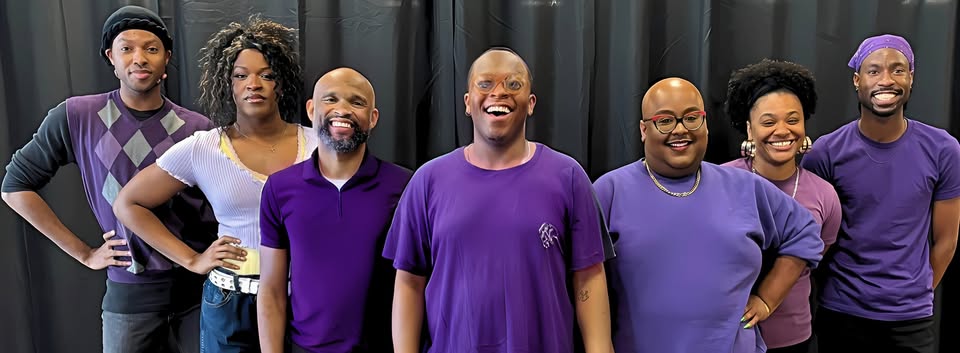
Sondheim and Lapine’s extravagant musical, Into the Woods (1987), has a lot going on. For one thing, there is a large cast of characters drawn from various Grimm’s fairy tales, from Little Red Riding Hood to Jack (of the magic beans and giant fame). There are princesses in towers (Rapunzel)  and elsewhere (Cinderella) and princes who do not live up to expectations for “happily ever after” – Cinderella’s prince and Rapunzel’s prince, who are brothers with lustful, wandering eyes for the purpose of this plot. There are peasants and royalty, a wicked witch, a wolf with pedophilic tendencies, and a little girl with an implied eating disorder. There is a narrator that the other characters, in a rare show of solidarity, throw under the bus – and that’s just for starters. And just in case you were wondering – as you should have been – despite the Disney inspired costumes and light-hearted, guffaw-inducing moments that pepper Act 1, this is not a family-friendly show. Half the lead characters meet untimely deaths in Act 2. The bloody demise of those who are smushed by the giant’s foot is indicated by a red wash on the background, and sometimes accompanying sound effects.

Be careful what you wish for.

At the center of the main plot we find The Baker and The Baker’s Wife (Durron Marquis Tyre-Gholson and Maggie Marlin-Hess). The childless couple wish more than anything for a baby, but soon discover that their barrenness is the result of a witch’s curse that goes back a generation when The Baker’s father helped himself to the witch’s garden. Tyre-Gholson (who, much to my surprise, is making his Richmond Shakespeare debut) deftly establishes himself as a reluctant hero. He tries on the cloak of an alpha male, but it doesn’t fit him well, yet we find ourselves cheering for him and his persistence in the face of probable defeat as he sets off on a life changing scavenger hunt in the woods. Marlin-Hess, similarly, achieves a delicate balance. She is, at once, the supportive wife of the baker, a woman with an independent mind and a resolute disposition (think, by any whatever means necessary), who holds an emergent passion that finds unforeseen fulfillment in the woods.

The prettier the flower, the farther from the path.

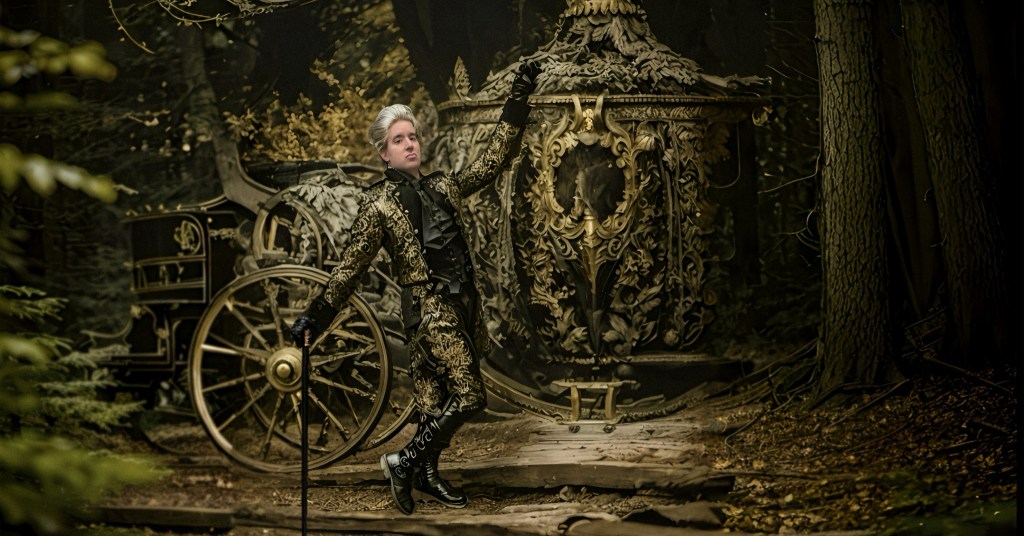
Into the Woods is very much an ensemble show, with strong leads and strong voices singing what I would characterize as challenging music, but some characters nevertheless stand out. My hands-down favorite is Little Red Riding Hood (Gracie Berneche) who wrings every last drop of humor and drama from each line she speaks. Now, normally, it is bad manners to mention an actor’s size, but in this case, Berneche’s stature is key to her role. Constantly referred to as a “little girl,” this Riding Hood makes a running joke of scarfing down the goodies she’s supposed to be taking to Grandma’s house. She deliberately talks with her mouth full, and creates one of the show’s funniest physical comedy moments as she and The Baker’s Wife juggle sweets and cakes as Riding Hood tries to fill her basket – a basket, by the way, that she commandeered from The Baker’s Wife. Berneche’s childlike allure makes it all more creepy when The Wolf (Terence Sullivan) peppers her with sexual innuendo, while diverting her from the path to her grandmother’s house in the woods. The dual role of The Wolf/Cinderella’s Prince emphasizes the lustful, narcissistic nature of both characters as they seduce, respectively, Little Red Riding Hood and The Baker’s Wife, in the woods. Sullivan’s dual roles are masterfully delicious and shiver-inducing – perhaps playing on the appeal of the bad boy. But also, the wolf’s ears, tail, and leather jacket are one of the best, most fun costumes, as well.

“You’re so nice. You’re not good, you’re not bad, You’re just nice. I’m not good, I’m not nice, I’m just right. I’m the witch.

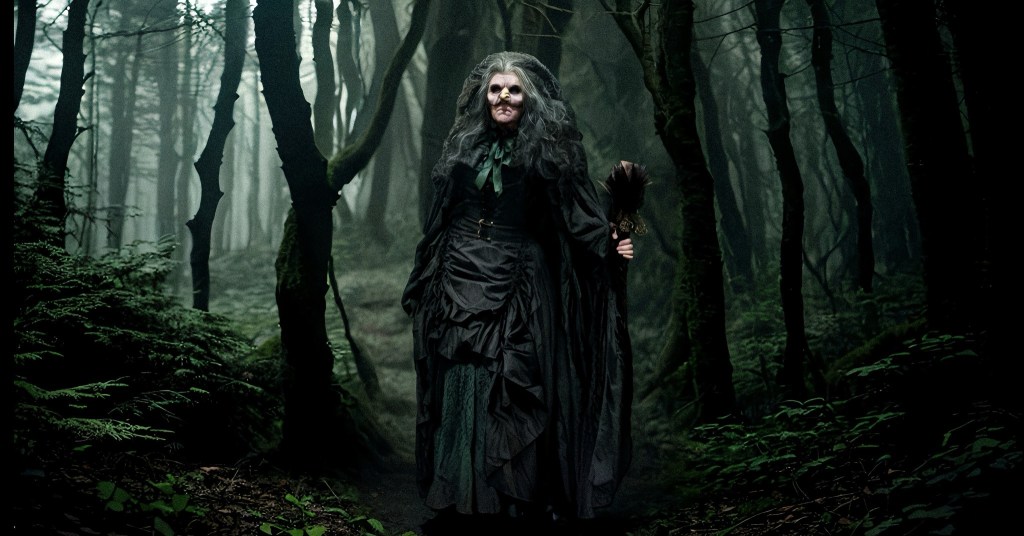
Going back to the idea that this is an ensemble, it seems both appropriate and anathema that The Witch (Susan Sanford) had the star’s turn during the closing bows. The Witch, after all, is the only character that has the ability to fill in any of the backstory. At the same time, she does not have the most lines or greatest stage time. But Sanford’s rich vocals and The Witch’s makeover from old hag to bewitching diva, are worthy of recognition. Speaking of which, The Witch’s Act 2 costume and the costumes and wigs of Cinderella’s Stepmother (Hannah Zold Story) and Stepsisters Florinda (Katherine S. Wright) and Lucinda (Kylee Márquez-Downie) reminded me of drag queens – but without the expected sassiness. The Witch loses her powers and Florinda and Lucinda have their eyes pecked out. These characters’ journey into the woods do not bring about the desired results.

Slotted spoons don’t hold much soup.

In my humble opinion, Jack’s Mother (Lauren Leinhaas-Cook) was decidedly more evil than The Witch. She certainly wouldn’t win any awards for mother of the year. She berates and belittles Jack, then defends him when it’s time for him to face the consequences of his actions. These are the actions of an enabler. This role gives Leinhaas-Cook an opportunity to enjoy being nasty, and we don’t feel any great loss at her accidental demise. Let’s face it, Jack (Lukas D’Errico) would never be able to grow up under her nagging eye. In the end, he’s left looking for someone to take care of him, because his mother never taught him how to be an adult. She just sent him off on fruitless and self-serving quests into the woods. The Witch, who had whisked away Rapunzel (Sara Dabney Tisdale) from her parents at birth was no model mother, either. Locked away in a tower in the woods, Rapunzel ended up the single mother of twins, lost her Prince, her mind, and eventually her life as well. Apparently, one does not develop good life coping skills living in isolation in the woods.

Careful the things you say…children will listen.

While Act 1 is a quest to find fulfillment of all the characters’ wishes, Act 2 shows us what happens after “happily ever after.” With Act 1 running approximately 90 minutes, it almost seems as if the show is over at the end of Act 1. But wait, there’s more. Act 2 shows us the consequences of getting what you wished for. There is a fantastic scene in which the surviving characters – after much of the slaughter and bloodshed – all point the finger of blame at each other: The Baker, The Baker’s Wife, The Witch, Jack, Jack’s Mother, Little Red Riding Hood (who is never at a loss for snarky comments, with accompanying facial expressions and body language). It’s a comedy. It’s a parody. It’s a satire. It’s a musical. It’s a morality play. It’s a metaphor for Life. Into the Woods is where life happens. Some emerge triumphant, some do not emerge at all. As 2010 Internet sensation Antoine Dodson once said, “Hide yo’ kids, hide yo’ hide yo’ husbands ‘cause they’re rapin’ everybody out here.” Go see Into the Woods, but leave your kids at home.

—–

Julinda D. Lewis is a dancer, teacher, and writer who was born in Brooklyn, NY and now lives in Eastern Henrico County. When not writing about theater, she teaches dance history at VCU and low impact dance fitness classes to seasoned movers like herself, and occasionally performs.

—–

INTO THE WOODS

Book by James Lapine

Music and Lyrics by Stephen Sondheim

Directed by Jase Smith Sullivan

Musical Direction by Kim Fox

Cast

Narrator/Mysterious Man       ……………    J.C. Bussard   

Cinderella                                ……………    Grey Garrett

Jack                                         ……………    Lukas D’Errico

Jack’s Mother                         ……………    Lauren Leinhaas-Cook

Milky White                            ……………    Katherine Malanoski

The Baker                               ……………    Durron Marquis Tyre-Gholson

The Baker’s Wife                   ……………    Maggie Marlin-Hess

Cinderella’s Stepmother         ……………    Hannah Zold Story

Florinda                                   ……………    Katherine S. Wright

Lucinda/US Cinderella           ……………    Kylee Márquez-Downie

Little Red Riding Hood          ……………    Gracie Berneche

The Witch                               ……………    Susan Sanford

Cinderella’s Father/The Steward ………..     Eddie Webster

Cinderella’s Mother/Granny/The Giant …    Heidi Johnson Taylor

The Wolf/Cinderella’s Prince ……………    Terence Sullivan

Rapunzel                                 ……………    Sara Dabney Tisdale

Rapunzel’s Prince                   ……………    Field Oldham

Ensemble/US The Wolf/Princes …………    Thomas Kaupish

Ensemble/US Jack                  ……………    Milo Jones

Ensemble/US Little Red Riding Hood …..    Belén Tarifa

Production Team

Artistic Director          ……………    James Ricks

Managing Director      ……………    Jase Smith Sullivan

Music Director            ……………    Kim Fox

Production Stage Manager ………    Shawanna Hall

Assistant State Manager/

     Properties Design   ……………    Jordan Dively

Assistant State Manager/

     Character Double   ……………    Diandra Chiaffino-Butts

Hair and Makeup Design  …….….    Amanda Blake

Costume Design          ……………    Keith Walker

Lighting Design          ……………    Michael Jarrett

Puppet Design             ……………    Heidi Rugg

Scenic Design                         ……………    Todd LaBelle

Scenic Design                         ……………    Katherine Malanoski

Sound Design              ……………    Grace Brown LaBelle

Production Manager/

     Sound Board Operator ………..    MariaElisa Costa

House Manager/

     Production Assistant  …………    Kiari Hicks

Costume Assistant      ……………    Susan Frye

Master Electrician       ……………    Emily Vial

Follow Spot Operator ……………    Parker Beard

Follow Spot Operator ……………    Wyatt Roberts

Box Office                  ……………    Nata Moriconi

Musicians

Conductor/Keyboard 1……………   Kim Fox

Bass                             ……………    Bea Kelly

Drums                         ……………    Steve Raybould

Cello                            ……………    Lauramarie Laskey

Clarinet                       ……………    Marc Krauss

Flute                            ……………    Stephanie Shumate

French Horn                ……………    Gretchen Georgas

Keyboard 2/Synthesizer …………     Ian Krauss

Trumpet                       ……………    Steve Fenick

Violin                          ……………    Marissa Resmini

Run Time: approximately 3 hours, with one 15-minute intermission

———-

Photo Credits: Photos from Richmond Shakespeare Facebook page

One-Time
Monthly
Yearly

Make a donation to support the publication of RVART Review

Make a monthly donation

Make a yearly donation

Choose an amount

$5.00
$15.00
$100.00
$5.00
$15.00
$100.00
$5.00
$15.00
$100.00

Or enter a custom amount

$

Your contribution is greatly appreciated. Thank you.
Julinda D. Lewis

Your contribution is appreciated.

Your contribution is appreciated.

DonateDonate monthlyDonate yearly
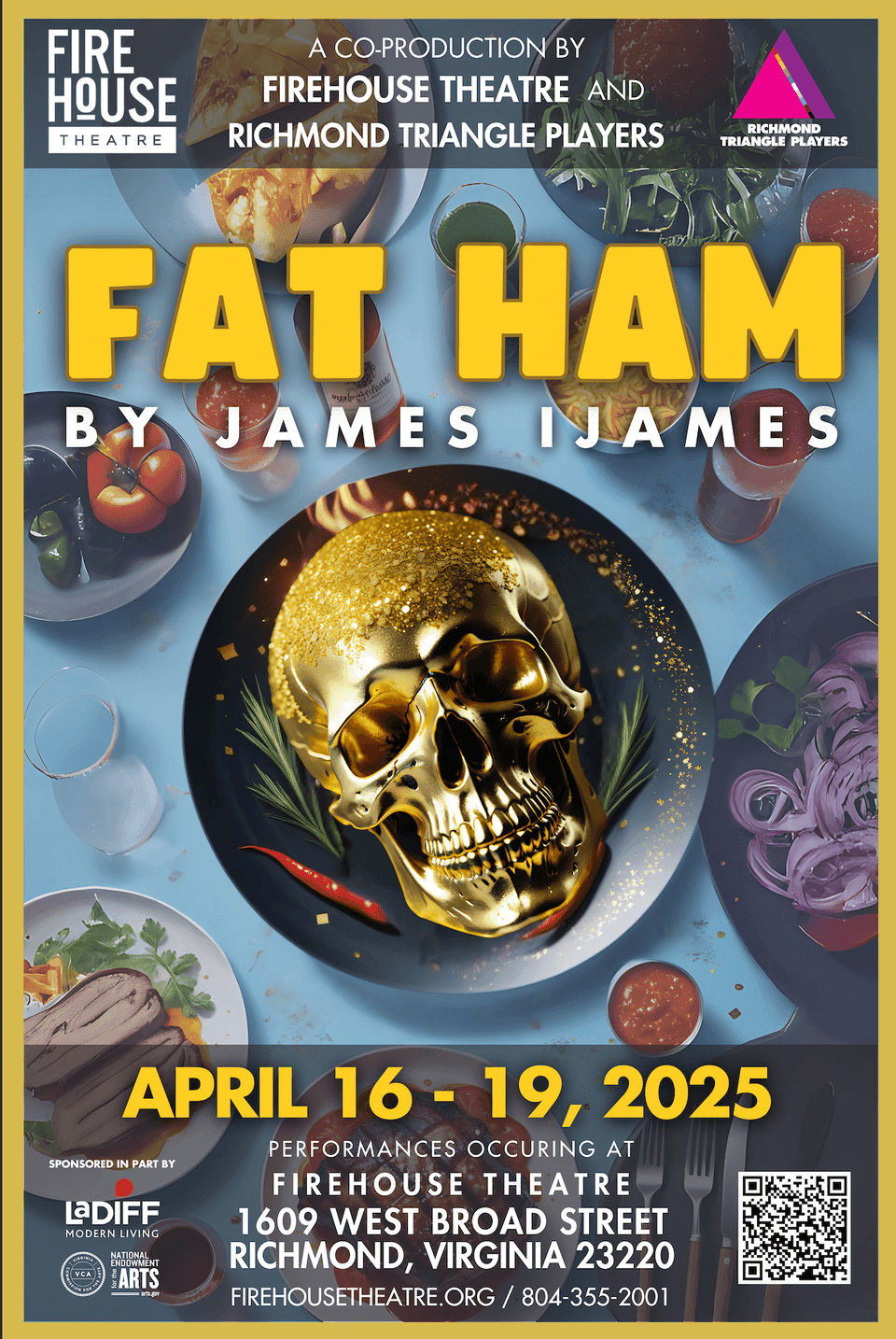
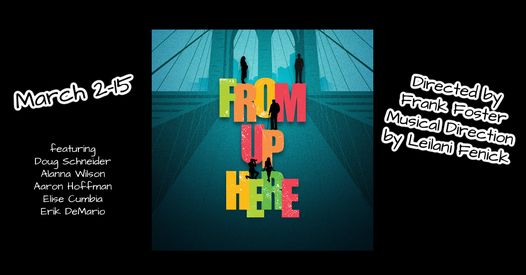
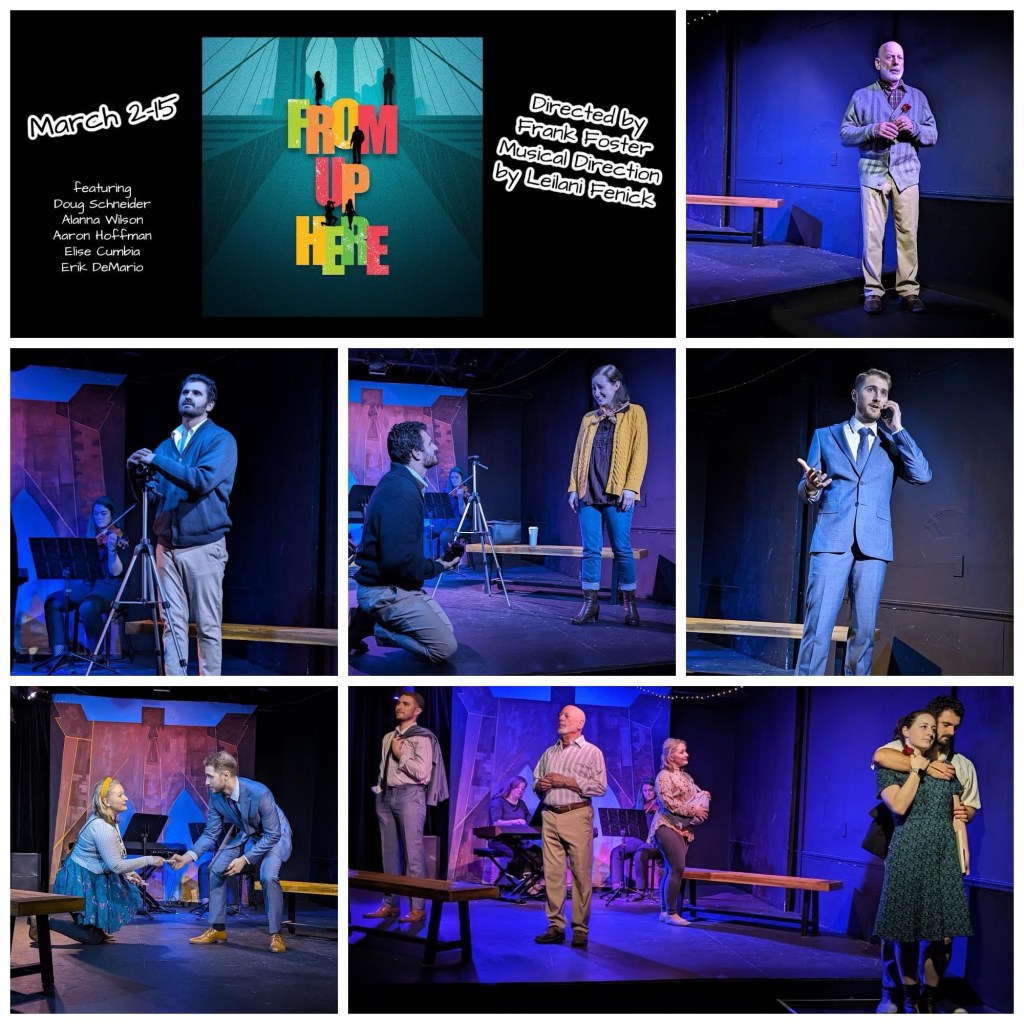
FROM UP HERE

FROM UP HERE

Photos of Strangers

A Theater Review by Julinda D. Lewis

Presented by HATTheatre

At: HATTheatre, 1124 Westbriar Dr., Richmond, VA 23238

Performances: March 2-15, 2024

Ticket Prices: $30 General Admission. $25 Seniors/Students/Military. $20 Youth

Info: 804-343-6364  or https://hattheatre.org

Set on the Brooklyn Bridge where five strangers go to seek solitude and solace, FROM UP HERE (2012) is a uniquely moving and relatable one-act musical.

There’s Henry (Doug Schneider), an older man, a widower who comes to the bridge to reminisce about his beloved wife of forty years. They met on the bridge by accident – literally. Emily (Elise Cumbia) is a sensitive young woman struggling with the news of an unnamed but apparently life-threatening illness. Her illness – likely some form of cancer – makes her reconsider her commitment to her boyfriend. Emily’s long-term boyfriend Dan (Erik DeMario) is a photographer whose current project, taking impromptu photographs of strangers on the Brooklyn Bridge, is instrumental in creating intersections between these strangers.

Jill (Alanna Wilson) is a kind young woman who discovers she is pregnant after a rare one-night stand with a man who subsequently ghosted her. And finally, there is Alan (Aaron Hoffman) is a harried businessman who seems always on the brink of calamity, leaving him little time for human interaction.

Since it’s Sunday, I’ll take a page from my preaching friends and offer just three points about this play, and then you’ll be free to go see it for yourself.

First, each and every one of these characters is likeable. They are people we care about, and even though this one-act musical runs for under 90 minutes, we feel that we get to know the character of each of these people. It doesn’t matter what happened before we met them – or before they met each other. What matters is that now we know them, and we care about them.

Second, each and every one of these actors can sing, but I (who am NOT a singer or musician) was especially impressed by Erik DeMario and Elise Cumbia. DeMario, at times, reminded me of an opera singer. It comes as no surprise to find, in DeMario’s bio, that he has performed with the Virginia Opera, VCU Opera, and the Richmond Symphony, among other companies. Cumbia’s clear tone reflects her background in musical theatre and no doubt serves her well with her work with her church choir.

Several times all five share the stage, singing the show’s motif: “This isn’t the end. This is the beginning.” This isn’t the end of life – despite the implications that, at some point, each has considered jumping off the bridge. No, it isn’t the end of life, but the beginning of a new phase of life, and during the course of a year, they help each other through the trials and tribulations that have led them to this point.

And finally, because I promised three points, FROM UP HERE seems different from most musicals. For one thing, it’s just one-act. In my experience, musicals tend to run longer than non-musical productions. Also, as I mentioned earlier, FROM UP HERE reminded me somewhat of an opera. The songs were not catchy, sing-along tunes, but seemed designed with the intention of moving the narrative. And then, this musical is not high school bullies or rivalries or romance. It is about change and choices and consequences. Why did author Lambert – a Texas born actor and writer who, after living and working in New York, now lives and works in the UK – set this musical very specifically on the Brooklyn Bridge? Perhaps it was because the Brooklyn Bridge is a kind of suspension bridge, and each of these five characters is suspended between their past and their future.

The play is set against a backdrop of a painting that strongly suggests the Brooklyn Bridge. As one who, for many years, walked across the Brooklyn Bridge and back every Saturday morning for exercise (followed by pancakes), it would take a feat of engineering to produce an accurate rendering of the historic bridge.

Lambert’s script calls for four musicians or instruments (piano, reed such as flute, clarinet or saxophone, violin + glockenspiel, and cello) but notes that the music can be performed with only a piano. The artistic team for this production decided to use piano and violin, with musical director Leilani Fenick and violinist Kristen Presley seated upstage center. The music was wonderful, as the two not only accompanied the songs but also supplied the soundscape, such as telephone ringtones. Somehow, inexplicably, having the musicians so present made me feel less intrusive as an audience member, less voyeuristic, and more like a participant observer.

Frank Foster’s direction elicits an authenticity from each character that helps lure in the audience, and once there, we are fully committed. FROM UP HERE, which could allude to the nearly 120 feet the bridge soars above the East River or the nearby Brooklyn Heights neighborhood, is a surprisingly unexpected treat: a delightful, warm, and relatable musical that leaves a lingering impression.

———-

Julinda D. Lewis is a dancer, teacher, and writer who was born in Brooklyn, NY and now lives in Eastern Henrico County. When not writing about theater, she teaches dance history at VCU and low impact dance fitness classes to seasoned movers like herself, and occasionally performs.

FROM UP HERE

Written by Aaron Lee Lambert

Developed by Perfect Pitch with Adam Day Howard, Benjamin Murray and Adrianne Salmon

Directed by Frank Foster

Musical Direction by Leilani Fenick

Cast

Doug Schneider as Henry

Elise Cumbia as Emily

Erik DeMario as Dan

Alanna Wilson as Jill

Aaron Hoffman as Alan

Creative Design Team

Written by Aaron Lee Lambert

Direction & Scenic Design by Frank Foster

Musical Direction by Leilani Fenick

Stage Management by Matthew Geniesse

Lighting Design by Weston Corey

Costumes by in:commonthreads

Set Painting by Amy Sullivan

Light Board Operation: Jordan Rypkema

Box Office/House Manager: Vickie L. Scallion

Piano: Leilani Fenick

Violin: Kristin Presley

Dates

March 2-15, 2024

Ticket Information

Ticket Prices: $30 General Admission. $25 Seniors/Students/Military. $20 Youth

Info: 804-343-6364  or https://hattheatre.org

Run Time

Approximately 70 minutes, with no intermission

Photo Credits: N/A

One-Time
Monthly
Yearly

Make a one-time donation
to support RVART REVIEW

Make a monthly donation

Make a yearly donation

Choose an amount

$5.00
$15.00
$100.00
$5.00
$15.00
$100.00
$5.00
$15.00
$100.00

Or enter a custom amount

$

Your contribution is greatly appreciated.

Your contribution is appreciated.

Your contribution is appreciated.

DonateDonate monthlyDonate yearly
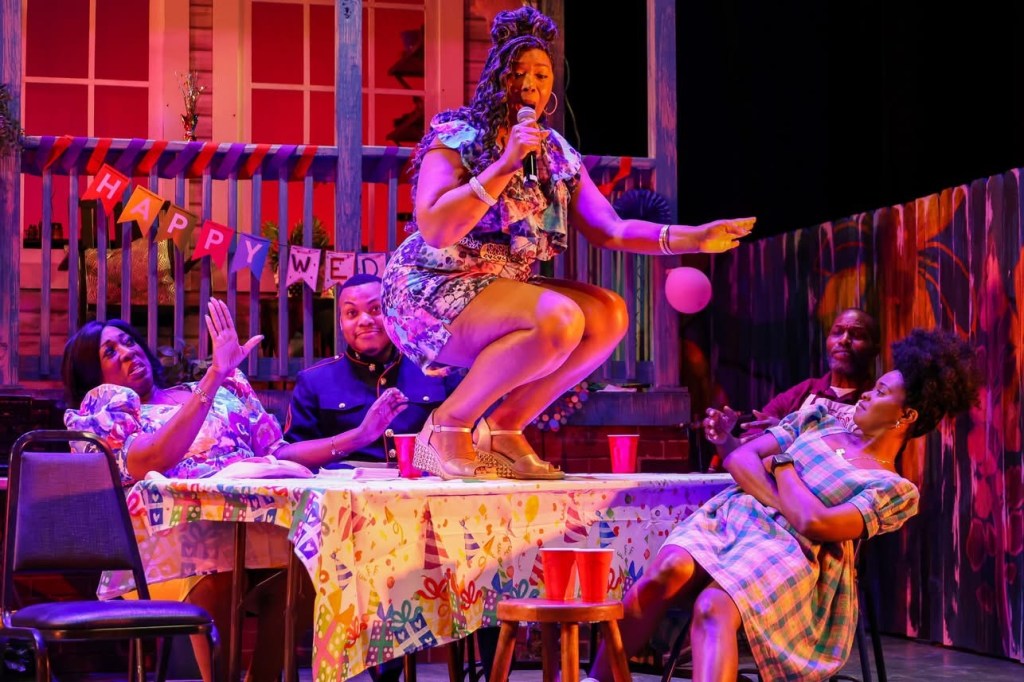
BKLYN THE MUSICAL

There’s a Little Fairy Tale in Every Reality

BKLYN THE MUSICAL

There’s a Bit of Truth in Every Fairy Tale…and Vice Versa

At: The Swift Creek Mill Theatre, 17401 U.S. Route One, Chesterfield, VA 23834

Performances: January 27 – February 17, 2024

Ticket Prices: $49. Discounts available for students, seniors, and veterans.

Info: (804) 748-5203 or https://www.swiftcreekmill.com

There’s been a lot of discussion recently about people who were outraged that a certain popular movie was a – gasp! – musical. I, personally, love a good musical. The first paycheck I ever earned was for working in a summer youth program that put on a production of West Side Story. (I played Anita.) I love a good musical, but one thing I love even more is a musical I never heard of that blows you away with phenomenal singing, and BKLYN THE MUSICAL almost brought me to tears with the first song, an ensemble piece called “Heart Behind These Hands” that comes even before the “Prologue.”

Thank you and kudos to Dorothy Dee-D Miller, Desirèe Dabney, Michael McMullen, Kamaron Carter, and Lindy Pokorny. This ensemble of five powerhouse vocalists remind us that the Richmond-area theatre community has no lack of talented professionals who are second to none. They played the leading roles of a magical Streetsinger, a local diva named Paradice, Taylor – a missing father, Faith – his long-lost love, and their daughter Brooklyn – the title character. These five are ably supported by the City Weeds, a band of homeless musicians, played by Garrett D. Reese, Larry “Akin” Smith, Nocole Pearson, and Anthony Hernandez. All the City Weeds except Hernandez, who is currently a Junior at Appomattox Regional Governor’s School, also serve as understudies for one of the leads.

Schonfeld and McPherson put together a nominal story-within-a-story or perhaps more accurately a play-within-a-play. Set in a homeless encampment under the Brooklyn Bridge, the actors are members of the City Weeds, who make music to support themselves. Never mind that the set doesn’t much resemble the Brooklyn Bridge I used to walk across most Saturday mornings for a large part of my young adulthood, or that you’re not likely to find a bodega (corner store) under the pillars of said bridge – the set designer and creative team exercised creative license to construct a world of chain link fences, discarded mattresses, and colorful graffiti that evokes the grittiness of the stereotypical inner city. The costume designer crafted a collection of shabby chic ensembles and a few masterful garbage-sack gowns for the divas who, the story would have us believe, engage in a singing dual at Madison Square Garden. The stakes are high: if Bklyn wins, she will use all the money to help the homeless, but if Paradice wins, she will keep all the money for herself.

On opening night there were a few times when the sound was uneven and sone parts of the dialogue got lost – especially when actors were on the opposite side of the stage from where I was sitting. I trust this will be ironed out shortly.

The important thing is that for 100 minutes, with no intermission, this 9-member ensemble blew away the audience with strong vocals, dynamic performances, enough of a story to keep us interested, enough humor to make us feel loved, and enough interaction to keep us on our toes – all under the masterful direction of Shanea N, Taylor and the musical direction of Leilani Fenick. You never knew what outrageous outfit Dabney would sport next – or what stereotypically offensive utterance she would pronounce in love. You never knew when to expect a homeless person to push a shopping cart down the aisle. You never knew when Pokorny, Miller, McMullen, or Dabney would open their mouth and emit an endlessly long, clear, and perfect note.

It’s not all roses and cliches. There is homelessness, suicide, war, the mystery of an unfinished lullaby, and the aftermath of drug-addicted veterans – and of course, the toll these events take on innocent children. Yet, as far as narratives go – as far as fairytales go – none of this can compare to the real-life backstory of the musical’s authors. Apparently Schoenfeld and McPherson worked together in the 1980s. McPherson sang in cabarets and Schoenfeld wrote music. When McPherson traded in the stage for suburban family life, she and  Schoenfeld lost contact. Then, according to the real-life fairytale, on a trip to New York one day McPherson heard a familiar voice and found a now homeless Schoenfeld performing as a streetsinger for $40 a day. She then invited her old friend and business partner to come live with her family while he got himself back on his feet – and the result was BKLYN THE MUSICAL. Ta da! As I said, I love a good musical. The musical based on the authors’ story might be an even better one than the one they produced.

BKLYN THE MUSICAL is fun. It’s dynamic. Much of the music is foot-tapping good, and the singing is often excellent. It’s corny and sassy. It’s as innocent as Brooklyn (the character, not the place) and as in-your-face and confident as Paradice – and you’ve got to be confident if you parents named you after a pair of gambling cubes. It’s a well put together show that offers hope and a happy ending in spite of, well, reality.

———-

Julinda D. Lewis is a dancer, teacher, and writer who was born in Brooklyn, NY and now lives in Eastern Henrico County. When not writing about theater, she teaches dance history at VCU and low impact dance fitness classes to seasoned movers like herself, and occasionally performs.

———-

BKLYN THE MUSICAL (Stage premiere April 30, 2003, Dener, CO))

Book, Music, and Lyrics by Mark Schoenfeld and Barri McPherson

Directed by Shanea N. Taylor

CAST

Brooklyn         ……………….. Lindy Pokorny

Streetsinger     ……………….. Dorothy Dee-D Miller

Taylor              ……………….. Michael McMullen

Faith                ……………….. Kamaron Carter

Paradice          ……………….. Desirèe Dabney

City Weed/Taylor U/S ………. Garrett D. Reese

City Weed/Streetsinger U/S …. Larry “Akin” Smith

City Weed/Paradice U/S …….. Nicole Pearson

City Weed       ……………….. Anthony Hernandez

ORCHESTRA

Musical Director/Keyboard One ….. Leilani Fenick

Keyboard Two  …………………….. Ian Krauss

Reeds ……………………………… Sheri Oyan

Guitar ……………………………… Ed Drake

Bass ……………………………….. Beatrice Kelly

Drums ……………………………… Bentley Cobb

CREATIVE TEAM

Directed by Shanea N. Taylor

Musical Direction by Leilani Fenick

Scenic Design by Dasia Gregg

Lighting Design by Joe Doran

Costume Design by Maura Lynch Cravey

Choreography by Suzi Redling

Technical Direction by Liz Allmon

Run Time:

About 100 minutes with no intermission

Tickets:

Regular $49. Discounts for Seniors, Military & Veterans

One-Time
Monthly
Yearly

Make a donation to support
rvart review

Make a monthly donation

Make a yearly donation

Choose an amount

$5.00
$15.00
$100.00
$5.00
$15.00
$100.00
$5.00
$15.00
$100.00

Or enter a custom amount

$

Your contribution is appreciated.

Your contribution is appreciated.

Your contribution is appreciated.

DonateDonate monthlyDonate yearly