O’KEEFFE!

A One-Woman Show About Art, Life, and Love

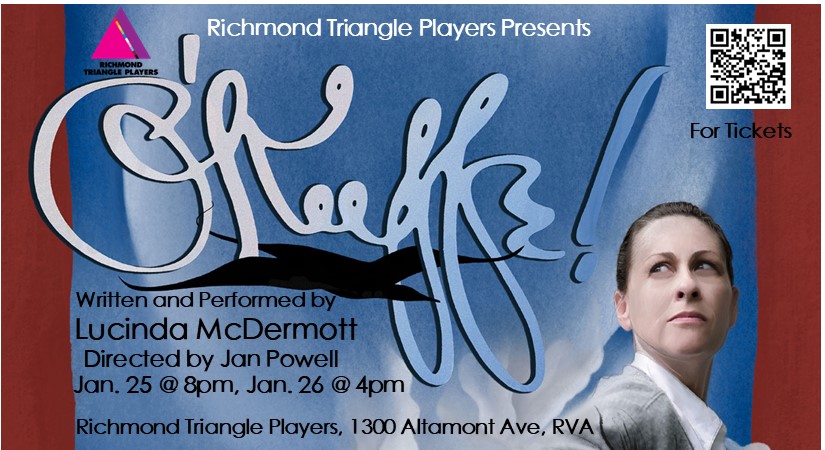
Written and Performed By: Lucinda McDermott

At: Richmond Triangle Players at the Robert B. Moss Theatre, 1300 Altamont Avenue,  RVA 23220

Performances: January 25 & 26, 2025

Ticket Prices: $45

Info: (804) 346-8113 or rtriangle.org

A Theater Reflection by Julinda D. Lewis

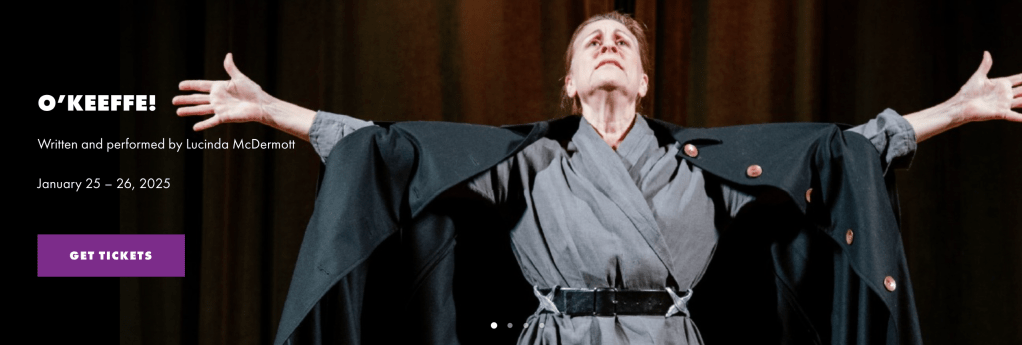
In this mesmerizing one-woman show about the American artist Georgie O’Keeffe, Lucinda McDermott, who both wrote and stars in the play, stated early on, “I will not be mediocre.” That simple statement was a battle cry that foreshadowed what we know of the life of the artist, O’Keeffe. It was a statement first of faith and in retrospect of fact, about the work of playwright and actor Lucinda McDermott.

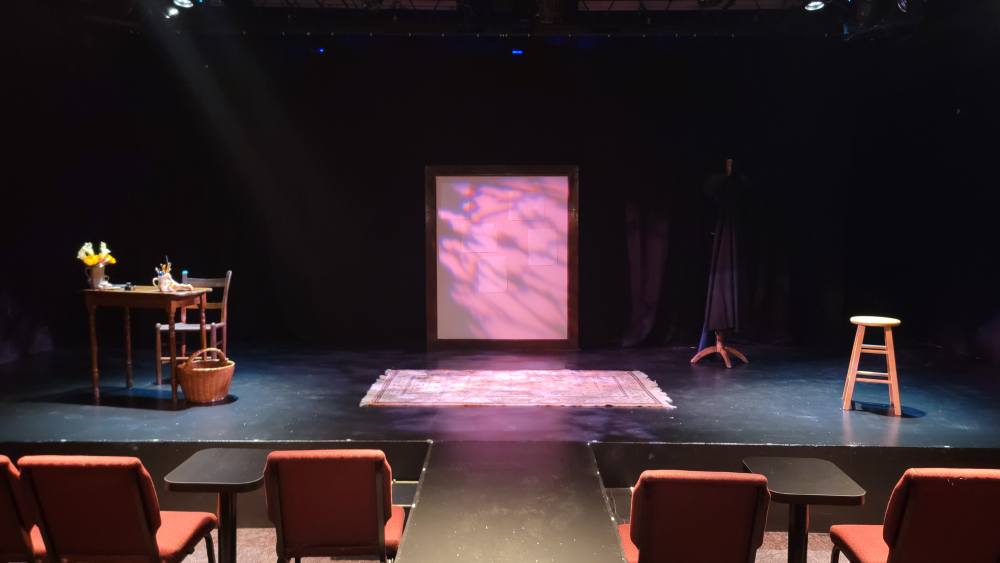
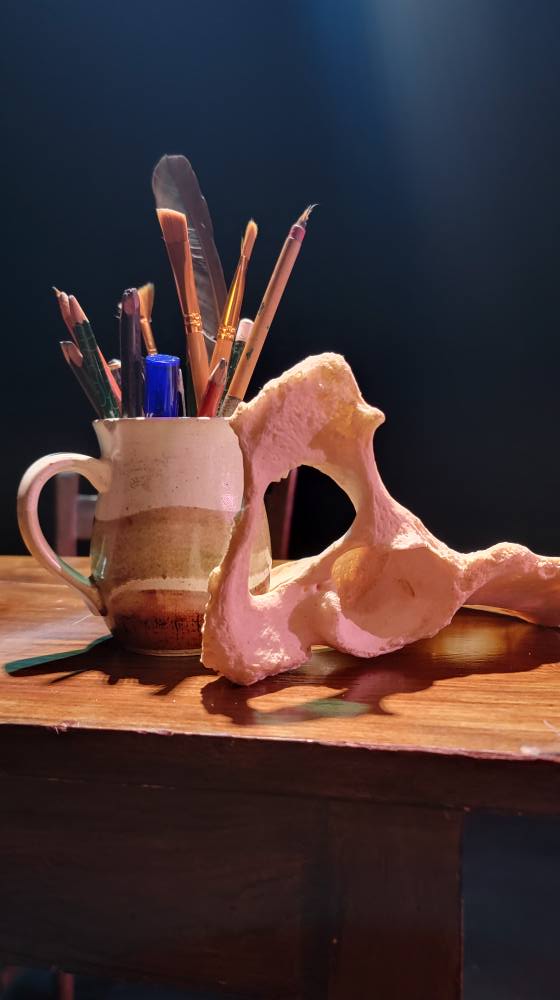
More than a biography, better than a documentary, O’Keeffe briefly immerses the audience into the world that created Georgia O’Keeffe. On a simply dressed stage – just a small desk, a chair, a basket on our left, a coat rack on our right, and a gigantic framed blank canvas upstage center – McDermott reveals her subject with reverence, humor, and love. To borrow a line from the script, McDermott “fills the space in a beautiful way.”

I imagine those who came as fans of the artist left affirmed and those who came as blank slates left with the satisfaction of having filled a void they didn’t know they had. O’Keeffe explores the things that inspired O’Keeffe as well as the challenges faced by a woman artist existing in a man’s world, more specifically as a woman artist living in the shadow of a well known and successful man – a renowned photographer more than 20 years her senior who also managed her career. The play dares explore the question, did Alfred Stieglitz exploit, manipulate, or otherwise (re-)direct the course of O’Keeffe’s life?

There is no doubt a popular, powerful, older male mentor can open doors closed to other women. And although McDermott did not dwell on it, there was mention of how he would not allow her to have children, her lengthy, life-affirming retreat to New Mexico, and even allusions to her affair with a mutual friend, the Harlem Renaissance writer, Jean Toomer and his long-term affair with arts patron Dorothy Norman. Yet this is a love story, and their marriage lasted in some form for 30 years.

“It’s an unpleasant sensation, squeezing the life out of someone; you won’t like what’s left.”

McDermott’s storytelling skills are immersive all on their own, yet in and as O’Keeffe, she takes it to another level. At one point, as an example, McDermott asked the audience to close our eyes to listen to music (the sound design was the work of her own real-life husband, Jonathan Piro) and then she asked three people to describe what they had seen in their mind’s eye.

McDermott commands the stage for about two hours, not so much playing the role O’Keeffe, as embodying the spirit of the artist, with time for one intermission, and not one minute of her stage time is dull or wasted. O’Keeffe resurrects the artist and allows her – not McDermott, but O’Keeffe – to lead us on an amazing journey of discovery: it is art process; it is love story; it is the heart of an artist, taken out, bared, and entrusted to a group of people who may have entered as strangers but who left as co-conspirators, a group unified by a common experience who cradled it, acknowledged its strengths and admired its cracks, and returned it to its owner so it could be shared again and again…and again.

NOTE: To answer a question raised – by McDermott? by O’Keeffe? – why do critics get paid for their opinions and the rest of us don’t? It’s combat pay, needed to buy bandages for the wounds from the darts and daggers others tossed at those who dared to defy social conventions and express an opinion, whether popular or not. And I make a distinction, in these days of social media, between the professional reviewer or academic critic and those who use and abuse social media for the sole purpose of inflicting harm on others for no other reason, apparently, than for sport. But that’s a whole other discussion.

———-

Julinda D. Lewis is a dancer, minister of dance, teacher, and writer who was born in Brooklyn, NY and currently resides in Eastern Henrico County. When not writing about theater, she teaches dance history at VCU and low impact dance fitness classes to seasoned movers like herself and occasionally performs.

———-

O’KEEFFE

Written & Performed by Lucinda McDermott

Directed by Dr. Jan Powell

Cast

Lucinda McDermott as Georgia O’Keeffe

Creative Team

  Playwright/Actor/Producer:Lucinda McDermott
                                      Director:Jan Powell
Sound Design/Co-Producer:Jonathan Piro
                     Costume Design:Elizabeth Weiss Hopper
                       Lighting Design:Andrea Stratton
Master Electrician:Gabriel Beard

Performance Schedule

Saturday, January 25, 2025           8:00PM

Sunday, January 26, 2025              4:00PM         

Tickets

Ticket Prices: $45

Run Time

Approximately 2 hours, including one intermission

Photos N/A [from Lucinda McDermott’s Facebook page]
One-Time
Monthly
Yearly

Make a one-time donation to show your support of rvart review

Make a monthly donation

Make a yearly donation

Choose an amount, any amount, large or small, will be appreciated.

$5.00
$15.00
$100.00
$5.00
$15.00
$100.00
$5.00
$15.00
$100.00

Or enter a custom amount

$

Your contribution is appreciated. Thank you!

Your contribution is appreciated.

Your contribution is appreciated.

DonateDonate monthlyDonate yearly
FIVE LESBIANS EATING A QUICHE

Respect the Egg

A Theater Review by Julinda D. Lewis

At: Richmond Triangle Players at the Robert B. Moss Theatre | Carpenter Foundation Stage, 1300 Altamont Ave, RVA 23230

Performances:  September 11 – October 5, 2024

Ticket Prices: $50

Info: (804) 346-8113 or rtriangle.org

———-

NOTE: For the last review I wrote for this space, I confessed that I was unfamiliar with the play prior to seeing it, but someone kindly pointed out that I had actually reviewed the Richmond premiere several years prior. I  wasn’t caught off guard this time. I remembered seeing this play before – in the same theater! – and my review of that earlier production was published in the Richmond Times  Dispatch, February 20, 2015.

———-

September 13, 2024:

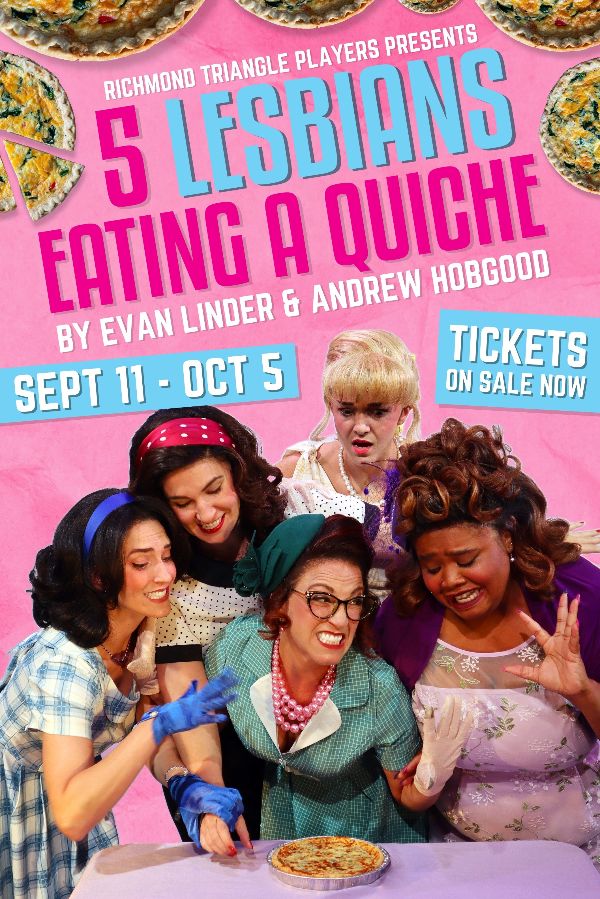
The leaders and members of the Susan B. Anthony Society for the Sisters of Gertrude Stein are gathered in the newly renovated community center for their annual Quiche Breakfast, but all is not as picture perfect as it appears on the surface. It’s 1956 and the country is uneasy about the prospect of impending nuclear attack and many – let’s be honest, all – of the widows (wink, wink) share a secret that no one dares speak aloud. When the security system signals a nuclear attack, everything changes.

The authors, Evan Linder and Andrew Hobgood – and the artistic team at Richmond Triangle Players – were eerily prescient. Change the year from 1956 to 2024 and the political climate, the threat of terrorism, and the challenges (dangers?) of being yourself are pretty much the same. I’m sure it was accident, no mere coincidence, that this production was planned for this pre-election period.

William Luther’s near cartoon-style set and gorgeous 1950s style dresses with their swinging skirts – some fluffed up by crinolines – stunning vintage shoes, hair bows, fascinators, and lace gloves are a feast for the eyes. The very demure outer appearance only makes the underlying sexual tension, innuendo, and banter that permeate each scene that much steamier. When Ashley Thompson’s character, Ginny Cadbury, the over-eager newest member of the group ends up atop a table with her face buried in a plate of quiche it’s as if a group of church ladies had suddenly put down their needle point to engage in an orgy. But I’m jumping ahead.

Theater-goers aka members receive name tags on arriving at their seats. Everyone gets a “female” name. I was Virginia this time. There is a lot of audience interaction, and one front-seat viewer in particular – “Margery” on opening night – gets to have an on-going supporting role. Nora Ogunleye as Wren Robin is the club’s event chair. Ogunleye, looking fabulous in a purple ensemble with matching hat and shoes brings over-the-top optimism and a mile-wide smile to the role. Kendall Walker plays Dale Prist, a wide-eyed innocent who looks like an animated Barbie doll and serves as the group’s historian with a classic Eastman-type film using camera around her neck.

Rachel Dilliplane brings barely repressed butch energy to Veronica “Vern” Schulz, the group’s buildings and grounds manager. Vern is the only one of the five women bold enough to wear pants, and in spite of her tight control over just about everything in her immediate world, Vern is the one who dropped the ball when it most mattered. Ashley Thompson slays as Ginny Cadbury, the newest member and recent British transplant who serves as the secretary. We never learn why – or if we did, it went over my head – Ginny is ostracized by the rest of the leadership team. Last but not least, Donna Marie Miller has the role of the group’s President, Lulie Stanwyck. A stickler for rules and protocol, who lives by the motto “no men, no meat,” it is Lulie who drops the biggest bombshell (I actually did not know that pun was coming) after the five find themselves confined to the shelter – with the possibility they may have to remain there for four long years.

Everything was moving along according to plan, you see, although there is a hint that things are not as they appear – when suddenly the lights flicker, the alarm sounds, and the safety door locks everyone inside against a nuclear attack. With seemingly nothing left to lose, it’s time to finally let go of long-held secrets. It turns out that “widow” is used here as a euphemism for lesbian. Once that is out in the open – and some are more reluctant to name their truth than others, and not even the audience is not exempt from participating in the apocalyptic confession – the floodgates open to reveal all sorts of secrets and Dale has an opportunity to earn a special place in the history of the sisterhood.

This cast is bright and snarky and generally hilarious. The costumes and set are visually delightful. The lighting and sound effects are appropriately over-the-top. The audience’s immersion pushes the edge of an unnamed boundary that gives heightened meaning to the word inclusion. What other play do you know of that encourages the audience to sing along to the theme song of an elite society and have everyone shout out, “I am a lesbian!” The issues are real: nuclear warfare, loyalty, discrimination, oppression, same-sex marriage. The timing of lines by the ensemble and the overall pacing set by director Kelsey Cordrey never attempts to belittle any of this, while at the same time guaranteeing there is never a dull moment. In short, 5 Lesbians Eating a Quiche is breathlessly entertaining.

———-

Julinda D. Lewis is a dancer, teacher, and writer who was born in Brooklyn, NY and now lives in Eastern Henrico County. When not writing about theater, she teaches dance history at VCU and low impact dance fitness classes to seasoned movers like herself, and occasionally performs. Her most recent (ad)venture was the premiere of a solo work, The Waters of Babylon or Psalm 137 Revisited: a Post-Exodus Reflection in Movement Choreographed From Collective Memories for the debut of the Critical Race Theatre Project, right here at RTP in August 2024.

———-

5 LESBIANS EATING A QUICHE

Written by Evan Linder & Andrew Hobgood

Directed by Kelsey Cordrey

Cast

Rachel Dilliplane as Veronica “Vern” Schultz [Note: the program spells her name Dillaplane but I used the spelling I’ve seen virtually everywhere else including her own social media]

Donna Marie Miller as Lulie Stanwyck

Nora Ogunleye as Wren Robin

Ashley Thompson as Ginny Cadbury

Understudies

Kendall Walker as Dale Prist

Emils Berry u/s for Wren Robin & Veronica “Vern” Schultz

Sydnee Graces u/s for Dale Prist & Ginny Cadbury

Jen Hines u/s for Lulie Stanwyck

Production & Design

Playwright – Evan Linder & Andrew Hobgood

Director – Kelsey Cordrey

Scenic & Costume Design – William Luther

Lighting Design – Gretta Daughtry

Sound Design – Lucian Restivo

Props Design – Tim Moehring

Hair & Makeup Design – Luke Newsome

Production Stage Manager – Corrie Yarbrough

Assistant Stage Manager – Finn Thomason

Intimacy & Fight Director – Lucinda McDermott

Gender Consultant – August Hundley

Master Electrician – Griffin Hardy

Technical  Director & Scenic Artist – William Luther

Scenic Construction – David Ballas, Josie Carter, Becka Russo, Kendall Walker

Setting

A community center in middle America where the annual Quiche Breakfast of the Susan B. Anthony Society for the Sisters of Gertrude Stein is being held. Today, 1956.

Run Time

Approximately 70 minutes without intermission

Ticket Information

$50, Info: (804) 346-8113 or rtriangle.org

Photo Credit: unattributed

One-Time
Monthly
Yearly

Make a one-time or recurring donation
to show your support of RVART Review

Make a monthly donation

Make a yearly donation

Choose an amount

$5.00
$15.00
$100.00
$5.00
$15.00
$100.00
$5.00
$15.00
$100.00

Or enter a custom amount

$

THANK YOU!!!
Your contribution is appreciated.

Your contribution is appreciated.

Your contribution is appreciated.

DonateDonate monthlyDonate yearly

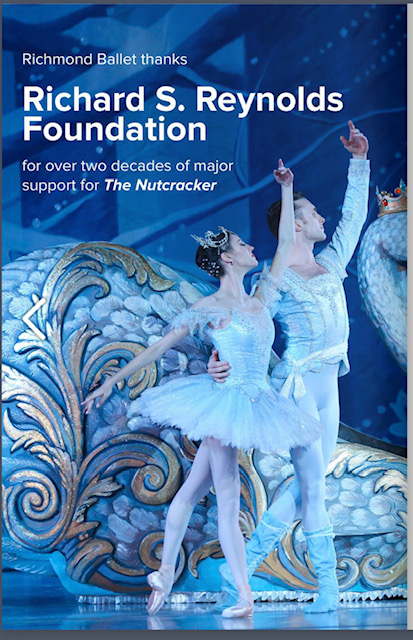
THE MAGIC OF THE NUTCRACKER – REFRESHED

Richmond Ballet Presents a Holiday Favorite

An Unconventional Dance Review by Julinda D. Lewis & Guest Reviewers Kingston and Emmitt

By: The Richmond Ballet

At: Dominion Energy Center’s Carpenter Theatre, 600 E. Grace Street, RVA 23219

Performances: December 9-23, 2022

Ticket Prices: $25 – $130

Info: (804) 344-0906, etix.com, or richmondballet.com

Updated COVID-19 Protocols, see below.

THE PROGRAM

The Nutcracker 

Artistic Direction and Choreography by Stoner Winslett

Production conceived by Stoner Winslett and Charles Caldwell

Music by Peter Ilyich Tchaikovsky

Music performed by the Richmond Symphony

Conducted by Erin Freeman

Scenery designed by Alain Vaës

Costumes designed by David Heuvel

Lighting designed by Richard Moore and Associate, Catherine Girardi

When I was a Girl Scout Leader (which I was, for 27 years), one of my favorite things to do was to take young girls camping for the first time. Likewise, one of my favorite things to do as a writer, teacher, and grandmother is to take my young people to the theater for the first time. Three of my grandsons live in RVA, ages 14, 8, and 8 months. The oldest has seen The Nutcracker before, and with the return of live performances, it was time for the middle one to have his first Nutcracker experience. So on Sunday evening I got a chance to re-experience the classic holiday ballet through new eyes.

The magic begins the moment you enter the theater – well, as soon as you pass through security and have your tickets scanned. [Security approved of my clear plastic tote and the small “sippy cups” I’d brought so we wouldn’t spill the drinks we bought at the concession stand.] While waiting for the program to begin, I enjoyed watching the families with children of all ages, most dressed in their holiday finery. Kingston (a high school student and the family percussionist) and Emmitt (age 8) saw that it was okay to go take a peek at the orchestra pit and returned to their seats discussing the probability of someone falling into the pit.

Other preparatory and property elements worthy of note included explaining why the audience applauded the arrival of the Symphony conductor and the many layers of show drops and curtains that open throughout the lavish production to reveal scenes from the streets of Nuremburg to the entry and drawing room of the Silberhaus home to the Enchanted Snow Forest and Confitenberg, the Kingdom of Sweets. Also, the diversity of the cast is important, because representation matters, especially when young audience members can see people onstage who look like themselves. An example follows a few paragraphs down.

The Nutcracker is a family show for The Richmond Ballet as well as for the audience. Students from the School of Richmond Ballet, apprentices, members of RBII, new and experienced company members, and even faculty and staff share the stage for this multi-generational extravaganza. In addition to refreshed costumes and scenery, the Silberhaus party features newly constructed doll houses for Dr. Drosselmeyer’s magic show, Mother Ginger is back from her pandemic hiatus – with eight kiddy-winks under her voluminous skirts — and Associate Artistic Director, Ma Cong (who dances the role of Dr. Drosselmeyer) has choreographed a new Chinese dance that incorporates elements of Chinese folkdance, which he studied extensively early in his career, with Beijing Dance Academy and The National Ballet of China.

Yes, there is a magic show within the magical show. Dr. Drosselmeyer, godfather to Clara (Adhya Yaratha at Sunday’s 5:30 PM performance) and her mischievous brother Fritz (Sunnelin Seay), and creator of the famous Nutcracker for which the ballet is named, has a penchant for turning toys into humans. Winslett and Cong’s interpretation of Dr. Drosselmeyer, however, is substantially less creepy than the character was originally written. There is also the magic of dreams as Clara falls asleep with her mended Nutcracker – after her little brother Fritz, in a fit of jealously, pulls off its head – and in her slumber journeys with her Young Prince (Benjamin Piner) to the Kingdom of Sweets – where all the dancing happens.

I am on board with the youth in my adoration for the battle between the Mouse King’s army and the Toy Soldiers. But of course, Kingston and Emmitt who are bonafide martial artists, had a lot to say about the fight technique. One graciously commented that, “it was good.” The other assessed that the sword fights were not realistic, specifically that the swords should have come closer. “We practice near misses,” he critiqued.

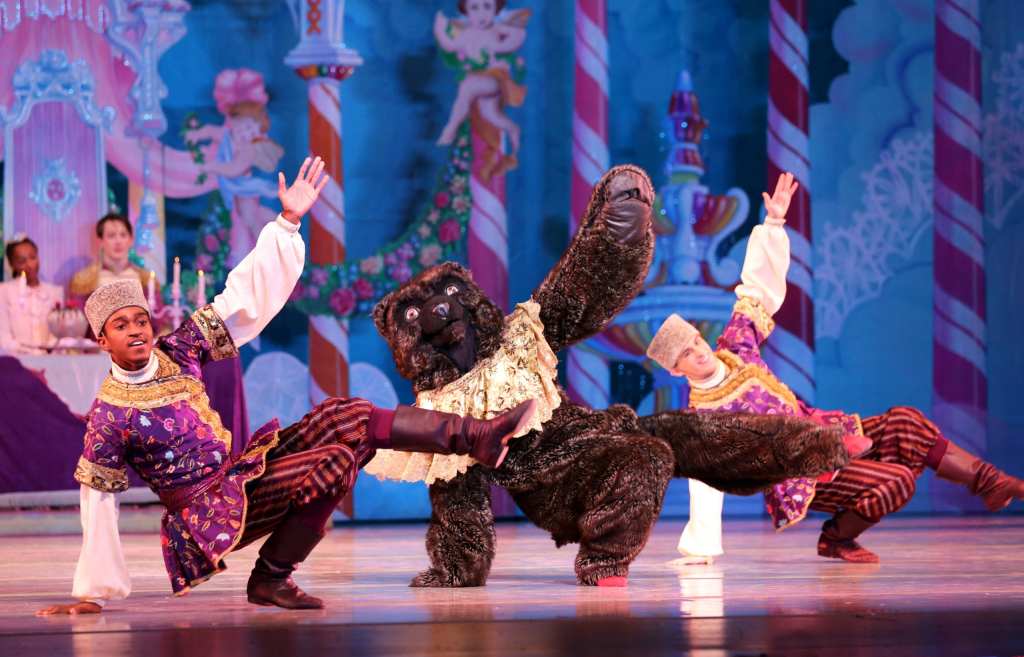
Emmitt, the eight-year-old, kept up a running commentary: the Bear (Paul Piner) in the Russian dance is breakdancing, and why is one of the Lambs black? My apologies to any nearby patrons who may have been disturbed. Most noteworthy, he was mesmerized by Mother Ginger to the point that he expressed a desire to participate in an upcoming production. He was undeterred when I told him he’d need to take ballet classes, but near the end of the scene abruptly changed his mind. “I couldn’t do that,” he said. “I can’t stand still that long; I have too much energy.”

I learned later that both novice critics retold the story and re-enacted several scenes for their mother. Both also noted that in a pas de deux the woman gets all the good dance phrases. And finally, “There’s no Nutcracker in the second half – it doesn’t make sense. Otherwise, that was a good one!” That’s Emmitt’s summary and he’s sticking to it.

If I may conclude with my own two cents worth…

Adhya Yaratha and Benjamin Piner were absolutely charming as Clara/The Little Princess and Dr. Drosselmeyer’s Nephew/The Little Prince. The Snow Choir sounded heavenly. I would love to learn that magical gliding step that takes the Angels across the stage, guiding or welcoming Clara and her Prince to The Kingdom of Sweets. It reminds me of a gliding step used by Russian dancers that my dance history students showed me this past fall. The new choreography for the Chinese Dance – the title of which is actually Tea – does, indeed have an authentic look and feel. Dancer Eri Nishihara’s highly touted green pointe shoes are, in fact, all that – and, wait, was the dragon newly outfitted as well?

Naomi Wilson was a lovely Butterfly in the Waltz of the Flowers, and finally, it was a pleasure to finally get to see guest dancer Kristina Kadashevych dancing the role of the Sugar Plum Fairy as well as the ballet’s Grand Pas de Deux with Aleksey Babayev as her Cavalier. The petite dancer’s steps appear effortless and feathery – a stark contrast to the conditions surrounding her current residency. Ms. Kadashevych, you see, fled the Ukraine last spring as her homeland was being invaded by Russian soldiers, so perhaps those ethereal steps actually reflect what it feels like to be free. The Nutcracker is not new to her, and she will also be performing with the Richmond Ballet in February when the company returns to Dominion Energy Center with the East Coast premiere of Ma Cong’s Firebird and Balanchine’s signature Serenade (limited run, February 17-19).


Julinda D. Lewis is a dancer, teacher, and writer who was born in Brooklyn, NY and now lives in Eastern Henrico County.


THE NUTCRACKER PERFORMANCE SCHEDULE
December 9-23, 2022 | Dominion Energy Center
600 E Grace St, Richmond, VA 23219

Friday, December 9 at 7:00 PM
Saturday, December 10 at 2:00 PM and 7:00 PM
Sunday, December 11 at 1:00 PM and 5:30 PM
Friday, December 16 at 7:00 PM
Saturday, December 17 at 2:00 PM and 7:00 PM
Sunday, December 18 at 1:00 PM and 5:30 PM
Tuesday, December 20 at 7:00 PM
Wednesday, December 21 at 7:00 PM
Thursday, December 22 at 2:00 PM and 7:00 PM
Friday, December 23 at 2:00 PM 

UPDATED COVID-19 Protocols (As of March 2022): Please note that we are seating at 100% capacity this season. Beginning with Studio Three in March, we will no longer require patrons to wear masks or to show proof of vaccination/negative COVID test in order to attend a performance.

MASKS: In light of the latest CDC guidelines and Central Virginia’s current “Low/Medium Community Level” status, masks are optional at these performances.

BALLET BARRE: The Ballet Barre (cashless) will be open for our spring Studio performances. Beer, wine, and soft drinks will be available for purchase pre-show as well as during intermission.

CHOREOGRAPHER’S CLUB: In addition to the exclusive Q&A session with the artists, designers, and dancers, we will host a modified post-show reception. More details will be found in your House Notes email.

WELLNESS CHECK: Patrons who do not feel well leading up to a performance are asked to stay home. If you have tested positive or have symptoms of COVID-19, please call our Box Office at 804.344.0906 x224 so that we may discuss ticket options.


Photo Credits: Production photos to follow

One-Time
Monthly
Yearly

Make a one-time donation in support of
rvart review

Make a monthly donation

Make a yearly donation

Choose an amount

¤5.00
¤25.00
¤100.00
¤5.00
¤25.00
¤100.00
¤10.00
¤50.00
¤100.00

Or enter a custom amount

¤

Your contribution is appreciated.

Your contribution is appreciated.

Your contribution is appreciated.

DonateDonate monthlyDonate yearly

FIRES IN THE MIRROR: Crown Heights, Brooklyn and Other Identities

A Tightrope Take on a Tragic Accident

A Theater Review by Makai Walker

At: The Firehouse Theatre, 1609 W. Broad St, Richmond, VA 23220

Performances: March 26 – Sun April 25, 2021

Ticket Prices: $33 live and streamed

Info: (804) 355-2001 or firehousetheatre.org

[NOTE: This production was made Covid conscious with a severely limited seating capacity of a maximum of 10 audience members at each performance, as well as other safety protocols that can be found on The Firehouse Theatre website.]

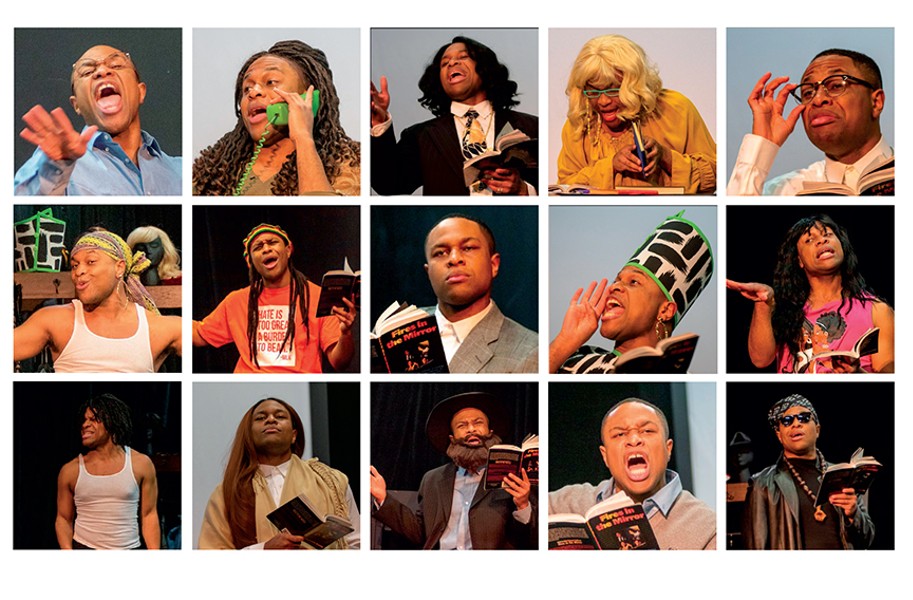
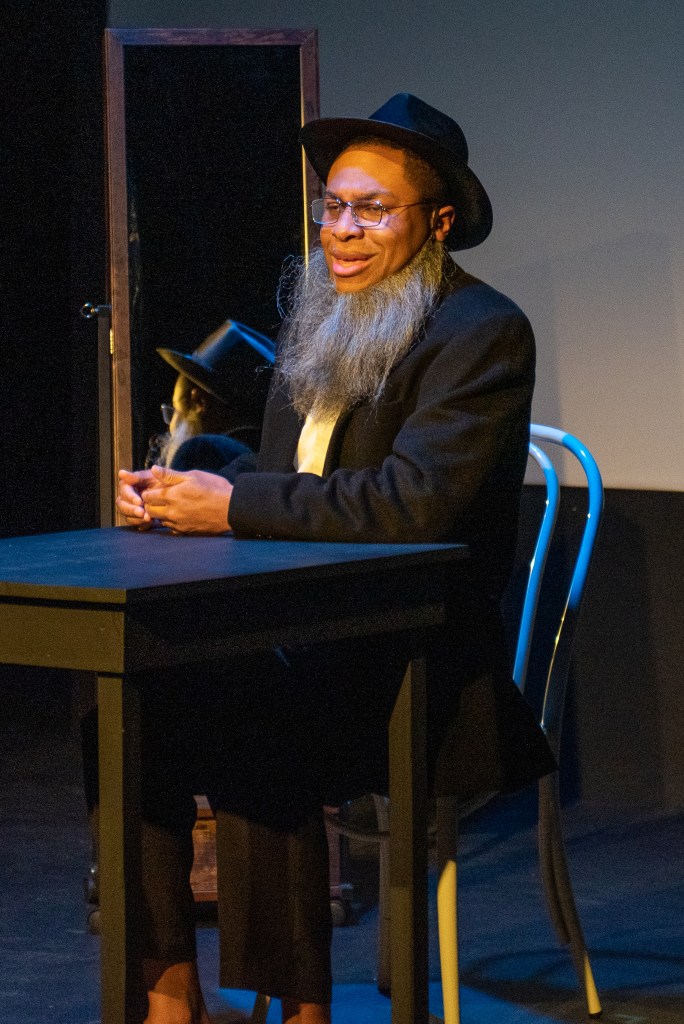
Fires in the Mirrorfelt like a 2-hour stroll through 90s New York and considering the premise of the show I’d call that a good thing. The one-person play by Anna Deavere Smith is a series of monologues collected from Smith’s interviews with real people and directed by Katrinah Carol Lewis who stared in another of Smith’s one-person plays (Twilight: Los Angeles, 1992 at TheatreLab in 2017.

Fires in the Mirror tells the story of the Crown Heights Race Riots of 1991, the murder of Yankel Rosenbaum, and the car crash that started it all. It consists of 29 performed monologues taken verbatim from interviews with 26 subjects, some of whom were near or directly involved with the accident. In the first half of the play, we’re given context to the racial tensions roiling between the black and Hasidic residents of the Crown Heights neighborhood of Brooklyn, New York. This, unfortunately, is the weakest part of the play. Actor Jamar Jones puts his best efforts towards spinning an engaging and emotional story, but he is significantly hindered by the first act’s lack of focus and direction.

Act One involves various Black and Jewish people discussing the matter of identity. As a separate component, Act One is a highly informative and intriguing take on culture, but in the context of a play sparked by a specific event, Act One feels like an hour-long non sequitur.

As the second act begins, we take a deep dive into the fatal collision that claimed Gavin Cato’s life and the retaliatory murder of Yankel Rosenbaum. Unlike its precursor, Act Two is much more engaging. As the story unfolds, we peer into the perspectives of the people closely involved with the incident. The final two monologues, those of Rosenbaum’s brother and Cato’s father, are the highlight of the evening.

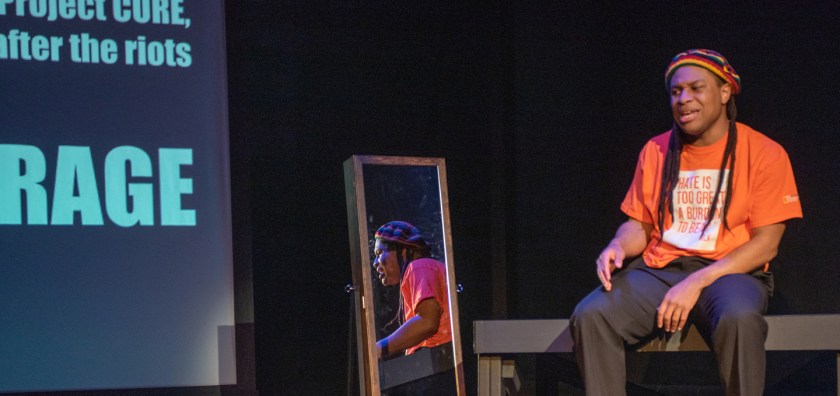
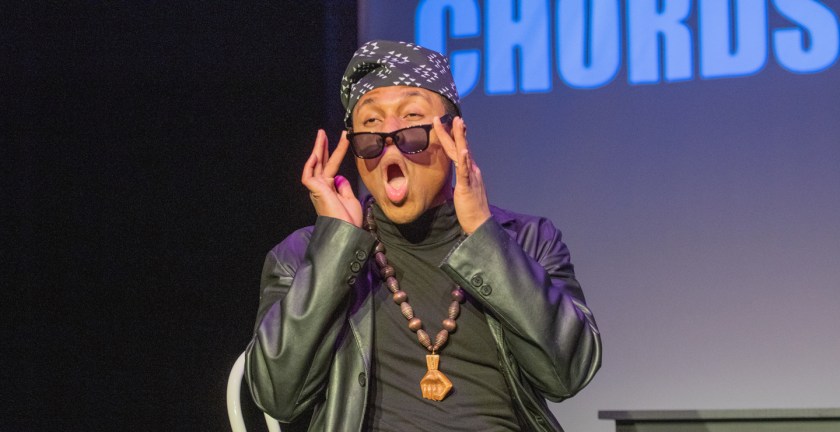
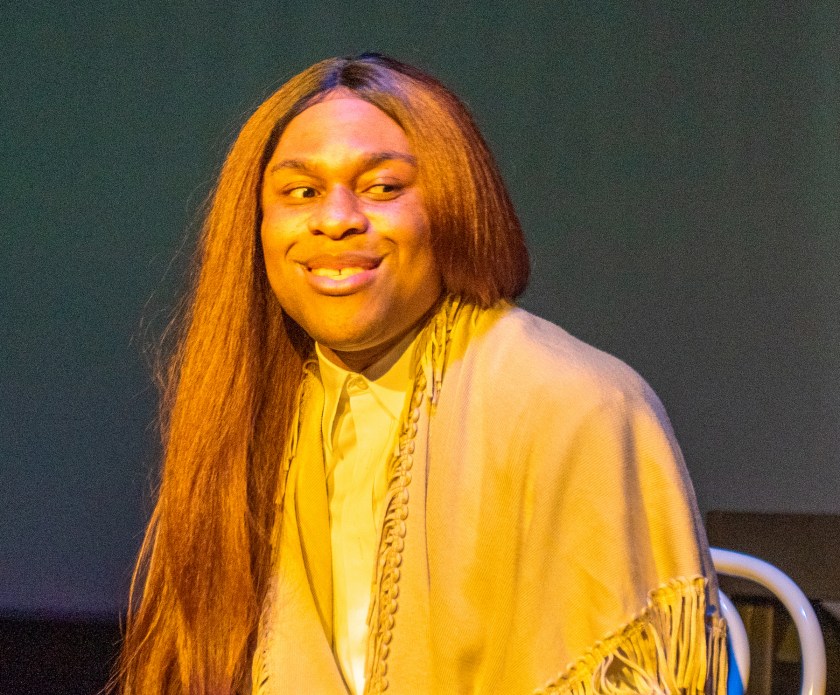
Jamar Jones evokes a playful and committed approach to the characters                that never feels too distasteful and is truly lived in. His embodiment of the interviewees is breathtaking and thrilling to watch.               In terms of themes, Fires in the Mirroris very open-ended about what it wants you to take away. As the play progresses, it hammers home the idea of an incongruous truth or the sense that no one knows what really happened. At times one feels an underlying rhythm of monologues that alternately dip into each “side” of the story. There is the Black side, the Jewish side, and then there are the elements of the crash that are added, embellished, or omitted. While watching, I kept getting flashes of Akira Kurosawa’s Rashomon, in which four people take turns telling subjective or self-serving alternatives of the same story.

Anna Deavere Smith does a fantastic tightrope walk across the conflict and brings light to some of the more deep-seated racial issues in Crown Heights. The questions I kept asking myself was, “What is this play trying to say?” and “Who was right, who was wrong?” I agree with director Katrinah Carol Lewis; there is no winner or loser. This was a tragic accident and regardless of the fallout two lives were lost. That’s the “why” that needs examination.