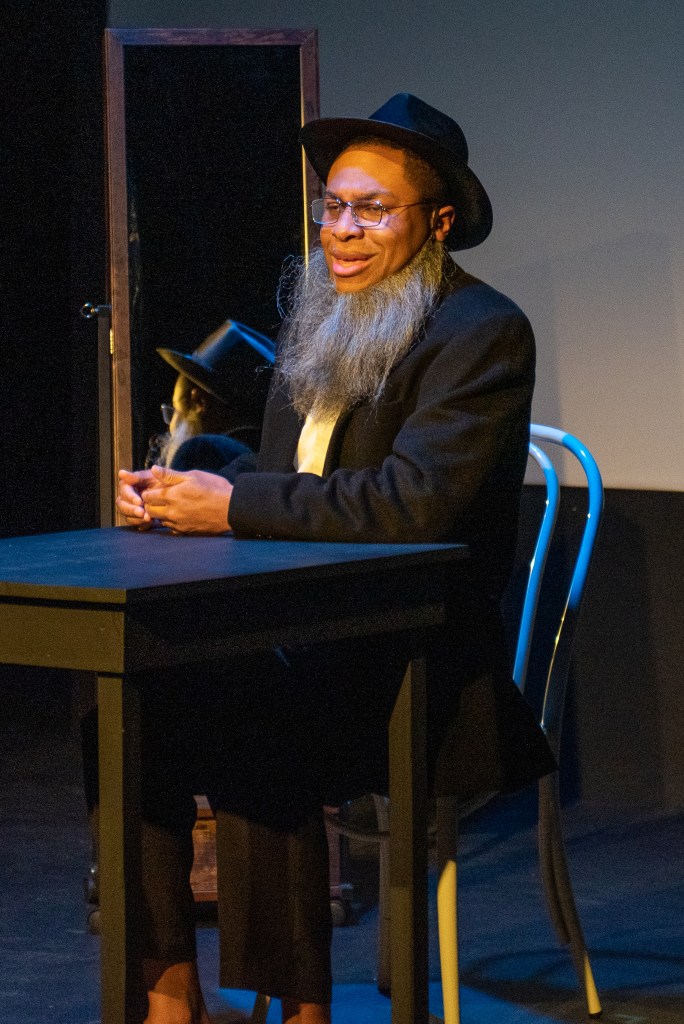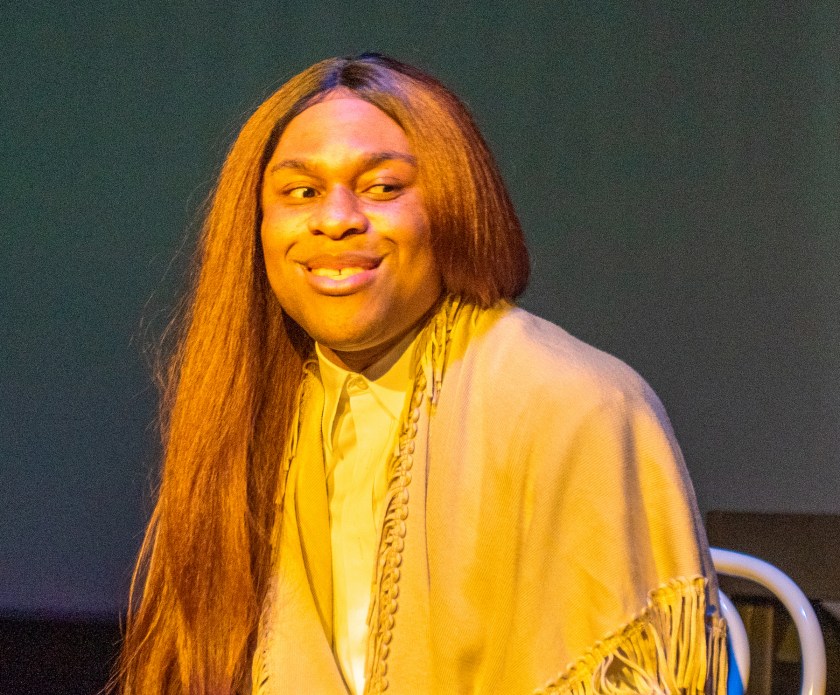
FIVE LESBIANS EATING A QUICHE

Respect the Egg

A Theater Review by Julinda D. Lewis

At: Richmond Triangle Players at the Robert B. Moss Theatre | Carpenter Foundation Stage, 1300 Altamont Ave, RVA 23230

Performances:  September 11 – October 5, 2024

Ticket Prices: $50

Info: (804) 346-8113 or rtriangle.org

———-

NOTE: For the last review I wrote for this space, I confessed that I was unfamiliar with the play prior to seeing it, but someone kindly pointed out that I had actually reviewed the Richmond premiere several years prior. I  wasn’t caught off guard this time. I remembered seeing this play before – in the same theater! – and my review of that earlier production was published in the Richmond Times  Dispatch, February 20, 2015.

———-

September 13, 2024:

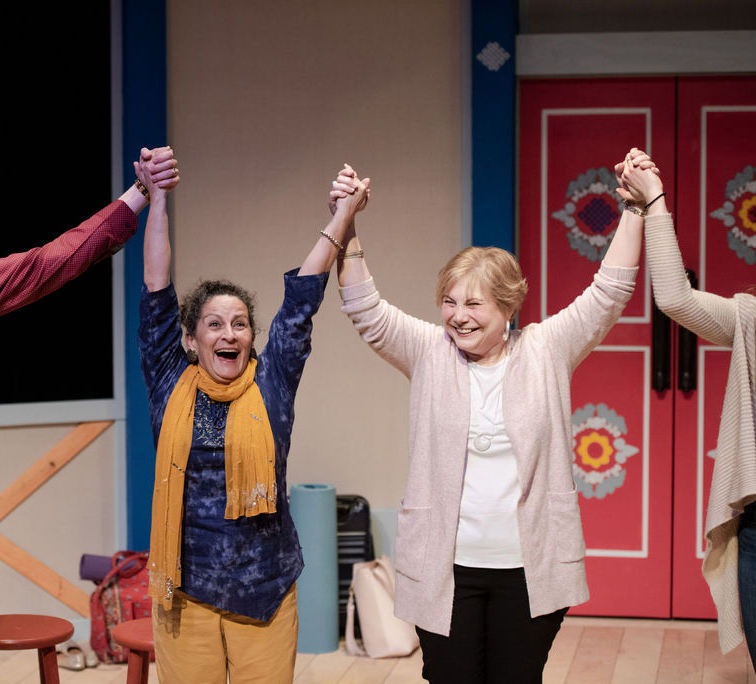
The leaders and members of the Susan B. Anthony Society for the Sisters of Gertrude Stein are gathered in the newly renovated community center for their annual Quiche Breakfast, but all is not as picture perfect as it appears on the surface. It’s 1956 and the country is uneasy about the prospect of impending nuclear attack and many – let’s be honest, all – of the widows (wink, wink) share a secret that no one dares speak aloud. When the security system signals a nuclear attack, everything changes.

The authors, Evan Linder and Andrew Hobgood – and the artistic team at Richmond Triangle Players – were eerily prescient. Change the year from 1956 to 2024 and the political climate, the threat of terrorism, and the challenges (dangers?) of being yourself are pretty much the same. I’m sure it was accident, no mere coincidence, that this production was planned for this pre-election period.

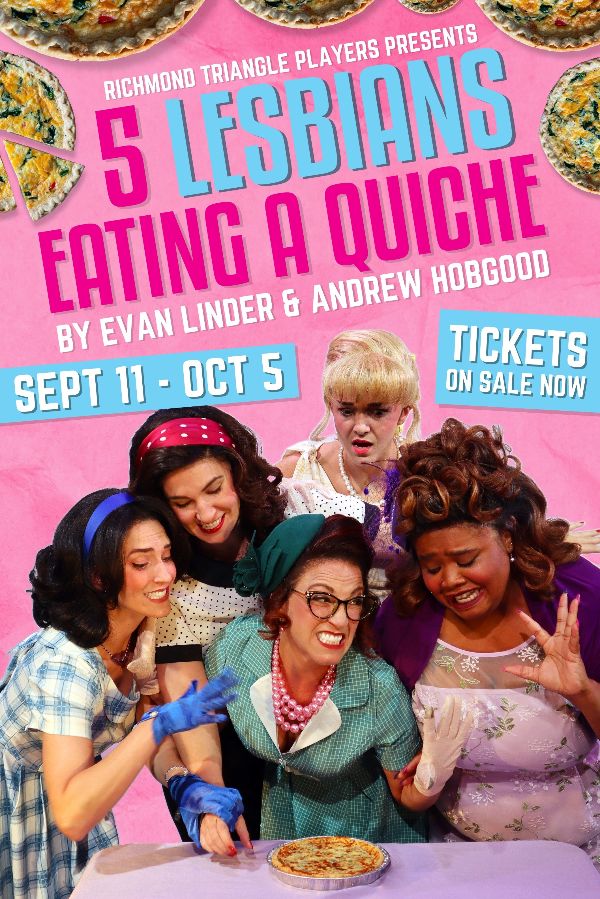
William Luther’s near cartoon-style set and gorgeous 1950s style dresses with their swinging skirts – some fluffed up by crinolines – stunning vintage shoes, hair bows, fascinators, and lace gloves are a feast for the eyes. The very demure outer appearance only makes the underlying sexual tension, innuendo, and banter that permeate each scene that much steamier. When Ashley Thompson’s character, Ginny Cadbury, the over-eager newest member of the group ends up atop a table with her face buried in a plate of quiche it’s as if a group of church ladies had suddenly put down their needle point to engage in an orgy. But I’m jumping ahead.

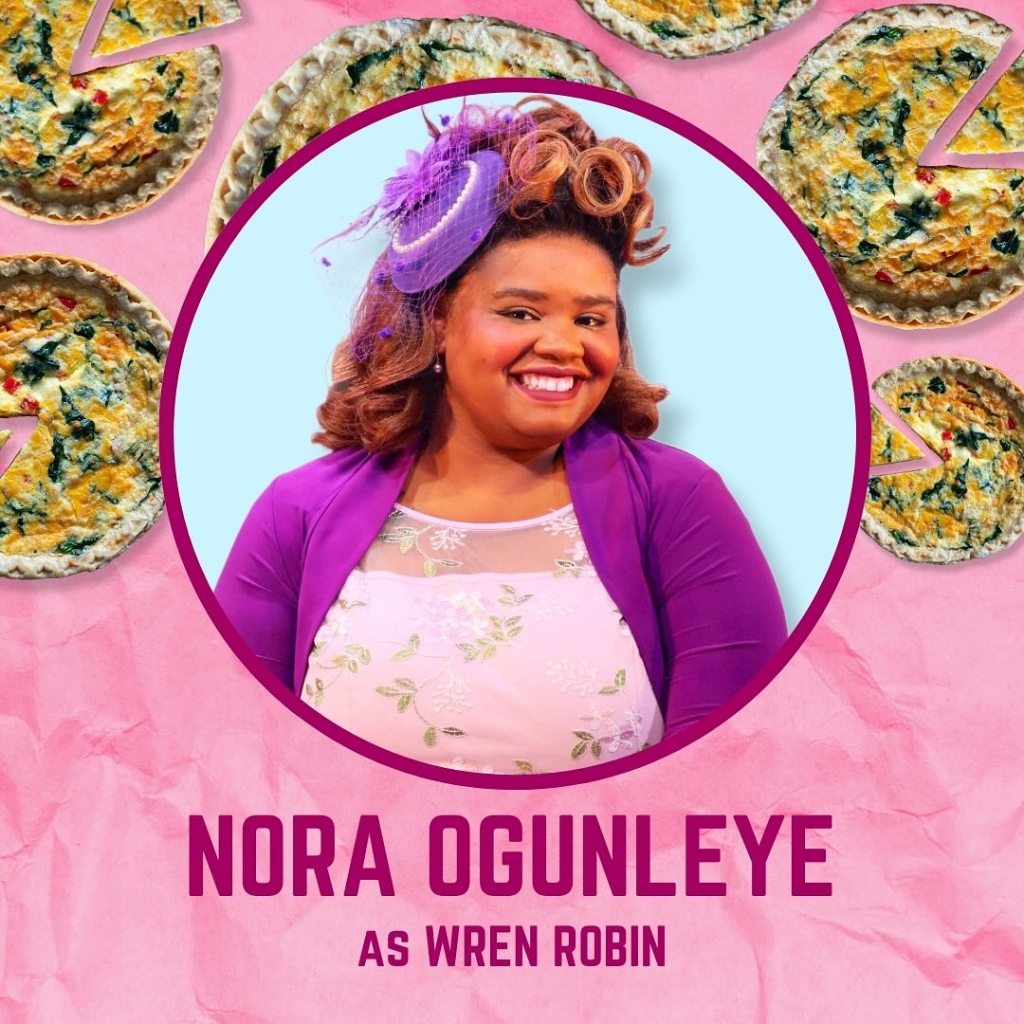
Theater-goers aka members receive name tags on arriving at their seats. Everyone gets a “female” name. I was Virginia this time. There is a lot of audience interaction, and one front-seat viewer in particular – “Margery” on opening night – gets to have an on-going supporting role. Nora Ogunleye as Wren Robin is the club’s event chair. Ogunleye, looking fabulous in a purple ensemble with matching hat and shoes brings over-the-top optimism and a mile-wide smile to the role. Kendall Walker plays Dale Prist, a wide-eyed innocent who looks like an animated Barbie doll and serves as the group’s historian with a classic Eastman-type film using camera around her neck.

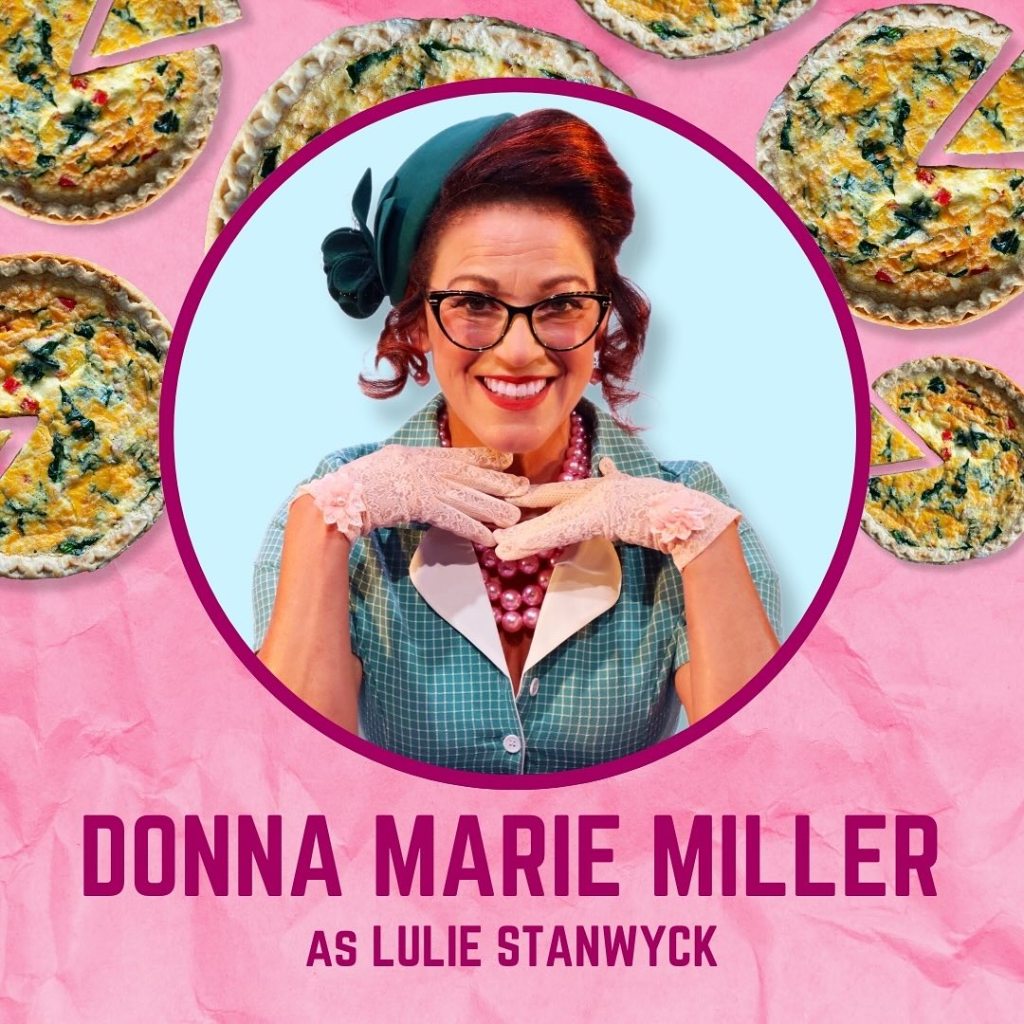
Rachel Dilliplane brings barely repressed butch energy to Veronica “Vern” Schulz, the group’s buildings and grounds manager. Vern is the only one of the five women bold enough to wear pants, and in spite of her tight control over just about everything in her immediate world, Vern is the one who dropped the ball when it most mattered. Ashley Thompson slays as Ginny Cadbury, the newest member and recent British transplant who serves as the secretary. We never learn why – or if we did, it went over my head – Ginny is ostracized by the rest of the leadership team. Last but not least, Donna Marie Miller has the role of the group’s President, Lulie Stanwyck. A stickler for rules and protocol, who lives by the motto “no men, no meat,” it is Lulie who drops the biggest bombshell (I actually did not know that pun was coming) after the five find themselves confined to the shelter – with the possibility they may have to remain there for four long years.

Everything was moving along according to plan, you see, although there is a hint that things are not as they appear – when suddenly the lights flicker, the alarm sounds, and the safety door locks everyone inside against a nuclear attack. With seemingly nothing left to lose, it’s time to finally let go of long-held secrets. It turns out that “widow” is used here as a euphemism for lesbian. Once that is out in the open – and some are more reluctant to name their truth than others, and not even the audience is not exempt from participating in the apocalyptic confession – the floodgates open to reveal all sorts of secrets and Dale has an opportunity to earn a special place in the history of the sisterhood.

This cast is bright and snarky and generally hilarious. The costumes and set are visually delightful. The lighting and sound effects are appropriately over-the-top. The audience’s immersion pushes the edge of an unnamed boundary that gives heightened meaning to the word inclusion. What other play do you know of that encourages the audience to sing along to the theme song of an elite society and have everyone shout out, “I am a lesbian!” The issues are real: nuclear warfare, loyalty, discrimination, oppression, same-sex marriage. The timing of lines by the ensemble and the overall pacing set by director Kelsey Cordrey never attempts to belittle any of this, while at the same time guaranteeing there is never a dull moment. In short, 5 Lesbians Eating a Quiche is breathlessly entertaining.

———-

Julinda D. Lewis is a dancer, teacher, and writer who was born in Brooklyn, NY and now lives in Eastern Henrico County. When not writing about theater, she teaches dance history at VCU and low impact dance fitness classes to seasoned movers like herself, and occasionally performs. Her most recent (ad)venture was the premiere of a solo work, The Waters of Babylon or Psalm 137 Revisited: a Post-Exodus Reflection in Movement Choreographed From Collective Memories for the debut of the Critical Race Theatre Project, right here at RTP in August 2024.

———-

5 LESBIANS EATING A QUICHE

Written by Evan Linder & Andrew Hobgood

Directed by Kelsey Cordrey

Cast

Rachel Dilliplane as Veronica “Vern” Schultz [Note: the program spells her name Dillaplane but I used the spelling I’ve seen virtually everywhere else including her own social media]

Donna Marie Miller as Lulie Stanwyck

Nora Ogunleye as Wren Robin

Ashley Thompson as Ginny Cadbury

Understudies

Kendall Walker as Dale Prist

Emils Berry u/s for Wren Robin & Veronica “Vern” Schultz

Sydnee Graces u/s for Dale Prist & Ginny Cadbury

Jen Hines u/s for Lulie Stanwyck

Production & Design

Playwright – Evan Linder & Andrew Hobgood

Director – Kelsey Cordrey

Scenic & Costume Design – William Luther

Lighting Design – Gretta Daughtry

Sound Design – Lucian Restivo

Props Design – Tim Moehring

Hair & Makeup Design – Luke Newsome

Production Stage Manager – Corrie Yarbrough

Assistant Stage Manager – Finn Thomason

Intimacy & Fight Director – Lucinda McDermott

Gender Consultant – August Hundley

Master Electrician – Griffin Hardy

Technical  Director & Scenic Artist – William Luther

Scenic Construction – David Ballas, Josie Carter, Becka Russo, Kendall Walker

Setting

A community center in middle America where the annual Quiche Breakfast of the Susan B. Anthony Society for the Sisters of Gertrude Stein is being held. Today, 1956.

Run Time

Approximately 70 minutes without intermission

Ticket Information

$50, Info: (804) 346-8113 or rtriangle.org

Photo Credit: unattributed
One-Time
Monthly
Yearly

Make a one-time or recurring donation
to show your support of RVART Review

Make a monthly donation

Make a yearly donation

Choose an amount

$5.00
$15.00
$100.00
$5.00
$15.00
$100.00
$5.00
$15.00
$100.00

Or enter a custom amount

$

THANK YOU!!!
Your contribution is appreciated.

Your contribution is appreciated.

Your contribution is appreciated.

DonateDonate monthlyDonate yearly
ZERO HOUR

VaRep-JCC Partnership

A Theater Review

Produced By: Virginia Rep in partnership with the Weinstein JCC Jewish Family Theatre

At: Theatre Gym, in the November Theatre complex, 114 W. Broad St., RVA 23220

Performances: March 15-April 7, 2024

Ticket Prices: $40

Info: (804) 390-3390; http://www.virginiarep.org

This is a rare (for me) re-review. I first saw this production of Zero Hour at the Weinstein Jewish Community Center nearly a year ago (“Jason Marks is Zero Mostel, RVArt Review, April 6, 2023, https://jdldancesrva.com/2023/04/06/jason-marks-is-zero-mostel/). But, humor me. Don’t read or re-read that review until after you read this one, and I’ll do the same. I won’t go back and re-read that first review until I finish writing this one.

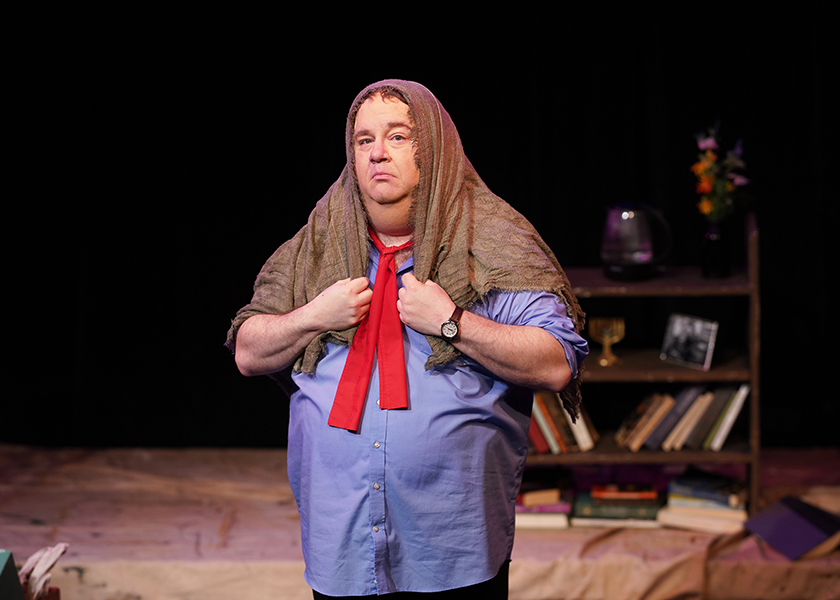
With this VaRep partnership, while the location is different, Debra Clinton is still the director, and Jason Marks is still Zero Mostel. This time, the story and the script were familiar, but the production was just as fresh and vital as it had been the first time. This did not feel like a re-run; Mostel was such a complex and dynamic person that there was still much to learn that I had missed the first time, or that I saw with new eyes after the passage of time – and world events.

Jason Marks dives so deeply into the character that it is easy to forget he is an actor – we are spending an evening with Zero Mostel. Samuel Joel “Zero” Mostel was born February 28, 1915 (my birthday, but 4 decades before me) in Brooklyn, NY (as was I).

As a comedian, Mostel rose in stature to become a headliner at New York’s Café Society, a popular night spot and as an actor, Mostel specialized in comic roles: he was, perhaps, best known for his portrayal of Tevya in Fiddler on the Roof on Broadway.

Somewhere along the way, during the presidency of Harry S. Truman, the USA became embroiled in blacklisting activities. After World War II, the USA and Russia became involved in a “Cold War,” and  People – particularly actors and other creatives – who were suspected of being members of or sympathizing with the Communist Party –  were brought before the House Un-American Activities Committee (HUAC) where they were questioned and expected to name names. Many citizens were tried, and many actors were blacklisted or prevented from working in film, television, or on stage. Mostel (or maybe I should say the playwright, Jim Brochu) mentions a few well-known names who were caught up in this wide-ranging net, including the renowned choreographer Jerome Robbins and the comedian and actress Lucille Ball, TV star Phil Silvers, screen writer Ring Lardner, Jr., and screen writer Martin Berkeley who is described in Zero Hour as “the Babe Ruth of stool pigeons.”

Other victims of the Red Scare: Orson Wells, Burgess Meredith (credited, in the script, with the line, “hold onto your tits, it’s Zero Hour!”), Arthur Miller, Charlie Chaplin, Lena Horne, Langston Hughes, Pete Seeger, Gypsy Rose Lee, Artie Shaw, Dashiell Hammett, and the list goes on and on and on…

There are many memorable moments in Zero Hour, both dramatic and historic. The one-hander paints a vivid picture of Mostel’s journey “from blacklist to White House in 10 years.” We learn of Mostel’s tumultuous love affair with his second wife, Kate. A former Radio City Music Hall Rockette, Mostel’s Orthodox Jewish parents did not accept Kate because she wasn’t Jewish, and his parents never met Kate or their two grandchildren.

Then there’s the horrible bus accident in 1960 that nearly ended his life as well as his career, leaving him crippled and in pain. But he stubbornly avoided amputation, and went on to star in Waiting for Godot, Rhinoceros, and the Broadway musical, A Funny Thing Happened on the Way to the Forum. Marks shares all of this and more with a wild and vivid mixture of humor, sarcasm, and melodrama while his character is being interviewed by an invisible rookie reporter. “Why do I call you putz?” Mostel asks the report early in the interview, “because I don’t know your name!”

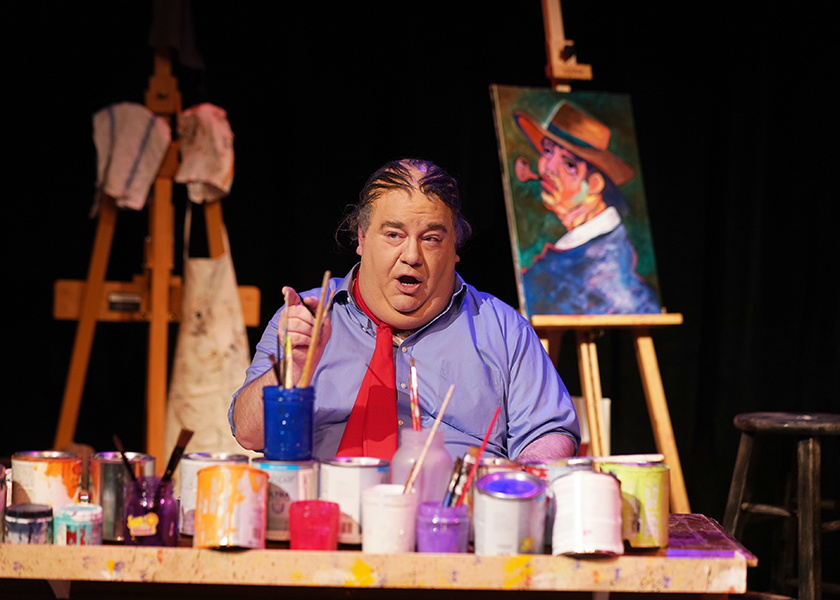
Mostel warms up to his interview as we warm up to him. The interview takes place in Mostel’s West 28th Street painter’s loft. In addition to being a prolific and popular performer, Mostel was also a visual artist whose abstract paintings have been sold at auction and displayed in galleries and museums. My notes from the show list 5,000 paintings, 15 Broadway shows, and 25 movies.

Zero Hour is an engaging tour de force that is equally entertaining and educational. And now, I feel, is the time to go back and read what I said about Zero Hour the first time I saw it:

Zero Hour is one of the funniest shows I’ve ever seen and it appears to have been a perfect vehicle for Jason Marks.” – Yes, I still hold this opinion!

Zero Hour is a skillful balance of biography and entertainment. For those unfamiliar with Zero Mostel, it is informative, and for those who were already fans, it might reveal a few unknown nuggets.” – Again, I second that first impression.

“All of this, and more, is lovingly and capably captured by Marks under the director of Debra Clinton. Clinton, in the Director’s notes, paid homage to Mostel’s individuality – his commitment to standing up for what he believed even to the detriment of his career – “his honesty, passion, and empathy.” – ditto

And finally, I often find it weird to read things I’ve written previously, but this holds true. That’s my story and I’m sticking to it: Sometimes it was hard to tell where Marks ended and Mostel began. I am sure playwright Jim Brochu who originally starred in his own play, would approve of Marks’ interpretation.” There are a FEW opportunities remaining to see this production of Zero Hour. I suggest you go see it. You won’t be sorry.

———-

Julinda D. Lewis is a dancer, teacher, and writer who was born in Brooklyn, NY and now lives in Eastern Henrico County. When not writing about theater, she teaches dance history at VCU and low impact dance fitness classes to seasoned movers like herself, and occasionally performs.

———-

ZERO MOSTEL

Written by Jim Brochu

Directed by Debra Clinton

Cast List

Zero Mostel – Jason Marks

Direction & Design

Direction – Debra Clinton

Set & Lighting Design = Todd Schall-Vess

Wig Design = Kevin S. Foster II

Stage Management – Hayley Tsutsumi

Zero Hour runs March 15 – April 7, 2024

at the Theatre Gym at the November Theatre, 114 W. Broad Street, Richmond, VA 23220

Run Time

The play is presented in two 45-minute acts with one 15 minute intermission

Tickets

Box Office: (804) 282-2620

Information: http://www.virginiarep.org

Full Price Tickets: $40.00

Discounted Group Rates available

Show Photography by Jay Paul

One-Time
Monthly
Yearly

Make a donation if you like what you read here
rvart review is independently produced and received no outside funding or advertising revenue

Make a monthly donation

Make a yearly donation

Choose an amount

$5.00
$15.00
$100.00
$5.00
$15.00
$100.00
$5.00
$15.00
$100.00

Or enter a custom amount

$

Your contribution is appreciated.

Your contribution is appreciated.

Your contribution is appreciated.

DonateDonate monthlyDonate yearly
SMALL MOUTH SOUNDS

The Cadence Theatre Company Reboots Show Interrupted by Pandemic

“Once you see the ocean, you may not be able to return to the well.”

A Second-Look Theater Review by Julinda D. Lewis

By: Virginia Rep/Cadence Theatre Company

At: Theatre Gym, Virginia Repertory Center, 114 West Broad Street, Richmond, VA 23220

Performances: September 23 – October 3, 2021.

Ticket Prices: $40.

Info: (804) 282-2620 or https://va-rep.org/_small-mouth-cadence-theatre.html

NOTE1: This show contains brief nudity, adult content, and the burning of incense and herbal cigarettes. Recommended for patrons 18+ (ID required). Patrons under the age of 18 must be accompanied by an adult.

NOTE2: Due to the staging requirements of this production, we will not be offering late seating.

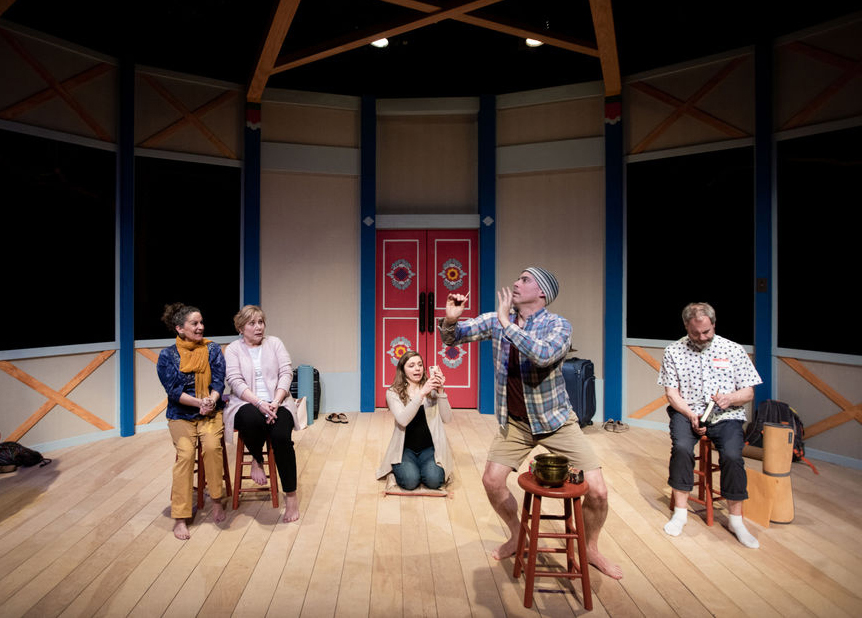
SMALL MOUTH SOUNDS originally opened in March 2020 and was cut off mid-run by “The Great Pandemic.” I reviewed it here under the title SMALL MOUTH SOUNDS: A Play Without Words, and was more than happy to return for the reboot that opened in the same space September 23. (Hmmm, I wonder if Emily Hake Massie’s lovely new-age yurt set remained in place during the long intermission?) At any rate, it didn’t seem to be necessary to write a whole new review, since what I wrote the first time seemed to withstand the test of time. (I even enjoyed reading it myself!) What I will do is note the differences, changes, updates, and tricks of my own mind, and then re-post the original review below to save you the time of having to search for it. (You’re welcome!)

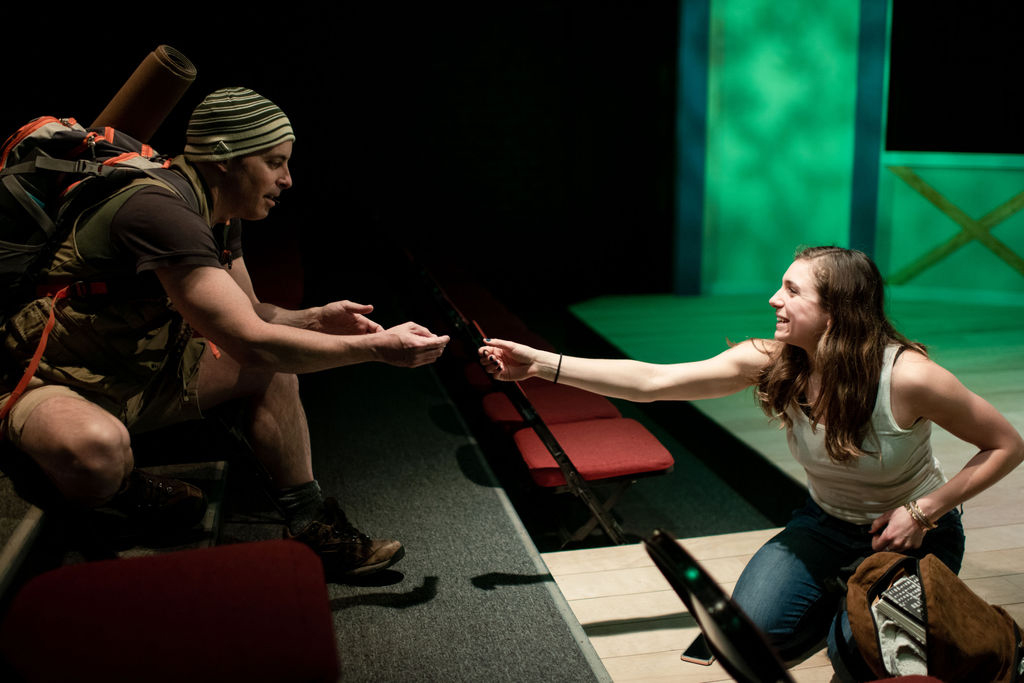
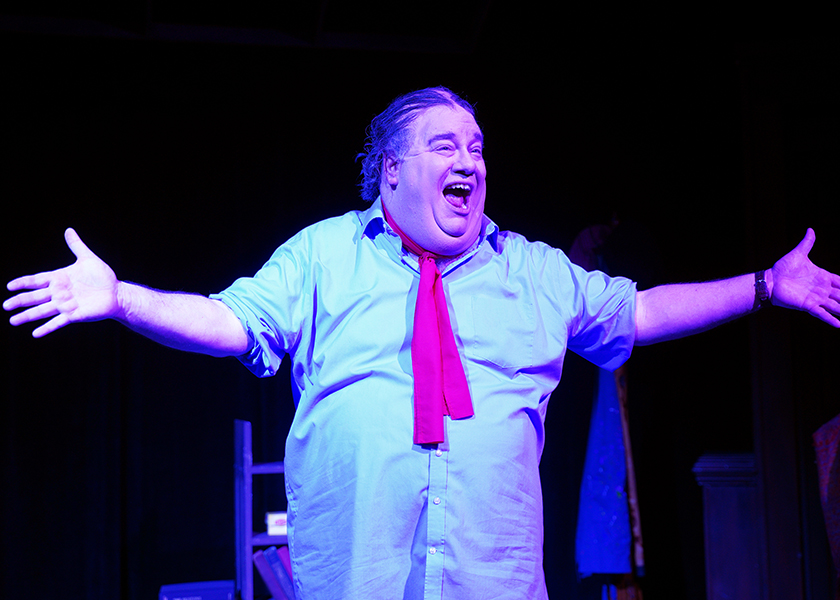
There have been a few changes since the time BC*. The actors enter wearing masks, which they remove on entering the yurt, and they pass around a bottle of hand sanitizer when the unseen Teacher has an uncontrollable coughing fit. There is also an amusing little bit of choreographed movement involving the choice of whether to shake hands or substitute a fist bump or elbow bump. And perhaps most significantly, Evan Nastaff has replaced Adam Valentine as Rodney, the passive-aggressive instructor.

I don’t know whether it was an effect of memory or time or actual changes, but it seems that the first time around I learned more about some of these characters. Memory does deceive, but I thought Ned, the only character who has a sizeable speaking role, had two meetings with The Teacher, and my memory insisted that not only had Alicia managed to receive a strong enough signal in the mountains of upstate New York to leave a message for her estranged boyfriend, Fred, but that we had learned more detail about the strained relationship between Joan (Jenny Hundley) and Judy (Lauren Leinhaas-Cook). Well, after reading my original review I concede that memory is not a reliable witness. But this much is true: Jenny Hundley appears to have developed her character, Joan, even further; her facial expressions are hilarious.

Still, I am SURE Adam Valentine gave us a full frontal, whereas Evan Nastaff teased the audience and flashed his fellow cast members. Nastaff filled this role nicely and fit in with the original cast as if had been born for the role.

*NOTE: Yes. You guessed correctly. “BC” means Before COVID-19.

MY ORIGINAL REVIEW OF MARCH 8, 2020:

It isn’t often that someone writes a play that requires the actors to take a vow of silence. But that is exactly what happens in Beth Wohl’s play, Small Mouth Sounds (premiered in 2015), when six people in search of themselves – or something or someone other than their themselves – arrive at an upstate New York center for a silent retreat. Small Mouth Sounds was inspired by the author’s own retreat experience.

Naturally, things do not unfold smoothly as each character reveals their special brand of quirkiness or unveils their personal demons. Judy and Joan are a couple – two middle-aged women who are struggling to shoulder the burden of Judy’s cancer diagnosis. Alicia is a young woman who apparently just broke up with someone named Fred; she keeps dialing his number and is constantly distracted by her forbidden cell phone. She is perturbed to discover that she has been assigned a male roommate.

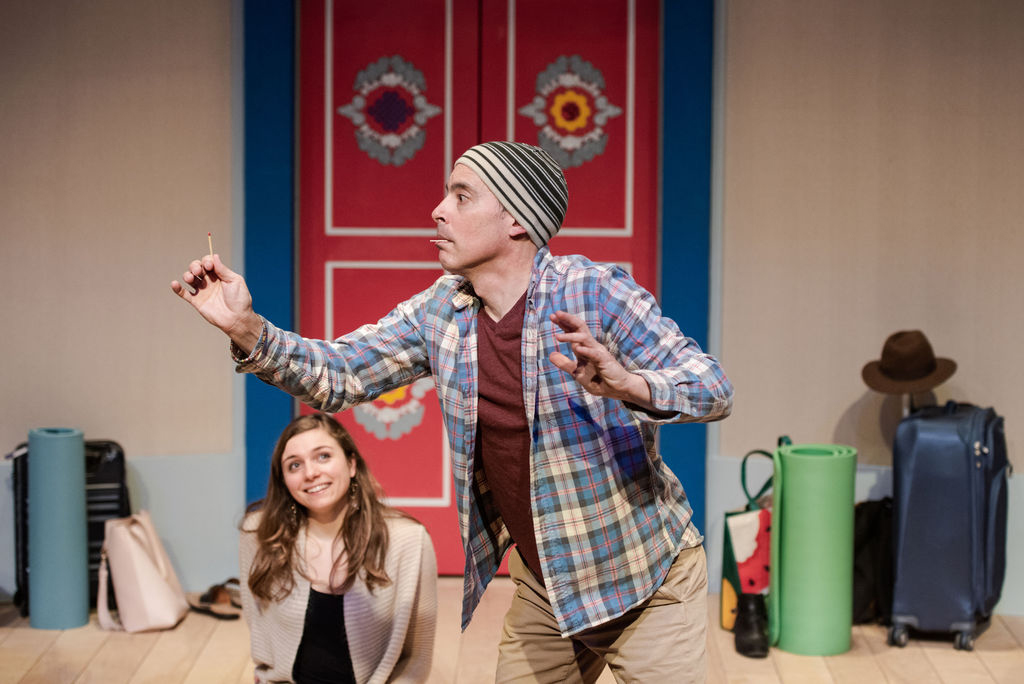
Ned and Rodney are two of the most interesting members of this unlikely collection of people. Ned has had an unimaginable string of bad luck: he fell off a mountain and broke his skull; his wife started sleeping with his younger brother; he started drinking and joined AA only to have his sponsor commit suicide, and his dog got run over by a car. That’s just a small sampling of all that he’s been through. Rodney is a passive aggressive yoga instructor who smugly and silently snubs everyone else, shows off his yoga skills, removes his wedding ring as soon as he arrives, and is the first to strip down for the clothing optional lakeside activities.

Oh yes, there is a bit of nudity – full frontal – and some “herbal tobacco” and Palo Santo wood gets burned onstage. This play is recommended for viewers 18 years and older. But, to get back to the cast, one of the greatest surprises comes in the final scene from the mild-mannered Jan.

This group of seekers comes under the care and watchful eye of a gruff-voiced guru, an unseen and nameless Teacher who coughs and sneezes into her microphone and appears to be on the verge of a breakdown. The audience never sees the Teacher, Marisa Guida, until she comes out to take her bow at the end. Guida is the only character allowed to speak throughout the play. [Note: Guida did not come out for a bow in the reboot.]

The marvelous cast consists of Lauren Leinhaas-Cook as Judy (the one with cancer); Jenny Hundley as her partner Joan (the bubbly one who always seems to have a small wrapped candy); Maura Mazurowski as Alicia (the young one with all the bags and baggage – and snacks); Jim Morgan as Ned (the one who has all the bad luck); Adam Valentine as Rodney (the passive-aggressive yoga instructor); and Larry Cook as Jan (the one whose secret I will not reveal here, but about whom I will post a nagging question at the end of this review). What makes them all so marvelous is that, except for a rather long monologue by Ned, and a brief but sharp exchange between Joan and Judy, we learn all we know about these characters through facial expressions, gestures, and a few grunts. In order to successfully carry off a play in which the main characters are all required to take a vow of silence, these actors had to act their butts off!

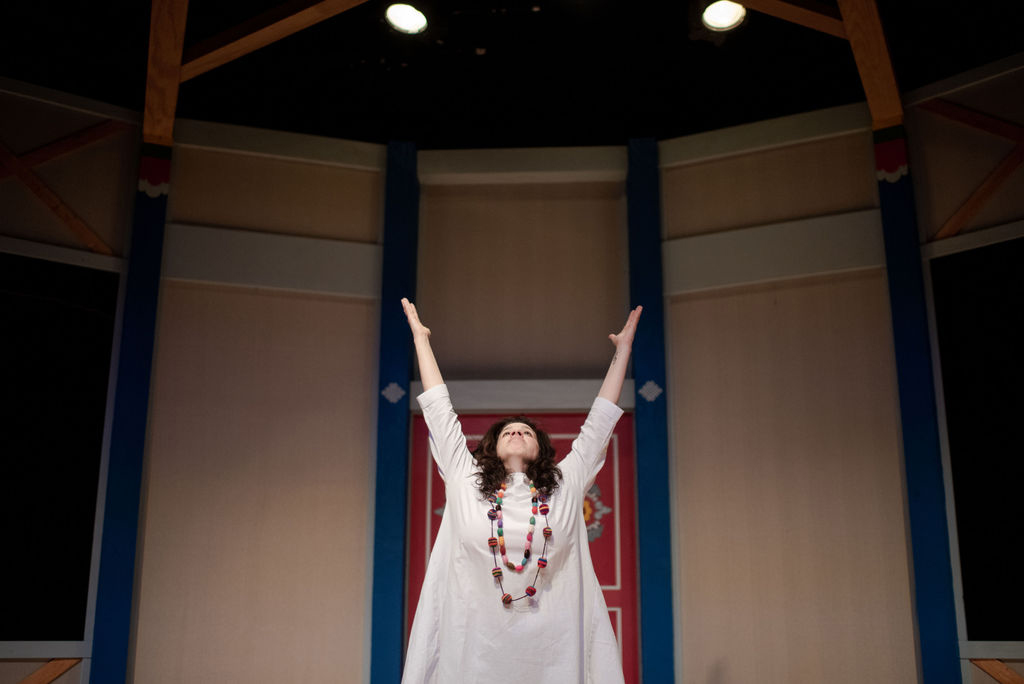
Running 70 minutes with no intermission, Small Mouth Sounds is set in a yurt-shaped structure with large open windows and chakra symbols painted on the walls. The only furniture is a few backless wooden stools (which Judy emphatically complains about) and some floor pillows. At night, the campers make do with their yoga mats as they fight mosquitos and shiver at the sounds of growling bears and other unknown animals. Actors enter down the center aisle, sometimes rather noisily, and the top of the set extends over the audience making us feel that we are inside the experience – or experiment, which I believe is the word used in the opening seconds – perhaps even in the position of the Teacher.

Joey Luck designed the sound – a variety of ambient sounds including insects and birds and a bear or two, assorted snorts and grunts, and a torrential rainstorm. Rusty Wilson, Irene Ziegler, and the cast members contributed voice-overs and other vocals sounds. Sarah Grady’s costumes helped define the characters. This entire delightful production was directed by Laine Satterfield with a balance of structure and freedom that allowed humor to emerge quite naturally. The pacing was unhurried, yet never lagged, and the scenes perfectly captured the juxtaposition of the meditative environment with the characters’ personalities and problems. In her Director’s Note, Satterfield describes how, during their first week of rehearsal, the cast members lived key moments of their characters’ lives and even worked out timelines and bios.

[NOTE: The final paragraph of the original review was omitted as it contained the March 2020 production dates, which might have proven confusing to readers.]

**********

SPOILER ALERT

Now, for that question regarding Jan and his secret. . .Do not read this paragraph if you don’t want to know before you go. . .

So, in the final scene, it is revealed that Jan does not speak English. My question is, how was he able to read his information packet and follow the instructions of the Teacher? Hmm???

**********

To provide the highest level of safety, all patrons attending a show at the theatre are required to show proof of vaccination, or proof that they have received a negative COVID test by a professional technician within 48 hours of the performance date/time.

Patrons may show the vaccination card or a photo of the card on their phones when they arrive for the performance. If you are unable to be vaccinated, you may provide proof of a Rapid COVID-19 antigen test taken within 48 hours of your performance. At home tests will not be accepted.

In accordance with current city, state, and CDC guidance, face masks are REQUIRED at all times while you are in the building, regardless of whether or not you have been vaccinated.

Please see the VaRep Covid Safety FAQ for details.

SMALL MOUTH SOUNDS

Written by Bess Wohl

Directed by Laine Satterfield

CAST:

Teacher: Marisa Guida

Judy: Lauren Leinhaas-Cook

Joan: Jenny Hundley

Alicia: Maura Mazurowski

Ned: Jim Morgan

Rodney: Evan Nasteff

Jan: Larry Cook

Voice-Over Credits: Rusty Wilson as “Fred,” Irene Ziegler as “Voicemail Guidance,” & other recorded vocal sounds including “The Bear,” performed by The Cast

CREATIVE TEAM:

Assistant Director: Kelsey Schneider (original, pre-pandemic); Jessie Fidler (current reboot)

Scenic Designer: Emily Hake Massie

Costume Designer: Sarah Grady

Lighting Designer: Andrew Bonniwell

Properties Designer: Ellie Wilder

Scenic Charge: Emily Hake Massie

Sound Designer: Joey Luck

Dramaturg: Lissa Ray

Technical Director: Tommy Hawfield

Stage Manager: Alleigh Scantling

Production Managers: Alleigh Scantling (both original & reboot); Kerri Lynch (original) & Ginnie Willard (reboot)

SETTING & TIME:

Upstate New York. Present day. Late summer.

DETAILS:

Performed in one act without intermission.

There is brief nudity, adult content, and the burning of Palo Santo wood and herbal tobacco.

Parental discretion advised.

Photos by: Jason Collins Photography

One-Time
Monthly
Yearly

Make a one-time donation

Make a monthly donation

Make a yearly donation

Choose an amount

¤5.00
¤15.00
¤100.00
¤5.00
¤15.00
¤100.00
¤5.00
¤15.00
¤100.00

Or enter a custom amount

¤

Your contribution is appreciated.

Your contribution is appreciated.

Your contribution is appreciated.

Donations for rvart review
are welcome and accepted here.
Donations for rvart review
are welcome and accepted here.
Donations for rvart review
are welcome and accepted here.

FIRES IN THE MIRROR: Crown Heights, Brooklyn and Other Identities

A Tightrope Take on a Tragic Accident

A Theater Review by Makai Walker

At: The Firehouse Theatre, 1609 W. Broad St, Richmond, VA 23220

Performances: March 26 – Sun April 25, 2021

Ticket Prices: $33 live and streamed

Info: (804) 355-2001 or firehousetheatre.org

[NOTE: This production was made Covid conscious with a severely limited seating capacity of a maximum of 10 audience members at each performance, as well as other safety protocols that can be found on The Firehouse Theatre website.]

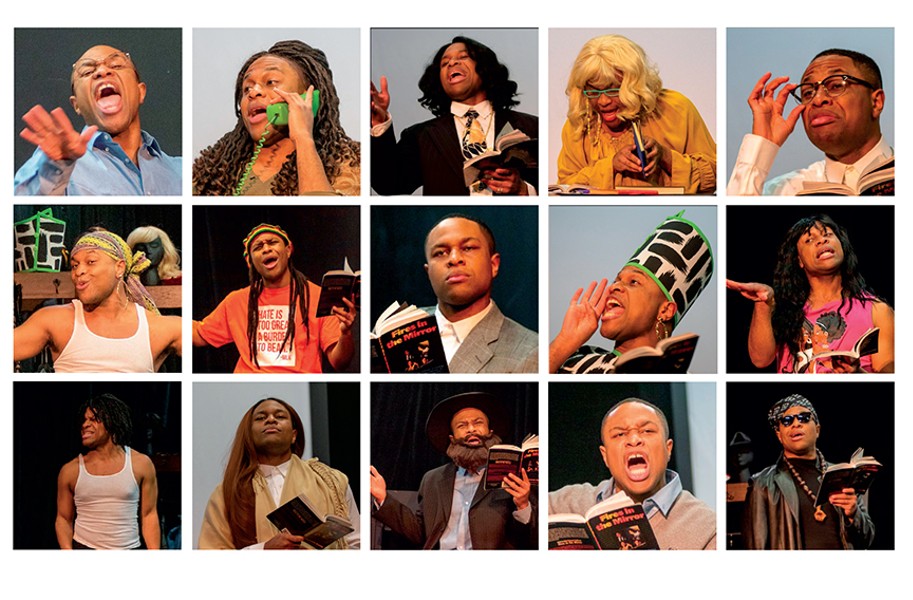
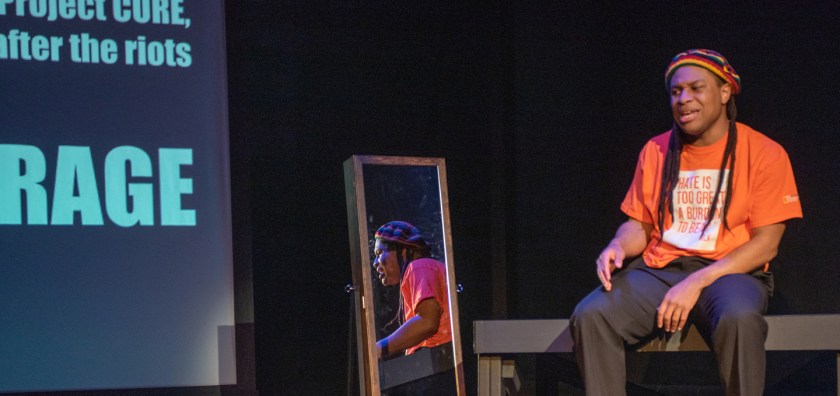
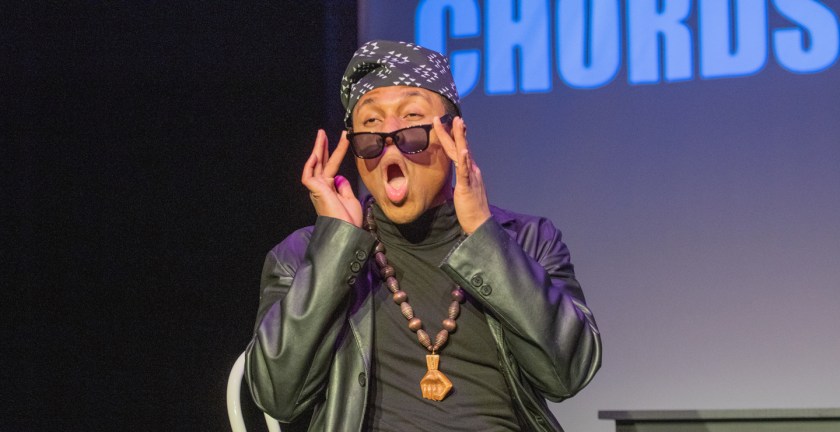
Fires in the Mirrorfelt like a 2-hour stroll through 90s New York and considering the premise of the show I’d call that a good thing. The one-person play by Anna Deavere Smith is a series of monologues collected from Smith’s interviews with real people and directed by Katrinah Carol Lewis who stared in another of Smith’s one-person plays (Twilight: Los Angeles, 1992 at TheatreLab in 2017.

Fires in the Mirror tells the story of the Crown Heights Race Riots of 1991, the murder of Yankel Rosenbaum, and the car crash that started it all. It consists of 29 performed monologues taken verbatim from interviews with 26 subjects, some of whom were near or directly involved with the accident. In the first half of the play, we’re given context to the racial tensions roiling between the black and Hasidic residents of the Crown Heights neighborhood of Brooklyn, New York. This, unfortunately, is the weakest part of the play. Actor Jamar Jones puts his best efforts towards spinning an engaging and emotional story, but he is significantly hindered by the first act’s lack of focus and direction.

Act One involves various Black and Jewish people discussing the matter of identity. As a separate component, Act One is a highly informative and intriguing take on culture, but in the context of a play sparked by a specific event, Act One feels like an hour-long non sequitur.

As the second act begins, we take a deep dive into the fatal collision that claimed Gavin Cato’s life and the retaliatory murder of Yankel Rosenbaum. Unlike its precursor, Act Two is much more engaging. As the story unfolds, we peer into the perspectives of the people closely involved with the incident. The final two monologues, those of Rosenbaum’s brother and Cato’s father, are the highlight of the evening.

Jamar Jones evokes a playful and committed approach to the characters                that never feels too distasteful and is truly lived in. His embodiment of the interviewees is breathtaking and thrilling to watch.               In terms of themes, Fires in the Mirroris very open-ended about what it wants you to take away. As the play progresses, it hammers home the idea of an incongruous truth or the sense that no one knows what really happened. At times one feels an underlying rhythm of monologues that alternately dip into each “side” of the story. There is the Black side, the Jewish side, and then there are the elements of the crash that are added, embellished, or omitted. While watching, I kept getting flashes of Akira Kurosawa’s Rashomon, in which four people take turns telling subjective or self-serving alternatives of the same story.

Anna Deavere Smith does a fantastic tightrope walk across the conflict and brings light to some of the more deep-seated racial issues in Crown Heights. The questions I kept asking myself was, “What is this play trying to say?” and “Who was right, who was wrong?” I agree with director Katrinah Carol Lewis; there is no winner or loser. This was a tragic accident and regardless of the fallout two lives were lost. That’s the “why” that needs examination.

THIS BITTER EARTH

A Bittersweet Play on Interracial Dating

A Theater Review by Makai Walker

Play by: Harrison David Rivers

Directed by: Brandon Rashad Butts

At: Richmond Triangle Players, 1300 Altamont Ave, Richmond, VA 23230

Performances: Onstage Jan 28 – Feb 20, 2021, On-Demand beginning Feb 13, 2021

[NOTE 1: This production was made Covid conscious with the show at a reduced 20 seat capacity and following CDC guidelines]

[NOTE 2: Due to the Covid-19 pandemic, and a few poorly timed ice storms, I conceded my in-person tickets for a video-on-demand version of the play. It didn’t make too much difference in the viewing experience, though I was afforded the luxury of pausing the show for a restroom break or two.]

This Bitter Earth: a Bittersweet Play on Interracial Dating

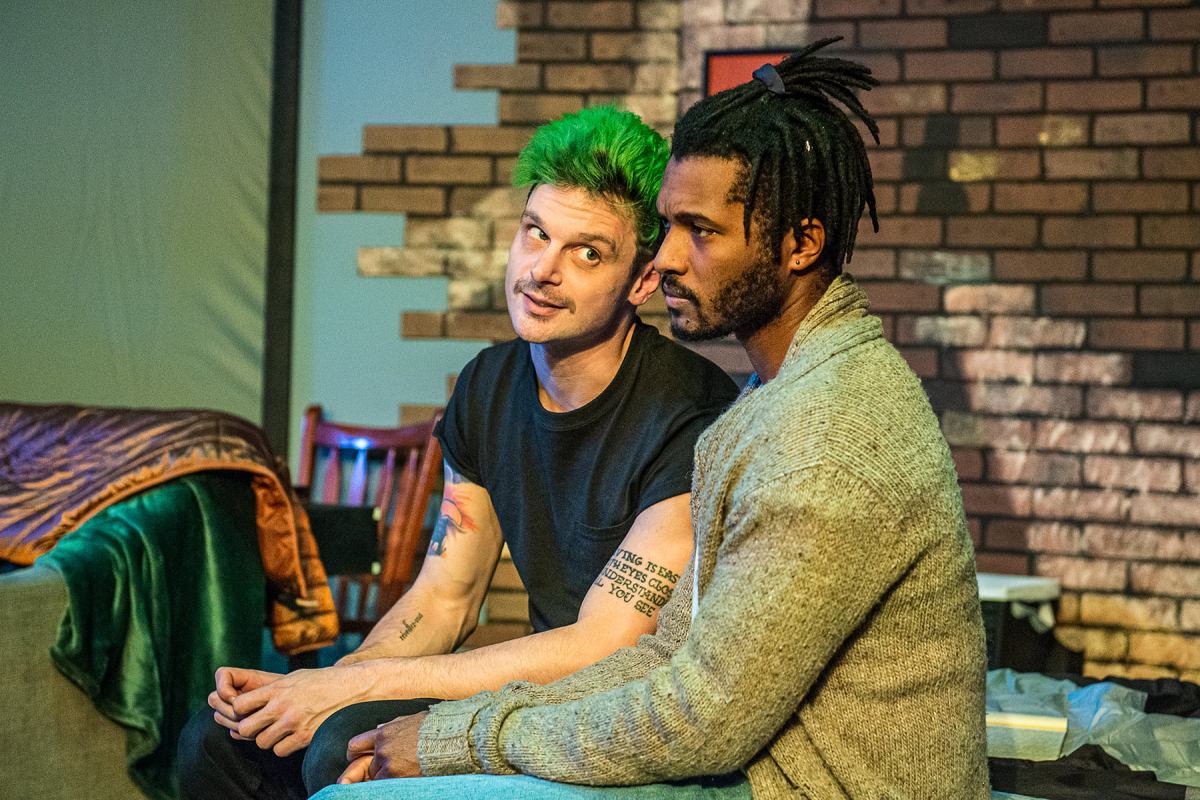
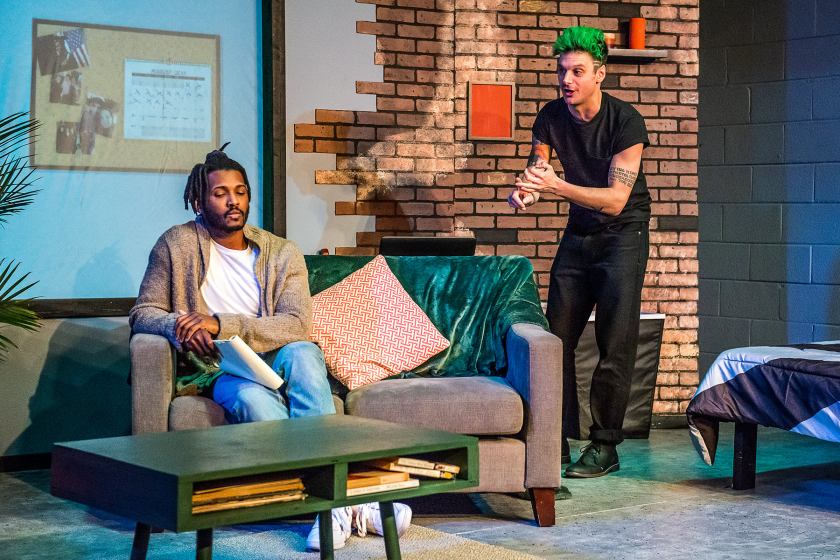
To make an analogy, This Bitter Earth was a 90-minute waterslide with a long line to the top, an exciting trip down, and an unfortunate splash into the shallow end, leaving you longing for the slide you just shot out of. It tells the story of Jesse (played by Andrew “Rou” Reid), a black playwright whose apathy towards the Black Lives Matter Movement is called into question by his white boyfriend Neil (played by Evan Nasteff). The story starts on a slower note. I found myself checking the time stamp every few minutes to see how far along I was. However, it does start on an interesting note; Jesse begins with a monologue spoken directly to the audience. Neil appears, interrupts Jesse, and they segue into a vignette where the two engage in a drunken, oddly sweet conversation, interrupted by a loud crash. This scene is repeated, beat by beat, at least three or four times throughout the play, each time offering the audience a bit more context. This device serves the dual purpose of defining their relationship and developing intrigue.

The pacing feels off the entire play. I believe this has to do with its structure, as the whole play is a series of vignettes strung together with no thought to chronological order. However, this is never made clear. The appeal of This Bitter Earth ignites in the middle. That is when the vignettes start to spark thought-provoking questions about what it means to be passive towards the BLM movement as a black person, the white guilt/white savior complex, or what baggage comes with being someone’s first black partner. Though fascinating, I wish the topics were expanded on, as these issues are not seen often in entertainment media, and I commend writer Harrison David Rivers for nailing this exploration.

Despite these harmonious notes, the ending of this play made me want to stop the play entirely. It felt clunky, rushed, and overall let me down from such an amazing middle portion. Neil betrays Jesse in a mind-boggling way that leaves the viewer utterly stupefied about Neil’s motives. This is underscored by the fact that Jesse, completely broken, forgives Neil, who appears to have moved on, and begs him to come back into his life. For the final nail in the coffin, the story closes with an ending pulled straight out of Rent, Falsettos, Brokeback Mountain, or most any other queer-focused property. The ending is outdated, out of place, and outright cliched to death. It doesn’t evoke sympathy from the viewer considering the magnitude of Neil’s betrayal and its placement in the narrative.

Plot-wise, This Bitter Earth left much to be desired, though the play’s appeal comes less from the story and more from the characters and their thematic purpose. Andrew Rou Reid hits a homerun with his portrayal of Jesse. The way he balances Jesse’s apathy towards the BLM movement is no less than fascinating. Many of the complex thoughts Jesse/Andrew worked through on-stage made his character sympathetic, relatable, and charming. In my favorite scene, Jesse recounts a dream and wholly and utterly sums up this character’s entire being in a monologue executed directly downstage. Neil I found harder and harder to like as the story continued. Unfortunately, about forty-five percent of Neil/Evan’s dialogue consisted of the word “fuck.” I have no aversion to the word nor any naive ideals about adult language, but the repetitive usage had me drawing comparisons to the plays in high school where the characters would swear just because they could get away with it.

I also felt that Evan’s portrayal of Neil had little contrast in terms of energy. There were too many high-energy moments and too few subdued ones. As his character was written, what repelled me from Neil was his reaction to Jesse’s feelings on the racial issues he was facing. I think the play wanted to pitch these characters as two sides of the same coin, but, in light of recent BLM activities, that choice seems quickly outdated in assessing Jesse’s attitude to the BLM movement.

Overall, the themes the story explored were more intriguing and deserved more attention than the arc of Jesse and Neil’s relationship. Jesse and Neil were in so much conflict throughout the piece you’re left wondering why they were together in the first place. In every other vignette, they were at odds, and had the story focused on the nuances of interracial dating, as opposed to the false dichotomy of apathetic black person and white “super ally,” the narrative would have been more cohesive. Harrison goes as far as having Jesse say “All Lives Matter,” which in the current context is an excruciating thing to hear out of a black person’s mouth. Despite these feelings, Jesse is a conscious enough black person when calling Neil out on his white-centric behaviors, causing the entire dichotomy to fall flat and call the story’s crux into question.

I would like to say I was blown away, but I just wasn’t. This Bitter Earth felt more like a study in race and queer theory than a play about a relationship – a relationship that, upon deeper inspection, just doesn’t make sense and plays out as a theatrical exploration into interracial dating.

WELCOME MAKAI WALKER

Makai Walker (pronouns they/them) is a sophomore Theatre Performance major at VCU. They are part of the first class of interns with the Richmond Theatre Critics Circle – informally known as AMP – and my mentee. This is Makai’s first review for RVArt Review. Look for their work to appear more frequently as our theaters begin to venture out into the post-pandemic word. Makai will be offering a fresh, new perspective, one that may often differ substantially from mine! After all, I have been writing about theater more than twice as long as they’ve been alive. – Julinda D. Lewis, Editor/Publisher of RVArt Review.