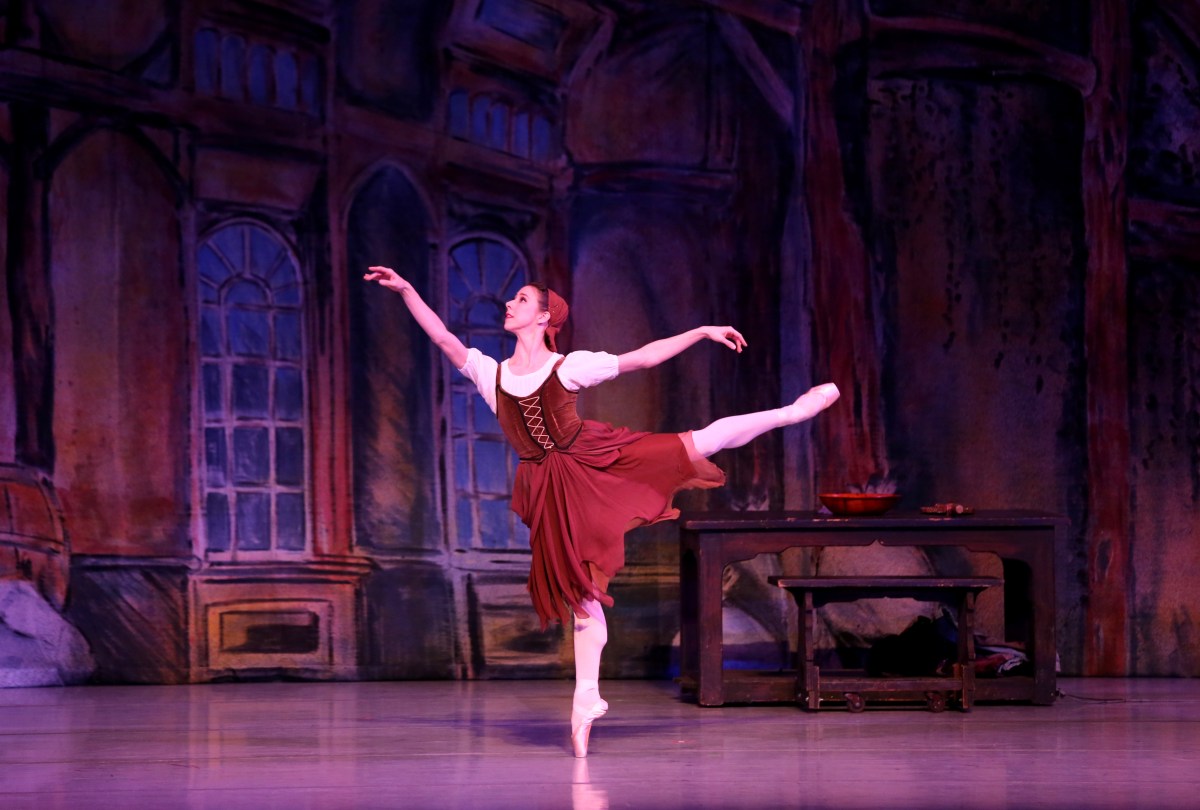
DRACULA

Not Just a Ballet, But a Cultural Event

A Dance Review & Cultural Excursion

By: The Richmond Ballet with the Richmond Symphony

At: Dominion Energy Center’s Carpenter Theatre, 600 E. Grace St., RVA 23219

Performances: February 16-18, 2024

Ticket Prices: $25 – $130

Info: (804) 344-0906, etix.com, or richmondballet.com

THE PROGRAM

DRACULA

Choreography by Ben Stevenson, O.B.E.*

Music by Franz Liszt, arranged by John Lanchbery

Staging by Dominic Walsh

Scenery Design by Thoms Boyd

Costume Design by Judanna Lynn

Original Lighting Design by Timothy Hunter

Lighting Supervisor: Christina R . Gianelli

Guest Piano Soloist: Douglas-Jayd Burn

Flying by Foy

World Premiere: March 13, 1997, Houston Ballet, Worthan Center, Houston, TX

Richmond Ballet Premiere: February 16, 2024, Dominion Energy Center, Richmond, VA

Costumes and Scenery courtesy of Pittsburgh Ballet Theatre

*OBE = Officer of the Order of the British Empire: a British order of chivalry, rewarding contributions to the arts and sciences, among other fields

The Cultural Excursion

I’d been looking forward to seeing the Richmond Ballet’s premiere of DRACULA for months. (See my preview for Richmond Magazine: https://richmondmagazine.com/arts-entertainment/richmond-events/richmond-ballet-dracula/) But even though I had read the press release and had obtained a quote from Associate Artistic Director Ma Cong about the ballet’s high production values and dramatic choreography, I was not prepared for what I saw – both onstage and offstage – when I arrived at the Dominion Energy Center for the final performance of the three day run. I am so glad I got to witness this event with my own eyes and ears. Ben Stevenson’s choreography was every bit as dramatic as promised. The set resembled a towering gothic fairytale. The music lured you in, and there was even a red-colored, vampire themed drink available at the bar. But more on the actual ballet after this brief detour. [You may avoid the detour by skipping the next three paragraphs.]

First, the event started even before I got inside the theatre. While searching for parking, and then walking to the Dominion Energy Center, I noticed a number of people who were clearly headed to see Dracula. There was a veritable fashion show of goth gear, black lace, pale foundation and black eyeliner. The number of capes – in black and red – was astounding. A car parked across from mine in the parking deck even bore a license plate with some variation of the word “vampire.” All of this made me wonder, does  Richmond have a vampire community? I know about the theatre community, the dance community, the spoken word community, even the drag community and the burlesque community – but a vampire community?

That brings us to the second point. Much to my surprise, a cursory online search turned up several articles on an urban legend known as The Richmond Vampire, also known as The Hollywood Vampire. (Am I the last to know?) There is a story, dating back to the 1920s, of a vampire entombed in Hollywood Cemetery, near Oregon Hill. The legend is linked to the very real and verified collapse of a railway tunnel in Church Hill, where the train engine, flatcars, and bodies of laborers remain to this day.

Another part of the legend identifies the Richmond Vampire as one W. W. Pool, whose tomb is located in Hollywood Cemetery, as a vampire who was run out of England in the 1800s. And then, my husband reminded me of someone we know who, a few years ago, was said to have been “studying” to become a vampire. While none of this is directly related to the ballet, it does explain some of the things I saw, and some of the cultural aspects that were attached to the theatrical experience. One final note before going on to my third and final point – a discussion of the actual ballet – vampires, or vampire allies, seem to be quite friendly.

The Review

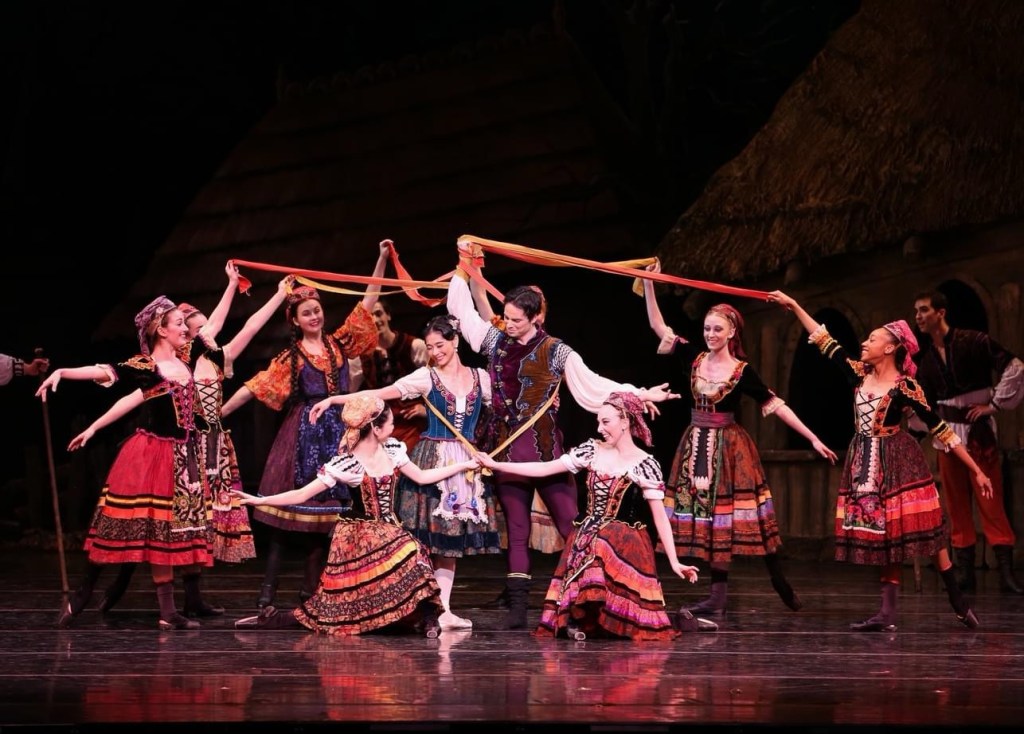
Finally, there was the ballet itself – a three act production (The Crypt, The Village, The Bedroom) running approximately two and a half hours, including two intermissions. Make no mistake, Dracula is, indeed, a ballet in the traditional sense. There is plenty of classical technique, including pointe work, and partnering. The second act, set in an Eastern European village, includes the familiar characters (an innkeeper, a matriarch, a pair of innocent young lovers) and peasant costumes and folk dances that populate many story ballets.

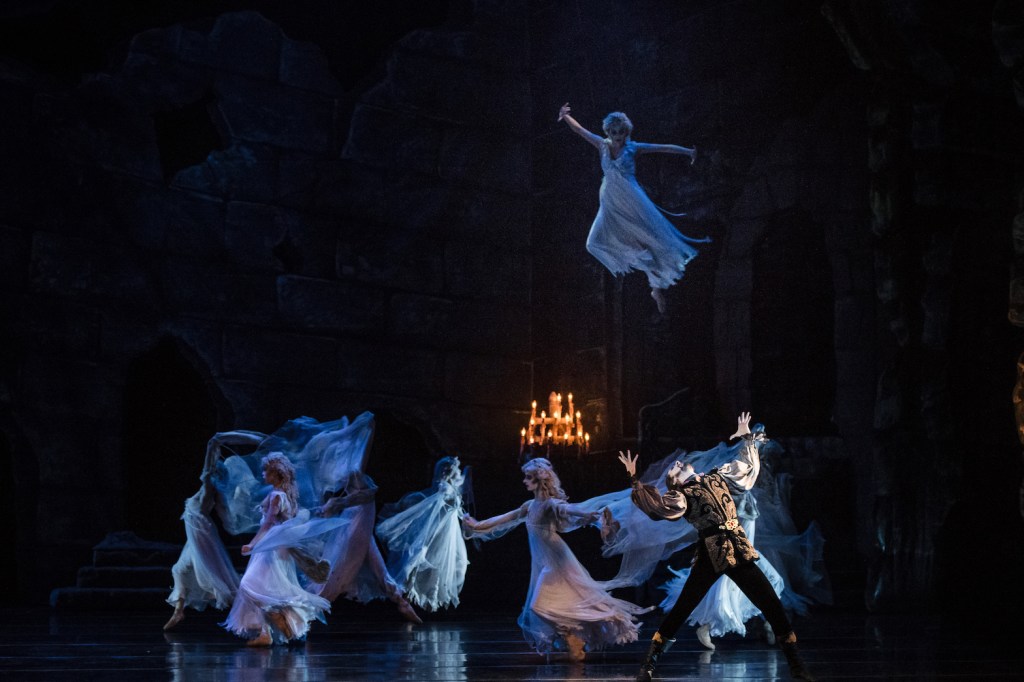
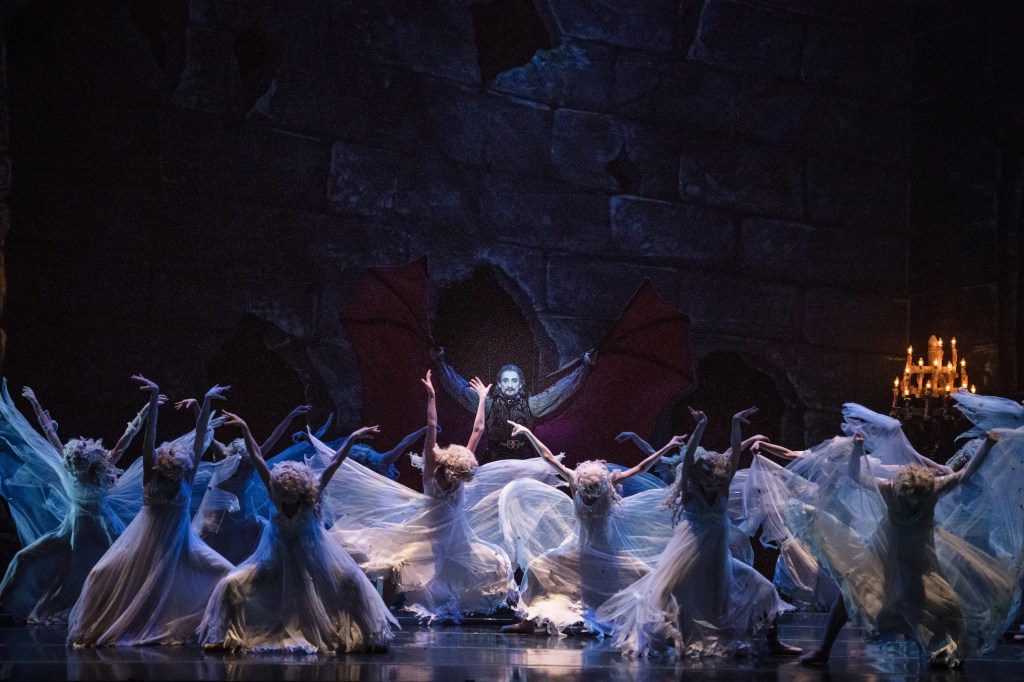
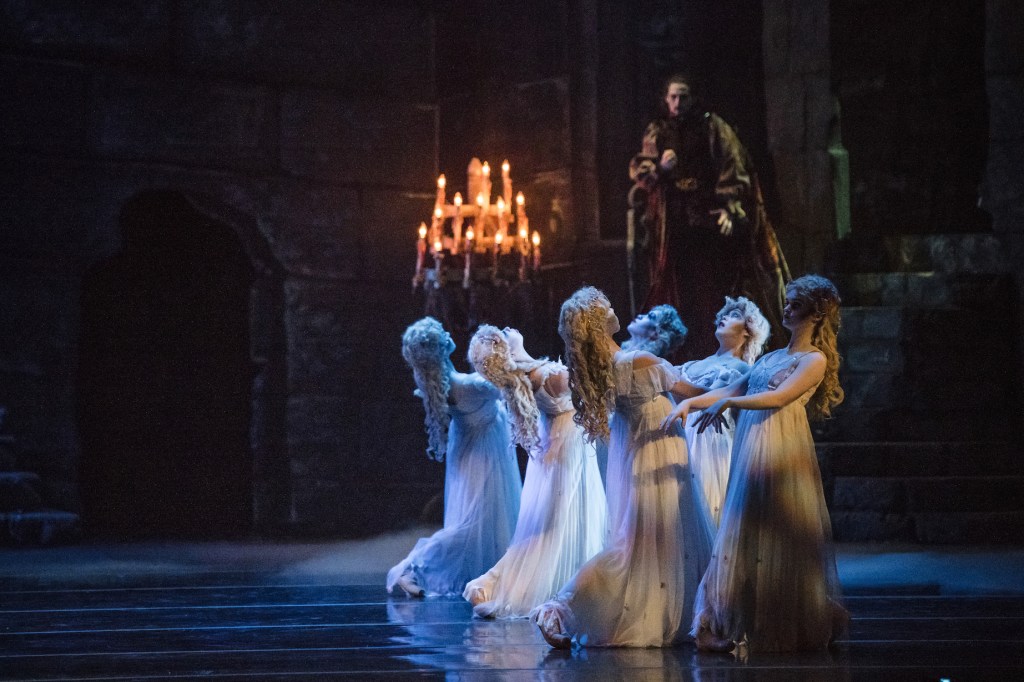
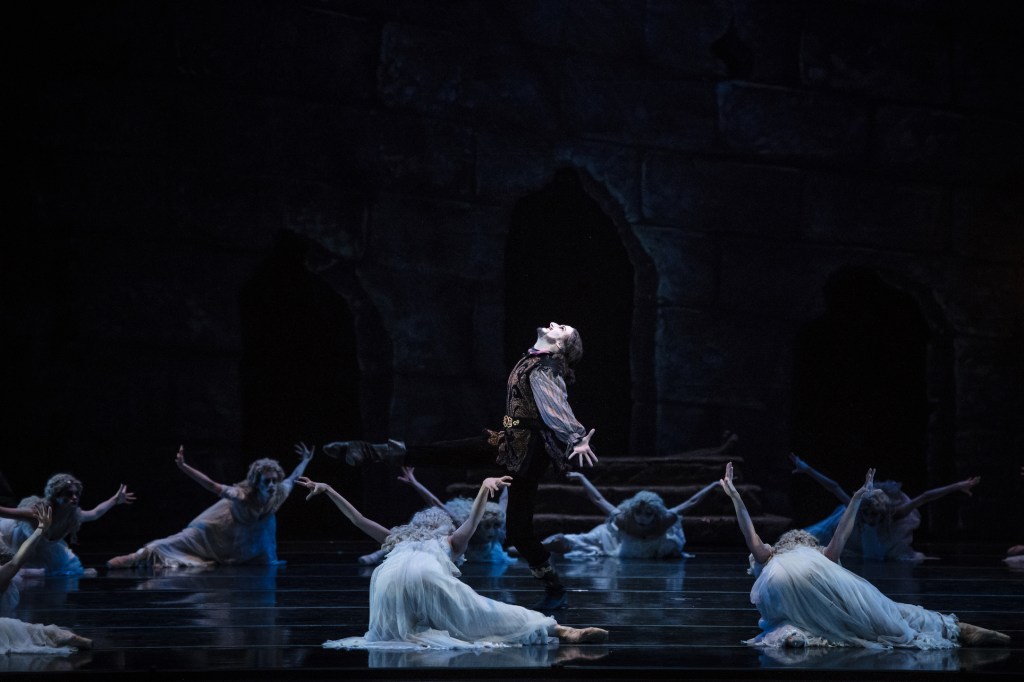
Dracula is also quite different from most classic ballets. The women of the corps who dance the roles of Dracula’s brides may initially remind you of the Willis in Giselle. They have been tasked with dancing gracefully and on pointe while carrying their arms stiffly in front of them, affecting the posture of the ”undead.” To do this while maintaining flexibility and gracefulness throughout the rest of the body must have been a challenge. There are flying dancers in several scenes (Anne Sydney Heatherington and Valerie Tellman-Henning were credited in the program, but I thought there was a third as well) and some impressive pyrotechnics near the end when Dracula is finally hunted down and destroyed by Frederick, Svetlana’s innkeeper father (Gabor Szigeti), and the village Priest (Jack Miller) – and while these effects proved to be delightful for adults and children alike, there were many themes that dealt  with morality and sexuality that were not recommended for children under the age of 8.

For instance, Dracula’s henchman, Renfield (danced by Zacchaeus Page for the final performance) procures young women for his master. Come to think of it, Renfield’s status is little more than that of an indentured servant or slave, so there’s that issue of oppression as well. Dracula’s dozen wives would constitute polygamy by today’s standards, but then there is also the issue of them aiding and abetting the procuring of “fresh blood” which can only be obtained by kidnapping more women. If this were a TV show, I’m sure Capt. Olivia Bensen would be called in because this sounds like a case for “Law & Order: SVU.”

Irish author Bram Stoker published the gothic horror novel Dracula in 1897. British-born choreographer Ben Stevenson (who spent 27 years as artistic director of the Houston Ballet) created the masterful Dracula,the ballet, to commemorate the 100th anniversary of Stoker’s masterpiece. (Stoker and Stevenson even share the same initials.) Given the differences in media, the two vampire tales are quite distinct, yet recognizably related.

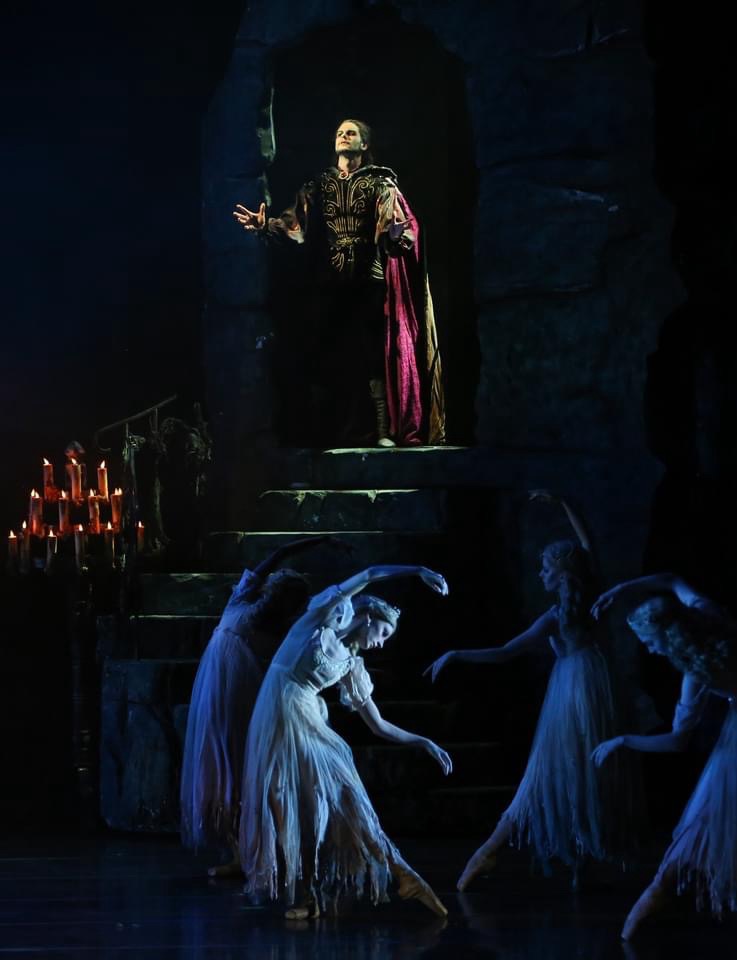
Richmond Ballet rehearsed two complete casts for Dracula. Sunday evening, the lascivious vampire was danced by Christian Renforth, his newest bride Flora by Izabella Tokev, his henchman Renfield by Zacchaeus Page, and Svetlana, the innocent young villager on whom Dracula has cast his eye as his next prize, by Eri Nishihara. Aleksey Babayev danced the role of Svetlana’s beloved Frederick and the two of them had a wonderful chance to shine in a celebratory dance scene. After drinking too much, rather than losing his composure, Frederick demonstrated a stunning virtuosity, and Svetlana temporarily lost her shyness – turning not on her toes but on her heels.

Dracula’s cape is both a fashion statement and a work of art in blood red and black with tapestry-like designs. The brides’ white dresses, pale makeup and pale locks set a new standard for “undead” beauty. The set for Acts I and III (The Crypt and The Bedroom) are majestic and spooky, in contrast to the once-upon-a-time innocence The Village set of Act II. Last but not least, I must mention the dreadful carriage that Renfield uses to procure Dracula’s new brides. Drawn by two horses (Tekhylon Armour and Darius Mealy), the dark and ragged carriage with a hint of smoke at the top shouts “stranger danger” but even Svetlana’s strongest kicks and screams are no match for the evil that lies within.

The Richmond Symphony, under the direction of Erin Freeman, with guest pianist Douglas-Jayd Burn played Franz Liszt’s haunting and dramatic score arranged by John Lanchbery specifically for Stevenson’s ballet. Dracula is truly a collaboration of elements: the choreography, the music, the story, the set, the costumes all work together to create theatre magic.

The Richmond Ballet offered this production of Dracula the weekend after Valentine’s Day. I have often complained that Romeo and Juliet was not my idea of a proper Valentine’s offering, since they both end up dead. Cinderella has been a happier alternative. Dracula has many of the elements – both pros and cons – of other romantic ballets, but the addition of a vampire somehow makes it sooooo much more satisfying…

Julinda D. Lewis is a dancer, teacher, and writer who was born in Brooklyn, NY and now lives in Eastern Henrico County. When not writing about theater, she teaches dance history at VCU and low impact dance fitness classes to seasoned movers like herself, and occasionally performs.
One-Time
Monthly
Yearly

Make a one-time donation

Make a monthly donation

Make a yearly donation

Choose an amount

$5.00
$15.00
$100.00
$5.00
$15.00
$100.00
$5.00
$15.00
$100.00

Or enter a custom amount

$

Your contribution is appreciated.

Your contribution is appreciated.

Your contribution is appreciated.

DonateDonate monthlyDonate yearly
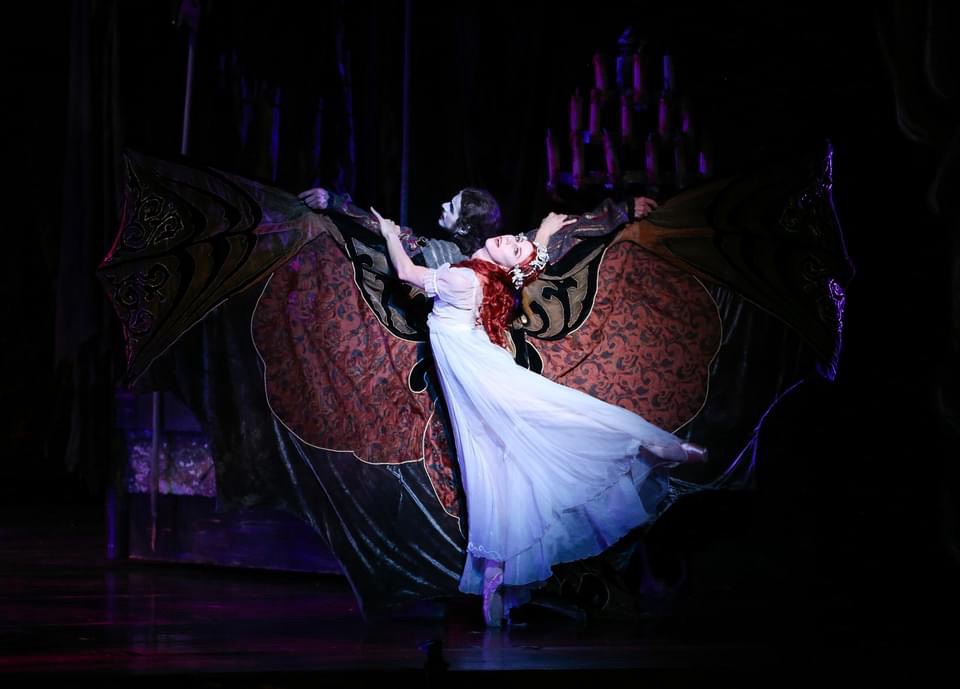
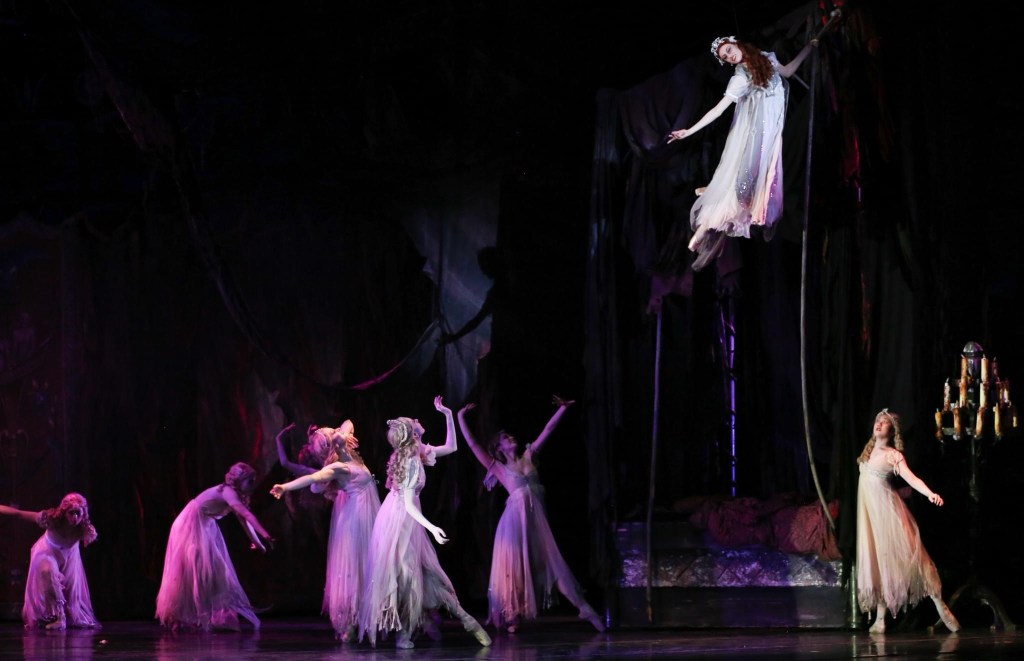
Photo by Sarah Ferguson

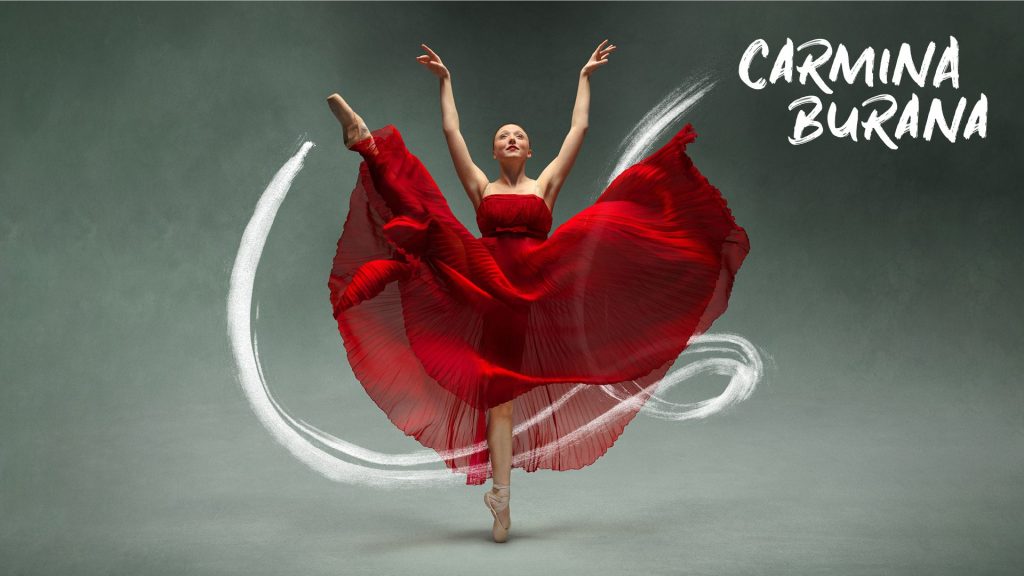
CARMINA BURANA

Richmond Ballet Opens New Season With a John Butler Classic & a Work by Associate Artistic Director Ma Cong

A Dance Review

By: The Richmond Ballet with the Richmond Symphony/Richmond Symphony Chorus and The City Choir of Washington

At: Dominion Energy Center’s Carpenter Theatre, 600 E. Grace St., RVA 23219

Performances: September 22-24, 2023

Ticket Prices: $25 – $130

Info: (804) 344-0906, etix.com, or richmondballet.com

THE PROGRAM

Thrive

Choreography by Ma Cong

Music by Oliver Davis

Costume Design by Monica Guerra

Lighting Design by Trad A. Burns

Lighting Supervision by Joseph R. Wall

World Premiere: September 20, 2022, Richmond Ballet, Richmond Ballet Studio Theatre, Richmond, VA

CARMINA BURANA

Conceived and Choreographed by John Butler

Music and Latin Text by Carl Orff

Staging by Igor Antonov and Lauren Fagone

Costume Design by John Butler

Lighting Design by Catherine Girardi after

Original Lighting Design by Richard Moore

World Premiere: September 24, 1959, New York City Opera, City Center, New  York

Richmond Ballet Premiere: October 15, 1987, Carpenter Theatre, Richmond, VA

If there’s anything better than live dance, it’s live dance performed to live music. After a debut performance at Wolf Trap in August, the Richmond Ballet opened their new season with an exciting program of neoclassical ballet and ballet theatre. The program opened with Thrive, the most recent work of Associate Artistic Director Ma Cong, and concluded with John Butler’s highly immersive Carmina Burana. (Note: Founding Artistic Director Stoner Winslett will be stepping down at the end of the season and moving into an advisory role, and Ma Cong will step into the role of Artistic Director.)

First performed as the 2022 season opener of the Richmond Ballet’s Studio Series, Ma Cong’s Thrive, a classical ballet in 7 movements, and his ninth work for Richmond Ballet, had the full expanse of the Carpenter Theatre stage and the pleasure of hearing British composer Oliver Davis’s layered score performed live by a full orchestra.

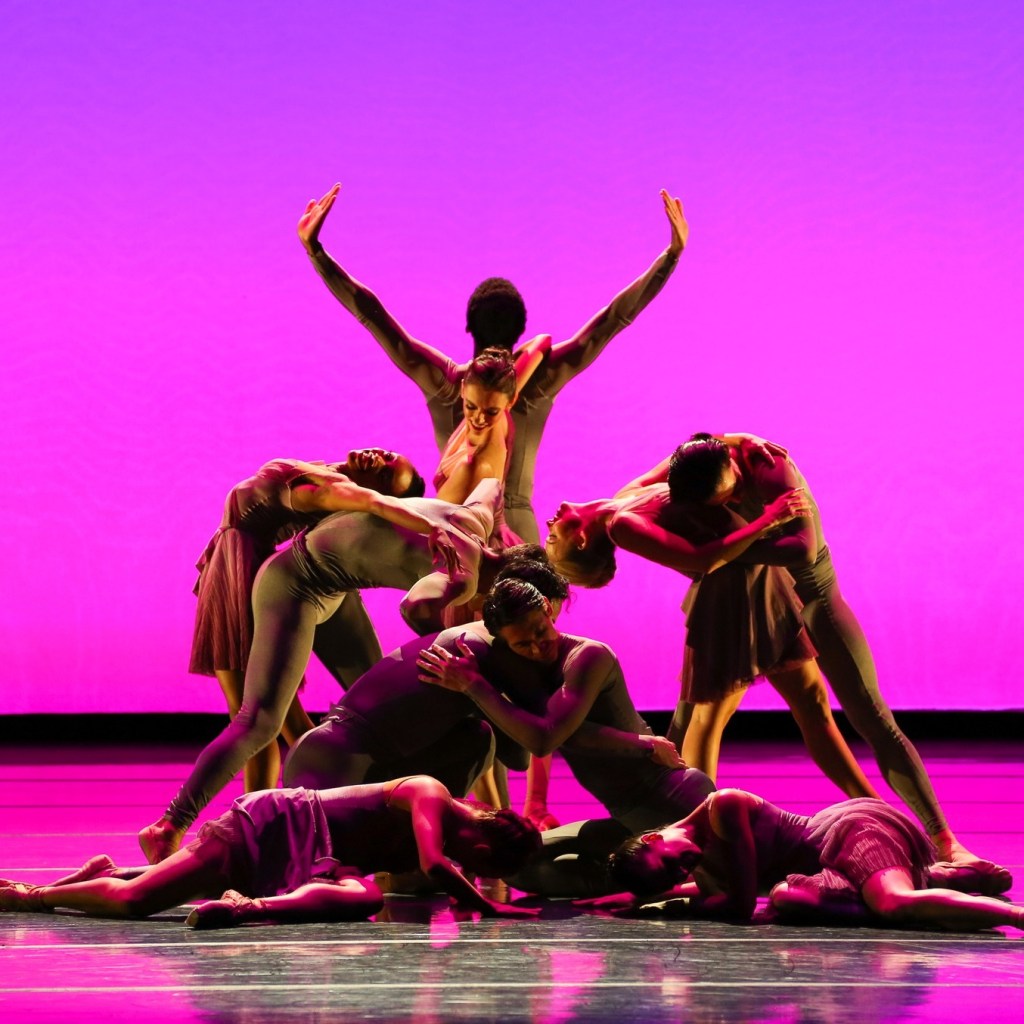
An ambitious display of contemporary classical ballet that spans the gamut from the humorous or playful to the somber and romantic, the work was inspired partly by the choreographer’s interactions with Richmond’s LGBTQ+ and Asian-American communities.

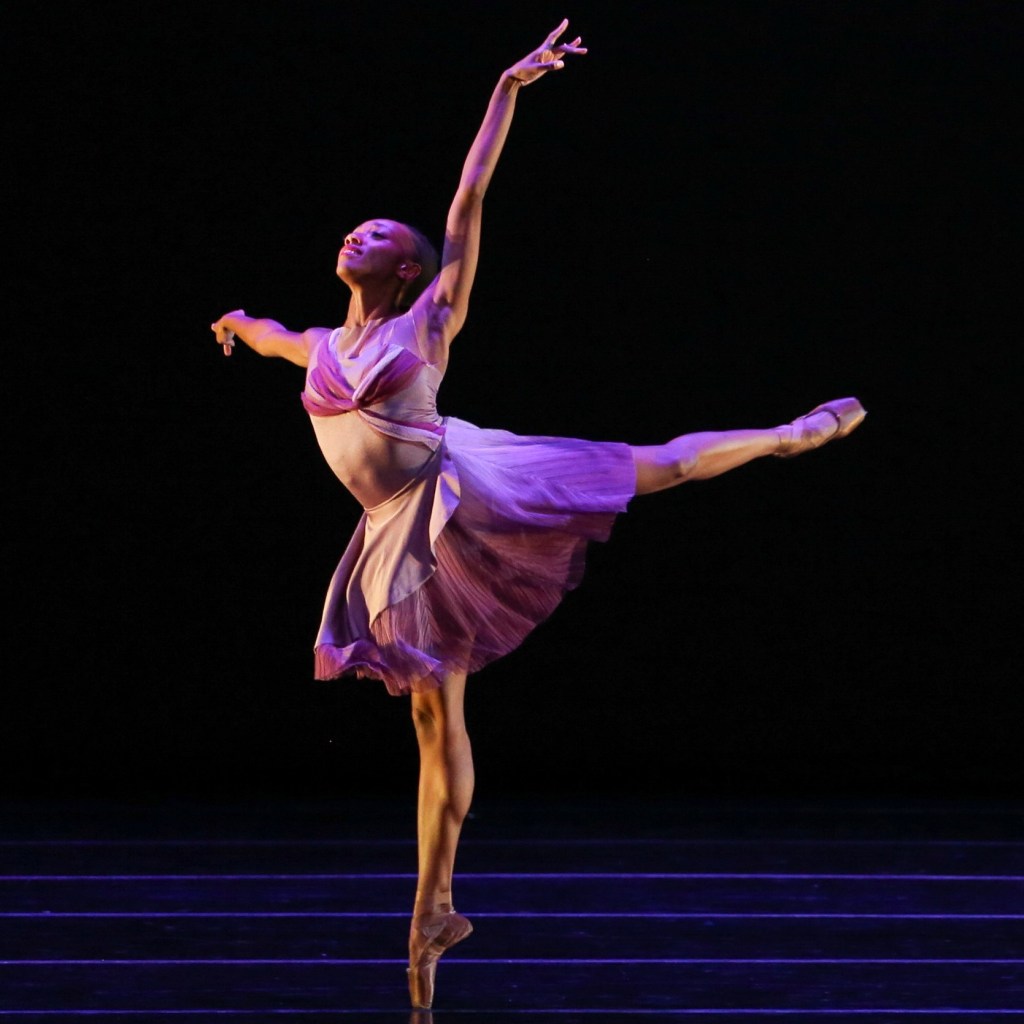
Onstage, Thrive manifests as clean, neo-classical movement accompanied by classical strings, interspersed with riotous pairings accompanied by more humorous music – some instrumental and some choral. The lighting matched the music and movement, with shades of red for the lighter moments and blues and purples for the more somber sections.

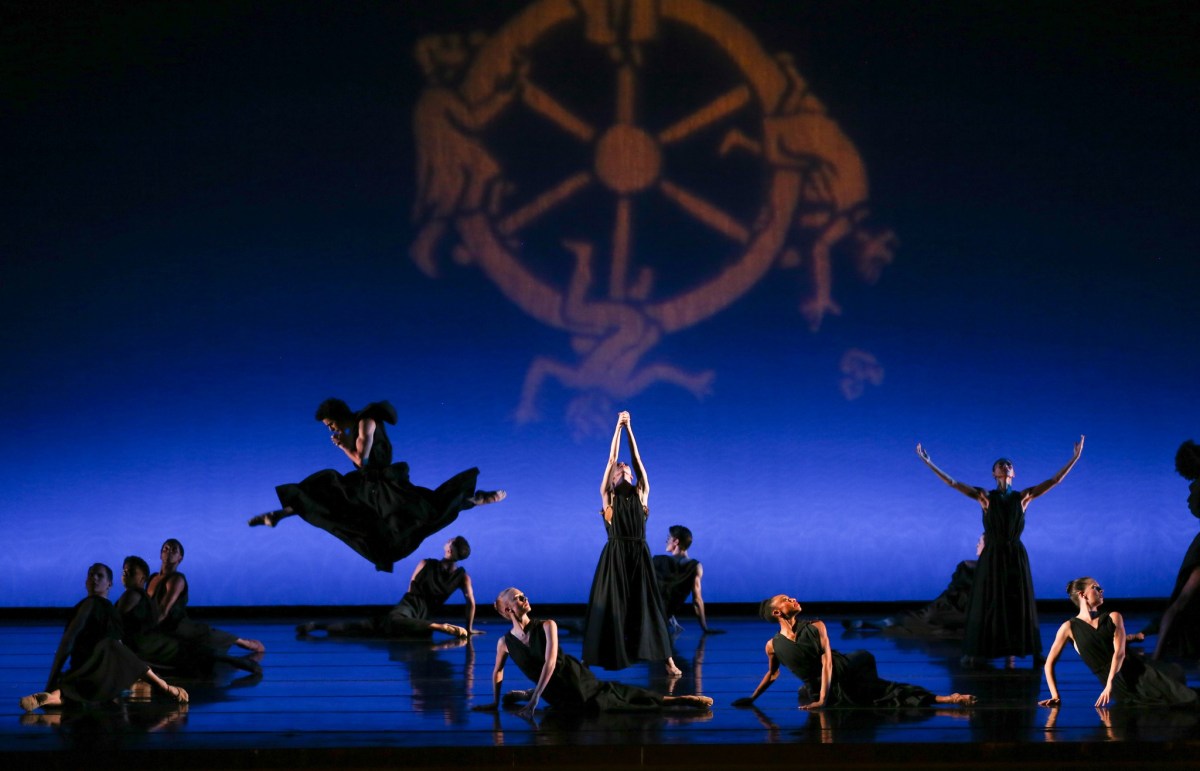
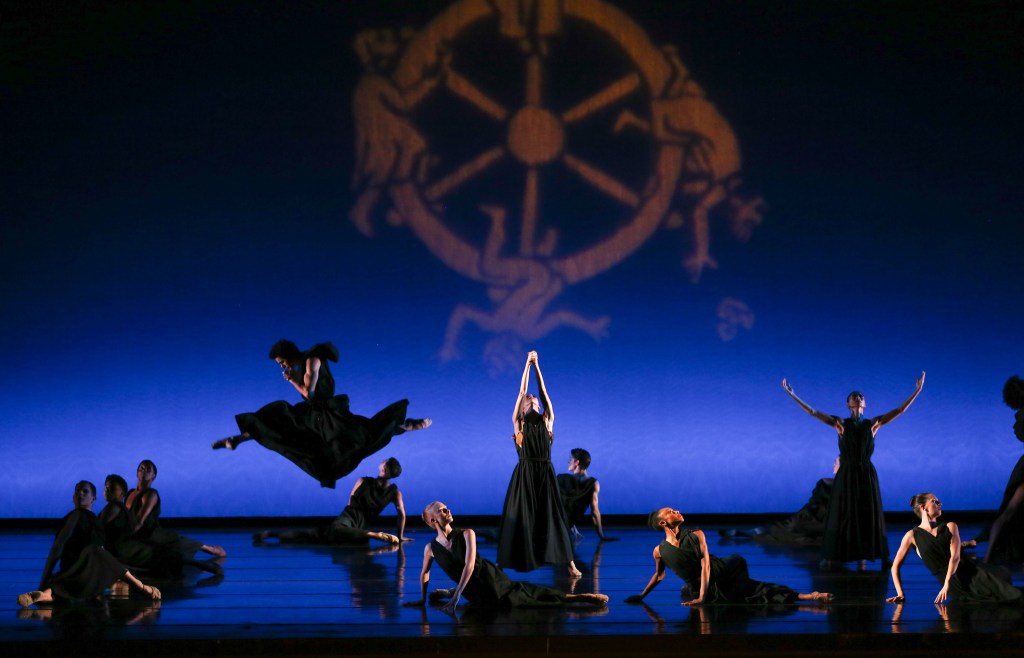
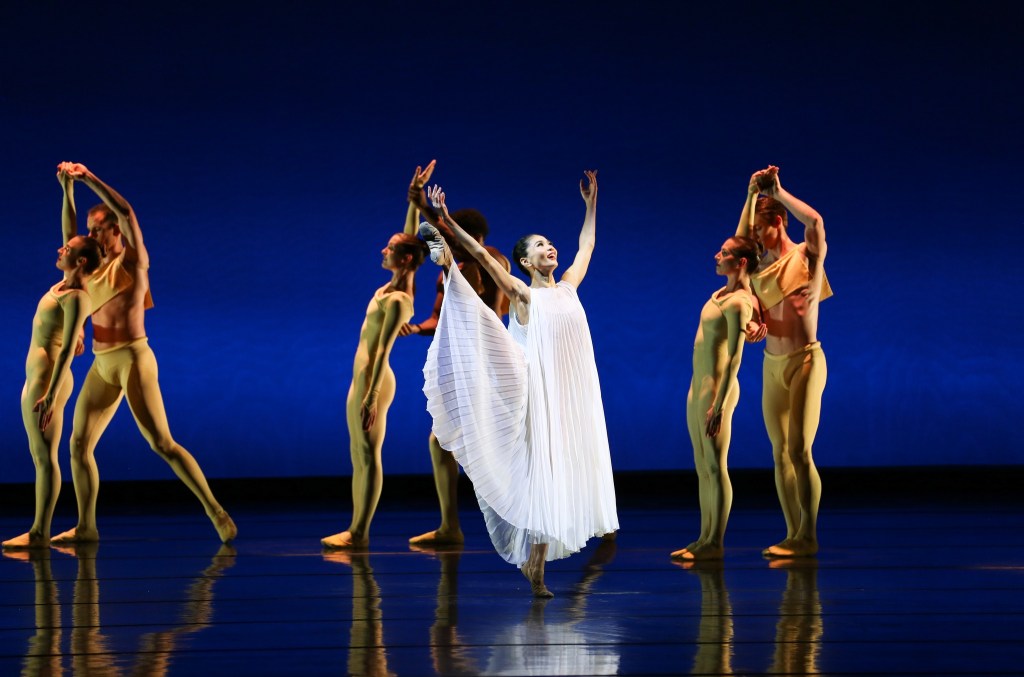
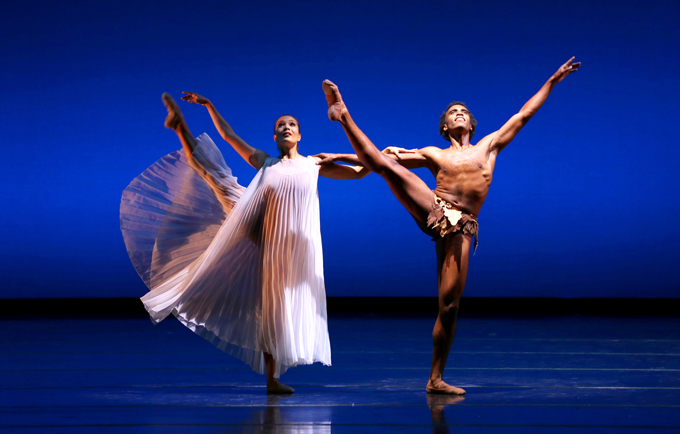
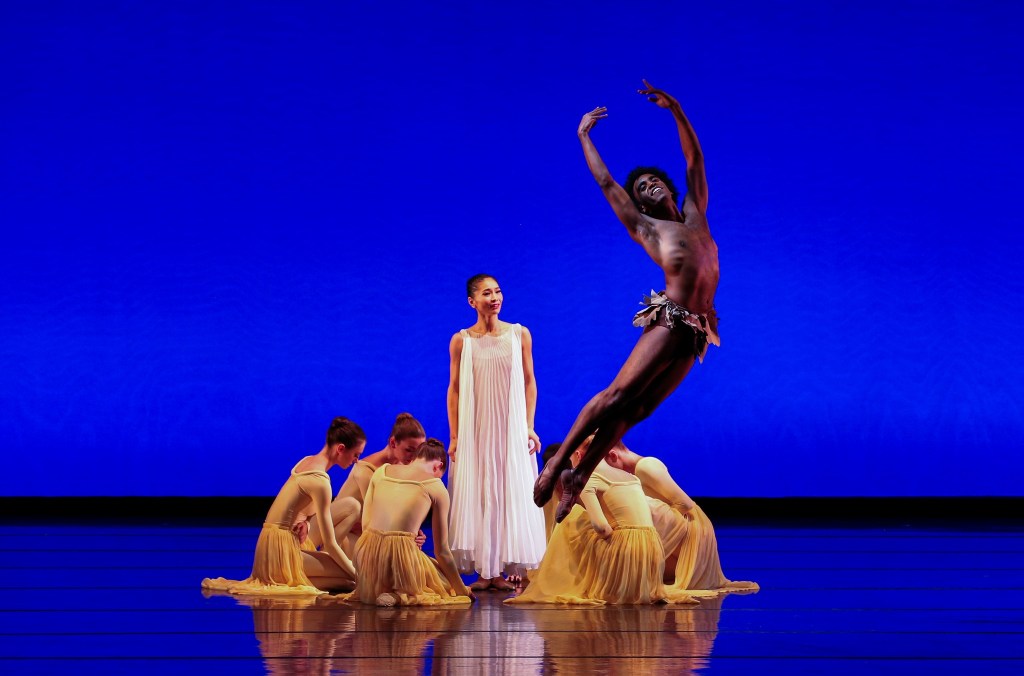
Carmina Burana raises the drama to a whole new level. A full orchestra in the pit, choral groups spilling out on both sides of the stage, soloists downstage left and right, frame dancers in monks robes who process in, pausing occasionally to genuflect. The robes soon give way to the barest of body coverings, reminiscent of Adam and Eve, while Eri Nishihara later appears in flowing white. Light colored body suite for the women and tights with collars over bare chests for the men emphasize the stylized movement that sometimes appears to have been lifted from an ancient print or vase.

A wheel of fortune projected in the background reminds us that life is uncertain, that we are all subject to the ups and downs, the wins and losses. The mostly Latin lyrics and poetry just add to the drama – sometimes more like an opera than a ballet – bookending the entire experience with the “O Fortuna” Prologue and Epilogue.

There is discipline and structure, seductive moments, energetic and tortured movement – some of all that life has to offer.  The very characters that bow in prayer later appear literally half-dressed (hats off to costume designer Monica Guerra) and become part of romantic triangles or what some call “entanglements.” Cody Beaton and Ira White, and Eri Nishihara with Khaiyom Khojaev guide the ensemble through the changes of luck and fate, bringing a relatable sense of emotion and sensuality to what might otherwise appear to be an obscure spectacle.

All in all, this proved to be a full-blast, magnificent evening of dance theater and certainly raises the bar for high expectations for the rest of this season.

Julinda D. Lewis is a dancer, teacher, and writer who was born in Brooklyn, NY and now lives in Eastern Henrico County.

One-Time
Monthly
Yearly

Make a one-time or monthly donation to RVART REVIEW

Make a monthly donation

Make a yearly donation

Choose an amount

$5.00
$15.00
$100.00
$5.00
$15.00
$100.00
$5.00
$15.00
$100.00

Or enter a custom amount

$

Your contribution is appreciated.

Your contribution is appreciated.

Your contribution is appreciated.

DonateDonate monthlyDonate yearly
FIREBIRD with SERENADE

Richmond Ballet Presents a Balanchine Classic & an East Coast Premiere

In the Battle of Classic vs Contemporary, Everyone Wins

A Dance Review by Julinda D. Lewis

By: The Richmond Ballet with the Richmond Symphony

At: Dominion Energy Center’s Carpenter Theatre, 600 E. Grace St., RVA 23219

Performances: February 17-19, 2022 at 7:00 PM

Ticket Prices: $25 – $130

Info: (804) 344-0906, etix.com, or richmondballet.com

THE PROGRAM

Serenade

Choreography by George Balanchine

Music by Peter Ilyick Tchaikovsky

Staging by Jerri Kumery

Costume Design by Karinska

Lighting Design by Ronald Bates

Lighting Supervision by Joseph R. Walls

World Premiere: March 1, 1935, Adelphi Theatre, NYC

Richmond Ballet Premiere: February 10, 1990, Norfolk Center Theater, Norfolk, VA

Firebird

Choreography by Ma Cong

Music by Igor Stravinsky

Scenic and Costume Design by Emma Kingsbury

Lighting Design by David Finn

Lighting Supervision by Joseph R. Walls

World Premiere: February 14, 2020, Bass Performance Hall, Fort Worth, TX

Richmond Ballet Premiere: February 17, 2023, Dominion Energy Center, RVA

Preview: https://www.facebook.com/100063444205389/videos/480459615956932/

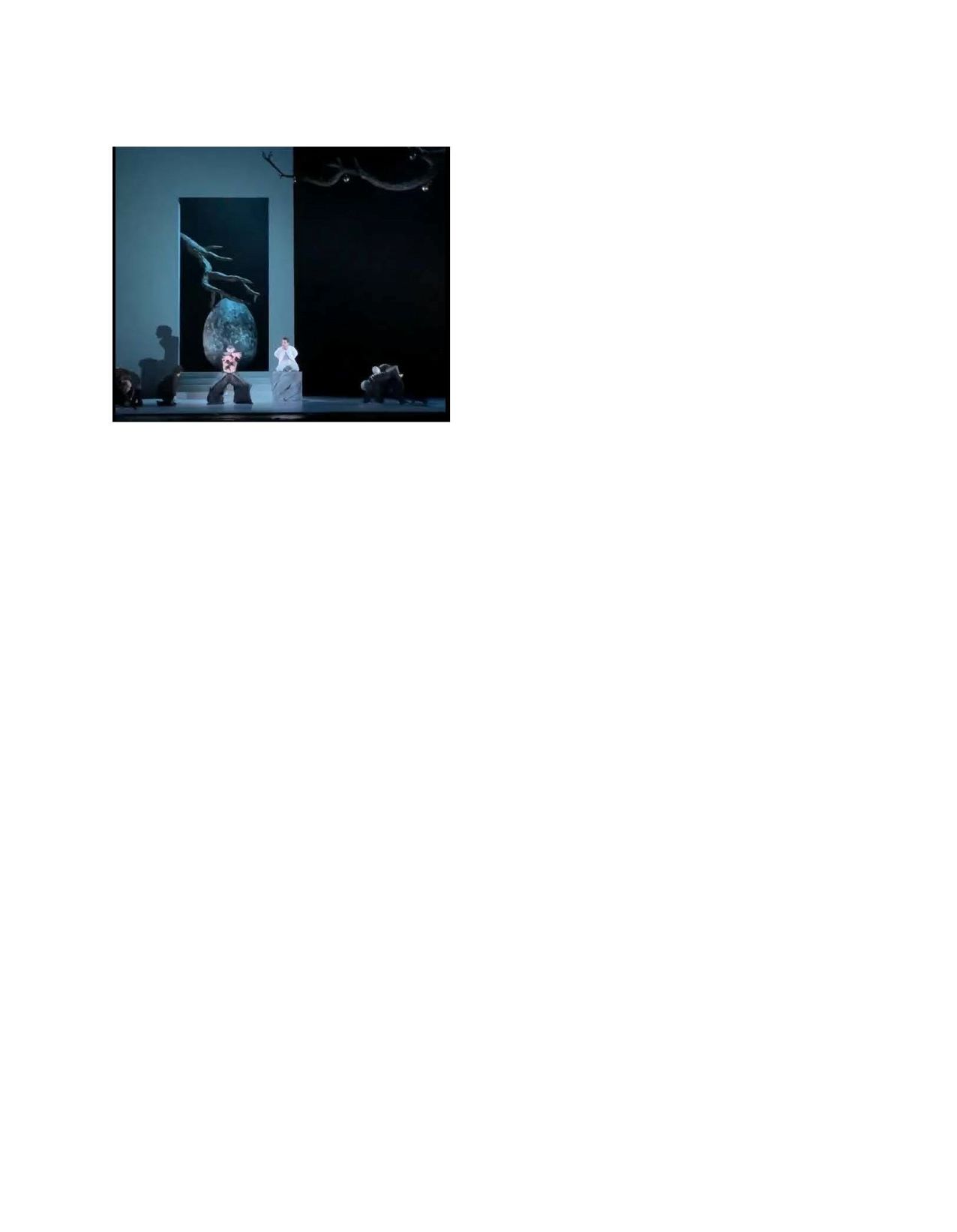
FIREBIRD, created by the Richmond Ballet’s Associate Artistic Director Ma Cong, is a magical blend of fairy tale, fantasy, drama, and dream. The ballet is set to Stravinsky’s beautiful score and set in a gorgeous environment that weds the classical with the contemporary. What at first appeared to be a museum – but I later found out was a garden – contained a swing suspended from the above, six life-sized “statues” that turned out to be six enchanted Princes, and a ginormous Faberge egg. Cong has taken the traditional Firebird story ballet – choreographed in 1910 by Michel Fokine for the Ballet Russes – and placed it in a more contemporary setting. 

There is still a hero (Prince Ivan, danced by Khaiyom Khojaev) – and, of course, an evil sorcerer (Koschei the Immortal, danced by Ira White). Cong has kept Fokine’s thirteen princesses, including Prince Ivan’s love interest (Tsarevna, danced by Eri Nishihara), and, of course, the magical Firebird (Cody Beaton). What is new is the context. Nishihara begins as a young woman in a swing, visiting the sculpture garden with her mother (Celeste Gaiera). While reading her favorite book, The Firebird fairy tale, she dozes off, and much like little Clara in The Nutcracker Ballet, finds herself the central figure in a dreamscape filled with magical creatures. Her Prince doubles as a Photographer in the sculpture garden, and instead of party guests, there are museum visitors. A dropped scarf is the talisman that links the two worlds.

Khojaev, the dashing young prince – handsome, lost, and sporting a quiver of bows – encounters the magical, mystical Firebird in an enchanted garden plucking golden apples from a magical tree. In exchange for her life, the Firebird plucks one of her red feathers and presents it to Ivan, to be used in case of an emergency that can only be resolved using magic. The encounter is one of the ballet’s few traditional features – a pas de deux of soaring leaps and spiralling runs marked by Beaton’s fabulously quirky arm movements. They part, and of course it is only a matter of time before Prince Ivan runs into the evil sorcerer Koschei who has enchanted thirteen beautiful princesses and turned to stone the six young princes who have attempted to rescue them.

White, as Koschei, reminds me of an ancient Japanese war lord (but wait, considering that Cong studied Chinese classical dance, let me revise that to an ancient Chinese warrior), and his minions are clad in black body suits with vaguely skeletal imprints on the spines – thoroughly embracing the role of malevolent sycophants as they scamper about the space. The choreography is a refreshing brew of ballet and contemporary movement, a contrast of soaring heights and scampering lows, classic lines and grounded enfolding. A friend likened the results to the subterfuge of The Wizard of Oz.

A battle ensues, requiring Prince Ivan to call upon the Firebird for assistance, and Koschei and the forces of evil are eventually overcome. The climax of the battle, however, involves one of the most explosive special effects I have ever seen in a ballet. Remember that Faberge egg I described earlier – and Ivan’s quiver of arrows? Well, this is where it all comes together. The egg – okay, so maybe not a Faberge egg, but you get the idea – is where Koschei had hidden his evil soul for safekeeping and the climax of the battle involves the destruction of the egg and all the evil it contains. What a stunning concept and even more spectacular execution!

In the final scene, the daughter (Nishihara) awakens, back in the safety and peace of the sculpture garden, where the exchange of the dropped scarf and a pointed glance are all that remain of the events that have just transpired.

The evening started and ended on a high note – with two ballets completely different in style and execution. The program started with a performance of George Balanchine’s Serenade (1934). Historically significant as the first Balanchine ballet created in America and one of the New York City Ballet’s signature works, the ballet began as a lesson in stage technique for student dancers and the choreography even incorporates ordinary rehearsal events, such as a dancer’s fall. But Serenade opens with one of the singularly more stunning moments of stillness ever choreographed.

The curtains parts on a sea of 17 women standing in complete stillness. Each has one arm lifted. When they all move their feet from parallel to an open first position. So simple. So basic. So beautiful. In spite of its simplicity, Serenade is not an easy ballet, and set against Tchaikovsky’s score on a bare stage, save for romantic lighting, it remains a favorite for balletomanes and novices alike.

No disappointments, no complaints. Just a satisfying evening of beautiful ballet and memorable music, played live by the Richmond Symphony, conducted by Erin Freeman. Bravo.

One-Time
Monthly
Yearly

Make a one-time, monthly, or annual donation in support of
rvart review

Make a monthly donation

Make a yearly donation

Choose an amount

$5.00
$15.00
$100.00
$5.00
$15.00
$100.00
$5.00
$15.00
$100.00

Or enter a custom amount

$

Your contribution is appreciated.

Your contribution is appreciated.

Your contribution is appreciated.

Donate hereDonate hereDonate here

THE NUTCRACKER: LIVE

TRIUMPHANT RETURN OF HOLIDAY CLASSIC

A Dance Review by Julinda D. Lewis

By: The Richmond Ballet

At: Carpenter Theatre at Dominion Energy Center, 600 East Grace Street, RVA 23219

Performances: December 11-23, 2021

Ticket Prices: In-Person Tickets $25-$125

Info: (804) 344-0906, etix.com, or richmondballet.com

The Nutcracker
Choreography by Stoner Winslett

Music by Peter Ilyich Tchaikovsky

with The Richmond Symphony,

Erin Freeman, Conductor

Production Conceived by Stoner Winslett and Charles Caldwell

Artistic Direction & Choreography by Stoner Winslett

Scenery & Prop Design by Charles Caldwell

Christmas Tree Design by Alain Vaës

Costume Design by David Heuvel

Lighting Design by Richard Moore

Associate Lighting Design by Jim French

It’s December 2021 and in three months we will mark a most unlikely anniversary – two full years of living with a global pandemic. After months of learning the differences between social distancing, quarantine, and isolation, live theater has settled into a new routine of live performances. First, there were limited-seating performances with virtual streaming options. The new standard is to allow fully-vaccinated people to attend live performances with few seating restrictions. Patrons must show proof of vaccination and remain masked. Oh, and in the larger venues, you can forget about visiting the bar; it’s closed until further notice. All of this takes some adjusting, but it’s worth it to be able to experience the singular joy of attending a live show.

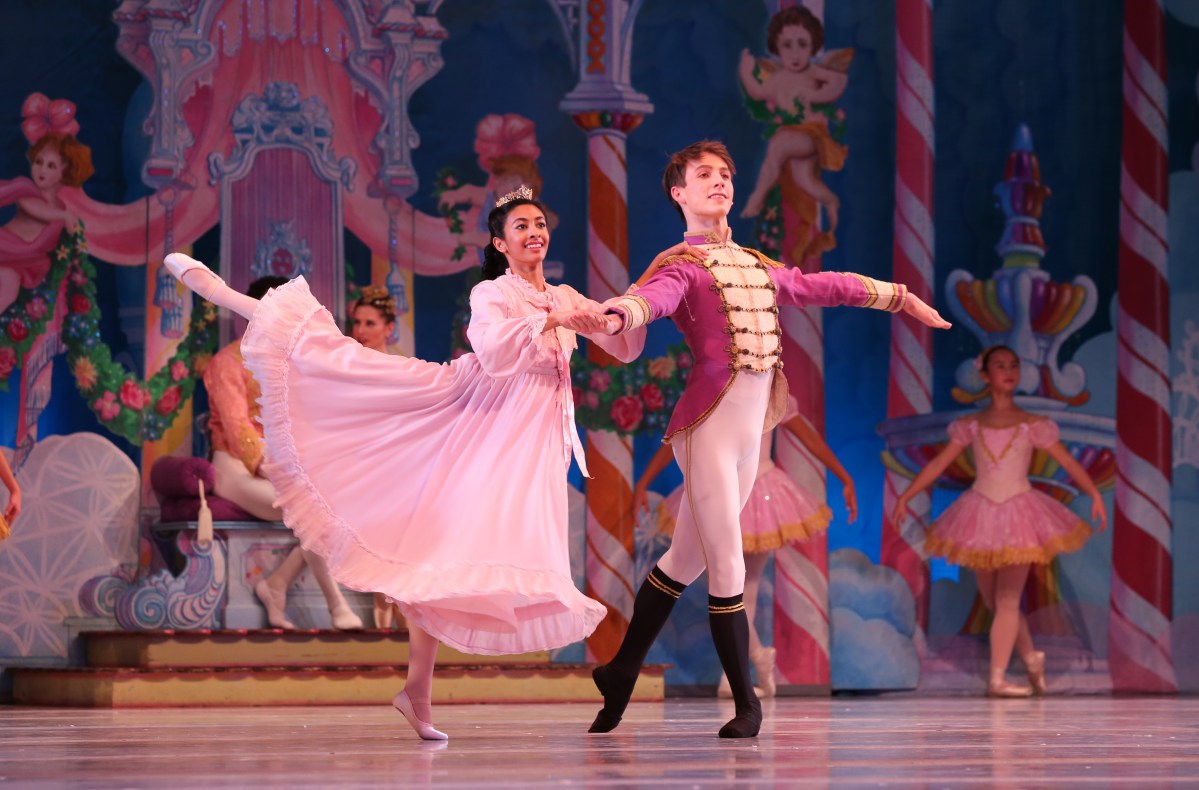
The Richmond Ballet’s holiday standard, The Nutcracker, was not performed live last year due to the pandemic, but it’s back this year and opened on Saturday, with a few modifications that did nothing to diminish the excitement of joining young Clara on her journey to Confitenberg, the Land of Sweets. Small children and adults sat mesmerized from the moment the Richmond Symphony began the familiar strains of Tchaikovsky’s score until the elaborate curtain dropped after Clara woke up from her adventure.

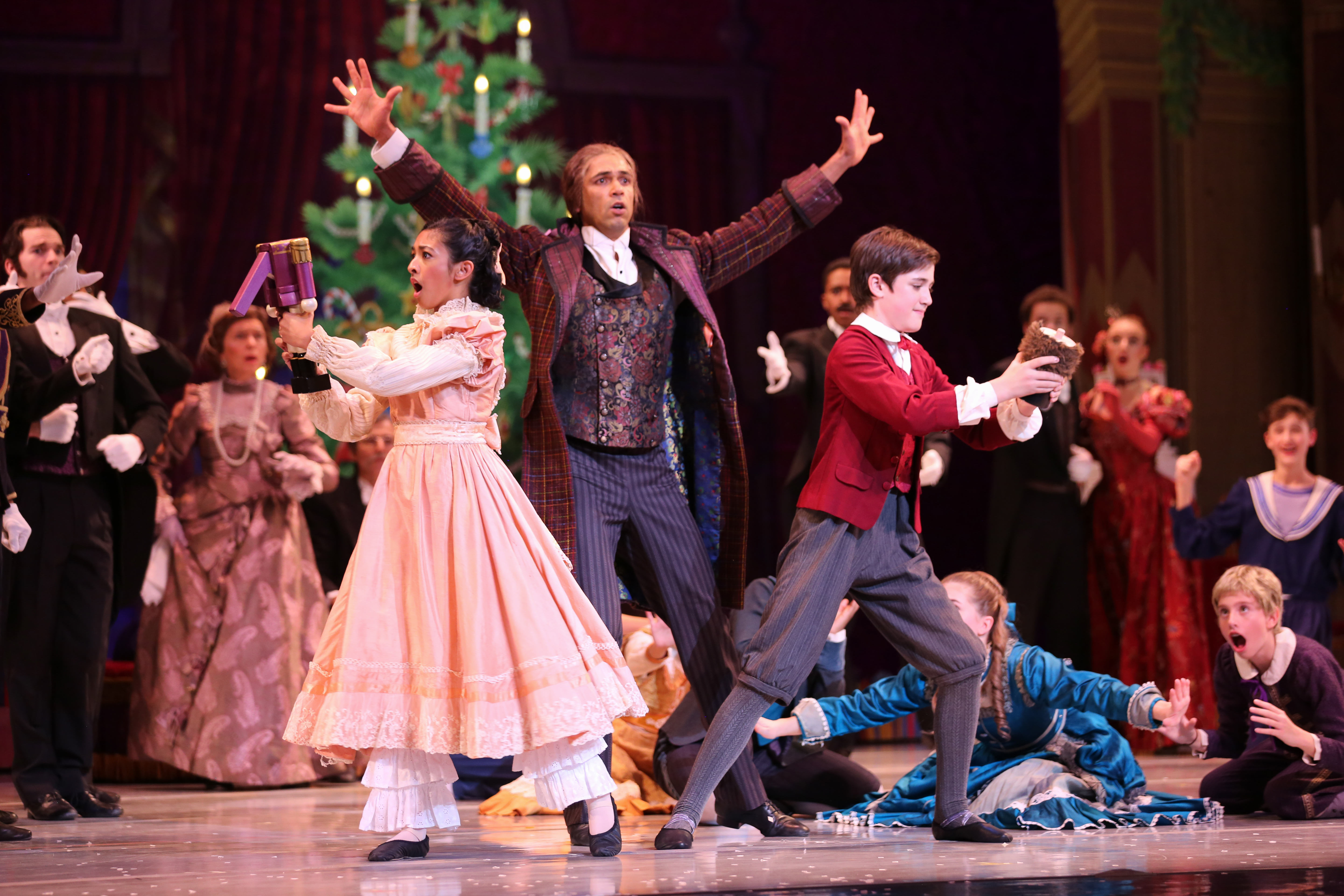
This year’s production of The Nutcracker is special for two reasons: it is the first live production since the world shut down in March 2020, and this is the last year to see the familiar Nutcracker costumes and sets before they get a make-over for 2022. You can expect three acts and two intermissions (although you cannot take drinks or food to your seats), but I noticed that when the clock struck twelve times only six little mice appeared instead of twelve, and the most obvious change was the absence of Mother Ginger and the dozen little dancers that hide under her voluminous hoop skirt. And of course, with nine new members in this company this season, there are lots of new casting choices to experience.

Adhya Yaratha dances the coveted role of Clara, the recipient of the magical nutcracker doll. Yaratha, a student at The Steward School, was recently featured as a “Standout Spartan” in her school’s newsletter. She revealed that she has been dancing for 13 years and “for much of that time” dreamed of being cast as Clara. She danced with grace and confidence and made a delightful Clara.

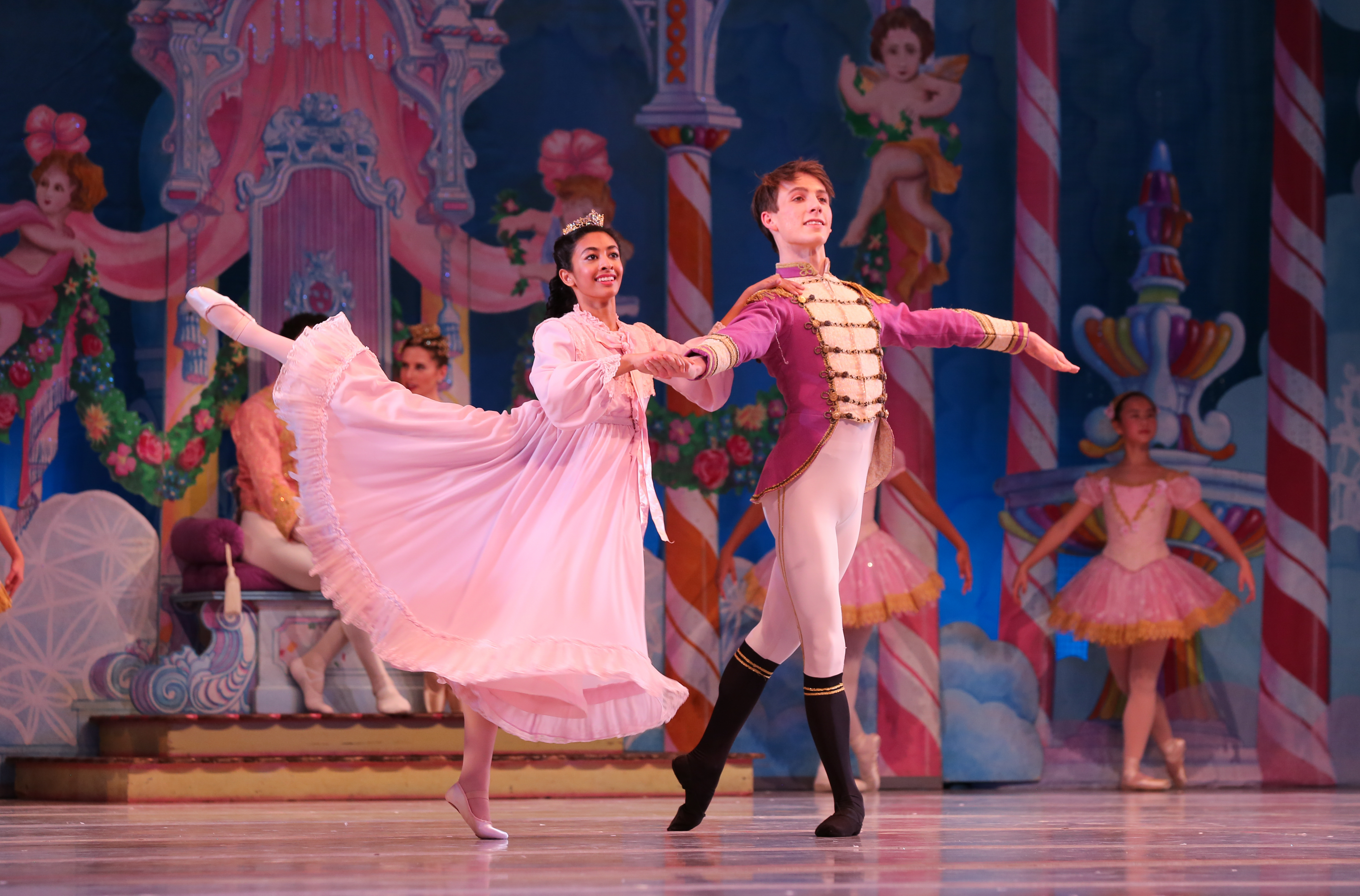
Bladen Kidd held his own as Clara’s recalcitrant little brother, a band of boys on a series of humorously disruptive raids against the girls at the Silberhaus’ annual Christmas party. Carter Bush (RB Trainee) proved to be an attentive apprentice to his uncle, the mysterious Dr. Drosselmeyer (the recently retired Fernando Sabino returning as a guest) and a courteous Nutcracker Prince accompanying Clara on her adventures in the Kingdom of Sweets.

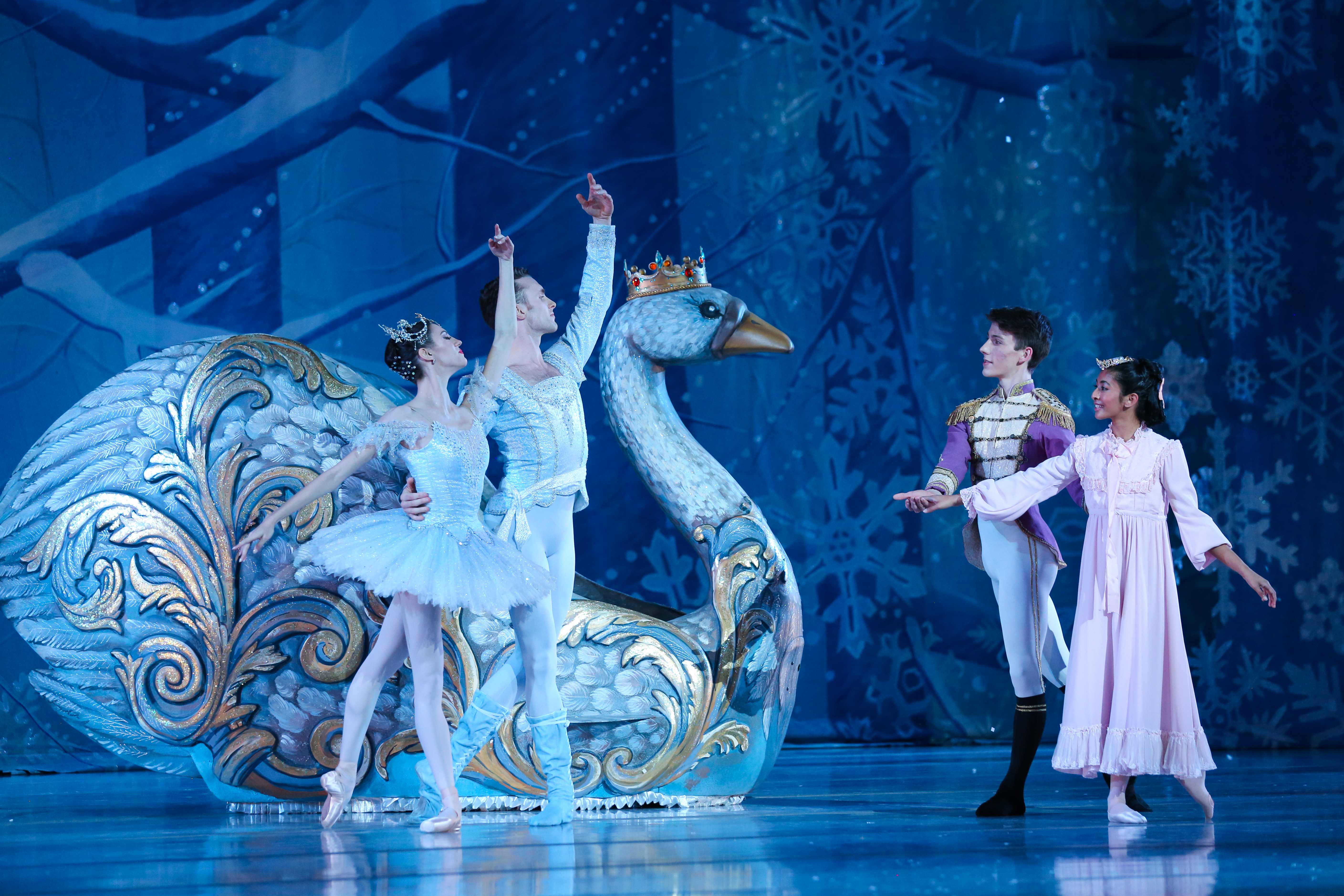
The predictability and tradition of The Nutcracker are part of its charm, and seemed especially important this year: they were signs of stability and normalcy. Whoever thought a magical growing Christmas tree and a swan sled could represent stability?

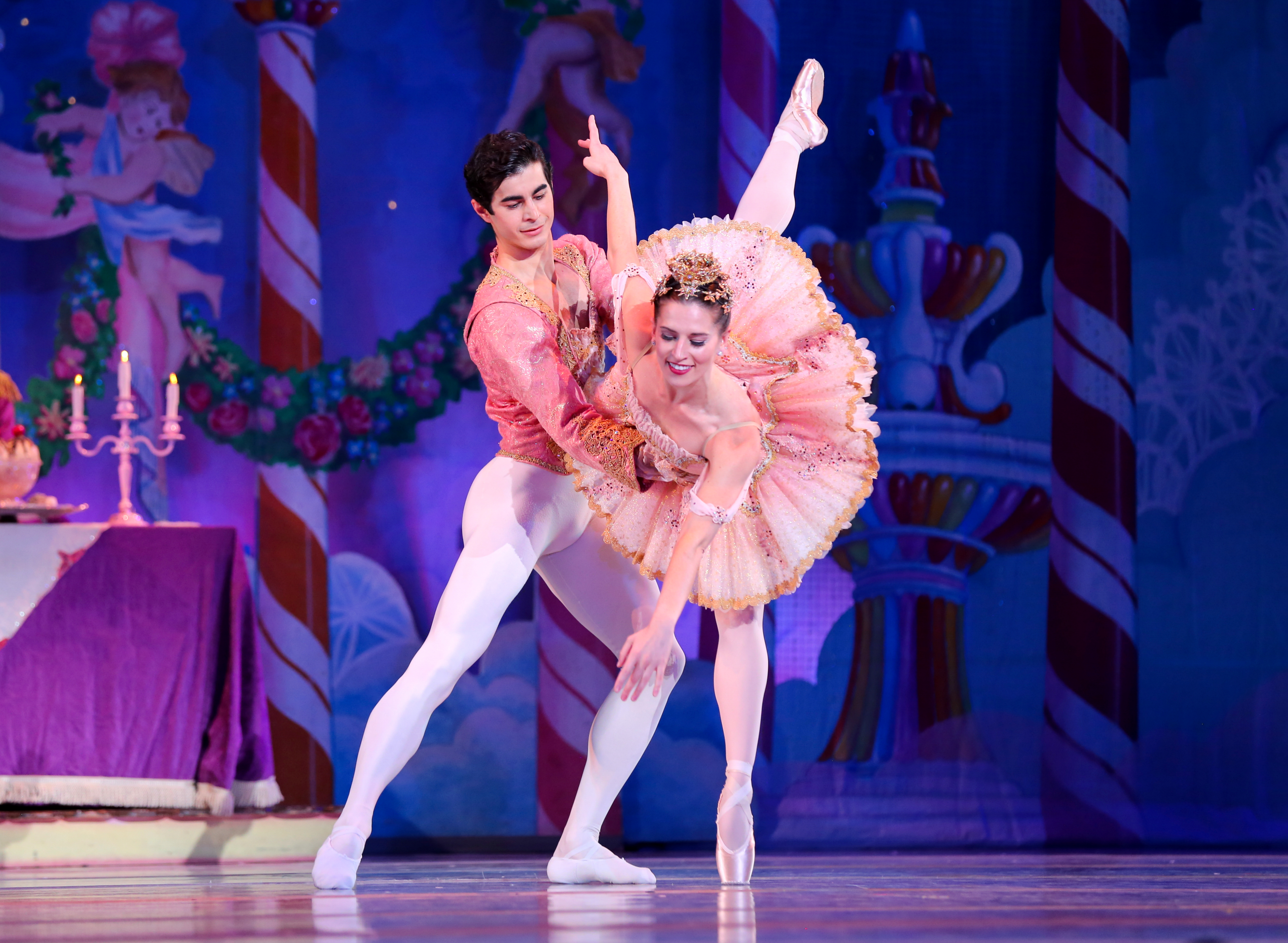
Sabrina Holland and Khaiyom Khojaev danced the “other” leading roles – you know, the adult ones – the Sugar Plum Fairy and her Cavalier. They welcome Clara and her Prince to the Kingdom of Sweets and close Act Three with a grand pas de deux that epitomizes the lightness of the Romantic ballerina and the supportive role of the male dancer, with both attacking their technique with relish and flair.

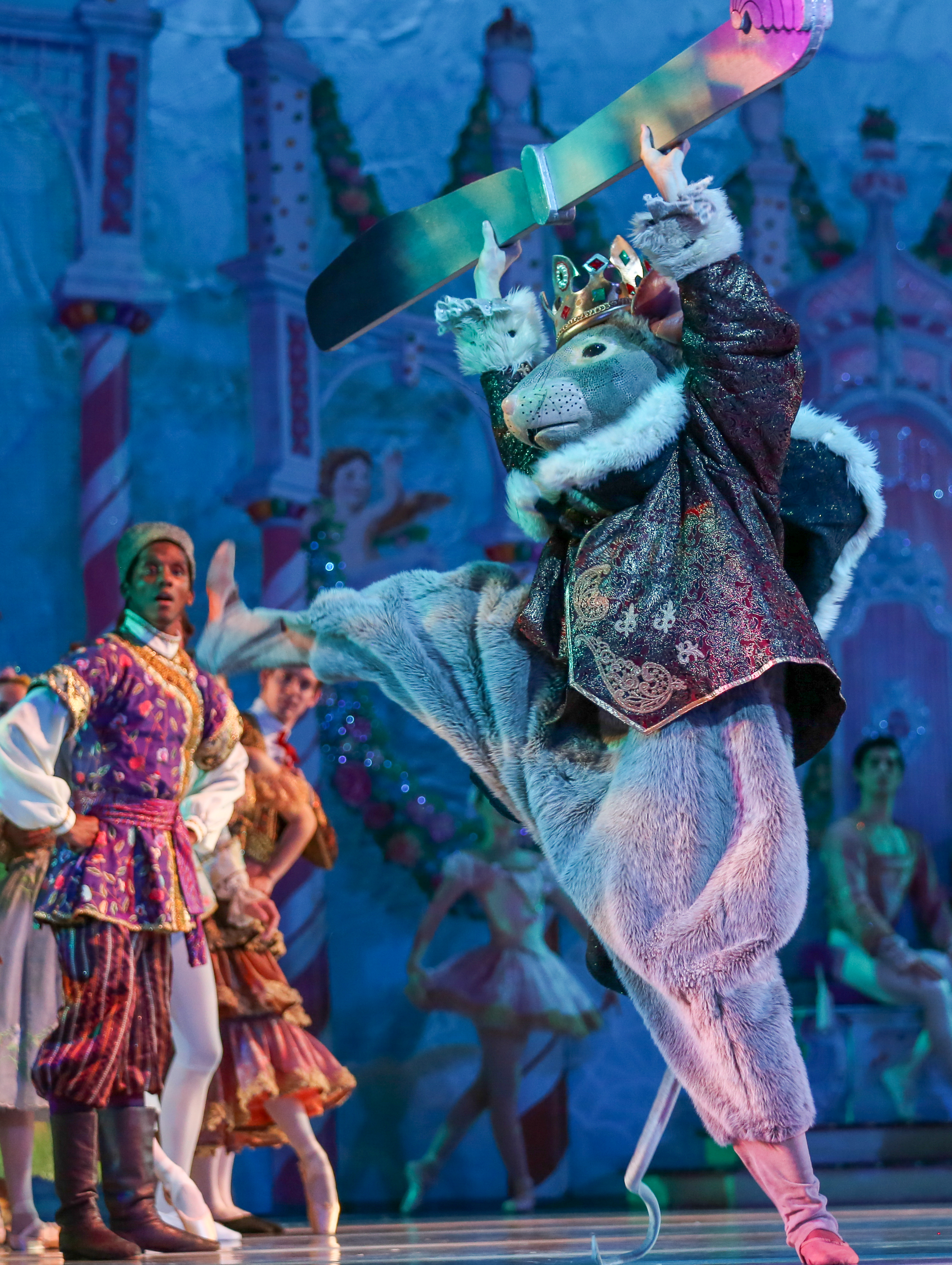
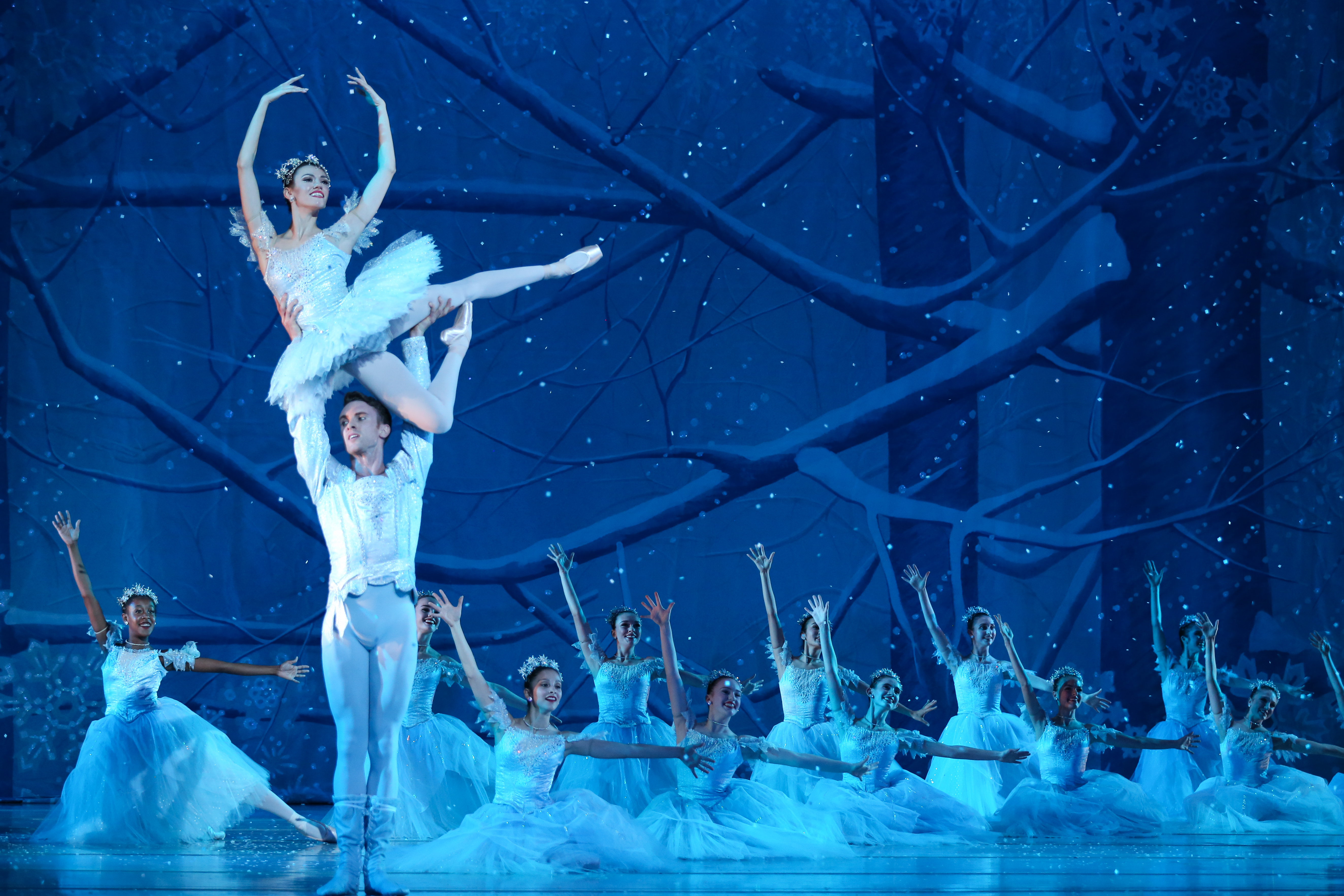
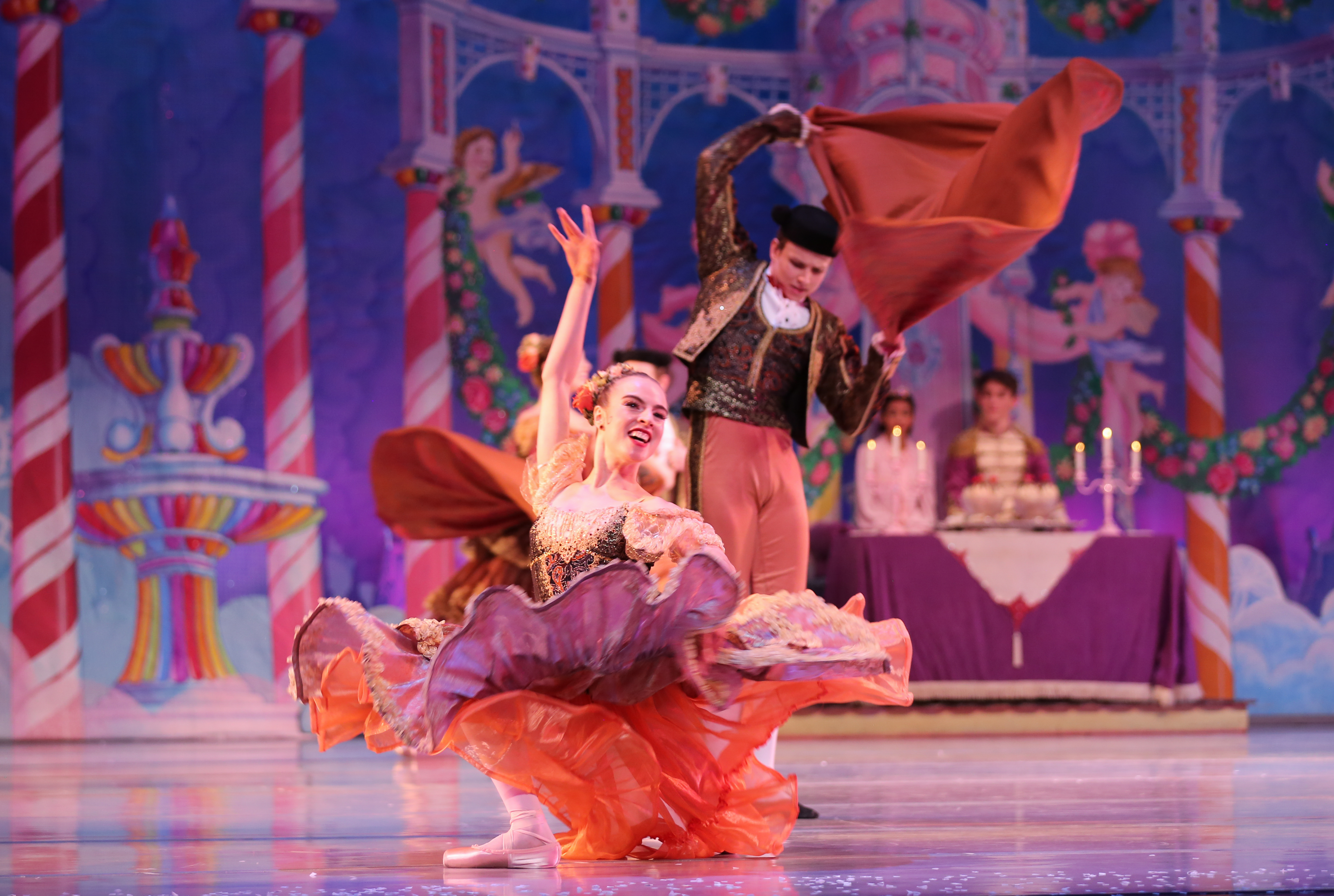
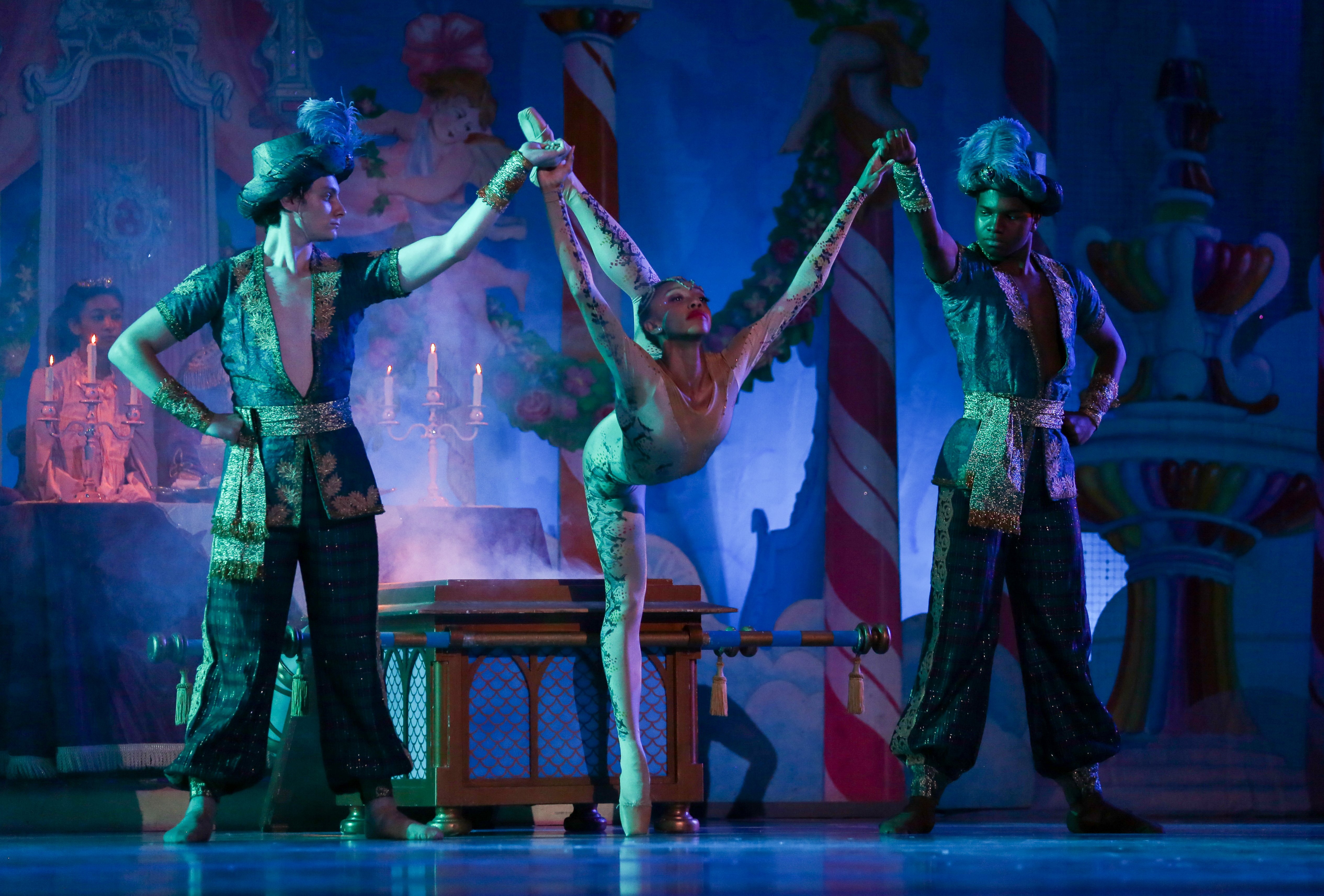
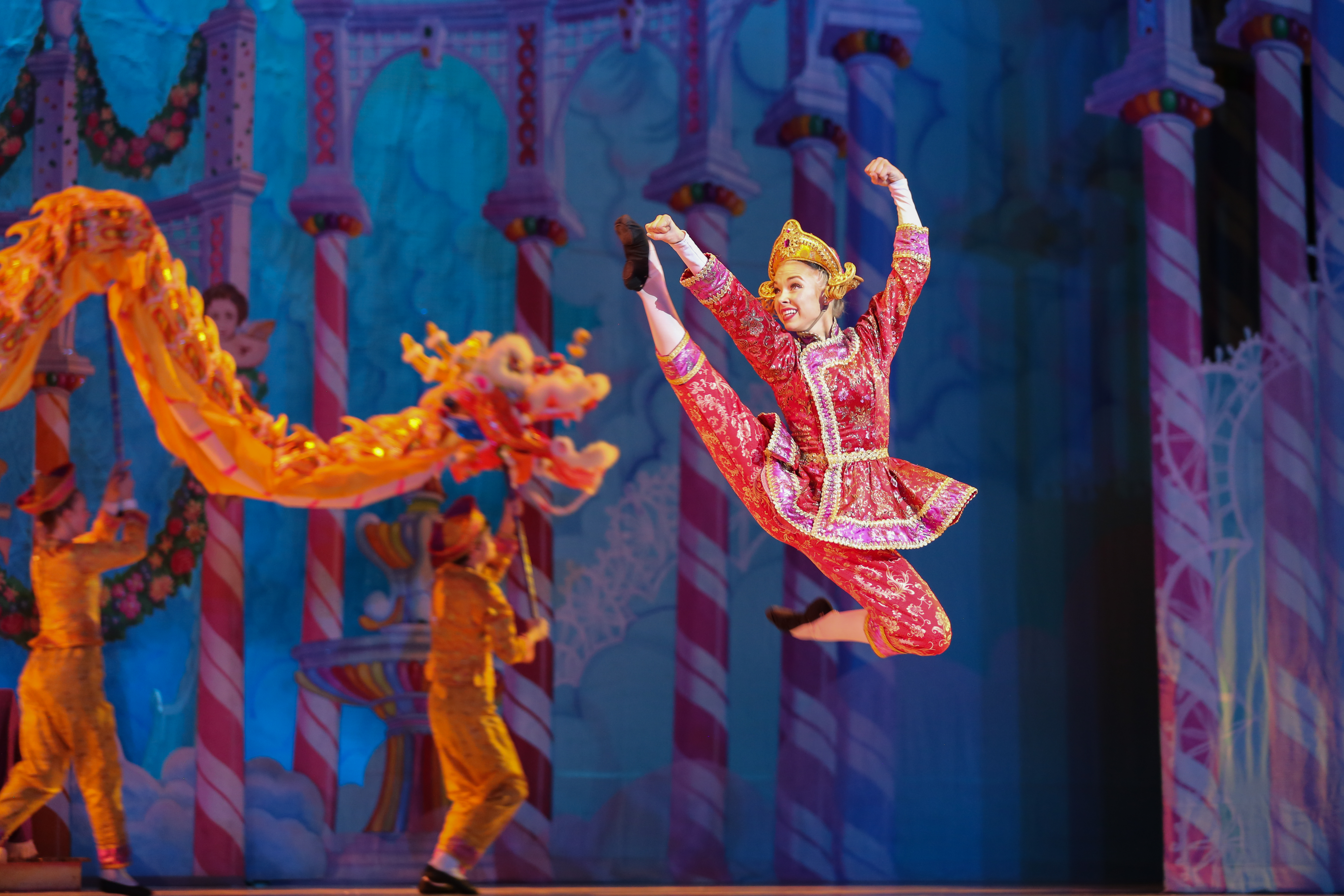
All the favorite characters are there and there are plenty of roles for Richmond Ballet II, the Trainees, and the students of the School of the Richmond Ballet. The battle between the Mouse Army and the Regiment Soldiers features Jackson Calhoun (RB II) in the comedic role of the Mouse King. Principals Izabella Tokev and Joe Seaton deliver a picture perfect ice blue pas de deux as the Snow Queen and Snow King, attended by a corps of a dozen Snowflakes. Celeste Gaiera and Patrick Lennon, Marjorie Sherman and Jack Miller dance a Spanish jota with flair. Naomi Robinson and Ira White revive the sensual Snake and her Charmer, and Naomi Wilson dances the acrobatic role of Tea, accompanied by a group of Chinese dragon dancers.

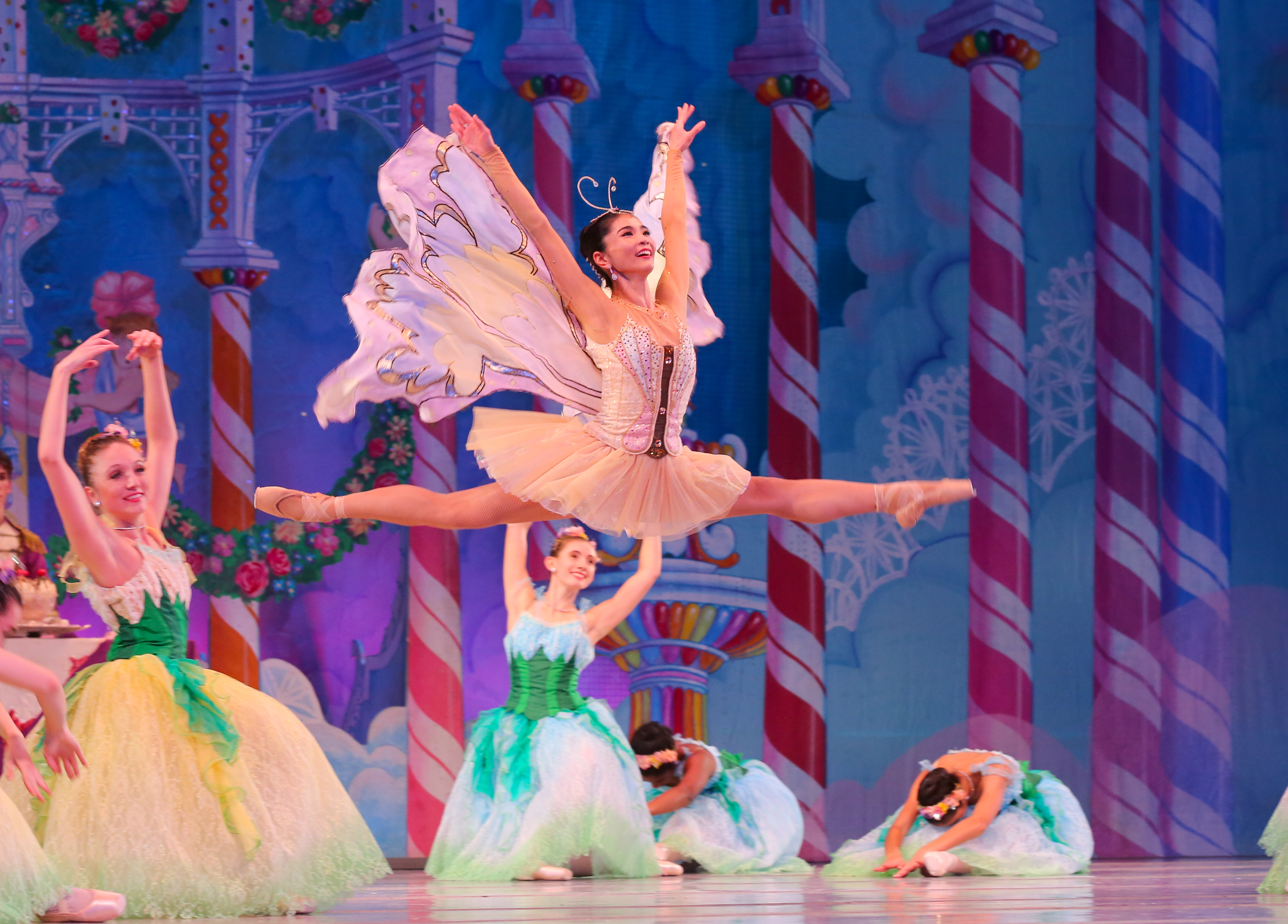
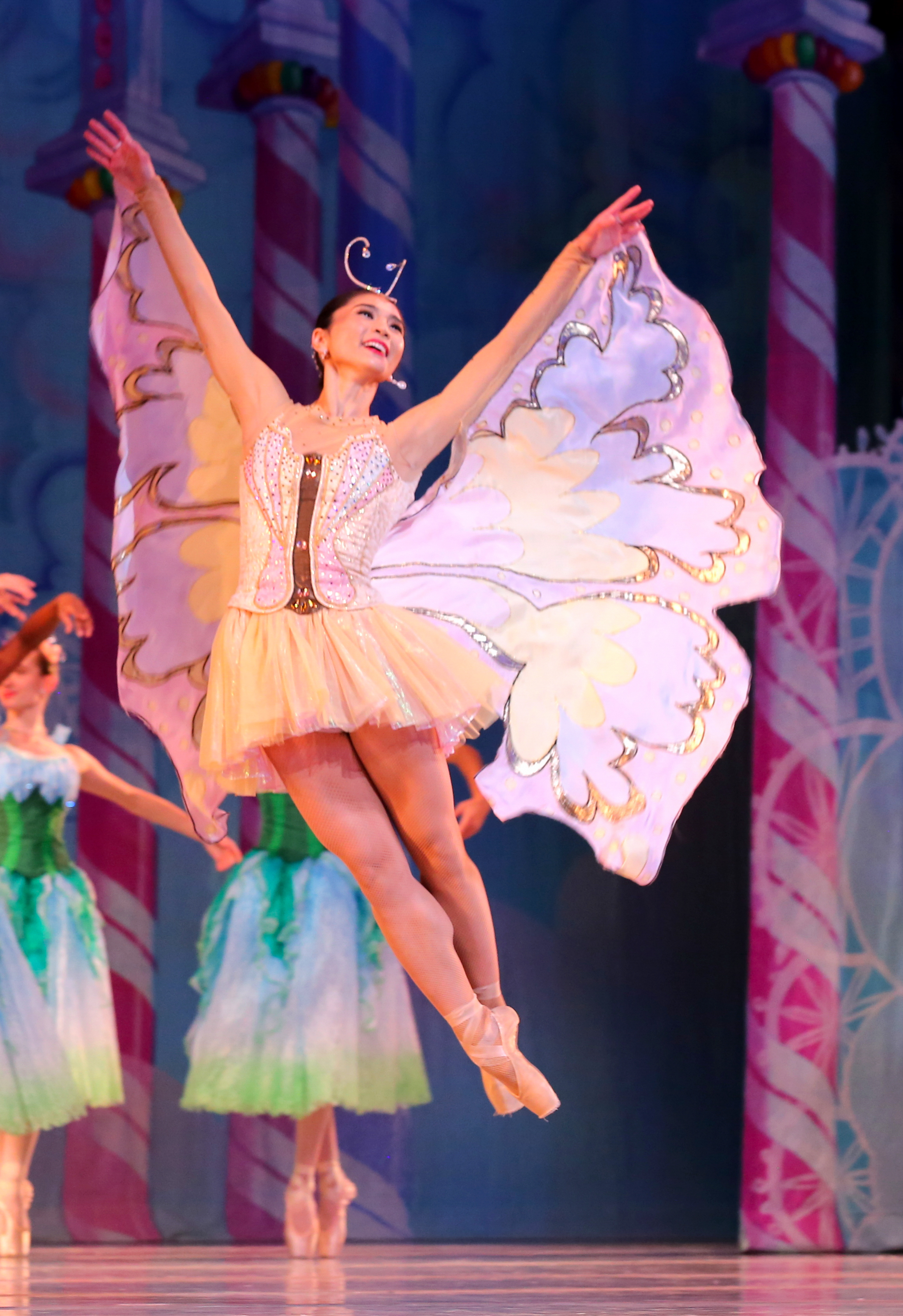
Sarah Joan Smith and Colin Jacob (both first year company members) are the Shepherdess and Shepherd who shelter a half dozen little lambs who steal the show. They have masks added to their costumes this year which fit perfectly with their costumes. Paul Piner, Roland Jones, and Zacchaeus Page, all members of RB II, are the ever-popular Russian dancers with their very hip dancing bear (Piner), and Eri Nishihara dances the role of the bedazzled butterfly, surrounded by a dozen Candied Flowers.

The diverse and multi-generational cast is an apt reflection of the audience and represents the best of what this season represents. It’ so good to have The Nutcracker back onstage at The Carpenter Theatre this year; there is nothing like live theater to offer a magical escape from the everyday and mundane.

The Nutcracker Performance Schedule

Saturday, December 11th, 2021 @2:00pm and 7:00pm

Sunday, December 12th, 2021 @1:00pm and 4:30pm

Saturday, December 18th, 2021 @2:00pm and 7:00pm

Sunday, December 19th, 2021 @1:00pm and 4:30pm

Wednesday, December 22nd, 2021 @7:00pm

Thursday, December 23rd, 2021 @2:00pm

COVID-19 Protocols: Upon entering the theatre, all audience members ages 12 and above are required to show printed or digital proof of full vaccination against COVID-19 or of a professionally-administered negative COVID-19 test taken within 72 hours of the performance. Patrons ages 18 and above will also need to show a photo ID. All patrons ages 2 and above will continue to be required to wear masks.Please note: Proof of a negative COVID test is not required for children under the age of 12.

Photos Credits: Sarah Ferguson

One-Time
Monthly
Yearly

Make a one-time donation

Make a monthly donation

Make a yearly donation

Choose an amount

¤5.00
¤15.00
¤100.00
¤5.00
¤15.00
¤100.00
¤5.00
¤15.00
¤100.00

Or enter a custom amount

¤

Your contribution is appreciated.

Your contribution is appreciated.

Your contribution is appreciated.

make a holiday donation to support
rvart review
make a holiday donation to support
rvart review
make a holiday donation to support
rvart review

RICHMOND BALLET’S “CINDERELLA”: Happily Ever After

Richmond Ballet’s CINDERELLA: Humor & Romance Unite

A Dance Review by Julinda D. Lewis

At: The Carpenter Theatre at Dominion Energy Center, 600 E. Grace St., RVA 23219

Performances: February 14-16 @ 7:00pm; February 16 @2:00pm; and February 17 @1:00pm

Ticket Prices: Start at $25

Info: (804) 344-0906 x224 or etix.com

Magic. Magic with a generous dose of humor. The Richmond Ballet’s 2019 production of Malcolm Burn’s Cinderella is the sort of magical ballet that makes little girls want to become ballerinas. (Not trying to be sexist here, just speaking from personal experience or memory.)

Set on the grand Dominion Energy Center’s Carpenter Theatre stage, with storybook scenery, elaborate costumes, and props by Peter Farmer, lighting by MK Stewart, and additional costume design by Tamara Cobus, Burn’s choreography soars into fairyland and carries the audience willingly along for the journey. Sergei Prokofiev’s romantic score is played beautifully by the Richmond Symphony, conducted by Erin Freeman.

Cinderella, her bullying stepsisters and unsympathetic stepmother, her kind but defeated father, the fairy godmother and the fairies of the seasons, the magical mice and the charming Prince are all here in this traditional fairy tale. But it’s been awhile, and I didn’t remember just how amusing this ballet is! (On opening night there was one woman in the audience who had an infectious laugh – for the first act. By acts two and three, she had progressed to laughing uncontrollably, often at the most inappropriate times.)

The physical comedy of Elena Bella (a stepsister) and Trevor Davis (The Jester) are personal highlights of the ballet. Bello is a petite powerhouse with stunning technique and a penchant for comedy, which she also demonstrated as Puck in Midsummer Night’s Dream. Davis also managed to perfect a blend of technique and comedy.

And, of course, the delicious comicality (yes, that’s a real word) of having the second stepsister played by a man, Matthew Frain, goes without saying. I was excited when I saw him appear in toe shoes, and yes, he did manage to get in a few steps on pointe. And while his role requires him to perform in an over-the-top klutzy style, he worked diligently with company members to prepare. [See a video clip of him preparing for his role with his “sister” Elena Bello: https://www.richmond.com/studio/entertainment/dancer-matthew-frain-as-cinderella-s-step-sister/video_9f728237-58fc-5a45-a063-ff64851d227a.html].

Among the more traditional roles, Cody Beaton is Cinderella and Fernando Sabino is her Prince. Their pas de deux is lush, unhurried, and beautiful. Their unlikely love story – the stuff of fairy tales – is helped along by the Fairy Godmother (Lauren Archer) and the fairies of the Seasons. Melissa Robinson is the Spring Fairy; Izabella Tokev is Summer; Abi Goldstein is Winter; and Eri Nishihara is Autumn. Nishihara took my breath away with her effortless flexibility; it seemed that each time she lifted her leg it floated to the back of her head.

Burn gives attention to the smallest detail. Even minor characters are given memorable representations, such as Mate Szentes as the pretentious Dancing Master and Khaiyom Khojaev as The Violinist with super-exaggerated gestures. I adore the Chimes: the twelve hooded figures who signal Cinderella’s curfew turn their heads on signal revealing glowing red “eyes.” Each season fairy is accompanied by a trio of student apprentices, and the guests at the Prince’s ball are all given authentic gestures and organic movement patterns that make the entire scene flow like a dream.

Humor, romance, fairy tale enchantment. What a beautiful offering for the Valentine weekend. I so much prefer Cinderella to Romeo and Juliet for the Valentine week, as I personally find that classic tale too depressing for a romantic date. Cinderella is a story ballet that allows you to fully escape into fantasy for approximately two and a half hours (three acts, two intermissions) – maybe even longer if you plan your evening right. . .

Julinda D. Lewis is a dancer, teacher, and writer who was born in Brooklyn, NY and now lives in Eastern Henrico County.

———-

Photo Credits:

Richmond Ballet in Cinderella by Malcolm Burn. Richmond Ballet 2019. All Rights Reserved. Photos by Sarah Ferguson.

This slideshow requires JavaScript.