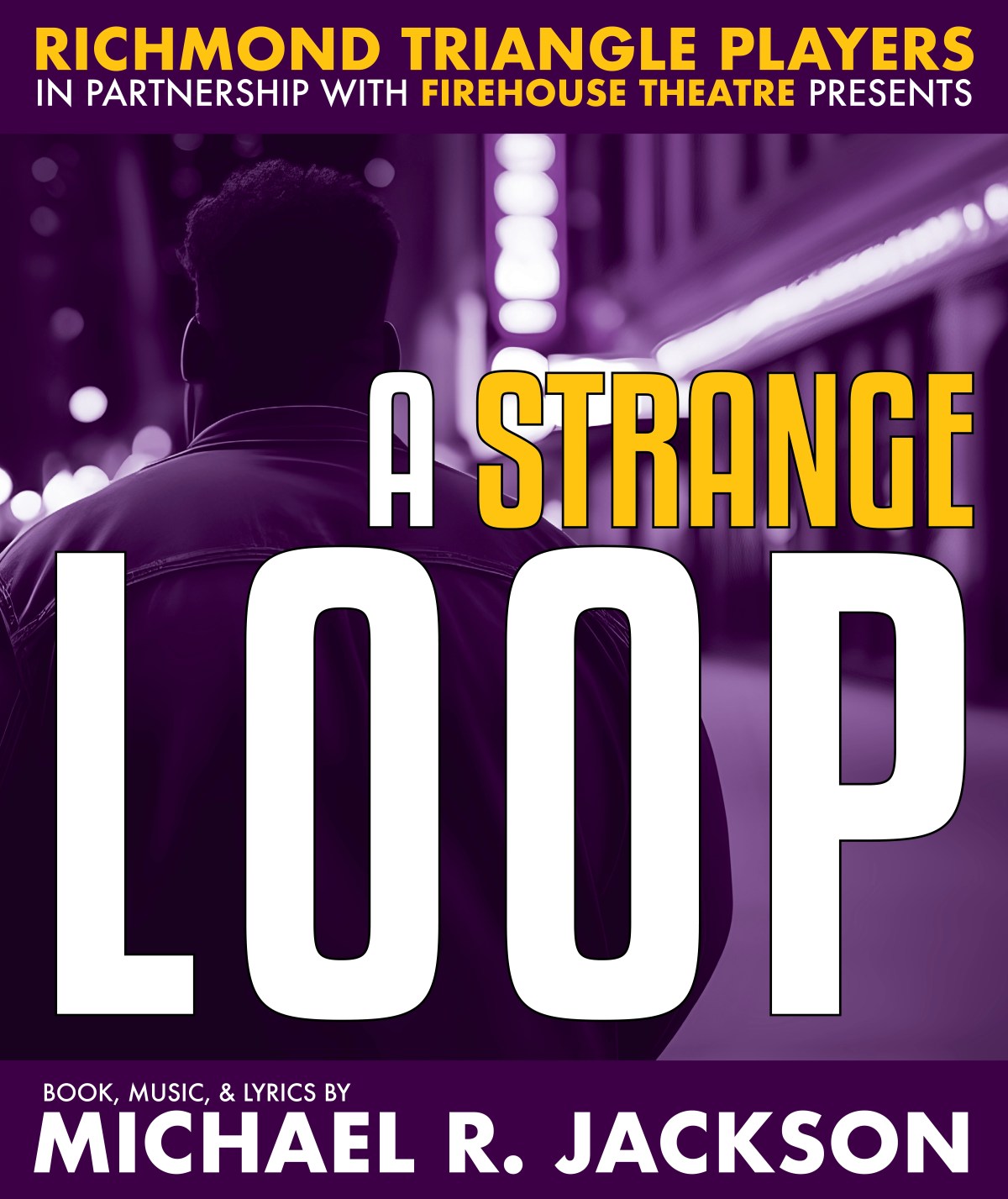
A STRANGE LOOP

Or, How to be a Big, Black, Queer-Ass Broadway Musical

Presented by: Richmond Triangle Players in Partnership with Firehouse Theatre

At: Richmond Triangle Players at the Robert B. Moss Theatre, 1300 Altamont Avenue,  RVA 23220

Performances: June 20 – August 9, 2025

Ticket Prices: $55

Info: (804) 346-8113 or rtriangle.org

A Reflection on Theater and Things Relative by Julinda D. Lewis

———-

Michael R. Jackson’s Pulitzer Prize-winning musical, A Strange Loop (2019) follows the life of Usher – no, not that Usher – a Black, queer writer who works as an usher in theaters while writing his own musical about a Black queer usher who is writing a musical…about a Black queer usher who is writing a musical…

“Who knew slavery, police violence, and intersectionality could be so lucrative.”

A Strange Loop is at once as new as the latest dance craze and as old as the theater itself. The chorus of six nameless characters referred to in the program as “Thoughts” draws on the ancient Greek chorus. The Thoughts personify Usher’s inner struggles with identity and purpose. At times they represent social issues and personal demons, and at other times they represent people in Usher’s life. Come to think of it, Usher is not so much the lead character’s name as his occupation; he works as a Disney usher while struggling to overcome his writer’s block. Sometimes, the people are the issues, and sometimes the issues are the people. And since Usher is a young Black queer individual, these inner struggles encompass issues of racism, identity, homophobia, and self-doubt. Since Usher is a writer, A Strange Loop is also an exploration of the mind of creatives.

In science and technology, “a strange loop” is a concept proposed by Pulitzer prize-winning cognitive scientist and author Douglas Richard Hofstadter in his book I Am A Strange Loop (2007). In this book, Hofstadter (the son of Nobel Prize-winning physicist Richard Hofstadter) explores the sense of “I” or what is a “self” through the lens of self-referential systems. While these systems have different meanings in different fields, they most often are represented by a loop.

Playwright Jackson uses the term to refer to a self-referential thought structure or loop, in which an individual may find themselves trapped in a loop of thoughts – all too often negative thoughts – that keeps returning to the same point. For our protagonist, Usher, the loop circles around the themes of identify, self-doubt, and the writing process. Each theme in complete in itself, but in A Strange Loop the thoughts are compounded and complex, forming a never-ending loop that feeds on his insecurities which are, in turn, reinforced by social and familial pressures.

In a 2022 interview for Outreach: An LGBTQ Catholic Resource, Jackson said, “It’s very simple. The ideology is so intact that when you have that filter or that loop in yourself, nothing will break it until you break it or until your perception shifts.”  [https://outreach.faith/2022/06/interview-a-strange-loop-playwright-michael-r-jackson-talks-faith-compassion-and-sexuality/] A Strange Loop is a musical journey towards breakthrough and perception shift.

And yes, all this background may sound like technical, scientific mumbo jumbo to some, but it is key to understanding this play and this character. Who among us has not been affected by negative self-talk? And this play, this big, complex musical wonder, has been recognized many times over for its heartfelt message. A Strange Loop won the 2022 Tony Award for Best Musical and Best Book of a Musical. It also won the 2020 Pulitzer Prize for Drama even before its Broadway run.  The Pulitzer committee recognized Jackson’s work as “a metafictional musical that tracks the creative process of an artist transforming issues of identity, race, and sexuality that once pushed him to the margins of the cultural mainstream” while acknowledging the universality of human fears and insecurities. There were other awards, too – Drama Desk, New York Drama Critics’ Circle, and numerous nominations in multiple categories. You can be intellectual and artistic at the same time. A Strange Loop is a lot of things, all at once, and probably deserves more than one viewing.

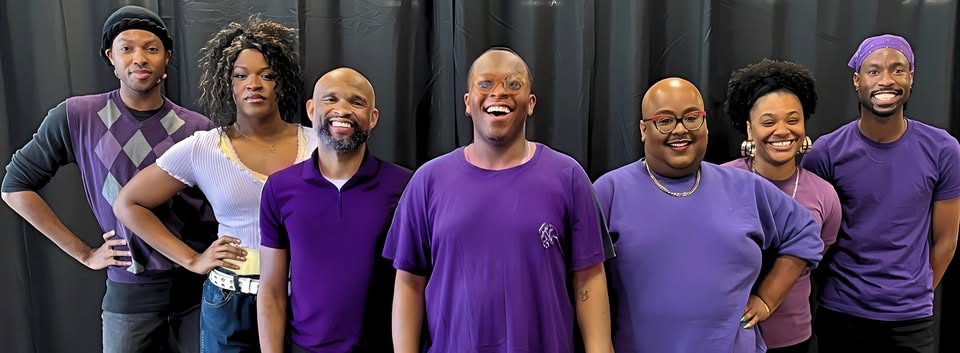
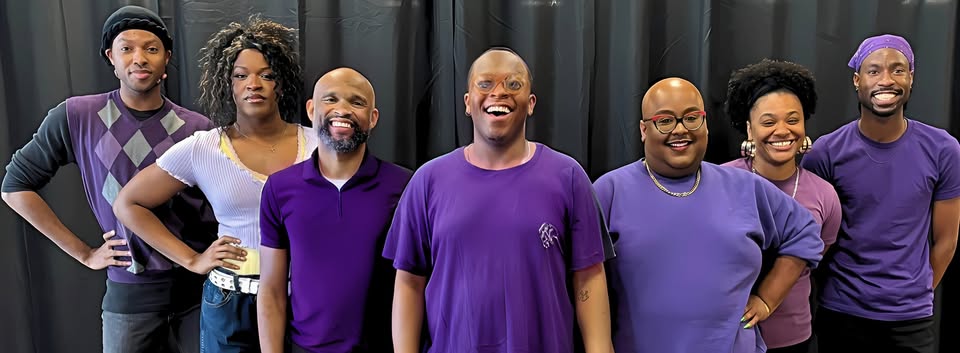
This Richmond production, under the masterful direction of the multi-talented Katrinah Carol Lewis, with musical direction by Ben Miller and choreography by Deandra Clarke boasts a stellar cast headed up by Marcus Antonio. Antonio was most recently seen at the Firehouse/TP production of Fat Ham [https://jdldancesrva.com/2025/04/17/fat-ham/] where he gave an alternately sly, philosophical, and just generally endearing performance as the main character Juicy, modeled after Hamlet. In A Stange Loop, you forget Antonio is acting. He embodies the character of Usher with authenticity, but also with grace – and I’m not just talking about the physical kind of grace, but the spiritual kind of grace as well. And did I mention he can sing his butt off? You need to see and hear it for yourself.

Each and every one of the “Thoughts,” deserves special mention, but I know I would omit something or someone important. At one point they form a parade of past heroes including Harriet Tubman, Marcus Garvey, James Baldwin, Whitney Houston, Zora Neal Hurston. When Zakiyyah Jackson/Thought #1 takes on the persona of an older Black woman who shares her wisdom and advice with Usher, she reminds me of the fabulous Phylicia Rashaad. Her last appearance on the RTP stage was, in fact, in a production of How Black Mothers Say I Love You [https://www.facebook.com/share/v/19WrqXMdBi/ ] TeDarryl Perry/Thought #4 and the understudy for Usher simply nails it as Usher’s mother. The red dress, the mannerisms, the attitude that flips without notice from, “The bible says homosexuality is worse than murder” or “Why do you hate me; you’re selfish” to love reminds me of people in my own extended family. I’m sure we all know at least one like her, or him.

I couldn’t believe that Anthony Cosby Jr., most recently seen in last season’s Yes, And! Production of Pass Overand known for his fabulous Prince tribute shows, was just now making his RTP debut as Thought #5. Likewise, it was awesome to watch Keaton Hillman/Thought #6 add to his growing repertoire of memorable characters. I haven’t seen Todd Patterson/Thought #3 sing and dance this much since BootyCandy (2022) [https://jdldancesrva.com/2022/06/17/bootycandy/]. I am not yet familiar with the beautiful Nesziah Dennis/Thought #2 but thoroughly enjoyed her performance and look forward to seeing more of them in the future.

With all the trauma in A Strange Loop, there is no deficit of humor. The parents’ names are Serabi and Mufasa, and the granddaughter is Nyla. Besides paying homage to The Lion King, it seems a bit of an inside joke that they are also the King and Queen of the Pridelands.

There are plenty of biblical references as well, from things people think are in the bible but actually aren’t (e.g., AIDS is God’s punishment for not living right) to actual bible quotes (e.g., But these, like natural brute beasts made to be caught and destroyed, speak evil of the things they do not understand, and will utterly perish in their own corruption – 2 Peter 2:12 NKJV).

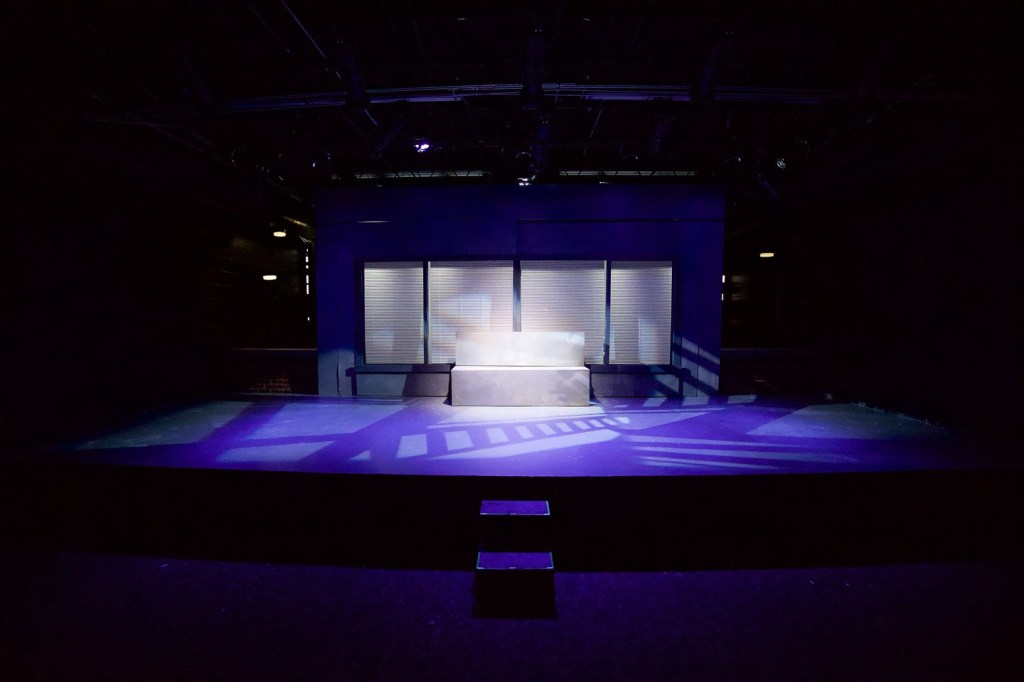
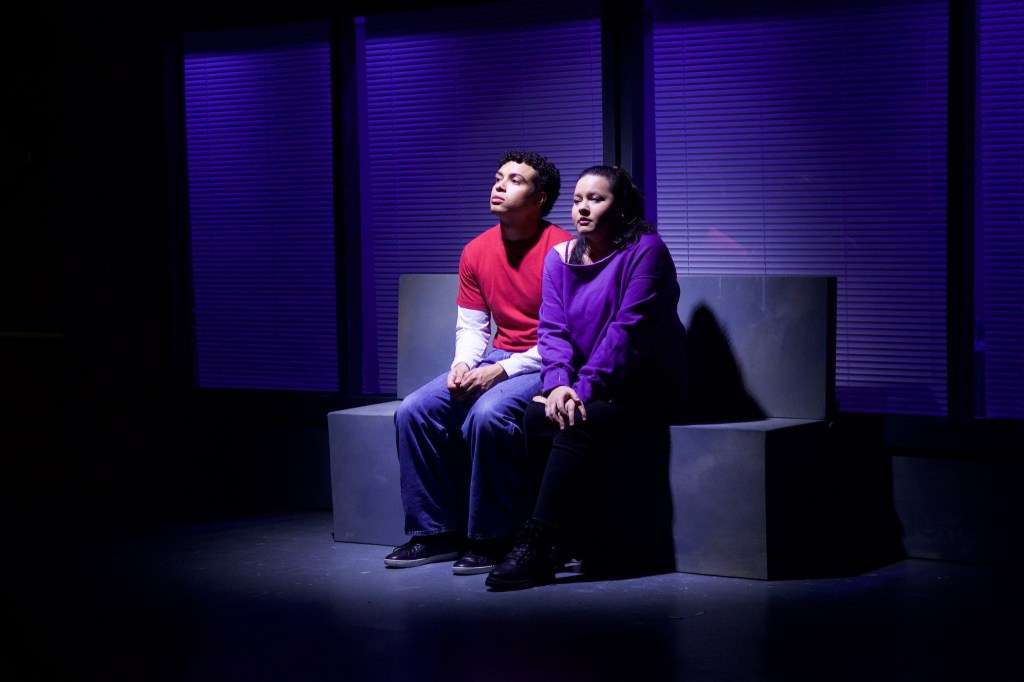
Production-wise, A Strange Loop utilizes the space at RTP so well that the stage seemed wider and deeper than it actually is – in other words, bigger than life. Frank Foster’s scenic design consisted of strands of light, in curving bands like a roller coaster or strands of DNA, and 18 slim poles. Michael Jarett’s lighting was evocative, simple, and dramatic in turn.

This is a musical, so I would be derelict not to mention the music, which encompasses multiple genres including R&B and gospel – sometimes with full choir robes. The songs were fully integrated into the book, with lyrics that seamlessly expanded the storytelling aspects of the show. One of the most memorable, near the end, was “Memory Song,” a work that kind of summarizes the intent and direction of the entire work, touching on Usher’s childhood memories and relationships, his sexuality, and his faith. [See the lyrics to “Memory Song” below.] In his bio, TeDarryl Perry wrote that this performance is dedicated to “all those Black, gay boys who chose to go on back to the Lord.”

In the end, A Strange Loop, while frequently referred to by participants as “a big, black, and queer ass American Broadway show,” is not just a niche show. It is for Black, queer people. It is for people who are exploring their sexuality or identity. It is for people who care abut mental health and identity. It is for anyone who has ever experiences self-doubt or self-hate. It is for people who have been bullied and people who have bullied others. It is for people who love a good story. It is for people who care about other people. It is for people who care. A loop is never-ending. The only way out is to break through.

Here’s a link to a preview of A Strange Loop: https://www.facebook.com/share/v/19WrqXMdBi/

Here are the lyrics to “Memory Song”:

Five foot four, high school gym
Sneaking a cupcake
These are my memories

Shooting hoops off the rim
Slow on the uptake
These are my memories

After gym, the locker room
My eyes photographing
Naked me measures in at four and a half inches
These are my memories

Of one lone, Black, gay boy I knew
Who chose to turn his back on the Lord
One lone, Black, gay boy I knew
Who chose to turn his back on the Lord

Guild and shame
Jesus’ name
Church every Sunday
These are my memories

Eat his body
Drink his blood
Communion buffet
These are my memories
Sweet, sour memories

After church we’re driving home to radio crackle
Jazz music or Motown blues
And skin is a shackle
For one lone, Black, gay boy I knew
Who chose to turn his back on the Lord
One lone, Black, gay boy I knew
Who chose to turn his back on the Lord

These are my memories
Sweet, sour memories
This is my history
This is my mystery

Mom is napping on the couch
And dad cuts the grass
While I watch TV all day long
Young & the Restless
Like one lone, black, gay boy I knew
Who chose to turn his back on the Lord
One lone, black, gay boy I knew
Who chose to turn his back on the Lord

Dad is drunk and on the couch
While mom eats a porkchop
Daily bread mill
Daily treadmill won’t ever stop
One lone, Black, gay boy I knew
Who chose to turn his back on the Lord
One lone, Black, gay boy I knew
Who chose to turn his back on the Lord

I am lying on the couch
I dream that I’m flying
Flapping both my wings so hard
To keep me from dying
With a crown of godforsaken thorns on my head
Like all those black, gay boys I knew
Who chose to go on
Back to the Lord (like all those black, gay boys you knew who chose to go on back to the Lord)

All those Black, gay boys I knew
Who chose to go on
Back to the Lord (all those Black, gay boys you knew who chose to go on back to the Lord)
All those Black, gay boys I knew
Who chose to go on
Back to the Lord! (all those Black, gay boys you knew who chose to go on back to the Lord)
And one lone, Black, gay boy I knew
Who chose to turn his back-
On the Lord- (chose to turn his back on, chose to turn his back on the Lord)
Instead

Source: Musixmatch |Songwriters: Michael Jackson | Memory Song lyrics © Kobalt Music Services America Inc.

———-

Julinda D. Lewis is a dancer, minister of dance, teacher, and writer who was born in Brooklyn, NY and currently resides in Eastern Henrico County. When not writing about theater, she teaches dance history at VCU and low impact dance fitness classes to seasoned movers like herself and occasionally performs.

———-

A STRANGE LOOP

Book, Music, & Lyrics by Michael R. Jackson

Directed by Katrinah Carol Lewis

Cast

Marcus Antonio ….. Usher

Zakkiyah Jackson ….. Thought #1

Nesziah Dennis ….. Thought #2

Todd Patterson ….. Thought #3

TeDarryl Perry ….. Thought #4 & U/S Usher

Anthony Cosby Jr ….. Thought #5

Keaton Hillman ….. Thought #6

Understudies

Nia Frazier ….. Thoughts

Sydnee S. Graves ….. Thoughts

A Strange Loop Band

Conductor/Keyboard ….. Ben Miller

Guitar ….. Lake Stiles

Drums ….. Joe Lubman

Reeds ….. Jalen Wise

Creative Team

Scenic Design ….. Frank Foster

Lighting Design ….. Michael Jarett

Costume, Hair, & Makeup Design ….. Margarette Joyner

Sound Design …. Grace Brown LaBelle

Props Design ….. Tim Moehring

Production Stage Manager ….. Lauren Langston

Choreography ….. Deandra Clarke

Music Direction ….. Ben Miller

For This Production

Assistant Stage Managers ….. Christopher R. Smith, Finn Thomason

Intimacy Director ….. Nora Ogunleye

Gender Consultant ….. August Hundley

Technical Director ….. Emily Vial

Master Electrician ….. Griffin Hardy

Sound Assistant ….. Julie Vo

Set Construction ….. David Allan Ballas, Grace Brown Labelle, Todd Labelle, Emily Vial, Patrick Rooney

World Premiere by Playwrights Horizons, Inc. in association with Page 73 Productions in New York City in 2019.

Performance Schedule

June 20 – August 9, 2025

Sundays at 4:00PM

Wednesdays at 8:00PM

Thursdays at 8:00PM

Fridays at 8:00PM

Saturdays at 8:00PM, closing August 9

Tickets

Ticket Prices: $55

Run Time

About 2 hours with no intermission

Setting

A loop within a loop within a loop inside a perception of one man’s reality.

Photos from the RTP Facebook page

One-Time
Monthly
Yearly

Make a one-time, monthly, or annual donation to show your love for rvart review

Make a monthly donation

Make a yearly donation

Choose an amount

$5.00
$15.00
$100.00
$5.00
$15.00
$100.00
$5.00
$15.00
$100.00

Or enter a custom amount – no amount is too small ($1.00) or too large (the sky’s the limit)!

$

Your contribution is appreciated.

Your contribution is appreciated.

Your contribution is appreciated.

DonateDonate monthlyDonate yearly
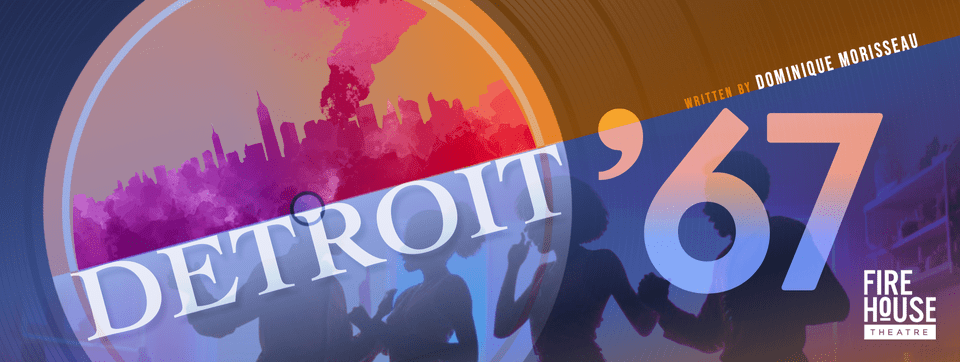
DETROIT ‘67

Everybody Needs Love

A Reflection on a Theater Experience by Julinda D. Lewis

Presented By: The Firehouse Theatre on the Carol Piersol Stage

At: 1609 W. Broad Street, RVA 23220

Performances: March 12-30, 2025

Ticket Prices: $5.00 – $35

Info: (804) 355-2001 or firehousetheatre.org

The 12th Street Riot or Detroit Uprising in the summer of 1967 has been characterized as one of the bloodiest urban riots in the US. The police raid of an after-hours joint (i.e., an unlicensed bar) erupted into bloody confrontations between Detroit’s Black population and the Detroit Police Department. The 82nd Airborne Division, 101st Airborne Division, Michigan Army National Guard, and Michigan State Police were all called into action by Michigan’s Governor George W.  Romney and President Lyndon B. Johnson. By the time it was all over, there were 43 dead, 1,189 injured, 7,200 arrested, 400 buildings burnt or destroyed.

This incident was widely covered in the news, but even though I was alive at the time I don’t remember anything about it. I was 12 years old and living 600 miles away in Brooklyn, NY. But this show’s Director, Dr. Tawnya Pettiford-Wates, Professor of Acting and Directing Pedagogy at Virginia Commonwealth University, who was also a child at the time, was visiting with her family in Detroit when the rioting began. This gives Dr. T. a unique perspective on the history and background of the actions of this play.

NOTE: See Rich Griset’s preview in Style Weekly for interesting background information: https://www.styleweekly.com/we-almost-lost-detroit/

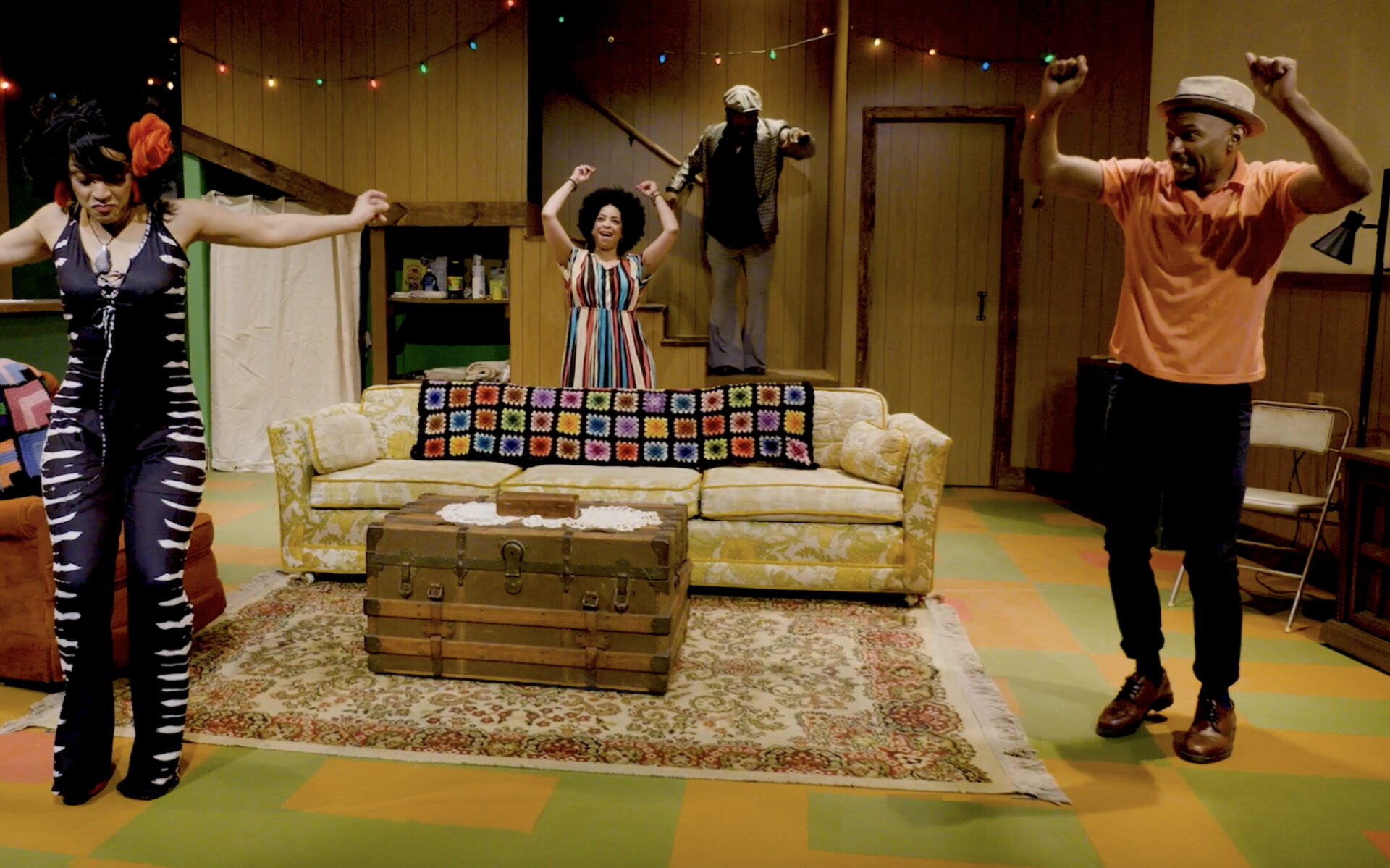
Many of us who were born in or grew up in urban Black communities in the 1950s and 1960s also felt a sense of familiarity with Detroit ’67 as soon as we walked into the Firehouse Theatre and saw the stage set – a basement recreation room meticulously designed down to the most minute detail by Mecedes Shaum. There was the familiar wood paneling, the tiled floor, the comfy sofa that had been given a second life from the upstairs living room, the bar, the beaded curtains, the family photos lining the stairs, the folding card table and chairs for playing spades or pinocle, the obligatory photos and posters of Malcolm X and other heroes. There was the washing machine – but no dryer because clothes were hung outside on sunny days or dried on a line stretched across the basement on rainy days. And anchoring all of this – the record player, which was replaced by the hi-fi, and then, as it was on this stage, by the latest technology – the 8-track player.

The first two things to catch your attention on entering the space are the set and the music. Which you notice first is probably determined by if you are predominantly an auditory or visual learner. I’m a visual-kinesthetic learner, so the set caught my eye, and the Motown soundscape caressed my ears and moved my body simultaneously. The Temptations, Smokey Robinson and the Miracles, Mary Wells, the Four Tops, Gladys Knight and the Pips and more provided the heartbeat of Detroit ’67 and took centerstage as the main characters, siblings Chelle (short for Michelle) and Lank (short for Langston) – played by Firehouse Associate Artistic Director Katrinah Carol Lewis and actor David Lyve Watkins – prepared to open their basement hideaway as an after-hours joint. I was familiar with rent parties growing up in New York, but apparently these after-hours party venues were how Black entrepreneurs or families in need of a little extra cash made their money.

As Detroit ’67 opens, Chelle and Lank are making plans, having inherited their parents’ house and some money as well. Chelle is looking forward to using her share to pay her son’s tuition. We never see the young man as he’s away at school attending Tuskegee University in Alabama – and yes, it’s summertime, but he’s staying to work, and apparently there is a young lady involved as well. The problem – or one of the problems – arises when Chelle’s plans and her brother’s plans conflict. Reminding me of a similar conflict in Lorraine Hansberry’s A Raisin in the Sun, Lank wants to use their inheritance to invest in a business. A local bar is up for sale, as a result of the phenomenon known as “white flight” and Lank’s best friend, Sly (played by Jeremy V. Morris) is a local entrepreneur (okay, he’s the local numbers runner, used car salesman, and general hustler) already has half the money needed to purchase the bar and the required license.

“Niggas deserve nice stuff, too!”

Did I say, “one of the problems?” Well, yes. The first was the riots, remember? The second was how to use the inheritance. And the third involves a mysterious stranger named Caroline. Lank and Sly find Caroline stumbling alongside the road late one night. Stopping to see if she needs help, they offer her a ride in their truck, but she passes out. So, they bring her home to Lank’s house. But, you see, Lank and Sly are two Black men, and Caroline is white. And it’s 1967 and a race riot has just broken out. This is bad, unbelievably bad. And it gets worse.

The mystery of who Caroline is and what happened to her remains unresolved at the end of Act 1. It’s only after Chelle has to bail Lank out of jail that Caroline buys a train ticket and finally reveals what happened the night Lank and Sly found her – and no, I’m not going to tell you here, you will find out when you go see the show.

Detroit ’67 is warm, funny, and terrifying. It has all the “feels” as playwright Dominique Morisseau (Pipeline, November Theatre, Oct-Nov, 2021 https://jdldancesrva.com/2021/10/16/pipeline/ and Sunset Baby by Blk Virginia Theatre Alliance coming to VaRep’s Theatre Gym in April 2025) explores themes of family dynamics, dreams of black folks, racial tension, racial profiling, police brutality, financial and social inequality, and even love and joy.

Chelle is a strong-willed woman who resists change, but she is loving and has a fierce loyalty to her younger brother and her son. Lank is ambitious but impulsive; some would call him a dreamer, others a visionary. Lank’s best friend Sylvester aka Sly has a business mind balanced by a compassionate spirit. Chelle’s friend Bunny is also an entrepreneur, but she hides her brains under an endless wardrobe of close-fitting jumpsuits and a huge flower in her hair. And the mysterious Caroline wears the shortest of mini-dresses accessorized with tall white go-go boots. (If you are not familiar with this style, now is a good time to search for an image.) Kudos to Costume Designer Margarette Joyner for the 1960s wardrobe. Each character’s wardrobe perfectly reflects their personality, from the flashiness of Bunny and Sly to the conservative maxi-dresses and Angela Davis-style afro favored by Chelle to the subdued casual attire that distinguishes Lank.

Dr. T’s direction lends itself to multi-dimensional portrayal of all five characters. I have long been familiar with the work of Lewis and Morris and Dr. T. I have seen all three of them perform in and/or direct powerful works that tell important stories.  This is a production that does not disappoint, This is a well-chosen ensemble that, even on the fourth performance (two nights of previews, and one night after opening night) seems to have achieved that place where they are moving as one. We see them laugh and dance and drink, but we also see them cry and fight for their beliefs, for their heritage, their freedom, their dignity, and for love. A favorite scene is when Sly woos Chelle, spilling his heart in song, and after much protest, Chelle finally gives Sly a sliver of hope that she might just care for him, too. They laugh, they argue, and in a little more than two hours we get to know these people, to recognize them as family, as friends, as people we have encountered, as people we care about.

Now if you feel that you can’t go on
Because all of your hope is gone
And your life is filled with much confusion
Until happiness is just an illusion
And your world around is crumblin’ down
Darling, reach out, come on girl, reach on out for me
Reach out, reach out for me
I’ll be there, with a love that will shelter you
I’ll be there, with a love that will see you through

(“Reach Out, I’ll Be There” by the Four Tops, 1966)

During the recent Super Bowl, Pulitzer Prize winning artist Kendrick Lamar borrowed the words of an earlier poet, Gil Scott Heron, to remind us that “the revolution will not be televised.” What Lamar and Morisseau both reveal to us is that the revolution will be accompanied by a sound. In a brief conversation after Saturday night’s program, Dr. T. mentioned the resistance in the music. There is resistance and resiliency in the rhythms of Motown, the rhythms of the African diaspora, in the context of history and the rhythms of the spoken word, and in the cadence of storytelling enveloped in the lyrics and its connection to family and community. Just before leaving the theater, my friend Tony asked me, how many synonyms are there for “excellent?” I don’t have an answer for that, but maybe you do. Let me know, comment here, after you see this show. I’ll be waiting.

—–

Julinda D. Lewis is a dancer, teacher, and writer who was born in Brooklyn, NY and now lives in Eastern Henrico County. When not writing about theater, she teaches dance history at VCU and low impact dance fitness classes to seasoned movers like herself and occasionally performs.

—–

DETROIT ‘67

Written by Dominique Morisseau

Directed by Dr. Tawnya Pettiford-Wates

Cast

Chelle             ……….           Katrinah Carol Lewis

Lank                ……….           David Lyve Watkins

Bunny             ……….           Nicole Cowans

Sly                   ……….           Jeremy V. Morris

Caroline        ……….           Marie Lucas

Chelle/Bunny U/S……….   Nia Simone

Lank/Sly U/S ……….           Isaac Watson

Caroline U/S ……….           Emily Wolfteich

Production Team

Direction                               ……….           Dr. Tawnya Pettiford-Wates

Directing Observation       ……….           Solomon Marley

Scenic Design                      ……….           Mercedes Schaum

Costume Design                  ……….           Margarette Joyner

Lighting Design                   ……….           Michael Crevoisier

Sound Design                      ……….           Kyle Epps

Stage Management             ……….           Emily Vial

Run Time: About 2 ½ hours; there is 1 intermission

Tickets: $5 to $35

Info: (804) 355-2001 or FirehouseTheatre.org

Performance Schedule:

Wednesday, March 12       7:30PM          Preview

Thursday, March 13             7:30PM          Preview

Friday, March 14                 7:30PM          Opening Night

Saturday, March 15             7:30PM         

Sunday, March 16               2:00PM          Pay What You Will /Member Post-Show Mixer

Friday, March 21                  7:30PM

Saturday, March 22             2:00PM          Pay What You Will

Saturday, March 22             7:30PM         

Sunday, March 23               2:00PM          Pay What You Will

Thursday, March 27            7:30PM

Friday, March 28                  7:30PM

Saturday, March 29             2:00PM

Saturday, March 29             7:30PM

Sunday, March 30               2:00PM          Closing Performance

World Premiere at the Public Theater,  March 12, 2023.

———-

Photo Credits: No photos available at the time of publication

One-Time
Monthly
Yearly

Make a one-time, monthly, or annual donation to show how much you love rvart review

Make a monthly donation

Make a yearly donation

Choose an amount

$5.00
$15.00
$100.00
$5.00
$15.00
$100.00
$5.00
$15.00
$100.00

Or enter a custom amount

$

Your contribution is appreciated.

Your contribution is appreciated.

Your contribution is appreciated.

DonateDonate monthlyDonate yearly
SANCTUARY CITY

“Speak to the children of Israel, saying: ‘Appoint for yourselves cities of refuge.’” Joshua 20:2 (NKJV)

A Theater Review by Julinda D. Lewis

Presented by 5th Wall Theatre

At: Richmond Triangle Players, Robrt B. Moss Theatre, 1300 Altamont Ave, RVA 23230

Performances: March 6 – 22, 2025

Ticket Prices: $30/Adults, $15/Students

Tickets & Info: https://5thwalltheatre.ludus.com or https://www.5thwalltheatre.org/ or email info@5thwalltheatre.org

Looking back at my October 2024 review of H*tler’s Tasters”  I noted that the opening paragraph of that review is appropriate for this one, so I’m going to use it again: The 5th Wall Theatre’s 2024/2025 season is billed as a celebration of empowering stories that inspire change. The “theatre beyond boundaries’” production of Pulitzer Prize-winning author Martyna Majok’s SANCTUARY CITY fulfills this promise on several levels.

Set in Newark, NJ in 2001, shortly after the earth-shattering events of 9/11, just across the Hudson River, SANCTUARY CITY tells the story of two teen-age friends as they navigate not only the usual trials that impede a smooth transition from teen to young adult, these two, known simply as B and G, must also contend with the extra challenges of being the children of immigrants. Oh, and not just immigrants, but immigrants who have over-stayed their visas. Let’s add to that, immigrants who have over-stayed their visas right after a major terrorist attack that damaged the Pentagon and destroyed the World Trade Center.

And while we’re at it, why not toss in domestic abuse, parental abandonment, financial stress, and sexual identity. Majok cleverly did not use names for the characters or specify their national origin, leaving that open for wider interpretation and inclusiveness depending on the cast and the locale.

Like so much of local theater in recent months, this production is heartfelt and relevant. It brings recent history into perspective into perspective, making it tangible, giving a face to “woke” and forcing us to think about how policies and legislation affects the lives of real people.

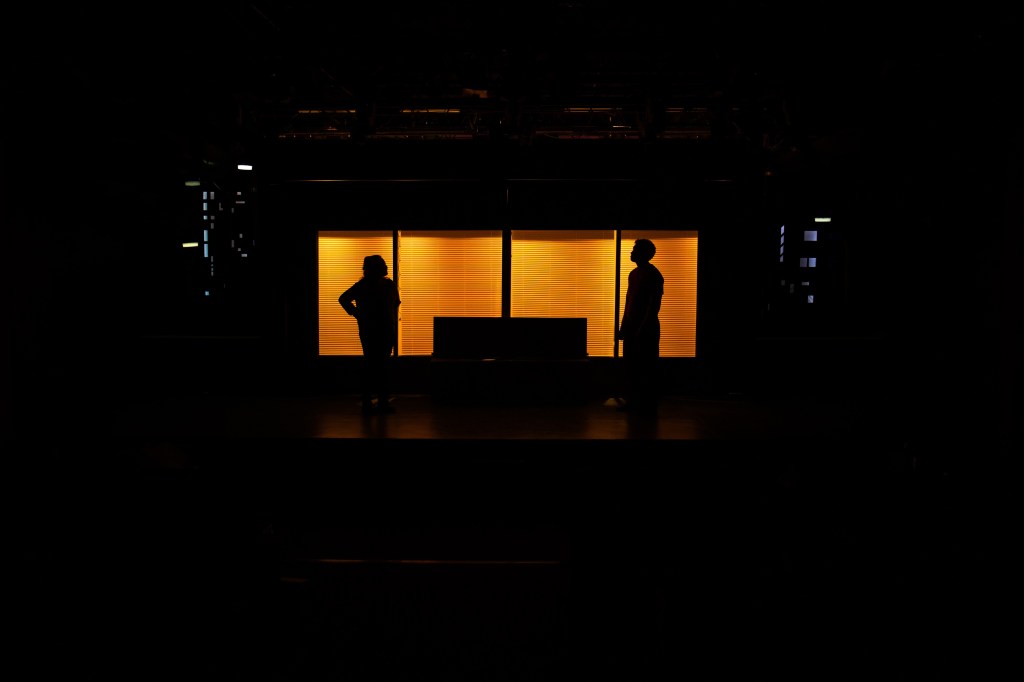
SANCTUARY CITY runs about 90 minutes with no intermission, but it does have two distinct parts. The first half or so takes place in a minimalist setting, with a simple bench set in front of a wall of windows. Dasia Gregg’s scenic design is gray and institutional, deliberately lacking in the details that suggest hominess and permanence. It looks like a bus station or a waiting room in a government building, but it serves as a variety of locations from B’s bedroom to the high school gym where B and G attend their senior prom.  For the second half, the bench is removed, and the wall of windows opens up to reveal B’s apartment – presumably, the same apartment he inherited when his mother, fearing deportation, returned to her home country, leaving B, a 17-year-old high school student, to fend for himself.

G’s mother, on the other hand, managed obtain citizenship for herself and her daughter, opening the door for G to attend college in Boston. The school, like the other details, is never named, but we know Boston is home to Harvard, MIT, and several other schools. 

G spends more time at B’s apartment than with her own mother, whose abusive boyfriends make G’s life unbearable to the point that the play opens with her banging on B’s bedroom window, coatless on a cold night, seeking refuge. For much of the first half, the two share B’s twin bed, with his mother’s permission.

The first half is a series of non-chronological scenes that create a sense of anxiety and uncertainty for the viewer. This seems to have been the playwright’s intention, but Juliana Caycedo, in her directorial debut, successfully balanced the edginess with flavorful dashes of humor.

I was excited to see that B would be played by Erich Appleby whose performance in the recent Water by the Spoonful (Firehouse Theatre) was most impressive. G is played by Anne Michelle Forbes (who was also in Water by the Spoonful) and the third character, Henry, who does not appear until well into the second half, is played by Keaton Hillman (whom I have seen mature into a seasoned actor on a variety or RVA stages).

It is fascinating to observe Appleby and Forbes navigate the delicate and difficult issues faced by two teens of immigrant parents: overstaying their visas, not having the proper documents or the financial means to become “legal,” accepting abuse at home and at work for fear that speaking up would lead to deportation. These young people, undocumented immigrants who arrived in the US as children, and whose only known home is the USA, are the people who would be labeled “Dreamers” (Development, Relief, and Education for Alien Minors Art) and for whom the Obama administration created DACA, the Deferred Action for Childhood Arrivals program in June 2012.

G and B forge a plan to help B stay and become legal. They play to get married. They practice what to say to pass their interview with the immigration authorities. And then G get accepted to a college in Boston. They live in Newark, more than 200 miles and a 5-6 hour bus ride away. But while away at school, G develops cold feet. If their plan fails, the penalty is a $250,000 fine and 5 years in prison. She doesn’t come home for holiday breaks as planned, and when she finally shows up, after 3 ½ years, their close bond has been broken, and G has become involved with Henry, a law student. Henry is first generation American-born, the son of immigrants, also from an unnamed nation.

SANCTUARY CITY is educational, informative, and addresses issues that we, as a nation, are wrestling with right now. There are no easy solutions. There are issues of border security and national security, drugs, crime, employment, social integration, social services, economic impact, language, and racism. The topic is one that either leaves you speechless and weeping or ready to take up arms and march into battle. The acting in SANCTUARY CITY is mesmerizing. It may take a bit of adjusting to get used to the disjointed, non-linear format of the first half, but the discomfort is necessary. One cannot expect to sit comfortably in one’s seat and sip one’s cocktail. This is the sort of production that goes beyond the superficial and delves deeply into characters and issues of society and social justice and economics and education and…things that matter to us. It is about something that happened between 2001 and 2006, but it is also about real people, right now. This is not light entertainment; it is art that serves a cause.

One scene that sticks with me is when B describes the time he secretly took a bus to Boston to visit G, to surprise her. He walked around the campus. He pretended to have lost his ID, and other students readily gave him access. He had lunch and sat in on classes and even participated. In one class he answered a question eloquently, because he had read the book (G shared her books with him). But then, he left without speaking to G. He saw her, but he left.

So, I leave you with this: Who is welcome at the table? Who will we allow to walk away without sharing their talents and gifts and who will we make room for? For whom are we willing to fight? Is there a B or G or Henry in your life, and if not, why not?

———-

Julinda D. Lewis is a dancer, teacher, and writer who was born in Brooklyn, NY and now lives in Eastern Henrico County. When not writing about theater, she teaches dance history at VCU and low impact dance fitness classes to seasoned movers like herself and occasionally performs.

———-

SANCTUARY CITY

Written by Martyna Majok

Directed by Juliana Caycedo

CAST

B                                  ……….           Erich Appleby

G                                 ……….           Anne Michele Forbes

Henry                         ……….           Keaton Hillman

Aidan Campbell      ……….           u/s for B

Katherine Nguyen   ……….           u/s for G

DJ Cummings-Herdoiza …..         u/s for Henry

PRODUCTION TEAM

Directed by               ……….             Juliana Caycedo

Production Stage Management        ……….            Tariq Karriem

Scenic Design by     ……….           Dasia Greff

Lighting Design by  ……….            Gretta Daughtry

Sound Design by       ……….            Kyle Epps

Costume Design by   ……….            Sassy Rychalski

Prop Master              ……….           Tariq Karriem

Technical Director   ……….           Rebecka Russo

Dialect Coach           ……….           Harrison Runion

Intimacy Coordinator         ……….           Dorothy Dee-D Miller

Photos by                  ……….           Destiny Martinez

Performance Schedule:

Thursday, March 6, 7:30PM | PREVIEW

Friday, March 7, 7:30PM | OPENING NIGHT

Saturday, March 8, 7:30PM

Sunday, March 9, 2:30PM | MATINEE with Talkback with the cast & Creative Team

Thursday, March 13, 7:30PM

Friday, March 14, 7:30PM

Saturday, March 15, 7:30PM

Sunday, March 16, 2:30PM | MATINEE

Tuesday, March 18, 7:30PM | INDUSTRY NIGHT, pay what you will

Thursday, March 20, 7:30PM | TALKBACK, Reestablish Richmond

Friday, March 21, 7:30PM

Saturday, March 22, 7:30PM | CLOSING NIGHT

Saturday, November 2, 2024, 7:30PM | Closing Night

Tickets: $30/Adult; $15/Student

Run Time: 90 minutes, no intermission

SANCTUARY CITY had its World Premiere at New York Theatre Workshop, Jim Nicola, Artistic Director, Jeremy Blocker, Managing Director, 2020. SANCTUARY CITY was developed, in part, at the 2018 Sundance Institute Theatre Lab.

One-Time
Monthly
Yearly

Make a one-time donation
to support rvart review
we are non-funded and appreciate
donations

Make a monthly donation

Make a yearly donation

Choose an amount

$5.00
$15.00
$100.00
$5.00
$15.00
$100.00
$5.00
$15.00
$100.00

Or enter a custom amount

$

Your contribution is appreciated.

Your contribution is appreciated.

Your contribution is appreciated.

DonateDonate monthlyDonate yearly