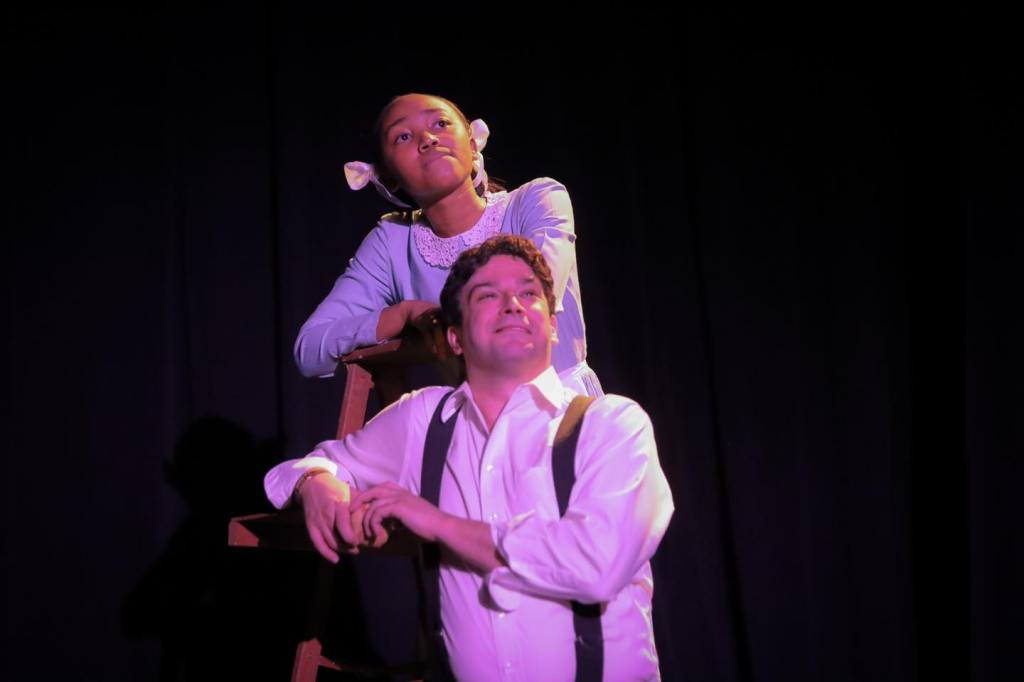
LONG DAY’S JOURNEY INTO NIGHT

Family Dysfunction as Fine Art

A Theater Reflection by Julinda D Lewis

Presented by: Cadence Theatre

At: Firehouse Theatre on the Carol Piersol Stage, 1609 W Broad St., RVA 23220

Performances: September 26 – October 11, 2025

Ticket Prices: $5-$40

Info: (804) 233-4894 or (804) 355-2001 or firehousetheatre.org

Where to begin?

Eugene O’Neill’s Long Day’s Journey into Night stands out as a hauntingly authentic exploration of family bonds, dysfunction, addiction, and shadows from the past. From the very first moments, the play immerses the audience in a poignant portrayal of the Tyrone family, using the power of simplicity. Taking place over the course of a single summer day at the Tyrone family’s Connecticut summer home, O’Neill reveals the family’s struggles with personal demons and the inescapable grip of regret. He also reveals these things about his own family as the Tyrone family finds parallels in O’Neill’s own parents, himself and his older brother. Whereas most authors advise that the names do not reflect real people, O’Neill has borrowed freely from his own family tree – shifting and borrowing, but using real names, nonetheless.

Messiness aside, O’Neill’s masterful use of language and his rich character development invites viewers to immerse themselves into the complexities of love and despair, presenting a work that is simultaneously unsettling and profoundly relatable. Each character feels like a reflection of O’Neill’s own experiences – because they are. This personal history adds layers of authenticity to a narrative that is both a personal tragedy and a universal commentary on the human condition.

Long Day’s Journey into Night was written 1939-1941 but was published posthumously and first performed in February of 1956, more than two years after O’Neill’s death (October 16, 1888 – November 27, 1953). It is considered by many to be the author’s master work and earned a Tony award for Best Play and a Pulitzer Prize for Drama.

The title, though? Some believe it refers to the setting of play, taking place over the course of a single summer day. The play opens just after the Tyrone family has completed breakfast and concludes in the evening, after dinner. Others say the title refers to the literal passage of time, from morning to evening. Summer days are longer than others, as far as hours of daylight. Then, of course, there is the metaphorical meaning that says the title refers to the family’s descent into the darkness of despair. This explanation focuses on the symbolism of the family’s journey through addiction, regret, and blame, moving from a false sense of hope in the morning to a bleak, unresolved midnight. This explanation also suggests the characters’ individual and collective journeys back in time as they resurrect past hurts and relive their failures, making the day seem to stretch out in a cyclical fashion, like a vintage Groundhog Day. There is also the long day for the audience, as the play runs approximately four hours, including two ten-minute intermissions.

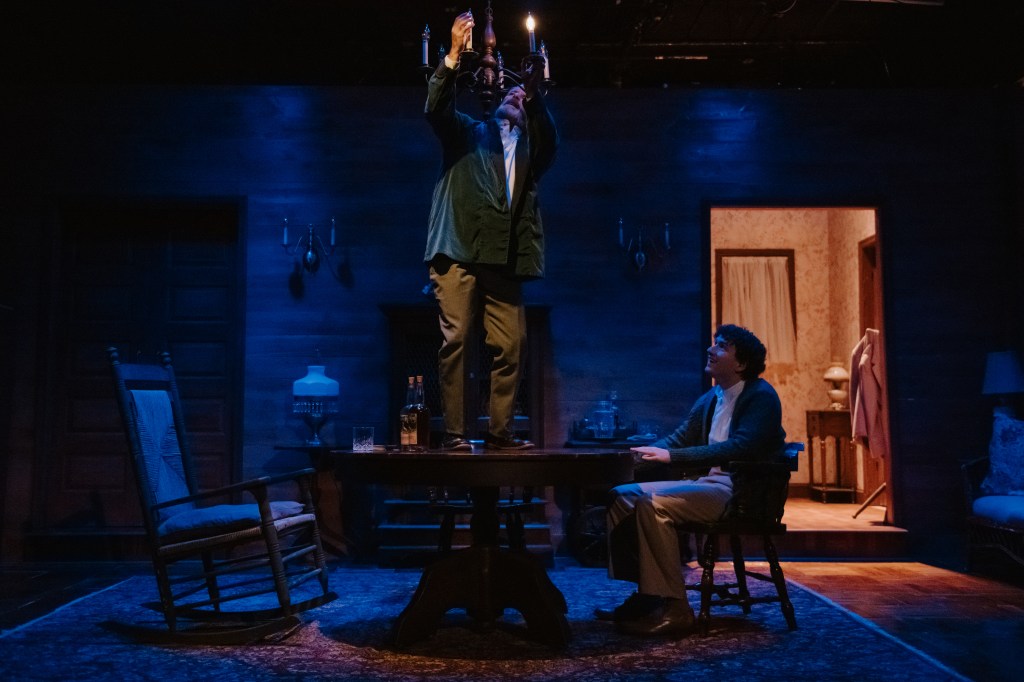
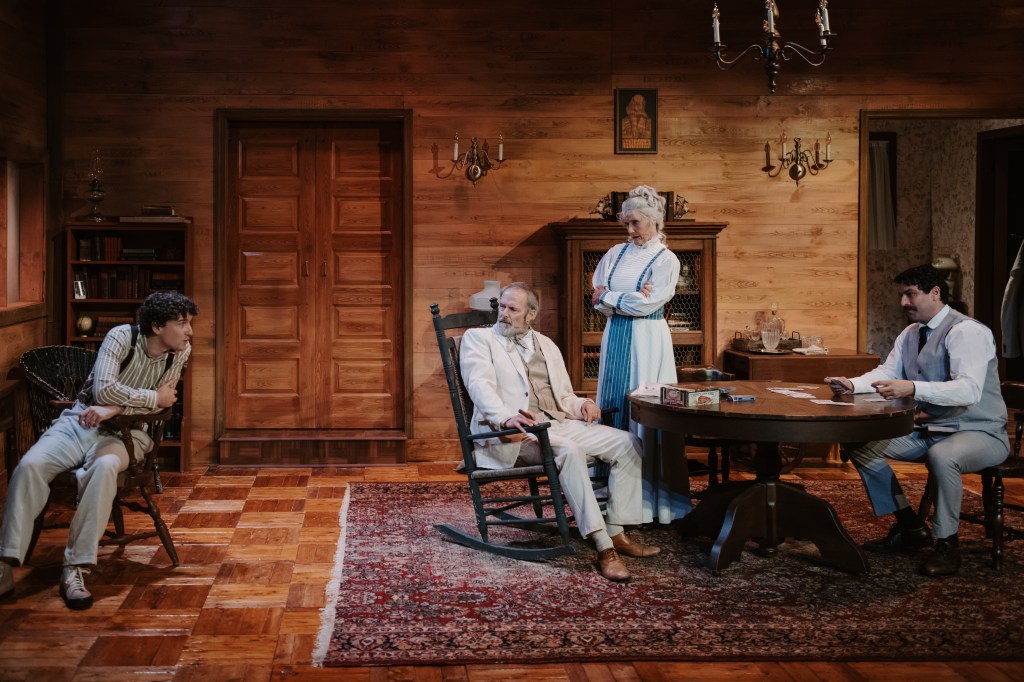
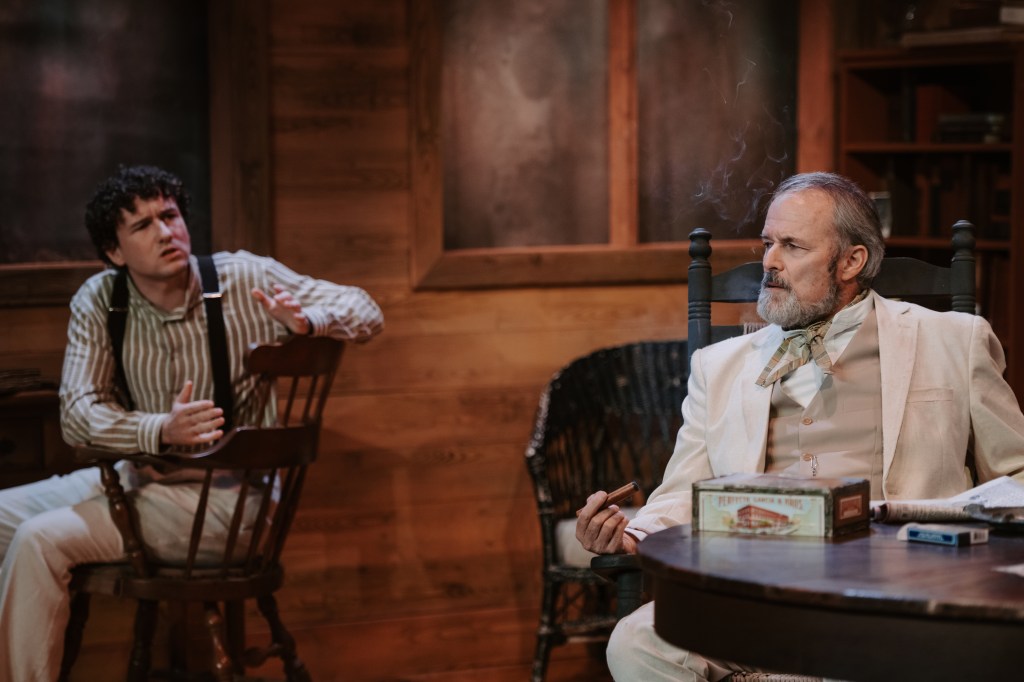
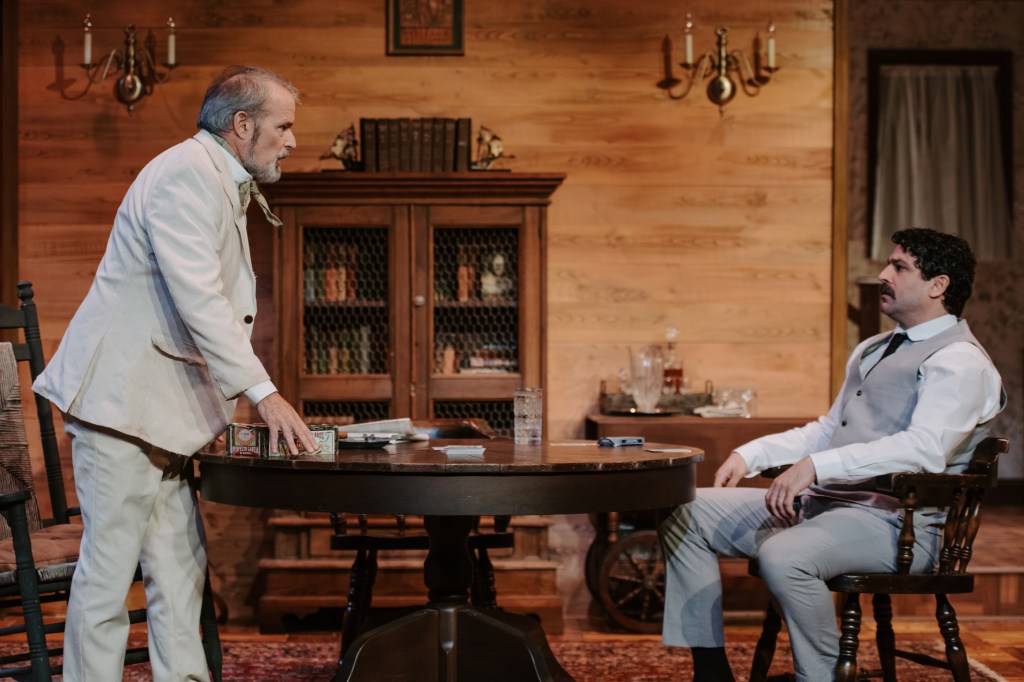
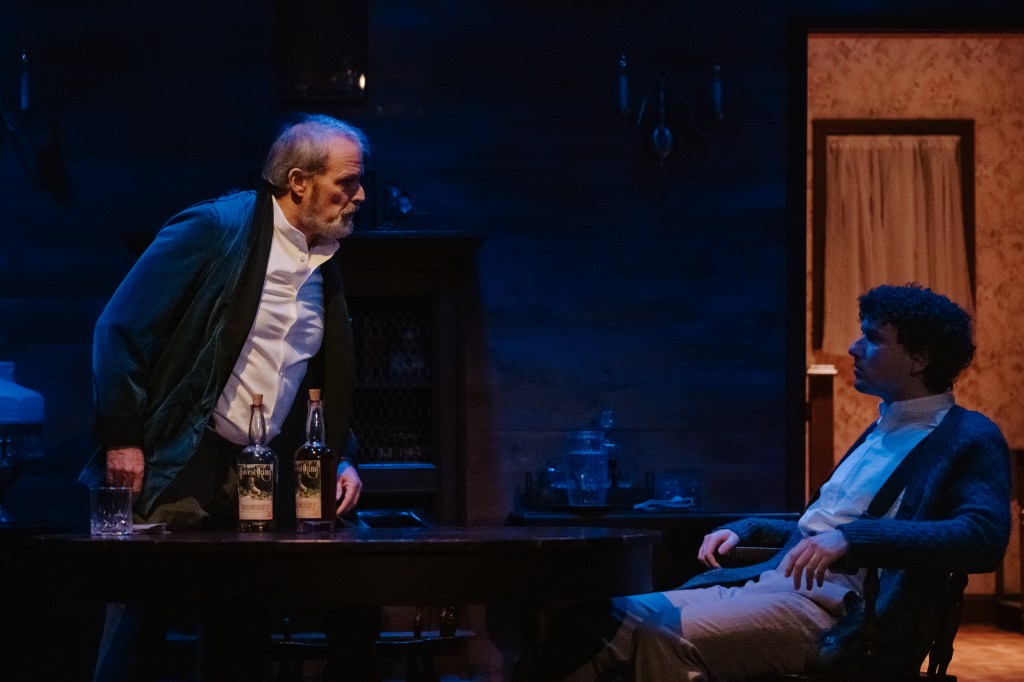
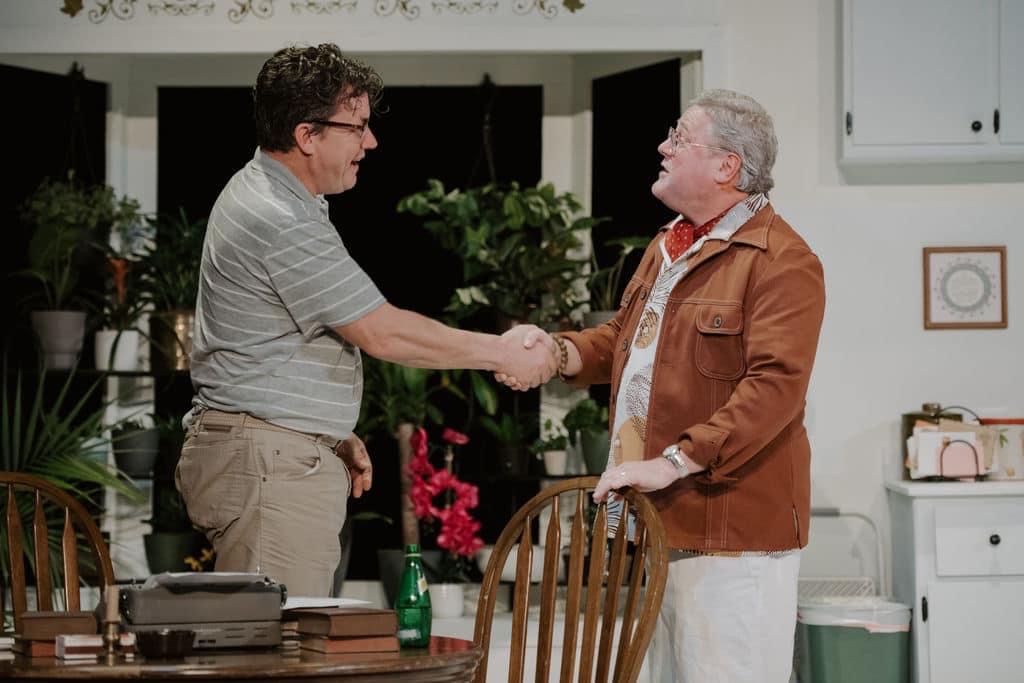
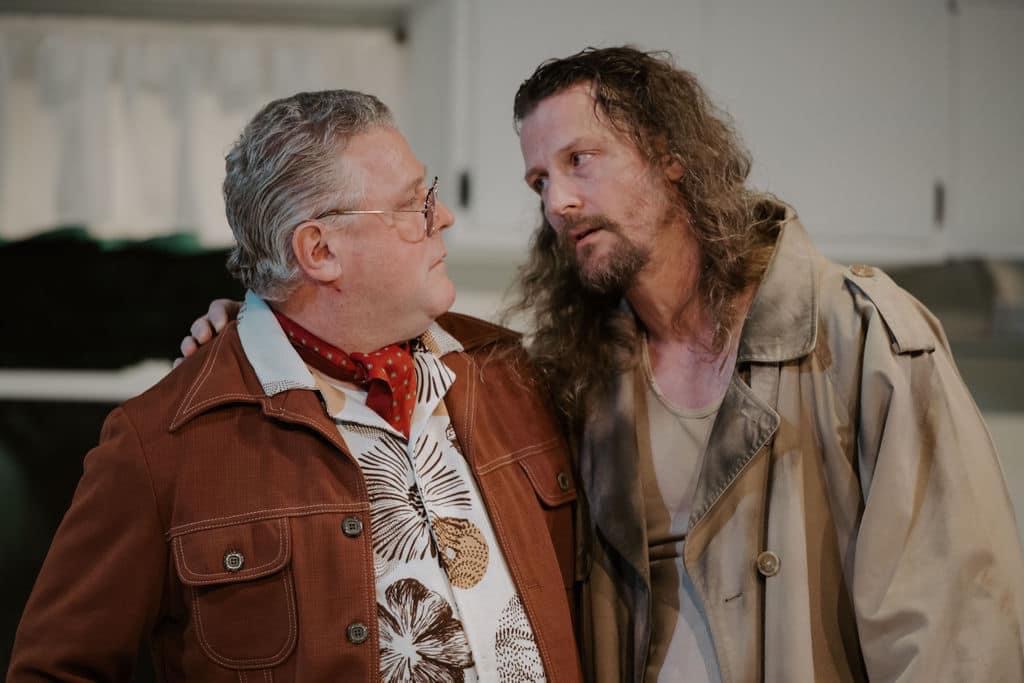
Long Day’s Journey into Night is difficult to watch – and not just because it’s long. There is the subject matter, which might be triggering for some. The father, James Tyrone, was a successful but now fading Irish-American actor who dabbles in real estate investment, drinks too much, and is somewhat of a miser. In one hilarious scene he climbs atop a table to twist on the bulbs of a chandelier because his son complained about his miserly ways. He had been sitting under the light of a single bulb to save money. (In retrospect, I wonder if he rotated the lit bulb, so they would burn out evenly…) Another humorous moment occurs when James suddenly becomes aware that his sons have been watering down his prized whiskey. Matt Radford Davies plays the domineering, frayed at the seams actor with apparent ease and reveals the positive and negative aspects of James’ personality is a way that paints him as neither all villain nor all hero. It feels as if Davies has walked in Tyrone’s/O’Neill’s’ shoes, or at least tried them on long enough to absorb their essence.

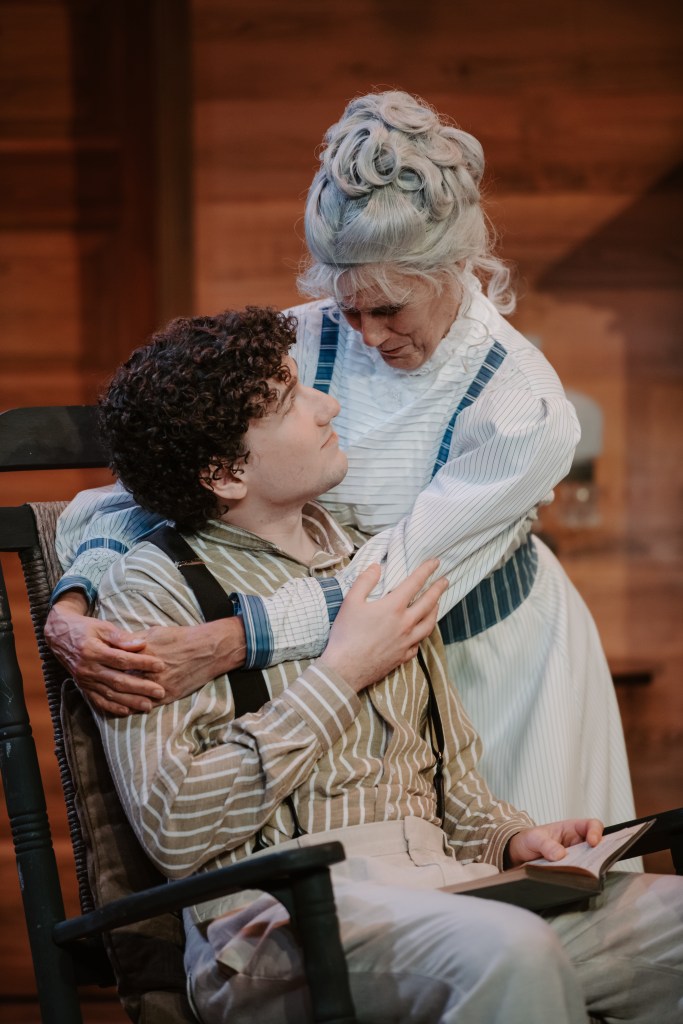
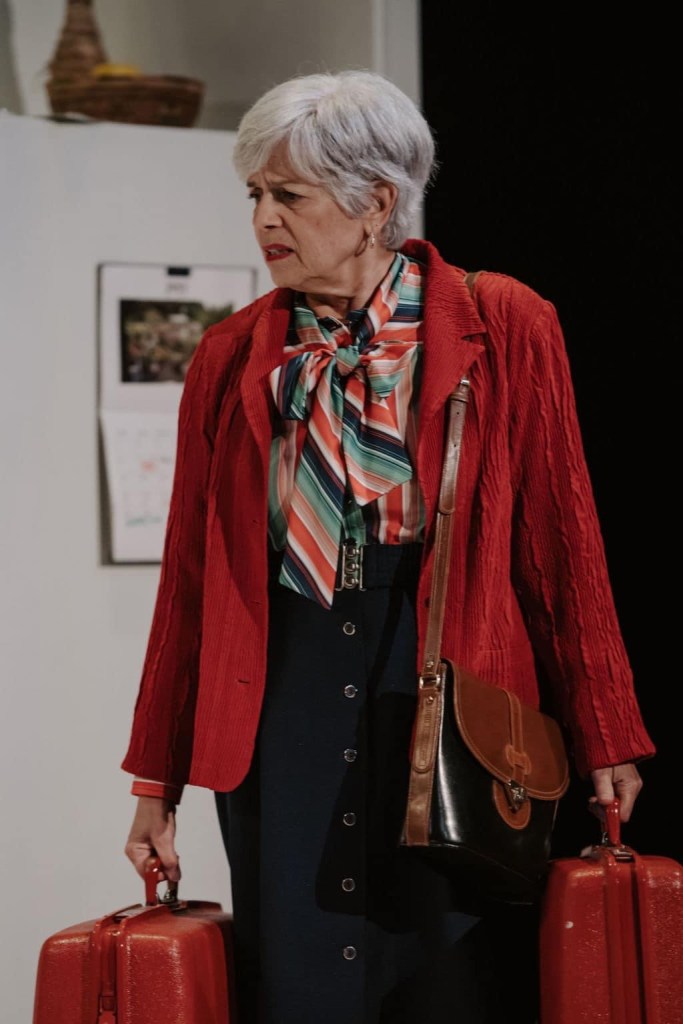
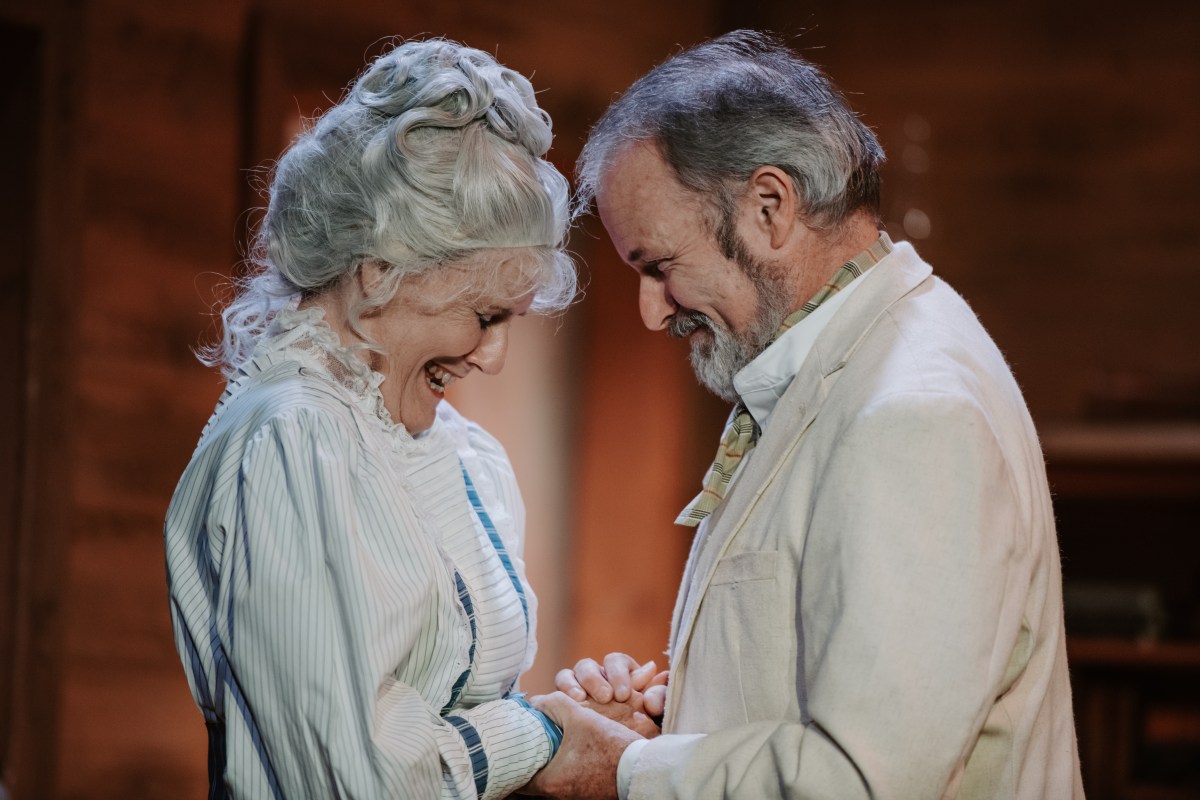
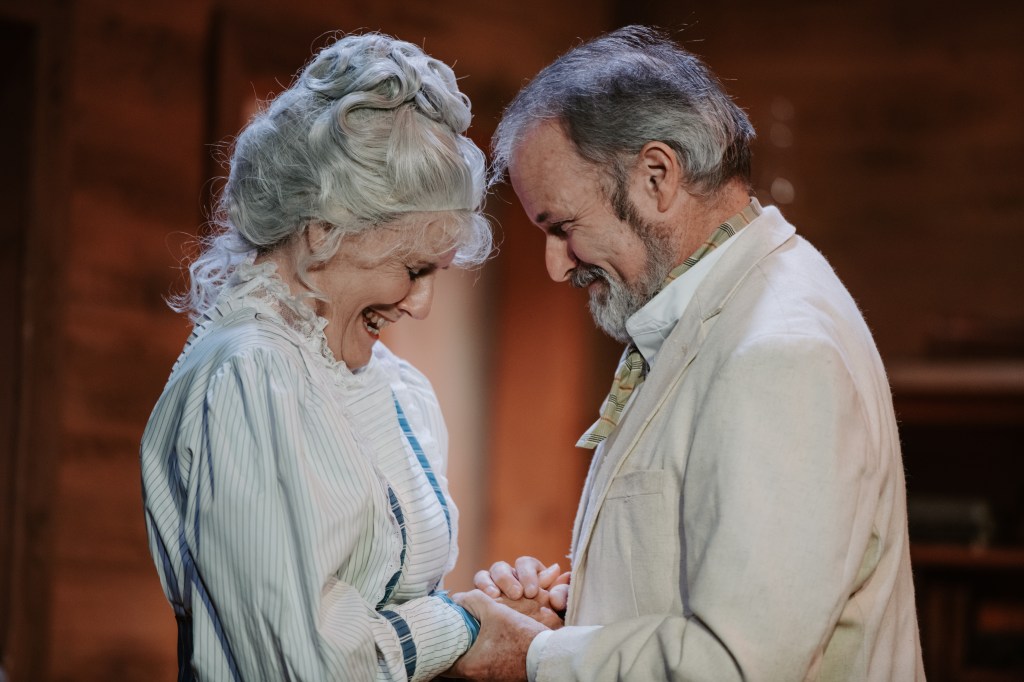
Mary, the mother, has a mysterious illness that is alluded to throughout the first act but never confirmed until about the midpoint of the play. This brings up another triggering idea – the medical negligence of women, especially pregnant women – as well as the prevalence of addiction to prescription pain killers. Yes, even in 1912, when this play was set. Robin Arthur’s erratic movements, her repetitious dialogue, her fixation with her hair, her obsessiveness in regard to her younger son, and her aggressively mysterious demeanor make sense as the source of her pain is revealed.

“I know you still love me in spite of everything.” – Mary

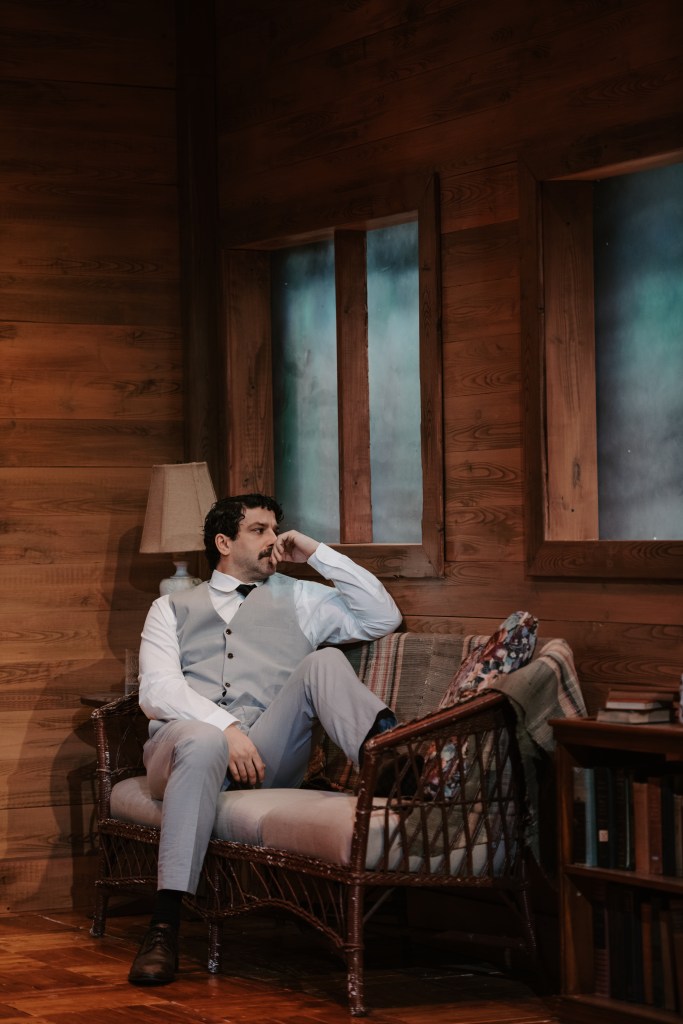
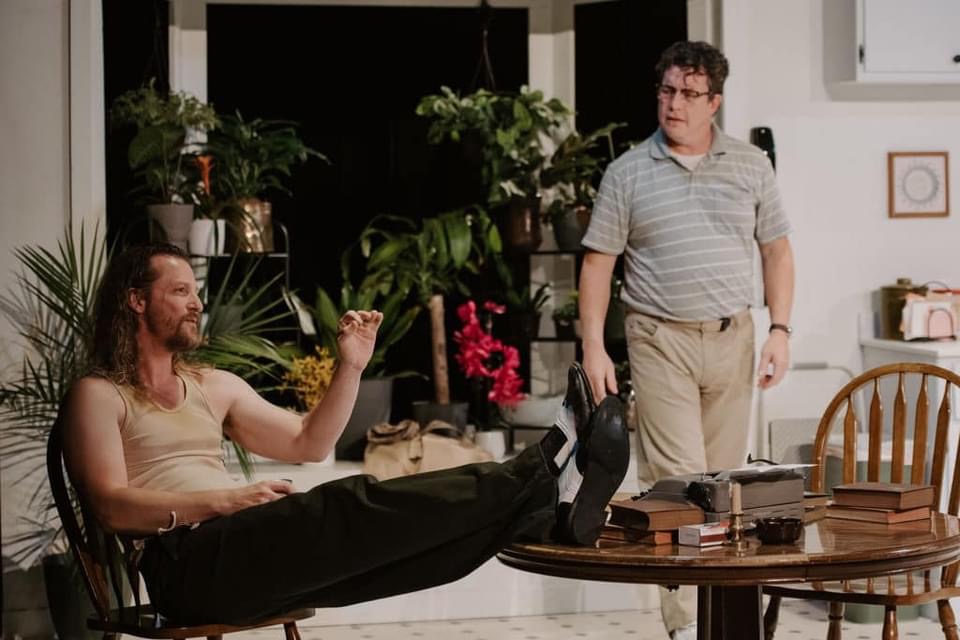
Jamie Tyrone, the elder son, is an actor, like his father. He drinks too much, like his father. But unlike his father, he lacks ambition and a sense of purpose. Axel Burtness is well cast in this role, and shines best in a scene where Jamie warns his younger brother that, as much as he loves him, he will try to sabotage him and wreck any success or happiness that may come his way.

Edmund, the younger son, has a double burden. Unknowingly, he was a replacement baby, conceived to replace a baby who died of measles that may have been intentionally passed on to him. It was this birth that triggered Mary’s constant pain and need for medication. To make matters worse, Edmund has contracted consumption – another name for tuberculosis. (It was called consumption because the illness sometimes seemed to consume the individual who had it.) This, of course, makes Mary even more depressed. Trace Coles brings just the right balance of innocence and defiance.

“Who wants to see life as it is if you can help it?” – Edmund

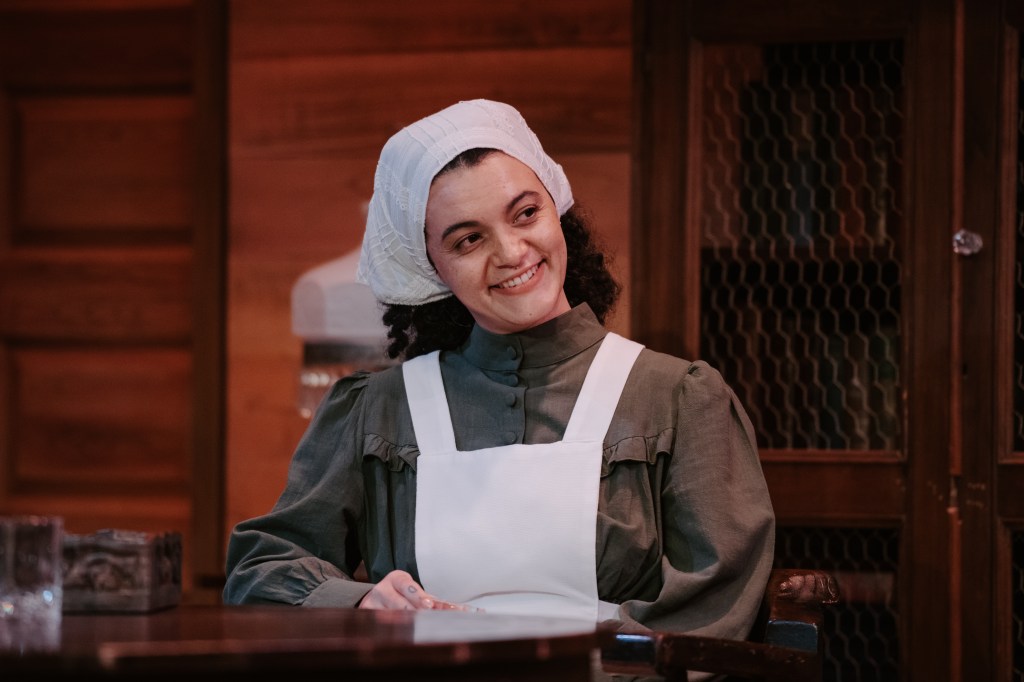
While several other characters are mentioned, no others make an appearance onstage other than Cathleen the maid. Ruby Joy Garcia’s role seemed headed in the direction of stereotypical household help, until the day Mary invites her to sit and keep her company – and have a drink. The elevates Garcia’s role (i.e., status) both literally and figuratively and brings more depth to her character. The moment when the whiskey emboldens her to talk back is a priceless gem.

Both sons, given enough to drink, are prone to spouting poetry and lines from Shakespeare – or Baudelaire, or Ernest Dowson, or Algernon Charles Swinberg.

“Be drunk with wine, with poetry, with virtue.” Charles Baudelaire

Long Day’s Journey into Night is a deeply impactful play, and like any work of art, it reveals both positive and negative aspects. On the plus side,  O’Neill has given us rich, complex, multi-dimensional characters that resonate with many audience members. The play masterfully explores themes of addiction, illness, and family dysfunction. Allowing his audiences to connect with the characters on a personal level. Then there is the frequent use of beautiful and poignant poetic language. This elevates the dialogue and the overall experience. The play’s universal themes of regret, love, and the search for redemption all speak to fundamental human experiences, making it a timeless work that continues to resonate with new generations. A long with that, the infusion of O’Neill’s personal experiences adds depth and authenticity, providing a unique perspective on the struggles of addiction and family dynamics.

On the other hand, the subject matter is extraordinarily heavy. The play’s themes can be quite dark and may make the play emotionally challenging for some viewers, particularly those who have experienced similar issues in their own lives. Then there is the matter of the four-hour runtime and a slower pace may not engage all audiences, potentially making the play feel lengthy, especially for those unfamiliar with dramatic theater. I would not bring someone to see this play as their introduction to live theater.

Finally, the overall atmosphere of the play is often somber, which may leave some viewers feeling overwhelmed or despondent rather than uplifted. The intricate exploration of relationships and personal struggles requires careful attention and may lead to reflection or revelations, which could be challenging for some audience members – and perhaps to the actors as well. While it’s a vital aspect of the narrative, the portrayal of addiction might be unsettling for some, as it reflects painful realities that all too many face in reality.

So, while Long Day’s Journey into Night is a masterful exploration of complex themes and relationships, that is beautifully acted and well directed by Rusty Wilson, it also presents its audience with challenges due to its heavy emotional weight and slow pacing – and it’s not that the pace is too slow, the pacing is an accurate depiction of real time, a time, perhaps, when people were not as rushed because they didn’t have or expect near instantaneous results to their queries and problems as we have come to expect due to technology.

Long play, long reflection. Bottom line, if you’ve never seen it, put it on your bucket list. I’m a theater nerd, a theater junkie, so I was excited to take in the author’s language, Daniel Allen’s shabby-genteel set, and Nancy Coles’ period costumes. But on the other hand, I did not tell my husband ahead of time exactly how long it was going to be…

—–

Julinda D. Lewis is a dancer, teacher, and writer who was born in Brooklyn, NY and now lives in Eastern Henrico County. When not writing about theater, she teaches dance history at VCU and low impact dance fitness classes to seasoned movers like herself and occasionally performs. Julinda was recently awarded the Dean’s Distinguished Adjunct Faculty Award 2023-24 Academic Year by VCU School of the Arts and the 2025 Pioneer Award in Dance Ministry by Transformation International Worship Ministries, Newport News, VA.

—–

LONG DAY’S JOURNEY INTO NIGHT

Written by Eugene O’Neill

Directed by Rusty Wilson

CAST

James Tyrone – Matt Radford Davies

Mary Cavan Tyrone – Robin Arthur

Jamie Tyrone – Axle Burtness

Edmund Tyrone – Trace Coles

Cathleen – Ruby Joy Garcia

PRODUCTION TEAM & CREW

Director – Rusty Wilson

Stage Manager – Joshua Kreis McTiernan

Assistant Stage Manager – Natalie Masaitis

Scenic Designer – Daniel Allen

Scenic Painter – Emily Hake Massie

Costume Designer – Nancy Coles

Lighting Designer – Steve Koehler

Sound Designer – Justice Craig

Sound Associate – Julie Vo

Fight Director – Aaron Orensky

Dialect Coach – Erica Hughes

Dramaturg – Alana Wiljanen

Set Decorator – Michael Maddix

Composer/Musician – Daniel Clarke

Director of Production – Todd LaBelle

Technical Director – Emily Vial

A/V Supervisor – Grace LaBelle

Running Crew – Terra Comer, Natalie Masaitis

Production Assistant – Terra Comer

Board Operator – Joshua Kreis McTiernan

Performance Schedule: Thursdays, Fridays, Saturdays @7:00PM and Sundays @2:00PM

Run Time: 4 hours with two10-minute intermissions

Setting: A summer day in August 1912 at the Tyrone family summer home in Connecticut.

Premiere: The play officially premiered at the Royal Dramatic Theatre in Stockholm, Sweden, February 10, 1956. O’Neill had wanted it to remain unpublished for 25 years after his death, but his widow overrode his wishes. The play opened on Broadway at the Helen Hayes Theatre on November 7, 1956.

Photos: Jason Collins Photography,Courtesy of Anna Senechal Johnson
One-Time
Monthly
Yearly

Make a one-time, Monthly, or annual donation to support Julinda & RVART Review

Make a monthly donation

Make a yearly donation

Choose an amount

$5.00
$15.00
$100.00
$5.00
$15.00
$100.00
$5.00
$15.00
$100.00

Or enter a custom amount

$

Your contribution no matter how small or how large is appreciated. Thank you.

Your contribution is appreciated.

Your contribution is appreciated.

DonateDonate monthlyDonate yearly

TRUE WEST

A Tale of Dualities

by Sam Shepard

Cadence Theatre in association with Onomatopoeia Productions at Firehouse Theatre on the Carol Piersol Stage

A Theater Review by Julinda D. Lewis

At: The Firehouse 1609 West Broad St., Richmond, RVA 23220

Performances: September 20 – October 5, 2024

Ticket Prices: $35-$40; Suggested for audiences 16+

Info: (804) 355-2001 or firehousetheatre.org or CadenceTheatre.org/True-West

Duality: duality refers to having two parts, often with opposite meanings, like the duality of good and evil. If there are two sides to a coin, metaphorically speaking, there’s a duality. War and peace. Love and hate. Up and down. Black and white

“Americans make movies; the French make films.”

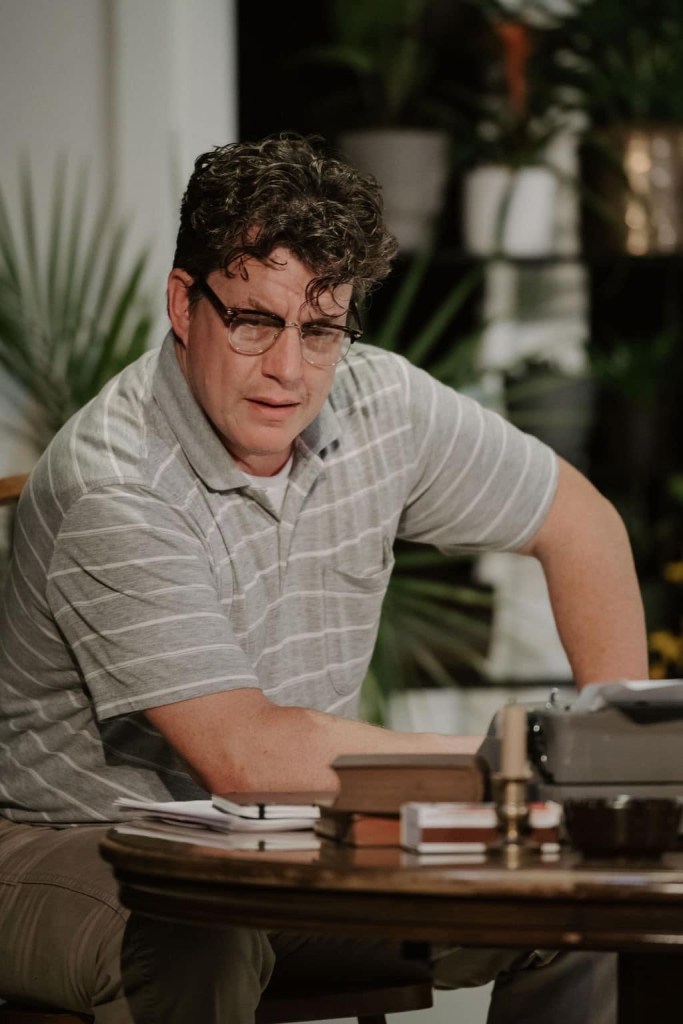
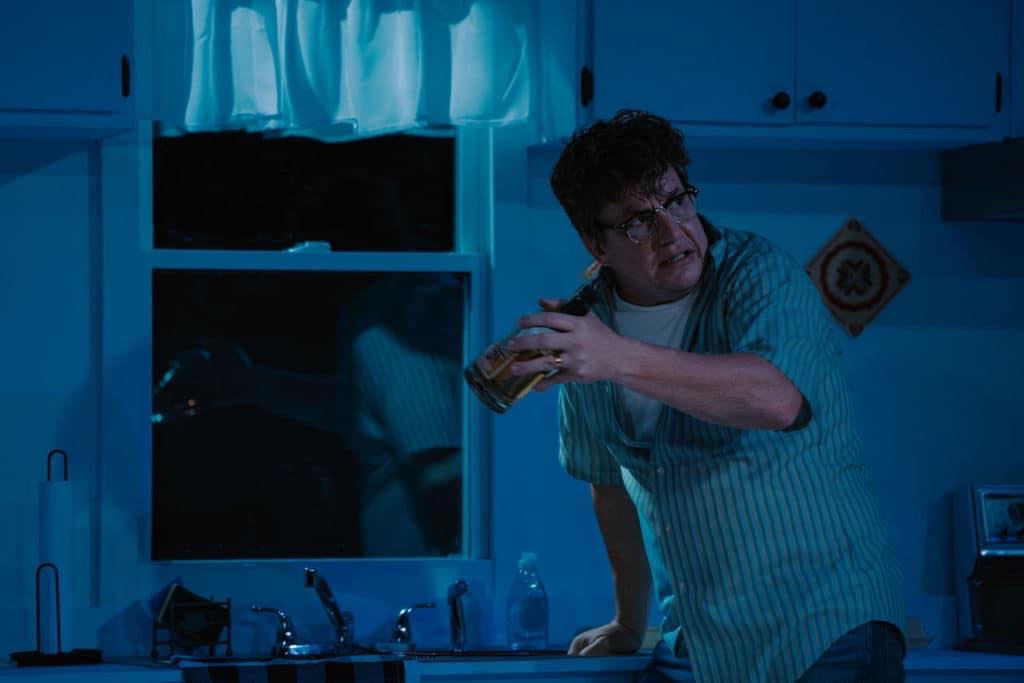
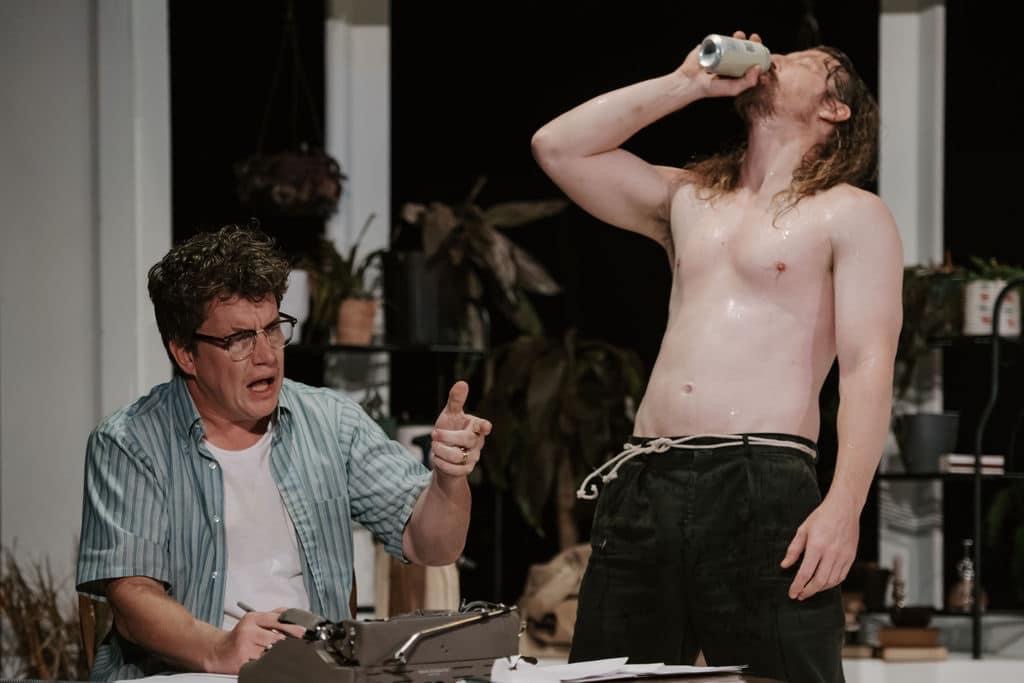
We first encounter Lee and Austin engaged in a contentious discussion in their mother’s kitchen in her California home. The brothers have not seen one another in five years. Austin is house-sitting for their mother who is on vacation in Alaska. Their father is, apparently, living somewhere in the Mojave desert in dire straits. Austin, a screenwriter, is trying to work on a script – by candlelight – while Lee, a drifter who makes a living by nefarious means, sits on the counter drinking beers one after the other and interrupting Lee’s work. Nothing unusual about that. At first. But oh, it quickly becomes apparent that this sibling relationship is deeply, disturbingly dysfunctional.

“I come in through the window; I go out through the door.”

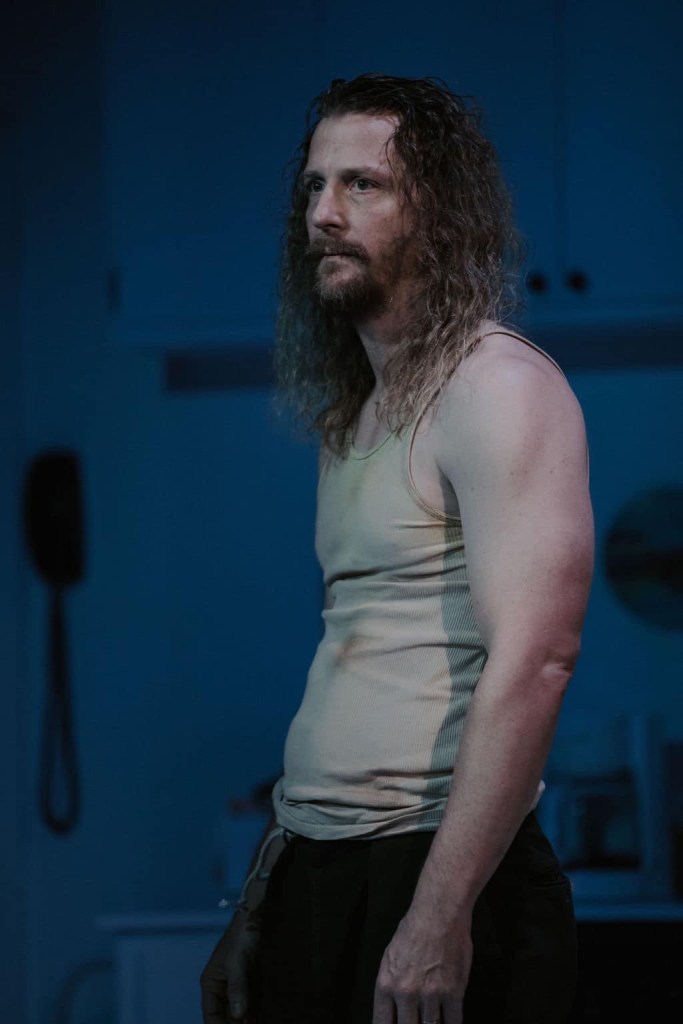
Landon Nagel and Stevie Rice alternate in the roles of the brothers, and on this Saturday afternoon Nagel wore the button down khaki role of Austin while Rice stepped into Lee’s scruffy black and white wingtips and battered trench coat. Both actors seemed to be in the exact right roles, so I’d love to have an opportunity to see this show again with the two in the opposite roles.

“Toast is kind of like salvation.”

Nagel and Rice both gave riveting performances to the sparse but attentive Saturday matinee audience in this iteration, with Rice’s character double-crossing his brother by pitching a story to his brother’s agent, effectively usurping his brother’s deal – along with his fragile self-esteem. While Act One is contentious, Act Two is nothing short of a dumpster fire (not the writing the situation), with the two brothers switching roles (not the roles they were cast in but their hierarchical roles, their roles in the family, their relationship to one another). The psychological wreckage echoes the physical wreckage of their mother’s pristine kitchen. And wouldn’t you know it – just when you think things have hit rock bottom, Mom returns unexpectedly. But her response to the emotional and material upheaval that greets her gives new meaning to the word dysfunctional.

On his website, Shepard says of  True West:

“I wanted to write a play about double nature, one that wouldn’t be symbolic or metaphorical or any of that stuff. I just wanted to give a taste of what it feels like to be two-sided. It’s a real thing, double nature. I think we’re split in a much more devastating way than psychology can ever reveal. It’s not so cute. Not some little thing we can get over. It’s something we’ve got to live with.”  

In the blink of an eye True West flips from the violent (e.g., Lee smashing a typewriter with a golf club or a vicious fight between the two brothers involving a garroting) to the humorous (e.g., a tale of lost teeth or an award-worthy drunken ramble involving toast – lots and lots of toast). The normalcy of the serene kitchen with its white cupboards and abundance of plants (keep your eye on the plants!) and the reassuringly normal ambient sounds of chirping crickets and barking dogs amplify the outrageousness of the brothers’ interactions, of their very relationship.  

True West is a dark comedy, and so much more, The seemingly simple title is a commentary on the wild west, the American dream, and a reality check on what is real and what is mere illusion. Even though Austin and Lee are exaggerated, they are real people with real issues; they are authentic in their dysfunction.  

Supporting roles were capably filled by Otto Konrad as the disingenuous agent, Saul and Jane Petkofsky as the elusive Mom – but this is basically a two-hander, and both Nagel and Rice shine in their respective roles.   Rusty Wilson’s direction keeps things moving so that I was startled when intermission arrived and appropriately stunned at the ending. There’s truly no way to prepare, just hang onto the edge of your seats and go along for a truly wild ride.  

NOTE: A 2020 production of True West by Cadence was postponed due to COVID. For historical reference you can find Susan Haubenstock’s review of a 2009 production of True West by Henley Street Theatre in the Richmond Times Dispatch archives: https://richmond.com/entertainment/true-west-brings-genuine-delight/article_a3b4fe56-799b-53cc-8aa9-70e7e39307e2.html . See this Style Weekly article for the backstory of director Rusty Wilson’s involvement with True West: https://www.styleweekly.com/tag/true-west/

———-

Julinda D. Lewis is a dancer, teacher, and writer who was born in Brooklyn, NY and now lives in Eastern Henrico County. When not writing about theater, she teaches dance history at VCU and low impact dance fitness classes to seasoned movers like herself, and occasionally performs. Her most recent (ad)venture was the premiere of a solo work, The Waters of Babylon or Psalm 137 Revisited: a Post-Exodus Reflection in Movement Choreographed From Collective Memories for the debut of the Critical Race Theatre Project, right here at RTP in August 2024.

———-

TRUE WEST

by Sam Shepard

Directed by Rusty Wilson

This performance is dedicated in memory of Carol Piersol, the beloved Founding Artistic Director of Firehouse

CAST

Austin/Lee     …………………….               Landon Nagel

Austin/Lee     …………………….               Stevie Rice

Saul                …………………….               Otto Konrad

Mom               …………………….               Jane Petkofsky

PRODUCTION TEAM

Direction                               ……….           Rusty Wilson

Scenic Design                       ……….           Joseph Lavigne

Costume Design                  ……….           Sarah Grady

Production State Manager ……….           Sharon Gregory

Sound Design                      ……….           Grace Brown LaBelle

Lighting Design                   ……….           Andrew Bonniwell

Fight Choreography           ……….           Aaron Orensky

Composer                             ……….           Drew Perkins

Properties Design                ……….           Emily Vial

Photo Credits                       ……….           Jason Collins Photography

RUN TIME

1 hour 45 minutes; there is one intermission

PERFORMANCE SCHEDULE

Opening Night – Friday, September 20 at 7:30PM

Running Fridays and Saturdays, September 20, 21, 27, 28, October 4, 5, at 7:30PM;

Thursday, October 3, 7:30PM; Saturdays and Sundays, September 21, 22,  28, 29, & October 5 at 2:00PM.

TICKETS

$35 – $40

One-Time
Monthly
Yearly

Make a one-time, monthly or annual donation to support rvart review

Make a monthly donation

Make a yearly donation

Choose an amount – no amount is too small & no amount is too large!

$5.00
$15.00
$100.00
$5.00
$15.00
$100.00
$5.00
$15.00
$100.00

Or enter a custom amount

$

Thank you. Your contribution is appreciated.

Your contribution is appreciated.

Your contribution is appreciated.

DonateDonate monthlyDonate yearly
CARMINA BURANA

Richmond Ballet Opens New Season With a John Butler Classic & a Work by Associate Artistic Director Ma Cong

A Dance Review

By: The Richmond Ballet with the Richmond Symphony/Richmond Symphony Chorus and The City Choir of Washington

At: Dominion Energy Center’s Carpenter Theatre, 600 E. Grace St., RVA 23219

Performances: September 22-24, 2023

Ticket Prices: $25 – $130

Info: (804) 344-0906, etix.com, or richmondballet.com

THE PROGRAM

Thrive

Choreography by Ma Cong

Music by Oliver Davis

Costume Design by Monica Guerra

Lighting Design by Trad A. Burns

Lighting Supervision by Joseph R. Wall

World Premiere: September 20, 2022, Richmond Ballet, Richmond Ballet Studio Theatre, Richmond, VA

CARMINA BURANA

Conceived and Choreographed by John Butler

Music and Latin Text by Carl Orff

Staging by Igor Antonov and Lauren Fagone

Costume Design by John Butler

Lighting Design by Catherine Girardi after

Original Lighting Design by Richard Moore

World Premiere: September 24, 1959, New York City Opera, City Center, New  York

Richmond Ballet Premiere: October 15, 1987, Carpenter Theatre, Richmond, VA

If there’s anything better than live dance, it’s live dance performed to live music. After a debut performance at Wolf Trap in August, the Richmond Ballet opened their new season with an exciting program of neoclassical ballet and ballet theatre. The program opened with Thrive, the most recent work of Associate Artistic Director Ma Cong, and concluded with John Butler’s highly immersive Carmina Burana. (Note: Founding Artistic Director Stoner Winslett will be stepping down at the end of the season and moving into an advisory role, and Ma Cong will step into the role of Artistic Director.)

First performed as the 2022 season opener of the Richmond Ballet’s Studio Series, Ma Cong’s Thrive, a classical ballet in 7 movements, and his ninth work for Richmond Ballet, had the full expanse of the Carpenter Theatre stage and the pleasure of hearing British composer Oliver Davis’s layered score performed live by a full orchestra.

An ambitious display of contemporary classical ballet that spans the gamut from the humorous or playful to the somber and romantic, the work was inspired partly by the choreographer’s interactions with Richmond’s LGBTQ+ and Asian-American communities.

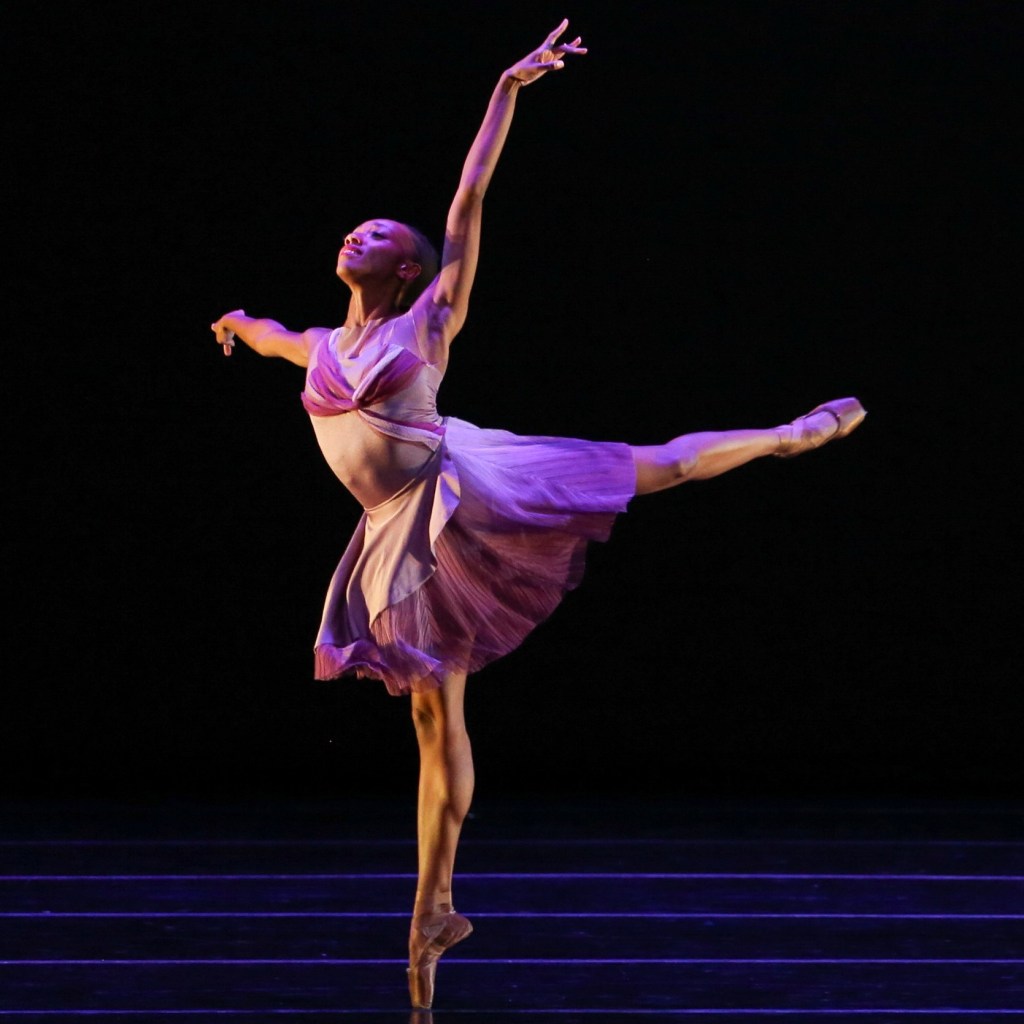
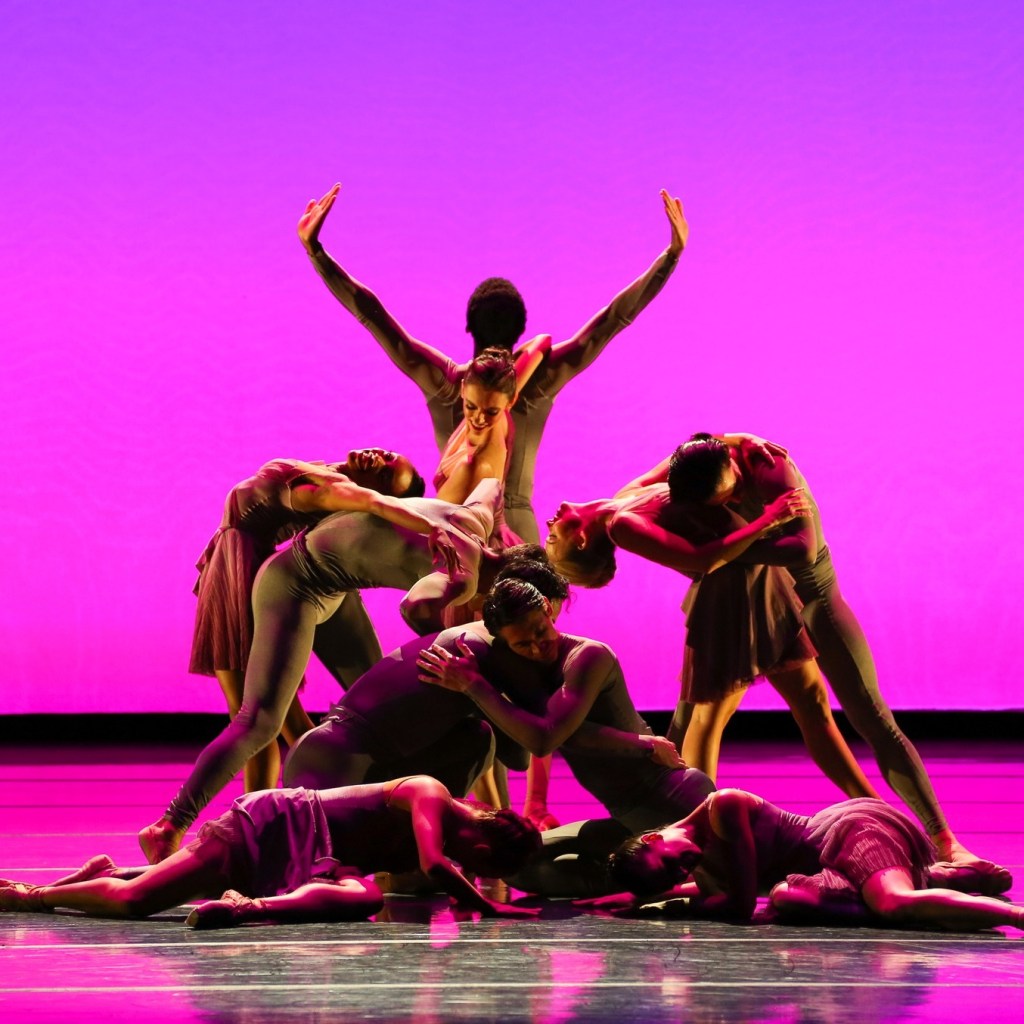
Onstage, Thrive manifests as clean, neo-classical movement accompanied by classical strings, interspersed with riotous pairings accompanied by more humorous music – some instrumental and some choral. The lighting matched the music and movement, with shades of red for the lighter moments and blues and purples for the more somber sections.

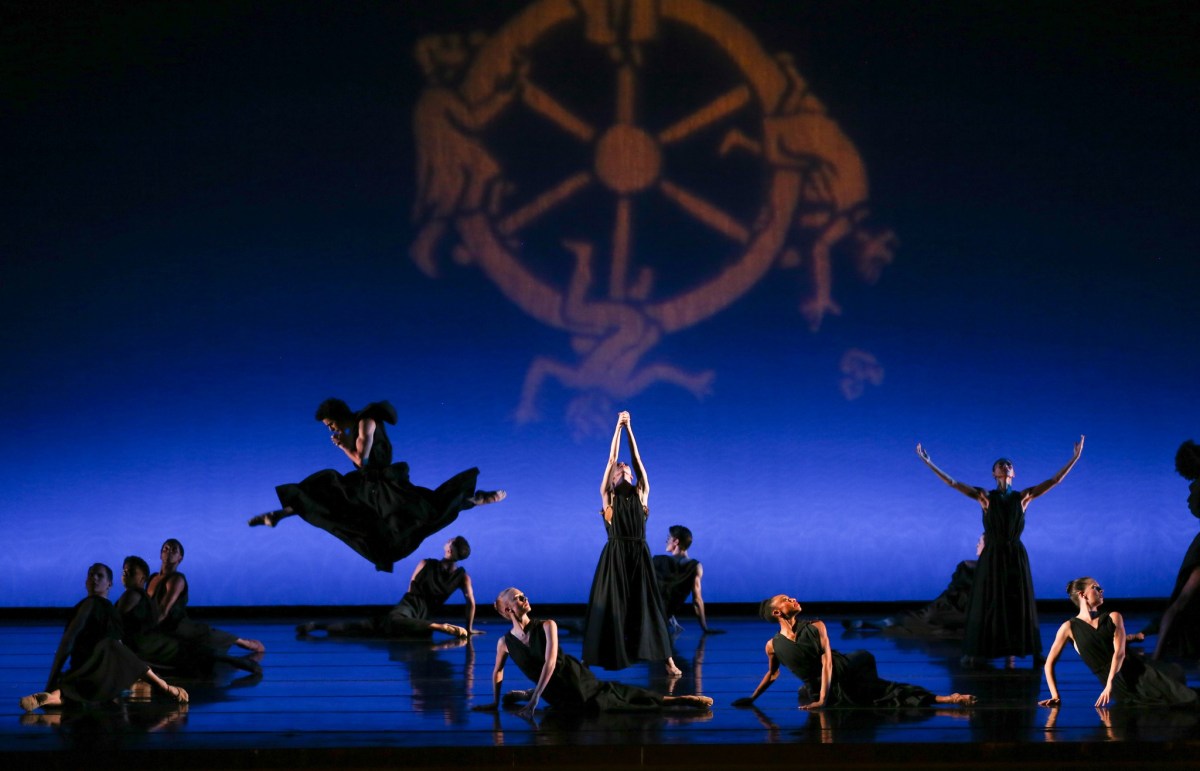
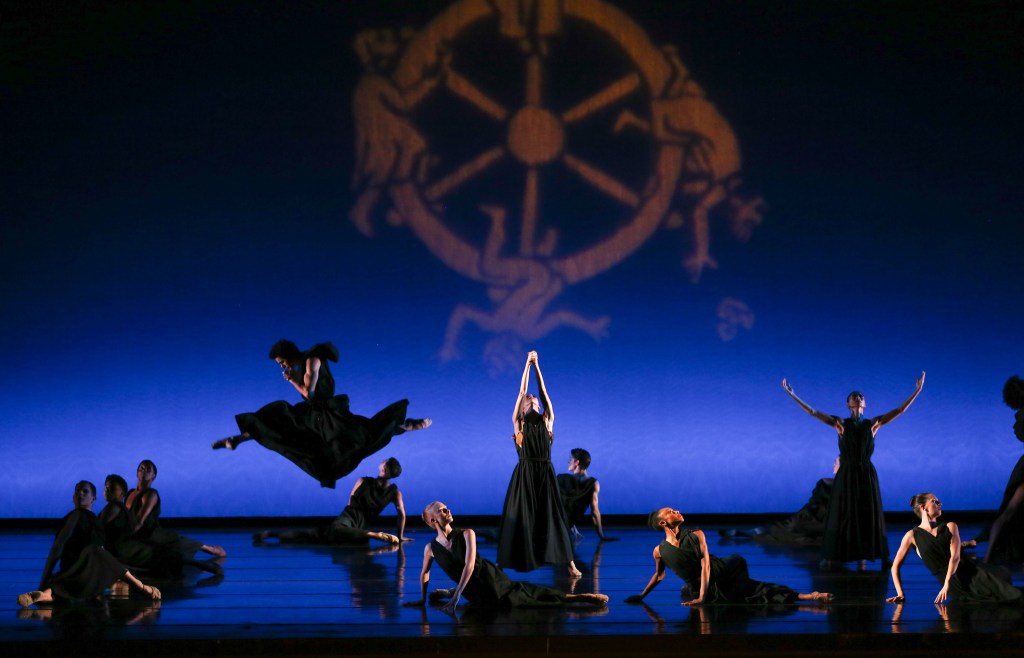
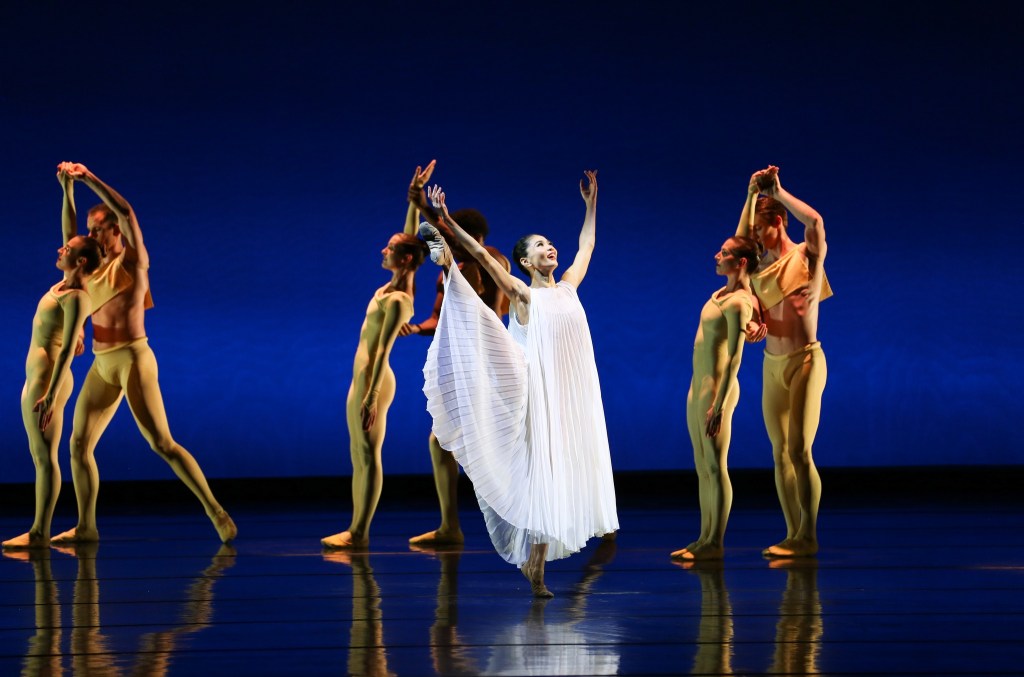
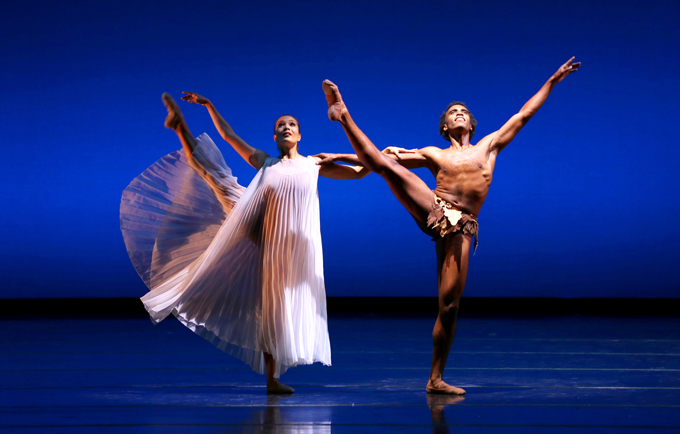
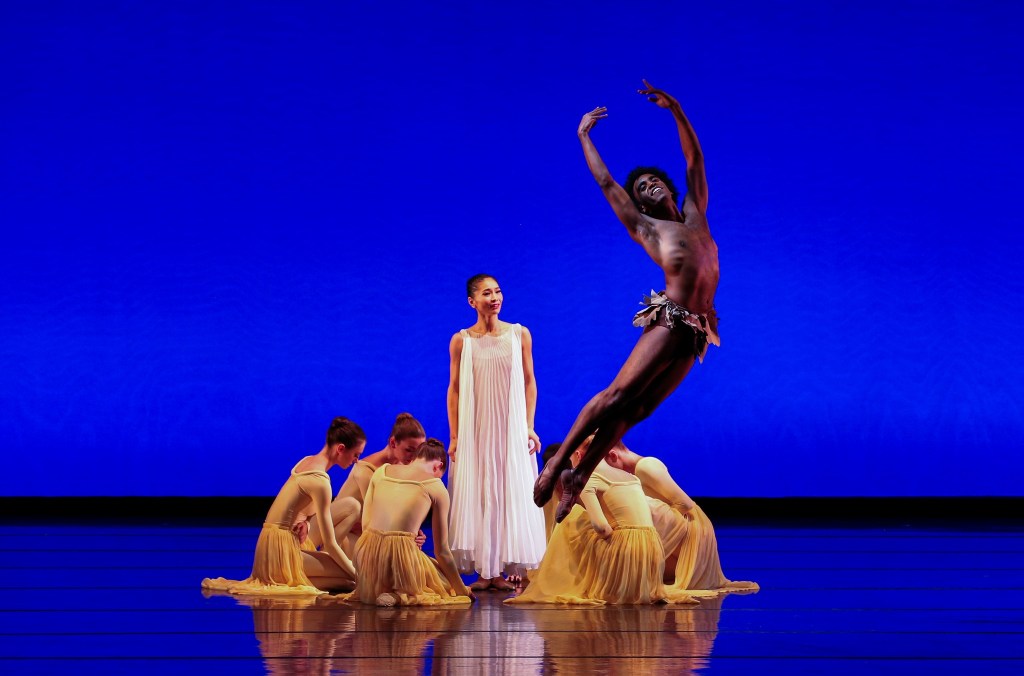
Carmina Burana raises the drama to a whole new level. A full orchestra in the pit, choral groups spilling out on both sides of the stage, soloists downstage left and right, frame dancers in monks robes who process in, pausing occasionally to genuflect. The robes soon give way to the barest of body coverings, reminiscent of Adam and Eve, while Eri Nishihara later appears in flowing white. Light colored body suite for the women and tights with collars over bare chests for the men emphasize the stylized movement that sometimes appears to have been lifted from an ancient print or vase.

A wheel of fortune projected in the background reminds us that life is uncertain, that we are all subject to the ups and downs, the wins and losses. The mostly Latin lyrics and poetry just add to the drama – sometimes more like an opera than a ballet – bookending the entire experience with the “O Fortuna” Prologue and Epilogue.

There is discipline and structure, seductive moments, energetic and tortured movement – some of all that life has to offer.  The very characters that bow in prayer later appear literally half-dressed (hats off to costume designer Monica Guerra) and become part of romantic triangles or what some call “entanglements.” Cody Beaton and Ira White, and Eri Nishihara with Khaiyom Khojaev guide the ensemble through the changes of luck and fate, bringing a relatable sense of emotion and sensuality to what might otherwise appear to be an obscure spectacle.

All in all, this proved to be a full-blast, magnificent evening of dance theater and certainly raises the bar for high expectations for the rest of this season.

Julinda D. Lewis is a dancer, teacher, and writer who was born in Brooklyn, NY and now lives in Eastern Henrico County.

One-Time
Monthly
Yearly

Make a one-time or monthly donation to RVART REVIEW

Make a monthly donation

Make a yearly donation

Choose an amount

$5.00
$15.00
$100.00
$5.00
$15.00
$100.00
$5.00
$15.00
$100.00

Or enter a custom amount

$

Your contribution is appreciated.

Your contribution is appreciated.

Your contribution is appreciated.

DonateDonate monthlyDonate yearly
A SOLDIER’S PLAY

They still hate you!: Racism Institutionalized, Internalized, Ignited

At: The Swift Creek Mill Theatre, 17401 U.S. Route 1, S. Chesterfield, VA 23834

Performances: January 28 – March 4, 2023

Ticket Prices: $15-$49

Info: (804) 748-5203 or https://www.swiftcreekmill.com

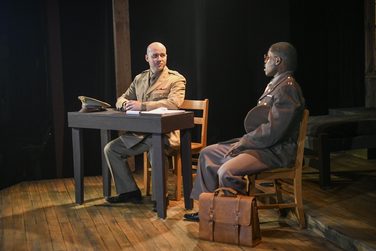
Charles Fuller’s A Soldier’s Play is set on a fictitious Army base, Fort Neal, Louisiana, in 1944 – at a time when the U.S. Army was still legally segregated. But the mystery and inflammatory speculation surrounding the murder of Tech/Sergeant Vernon C. Waters could have been taken directly from the latest news in 2023.

When I think of this Pulitzer Prize-winning play, the first thing that comes to mind is Adolph Caesar who played the role of Sergeant Waters in the original off-Broadway production by the Negro Ensemble Company, New York, 1981. In that production, Denzel Washington also appeared as Private First Class Melvin Peterson and Samuel L. Jackson played the role of Private Louis Henson.

I can’t help but wonder, how did the actors and audiences of 1981 feel about A Soldier’s Play and how do their thoughts and experiences compare to those of the actors and audiences of 2023? The more things change (?) the more they stay the same – and this trope especially rings true when it comes to matters of race in America.

Along those same lines, the ”trigger warnings” of  strong language, racial slurs, physical violence and gunshot effects may have been startling 40 years ago, but seem de rigueur by today’s standards where life imitates art imitates life. Director Shanea N. Taylor wrote in her notes, “Charles Fuller believed, ‘You can change the world with words.’ 40 some years later from winning the Pulitzer Prize for his words, we find ourselves in a position where we might question whether this rings true.”

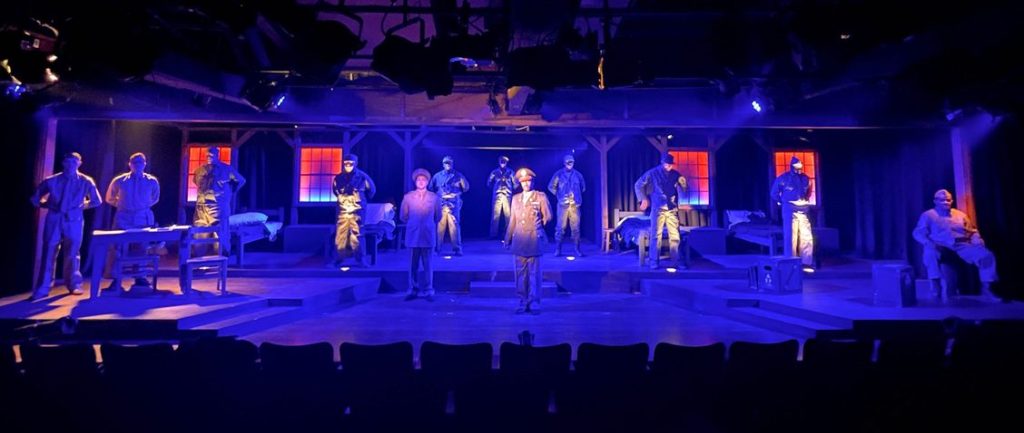
In A Soldier’s Play we get to see – and internalize – the impact of 9 Black men sharing a stage and sharing words and thoughts normally reserved for the relative safety of Black spaces (e.g., home, the barber shop). Do Fuller’s words sufficiently explain the burden of how racism can make a Black man hate himself? Or are we so committed to the fallacy that racism is over that only those directly affected can truly understand? A Soldier’s Play opens the door to further understanding.

This deeply troubling story shines as an ensemble work. The comraderie and banter between the characters feels authentic (coming from one who has never been in a military environment). It comes as no surprise that the Black soldiers are given the most menial and dirtiest tasks: painting, cleaning, manual labor. In spite of their sub par treatment, they want to serve the only country they know. When orders come to ship out, they are excited. Ike wants to know if the colored boys can fight? There is only one response, “I’ve been fighting all my life.”

The soldiers’ relationships seem even more solidified by the passive aggressive racism of their white Captain, played by Chandler Hubbard. You see, Captain Taylor is aware of his own racism, and readily admits that he is disgusted by the very thought of Captain Davenport (Keydron Dunn), the Black lawyer sent to investigate the murder of Sergeant Waters. At the same time, he holds on to a sense of justice in wanting to solve the murder – but not so much so that he is willing to discipline the white officers under his command who are overtly racist (Hunter Keck and Gordon Little Eagle Graham). Waters is – or was – an ambitious Black officer who is himself offended by the presence of southern Black men who do not live up to his standards. This information gives added meaning to his final words before being shot, “They still hate you!” No matter how hard he tries to assimilate, no matter if he works hard and send his children to predominantly white schools, he is still Black, and still the recipient of institutional and personal racism.

There were some standouts in the ensemble: Joshua Maurice Carter as Private C.J. Memphis, the innocent young man who was driven to suicide by Sergeant Waters’ mental attacks; Kamau “Mu Cuzzo” Akinwole as Private James Wilkie, an unwilling pawn in Waters’ machinations; Erich Appleby as the earnest Corporal Bernard Cobb. Hubbard did an amazing job establishing a balance between doing the eight thing and embracing the comfort of his upbringing. But A Soldier’s Play works best within the framework of the ensemble. The one weak link, unfortunately, seemed to be Keydron Dunn in the import role of the key figure, Captain Richard Davenport. I found out later that Dunn was under the weather the night I saw the show, so that may account for the fumbled lines and uneven performance – so unlike his usual execution.

Mercedes Schaum has designed a stark barracks, consisting of just a few cots and footlockers, but Joe Doran’s lighting adds satisfying emotional depth and visual dimension. Taylor’s direction allows the story to unfold at a natural pace – perhaps less inflammatory than I was expecting, or less shocking that my memory allowed for – but nonetheless satisfying. If you have never seen A Soldier’s Play or, like me, have not revisited it in some 40 years, please see it. It’s the kind of theatre that stays with you for a lifetime.

———-

Julinda D. Lewis is a dancer, teacher, and writer who was born in Brooklyn, NY and now lives in Eastern Henrico County.

———-

A SOLDIER’S PLAY

By Charles Fuller

Directed by Shanea Taylor

Cast:

Tech/Sergeant Vernon C. Waters: Larry Akin Smith

Captain Charles Taylor: Chandler Hubbard

Corporal Bernard Cobb: Erich Appleby

Private First Class Melvin Peterson: K’Hari Zy’on

Corporal Ellis: Gary King

Private Louis Henson: Tre’ LaRon

Private James Wilkie: Kamau “Mu Cuzzo” Akinwole

Private Tony Smalls: Kieryn Burton

Captain Richard Davenport: Keydron Dunn

Private C.J. Memphis: Joshua Maurice Carter

Lieutenant Byrd: Hunter Keck

Captain Wilcox: Gordon Little Eagle Graham

Creative Team:

Directed by Shanea Taylor

Scenic Design by Mercedes Schaum

Lighting Design by Joe Doran

Costume Design by Maura Lynch Cravey

Technical Direction by Liz Allmon

Fighting/Intimacy Consulting by Stephanie “Tippi” Hart

Run Time:

About two hours with one intermission

Tickets:

Regular $49. Seniors, Military & First Responders $44. Students $15.

Photos: Kieran Rundle

One-Time
Monthly
Yearly

rvart review depends on your generous donations – thank you!

Make a monthly donation

Make a yearly donation

Choose an amount

¤5.00
¤15.00
¤100.00
¤5.00
¤15.00
¤100.00
¤5.00
¤15.00
¤100.00

Or enter a custom amount

¤

Your contribution is appreciated.

Your contribution is appreciated.

Your contribution is appreciated.

DonateDonate monthlyDonate yearly
ROMEO & JULIET

The Richmond Ballet’s ROMEO & JULIET: Shakespeare’s Family Feud on Pointe

A Dance Review by Julinda D. Lewis

By: The Richmond Ballet

At: Carpenter Theatre at Dominion Energy Center, 600 East Grace Street, RVA 23219

Performances: February 18-20, 2022

Ticket Prices: In-Person Tickets $25-$125

Info: (804) 344-0906, etix.com, or richmondballet.com

Romeo & Juliet
Choreography by Malcolm Burn

Music by Sergei Prokofiev

Performed by The Richmond Symphony,

Erin Freeman, Conductor

Scenery & Prop Design by Charles Caldwell

Costume Design by Allan Lees

Lighting Design by MK Stewart

It’s that time of year again. February. Some of us still have Valentine’s Day candy and flowers on our desks. It’s Romeo & Juliet season.

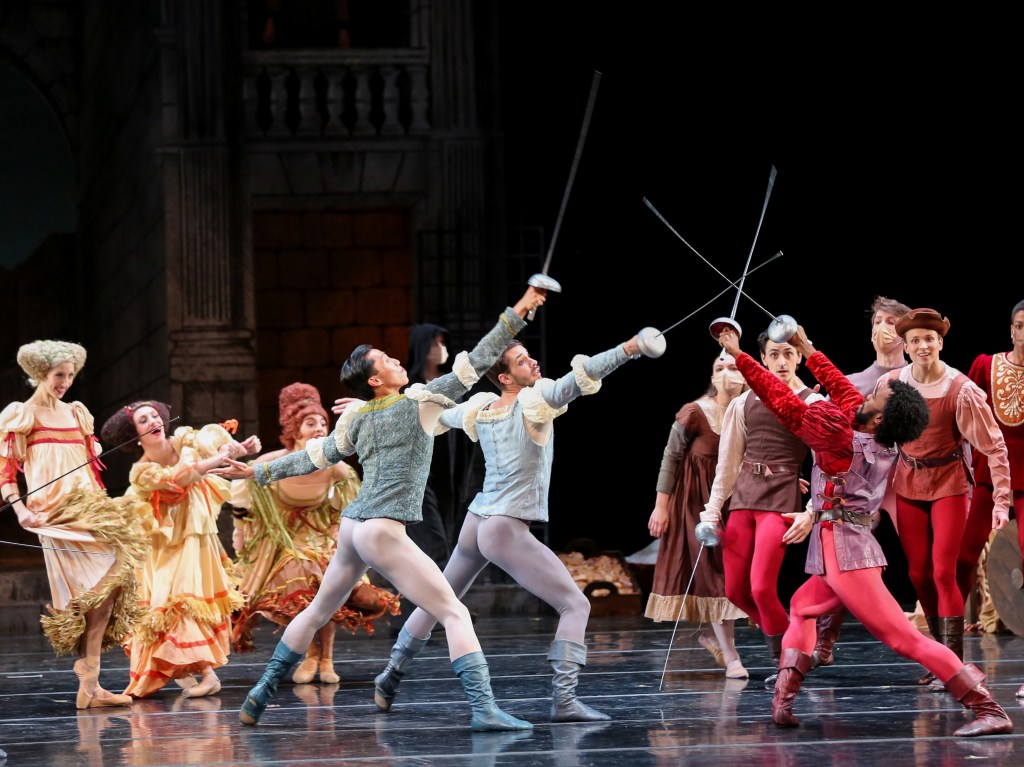
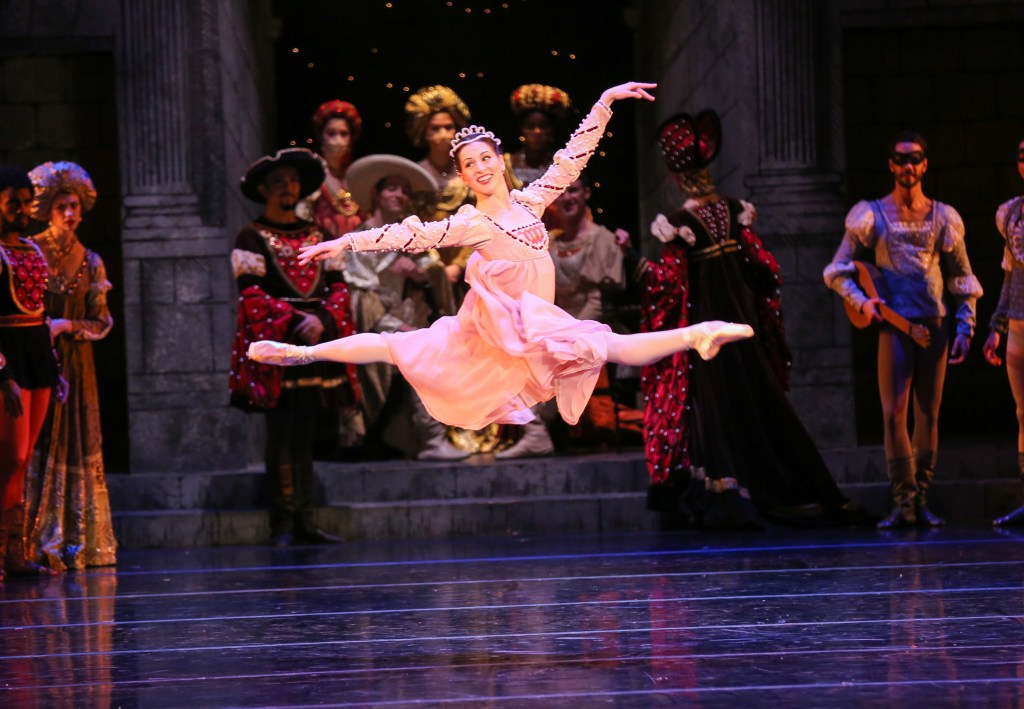
I’ve often mentioned to staff at the Richmond Ballet that my biggest – my only – problem with Romeo & Juliet,a ballet that is always performed around Valentine’s Day, is that it is one of the world’s greatest love stories, but the lovers end up dead at the end. Sigh. I think Romeo & Juliet has a higher body count than many action-adventure plots. But it also has some of the greatest – and largest – hats ever to appear on stage (kudos to costume designer Allan Lees).

On a serious note, Romeo & Juliet, running nearly three hours including two twenty-minute intermissions, is an immersive theatrical experience. There’s young love, friendship, family loyalty, classical ballet, folk dancing, comedy, drama, a fabulous score, and more.

This large-scale ballet, created by Richmond Ballet’s long-time Artistic Associate Malcolm Burn premiered August 1977 and was first performed by the Richmond Ballet in February 1995. The ballet includes a huge cast that highlights the students of the School of Richmond Ballet, the Richmond Ballet Trainees, and the Richmond Ballet II company. I found many of the supporting roles provided some of the most interesting and delightful moments of the evening.

Trainee Gabrielle Goodson was cast as the figure of Fate. A non-dancing role, Fate would appear before a death occurred. I never managed to see Goodson move, but suddenly she would appear or shift to a new position on stage. The black-robed and hooded figure was even more ominous because of the silence, stillness, and unimposing stature.

A trio of Harlots (Celeste Gaiera, Sarah Joan Smith, and Izabella Tokev) provided several amusing interludes, with their dancing (sassy romps through the crowd scenes and seductive moments with the men of the town – all of the men) as well as with their costumes (off the shoulder frocks and outrageous wigs that reminded me of a combination of Marge Simpson and the wigs worn by the step-sisters in the Cinderella ballet).

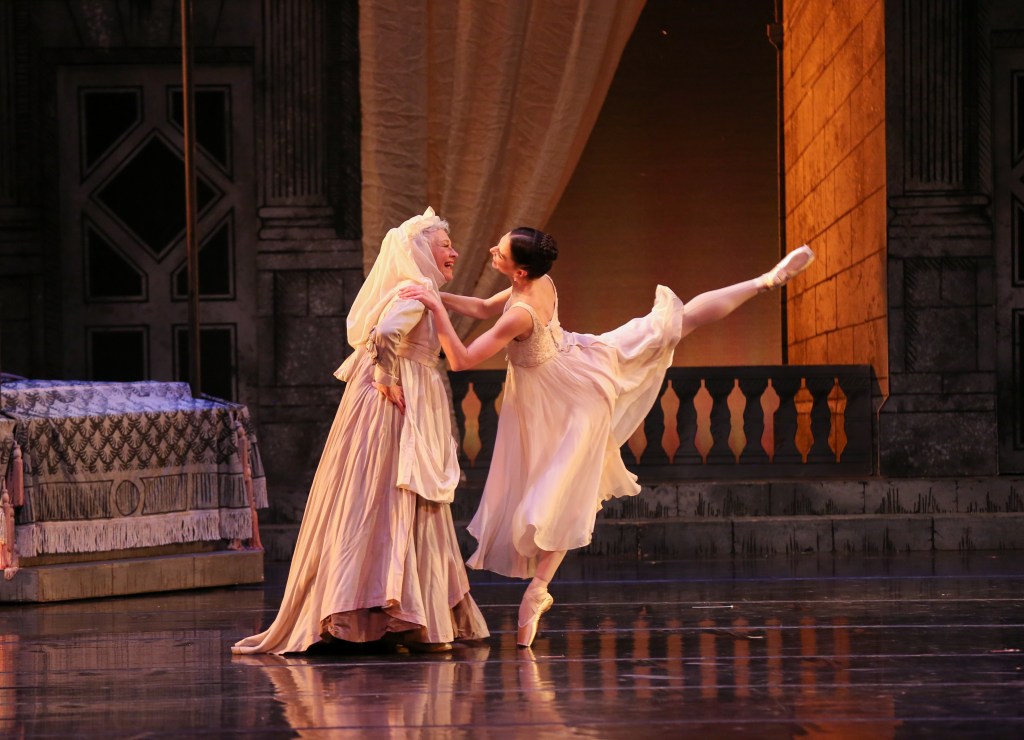
Among other supporting figures that made a big impact was Susan Israel Massey as Juliet’s Nurse. A character role that did not require much dancing, Massey was delightful: loving and loyal to Juliet, daring and subversive in her support of her young charge, and humorous in the marketplace scene.

Ma Cong, the company’s Associate Artistic Director, who took on his role in June 2020 in the midst of a pandemic, was cast in the role of Lord Capulet, Juliet’s stern and unyielding (abusive might not be too strong a word) father. If I am not mistaken, this was his first onstage appearance with the Richmond Ballet.

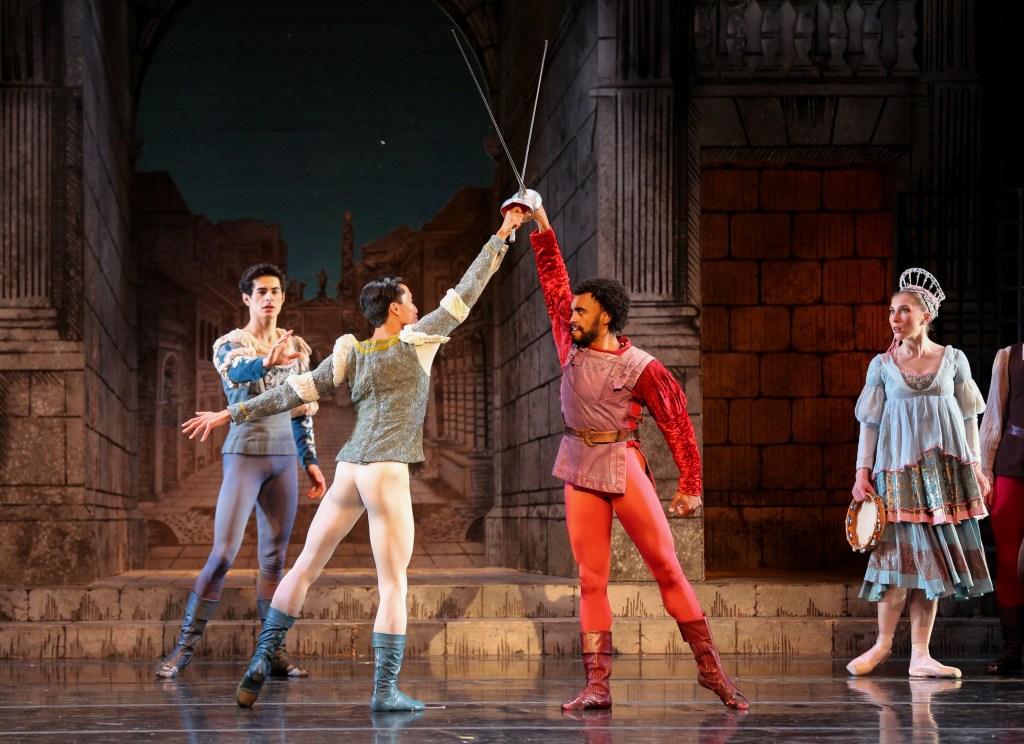
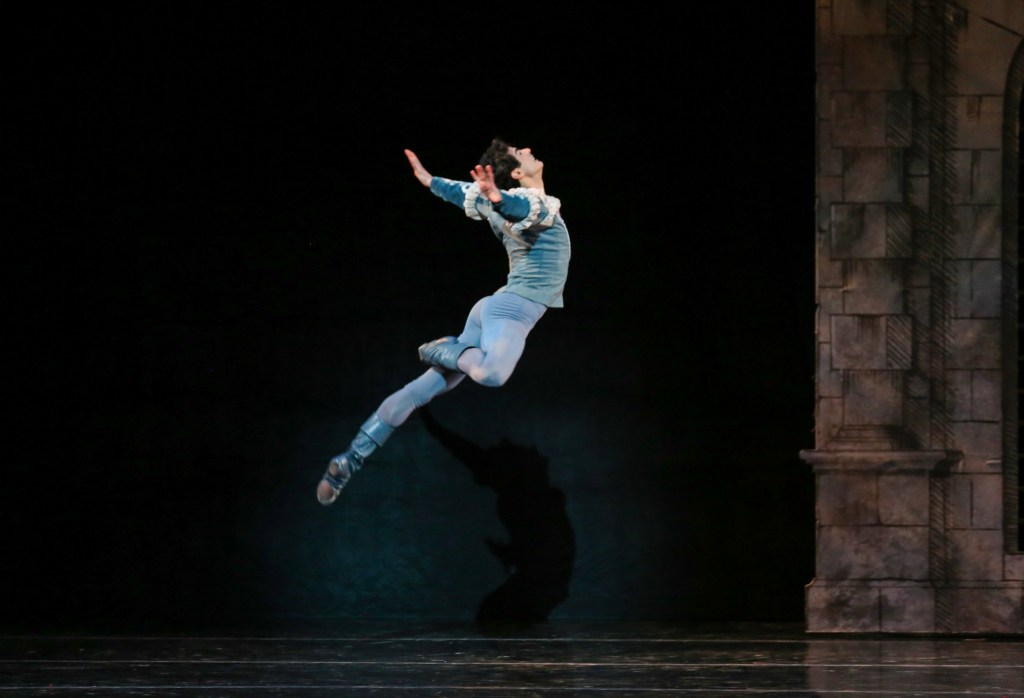
Ira White was thrilling in the role of Tybalt, Juliet’s passionate and short-tempered first cousin. White engaged in a lot of swordplay with the gentlemen of the rival House of Montague – Romeo and his sidekicks Benvolio (Colin Jacob) and Balthasar (Zacchaeus Page). The fight scenes lit up the stage with a perfect balance of athleticism and art.

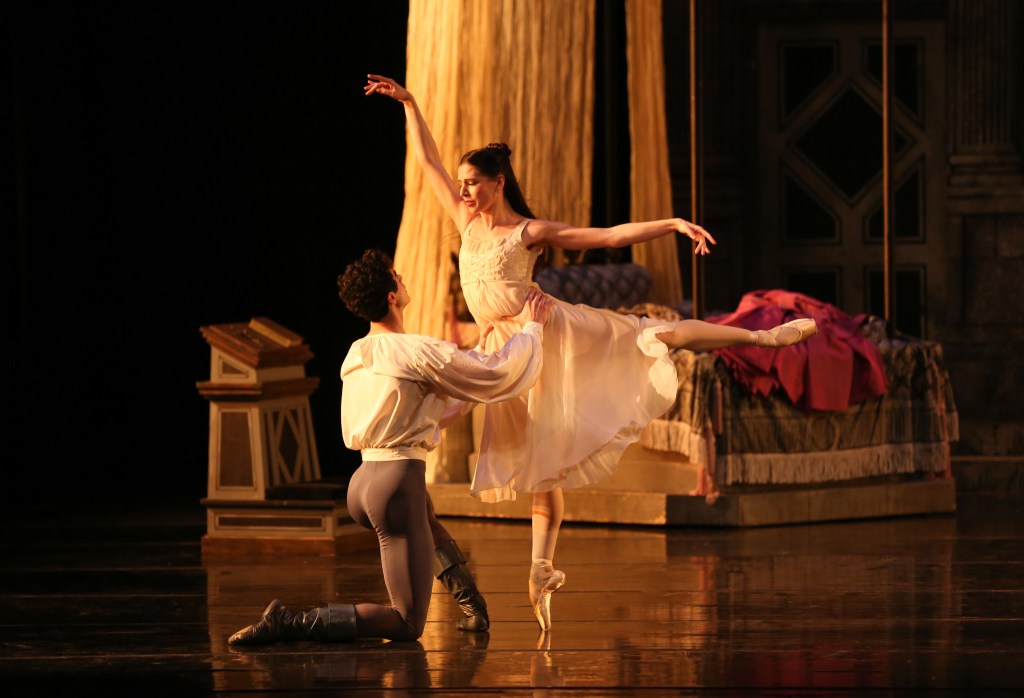
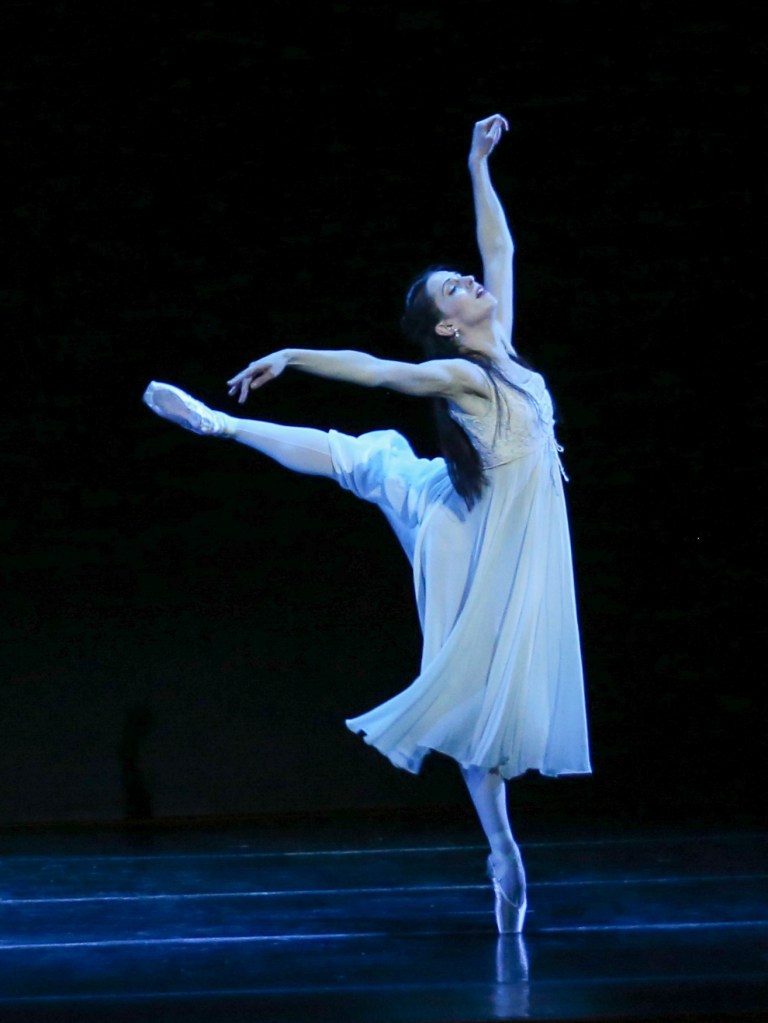
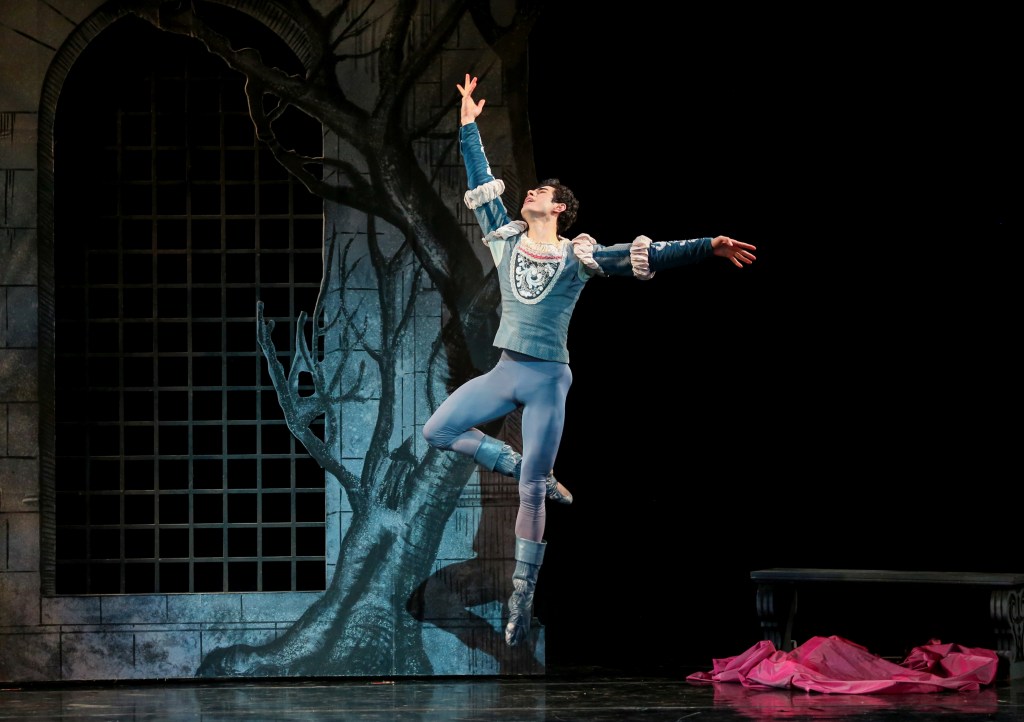
As for the title roles, Sabrina Holland danced the role of Juliet, and Khaiyom Khojaev was her Romeo, roles that require equal parts dancing, acting, and mime. There are no long dance scenes in Romeo & Juliet, and no grand pas de deux, so viewers must soak up every brief encounter, every precious stolen duet between the young lovers. The brevity of each encounter, each step, each lift makes their partnership all the more endearing. Personally, in his group scenes I would have liked to have seen Khojaev adopt some of the feistiness required of White. Tybalt certainly had confidence to spare. But in his solo turns Khojaev’s Romeo soared flawlessly.

Paris (Joe Seaton) the contender favored by Juliet’s parents (Ma Cong and Lauren Fagone), is given short shrift. Juliet flicks away his hand every time he tries to touch her. The poor guy is never even in the running. The tension and family dynamics in the scenes with Juliet, her parents, her nurse, and Paris is palpable and presages the unhappy ending that is sure to come.

Overall, Romeo & Juliet is a family-friendly ballet, and one that can be enjoyed by people who say they do not “understand” ballet. And if you don’t recall the details of Romeo and Juliet from high school, there is a handy scene-by-scene synopsis in the digital program. And the familiar score, played live by the Richmond Symphony, can easily stand alone.

I enjoy the intimate Richmond Ballet Studio Performances that are scheduled four times each season, but there is nothing like a full-scale, evening-length ballet and Romeo & Juliet is a personal and audience favorite, judging by the size, diverse composition, and positive reactions of Friday’s opening night house. At the time of this writing, there are two remaining opportunities to see this run of the Richmond Ballet’s Romeo & Juliet.

Julinda D. Lewis is a dancer, teacher, and writer who was born and raised in Brooklyn, NY and now lives in Eastern Henrico County, RVA.

Romeo & Juliet Performance Schedule

Friday, February 18 @7:00PM

Saturday, February 19 @7:00PM

Sunday, February 20 @2:00PPM

COVID-19 Protocols: Upon entering the theatre, all audience members ages 12 and above are required to show printed or digital proof of full vaccination against COVID-19 or of a professionally-administered negative COVID-19 test taken within 72 hours of the performance. Patrons ages 18 and above will also need to show a photo ID. All patrons ages 2 and above will continue to be required to wear masks. Eating and drinking are allowed only in designated areas of the lobby.


Photos of the Richmond Ballet’s Romeo & Juliet. Photos by Sarah Ferguson. All rights reserved.


One-Time
Monthly
Yearly

Make a one-time donation to support rvart review

Make a monthly donation

Make a yearly donation

Choose an amount

¤5.00
¤15.00
¤100.00
¤5.00
¤15.00
¤100.00
¤5.00
¤15.00
¤100.00

Or enter a custom amount

¤

Your contribution is appreciated.

Your contribution is appreciated.

Your contribution is appreciated.

Donate here to support rvart reviewDonate here to support rvart reviewDonate here to support rvart review

BAREFOOT IN THE PARK

A Romantic Comedy

Corie: You wouldn’t even walk barefoot with me in

Washington Square Park!

Paul: It was 17 degrees!

A Theater Review by Julinda D. Lewis

Presented By: Virginia Rep

At: Hanover Tavern, 13181 Hanover Courthouse  Road, Hanover, VA 23069

Performances: December 11, 2021 – January 9, 2022

Ticket Prices: $48. Prices are subject to change during the run. Discounted Group Rates and Rush Tickets are available.

Info: (804) 282-2620 or www.virginiarep.org

First, let’s be clear: yes, it’s December, and SURPRISE! – Neil Simon’s BAREFOOT IN THE PARK is not a Christmas show. What it is, is a delightful romantic comedy that appears to be as much fun for the actors as it is for the audience.

The plot is a simple one: two newlyweds move into their first apartment after spending their honeymoon is an upscale New York City hotel. Their new home is a fifth floor walk up in a Manhattan brownstone. Let’s just say it’s a fixer-upper. There’s a kitchenette, a bathroom with no bathtub (but at least the bathroom is inside the apartment – those familiar with old New York apartments know what I’m talking about), and a bedroom so small that when you open the door it hits the double bed, which you have to climb over to reach the closet, which is leaking. Speaking of leaks, there is a hole in the skylight – you know, the window in the roof – and it’s February. The apartment quickly drives home this young couple’s differences: she’s impulsive and free-spirited and he is a conservative lawyer who is more compatible with his mother-in-law than her own daughter has ever been.

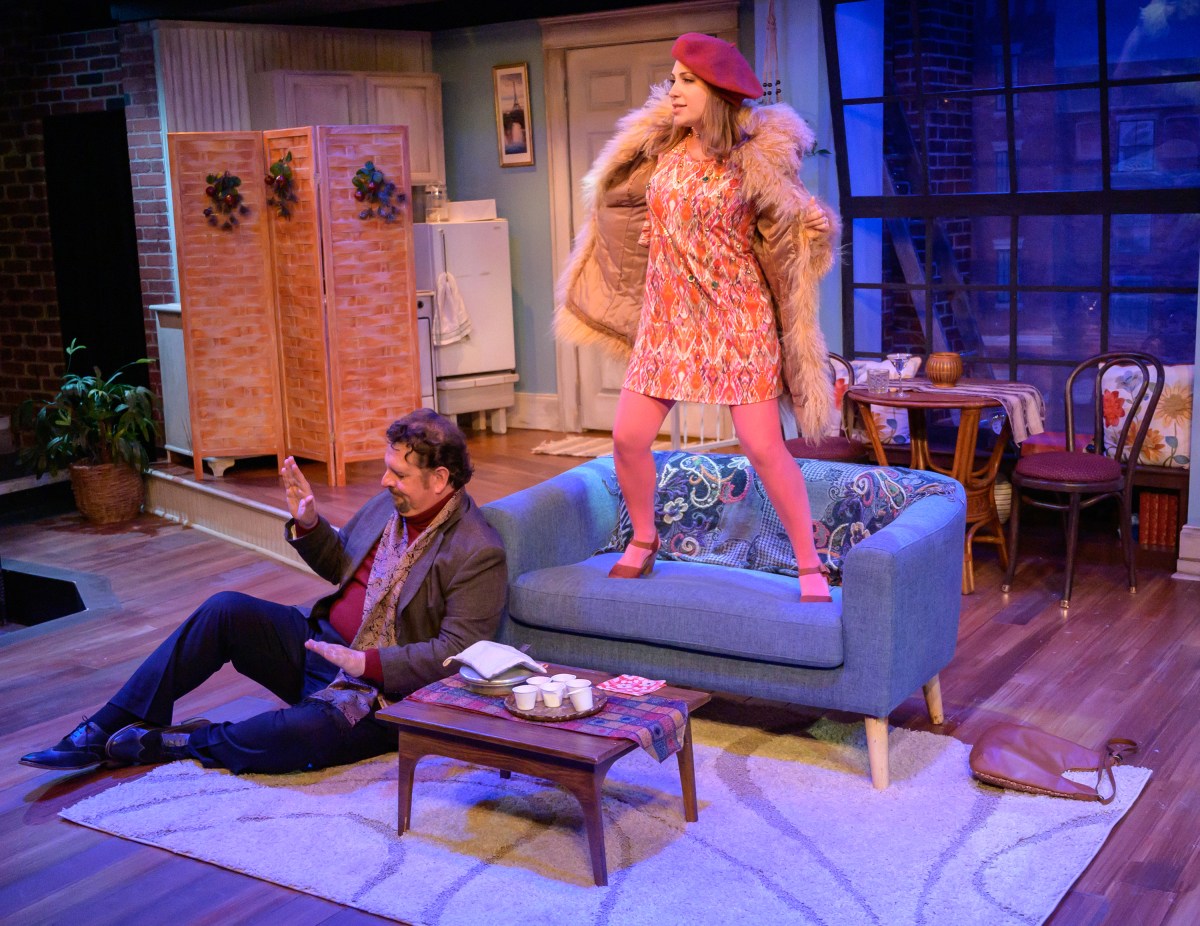
Rachel Rose Gilmour was perfectly cast as newlywed housewife Corie Bratter. (And yes, I’m using the terms that would have been used in 1968.) Her brightly colored wardrobe captures both the period and her character’s personality. Trevor Lawson demonstrates enviable restraint as the husband who is hit with one surprise after another: the rent is twice as much as Corie is willing to tell her mother they actually pay; Paul saw the third floor apartment prior to moving in, not realizing their apartment was on the fifth floor – not counting the outside stoop, and of course there is the matter of the tiny kitchen, the lack of a bathtub, and the miniscule size of the bedroom. To make matters worse, their furniture is delayed.

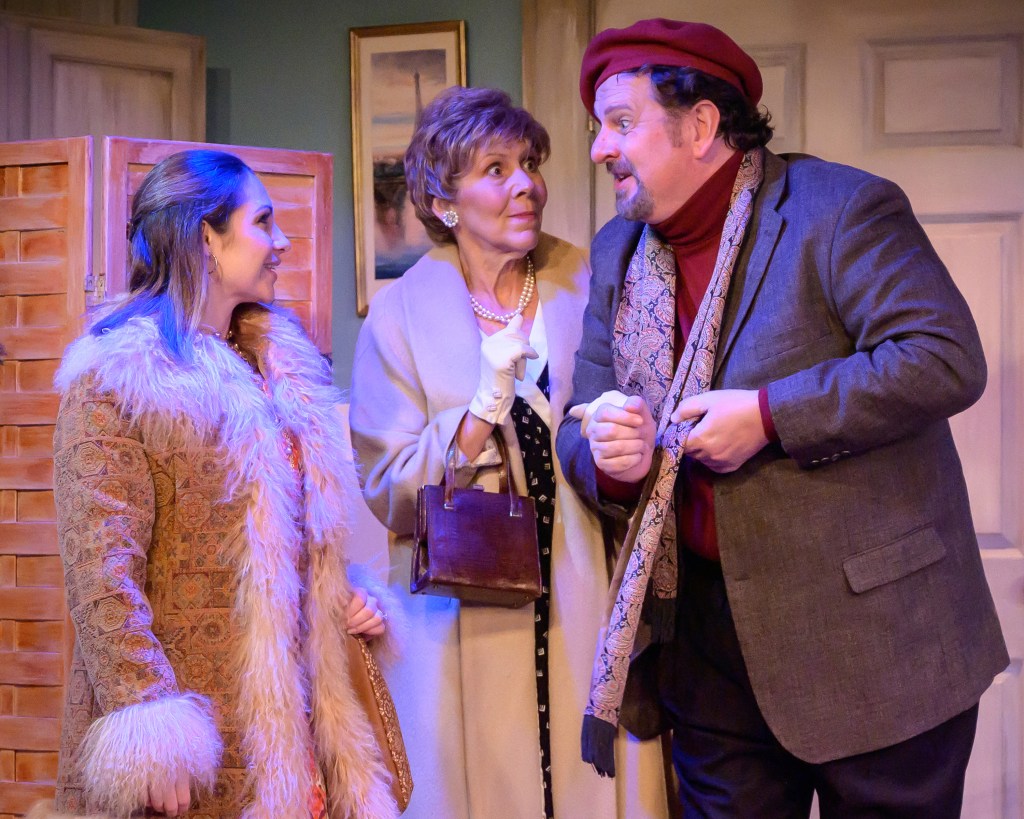
As compelling as Gilmour and Lawson are, it was Jill Williams, reprising her 2005 role as Corie’s mother, Ethel Banks, who stole the show. Williams reminds me – and I truly mean this as a compliment – of Carol Burnett. Her carriage, her facial expressions ( especially when commenting on her daughter’s apartment), her gestures, her delivery all work together to deliver pure, belly laughing comedy. I simply loved Jill Williams in this role. Opposite Williams was Joe Pabst, also reprising his role as the eccentric neighbor Victor (pronounced “Wicktor”) Velasco. How eccentric is he? I am glad you asked. Not only does he cavort about in a beret, a dressing gown, and slippers, he is a shameless flirt and moocher, and we first meet him when he knocks on the Bratters’ door so he can climb through their window to gain access to his attic apartment, But I won’t give it all away. Go see it to find out why, it’s well worth the trip.

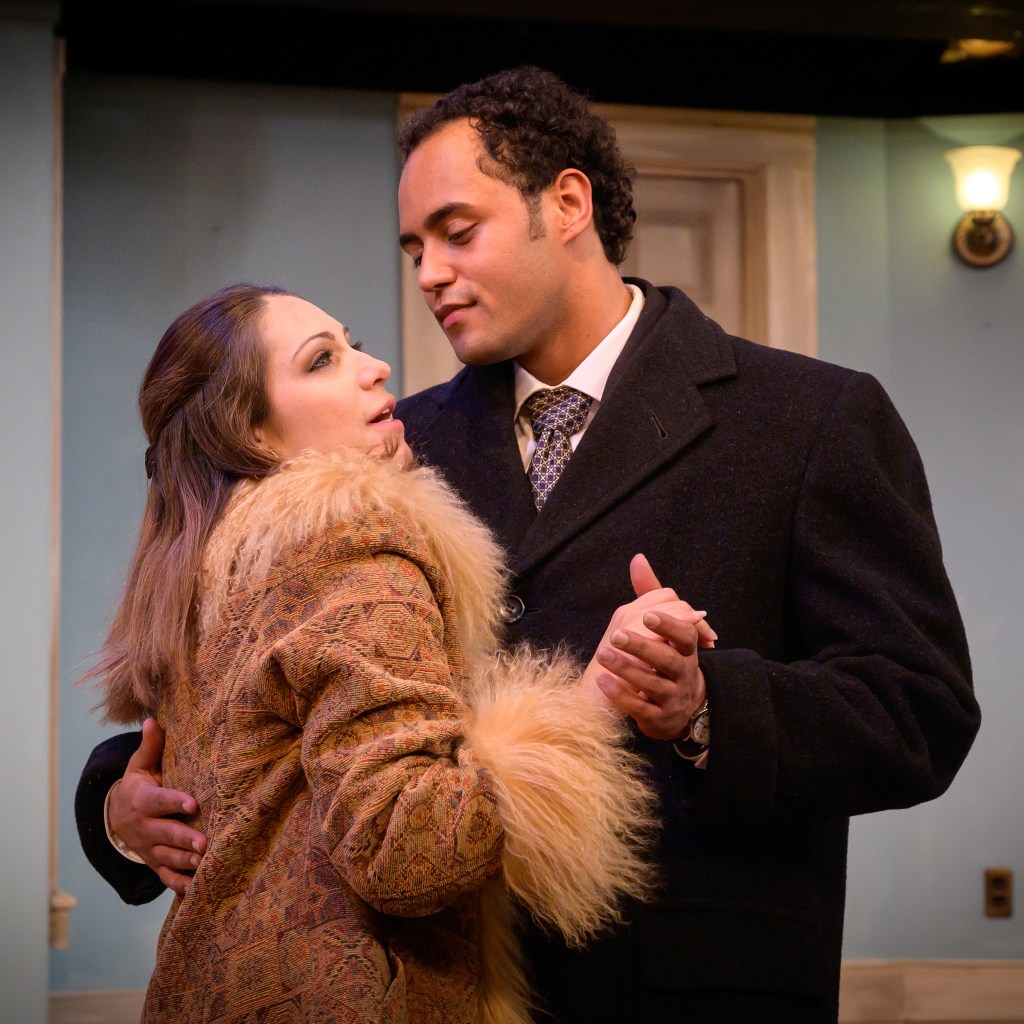
Supporting roles include Quan Chau as the telephone repair man and Williams’ husband Eric Williams as a delivery man. Who’s old enough to remember when the telephone was connected to the wall and the phone number was alpha-numeric? The Bratter’s new phone number was El Dorado 5-8191.One further cast note – and I had to think about whether to mention this at all, but I think it is relevant. This cast of Barefoot in the Park is an example of color-blind casting. Yes, an Asian actor plays the telephone repair man, but even more significantly, the leading man is played by a person of color. It would have been quite unusual to see an interracial couple in New York in 1968, or a black male lawyer living in midtown Manhattan who was completely accepted by his white mother in law who lives in New Jersey. Yeah. All of that would have made this an entirely different type of play – and the word “comedy” would not have been part of it.

While much less elaborate than many period apartments that have been constructed on the Hanover Tavern stage, Terrie Powers’ set design quickly transformed from a hideous empty shell into a warm and inviting home with just a few pieces of furniture and some well-chosen decorations. Logistically, there were a couple of things that seemed a little off. The fourth wall apparently held a mirror, but sometimes the actors seemed to be looking through the wall. And the other was the existence of a wood-burning stove in the apartment which may not have been a housing code violation in 1968 but it would certainly have been unlikely for a landlord to allow a tenant to use it.

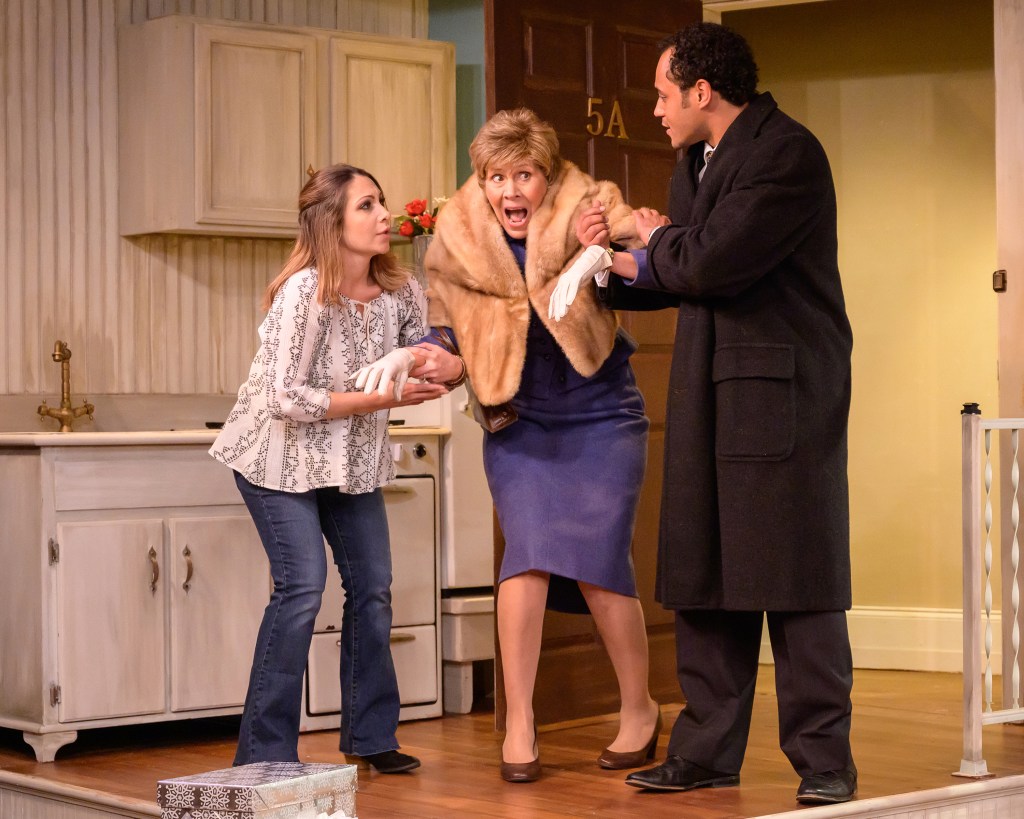
There is plenty of physical comedy in Barefoot in the Park, much of it stemming from the never-ending flights of stairs. Director Jan Guarino set a brisk pace, and the cast maintains the standard she set. There are falls (or near misses), an accident, a drunken scene, and missing clothes. There is the running joke of using the Bratter bedroom to access Victor’s apartment. Corie, Paul, and their visitors must navigate each time they enter or exit the building. After a wild night on the town – after Corie tricks her mother into going on a blind date with Victor – Paul ends up climbing the stairs with his MIL on his back. And since it’s February, we cannot really be surprised when a few snowflakes drift through the open skylight.

Barefoot in the Park addresses big themes like opposites attract, the importance of being yourself, and the power of love. But the comedy is what makes this spirit-lifting winner.

**********

FUN FACT: The average rent for a NYC apartment in 1970 was $102. The average rent for a 1-bedroom apartment in NYC in 2021 is $3,250 and is closer to $4,000 per month in the midtown neighborhood where Neil Simon’s play is set. Corrie and Paul are paying about $145 per month, but she insists on telling her mother they are paying only about $75.63.

FUN FACT: Corie and Paul spent their Honeymoon at the Plaza Hotel. In 1968 the Plaza cost $30 per night; current rates are about $850 per night.

FUN FACT: A Brownstone is a rowhouse, made of brick fronted with brownstone that was originally popular because of its natural look and low price, compared to other stone finishes. Found mostly in Brooklyn and Manhattan, brownstone homes were originally single-family homes. Many were subdivided into apartments. Most existing brownstone homes are about 100 years old, and as they are no longer constructed the prices have gone up. When I graduated from high school in 1973 my grandmother sold the small Brooklyn brownstone where I grew up for $30,000. Now, 48 years later, it is currently assessed at $1,149,500.

**********

Barefoot in the Park

by Neil Simon

Directed by Jan Guarino

Cast

Corie Bratter ……..………… Rachel Rose Gilmour

Paul Bratter ………;;;;;……. Trevor Lawson

Ethel Banks …………….….… Joy Williams

Victor Velasco ………………. Joe Pabst

Telephone Repairman …. Quan Chau

Delivery Man ………….…….. Eric Williams

Ethel Banks understudy .. Terrie Powers

Creative Team

Scenic Design: Terrie Powers

Costume Design: Sue Griffin & Marcia Miller Hailey

Lighting Design: Matt Landwehr

Sound Design: Jacob Mishler

Stage Management: Sam Shahinian

Run Time: 2 hours and 10 minutes including 2 intermissions

Note: At this time, no food or drink is allowed inside the theater

Julinda D. Lewis is a dancer, teacher, and writer who was born in Brooklyn, NY and now lives in Eastern Henrico County.

———-

Photo Credits: Aaron Sutten

One-Time
Monthly
Yearly

Make a one-time donation

Make a monthly donation

Make a yearly donation
Choose an amount

¤5.00
¤15.00
¤100.00
¤5.00
¤15.00
¤100.00
¤5.00
¤15.00
¤100.00

Or enter a custom amount

¤

Your contribution is appreciated.

Your contribution is appreciated.

Your contribution is appreciated.

Click here to donate
to RVArt Review
Click here to donate
to RVArt Review
Click here to donate
to RVArt Review

THE NUTCRACKER: LIVE

TRIUMPHANT RETURN OF HOLIDAY CLASSIC

A Dance Review by Julinda D. Lewis

By: The Richmond Ballet

At: Carpenter Theatre at Dominion Energy Center, 600 East Grace Street, RVA 23219

Performances: December 11-23, 2021

Ticket Prices: In-Person Tickets $25-$125

Info: (804) 344-0906, etix.com, or richmondballet.com

The Nutcracker
Choreography by Stoner Winslett

Music by Peter Ilyich Tchaikovsky

with The Richmond Symphony,

Erin Freeman, Conductor

Production Conceived by Stoner Winslett and Charles Caldwell

Artistic Direction & Choreography by Stoner Winslett

Scenery & Prop Design by Charles Caldwell

Christmas Tree Design by Alain Vaës

Costume Design by David Heuvel

Lighting Design by Richard Moore

Associate Lighting Design by Jim French

It’s December 2021 and in three months we will mark a most unlikely anniversary – two full years of living with a global pandemic. After months of learning the differences between social distancing, quarantine, and isolation, live theater has settled into a new routine of live performances. First, there were limited-seating performances with virtual streaming options. The new standard is to allow fully-vaccinated people to attend live performances with few seating restrictions. Patrons must show proof of vaccination and remain masked. Oh, and in the larger venues, you can forget about visiting the bar; it’s closed until further notice. All of this takes some adjusting, but it’s worth it to be able to experience the singular joy of attending a live show.

The Richmond Ballet’s holiday standard, The Nutcracker, was not performed live last year due to the pandemic, but it’s back this year and opened on Saturday, with a few modifications that did nothing to diminish the excitement of joining young Clara on her journey to Confitenberg, the Land of Sweets. Small children and adults sat mesmerized from the moment the Richmond Symphony began the familiar strains of Tchaikovsky’s score until the elaborate curtain dropped after Clara woke up from her adventure.

This year’s production of The Nutcracker is special for two reasons: it is the first live production since the world shut down in March 2020, and this is the last year to see the familiar Nutcracker costumes and sets before they get a make-over for 2022. You can expect three acts and two intermissions (although you cannot take drinks or food to your seats), but I noticed that when the clock struck twelve times only six little mice appeared instead of twelve, and the most obvious change was the absence of Mother Ginger and the dozen little dancers that hide under her voluminous hoop skirt. And of course, with nine new members in this company this season, there are lots of new casting choices to experience.

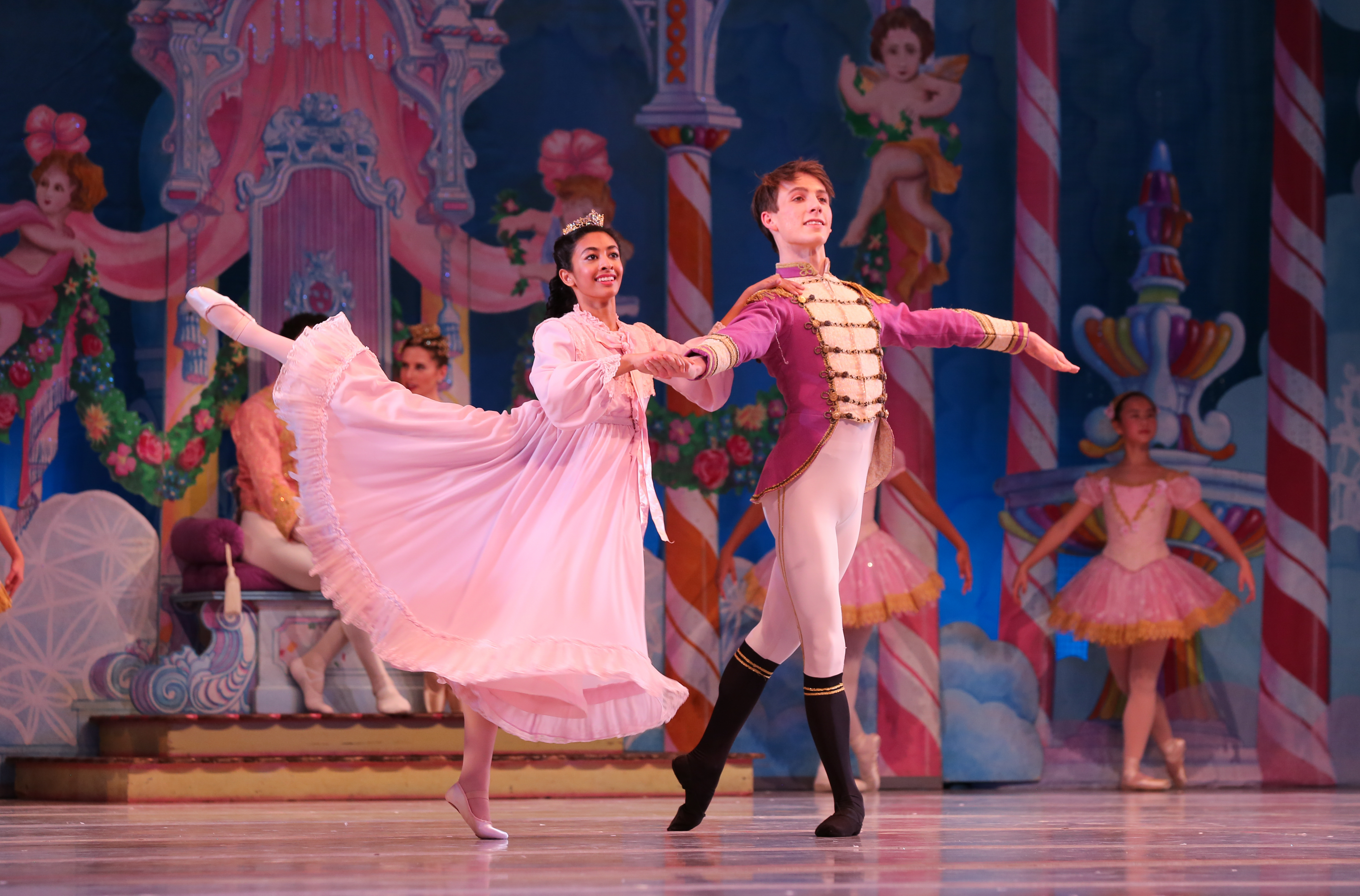
Adhya Yaratha dances the coveted role of Clara, the recipient of the magical nutcracker doll. Yaratha, a student at The Steward School, was recently featured as a “Standout Spartan” in her school’s newsletter. She revealed that she has been dancing for 13 years and “for much of that time” dreamed of being cast as Clara. She danced with grace and confidence and made a delightful Clara.

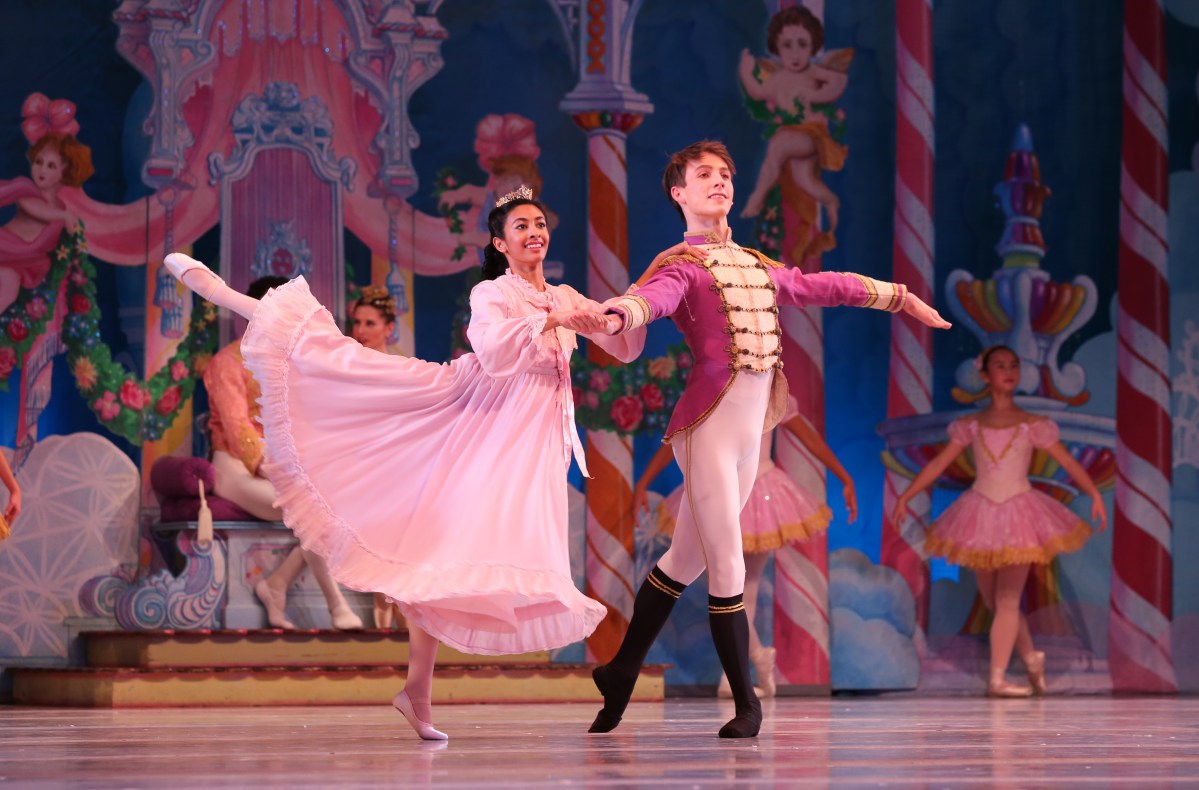
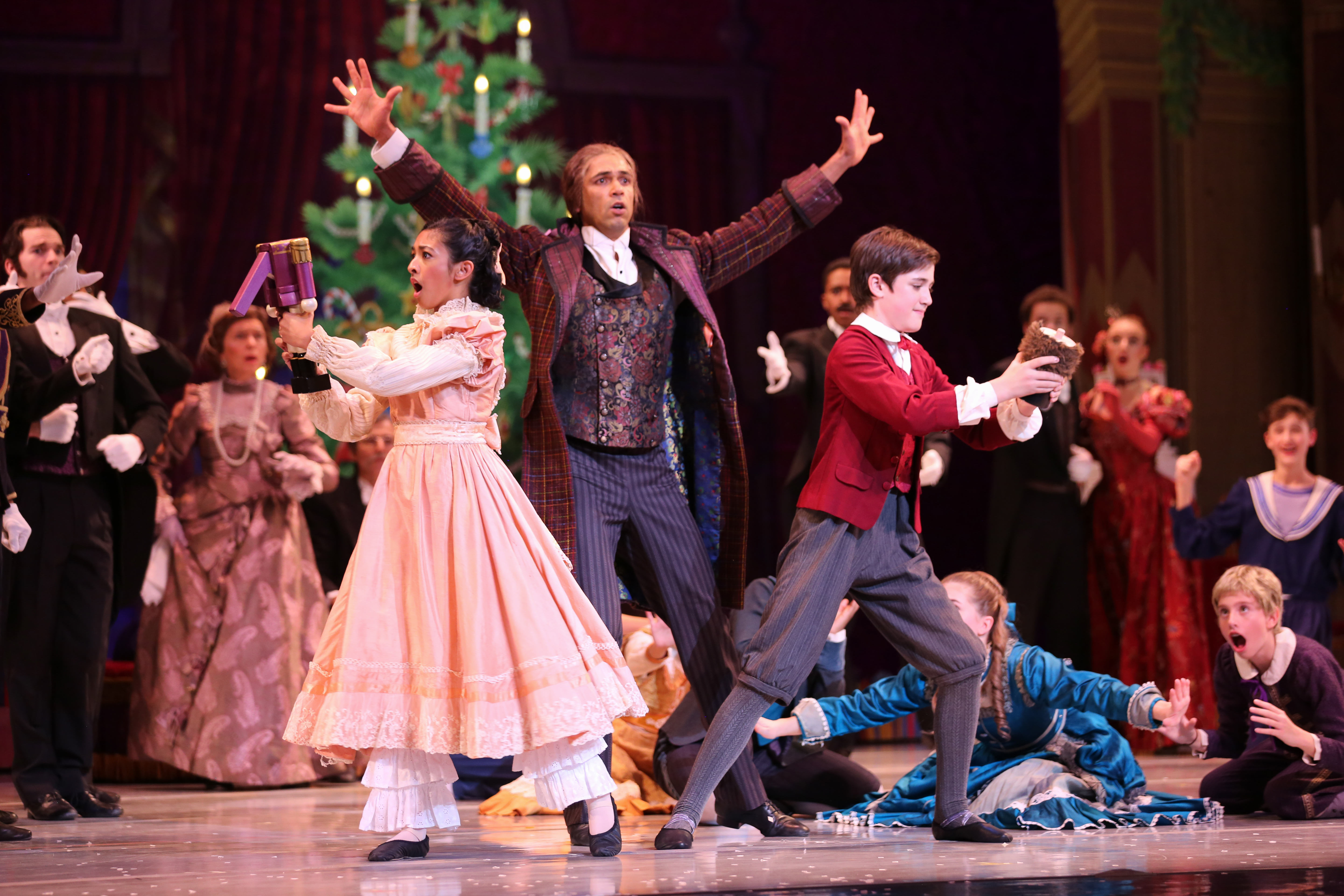
Bladen Kidd held his own as Clara’s recalcitrant little brother, a band of boys on a series of humorously disruptive raids against the girls at the Silberhaus’ annual Christmas party. Carter Bush (RB Trainee) proved to be an attentive apprentice to his uncle, the mysterious Dr. Drosselmeyer (the recently retired Fernando Sabino returning as a guest) and a courteous Nutcracker Prince accompanying Clara on her adventures in the Kingdom of Sweets.

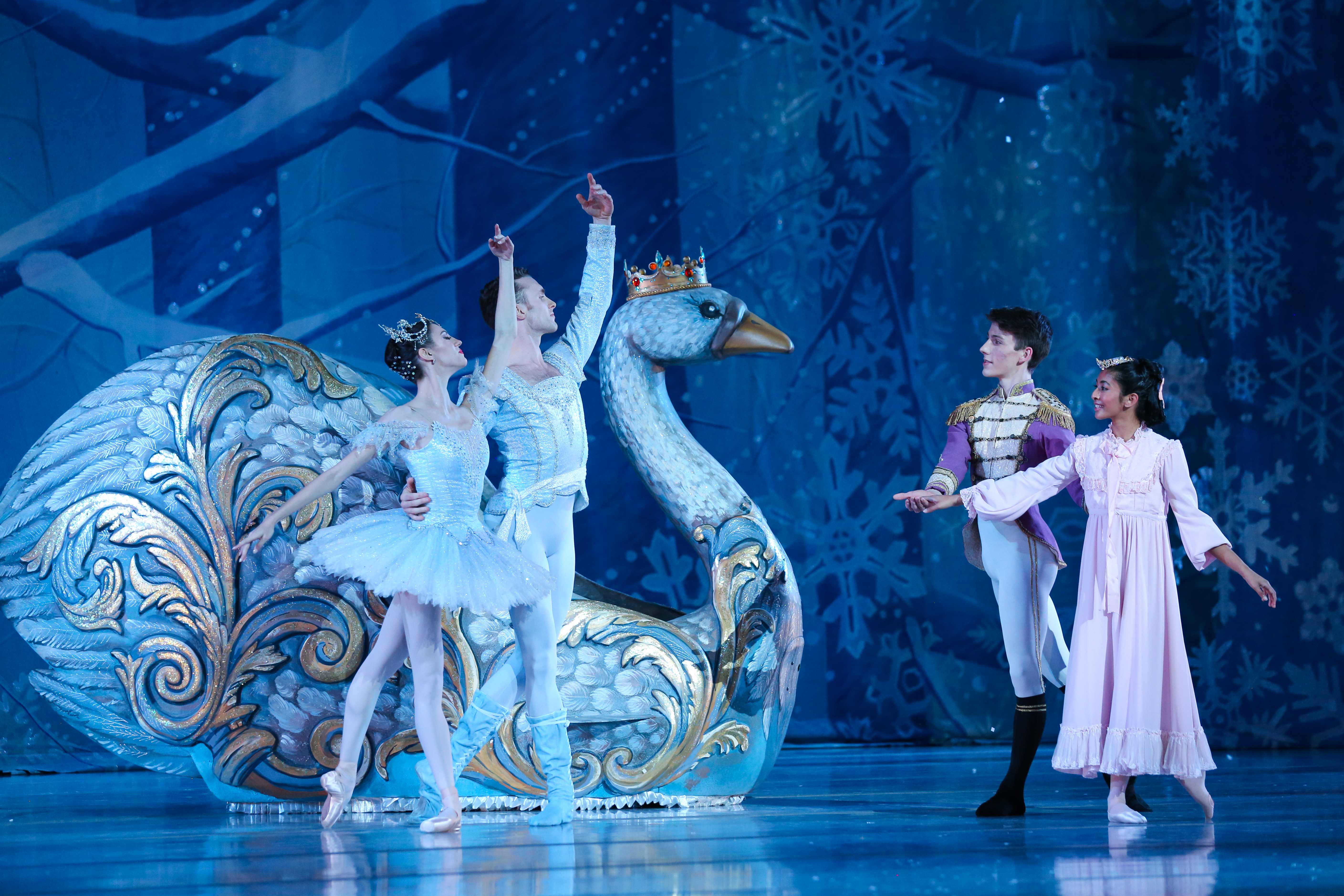
The predictability and tradition of The Nutcracker are part of its charm, and seemed especially important this year: they were signs of stability and normalcy. Whoever thought a magical growing Christmas tree and a swan sled could represent stability?

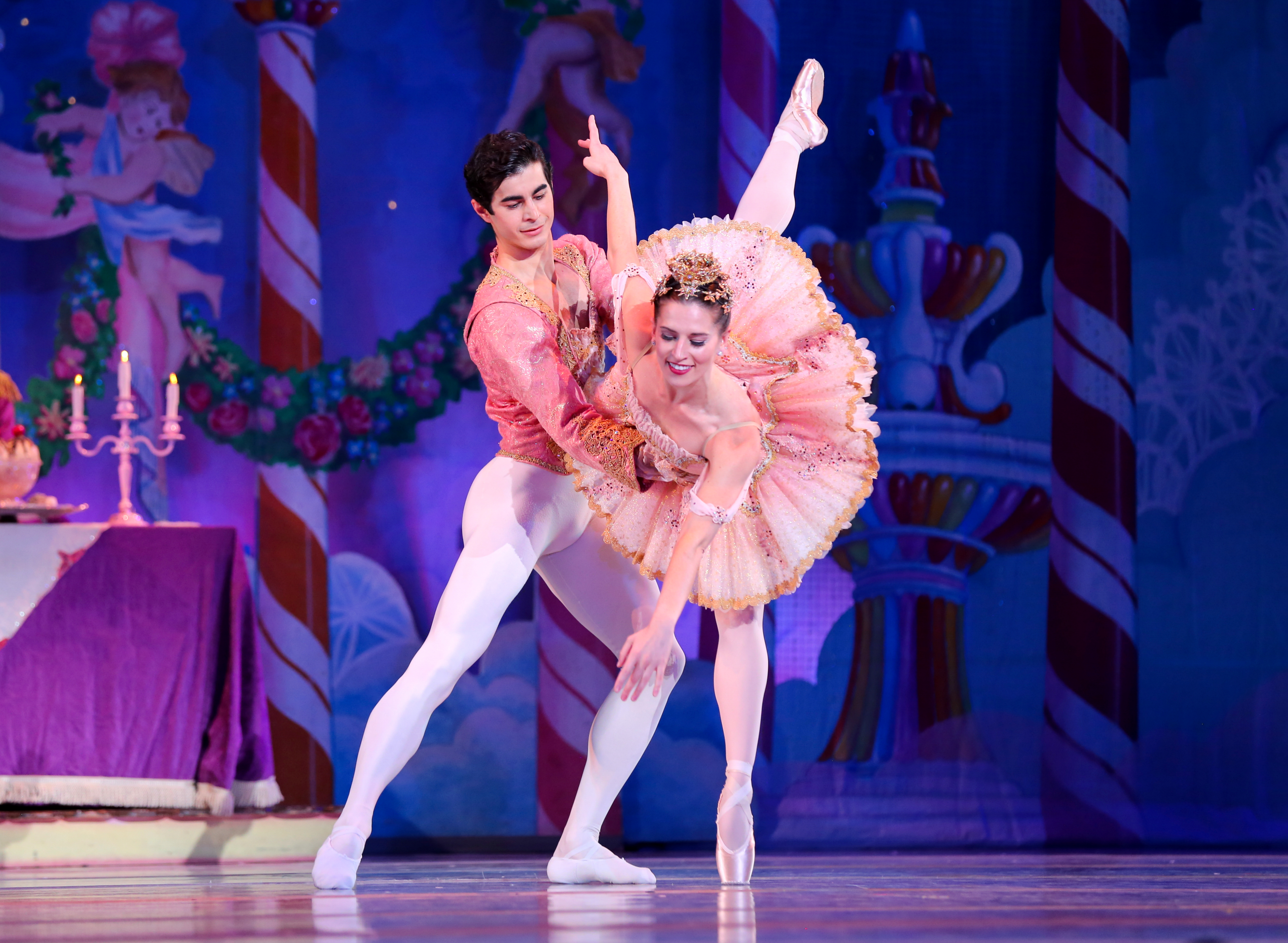
Sabrina Holland and Khaiyom Khojaev danced the “other” leading roles – you know, the adult ones – the Sugar Plum Fairy and her Cavalier. They welcome Clara and her Prince to the Kingdom of Sweets and close Act Three with a grand pas de deux that epitomizes the lightness of the Romantic ballerina and the supportive role of the male dancer, with both attacking their technique with relish and flair.

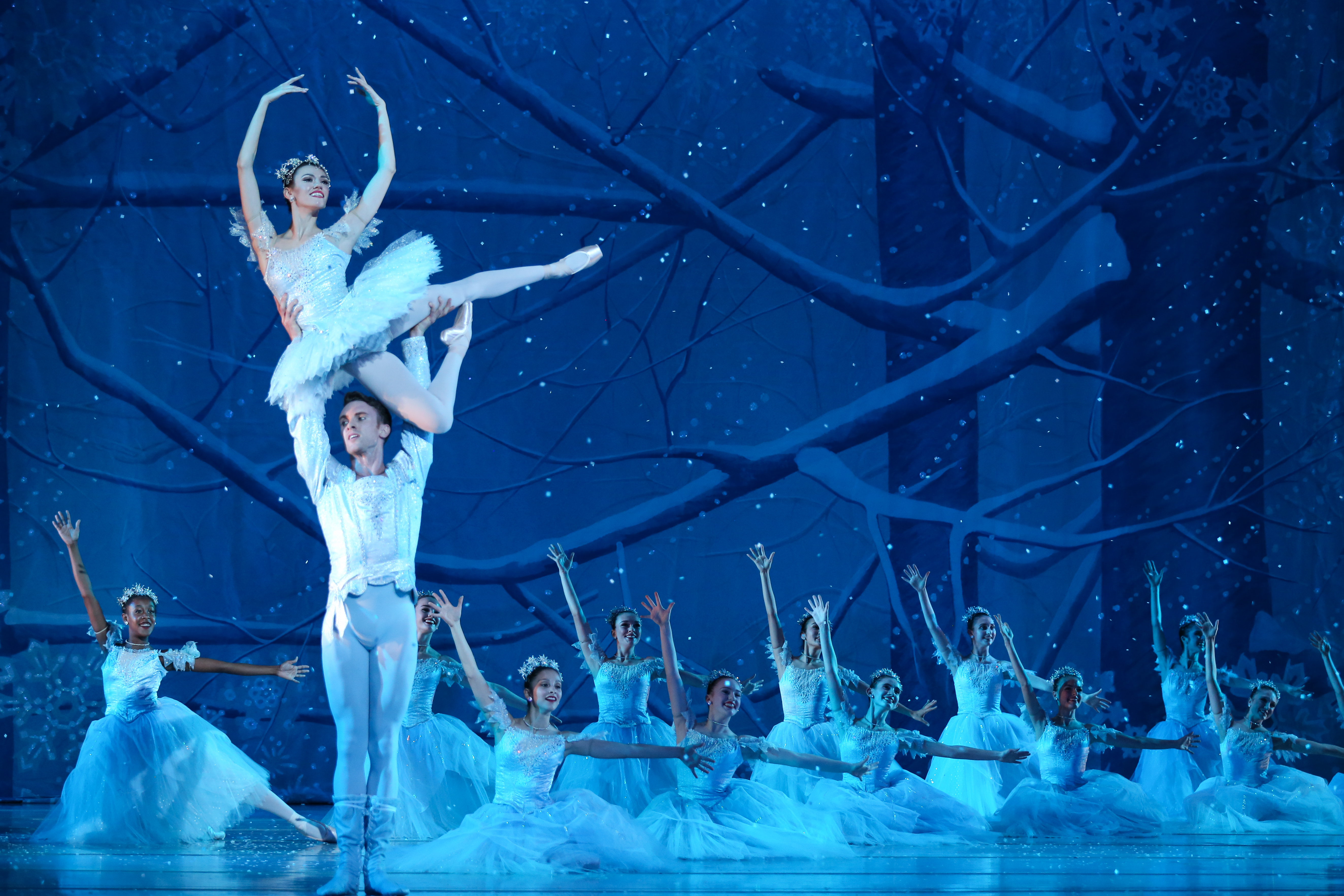
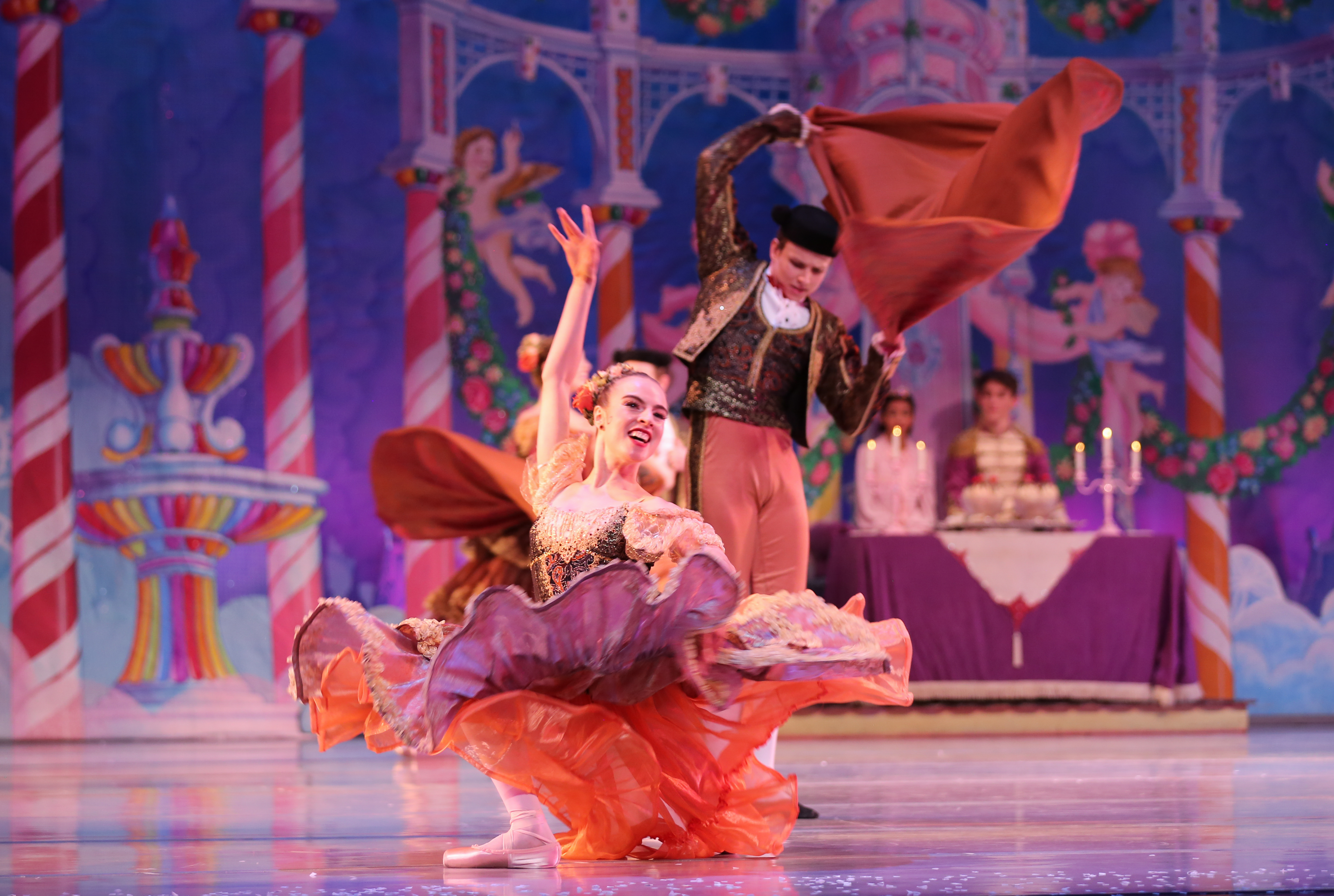
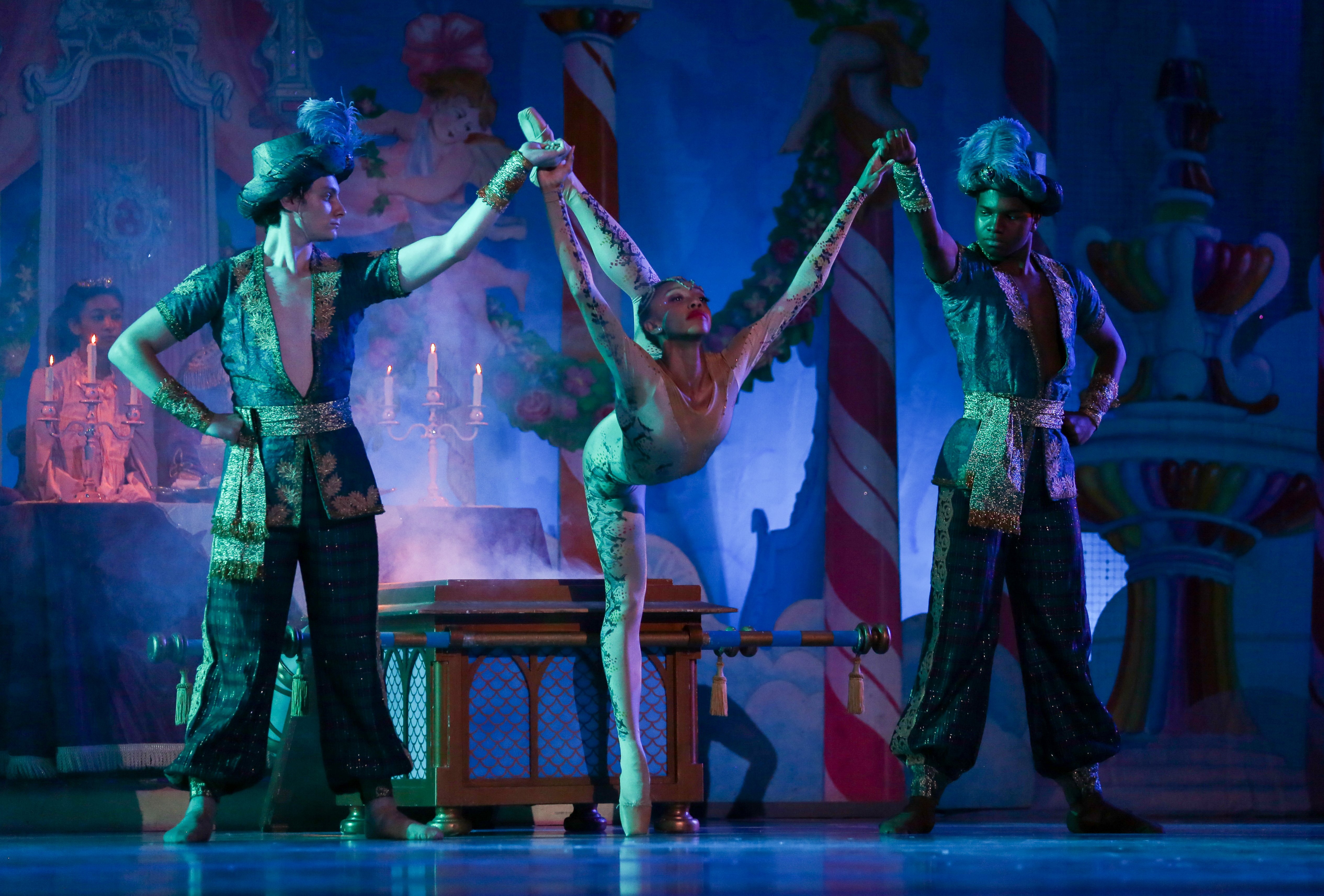
All the favorite characters are there and there are plenty of roles for Richmond Ballet II, the Trainees, and the students of the School of the Richmond Ballet. The battle between the Mouse Army and the Regiment Soldiers features Jackson Calhoun (RB II) in the comedic role of the Mouse King. Principals Izabella Tokev and Joe Seaton deliver a picture perfect ice blue pas de deux as the Snow Queen and Snow King, attended by a corps of a dozen Snowflakes. Celeste Gaiera and Patrick Lennon, Marjorie Sherman and Jack Miller dance a Spanish jota with flair. Naomi Robinson and Ira White revive the sensual Snake and her Charmer, and Naomi Wilson dances the acrobatic role of Tea, accompanied by a group of Chinese dragon dancers.

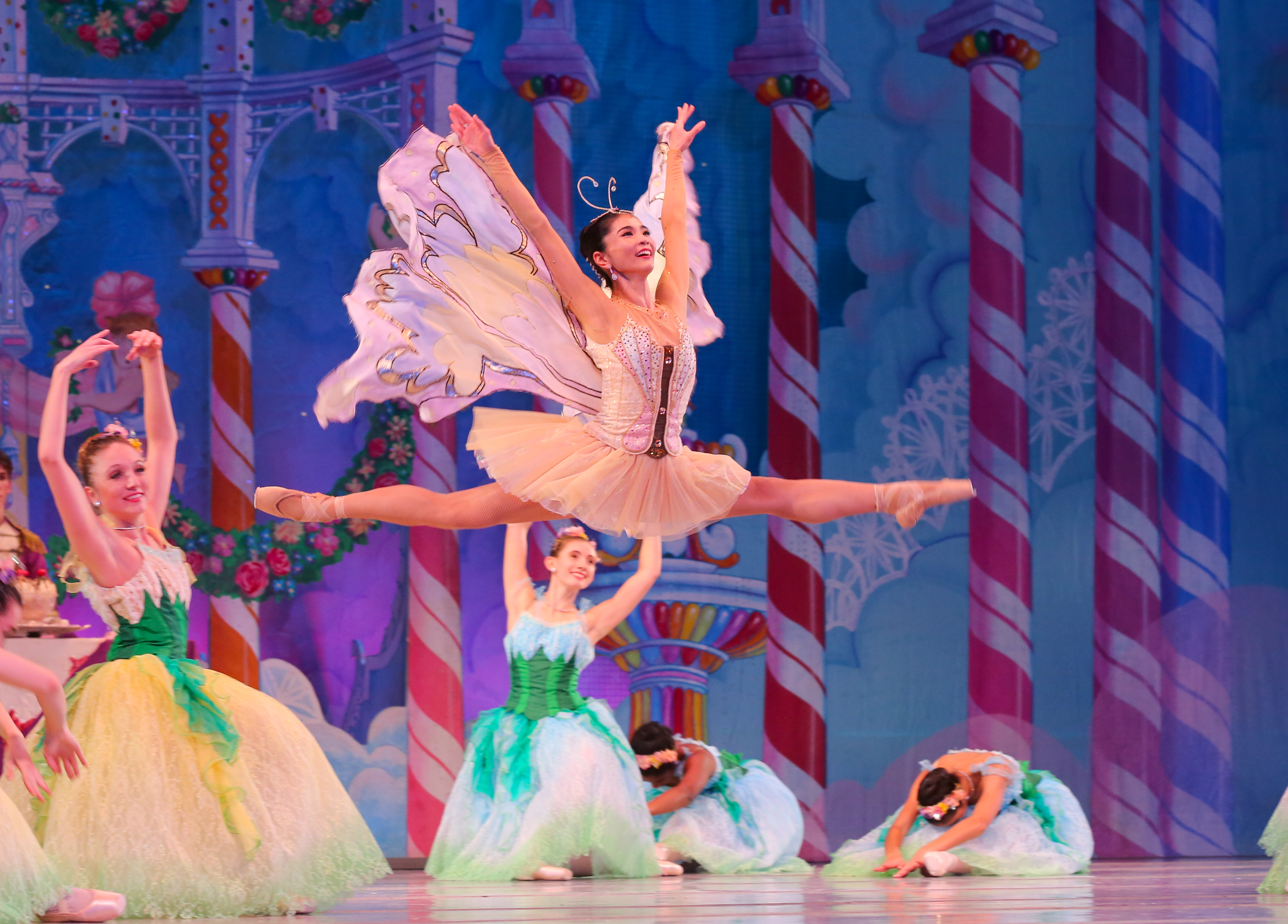
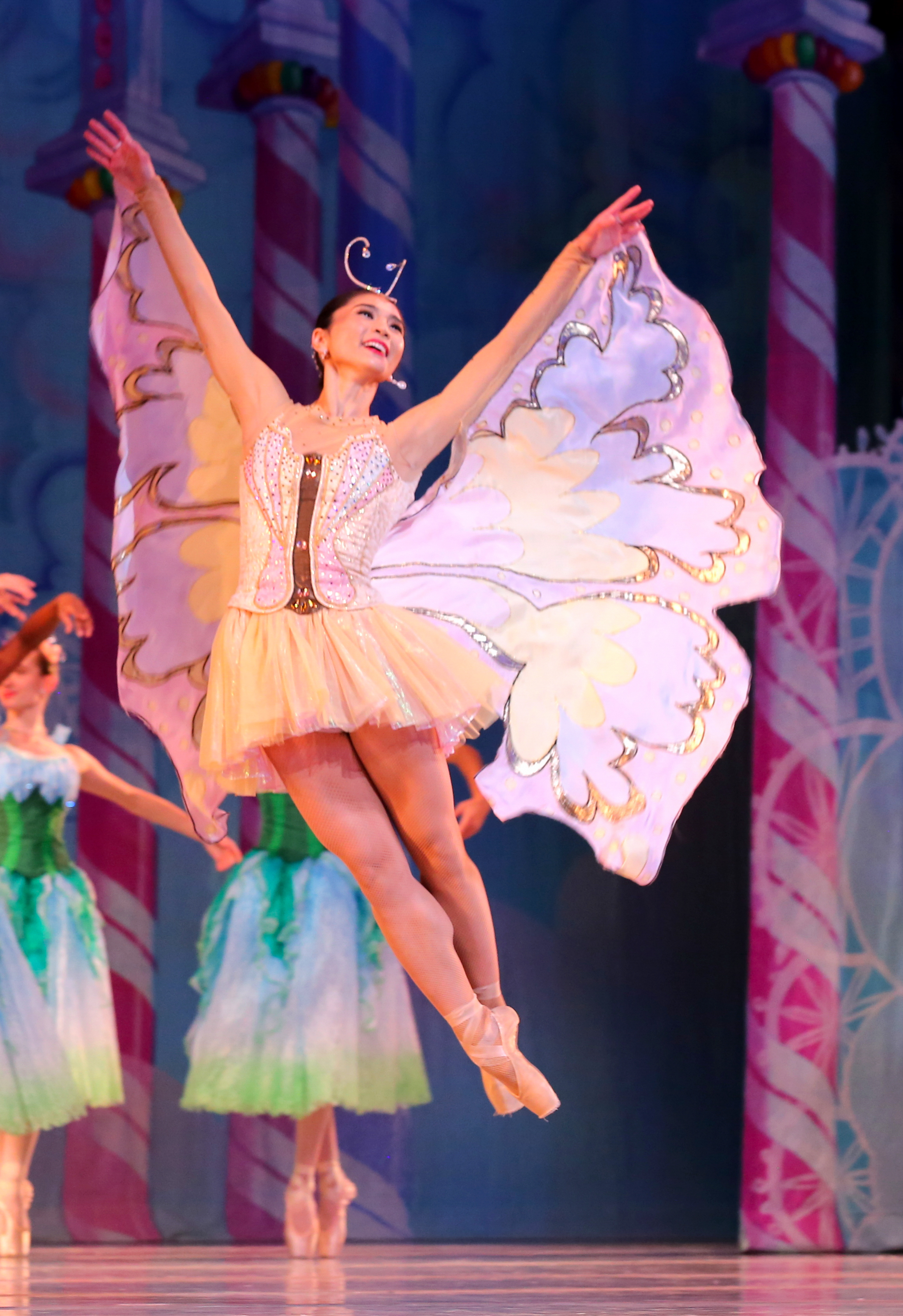
Sarah Joan Smith and Colin Jacob (both first year company members) are the Shepherdess and Shepherd who shelter a half dozen little lambs who steal the show. They have masks added to their costumes this year which fit perfectly with their costumes. Paul Piner, Roland Jones, and Zacchaeus Page, all members of RB II, are the ever-popular Russian dancers with their very hip dancing bear (Piner), and Eri Nishihara dances the role of the bedazzled butterfly, surrounded by a dozen Candied Flowers.

The diverse and multi-generational cast is an apt reflection of the audience and represents the best of what this season represents. It’ so good to have The Nutcracker back onstage at The Carpenter Theatre this year; there is nothing like live theater to offer a magical escape from the everyday and mundane.

The Nutcracker Performance Schedule

Saturday, December 11th, 2021 @2:00pm and 7:00pm

Sunday, December 12th, 2021 @1:00pm and 4:30pm

Saturday, December 18th, 2021 @2:00pm and 7:00pm

Sunday, December 19th, 2021 @1:00pm and 4:30pm

Wednesday, December 22nd, 2021 @7:00pm

Thursday, December 23rd, 2021 @2:00pm

COVID-19 Protocols: Upon entering the theatre, all audience members ages 12 and above are required to show printed or digital proof of full vaccination against COVID-19 or of a professionally-administered negative COVID-19 test taken within 72 hours of the performance. Patrons ages 18 and above will also need to show a photo ID. All patrons ages 2 and above will continue to be required to wear masks.Please note: Proof of a negative COVID test is not required for children under the age of 12.

Photos Credits: Sarah Ferguson

One-Time
Monthly
Yearly
Make a one-time donation

Make a monthly donation

Make a yearly donation
Choose an amount

¤5.00
¤15.00
¤100.00
¤5.00
¤15.00
¤100.00
¤5.00
¤15.00
¤100.00

Or enter a custom amount

¤

Your contribution is appreciated.

Your contribution is appreciated.

Your contribution is appreciated.

make a holiday donation to support
rvart review
make a holiday donation to support
rvart review
make a holiday donation to support
rvart review

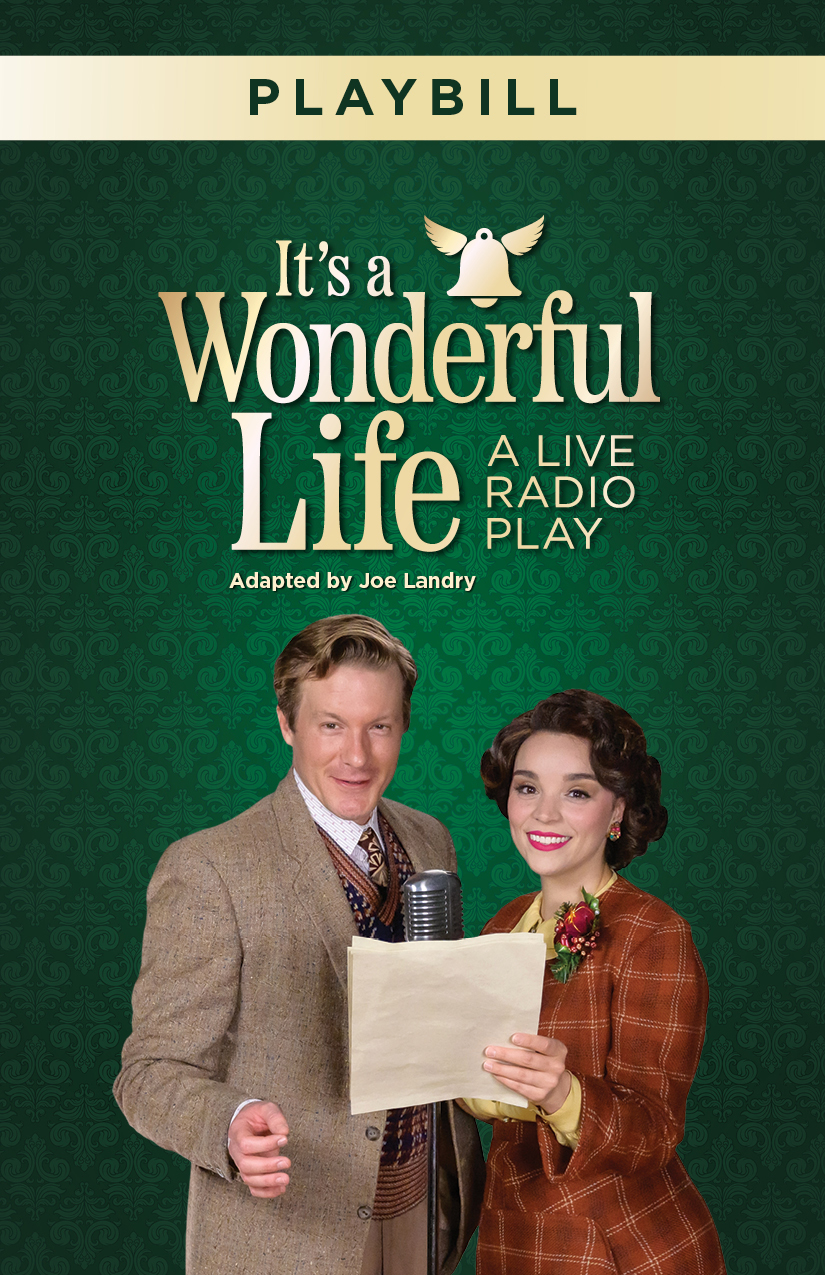
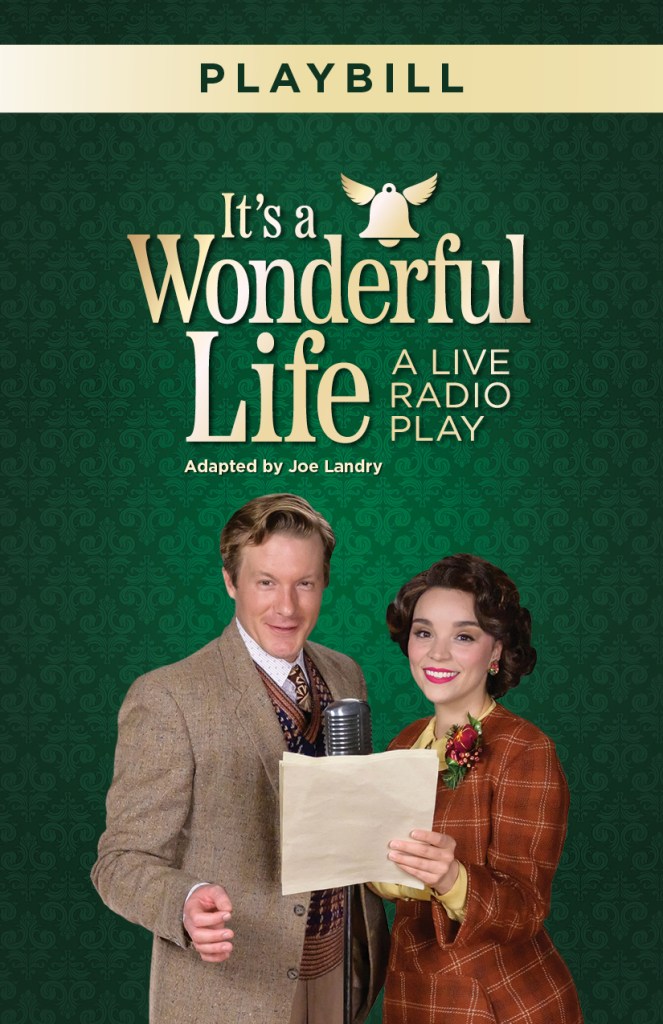
IT’S A WONDERFUL LIFE: A LIVE RADIO PLAY

A Christmas Classic with a Gift

IT’S A WONDERFUL LIFE

A Live Radio Play

A Theater Review by Julinda D. Lewis

At: The November Theatre Arenstein Stage. 114 West Broad Street, RVA 23220

Performances: December 2, 2021 – January 2, 2022

Ticket Prices: $36-$56. Discounted group rates and rush tickets available.

Info: (804) 282-2620 or www.virginiarep.org

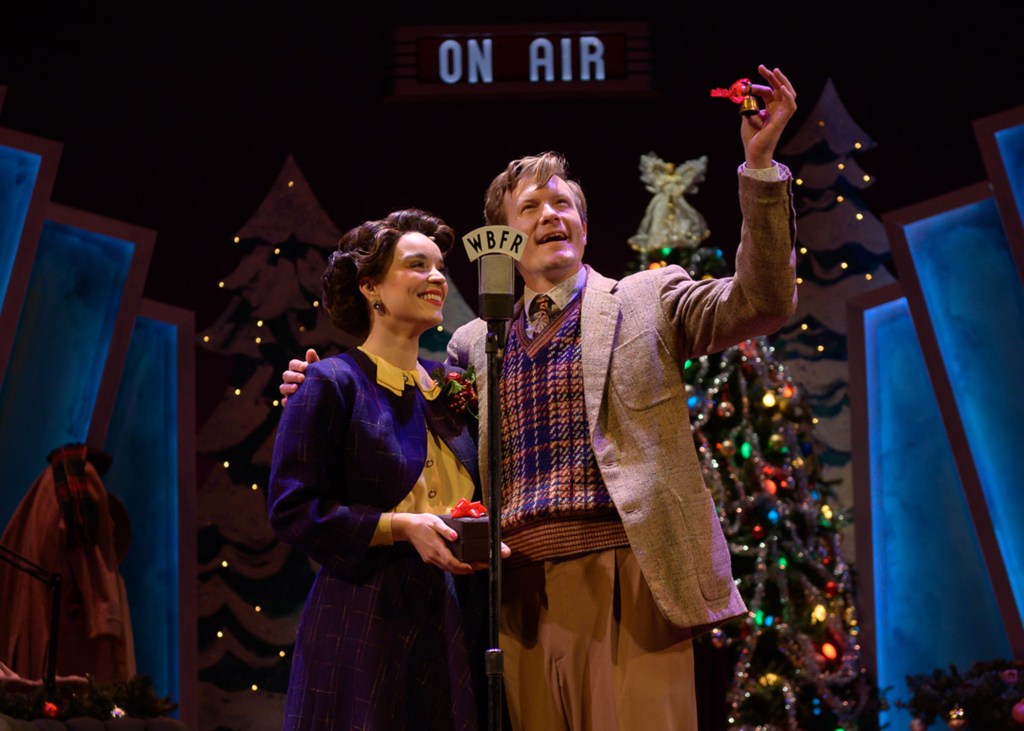
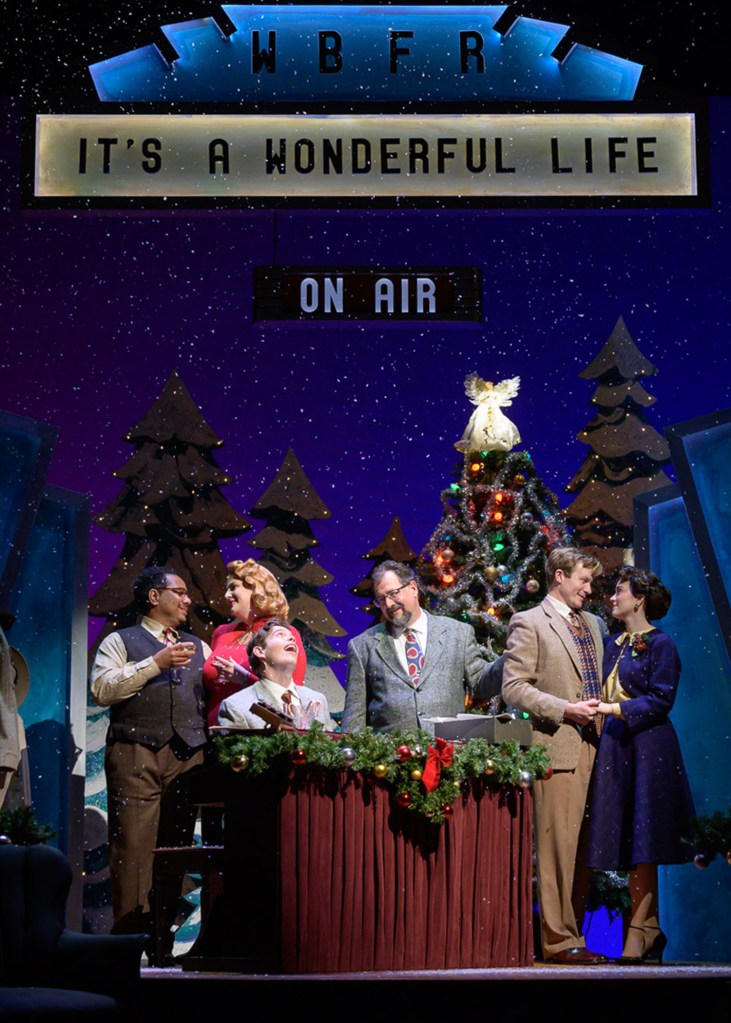
IT’S A WONDERFUL LIFE: A Live Radio Play is a feel-good American holiday classic that unfolds on a stage designed to look like an art deco Christmas card. The set represents the stage and auditorium of Studio A at WBFR in Manhattan, New York on Christmas Eve 1946. An On Air sign adds authenticity, and Applause signs provide cues for the audience – so pay attention.

The house lights are on as the action starts, and we quickly find out that we, the VaRep audience, have been assigned roles as the live studio audience. The actors, playing multiple roles, greet us – some more warmly than others – as they arrive for their show. It seems that not everyone had been told they would be performing before a live studio audience.

The story, adapted by Joe Landry from Phillip Van Doren Stern’s story “The Greatest Gift,” (and the 1946 film starring James Steward and Donna Reed) is an Everyman morality play that borrows freely from “A Christmas Carol.” In IT’S A WONDERFUL LIFE, we meet George Bailey on Christmas Eve 1946, at the nadir of his life’s journey. After giving up his personal dreams for the sake of his family, his friends, and his town, he finds himself about to lose everything and, in the words of his arch enemy, Mr. Potter, he’s worth more dead than alive.

The holidays are a stressful time for many, and IT’S A WONDERFUL LIFE acknowledges this very real problem, but balances it with humor and the most unusual distraction found in any play. Some of the humor comes in the form of breaks to acknowledge the sponsors of the play within the play. There’s a commercial for Bremo hair cream and Duck’s Toilet Cake Soap, set to Christmas tunes and sung by the cast within the cast. As for the distraction, well, for me, the best part of IT’S A WONDERFUL LIFE is watching the cast perform the role of the Foley artists who create the sound effects. There’s everything from footsteps and doors slamming shut to breaking glass, from doorbells ringing to thunderclaps.

The talented cast includes Kurt Benjamin Smith and Anna da Costa in the lead roles of Jake Laurents and Sally Applewhite, New York City actors who in turn play the roles of Bedford  Falls, NY residents George and Mary. Maggie Bavolack, Joshua Mullins, William Anderson, and Bo Wilson round out the cast playing the roles of actors Lana Sherwood, Harry Heywood, radio host Freddie Filmore, and actor Oliver Johnston. They, in turn, play all the citizen of Bedford Falls, NY, the small town where George Bailey’s guardian angel arrives on Christmas Eve to show him how much of an impact his life has had on so many.

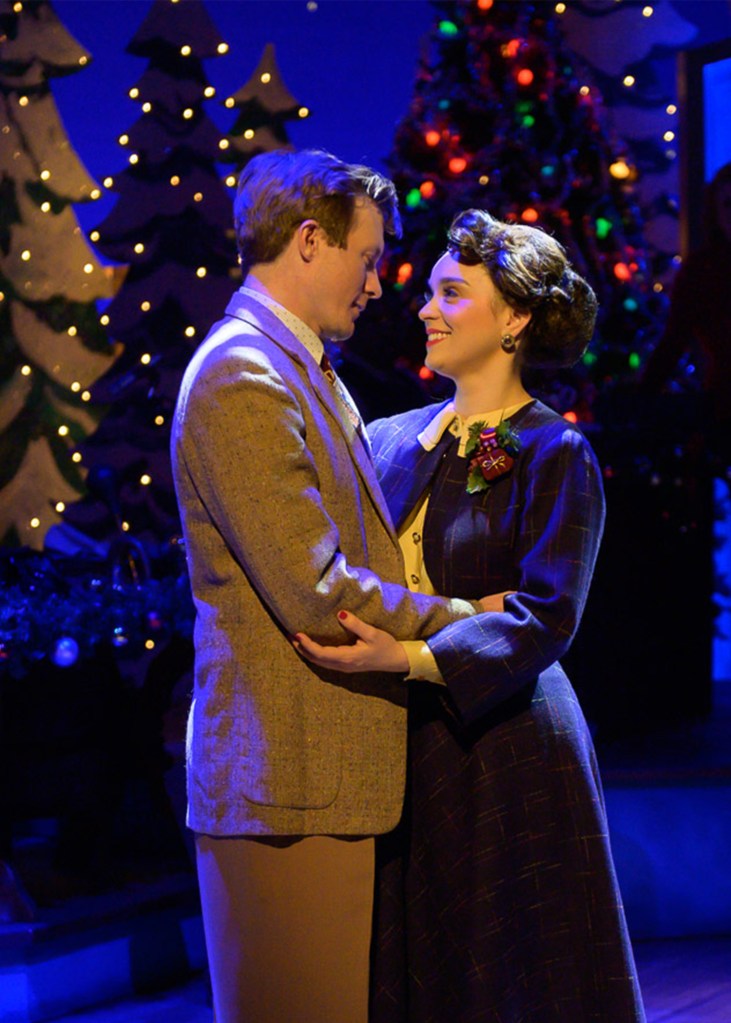
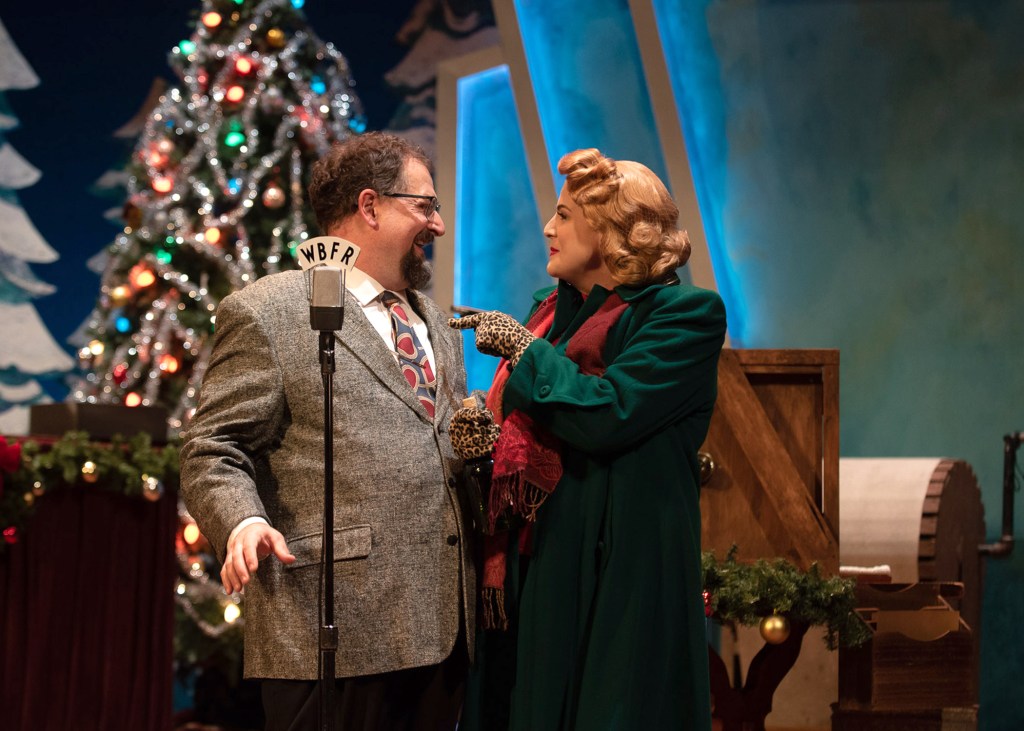
I thought Smith and da Costa had good chemistry and da Costa was powerfully understated as Mary – especially as many of the other characters were so over the top. Anderson, for instance, was steady and unassuming as Freddie Filmore, the radio show host, but high-pitched, hysterical, and giggly as Uncle Billy Of course, given Uncle Billy’s proclivity for liquid fortification, this was completely in character. Maggie Bavolack looked gorgeous as Lana Sherwood and her Bedford Falls characters varied from loyal friend to va-va-voom girl, complete with a drum-roll to accompany her seductive strut. Bo Wilson sampled his various voices before the radio show cast metamorphosed into their Bedford Falls characters, but he seemed to relish the evil Mr. Potter more than any other.

Given the often quick pace of the show, and with six actors playing multiple characters who often spoken over one another, it was necessary to clearly distinguish between the various characters, and most of the time I was, indeed, able to keep up with who was who. At first I was concerned that the background music was too loud and intrusive, but this issue was short-lived. After the introductions, the background music faded into the background where it belonged.
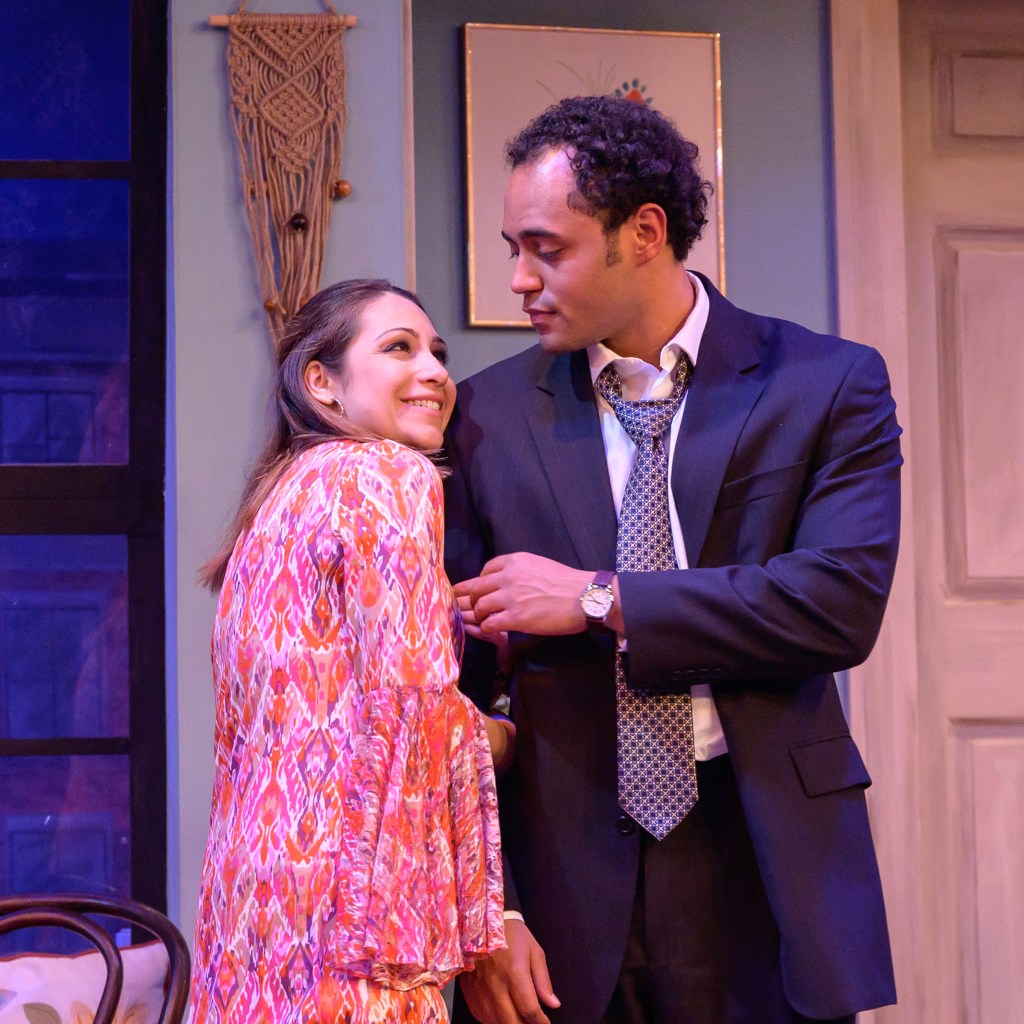
The six actors shared three mic stands, and switched rapidly between them, but this was not necessarily an indication of a change of character, so IT’S A WONDERFUL LIFE really keeps the viewer engaged and actively involved. This is a plus given that the show, which runs an hour and 45 minutes was performed without intermission. (Even though this is a family-friendly play, VaRep cautions prospective members that younger viewers may be challenged by the length of this production, given that there is no intermission.)
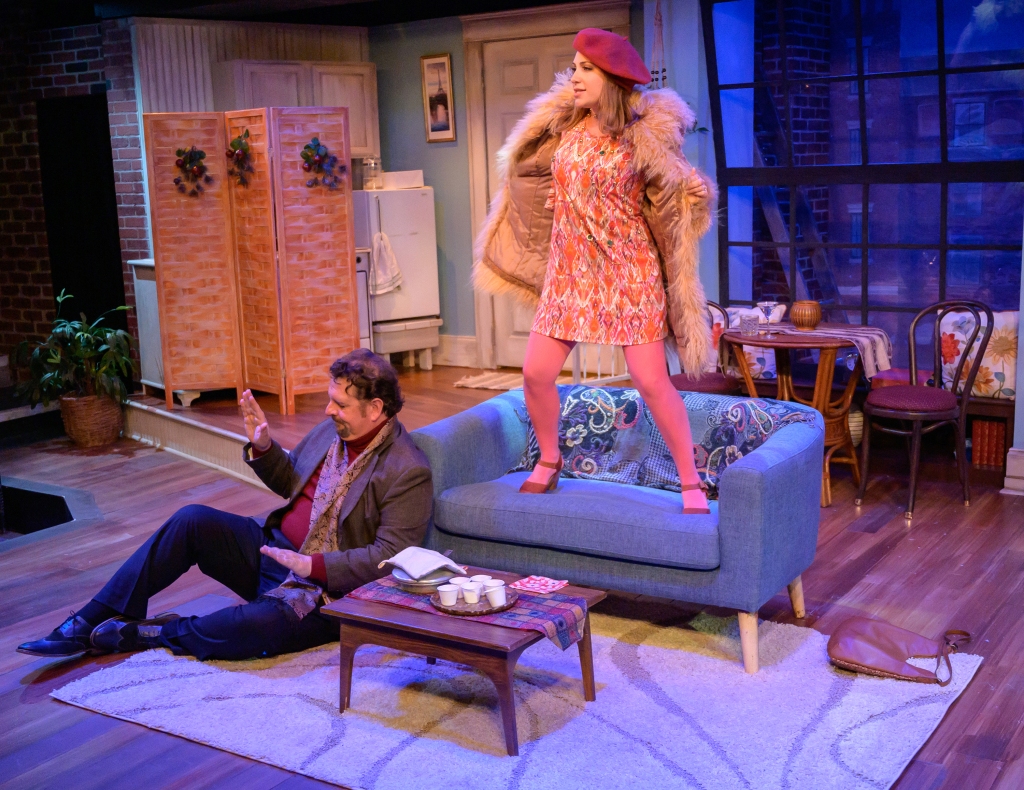
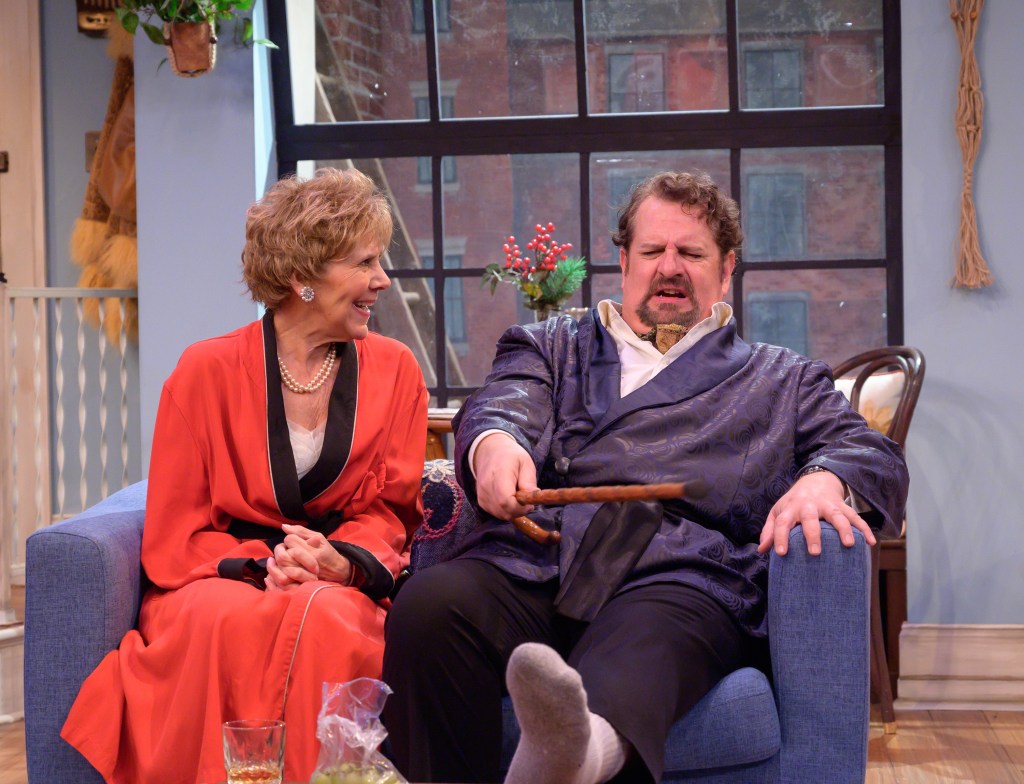
Mercedes Schaum’s scenic design was attractive and practical, allowing space for all the Foley equipment without overpowering the actors. Sue Griffins’ costumes were appropriate for the time, 1946, but Mary Hatch Bailey’s dress was especially fetching. Jacob Mishler gets the credit for the impressive sound design. Chelsea Burke’s direction kept things moving at a speedy pace, and maintained a comfortable balance between the extremes of comedy and tragedy. IT’S A WONDERFUL LIFE is a wonderful show that belongs in your canon of Christmas rituals.

NOTE: For my review of a similar show, A 1940s Radio Christmas Carol at Swift Creek Mill Theatre, November 2018 – January 2019, click here: https://wordpress.com/post/jdldancesrva.com/724

IT’S A WONDERFUL LIFE: A Live Radio Play

Adapted by Joe Landry

“It’s a Wonderful Life” is based on the story, “The Greatest Gift” by Phillip Van Doren Stern from the screenplay by Frances Goodrich, Albert Hackett, Frank Capra, and Jo Swerling

DIRECTION

Chelsea Burke

CAST

Jake Laurents…………………………. Kurt Benjamin Smith

Sally Applewhite……………………………… Anna da Costa

Lana Sherwood……………………………. Maggie Bavolack

Harry Heywood………………………………. Joshua Mullins

Freddie Filmore……………………………William Anderson

Oliver Johnston………………………………………… Bo Wilson

Cover…………………………………………………. Nora Ogunleye

Cover………………………………………………… Alvan Bolling II

CREATIVE TEAM

Scenic Design………………………………… Mercedes Schaum

Costume Design ……………………….…………….…. Sue Griffin

Lighting Design ………….,…………………….….. BJ Wilkinson

Dialect Coach ………………………….………Karen Kopryanski

Sound Design ………………………………………… Jacob Mishler

Stage Management ………………………….…….. Justin Janke

Photo Credits: Aaron Sutten

Julinda D. Lewis is a dancer, teacher, and writer who was born in Brooklyn, NY and now lives in Eastern Henrico County.

Virginia Rep COVID Guidelines

To provide the highest level of safety, all patrons are required to show proof of vaccination, or proof that they have received a negative COVID test by a professional technician within 48 hours of the performance date/time.

Patrons must show your vaccination card or a photo of the card on your phone, along with a valid photo ID, when you arrive for the performance. If you are unable to be vaccinated, you may provide proof of a Rapid COVID-19 antigen test taken within 48 hours of your performance. At home tests will not be accepted.

Please see the Virginia Rep Covid Safety FAQ for details.

In accordance with current city, state, and CDC guidance, face masks are REQUIRED at all times while you are in the building, regardless of whether or not you have been vaccinated.

At this time, no food or drink is allowed in the theatre.

One-Time
Monthly
Yearly

Make a one-time donation

Make a monthly donation

Make a yearly donation

Choose an amount

¤5.00
¤15.00
¤100.00
¤5.00
¤15.00
¤100.00
¤5.00
¤15.00
¤100.00

Or enter a custom amount

¤

Your contribution is appreciated.

Your contribution is appreciated.

Your contribution is appreciated.

RVART Review is happy to accept your donations in any amount. click here.RVART Review is happy to accept your donations in any amount. click here.RVART Review is happy to accept your donations in any amount. click here.

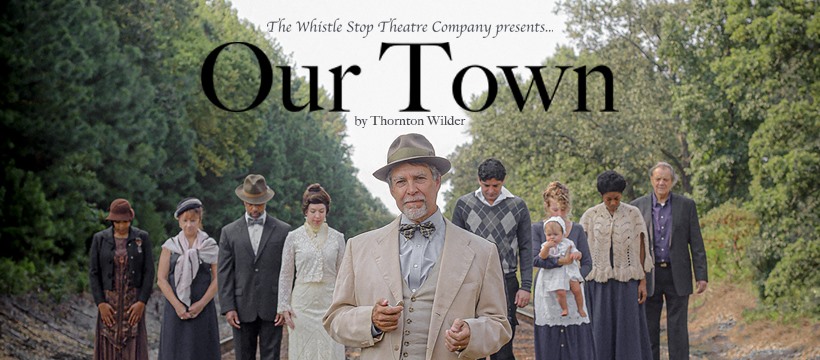
OUR TOWN

“Does Anyone Ever Realize Life While They Live It?

A Theater Review by Julinda D. Lewis

At: The Ashland Theatre, 205 England Street, Ashland, VA 23005

Performances: November 3, 12 & 13, 2021

Ticket Prices: November 3: Pay What You Can. November 12 & 13: $10 donation.

Info: whistlestoptheatre@gmail.com

Nothing out of the ordinary happens in Thornton Wilder’s Pulitzer Prize-winning play, OUR TOWN, and that is precisely the point. But first, a confession: like many of you, I have heard of OUR TOWN, but this is the first time I have every actually seen it.

Presented in three acts, “Daily Life,” “Love and Marriage,” and “Death and Eternity,” the play – a metadrama, if you will, that is narrated by the Stage Manager (Craig Keeton) – follows the simple, everyday lives of two families who live in the fictional New Hampshire town of Grover’s Corners from 1901 to 1914. Children grow up. People fall in love and get married. Others die. And therein lies the thick of the plot.

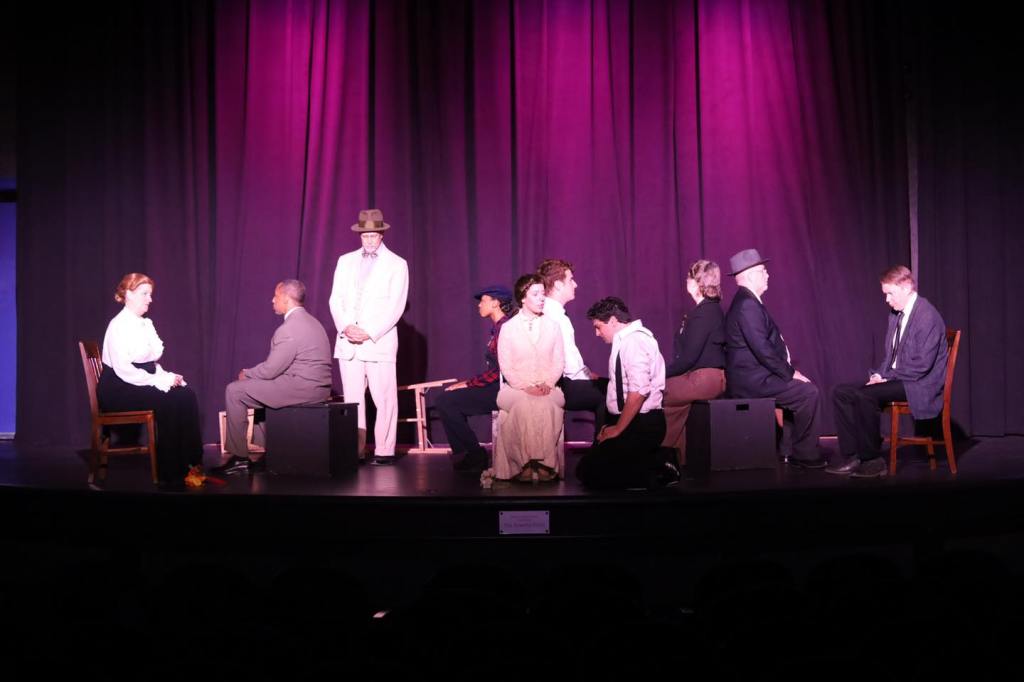
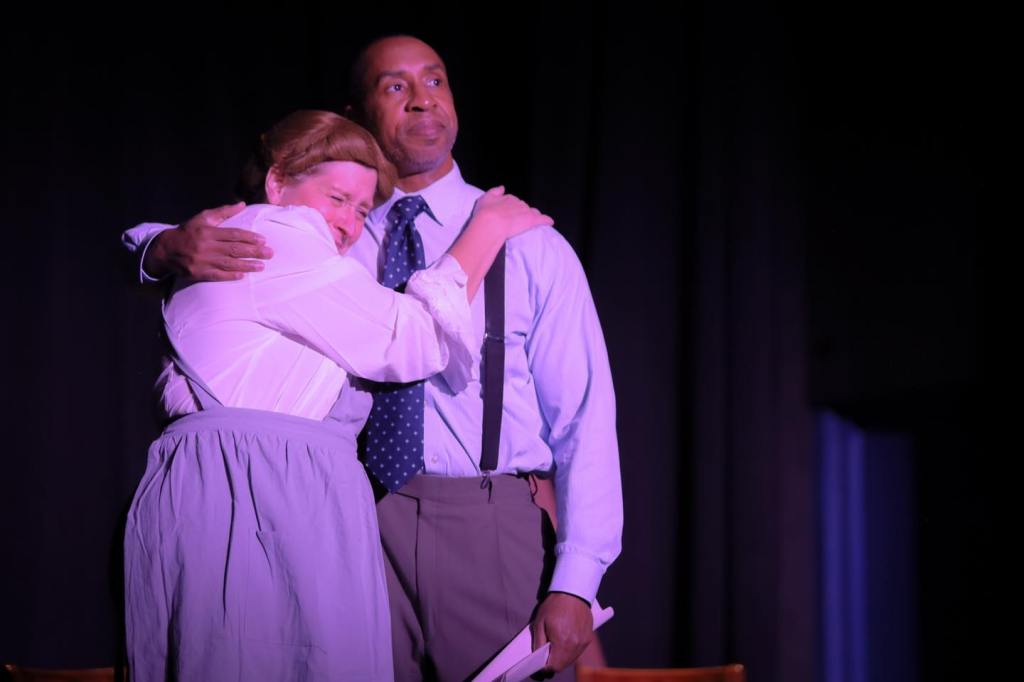
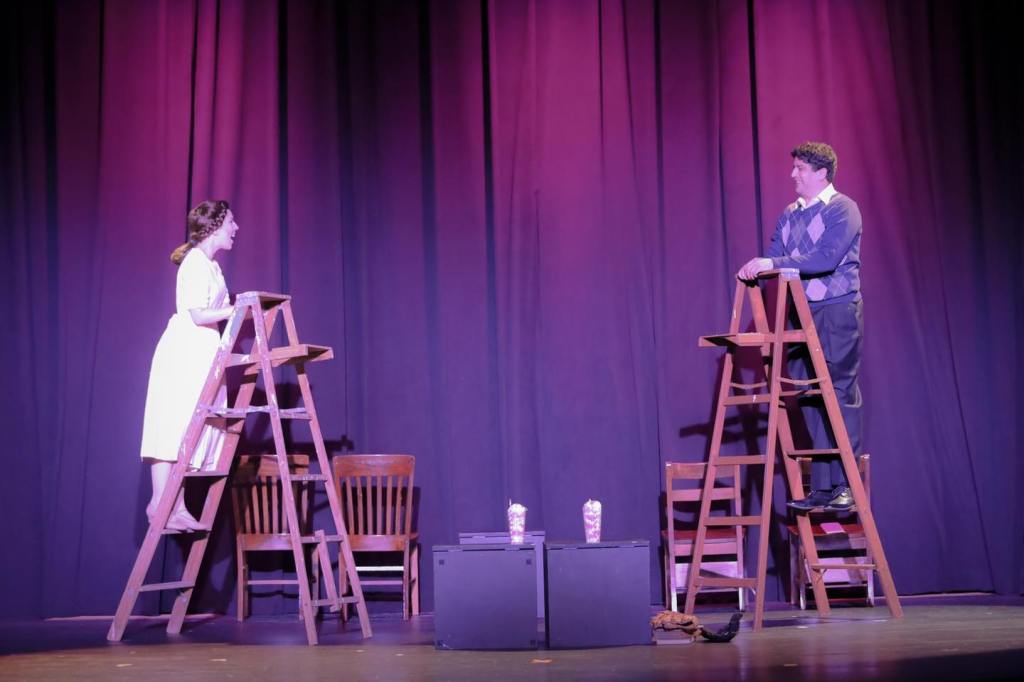
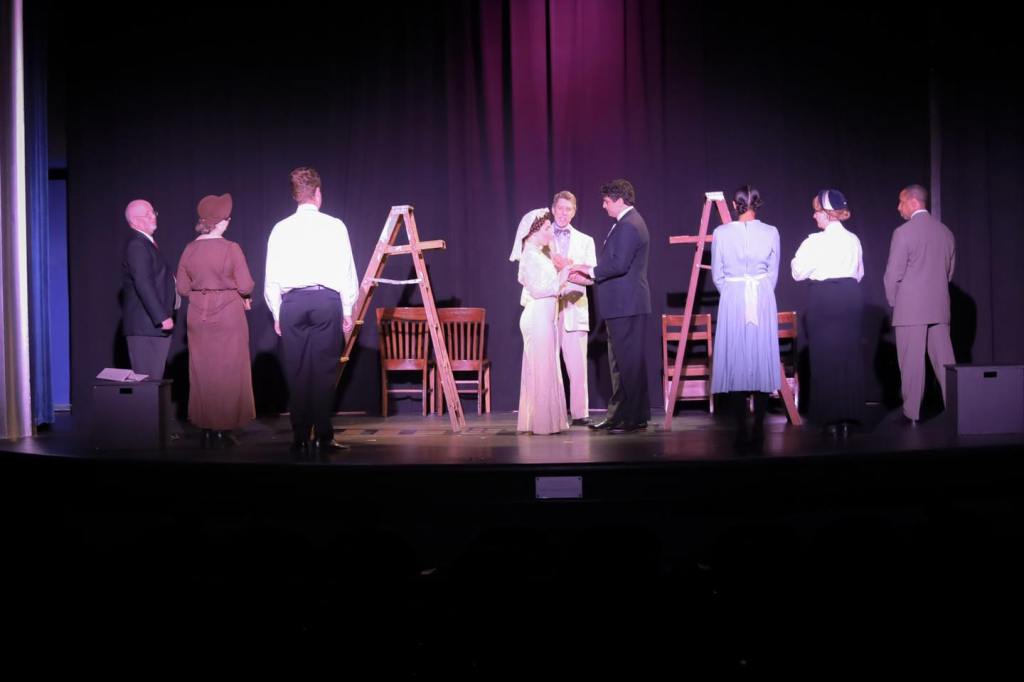
Using minimal props (four ordinary wooden chairs, two wooden ladders, and a couple of those all-purpose black cubes that most theater companies seem to have in stock) Wilder takes us on a languidly breath-taking journey that reveals the complexities and the beauty of life. Of every life. Of your life and mine. Do we take the time to look at one another? Do we really listen to one another? Are we really present in our own lives? Mrs. Webb (Barbara Keeton) insists that, as important as reading is, Wally (William Young) put his book down at the breakfast table. (I don’t need to tell you to translate that to today’s smartphone, but I just did.) Rebecca Gibbs (Ziona Tucker) sneaks into her brother’s room because his window has a better view of the full moon, and another character – I don’t remember which – takes time to enjoy the moon as well as the scent of Mrs. Gibbs’ heliotrope. (For those of us who had no clue, that’s a fragrant, often purple-colored flower often used to make perfume. And yes, to make another obvious statement, that’s example of taking time to stop and smell the, well, flowers…)

Emily’s mama assures her that she is, in fact, pretty. “You’re pretty enough for all normal purposes.”  And when Emily (Louise Keeton) can’t find a blue hair ribbon her mother left out for her, Mrs. Webb says, “if it were a snake it would have bitten you,” the exact words my own grandmother wielded on my youthful overlooking of the obvious. Simon Stimson, the organist and choir director for one of the town’s churches (there are multiple denominations, with the Congregationalists and Methodists near the center of town, the Baptists down by the river and the Catholics on the other side of the tracks), has a drinking problem. People gossip about him, but they also look out for him, and we never learn the cause of his unnamed troubles. The point is, OUR TOWN really is about the best of each and every one of us.

The play starts on May 7, 1901. Dr. Gibbs (John Gordon) is the overworked town doctor, there is a stable for the horses, and it is deemed downright weird for anyone to lock their doors at night. George Gibbs (Axle Burtness) and Emily Webb (Louise Keeton) meet in high school. Act 2 takes place three years later. It’s July 7, 1904, when students have graduated and turn their attention to marriage. George and Emily get married right after intermission.

SPOILER ALERT: Don’t read the next paragraph if you don’t know what happens in the third act.

The third act takes place nine years later. It’s 1913. Horses are becoming a rare sight on the main streets and people have started locking their doors. Emily has died giving birth to her second child and the rest of the play takes place in the town cemetery after a philosophical monologue by the Stage Manager and a simple yet touching processional in which Emily is surrounded by her remaining family. (I won’t give away everything; even I have my limitations!)

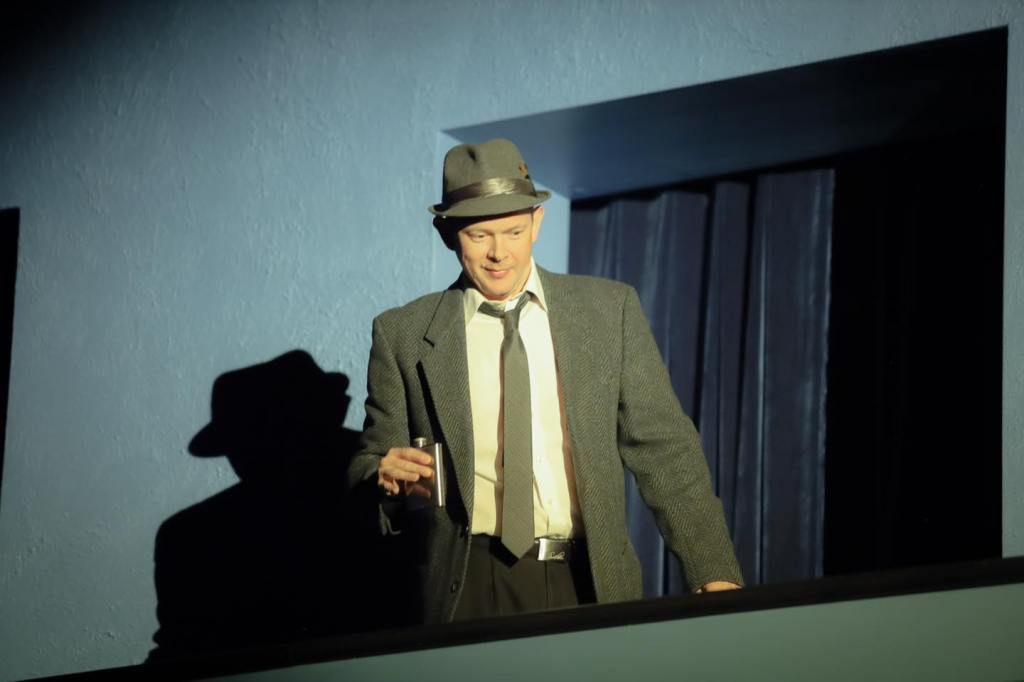
Some comic relief is provided by Dean Knight as Simon Stimson, the drunken choir director. Knight appears up in the balcony, usually with a bottle, or some sort of drinking prop in his hand. Props are rare commodities in OUR TOWN. Most actions are mimed by the ensemble, some with more clarity than others. A wonderfully awkward moment occurs when George visits his future father-in-law (Roger Reynolds on November 2, Frank Creasey on November 12 and 13) on the morning of the wedding. And the soft-spoken Emily gives George a piece of her mind, striding from the stage to the back of the audience, forcing us to turn and crane our necks like voyeurs watching a couple’s very public argument.

Some cast members have been given multiple roles. Most notably, Ziona Tucker gave little sister Rebecca Gibbs just the right amount of sassiness, balanced friendliness and servitude as newspaper boy, Howie Newsome appeared constrained as mortician Joe Stoddard with a long church jacket that appeared to have been misbuttoned. (Was that intentional, or no?). William Young also breezed through multiple roles as little brother Wally Webb, Si Crowell (who appears only as a visitor for his cousin’s death), and Sam Craig.

Director Matt Bloch maintains a languid pace that doesn’t feel weighted down and keeps the audience from becoming complacent by blatantly ignoring the parameters of the proscenium stage. Once we, the audience, become familiar with the characters and their rhythm, the pacing and flow seem quite natural – so natural that I couldn’t be sure if a few slight stumbles were first-night flubs or normal speech patterns. I also thought I detected some New England accents, but I didn’t see any credit for a dialect coach, so maybe I was just lulled by the atmosphere.

This production – my introductory production – of OUR TOWN is like theatrical baklava: rich and multi-layered, sweet with seductive savory bits mixed in, resulting in a satisfying treat. Two more performances remain as of this writing.

OUR TOWN

by Thornton Wilder

Cast

Craig Keeton as the Stage Manager
Axle Burtness as George Gibbs
Dean Knight as Simon Stimson 
Louise Keeton as Emily Webb
Roger Reynolds as Mr. Webb on Nov 3
Frank Creasy​ as Mr. Webb on Nov 12 & 13
John Gordon as Dr. Gibbs
Barbara Keeton as Mrs. Webb
William Young as Wally Webb, Si Crowell & Sam Craig
Annie Zannetti as Mrs. Gibbs
Ziona Tucker as Rebecca Gibbs, Howie Newsome & Joe Stoddard

Creative Team

Directed by Matt Bloch
Music direction by Michelle Bayliss 
Stage management by Kieran Rundle

FYI Notes

1.) Guests are required to present proof of vaccination at the door and remain masked unless consuming concessions. Children under the age of 12 may attend without proof of vaccination.
Guests may choose their own seats upon arrival and are encouraged to consider social distancing. 

2.) There are no physical tickets or seating assignments. Ticket confirmation emails will be sent the day before the show you purchased tickets for. If you purchase tickets the day of the show, you will not receive a confirmation email from the Whistle Stop. Please bring a copy of your PayPal confirmation in its place.

Julinda D. Lewis is a dancer, teacher, and writer who was born in Brooklyn, NY and now lives in Eastern Henrico County.

———-

Photo Credits: Kieran Rundle

One-Time
Monthly
Yearly

Make a one-time donation

Make a monthly donation

Make a yearly donation

Choose an amount

¤5.00
¤15.00
¤100.00
¤5.00
¤15.00
¤100.00
¤5.00
¤15.00
¤100.00

Or enter a custom amount

¤

Your contribution is appreciated.

Your contribution is appreciated.

Your contribution is appreciated.

Donate HERE to support RVArt reviewDonate HERE to support RVArt reviewDonate HERE to support RVArt review

RICHMOND BALLET: STUDIO TWO

Pairing a Balanchine Classic with a World Premiere by Tom Mattingly

RICHMOND BALLET 2021/22

STUDIO TWO, OCTOBER

A Dance Review with Historic Notes by Julinda D. Lewis

At: The Richmond Ballet, Canal Street Studios, 407 East Canal Street, RVA 23219

Performances: October 26-31, live. November 8-14, virtual.

Ticket Prices: In-Person Tickets start at $25; Virtual Tickets are $25.

Info: (804) 344-0906, etix.com, or richmondballet.com.

COVID-19 Protocols: Upon entering the theatre, all audience members ages 12 and above are required to show printed or digital proof of full vaccination against COVID-19 or of a professionally-administered negative COVID-19 test taken within 72 hours of the performance. Patrons ages 18 and above will also need to show a photo ID. All patrons ages 2 and above will continue to be required to wear masks.Please note: Proof of a negative COVID test is not required for children under the age of 12.

THE STUDIO TWO PROGRAM:

Allegro Brillante
Choreography by George Balanchine
Music by Peter Ilyich Tchaikovsky

Staging by Jerri Kumery

Costumes by Karinska

Lighting Design by Catherine Girardi

Jahreszeiten, a World Premiere

Choreographyby Tom Mattingly
Music by Dr. Goetz Oestlind

Costume design by Emily Morgan

Lighting Design by Catherine Girardi

Original Artwork by Court Watson
Pianist: Dr. Douglas-Jayd Burn

STUDIO TWO: OPENING NIGHT

As is customary with the Richmond Ballet Studio Series performances, a classic is often paired with a new work. The pairing of George Balanchine’s joyous Allegro Brillante with Tom Mattingly’s new Jahreszeiten (German for seasons) proved to be a particularly auspicious coupling.

Allegro Brilliante, created was by Mr. Balanchine in 1956 for Maria Tallchief (to whom he was married from 1946-1951) and Nicholas Magallanes. He once described this joyful, kick-up-your-heels celebration in ballet as, “everything I know about classical ballet in thirteen minutes.” Considering who said that, that’s a lot of ballet knowledge packed into a short ballet.

Simple yet elegant, Allegro Brilliante, set to Tchaikovsky’s “Piano Concerto No. 3,” is notable for its courtliness without the distraction of excessive embellishment and the floor patterns of the four supporting couples as they interact with and support the lead dancers, Eri Nishihara and Colin Jacob. Jacob was introduced after the program as one of the nine members new to the company this year. It’s far too soon to ascertain who will become regularly paired, but this couple delivered a performance that was satisfyingly balanced between technique and energy.

The curtain opened on four couples spiraling counterclockwise around a brightly lit stage: Kaeley Anderson, Courtney Collier, Celeste Gaiera, Sara Joan Smith, Roland Jones, Khayom Khojaev, Paul Piner, and Roland Wagstaff. The constantly shifting patterns and interweaving interactions are a perfect match for the music and give the impression that there are more dancers onstage than there actually are. Company artistic director indicated it’s been fifteen years since Richmond Ballet last performed Allegro Brillante. I feel honored to have been able to catch it this time around.

If the name Tom Mattingly sounds familiar to some, it’s because he first came to Richmond Ballet as a 17-year-old trainee where, he says, he learned to be an adult, and a professional. Mattingly returned to Richmond to present a work in the 2018 New Works Festival, Mattingly subsequently turned that into a full length work. Jahreszeiten is his second world premiere set on Richmond Ballet.

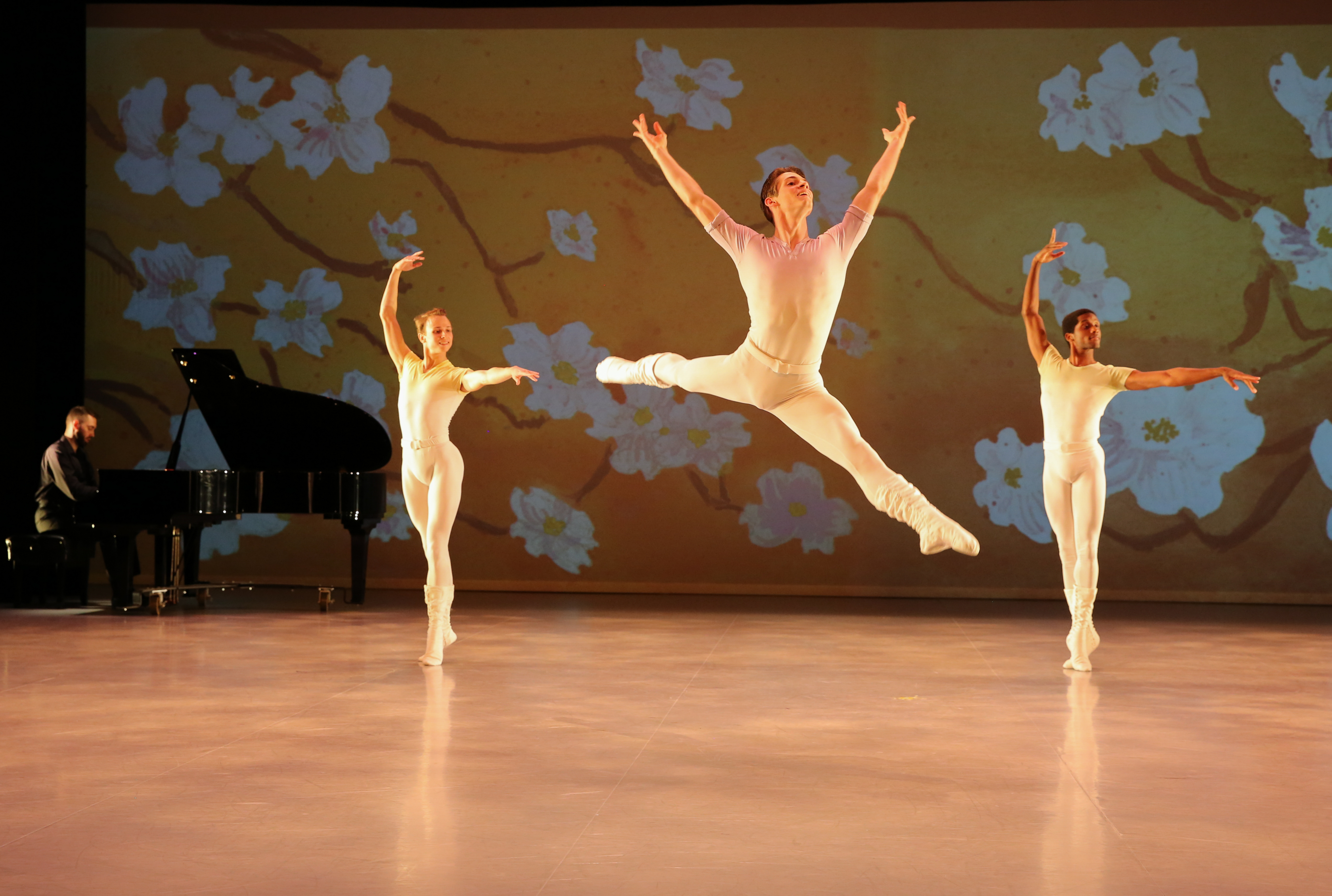
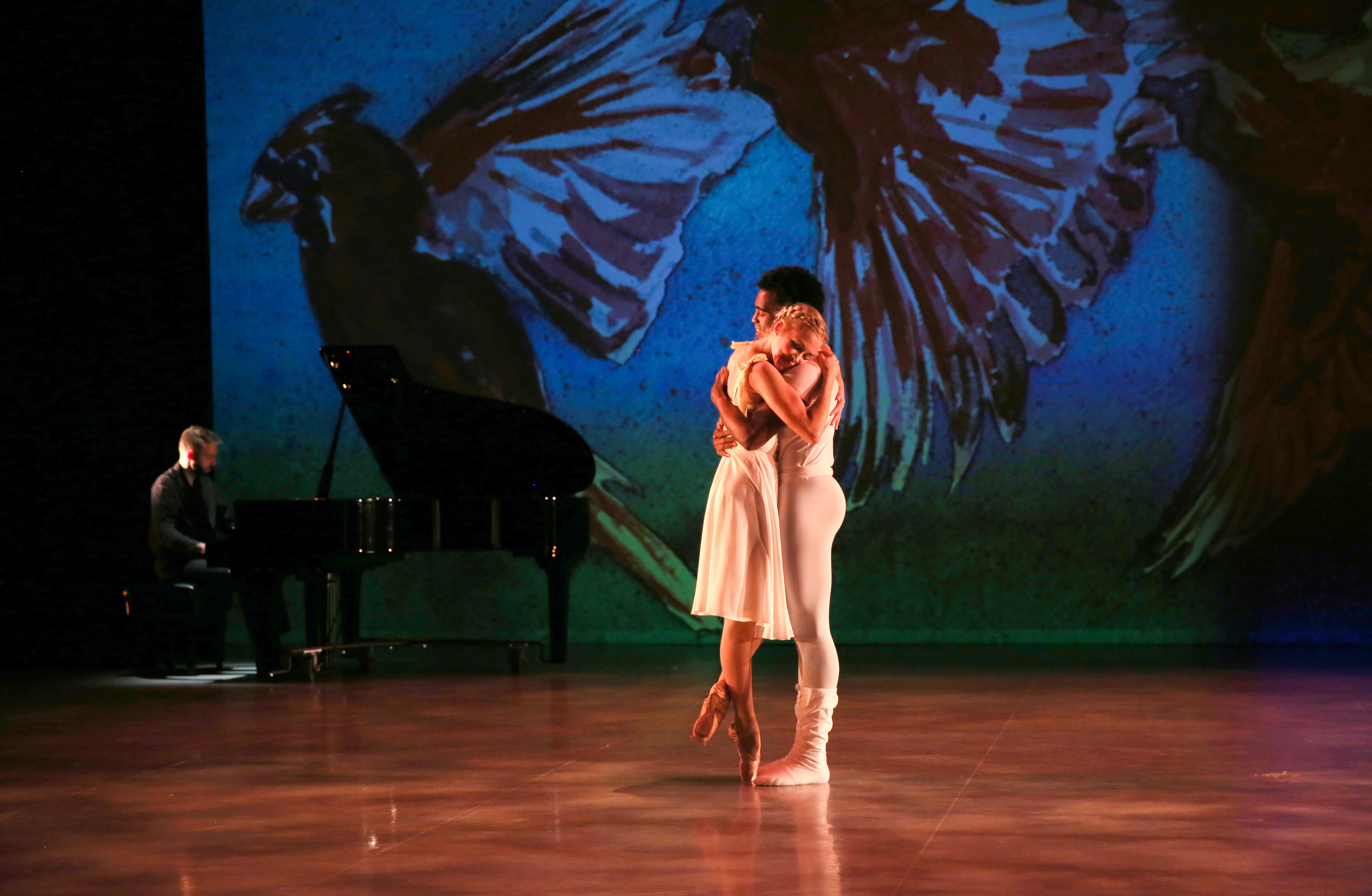
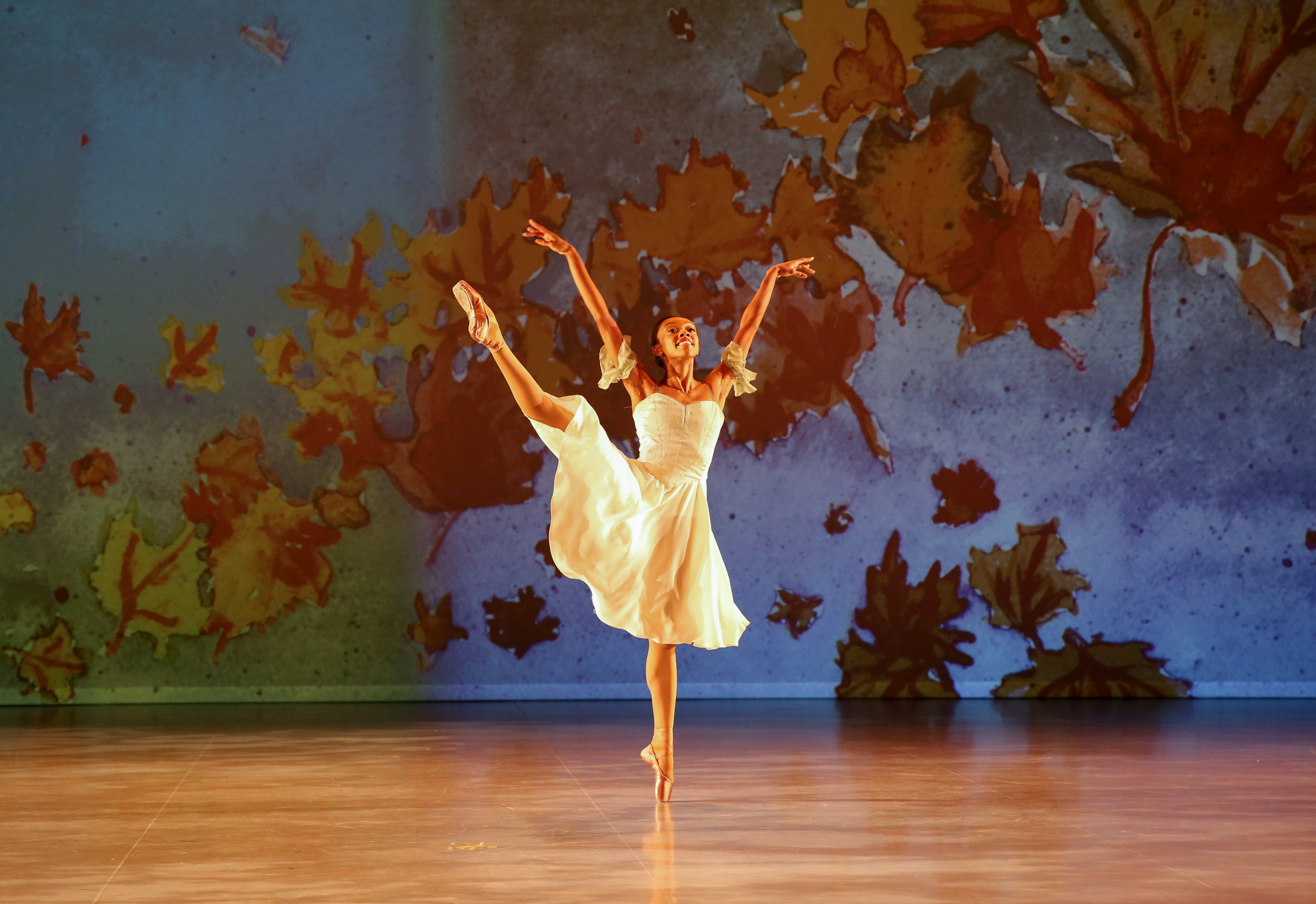
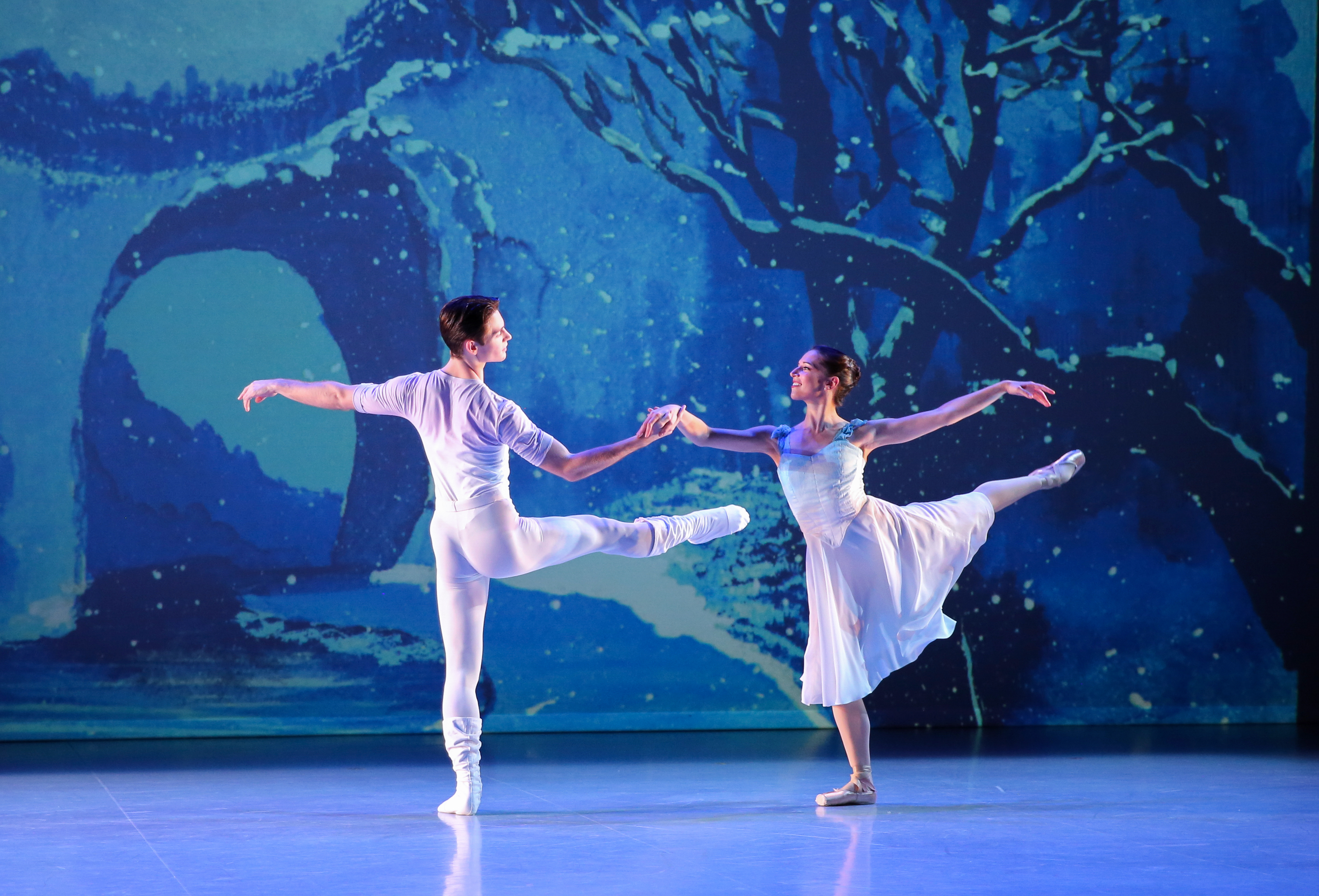
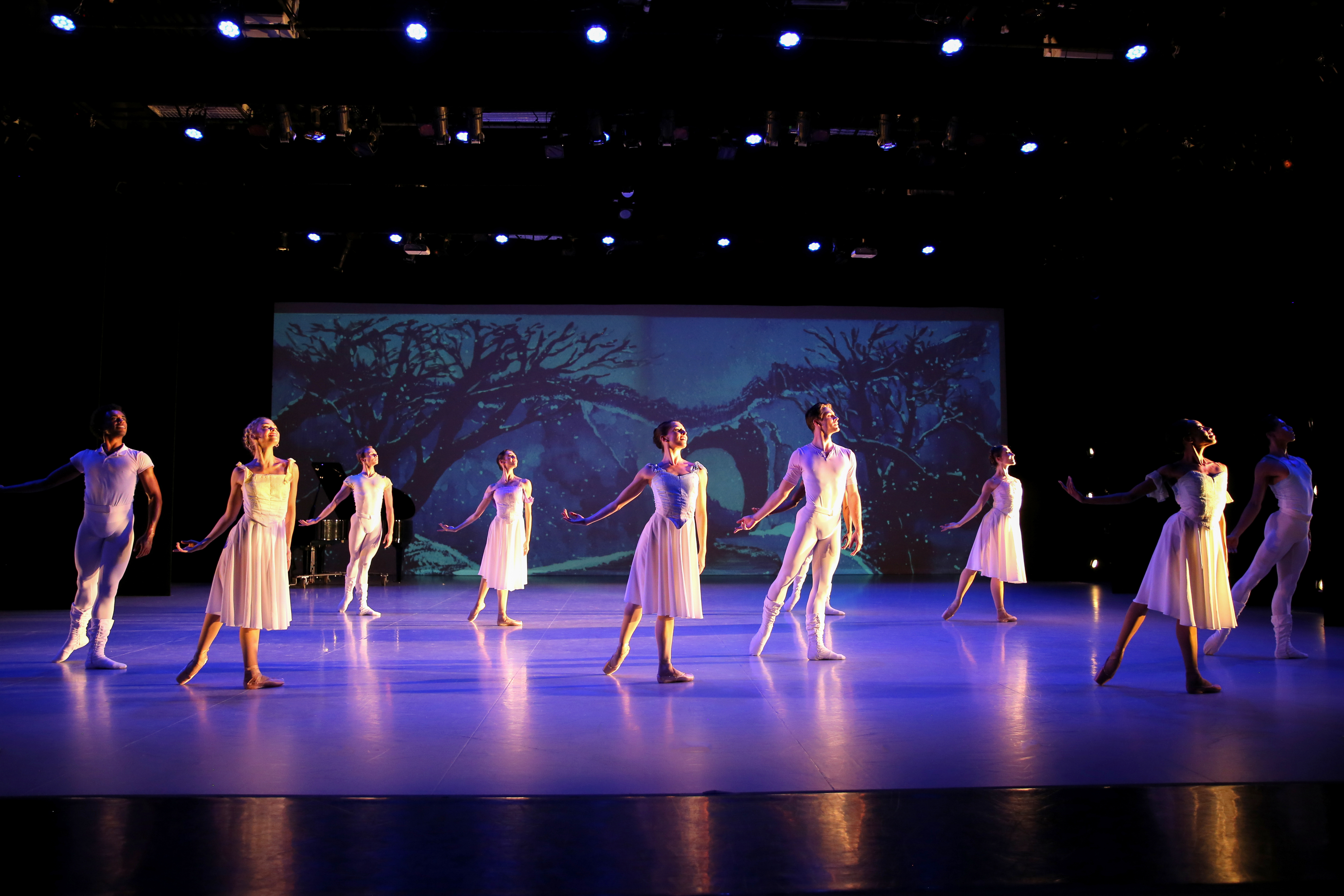
A visual treat, Court Watson’s original paintings representing four seasons highlights the flora, fauna, and landmarks of Virginia. Instead of designing backdrops, Watson had the paintings projected in super high definition resolution on the back wall, in contrast to the unadorned elegance of Balanchine’s Allegro Brillante. Mattingly’s interweaving patterns of movement and constantly reformatted groupings of dancers are a perfect contemporary complement to Balanchine’s work.

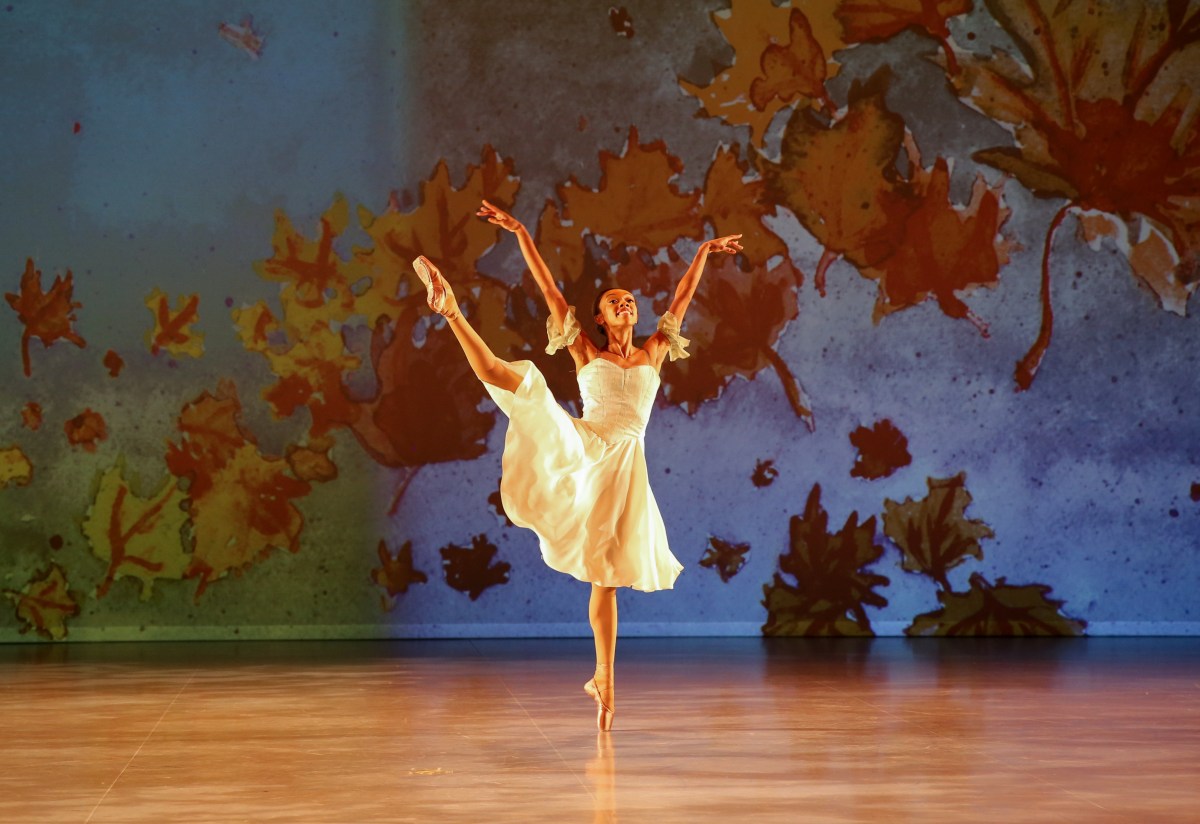
Watson created a watercolor of flowering dogwood branches (Spring), a painting of cardinals (Summer), one of fall leaves, and a final one of first snow of winter falling softly over a bridge. Emily Morgan designed hand-painted costumes in neutral colors that would pick up the light to reflect the changing seasons, and Catherine Girardi designed lighting that united all the visual elements. But that’s not all.

Jahreszeiten, which even Stoner Winslett had to struggle to pronounce, is a true collaboration. In searching the internet for music, Mattingly came across Dr. Goetz Oestlind’s work and was surprised to learn that Oestlind is a living contemporary composer who was more than happy to grant Mattingly the right to use six piano sonatas for this work. Not only was Tuesday night the premiere of Mattingly’s ballet, it was also the American premiere of Oestlind’s music and the first time it had been performed by another other than the composer himself. The pianist, Dr. Douglas-Jayd Burn (son of Richmond Ballet’s ballet master, Malcolm Burn and Jasmine Grace, a faculty member at the School of the Richmond Ballet), felt that he should be as committed as the dancers. “I should dance with the music as well,” he said, so he performed the challenging sonatas live onstage without benefit of sheet music. That’s right, he spent weeks memorizing the score.

Mattingly’s choreography ranged from full group movements that reflected the growth and activity of spring to a lingering, unhurried solo for the sultry days of summer. Playful, competitive posturing complemented the release of fall, and romantic duets and dramatic lighting signaled the vagaries of winter. The World Premiere cast included Sabrina Holland, Naomi Robinson, Marjorie Sherman, Izabella Tokev, and Naomi Wilson, as well as Enrico Hipolito, Patrick Lennon, Jack Miller, Zacchaeus Page, and Ira White.

Speaking of his work – on video and live onstage after the premiere – Mattingly spoke of his process as collaboration versus control. He also recalled, “When I was a small child I wanted to be Robert Joffrey.” Now, as the newly appointed Artistic Director of Ballet Des Moines, he wants to be a moving force in ballet, both creatively and administratively.

NOTE: Virtual tickets are $25. For patrons who would prefer to watch from the comfort of home, we are pleased to offer virtual access to Studio Two. On Monday, November 8th, virtual ticket buyers will receive an email with information on how to access the performance recording, which will be available to stream through Sunday, November 14th. Tickets can be purchased online at etix.com or by phone at 804.344.0906 x224. The deadline to purchase virtual tickets is 12:00pm Friday, November 12th.

Photo Credits: Sarah Ferguson. All rights reserved.

One-Time
Monthly
Yearly

Make a one-time donation

Make a monthly donation

Make a yearly donation

Choose an amount

¤5.00
¤15.00
¤100.00
¤5.00
¤15.00
¤100.00
¤5.00
¤15.00
¤100.00

Or enter a custom amount

¤

Your contribution is appreciated.

Your contribution is appreciated.

Your contribution is appreciated.

support rvart review with a
one-time donation or
monthly subscription
click here to Donate
support rvart review with a
one-time donation or
monthly subscription
click here to Donate
support rvart review with a
one-time donation or
monthly subscription
click here to Donate