
A World Premiere, A Virginia Premiere, and A Revival
A Dance Review
Program By: The Richmond Ballet
At: Virginia Museum of Fine Arts, Leslie Cheek Theater, on the Armstrong Family Stage in Honor of Richmond, 200 N. Arthur Ashe Boulevard, RVA 23220
Performances: May 8-18, 2025
Ticket Prices: $25 – $85 ($85 – $125 on opening night)
Info: (804) 344-0906, etix.com, or richmondballet.com
THE PROGRAM
SLUMP
Choreography by Joshua L. Peugh
Music by Klezmer Juice, Yma Sumac, Ella Fitzgerald
Costumes Provided by Richmond Ballet
Lighting Design by Nathan W. Scheuer
World Premiere: June 21, 2012 by Bruce Wood Dance Project at Booker T. Washington’s <Montgomery Arts Theater, Dallas, TX; Richmond Ballet Premiere: May 8, 2025, Leslie Cheek Theater, Virginia Museum of Fine Arts, Richmond, VA
ECHOING PAST
Choreography by Stoner Winslett
Music by Fanny Mendelssohn-Hensel
Costume Design by Susan Cologne
Lighting Design by Nathan W. Scheuer
Pianist: Joanne Kong
World Premiere: May 15, 1996 by Richmond Ballet at Leslie Cheek Theater, Virginia Museum of Fine Arts, Richmond, VA
FADING CREATURES
Choreography by Yury Yanowsky
Music by Senking and Henryk Gorecki
Costumes by Christi Owen after Original Costume Design by Emily Morgan
Lighting Design by Nathan W. Scheuer
Following their March 2025 return to the VMFA’s Leslie Cheek Theater after an absence of 30 years, Richmond Ballet’s Moving Art Two program offered an audience pleasing trio of works. In order, the audience enjoyed a quirky modern Richmond premiere, a revival of a more classically themed ballet by founding artistic director Stoner Winslett, and a world premiere of a work that began as an entry in the Richmond Ballet’s 2023 New Works Festival. Interestingly, and to my surprise, most of the people I chatted with after the show were most drawn to the more contemporary works.
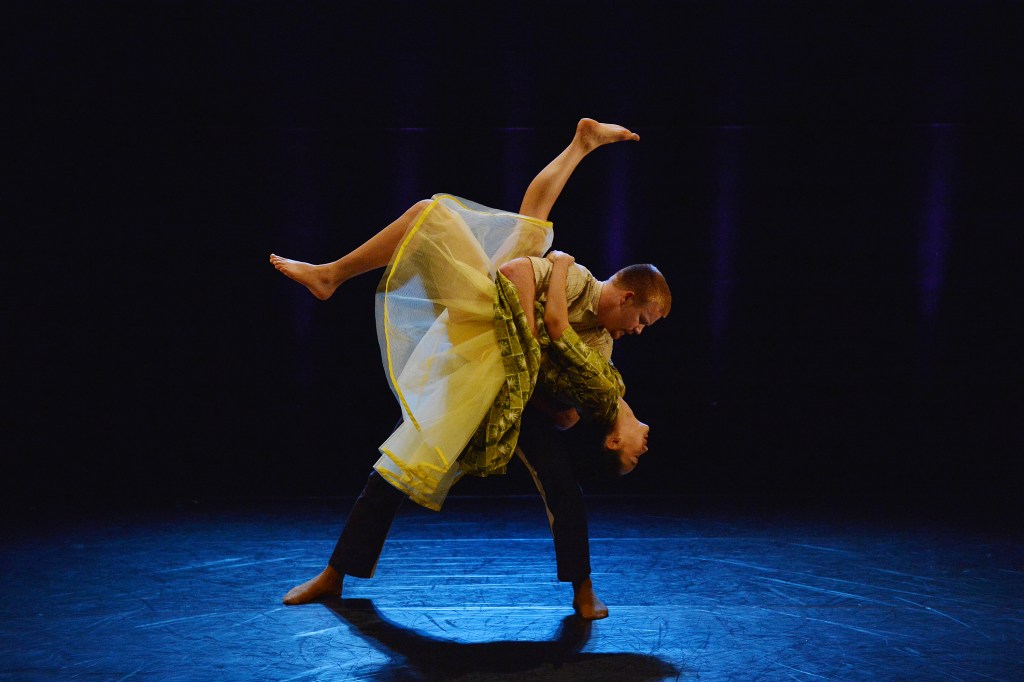
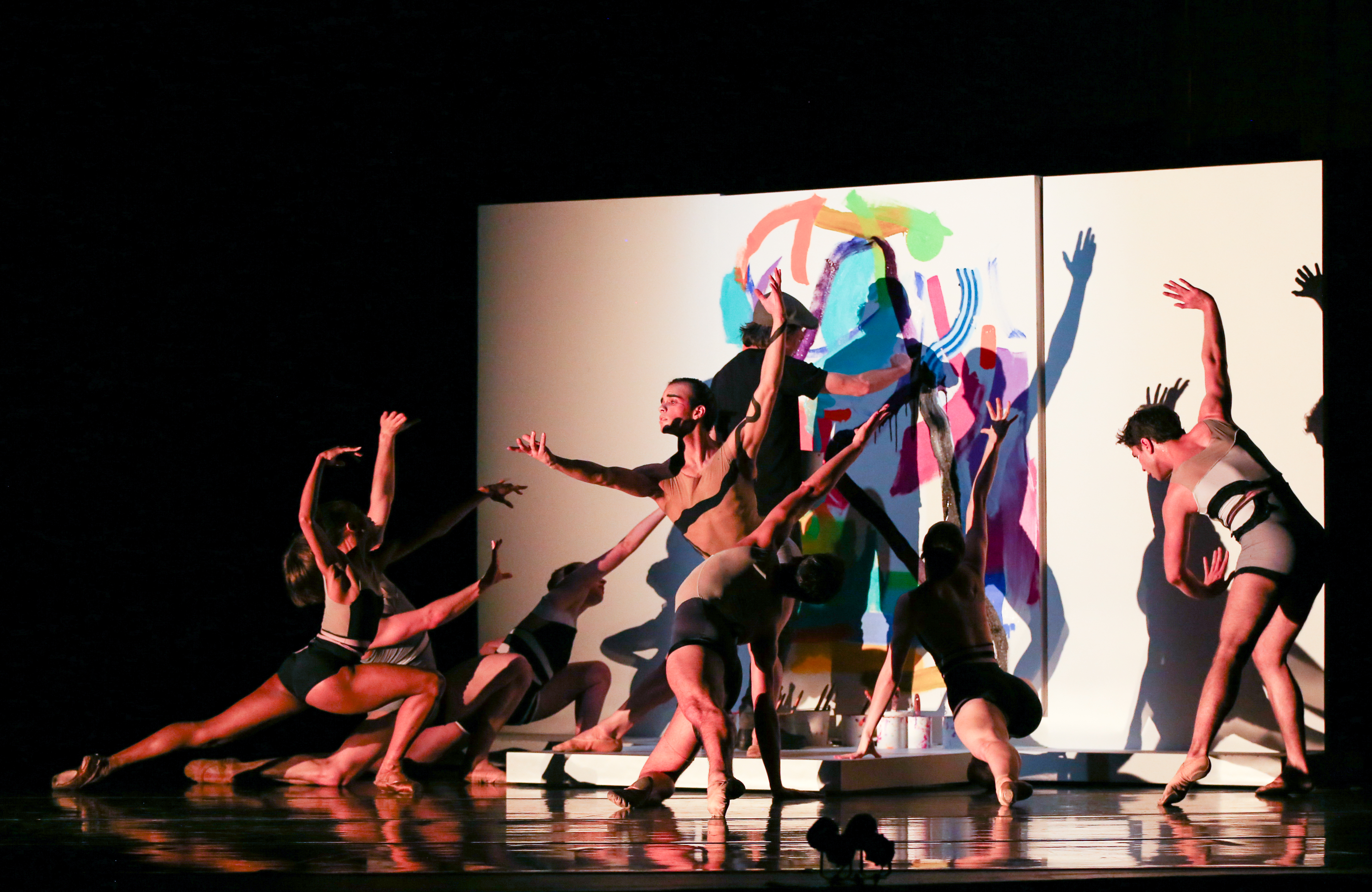
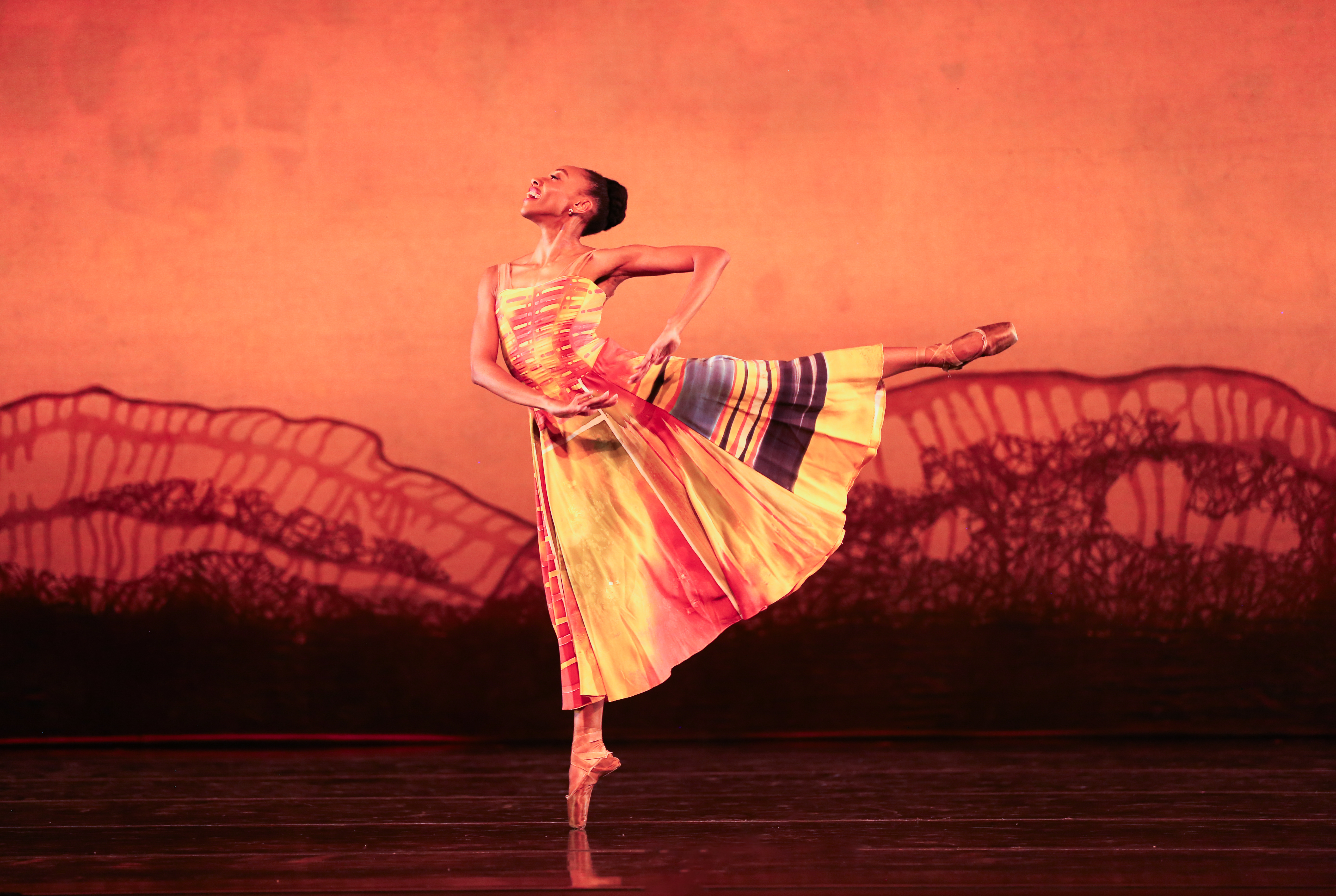
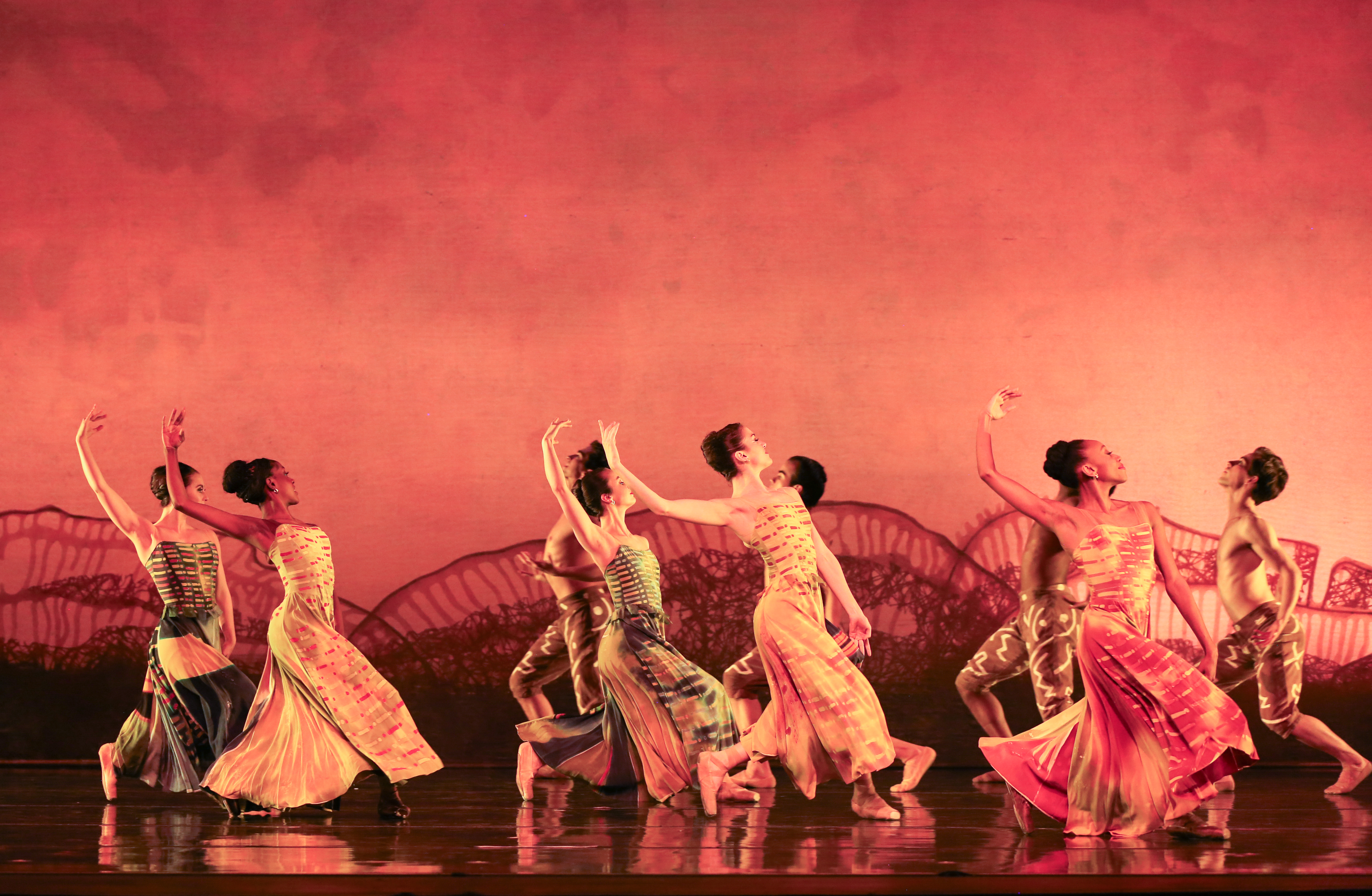
The program opened with a colorful, upbeat work by Joshua L. Peugh, the New Mexico-based founder and artistic director of Dark Circles Contemporary Dance. Slump defies categorization with its musical environment ranging from Klezmer Juice (described online as Jewish Soul musicians) to Peruvian singer Yma Sumac to jazz icon Ella Fitzgerald. The women are dressed in 1950s-style party dresses with crinoline underskirts that give a sassy nod to tulle tutus while emphasizing the pointedly un-classical and often upside-down lifts with one leg hooked around the partner’s neck.
At one point the men perform a rubbery, jelly-legged movement that used to be known as “eccentric” dancing, and later they walk with what my grandmother would have called a “switch,” as if mocking their female partners. The partner dancing includes the kind of weight-bearing that remind me of when little girls dance with their feet planted atop their daddies’ feet like life-sized rag dolls. They slouch, they drop, they roll in joyous freedom. The women’s wide-legged stance, the men’s swirling hips, the flirtatious and irreverent partnering all seemed to be as much fun for the dancers as it was for the audience.
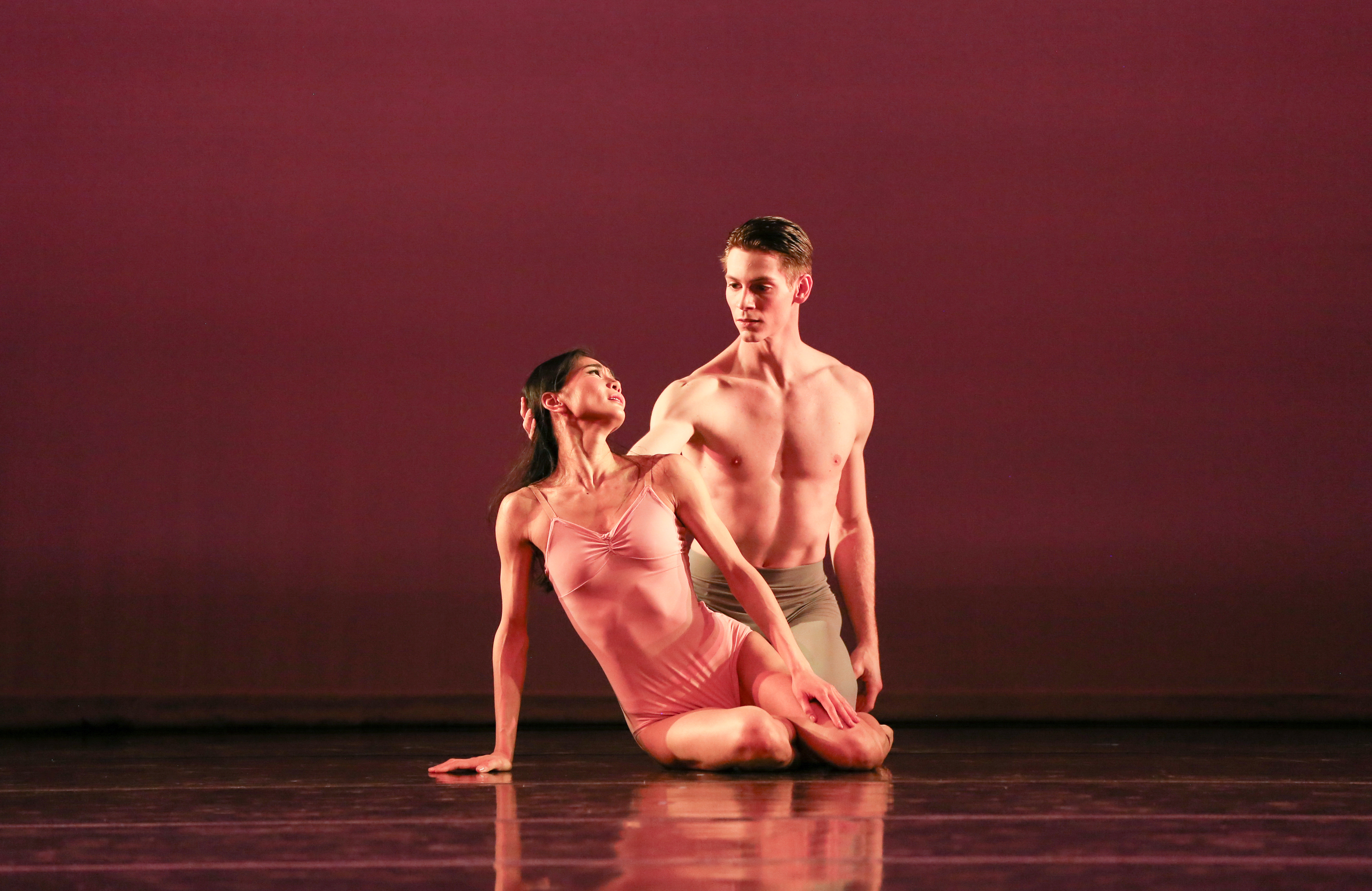
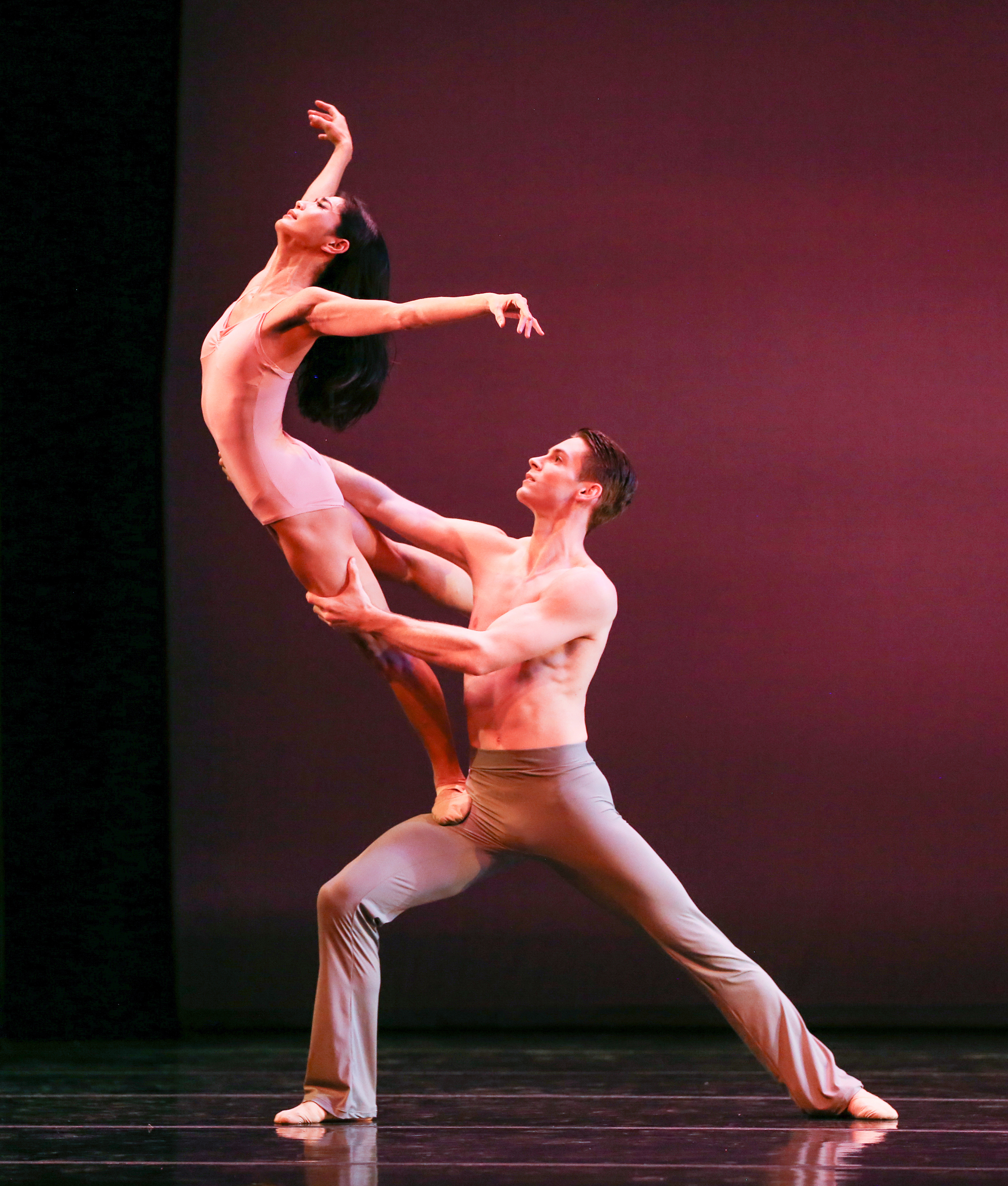
Stoner Winslett’s Echoing Past was in stark contrast to the shenanigans of Slump. Described as a ballet about one woman’s journey, looking back while moving forward, the work is set to music by Fanny Mendelssohn-Hensel and played live by pianist Joanne Kong. Originally titled “Das Alte Jahr” (“The Old Year”), the ballet was choreographed in honor of Leslie Peck, a former member of the New York City Ballet, a recognized authority on Balanchine ballets, and a former ballet mistress with Richmond Ballet.
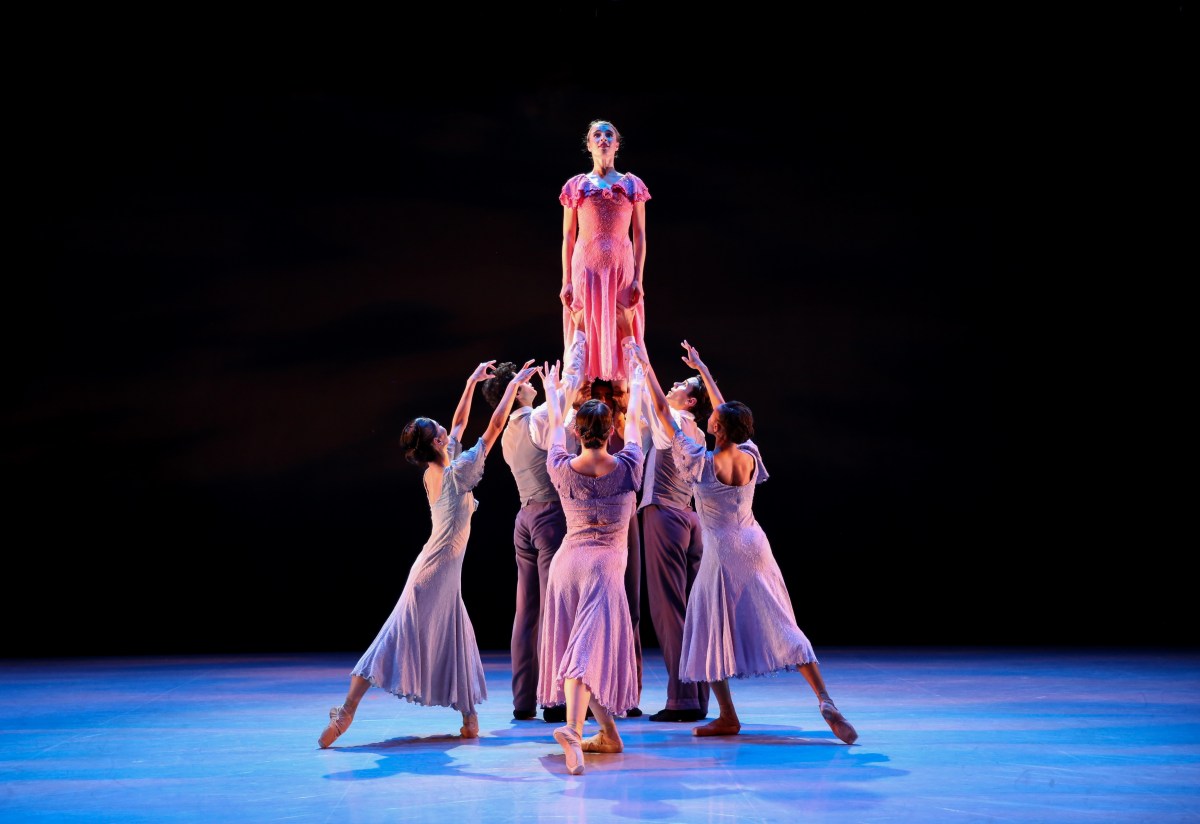
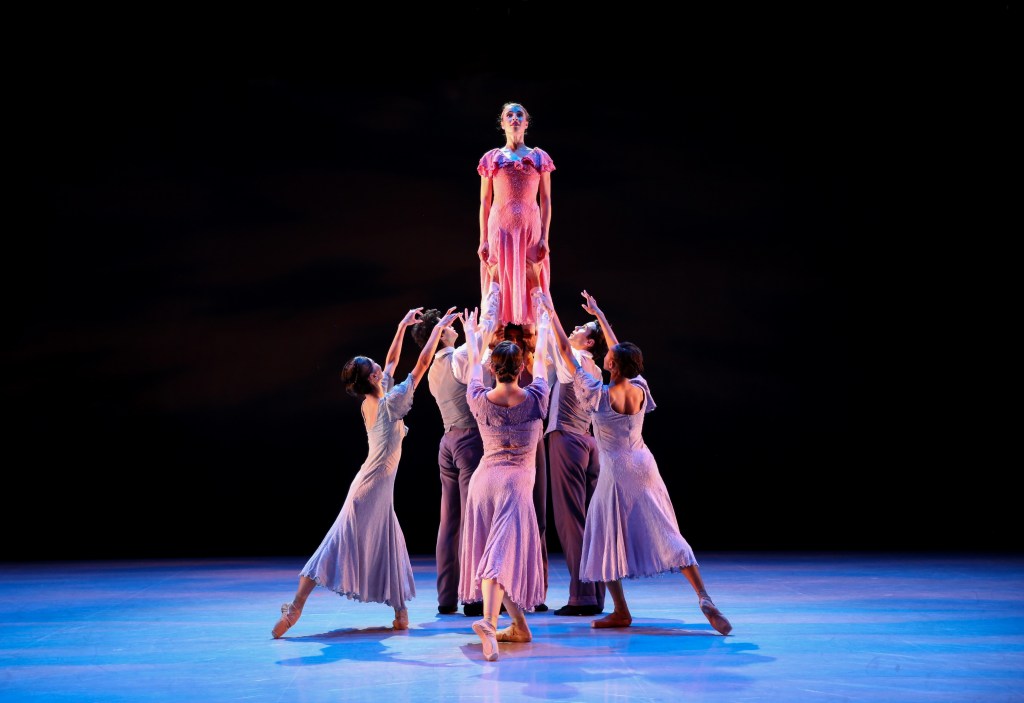
Eri Nishihara represents this woman, with Annika Kuo, Kaitlin Roemer, and Kennady Jackson dancing the roles of her past selves. Nishihara wears pink while the past selves are dressed in gray. Nishihara seamlessly trades places with her past selves, sometimes dancing back-to-back or mirroring the other women, as the peace evolves into a rich and satisfying conclusion. The ballet may be a metaphor for the company itself. Echoing Past was first performed at the VMFA in 1996, and Winslett formally stepped down as Artistic Director just under a year ago, in July 2024. So, the ballet somewhat mirrors Winslett’s own journey as artistic director, choreographer, and a woman in a position that is still dominated by men.
Yury Yanowsky, a former principal dancer with the Boston Ballet, first introduced Richmond audiences to his work Fading Creatures as a part of the Richmond Ballet’s New Works Festival in 2023. Inspired by Salvador Dali’s familiar melting clocks, the work begins with the feeling of a sci-fi ritual as the dancers lie on the floor with small lights hoovering over them. Once the lights have ascended and the dancers have risen from the floor, the dancers adopt an athletic style of movement – muscular, posed, poised, measured, abstract.
While inhabiting the lower level, the dancers flip, slide, reach, and lunge, but once the lights rise above them like a constellation, the dancers’ movements become bolder and more sinuous at the same time. Sometimes they appear to float or glide, only to suddenly run and freeze, or rewind and repeat, bending and stretching time, ending with a sudden stop!
What a satisfying conclusion to the company’s 2024-2025 season, the first under the artistic leadership of Ma Cong. Much like the woman in Echoing Past, perhaps intentionally so, this season has been marked by reflection and change and concluded on a rich and satisfying note.
The Richmond Ballet 2025-2026 season begins with Moving Art One, September 11-21 featuring Wild Seet Love by Trey McIntrye and a world premiere by Ma Cong.
Moving Art Two, October 16-26 is scheduled to present Slice to Sharp by Jorma Elo, a world premiere by Andrea Schermoly, and French Twist by Ma Cong. The Nutcracker will be performed at Dominion Energy Center December 6-23 and Giselle will be performed there February 13-15. The season will continue with Moving Art Three, the company’s New Works Festival with works by Natasha Adorlee, David Morse, Price Suddarth, and Serkan Usta from March 19-29, and conclude May 14-24 with Moving Art Four with George Balanchine’s Apollo, John Butler’s After Eden, and a world premiere by Val Caniparoli.
———-
Julinda D. Lewis is a dancer, teacher, and writer who was born in Brooklyn, NY and now lives in Eastern Henrico County. When not writing about theater and dance, she teaches dance history at VCU and low impact dance fitness classes to seasoned movers like herself and occasionally gets to perform.
by Stoner Winslett
Make a one-time, monthly, or annual donation to support rvart review
Make a monthly donation
Make a yearly donation
Choose an amount
Or enter a custom amount
Your contribution is appreciated.
Your contribution is appreciated.
Your contribution is appreciated.
DonateDonate monthlyDonate yearly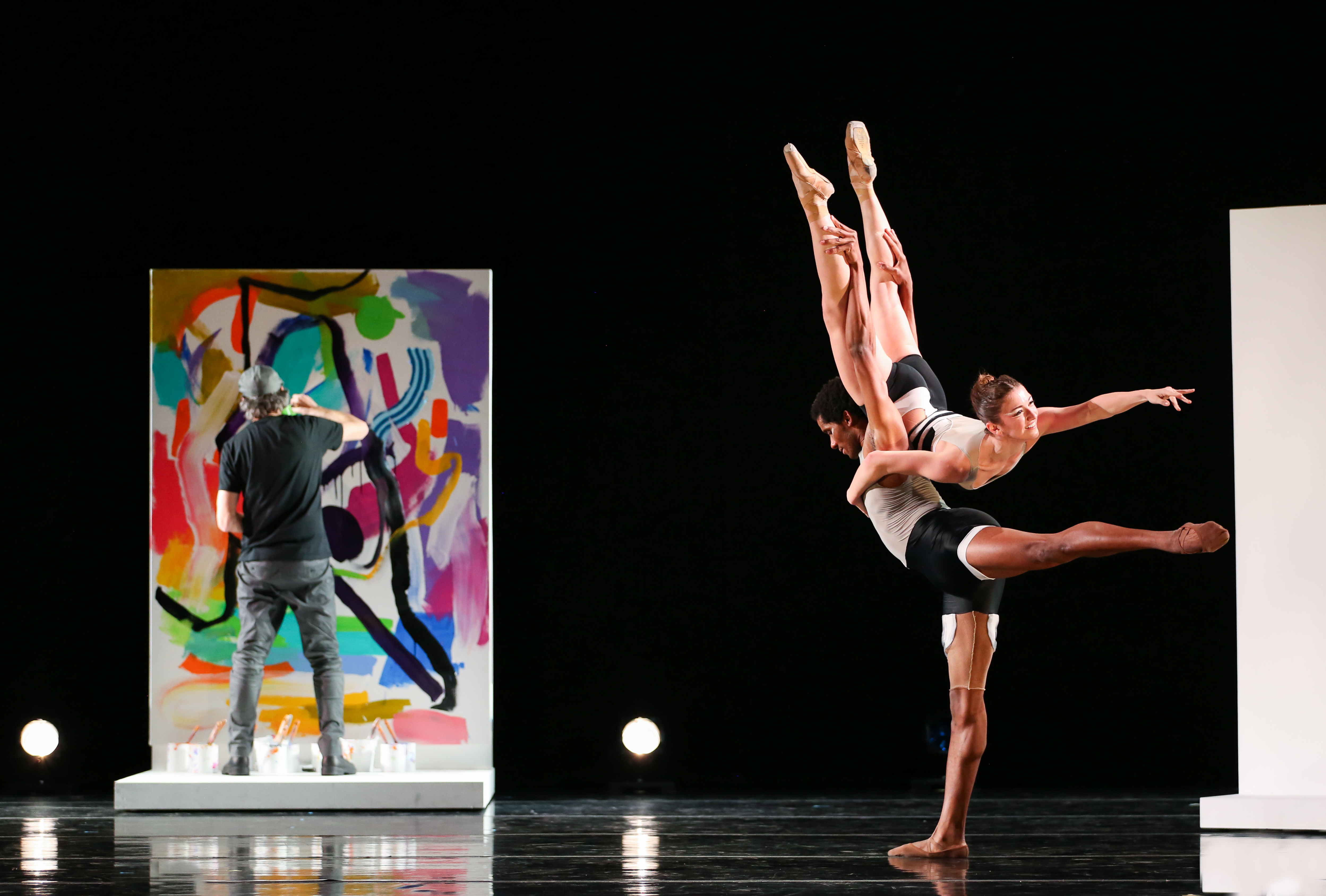
 RVArt Review