RICHMOND BALLET’S “SWAN LAKE”: Happily Ever After

Richmond Ballet’s SWAN LAKE: A Valentine Treat

A Dance Review by Julinda D. Lewis

At: The Carpenter Theatre at Dominion Energy Center, 600 E. Grace St., RVA 23219

Performances: February 14-16 @ 7:00pm; February 15 & 16 @2:00pm

Ticket Prices: $25 – $125

Info: (804) 344-0906 x224 or etix.com

It’s hard to believe that when the ballet Swan Lake debuted at Moscow’s Bolshoi Theatre in 1877 that it was not well received. Times change, and with it, people’s taste and expectations. After many adaptations and variations – the current production has choreography by Nicholas Beriozoff  after Marius Petipa, Lev Ivanov, and Alexander Gorsky, with restaging and additional choreography by Richmond Ballet’s Malcolm Burn. Petipa and Ivanov choreographed the 1895 revival; the original choreography was by Julius Reisinger. One constant in the evolution of Swan Lake has been Peter Ilyich Tchaikovsky’s beautiful score, with all its drama and the familiar leitmotif, “The Swan’s Theme.” https://youtu.be/9cNQFB0TDfY

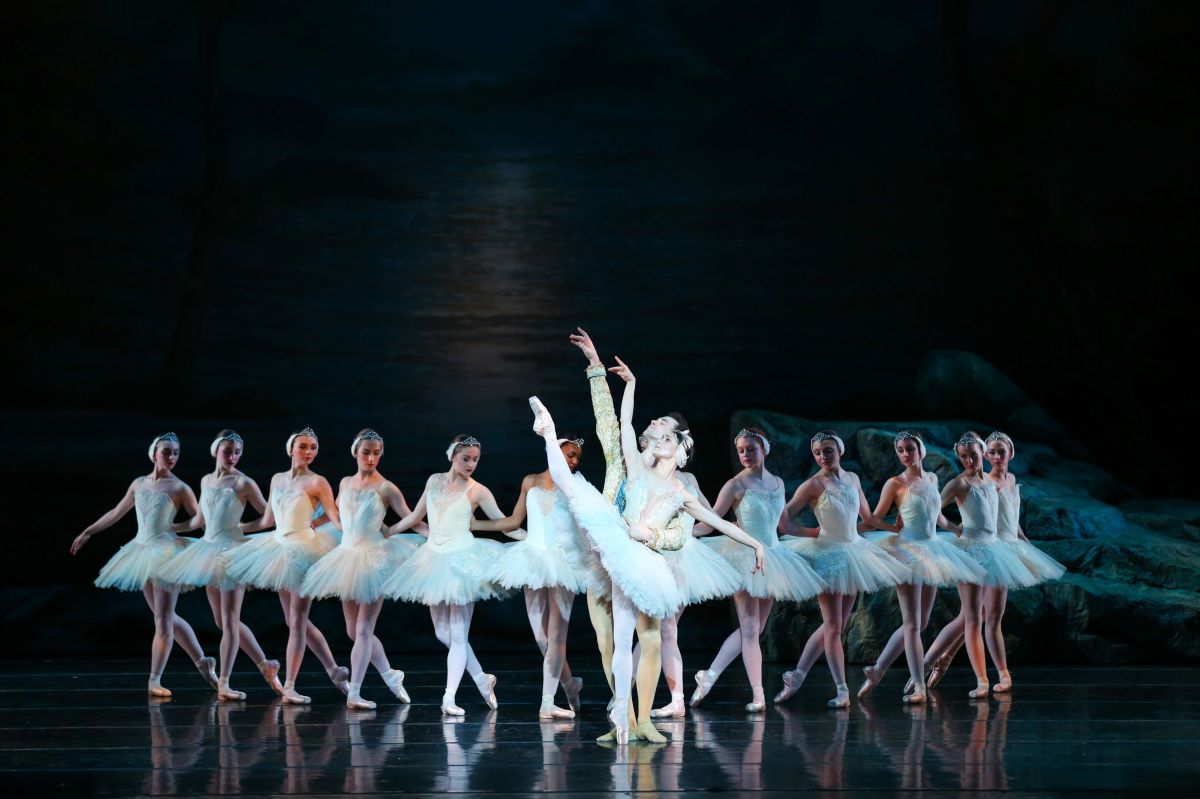
In addition to the music, Swan Lake is a visual treat with its three major sets: the lakeshore, the area outside the castle where Prince Siegfried begins his birthday celebration, and the magnificent castle ballroom. Credit for the opulent set and costume design goes to Jens-Jacob Worsaae.

Two dancers with the Chinese National Ballet, a company the Richmond Ballet has developed a relationship with overtime, were scheduled to dance the lead roles of Odette/Odile and Prince Siegfried but plans were changed due to fears about the coronavirus, which prevented Xu Yan and Li Wentao from traveling to the US.

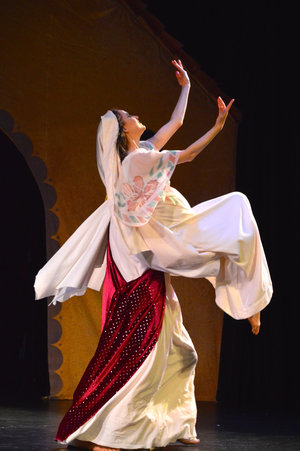
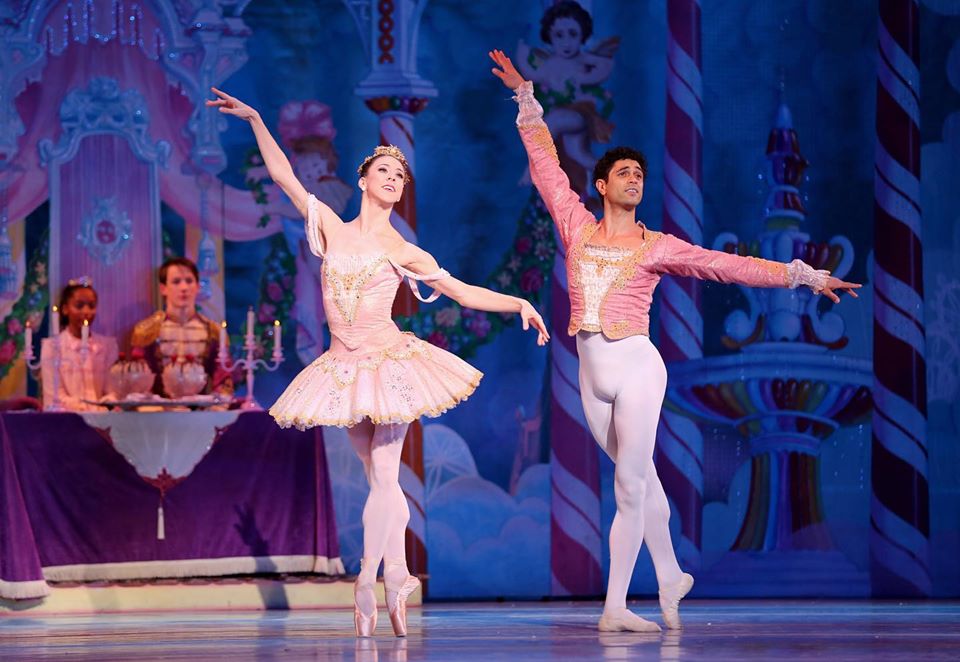
The lead roles were performed by Sarah Lane and Cory Stearns, both principal dancers  with American Ballet Theatre. The chemistry between the guests and the Richmond Ballet seemed organic, and both Lane and Stearns seemed to derive as much joy from performing their roles as the opening night audience on Valentine’s Day. There were audible ooh’s and ah’s each time the curtain rose, and extended applause for the guest artists as well as for the soloists.

Trevor Davis was pure joy as the Court Jester and Mate Szentes made such an impression as von Rothbart, the evil sorcerer, that people actually booed when he took his final bows. The most memorable dancing occurred in the ballroom scene in the third act and included a “Czardas” led by Melissa Frain and Ira White, a “Neapolitan” duet performed by Elena Bello and Marty Davis, and a “Russian Dance” that drew enthusiastic applause for Eri Nishihara. The Black Swan “Grand Pas de Deux” also occurs in the third act and Lane and Stearns did not disappoint. Their performance was elegant and enthusiastic.

BTW- While I understand the convention of applause after the pas de deux (and various displays of virtuosity), the dancers’ mid-performance bows break the flow of the dance and interrupt my enjoyment of the illusion the cast has worked so hard to create.

I always look forward to the big, classic ballet productions the Richmond Ballet offers each year around Valentine’s Day – except when the ballet is Romeo and Juliet because the I find the deaths of the young lovers depressing. Swan Lake has several versions – and endings – and I was happy to find that one of the happier endings was selected.

To clarify, Swan Lake tells the story of the beautiful Princess Odette who is turned into a swan by the evil sorcerer von Rothbart. (No explanation is ever offered, except that without this turn of events, there would be no ballet.) Prince Siegfried is celebrating his birthday with friends and his mother appears to tell him it’s time to get married and start adulting. This sends him into a depression, which he and his friends resolve to address with a hunting trip. Of course, he encounters Odette, who is allowed to appear in human form an hour each day, at midnight.

Prince Siegfried falls in love with Odette and vows to break the evil spell on her with love. Von Rothbart will have none of this and shows up at the castle where the Queen Mother has assembled a half dozen prospective brides for her son to choose from – only von Rothbart brings his own daughter, Odile, disguised as Odette. Prince Siegfried falls for Odile and when he finds out he has been deceived; he rushes to the lake to reassure Odette of his love. This is where some versions have the lovers commit suicide, usually by drowning in the lake, but in this version Prince Siegfried battles the evil sorcerer von Rothbart (with some lovely lightening-like lighting effects), finally overcoming the spell and releasing Odette and the other captive swans from the evil spell. Odette returns to her human form, and she and Prince Siegfried live happily ever after.

Sometimes happily ever after is just what is needed. Swan Lake allows us to linger in the world of make-believe for nearly three hours (with two intermissions). It is a delight for the eyes, the ears, and the soul.

Julinda D. Lewis is a dancer, teacher, and writer who was born in Brooklyn, NY and now lives in Eastern Henrico County.

———-

Photo Credits: Sarah Ferguson

This slideshow requires JavaScript.


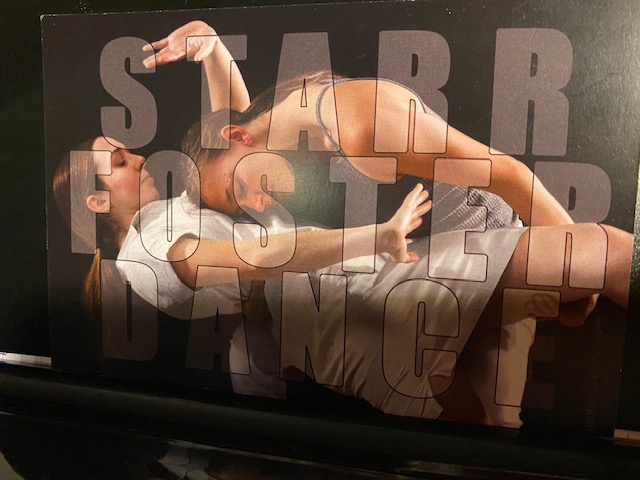
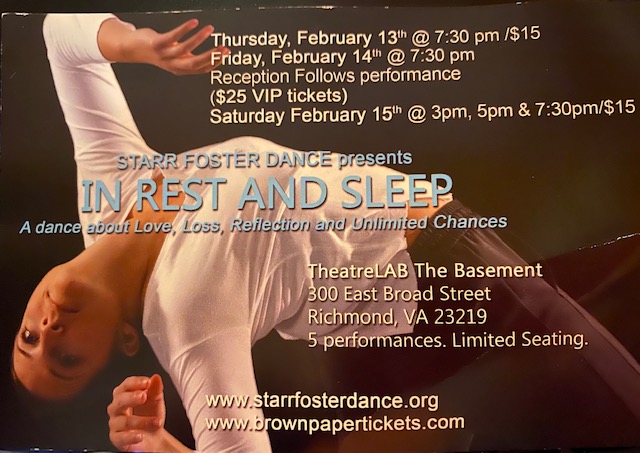
STARR FOSTER DANCE: In Rest and Sleep (a dance about love, loss, reflection, revenge & unlimited chances)

STARR FOSTER DANCE: In Rest and Sleep

A Dance Review by Julinda D. Lewis

At: TheatreLAB The Basement, 300 East Broad Street, RVA 23219

Performances: February 13-15: Thursday & Friday @7:30pm; Saturday @3:00pm, 5:00pm & 7:30pm

Ticket Prices: $15; $25 on Friday (includes post-performance reception)

Info: (804) 304-1523, https://m.bpt.me/event/4497856

Starrene Foster’s new work, In Rest and Sleep, begins with a bit of audience participation. It would be impossible to describe my experience without giving it away, so *SPOILER ALERT*: If you plan to see it, and want to be surprised, skip the italicized paragraph.


*SPOILER ALERT*

The audience is held in the lobby and bar area until it is time to enter the performing space. Latecomers will not be seated. As we prepared to enter the space, we were each given a white calla lily – a symbol of holiness and purity, but also of death and resurrection; it is a popular Easter flower. This made me think of a funeral, a feeling that was reinforced as we processed through a black curtain to the sounds of somber music. Once inside the space, we observed three dancers laying face up on the floor and a fourth sitting on a tree stump in solemn contemplation. We were instructed to toss our flowers on the dancers.

*END OF SPOILER ALERT *


In Rest and Sleep is described as a dance about love, loss, and reflection. It is also described, in different settings, as a dance about revenge or a dance about unlimited chances. It is all of that, and more. After the show – which runs about 40 minutes, with no intermission – my theater companion asked what I thought it meant, and my response was, whatever you needed it to mean. This is the kind of work that, after the applause, leave the audience momentarily silent, speechless, mute and alone in the midst of a crowd.

I have, on more than one occasion, remarked to Foster that I found her work dark – not just emotionally, but physically, due to the subdued lighting she and her lighting designers prefer. Yet even though In Rest and Sleep may be thought of as a dark topic, the lighting, while subdued, is not very dark at all. In fact, there are moments when Michael Jarett illuminates the space with bright flashes, like shards of enlightenment. The set, designed by Foster and Brad Lebahn, consists of two rectangles of artificial grass and a tree stump. At the beginning and again later, one dancer sits quietly on the stump carefully observing the other dancers.

The combination of stillness that feels like waiting is juxtaposed with violent reaching, grabbing pulling, dragging, and writhing. There are supportive lifts and gentle touches, but there are also kicks and shoves and intertwining phrases of movement that create a perceptible level of anxiety, of unease.

Two distinct moments in time stood out for me, capturing my attention and stirring my emotions. In a duet, one dancer stood off to the side with her right arm extended, fingers trembling in a repetitive pattern while her partner, some distance away, explored the other side of the space until the two eventually tumbled together. While this interaction was unfolding, a third dancer sat on the tree stump watching intently, and the fourth lay curled at her feet on a patch of grass – resting, or asleep. I saw myself in the dancer with the outstretched arm – reaching, disconnected – as well as in the dancer who sat intently observing, waiting for her season to become involved. Others may have connected with the dancer who was moving through space, or with the sleeping figure.

The other moment that caused me to hold my breath occurred when the four dancers ran, one after the other, to a patch of grass, dropped, rolled to center stage, got up, and repeated the pattern several times! The movement was mesmerizing, but the energy emitted was like a volcano erupting. It was over all too soon.

In Rest and Sleep,  a premiere by Starrene Foster, has only five performances this weekend, and while the audience is seated on three sides of the space, there is limited seating. Everyone is up close to the action – and the resting. On Thursday and Saturday at 3:00pm the performers are Fran Beaumont, Caitlin Cunningham, Shelby Gratz Paez, and Mattie Rogers. On Friday and on Saturday at 5:00pm and 7:30pm the cast is Kylie Hester, Erick Hooten, Anna Lebahn, and Mattie Rogers.

The RVA theater community has an Acts of Faith festival – if dance were included, In Rest and Sleep would be a prime candidate for Acts of Faith, along with the accompanying talk-back opportunities for the audience to discuss works with the cast and creative team.

Julinda D. Lewis is a dancer, teacher, and writer who was born in Brooklyn, NY and now lives in Eastern Henrico County.

———-

Photo Credits: Starr Foster Dance by Douglas Hayes. NOTE: Production photos were not yet available at the time of posting.

IMG_1093IMG_1095


Create an Amazon Business Account: https://amzn.to/2UPPI9S

Try the Amazon Prime Discounted Monthly plan: https://amzn.to/2SC7z12

Or an Amazon Prime 30-day free trial: https://amzn.to/31UDA8M

Do you have any or all of my books on your shelf? They are available on Amazon.com:

https://www.amazon.com/tryAB?ref_=assoc_tag_ph_1524210604088&_encoding=UTF8&camp=1789&creative=9325&linkCode=pf4&tag=rvartreview20-20&linkId=3130a82c589114e33dd33c640f83e1a6

https://www.amazon.com/tryAB?ref_=assoc_tag_ph_1524210604088&_encoding=UTF8&camp=1789&creative=9325&linkCode=pf4&tag=rvartreview20-20&linkId=3130a82c589114e33dd33c640f83e1a6

LATIN BALLET: Legend of the Poinsettia 2020

‘THE LATIN BALLET OF VIRGINIA: LEGEND OF THE POINSETTIA 2020

A Dance Review and Seasonal Observations by Julinda D. Lewis

At: The Cultural Arts Center at Glen Allen, 2880 Mountain Road, Glen Allen, VA, 23192

Performance Were: January 9-12, 2020

Ticket Prices: $10 – $20

Info: (804) 356-3876 or http://www.latinballet.com

The Legend of the Poinsettia is, for many, a local holiday tradition, much as The Nutcracker ballet has become in communities across the USA. This year I attended a Thursday morning production. Because it is designed for school field trips, the program has been truncated and lasts only one hour. I am familiar with the full-length two-act version and was impressed that the field trip edition is seamless, and if you didn’t know what was omitted, it didn’t feel as if anything was missing.

I noted that the indomitable Miss Frances Wessells, who normally dances the role of Abuelita, the grandmother, was absent. I understand that she is saving her appearance for the final performance on Sunday at 3:00pm, and at age 100 (yes, she officially became a centenarian last August!), she can choose to dance whenever and wherever she wants!

There was no soloist, singing “Ave Maria” as well as several other selections. Also, the life-sized nativity, where the Virgin Mary usually takes up residence for most of the second act, remained empty.

Other differences were not cast related. This year’s production has done away with the traditional, and sometimes bulky, set and replaced it with stunningly beautiful projections of background scenes, buildings, window boxes, the night sky, whatever is needed to enhance and promote the storyline. The program doesn’t list a credit for the projections, but Antonio hidalgo Paz is credited for lighting design and technical direction with Steve Kohler as technical assistant.

Dominion Energy sponsored the program as well as some of the schools present. But while the weather was sunny in Richmond and Glen Allen, some schools from Fredericksburg were forced to cancel due to snowy conditions just a little father north of the Glen Allen venue. Those present ooh’d and ahh’d when the curtain went up, and again when the company’s men – Jay Williams, Nicolas Betancourt Sotolongo, and Glen Lewis, performed flips and handsprings across the stage. But this is Latin Ballet, and I felt that the young attendees’ responses were subdued – either because this was their first time attending the theater experience or because their teachers and chaperones had cautioned them to be on their best behavior. And they were – on their best behavior, that is.

At the end, company member Jay Williams invited audience members onstage for a mini-hiphop class, which offered many aspiring performers the opportunity to show off their best moves. The young audience members seemed to enjoy meeting the cast, taking pictures, and getting autographs nearly as much as the performance itself.

            The Legend of the Poinsettia tells the story of Little Maria (with Sydney Smith and Kaia Davis-Martin, who performed on Thursday morning, alternating in the role).  After the sudden death of her mother, who was teaching her how to weave a colorful blanket, Maria finds herself in need of a gift to present to the Baby Jesus on Epiphany Day on January 6. Epiphany or Three King’s Day (Dia de los Tres Reyes Magos) celebrates the 12th day of Christmas and the legend of the three Wise Men bringing gifts to the Christ Child. This provides a great excuse for those who did not take down their Christmas trees on January 1 to just say you were waiting to celebrate Epiphany.

The narration, given in English and Spanish, also emphasizes that this is also the story of “the true spirit of giving.” Not only is there entertainment and a moral, but there is also history, as the program explains how the poinsettia came to be a symbol of Christmas after Joel Roberts Poinsett, first ambassador from the US to Mexico in 1825, imported clippings and cultivated the plants that came to bear

As I have written previously, The Legend of the Poinsettia is a family-friendly, multi-cultural, multi-generational festival featuring dances, music, and colorful costumes from Columbia, Mexico, and Spain. There are cultural offerings from Mexico (the origin of the legend and of the poinsettia plant), Colombia (King’s birthplace, which also celebrates the nine nights before Christmas with las novenas including songs, prayers, and nativity scenes), Venezuela (the home of the gaitas or festive songs that blend the Spanish and African cultures), the Dominican Republic (home of the bachata, a mixture of Cuban bolero and son), Puerto Rico (home of the Christmas parrandas or musical festivities) and Spain (home of flamenco and the Christmas novenas). A blend of solemn candle lighting and prayers with festive singing and dancing is the common thread that ties together the many cultures and traditions, concluding with the miracle of the poinsettia plant, represented by dancers in red and green. The Spirit of the Poinsettia, floating around the perimeter of the stage in a voluminous read gown from which individual poinsettia “plants” emerge, may remind some of the Mother Ginger figure in The Nutcracker who hides a dozen small children under her huge gown.

Tickets are still available for a weekend of family-friendly shows


Julinda D. Lewis is a dancer, teacher, and writer who was born in Brooklyn, NY and now lives in Eastern Henrico County.

—–

Photo Credits: Photos from Latin Ballet website; photos of Jay Williams working with the children by Julinda.


21st ANNUAL YES! DANCE FESTIVAL: Presented by K Dance

K DANCE PRESENTS: 21st Annual Yes! Dance Festival

A Dance Review by Julinda D. Lewis

At: The Firehouse Theatre, 1609 W. Broad St, RVA 23220

Performances: December 20 & 21, 2019

Ticket Prices: $25 general; $15 for RVATA & Students

Info: (804) 355-2001 or firehousetheatre.org

This isn’t the first time K Dance has presented the Yes! Dance Festival at the Firehouse Theatre, but it is the first time as the venue’s resident dance company.

This year, the 21st annual Yes! Dance Festival presented a compact and somewhat mysterious collection of works by four companies – not including Kaye Weinstein Gary’s own K Dance – from across the USA. The festival is a great chance for those who don’t have the time or money to travel the nation to sample what’s happening in other parts of the country. Some of the artists are nationally and internationally known, with credits including Dance Magazine’s 25 to Watch list.

Catherine Messina (Atlanta, GA) performed her solo, “gamesetmatch,” which did not appear to have anything to do with tennis. Messina entered from the aisle, coming down the steep steps from the tech booth, and walked onto the stage where she sat and removed her boots and socks. Then she danced for a brief interlude, sinewy, winding phrases, interspersed with intense moments of silence in which she stared at the audience. Then, quite matter of factly, she sat, put her socks and boots on, and exited the same way she came. In a blog for Dance Canvas, Messina wrote that her work “centers around the intersection of strangers [sic] lives” and while she was not speaking specifically of this solo, “gamesetmatch” is steeped in a certain randomness that challenges the viewer to choose to engage or remain aloof. https://dancecanvas.wordpress.com/2019/12/19/catherinemessina/

Li Chiao-Ping Dance (Madison, WI) presented two works, the premiere of “here n o w here” and “moi non plus.” The first, a duet performed by Alfonso Cervera and piper Morgan Hayes, included the narrative by the dancers, variations of “barely there, bodily here.” The dancers dressed themselves from a scattered collection of clothes placed on the floor (matching gray sweaters and plaid leggings), moved through a compelling selection of intertwining movement phrases that bore the kiss of contact improvisation. Soloist Lauren Johns, dressed in a cutaway white dress with bustier top moved through “moi non plus” with an air of mystery mixed with boldness; I wondered later if the work was a direct response to the song and later the erotic film that share the same title. https://en.wikipedia.org/wiki/Je_t%27aime…_moi_non_plus

slowdanger (Pittsburgh, PA) is the creative partnership of anna thompson and taylor knight. They performed their duet, “memory 6,” in layers of clothes topped wit ski masks. Their look and sometimes sustained movement reminded me of the noh drama-inspired works of Eiko and Koma, The two slowly built up to a level of transcendence and just when it seemed we were about to be lifted to another plane with them, thompson broke the spell with a single loud clap, and the duo removed their ski masks are returned to earth. The company’s website describes “memory 6” as the seventh installment of a series, in which, “while traversing a purgatory of their own fragmented memories, two bodies combine to build a new form through movement and sound.” http://www.slowdangerslowdanger.com/memory-6.html

MamLuft & Co. Dance (Cincinnati, OH) also presented two works. “You Are Mine!,” choreographed b Hannah Williamson, proved to be darkly dramatic. It was performed by 4 women and 1 male dancer, all dressed in black. One commandeered a throne-like, high-backed chair, and seemed alternately to be in charge and to be the object of the other’s attention. Susan Honer’s “Solos for Woman,” dancer Claire Dieringer shed layers of black to reveal a rainbow striped unitard. The company normally specializes in evening-length dance theater works and their works often examine socially relevant subject matter such as shifts of power, aging, and memory loss. https://www.mamluftcodance.org/about

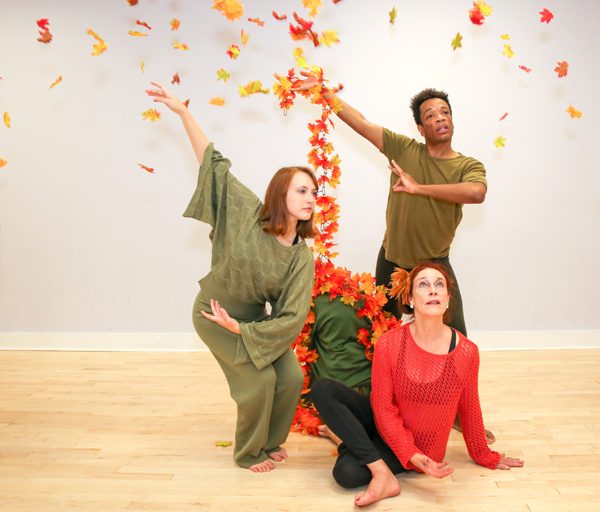
K Dance closed the program with “Leaf on the Wind,” a dance based on Cynthia Uhrich and Jen Tuder’s five-minute play of the same name, directed by Jacqueline Jones and choreographed by Kaye Weinstein Gary. Two green leaves (Jessica Rawls and Andrew Etheredge) shared a tree with an orange leaf (Gary). A fourth character, a Garden Gnome (Courtney Hans) seemed to have a bit more to do than in the original script as she subtly rotated on a stool in a downstage corner, indicating, I assume, the passage of time (although she moved counterclock-wise). The play started off humorously enough, but it soon became evident that Green Leaf 1 (Rawls) was a bit of a bully bend on discriminating against the Orange Leaf, while her branch-mate, Green Leaf 2 (Etheridge) was intent on keeping the peace. As the work progressed from humor to melodrama, the play evolved into choreography that reflected and eventually resolved the conflict.

A signature of Gary’s Dance Festivals is the Re-Cap that features dancers from all the companies in a brief finale. The works seemed to feature a common thread of some sort of conflict or confrontation, although there was no specified theme. All of this took place in the space of ninety minutes, which was just the right amount of dance in just the right amount of time. For those who did not get to opening night, there are performances at 3pm and 8pm Saturday, and the Saturday evening performance will be followed by a talk with the performers.


Julinda D. Lewis is a dancer, teacher, and writer who was born in Brooklyn, NY and now lives in Eastern Henrico County.

———-

Photo Credits: Sarah Ferguson & The Firehouse Web Page


Alvin Ailey
https://www.amazon.com/gp/product/1093389303/ref=as_li_tl?ie=UTF8&tag=rvartreview-20&camp=1789&creative=9325&linkCode=as2&creativeASIN=1093389303&linkId=c39a9d5181692735b3b75883d732cd03
Whistlin Women
https://www.amazon.com/gp/product/1072107546/ref=as_li_tl?ie=UTF8&tag=rvartreview-20&camp=1789&creative=9325&linkCode=as2&creativeASIN=1072107546&linkId=78c578738db659724289dda2116d985c

//ws-na.amazon-adsystem.com/widgets/q?ServiceVersion=20070822&OneJS=1&Operation=GetAdHtml&MarketPlace=US&source=ac&ref=qf_sp_asin_til&ad_type=product_link&tracking_id=rvartreview-20&marketplace=amazon&region=US&placement=B06XC5DRS4&asins=B06XC5DRS4&linkId=8094a3421d521a5365feede95dfbf024&show_border=true&link_opens_in_new_window=true&price_color=333333&title_color=0066c0&bg_color=ffffff


//ws-na.amazon-adsystem.com/widgets/q?ServiceVersion=20070822&OneJS=1&Operation=GetAdHtml&MarketPlace=US&source=ac&ref=qf_sp_asin_til&ad_type=product_link&tracking_id=rvartreview-20&marketplace=amazon&region=US&placement=B081VSDG7H&asins=B081VSDG7H&linkId=96b10e1147f10af458a1ec2ecaf545bb&show_border=true&link_opens_in_new_window=true&price_color=333333&title_color=0066c0&bg_color=ffffff


FitBit2 bands

//ws-na.amazon-adsystem.com/widgets/q?ServiceVersion=20070822&OneJS=1&Operation=GetAdHtml&MarketPlace=US&source=ac&ref=qf_sp_asin_til&ad_type=product_link&tracking_id=rvartreview-20&marketplace=amazon&region=US&placement=B06XHYJMQL&asins=B06XHYJMQL&linkId=acb906861a2cfc1b34d571e61208b773&show_border=true&link_opens_in_new_window=true&price_color=333333&title_color=0066c0&bg_color=ffffff

RICHMOND BALLET: Why Do We Love “The Nutcracker”?

RICHMOND BALLET: The Nutcracker – a Holiday Classic

Reflections on a Ballet by Julinda D. Lewis

At: Dominion Energy Center for the Performing Arts | Carpenter Theatre | 600 E. Grace St., RVA 23219

Performances: December 13-23, 2019

Ticket Prices: $25-$125

Info: (804) 344-0906 x224 or etix.com

Why is The Nutcracker a holiday tradition – what do nutcrackers have to do with Christmas? According to German folklore, nutcrackers bring good luck and protection to your family and home. It represents power and strength, guarding your family against danger and baring its teeth to ward off evil spirits while serving as a messenger of goodwill.

The Nutcracker character originated with Prussian author E.T.A. Hoffman’s 1816 story, The Nutcracker and The King of Mice. In the story, the Stahlbaum family has an annual Christmas party and their children, Marie, Fritz, and their sister Louise, receive gifts from their godfather, Drosselmeyer, a clockmaker with a talent for making mechanical toys. The story, filled with

about the triumph of good over evil. In 1844 French author Alexander Dumas père, adapted Hoffman’s story, changing Marie’s name to Clara. The family became the Silberhauses. This was the version that became a ballet, created in 1892 by Russian composer Pyotr Ilyich Tchaikovsky and choreographers Marius Petipa (French) and Lev Ivanov (Russian). The Petipa and Ivanov choreography became the model for many of our contemporary productions.

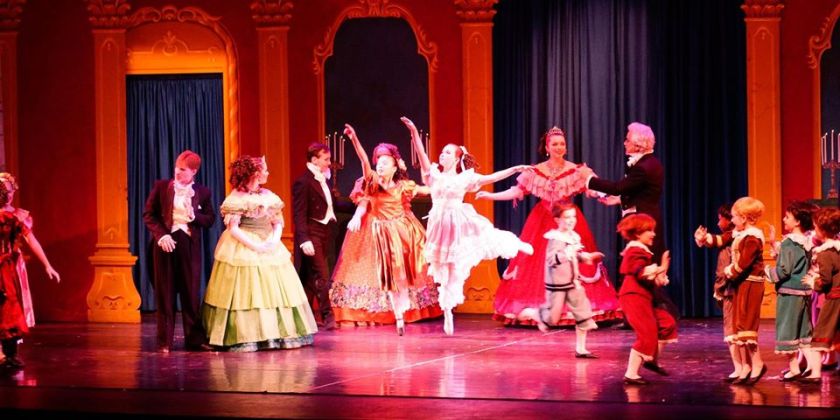
The Richmond Ballet’s production of The Nutcracker was conceived by the company’s Artistic Director, Stoner Winslett and Charles Caldwell with artistic direction and choreography by Winslett and scenery and props by Caldwell. (The magical tree was designed by Alain Vaës and the lush costumes are by David Heuvel.) This year marks Winslett’s 40th production of the holiday classic for Richmond Ballet. From time to time, she makes changes and refreshes the ballet, which keeps it as interesting for the dancers as it is for the audiences.

The Richmond Ballet Nutcracker is a beautifully mounted production that appeals to both children and adults. There is, of course, dancing. While the “star” of the show is Clara, danced on Wednesday by McKenzie Fisher, who shares the coveted role with Kyla Williams, there is plenty of dancing by the adult company members.  There is a lovely duet for the Snow Queen and King (Melissa Frain and Ira White) and later Lauren Archer and Trevor Davis, the Sugar Plum Fairy and her Cavalier, danced the “Grand Pas de Deux.” After spending the fall semester teaching dance history, it was hard not to think of the changing roles of men and women in ballet from the Classical period (of which The Nutcracker is a prime example) to the Romantic period (when women became more prominent). I was torn between watching Davis spin Archer with mechanical precision – almost as if she were one of Drosselmeyer’s inventions — and gasping in awe as she ran and leaped, landing precariously and gloriously atop his shoulder. Repeatedly.

This ballet is also filled with character dancing, from the halting waltz by the grandparents (Susan Massey and Marcelo Outeiro) to the mouse battle with Anthony Oates as the Mouse King. The second act has something for everyone, dancing flowers and angels, and specialty dances (Spanish, Arabian, Chinese,  Russian, and more. Izabella Tokev and Fernando Sabino were mesmerizing as the Snake and Her Charmer, and the Russian dancers, Patrick Lennon and Logan O’Neil with Matthew Frain as their Dancing Bear is always a favorite. The Trépak, based on a traditional Ukranian folk dance has the men jumping in the air, then spinning on the floor like break dancers, while the bear adds a touch of humor, wearing red shoes to accent his furry costume, and moon walking off the stage while blowing kisses to the audience.

But wait, there’s more. The costumes are stunning, providing a visual delight, along with the huge, colorful set and props like the magical Swan Sleigh that glides across the stage carrying Clara and her Little Prince (Nicholas Blankenship).

And, finally, there is Tchaikovsky’s beautiful score. It is familiar from the opening notes through the Finale and is probably the first classical music many children are ever exposed to. There are magical melodies associated with each scene that evoke memories of previous productions and prompt associations with idealized visions of Christmases past, present, and yet to come. The icing on the cake in this kingdom of sweets is that the music is played live, by the Richmond Symphony Orchestra, conducted by Erin Freeman and a 30+ member Snow Choir, directed by Lisa Fusco.

The Nutcracker wraps young and old in a warm, familiar fantasy. It means Christmas and traditions and family, and a complete letting go of the stresses of everyday life for two hours of joy.


Julinda D. Lewis is a dancer, teacher, and writer who was born in Brooklyn, NY and now lives in Eastern Henrico County.

———-

Photo Credits: Richmond Ballet Facebook Page


Alvin Ailey
https://www.amazon.com/gp/product/1093389303/ref=as_li_tl?ie=UTF8&tag=rvartreview-20&camp=1789&creative=9325&linkCode=as2&creativeASIN=1093389303&linkId=c39a9d5181692735b3b75883d732cd03
Whistlin Women
https://www.amazon.com/gp/product/1072107546/ref=as_li_tl?ie=UTF8&tag=rvartreview-20&camp=1789&creative=9325&linkCode=as2&creativeASIN=1072107546&linkId=78c578738db659724289dda2116d985c
BookCoverImage2
https://www.amazon.com/gp/product/1492287601/ref=as_li_qf_asin_il_tl?ie=UTF8&tag=rvartreview-20&creative=9325&linkCode=as2&creativeASIN=1492287601&linkId=1e7b04062aac6be4579745cd37fb0ab2
BookCoverImage
https://www.amazon.com/gp/product/1491223162/ref=as_li_qf_asin_il_tl?ie=UTF8&tag=rvartreview-20&creative=9325&linkCode=as2&creativeASIN=1491223162&linkId=a0220c19d8b7447d47e9683000fe3035

CONCERT BALLET OF VIRGINIA: 43rd Annual “Nutcracker”

THE CONCERT BALLET OF VIRGINIA: The Nutcracker

Observations on the Nutcracker, 43rd Annual Production by Julinda D. Lewis

At: Atlee High School Theatre, 9414 Atlee Station Rd., Mechanicsville, VA 23116

Performances: December 14, 15, 20-21, 2019

Ticket Prices: $12-24

Info: (804) 798-0945 or http://concertballet.com/ or concertballetofvirginia@yahoo.com

I’ve seen many of the Concert Ballet of Virginia galas, and even the pared-down excerpts of The Nutcracker, but this is the first time I’ve seen their full-length version of the holiday classic.

Synopsis: The Silberhaus’ host their annual Christmas party, attended by their children Clara and Fritz and an assortment of family and friends. Clara receives a pair of dancing slipper and her brother received a sword and a mechanical rat – which he and his friends promptly put to use terrorizing the girls. A family friend, the mysterious Drosselmeyer, arrived late and gives Clara a Nutcracker that has magical powers. When all the guests have gone home, Clara comes to retrieve her Nutcracker, but it comes to life and takes Clara on a Christmas adventure filled with soldiers and horses, battling mice, a Snow Queen, a Sugar Plum Fairy, a Cavalier, and other fantastic characters.

The familiar score by Tchaikovsky and traditional choreography after Marius Petipa and Lev Ivanov as conceived by the late deVeaux Riddick captured and held the attention of the audience made up predominantly of families with young children. The story of Clara and her mischievous little brother Fritz is filled with humorous scenes that a young audience can relate to, and the magic of the mildly menacing family friend, Drosselmeyer, keeps the story interesting.

The variety of the “Divertissements” in Act II (Spanish, Arabian, Chinese, Russian, and Mother Ginger – here called Mother GingGong – along with acrobatic clowns and waltzing flowers) allows for a display of diverse genres and the multiple abilities of this community dance company (all unsalaried), “operating within the framework of a professional dance company.”

The scenery, by artistic director Scott Boyer and costumes (by a full team consisting of Erline Eason, Cecil Carter, Jill Driskill, Patricia Morris, Kay Allen, Mary Beth Rhyne,  Ann Reid, Corinne Abernathy, Kim Gangloff, and Tracey Latham) were a beautiful treat for the eyes. They even engineered snow falling gently on the Snowflakes corps de ballet scene.

The Nutcracker is often a young dancer’s – or audience member’s – first exposure to ballet, and this production, while lacking in virtuoso technique and clarity and definition of line, is a visual and musical treat that just might stimulate the interest of new young dancers and future balletomanes.

Julinda D. Lewis is a dancer, teacher, and writer who was born in Brooklyn, NY and now lives in Eastern Henrico County.

———-

Photo Credits: Concert Ballet of Virginia Facebook page

Concert Ballet NutcrackerConcert Ballet Nutcracker2


Alvin Ailey
https://www.amazon.com/gp/product/1093389303/ref=as_li_tl?ie=UTF8&tag=rvartreview-20&camp=1789&creative=9325&linkCode=as2&creativeASIN=1093389303&linkId=c39a9d5181692735b3b75883d732cd03
Whistlin Women
https://www.amazon.com/gp/product/1072107546/ref=as_li_tl?ie=UTF8&tag=rvartreview-20&camp=1789&creative=9325&linkCode=as2&creativeASIN=1072107546&linkId=78c578738db659724289dda2116d985c

13: THE SECOND TIME AROUND

13, THE MUSICAL: The Second Cast; A Second Look

An Addendum to Yesterday’s Theater Review by Julinda D. Lewis

By: Virginia Rep/Cadence Theatre Company

At: Theatre Gym, Virginia Repertory Center, 114 W. Broad St., RVA 23220

Performances: October 26 – November 17, 2019

Ticket Prices: Single tickets start at $42

Info: (804) 282-2620 or va-rep.org

Yesterday (October 25) I wrote about 13, The Musical after seeing the first cast. Today (October 26) I returned for the second opening night with a different cast – except for, I think, two actors.

The original view may be viewed at:

https://jdldancesrva.com/2019/10/26/13-what-could-possibly-go-wrong

When Cadence Theatre’s Artistic Director Anna Senechal Johnson announced that there would be two entire casts for 13, THE MUSICAL and that there would be two opening nights, I decided to attend both. The board with the actors’ headshots had to be changed, and there were two sets of programs printed. Preparation for this musical, more than 40 performers (actors and band members ranged in age from 12 to 17) required changing the headshot board and printing two sets of programs to accommodate the two casts – the Appleton and the Indiana (named for the town and state where our young leading man must move after his parents’ divorce). It must have felt like the theater company was preparing to give birth to twins.

For the first five minutes, I started to compare the performances of the two sets of  main characters, but about 10 minutes into the show I realized that the characters had taken over. While the chemistry was different, and different actors brought their own nuances, I can honestly say that the experiences were equivalent to seeing the same show twice with the same cast.

Physically, Brandon McKinney and Evan Dymon are quite different (in stature, facial structure, and more) but both portrayed lead character Evan with naivete, bravado, and compassion. Bridget Sindelar may have had a slight edge over Violet Craighead-Way as far as vocal range or power, but both made me root for Patrice and cheer her independence and self-identity.

The differences between Donathan Arnold and Cohen Steele are even more striking than the differences between McKinney and Dymon. Arnold is tall, slender, and black while Dymon looks farm-strong and he’s white.

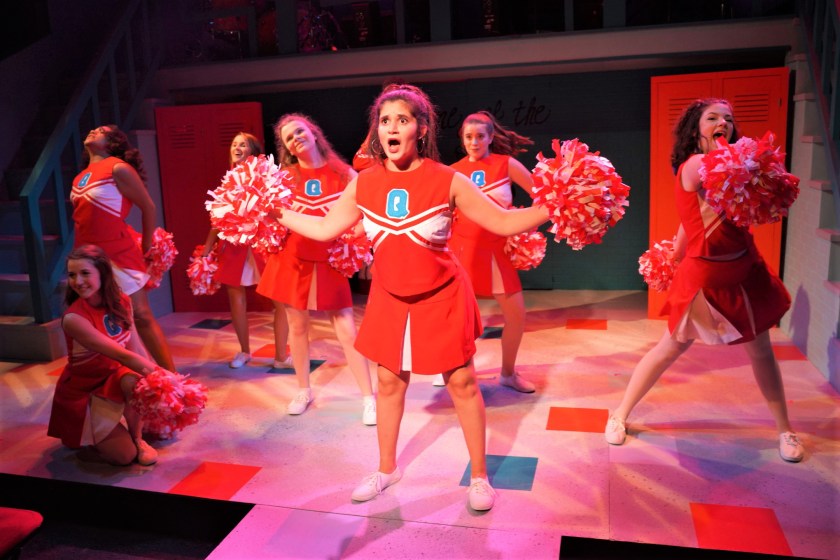
I think Caroline Johnson portrayed a somewhat more prissy and less conceited Kendra than did Audrey Kate Taylor, while Jolie Smith and Anjali Sharma were equally strong as the mean girl. Both were able to maintain a sneer throughout a rigorous cheerleading routine, but Sharm’s tripping of best-friend-and-arch-enemy Kendra was perhaps a tiny bit more subtle than was Jodi Smith’s action for the same scene.

Ethan Dunne Stewart and Marcus Dowd, as Brett’s friends and hangers-on were a bit more outrageous, if possible, in their role as back up singers than were Owen Buckenmaier and Jake Barger, but both pairs of hangers-on were among my favorite characters.

Since much of the story line is sung, it is important that the lyrics can be clearly heard, and from my position (second row, right on Friday night and second row, front on Saturday) there where a few times that the vocals got lost for a moment or two and I never did understand the much repeated line of the finale.

My first impression remains the same: 13, THE MUSICAL: is a fun and energetic piece of theatre that is this wholly engrossing. Both casts of teens exude energy and professionalism; they make you care about what happens to Evan, Patrice, and Kendra (the bar mitzvah boy, his new friend, and the popular girl) and their friends. As if anticipating the audience reaction, the authors have the cast sing about their growth, their decisions, their triumphs and failures over the course of the school year


Julinda D. Lewis is a dancer, teacher, and writer who was born in Brooklyn, NY and now lives in Eastern Henrico County.

———-

Photo Credits: Jay Paul

13, The Musical
Josh Chapman and Violet Craghead-Way
13, The Musical
Anjali Sharma
13, The Musical
Autumn Papczynski
13, The Musical
Evan Dymon, Brenna Duffy, and John Chapman
BookCoverImage2
https://www.amazon.com/gp/product/1492287601/ref=as_li_qf_asin_il_tl?ie=UTF8&tag=rvartreview-20&creative=9325&linkCode=as2&creativeASIN=1492287601&linkId=1e7b04062aac6be4579745cd37fb0ab2
BookCoverImage
https://www.amazon.com/gp/product/1491223162/ref=as_li_qf_asin_il_tl?ie=UTF8&tag=rvartreview-20&creative=9325&linkCode=as2&creativeASIN=1491223162&linkId=a0220c19d8b7447d47e9683000fe3035
41SR4yCI7aL._SL160_
https://www.amazon.com/gp/product/B0791TX5P5/ref=as_li_qf_asin_il_tl?ie=UTF8&tag=rvartreview-20&creative=9325&linkCode=as2&creativeASIN=B0791TX5P5&linkId=08cacc62054100f00d2a6fcfbf97f3e4
Alvin Ailey
https://www.amazon.com/gp/product/1093389303/ref=as_li_tl?ie=UTF8&tag=rvartreview-20&camp=1789&creative=9325&linkCode=as2&creativeASIN=1093389303&linkId=c39a9d5181692735b3b75883d732cd03
Whistlin Women
https://www.amazon.com/gp/product/1072107546/ref=as_li_tl?ie=UTF8&tag=rvartreview-20&camp=1789&creative=9325&linkCode=as2&creativeASIN=1072107546&linkId=78c578738db659724289dda2116d985c

KARAR DANCE COMPANY PRESENTS: CIRCADIAN, an evening-length work

019 DOGTOWN PRESENTER’S SERIES: KARAR DANCE COMPANY

A Dance Review by Julinda D. Lewis

At: Dogtown Dance Theatre, 109 W. 15th Street, RVA 23224

Performances: October 18-26, 2019

Ticket Prices: $20 General Admission; $15 Students

Info: (804) 230-8780 or dogtowndancetheatre.com


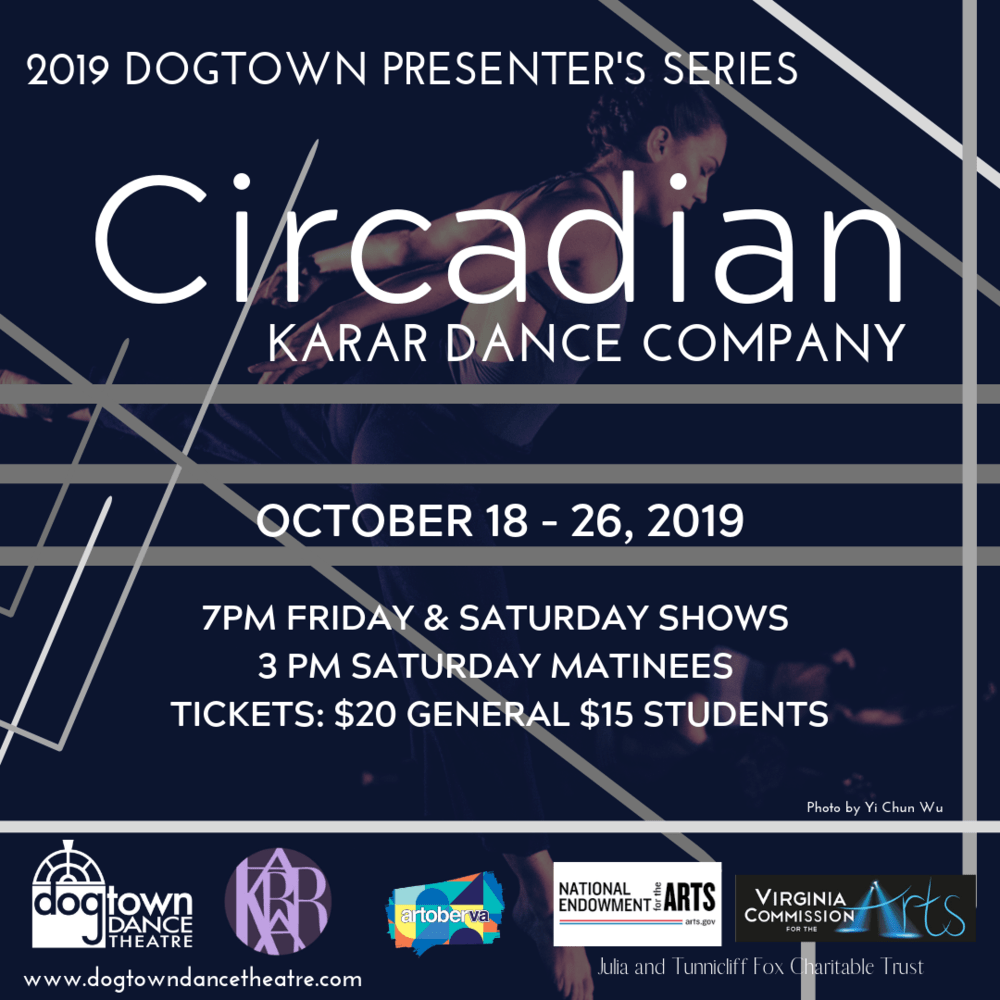
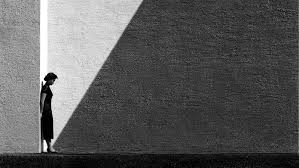
Circadian is a mesmerizing evening-length work for five dancers. The creative offspring of Kara Robertson, Artistic Director of Karar Dance Company, Circadian was inspired by a series of black and white photographs by Fan Ho (1931-2016), an award-winning Chinese photographer, film director, and actor who was known for his mastery of light and shadow. An image of his work entitled Approaching Shadow first caught Robertson’s attention some three years ago, and after much research, and some six months of intensive work with her company of dancers and collaborators, resulted in a 40-minute dance inspired by Fan Ho’s body of work captured in his book, Hong Kong Yesterday. [Hear the choreographer explain how her movement was inspired by the photographs: https://www.facebook.com/KARARDANCECOMPANY/videos/397277210947427/]

Fan Ho photo
Fan Ho image, Approaching Shadow

The first thing that strikes you about Circadian is the space; it is performed in the round, with two rows of seating on each side of the dance space. The second thing you might notice is the light; there are bright lights at each of the four corners of the dance space, and Weston Corey has designed numerous special effects, some quite subtle and some deliberately startling. This four-sided performance space with this moody, atmosphere-changing lighting, creates a world all its own that pulls and lulls the audience so that one loses track of time. A wooden lattice-work frame – the work of Crux Scenica – hangs above the dancers; I was so caught up in their motion and the mood of the lights that both surreptitiously and overtly direct our gaze, as well as by the sometimes hypnotic, sometimes dynamic original score by Ryan Davis that I didn’t notice it until near the end. It came as a total surprise that we had watched 40 minutes of uninterrupted dancing – and that the 5 dancers had been onstage moving for all that time.

Circadian begins with a simple walk. Dressed in simple but elegant two-piece black garments (kudos to designer Damion Bond) with wrap-around pants and cropped athletic tops that remind of yoga, meditation, and other healthy, healing practices, the five navigate the circumference of the space with measured and deliberate steps, articulating each action of the foot. Their arms are not yet engaged as they complete this counterclockwise procession with frequent interruptions of the precise cycle as one dancer then another breaks the formation by changing position, cutting across the space, widening or closing the gap between dancers, or moving into the center for a solo. These diversions only increase the mesmerizing power of the deliberate cycle.

Company dancers David Alexander Deegan, Caroline Echevarria, Amy Mulder, Amy Perkinson, and Haley Wall worked well as an ensemble, taking their cues from one another’s breathing or a fleeting glance, the briefest eye contact and seeming to move from a shared pool of energy. This synergy is most palpable and powerful when the music pauses, seeming to take a breath of its own so that the dancers and audience can experience the power and natural rhythm of silence.

 Gradually the patterns become more complex, the movements engage the arms and the entire body, often using a position from a Fan Ho photograph to initiate a movement phrase or transition from one section of the dance to another. The precision and focused intent of the walking is countered by softer shapes in the center, rounded spines and shoulders, a gentle firmness when they make contact that feels safe and secure yet daring at the same time.

There are spaces for the dancers and the music to breathe, only to continue as if the silence and stillness were natural parts of the cycle, of the circadian rhythm. They end on the floor, face down, as if taking a collective breath. I liked everything about Circadian and it is even more special to see such high caliber work from a small, young, local company. If time permits, I will see Circadian again, and choose a seat on a different side of the room to see if that substantially affects the viewer’s experience of the piece.

Karar Dance Company is a young organization; the company debuted in 2017 with a goal of becoming a collaborative conduit for artistic expression and a commitment to things homegrown. Kara Robertson as well of 4 of her 5 dancers – David Alexander Deegan, Amy Mulder, Amy Perkinson, and Haley Wall – are all graduates of the VCU Department of Dance and Choreography. Caroline Echevarria is also local – a native of Richmond and a graduate of Elon University’s department of Dance Performance & Choreography.

The presentation of Circadian was made possible by Dogtown Dance Theatre’s Presenter’s Series. Now in its fourth year, the Dogtown Presenter’s Series (DPS) annually places the spotlight on an independent artist or Richmond-based organization, producing a two-week series that provides the artist with all the major resources needed, including rehearsal space, technical production, marketing, public relations, and a stipend. The goal of the DPS is to introduce Richmond audiences to choreographers who reflect the rich cultural diversity of the city, and I hope more people in Richmond and the surrounding counties find or make the time to visit the Manchester neighborhood and support our local artists.

Julinda D. Lewis is a dancer, teacher, and writer who was born in Brooklyn, NY and now lives in Eastern Henrico County.

———-

Photo Credits: Michael Keeling – Karar rehearsal photos; Fan Ho – Approaching Shadow image


Amazon baby product

https://www.amazon.com/gp/product/B00D2JN87I/ref=as_li_qf_asin_il_tl?ie=UTF8&tag=rvartreview-20&creative=9325&linkCode=as2&creativeASIN=B00D2JN87I&linkId=1df336a01e4b01f4ee58b8b10f26916a


Available on Amazon.com. Use the link below each picture.

CONCERT BALLET OF VIRGINIA: A Family-Friendly Affair

THE CONCERT BALLET OF VIRGINIA: Fall Repertory Gala

Observations on the Fall Repertory Gala by Julinda D. Lewis

At: The Woman’s Club Auditorium, 211 East Franklin Street, RVA 23219

Performance: October 13, 2019

Ticket Prices: $4-$18

Info: (804) 798-0945 or http://concertballet.com/ or info@concertballet.org

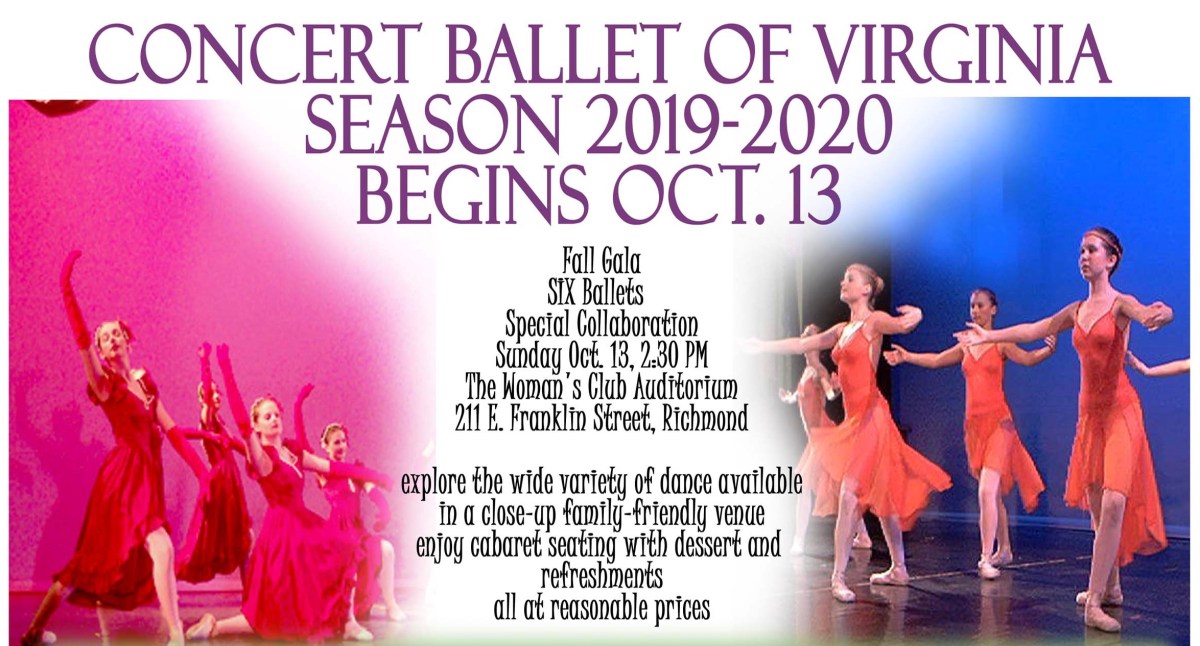
The Concert Ballet of Virginia marked the start of its 43rd year of dance performances with its annual Fall Repertory Gala at The Woman’s Club on Sunday, October 13. The company operates “within the framework of a full-scale professional dance company” but is run by a “marvelous collection of unsalaried Virginians – dancers, choreographers, technicians, craft and stage people and volunteers.” The mission of CBV is to accept and promote those who are interested in performing, providing a professional company experience regardless of skill level.

The 2019 Fall Repertory Gala differed from previous galas in that the program, consisting of a half dozen works ranging from classical to contemporary, incorporated the Diane Hale dancers, including a work choreographed by their instructor, Lindsay Rhyne Hudson, a CBV alumni.

One thing CBV does very well is scenery and set design. The French Scenic Reproduction of a glamorous manor house and lawn for “Biedermeier Waltzes” was donated by Wilton House, but the décor for “The Hunt,” and the trio of purple arches and blue panels for “Litany” were designed by deVeaux Riddick, a creative team member and long-time Technical Director for Ballet Impromptu, the Richmond Ballet, and then Concert Ballet of Virginia until his passing September 7, 2019.

The quintet of dancers in Biedermeier Waltzes” appeared to be the least experienced, as demonstrated by the simplicity of their choreography, soft shoes (no pointe work), and several stumbles. The lighting – or the dancers’ placement – often left their faces unlit, which was a bit of a distraction. But things picked up with “The Hunt,” a lively number featuring dancers dressed in clever red hunting jackets and black riding boots. The dancers prancing in a circle and forming a Rockettes-style kick line drew applause from the audience.

Ilie Davis, the soloist for the slightly dark, introspective and contemporary styled “Dysmorphic,” demonstrated clean lines and an enticing ease on stage. The four women in “Litany wore long-sleeved aubergine-colored dresses reminiscent of Martha Graham. Their movements were also reminiscent of classic modern dance: sustained; low dynamic; and repetitive, ending in a reverent tableau vivant. “Full Moon and Empty Arms” similarly ended in a tableau, although the latter was a classical ballet, with four ballerinas wearing black classic tutus, and a lead dancer in an ivory tutu to match Scott Boyer who partnered all of them. These were apparently the more experienced or advanced dancers, as this piece included pointe work.

The Concert Ballet of Virginia is as much – or more – about the experience than the dance technique. It is a family-friendly affair, with hand-crafted items for sale in the lobby boutique and cabaret style tables where desserts, coffee, tea, wine, and lemonade are served.

Julinda D. Lewis is a dancer, teacher, and writer who was born in Brooklyn, NY and now lives in Eastern Henrico County.

———-

Photo Credits: Concert Ballet of Virginia webpage

Concert Ballet of VA


Whistlin Women
https://www.amazon.com/gp/product/1072107546/ref=as_li_tl?ie=UTF8&tag=rvartreview-20&camp=1789&creative=9325&linkCode=as2&creativeASIN=1072107546&linkId=78c578738db659724289dda2116d985c
Alvin Ailey
https://www.amazon.com/gp/product/1093389303/ref=as_li_tl?ie=UTF8&tag=rvartreview-20&camp=1789&creative=9325&linkCode=as2&creativeASIN=1093389303&linkId=c39a9d5181692735b3b75883d732cd03

RICHMOND BALLET: Contemporary Classics Ushers in New Season & Says Good-bye to Popular Ballerina

RICHMOND BALLET: Contemporary Classics

A Dance Review by Julinda D. Lewis

At: Dominion Energy Center for the Performing Arts | Carpenter Theatre | 600 E. Grace St., RVA 23219

Performances: September 27-29, 2019

Ticket Prices: $25-$125

Info: (804) 344-0906 x224 or etix.com

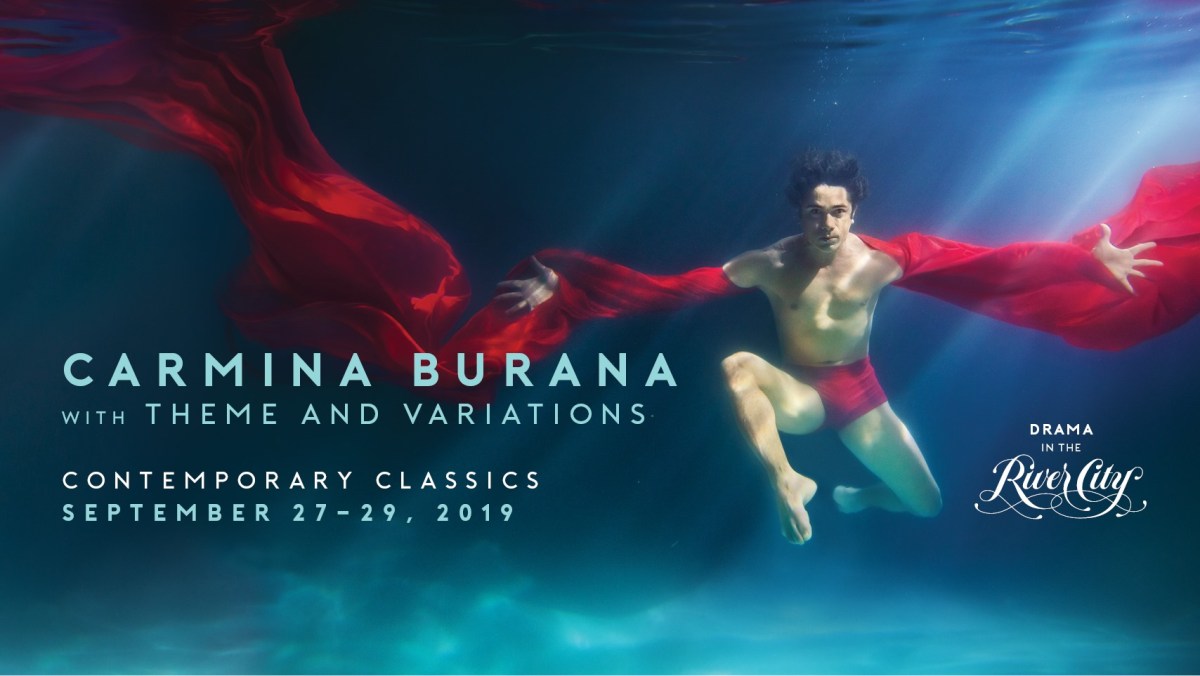
I had forgotten how beautiful the ballet “Carmina Burana” is. Choreographed for the New York City Opera in 1959 by John Butler, the ballet is based on a collection of thirteenth century songs and poems discovered in a monastery in Bavaria. The songs were composed and arranged by Carl Orff in three highly dramatic sections – Spring, In the Tavern, and The Court of Love – that are intended to be performed by a collaborating team of orchestra, chorus, and dancers.

The Richmond Symphony Orchestra, under the direction of Erin Freeman and a chorus of about 100 singers composed of members of the VCU Commonwealth Singers and the Richmond Symphony Chorus, divided into four groups on two levels of the theater provided what my daughter described as “surround sound.” Tenor Andrew Sauvageau, Baritone Jeffrey Grayson Gates, and Soprano Zarah Brock stood onstage and wore monastic black for their solos. At one point Brock held an impossibly long note.

The dancers moved through a range of human emotions using a stylized vocabulary of movement that seems to have been inspired by the figures on the Wheel of  Life or perhaps the characters illustrating a deck of tarot cards. The music is structured in three major sections, beginning and ending with the familiar “Fortune, Empress of the World,” for which the dancers don monastic black robes and rush about with determined steps and postures. But having seen all that occurred between the Prologue and the Finale, these same movements and garments have vastly different connotations at the end than at the beginning. [Link to “Fortune Empress of the World” – https://youtu.be/PG8U2vast6k]

In between we see two couples seemingly caught up in a web of sexual betrayal reminiscent of the story of Othello and first one man and then a group of women wearing costumes that bare – or use flesh-toned fabric to skillfully mimic baring – half their bodies and much more. Although the movement is not tied to any narrative it is easy to find familiar story lines.

While the four main dancers and corps of 6 couples were uniformly dynamic, this weekend’s performance hold special significance for 13-year company member Maggie Small who is retiring her pointe shoes after her final performance of “Carmina Burana.” Like the Wheel of Fortune that inspired this work, Small’s career has come full circle, as she closes her performing career with the ballet that marked the start of her professional career. [Here’s a link to a Richmond Times Dispatch article about Small’s career and retirement: https://www.richmond.com/entertainment/art/richmond-s-homegrown-ballerina-maggie-small-set-to-retire-with/article_e5c1067b-703f-5549-bb3a-c957fd177da3.html. And another from Style Magazine: https://rvamag.com/art/dancetheatre/with-contemporary-classics-richmond-ballet-says-goodbye-to-maggie-small.html.]

Small’s long-time partner, Fernando Sabino, will retire in the spring, and it looks as if Ira White, now in his fifth year with the company, is ready to step up and into Sabino’s shoes. White, who like Small, came up from the company’s Minds in Motion program (for fourth graders) and the trainee program before joining the company, has shown tremendous growth and maturity as a dancer over the past two years, and shows promise of contributing a high level of professionalism as well as charisma to the current season.

The Contemporary Classics program marks the start of the Richmond Ballet’s new season and opens with the stunningly beautiful Theme and Variations by George Balanchine. Set to the final movement of Tchaikovsky’s “Suite No. 3 for Orchestra in G major, Op. 55,” “Theme and Variations” is a grand ballet, traditionally styled with white tutus, a series of pas de deux by the lead couple, and a grand procession or polonaise for all the dancers to show off their technique and gorgeous lines. As I watched the dancers move through the intricate patterns, I thought this is one ballet I’d prefer to see from the balcony, which affords a bird’s eye view of the design. My daughter, who arrived a little late after hunting for parking, did get a chance to see “Theme and Variations” from the balcony and confirmed my suspicions. She said the experience of seeing the ballet from above was the silver lining to arriving late.

“Theme and Variations” was staged by Jerri Kumery with Sabrina Holland and Anthony Oates dancing the lead roles. “Carmina Burana” was staged by Malcolm Burn featuring partners Cody Beaton and Ira White and Maggie Small and Fernando Sabino. The Balanchine classic was first performed in 1947 while the Butler opus premiered in 1959, yet both remain fresh and engaging to today’s audiences. The final performance of this short run will take place Sunday afternoon, September 29, at 2:00pm. The season continues with Studio One performances November 5-10, featuring Artistic Director Stoner Winslett’s “Ancient Airs and Dances” and a World Premiere by popular choreographer Ma Cong.

Here’s an excerpt of Maggie Small’s bio, from the Contemporary Classics program: Maggie Small, a native of Richmond, Virginia, began dancing at the School of Richmond Ballet. She completed the trainee, apprentice, and Minds in Motion programs before joining the company. In 2012 she was featured on the cover of Dance Magazine as Richmond’s “Homegrown Ballerina.”

Julinda D. Lewis is a dancer, teacher, and writer who was born in Brooklyn, NY and now lives in Eastern Henrico County.

———-

Photo Credits: Sarah Ferguson


This slideshow requires JavaScript.


Available on Amazon.com